Black Philanthropy and the Racial Wealth Gap
Interview By Brandi Fleck
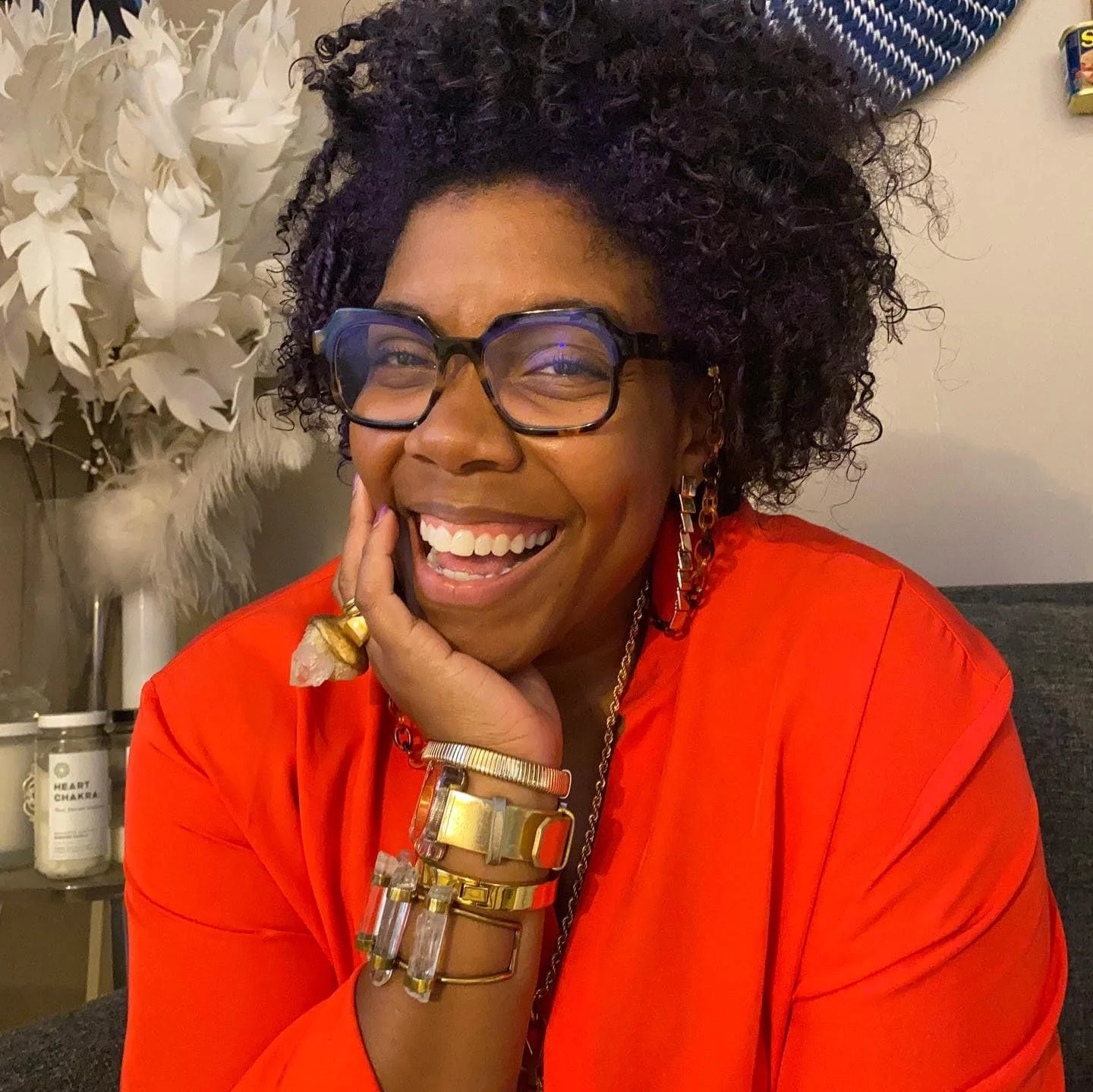
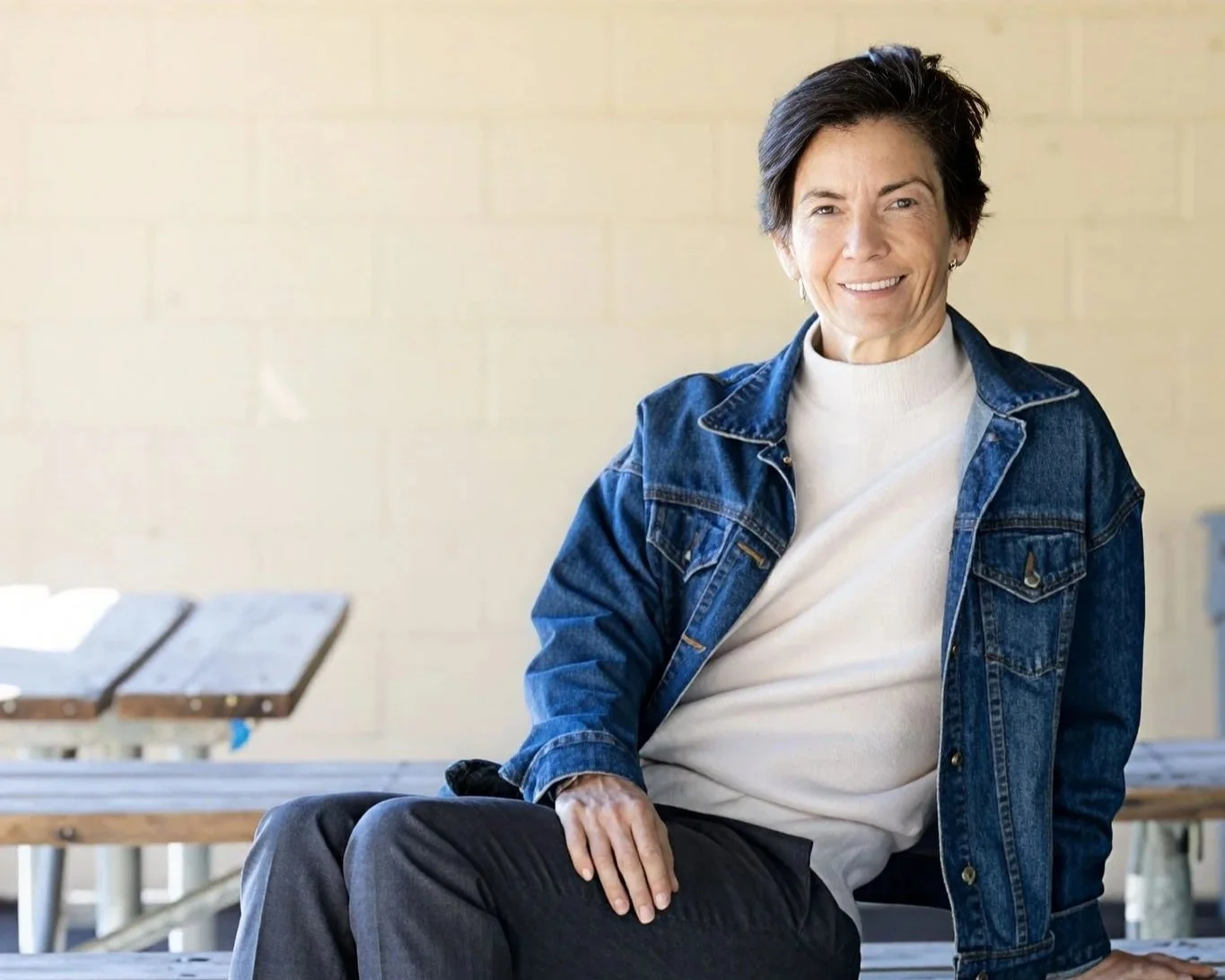
Kia Jarmon explores Black philanthropy, systemic inequality, collective trauma, and why healing requires communities to reclaim power, truth, and joy.
Black philanthropy is about far more than charitable giving.
For Kia Jarmon, it’s about who gets to define community needs, who holds power, and why the racial wealth gap continues to shape nearly every part of American life.
That conversation opens into something much bigger, which is systemic racism, cultural appropriation, collective trauma, white supremacy, and the emotional labor Black Americans are still expected to carry every day.
Kia also explains why healing cannot happen without discomfort, how trauma passes through generations, and why rebellious joy can itself become an act of resistance.
Listen to Kia Jarmon’s Interview
Watch Kia Jarmon’s Interview
How Systemic Racism Shapes Everyday Life
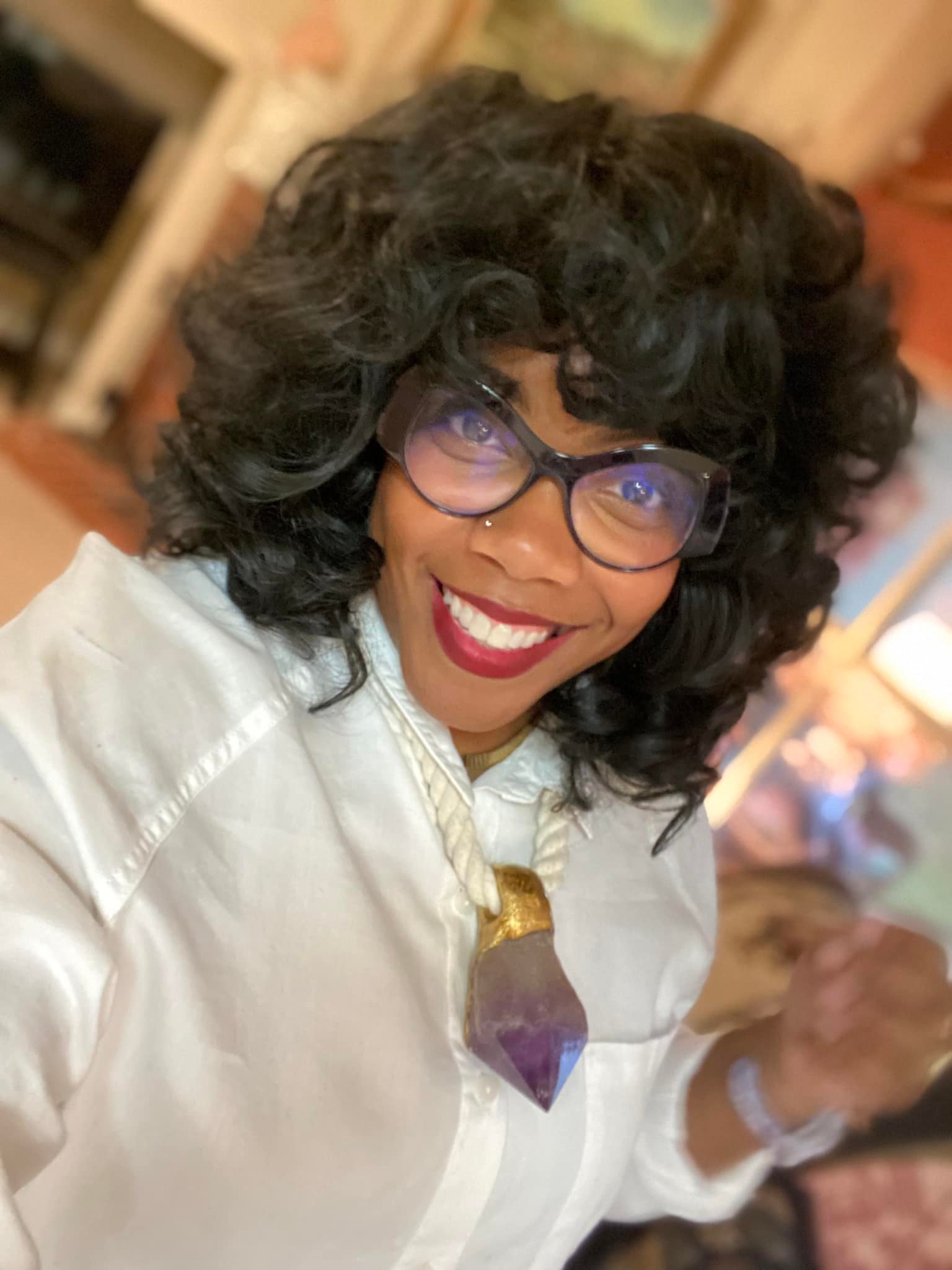
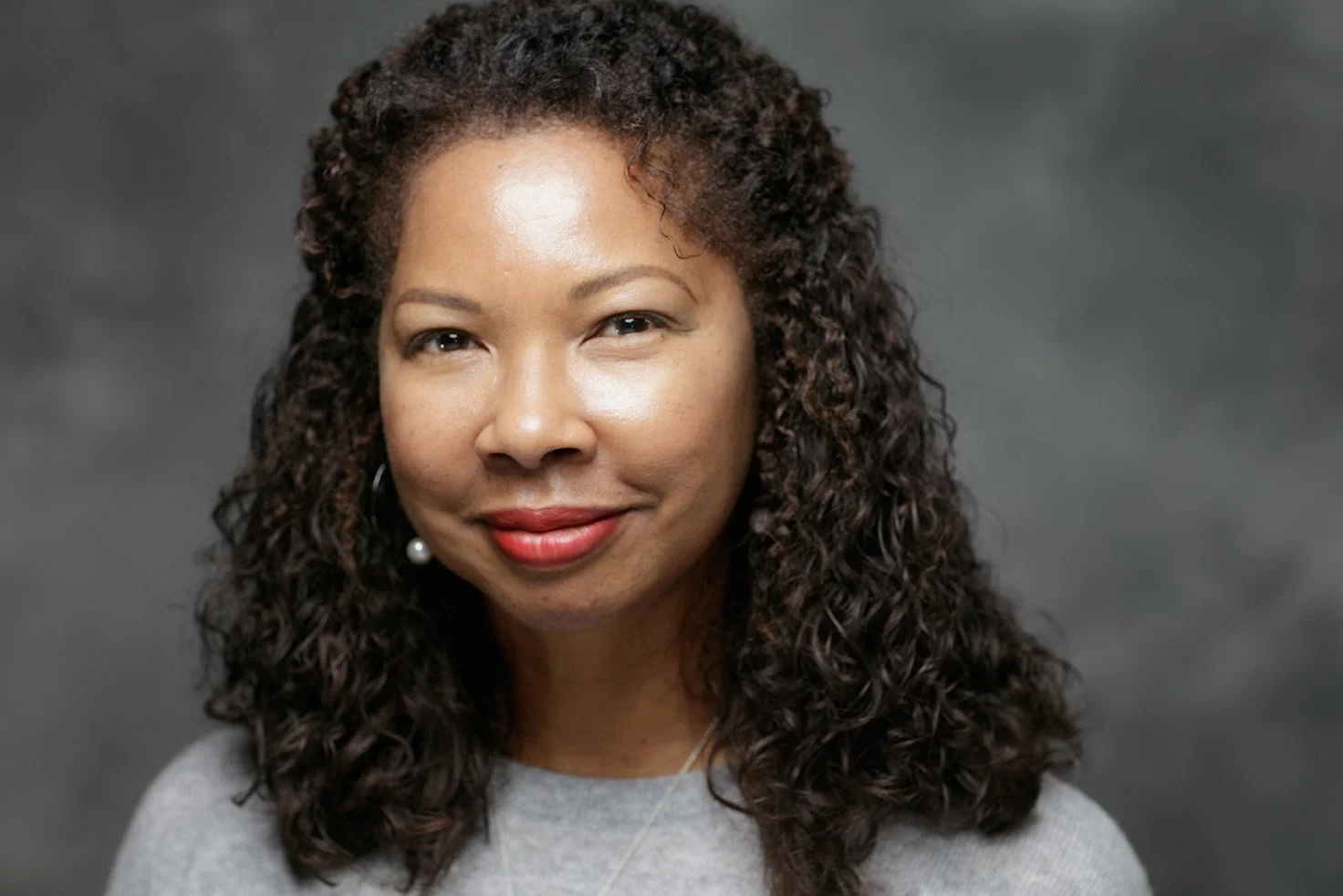
Kia Jarmon: I'm Kia Jarmon, and I'm based in Nashville, Tennessee. I am a natural disruptor, figuring out maybe how we tear the box down, figure out how we create a new box. So I encourage Black people to heal, and then I encourage white people to do the work.
Say something, even with the shaky voice, even with the shaky pen. You have to be able to step up and say, "This is not the right thing to do." The world is not meant to be monolithic.
Brandi Fleck: Welcome back to the Human Amplified podcast. Today opens season four. Can you believe it?
Let me just start out by saying I love today's guest, Kia Jarmon. She's a force in our community. She's one of the most authentic and refreshing people I've ever met, and she isn't afraid to tell the truth, even when it's hard.
There are so many gems of wisdom when she's speaking that as soon as I welcomed her to the show, her intentional and honest response elicited immediate conversation. We did get around to officially introducing her after a few minutes, but that just goes to show you the amount of value that's packed into this Human Amplified season four opening episode.
In this episode, we talk about Kia's focus on communications, community engagement, and philanthropy, and how she supports and amplifies Black humanity. She teaches us the importance of knowing real history and uncovers why it may take a while to undo racism. From this episode, you'll understand why there's a need to be better humans and take away actionable steps for how to be a better human.
We dive deep into how fixing racism right-sizes other isms in our society too. In other words, how everyone is impacted by racism and benefits from fixing it. We also talk about how to be on the lookout for the creation of new agents of harm.
We also explore the difference between charity and a new philanthropic model Kia envisions and is actively working toward. As a self-described disruptor, Kia explains that comes with creating new ways of thinking, healing, and addressing collective trauma, among many other things.
Kia is an award-winning director of her boutique communications and community engagement firm, MEPR Agency. She's founding director of the nonprofit Equity Collaborative and founder of the Black Philanthropy Initiative in Nashville, Tennessee.
Well, everybody, I would love to welcome to the show today Miss Kia Jarmon. I'm so excited to have you here. How are you doing?
Kia Jarmon: Thank you for asking. I think that's such a sometimes underrated question, sometimes a loaded question. My response over the last two years has been, "I am doing the best I can in spite of the circumstances," because I believe that that allows me to be human. That allows me not to have to just respond, "I'm okay." It allows me to say the truth of who I am.
Brandi Fleck: Yeah, I really like that. A lot of times people do really ask the question and they just sort of expect a canned response. How have people been responding to you in your honesty?
Kia Jarmon: Oh, they love it. For about 18 months of the pandemic, when we first got started, I have a young son, seven, and so he, of course, was doing virtual school, which meant that I was a full-time first-grade teacher.
So I had an email out-of-office reply, as well as at the bottom of my email, it said, "During this time, for mental sanity, my focus is on my son. I will be delayed in responding."
The amount of responses I received back, in particular from women who were also either mothers or career women, they were appreciative of that candor in email because I just had to be honest that I'm not going to be able to be accessible and available in the way that the world wants women to be, and then also the world wants Black people to be.
So I very much took pride in being able to be helpful to someone else in their journey of truth-telling, particularly in the middle of a global pandemic.
Brandi Fleck: Yeah. Man, there's so much I want to ask you about now already, and we haven't even formally introduced you, but how does the world expect women, and especially Black women, to be?
White Privilege, Labor Expectations, and Black Women
Kia Jarmon: Yeah. I believe that Black women, which of course trickles into all women, because anytime race and racism comes into a conversation, everyone is affected in some way, but the world has always seen, and in particular America has always seen, Black women as labor to be used, to be abused, to be harmed, and then to still show up and do the work.
In the beginning of our country's formation, particularly with Black people being a part of it, that was very overt. As we have, of course, done some reconstitutioning and done some new legislation and things, now it looks a little more covert.
So it's a little more subconscious. It is something that is just implied. It is something that is expected of you, and so then you try to adhere to it.
I am a natural disruptor, and I'm uninterested in playing in that system because that is what will kill you.
I was sharing earlier with a friend that peace requires more than pieces of you. So you always need to be seeking peace. My peace needs my full attention. It doesn't only get a part of me. It needs all of me to be successful in my life. So I don't want to be in pieces.
What's so interesting is during this pandemic, we've all been wearing, or most of us have been wearing, masks. But the reality is Black people in this country have been wearing masks their whole life. So I kind of want to take the mask off and be able to again be human and be able to say, "You know what? This is a really bad week. This is a really bad day." Or also be able to say, "This is a really amazing time. It was a really amazing week."
So I just embrace all of that, and if you don't embrace that with me in my life, then you're not invited to the journey. I'm happy to uninvite you to the journey.
People have responded well to that because I believe they respect me enough to give me that space.
We see lots of examples of that. Black women are required to be super magical people, and there is some magic and mysticism to being a woman, of course, but it is also the way we're designed. It's not something that other women don't have also.
Because of that, sometimes the way it shows up in work environments, as an example, is like, "Oh, you are doing something that no one else can do." So then you open up to being mistreated in some ways because you are some type of supernatural being, and that is also crazy. That's just the easiest word I have for that.
People should just be allowed to be who they are, and they should be able to work really hard if they want to work really hard, and then also take lots of breaks when they want to take breaks.
Brandi Fleck: Yes, I love that. On that note, let's introduce you. Please tell our listeners who you are and what you do.
Kia Jarmon: Yes. Well, I am a mom. I just mentioned that, and I believe that is one of my very important hats. I am a professional napper. I like taking naps. I love taking naps.
I'm a truth teller. I think we've already started that process today. I'm an entrepreneur at the core and heart of who I am. I'm a born entrepreneur. I say I came out that way. I've been disrupting and innovating my whole life from a very small age, and that's who I am professionally.
I'm a contrarian. I am skeptical by nature. I believe that's what helps my clients. I own a business, and my business is in communications and community engagement. Sometimes that has me in lots of areas, but the core is for me to help organizations improve really using two components: history and humanity.
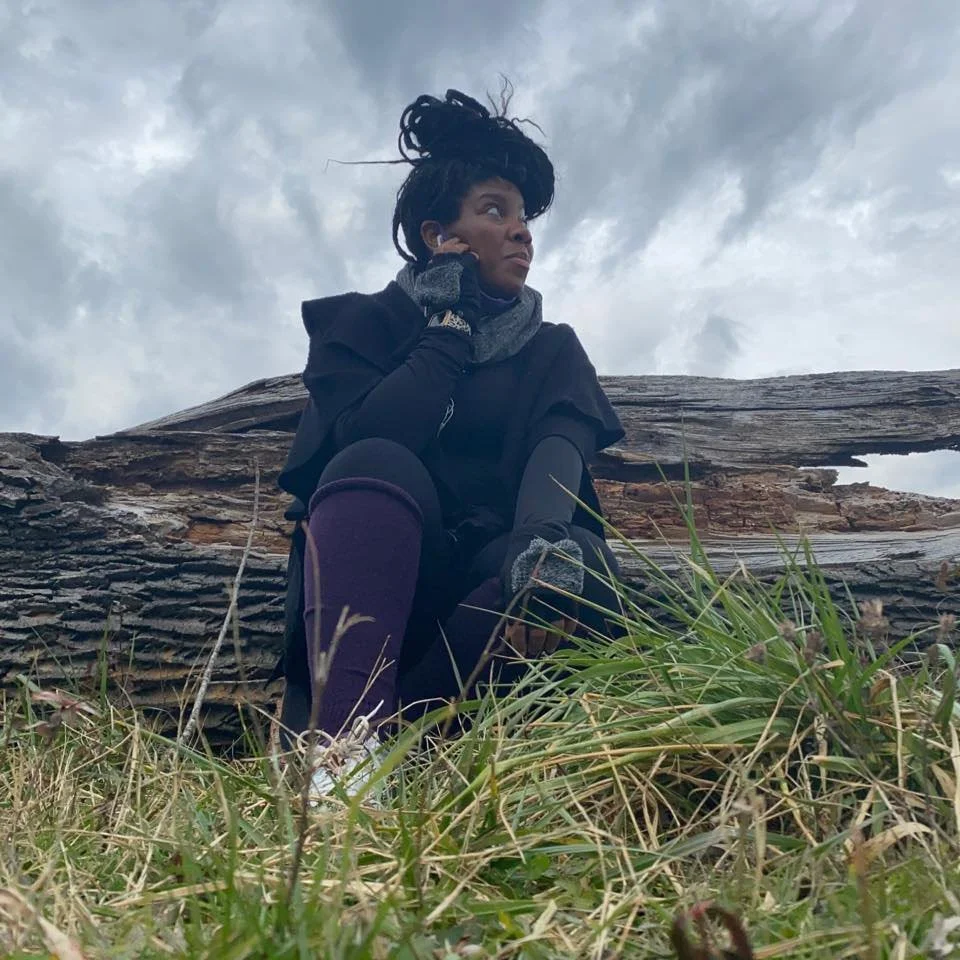
So really leaning toward history, authentic true history, particularly by the storytellers themselves, if we can find that, and then to enhance humanity in some way.
In particular for me, my focus a lot of times is on Black humanity because once we get that part correct in the Black and Indigenous community, everybody else benefits really well from that.
So really upholding and holding space for the opportunity for Black people to be seen as the fullness of who they are. So that's who I am in all of my glory.
I'm a philanthropist. I'm a community leader. I have lots of titles, but entrepreneur, communicator, that's who I am.
Brandi Fleck: Yeah. I just have to say thank you to you because I saw you speak, and I feel like you get this a lot, but I saw you speak professionally a couple years ago and ever since then have been following you, and I learn something from you literally every time I see something you post. You are just a wealth of knowledge, and it's amazing.
I want to ask you, how can we be better humans? I don't think there's any better person to ask.
How to Be a Better Human in a Divided Society
Kia Jarmon: Thinking about this, because for a long time, like a long, long, long time, and I may have even said this on that panel several years ago, at some point I will probably write a book about how to be a better human, but I just need to get all the chapters outlined.
One of the ways is to really explore and embrace other cultures and communities of people. We are not meant to be the same. The world is not meant to be monolithic.
When you meet me as a pretty young Black woman, I am not the same as my girlfriend who's also a pretty young Black woman. So we're different. So exploring the fullness of people's culture and community and who they are and why they are, and embracing that in a way that allows you to appreciate and not appropriate because we're a very appropriative society.
We very much look at what someone is doing, particularly people with darker skin, so not just Black people, but Black people specifically in this context, but all people who have darker complexions. We look at them and we say, "I want to do that."
When we look at practices like yoga, where we look at hairstyles or clothing types, or we look at all of those and we say if someone with that darker complexion does that, then they are attributed to something negative. But when someone who is in the dominant culture in this country, who's white, does that, then we appreciate it, we love it. But that's appropriating culture.
So you can appreciate someone's artistic nature, the culture of who they are, the music, the dance, all of those things, without needing to steal it. Let me just use the right words. Yes, steal it and make it your own, and then make it to be a part of something that we don't get to, as people who are Black or people of color, don't get an opportunity to benefit from our own excellence.
So that's one, is exploring and embracing those.
Reimagining freedom. Reimagine what freedom looks like. So I'll give an example. I'm sitting here talking to you in my pajamas. I have been in two meetings physically out of my office in these pajamas because my first meeting needed me immediately. It was a colleague who needed me to come immediately. I had no time to change.
So I go out into the world with my purple outfit as pajamas, and that is a different version of freedom that I recognize most people don't get access to. But I need to be able to go out into the world and still be seen as important and valuable, even with my pajamas on because, again, we demonize those things in which we don't understand.
So sometimes we look at, you know, do you have on the appropriate attire? Is your hair appropriate? Do you have on all of these things? We're looking to dictate for other people. Just allow people to be free in the way that is important to them.
And then the other thing for me is about being curious and not judgmental. That really encompasses the last two as well. Having a curiosity about other people without having judgment or without placing your own inhibitions.
What often happens is that because we are fearful of our own selves and our own truths and our own experiences, we project that onto other people so heavily.
"I would never do that." Okay, great, but they are, and that's okay.
I bet if you ask them a question, and sometimes this is kind of part two to this, building relationships with people allows you to ask what I call ignorant questions.
So being a human is also being able to have an ignorant conversation with someone. What I mean is because you've built relationship with them, now you can say, "I do not know how to ask this. I have Googled all my heart's content. I don't know how to Google it well enough. Can I ask you a question?"
This is what relationship allows you to do. This is what curiosity allows you to do.
When you've embraced the fullness of a person, when you reimagine freedom with them or decolonize your own understanding of freedom, and then you are curious and ask questions, you're now leaning into the full humanity of a person. You're appreciating who they are without having to then take it on as your own identity.
No one's asking for anyone to be just like another person, right? So you give them the space to be who they are without having to take it on, also with no judgment.
Probably the last thing for me, I may have several things, but the last thing probably for me is really acting on injustices. When you see something, you have to say something.
I had a colleague the other day who said, "Kia, I don't just want to be Facebook anti-racist." What that meant for them was, am I really going to be able to step out in the world and practice what it is that I've been saying on Facebook or what I say in my closed-door or closed-room conversations? Can I actually live it out?
So they were really challenging themselves to say, "When I see something that doesn't fit the more just society, I have to say something."
And so that's what I would want for people who want to be a better human to be considering. Say something, even with a shaky voice, even with a shaky pen. You have to be able to step up and say, "This is not the right thing to do. We've got to do better."
That's what being a better human is, and I believe all of those, I hope, are things that I live out every single day. When you see those posts on Facebook where I'm teaching and sharing, it is because I want to do just these things for other people because I want that to reflect back to me in some way. So I hope that helps people to think about it.
Brandi Fleck: It does. Yeah, I think those are some really actionable steps that people can start putting into place immediately, so thank you.
Kia Jarmon: Yes, absolutely.
Why Racism Still Exists in America
Brandi Fleck: You sort of touched on some of it, but why do you think there's a need to be better humans?
Kia Jarmon: Yeah. This world that we live in for so long has looked over certain people, has looked around certain people, has dismissed and pushed certain people.
When I teach in my classes, in particular going back to the history of how we got to be a racist society, when I teach that and we talk about the taxonomist Carl Linnaeus, who categorized plants and animals, and then somehow he thought it was important for him to categorize people, so he put us into four categories.
The four categories were white, Asian, Black, and Native people. Then he gave all these categorizations that we had. He then gave us descriptors.
So when you look at white, a descriptor is like inventor. When you look at Black, what you see is protruding labia. I just want to give you the way in which our world has worked.
So if that is how we're described based on our race, then we haven't ever gotten to a point where we've seen each other outside of those descriptors because those have crept in.
I'm just giving you two examples. There are many other descriptors about how we govern ourselves, about how we are to accord ourselves. All of this is written in this document.
So it is so interesting that someone wrote that, and then, of course, Johann Blumenbach went on to continue that work with other people.
We've never really seen the fullness of humanity. We've never been able to experience each other for the greatness that we bring and contribute to the world.
So it's important to me to keep talking about humanity and history in particular because we haven't realized it. We've never seen it, and when we did see it, as soon as we saw a glimpse of it, it was snatched away.
As soon as we got some opportunity to say, "Okay, we're making a step forward," there were 20 steps backwards. We see that over and over again with the way that policies are written and laws are written, and then, of course, how they are processed through our society, our government, our workplaces, and even our families.
We're seeing how harmful it has been to not see the fullness of each other, and that's why I think it's so important.
Brandi Fleck: Are we not already there because of this history, because we haven't seen each other outside of these descriptors, or is there another reason why we're not there?
How Racism Impacts Every Community
Kia Jarmon: The contrarian in me always says we will likely be here forever, or a long time. It's a sad thing to think about, but I'm also hopeful because I work with so many young people who require me to have hope because I know that they're seeing the world very differently.
But we're not there, I believe, because of what I've mentioned, which is we're not able to see the fullness of each other. Those descriptors were the beginning, and then we just layered on top of it.
So when racism is the origin of this country, then every other ism and system of oppression is layered into that as well. It's like a waterfall.
I often say that racism is at the top of the waterfall. If we go to the top of the waterfall and make that a clearer place for people to be able to exist, then of course sexism, ageism, ableism, all of those then get the good fruits of that labor happening at the top.
What we do instead is we do other performative work, which to be really clear, I believe is important work, but I also believe it misses the mark.
So we go in and say, "Let's celebrate Pride Month," as an example, and let's have the flag up.
Now, I want to be clear, because I'm here to amplify Black humanity, the fullness of a Black person could be a Black trans person, which is important for me to highlight.
But when we're talking about that Pride distinction, we're usually not talking about Black people in the LGBTQ+ community. We're often talking about those who still operate in the dominant white culture.
So then we're still not seeing the fullness of who they are. We've still forgotten about the most visible diversity that we bring.
I cannot change my skin color and wouldn't want to, but you don't know if I'm a mother. You don't know my education. You don't know my ability because there are a great deal of people who are walking around with invisible disabilities.
You don't know any of my socioeconomics. You don't know any of these things. What you do know when you first see me usually are two things: I'm Black and I'm a woman.
But the first one is so much more distinctive because we operate outside of the binary as it relates to sex and orientation. I may appear to be a woman, but I might say that I'm nonbinary, but I am Black, period.
If we don't address that great ill of our society, which is racism, we cannot properly address the other intersections of Black people, which then impact everybody.
That's the thing about this topic in particular that is hard to understand, is how much everyone is affected by racism in this world because as a woman walking into a workplace, I'm going to get less amount of money when I walk in because I'm Black and a woman, so I get a double hit.
So we need to hit the one that is the most harmful. So that way we can make everyone right-sized in some way. It could be a more just society.
So we have not fully seen that because we have adopted those original orientations or original categorizations by them, and then we've layered on top of it, and we've layered on top of it, and we've layered on top of it. It is so deep in our country's origin that unless we dismantled every single thing that we do, it would be very difficult to get to the root of the destruction and the harm.
Instead, what we've done is we layer things on top, and so then when someone comes in and removes it, there's still unhealthy soil. It's still unhealthy.
So that's the hard part. I give this example. It's a really silly example, but I used to watch this show on TV that would highlight these crazy laws on the books, and they would say, for instance, the law would be, "You can't walk your donkey on a Saturday at 3 p.m." That's a crazy law, but it exists on certain people's law books.
We have those types of laws, but they are specific to Black people. They are specific to women. They are specific to gay people. They are specific to all of these other communities who have lived traditionally in the margins of our society.
So until we go back and repair those, it's very difficult to move forward.

Brandi Fleck: Yeah, that makes sense, and I can see why you would say, "Oh, we're going to be here for a long time," because, I mean, if it's that deeply rooted.
Kia Jarmon: Absolutely. That's a lot of work. It's a lot of work, and it requires a lot of people and a lot of effort at a similar time. Again, because of how society works, we're just not sometimes moving in the same direction.
The example is, and I'm not a scientist, so I'm not even going to speak on the science of this, but the fact that we're currently talking about this latest strain of COVID-19 or coronavirus, and South Africa is getting the highlight as being the place, but we also know that Europe had some of the first cases.
So you see just the distinction of how we talk about who brought something. What it starts to sound like is "China virus," which was also very damning and hurtful and harmful. That's what it starts to sound like. It's the same implication when you do that, and you're making an assumption or you're trying to make an implication that things that come out of Africa are going to be this way and things that come from other places, oh, no big deal. They can still fly into the United States. They can still fly all over the place, but we're going to put a specific mark around this particular part of the world that says that they are somehow doing something to the rest of us when we know that's not true.
It is the way we share these narratives. That's how deeply rooted this harm is, and when we keep doing that over and over and over again, what it also does is it creates new agents of harm.
Those new agents of harm can also look like me. They also can be Black individuals because they're upkeeping what it is that has been harmful, which, just call it out and say what it is, it's white supremacy.
When you live in the delusion of white supremacy, then you are open to being harmful to other people. You're not a white supremacist, but you are the agent of that work, and that is what is really, really harmful.
So that's how we end up having these cycles of continued harm over and over and over again, and that's why, as you said, I believe we'll be here for a long time.
Yeah, and we're going to take it to other places. We're going to take it to space. We're going to take it to the metaverse. We're going to take it to all these other places that we are trying to invade when we haven't done the right thing here, but we'll go to these other places so that we can somehow infect them as well.
Brandi Fleck: You know, I hadn't thought of it like that.
Kia Jarmon: Yes.
Brandi Fleck: I know you mentioned you were a philanthropist, so before we dive into all the ins and outs of that, can you tell us a little bit of your life story and how you sort of found your path and what you're meant to do in this world?
Kia Jarmon: Yes. I would break my story down maybe in by three.
One, I'm a lifetime member of Girl Scouts. I've been a Girl Scout since I was five. I've held almost every role except for executive director locally or nationally, and both of those roles are held by mentors of mine.
So Girl Scouting really was my leadership trajectory. It's what taught me how to be a philanthropist without even knowing the language because service is 100% a part of being a Girl Scout.
I would say the second part of my life is being a musician. I'm a trained vocalist and a pianist. I played and sang most of my life. I went to Nashville School of the Arts and graduated there. It is our arts high school where I studied piano and voice, as well as theory for both of those.
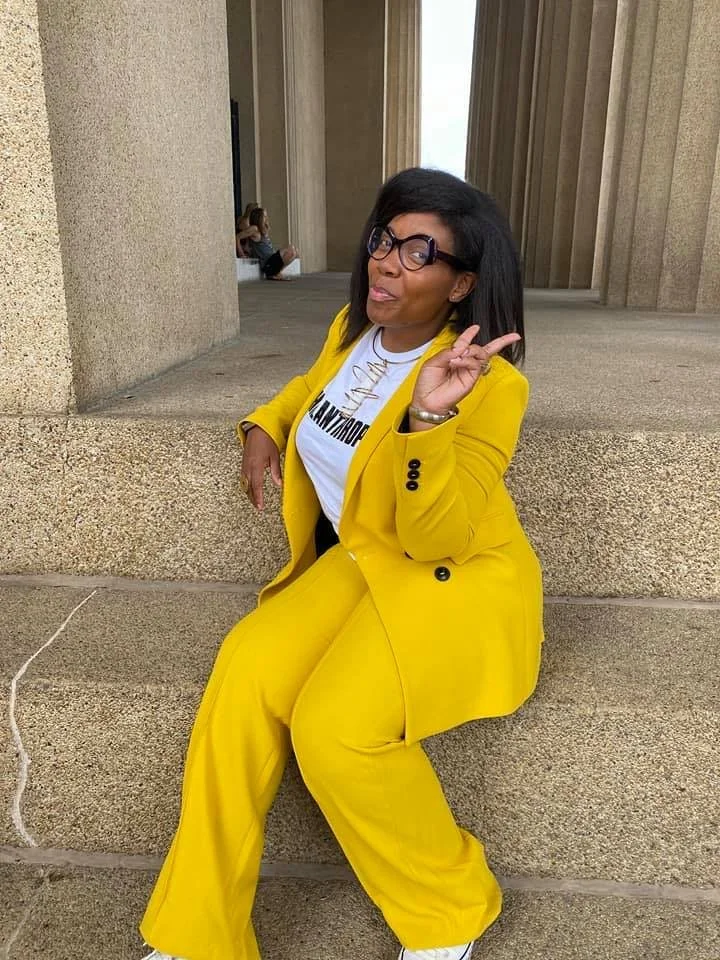
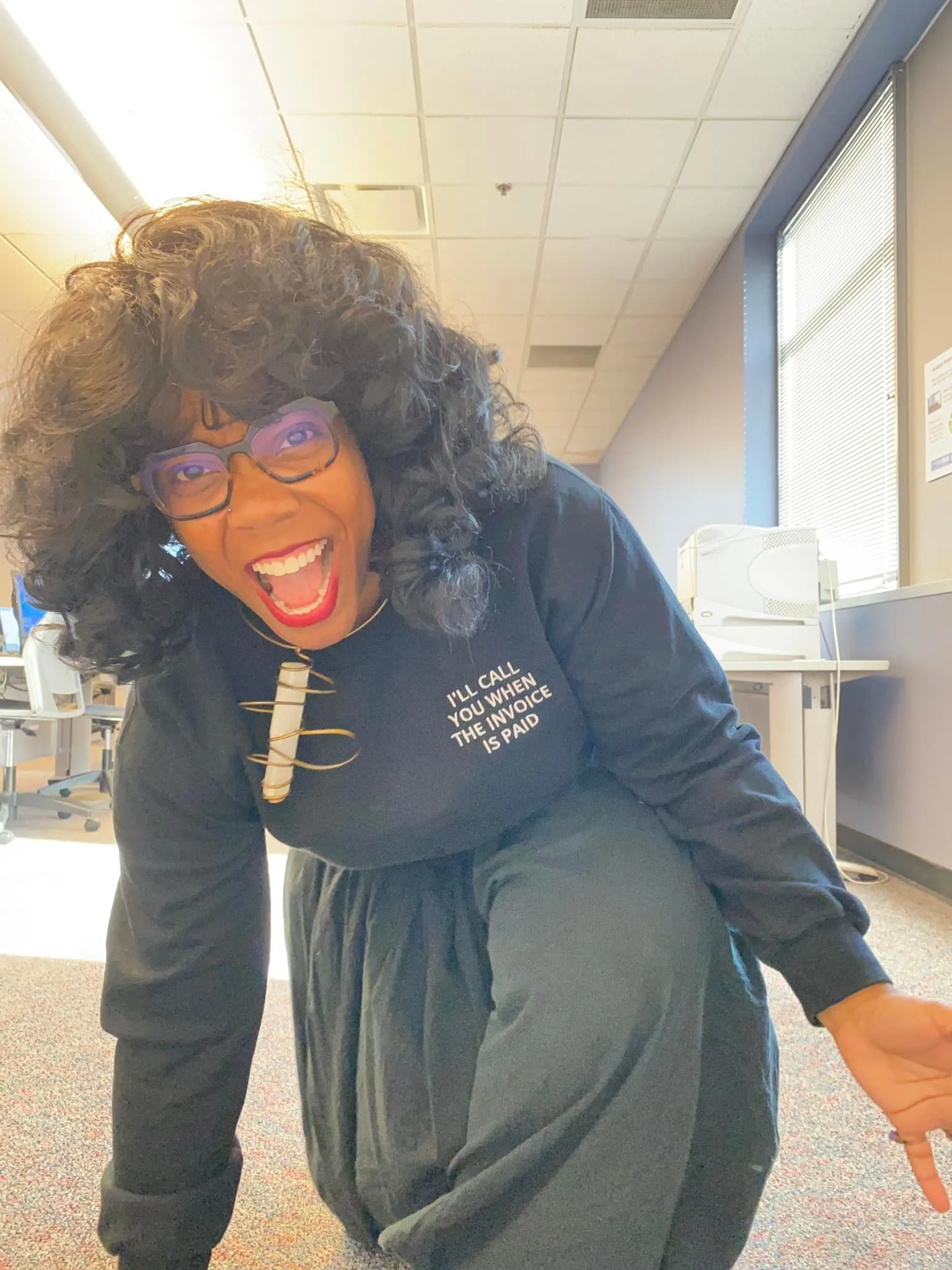
But I knew that though I was in front of the camera in a lot of ways, music wasn't the way I wanted to be in front of the camera. But that's where my creative ingenuity comes from, really always thinking about how to bring art and the arts into the work that I do. So a lot of my work does infuse art in some way.
Then the last kind of layer is probably entrepreneurship. As I mentioned earlier, I'm a born entrepreneur. My first business was in, I think, second grade. I was at a local Boys and Girls Club, I believe it was, and I was making jewelry and I was selling jewelry.
They called my parents one time and said, "She's taking all their money. You have to stop her from taking their lunch money."
So that was when I knew that I was risky and innovative in some way because this was disrupting some part of the process of just coming into this place and having a good time.
I had several businesses. My latest business, of course, is communications and community engagement, and I've been running this business almost 16 years.
So it's been a huge theme of my life to really be looking at the box and then figuring out maybe how we tear the box down, figure out how we create a new box, figure out how we stand on top of the box, always trying to just create new ways of thinking. That's been a big part of my life.
So those are kind of the themes. In all of those areas, because you asked about philanthropy, philanthropy has been so important.
Even with my own business, I had an innovation fund where I gave small businesses microgrants to be able to do something innovative within their business, whether it was buying an accounting system, buying software, going to a sales conference, purchasing inventory. We funded someone to finish up the flooring in their physical location. Anything that was going to help them innovate and do better for themselves.
So philanthropy is such a huge part of my life, and because of that, I lead the Black Philanthropy Initiative.
Our first initiative through that, where I co-chair Give Black, Give Back through the Community Foundation of Middle Tennessee with my co-chair Lisa Y. Young, it's really an opportunity for us to amplify the Black-led funds that are at the Community Foundation, for us to support the Black-led nonprofits in our community, and first educate the community about the racial wealth gap and about why Black philanthropy is so incredibly valuable to each one of us.
That is really important to me, to make sure that we are supporting our local community, in particular people that we have often not supported.
Brandi Fleck: Yeah. I want to dive into some of those details, but for starters, can you define philanthropy for us?
The Difference Between Charity and Philanthropy
Kia Jarmon: Yes. Let me start here because, you know, I'm a teacher by personality and profession, so I want to give a little history.
In almost every faith institution, there is some version of charity that's written or listed in their doctrine. Charity is being able to assess and then assign charitable giving contribution in some way to a need.
The thing about charity is that it is beholden to the funder. The funder is the one who gives the money, so they dictate the need, and that is very challenging.
That's the reason why I say we'll be here for a while because if you dictate the need, let me give you an example. If you say that people experiencing homelessness need coats, that's the need, to keep them warm, that's charity.
What I'm advocating for is a more just philanthropic model, which is to say, no, they need housing.
So the way that philanthropy works is this very charitable model of, "I'm going to dictate the need because I have the money, and I'm going to keep you in a place where you need to somehow always need me. Always need me." That's the way that charity works.
Now what I'm working toward is this more just philanthropy model, which is really about the community dictating the need, and they lead their own need.
So I can be here as someone with dollars to support them, but I cannot then tell them what the need is. I can help them fulfill the need, and that's a significant difference.
There are so many organizations, and I've had conversations with them where I say, "Who told you this was the need?" and they say, "Well, the funder."
How does the funder know what it's like to be impoverished? How does the funder know what it's like to not have access to resources?
Then for me, what's also most important, as well as those who want to work toward a more just philanthropic movement, what we also want to make sure of is that those who are able to receive support then understand how to become philanthropists themselves because they want to make sure no one else has to experience the way they've experienced it.
That's the cyclical effect of what philanthropy can be.
Okay, but what it currently is, is charity. It is, "I dictate the need for you. When you need me again, you come back to me." It's this bigger savior mentality, which is not helpful to how we develop and redefine ourselves as a more just, humane society.
Brandi Fleck: Yeah. For people, so this is why we lack humanity because there are always groups of people trying to keep certain parts of our community in one place, which is on a lower rung, lower caste system, lower class system, and there's always a community of people who are billionaires who are shooting themselves into space.
It makes sense that the person who has the need would define the need.
Kia Jarmon: I mean, absolutely. Again, I used the language earlier about how we demonize people in their positions. What we assume is that if you are somehow in a position of poverty or in a position of being in the margins in some way of our society, there is an assumption that you're not smart enough to manage your own liberation, which is not true. It's not true, but that's the way it's been treated.
If we start going back to the origins of philanthropy, we start looking at those early philanthropists in our society, from the Harvards to the Rockefellers to the Carnegies. When we start looking at those family units, what we're starting to see is how they wanted to dictate how the world was going to operate and acting as if people are not smart enough to create their own opportunities for growth and development.
You can with the proper resources, but people are not given the proper resources. They're given the resources that funders want to give them, that philanthropists want to give them.
I'm trying to make sure that people know that you can be a philanthropist even if you don't have a large checkbook.
How we define philanthropy really is time, talent, treasure, and testimony. Time is so much more than treasure in a lot of instances because think about how much you can go and you can sell on eBay, you can create a Patreon page, you can never get more time.
When you think about being with your children, you can never get more time with them. You can spend all the money in the world, you never get more. You cannot pay for more time.
But we underestimate how much it takes to donate our time to boards and commissions and be out in the community volunteering. We never call that philanthropy, but that is philanthropy because you're giving of your greatest asset, which is your time.
We talk about talent, which is, of course, using your skill, your knowledge, particularly what you use maybe in your workplace, using that talent to really support an organization or people.
Of course, treasure is your money.
We talk about testimony and truth being an opportunity for you to share your story so that in some way someone is able to be better because of that, because we share with each other, which is a lot of what Give Black, Give Back has been doing, is that testimony sharing.
When we do that, then we're able to enrich our community as well.
So that's why philanthropy, really redefining and decolonizing philanthropy, is so important when it comes to the process of giving and receiving.
Brandi Fleck: How and why does race factor in?
Black Philanthropy and the Racial Wealth Gap
Kia Jarmon: Yeah. In a lot of instances, not necessarily the origin of philanthropy, but in a lot of instances race has been a huge part of it because there have been white saviors, so those people who come into the community.
When I think about Andrew Carnegie and this committee of education, this kind of education philanthropy group that he was a part of, began to provide funding for historically Black colleges and universities.
When I talk to students, particularly college students, about this, I ask them, "Why do you think that a white funder who, if I read his doctrine, was not necessarily anti-Black in his words, but his actions may be, why do you think he would give money to a historically Black college or university?"
So there's always a round of answers, but the answers were because he can then manage industry.
When you give the money, you manage how the industry works. You manage who gets to come out of education with a certain degree. You get a chance to manage the books they're in.
He also specifically would fund libraries on historically Black college campuses, so you get to manage what books they can read. You get to manage what they're doing.
When we go back to the origins of slavery, and if you go to the coast of Ghana as an example, right beside where the slaves were held, there was a church. They would pray for the ship to arrive safely to America with Black enslaved people on it.
So again, we're talking about how race, how religion, has played a huge role in the harm of philanthropy and thinking that they're fulfilling a need.
They are fulfilling a need in some way, but it's not the need of the people.
So that's why race, in particular racism, has come into the conversation and how it's been very harmful.
We see it all the time in other industries as well where white philanthropists come in and want to save.
If you remember, I give an example from maybe the '90s when I was growing up. We would, on television, I can't remember her name, maybe it was Sally Struthers or something, but she would be over in some part of Africa with these little children, and they'd all have these flies around them, and "If you give two dollars a day, here's what you can contribute," right? Because we've got to go save these people.
That is not the true depiction of what is happening on the continent. As someone who has visited parts of the continent of Africa, as my mother has visited, my friends who have visited different countries in Africa, that is not the story.
That's another example of, "I'm going to show you the need of these people who somehow need me to come and save them."
Aside from white supremacy, we call it the nonprofit industrial complex, which is where you continue to do the work of government or big business in some way to act as if you're going to be helpful, but really you are keeping them in whatever holding space that they're in. You're doing some level of harm to them.
Most nonprofits, depending on the industry, 80 to 95% of our nonprofits across the world are white-led, and most of the people who receive any type of assistance are Black and brown people.
Brandi Fleck: Okay. How do we start not perpetuating systemic racism in philanthropy?
Kia Jarmon: Yeah. Part of it is going to, as I think I mentioned this earlier, finding the history from the storytellers themselves.
In most every industry, because I talk with medical students, I talk with nonprofit leaders, I talk with educators, in most every industry there's a father of the industry. I'm using my air quotes. Psychology is the same way.
In all those industries, those are usually white men. For the most part in this country, white men have not invented anything. The people who invented, though, don't have the opportunity to take it to market.
So this is why we're learning about inventions on the books, even something like Jack Daniel's and Uncle Nearest. So Jack Daniel's is the white man who had a young Black man who was teaching him the whiskey-making process, just as an example, right?
Then Fawn Weaver and family have taken that story and made sure that it is being told properly, but how long did it take for that story to be told?
So it's really important to go to the truth tellers when we look at certain industries. Go and find the stories of the people who were working, sometimes enslaved or in indentured servitude to those white men. Go and find those stories.
The best place to find them is, I always say, if you can find Black and Indigenous writers or women because that's usually where the truth is being told. Not always, but usually if you can go find those books.
It also is important for people to hire Black leaders who can help steer these processes for them.
Very often what's happening is that when you work through the decolonization process, decolonizing your mind, your thinking, your book list, all of that, when you are doing that, usually you're leaning to your own understanding, but you don't understand because this is why you're decolonizing.
So going and getting some assistance, paying people for their labor, paying people for their time to be able to support you in that process of understanding.
Those are just a couple of ways to really understand the truth.
It does not take me long when I book a speaking engagement, and because I start with history, I'm not an expert in everything that happens in the world. What I am is a good researcher. I am someone who goes and digs deeper. I read a lot of content. I read more and read more and read more. So I find one piece of one white paper, and then I go look at all of the resources, and I go find more and more and more.
The same thing should happen with people looking to decolonize their thinking. You could do this even simply through social media.
I'm giving you the kind of researcher approach, but on social media, when I go and find an Indigenous page where I want to learn more about what it is to be Native, and not that I'm going to be them, but I want to be more mindful of how I operate with people who are and who've been in this world longer than I have, in this country longer than I have, then I go find them.
But you know what Instagram does? It says, "These are other people who you might be interested in following," and I go follow them too, and I listen and I learn and I share their information. Not as my own, I share their information and I encourage people to go find them because that's how it works for me to make sure that I'm not centering myself in their story and truth telling, which is also a part of that decolonization process.
Those are just a few ways I would suggest for people to think about how to decolonize philanthropy for themselves.
But also, I'm going to encourage you to give Black. Yes, give to Black organizations because what we found based on research is that when you give to large white-led nonprofits, about 3% actually goes to the people who are most being served to receive the funds.
But when you give to a Black-led organization, we found that upwards of 90-plus percent of that funding is going to go directly into the community.
So that's a huge disparity in who's being served and supported. So it's important that you give directly to Black-led organizations because they are giving directly back to the community. They're not holding on to the money. They're not trying to make a bunch of money and profit. Although they are in some level of business, they are trying to make sure that people are taken care of and people are doing well and able to be liberated in some way in their own process.
Brandi Fleck: Yeah, and to that point, the fact that we're even sort of talking about the differences between white philanthropy or the nonprofit industrial complex and then Black philanthropy, I mean, that just showcases one way there's a divide there that this country, like you said earlier, has been founded on or is the root of everything.
I would just love to know, what is your vision for healing that divide? What do you see?
Kia Jarmon: Yeah. Okay, so the contrarian in me leans to, I don't know how much we heal.
Rebellious Joy, Hope, and Healing in Black Communities
I encourage Black people to heal through rebellious joy, which is joy that they are sometimes perceived not to be able to have.
So for me, I purchased an RV. There's actually a very large Black RV community that no one talks about, no one acknowledges, but there are communities, and I'm in those communities, and it's amazing to see people living freely on the land, living off the grid, purchasing large amounts of land, doing all these amazing things, opening RV parks.
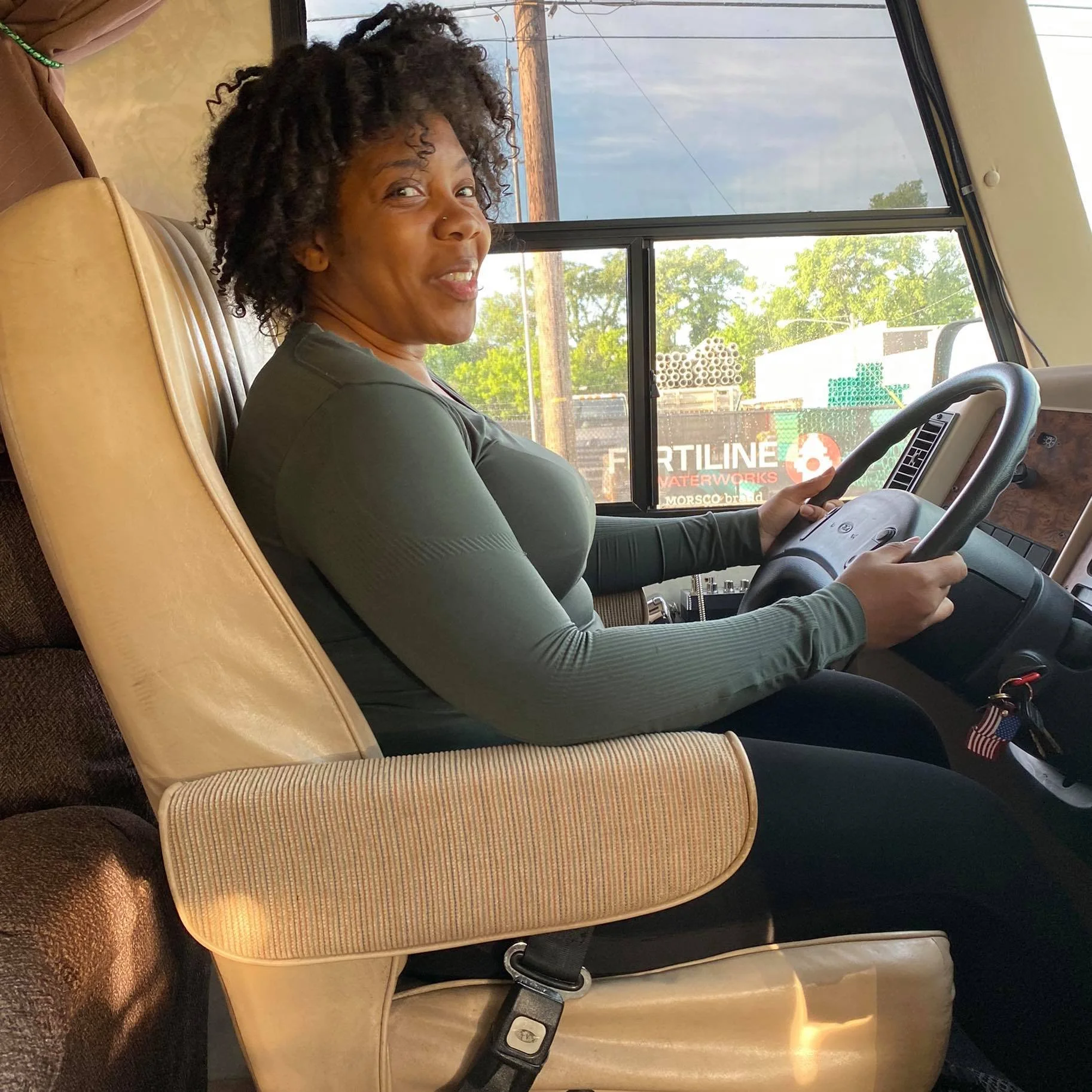
I have a list of maybe 50 or 60 RV parks across the country. So that's rebellious joy because it is counter to what the world wants us to be.
So I encourage Black people to heal, and then I encourage white people to do the work. The work means that sometimes you've got to stand up and be very uncomfortable with what you're seeing and what you're experiencing.
I had an opportunity this semester to teach at a local university, and I was teaching a social media class. Because I am about justice and humanity, I'm always asking them questions about that in the online space.
Many of them had removed family members from their social media. Many of them had not talked to family members over this last year and a half because it was so interesting because we were putting on masks, and there were so many people pulling masks off in terms of unmasking themselves in their racist nature, their sexist nature, their homophobic nature in the midst of this global pandemic.
So many of them had been removing folks in their universe who had been harmful.
It would be important for white people to say, "I've got to stand up for this, and I've got to have these conversations because I can't expect for Black and brown people to do this work and to carry the load. It is too much."
So that's where the healing part comes in, is that we need people to be uncomfortable because if you are Black in this country or brown in this country, you've been uncomfortable likely your whole time being here.
That's where the healing is.
I can't speak to the healing for white people because I believe the work needs to happen right now, and then in another time we may be able to talk about what healing looks like.
Okay, I do believe there is trauma in the white community that needs to be addressed, so collective and communal trauma.
If you were taken to a lynching as a young child and you had to watch a Black person be lynched, of course you carry that.
In my classes I teach about epigenetics and collective trauma, and epigenetics is really where your genes begin to adapt to the environment.
An example is a study that I pulled of Holocaust survivors' children, and the children's genes were more apt to withhold stress, withhold trauma. If they were starved, they knew how to adapt to that. They knew that death might be imminent at some point.
This is the children of Holocaust survivors.
So I want people to then imagine what the children or descendants of child slavery in this country would be experiencing.
I say that to say that it's not just Black people in trauma. It is also white people in trauma.
I use the example of the Holocaust, but white people in America also have trauma, and there probably needs to be some conversation around that level of trauma.
Again, when you are going to lynchings and then that generation that was young are then spitting on people at lunch counters, and then that generation that was young were at the January 6th insurrection, that's the experience that our country has been having, is that children have been growing up to become the terrorists of our world, and we haven't addressed this collective trauma that has also continued to be spewed on Black and brown people in this world.
Brandi Fleck: Yeah. I just got chills during everything you just said. I mean, yeah, it's a lot.
Everybody who comes on this show at some point or another ends up mentioning the trauma they've experienced, so I totally agree with the collective trauma.
Kia Jarmon: Yeah. Okay. You know, I told you, I tell the truth.
Brandi Fleck: Yes.
Kia Jarmon: It's a hard and heavy truth. It's an uncomfortable truth. It is, but it is required.
Brandi Fleck: Yeah.
Kia Jarmon: I look at it like it's my requirement every platform I receive to talk about it and allow people to do their own research. My job is not to tell you everything. My job is to give people the place to say, "I'm going to go find out more about this," and that's what I hope our conversation today creates for them.
Brandi Fleck: Absolutely. I mean, you've brought up so many good points.
I would love for people to know you a little better because when you tell these hard truths, I don't know, sometimes it's hard for people to hear, but what is it like to be you?
Kia Jarmon: Yeah, it's interesting because you're not necessarily the first person to ask that question.
Someone else was asking it in the framing of, "I always worry about what it's like to share the truth the way that you share it. What's the result of that?"
The result of that is that sometimes I have racist things that happen to me. I have some interesting things in my inbox sometimes, on social media.
Sometimes it means that I am reprimanded behind closed doors by powerful influences because they don't like the way that I'm talking about something, and I'm going to keep saying it.
Sometimes it means that I send my son to sleep at somebody else's house, like his dad's or my grandparents' or my parents', so that he's not unsafe. That's a real thing because you don't know if people will try to show up and do something to you.
We travel quite a bit, and I'm always clear that I believe in the Second Amendment.
It's hard as a Black woman with a Black son, a single Black woman with a Black son, and I say that because that's just me, it's even more pressure on me to make sure that I'm paying attention to what's happening.
I have a son who is, I don't know, the freest kid I've ever met. He so doesn't see anything happening in the world, as most children. Most children shouldn't have to be exposed or see things, although I will say that Black and white children, brown children alike, learn about race very early, and Black children learn about racism very early.
I sometimes ask that in my classes. The other day, or maybe a few months ago, my dad reminded me of the first time I heard the N-word. I had forgotten, and I don't know, I must have been in first or second grade. I had forgotten because you don't want to live in that. You don't want to live in the harm of that.
So I was so emotional about knowing that my little self had to experience that.
I've also asked friends of mine, "When was the first time you remember something really hurtful happening?" and they remember clearly. They remember first and second grade. They remember very early.
This is why it's important very early to educate your children about the differences of who we are and why that is magnificent, why that is so important and exciting that people can be different and also be in community. That is beautiful.
So being me is also fabulous. I love, you know, I wear lots of jewelry. I wear big hair. I love fashion. I have a good time. I am always bright in some way. I wear purple almost every day because I believe you deserve a royal experience no matter what's happening.
So again, we live in this constant dichotomy of left and right, up and down, Black and white. We're living that very much so, and I live in that also.
Brandi Fleck: Okay. Do you consider yourself a healer? Because I think some of the things I've seen you do, I saw you do the singing bowls, and do you do Reiki and things like that?
Kia Jarmon: I do. I have a singing bowl here. I have the chime in my room. I have crystals on my table, and I have lots of crystals in my house. I have crystals in every room. Even my coasters, not that anybody can see this, but I'm just describing, even my coasters are crystals.
Brandi Fleck: That's awesome.
Kia Jarmon: I have not self-proclaimed as a healer, but this is not the first time that someone has asked me if I am, and I guess I should just lean into it.
I absolutely believe that intuitively I am very spiritually in tune and attuned because of Reiki or through Reiki, and I definitely like the opportunity to help people understand how to use their energy and their power and their presence to be the fullness of who they are.
When you asked earlier about what my purpose in life is, it is to inspire people to change in some way or to transform in some way. So all of the things that I do, I guess they would be healing in some way.
I'll be adding it to my bio.
Brandi Fleck: There you go.
Kia Jarmon: Thank you, Brandi. I'll be adding that to my bio: healer.
But I do think that that is really a lot of who I am. I'm not so contrarian that I don't believe in hope because hope is such an important part of every person's journey.
I talk about that a lot because when you lose hope, you lose everything. I do hope to bring hope to other people and their walk in this world, particularly with all the things I just said, all the heavy stuff I just said.
Brandi Fleck: Yeah.
Kia Jarmon: You can't leave people there. You have to then help them to navigate their own transition.
My job is not to necessarily close you up. My job is to help guide you toward your own understanding. So I stand beside you versus sit in front of you. I ask you questions versus giving you solutions.
That's very much the process that I am in now and over the last several years, and it is a very healing-centered approach for sure.
Brandi Fleck: Yeah. I feel like when you talk about rebellious joy and radical and rebellious joy and incorporating that into your life, that's all part of healing.
So can you just describe the importance of that joy and why it's so necessary?
Kia Jarmon: Yes. I don't even know if I knew the importance of joy until two things.
One, I used to have a client, Mignon Francois of The Cupcake Collection, who talks about joy all the time, and she is literally an orange cloud. I mean, she is always a ray of sunshine. So watching her has shown me the importance of joy, in particular for her in the middle of her adversity, some of the things that she had to do to build up her very successful cupcake business.
That's one. Then I also realized a long time ago my grandmother, who I'm very similar to, changed her legal name to Joy. I realized how important joy was when she did that. She changed her legal name to Reverend Joy.
She did that because everything that we have the opportunity to do, no matter all these, again, heavy conversations, it is important for me to also find my way back to joy.
It is important, particularly as a mother, for me to find a way. My son is my greatest legacy. People will hear me and hopefully do something with it, but my son is my greatest legacy I'll leave this world.
So I want him to understand joy in a way that sometimes the world will not give him an opportunity to. So he needs to see it in his own home and experience it in his own life, and so that is important.
We have to find our way back to peace. We can't be in pieces. We have to fully commit to finding peace, and as a result of that, joy is an absolute byproduct of seeking that peace always for ourselves.
So I want to be joyful because if I didn't, I don't know, I may be depressed because the work I do and the world I live in are both very heavy, particularly when you're aware of what is happening, and I'm very aware and present in what's happening.
So if I didn't find my way back to joy, whatever the opposite of that is, I would probably be, and I don't want to be that. That's not the ordination I have in my life. My life is to do something bigger than that, and I want to do that for people with joy.
Brandi Fleck: Yeah. All right.
Oh, Kia, where can people find you and your work and all of those things that you put out into the world?
Kia Jarmon: Yes. Thank you, one, for having me, Brandi. This is magical.
We talked about it years ago when we first met, and I was like, "I would love to talk to you, to be on your podcast." It might have been brand new or newer at that time.
So I'm so glad to see you still moving and being on a topic I love about humanity and amplifying the human experience.
But you can find me at Kia Jarmon in all places. So kiajarmon.com. I'm on @kiajarmon on Facebook, on Twitter, on Instagram, on LinkedIn.
Then my company is mepragency.com. People can find me there also. But this has been great, Brandi. Thank you.
Brandi Fleck: Awesome. Thank you so much. I just love everything you have to say.
Kia Jarmon: Yes. Well, thank you. I'm happy to be here and would love to come back.
Join the conversation!
Feel free to share your own experience and let me know if you have any questions in the comments.
Related Posts










Hi, I’m the founder of Human Amplified. I’m Brandi Fleck, a recognized communications and interviewing expert, a writer, an artist, and a private practice, certified trauma-informed life coach and Reiki healer. No matter how you interact with me, I help you tell and change your story so you can feel more like yourself. So welcome!
Find More on the Blog
Topic
- ADHD
- AI
- Atlanta
- Black and BIPOC
- DIY
- FAQ
- LGBTQIA plus
- Los Angeles
- Nashville
- Seattle
- St Louis
- St. Louis
- UFOS/UAPs/ETs
- abuse
- accountability
- addiction and recovery
- adoption
- affirmations
- afterlife
- altered state
- angels
- animals
- anxiety management
- art
- astrology
- atlanta
- attachment
- awakening
- beauty
- behind the scenes
- being human
- body image
- body work
- boundaries
- brandi fleck
- breathwork
- bullying
- burn out
- burnout
- cancer
- career
- caretaking
- chakras
- channeled
- clarity-dive
- clarity-practice
- clarity-primer
- clean products
- coach
- codependency
Recent Blog Posts
Visit the Full Podcast Audio Archive

Affiliate