The Modern Masculinity Crisis
Interview By Brandi Fleck

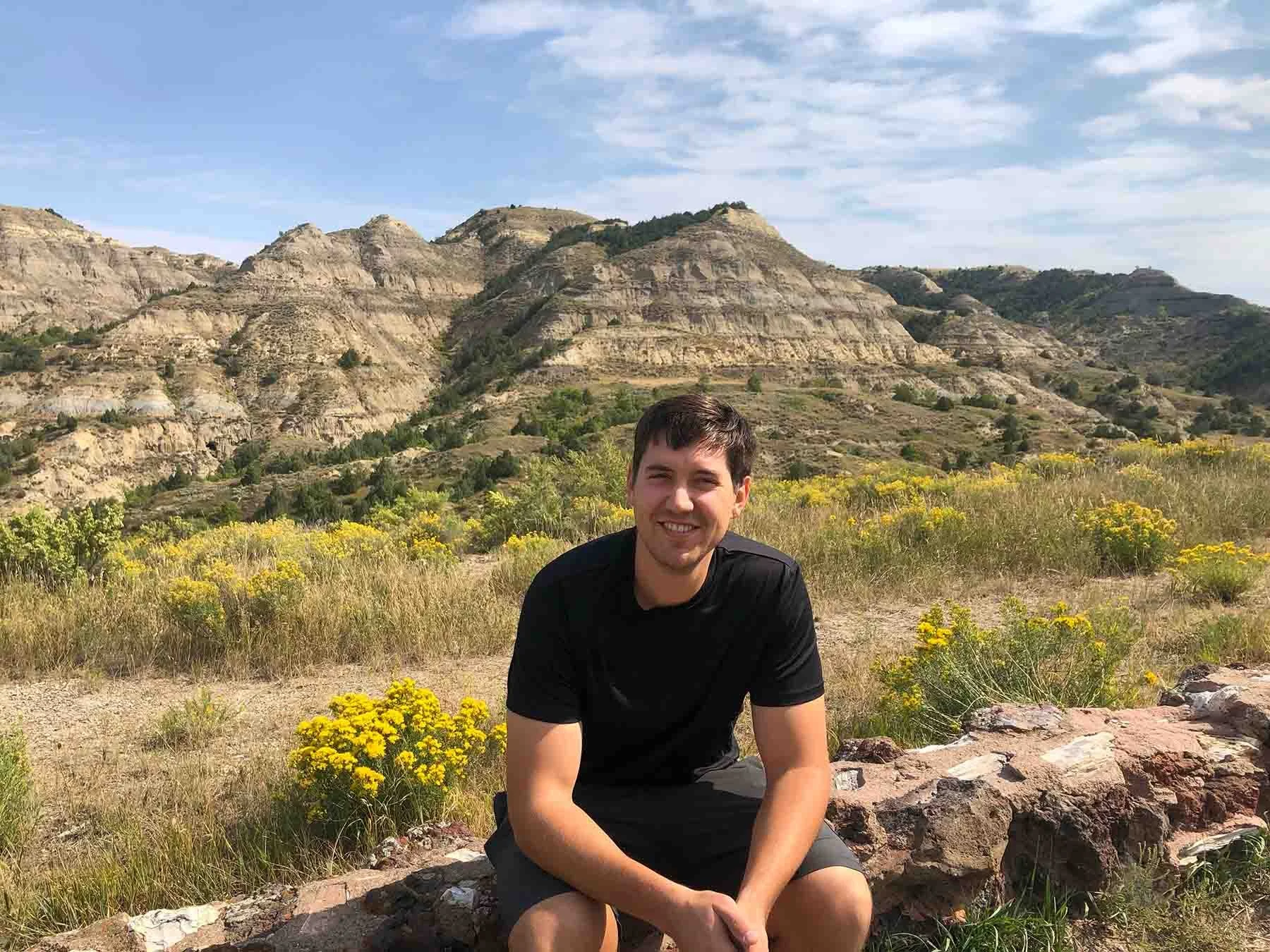
Mike Hutchinson explores masculinity, rage, men's mental health, and why many men feel lost in modern society.
What happens when boys grow up without a clear path into manhood?
Mike Hutchinson expands on themes from his adoption story to explore masculinity, rage, emotional resilience, and the challenges facing men today.
Drawing from his experiences with adoption, military service, martial arts, fatherhood, and faith, Mike shares how his understanding of masculinity was shaped by the people who raised him and the environments that demanded strength, discipline, and self-control.
We examine the difference between healthy masculinity and toxic masculinity, why so many men struggle to express emotion, the role of fathers and male mentorship, and what Mike believes is driving the modern masculinity crisis.
Whether you agree with his perspective or not, this is an unfiltered look at how one man understands masculinity, purpose, responsibility, and the emotional lives of men.
Listen to Mike Hutchinson’s Interview
Watch Mike Hutchinson’s Interview
Healthy Masculinity vs Toxic Masculinity
Mike Hutchinson: I am Mike Hutchinson. Women just kind of are feminine. Masculinity is something you almost have to be initiated into.
Brandi Fleck: Today's guest, Mike Hutchinson, passionately explores the topic of masculinity and emotions such as rage as a follow-up to telling his adoption story in the previous episode, 70. There, we explored how certain familial relationships have impacted his identity and life path. Let us know what your experience of masculinity is in the comments.
Remember to subscribe to Human Amplified on your favorite podcast platforms if you haven't already, and leave us a rating and review.
You can easily access rage. That's the one that you can display. Can you explain that to us?
Mike Hutchinson: Yeah. As a kid, I kind of had a hair trigger emotionally, so it didn't take much for you to reduce me to tears. The slightest criticism or anything, and I would just bawl.
I was raised with a family that had a very traditional, very Southern view of masculinity. Between my father and my grandfather, they choked that out of me fairly young.
In addition to the fact that one of the lessons that I took from a lot of that as a child, and certainly I'm sure that this probably wasn't intentional, was that any sort of emotional display did not end well. So that was a big part of learning how to manage my emotions.
One of the things that I hear women complain about a lot is that, "My husband's so unemotional. He's so closed off," and so on and so forth. There's an alternate way to look at that. I would invite you to consider looking at it as emotional maturity rather than being closed off, okay? That this is a person who is laboring to handle their emotions in a mature, healthy way, and that doesn't always look like an open emotional display.
I will also point out that when men hit puberty, one of the things that happens is that our tear ducts change, whereas women's don't. Women very much retain the juvenile structure of their tear ducts, which means that they're more shallow. Men's tear ducts are much deeper. Add to that the traditional "boys don't cry," and you're being taught to rein that in as a child.
Here's a rule of thumb for you. If you see a dude crying, he either just broke something, like he snapped his femur and part of his leg is in the next state, or something is really wrong. It's because it's actually physically more difficult for men to openly weep. So for a man to reach that point, something's going on.
I was also the kid that cried when I was angry. If you got me really angry, I would start crying.
I would later find out, when I was seeing the counselor that I mentioned earlier, he had done some work elsewhere and he was like, "The one common factor that all of the guys that I've counseled in prison who are imprisoned for murder is that they all cry when they're angry."
I was like, "Oh, well, that's helpful to know." Now I've got something else to be anxious about. Am I two days from being a serial killer or something? You're supposed to be helping me, man. That didn't help.
The other piece of that puzzle is that being abandoned as a kid really left me with a lot of rage that was right under the surface, and I didn't always understand that. That rage was very closely connected to my understanding of adoption because I had a very poor understanding of my adoption at the time. For me, it was rejection and abandonment, and that didn't always lead to really good places.
When I was in middle school, and this sticks out for me because, to this day, it is one of the most frightening experiences that I have had, there was a guy at the middle school that picked that day to make me his target. He was just chirping at me all day long, trying to provoke me.
It was lunchtime, and we're standing at the far end of the middle school building at Indian Land Middle School in Lancaster County, South Carolina. Big red metal doors at the end of the building. His name was Jason, and I was standing there. His back was to the doors, and I was facing him. My back was kind of toward the gravel area that was there.
He said, "You know, the reason your mom gave you up was because you're a worthless piece of shit who's never going to amount to anything."
He just really went after me.
That's the last thing that I remember before three football coaches were pulling me off him.
A friend that was a year ahead of me in school was up on the football field where we all had recess, so he was about 50 or so yards away. He told me later, "When you hit him the first time, I heard it on the football field. I heard the blow and then his head bounce off the door."
Apparently, I hit him, and then when he went down, I just climbed on top of him and tried to kill him. I wailed on him, to use a granddaddy-ism. My grandfather would have said I beat him like a rented mule.
That rage was there, and I had been taught through martial arts and other areas how to access that quickly because one of the things that you deal with in a self-protection situation is that you certainly can be ambushed. You might not see that threat coming. You weren't able to evade, you weren't able to escape, you weren't able to de-escalate, and this thing is just on you.
When that happens, you go through what everyone is familiar with, which is the fight-or-flight reflex. What most people forget is that it's not fight or flight. It's fight, flight, or freeze.
One response to sudden input of that nature is to freeze. You just lock up. The only way to get out of that is to access rage and indignation.
When that happens, your body is dumped with adrenaline. You start dealing with visual exclusion, auditory exclusion, and you've got massive amounts of adrenaline dumping into your body from the adrenal system.
At that moment, your body is like a high-end Maserati that's sitting at a stoplight. The light has turned green, you're in neutral, and you're just revving the gas. You've got to get it into first. The way that you get it into first is to go to rage and indignation.
"How dare you? How dare you put your hands on me? How dare you threaten my life? How dare you put me in a position to take me away from my family, my wife, the woman that I love, potentially my children?"
Those sorts of things.
Brandi Fleck: Yeah.
Mike Hutchinson: That's how you break out of the freeze and get back in the fight.
One of the things that means is that you also have to treat every threat that you encounter like it's a level 10 on the threat scale, like this is a legitimate threat to my life because that's the only way to get up the violence curve fast enough.
Of course, if that person is not a level 10 threat, you can dial that down. But if this person is a level 10 threat and you treat him like he's a level 3, you're going to regret that because there's a real good chance that ends with you in the hospital.
All of that is in my background, and all of that feeds into the fact that anger and sheer rage are always real close to the surface and real easy for me to access because my entire life, the ability to access rage was what kept me safe.
I'm dealing with a guy who wants to pound my head in. The only way to deal with that is to go to rage and indignation.
I'm in the Army. The way to deal with that and the way to deal with the threats that you're presented with in the military is to deal with it through rage and indignation.
If you face an ambush in the military, the way that you deal with the ambush is not by running away. It's by turning into the ambush and executing an immediate counterattack.
You don't shrivel up and freeze. You turn into the guns and you start putting rounds downrange.
You're working the door in a club where people are getting stabbed every other night and where guys are going to violence at the doorway every night because you won't let them in. The way to deal with that threat is to go to rage and indignation.
I have taught myself. There's a neurological channel that's just carved into my brain that'll take me straight to anger very, very quickly.
Now, the downside of that is that one of the other things that came out of that is that I have also spent a great deal of my life focusing on the intellectual and not the emotional because the intellectual was safe. I don't have to feel anything there, and my emotions often I didn't see as very safe.
When you put all of those things together, what you wind up with is a person who has easy access to rage and anger and who often can't identify other emotions that he feels.
It is very often even difficult for me to identify happiness because I don't expect to be happy. I expect to be rejected. I expect to be miserable.
Because of that, identifying happiness, identifying sadness, identifying those other things are extremely difficult for me.
If I'm dealing with something that's a highly emotional topic for me, it may take days or even weeks afterward for me to be able to take that knotted ball of emotional yarn and start picking it apart and identify, "Okay, so I felt this. That's what that emotion was. I felt that. That's what that emotion was."
That's a very difficult thing for me.
Brandi Fleck: Okay. I didn't expect to go this route, but I would love to talk about healthy masculinity versus toxic masculinity.
It sounds to me like you're just, as a child, you were a highly sensitive person. Because of the interactions that you had, you learned that it wasn't safe to be highly sensitive.
What are your thoughts? I mean, you've adjusted and you've adapted. You had to adapt.
Mike Hutchinson: Yeah.
Brandi Fleck: Now you've got this one emotion you have easy access to, right?
Mike Hutchinson: First, I would say that I don't think it's entirely fair to chalk that up completely to masculinity or even to toxic masculinity.
I have my own issues with the concept of toxic masculinity. I think that we have taken something that's truly a very narrow band and a very narrow category, and we've started to take it and apply it across a lot of normal, healthy male behaviors.
I am very reticent even to use the phrase toxic masculinity now because it is so liable to being misunderstood.

Emotional Suppression, Mental Health, and Male Resilience
However, that being said, you can't walk through life as a raw, exposed nerve. That's not healthy either. When everything's coming at you a thousand miles an hour and you're constantly in this state of emotional turmoil, at some point you have to be able to deal with that.
For the sake of complete and total clarity, and for the sake of complete total honesty, I don't buy the theory of evolution. However, I could, based on all of the reading that I've done in evolutionary theory, make a case that what's mostly chalked up as men being closed off emotionally is actually an evolutionary adaptation to the environment in which we live.
That's something that has to be considered.
Even if you don't buy the theory of evolution in the way that I don't, there's still the reality that we come from cultures that are thousands upon thousands upon thousands of years old. All of the learned behavior that has kept us alive and healthy over those thousands upon thousands of years has been handed down to us, and they've been handed down to us for a reason, because they work.
There is something to be said for being that strong, stable individual who isn't being pushed about by their emotions and constantly struggling to get themselves under control.
I'm grateful for that. I really am. I'm grateful for the fact that I was taught that as a kid because if I had stayed that super-sensitive child, and I had stayed that raw nerve that was just exposed to everything that was flying at them, I would not have survived.
You can't live that way. I would have died very young because I've always had a bent toward darkness. I've always had a bent toward depression. I am bipolar. That is something that I live with. Suicidal ideation was the norm for me through high school and in the Army.
If you take all of those things and you put them together, dead man walking, baby. That's what you've got.
Why Men Struggle to Identify Their Emotions
The other side of that coin is that there is such a thing as being too stable, maybe, or too unmoved, rigid by the world that's around you.
For me, emotion shows up in really strange places.
You could take me out in the front yard tonight and beat me with a sledgehammer handle, and I probably wouldn't make a sound or shed a single tear because you don't show weakness.
Put me in front of a television and they play the national anthem before a baseball game, and I'm reduced to blubbering tears.
That's where it shows up. I know that this probably sounds so stupid to people that are listening to this, but a great comeback story for me will almost always reduce me to tears.
Seeing somebody that has faced horrid circumstances, a person who has had everything against them, explode into success. I'm getting teary sitting here talking about it.
Some books do that for me.
I was a huge fan of Robert Jordan's Wheel of Time series. Very much a fantasy genre, similar to The Lord of the Rings by J.R.R. Tolkien.
I grew up with those characters. The first book came out in 1990 or 1993, and the last book was published just a few years ago. These were characters that have gone through my whole childhood with me.
There was one in particular. It was a little boy whose parents were killed in this story. The whole character arc, what drives this character, is wanting to find the people that killed his family and get vengeance.
He's taken very much under the wing of another character named Noal. He's an older man and helps initiate him into the world.
Then Noal is killed in the second-to-last book.
Part of the story of this novel is one piece of the magical element. There's this horn, the Horn of Valere, that can call dead heroes back from the grave. This horn is going to be sounded before the Last Battle, and these heroes will return and help defeat the Dark One, Shai'tan, who's trying to overtake the world.
There's this moment in the final book where the little boy is being attacked by Trollocs. They're like orcs. He's hiding under this cart where they're trying to reach him to kill him and eat him.
He's curled up in a ball with the case that the horn is in and finally pulls the thing out and blows it.
When he does, the orcs effectively start falling around him, and standing over him is Noal, who's been called back from the grave, and he's there to protect this little boy.
If you're listening to this, you can tell how much that affects me. That just kills me.
Brandi Fleck: Yeah.
Mike Hutchinson: These aren't even real people, for God's sake. Why do I care? Because you relate.
It's a Yankees game, for the love of God. It's not important, right?
I don't know, but there's something about that that I find particularly moving.
Masculinity, Vulnerability, and the Need for Male Role Models
Maybe I should have better access to some of those emotions. Maybe that would have been a better thing. Maybe I had been initiated into masculinity in a different way, and maybe there is a healthier expression of what it is to be a man.
What I can say is that it's worked for thousands of years, and it certainly worked in my family, and it's worked for me with all of its flaws. God knows there are plenty.
One of the more interesting things that happened when my wife and I were dating and we were getting ready to get engaged, and I met her parents for the first time, her dad learned about my military background, which has not come up in this interview, and I'm grateful that it hasn't because it's something that I don't particularly enjoy talking about.
I found out later that my father-in-law told my then-girlfriend, "He is an extraordinarily dangerous individual, but you will never be safer anywhere on the planet than you are with him because of his character."
I think that there's something to be said for taking that really dangerous aspect of masculinity, which is an extremely important piece of masculinity, and wedding it to high moral character.
You have the statement of the Gospels where Jesus says that if someone strikes you on one cheek, turn the other to them so that they can strike you on that one also.
Amen.
But you have to have a cheek to turn first.
We have raised so many weak men, and we have raised so many unhealthy men, that what we're getting isn't helping us now.
Generally speaking, you're getting one of two things.
You're either getting boy children. He's 30 years old, but he hasn't grown up, and he's not dangerous to anybody. He's a cream puff.
Sorry, I know it's not a funny topic, but cream puff is funny, right?
Put him outside the door of the club that I worked at when I was in New York, and in two seconds he's either going to be on the floor knocked out or he's going to be reduced to a puddle of tears because he's not going to be able to take what's coming at him.
Brandi Fleck: I hear you.
Mike Hutchinson: The other thing you get are boys that are never taught how to control that dangerous aspect of their character.
Those boys walk into a high school with an AR-15 and kill people.
Now, that's an interesting statement, for sure.
What we want is between those two extremes, and that's what we're aiming for.
I say this recognizing that I am completely biased in this regard, but one of the institutions that used to help men find that middle ground between not being dangerous at all and being dangerous in a way that was really, really unhealthy for society and extraordinarily dangerous to societal stability was the church.
Sadly, the church isn't that anymore either. We have a masculinity crisis on our hands right now, and no one is finding a solution to it.
On the left, you have folks that want to beat men over the head with the idea of toxic masculinity and tell them their sexuality is toxic, their emotional life is toxic, their very being is toxic.
On the other side, you've got the guys that want to suck you into hardcore alt-right, or the worst of the alt-right, militia movements and those sorts of things because they recognize that this guy's never had a dad. This guy's never been initiated into masculinity. He's an easy target, and he's furious.
That never ends well. Never.
Through history, that guy shoots up a school. That guy becomes a dictator. That guy becomes a tyrant in his own home, beats the fire out of his wife, abuses his children, and goes on to destroy everything he touches. That's what happens.
The church isn't there to help anymore because the guys that we're producing, that we're putting in pulpits now, are cream puffs. They are.
I hate to say that because they're my people, right?
But you graduated from your Christian elementary school, your Christian middle school, your Christian high school, your Christian college. You went to seminary. You've never had a job in the real world. You've never faced real difficulty. You've never been punched in the mouth. You've never had a real girlfriend other than the girl that you're dating.
You have no experience of the real world, and we're going to put you in charge of 400 people?
Brandi Fleck: Yeah.
Mike Hutchinson: That's going to turn out well. Yeah, that's going to turn out great.
The whole way through, the guys that we select are the guys that sat on their hands and were mama's little boys. They were never dangerous, and they had their hair perfectly parted, and that's the guy you put in charge of the church.
Let's be fair. The guy that wrote the Psalms used to kill people for a living, okay?
Brandi Fleck: Right.
Mike Hutchinson: If you want to give me a worship leader for the church, don't give me a guy in a lemon-yellow sweater vest drinking decaf, driving a Cabriolet. Give me a guy that's got some combat time under his belt, okay?
That doesn't have to be physical combat, but give me a guy that's been through something.
Brandi Fleck: Yeah. Life experience.
The Decline of Male Communities and Men's Support Systems
Mike Hutchinson: The only way that you can gain healthy masculinity is through other men.
How do you get initiated into that?
Well, first through your father, and then through a community of men that are able to shore up the weak spots in your father's own explanation of masculinity, to make you better in those areas and to tone you down in areas where you're wrong.
That's how you create healthy masculinity.
But where do men go for that now?
Can't have men's-only clubs anymore. Those are gone. They're gone the way of the dodo.
You get a group of 100 men together and try to talk about this stuff, and then women show up and want to know why they can't be part of it. Then they wedge their way into it, and having a woman there when you're trying to deal with these things fundamentally alters the nature of the conversation.
This was my personal favorite. When the Me Too movement started, I noticed a bunch of men that started posting about their own experience with sexual assault. Then women came out of the woodwork saying, "How dare you hijack this? Why can't you have your own movement?"
I lost my temper with a woman. I was like, "How dare you?"
Because when we start our own movement and we start talking about this stuff among ourselves, you know what happens? You guys show up and you tell us to shut up and sit down because we don't have it as bad as women do, and we're supposed to just suck it up and take it.
Even when we want to deal with those areas where men need to deal with these things, that are highly emotional subjects, and they need to work those emotional issues out, even the people that say that they want that don't.
They don't want to let them do it.
Brandi Fleck: Yeah.
Mike Hutchinson: We have taken men in our country, and men in our churches, and men in our homes, and we have put them in a catch-22 where they cannot win no matter what they do.
You wonder why you can't find decent husbands. You wonder why you can't find decent fathers. You wonder why you've got 40-year-old women who say, "Where did all the good men go?"
You spent the last 50 years killing them.
You got what you wanted. You cut their balls off. You got what you wanted.
How do you like it?
Not working out so well, is it?
It's the same thing that I told my friends that are politically on the left. Again, I am a card-carrying libertarian, so a pox on the Republicans and the Democrats. I don't care for either one of them.
My friends that are on the political left spent years and years arguing and bemoaning the fact that we had the religious right, and that they hated the religious right, and that the right needed to be separated from its religious base.
Donald Trump is the least religious president that I can think of. How's that working out for you? You wanted a nonreligious right. You got it. What do you want now?
Careful what you wish for because you just might get it. Well, that climbed down off my high horse.
Why Many Men Feel Misunderstood in Modern Society
I am extremely passionate about men and about men's issues and the way that I see men treated in larger society.
I see men being abused by their wives. No one believes them.
When the cops show up, the cops have been indoctrinated that it doesn't matter if he's sitting there with broken ribs and blood pouring down his face. He's the one who goes to jail.
A great friend that I grew up with, going to high school, was getting beaten by his wife night after night.
Eventually, it got to the point where, when it would happen, he would go stand outside with all the floodlights on around his house so that when the neighbors called the cops, they would know that he was the one being beaten, not her.
That's the extreme that he had to go to.
When the cops showed up, you know what he was told?
"You better pray that when we show up she doesn't have so much as a broken fingernail, because if her fingernail is split and you're standing here with a stab wound, you're going to jail and getting charged with abusing her."
That's how we treat men. Here's one better.
The Social Cost of Ignoring Men's Issues
We tell men their entire lives that if you just grow up and you just do all of the things that we want you to, and you join the Army, you join the military, and you go and you sacrifice your lives for these things, we'll build a monument to you. We'll make you a statue and we'll put you in the history books, right?
What does that cost us?
We've destroyed the flower of masculinity in its very bud, and we left a gaping hole in its place.
Those are the men you want to turn around and tell are toxic?
How dare you. How dare you do that. How dare you walk up to the guy that's at a construction site and tell him that he hates women?
You're living in a house built by men. You're running an air conditioner built and installed by men that was invented by men.
You're using an internet connection that was developed mostly by men. You're using a microphone that was developed mostly by men.
We all want to talk about the glass ceiling. Nobody wants to talk about the glass cellar. Men are the majority of the ones in prison. Men are the majority of suicides. Ninety-eight percent of workplace deaths.
Men are over three-quarters of the journalists that have been killed in the last 15 years.
Men die day in and day out. Nobody cares. You remember "Bring Back Our Girls," right?
Had that hashtag, Bring Back Our Girls, when the girls in Nigeria were kidnapped by Boko Haram and were carried away and sold into slavery.
You had Michelle Obama on the internet holding up signs to bring back our girls.
I thought it was hysterical because when I saw that, I was like, "Really? Look across the dinner table. You see that guy? That's the guy you need to talk to about bringing those girls back."
What am I going to do, show up in Nigeria with a sharpened Bible? I can't get those girls back. Talk to your husband. That dude can send some SEALs and solve it, right?
Bring back our girls. Bring back our girls. Look at all of the incidents of violence from Boko Haram before that point.
Every place that they went to, because they were attacking schools, primarily Christian schools but schools in general, every place that they went to, they set the girls free after telling them, "Go back to your families. Go under the care of your father. Wear the burqa. Meet a nice man, have 17 babies, and obey Islam."
They killed all the boys by the hundreds, and nobody cared. Kidnapped 20 girls from a school, and it's world news.
Tell me again that we care about men. Tell me that we care about their problems. Please try and convince me of that because I don't see it.
Read a news article about a major catastrophic event. Earthquake. Building comes down. Four hundred people killed, including a grandmother and 15 women.
They never mention the men. That's how you get where we are right now.
Again, I bring this stuff up and people look at me like I'm crazy. They call me a misogynist. They tell me I'm a woman-hater because I'm concerned with men. We're paying the price, and the price has been real high. We're going to keep paying it until we fix it.
Brandi Fleck: All right. Well, that's a lot to think about, and I'm glad I asked you about it.
There is no judgment here. I am happy to hear what you were saying.
Mike Hutchinson: Well, I'm sorry I ranted at you, but it is what it is.
Brandi Fleck: That's okay. It was bound to happen at some point. It was bound to happen.
Join the conversation!
Feel free to share your own experience and let me know if you have any questions in the comments.
Related Posts














Hi, I’m the founder of Human Amplified. I’m Brandi Fleck, a recognized communications and interviewing expert, a writer, an artist, and a private practice, certified trauma-informed life coach and Reiki healer. No matter how you interact with me, I help you tell and change your story so you can feel more like yourself. So welcome!
Find More on the Blog
Topic
- ADHD
- AI
- Atlanta
- Black and BIPOC
- DIY
- FAQ
- LGBTQIA plus
- Los Angeles
- Nashville
- Seattle
- St Louis
- St. Louis
- UFOS/UAPs/ETs
- abuse
- accountability
- addiction and recovery
- adoption
- affirmations
- afterlife
- altered state
- angels
- animals
- anxiety management
- art
- astrology
- atlanta
- attachment
- awakening
- beauty
- behind the scenes
- being human
- body image
- body work
- boundaries
- brandi fleck
- breathwork
- bullying
- burn out
- burnout
- cancer
- career
- caretaking
- chakras
- channeled
- clarity-dive
- clarity-practice
- clarity-primer
- clean products
- coach
- codependency
Recent Blog Posts

Visit the Full Podcast Audio Archive

Affiliate