What the Creative Process Looks Like After 30 Years of Making Art
Interview By Brandi Fleck
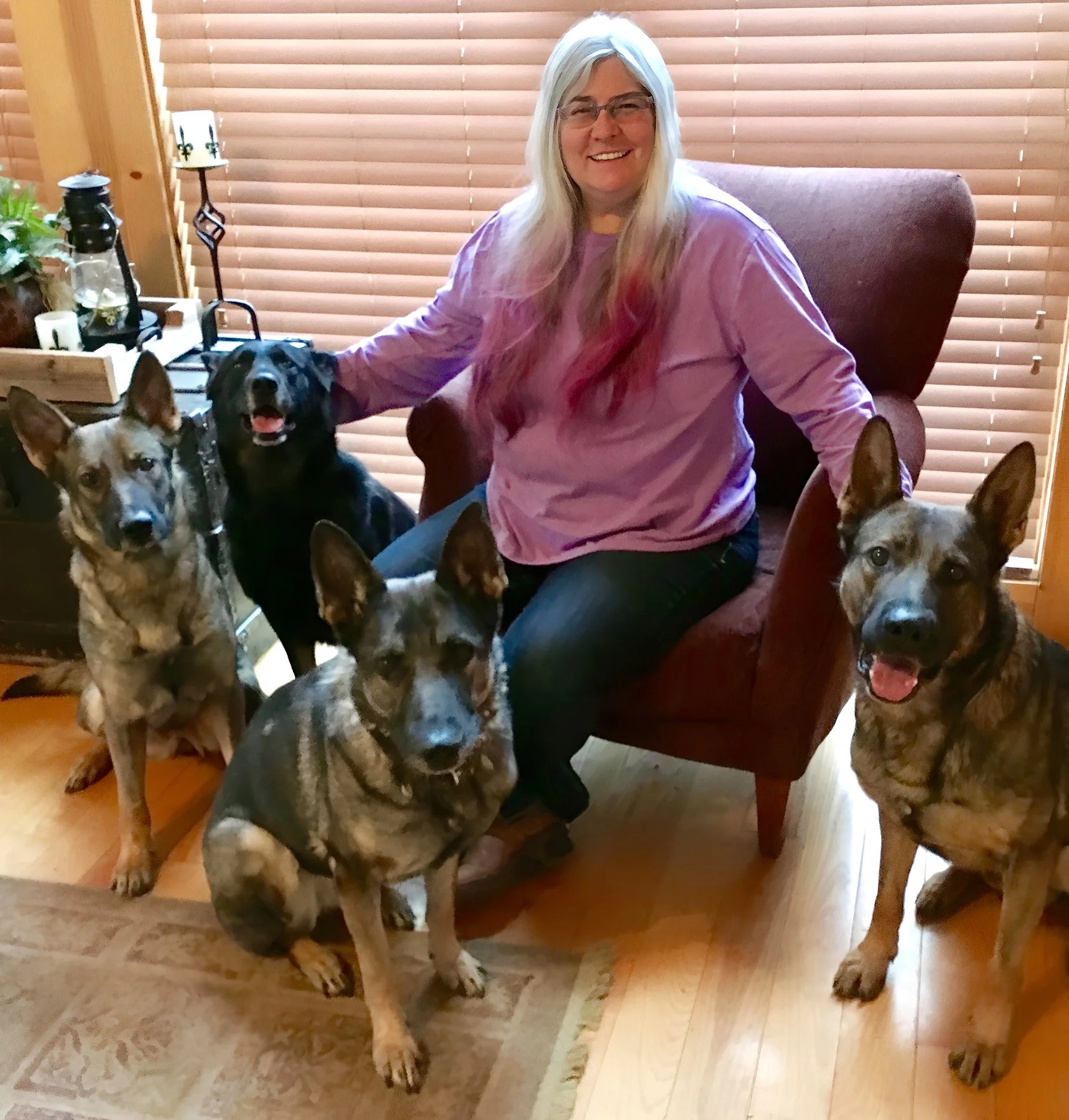
Artist Sherry Spivey shares how curiosity, nature, and decades of creating have shaped her work, her business, and the way she lives each day.
When someone buys a T-shirt, what are they actually paying for?
For artist Sherry Spivey, the answer isn't the cotton. It's the artwork. And the memory of the vacation, the festival, the dog show, the event with friends, or the tradition someone wants to remember years later.
After three decades of designing and screen printing T-shirts, she's watched people wear them until they fall apart, save them for decades, and even turn them into quilts they can keep forever.
Sherry shares how she develops new ideas year after year, what it's like building a business with her husband, and how living with Type 1 diabetes has given her the flexibility to build a life around creativity instead of the other way around.
Listen to Sherry Spivey’s Interview
Watch Sherry Spivey’s Interview
How Our Choices Shape the World
Sherry Spivey: I think that being human means I'm part of a species that has a huge impact on the planet, and it's up to me to make good choices with that impact.
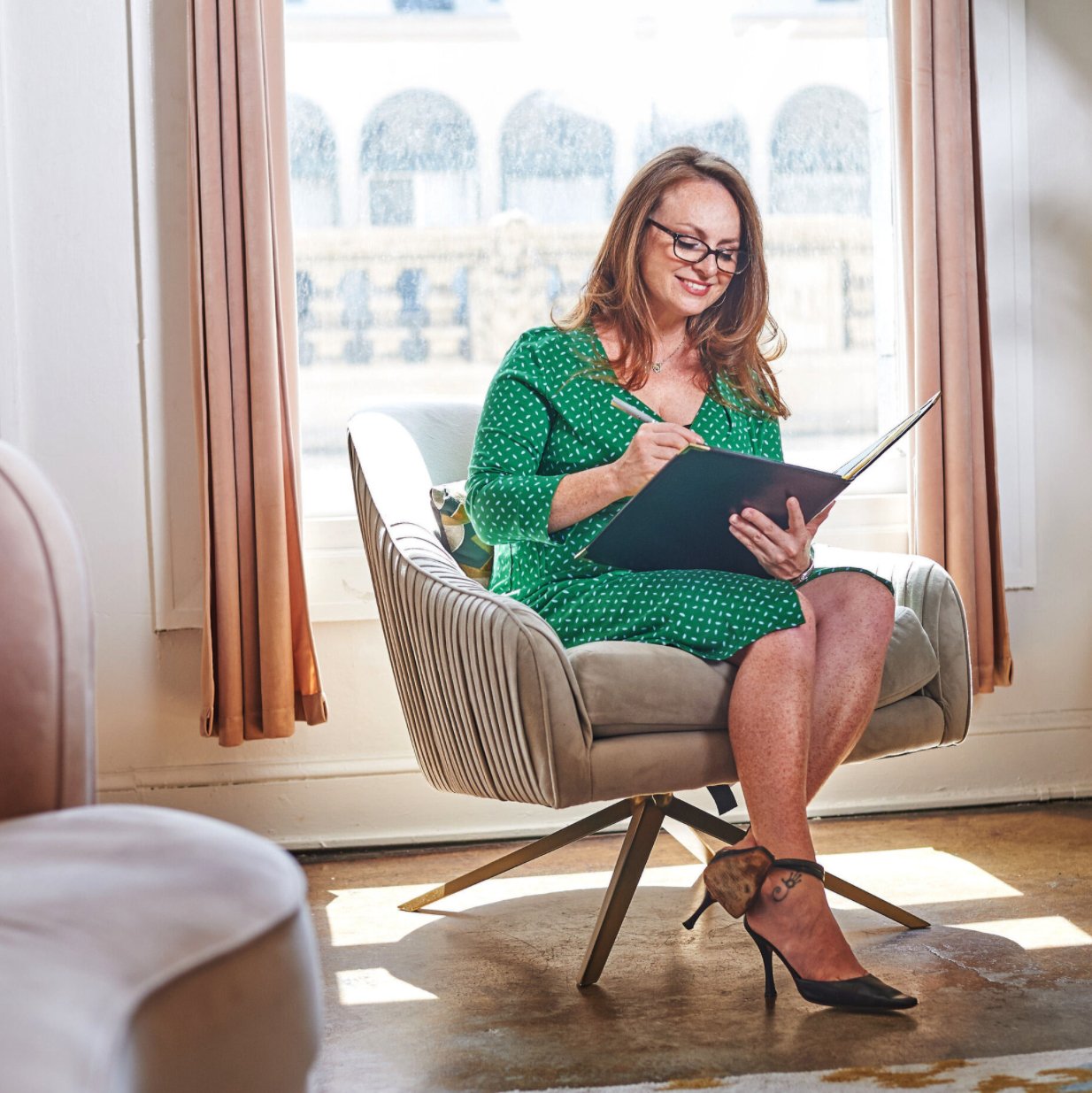
Brandi Fleck: Sherry Spivey, originally from Florida and now hailing from rural Tennessee, has been an artist her entire life and has been in the screen printing business since the '80s. She's a self-described pragmatic artist who lives an eclectic life. Sherry chooses to put her artwork on T-shirts because everyone wears T-shirts, and they bring joy to people's lives. People treasure the art on T-shirts as self-expression.
In this episode, Sherry talks about what her creative process is like, what it's like being in business with her husband, and she also opens up about living with Type 1 diabetes. You'll definitely love gleaning inspiration from Sherry's creative process and hearing that that little bit of T-shirt nostalgia you indulge in is A-OK.
Today we are here talking to Sherry Spivey. Welcome to the show, Sherry. I'm so excited to have you here and talk a little bit about your art and your life and all the things you've got going on. How are you today?
Sherry Spivey: Great. Very good.
Brandi Fleck: Would you please introduce yourself for the listeners and give them a little background info about what you do and what you're all about, who you are?
Becoming a Professional Artist
Sherry Spivey: I'm Sherry Spivey, as mentioned. I am originally from Florida. That's where I was born and raised and spent most of my life there. I moved up to Tennessee about six years ago and really love living here. It's been a really amazing experience and has really got me inspired and creative and moving again with my art. I really enjoy being here in Tennessee.
I am a graphic designer. I do logo design and T-shirt design. My husband and I own a small screen print shop, and we do a lot of T-shirts. We have our website, and we do medieval-themed shirts, and that's www.renarts-design.com, where you can see some of our T-shirts that we've done.
I do work for a lot of different organizations, companies, and people all over the country. That's a huge part of what we do.
I do some small projects on the side from time to time where I do some hand painting on signs and shields for different medieval combatants.
I work with fiber and fabric for myself. I like to do some crochet, knitting, quilting, basically various art things is what takes up most of my life.
I also train dogs, and I teach dog classes, so I kind of have a very eclectic life.
Brandi Fleck: Gotcha. That was sort of your background, and art obviously is a huge part of your life, but how would you describe yourself as a person?
Sherry Spivey: I am a pragmatist, and I have very eclectic tastes. I've done the Master Gardener program. I've raised chickens from egg to plate. I train dogs. I do a lot of different things, so my tastes vary. I like all kinds of music. Eclectic, I think, would be the best word to describe me.
Brandi Fleck: Awesome. What is the most important thing to you in life at this point in time?
Sherry Spivey: At this point in my life, my dogs. I spend a lot of time with my dogs one-on-one. They go everywhere with me. They work in the shop with us. They hang out while we're hanging out. I spend a lot of time traveling with them, doing dog shows. We do agility. I do dock diving, various dog competitions. Dogs are a huge part of my life.
And my husband. He's amazing, supporting me in the things that I love, whether it's my animals, my art, anything I'm interested in. He's always there to help me with that. So my husband and my dogs are the biggest things in my life.
Brandi Fleck: Gotcha. You've got a lot of good things going on, but what would you say inspires you the most in general?
Finding Creative Inspiration in Nature
Sherry Spivey: Mother Nature. Outside. Colors of the flowers. That's one of the things I love about Tennessee, the wildflowers. It's amazing. Every two to three weeks there's a new flower and a new color from those. The redbuds in the spring with purple, and then the bright yellow dandelions. Just driving down the road and seeing there's a farm over here that was covered in buttercups, just yellow and blue skies.
The beauty of Mother Nature, whenever I need to spark creativity, I will just go out for a hike, whether it's on the property or one of the state parks close by, and see Mother Nature. Listen to the waterfalls. Tennessee is an amazing place.
Brandi Fleck: Awesome. Yeah, it is really beautiful. Is it different? Is it more inspiring in nature here than it was in Florida, or have you always just sort of derived inspiration from the type of nature you're in?
Sherry Spivey: It's different.
We made a trip this year. I went out to Colorado for a dog show, and I took two dogs with me, two German Shepherds, and we drove across the country from here to there, 19 hours. We stopped in Kansas, stayed with friends, and then continued on the trip, and then made it in reverse coming back.
Spending time in a car and seeing the depth and breadth of the country, the different landscapes, to me, that's just amazing. It's so inspirational to see the different people, the different countryside, the mountains.
We went hiking with llamas here in the Great Smoky Mountains, and then we went out to Colorado to the Rockies, and it was just amazing to see.
I think we lose that in a lot of our day-to-day lives, just the inspiration from our planet, what's out there, the beauty, the darkness, the real part of it. We get wrapped up in cell phones, internet, plastic, Walmart. That's not inspirational.
Being out there and seeing the country, the countryside, and that amazing stuff. Going from Florida, where I grew up, we went to beaches. We hung out in the woods, went hiking there. Different trees, different flowers, different sky, different colors. Different animals. That's... I like exploring and seeing new things, having new experiences.
Brandi Fleck: Awesome. Well, let's pivot a little bit into your evolution as an artist. You mentioned it's a huge part of your life, and we talked a little bit about what inspires you, but how have you evolved over the course of your life?
Sherry Spivey: I don't remember a time when I didn't draw things, draw or paint or sew or make things. It has always been just a part of who I am.
My evolution has been... I've improved as an artist, for sure. After 50-some-odd years of drawing things, it gets a little easier.
I'm learning new things. I think I'm still evolving as an artist. I like learning new skills, new art forms. I have tried and dabbled with a little bit of everything over the years. I've done stained glass, all kinds of fiber art, drawing, painting. I've done watercolors, acrylic.
The biggest evolution for me has been the computer and the internet. All of those things that I've done my whole life, I still pick up a pencil. I still draw. There's nothing better in the world to me than a brand-new art pad and a brand-new pencil that's just been sharpened, and that first pencil stroke on the paper.
But most of what I do these days on a computer with Photoshop or Illustrator, designing logos for clients.
A good chunk of what I do is commercial artist stuff. I'm getting paid by clients to design logos for their businesses, for their T-shirts. All of that now is on the computer.
When I first started back in the early '80s, we did all of that by hand. I hand-cut Rubylith to make stencils to shoot screens from. All of that is now output to a printer, a large-format printer, and it does all of that work for me.
Which makes it sound like it should be quicker and easier. It's just different, but it takes the same amount of time, if that makes sense.
Brandi Fleck: Yeah. Slightly different design and creative process to work on the computer versus working with the pen and your hands instead.
Sherry Spivey: I've tried different graphics tablets, but the feel is different. I can't explain that, but nothing to me beats, like I said, a brand-new pencil, brand-new pen, working on paper.
Having to shove that a little bit while I work on the computer is a little frustrating sometimes because I know I can just draw it instead of manipulating a mouse or graphic tablet with a pen.
Brandi Fleck: Yeah. I know you say nothing beats the pencil and paper, but does it give you fulfillment to have a finished product, something you've made, even if it's on the computer?
Sherry Spivey: Yes. It's just a different process. It's still a piece of art, but it's different when it's a tangible piece of something. When it becomes a tangible thing, I think that is the most fulfilling.
When I design a new T-shirt on the computer, it's on the screen, and then there's the process of breaking that apart and putting it into a screen, and then putting it on the press and putting ink on and printing it, getting as close as I can to what was on the computer.
It's sometimes difficult explaining to clients that what they see on a backlit screen is not going to be identical to what is on the T-shirt that they're getting.
Brandi Fleck: Gotcha.
Sherry Spivey: It's just a slightly different sort of thing.
I still enjoy... I don't know how many shirts over the years. I wish I had a counter that I had kept track.
It's still very fulfilling to print out that first picture of a run. When you put ink in the screen for the first time and you pull the squeegee across and you lift up the screen to see what it looks like, that's still a cool thing.
Brandi Fleck: Gotcha.
Well, I'm making a connection right now between what you're saying with making things and your definition of what it means to be human in terms of impact.
Do you feel like your art, whether commercial or personal, makes an impact?
Sherry Spivey: Sure. People enjoy what we do.
We've sold shirts to the medieval group for 30-some years now, and people come back to me every year and tell me about their favorite shirt that we've done for them.
Someone brought me a shirt that we printed at our very first event 30 years ago. They still had a T-shirt from 30 years ago, so that's pretty awesome.
When we drive to the event, we do two events a year where we sell our product direct to the public. Driving onto the site and seeing people setting up their camps and things wearing our T-shirts, or while we're traveling there, seeing them at a random rest stop or restaurant along the way, it's kind of cool.
We were traveling out to California to visit some friends, and we had a layover in Dallas. We were sitting there on the chairs, just looking around, and a guy comes running through the airport wearing one of our T-shirts.
This was years ago, but what were the chances? We're from Florida. This guy was in an airport in Dallas, and he's wearing one of our shirts.
We've put thousands and thousands of T-shirts out there, and they make people happy.
We had one client years ago. He pulled up, and they had ordered a bunch of T-shirts. We opened up the box, and he pulled one out and changed his shirt right there in the parking lot and put his new shirt on. He was so thrilled.
It's awesome to make people happy with what you have made and that they have some pride in. They've ordered this T-shirt, and they've had input into the design of it, and it becomes their thing.
We get to help them put their vision onto a product that they can wear and use every day. It's kind of a small thing, but a smile and happiness is not a small thing in the world today, I think.
Brandi Fleck: Right. Yeah. Why T-shirts? Why did you choose that as your method of putting art into the world?
Why Art on T-Shirts Matters
Sherry Spivey: I've heard over the years, people have said, "Well, that's not real... You're not a real artist because you're not making a canvas or making a thing."
Well, I may not charge a lot for my T-shirts, but I sell a lot of them. I guarantee you the person that made the comment doesn't have even a fraction of the number of prints out there that I do.
T-shirts are a tangible thing. People wear them. Eventually they wear out, and they get a new one. There's always a market for a T-shirt. Everyone needs clothing, right? And everybody wants decorative clothing.
I grew up in Florida, and it's a very touristy area. We were over near the beach, and everybody lived in T-shirts. The surf shop over there has sold millions and millions of T-shirts. Everybody that comes to Florida wants a T-shirt with Florida on it.
They show what we like. They show what we do. They show who we work for. There's a lot of ways to express yourself with a T-shirt.
My very first T-shirt that I ever printed was in high school. We had a great teacher named Barney Andrews, and he was a really awesome guy. He taught a screen printing class.
I was taking a commercial art class. Most of my electives were art classes of some sort, and I thought it sounded interesting.
We ended up printing shirts for the high school. We printed shirts for the cheerleaders and all kinds of things, and that led me to my first-ever job, which was in a screen print shop. I started printing T-shirts there, and it somehow just stuck.
Even though I had some brief excursions into other jobs and things in my life, we always ended up back with screen printing, and the biggest screen-printed item is T-shirts.
I didn't necessarily choose it. It just sort of happened that way.
Brandi Fleck: Gotcha.
Sherry Spivey: I rolled with it. If you had asked me when I was a teenager what I wanted to do, I wanted to be an architect. I wanted to go to school, and I did not have the funding to do that.
So I ended up working in a screen print shop while I thought about what I wanted to do with my life. I went to college. I worked in the screen print shop while I was doing my community college stuff.
Then I went off and did some business things for a while and hated, absolutely hated it. I liked being able to create something every day.

Working With Your Spouse in Business
Some days it's things that I like creating. Some days it's things that I'm being paid to create for someone else. I'm putting their vision on a page, so I have to be able to get into their head and come up with something new.
The medieval events that we do, we've been doing for 30 years, and I always think, "Oh my God, what am I going to do this year? I've done 30 years' worth of things." But yet somehow I come up with something new every year.
So it's kind of fun, and it's cool because it's different all the time, even though the process of making the T-shirts is the same, if that makes any sense.
Brandi Fleck: It does. Yeah, yeah.
Let me just say, I totally think that even though you put art on a T-shirt, I mean, it's still art. You're still an artist.
Sherry Spivey: Well, yeah, because if you think about it, when you buy a T-shirt, you're buying the artwork. You're not buying a T-shirt.
We could go to Walmart, and everybody could buy whatever color T-shirt they would like to have. But when you buy a T-shirt, you're buying the artwork that's on it.
Frankly, I buy T-shirts when I go on vacation. I went out to Colorado to the dog show. I bought a T-shirt out there because that's where I went and that's what I did. It's a souvenir that I get to keep, and every time I put that shirt on, it makes me remember that trip.
When we went to California to visit our friends, I bought a T-shirt at the Monterey Bay Aquarium because that's where I went and that's what I did.
It represents parts of your life. Some people will wear it for a while and get rid of a T-shirt or give it to Goodwill or do whatever. It passes through a lot of hands in some cases.
Then there are other people that cherish those as a memento of their event. Like I said, we have people that have been following us for years and years and years, and they come every year and buy their T-shirt for the year. Then they make quilts out of them so that even though the T-shirt might be worn out, they keep the design.
To me, that is the kind of amazing part. Thirty years from now, no one may ever have one of my T-shirts, and it may not last. But for a short while, it made somebody very happy, so that's kind of a cool thing to do.
Brandi Fleck: Yeah. You've hit on so many interesting themes there, which I'm sure we'll keep exploring. Everything from creation to how people remember events that were dear to them.
Again, going to your pragmatic personality, you described yourself as pragmatic. It's a very pragmatic way to help people keep those memories and things like that. I really like that.
Sherry Spivey: Sure.
Brandi Fleck: If you could describe your creative process for us a little bit and then tell us what the act of creation does for you personally, that would be awesome to hear.
The Creative Process Behind T-Shirt Design
Sherry Spivey: Typically, a person will contact me and tell me that they have an event coming up and they would like to have T-shirts.
My job and my process is to sit down and think about what type of event it is. It can be anything. We've done things for memorials. We've done things for high schools. I just printed a bunch of shirts for the local college today.
I'll take that job for an example.
He contacted me and said, "We have our spring clinics coming up, and I need a shirt, and we want it to be purple."
So I took the information that he gave me, and I get on the computer, and I'll look through fonts, and I'll surf around a little bit on the internet and look for an inspirational piece.
For this particular job, I had a font that I really liked, so I started with that.
Then he had some specific clinic information. He wanted some graphics for it. I needed a cow and a chicken and floriculture and nursery landscape.
So I surfed around a little bit more and found a couple of inspirational pieces for that, and I made some graphic elements to represent the leadership. I used a human head with gears inside and a graphic version of that with a graphic cow silhouette and a chicken silhouette.
I added all of these things to the lettering in different ways, so all of the pieces of very disjointed information came together into a design.
Then I send it to the client, and sometimes they will have changes. This particular piece, I was very happy with how it came together, and he was too. He told me that that's awesome and he would like those on his shirts.
I got input into the color and the design, and the entire thing came out of my head.
Sometimes it's just a matter of moving things around on a page until something sparks an idea. Sometimes it's just looking at the fonts, typing in different information, maybe seeing how I can change those letters into something artistic. It's just a matter of thinking about it for a little while, drawing a little.
I'll oftentimes have a sketch pad, and as I'm surfing through the internet, I'll start to jot some things down, do some little doodles. Then I will put it all together on the computer.
That would be a typical creative process. It generally takes an hour or two to come up with a design, depending on the complexity of it.
Of course, a simpler thing like this with just very graphic, quick images is more of an hour, hour-and-a-half sort of deal.
Sometimes I will manipulate photographs. I will go out and take photographs. I have a kind of stock library of images that I've taken that I can go in and use filters and different presets that I've made to make a really good image that will be easy to print on a T-shirt.
Not many artists do the entire process. You have a lot of artists that will do the design work and then send it to a printer, and then they do the rest of it.
I do it from the very beginning of the idea. I do the artwork on the computer, and then I separate it, print it out to film, and then my husband will shoot screens for it. Then we both print from time to time.
I've pretty much touched everything from the beginning to the end on those, down to the voice.
So that's kind of a typical job for me, for just a regular T-shirt design.
Brandi Fleck: Gotcha.
Going back to your business and your website, Ren Arts Design, what importance does the Renaissance period in history play in your work and what your customers are looking for? Why is that incorporated in the name of your business?
Sherry Spivey: When we first got started in screen printing, we were trying to come up with a name.
We were very heavily involved in the Society for Creative Anachronism at the time, and the word "Renaissance"... You know, a Renaissance man is somebody that does a little bit of everything and that they're good at all kinds of things.
That's what we wanted to represent in our company, that we're able to do many different things.
To me, that's the Renaissance. That new age of enlightenment and exploration and creativity.
You think of some really great artists that came from that period, and that's where we were going.
Had I known how often I would have to spell "Renaissance" to people, I might have chosen a different name. After 30 years, it's kind of old hat. Anybody that has written me a check over the years, I've had to spell "Renaissance" out for them. Just not something I thought about in advance.
We were heavily involved in the SCA, and still are. We still sell at Gulf Wars and Pennsic, the big events that they have here on the East Coast.
We have a lot of clients that we've gotten through that medieval group, so we still do T-shirts for different groups within that community. We just shipped out shirts to a barony in Florida, or the Kingdom of Trimaris.
We know those people and what they like because we are those people.
That was a bit of niche marketing that we did by doing those events and some themed T-shirts for them. We know that genre very, very well.
I've done a lot of research. We have a lot of books and a lot of information on the Renaissance period, on Vikings, Romans, and the Middle Ages.
That era has always inspired me. I've always loved illustrations and calligraphy.
That was important to me at the time and something that has stayed with me for most of our lives.
Brandi Fleck: Gotcha. Would you say you still seek to communicate that idea of the Renaissance with your art and all the art that you do?
Sherry Spivey: Absolutely. Very inspired by the Middle Ages. I love those early…
Sherry Spivey: ...illustrations always have, always will.
My home has a lot of Pre-Raphaelite prints and fleur-de-lis everywhere. Everybody knows me. I love fleur-de-lis. It's just part of my eclectic taste.
I love the Middle Ages. Always, always have, from the earliest time I can remember.
My grandmother taught me how to read when I was four, before I ever got near a school. As soon as I was able to go to a library and have a library card, I read everything I could get my fingers on.
Greek mythology and Roman mythology were very intriguing to me. Then when I got into history classes and learned about King Arthur and the knights and the Middle Ages, that's just always been in the back of my mind.
It's part of who we are, and it was one of the cool things when I met my husband that he had read the same books that I had read, a lot of science fiction and fantasy stuff. He had read similar books, so we had a lot of very similar tastes.
We have a huge library of books. I will always love a book. The smell when you open them up, when you go into a bookstore or a library, there's just nothing else like that in the world to me.
Early on, I got into the whole King Arthur and knights and the Round Table and Guinevere, and those things have just always stayed with me. I've always loved that genre.
Brandi Fleck: Sure. What is it about the Middle Ages that appeals to you?
Sherry Spivey: I think it's more of what the SCA purports itself to be: the Middle Ages as it should have been.
We always want to think about the arts and the ladies and the gowns and the beautiful parts, but there were some awful parts of those periods.
I like the thought of the fantasy more than the actual stuff.
Brandi Fleck: Gotcha. Yeah, just all knight in shining armor, that sort of fairy tale.
Sherry Spivey: Yeah, the romanticizing of it.
Brandi Fleck: Well, speaking of romance, you are in business together with your husband, as you mentioned before. How does business impact your personal relationship?
Sherry Spivey: Some days it's great, and other days not so much.
We've been married since 1988, so quite a few years now, and we spend, on average, 20-some hours a day together.
Brandi Fleck: That's amazing.
Sherry Spivey: Yeah. For a long, long time.
You either like each other or you hate each other's guts, and it depends on the day.
Ninety-five percent of the time, we've gotten along great, and we're best friends. That relationship has always been there for me. The vast majority of my life has been spent with him.
The first couple of years we were married, we had different jobs in different locations. He was working at the Space Center and on a lot of Department of Defense contracts.
Back under the Clinton administration, they cut a lot of that stuff, so he didn't just get laid off. His whole job disappeared from the world.
It was a huge change, and we ended up going into business together. We knew it would be challenging, and it is.
At this point in time, we've split the tasks, and sometimes we split clients. Certain clients he gets along better with. Some I get along better with. They like our... we have different styles of art. He's also an artist.
It just depends on the day, who we're working for and what we're doing.
Sometimes we butt heads because we're both very strong-willed, but in the end we both support each other, and we've worked together this long.
We have lunch together every single day, and we get to spend more time than most couples do.
I think if we were normal people, we would get up in the morning and go off to jobs and spend time commuting. We're very fortunate. We don't have to do that.
We get to have breakfast together every morning. We work, and then we have lunch together. Sometimes we have dinner together. Sometimes I'm off teaching a dog class or something, but for the most part we're together all the time.
He'll tell me a story, and I'll say, "You've told me that like 90 times. I was there with you when you saw that."
"Oh yeah, right."
Sometimes we have to go off and have adventures on the weekends. I am often off at a dog show, or he'll go to a show for painted miniatures, so that we have different stories and don't run out of things to talk about because we're together so often.
But it's a good relationship, and I wish a lot of people had that opportunity to have that type of relationship.
You don't see that much in today's society because people work in different fields. They have different jobs, different places.
It used to be mom-and-pop shops. The mom did the bookwork and things, and the husband did some of the work, or vice versa.
I think it was more common decades ago than it is now to have this type of working relationship.
Brandi Fleck: Yeah, I think that's really cool. It's awesome to hear about. Still together after all this.
Sherry Spivey: Yeah.
Brandi Fleck: What's your secret?
Sherry Spivey: Our secret is we support each other in what we do, even though sometimes it's in different directions.
If he wants to go off and do something on the weekend, he has my blessing to go do it.
We just trust and support each other. That's the big secret.
Brandi Fleck: Awesome. Well, thanks so much for sharing that.
Living With Type 1 Diabetes
Let's pivot just a little bit. Have there been any notable challenges? I know you mentioned Type 1 diabetes earlier, but have there been challenges in life that art has helped you get through?
The relationship with your husband is so tightly coupled with art. How have those things helped you get through challenges?
Sherry Spivey: Well, yeah. Type 1 diabetes, if you've never known anybody with it, it's a terrible thing. It's 24/7.
The biggest thing that my creativity helped with is that I am self-employed.
There are days when I don't feel well or that I'm having difficulty maintaining my blood sugars, so having him there to help me is kind of awesome.
Being able to set my own schedule, the jobs get done and clients are happy. It doesn't matter if it happens on Sunday or Monday or Wednesday evening.
It gives me a lot of flexibility to deal with my life.
There are complications from the diabetes, but the artwork has let me live a life where I can adjust to those complications without having to answer to anybody else.
Brandi Fleck: Right. Yeah. I was going to say, can you tell us a little bit more about the types of complications you have to deal with?
Managing Type 1 Diabetes as a Small Business Owner
Sherry Spivey: Diabetes causes damage to all of your body over time.
The first 20 years are pretty easy to deal with. You don't really even know it's there.
But then you start to have complications: liver failure, heart failure, kidney failure.
Your blood going up and down causes your eyeballs to swell when you have a super-high blood sugar, so it can affect your vision.
Neuropathy is a huge problem for me. I'm starting to lose the feeling in the tips of my fingers, so having the computer, being able to create using the mouse and using the graphics tablet versus control of a pencil or paintbrush is difficult because of the neuropathy.
In my feet too. You can end up losing limbs from the lack of circulation. I'm starting to see some complications now from that.
Type 1 diabetes has really affected my life in that I live every day as full as I can.
I travel a lot. I do a lot because who knows how much longer I can do those things. Do you see what I'm saying?
Brandi Fleck: Yeah.
Sherry Spivey: There's always the thought of losing that.
It's been very important to me to try to maintain the best control I can without health insurance because, for many years, the quickest way to get rid of an insurance salesman was to tell them, "Hey, do you cover a Type 1 diabetic?" They would hang up the phone on you.
It's been a challenge for most of my life.
I was not diagnosed until I was 23 years old, so I was a little late for what's considered juvenile diabetes.
I had to learn to adapt with that, and my husband's been, again, very helpful to have with me when I start to have problems.
It causes all sorts of health issues. People think it's just that you can't eat sugar, but that's not the biggest problem.
Your pancreas doesn't function at all, so I cannot take medication. I have to take insulin, injecting insulin a couple of times a day to maintain that blood sugar.
It affects my day in that I have to stay on as close a schedule as possible, and I eat very similar things daily so I know how many carbs I'm taking in to adjust my insulin and try to keep on that schedule as much as possible to maintain my blood sugar as well as I can.
That has kept me from most of the problems so far, and that's my plan going forward: get up every day, do the best I can to keep that as level as possible, and deal with each day as it comes.
Brandi Fleck: Well, Sherry, I've really enjoyed hearing about your life. I think you've got a lot of joy in your life, from what I can tell, with your dog shows and art and your relationship with your husband and what you draw inspiration from.
I would love if you could just leave us with some parting wisdom. What's the best piece of advice you have for our listeners?
Sherry Spivey: Let go of the small things. They're not important. Live your life.
Enjoy your life. Create things. Don't let other people define who you are. Be you, enjoy yourself. When you can love yourself, then other people can love you too.
Brandi Fleck: All right. Well, Sherry, thank you so much for coming on the show today.
Sherry Spivey: Absolutely. It was great to talk to you.
Join the conversation!
Feel free to share your own experience and let me know if you have any questions in the comments.
Related Posts







Hi, I’m the founder of Human Amplified. I’m Brandi Fleck, a recognized communications and interviewing expert, a writer, an artist, and a private practice, certified trauma-informed life coach and Reiki healer. No matter how you interact with me, I help you tell and change your story so you can feel more like yourself. So welcome!
Find More on the Blog
Topic
- ADHD
- AI
- Atlanta
- Black and BIPOC
- DIY
- FAQ
- LGBTQIA plus
- Los Angeles
- Nashville
- Seattle
- St Louis
- St. Louis
- UFOS/UAPs/ETs
- abuse
- accountability
- addiction and recovery
- adoption
- affirmations
- afterlife
- altered state
- angels
- animals
- anxiety management
- art
- astrology
- atlanta
- attachment
- awakening
- beauty
- behind the scenes
- being human
- body image
- body work
- boundaries
- brandi fleck
- breathwork
- bullying
- burn out
- burnout
- cancer
- career
- caretaking
- chakras
- channeled
- clarity-dive
- clarity-practice
- clarity-primer
- clean products
- coach
- codependency
Recent Blog Posts
Visit the Full Podcast Audio Archive

Affiliate