
Midlife Identity Crisis: How to Trust Yourself Through Reinvention
Interview By Brandi Fleck
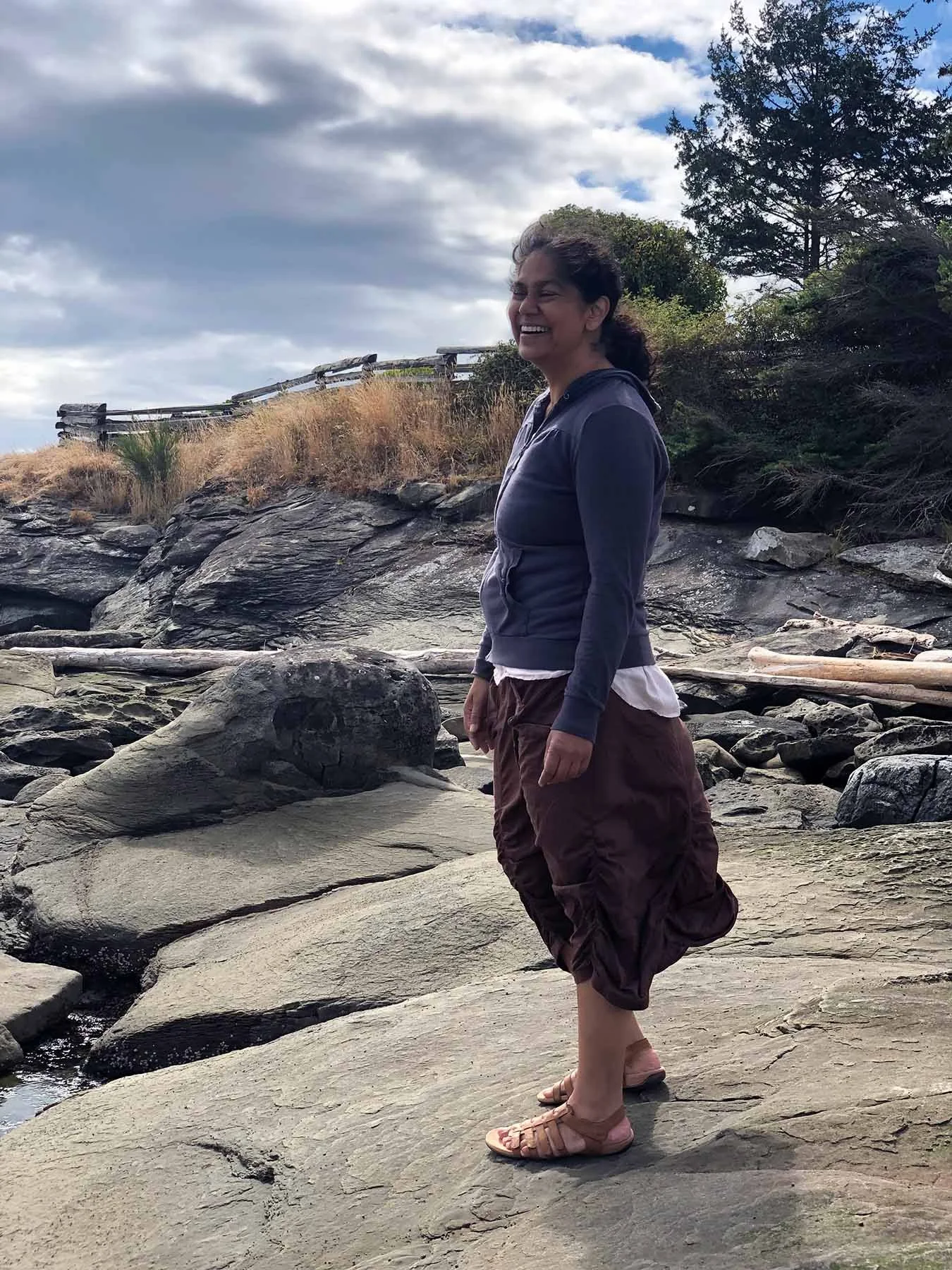
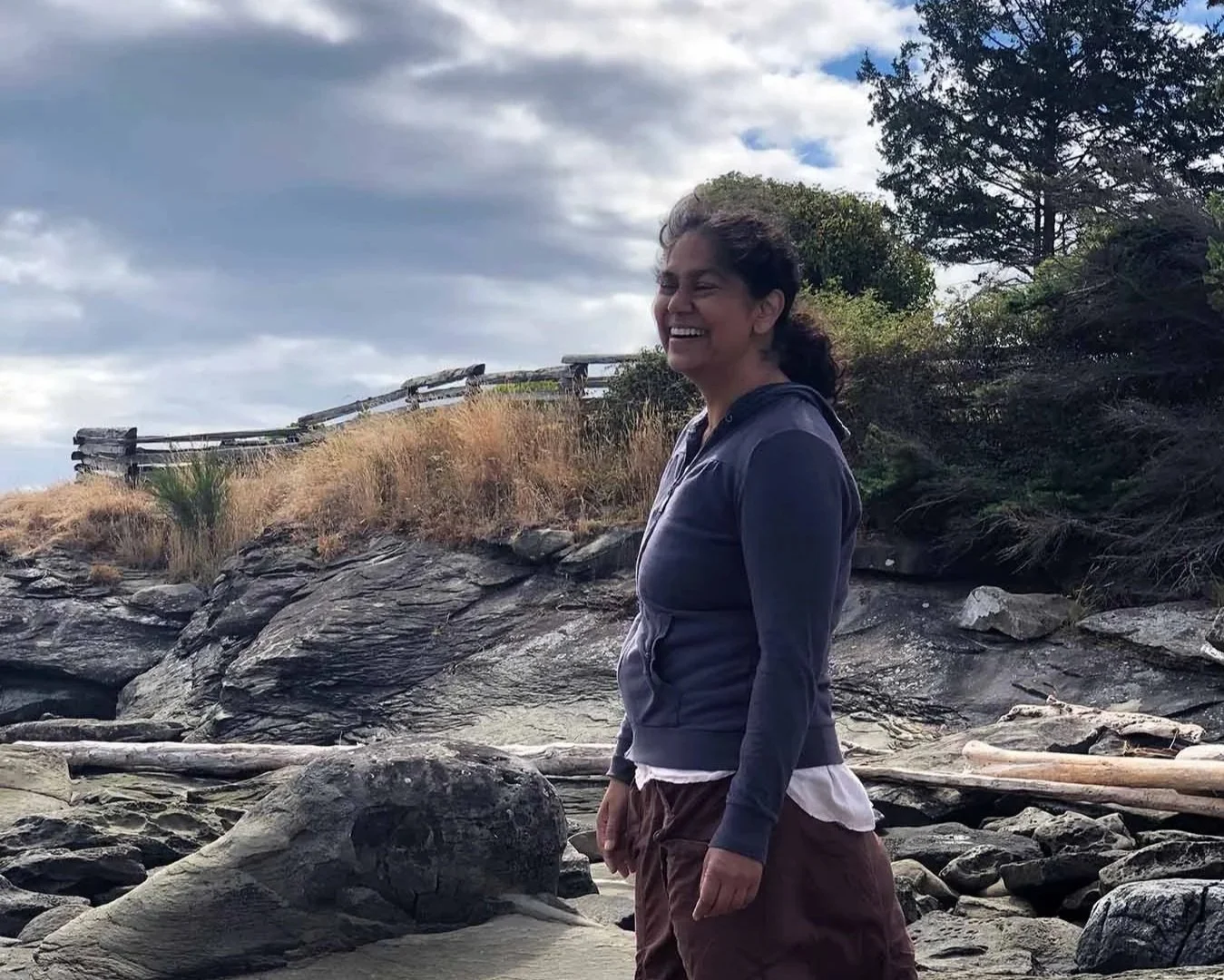
Trauma-informed mind-body practitioner Natasha Ramlall explores what happens when your old identity no longer fits, and how self-trust, spirituality, boundaries, and body awareness can help you move through uncertainty without abandoning yourself.
What happens when the version of you that made your life work for decades suddenly stops fitting?
For Natasha Ramlall, that question became impossible to ignore when she stepped away from a 25-year career and into a future she could no longer plan her way through. The transition disrupted more than her work. It challenged the identity she had built around being capable, productive, organized, and certain about what came next.
Natasha describes the experience as an identity rupture: a period when the roles, relationships, expectations, and stories that once helped you understand who you are begin to fall away.
And at midlife, that kind of change can be especially disorienting.
In this conversation, Natasha and Brandi explore what it means to trust yourself when you don't have a clear map forward. They talk about grieving the future you thought you were going to have, distinguishing fear and conditioning from what your body is actually telling you, and learning to choose yourself even when your choices change the dynamics of your relationships.
They also examine the connection between spirituality and embodiment, why setting a boundary can feel selfish even when it is healthy, and how creating a felt sense of safety in the body can expand your capacity to experience discomfort, joy, love, and change.
Because sometimes finding yourself isn't about returning to who you used to be.
It's about trusting who you're becoming.
Listen to Natasha Ramlall’s Interview
Watch Natasha Ramlall’s Interview
Mind-Body Connection, Spirituality and What It Means to Be Human
Brandi Fleck: Natasha, what does being human mean to you?
Natasha Ramlall: I think that this answer has evolved for me over time, and I might have a different answer on different days or different seasons of my life. But how I would answer it today is being human is feeling more. We're feeling beings. And the more I recognize my capacity or lack of capacity for feeling, I realize how many different areas this idea of feeling can inform the way that we move through our lives.
So in terms of if I'm feeling the signals from my body, I know what my body needs, and I can respond to those signals appropriately and take care of myself in the way that I need to. If I'm feeling my emotions deeply, I have the opportunity to enhance the experience of being alive and also understand myself at a deeper level, why I feel the things I feel and what they mean for me. And feeling into the areas of life that give us meaning, our connections with other people, the activities and endeavors that give us joy and pleasure and really make life worth living.
So for me, we are feeling beings, and one of the purposes of being human is to grow our capacity to feel more and feel more deeply.
Brandi Fleck: Beautiful. Thank you. And it's interesting that you talked about how that answer could change for you, because when I have guests come back on the show repeatedly, the answer always seems to change. It's so complex.
Natasha Ramlall: Yeah.
Brandi Fleck: Everyone, today we are welcoming to the show Natasha Ramlall. She is coming to us near Toronto in Canada today. She is a trauma-informed mind-body health practitioner. She facilitates dance. She does coaching and all kinds of good things. And I know we're going to get into the topic of identity today. So, Natasha, welcome to the show. Thanks so much for coming on.
Natasha Ramlall: Thank you, Brandi. It's my delight to be here, and I'm really excited for this conversation.
Brandi Fleck: Yeah, me too. Me too. As I was saying before we started recording, I'm always super excited to meet another trauma-informed practitioner, so I know there's going to be some really good stuff today.
Natasha Ramlall: Yeah, absolutely.
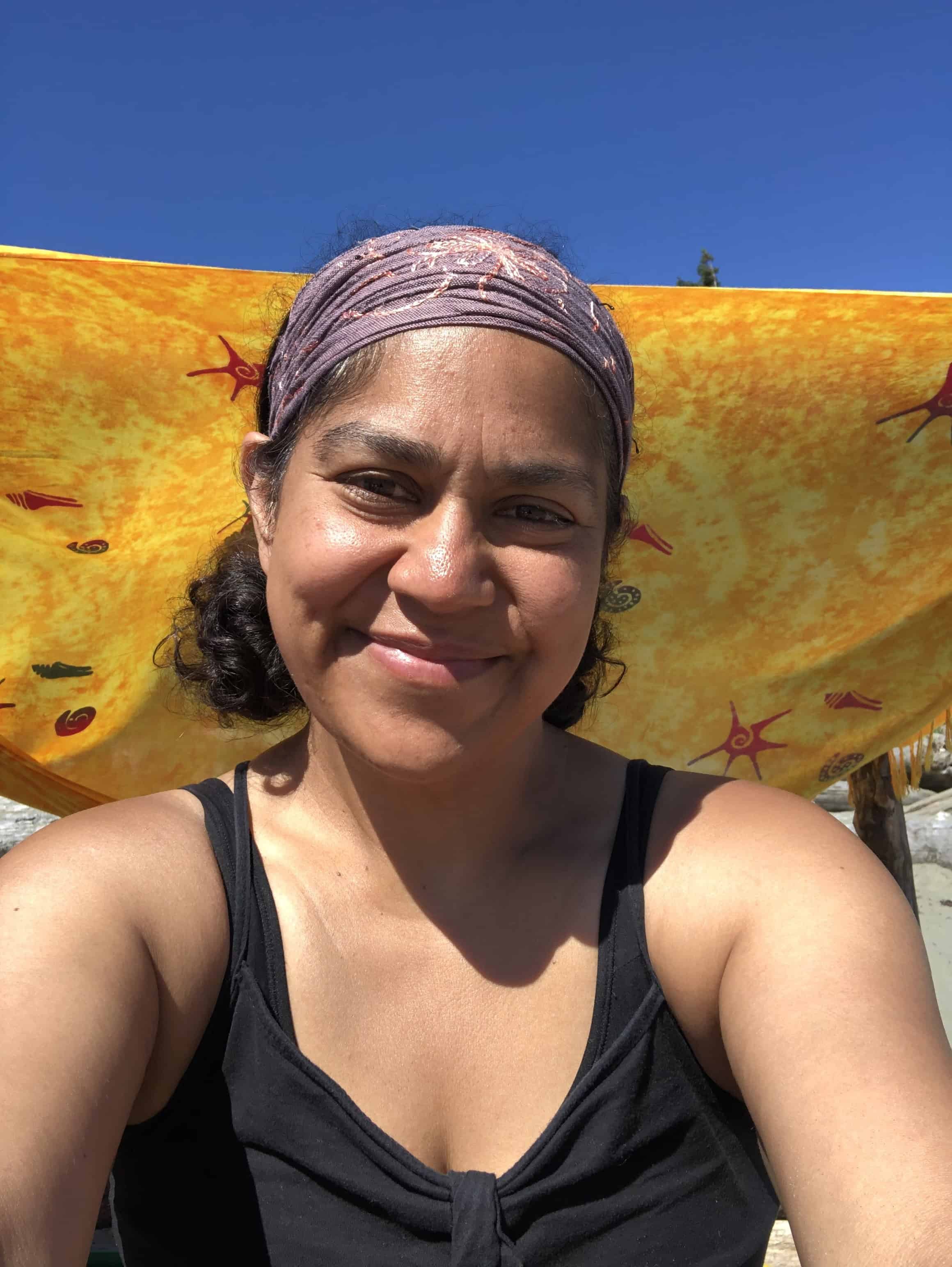
Brandi Fleck: Before we dive in too deeply, can you just give us a sense of who you are as a person?
Natasha Ramlall: There's so many different ways to answer this question. So let me just feel into what feels important today. I am somebody who really loves people, but I'm incredibly introverted. So I tend to go back and forth between being in community and really valuing those connections and needing a lot of alone time, either to recharge by myself or in nature or with the different things that fill my cup.
I am obsessed with the intersection of embodiment and spirituality, and that has become a central driving force in my life. The more I learn about it, the more I want to learn about it, and the more I understand, the more I realize how little I understand, and it just propels me forward in this journey. And so I really feel like one of my big defining qualities is around that. You ask my kids—I have two adult sons—they would tell you that's my entire identity right now because it's the only thing I ever want to talk about or dig into.
What else? I am the child of immigrants, and I think that the cultural blueprint that I inherited from them has been a big part of my story as well. I've always been navigating between the culture that I grew up in and the culture that they grew up in and all of the different rules and expectations that come along with both of those spaces. And it's really been a major theme in my own personal healing and expansion and evolution because I have really had to get honest about what in my experience is actually mine and what in my experience is just me responding to the ideas that I've inherited from those two spaces.
And I'm somebody who really loves music. I love spending time with babies. I love dancing and love sitting in quiet stillness with a really good book and just escaping the reality that I'm familiar with to share in somebody else's story. So those are some of the things that feel important to share today. But, again, like the answer about being human, I think it could change depending on the day that you ask me.
Brandi Fleck: Absolutely. Identity can be so fluid. And so I'm really glad you're bringing that up very eloquently and as an example throughout our entire conversation so far.
And so a couple of things that are interesting that came up while you were talking is that the intersection of embodiment and spirituality almost seems to parallel the need for community, which in my mind might be related to embodiment, versus that introversion recharge that might be related to spirituality. And then they come together. So I'd be curious to know if you have any thoughts about those parallels.
How to Trust Yourself and Let Go of Control
Natasha Ramlall: That's a really beautiful way of putting it. I've never considered it from that lens before. And I'm going to sit with that because I think that's a really powerful way of considering this idea.
A big part of my work is in this concept of grounded expansion, which is really holding the balance between the part of us that is grounded in our human experience, which can often be, as we both know, challenging and messy and ups and downs and a huge spectrum of emotions, but also at the same time, holding this expansive trust in something greater than us that's holding us through that mess and that up-and-down journey.
And I think that that is really an orientation to life that can serve us very well because it helps us to have a purpose for all of the challenges that we face in our life as a space to expand from and evolve into and propel us forward into the next stages and phases of our lifetime.
So I think this idea of embodying the experience of being a human being on a journey with lessons to learn and with stories to reckon with, but also understanding that this is not the whole and the end of what we are and that there is something that we can lean into that gives that human experience something bigger and something more profound to help us get through and make sense of what we're experiencing.
Brandi Fleck: Yeah. I really agree with you wholeheartedly. I often think about or meditate on how to ground spirituality into my humanity because it's one and the same. They don't have to be separate. Our body just has to be able to hold it. And I know you use the word grounded expansion.
So let me just ask you, and I have so many questions for you, so I want to come back around to the cultures that you brought up. But what ways have you found to actually ground spirituality into your humanity without having to separate the two?
Natasha Ramlall: It's such an important question. And I think that this is actually a really, really big part of my journey right now as we're speaking. This idea of trust has been central in all of the different things that I'm looking at in my life right now.
I am coming out of the tail end of a big transition away from something that is really familiar into something that has a very uncertain future. And obviously there's a lot of discomfort around that. And so my ability to trust and surrender into something larger than myself has been an anchor for me in not falling apart through the experience of not having control and not having a certain path ahead of me and not having a clear map for how I move forward in the next stages of my life.
And these transitions are sometimes by choice. Like for me, this was more of a choice than it was forced upon me. But I think it was a choice that was born from a lot of different nudges that were less in my control. And then for other people, I know that that can be less of a choice. And we have these major transitions that happen to us that we would never have chosen.
But either way, we come up against a period of disorientation, which is where I'm sitting in that right now, where I don't really know what my life is supposed to look like moving forward. And that could be incredibly scary, especially for somebody who, typically, I am very high functioning. I'm organized. I'm a planner. Planning has always been something I've considered a superpower.
And so to be in a phase of my life where I don't have a plan, and the only thing I can do is just trust that if I really do the work to be present with what feels true and what feels honest for me in this moment, that that's going to give me the information I need to take the next step. And that step doesn't necessarily need to be so far in the future.
And so I would say that that soul trust, believing that I'm going to be okay and I don't need to force my way into feeling that sense of safety. I've been doing that my whole life, and it hasn't always served me. I mean, it's always served me to an extent. There's always a positive intention. It's kept me safe. I've had a lot of gains. But in terms of really leaning into the honest, genuine places where I experience joy, it hasn't always served me.
And so I'm at a place in my life now where I am choosing to cultivate that trust. And I would not be able to do that if I didn't have a spiritual anchor in my life.
I hope that answered the question. I don't know if you're looking for something a little bit more practical, but—
Brandi Fleck: I am looking for whatever is true to you.
Natasha Ramlall: Okay. Wonderful.
Brandi Fleck: Yeah. So I'm hearing you say that trust and surrender and spirituality have kind of been your anchor, have allowed you to be present and taking the next best step, even if you don't have a plan for the future. So just using that, leaning on your spirituality to be present in your human experience. Is that correct?
Natasha Ramlall: Absolutely. Yeah.
Brandi Fleck: Okay. Which is interesting because when I've talked to other people, like maybe clients or other practitioners who think about grounding or think they want to ground, they kind of ground into the earth or their human life in order to anchor spirituality in. So it's really interesting that spirituality is the anchor.
Natasha Ramlall: I like that. It's so different for every person.
Brandi Fleck: Yeah. Can you tell us a little more about trust and surrender? I know that letting go of something can be just incredibly hard.
Natasha Ramlall: Absolutely. And I think that maybe one of the reasons why spirituality has become an anchor for me, where for others it may be something that needs to be anchored into a more grounded human experience, is because I have always—or for most of my life, rather—overvalued and overprioritized the data that was coming to me from my human experience. And I really didn't have a spiritual anchor. I've always been interested, I've always been fascinated, but I didn't ever have something that felt real and true and made sense to my experience.
And that, I think, was one of the sources for a lot of struggling and a lot of suffering and a lot of pain and disconnection. And some of the darkest points in my life, I think, would have looked differently had I had that spiritual anchor. And so for me personally, that has been the missing piece, for lack of better words, in my ability to reckon with these difficult human experiences.
But your question was about trust and surrender and what that looks like. It is, I think—I don't think this is an exaggeration to say—it is probably the most difficult thing to do as a human, right? We are wanting to trust in this physical world. We want to trust in our five senses and the material things that we can see and touch and have evidence-based understanding of.
And so trusting that it's going to be okay, trusting that there are things that are happening that we can't understand that are orchestrating an outcome for us. And whether that outcome is what we would call happy or challenging initially, there is a purpose to it. But again, leaning into trust is one of the hardest things, I think, because we want to have answers. We want to have control. We're wired cognitively to have some sort of cognitive closure and a sense that we're not just at the whim of our life.
But at the same time, when we are able to release and let go of that control or that illusion of control that we have, what we get is a different sense of ownership over our life and over our time and how we want to spend it. And it gives us a chance to really align how we're living more closely with our values because we're not trying to control an outcome based on what we think is best for us and what should happen. Because usually those stories are based in past experiences. They're based in those stories and blueprints that we've inherited from other people and our cultures and so forth.
And really, I think trusting that the information available to us in the present, in the now, is actually the most accurate and the most truthful and the best guidance system that we have to help us navigate our life. But that shift away from cognitively planning and controlling and trying to shape what our life is supposed to look like versus finding a way to come back into the truth of the present moment, that's really, really difficult to do.
And I think it's conversations like this and connections with other people who feel a similar sense of importance in that shift that reminds us that, yeah, this isn't always easy, but it's worth it. And it's kind of the only thing we can do to move forward and to be creating an earthly experience that we're actually happy to be in, if that makes sense. And I've gone off on a tangent there, but it's okay.
How to Listen to Your Body and Trust Your Intuition
Brandi Fleck: No, that does make sense. And I'm really glad that you touched back on—I don't remember exactly how you phrased it—but the cultural conditioning versus what's true for you in the present moment. How do you discern the difference between what was kind of inherited from your ancestral culture versus the culture you grew up in versus what is really you?
Natasha Ramlall: That's such a great question. I think the discerning between my cultural lineage and the culture that I grew up in, there's a lot of parallels. There are a lot of different messages that they share. And probably the biggest distinction for me would be the things I learned by being immersed in my family dynamics versus the things I learned from school and my peers and coworkers and all of the different things that I learned in the experience of actually living in this culture and growing in this culture.
But I think the biggest discerning factor for me between what's been learned and what actually feels truer to who I am or who I'm meant to be is really getting clear on whether my thoughts, my decisions, my behaviors are coming from a place of fear or if they're coming from a place of love.
And I mean, I'm really simplifying with those two ideas of fear and love, but there's so many different emotional experiences that can manifest out of fear and likewise out of love. And so it's all of that.
But really, when I am able to be more connected to my emotional experience, I can feel what different emotions feel like in my body. The contractive ones do feel important. They're giving me information. And the more joyous or loving feelings feel more expansive, and those are also giving me information.
And then I have the stories, the stories in my head and the protective mechanisms from my ego that are trying to keep me safe and working toward a sense of belonging and a sense of safety and externally validating based on other people's ideas that this is a safe way to be or this is an important expectation to fulfill.
And so I think that that difference between, is it coming solely from my cognitive stories and my mind and things that—stories that I've created to make meaning about my experience? Or is it something that I can actually feel into and recognize as a signal from my body rather than just a reaction to the stories?
I feel like that's a really convoluted explanation, but I also feel like you get it.
Brandi Fleck: I really like the part where you were like, “Is it a reaction to the story, or is it actually coming from my body?” There is a difference.
Natasha Ramlall: Yeah.
Brandi Fleck: Ooh. Yeah. And I've never heard it put that way, but that's a really good way to look at it because the story might have been true in the past, but it doesn't mean it's true in this exact moment, right?
Natasha Ramlall: Yeah. Absolutely.
Midlife Identity Crisis and Career Change
Brandi Fleck: Okay, nice. All right. Well, Natasha, I would love to learn more about your personal journey. I know that you said you're in transition right now, and I was looking at your information online and more about how—I don't know if it's this transition or another transition you've had in life—that caused an identity rupture. But can you just tell us your story around that?
Natasha Ramlall: Sure. Yeah. So there've been a few, and some of them have been smaller and some of them have been less significant and more significant. But I really think the defining feature of a rupture is when you feel completely unable to recognize yourself because you have lost touch with all of the relationships that helped you define who you were up until that transition or that change or that thing happened to spark the rupture.
And so, yeah, the most recent one that I have been referring to, I was working in a career that I had been in for 25 years, and I really felt like I had achieved a level of expertise. I was quite comfortable with this work. I was familiar with it. It's the kind of work where you say, “I could do this in my sleep.”
And it wasn't work that I hated. It was actually wonderful work, and it served me really well for most of those 25 years. But there was definitely a point where I reached a growth edge. And I noticed that, as I was leaning more into the work that I'm doing today at a personal level and also doing training, that I was feeling called to move more fully into this new line of work where I was feeling so passionate and so excited.
But what that required was for me to let go of the familiar, comfortable thing and step into this new career path where I am—or I felt essentially like a nobody, like starting from scratch, starting from the beginning, rebuilding something that was very risky because I really had no idea, again, what it was going to look like moving forward and the steps I was going to need to take. And I had a lot of people relying on me in my old story.
And so, yeah, it required, again, back to trust. It really required me to lean into trusting that this decision would work out and it would be okay and that I could trust my heart's longing to do something that didn't necessarily make sense on paper.
And so I did. I had one foot in my old career and one foot in my new career for a few years while I created a bit of a safety net for myself. But eventually I had to make the decision to leave completely and really enter into this new work.
And it didn't go smoothly, necessarily, because what I found was that my old identity, which had been high functioning, very productive, organized, efficient, all of the things that we value in our work life—my, that energy of pushing and forcing and planning things into creation that had served me in some ways up until that point was no longer going to be the driving force for this new way of working in this new career that I was leaning into.
And I had to learn that lesson the hard way. And what happened was I just shut down, and I went into this functional freeze state where I was exhausted and I couldn't do the simplest things. And I would lose days at a time and wonder, what had I accomplished? And I just felt like a shell of myself.
And it was terrifying, really, because I couldn't rely on all of the things that I had relied on my whole life to feel safe and to feel like I was on solid ground.
And so, again, it's really been—and I can't say I'm fully out of it. There are still moments where I feel like I'm still in the muck of that. But I have realized that by allowing myself to be in that messy place and realizing that this is not a personal flaw, this is not something wrong about me that needs to be fixed, but this is actually a necessary part of my growth at this stage.
For me to really step into this new career, I need to really trust myself. And I really need to trust the journey. And I really need to let myself kind of be in that state where I didn't recognize myself because I was releasing that older recognizable version of myself in order to make space for a new way of being in my life.
And that is so uncomfortable. It is a really difficult, really painful, and really honest place to sit in.
And so that's been the more recent experience of an identity rupture for me. And I think when we're older—I just turned 50 last year—so I think when these things happen at midlife, they tend to be profound because you have really invested a lot of time and a lot of energy in the relationships and roles and careers and different things that you use to help define yourself.
So, yeah, I think that's, again, it's all—and this message just keeps coming through again and again and again in such a strong way. It's really about learning how to trust. Trust is everything. Trust in myself, trust in spirit, trust in the journey, trust that even if things fall apart, that that's okay too. And all of that is incredibly difficult and also really powerful when you're able to allow that unfolding to happen.
Brandi Fleck: Yeah. It sounds like the trust and the acceptance are what help create a different type of safety when the unknown presents so much risk.
Natasha Ramlall: Absolutely. Yeah.
Grief, Self-Doubt and Reinventing Yourself in Midlife
Brandi Fleck: Okay. Can you tell us, maybe describe, if this is possible, a little more deeply what your internal experience was like during this identity rupture? Like, were you grieving this old version of yourself? What was happening?
Natasha Ramlall: Yeah. I think grief is a really interesting word. My experience of grief through this process has been really about the future that may not happen, the assumed path that I was going to live out, and really having to grieve that vision that I'd held like a security blanket, right?
You make these plans, you take these steps, you go to school, you get trained, you get the job, you buy a house, you decide where you're going to live. All of these different pieces to make you feel like you have a sense of what your life is going to look like and where it's going to go. And recognizing that, oh, we don't know. We don't know what it's going to look like.
And releasing that, also the vision of the certain plan, but also the attachment to the certainty itself. And just recognizing that we really don't know. We can have a best guess that drives us forward. And if that's rooted in joy and that's rooted in truth, then that's a really great way to be. But regardless, life is going to life.
And our best course of action is to build the resilience to be able to be with whatever, however you're feeling from day to day. So my internal experience has been a lot of those old thoughts that have surfaced for me around significance, being an imposter, being selfish. A lot of guilt, a lot of guilt and shame about choosing myself over choosing the best interests of the people in my life that I care for and who I feel depend on a particular relationship narrative of me.
And so not just being okay myself, shaking up that narrative and saying, okay, maybe I'm not just limited by the ways that I've understood myself up to this point, but maybe there's a whole other potential within me that could lead me to a different understanding of who I am and what my life is here to do.
So not just trusting in that, but also being okay with the shake-up of other people's opinions of me while I'm navigating that process. And that is directly the people who are closest to me who are actually impacted by my decisions, but then it extends further into extended family and social circles and all the ways that I know that they have seen me up until these changes that I've decided to make.
And then, in the work that I do, because some aspects of it tend to be more public than I'm used to—I mentioned I'm an introvert at heart—being okay with being judged and having opinions from a larger, more public sphere. So all of that, it really increased the volume of that inner critic and that judge that wants to tell me that I'm not worth this. I don't deserve this. It's selfish to want these things.
And really just all of the different places where I hold a lot of shame and I hold a lot of guilt and I hold a lot of emotions that are based in stories that I got through my childhood and things I've inherited and different traumas that were either mine or that were passed along through the experiences of my lineage.
So, yeah, that has been the internal experience. Fortunately, at the same time, because of the work that I'm leaning into, I've had these tools to help me sit in that discomfort in a completely new way. And my orientation to being with the feelings that surface in all of those different stories and thoughts and criticisms has been so different. And that's been an incredible, insightful journey. Just realizing, like, I have so much capacity to feel discomfort.
And when I'm able to give myself the time, the space, the tools in order to be with that discomfort, magic happens. And things shift and things change and things get digested into my experience. I understand myself in new ways, and I feel empowered to continue with the difficult parts of stepping into a new me, despite what that may look like to others, what that might bring up in me and my inner critic.
How to Choose Yourself and Set Boundaries Without Guilt
Brandi Fleck: Yeah. I definitely want to ask you about these tools. And also, I talk on Human Amplified a lot about how it's not actually selfish to choose yourself. And so I'm so glad you brought this up because when you choose yourself, it does impact other people that you care about and you love.
But I'm always—not stuck with the thought, but the thought is always so strong for me—that if you are completely selfless, though, and you're only living for other people's needs, you have nothing of the self left. And if you don't have any self left, how can you have anything? Yourself is how you experience the world. It's how you navigate the human experience.
So I would love to know a little more about your thoughts on that and actually navigating the changing dynamics in relationships when you do choose yourself. How did you do that?
Natasha Ramlall: So I don't think that it was necessarily something that I intentionally set out to do. It was just an unfolding of the process. But there were definitely some important pieces. Oh, I love this question so much. There's so many different strands of it that I would love to pull on.
So one thing for sure was that by recognizing that there was a joy and an inspired part of me that was longing for expression, leaning into that actually made me more in service to the people in my life. And I didn't recognize that until—it was like one of those things where it happens and looking back, you're just like, oh, wow, how beautiful that that's how it unfolded.
But truly, it was really the journey of leaning into this joy, this new mind-body work, helped me to become a better listener. It made me more patient, less reactive. It had me showing up to my relationships with far less judgment. Like, I really can honestly say that I accept people for who they are to a much greater extent. I'm no saint, so I definitely have my moments, but the shift has been, I mean, like night and day in terms of how much I let people be who they are.
And that has definitely served the people in my life. But it's also had me step into spaces where I'm facilitating groups of people and holding space for people from a place of being in service. And that's something that manifested out of me leaning into what felt good to me, what felt joyful to me. And I think I've stumbled on a universal claim. And, again, maybe this will evolve as well.

But today I can honestly say that I really think that when humans in general lean into their joy, it somehow connects them to that spiritual anchor. And that spiritual anchor may not look like mine. It may look like being in flow when you're engaged in an activity. It may look like a connection with animals. It may look like being of service to the world in a less obvious, explicit way.
But regardless, it leads us to the path where we are generally going to be more loving and more open to those human connections. So I think that ultimately being selfish has made me less selfish in the end. So, yeah, I think that's a really powerful piece.
But I can give you a little story as well because something recently happened to me. So I have a friend. She's not a friend that I know very, very well. We're new friends, but I really like her a lot. And I realized that over the time that we had spent time together, she has very strong opinions about a particular thing. And I, from what I understand of how she feels about it, I don't really agree.
And I've held back from mentioning that. She'll make comments here or there, and I just, in the moment, didn't feel like I wanted to engage in a big debate or I didn't feel like disagreeing. And so I never really expressed that I disagreed with the ideas that she was sharing. And that made things easy with us.
But I think I was holding something inside of me that felt like, I'm not being fully authentic with this friend. Like, she's assuming something about me that I haven't clarified is not actually accurate.
And so a few days ago she sent me an Instagram post or something, and I was so triggered by the content because I just vehemently did not align with what it was.
And so I had a choice in that moment. And I had to say, okay, what is it about this experience that's making me so incredibly uncomfortable? Is it the content that she sent me? Or is it the assumption that I feel the same way about it as she does? Or deeper than that, is it the fact that I have misrepresented myself so far in this friendship that she would think that I agree with that content? Because I've never explicitly said, hey, this doesn't really align with me.
And so again, do I stay silent and keep things copacetic, or do I say this once and for all and feel like I am really expressing myself? So I sat with it. I sat with the feelings of it. I sat with the thoughts and the stories. And eventually I decided, I don't want to lose this friendship because I really like this woman, but it's more important to me that I have clearly expressed that I don't resonate with this content. I'd rather that she didn't send it to me anymore.
And so I did. I messaged her. I told her how I felt about the content. I owned that I felt like I hadn't really been clear about that, and I worried that she held an assumption about me that didn't feel true. And that's why I felt it was important to tell her. And I also told her that I really valued her friendship and that I hoped that instead of her sharing more content like this, that we could just focus on the other areas of our friendship that felt really good to both of us.
And then I hit send. And then I sat with the discomfort of, oh, how is she going to react to that message? And you know what, Brandi? She responded so beautifully with how much it meant to her that I was that honest. And that she sent it to me because she was actually just curious what I thought about it. And maybe if I was open to it, we could talk more about these things and how we might disagree or agree about them. But also that we didn't have to do that.
And then she further told me that because I had the courage to reach out to her with this, it gave her the courage to do something similar with another friend that she had been holding off being honest with in another area, completely unrelated area.
Brandi Fleck: Wow.
Natasha Ramlall: And so that, right? That new orientation to, like, in a way that's selfish, right? Initially, sending that message is selfish. It's saying my need to not engage with this content that I find problematic matters in this moment. And I'm going to choose that, my authentic expression of how I feel, over preserving this friendship at all costs and understanding that it may mean I lose the friendship, but also understanding that if I do lose the friendship over this, then that's okay too.
I'll be sad, but me honoring what feels true for me is far more important. And because I was selfish in that way, I ended up strengthening our friendship. I ended up inspiring her to do something similar in another area that she was feeling discomfort around. It was the most beautiful resolution.
And obviously, it's not always going to be that way. I've lost friends. I've had to let go of different relationships and different parts of my life that don't align anymore.
But in this case, I think it just illustrates what's possible when we're really, really selfish in that way, understanding our needs and also discerning when it matters to draw that line and when it's really not that important, and we're maybe just stuck in our own drama, in our own victimhood or whatever. In this case, it was important to draw the line. And in this case, it ended really well.
Brandi Fleck: Yeah. And it's interesting that we're talking about selfishness in regards to setting a boundary because I feel like boundaries are good tools in our relationships that we need. They're healthy. So selfish isn't necessarily always bad.
And I also feel like you were very vulnerable with her by setting that boundary. And like you said, it paid off because now you have a deeper connection than you would have had. So that's beautiful. Thank you for sharing that.
Natasha Ramlall: You're welcome.
Nervous System Regulation, Somatic Healing and Emotional Resilience
Brandi Fleck: Yeah. So it sounds like boundaries and self-trust are tools that you rely on. If you have a few more minutes, would you be able to tell us about any other tools that you use to be able to sit with uncomfortable emotions and that discomfort?
Natasha Ramlall: Yeah, absolutely. I would say that the most important and foundational tool that I use both personally and also in the work that I do with other women is the idea of resourcing, resourcing our own body, and resourcing our own body in a way that we can find a sense of safety or self-support internally.
Because when we look around the world, we have a lot of different reasons to not feel safe. And we can really justify all of the fear energy that we can swim in from day to day to day. It's very easy to do that. But regardless of what's happening in the external world, we always have the capacity—that may be a little bit too much. Not always, but we have the capacity—to nurture a relationship with feeling safe within our own experience, just with some focused attention.
But the idea is that when we can have an anchor of safety or self-support that's like a felt experience in our body, a calm, still, or maybe even just neutral state, we can be with some of these more triggering ideas and feelings and situations and circumstances that come up in our life because we know that we don't have to be flooded and overwhelmed by them.
We can kind of move back and forth between a feeling of being settled and being okay and being able to handle this moment and this discomfort, and then have more resolve to be able to dip into some of those more challenging emotions.
In the healing work that I do, it's essential because I think if we don't have that anchor of safety in place, when we go into our old stories and the different areas where we've been traumatized, we just risk retraumatizing ourselves. We kind of spiral and ruminate on the same stories, and it's not serving us. It's not moving us forward. It's just reinforcing those grooves and those emotional experiences that are stuck and not feeling good in the body.
So that, I would say, is definitely my number one tool for embodying the experience. And the more that I do it, the more I'm able to feel the spectrum of different things in my life. I mentioned that shame and guilt were really big ones for me. But also my capacity for joy and my capacity for love and my capacity for excitement, they kind of all grow at the same time.
And so this practice of feeling more, which is where we started our conversation about what it means to be human, I think it's at the heart both of being human, but it's also at the heart of what helps us navigate how difficult it is to be a human. Because, yeah, this journey is amazing, but it's not easy, that's for sure.
Find Natasha Ramlall and Her Free Guided Audio
Brandi Fleck: Yeah, for sure. Okay. Well, this has been a really lovely discussion, and I appreciate you sharing your personal journey with us and some of your expertise. Where can our listeners find you and your work?
Natasha Ramlall: Probably the easiest way is just to hop on my website, which is humanistcoaching.ca. I'm not really on social media very much. And so, yeah, the easiest way to find me and see what I'm doing, what I'm up to, and different ways to work with me would be to go straight to the website. Or to try the guided audio that I mentioned before. It's another really great introduction to some of the work that I do.
Brandi Fleck: Fantastic. So that website and the guided audio, for everyone, will be in the show notes or the description box if you're watching the video on YouTube. So be sure to check that out, everyone. And Natasha, thank you so much for coming on the show today.
Natasha Ramlall: Brandi, I'm so grateful for the opportunity. I've loved speaking with you, and I look forward to potentially doing it again.
Brandi Fleck: Absolutely.
Join the conversation!
Feel free to share your own experience and let me know if you have any questions in the comments.
Related Posts
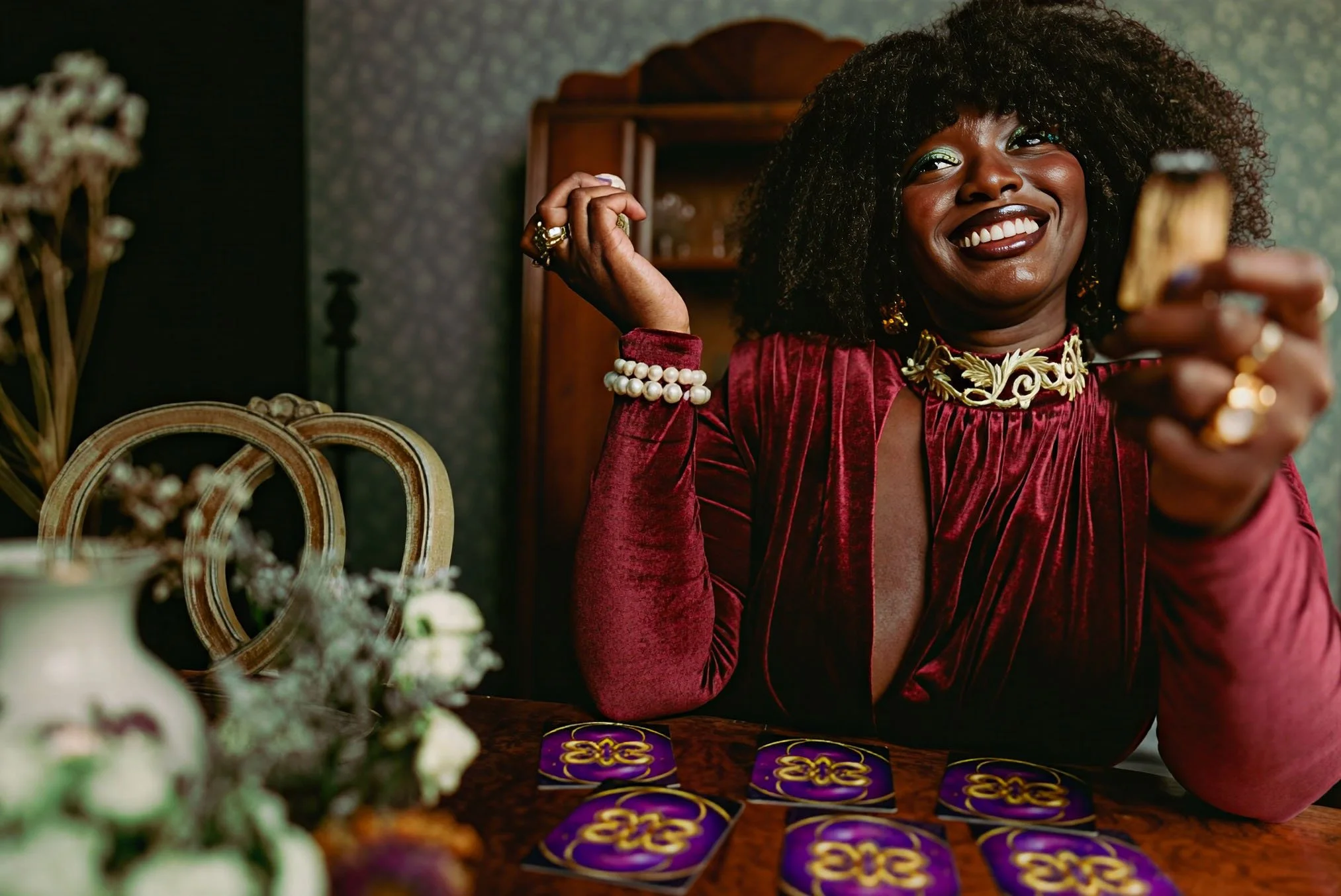





Hi, I’m the founder of Human Amplified. I’m Brandi Fleck, a recognized communications and interviewing expert, a writer, an artist, and a private practice, certified trauma-informed life coach and Reiki Master. No matter how you interact with me, I help you tell and change your story so you can feel more like yourself. So welcome!
Find More on the Blog
Topic
- ADHD
- AI
- Atlanta
- Black and BIPOC
- DIY
- FAQ
- LGBTQIA plus
- Los Angeles
- Nashville
- Seattle
- St Louis
- St. Louis
- UFOS/UAPs/ETs
- abuse
- accountability
- addiction and recovery
- adoption
- affirmations
- afterlife
- altered state
- angels
- animals
- anxiety management
- art
- astrology
- atlanta
- attachment
- awakening
- beauty
- behind the scenes
- being human
- body image
- body work
- boundaries
- brandi fleck
- breathwork
- bullying
- burn out
- burnout
- cancer
- career
- caretaking
- chakras
- channeled
- clarity-dive
- clarity-practice
- clarity-primer
- clean products
- coach
- codependency
Recent Blog Posts
Visit the Full Podcast Audio Archive

Affiliate


Calm stress fast with this 5-minute nervous system reset. Try simple breathwork, somatic awareness, and gentle release practices for quick relief.