
Intimacy That Leaves Room for Choice, Vulnerability, and Freedom
Interview By Brandi Fleck
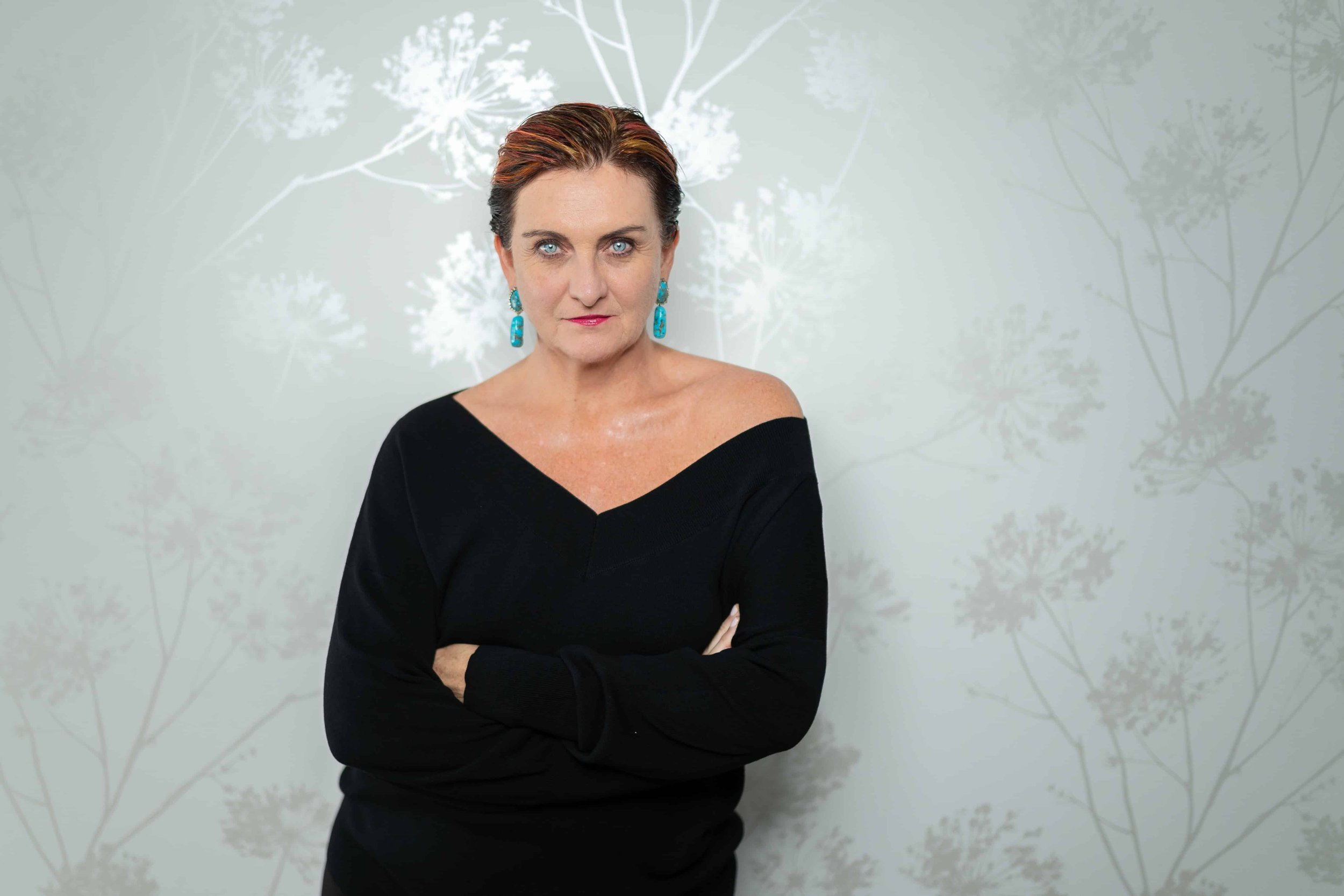
Author and coach Simone Milasas explores emotional intimacy, vulnerability, space, romance, money, and what relationships can become when we stop trying to control each other and allow both people the freedom to be themselves.
What if intimacy didn’t require either person to become less of themselves?
We often talk about closeness as if more is always better: more time together, more merging, more compromise, more certainty about where a relationship is going. But what if genuine intimacy also requires enough freedom for the person you love to remain fully themselves?
For author and coach Simone Milasas, intimacy includes trust, vulnerability, gratitude, choice, and allowance—not only the freedom to honor what you need, but the willingness to let another person do the same.
In this conversation with Human Amplified host Brandi Fleck, Simone explores why space doesn’t have to mean rejection, how control can quietly undermine connection, why vulnerability is not weakness, and what changes when we stop expecting another person to fulfill a predetermined role.
They also talk about romance, money, soulmates, relationship endings, single life, and the possibility that a relationship can be deeply meaningful without needing to look conventional—or even last forever.
Because intimacy may not be about holding on tighter.
It may be about loving someone deeply enough to let them be themselves—and creating a relationship where they offer you the same freedom.
Listen to Simone Milasas’ Interview
Watch Simone Milasas’ Interview
Being In Communion Changes the World
Brandi Fleck: Simone, what does being human mean to you?
Simone Milasas: Being able to be in communion with the earth and create something greater here.
Brandi Fleck: Thank you. I love that. Everyone, today we are welcoming to the show Simone Milasas. She is coming to us from Sunshine Coast, Australia. She is an author and a coach, and we are actually going to talk about relationships today. I always love a good relationship episode. Simone, welcome to the show.
Simone Milasas: Thank you. Thank you so much for having me here, Brandi.
Brandi Fleck: Really excited to dive into this. I know that you've written a book about relationships and actually co-authored it with a guest who was on Human Amplified four or five years ago, Brendon Watt. So that's really exciting. It's always exciting when those connections happen.
Simone Milasas: Well, he was my ex, and we wrote that book together.
Brandi Fleck: Wow.
Simone Milasas: And then as we had this big launch in the US, and our PR agent, we had TV and all these things, and we split our relationship up. She was like, "I nearly freaked out." And I was like, "Don't worry about it," because the title of the book is called Relationship. Are You Sure You Want One? And that was the whole thing. It was like, it should be a question. It should be a choice, not a necessity. So he's my ex.
Brandi Fleck: Awesome. Okay. Well, that is going to be a really interesting, I don't know, kind of dynamic to explore. So before we get too far in, though, can you tell us who you are as a person?
Simone Milasas: Who I am as a person. Okay. Good question. Let's do a little short answer. Something I've been looking at myself recently is I had a conversation with someone, and when I was about 16 years of age, I remember looking around and just thinking, this can't be it. What I'm supposed to do, what I'm told I'm supposed to do, what I'm supposed to look at my future as, all the trauma and drama that's going on around me, just this mundane maintenance sort of thing. And I'd look at nature. I grew up in Sydney, Australia, and we grew up right on the edge, so there was a lot of nature. After school I would just be in nature, and that always felt more like what we should be.
So at about 16 years of age, I went, I think I'm here to do and be something different. I think I'm here to change the world. I was like, I don't know what that is, right? And recently I started looking at that again. I was like, what was "change the world" for me at 16, and what is that for me now? And I think it's very different. But my whole life, I've pretty much spent looking at how we can create more consciousness—how we can choose more consciousness, I should say—and be more aware and be more in communion with this amazing, beautiful planet that we have here.
And I've done many, many different things. I also like to say that I've had a very colorful life. I have no place to judge anyone. I've definitely had some, as we would say in Australia, some dodgy days growing up in Sydney. I've been a naughty girl. I've done a lot of different things, but that's made me who I am today. But that's pretty much what keeps me going, is, okay, what else can I be today on this planet? And I think we need that more than ever at the moment.
Brandi Fleck: Agreed. Agreed. And I feel like a lot of people who are attracted to Human Amplified have a similar longing or calling where they feel like they're here to change the world. And how do you even start to figure out how to do that?
Being Yourself and Creating Conscious Relationships
Simone Milasas: I think a really key element, which people brush aside, is being you. Brandi, you said it correct. It's like, how many people here are seeking something different? So my question is, did you choose to be born at this time, in this body, on this planet, wherever you chose to be born, to do what? And are you being that?
You notice when someone is totally being them, it creates such a different energy when you're even talking to them or engaging with them. And when everybody is trying to do the right thing or judging that they're wrong or trying to prove something, et cetera, it doesn't create anything greater. It doesn't have that flow. Again, nature just has this ecosystem that's continuously contributing to each other, and I think that's what we can be too.
The first Avatar movie, I think, sort of nailed that pretty well about the connection that we have and be with each other. And for me, that. So it's like, don't judge yourself. Be. What can you be today that you have not yet chosen? What if we all relaxed? Because it's not about fight. It's not about conflict. What if we all relaxed and we chose to be us? What would we create?
Brandi Fleck: Yes. What if we all relaxed? That just sounds so nice. It would feel really good if we could all do that.
Simone Milasas: Yeah. Because if you look at any area of your life, whether it's money, business, relationships, your body, anything, we tend to do this thing of, okay, I've got to get this done today. I've got to do, do, do, do, do, do, do. And one of the tools I use, which is from Access Consciousness, is, what can I be with this? What can I be with my body? What can I be in this relationship? What can I be with my business?
Because what I notice is it sort of opens up this energy to receiving more rather than being really focused and channeled into only one direction. We're not one-directional. We have so many possibilities available, but we keep thinking we have to choose this or choose the same thing rather than pivot and go, okay, I'm going to change the trajectory of everything that I'm choosing. What else is possible?
Brandi Fleck: Yeah. And I feel like if we're being ourselves, that actually improves our relationships, not only our relationship with ourselves, but romantic relationships, platonic relationships. Like you said, it touches everything.
Simone Milasas: Totally. Absolutely. You and I, we've just met. But if we went and hung out and went to dinner or something like that, and then you were trying to be someone or I was trying to be someone, we'd both be bored. If I went out to dinner with you, Brandi, and I was like, hey, show me you, that's way more exciting.
Brandi Fleck: It really is. I agree. And people can tell when you're wearing a mask. They might not be able to put their finger on it, but they're like, something's not quite right here.
Simone Milasas: And we all stumble and fall, and I think we have to acknowledge that. A friend of mine once said—he's actually the founder of Access, Gary Douglas—he said, "Most people would rather be right than be free."
Brandi Fleck: So true.
Simone Milasas: People try and prove the rightness of their relationship, the rightness of their choices, rather than just choosing and sometimes acknowledging, hey, I chose this. Might not have been my smartest choice. Okay, I'm going to choose again.
Brandi Fleck: Yeah. I wonder why that is. Do you have any insight into that?
Simone Milasas: For myself personally, I spent a lot of my life trying to prove that I was right. And this is a personal story, and everybody has their own sort of situation. But when I was born, I'd say I'm very grateful. My father was incredible. He died about 15 years ago. Incredibly kind and always in allowance of what I chose, even when I was at my very naughty years. I always knew he was there. I always knew he would have my back.
Whereas my mom, she has never liked girls and never liked females. So immediately, literally from the second I was born, she said she loved me, but she did not like me. So my whole life, I had this sense of wrongness that was projected at me. I spent my whole life walking on eggshells with her and trying to prove that I was right. So that became very habitual.
I noticed how I did it later on in life too, because for me, it was like, if I'm right, there seemed like there was a sense of peace in my world because my mother wasn't going to be yelling at me or gaslighting me or something. So I was always seeking, how do I be right? Nothing about being me. Nothing. It was always about, what do I choose that's right in her world?
I think a lot of people look at that. What do I choose that's right in my partner's world or right in society, et cetera, rather than looking at, well, what actually would I like to choose?
Because it's all about choice. And as you choose, for me, it's the energy you put with it. Do you conclude it? Do you solidify it? Do you have that choice be so malleable that you get to choose again the next minute? So for me, it's a family thing, I think. But I think everyone's got some sort of story where they think that if they can be right, they'll have more ease in their world.
Whereas in truth, if you're actually willing to be wrong, next time in a relationship, it's a really cool tool to use too. If there's some sort of conflict, even if it's with a lover or a friend, it's like, you know what? You're right, I'm wrong. If you say it—you're right, I'm wrong. You're right, I'm wrong—you'll notice the energy just absolutely changes. So the willingness to be wrong creates so much freedom.
Brandi Fleck: Yeah, okay. Well, how does this impact intimacy? And what is intimacy, actually?
What Is Emotional Intimacy? Trust, Vulnerability and Self-Connection
Simone Milasas: Okay, so one of the things—and this is one of my favorite topics—one of the things that we've looked at with intimacy is five elements: trust, honor, allowance, gratitude, and vulnerability.
And it was so many years ago, Brandi, I had this point of view: I'm not doing relationships because I can't see a good one. Why would I do it? But there was no question in that, and I was completely looking at everyone else as a reference point to what I could choose, which, again, I think a lot of people do that too.
And I realized that I was looking for, say, someone to be grateful for me, but I wasn't grateful for me. Someone to trust me, but I wasn't willing to trust me. So what I started doing is I used to write it on Post-it notes, and I would have it on my bathroom mirror. And I would look at it every day: okay, where am I not willing to trust me and my body too, or be honoring of me and my body? How many times do we choose something to please somebody else rather than, is it actually honoring of you too?
And then being in allowance. Allowance is the place where you eliminate judgment, because judgment is never going to get you anywhere. You're going to stumble and fall. Things are going to show up. Okay, are you in allowance of your choices? Learn to laugh at what you choose. What's so funny about you you're not laughing about? Joy does create more on this planet.
And then asking, okay, so where have I not been grateful for myself? And also vulnerable. A lot of people misidentify vulnerability as being weak. Vulnerability is one of the bravest things that you can choose.
So for me personally, what I started doing with these five elements of intimacy is sort of breaking it down and asking myself questions of, can I please be more of this for me? And what I notice is when you choose that for you, then you can have that with somebody else. Then you can enjoy somebody else because you don't have these expectations or projections of everything that you've decided that they have to fulfill.
And they can pick up on it. It might not be a verbal conversation, but energetic conversations, I think, are some things that get so confusing. And so they can pick up on it rather than, what if you just enjoyed the person that's in front of you because you have this level of intimacy with you and your body that you don't expect somebody else to deliver, but they can?
Brandi Fleck: So are you defining intimacy as knowing yourself or being connected to yourself?
Simone Milasas: Yeah, that's a way that I would put it.
Brandi Fleck: Okay. And then intimacy with another person is a connection and a knowing of that connection?
Simone Milasas: Yeah. I think you can have all of those elements as well. Like I said, I used to have it on Post-it notes in my bathroom. It was quite a few years ago that I had it in my bathroom. And I call him my lover because I don't say it's a relationship now. I'd say it's more a creationship, and it's a playmate that I've had for like six years now.
But we were getting out of the shower, and he looked at it because I was learning Italian, and he's Italian. So I had it written in English and Italian, and he looked at it and he read it and he went, "That's what we have." And I went, "Yeah, I know."
But I don't have this expectation that he's meant to do something or be something. He gets to choose him. I get to choose me. But when you can enjoy each other like that, it's also, for me, a very expansive choice, and you have these elements of intimacy.
Which is interesting because intimacy, the word intimacy, so many people, I think, go to copulation, like sex and copulation. Yes, that's one thing. But when you have this, one of the things we've noticed is when we are super grateful for each other, I get so turned on, and so does he. That gratitude with no lies, where you're just like, how did I get so lucky to have this person standing here in front of me or being here with me?
Brandi Fleck: Okay. Well, and I was going to ask you too, what have we confused about intimacy today in modern society? But I think you might have answered that, where you said a lot of people confuse vulnerability with weakness, and also a lot of people confuse intimacy just with sex and copulation. Is there anything else you would add?
Simone Milasas: I would ask yourself, what is intimacy for you? Because for me, it's not about getting naked with someone. That's something else.
And Brandi, in 2020, because I travel a lot, like eight, nine months of the year, I came home and all of a sudden I'm at home, and I was at home. You weren't allowed to leave. And I was like, okay. And I realized I started to get bored, and I started to go on all the dating apps. That's like a full-time job, dating apps. It's like, whoa.
After I'd broken up with my last long-term relationship, which apparently you've had on the show here, I had this point of view, oh my God, I'm never going to have sex again. And I really enjoy sex. But it was a point of view.
So I went on all the dating apps, and I met up with a few different people, et cetera, and I realized, oh, it's actually easy to have sex. It wasn't good sex, and there was nothing that was—it didn't leave me with a smile on my face and having that sense of, you know when you just get that whole yumminess throughout your whole body?
A friend of mine once said, if you're in your car and you're in a traffic jam and there's traffic, and you get really annoyed there's traffic and you're complaining, but if you've just had great sex, you're like, who cares? I'm in traffic. Because it does, it really contributes to your body. Really good sex, I think, really contributes to your body and how you be in the world.
And I didn't get that from any of the dating apps or any of the people I met up with. Now, we got naked, but to me, there was nothing intimate about it. It was an act that was chosen that left me pretty flat, to be honest.
Interestingly enough, there was one guy I met on the app, and there was something he said, and I just sort of honed in on where he was at. We ended up becoming pretty good friends, and he had been through a lot. I picked up this one piece of information and I commented on it because he was being him. He was a policeman here in Australia, and we ended up being friends and more consoling with each other throughout 2020, '21.
But for me, that was probably the closest thing that I created from the apps. It had a level of vulnerability and a level of trust with each other. So that, for me, was more intimate than ever getting naked with someone and actually copulating.
Brandi Fleck: Yeah, that makes a lot of sense. Where does romance fit into all of it? And does romance even exist anymore?
Romance in Relationships, Receiving Love, and Feeling Appreciated
Simone Milasas: I think romance does. But I also think we've misidentified it again. I mean, Captain Obvious, the guy on the white horse and coming with the roses and things like that.
I really like being treated like a woman. I really enjoy it. And I had a friend many years ago. I was on a plane, and I went to get my bag out from up the top. And he said to me, "Simone." I said, "Yeah?" And he said, "Do you realize if you ask me for help, I will move mountains for you?"
And Brandi, at that moment, I was so vulnerable. And I went, "Okay. Will you please help me get my bag?" And he went, "I would love to." And there was this receiving that occurred between us. We were friends, that I noticed.
And from that moment on, because I'm quite capable of getting my bag, I'm quite capable of opening a door, I'm quite capable of all of this. But what I noticed is, for me, the romance is in allowing men to treat me like a woman and receiving men treating me like a woman.
I love when someone helps me put my jacket on or pulls my chair out or pours my drink or opens a car door or anything. And I don't expect it, but I really like it. And for me, there's this nurturing and this caring that comes across and this level of receiving.
And I think we've stopped receiving a lot, and we've chosen judgment instead of receiving. And when you're truly receiving, there is no judgment. And there's that, again, like nature, like that ecosystem of just this contribution.
So for me, I think there's romance in receiving. Can it come in flowers? Can it come in someone cooking you dinner? Sure. But even someone who makes you coffee in the morning because they choose to, not because it's a necessity. I think it can be found in the really small things. And I love it. I love romance.
Brandi Fleck: I do too. Gosh. It's just fun to think about. It's fun to hear stories about it. It's fun to experience it. All of it.
So those seem like good things about a relationship, but what would you say is the fastest way to kill a relationship?
Relationship Control, Money, and Financial Compatibility
Simone Milasas: Controlling it.
Brandi Fleck: Ooh, okay. Yeah, that makes sense.
Simone Milasas: And it goes both ways. I've seen women try and control the man in their—I mean, I know there's many different forms of relationships, but at the moment I'm talking about man and woman. And I see women try to control men and men trying to control women, and I don't think that's a sure way of, as we spoke right at the beginning about being you, you're basically asking the person not to be them.
Now, there's one instance, and I see this a lot. I've been really successful in what I've chosen, right? So I've earned good money. I've created a lot. I don't expect the person I'm with to be earning more money than me. If they do, great. If they don't, that's okay.
And I've seen a lot of women get really cranky at the man they're with. Successful women get cranky that the man is not earning more money than them. And I'm like, why would you do that? There's no kindness in that.
And I think we're gone with the days that the man is meant to go and be the breadwinner and pay for everything, and the woman is just meant to receive. Most women I know want to go out and conquer the world. And I know a lot of men who love creating that really homeliness sort of thing.
Like my ex, who you had on your show, he was an amazing cook. He was almost a MasterChef cook. And so I would work, and he would do things like cook or handle the renovations in the house or all of this sort of stuff. So I was the one who was literally paying for the majority of our lives.
But every day I asked, okay, is this contributing to my life? Yeah, it is. So I think financially people create this conflict. And one of the things we used to do, anytime we noticed that there was an energy that was conflict about money, we would do a Financial 101 date, and we'd go to a really nice restaurant.
We'd order a table for four. This is a trick. And so when you get there and you go, oh, it's just the two of us, but they've already assigned that table because we'd have our computers. And we would look at our finances, whether it was looking at what we've currently got in investments or where we're at or what we're choosing. And we would order a nice bottle of wine, nice food, and we would literally go, okay, where are we at and what do we want to create?
Because I think most people start fighting too about finances when someone hasn't emptied the dishwasher, and then it's just like, rah. It's like, no, you've got to look at actually, how can we approach this topic with ease for both of us and with an honoring—again, that's the five elements of intimacy—with an honoring of both of us. And it's not about control. It's about being in question.
Brandi Fleck: Okay. Ooh, I really love the idea of going on a Financial 101 date. That seems really, really practical, but also pulling a little bit of romance in with something that might not necessarily be as fun if you didn't do it that way.
Simone Milasas: And we'd always pick a good restaurant, like one of our favorites or something. Not just the most convenient. No, it's like, no, let's go here.
Looking really odd, Brandi, because sometimes the restaurants were like these beautiful, white tablecloth, beautiful wine glass restaurants, and we're sitting there with our computers. Oh, well.
Brandi Fleck: Yeah. But you're being yourselves.
Well, a topic that everyone also usually gets stuck on is the need to find a soulmate. I am of the belief that not all relationships are meant to last forever. Maybe some are. Maybe we have multiple soulmates and people who are meant to be in our lives, that are destined to be in our lives. It doesn't necessarily mean that they're going to be our husband or wife or life partner. What are your thoughts on all of that?
Soulmates, Relationship Endings, and Knowing When to Let Go
Simone Milasas: I'm very similar, Brandi. Years ago, when at high school, I remember some of my friends really wanted to get married and have kids. And I was always like, how do you know? How do you know? How do you look at someone and go, yes, I want to be with you in the next 50, 60, 70 years? I don't know what I want to be doing in 50 years.
So I created this whole—I was like, what if we could, when you got together with someone, maybe every year or every five years, you went, let's sit down and be in question and go, okay, have we done what we were meant to do together? Is it time to move on?
And I've had that conversation twice, and it's been a really beautiful conversation because I think most people end relationships in this, Dios mío, madre mía, this trauma and drama to get out of it, rather than saying, hey, you know what? I'm so grateful for the past six years, and I think it's time to move on, and have that conversation.
So for me, I agree. I think there's people who you just really enjoy. There's people you have in your life that you—I might enjoy someone so much, but Brandi, you might not as much. So we do have a different connection than what you have with this person.
And I think we are all interconnected in some way. And for me, yes, I do think there is multiple people that you can have that connection with. And I've got a few friends who have been married for many, many years and they're really happy. I'm like, good on them. You get to choose. We're not the same. We don't look the same. We don't act the same. So we don't need to choose the same.
Brandi Fleck: Yeah. What are signs that it might be time to have that conversation of, have we done what we were meant to do together?
Simone Milasas: So I can tell you one thing that occurred for me is, when I used to come home and I would see my partner's truck in the driveway, I'd be like, oh yes, he's home. And I would have that—I couldn't wait to run upstairs and see him and hug him and kiss him and find out how his day was, et cetera, or whatever.
And then I noticed, like the last two years of our relationship, I'd drive home and I'd see the truck and I'd be like, oh damn, because I wanted to have this space on my own.
And I noticed that because both of us traveled a lot. Sometimes we traveled together or alone. And I noticed I was totally fine with traveling without him towards the end. And it wasn't like I didn't like him anymore. It just wasn't giving me what it used to give me.
And it's the same for him. We were together for eight years, and I honestly think we should have been together for five. The last three didn't have to be.
And the funny thing is, we had a lot of sex. Sex wasn't—I think a lot of people look at relationships and go, oh, if we're having sex, everything's great. But that's just sex. There was a whole lot of other things where we were sort of drifting apart in a different way.
So I think the simplicity of, when you think about that person, when you see that person, does it put a smile on your face? Does it put joy in your whole world? Do you light up? And if you don't, then maybe start asking a different question.
And I also get with relationships, Brandi, is people go to the assumption of what it has to be rather than what actually works for you.
I don't desire to share my bed with someone every day of the week. I love sleeping on my own, but I also love sleeping with someone. Okay, so how many nights a week do I want to sleep with someone? How much do I want to spend with them?
I live on my own now, but like I said, I have a lover who lives about an hour away. And when he comes over for two or three days, I have such a good time. And then it's like, goodbye.
And then I live my life. But that's for me. I'm not saying that that's right. That's what I choose at this moment, at 56 years of age. That's what I'm choosing right now.
So I think you need to really have a look at what works for you. I always said that if I actually ended up living with someone again, I might need to do a massive house, like Downton Abbey style. They have their room. I have mine. We have our own bathrooms. I don't need to share a bathroom with anyone. I can share a shower, but I don't need to share a bathroom.
And maybe you have interconnecting doors, but you don't need to be glued to someone to enjoy them and receive from them. That's my point of view and what works for me. So get clear on what actually works for you, I would say.
Brandi Fleck: Yeah. I feel like space is a really difficult thing for some people to create in a relationship. And I don't—this statistic is probably old, but I think it's common knowledge now that at least 70% of people have experienced some kind of trauma.
And then this makes me think about, well, there's probably a pretty high amount of people who experience codependency and those types of things. So how do we navigate being able to create space and also heal that inability to be okay with it?
Space and Independence in Healthy Relationships
Simone Milasas: So a couple of things, and I think we need to acknowledge it. That's number one. Acknowledge, yeah, I require space. He requires space. She requires space.
I always say man cave is a real thing, okay? And men and women process things really different, is what I've found. I know a lot of men that they'll just do something like they'll just game all day. They want to game all day because it gives them a sense of peace and a sense of space.
But then I see a lot of their partners go, oh, they're ignoring me. They don't want to hang out with me. It's not personal. You have to get that when somebody else requires space, it's not personal.
So one of the things I used to do, like I know with my ex, there was a certain spot in the veranda when he went and sat. It was sort of unwritten law. I just knew that was the space that he wanted to sit, and he wanted to be on his own. He didn't want me to pull up a chair and sit next to him.
And I'm a really creative person, and especially in the morning, I'm a million miles an hour sort of thing, and he was not. And so I would just do my thing. But I learned to sort of tap into him and go, hey, are you good? Is there anything I can contribute to you? And he'd be like, no, I'm good. And I'd go, well, just let me know if I can. That's it. And I would leave it.
It might take three hours. It might take the whole day. It might even be eating in silence and then tomorrow. It's giving him that space to choose and to process whatever it is he was processing. I make myself available, but I'm not pushing onto it.
And I think we need to learn to ask for when we actually require space. It's not making the other person wrong. Again, it's not about right and wrong. It's about the freedom and what you require as a being, as your body.
Brandi Fleck: Yeah. And then what would you say to someone who is taking that request personally?
Simone Milasas: Stop it.
But seriously, if you're taking that request personally, then I would probably go back to those five elements of intimacy, like that trust, honor, gratitude, allowance, and vulnerability.
If you have that with you, then you tend not to do something like take it personally. And where did you learn that from? A great question is, who are you being? A lot of us grew up and watched our parents or our grandparents or someone function like that, and so then you think, oh, that's how a woman has to be, or that's how a man has to be.
You get to choose how to be. And there is a level of freedom in that vulnerability, that strength. You become really strong to go, hey, I'm actually going to give this person space. And in all honesty, your relationship is going to expand and have way more gratitude in it if you allow somebody to choose what it is they want to choose, including space.
So it's like a muscle. You've got to practice. It's not personal.
Brandi Fleck: Yeah. Okay. Well, and with that, on the other end of the spectrum, there are a lot of people right now choosing to be single. And so I feel like this is a really good time to talk about your book, Relationship. Are You Sure You Want One? Because we're seeing this. People are saying they don't in a lot of cases. So would you please just tell us a little bit about your book and why you think there's been that shift?
Choosing Single Life, Marriage, and the Relationship You Actually Want
Simone Milasas: Yeah. So the book Relationship. Are You Sure You Want One?—it's a whole lot of stories that Brendon and I wrote down. It's actually really vulnerable. I had a guy in Canada say to me one day, "Simone, I can't even talk to my wife about most of this stuff, and you've got it in a book and people are reading it." And I went, "I know."
But basically, our relationship lasted as long as it did because we would always talk to Gary Douglas, the founder of Access Consciousness, and use the tools. And there's so many different things.
For example, a quick tool is one day I was cranky at Brendon. I don't even remember why, but he'd done something or not done something probably. And we lived across the road from the beach, so I went across the road to the beach because I thought, take myself out of the house.
And Gary rang me, this friend of mine, and just so happened to call me. He was like, "What's up?" And I was like, rah, rah, rah, rah, rah. And then he goes, "Okay, I've got a tool for you."
I went, "What's that?"
And he said, "Go home and make everything about him."
And I was like, "I don't want to make everything about him."
He's like, "Go home and make everything about him. Trust me."
So there's a lot of the tools in that book that we talk about that I was like, this is dumb, this is stupid, but I used them. And so that day I went home and I walked in the house and I just started making everything about him.
Because most people walk in and, if they're cranky, they'll start to pull energy towards them. And women do that stupid thing and subtext of, "Are you okay?" "Yeah, fine." Underneath that fine is, you should know everything that's going on, right?
And instead, I walked in and I was like, "Hey, what's up? What's going on? What are you up to?" And I just sort of questioned him and made everything about him. Basically, what can I be for you?
Within 10 minutes, Brandi, he was like, "Hey, can I get you a drink? What do you want me to cook you for dinner tonight?" And he was making everything about me. And I was like, oh my goodness. This is working. It was incredible.
So there's these small, small little tools that we have throughout the whole entire book that can create a great relationship if you're choosing it.
And then the single thing I find really interesting as well. I have a 22-year-old niece, and so she tells me lots of stories. And I love that generation because she's been in a relationship with a girl, with a boy, and then another. There's no judgment, and there's the situationship. There's all these different elements.
But she was saying to me, some friends actually do desire to get married and have kids. And it's made it harder because it doesn't seem like there's many people out there who are desiring that.
So it's interesting how there's a lot of freedom that they seem to have. And yet, if you are one of those people who goes, hey, I want to be a mom, I want to be a dad, that also doesn't seem to be as available.
Again, what we have to do and be is to be really truthful with what works for you and put that out there. Literally, it's like, hey, I am looking to get married and have kids. I want to have five kids. I want to have three kids. I want a man to come along and look after me. I'm happy with the household. Or I want to go do this.
But if you don't ask, if you don't get clear—I don't mean clear as in precise. There's an energy.
I've never been married, and I've never desired to be married, but it doesn't mean it's totally off the table. If it showed up and it matched an energy that I perceived would create my future as I desire, okay. But it's not necessary.
And that's the whole thing of this book, is everything should be a choice and not a necessity.
I think we're really lucky though too, Brandi, in one way that you can be like, I'm a woman who's 56, who's basically living in a two-story house in Australia that I own. I get to travel the world. I get to do this. I've created a lover. I'm not against having a second lover. I just probably haven't found the time to ask for that to show up or whatever.
We have choice. We have infinite choice. So what if we embraced it? But if you desire something different, you need to ask for it.
Brandi Fleck: Yeah. That really makes a lot of sense. So I'm hearing you say communication is really important, setting expectations, asking for what you want, being yourself. All of those things have been common threads through this whole conversation, I think.
And I feel like marriage, especially way, way back in the day—you were talking about Downton Abbey—it almost used to be like a business arrangement to secure finances and all of those things. And now it doesn't really have to be anymore. So when we have that freedom, sometimes we just choose ourselves.
Simone Milasas: Yeah. Well, I mean, you're right. If you look at the history of relationships, it was about creating nobles coming together, land coming together, wealth.
I remember seeing a movie, and it wasn't Downton Abbey, but it was of that era. And this woman—I think, no, actually, sorry, it was older—and she had to get married to someone. She's like, "But I don't love him." And she basically loved the baker boy.
And the mother says, "Look, you have to marry him. You don't have to love him. You can love whoever you want after you get married." Basically, have an affair with the baker boy, but you've got to marry this guy to create that wealth and that security.
And we don't have that anymore.
And also, religion has changed a lot, I think. I mean, I grew up a Catholic, and I guess in my father's time growing up, he got married—he was actually married twice—and he got married because his wife was pregnant, the first one, and that was so taboo, right?
And he even had to get an annulment from the Pope when he ended up getting divorced. And that was very important to him because he was a pretty devout Catholic.
But I went to Catholic school. I did everything like that. But it's not considered wrong to have a child out of wedlock now. It's just a choice.
So I think there's a whole—I mean, you live in the Bible Belt too, don't you? Tennessee. Has it changed there too? I'm sure there's probably some still pretty strict.
Brandi Fleck: I feel like—I can't say for certain—but I feel it's still pretty expected in Christian circles that you're going to be married if you're having a baby. But there are a lot of—I want to say it's 50-50—there are a lot of people who have babies and they're not married, and no one judges them, and it's fine. But there are definitely still some very fundamentalist views around it, I would say.
Simone Milasas: And I get that's probably the extreme, and it has changed a lot around the world.
And even a friend of mine in Saudi Arabia, because if you look at Saudi, the women were pretty much not allowed to choose anything unless their father or their brothers gave them permission. She was lucky. Her father's died, but she has brothers, and they were always, "What do you want to do? We'll support you."
But she now has a house on her own. It's next to her family, but she actually has this house on her own that would never have been possible 10, 15 years ago.
Now she has that. So there are things that are changing all over the world.
I think the really key element, Brandi, is not to get lost in it, not to get righteous about it, but to continuously check in with yourself and look at what does work for you. Because like I said, if you want to get married and have kids, do it. If you don't, don't.
Brandi Fleck: Yeah. Well, Simone, I have loved this conversation. It's so interesting. And is there anything that I did not ask you that you feel is important to share?
How to Stop Judging Yourself and Others
Simone Milasas: The only thing that just popped into my world, which is pretty much a theme that I think we've been talking about, is I would like to invite people to stop judging themselves and also stop judging others.
I think judgment is something that is never, ever going to create anything greater. And if you are in judgment of somebody else, what if you look at the—because I think we've been there, done that. I think we've been so many things in so many lifetimes.
And if you have this really strong judgment about something, okay, so were you that? Did you do that at some stage?
If we really came out of judgment, I think we could create something entirely different here on the planet.
Brandi Fleck: Oh, yeah. Again, we could just relax.
Simone Milasas: Yes, let's go to that.
Brandi Fleck: Yes, because we wouldn't have to worry about all the judgment. Yeah. Well, that is a wonderful, wonderful note to end on. And Simone, where can listeners find you, the work you're doing in the world, and your books?
Simone Milasas: So you can Google my name, Simone Milasas, and it's M-I-L-A-S-A-S. That's my Instagram, my Facebook, my website, everything. I think I created that name. There's no other Simone Milasas I found in the world, so that's me.
The books, I've written The Joy of Business, Getting Out of Debt Joyfully, and Relationship. Are You Sure You Want One? They're all on your Amazon, everywhere that you can buy books locally.
Also, you can find me on accessconsciousness.com, and you can find—there's facilitators of Access who talk about a lot of these tools I've been talking about too, all over the world, in like 180 countries.
So yeah. Come play. Stop judging, come play.
Brandi Fleck: Yeah. Okay, well, all of that information will be in the show notes for everyone to check out. So guys, go look at that. And Simone, it has been an absolute pleasure meeting you today. Thank you so much for coming on the show.
Simone Milasas: Thank you so much, Brandi, for having me. It's been a pleasure being here.

Join the conversation!
Feel free to share your own experience and let me know if you have any questions in the comments.
Related Posts




Hi, I’m the founder of Human Amplified. I’m Brandi Fleck, a recognized communications and interviewing expert, a writer, an artist, and a private practice, certified trauma-informed life coach and Reiki Master. No matter how you interact with me, I help you tell and change your story so you can feel more like yourself. So welcome!
Find More on the Blog
Topic
- ADHD
- AI
- Atlanta
- Black and BIPOC
- DIY
- FAQ
- LGBTQIA plus
- Los Angeles
- Nashville
- Seattle
- St Louis
- St. Louis
- UFOS/UAPs/ETs
- abuse
- accountability
- addiction and recovery
- adoption
- affirmations
- afterlife
- altered state
- angels
- animals
- anxiety management
- art
- astrology
- atlanta
- attachment
- awakening
- beauty
- behind the scenes
- being human
- body image
- body work
- boundaries
- brandi fleck
- breathwork
- bullying
- burn out
- burnout
- cancer
- career
- caretaking
- chakras
- channeled
- clarity-dive
- clarity-practice
- clarity-primer
- clean products
- coach
- codependency
Recent Blog Posts
Visit the Full Podcast Audio Archive

Affiliate

Try this 10-minute active listening practice to build deeper connections, reduce miscommunication, and feel more present in your relationships starting today.