Life After Losing a Spouse and the Myth of Moving On
Interview By Brandi Fleck
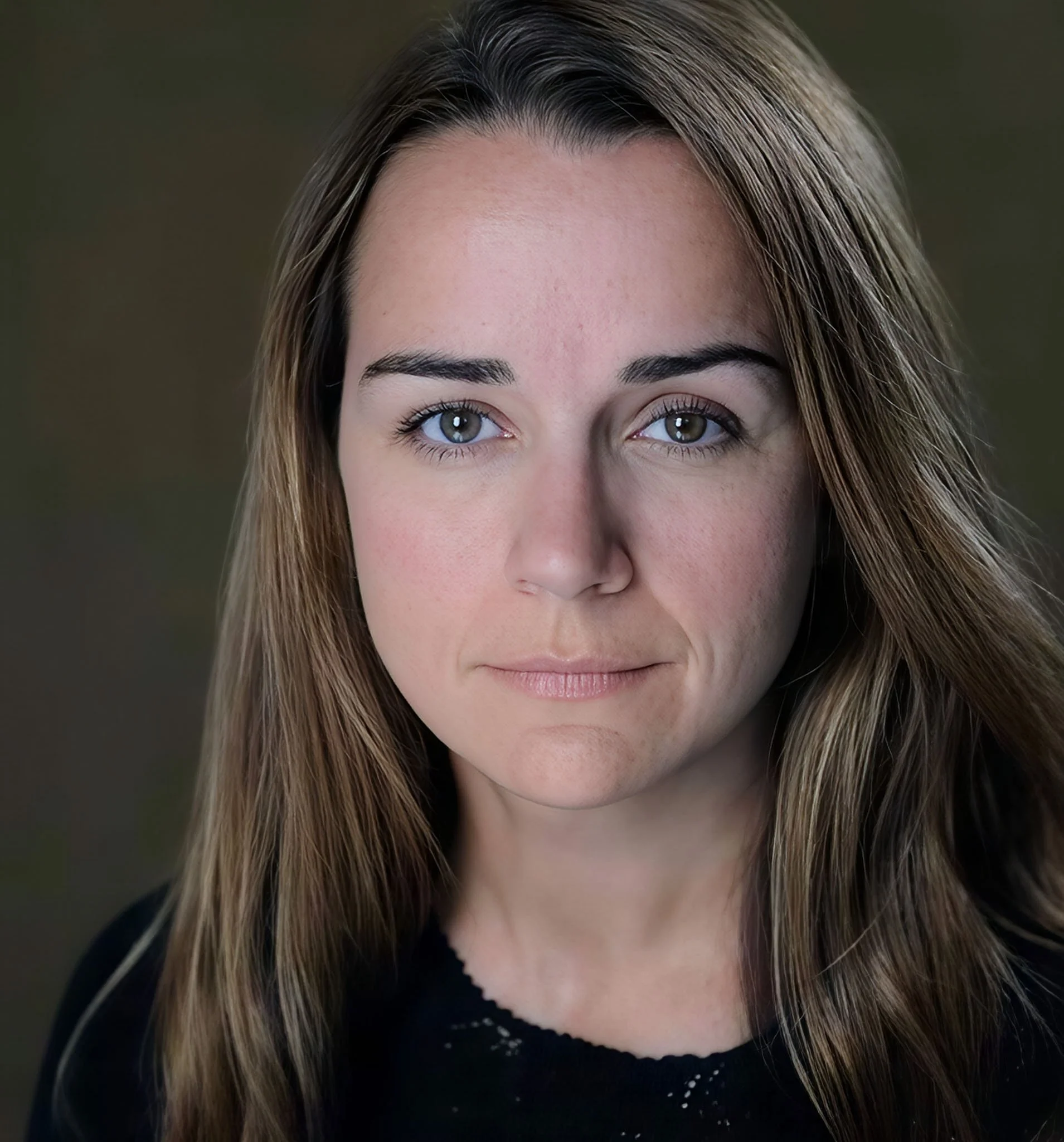
Heather Burwell shares how losing her husband, supporting a grieving child, and rebuilding her life led her to challenge common ideas about grief, healing, and moving on.
Grief is often associated with death, but loss has a way of showing up throughout life in places we don't always recognize.
For Heather Burwell, the sudden loss of her husband while raising a young son became the beginning of a much larger exploration of grief, healing, authenticity, and what it means to keep living after life changes in an instant.
Heather shares why she believes grief extends beyond death, how loss can shape identity and relationships, and why common ideas about "moving on" often fall short.
We also cover supporting a child through grief, finding meaning after loss, and the unexpected peace that can come from embracing reality as it is.
Listen to Heather Burwell’s Interview
Understanding Grief Beyond the Five Stages
Heather Burwell: Authentic connection is really my place of impact, and I think that is where it's at, showing up as my full self.
Grief, in my understanding and from my life, is an experience of missing. We can all find beauty somewhere.
Brandi Fleck: Each week here, you get personal glimpses into the personalities of each guest on the Human Amplified podcast, but this week's conversation with Heather Burwell is particularly intimate.
In this episode, we go with the flow of Heather's creative mind to discover where grief meets authenticity for her. In other words, we explore the ins and outs of her journey through grief, which she's realized is really her journey through life in general.
We also unearth how authenticity fits in, especially for Heather, whose religious upbringing taught her to hide who she is. Together, we really get into how inauthenticity in human life, caused by a fear of being seen and heard, can keep you from recognizing grief for what it is, which in turn causes damage and more heartache.
But we also talk about the peace and calm that comes with fully embracing what's going on in your life and around you. That's where Heather finds herself in the present, embracing what's real and fulfilling to her.
She's not only a Nashville-based author, singer, and actress, but she's a chaplain, having graduated from Vanderbilt's Divinity School in 2020. Her outreach focuses on being a positive vessel without judgment.
In her chaplaincy work, Heather contemplates where God is, or isn't, with the people she talks to. Plus, based on Heather's personal experience of being widowed with a 4-year-old about seven or eight years ago, she's written a book called Grief Doesn't Do Math. It'll be hitting shelves this spring.
She reads an excerpt of what she was feeling in active grief, and we talk about what prompted her to address certain areas about grief that she does in the book.
We dive deeper as Heather describes how to recognize grief and gives examples of how she's processed through it while also supporting her son through his grief journey.
Then we take a fun and unexpected turn into her love story and how that's going today.
You'll definitely walk away from this episode empowered to be yourself, empowered to embrace reality no matter how scary it is, and you'll have food for thought about how to recognize and process loss in your life, whether big or small.
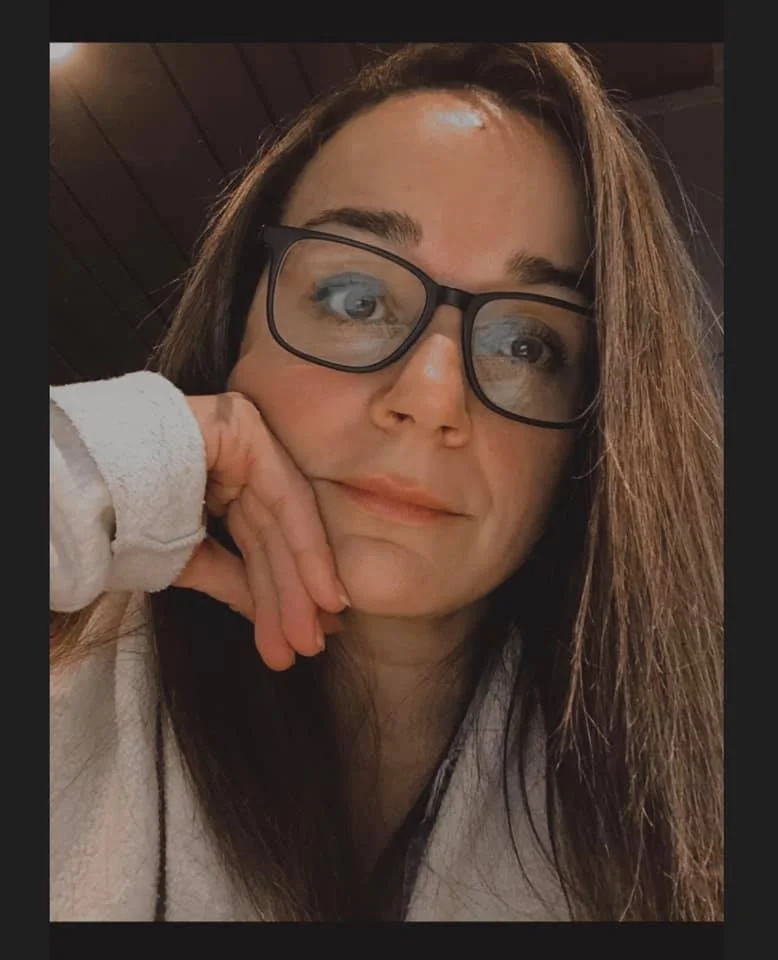
Heather Burwell: My name is Heather Helton Burwell. I graduated from Vanderbilt Divinity School last year.
I have written a book on presence inasmuch as grief, and for religious folk who ask me in my chaplaincy work, "Where is God?" I wrote a book about that because I feel like that's a very prominent question that I see a lot and one that I ask a lot too.
So in my work now, I really try to be a vessel for positivity. In my writings, I'm trying to do something positive. In my encounters with my friends, I do a lot of texting counseling, it seems like now, especially with the pandemic, which I love.
I think that's the closest connection we can often have at this time.
I was doing a lot of work with nursing homes and hospitals, and then when COVID hit, that was all cut off.
Brandi Fleck: Okay.
Heather Burwell: So a lot of the work I'm doing now is just reaching out one-on-one, social media, texting, however that looks.
Brandi Fleck: Okay, well, "Where is God?" is a big question. Can you sum that up for us? Can you answer that for us real quick?
Heather Burwell: I can answer that in three words: I don't know.
Brandi Fleck: Ooh, okay. That's interesting.
Heather Burwell: And I think that's the never-ending question. Like, how did that happen? How has all this happened? There's no sense-making of it. I don't think there is any way to figure it out.

Brandi Fleck: Okay, but you believe in God and you're a chaplain.
Heather Burwell: I do. Okay, I do. And a lot of chaplains like myself, my protocol is if you have all faith or no faith or any faith or a crumble of faith or you're atheist, I'm an equal-opportunity person. I will talk to anybody, and I don't have judgments or categorize people. I really like to talk to people where they're at.
Brandi Fleck: That's awesome.
Heather Burwell: That's my goal.
Brandi Fleck: Okay, well, your book that you've mentioned about grief, we're going to get into some of those details, but can you tell us, what is grief, and can you describe in detail the nonlinear nature of it?
Heather Burwell: Yes. Grief, in my understanding and from my life, is an experience of missing.
And I'm using missing as a verb, noun, adjective, adverb. It's all-encompassing.
I think of it as something you wear if you're actively in it. In the first part of my book, I call it "The Garment," and that's how I started the book out because I'm like, this is something I have worn like a cloak. It's just something that becomes a way of life.
Brandi Fleck: Okay.
Heather Burwell: I'm a very visual person, so it helps me to think of it in those terms.
But I think the term "a missing" is really where that's at.
When I was in graduate school, I was reading a lot about Elizabeth Kübler-Ross, and she's incredible. She's done so, so much on the avenues of grief, and she's really brought grief to the forefront of how people process, the way that they deal with loss.
However, I found myself and my son, who was a child doing his own grief process, lacking. We went very different routes from what she had ascribed.
I always backtrack and say that's not to say her work was not helpful, but I just felt like our process was very different.
We didn't have five stages. We didn't have two stages. We didn't even have a stage. We were just kind of up and down and in conflict all the time. There was no prescripted method.
Brandi Fleck: That's interesting.
Heather Burwell: So when I got to graduate school and they said, "What would you like to write about?" I'm like, "Oh, I know exactly what I want to write about."
Brandi Fleck: Yeah.
Heather Burwell: Because I'm right in the throes of it. I found it interesting because I wondered if other people felt that way.
In my chaplaincy work, I had six different internships in grad school, and I thought, hmm, let me think about what other people have talked to me about.
And I just saw kind of a recurring theme that people didn't say to me, "I'm in stage two or "I'm in stage four." They were all kind of in a cloud.
Okay, so that's how I kind of got to that landing point of, this is probably something to look at.
Yeah, that's really interesting. And I was wondering, as you were saying our grief didn't fit that model, I just think that's probably the way it is for most people, that it doesn't fit that model. And the word model is important because it does feel like we're supposed to follow a system.
What happened that set you on your own journey with grief?
Losing a Spouse Suddenly and Navigating Life After Loss
Heather Burwell: So in 2009, my son was born. He had come about from lots of miscarriages and grief around that. Then my husband and I had, thankfully, my sister-in-law offered to be a surrogate. We had this beautiful son.
Brandi Fleck: Oh wow.
Heather Burwell: Yeah, he's amazing. He's 11 now. So there's a little background of previous grief.
Then in 2013, my husband died really suddenly, out of the blue. No health issues prior. At that point, our little boy was four. It just happened on a random November Sunday afternoon, and it was instantaneous.
And that is exactly how I got on the path to real grief.
Brandi Fleck: Okay. I think it's safe to say that a lot of personal experience has influenced your book that's coming out.
What is your book called, and can you give us a synopsis of what's in the pages?
Heather Burwell: So my book is called Grief Doesn't Do Math, and the reason I titled it that was because in my early days of grief after his loss, and my journaling, I made sure to do a lot of writing and processing.
This was before I even read about stage theory and about the five stages. I was just thinking, wow, there's really no formula for it. Some people may feel grief 20 years after the event. There's really not a formulaic method.
And so when I was reading about how to process grief, I found myself pushing against it. And that's not only as an Enneagram 8, which I always push against things that I'm told to do. I was like, wait a minute, you're telling me I have to work a system now?
It felt so inauthentic to me.
Brandi Fleck: Okay.
Heather Burwell: Like once I work a process, then I'll be okay. That was a... I'm being sarcastic, but to me that's just totally ridiculous. You can't work a system through grief.
And so that's what the book is about, just sort of how you're getting through it without a system.
Brandi Fleck: Yeah.
Heather Burwell: I think the book is about an alternative to stage theory.
Brandi Fleck: Okay.
Heather Burwell: Another way to look at grief beyond the five stages is what my thesis was. It's just a healthier, more friendly way to be kind to ourselves instead of saying, "Once you work through these five stages, then you'll be great."
I just don't think that works. It hasn't worked for me.
Brandi Fleck: Yeah.
Heather Burwell: I haven't met a person who said, "Yes, I reached the fifth stage and then everything was great." I've yet to meet a person who was on board with that.
Brandi Fleck: Yeah. Okay, so at this point I would love for you to read an excerpt of your choosing from your book.
Heather Burwell: Okay.
It's been three years and five days, four hours and 45 minutes. Or is it five minutes? Do I count the resuscitation attempt as minutes? You were still here. I'm pretty sure you were gone instantly.
The sun attempts to peek out and give me some desperately needed hope shine, but the clouds are chuckling back in full-on cover mode.
I can plainly see that those allegedly helpful five stages of grief are insufficient, damaging, and making me feel inadequate.
My convoluted grief traverse actually began with acceptance. What? Which is bizarre and backward. I hit the last stage first.
I guess Elizabeth Kübler-Ross would give me a hearty and a well-deserved F-minus.
In reflection, it is painfully obvious my social media posts were oozing in positivity and hope just one day after you died.
I pontificated on how fortunate we were to have you the short time we did and carried on and on about the glories of reuniting with you one day in heaven.
Gross. Not normal.
It's one thing to gird up your loins and be all Jackie Kennedy about it all with stern lip and brave face for the kids. It's quite another to throw on rose-colored glasses and tell the world about my newfound acceptance at a time I shouldn't have.
What was I thinking? Literally, what thoughts were taking up residence inside my battered pain brain?
Little Miss Sunshine was full-force optimism hours after her beloved fell over in the kitchen.
No. That's not even a characteristic I would possess on a good, normal day. Where's my shock?
Did all that somehow fall in a shock box and seal itself away from me in the span of a day?
Does Mama Bear mode, fending for her child, send me beyond the first necessary, so I hear, stage of shock?

I'm not grieving right, and it is evident to me I never have. C.S. Lewis, in all of his theological brilliance, apparently couldn't grieve right either.
In A Grief Observed, he said, "For in grief, nothing stays put. One keeps on emerging from a phase, but it always recurs."
I'd like to change stage to state for my causes.
This process is a swirling tornado with eyes everywhere. There is no nucleus.
How lovely it would be just to wring my hands of the pain and sail away, abandoning it to the wind.
I am such an ineffective griever. I don't do it right. What am I supposed to do?
Brandi Fleck: First of all, that is fantastic writing, and I can't wait to get a copy of your book and read all of it.
But secondly, to feel like you're an ineffective griever while you're grieving must have been an added stress you just didn't need.
What was it like to feel that way?
Heather Burwell: I like to keep things in present tense because I think we're always grieving.
Brandi Fleck: Okay.
Heather Burwell: So it feels like it's a never-ending cycle. It diminishes, to be sure. I'm not saying it's as strong now as it was seven years ago, but it's still there.
But I think the idea that we process through five emotions and then it's done with is hurtful because no one ever really recovers.
I mean, I don't want to be a Negative Nelly. I just think we learn to live with the limping. It's like our walk has changed.
Brandi Fleck: Gotcha.
Heather Burwell: We still walk. There's just a little bit of hesitation now. It's different.
Brandi Fleck: But you still experience happiness and joy within that.
Heather Burwell: Absolutely.
Brandi Fleck: Okay.
Heather Burwell: Absolutely. And it takes time. You know, it takes time.
Supporting a Child Through Grief After the Death of a Parent
Brandi Fleck: Okay, so how did that experience, and does that experience, impact your ability to support your son through his grief? What was that like, or what is that like?
Heather Burwell: I think about this daily because trying to own my own experience and then... Mama Bear has become this thing in our society. It's very different when it's grief because you really do want to take it away from your child.
I mean, the loss of their parent is just so...
I'm trying to think if there's a better way to say it than Mama Bear, but I just think somehow those two have to be separated.
And I feel that I tried to respect his position, and I tried to respect my own position as they were separate, even though we were unconsciously melded together.
It was not six hours until I called a child counselor for him.
Brandi Fleck: Okay.
Heather Burwell: It was not six hours until I found a counselor for me.
I tried to keep those two things separated because I'm not a child grief counselor. I don't know how to do that. I wouldn't know how to do that.
And so my first call was to somebody that I knew could help him.
Brandi Fleck: Okay.
Heather Burwell: So I think self-care and caring for those people we love, and what's best for them, knowing we can't do that, we can't be everything to everybody.
Brandi Fleck: Sure. I'm curious, do you think that everybody needs to go to counseling who's going through grief, or is that just something that you thought would help you? Or is it something everybody should do?
Heather Burwell: I have a feeling that everyone can benefit from counseling, regardless of if it's grief or no grief.
Brandi Fleck: Okay.
Heather Burwell: That's just my theory. It's helped me a lot, even when I'm not in grief.
To have someone weekly to bounce things off of that has a totally chill nature, and they're not for you, they're not against you, they're just giving you their resounding wisdom. I think that's amazing.
Brandi Fleck: Awesome.
Were there any things that you did besides counseling, or that you are still doing besides counseling, specifically to support yourself and your son through the grieving process?
Do you guys talk about it? What are some of the self-care things?
Heather Burwell: We do talk about it. We have kept a very open communication line about it, and I think that's been important.
We have pictures everywhere. I've remarried, but his dad's pictures are still in our home.
Our relationship with his parents is critical.
Brandi Fleck: Okay.
Heather Burwell: We are in touch with his parents nonstop. It's the connection piece.
I don't want that to ever be cut off. I try to foster it and nurture it.
And I just feel like so much is connection.
It's really easy in grief to just cut yourself off and curl... you want to go curl up in your room or your house and just not talk to people.
And I've met a lot of people who are like, that's where they're at, and that's fine.
I was at that place, and I went through a six-week training that taught me how to go through grief. It's okay, and you can still live, because there was a time I was like, I just don't think I can live through this.
Brandi Fleck: Yeah.
Heather Burwell: Connection is really my place of impact, and I think that is where it's at.
Brandi Fleck: I wasn't going to bring this up, but I just feel compelled to tell you that I was divorced in 2015, but my son's dad and my ex-husband passed away suddenly in 2018, and my son was also four when it happened, so I'm relating to you as I'm listening to you talk and things like that.
I'm just like, oh man, because this whole time I've worried if I've supported my son in the right ways. So I hear you, I hear you.
Heather Burwell: Yeah, I think we do the best we can with what we have, right? We don't want to hurt anybody. We're always trying to build something that is productive and helpful and loving and just making them understand that they're loved.
And yeah, I think that's a foundational thing. And I'm sure you are doing that, and he's okay today.
Brandi Fleck: Yeah.
Heather Burwell: Right?
Brandi Fleck: And I was glad to hear some of the things you said because we have pictures of his dad everywhere too.
Heather Burwell: Yeah.
Brandi Fleck: And I try to make sure he can visit his uncle whenever he wants to and things like that. So yeah, the connection.
Heather Burwell: We're doing it.
Brandi Fleck: Yeah.
Heather Burwell: Right? We're doing it.
And I think there's a lot to be said for that. Lots of people could just cut it off and say, "You know, I can't handle it."
I lean into it. I just feel like that's the way to do it.
Brandi Fleck: Yeah, because if you suppress it, I feel like it almost goes on longer and causes other issues.
Heather Burwell: Right.
Brandi Fleck: So let's just be real about what's going on and embrace it.
Heather Burwell: It's an embracing.
Brandi Fleck: Yeah.
Heather Burwell: An embracing. Running away doesn't help it. It always leads to something negative. But I think embracing it is that sense of community, and I think that's what helps.
Brandi Fleck: Yeah.
Heather Burwell: At least it has for us.
Collective Grief, Life Transitions, and the Losses We Don't Always Recognize
Brandi Fleck: All right, so I'm going to take a turn here because your book took a turn, I believe, that you didn't expect from what I know of it and what I've seen of it.
So you said that you didn't expect to explore grief at first as it's not tied to death but also life. Can you tell us more about that and why you went there?
Heather Burwell: So this is... I found this really interesting.
I asked my Facebook friends, I said, "I'm exploring grief for a book I'm writing. Do you have anything else beyond the death of someone that you would suggest that would help?"
And I got so many responses. I mean private messages, emails, people that just posted directly.
And they said, "Oh yeah, what about the grief of the living people who were in your life that are gone now?"
I never even thought... even though that's happened to me, I'd never considered that grief.
Just losses in general. It's such a major consideration. We're all dealing with it, especially now.
I was with a best friend today for lunch, and she's like, "What about the collective grief we're all dealing with? All of humanity?"
Brandi Fleck: Yes.
Heather Burwell: So it's just... it's everywhere.
It's interesting to me. It's just a subject that's all-encompassing.
Brandi Fleck: Yeah, that is really interesting because when you think about it, change is constant. And even if you're happy about that change, there is always some loss tied to it because for the change to happen, you can't have what you had before.
So it seems like there literally... grief is, like you said, a constant thing that we're dealing with.
But if people don't even know that's what they're dealing with, what do you think happens?
Heather Burwell: I think that comes up in self-destructive ways if they can't name it.
If we can't name that loss, because especially now we're all dealing with it. There's no avoiding it.
You can't speak to anyone and say, "Oh, I didn't know that we had lost a year of our lives to a pandemic."
It's just in the ozone, right? It's everywhere. So I think it's going to come up in various methods. It's going to come up with anger. People are going to be angry.
I see that online all the time. So much anger and just picking sides politically and just firing at each other. I just think it's everywhere, and I think it's because we don't know how to deal with our grief and our loss.
How to Recognize Grief in Everyday Life
Brandi Fleck: So how would you recommend, based on your personal experience, that a person, one, recognize what is grief? How do they recognize it? And two, how do they start dealing with it once they recognize it?
Heather Burwell: I think recognizing it takes a lot of self-work.
I think someone has to know when something is rising up in them. And this is just my experience for myself. If I'm feeling something very extreme, I'm like, this is probably something about me because I own my side of the street.
So I feel like if someone's feeling very... if something triggers somebody and makes them feel very strongly about something, just acknowledge: could it be grief?
Or ask themselves the question, could this be something I'm upset about because I haven't seen my family in a year? Or I'm upset because I can't leave my home?
What is it really about? That's what I do with myself.
Brandi Fleck: Okay, so that helps you recognize it. What are some ways to deal with the grief once you recognize it?
Heather Burwell: I am trying to understand that that's a part of life for me, and I just own it.
I don't get mad about it. I'm not sad about it. I just think, okay, what can I do with it?
What is in my control and my capacity? What can I hold that I can fix? And for me, that is, I can get up and go outside. I can go sit in nature.
I'm looking at my backyard right now, and the sun is striking a beautiful cast on my backyard right now while we're talking.
I'm like, I should go out there. I try to find things that are tangible, doable, because we can all find those.
Brandi Fleck: Okay.
Heather Burwell: It doesn't matter how small it is. We can all go outside and find beauty somewhere. That's the biggest thing.
Brandi Fleck: Does that take the edge off?
Heather Burwell: Definitely. And it definitely draws me back to gratitude. So I take my mind off, oh my God, somebody just yelled at me on Facebook, or everyone's angry, or what about the thing in D.C.? When I go outside, it's like that vanishes.
The Physical Symptoms of Grief and Emotional Pain
Brandi Fleck: Nature's a healer. Can you tell me one more thing about grief, and then I want to pivot into authenticity for a few minutes.
What does grief physically feel like to you?
Heather Burwell: Grief to me feels like a dark blanket that covers me.
And that's why I told you that's how I started my book out, because I think it's important to start there.
It's very dampening. And it's not necessarily clinical depression. It just feels like something that has taken over me.
And it feels like something I can't overcome when I'm in those moments.
Brandi Fleck: Do you recognize any specific physical sensations when that happens? Like, does your body actually feel heavy? Or do you feel anything in your throat?
I'm just trying to think, are there physical sensations that could alert another person, "Oh, this is actually grief," even though they don't realize it?
Heather Burwell: Definitely. I feel definitely a heaviness over my body. I feel in my chest... what are those things at the dental office when they put those X-rays...
That's what it feels like. Those X-ray… I don't know what they're called.
Brandi Fleck: I don't either, but they're very heavy.
Heather Burwell: Yes. Weighted. And it's not the weighted blankets, because I think those are good, probably.
But it's just that heaviness. It's all-consuming. I wouldn't say there's one part of me that feels that way. It's more of just a complete dragging down.
Brandi Fleck: A little bit earlier, you mentioned that following the five stages or working the five stages didn't feel authentic to you. And when you talk about what it means to be human, you talk about being authentic and authenticity.
So what does that word mean for you? What does it bring up for you, and why is it so important?
Heather Burwell: I feel like authenticity is something that I learned about much later in life.
It is being true to self, which means I show up to each person I encounter in my life where my head, my heart, and my soul, spirit, are all in alignment.
Brandi Fleck: I love that vision.
Heather Burwell: And that is really tricky, I think, because I think some of us maybe have a tendency to keep some of it pulled back. Maybe we're showing up as people we want the other people to think we are.
I think if we just show up as ourselves, people really are attracted to that. It might scare some people off, but maybe that's because they don't understand what that looks like, so they're terrified of it.
I just think being authentic is being you all the way. And I knew when I connected with my husband, Lewis, last year, he was ready to be authentic. And it's like our authenticity just collided.
You know, I said, "Are you ready? Do you want to be real with somebody?"
And he's like, "Absolutely."
And it works. It works.
Brandi Fleck: That's awesome.
Heather Burwell: But it is scary. And I think for me, I had to reach a certain level where I was ready for it.
I wouldn't have done this when I was 21. I would have had my mask on and been fake. Not meaning to, just being scared of being real.
I think that's what it is. I think we're often scared of being real with people.
Brandi Fleck: Do you think it's because we're scared of rejection?
Heather Burwell: Probably. Probably.
And scared of what could happen, and scared of the end result.
I just feel like if we just show up and just say, "Here's me. This is what you've got," I think that is so fulfilling.
And we don't have to backtrack or hide anything or say, "I'm sorry, I forgot to tell you about that."
I just love the idea of being full-front real.
Brandi Fleck: Yeah.
You said that you learned authenticity much later in life. Why do you think that is?
Heather Burwell: I grew up in a very strict, narrow-minded atmosphere where we had to act a certain way according to religious standards.
And I won't shame anybody that's grown up that way because I still have many friends who live that way and live that religious path that they're on.
But it taught me to not be myself. It taught me to hide myself.
And so now I'm 46, and I feel like people are like, "Oh God, what's wrong with her?"
And there's nothing wrong. I'm just saying what I always knew to be true about myself.
Brandi Fleck: Okay.
So I think that can happen a lot.
Do you think that when you were hiding part of yourself based on your environmental conditioning, that you were experiencing grief for your true self?
Heather Burwell: That's a great question. I've never thought about it.
To me, grief is after the fact of something.
Brandi Fleck: Okay.
Heather Burwell: So when you say that, I don't feel like I was experiencing grief. I feel like I was just inhibited and pushed down.
Like I couldn't really be my full self, who I was made to be.
Brandi Fleck: Yeah.
What made you ready to finally embrace your true self?
Heather Burwell: Lots of loss, grief, and I really think going through a lot of heartbreak and finding someone who said, "I think you're amazing just the way you are," was really kind of like a catapult.
Finding Love After Loss and Building a Peaceful Life
Brandi Fleck: Now, we didn't plan this, but can you tell us a little bit about your marriage?
I know that you guys got married. You were planning this wedding and then COVID hit. Can you just tell us what happened?
Heather Burwell: So I'd been through a really toxic, difficult relationship for five years after my husband died, and I decided that was not going to be any longer, and I ended that.
And last November of 2020, I was thinking about this guy. And just to backtrack a minute, I had decided I was going to manifest the most amazing man that ever could be. And I did.
Brandi Fleck: That's awesome.
Heather Burwell: I told God and the universe in my kitchen, standing in my kitchen November 17th, "Here's what I would like."
And I said it out loud. I remember it. I don't even live in that house anymore, but I remember this.
I just got chills. Like clockwork, I have texts that I sent to my friends, and I said, "God and/or the universe, this is what I want and need."
And I named qualities about this person, and it's extremely specific. I said, "I would love for this to be somebody I have been to school with because I think we would have a shared history."
"I would love this to be a man that has traits that my son can relate to, that his dad related to, such as golf."
Alabama University football was specific. I mean, I got specific.
Brandi Fleck: Okay.
Heather Burwell: Three days later...
Brandi Fleck: Seriously? This is amazing.
Heather Burwell: Three days later, I'm at home, and I'm like, "I wonder what's up with Lewis."
I messaged him on Facebook and I said, "Hey, do you have a girlfriend?"
And he said, "No, I don't have a girlfriend."
And ten days later, we are both talking about getting married.
Brandi Fleck: Wow.
Heather Burwell: And we got married in April, in the pandemic.
Brandi Fleck: That's amazing.
Heather Burwell: It happened.
Brandi Fleck: Yeah, it is amazing. That's just great. So what would you say your life is like today?
Heather Burwell: Today my life is peaceful. It's calm. Even in a pandemic, it is steady.
I don't have to worry or wonder about anything problematic or stressful. I can go to him, and he's there to bounce things off of. He's not judgmental.
My son is happy. We've reached that part of the ocean where it's calm. There aren't waves anymore.
Brandi Fleck: Okay.
How can listeners find you?
Heather Burwell: So my book is coming out. It's in editing right now, so it will probably be, I'm guessing, April.
Brandi Fleck: Okay.
Heather Burwell: And it will be on Amazon, WestBow Press, Thomas Nelson, anywhere you can find a book called Grief Doesn't Do Math.
And I think I'm going to start a blog because I think that would be helpful where people can commune and talk about their grief experience.
That's something I'm actually working on right now, to figure out how to do that. I'm not technologically savvy, but I would love to do that.
Brandi Fleck: Yeah, awesome.
Well hey, whenever your book comes out, we'll put the link to that in the show notes for our listeners to come back to.
And if you do get your blog up and going, shoot over the link and I will post that too.
Heather Burwell: Oh, thank you.
Brandi Fleck: Yeah.
Heather Burwell: I appreciate that.
Brandi Fleck: Is there anything I did not ask you that you think is important to say?
Heather Burwell: I think you asked me the great questions that needed to be answered.
I do feel like I just want to say to anybody: grief is your own path.
It is your own journey. Whoever's listening, it doesn't matter what your neighbor did or your mom did or your teacher told you to do or your counselor said.
It is really specific to you, and there is no right or wrong. And I feel like the stages make us feel like there's right and there's wrong, and there isn't. It's different. And if you want to grieve somebody the rest of your life, that's your privilege, and that is okay.
If you want to stop grieving after three days and say, "I'm done with it," that's your privilege. That's okay. There's no prescription for it.
I just feel like we should all be given our own right to grieve how we want to grieve. That's it.
Brandi Fleck: Awesome. Awesome. Well, Heather, thank you so much for coming on the show. It has been an absolute pleasure having you here today.
Heather Burwell: Thank you.
Join the conversation!
Feel free to share your own experience and let me know if you have any questions in the comments.
Related Posts

















Hi, I’m the founder of Human Amplified. I’m Brandi Fleck, a recognized communications and interviewing expert, a writer, an artist, and a private practice, certified trauma-informed life coach and Reiki healer. No matter how you interact with me, I help you tell and change your story so you can feel more like yourself. So welcome!
Find More on the Blog
Topic
- ADHD
- AI
- Atlanta
- Black and BIPOC
- DIY
- FAQ
- LGBTQIA plus
- Los Angeles
- Nashville
- Seattle
- St Louis
- St. Louis
- UFOS/UAPs/ETs
- abuse
- accountability
- addiction and recovery
- adoption
- affirmations
- afterlife
- altered state
- angels
- animals
- anxiety management
- art
- astrology
- atlanta
- attachment
- awakening
- beauty
- behind the scenes
- being human
- body image
- body work
- boundaries
- brandi fleck
- breathwork
- bullying
- burn out
- burnout
- cancer
- career
- caretaking
- chakras
- channeled
- clarity-dive
- clarity-practice
- clarity-primer
- clean products
- coach
- codependency
Recent Blog Posts
Visit the Full Podcast Audio Archive

Affiliate