
How to Manifest What You Want Through Self-Discovery
Interview By Brandi Fleck

Life coach and Reiki Master James Ruzinok shares how self-discovery, emotional awareness, and manifestation can help you create a more meaningful life.
Manifestation starts long before you write down your goals.
James Ruzinok believes the life you create is shaped by your thoughts, emotions, and the beliefs you carry with you.
After two divorces and years of searching for something more, he found new purpose through life coaching, Reiki, and spiritual growth.
He explains why understanding yourself is the foundation for meaningful change and how shifting your mindset can influence everything from your relationships to the future you're working toward.
Listen to James Ruzinok’s Interview
Watch James Ruzinok’s Interview
Why We Lose Touch With Our Authentic Self
Brandi Fleck: So many people I've talked to feel trapped in the grind of life. In the best-case scenarios, jobs and relationships they merely tolerate, or in the worst-case scenario, jobs and relationships they hate. And why is it? Because we think that's what we have to do, because society tells us so.
If you look deeper within yourself to identify who you really are and what you really want, you'll realize that's not what we have to do. And this week's guest will tell you the same.
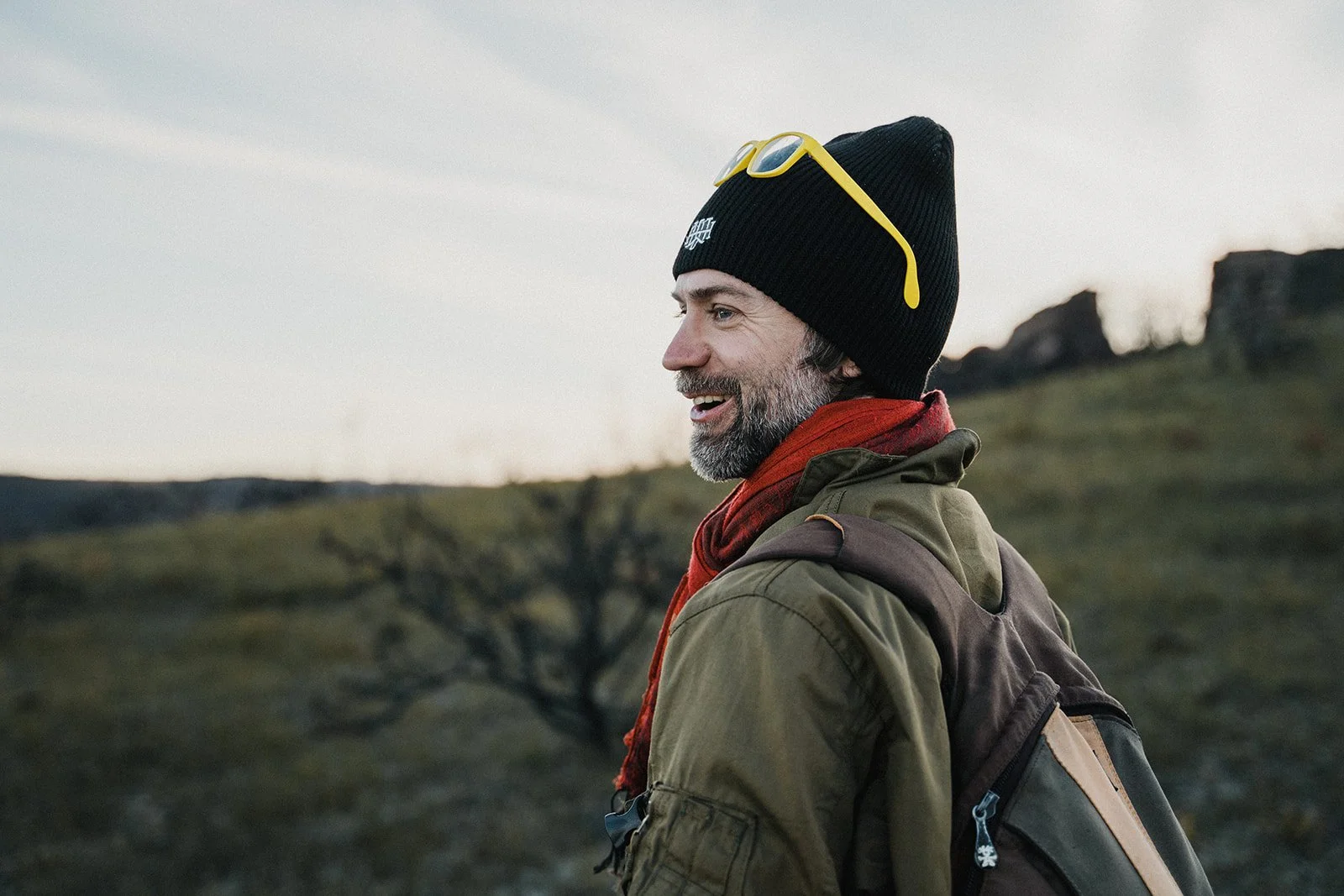
James Ruzinok is a career Navy veteran turned software engineer turned life coach and Reiki master. James hails from Ohio, where he grew up learning the value of hard work from his father and learned that discipline would get him far. While his career was thriving, he went on to marry and become a father to four sons he loves dearly. He divorced, remarried, divorced, and remarried, a story that many of us know ourselves.
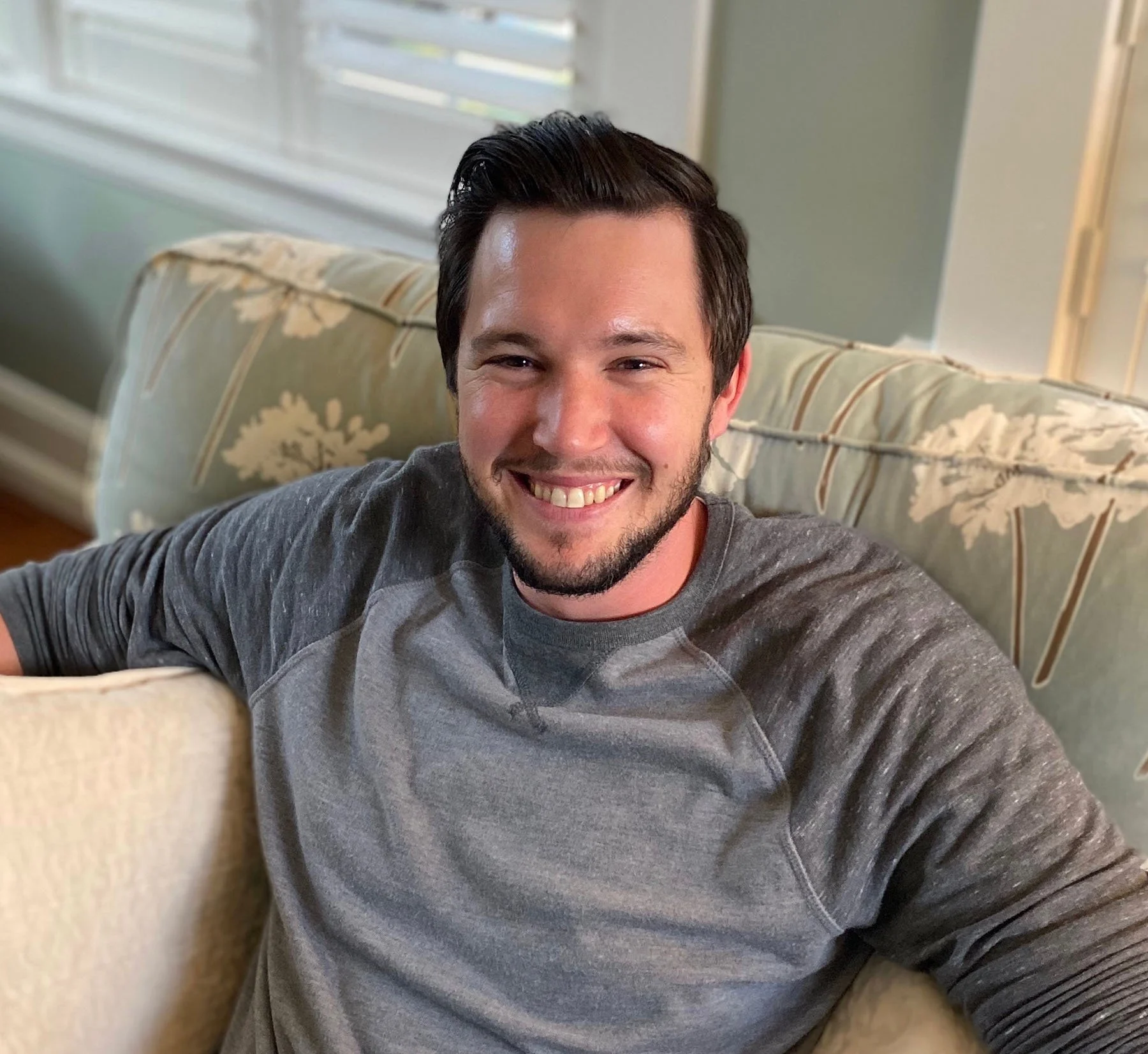
I've known James for 11 years. We met at a software company where he developed software and I wrote technical manuals for the software. When I first met James, he was the clean-cut, quiet type. Over the years, I saw him evolve into a long-haired, motorcycle-riding energy worker with a glow that you really can't deny.
Aside from career and love, James is interested in Native American culture, music, and enjoys a newly manifested lakeside view from his back porch. Through striving to live a life truly in harmony with who he is, James met the love of his life and current wife, who inspires him to pursue his life's purpose.
James realized that he needed to combine discipline with spirituality to live the life he really wanted and to serve his true purpose, committing himself to reestablishing balance in the universe. He is committed to helping others live in harmony with who they truly are.
So let's dive in to explore what reestablishing balance in the universe means and how to start living your own life's purpose, with tips for how to do just that. And remember, as we'll hear from James' story, the path is not always straight, and maybe that's the point.
Brandi Fleck: Hi, James. Welcome to the show.
James Ruzinok: Thank you for having me here. I was glad that you asked me to be here for an interview, and I'm really looking forward to it.
Brandi Fleck: Yeah, I've been looking forward to it too. I think you've got some really unique insight into life and how people can follow their own life path, and I'm really excited to explore it.
James Ruzinok: Awesome. Yeah, I'm just glad I'm here to help.

Brandi Fleck: Let's just jump in. Before we talk about what makes you you, what do you think it means to be human?
James Ruzinok: My feeling of being human is we're each unique. We each have two arms, five fingers on each hand, two legs, toes, and all of that, so we're similar, but we're different. It's just like snowflakes. No two are the same.
You need to be yourself. You need to be true to who you are. There's a lot of people running around life wondering what they are. They're trying to find themselves. Well, they're right there. They just don't take the time to think about how they're feeling about the actions they're doing, and they're trying to please other people. Well, that's never going to work.
The only one you can please is yourself. Other people, you can't please them because they're always going to want you to do something else.
Brandi Fleck: It almost sounds a little bit like you're focused on the "being" part of human being. Like you think people should focus on just their existence and how they can better that, maybe?
James Ruzinok: That's very much true because I believe that we lived in spiritual form before we came here in physical form. Then when we expire here in physical form, our spiritual form still lives on.
I believe in reincarnation. I believe people come back into physical form in different bodies as different people to experience different things.
Take a look at everything that this Earth has to offer us. We have so many choices. Even if you're sitting there and you're at a choice and say, "Well, I can't pick either one of them," you just made a choice. You decided not to choose. So there's always options.
We get our feedback for how we're living, how should I be, from our emotions. Our emotions are our feedback mechanism to tell us, "This is how true I am to who I am."
If you ignore your feelings, you're not going to be living your true life. You're going to be in misery. You're going to wonder, "Why? What is there to life? Why am I here?"
How Limiting Beliefs Shape Your Life
Brandi Fleck: Right. So that brings me a little bit to, in your bio on your website, you mentioned that you like to help people get rid of belief patterns that hold them back.
What are some examples of those belief patterns that hold you back?
James Ruzinok: A lot of people have self-fulfilling prophecies from back when they were growing up. Your parents tell you, I still have one belief pattern that I haven't gotten rid of yet.
When I was a kid, my mother would tell me I couldn't clean windows. Today, I still can't clean windows. I clean a window and there are streaks all over the place no matter what I use. That's ingrained in me. That's a belief.
I could use the same thing somebody else does, and the window just doesn't get clean.
There are other beliefs. "You can't do this." "You'll never be able to play the piano." If you really put your mind to it, you may. You have to dedicate yourself to it. It's not going to happen overnight. You're going to have to put in the time to learn, to practice, and everything.
But if you really want to do it, you can. You can work hard enough, and you can do it.
It's just, how much pain are you going to suffer to get to what you want? If all you want is the end result, "I want to be a concert pianist," or "I want to be a rock guitar player and be on a stage and listen to everybody clap.” You got to put in the time. You got to learn how to do it.
Brandi Fleck: That makes a lot of sense. A lot of people would say it is about the journey, not the destination. I'm one of those people. I believe that. I also believe in a lot of the things you do, like reincarnation, so I think it's really interesting to delve into some of those topics.
What about your journey? Can you tell us a little bit about where you came from? I know that in your bio you said you were born in Ohio to a blue-collar worker. How did that impact you, and how have you gotten to where you are?
James Ruzinok: When I was growing up, I didn't know that we didn't have much money. I had everything I needed. We went on family vacations every year, and that was awesome. We traveled most of the country and met people from various places.
I was the type of child that didn't have a large number of friends. I always had a small number of friends, usually less than you can count on one hand. I'd take those friends and just get to know them really well.
Every time we traveled, I'd end up meeting new people, talking to them, and getting different opinions. I seemed to always take the path less traveled. I didn't go the normal route that everybody else did.
I played some sports, but sports really weren't my bag, so I did other things. I got into music. Music was nice. I used to get lost in music.
I played drums as a kid, and we had a band. Before I was out of grade school, we were out playing weddings and parties, playing at the VFW. We'd go to this bar, and our parents would sit in there, take us there, and take us home. That's awesome. Can't do that anymore.
But it was a lot of fun when we did it. Those experiences just brought in so much of how to enjoy life.
Brandi Fleck: What really mattered? What does really matter, according to you? What do you think really matters about life?
James Ruzinok: What matters to me about life is how I feel about what I'm doing. I want to enjoy what I'm doing.
After high school, I did real well in grade school. I got a partial scholarship to go to high school, so my parents... I was the only one of my other three siblings who went on to a private high school. I did well there, but I wasn't able to win a scholarship for college.
My dad approached me as I was getting out of high school and said, "If you want, I'll take on a second job and we'll put you through college."
I said, "Dad, there's three others. You can't do that. If I can't wing it, I'll figure something else out."
So I joined the Navy, and that was a lot of fun. I went into the Navy Nuclear Power Program, which was what I was leaning toward in college. I wanted to study nuclear physics and whatnot, so it got me the experience that I wanted there.
I had a good time when I was in the Navy. I advanced fairly rapidly and enjoyed it. As I got farther up into management, I realized that I was no longer the cog in the wheel. At the end of the day, I couldn't say, "This is what I did." I pushed Bobby's button so that Bobby would work and pushed Billy's button so that Billy would work. That just didn't bring me enjoyment.
So I was at the point where I could retire. I got a degree in computer science, went out and worked, started my second career as a software engineer, and did that for about 20-some years.
Then I went back to college again and started working on life coaching. So here we are, job three.
Brandi Fleck: That's awesome. Loving all of them?
James Ruzinok: Yeah.
Brandi Fleck: That's great. Speaking of your most current career, can you tell us a little bit about what your certifications are and your specialties?
Reiki and Energy Healing
You're a holistic life coach. You're also a Reiki master and an energy practitioner, correct?
James Ruzinok: Correct. Reiki and energy pretty much go hand in hand.
I started out with Reiki. My wife had taken some classes in Quantum-Touch, another energy technique that's out there. She enjoyed it, but she was saying, "You really can't do anything unless you're a Reiki master."
So I found some local people up in Nashville that were offering the classes to work up to Reiki Master and signed the two of us up for it. We took those classes, and over probably about five or six months, we got certified as Reiki Masters.
That was a lot of fun. Working with them was awesome. I learned a lot. I had so many experiences that I hadn't felt before.
Brandi Fleck: Like what?
James Ruzinok: In the classes, you practice Reiki on one another. Just the energy you feel from somebody else's body, even when you're not touching it. You'll be within close proximity, and you can feel it going from your hands to their hands. You can feel their body energy reflecting back.
It was something I had never paid attention to before, but that whole touchy-feely sensation, to be honest, was there, and I just didn't realize it existed.
When you're with the person you love, you always have a deep bond, and you can feel that emotional tie. Since then, I've been feeling people's emotions a lot more, and it's good.
I'm working on developing myself so that I can start reading people's auras. That's the next step I'm looking at. I want to work on that, to not only feel the energy but also see it, see the glow of people, see what shades of color they have, to help see what they're going through and then help them even better.
Brandi Fleck: Do you think that energy work and being able to feel it, and then eventually see the color of it, would help you in guiding them on their path in your life coaching practice?
James Ruzinok: Yes. Sometimes you can see... From what I understand about auras, and even with energy, you can feel whether it's positive or negative. You can see whether it's enhancing them or taking away from them.
If they appear to be dodging the truth, that would help with coming up with more pointed questions to really bring them to answer, from their heart, how they feel they can make their life better.
As a life coach, I believe, and I believe most life coaches believe, you don't tell people what to do. It's that there to be that third person to be objective and to ask qualifying questions and probing, pointed questions to really get you to think deeply and say, "This is what I believe. This is how I can help myself. These are the options that are available to me."
Out of those options, "I feel that this one would be the best one to go with." Then you work with them to go that way. They may be right. They may be wrong. They may start down that path and realize, "Well, this isn't really taking me to point B. I'm going to point C."
Then they'll change what they want to work on, and you alter your life that way. Very few roads are straight. You walk through the woods, and you're not going to walk straight. We go from here and we go there. We find out, and we use our emotions to figure out, "Are we doing what we really want to do? Am I living the life I want to live?"
That's the whole point of it, I guess.
What a Life Coach Actually Does
Brandi Fleck: Yes. I've had some life coaching sessions with you, and you've mentioned to me before that all of the answers are within. Each person has the answers to their path and where they want to go and what they want to do. They just can't see them, right?
So basically, are you helping people see those answers? Is that what you're doing?
James Ruzinok: Helping them understand their choices.
A lot of times, when you're in a situation, your emotions will cloud your mind, and you'll be thinking about one thing and won't see some options that are available. I try to help people become more aware of exactly what is there and what other kinds of options they can take and where they think they want to go.
There are various different techniques you can use. You can talk to people about their emotions and have them explain what they feel and why they feel that way, where they think it came from, and what they can do to try to overcome that.
Sometimes it's going back to limiting beliefs. "Well, I've always been told I can't do this." Well, it may or may not be true. You may be able to do it. Find a way to do it.
It could be just that they're shying away from it and they don't want to take that leap of faith.
Brandi Fleck: That could be hard.
James Ruzinok: Right. They don't want to get hurt emotionally. They feel they've been hurt enough, and they don't want to go there.
But take a look at a seed. You plant it in the ground. It sits there, and it knows what it is. The water goes on there, the nutrients go in, and the seed starts to grow. It's in its shell, and it gets painful. All of a sudden, it pops, and it sprouts into a tree. It started from what was inside, and it didn't want to change.
Same thing with butterflies.
Brandi Fleck: That's a really good point.
Using Emotions as Your Inner Compass
Going back to the emotion of it, do you have any tips for how somebody could discern between using emotion as a guide for where they should go on their path versus knowing when emotion is holding them back and clouding their judgment?
James Ruzinok: A lot of that depends on the situation and how the emotions go.
There's an author. Her name is Melody Fletcher. She wrote Deliberately Receiving. It's one of the books on manifestation. She's a funny author, and she's got some good books.
She groups emotions into pretty much seven emotional groups. Based on those groups, if you're down on the bottom, if you're in emotional group number one, you're in depression. Everything's happening to you. You have no control over anything because everybody else is controlling your life, so you don't see that you can bring about change.
The whole idea is all of the emotions, depression, shame, anger, all of those emotions, are feedback. We have to acknowledge them. We don't want to suppress them.
Now, with anger, it's not good to have anger and lash out at people because the people we normally lash out at are not the people we're angry at. We lash out at the people we love, and then we drive them away from us. So we don't want to do that.
But we do want to acknowledge that, "I'm angry." You need to understand, "I'm angry, and this is why I'm angry. This is how I can get over my anger."
Anyone who has raised infants. If you watch your child play, they'll sit there with a toy, and they'll get depressed because they can't make it do what they want it to do. Then they'll go through shame, then they'll go through anger. They'll get frustrated, throw the toy away, and then they'll be happy.
They just went through all of their emotions and got mad at nobody. But we forgot how to do that as adults.

How to Manifest What You Want
Brandi Fleck: Let's go a little bit more into manifestation and how you get what you want in your life.
I know that when I was having a session with you, you were like, "What do you want more of in your life?" I wanted love at the time. That was something that I felt was really lacking. Since then, I feel so loved. You had some really good tips, so I would love if you could share that with our listeners.
James Ruzinok: That was where we were just going through the different emotions.
You have several emotional feelings that you can have, and you do a weighing game with them. You come up with your top 10, and you whittle it down.
Let's say yours was love, and one of the other emotions could have been financial security. What's more important to you? Between love and financial security, which one are you going to pick, and why?
Then you think about that, come up with your answer, and rank all the other eight emotions that you had selected as your top emotions, or the emotions that were most important to you.
You see which ones really are important. You basically run through the list twice. You run through the list and say, "Okay, this is better than that." Then you whittle one of them out. You run through it again, whittle another one out, and you're down to your last two.
When you're left with two, that says, "This is what I'm going to work on. To me, at this point in my life today, this is what I want to work on."
Then you think about, "How can I improve this emotional feeling in me? What can I do to bring about more goodness in my life?"
Brandi Fleck: You said to me one time that thoughts sort of have legs, or something to that effect, where if you think something, it goes out and it sort of brings things back to you.
James Ruzinok: That's the basis of all manifestation.
The universe provides everything we want. The universe is a mirror. Our thoughts go out, and if we start the day off and think, "Today is going to be a really lousy day," guess what? It's going to really be lousy.
But if you wake up, take some time to collect yourself, and say, "I'm going to have a wonderful day. Everybody I approach is going to be nice to me.”
It's like buying a brand-new red car. Let's say Chevrolet just came out with some super-amazing car, and it comes in this candy apple red that just looks so sweet. There are none of them out there, and you want that.
Well, you finally get that car. The next thing you know, there's one over there, and there's another one over there. But two weeks ago, you didn't see any.
It's because that's what you're focusing on. What you focus on is what you see.
I did the same thing when I started to learn to ride motorcycles again. I took a long hiatus, and you normally didn't see them on the road. I took the basic rider course again, got the bike, and everywhere I looked, I'd see motorcycles.
Life is a reflection of what you think.
Mike Dooley has a saying that "Thoughts become things." What you think is going to come back. It may take a little while, but it will.
Breaking Negative Thought Patterns
So if you're stuck in a cycle of negative thought, and then negativity keeps getting reflected back to you, how do you even start to break that cycle?
Well, that's where you need to work and figure out why there's that negativity, what's the root cause of it, and break that down.
A lot of times you can use a guided meditation where you talk someone through a story and have them imagine their life being different.
I've worked with some people where I have them imagine that a sunbeam is shining down and it's on the floor right next to them. Then they stand up and step into the sunbeam. With that, it takes them to see their future self.
Once they're there, they see what they imagine, where they really want their life to be, and help identify, "These are the blocks that are in my way."
Sometimes it's just, "What do I need to do to get over the wall?" We make the wall, so we need to take the wall down.
Brandi Fleck: Okay, that's interesting.
That brings me to maybe we should dive into the part of your journey where you had some traumatic experiences and had walls that maybe you didn't realize were there that you needed to take down.
Can you tell us a little bit about that time in your life and what those experiences were?
James Ruzinok: Yeah. I haven't really done real well at picking wives.
I got married the first time shortly after I joined the service. I went into the service when I was 18. I was in there four years, and I figured, "Well, I'm old enough. I need to get married."
I think I was more thinking, "I need to get married." My thought of a family, or a good life, was you're married, you have kids, and you grow a family. So I was looking for someone who was compatible with me.
I found a woman who was beautiful, and we got married. We had four lovely sons. All four of them are wonderful today. As a matter of fact, one of them had just visited me this week and left Friday morning to head back to Florida.
It was good. But I was in the Navy, and while I was there, I was dedicated to my job. I thought I was taught by my father that the husband provides for his family. So I always went over and above, worked extra, and made sure everything was right.
Like I said, I advanced well in the Navy, and I was providing for my family, but I wasn't there for my family.
So my wife found someone else, and the marriage fell apart. That lasted a while. Then I wasn't married for a while, and I realized I really need someone else in my life.
I've told many, many people that I can be an island. I could live somewhere and be by myself, and that's it. Then I realized, no, I can't. I need emotional attachments. I need somebody to share my life with. I can't just live for myself. I want someone to enjoy it with me. I want to grow old together with someone.
Brandi Fleck: Mm-hmm.
James Ruzinok: So I got married again. I married another lovely woman, and we had a good relationship. Everything was going well.
Several years into it, I realized that I wasn't me anymore. I didn't know who I was. I didn't want this marriage to fail, so I was altering my life to do what I thought she wanted me to do. So I wasn't me. I was a shell.
I started doing what I thought I wanted to do, and of course that caused a rift. There were some other issues, and we divorced.
Then I met my current wife. She was into spirituality, energy work, and a lot of the mystic beliefs. That really connected with me.
I realized, "This is really what's missing from my life."
I was brought up Roman Catholic, and after high school I really didn't do much with religion anymore. I got into the military and got more into, "Well, this is black and white. Here's the materialistic world. We've got science telling us how things are. Religion is really just a bunch of rubbish. It's a bunch of people believing in something that's not really there."
After many, many years, I came to realize that spirituality is what it's all about.
We're all spirits before we're human. Then we leave, and we're still spirits. Our soul lives beyond us, and our soul lived before us.
Brandi Fleck: Okay. What kind of impact did those divorces have on you, and how did they ignite your self-reflection? How did you realize what lessons you needed to learn from those?
James Ruzinok: The first one, not to sound crass, but it really didn't affect me.
I was married, then I was divorced. I just had to live somewhere else. I delved more into my job. I buried myself in what I was doing.
I found a place to live where I could be with people so I wouldn't just go hit the bars at night and turn into an alcoholic. I easily saw myself doing that.
When I was looking for a place to live, I had my four sons, and at the time two of their cousins were living with us also. So I'd get six boys on the weekends when I had them, and that was always a blast.
The oldest one was 10. The youngest one was about 3. We'd just be in Charleston and go around. I couldn't be in a house where it was a bunch of guys with beer, alcohol, parties, poker games, or whatever.
So I found a lady who had a shared rental in Charleston, and I rented a room from her. I had access to the common areas.
I was honest with her up front and said that I had boys who would be over on the weekends. I slept on the floor, some slept in the bed, and we had a good time.
They got to know her, and all of us even went camping together a couple of times. It was a really good experience, and that helped me a lot. But it didn't identify what I was doing wrong.
I transferred, got married the second time, and after the big crash where I found myself as what I felt was a hollow shell, I said, "I'm doing something wrong."
Brandi Fleck: Gotcha.
James Ruzinok: That's the one that really hit home, that I'm not doing what I'm supposed to be doing.
My current wife has helped me out a lot. She's pointed me in directions and opened my eyes to things that I just hadn't been aware of.
Spirituality is probably the biggest one. When I left the house and joined the Navy, it was, "Okay, I need to do good at what I'm doing. I need to learn things." I was learning things, but all the learning involved the physical sciences.
The military teaches you how to do your job. This is what you need to do. It's science, what we call material science. That's all it works on. They don't deal with feelings and whatnot. You've got a job to do. Get it done.
So that's pretty much what started it and sent me down that path. I didn't maintain my connection with the church. That may have changed me.
My first wife, her mother was, I forget what religion she was brought up in. Episcopalian or something. Her father was pretty much non-denominational.
She wasn't brought up going to church, so we really drifted away from the church. We didn't really bring the kids up with a religious background.
They're all doing really well now. My oldest son is very active in his church, and my second son just got married earlier this year. I went to his wedding in Washington State. He's going to get out of the military and settle back down in Florida. That's where their mom is.
Brandi Fleck: They're all migrating back down to her place, so that's nice.
When you talk about your first marriage, it seems like you were a little detached from it, or at least the way you talked about it. Is love something that you feel like you have more of in your life now because of spirituality?
James Ruzinok: Yes. Yes, definitely.
I've noticed it a lot with people I meet, just in normal interactions. I see people being more open, more friendly. That's one of the reasons I want to get into aura reading. I feel that they're sensing some of the emotions that are in me, and it's having an effect on them because we are feeling beings.
We see things, we feel things, and they change us. If you're walking somewhere and you see somebody who looks scary, you get skittish. You're picking up on their emotions. But if you see somebody who's happy, someone who's joyous, you relish in it.
It's funny because way back when the drug culture started, people were doing drugs and everybody thought, "Well, this is bad." Some of them are bad, but what the drugs did for a lot of people was put them in the mindset they were trying to reach. They were trying to reach nirvana. They were trying to experience heaven on Earth. They wanted to be released from the chains of this world and feel what it's like to be a spiritual being. That's where they were going.
I was reading a book by a neuroscience doctor who taught at a teaching hospital. He underwent a seven- to ten-day coma where his brain was almost dead. They were getting ready to pull the plug and declare him brain dead.
He recovered, and he had this experience. Since then, he's been trying to work through what he felt. All the medical facts said his brain was dead, but he had the most loving experience in that coma. Then he came back to life, and he's been working with people, trying to help them.
He met some people, and they went swimming with whales. One of the people he was with was one of these early drug users, if you want to use that word. He had so much love for everything that when they were all together, it amplified everybody's love. They were swimming with the whales, and the whales came up close to them. Some of the other whale watchers around there started coming, and then the whales went away.
I believe that we feel other people's emotions, and it has a positive effect on us.
Raising Your Consciousness
Brandi Fleck: That brings me to a statement that you made in your bio on your website where you said you've committed your life to reestablishing balance in the universe. It seemed a little related to what we're talking about with emotion and affecting each other.
What does it mean to have balance in the universe?
James Ruzinok: We've come a long way.
Remember all the end-of-the-world talk back when the Aztec calendar ended in December of 2012?
Brandi Fleck: Yeah, I remember.
James Ruzinok: This whole thing is cyclical.
That signified, right around then, when we entered the Age of Aquarius, which I found really hysterical because the song from the drug era was "The Age of Aquarius."
The Age of Aquarius is the midday, the noon of our cycle. We have the zodiac signs, and every about 26,000 years we go through a full day-night cycle of human evolution. Every 13,000 years we have a midnight and we have a noon.
We've recently entered the noon.
People are talking about the Golden Age, when we live heaven on Earth, when we have God's divine, pure consciousness come down here and shine on the world. Everybody's emotional state, their energy level, they're just filled with this energy. As long as they can handle it, they'll evolve into better beings.
People look at the Bible and talk about how long some of the people lived in the early books of the Bible, 938 years. I know when I was a kid and I was reading the Bible, I thought, "Who can live 938 years?"
If we have this pure love from God coming down from the heavens, from the center of the universe, and it's reaching us, and we're living in this Golden Age, I believe we will see that. I don't know if we will physically see it, but I believe the Golden Age is coming again soon.
It'll be here, and we'll have the next evolution in human life. We'll evolve as a species, evolve as a planet, and have more spirituality everywhere.
Brandi Fleck: So is your role in life to help raise that consciousness?
James Ruzinok: Yes.
I want to help people raise their consciousness so they're ready to receive more of this pure divine consciousness that's going to be coming.
We can do it. It was lost after the last Golden Age. They had about 4,000 years of the Golden Age, and then, the story goes, it got smaller and smaller. During the Golden Age, they pretty much stopped writing, and they really didn't have a language because they communicated through other means.
Then the amount of this pure consciousness diminished as we moved out of that wave. They tried to pass it down, and they started developing the written word. That's where a lot of our old scripts are in Sanskrit, one of the oldest languages they have.
Trying to understand what was going on, they wrote a lot of it in code. They had hidden meanings in some of the words. They had hidden meanings in their symbols so that it couldn't be abused by someone who was trying to do something wrong with it.
We'll see how that goes.
Brandi Fleck: Sure.
If we actually look at history books and look at history, we can sort of see the cycles from a perspective that's maybe not quite as raised. Would you agree with that?
James Ruzinok: Hopefully. But the problem you've got with history books is the victors always write the history books.
Brandi Fleck: That makes sense.
James Ruzinok: Just look at the Civil War. It's pretty well biased, written by the winner.
Where's a lot of the old history? The last Golden Age supposedly started at the end of the Ice Age. That would have been around when we had our midnight in our cycle. That's when everything started evolving.
Then we got into language, religions, and it went down from there. A lot of it initially was transferred by word of mouth. They taught people, "This is how it goes. This is what you need to do. This is how you do it."
They refer to them as the sacred science and secret societies. I believe there's a lot of truth in that.
Brandi Fleck: How did you learn about these cycles? Was it something that came through the Reiki training?
James Ruzinok: No. It was just other reading.
After I studied some Reiki, I thought, since we're living here in the United States and the oldest people we have here are Native Americans, I started looking into Native American teachings.
What do their medicine people do? How did the Native Americans live? Why did the Native Americans not overpopulate the area like Europeans did before moving here?
I was trying to wrap my mind around why all these things happened. Why did we just push them aside? We treated them as savages, yet they may have had better answers than we did. We just didn't accept them.
Brandi Fleck: Right. I want to go back a little bit to your journey where you said you had your "aha" moment after your second divorce.
In your bio, you had said that around that time you thought you had fixed yourself. The word fix was really interesting to me because I guess my question is, can we really fix ourselves?
James Ruzinok: "Fix" sounded right at the time.
Basically, I think I came to grips with who I am, where I really want to be, where I want to go, and what I want to do while I'm in physical form. How do I want to help people?
Then I decided that I believe almost all religions are based on love. You can dig into them, and deep down any religion, even though they may talk badly about other religions, teaches you that you should love yourself and love your neighbor.
So we, as people, need to love everybody. We shouldn't be fighting. We need to get along. We need to play nice in the sandbox together.
Brandi Fleck: Absolutely.
How to Heal From Emotional Trauma
I guess the last thing that I really want to ask you about is, how does a person know when they're healed from a traumatic event like that? And how do they even start to heal?
James Ruzinok: It's kind of like when you take a road trip without a map.
I'm in Boston, Massachusetts, and I want to go to Los Angeles. Well, you get in the car and you drive. You don't know how you're going to get there.
Once you get there, you know it.
Brandi Fleck: That's true.
James Ruzinok: It's one of those moments where you think, "Wow, how did I get there?"
The answer is, you look back on everything. You may have gone down to Florida first. You might have gone up to North Dakota. You could have gone down through Arizona and New Mexico. There are millions of ways to get there.
Ultimately, once you're there, you realize it. It's just, "Wow, it happened."
Same thing with manifestation. It's not something you can see. It's something that makes you look back and think, "How did I get here? This is what I wanted. This is what I asked for."
Most recently, my wife and I were looking for about two years. I was in a house in a subdivision, and I'd go outside in the backyard and see eight to ten neighboring houses. That's all I'd see.
I said, "I really want something different."
When I came here to Tennessee, I wanted somewhere I could enjoy nature. I wanted room. I wanted beauty.
So we were looking and looking. We had a place to live, so it wasn't like I had to find a place. The right place came around.
We worked with a Realtor who was a friend of ours. She was really nice. After a little over two years, we found this house, and it was just awesome. Two acres on a lake, and the house was constructed all on one floor, so I can get old and not have to worry about falling down the stairs.
It just happened, and I thought, "Wow. This is what we wanted."
Brandi Fleck: But you had to ask for it, right?
James Ruzinok: Right. You have to show up. You can't just say, "I want to manifest this," then go to bed and wait for it to show up.
You've got to show up. You've got to be there. You've got to be involved.
The only way the universe is going to bring you what you want is to partake with the universe. It's working with a lot of different people.
Look at how many people, how many souls, we've got around here. Each one has their own wishes.
You don't want to get your manifestation thoughts into something that says, "I want a specific person," or "I want this specific job," or "I want this."
You need to be a little more generalized about what you want to manifest. Then you take those particulars, and that's what you use for encouragement. You use those to say, "Okay, when I get this, this is going to be great. This is what it's going to be like."
Chances are, what you're really concentrating on, your specifics, aren't going to be as good as what the universe is going to bring you. It's going to make it even better than what you can imagine.
Brandi Fleck: That's really awesome. You have to wait for it, too, in the right time.
James Ruzinok: Yes. Then see it. Use your emotions to know whether you're going the right way or not. Your emotions are your biggest feedback system.
Brandi Fleck: Okay. Well, that's just awesome information, and I'm so glad you shared it with us.
Is there anything else you'd like to say about manifestation before we wrap up today?
James Ruzinok: It's wonderful. I love it.
Brandi Fleck: Me too. All right. Well, thank you so much, James.
Join the conversation!
Feel free to share your own experience and let me know if you have any questions in the comments.
Related Posts










Hi, I’m the founder of Human Amplified. I’m Brandi Fleck, a recognized communications and interviewing expert, a writer, an artist, and a private practice, certified trauma-informed life coach and Reiki healer. No matter how you interact with me, I help you tell and change your story so you can feel more like yourself. So welcome!
Find More on the Blog
Topic
- ADHD
- AI
- Atlanta
- Black and BIPOC
- DIY
- FAQ
- LGBTQIA plus
- Los Angeles
- Nashville
- Seattle
- St Louis
- St. Louis
- UFOS/UAPs/ETs
- abuse
- accountability
- addiction and recovery
- adoption
- affirmations
- afterlife
- altered state
- angels
- animals
- anxiety management
- art
- astrology
- atlanta
- attachment
- awakening
- beauty
- behind the scenes
- being human
- body image
- body work
- boundaries
- brandi fleck
- breathwork
- bullying
- burn out
- burnout
- cancer
- career
- caretaking
- chakras
- channeled
- clarity-dive
- clarity-practice
- clarity-primer
- clean products
- coach
- codependency
Recent Blog Posts
Visit the Full Podcast Audio Archive

Affiliate


What if remembering you’re a starseed isn’t about escaping your humanity, but embracing it more deeply? As you explore where your soul may have come from, there are a few important truths that can keep you grounded, embodied, connected, and fully present for the human life you’re here to experience.