
How to Leave Toxic Relationships and Rebuild Your Life
Interview By Brandi Fleck

Kim Daigle shares how grief, emotional abuse, and years of suppressing her true self led her to break free from toxic relationships, set healthy boundaries, and rebuild her confidence.
How do you know when someone who says they love you is actually hurting you?
For years, Kim Daigle ignored the warning signs. After losing her mother, she found herself relying on people who seemed supportive but slowly became controlling, manipulative, and emotionally abusive.
At the same time, she was suppressing another part of herself by hiding her sexual orientation out of fear of rejection.
Kim shares what finally helped her recognize unhealthy relationships, why setting boundaries changed everything, and how learning to accept herself became the first step toward healing.
Listen to Kim Daigle’s Interview
Watch Kim Daigle’s Interview
Setting Healthy Boundaries and Ending Toxic Relationships
Brandi Fleck: We all need and want relationships in life. We have all found ourselves in relationships that didn't support the best interests of both parties involved. When you think about it, relationships can alter the course of your day or your emotions regularly, depending on how you approach them.
This week's guest, Kim Daigle, has dealt with the themes of suppression, isolation, and setting boundaries over and over during traumatic life events. She suppressed her true self when she wanted to come out as a lesbian. For years, she feared social rejection, struggled with loving women, and tried not to.
She suppressed her grief when her mom passed away in 2006. While not dealing with difficult emotions, she reached a low point, relying on toxic people to fill a gap only she could fill. In the end, when Kim finally tried to stop suppressing emotions and start loving who she is as a person, she began to find strength.
When faced with non-acceptance, building confidence, finding lost independence, and focusing on self-reliance freed her from being tied to unhealthy relationships of the past.
Kim talks about how cutting people you love out of your life is not only sometimes necessary, but it's okay.
Kim is a gentle, giving person, working three jobs to make ends meet. When she's not stationed at her security guard post, she's fostering dogs and cats and spending time with her girlfriend of three years. She has an infectious laugh, a huge heart, and wisdom through experience.
So let's dive in to see what she has to share.
Brandi Fleck: Hey, Kim. Welcome to the show. How are you doing today?
Kim Daigle: I'm good, Brandi. How are you?
Brandi Fleck: I'm great. Thanks for asking. Well, I am so excited to have you here today. I think you have so much to offer to our listeners, and I can't wait to just dive in and talk about what makes you you and how your life is going.
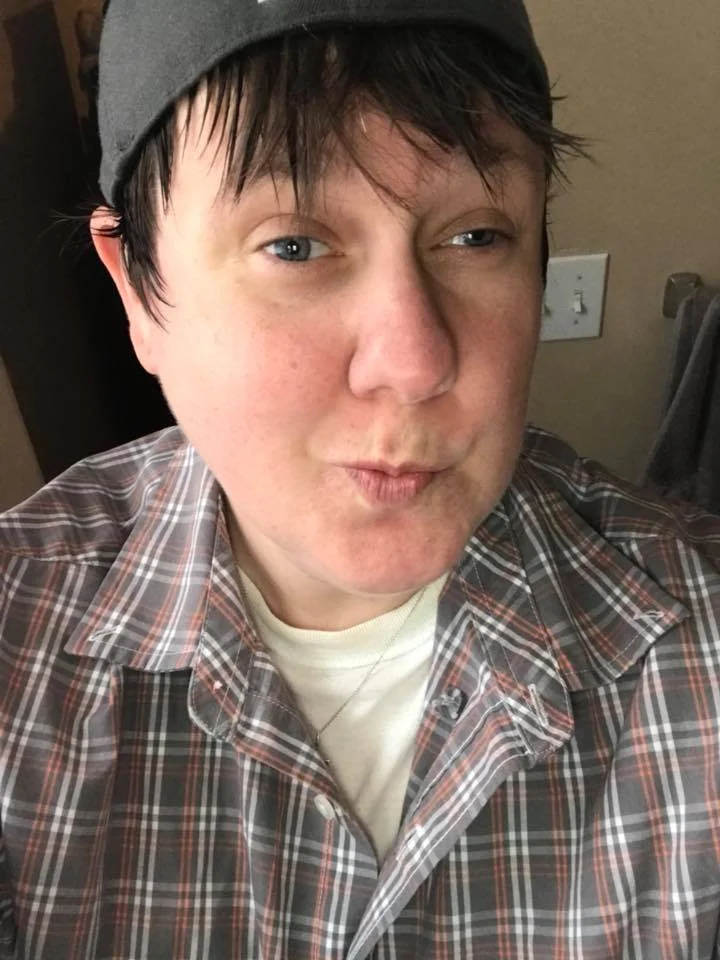
Kim Daigle: I appreciate you having me, and I'm excited as well.
Brandi Fleck: Awesome. Well, let's get started then. Can you just kick it off by telling me what your life is like today and how you're doing?
Kim Daigle: Well, I'm doing pretty good. I am working a lot these days. I'm trying to get back on my feet and everything, but I'm happy to be alive and have overcome a lot of things that I have. Today is actually my only day off this week.
Brandi Fleck: Oh, wow. So how many jobs are you working right now?
Kim Daigle: I have three total right now.
Brandi Fleck: Man, that's got to be tiring. How are you keeping up with that?
Kim Daigle: Well, I've only been doing it for like a week and a half so far, so time will tell. I'll probably reduce it down to two, maybe in two to four weeks, but I'm trying to catch up on some financial situations right now. So I'm just pushing myself and have to do what I have to do.
Brandi Fleck: Right. Totally understandable. So can you tell us a little bit about how your life is different today than it was, say, 10 years ago or 20 years ago?
Kim Daigle: Oh yeah, absolutely. The difference now, I will tell you, just from 10 years ago, my thought process is completely different. I've learned a lot in the last 10 years, and definitely learned a lot in the last 20 years. Every 10 years, my mindset is completely different. From 19 to 29 to 39, it's completely different.
Brandi Fleck: What are some of the things that you've learned?
Kim Daigle: One of the things that I'm really excited that I've learned is how to place boundaries on other people because I didn't really understand the concept of that until recently. I know that if you don't do that, people will misinterpret a lot of things. They might misinterpret what you mean, what you say, how you feel, everything like that. When you don't set boundaries, that leads to people maybe taking advantage of you or maybe truthfully misunderstanding you. Therefore, miscommunication gets blurred, and things just get messy.
Brandi Fleck: Yeah. Have you been taken advantage of in the past?
Kim Daigle: Very many times, yes, ma'am.
Grief After Losing a Parent and Emotional Suppression
Brandi Fleck: Would you mind describing some of those times? Give us some examples.
Kim Daigle: Yes, I do. I'll dive into this. It's been almost 12 years. I lost my mom in September of 2006.
Brandi Fleck: I'm sorry.
Kim Daigle: I appreciate that. Before she passed, I was a really strong, independent, confident, spunky woman. I had a lot going for myself. Then, when she passed away, a lot of things hit me at one time, and it kind of triggered a lot of emotions, a lot of things that I guess I hadn't dealt with.
Then I kind of lost myself over the last 10 or 12 years, just not being that confident, strong-willed person that I am. When people see that, I feel like I kind of became a target. It was easy for them to take advantage of me.
I actually met someone two years after she passed away that appeared to be maybe a good influence in my life. Looking back on it now, I think they gave the illusion that they were trying to help me, but they were just trying to benefit from what I had.
Brandi Fleck: Gotcha. Looking back now, what were some of the warning signs that you wish you would have noticed in that situation that could have tipped you off that this person was really out to take advantage of you rather than help you?
Kim Daigle: Losing my intuition, just being able to read people and things. I wish I would have seen the manipulation on the front end. Things like making me feel crazy for being upset and feeling the way I felt after losing her. It had only been a short time because I did suppress it for a couple of years before actually even considering dealing with it.
I think they saw that as an opportunity to say, "Hey, I'm going to present myself as this good person that's going to be really good..."
Kim Daigle: ...in their life and then get them where I want them. Once you're in a situation where you do care about the people in the situation, it's harder to get out of the situation, if that makes any sense.
Brandi Fleck: Oh, absolutely, yeah. So you really cared about this person that took advantage of you?
Kim Daigle: Yes. Yes, I still care about that person, but I've had to eliminate them from my life.
Brandi Fleck: Okay. Now that's something that can be really hard to do. How did you find the strength to say, "Even though I love this person, they are not good for me, so it's time to move on"? How did you do that?
Kim Daigle: Well, if I'm going to be truthful, I have to give a lot of credit to my girlfriend. She is very protective of me, and she kind of sees things that I don't. She's a very strong, opinionated person, and I'm more of a relaxed, chill, "Let's all love each other and do as much as we can to help each other and not be stressed out and dramatic," kind of person.
But with that said, being so laid back, you kind of miss a lot of things that you should probably be picking up on. She encouraged me with different things that she would point out or say. She basically got to the point where she would actually start saying things to those people that were taking advantage of me.
Something just kind of clicked, and I realized, you know, she's right. Looking back over the last nine or 10 years, it's very clear that their motives were not good. When they become more toxic than anything in your life, and a switch goes off in your mind and you realize this person really is not good for your life, you have to tell them, "Hey, I love you, but this is just not... I don't need this."
That's basically what I had to do, and I'm still doing it today.
Brandi Fleck: Gotcha. So do you consider that a form of self-love?
Kim Daigle: I would say so. Some might think, "Hey, it's selfish of you to just knock people out of your life," but I've realized over the years that if you don't take care of yourself, you're not good to yourself, your community, or anybody close to you.
Brandi Fleck: Right. So you mentioned a little bit about how your girlfriend has really helped you see some of the ways that people were taking advantage of you or weren't good for you, and it clicked for you.
Knowing that you had had experiences with people taking advantage of you in the past, how did you ensure that the girlfriend you have now was not the same type of person? How did you know that she was okay?
Kim Daigle: Well, I'll be honest with you. It's been over three years, and her and I have been through more together in the last three years than probably most people that have been together 20 or 30 years.
Our relationship is not perfect by any means, but no matter what happens, we're always there for each other. She brings more happiness and not toxic things to the table.
I realized that I do not need anyone, but I actually want her in my life. I know that she's good for me, and I know that she has my best intentions at heart. She's proved that to me in every situation that we've been through over the last three years.
I just know in my heart she's good for me, and she's proven that in many ways. I know she's not here to take advantage of me.
Coming Out Later in Life and Finding Self-Acceptance
Brandi Fleck: I really love that. I love to hear that.
This is a great transition into your community and your coming out story. I know that you've had to deal with your family in that regard and letting people who are close to you know certain things about you.
Can you tell us a little bit about your journey from where you started to what happened when you decided to come out, what that timeline was in relation to your mother passing, and how that all played out?
Kim Daigle: Okay. So basically, you want me to start from about 12 years ago?
Brandi Fleck: Sure. Wherever you want to start.
Kim Daigle: Okay. Well, it's been a long journey. I've known for a very long time. Back when I was younger and I first for sure knew, it was pretty taboo back in the '90s for that to be a thing. It's not so taboo now. There are still horrible situations with that these days, but it can be more freely talked about.
I've known for a very long time, and for social pressure reasons, I tried to force myself to do what I thought everybody expected of me and wanted, and what was right, and so on and so forth. But I found out, hey, this isn't right for me.
It was about four or five years ago when I completely came out. Most of my friends already knew, and there wasn't a lot of surprise there. My dad and my brother were the last two that I told.
My dad was completely cool with it, and my brother appeared to be cool with it, but not so much, which is actually really hurtful because I helped raise my niece for a few years after her mom passed.
It's just really hurtful that some people are still that close-minded, especially someone that you're that close to, who will not accept it.
But for me, I had to be true to myself and let everybody know who I really was and do things for me that made me happy instead of trying to please the entire world and what they think I should be.
It felt really good to be able to actually talk about it and come out. People either accept you or they don't, and that's a true indication of whether this person really loves you. They're going to stick around no matter what, whether you're straight, gay, whatever. They're going to be there regardless.
It's been a long journey, but I am who I am, and I'm not going to apologize for it. I'm really happy that I have my girl and that everything is working out. It's been a very positive experience for me.

How Emotional Suppression Affects Mental Health
Brandi Fleck: I've noticed that when some of these major events have happened in your life that could be considered difficult to deal with, you've mentioned the word suppression or talked about how you couldn't really be your true self in some ways.
How did that suppression, like the suppression of grief when your mom passed or the suppression of your true self when you really wanted to come out, impact you and your close personal relationships?
Kim Daigle: Oh, I mean, it impacts them very much because when you can't actually be yourself, you're having to pretty much live... I wouldn't say... I don't know. I guess I would say live a lie because you're afraid to tell people or be who you really are.
If you get close to somebody and you don't really tell them a big part of who you are, and then they find out, that can actually really ruin a relationship.
Suppression is something that... My mom's death was the biggest tragedy, to this day, that I've dealt with. It's a trigger point. It triggers a lot of emotions and thoughts and things like that.
I didn't really know how to deal with it, so suppression is a thing that I'm trying to work through because I have a tendency to not want to deal with the issue at hand because it is so difficult.
Because I've had such difficulty my whole life accepting me being attracted to women and things like that, it's hard not to automatically resort to suppressing things because I had to suppress who I was as a person for so many years for fear of social persecution.
It's been a long road, but my normal go-to emotion is, "I'm just going to suppress this." But I realize it's very unhealthy, so I'm trying not to do that these days.
Brandi Fleck: Okay. Is it a continual thing you have to be aware of, that you have to work at?
Kim Daigle: Yes, it is.
Brandi Fleck: Okay.
Kim Daigle: It definitely is, but I'm getting better at it.
Brandi Fleck: Great. Great. So do you notice that when you are suppressing things and you're not being your true self, does that impact you physically as well as emotionally and mentally?
Kim Daigle: Absolutely. It all goes hand in hand. If I'm hurting emotionally or mentally, physically I'm exhausted. I'm drained. My body hurts. It makes it very difficult to function, honestly.
Brandi Fleck: That makes sense. That definitely makes sense.
So when you realized that that was something you needed to work on, did you immediately see healing in those three different areas of your life, or did it take time? How did that go?
Kim Daigle: Well, the healing is not immediate, but it's a start. I will say, over the course of time, it does get a little easier. You do start to heal. You learn to be happy with yourself and who you are and what you've got.
You stop really caring about what other people think or say, but you just have to know that it's okay if they don't agree with you. You still have to be true to who you are.
Brandi Fleck: Absolutely. That's a really good point.
So are you still learning who your true self is today?
Kim Daigle: I think everybody learns new things on a daily basis that maybe they didn't know.
As far as my true self, I think maybe I'm still a work in progress, but for the most part, I'm pretty confident in who I am.
Ironically enough, on the Fourth of July this year, I woke up, and it's like a switch went off in my head. I was like, "I'm going to get my independence back. I'm not going to rely on other people for my happiness."
It's got to be an "I want you in my life" type of situation, not "I need you," because when you need somebody and they know it, that can lead to a lot of, again, back to the boundaries thing. They may hold something over your head, and then you get back down to that comfort of suppression, depression, and things like that, where you can't actually move forward and be true to yourself.
I feel like the other day was just an eye-opener for me. I got a lot of clarity on things that I had been pushing back for almost 12 years, and I'm very happy to say that I know who I am as a person.
Accepting it has been the hardest thing. Accepting who I am as a person, because I knew that it would shy some people away.
Breaking the Cycle of Abuse and People-Pleasing
Brandi Fleck: So let's go back a little bit to your relationship with your mom. Can you tell me what it was like growing up with her as a child, just how close you were, and what characterized your relationship?
Kim Daigle: Sure. Going back to childhood, my mom and I were extremely close. Of course, she was always, at that time, my favorite parent. She always stood up for me, and I knew how much she loved me. She would tell me on a daily basis.
My mom was the most important person in my life up until she passed. She's still important to me, but things are different now. I have my girlfriend and things.
Growing up with my mom, I've seen a lot of stuff that I probably shouldn't have seen from both of my parents, simply because of things that they had dealt with when they were younger.
You have the ability to either repeat the cycle or change it. While my mom was more on the end of, "Hey, I'm going to change this. I don't want my kids to go through what I did," my dad suppresses a lot as well kind of was caught up in the cycle.
My mom made me feel safe and protected. As I was going through childhood with her, she did suffer a lot from depression, anxiety, and things like that. When I say I've seen things that I probably shouldn't have at an early age, those are things that I don't blame either one of my parents for. Those are things that they were trying to cope with while trying to do a good job parenting.
There's no handbook for being a parent, but I do feel like they did the best that they could. Growing up, my mom was the one that I went to and felt comfortable with and protected by.
My dad, not so much. Me and my dad are really close, and he's a really good person. A lot of things have changed, which is unfortunate that it took a tragedy for us to get close, but the situation is what it is.
Brandi Fleck: Sure. You brought up a really excellent point about how, a lot of times as younger children and adolescents, we idolize our parents and sort of think that they can do no wrong. So we're really hurt when we realize that they do make mistakes.
But I love that you recognize that they're people too, and they have their own issues that they have to deal with. It sounds like, correct me if I'm wrong, but it sounds like you think they were doing the best they could with what they had.
Kim Daigle: Oh, absolutely. I love both my parents very much. When I was younger, of course, I did love my mom more, but growing older and understanding what they went through emotionally and mentally, they absolutely were doing the best that they could.
Again, there was no handbook for being a parent. They did what they thought was right at that time. They are human beings as well, and they're going to make mistakes.
When we're younger, we think, "Oh, my parents can do no wrong," but like you said, they are human, and they are going to do wrong. I have to give credit to both of my parents for making me the strong person that I am today. I love them both equally now, and I'm happy to say that.
Brandi Fleck: Great.
Signs of Emotional Abuse and Manipulation
So you brought up the topic of changing the cycle or repeating the cycle. Are you referring to the cycle of abuse?
Kim Daigle: I am.
Brandi Fleck: Okay. Have you seen patterns of abuse yourself? I know you touched on this a little bit earlier, but patterns of abuse within your own close personal relationships? Can you tell me what the pattern is?
Kim Daigle: Okay. As far as, like, am I abusive or is the other person abusive?
Brandi Fleck: Let me clarify. If you experienced abuse at the hands of someone else.
Kim Daigle: Oh yeah, absolutely. I have experienced it from childhood up until maybe a few months ago with different types of people.
That pattern is that I have a really big heart, and I always want to help everyone. Sometimes I don't see that they're going to take advantage of me or that their intentions are not good. I've kind of been blinded to that because I like to try to see the good in people versus the bad.
I notice in patterns that they'll start out saying and doing the right things, what they think I want to hear or what might make me think that they are going to bring positive things to the table for my life.
Then I notice that once they get me hooked, where it's hard for me as a good person with a big heart to let them go, there's been physical and verbal patterns of abuse. They make me feel like I'm not good enough or that I'm crazy for feeling the way I feel and that I don't have a right to feel that way.
Those are things I've noticed that people who have taken advantage of me do. They'll play the victim after they've hurt me, and then when I actually stand up for myself, I'm the bad person.
I noticed it has a lot to do with manipulating someone's mind as well in abusive relationships. It's a cycle that I want out of.
Brandi Fleck: Sure. You had mentioned verbal and physical abuse. What has happened? Can you tell us a little bit about what you've experienced at the hands of other people?
Kim Daigle: Yeah. Verbal would be... I've been told I'm stupid, I'm crazy, I can't do this, I'm not loved, no one wants to be around me because I have mental issues.
Things like that, things that they know will hurt me the most, or even bringing up my mom's death. To me, that's just cruel. That's just not necessary.
Those are things that they know will trigger me, and then they try to make it look like I'm crazy if I get upset about something.
Now, physical abuse... I've actually not experienced that in a romantic relationship, but I have experienced that in a relationship I had with a person I thought was looking out for me.
They became frustrated with who I am and couldn't deal with what they said they set out to do, which was to help me get past my mom's passing. They just got really angry with me.
It started out verbal. It got physical. When you get down to that point, it's hard to get out when they've pushed you down that far. You don't realize it, and you love them, so you make excuses for them.
Those are things I'm trying to get away from now. If it's not beneficial and if it's toxic, then I try to stay away from those relationships.
Brandi Fleck: Okay. Does that kind of answer your questions?
It does. I think a big takeaway from this conversation that could help certain listeners who might be experiencing these types of things is what I've heard you say: there is typically a progression in these types of relationships.
It doesn't rear its ugly head right away. Oftentimes, in the beginning, it's a very appealing situation. Over time, once this person has gained your trust and you've been vulnerable with them, they slowly start using things against you that you have disclosed in confidence or in trust.
It's confusing. Was it hard to recognize that progression when it was happening?
Kim Daigle: Oh, absolutely. If I had realized it sooner, I definitely would have taken further action quicker.
Like you said, the vulnerability of actually letting someone in and letting them know what your issues are and what you've been through, then them getting you where they want you and turning it around on you... It's very hard because you feel very lost and scared. You kind of feel trapped. It's a hard situation to get out of, especially when you've pretty much been beaten down to the ground by just about everybody you've been close to in some form or fashion.
Brandi Fleck: So what did it take? At what point did it have to progress to? Did this person have to put their hands on you once or multiple times before you realized, "Hey, this is a situation that's dire, and I need out"?
Kim Daigle: Oh, it was definitely several occasions.
Again, this all happened over a 10-year period of my life. I will go back for a minute and say I did have a relationship when I was younger, but it was a very suppressed relationship because, as I stated earlier, that was very taboo in the '90s, and it did get a little physical.
Kim Daigle: ...on that person's end, but not to the degree of what I've dealt with over the past 10 years. I just want to clear that up.
I kind of... It's probably part of my suppression, trying to forget something that happened that long ago. But yeah, it did happen with that person somewhat, but not on my end. I'm not... I don't do that. That's just not me.
Brandi Fleck: Right. You're definitely a...
Kim Daigle: Go ahead.
Brandi Fleck: I was going to say you're definitely a gentle, pacifist type of person.
Kim Daigle: Well, thank you.
It took me six years to get out of that, and then it's taken me about eight or nine years to get out of this.
Brandi Fleck: Okay. So six years to get out of the romantic relationship that was hidden and somewhat abusive, and then nine years to get out of a platonic relationship that was very abusive.
Kim Daigle: That's true. That is correct.
Brandi Fleck: Okay. When you finally realized that you needed to get out of both of these situations, were the steps you took to get out of them similar, or did you have to treat each scenario as its own special situation? How did you get out?
Kim Daigle: I would have to say it's probably a little bit of both. Every situation is different, so they need to be handled differently.
At the same time, the steps to actually get there... If you're being abused in any form or fashion, it is not healthy, and you have to get out. You really need to do whatever that takes.
In these two situations, I was encouraged by my girlfriend with this last person. But with the first person, it was like a switch went off, and I was just like, "I don't want this in my life. I don't need this in my life. This is very unhealthy. I'm done. I love you, but I'm not going to do this anymore."
That was how I handled the first situation.
This last situation was a little harder because I had a tendency to look at them as kind of like a mother figure, which probably should have never happened anyway, which again goes back to the boundaries.
After losing my mom, she was the most important person to me. I viewed this person as a mother figure, and I guess letting go of that person was hard to do because you truly only get one mom.
I should have never put myself in a situation to be that vulnerable, but I think that person knew what they were doing and just took advantage of the situation. "Hey, I'm going to be the good person. I'll help this person out of trouble." But that's really not what the case was.
It took me a long time, unfortunately, to realize that. I just hope that anything I've been through might help somebody get out sooner because it's a lot of wasted time that I can't get back.
Brandi Fleck: Right. Right.
Well, it's unfortunate, and I would never wish these things on you or anyone else, but do you think there was a learning experience that you at least gained from experiencing these situations?
Kim Daigle: Oh, definitely. That's one thing I'm not going to repeat in the future.
It was a very hard lesson to learn, and obviously it took me many, many years to get to that point. But I think it has, in some aspect, made me a stronger person.
I am more aware of other people and their intentions. I have had to set boundaries so that I don't get myself into these situations because I'm not going to sit here and blame everybody for all of my problems.
Yes, it's been hard to deal with being taken advantage of, but there are steps I can take in the future not to let myself get into that situation to the point where it's debilitating and I can't function.
I'm happy to say those were very hard lessons, but I've learned them, and I do not intend on having those types of toxic relationships in my future.
Brandi Fleck: That's great. It really is.
Leaving an Abusive Relationship Safely
I know that there are a lot of people out there who are in the middle of a cycle of abuse progression, or they're already at the point where maybe their life is in danger, and they're afraid to leave because once you leave, you're afraid this person will come kill you or hurt you even more because they didn't want you to leave.
What advice would you give to people who are looking to get out of a situation but who are very afraid for their life?
Kim Daigle: The best thing that I can offer is... It's not going to get any better if you stay in those relationships.
Getting out, for yourself, or even if you have children, is the very most important thing that you need to focus on. I would do that at any cost because, like I said, it will not get better. It will only get worse.
If you're worried about them, you're scared, and you think they might come and harm you or anything like that, they're going to do that anyway if you stay there. It could result in them taking your life anyway.
I feel like you have to think about yourself, and if you have a kid, obviously you need to think about them first. Get into a better situation by whatever legal means will help you get out of that.
If you're worried about them if you leave, you're definitely in a situation where you don't need to be around that person, period. If you're having thoughts that they're going to harm you to the point of taking your life, it's not a good situation to be in.
It is hard, and it is scary. The fear of change or believing that you can't do this because they've beaten you down to the point of making you feel like you're not worthy and that you can't.
But you can do it. You have to get in that mindset that, "I'm worth it, and I'm going to do it. I'm going to get out of it."
Just be strong. Things will get better.
That's the best thing I could tell anyone because I wouldn't want anyone to experience that type of stuff. I know there are a lot of people who do and are beaten down to the point where they don't feel like they have an option but to be with that abuser.
But there are other options. There are a lot of resources. There are a lot of people who still care that you can reach out to, talk to, and figure out the best way to get out of that particular situation.
Healing After Emotional Abuse and Rebuilding Confidence
Brandi Fleck: Great advice, really. Before we start wrapping up in the next couple of minutes, I've got three more questions for you.
One is, do you have any tactical steps that someone could take to start leaving a bad situation? I know you mentioned that there are resources out there and to reach out to people who still do care, but if someone's really isolated and scared, what would even their first step be to finding another place to live or knowing who does care about them?
Kim Daigle: I guess the first step I would recommend... That is also a pattern of abuse. I failed to mention the isolation because they'll make you think they're the only ones who can help you and be there for you.
My best suggestion is, if they're that scared, they're isolated, they don't feel like they have anyone, and they feel trapped, there are hotlines they can call. There are ways that people can come get them and take them to a safe place or something like that.
I would recommend that first, and to do it when the abuser is at work or not around.
Brandi Fleck: Okay. The audio is cutting out a little bit. I'll just repeat that. You said there are hotlines to call, to go to a safe haven, and make sure that you do it when the abuser is not around. Is that correct?
Kim Daigle: That is correct. That is my suggestion.
Brandi Fleck: Okay. Let's talk about breaking the cycle for just a second. How have you broken the cycle in your life now, and how do you keep breaking the cycle of abuse?
Kim Daigle: Well, this may sound a bit silly, but I have made it a point not to be, per se, addicted to things like alcohol or drugs or anything like that.
I feel like those things are so mind-altering that they make you not the person that you need to be or want to be.
For me, it's a daily thing, and it has been for a lot of years. There are things that I do for myself each day to not let myself get angry and upset about things that I really shouldn't.
In my relationships these days, I try to give people the courtesy of boundaries. I also try to uplift people that I really care about and let them know, "Hey, you're doing a good job," or even just say, "Hey, I like your hair."
The littlest thing could mean the world to a person, especially the person, like you mentioned earlier, who might be scared and isolated. You might say something that gives them the same switch that I've had recently and encourages them to get out of that situation.
In my close relationships, I choose to treat people really well and how I want to be treated. I try to watch what I say. I try not to say things in anger that I cannot take back because, unfortunately, if you're in a lot of mental anguish, those things will actually make things worse for the person.
You really have to think before you speak. That's just something I practice every day in my close relationships because I want to build people up, not tear them down.
Brandi Fleck: Well, that's great. Did I cover everything you asked me?
Kim Daigle: I believe you did.
Brandi Fleck: Yeah, that was great.
Choosing Compassion Over Judgment
A question that I would like to ask all podcast guests is: What does being human mean to you?
Kim Daigle: Well, I think it is actually being kind. You have to be aware of your surroundings, aware of your actions, and take responsibility for who you are.
You have to have compassion for the world in general because we all are human. If everyone is courteous and mindful and does anything that will encourage someone else, to me, being human is really not being lost or tearing other people down. Not putting someone down for who they love or what the color of their skin is or anything of that nature.
We're all here trying to live. For the most part, I think people, whether they have the same way of thinking or not, are trying to... We all have the same goals, basically. Not as far as maybe what we want, but we all want, for the most part, to live in peace and not have a lot of stress and bad things happen to us.
I think that ultimate goal is pretty common among most of the human race. I don't mean goals like, "Hey, I want to do this for a living or that for a living." I mean the common goal.
Brandi Fleck: Sure. The collective goal. If we all want to live a life of peace, let's work together for it and be compassionate toward one another.
Kim Daigle: Exactly.
Brandi Fleck: Great. Well, I want to thank you so much for your time today, Kim, and just for being so generous to share your story with our listeners today. It's really important, and I thank you for it. I hope you have a good rest of your day.
Kim Daigle: Well, I appreciate you having me on here. I hope, if anything, this helps one person, if not many. I'm very grateful that you asked me to do this, and I hope you have a good day as well.
Brandi Fleck: What a journey Kim has been on. Isn't she just precious? I'm so glad that she has gotten some healing and recognized some action she needs to take.
Join the conversation!
Feel free to share your own experience and let me know if you have any questions in the comments.
Related Posts










Hi, I’m the founder of Human Amplified. I’m Brandi Fleck, a recognized communications and interviewing expert, a writer, an artist, and a private practice, certified trauma-informed life coach and Reiki healer. No matter how you interact with me, I help you tell and change your story so you can feel more like yourself. So welcome!
Find More on the Blog
Topic
- ADHD
- AI
- Atlanta
- Black and BIPOC
- DIY
- FAQ
- LGBTQIA plus
- Los Angeles
- Nashville
- Seattle
- St Louis
- St. Louis
- UFOS/UAPs/ETs
- abuse
- accountability
- addiction and recovery
- adoption
- affirmations
- afterlife
- altered state
- angels
- animals
- anxiety management
- art
- astrology
- atlanta
- attachment
- awakening
- beauty
- behind the scenes
- being human
- body image
- body work
- boundaries
- brandi fleck
- breathwork
- bullying
- burn out
- burnout
- cancer
- career
- caretaking
- chakras
- channeled
- clarity-dive
- clarity-practice
- clarity-primer
- clean products
- coach
- codependency
Recent Blog Posts
Visit the Full Podcast Audio Archive

Affiliate


This is a channeled message about how to recognize false prophets and their manipulation tactics plus learn what true selfishness really is. How it applies to our current political climate is for you to decide.