Surviving Narcissistic Abuse: What It Feels Like, How You Leave, and What Comes After
Interview By Brandi Fleck
Saige Whitney shares her experience of emotional manipulation, coercive control, and narcissistic abuse, and how boundaries, storytelling, anger, and spiritual practices helped her begin rebuilding her life.
Sometimes the hardest relationships to leave are the ones that make you question whether you’re allowed to leave at all.
For Saige Whitney, what began as a friendship quickly escalated into an engagement marked by manipulation, guilt, instability, and a growing sense that her own needs no longer mattered. Already in a vulnerable place, she found herself increasingly isolated, physically depleted, and struggling to recognize just how much of herself she had surrendered in an attempt to help someone else.
In this conversation, Saige joins Human Amplified to talk openly about surviving narcissistic abuse, recognizing emotional manipulation and coercive control, learning to set boundaries, and rebuilding trust in herself after the relationship ended. She also shares the role anger, storytelling, energy work, and cord cutting have played in her healing.
Her story is deeply personal. But beneath it is a question many people eventually have to confront: What happens when caring for someone else requires abandoning yourself?
Listen to Saige Whitney’s Interview
Watch Saige Whitney’s Interview
Meet Saige Whitney
Brandi Fleck: What does being human mean to you?
Saige Whitney: I love that question. Being human is feeling everything. It's feeling the bad days, the sad days, the hardship, the disappointment, and not shaming yourself. Allowing those emotions to move through your body, digest them, and realize this is part of the human experience, are these crazy, intense, chaotic moments, experiences, and emotions.
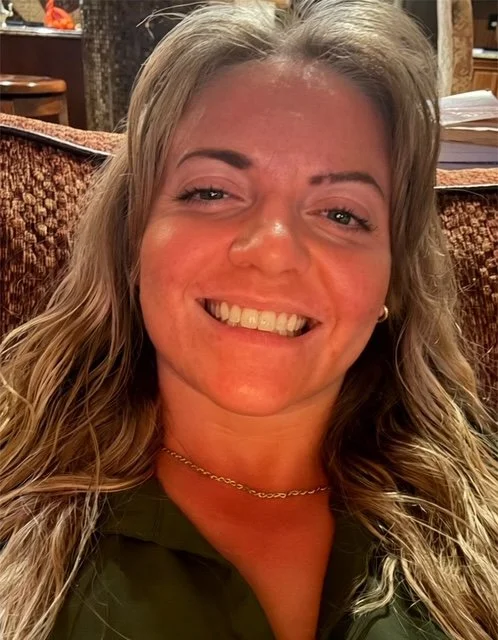
Brandi Fleck: Everybody, today we are welcoming to the show Saige Whitney. She is joining us from the Salt Lake area in Utah, and she's here today to talk about narcissistic relationships, narcissistic abuse, surviving that, and what you can do to heal. And she's got a podcast called A Lights Out Narcissistic Podcast that you can find where you get your pods. Saige, welcome to the show.
Saige Whitney: Thank you. Happy to be here. Thanks for having me on.
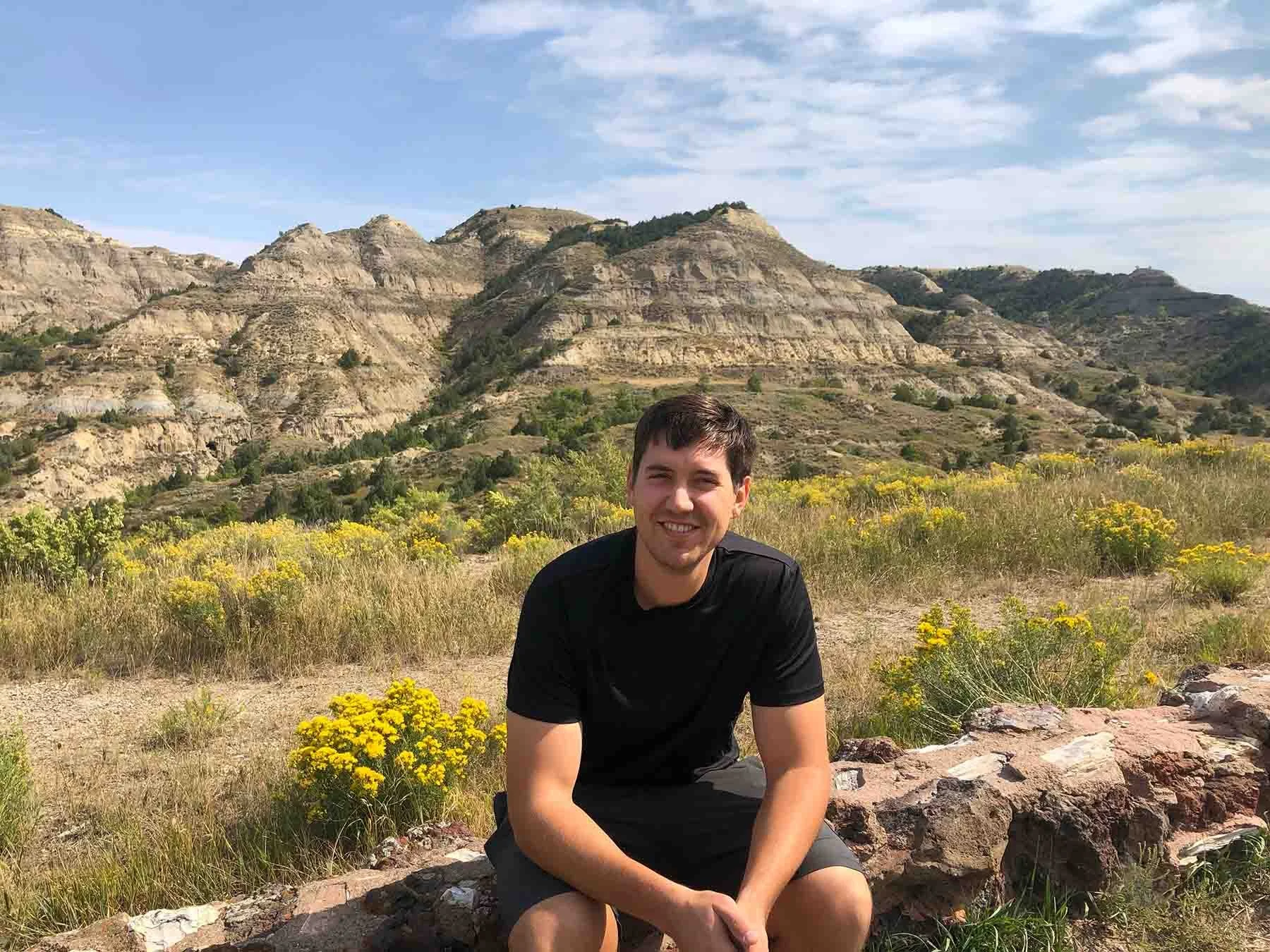
Brandi Fleck: Yeah, for sure. And everybody, just a heads up, Saige is recording from a beautiful national park. We might have a signal issue, so if you hear a little bit of lag, please just bear with us. But this is going to be a really good conversation. So before we get too much further in, can you tell us, Saige, who you are as a person?
Saige Whitney: Yeah, my name is Saige Whitney, and I'm 26. And I have recently, probably over the past year, learned how to set boundaries and assist other people in setting boundaries, especially people in domestic abuse situations or narcissistic abusive relationships. I really want to be a voice for the voiceless and use that gift. And podcasting has been a huge gift to me.
Setting Boundaries After Narcissistic Abuse
Brandi Fleck: Yeah, a voice for the voiceless, I feel like, is a really, really important mission. Do you have experience with being the voiceless at some point?
Saige Whitney: Yeah. Growing up, whenever I said no or I was curious about something, I was told to stop it. And so I learned to stop asking questions when something felt wrong and to just kind of always say yes to everything. And when you say yes to everything, you're losing your power, and it almost feels like you're voiceless. You can't say no. You can't explain that you're uncomfortable with things. You just feel like everyone else's feelings are more important than yours and that if you talk about yours, no one will listen. And I have felt like that many times in my life.
Brandi Fleck: Are you out of that now? Or is it still a work in progress?
Saige Whitney: It will always be a work in progress. Setting boundaries and putting your safety above other people's feelings, it will be a lifelong journey. But even being able to, just even with little things, just say, I had a friend, he was so cute, but he would call me every day at 10 a.m., and I would be sleeping. So even just vocalizing to him, being like, "Hey, man, I'm sleeping at 10 a.m. Can you call me at 11 a.m.?" Never been able to do that before, ever in my life. Just so worried about speaking out against or for myself when this person doesn't know that I don't like that. So when you tell them, "Hey, I'm still sleeping, but you can call me at 11," then they know. You're just educating people. And so speaking up for yourself isn't being mean. It's teaching people how to treat you, and your relationships get better because people aren't guessing with you. They're like, "Okay, cool. I can't call her at 10. I'll call her at 11," and then our relationships are great. But I didn't realize how keeping all these feelings in and then just cutting people off was destroying relationships I had.
Brandi Fleck: Yeah, for sure. Does this boundary setting and journey that you've been on overlap with being an empath in any way? Because I know that a lot of our listeners identify as an empath or highly sensitive. So what's that experience for you?
Saige Whitney: Yeah. So this is so interesting. I started saying this, but I say I'm here for the marked ones. And the marked ones are the empaths. So if you're an empath, if you look on your left hand, you might be able to see it. There's an M. That means miracle. So with that M, you can go and you can physically heal people.
Brandi Fleck: Let's see. Show it. I think I just saw it.
Saige Whitney: Yeah, you do.
Brandi Fleck: I heal with my hands. I'm a Reiki master, so I'm always laying hands on people. I'm always laying hands on people, throwing hands with consent.
Saige Whitney: Yes. And as you know, in Reiki, when you go and heal someone, because you have that power, you go and heal them. You then need to make sure that energy is leaving your body. And so with some Reiki masters I've talked to, they do it through breath work. I just think of the energy going out my elbow in my mind's eye, or I just wash my hands with cold water if the emotions or physical pain is so intense. But yeah, I'm here for the marked ones. So I'm here for everybody and to educate with setting boundaries with everybody, but specifically empaths. Because when you think about setting a boundary, your heart races, your throat closes up, and it gets super scary. And I want to tell people that even someone who has a podcast setting boundaries, I still struggle with that. I have to work on this every day. It's an everyday thing. But yeah, setting a boundary, it can be so healthy and just a great thing. It's not a mean thing. But the world and the narcissists especially tell you, "Oh, that's rude." And that's because they benefit off of you not having boundaries.
Brandi Fleck: Gotcha. Why is it so hard for empaths to have these boundaries, do you think?
Saige Whitney: I've talked with a lot of empaths, so I'm not going to say all, but a majority is they don't have boundaries themselves. And I didn't have boundaries. I don't have boundaries at all. How do you respect other people's boundaries if you don't have boundaries? And then we feel so deeply and we can feel someone's pain, we want to save them. And when you're, per se, saving someone, your boundaries are getting overrun because you're not putting yourself first. And so I would say, to wrap up everything I just said, it's hard to set boundaries because you feel so deeply. You don't want to hurt the person. You want to save the person. In the process of saving someone, your boundaries go out the window, and unfortunately, most people, like addicts—not recovering addicts, but people deep in an addiction—they don't want to be saved. They just want to be enabled. That's what I've seen. Recovering addicts want help. They want to get better.
Yeah, so we're not here to save people. I tell empaths that we're just here to shine our light. Just shine your light.
Narcissistic Traits, Empathy, and Lack of Accountability
Brandi Fleck: Yeah, for sure. Okay, well, let's talk a little bit more about you. And so I know that you were in a relationship where you experienced narcissistic abuse. Before, I have to address the elephant in the room, though. Narcissist is a word everybody is using now. It's all over social media. And when anybody has a breakup, they're like, "Oh, I was with a narcissist." And I'm like, "Well, right." So not everybody's a narcissist. But what do you think about the common usage of that word? And how are you applying it in your story that you're going to tell us today?
Saige Whitney: That's a great question. So everyone can have narcissistic traits. That's what I try to focus on. And narcissistic traits aren't always what you think they are. A big thing I've seen with narcissists is living in a fantasy world, believing they're famous. Everywhere they go is a show. I saw that a lot with my ex. I've even experienced narcissistic tendencies after my really bad trauma at 20. I remember it was so weird listening to people and being like, "Nothing they say matters. All that matters is what I say." And I remember catching myself and being like, "Whoa, stop. Everything everyone says matters, Saige, and you need to listen." And so you can have traits, tendencies. You can also know what you're doing and change your mindset if you want to. These people can change if they want to, but it's a big ego thing. So everyone can have tendencies.
But I'm talking, when we say narcissists, I'm generally speaking, no sympathy, no empathy. Your pain doesn't matter. I don't want to see you rise. I want to see you sick. I want to see you miserable. And then these people, narcissists, do not say sorry, unless it's a cheap sorry. "Sorry!" It's not like taking accountability: "I really messed up. I'm very sorry. I'm going to change this." So I've seen that a lot, too. There's a lack of accountability. There's no sympathy, no empathy. Your needs do not matter. It is purely about them. And everyone's different. Every narcissist is different. I've dealt with mainly females. I haven't dealt with tons of males, but I do know also there's that grandiose factor. So with my ex, she would be like, "Saige, today"—I'll start laughing—"today, I bought you toilet paper. I did that for you." And that's the funny thing about me and toilet paper. I don't care. I've used coffee filters. I've used paper towels. I do not care. It's toilet paper.
So it was just these funny, grandiose gestures where she would try to look so amazing for buying toilet paper when she just needed toilet paper. Right. So you see that a lot with both female and male. There's this grandiose factor of, "Look what I did for you," when sometimes it's not. It's like a basic need or necessity.
So to sum up, no sympathy, no empathy, everything's about them, grandiose gestures. With women, I've seen, narcissistic women, I've seen they struggle with keeping friends because they abuse them, stuff like that. Once again, I'm not a therapist or a psychologist. This is just everything I've seen and experienced in my life.
Brandi Fleck: Okay, gotcha. And I feel like this was a really good foundation to set. You've defined how we're going to be discussing narcissistic traits today. And with that, just taking as long as you need to, can you share a little bit of your personal story? How did you get into this relationship? And then what happened? And we'll kind of go from there. But I'm really curious to know, how did the shift happen to you went from being in love with this person and then realizing, "Oh, she's probably a narcissist. What am I supposed to do?" All of that.
Love Bombing and How Narcissistic Relationships Begin
Saige Whitney: That's a great question. So I was working at a skilled nursing facility. And so, for the listeners, a skilled nursing facility is not just for elderly people. So you can have someone coming out of a surgery, they need constant physical therapy. They can live at a skilled nursing facility. You can have someone that just had a stroke, right? And they're learning how to just grip again on whatever side they had that stroke, learning how to grip, learning how to walk again. I've seen 50-year-olds and 40-year-olds have strokes. So this isn't just for the elderly population. I met a guy once, and for the listeners, I've been to over, like, 30 nursing facilities in Utah as a travel CNA. So if you think I'm talking about you, I probably am not. But I saw a 21-year-old kid once that never got out in the sun, never took vitamin D. Christmas morning, shattered his pelvis. Right. So he was in there. This is for everybody.
So I was an activity assistant, activity director. She was a patient. I had to clarify this on another podcast because someone was like, "Wow, I can't believe you just broke all HIPAA." And so, to clarify, she asked me to marry her. I said yes. Because I wasn't in a line of care, I wasn't a nurse or CNA, it wasn't illegal. That makes sense. Once it happened, I did keep HR in the loop, too. I wasn't sneaking around. This lady on this podcast was like, "You are so evil for breaking HIPAA." And I was like, "Okay, I need to explain things to you." It was weird.
Brandi Fleck: We're not going to divulge any personally identifying information. So I feel like we're good.
Saige Whitney: Yeah. And I changed her name in the podcast. So her name in the podcast is Asia. I do not disclose the facility, nothing like that. No resident names. Because that's important to me. But I had known her. We were friends. She had asked me to marry her. And I, at that time in my life, very mentally ill, I was receiving treatment from an OCD and anxiety treatment center, which was awesome, but very vulnerable. I had been sexually assaulted probably about a few months ago. So just very in an interesting place, I guess you could say. And we were friends, and she had just asked me to marry her. And I just was like, "Wow, this is my only chance at love," just low self-esteem for me at that time. So I said yes. And from there, it just was craziness.
Brandi Fleck: Okay. Have you guys dated at all before she asked you to marry her?
Saige Whitney: No, we were just friends.
Brandi Fleck: So one characteristic so far is it just happened really fast, right?
Saige Whitney: Yes. They want to immediately trap you, get you in before you figure out who they are. So it's an immediate, "You marry me." And I see that a lot with narcissists, is it's fast. It's love bombing. And she just, her text was manipulative, too. She said, "I have six months to live. I'm dying. I'm scared. I'm alone. You don't even have to love me, but will you marry me?" And so it did activate, like I was telling, empath, that saving part of us that wants to save people, that hero part of us that's like, "Oh man, she's gonna live out the rest of her life with me," that hero complex. And come to find out, she wasn't dying. She didn't have cancer. It just was a lie to hook people. And then I figured out a year later that she was an opioid addict, which made a lot of sense a year later.
Brandi Fleck: Gotcha. Okay. So how did that relationship progress? Was it good at first, or was it just all craziness after you got married? How did it go?
Saige Whitney: We never got married, thank goodness.
Brandi Fleck: Okay.
Saige Whitney: But we were engaged. So I told HR. I showed them the text. I explained to them the situation. They said, "We've never had something like this happen." So they put me on a paid leave, and they full-on kicked her out of the facility in like a week. And she had problems with every CNA and almost all the nurses. She said that a gay CNA had raped her. She had asked male nurses to have sex with her. She was a problematic behavior, and I think they were mad at her for coming after me because they knew I was in treatment at that time. So they knew I was vulnerable, and my director even talked to me about that, like, "Saige, you're in a vulnerable place." And I had heard about her saying a gay CNA had raped her. But from there, I was like, "How do I leave a dying girl?" That was kind of where I was at, was how do you leave a dying girl?
Brandi Fleck: Okay. This is interesting. I'm kind of like, was there any romance at all?
Saige Whitney: No. She told me she was asexual. But I—okay, so she had proposed to me. We had gotten so-and-so, quote-unquote, engaged. And then we would try to do things, but it just felt wrong, so I'd tell her, "Let's just stop." And she'd be like, "I'm just not feeling sexy right now. You're my soulmate, though." And then while I was on that paid leave, I found out she had invited a man that she met on Tinder into the facility and had sex with him. This wasn't until a year later, though. So she wasn't asexual. So that was a lie. I really do believe she was just a straight woman that needed opioids. That's pretty much it.
Emotional Abuse, Manipulation, and Control in Narcissistic Relationships
Brandi Fleck: Okay. What did this relationship do—well, let me back up. So you've already said you were in a vulnerable position.
Saige Whitney: Very.
Brandi Fleck: So you were already trying to work on your mental health, needed support. What impact did this have on your mental health that you were already dealing with?
Saige Whitney: Oh, just tanked it. Just, like, I went from having two jobs, being happy, to by the end of this relationship, having quit both. Just sick all the time, hair falling out, gained all this weight. She would try to pay me not to go work out because she didn't want to see me. They don't want to see you be happy. They don't want to see you healthy. They want to see you sick because you can control a sick person. You can't control someone in the right state of mind. So I can see why she went after me. I was so vulnerable, and she's like, "I can control this person. I got her. She's mine."
Brandi Fleck: Wow. Paying you not to go work out.
Saige Whitney: She would try to, and I would say no. That was dumb. But they really don't want to see you—they want to see you sick, unhealthy, sad, because you can control that type of person. Once you start getting confidence, though, it's harder to control someone.
Brandi Fleck: So what shifted in you that led you to be able to be like, "You know what? This is not right. I can't be in this anymore."
Saige Whitney: Well, we had gone down to Vegas. And I was supposed to only be in Southern Utah and then for two days in Vegas for a night because we went on vacation. And her and I were only engaged for a good—and I tell people this, the timeline's a little iffy—probably about two weeks to four weeks, and then we were just friends. So that puts things in perspective a little bit.
It was so interesting after we had broken off the engagement because I was like, "We don't fit. This doesn't feel right." Like a week later, she had a man that almost proposed to her. So it was like this running, I don't even know, love addiction. I would say codependency on steroids. Can't be alone for a second. So we were just friends at this point, and we had gone down to Southern Utah. It's called St. George. And then we had gone down to Vegas just to go to the casinos because that's so fun. And I got my first tattoo, and she ended up, because it was so hot in the tattoo parlor, it was like 110, she got to take care of me because I was borderline passing out getting it. And she's just yelling at me. She's so mad. "Oh my gosh, you're such a baby. I can't believe I had to take care of you." Like, once again, just feeding into that no sympathy, no empathy. Like, you take care of me. That's all that matters. I don't need to take care of you. You don't matter. Right. So she was so mad about that.

So she ends up pretending to, like—I don't even know what this would be. She just ends up sitting on the ground of Caesar's Palace, and she's like, "I can't get up." And nothing was wrong. And looking back at it, after talking with people about that, they were like, "You got your attention. It was her turn to get her attention." So she's like, "I need to go to the hospital." And I'm like, "Nothing is wrong. I don't even know why you want to go to the hospital." There were no physical symptoms. She would claim food poisoning all the time. She hadn't eaten anything that she's allergic to.
So we go to the hospital, and she whips out her story. "I'm pooping and peeing blood, and everything's breaking down," and just all these lies. And because it was in Vegas and not in Utah, I don't know if they had the same records that Utah would have. So this hospital actually just believed her. The other times when we would go to hospitals, they'd look at her records. They'd be like, "You're not pooping and peeing blood. Nothing's happening." But in Vegas, it wasn't the same records. So they were able to get her on a lot of meds.
Anyways, from there, I kept trying to go home because I had a pizza job. I was a pizza manager at the time. And I said, "Hey, I have to go home." And she said, "If you leave me, you just left a dying girl. I'm going to die all alone, and my blood will be on your hand, Saige, and that will be all your fault." And so, I talk to people about this all the time. There's a woman, her name's Judy Feta. She's another podcaster. She's amazing. And she said it perfectly: "I'm free to go walk around, but in my mind, I'm under lock and key." And that's how it felt with her. Like, you're free to go, but you're gonna have to deal with me dying. You're gonna have to deal with that guilt.
So it was just such a chaotic nightmare. We ended up bouncing back and forth from Vegas to St. George. She ended up getting proposed to by this random guy, which I was so thankful for because I had someone to help me with her.
Isolation, Coercive Control, and Leaving an Abusive Relationship
Saige Whitney: And finally, I kept telling my parents, I was like, "I'm trying to go home. She's not letting me." There was one time she wouldn't let me into an apartment complex where he lived. She had my suitcase with, like, my natural hormones and stuff. She didn't want me to go, but she didn't want me to be healthy, right? Once again, going back to, like, even taking those natural hormones, I know she didn't want me to take those because then you feel better. Then you can't control the person. So there were all these times where I kept trying to leave, but she would, like, not let me into a complex, not tell me where she is. She ran off with this guy, but had my suitcase. I couldn't go home. Just all this stuff.
Anyways, finally, towards the end, I finally had my suitcase. I was with her. My mom texts me. I was going to a family reunion in Biloxi, Mississippi, and my mom says—and that was going to be that weekend, and it was a Wednesday—and she said, it was a Tuesday, she said, "If you're not home Wednesday by 7 p.m., I'm canceling your ticket to your family reunion." And so it was like my ticket out of there. So I told her, "I have to go." And she was like, "Your mom is so selfish. Doesn't she know I'm getting surgery?" She was getting surgery at the time. That was a whole other story. But I was like, "I got to go."
So, got home, told her I wasn't doing good. She's like, "I'm sorry." Next day, "Can you call me? I'm not doing good." And I asked her—she had owed me $100—I said, "Can you send me your $100?" No response. Blocked. Blocked on everything. Has been blocked since.
Brandi Fleck: Okay.
Saige Whitney: So to answer that question, I couldn't even save myself. My mom had to save me from her.
Brandi Fleck: Yeah. Well, thank God for moms, right? It's good that you were still able to be connected to your support system in at least some way, because I know that isolation is part of it, too. It sounds like you went through some isolation.
Saige Whitney: Yes. Lots of that. And she, I love it, she'd be like, "You're such a slave to your family." When I wasn't. Like, they asked me to watch the dog one time. "Oh, you're such a slave to your family." And I clocked it in my head. I was like, "I'm not a slave to my family. I'm a slave to you."
Brandi Fleck: Yeah. Man, it does sound really disorienting. But so you got out, and then she ended up blocking you because you asked—you were trying to hold her accountable.
Saige Whitney: No, I blocked her.
Brandi Fleck: Oh, you blocked her because she wouldn't give you the money or take care of you in any way.
Saige Whitney: Yeah. I was really just so done. So finally felt safe. As much as you despise what this person does to you, you still care about them. And I knew I could finally block her and stuff because she had another fiancé she was actually taking care of. So I could finally just cut her off, get some peace. And there were times where I just—some things she would say to me, I just got so mad.
And so that's what I tell people in domestic abusive situations, is it's time to get mad. When you get mad, that's when you start wanting to leave, right? Think about all the years off your life this person has taken from you. Your body suffers the consequences. Your organs are dysregulated. Your thyroid's off from the abuse. Your nervous system's out of whack. I was—my hair, you know. So that's what I tell the people in a domestic abusive situation: it's time to get angry. Realize what this person's doing to you. And it was that anger that really fueled me to get out of there and just block her and never talk to her ever again.
Brandi Fleck: Gotcha. Okay. My goodness. So many people have been in situations like this. So I really appreciate you sharing your experience, just so other people can feel seen that you're not alone in this experience if you're going through it, and there is a way out. If you suspect that something is wrong, it probably is.
Saige Whitney: Yes.
Brandi Fleck: So you're out. And what now? How did you proceed?
Healing From Narcissistic Abuse and Processing Trauma
Saige Whitney: I remember I started just doing travel CNA again, and I ended up getting a really good job at a really nice facility. And I was doing PRN, which means as needed. So, like, there's a shift two days from now, no one can take it, "Saige, can you take it?" And it was pretty high paying, like $24 an hour, so it was a pretty good job. So I ended up getting a good job.
I wasn't really able to process the trauma for a really long time. I just remember telling people, "I'm so happy I don't have to sleep on the floor of the emergency room anymore," because she'd have me take her to the ER once a week, claiming she hit her head, claiming she was sick or whatever, when she wasn't. She just needed opioids. So that's kind of how I proceeded. I was like, "Oh, I'm so glad I don't have to do this anymore. My life is so great."
And then I started the podcast, A Lights Out Narcissistic Podcast. The idea for that came to me late at night. I love horror movies. There's a horror movie called Lights Out, 2016, really well made, and it's about this woman. Her name is Sophie. She's in a mental health institution, and this other woman, Diana, attaches onto her. And Sophie's sick, has no boundaries, wants to love people, mentally ill, and I related to Sophie.
And then I looked at Diana, who, during her time in the facility in this horror movie, she has a rare skin condition. She can't be outside. They end up doing some kind of experiment. They make her invisible. But what's interesting about Diana, when the lights are on, no one's there. But as soon as the lights are off, you can see this creepy demon woman. And that's how I felt with my ex, was when the lights are on, when we're in public, everything's great. And as soon as we're behind closed doors, there's lies and domestic abuse and emotional abuse.
And so the podcast really just came to me one night. And I remember being so scared to start talking about it, ashamed. But it was so cute. I met this really nice front desk lady at Orange Theory. It's an exercise class where you have coaches and there's circuits. And I was talking to her. She was telling me about her narcissistic ex-boyfriend. I was telling her about this experience. And I said, "I think I should start a podcast." And she got so excited for me. The next week, she went up to my dad and said, "When is Saige starting the podcast?" And it was so meaningful and kind of her to say that. And I realized, if this is just one person saying this, how many other people out there are struggling with this?
So I was able to start the podcast, tell my story, and that alone was healing. There's a—I don't know the psychologist who said this—but there was a psychologist that said if you can write down your trauma four times, it's released, or the trigger factor goes from a 10 to, like, a two. So I started writing down in notebooks what happened with her. I started typing it out. I started talking about it, and that became my four times.
And so now the triggering, talking about it, has significantly decreased from a 10 to a two.
Brandi Fleck: That's great.
Saige Whitney: It works. If you can do it, if you can face that trauma, talk about it, write it down in full detail, tear up the pages, burn the pages, whatever you need to do afterwards, four times, it's crazy how the traumatic experience just drops significantly. So doing this podcast alone was just healing for me.
Brandi Fleck: Yeah, I can imagine that would be the case. I've had so many guests tell me that just saying something for the first time is cathartic, and that they didn't think it would be, and they were nervous, and they were just like, "Wow, I feel so much lighter now."
Saige Whitney: Yeah. It's just that weight. I call it the grief backpack. We carry a backpack with all our mistakes, all our grievances. When you apologize to someone finally after avoiding it, you're taking that brick out of that grief backpack. Same with this. Just all the abuse, crap, mind games, lies, betrayals with her, just talking about it one day at a time, just taking that brick out of that grief backpack one day at a time.
Brandi Fleck: Yeah. Okay. So telling your story now has been a healing process. Is there anything else that you've done to heal?
Cord Cutting, Energy Healing, and Emotional Boundaries
Saige Whitney: I did do energy work, just releasing the bad energy out of my body. Anywhere she touched on my body hurt. It was like she was putting just negative energy in my body. So pinpointing those parts of my body, releasing that negative energy. Whether you believe in it or not, it's called cord cutting. But just emotionally cutting in your mind's eye and in real life, it's just imagining a pair of scissors made of pure light consciousness cutting that cord from your heart to theirs. And when you cut that cord, they're no longer extracting energy from you. Because every time we make an emotional bond with someone, a cord in the spirit realm gets attached from your heart to theirs. And they can always withdraw that energy from you whenever they want. So when you cut that, you're cutting off their power source.
Brandi Fleck: Perfect. So that's definitely an energetic—
Saige Whitney: Even if they're not talking to you.
Brandi Fleck: Yeah. Energetic boundary right there.
Saige Whitney: Mm-hmm. Yeah. It's huge.
Brandi Fleck: Okay. One thing I don't want to skip over that you've brought up a couple of times is her opioid addiction. And I know that even if someone's not a narcissist, living with an addict or just having a close relationship with an addict can also be very painful. What I want to ask is kind of like—let me think about how I want to ask this—but what's the difference between the addictive parts and the narcissistic parts, or is there, based on your experience?
Saige Whitney: Narcissists are very addictive personalities. They're addicted to control, controlling people, having power over people, making people afraid is a big one, controlling their minds. So I don't know a lot of narcissists that don't really have an addictive tendency, whether it's drugs, alcoholism, opioids, sex addiction. I see that a lot with narcissists. Codependency. Codependency is an addiction. People are an addiction. I see that a lot with female narcissists, is just cannot be alone for one second, not one second.
So to answer that question, I'm not really sure if a narcissistic tendency or a narcissistic person doesn't have a form of an addictive behavior, because they run on ego, pure ego. So that's going to be getting validation from other people, which is addictive, controlling people, getting power over people, stuff like that. So I don't know if I've met a female or male narcissist that didn't have addictive tendencies, whether it be substances, people, power, control. It's all addictive.
Brandi Fleck: Yeah. And I mean, it makes sense. I've known a lot of narcissists who have been addicted to some form of substance, and there's a void that they're trying to fill with all of it, whether it's the energetic siphoning, avoiding emotions or looking at themselves. So, yeah, all things, again, from personal experience and your personal story.
Recognizing Narcissistic Red Flags and Building Healthier Relationships
Brandi Fleck: So, yeah, where from—sorry, this is the question. One last question I want to ask you before we let listeners know where to find your podcast and the work you're doing. Are you prepared now to kind of notice these red flags in a relationship and have better relationships?
Saige Whitney: Yeah, I immediately notice it. The manipulation or the love bombing, the charming, it doesn't work on me anymore. It's like the excuses. I don't really know a lot of narcissists that can ever pay people back. That's a big thing, is they do not care about your money situation. It's just about them. And so it doesn't work anymore.
And once you heal, you fully heal from your trauma. You look yourself in the mirror. You say, "I've made mistakes, but I'm not a bad person. I'm a being of light. I love myself. I'm lovable just as I am." That's from Dolores Cannon. And I love that method. When you're worried about self-esteem, "I'm lovable just as I am."
But yeah, I cannot remember the question. I'm so sorry. What was the question?
Brandi Fleck: That's okay. I basically just want to know if, moving forward, you're equipped to have healthier relationships.
Saige Whitney: Yeah. Now that I've healed that trauma, because narcissists have a lot of trauma. It's very sad. Generally, as a child, they were not given anything, starved to death, beat, or they were given everything. Both is extremely traumatic. You're given everything, you stop realizing anyone else matters, and you really do think, "I'm the only one that matters. Me, me, me."
So now, because I've healed all that trauma from my past—not just this, but past experiences, all of it—I'm not attracting them anymore because you are what you attract. If you have a lot of trauma, you're gonna attract narcissists because they have a lot of trauma. But if you heal your trauma, you're gonna start attracting empaths. You're gonna start attracting people with reciprocal clarity. You're gonna start attracting healed people. And that's what I've started to attract, and it's been awesome. Just the amount of empaths I attract into my aura and into my energetic field has just been amazing, just awesome, because I don't know a lot of empaths that aren't just really amazing, beautiful people.
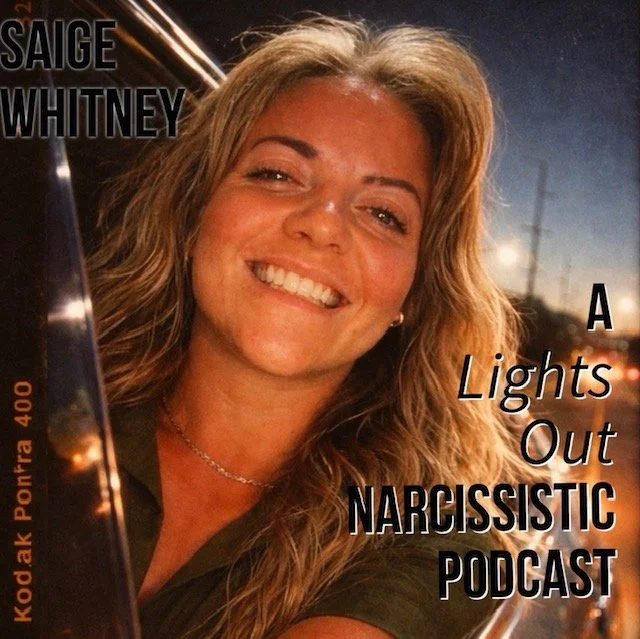
Brandi Fleck: Nice. Okay. Well, where can listeners find your podcast and any other work that you're doing?
Saige Whitney: So I'm on everything. A Lights Out—and you have to put the A or else it makes it harder to find—A Lights Out Narcissistic Podcast is available on Apple, Spotify, YouTube, Deezer, Amazon Music, iHeart. It's on all large platforms. And then I can send you my website, too, if you want to put that in the show notes.
And I do have a book, but I published it through a scam company. It's called Xlibris. So I'm currently trying to just edit my book and then upload it to Amazon. It's called Regardless. So that should be coming out soon, and that talks about my OCD and some crazy experiences I had as a child. So we're working on that right now, just getting that published and hopefully having Amazon take off the Xlibris version. That's a scam self-publishing company. It's crazy. There's so many of them today.
August 2026 Note: As of the air date of Saige’s interview, her book, Regardless, is available on Amazon.
Brandi Fleck: Yeah. Dang. All right. Well, I'll definitely put all of those links in the show notes for people to check out. So guys, make sure you go do that. And Saige, is there anything that I didn't ask you today that you feel is important to share?
Saige Whitney: I just love to tell people this: if you're—I know how it feels to be in that dark, dark hole after this relationship. You're lost. And I promise, you can get out of it. And I promise life gets better, and it did for me. So don't lose hope. When you can, write it down. Talk with people. Don't keep this in the dark. If you can start talking to people, it gets better.
And people can kind of educate you, like, "Hey, you're in a domestic abusive relationship. You're not crazy. You weren't a bad wife or bad husband. This was an abusive relationship. You were abused." And once you can realize that, just start getting out of that relationship. And when you do, I promise things get better. You have all this energy because it's not being stolen from you anymore, siphoned and all this stuff. All this energy, you're waking up at 5 a.m., you're working out more. It's better. So I promise you guys.
Brandi Fleck: Nice. Okay. Well, Saige, thank you so much for coming on the show and just for sharing a piece of yourself with us all here today. I really wish you the best of luck, continued in your journey, and it was so good talking to you.
Saige Whitney: It was great talking with you too. Thank you.
Join the conversation!
Feel free to share your own experience and let me know if you have any questions in the comments.
Related Posts





Hi, I’m the founder of Human Amplified. I’m Brandi Fleck, a recognized communications and interviewing expert, a writer, an artist, and a private practice, certified trauma-informed life coach and Reiki healer. No matter how you interact with me, I help you tell and change your story so you can feel more like yourself. So welcome!
Find More on the Blog
Topic
- ADHD
- AI
- Atlanta
- Black and BIPOC
- DIY
- FAQ
- LGBTQIA plus
- Los Angeles
- Nashville
- Seattle
- St Louis
- St. Louis
- UFOS/UAPs/ETs
- abuse
- accountability
- addiction and recovery
- adoption
- affirmations
- afterlife
- altered state
- angels
- animals
- anxiety management
- art
- astrology
- atlanta
- attachment
- awakening
- beauty
- behind the scenes
- being human
- body image
- body work
- boundaries
- brandi fleck
- breathwork
- bullying
- burn out
- burnout
- cancer
- career
- caretaking
- chakras
- channeled
- clarity-dive
- clarity-practice
- clarity-primer
- clean products
- coach
- codependency
Recent Blog Posts
Visit the Full Podcast Audio Archive

Affiliate