Why People Stay in Abusive Relationships and What Happens After
Interview By Brandi Fleck
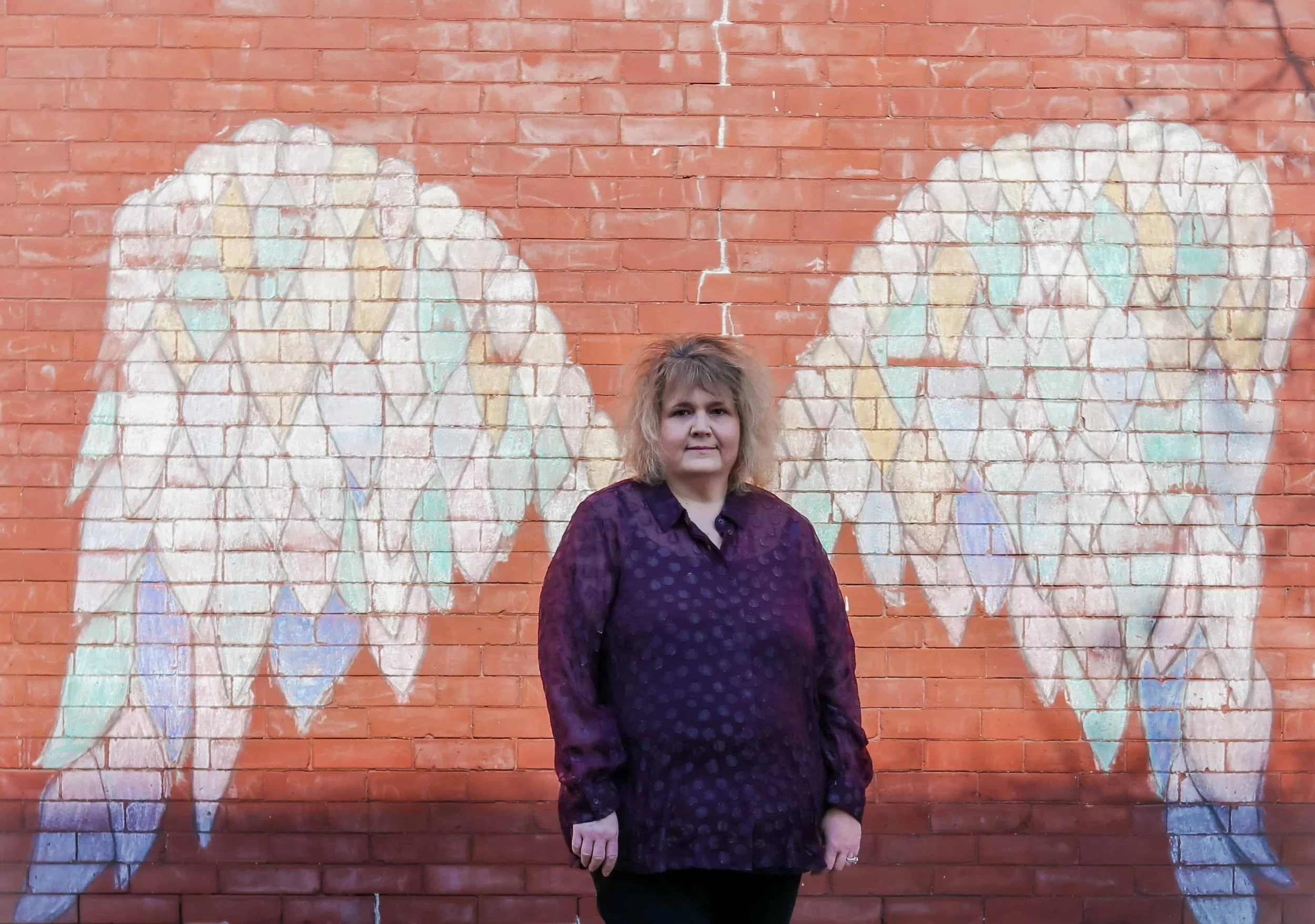
Shonda Pence shares what it was really like living through emotional abuse, trauma bonding, PTSD, and the long process of rebuilding life after an abusive marriage.
This conversation has been maintained in loving memory of Shonda Pence, June 26, 1973 - April 15, 2026.
People often ask survivors of abuse the same question: “Why didn’t you leave?”
But abusive relationships rarely begin with obvious violence. More often, they unfold slowly through jealousy, control, isolation, emotional manipulation, and trauma bonding over time. By the time the abuse becomes impossible to ignore, many people are already emotionally, financially, psychologically, or physically trapped in ways outsiders don’t fully understand.
In this episode, Shonda Pence (social worker, educator, domestic violence survivor, and co-founder of Mending Fences) shares what it was really like living inside an abusive marriage that began when she was still a teenager.
She opens up about fear, motherhood, PTSD, the long aftermath of emotional abuse, and what it took to eventually rebuild a peaceful life afterward.
Listen to Shonda Pence’s Interview
Watch Shonda Pence’s Interview
Choosing Yourself and Rebuilding Life After Trauma
Shonda Pence: I'm Shonda Pence, and I'm from Dunbar, West Virginia. Your voice is something that no one can take from you. You can love and care about people, but not everyone deserves the spot in your life. It was almost like he was very jealous of the baby. Not a lot of people knew about the abuse. A lot of it was about isolating me, but I think people just don't want to believe that things are that bad. But I think helping others is a way to heal.
Brandi Fleck: This week on the show, we're welcoming guest Shonda Pence. She's a social worker, educator, devoted human advocate, and founder of the sober living program in Charleston, West Virginia called Mending Fences. We're focusing on her personal experience of surviving and thriving after domestic violence, also known as intimate partner violence and domestic abuse.
I've known Shonda and pieces of her story for a while now and asked her to come on the podcast all the way back in season one. She didn't feel comfortable then, and that was absolutely okay. I bring this up because here we are in season four, and Shonda reached out to say she was ready. So it is an absolute honor to have her on the show, and this just goes to show that healing can happen after an abusive marriage or any trauma you've been through. There is light at the other end of this tunnel.
So listen on to hear Shonda bravely explain why it used to be hard to tell her story, why it's important to speak out now, and what her life is like now in a healthy and loving marriage. We then dive into how she even got into an abusive marriage in the first place and what it was like living in it. Shonda describes actual examples of physical and emotional abuse she endured and the complicated dynamics of trying to get help in a small town, the isolation she experienced, and how she finally got out.
We go into the emotions she experienced once the abusive relationship was over, ranging from peace to grief, which is important to know is normal, and we explore how long it's taken her to recover. We wrap up by talking about what we as a society should be asking instead of, “Why didn't you leave?”
Oftentimes, close friends and family don't realize what's going on in these types of intimate partner abuse situations. If you suspect someone you love is going through a similar experience, this episode can help you recognize some of the signs and understand why your loved one may feel unsafe to talk or leave. If you're in the situation yourself, our hope is this episode will help you safely choose yourself when you can, whether that's before, during, or after being abused.
This episode does come with a trigger warning. We discuss intimate partner abuse in detail, including gun violence and other specific instances of domestic violence. Listener discretion is advised.
Everybody, today we are welcoming Shonda Pence to the show. Shonda, I'm so excited to have you here. Just how are you doing today?
Shonda Pence: I'm doing great. Thanks for having me.
Brandi Fleck: That's good. Yeah. So before we dive in, give everyone sort of an idea of who you are and what you do.
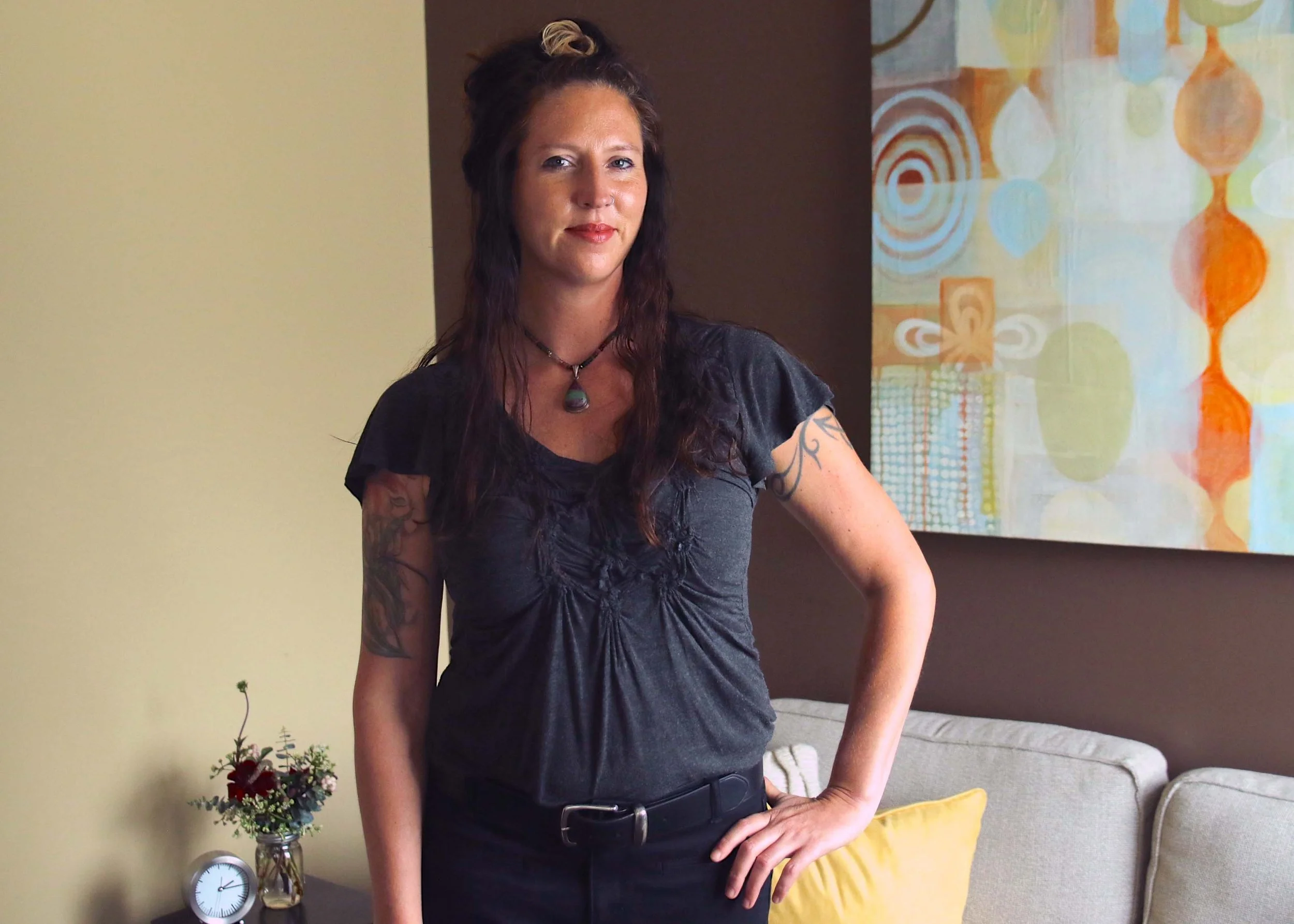
Shonda Pence: Okay. I'm from Dunbar, West Virginia. I'm married. I am the co-owner and founder of Mending Fences Sober Living Program for Women in Charleston, West Virginia. I'm a domestic violence survivor. I actually prefer the word “thriver” over “survivor.”
Brandi Fleck: Yeah.
Shonda Pence: I think there's a big difference in that when you're able to thrive after getting out of those relationships. I'm an advocate for those in domestic violence relationships and intimate partner relationships, for those in substance abuse situations, and those with instability in resources and housing.
Brandi Fleck: Okay. Those are some pretty big, gosh, life paths and purpose kind of things that I just admire you for, and I love what you're doing. I've been following it for a while. So yes, I am just so excited to have you here, and we're going to get into some really heavy topics today, but I know that it's just going to help some people.
So let's get into storytelling for a minute. Particularly, has it always been easy for you to tell your story, and why or why not?
Shonda Pence: For many, many years, it was very difficult to speak out at all. I was in the abusive relationship with my first husband from the time I was 16 years old for about 16 or 17 years. Many of my close family members and best friends did not know the depth of the abuse or what I had gone through.
So when I first broke free of that first marriage, it was very difficult for me to tell them what had been going on. One fear is always people say, “Why did you stay? Why didn't you leave sooner? Why would you put up with that?” I think as a society, that's people's first question, and there's a real stigma with that. I think people are afraid to speak out many times because of the reaction of other people.
Brandi Fleck: Okay. When you say reaction, do you feel like there's judgment there?
Shonda Pence: I feel like there's judgment. I feel like people who are close to you want to know why you didn't tell them sooner, why you didn't leave, why would you let your children withstand being in a household like that. There's just so much stigma involved that people a lot of times just don't want to tell their story at all, or until much later.
Brandi Fleck: Okay. So why do you think it's important to share your story now?
Shonda Pence: I think that it's important now because your voice is something that no one can take from you. You can use your voice for good, to inspire others to tell their story, to maybe let people know that you're a support for them and that you're someone they can come to if they are trying to leave or to get a safety plan in place.
It's important to speak out so that other people know that there is help and they're not alone. So many people feel like they're the only people in these situations.
Brandi Fleck: Yes.
Shonda Pence: And it's very common. So I think it's important to use your voice to speak out so that other people can be inspired to get help themselves.
Brandi Fleck: Okay. Has it become easier for you to speak out now since you're further removed?
Shonda Pence: It has been much easier to speak out the last few years. For about the first five or more years, I really didn't speak out at all. Close friends and close family knew the marriage wasn't going in a good direction, but they didn't know all the details.
Part of the reason I didn't speak out is before my children were adults, I didn't want any stigma put on them or any judgment. As a parent, I think there's already so many things that people are looking at us and judging everything we do. So speaking out at that point, I felt like would bring unnecessary attention to my children, who were minor children at the time.
Brandi Fleck: Okay. So before we dive into your story, let's talk about your present moment. What's life like in general now for you?
Shonda Pence: Life is really good. My marriage is really good and solid. My children are adults. They're both successful in their careers and home life. We have two young grandsons who we love to spend time with. We like to travel and just spend quality time with family, which in the first marriage I really couldn't spend any quality time with family or friends because I was so focused on what was going on at home.
So I think now that everything has come full circle and I'm in a really good place, life is really good. I don't really have any complaints.
Brandi Fleck: Good. That's good to hear too, and I think that's really inspiring. Like you said earlier, you prefer to say you're a thriver because it's like you've reached this point where you can enjoy these things. So that's awesome.
Shonda Pence: Right. Being a survivor, I mean, a lot of people identify themselves as survivors. I am a survivor, but I think that puts kind of a victim status on you. Once you move from survivor mode into thriving mode, you can really live your best life, whatever that means to you.
Brandi Fleck: I love that. Okay, so this is sort of an abstract question, but it relates to, I guess, what you've been through. What does it mean to choose yourself?
Shonda Pence: I think when you choose yourself, you are putting yourself as a priority, which many times when you're raising small children or you're in a toxic relationship or you're very young, you just don't make time to do that. I think it includes self-care daily.
Shonda Pence: Whether that's getting a manicure or just listening to relaxing music, having a good sleep schedule, eating healthy, hanging out with friends in a positive way. There are a lot of things you can do for self-care, and if you don't have a lot of time, you can set aside at least a few minutes a day to do something just for yourself.
I think it also means setting standards and not letting everybody have a place in your life. You can love and care about people, but not everyone deserves a spot in your life. I think having boundaries with people and setting high standards, I think that really goes to choosing yourself. Just not letting everybody take advantage of your time and resources and really being able to set some positive boundaries.
Brandi Fleck: Yeah. Okay. Can you give us some examples of how you choose yourself in your life today?
Shonda Pence: I do. I like to make time for journaling, reading, writing. I think it's important to keep a gratitude journal, a thoughts and feelings journal, so that you can go back and read over that and see how much progress you're making or where you may have points you want to make improvements in your life.
I love going to live concerts, live music events, spending time with my adult children. It's very different having adult children than small children.
Brandi Fleck: Yeah.
Shonda Pence: You can become their friend when they're adults, and they're in a good place, and you're in a good place. I like to do things like get my hair done and get a manicure or a pedicure, or just things that are self-care.
But daily, I would say the journaling, trying to eat more healthy. It can be things just like keep up with your doctor's appointments and follow their guidance and prioritize mental health. If you're having a stressful day, you may have to set aside extra time just for yourself. I think that's important.
Brandi Fleck: Okay. Well, great. So you're in a really good place. You love your marriage. You're in a really good marriage. Can you describe your current marriage for us?
Shonda Pence: Yes. We dated 10 years before we got married.
Brandi Fleck: Oh.
Shonda Pence: And I think that was both of our preference, just to make sure we were in a really good place before we got married. I think that oftentimes people jump too quickly into new relationships, and for us, that was the thing to do.
I think we have a really solid foundation. We have a daily routine during the week, and I think that reduces stress and anxiety when you have a daily routine. Of course, we have mutual love and respect for each other. No violence, no threats of violence.
Brandi Fleck: Yeah.
Shonda Pence: No marriage is perfect, and we have little spots, but there are things that we quickly get over, and we realize that they're really not that important.
Brandi Fleck: Yeah.
Shonda Pence: I think you have to have more good moments than bad moments, for sure, and we definitely have more good than bad. So we're always there for each other. If there's a death in the family or something going on, we're just always there and can count on each other. I think that's super important.
Brandi Fleck: Yeah. That warms my heart to hear that. What would you say you love about it the most?
Shonda Pence: I think the fact that he's very easygoing. I know I can count on him if I'm sick, if I'm stressed. Same thing if he's sick, if he's stressed. We can just count on each other. I don't think there's any question there of whether that person would be there for you, and I think that's what I really love about it the best. The longer we know each other, of course, more love and respect. We help each other, whether that's housework or emotionally or socially. We just help each other, and I think that's super important.
Brandi Fleck: Yeah. Okay. Well, that's awesome. Let's zoom out into the bigger picture now and sort of talk about what role or impact romantic relationships have had over the course of your life to this point. How has romantic love fit in and sort of how have you viewed it throughout your life?
Shonda Pence: My parents were divorced, but it was amicable, and they always got along for the most part. So I think that was a really good example about how if you can't be with someone, you can still be their friend or their supporter in some way. So I had a good background there of them getting along even though they weren't together.
Living With Domestic Abuse as a Young Mother
When I was 14, I started dating, I'll call it just my first teenage love, I guess you would say. I got pregnant with my daughter at 15. Her father did not give me any emotional or social support, no support in any way. We broke up. So that was disheartening.
Then after my first marriage ended, I did have several rebound relationships before I started dating my current husband, and those were primarily toxic relationships. I had a problem trusting people.
Brandi Fleck: Okay.
Shonda Pence: Especially after my history. I just had abandonment issues and problems with trusting people, that they would do the right thing, that they wouldn't be abusive, and things like that.
Brandi Fleck: That makes sense for sure. How do you define a toxic relationship?
Shonda Pence: I think a toxic relationship, like I was saying earlier, you have more bad times than good times.
Brandi Fleck: Okay.
Shonda Pence: I think it could include any number of things. It could include verbal abuse, anything that causes you to have low self-esteem, not trusting the other person, having infidelity in the relationship is huge. There's all kinds of things that can cause a toxic relationship. It could just be that the other person is not supportive of your hopes and dreams. You really have to have somebody in your life that's your supporter, and if they're always talking down to you or they're minimizing everything that is important to you, that causes a toxic relationship.
Brandi Fleck: Yeah.
Shonda Pence: I think when it's one-sided, one person is putting in more effort than the other person, that also is a toxic relationship.
Brandi Fleck: Okay. All right. So now can you just detail for us your first marriage, how it started, how it evolved, and how it ended? Of course, whatever you're comfortable with, but sort of some of the emotions you went through maybe.
Shonda Pence: So I grew up in a small coal mining town in southern West Virginia. It was a very small community, very small school, so I met my ex-husband in kindergarten.
Brandi Fleck: Oh wow.
Shonda Pence: So we became friends at age five and remained friends through the time we started dating, which was after my daughter was born that same year when I was 16 years old. He had kind of pursued me through middle school and the beginning of high school, and I was in other relationships or just focused on my daughter. Eventually, he had asked me out to a football game and to dinner, and I went. After that first date, we were inseparable.
So starting at 16, we were together, but we had already been friends for 11 years before I went on that first date with him.
Brandi Fleck: Yeah. Okay.
Shonda Pence: So our history was long. Even at age 16, we already had a long history, and I knew and valued him as a good friend at that point in time. I didn't see any signs of abuse or problems. He very much loved my baby, accepted her into his life, and I thought that was just a good sign. He came from a pretty good, solid family in the community, and I didn't see any bad signs or red flags.
So throughout our two-year dating relationship, I'd say there were a few red flags, but not anything that I considered to be a deal breaker.
Signs of Emotional Abuse and Control in Relationships
Primarily, it was jealousy. Questioning me, “Are you on the phone with such and such? Were you down at the store talking to such and such?” It was mostly a jealousy issue, which I really, being 16, 17, and then turning 18, it's not something you really look at as a huge red flag. A small amount of jealousy would be considered normal. But looking back, I can tell that it was a red flag.
Brandi Fleck: Okay.
Shonda Pence: And then on his 18th birthday, we got married.
Brandi Fleck: Okay.
Shonda Pence: So we were both 18. I had gone through a sexual assault in my hometown, and after that happened, my focus was on getting out of that small town.
Brandi Fleck: Oh man.
Shonda Pence: He enlisted in the military, and I thought that was my ticket away from those bad memories, seeing the place, seeing the people, and that was my ticket out of there. So he left for basic training a month after we got married and was gone for months. I would visit and things like that.
At his basic training graduation, I got pregnant and then had a miscarriage.
Brandi Fleck: Oh man.
Shonda Pence: So I went through quite a few things alone, but I felt like he was also going through it alone, being off in training. Eventually after that, we set up house in Fort Bragg, North Carolina, for four years. I got pregnant. It was a difficult pregnancy, and he was in the field most of the time.
How Domestic Violence Escalates Over Time
Shonda Pence: I felt very little support, which some of it was not his fault, being in the military, but I felt very little support when he was home. Then the physical abuse started. The physical abuse didn't start until we set up house together after he went through his basic training and AIT training in Fort Bragg.
Brandi Fleck: Okay.
Shonda Pence: And it was very random. I can be sitting on the couch not speaking to him or not doing anything that I considered inappropriate, and it started out with things like slapping, grabbing wrists, just yelling and name-calling, and then things progressed after that.
Brandi Fleck: Was he ever deployed?
Shonda Pence: He was not deployed anywhere. He was at Fort Bragg the whole time. They would go into the field, but to my knowledge he was never deployed. I know he wasn't deployed overseas.
Brandi Fleck: I was just curious. I was wondering if there was any connection, and not to justify it by any means, but I'm just looking for connections about how maybe it would have started.
Shonda Pence: Right. I always wondered that myself because it just seems like our dating relationship was so much better than our marriage at any point in time. I did see a big change in him after he went through the training and was in the military. I don't know if there was an event that caused that. I don't know if it was a mindset. Something definitely changed.
Brandi Fleck: Yeah.
Shonda Pence: And the violence increasingly got worse after our son was born. It was almost like he was very jealous of the baby.
Brandi Fleck: Oh, okay.
Shonda Pence: He would say things like, “You're spending time with the baby. You're always holding the baby.” It almost seemed like a jealousy issue, that he thought I was spending more time on motherly duties than wife duties, as he would call them. Everything just progressively got worse.
Brandi Fleck: Okay. Did you ever fear for your life at any point?
Shonda Pence: Always. About two years into the marriage, he started almost daily putting a loaded gun to my head.

Brandi Fleck: Oh wow.
Shonda Pence: There were many times, many times throughout those years, that I would try to leave. He would be out at a bar or who knows where, and I would, my daughter lived with my mother most of the time, and that was partly because she was really attached to my mother and I was unsettled having to move, but the other piece is I did it to protect her. I think that's very difficult for her even today to understand, but I knew that things were so bad and that she could be a target.
So there were many times I would try to leave, and I'd have my newborn son in my arms, and he would catch me trying to leave and drag me back in by my hair or by my arms with me holding my newborn son. That became a pretty frequent event.
The loaded guns to the head and threatening to kill me and us became increasingly worse over the years, and I honestly think the only reason he didn't do it is because he loved himself so much he knew that he would go to jail or go to prison and lose everything.
Brandi Fleck: Okay.
Shonda Pence: So I mean, I'm very thankful that he didn't kill me.
Brandi Fleck: Yeah.
Shonda Pence: But I was always, on a daily basis, expecting it.
Brandi Fleck: Oh my gosh.
Shonda Pence: Yes. Not a lot of people knew about the abuse. I would call the police, and back then there weren't cell phones, so it was harder. He would cut the phone cords, various things. But back then, and I hate to say this, but back then it didn't seem like the police took it as serious of a matter as they take it in this day and time. I think increasingly over time, police agencies and prosecutors and courts have realized that it's more serious.
Growing up, there were some domestic violence relationships in my family, and I was always told just don't say anything, don't tell anyone, we don't call the police. Being from a small town and being so many years ago, oftentimes the sheriff or the police in a small town are friends with the abuser.
Brandi Fleck: Yeah.
Shonda Pence: So you just don't call the police. You cover the black eye with makeup. You save face. You don't tell people. So I felt like it was the same for me.
We moved around a lot, and primarily it was because the police would get called. A neighbor may call the police, and then he'd just say, “We're moving somewhere else. We're leaving. We're going to a different apartment complex.” If the police got involved, it was, “We're moving.” So family members always said, “Why are you all moving from one complex to the other? Why are you moving across town? Your place was fine.” But what they didn't realize is because a neighbor had heard what had happened or seen a black eye or something and reported it to the police, and then he would want to move so that same neighbor wasn't calling again because if they repeatedly called, something was going to end up happening.
Brandi Fleck: Yeah. Okay. I was going to ask you if any signs, even though your family and friends didn't know about it, if as things progressed over the years it got to the point where people were seeing it more frequently.
Shonda Pence: Yes. My mother knew that it was a toxic relationship, and she knew of some domestic violence, but not on the level that it was happening. She even says to this day, “Why in the world would you not have told us what was happening?”
We never lived back in that small community where we were from, but people did start to notice. I would run into people at a store. I would have marks on my face. There was one Easter that he strangled me with a phone cord and broke my glasses, and I had to get my grandparents involved, and I went and filed charges, but the prosecutor talked me into dropping them.
Brandi Fleck: Wow.
Shonda Pence: And it was a small town, and I just feel like back then it just wasn't taken as seriously as what it would be taken now.
Brandi Fleck: Okay.
Shonda Pence: He just always got by with it. I just got really tired of reaching out to anyone or calling the police because there was no consequence for him. None at all.
And that incident is because on Easter morning the children wanted him to go to church, and he had promised to do it, and he couldn't be bothered after staying out all night.
Brandi Fleck: Okay.
Shonda Pence: So he thought cutting phone cords, she can't call anyone. You break her glasses, she can't drive the car, she'll be stuck at home. A lot of it was about isolating me. He never let me have a full-time job. He was very particular in where I could work at all, and it was about isolating me and keeping me home because back then.
Like I said, with no cell phones or internet or anything, the only place you're going to tell a lot of people is you might tell a few people using your landline phone. But if you go to work, those people are going to see you every single day, and they're going to start noticing black eyes and broken noses and bruised wrists and all of the things that go along with that.
So keeping me home and isolated and wanting to live out of state. We also lived out of state after the military—and I think he thought keeping me out of state, my close family and friends are not going to see me, and it's less likely a chance of them finding anything.
Brandi Fleck: We're talking with Shonda Pence, the social worker, educator, and founder of Mending Fences, a sober living program for women in Charleston, West Virginia. She's a domestic violence survivor and thriver. It's time for a quick break.
Brandi Fleck: During the times that you did call the police or reach out to people and he found out, I know you said that he would move you if people saw things, but if you filed charges, was it explosive when he found out that happened? Was it just constant?
Shonda Pence: Sometimes it would be, and sometimes we would go back into the honeymoon phase where it's, “I'm sorry that this happened. I'm going to be on my best behavior. Don't call the police anymore,” promising me whatever he thought I wanted to hear, whether it was going on a vacation or buying me something.
He was big on sending flowers. When there was a big event that happened, it was always trying to be charming and making sure that I would stay by providing me whatever he thought that I wanted at the time.
How Abuse Impacts Children and Family Dynamics
All holidays were miserable. There would be times in the car, it would be us with the kids, and we would have an explosive episode and then 10 or 15 minutes later have to go into someone's house.
Everybody was upset that you had to smile, and I would tell the kids, “Stop crying. Put on a smile. This is what we're expected to do.” That gets really old, and it really wears on not just the adults but the kids. They started hating holidays and started hating going on vacation because they were tired of wanting to cry but having to put on a happy face.
Brandi Fleck: Yeah.
Shonda Pence: Or having a consequence if they didn't. He would just do things to upset everybody on any occasion. There'd be at least one explosion of some sort, and it wouldn't even be that he wasn't getting his way. It was more just a power trip. “If I can do this to you, you'll put up with it, and this is how we're going to live our life.”
Brandi Fleck: Okay.
Shonda Pence: And it just really became overwhelming.
Brandi Fleck: Yeah. Did the kids ever become targets, or were they always just sort of like bystanders?
Shonda Pence: He would call them names. The incident that precipitated the divorce is we had filed for divorce five or six times and canceled it over the years.
Brandi Fleck: Okay.
Leaving an Abusive Marriage and Starting Over
Shonda Pence: I would file, and he promised to do better. We really had a trauma bond. We had that trauma bond together, and we were so codependent on each other that he would talk his way back into me not following through with the divorce.
I had filed for divorce in several places that we lived, but the incident that precipitated the divorce is we had taken one of the kids to a doctor's appointment, and on the way back I was driving, and the kids weren't saying a word. Nothing had happened, and he reached in the back seat and struck one of the children.
Brandi Fleck: Oh.
Shonda Pence: So I decided later that day that I was leaving. Either he would kill me and we would be out of our misery, or he would finally let me go and I would be out of my misery. So either way, I just decided that day, this is it. I was not going to allow him to be physically abusive in any way to the children.
Once we got home, I'm telling him to his face, “I'm leaving or you're leaving,” and he wanted me to quote unquote buy him out of the marriage, and a family member helped me with money, and I gave him money and he left.
Brandi Fleck: Okay.
Shonda Pence: Which caused a lot of worry on me because I'd never had to financially support myself. I was afraid he would come back and do something to us. I was afraid of my son to go and visit him alone because I wouldn't be there to hear what was happening or to protect him from anything that might happen.
But after a few months of being separated, towards the divorce he ended up leaving me alone. Those few months, he would come and pick up our son and still would break things in our living room or threaten me in some way, but after a few months he started dating someone new who's now his current wife, and he kind of just left me alone.
I think when he struck our child, he knew internally that this had to be the final straw. Like, now I've done something not to you physically but to one of them physically, and he knew that I just wasn't going to put up with it in any way.
Brandi Fleck: Yeah. So that was the final straw, but I think the surprising part is he actually left.
Shonda Pence: Like I said, he did want money to leave. It was just another manipulation and a way to express his power in the relationship.
Brandi Fleck: Yeah.
Shonda Pence: But after a few months, he overall left me alone.
Brandi Fleck: Okay. Yeah, that struck me as odd because I'm like, well, if he never allowed you to really work, how were you supposed to buy him out of the marriage?
Shonda Pence: Right. He knew that my parents and grandparents would help me if I called and said this has happened, bring me money to give him, and he did. He just left.
We had our divorce hearing a few months later, and I was offered alimony, and I did not accept it because I was afraid if he had to pay me too much that he would beg to come back or he would retaliate in some way against me.
I told the judge that. I said, “No, I do not want it,” and he asked me like three times why, and I said, “I just want him to go away. I don't want to see him. I don't want to have any communication with him. I just want him to go away.”
So at that point, I don't know what made me strong enough, but him striking our child was just the final straw for me. He was either going to kill me or he was going to let me go.
Brandi Fleck: Yeah. Talking to other people who have been through similar circumstances, I've heard people say, “Well, it was sort of okay if I was treated that way for a while, but not the kids.”
Shonda Pence: Right.
Brandi Fleck: Did it ever become so normal that it was just okay?
Shonda Pence: I think it did. I just became so used to it. There were holes in our walls. Family and friends had to know something was going on. A door handle broke off a bedroom or a bathroom where if I was locked in, he would break the door handle. There were signs that people I felt like should have seen, but I think people just don't want to believe that things are that bad.
Brandi Fleck: Yeah.
Shonda Pence: But I just became used to it. I just expected something horrible to happen every day, and I knew my children were having to see it and hear it and know about it, and it was traumatic for them, but physically striking them was a different situation.
Brandi Fleck: Yeah.
Shonda Pence: And that was just a real breaking point for me. I think you do become used to it. You just feel like it's going to happen.
Shonda Pence: You know it's coming. You're not surprised. It's almost like you stop crying over it. You stop worrying about it because it's just the way it is. You think it's the way your life is always going to be.
Brandi Fleck: Okay. Where do you think the codependency started, or how did you guys become codependent on each other?
Shonda Pence: I think part of it was getting together so young and just being inseparable and knowing each other so long. I think that was a huge part of it. Like I said, by the time we got married at 18 and we met at 5, 13 years we'd been friends. So I think meeting each other at such a young age and seeing each other daily at school all of those years and then living out of state away from everyone, we only had each other.
I was an only child growing up and was used to getting attention from grandparents, from my parents, from people in general, and getting attention from him, I just really became dependent on him.
Brandi Fleck: Okay. Man, you told us basically from beginning to end the things that were happening in your relationship, and you eventually got out. Once you were free and once he started leaving you alone, what emotions did you go through?
Shonda Pence: I think at first it was shock. Just, you know, I finally gotten out of this relationship and uncertainty. What do I do now?
Brandi Fleck: Okay.
Shonda Pence: Which I immediately got a full-time job. The kids and I were able to spend actual quality time together. I mean, just something like taking them to the beach without him being there and it being a peaceful time to where we could spend actual quality time together was huge. It was things that some people might say, “Well, that's not a big deal to take your kids to the beach,” but it was to me because in my adult life I'd never got to really have the time with them that I wanted without expecting that blow up or without them hearing something they shouldn't have to hear.
Brandi Fleck: Yeah.
Shonda Pence: But it was uncertainty and fear still that he could come back. There's a period of grief, just like when there's a death. We've been together our whole lives, and I really grieved the relationship even though I was relieved to be away from him. You still grieve what you wanted it to be.
Brandi Fleck: Yes.
Shonda Pence: When I got married at 18 after having a fairly peaceful dating relationship and having all of those promises broken, you just grieve what you thought it was going to be because it really could have been something so much better. We could have had a good life, but it didn't turn out that way. So you grieve what you wanted and what you expected and all the disappointments and the hurt. So it was a real grieving process.
Brandi Fleck: Yeah.
Shonda Pence: And then after that, just really feeling free to do what I wanted to do. If I wanted to buy a car, if I wanted to get new furniture, if I wanted to go hang out with friends for the weekend or take a weekend trip, I didn't have anybody to ask.
Brandi Fleck: Yeah.
PTSD, Healing, and Recovery After Domestic Violence
Shonda Pence: I could do what I wanted to do without getting permission for the least little thing. So it was just a big relief to be away from him, and really it was disbelief. Like finally, I'm free from this and my children are free from it.
My son would go and visit him every other weekend, but other than that, my daughter never had to see him again, never had to speak to him again, and I didn't either. So it was just a big relief for all of us.
Brandi Fleck: Okay. Gosh, I've got a lot of questions for you. I want to talk about how did you get a job, what did you do not having that much experience, and I'll leave it at that. I have some other follow-up questions too, but let's go there.
Shonda Pence: When we lived in Alabama and North Carolina, I had worked for a short time there as a teacher. I was a substitute teacher in the inner-city schools in Tuscaloosa, Alabama, and then I was a preschool teacher for a private preschool in North Carolina. So there were times he would let me work, but it was primarily when we lived out of state.
I have a degree in social and behavioral science, so I was interested in teaching, but I was also interested in social work. I was already working very, very, very part-time towards the end of the marriage teaching GED and adult ed in Kanawha County. So I just picked up hours and worked more for that job once I got a divorce, and I also started doing social work and became a social work supervisor for a private agency.
So I had the degree and I had a little bit of teaching experience, which thank God led me into being able to get a more permanent teaching position and to go into social work later.
Brandi Fleck: Okay.
Shonda Pence: It was very financially stressful.
Brandi Fleck: Yeah.
Shonda Pence: Going from staying home and being a housewife and having him provide everything to me, having to provide, it was very stressful. Sometimes I look back and I think, how did we ever live or go on a trip or have a new car on what I was making? Because looking back, it seems like so little, but it just always worked out. God always provided, and it always worked out. So it was a huge relief to have the job that I did have.
Brandi Fleck: Yeah. How long did it take you to stop being afraid that he was going to show back up?
Shonda Pence: Oh, it's only been a few years ago. I mean, we're talking we're 17 years out from him leaving, and a few years ago I was at a car wash, and he actually pulled up to the same car wash. I don't think he saw me, but I saw him and I immediately left.
Brandi Fleck: Okay.
Shonda Pence: To this day, I would be fearful to be around him, just the two of us. Now, if me and my husband saw him in a restaurant with his wife or something, I wouldn't get up and leave the restaurant, but being alone with him, I still would not want to do that to this day.
Brandi Fleck: Okay.
Shonda Pence: There's just too much history there, and I think he's a very unpredictable person.
The Long-Term Effects of Intimate Partner Violence
Brandi Fleck: Okay. Can you talk just a little bit about your healing process? What did you do to start. Well, I don't know if I want to jump to thriving, but let's just stick with what's your healing process?
Shonda Pence: I worked with a therapist for a while, spending a lot of time with my best friends, a lot of time with my parents. My dad lived out of state, but going to visit him. Opening up more to my mother. The quality time with the kids. I think over time, just little by little, I was able to add more positive things to my life that helped me survive what I had been through.
I mean, to this day I have nightmares sometimes. I'm still very jumpy and startled easily. I was diagnosed with PTSD after leaving the marriage, which I don't think would be a surprise to anyone.
Brandi Fleck: Yeah.
Shonda Pence: But after constantly being on edge and on alert, it's hard to go into a situation where you can actually relax and feel okay about how the day is going. It takes a lot of years to do that.
I mean, this is just my opinion, but I think there can be health consequences years later. If you're kicked in the head so many times, kicked in the stomach, had your arm put through a window, a lot of health issues I think victims of abuse have years later. There's a lot of research going on with that, but if you have migraines, I don't think it would be a surprise for the doctor to hear that you've been kicked in the head 500 times over the years.
So I think that there are consequences to being in those relationships and after effects decades later.
Brandi Fleck: Yeah. That's a good point to think about. Are you going through some of those?
Shonda Pence: I have a lot of pain in different parts of my body. I have a neurostimulator in my back where I have a lot of back issues. I have migraines. I have the nightmares. So I just feel like some of that could be after effects from being beaten and kicked and squeezed and held and lots of different things.
Brandi Fleck: Yeah. I think it has to play some role, even if it's a small role. It has to play some small role.
Shonda Pence: Yeah.
Brandi Fleck: So when it comes to healing, it sounds like you've got or you've had and still do maybe mental, emotional, and physical healing all at play.
Shonda Pence: Yes, I think for sure. I think my children, they're very successful in their careers. They both have jobs where they are helping others.
Shonda Pence: So I think seeing what they saw growing up helped develop them for sure into the people they are. They're both very caring people. They're not in abusive relationships, so they were careful in choosing their mates or partners, and they've just worked hard to overcome a lot. So I think there's something to be said for that because it could go the opposite way.
Brandi Fleck: Yeah.
Shonda Pence: When people are around something every day, they typically turn out exactly like the person that's doing the abuse or the furthest thing from it, and luckily both of them are the furthest thing from it, and I'm very blessed and thankful for that.
Red Flags in Toxic Relationships and Dating
Brandi Fleck: That's good. Yeah. So on that note, how did you make sure that you did not get into another abusive relationship? How did you change the trajectory of that in your life?
Shonda Pence: I think being extremely cautious, just looking for red flags immediately. If I started to talk to someone and they asked me on a date, having that date in public, not moving too quickly, at the first sign of trouble exiting those dating relationships.
I think just looking for the red flags, having the mindset I'm not going through that again because some people go through abusive relationship one right after the other.
Brandi Fleck: Yeah.
Shonda Pence: And that's very unfortunate. I think people in general, male and female, need to look for red flags in relationships. It's super important, and I think it's important that we teach pre-teens and teenagers in school or at home to look for those red flags. It's not okay for somebody to grab your arm. It's not okay for somebody to put you down all the time, calling you names. It's not appropriate so that they can watch for red flags in the beginning.
Brandi Fleck: Yeah. That's a really good point. So I want to make sure that we have a little bit of time to talk about Mending Fences as well.
Shonda Pence: Okay.
Brandi Fleck: What was the inspiration to open this amazing place? You said it's a residential sober living home or program?
Shonda Pence: Yes, for women. We have two locations, both in Charleston. We can have up to 24 women at a time.
Finding Purpose Through Advocacy and Helping Others
I think having the background in education and in social services, I had worked in socially necessary services, which are the services provided to Child Protective Service clients in West Virginia, and I worked for a private agency. So seeing the need, so many people needing somewhere to go and not being able to find them somewhere, either there was a waiting list or some reason they couldn't get in.
So just working with people in adult education, many of whom were unstable with finances and housing, had substance abuse histories, domestic violence histories. So Mending Fences is a place that I've merged the social work and the education portion and taken my own story and been able to tie it all together.
I did have a stepsister who was a very successful nurse and then was in hospital administration who got in a car wreck and became addicted to painkillers, and she overdosed in 2016 and died. So that was another big inspiration. Addiction is in every family, whether people want to admit to it or not, either alcoholism or other substances.
Brandi Fleck: Yes.
Shonda Pence: Every family either has a family member or close friends that are suffering with substance abuse or violence or anything in between, and this is a place where I can use all of my skills and all of my experience together to try to help these women.
Brandi Fleck: I love that. Thank you.
Shonda Pence: Yeah.
Brandi Fleck: Do you think that this work at Mending Fences has added to your healing in any way?
Shonda Pence: I think it does. It's extremely challenging. I'm not going to lie. It's very challenging. Some days are easier and better than others, but I have wonderful staff. My husband is co-owner, so I have a lot of support from people.
But I think helping others is a way to heal. Getting them out of those situations or helping them learn what red flags in relationships are. We're giving them somewhere safe to come if they're using substances, if they have a CPS case, if they're in a violent relationship. It's a safe place for them to be for six to 12 months to learn life skills and parenting skills and things that we can teach them here.
Brandi Fleck: Yeah. Okay. Is there anything I didn't ask you that you think is important to say?
Shonda Pence: I think that society in general needs to destigmatize substance abuse and intimate partner relationship violence. I think looking down on people who are in those situations or asking those questions like, “Why are you there? Why won't you leave?” that's not helpful.
What we need to ask instead of “Why didn't you leave?” is “Why is that person being violent?”
Brandi Fleck: Yes.
Shonda Pence: Why are the police not getting involved and taking them to jail? Why is there not a consequence? So I think many times in society we're asking the wrong questions.
The same thing with substance abuse. People are using substances to get through pain in their life, physical pain, mental health. There's another reason that they're using substances. So I think if you can get to the root of what's going on with relationships or the substance abuse, then that's really the key to helping people.
And here also, if we don't have what people need, we'll find them a place to go and refer them somewhere else. We don't keep people here if their needs are beyond what we can serve. I think it's important too to put ego aside a lot of times and just say we can't help you, but we'll help you get help.
We follow up with people who have graduated or who have left the program, so I think follow-up care is super important, whatever kind of mental health crisis people are having. You can't just help them for a short time and then turn them out on the street.
Brandi Fleck: Yes, exactly.
Shonda Pence: But I think as a society we need to ask better questions.
Brandi Fleck: Yes.
Shonda Pence: Why is the person being violent? I've never heard anybody say that, not “Why are you staying?”
Brandi Fleck: Yeah, right. Not “Why did you stay?” but “Why are they being violent?”
Shonda Pence: Yeah. What is the issue in their life that's causing this?
Brandi Fleck: Yeah.
Shonda Pence: So they're asking the wrong question, and they're asking the wrong person. If everyone would get together in a family or in a friendship circle, and I'm not saying to confront the abuser, but to get more to the root of what kind of help they need, then that would be a better question to ask than asking the person why they're staying because there's many reasons people stay. They think it's better for their children. They have no financial support. They have no means to get a job. They have no transportation to leave. There's many, many reasons why they stay. It's not just a simple, “Well, I stay because I want to.”
Brandi Fleck: Yeah.
Shonda Pence: That's not it. There's deeper reasons why people stay in those relationships.
Brandi Fleck: Yes. Okay. Well, Shonda, where can people find Mending Fences?
Shonda Pence: Okay. They can reach out. Our phone number is 304-938-7273. We have a Facebook page under Mending Fences LLC, a group on there, and we have a website. So anybody can reach out that needs help, and if we can't help you, then we'll be glad to try to refer you somewhere where you can get your help, whatever kind of help that you're needing.
Brandi Fleck: Okay. I know that you're based in West Virginia, but what if somebody were to call from a different state? Do you guys help find help for anybody?
Shonda Pence: Yes. We've had quite a few residents from out of state.
Brandi Fleck: Okay.
Shonda Pence: We actually have a lady in Tennessee who helps us with a Zoom group for the girls.
Brandi Fleck: Okay.
Shonda Pence: And she's sent people here from Tennessee. We've gotten people from Ohio. We've gotten people from Florida, and we can help them get a bus ticket or help them get here if that's the barrier.
Brandi Fleck: Oh perfect. That's good to know. Okay. Well, thank you for sharing your story today and just being so open and helpful, and I really appreciate it.
Shonda Pence: Okay. Thank you so much. I appreciate you having me.
Join the conversation!
Feel free to share your own experience and let me know if you have any questions in the comments.
Related Posts
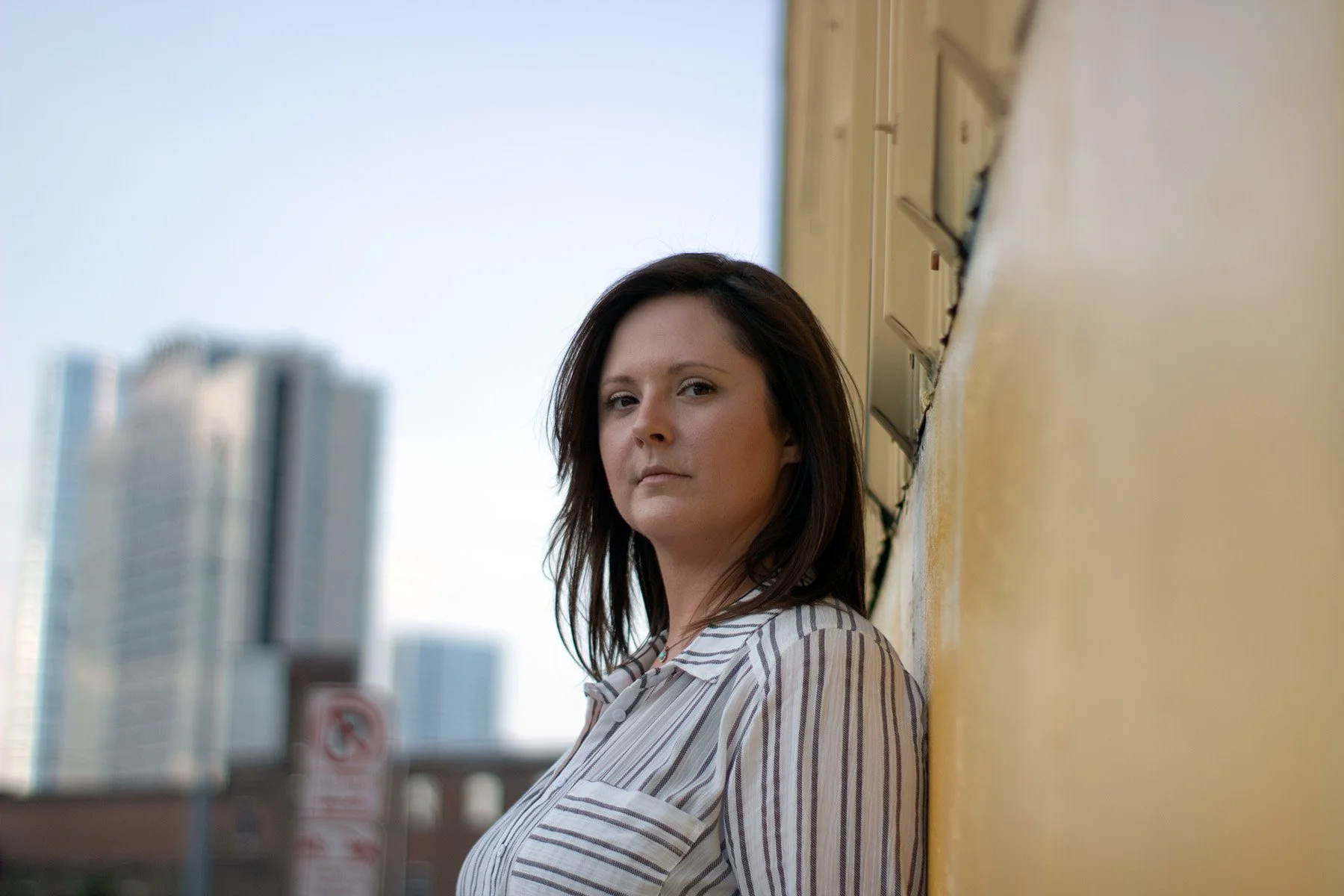









Hi, I’m the founder of Human Amplified. I’m Brandi Fleck, a recognized communications and interviewing expert, a writer, an artist, and a private practice, certified trauma-informed life coach and Reiki healer. No matter how you interact with me, I help you tell and change your story so you can feel more like yourself. So welcome!
Find More on the Blog
Topic
- ADHD
- AI
- Atlanta
- Black and BIPOC
- DIY
- FAQ
- LGBTQIA plus
- Los Angeles
- Nashville
- Seattle
- St Louis
- St. Louis
- UFOS/UAPs/ETs
- abuse
- accountability
- addiction and recovery
- adoption
- affirmations
- afterlife
- altered state
- angels
- animals
- anxiety management
- art
- astrology
- atlanta
- attachment
- awakening
- beauty
- behind the scenes
- being human
- body image
- body work
- boundaries
- brandi fleck
- breathwork
- bullying
- burn out
- burnout
- cancer
- career
- caretaking
- chakras
- channeled
- clarity-dive
- clarity-practice
- clarity-primer
- clean products
- coach
- codependency
Recent Blog Posts
Visit the Full Podcast Audio Archive

Affiliate