
Inner Child Healing After Years of Survival Mode
Interview By Brandi Fleck
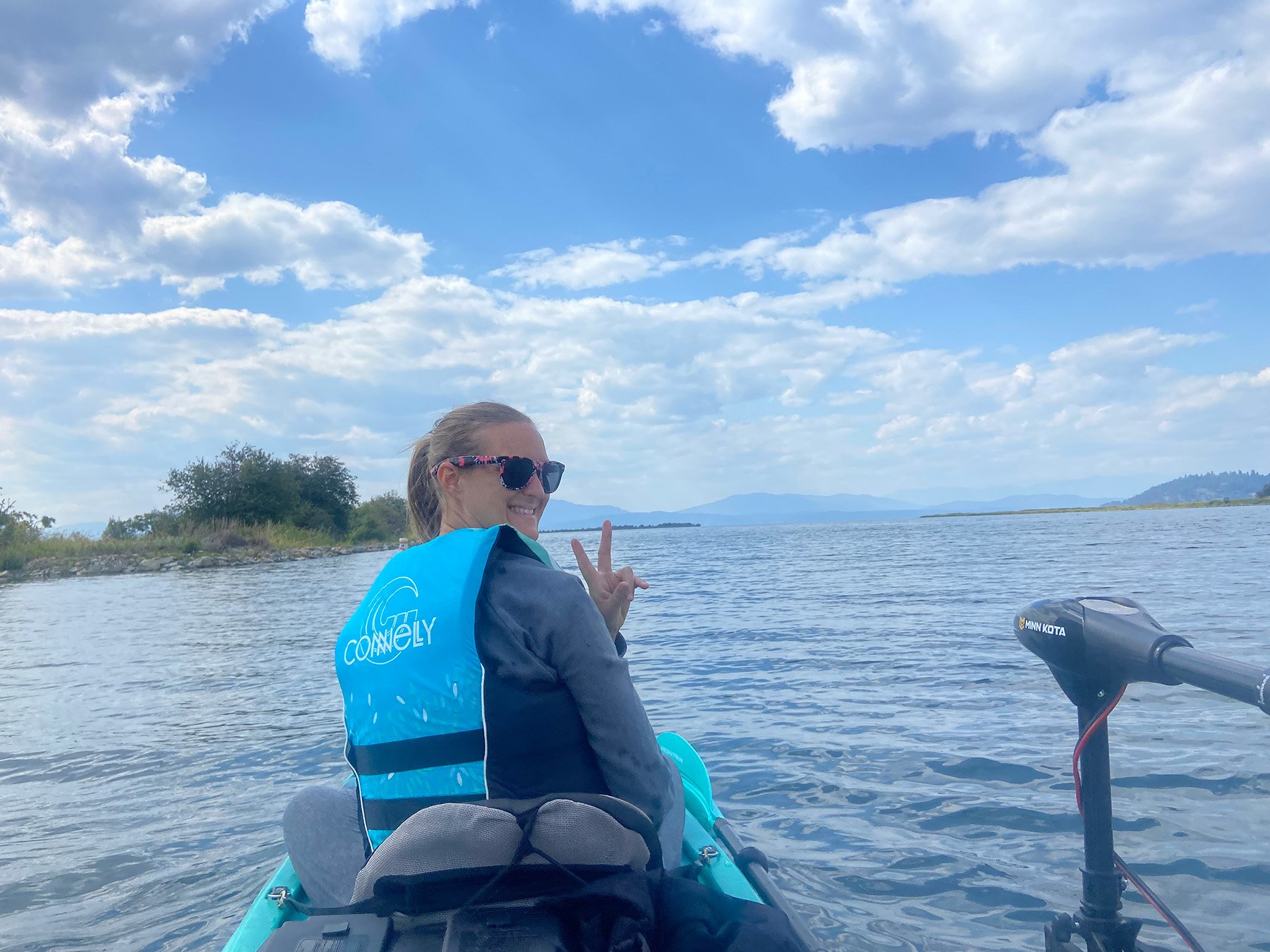
Trauma therapist and ascension coach Amie Dean explains how emotional trauma, grief, chronic illness, fear, and inner child wounds can keep people stuck in survival mode and disconnected from themselves.
Anxiety, perfectionism, burnout, emotional overwhelm, and chronic stress often become so normalized that people stop recognizing them as signs of survival mode.
For trauma therapist and ascension coach Amie Dean, healing meant learning how to reconnect with the parts of herself buried underneath fear, grief, chronic illness, and years of emotional survival.
We look at inner child healing, spiritual awakening, intuition, emotional trauma, and the ways unresolved pain quietly shapes how people move through relationships, work, identity, and everyday life. Amie also shares the medical trauma that changed her life and how learning to trust herself became part of her healing process.
If you’ve ever felt emotionally exhausted, disconnected from yourself, or stuck in patterns you can’t seem to break, this conversation offers a grounded look at what healing can actually look like.
Listen to Amie Dean’s Interview
Watch Amie Dean’s Interview
Spiritual Awakening and Inner Child Healing
Amie Dean: My name is Amie Dean, and I travel all over the United States. I see spiritual awakening as we're just coming back home to ourselves, aligning with who and what we already are, which is love and peace and joy. Healing the trauma that we've endured. A huge proponent of healing was deciding that I was going to heal. And our inner child is just waiting to play, right? She wants to have fun. It's all part of the journey.
Brandi Fleck: Last week on the show, we heard a criminal justice expert and ex-cop, Peggy Kingsbury, openly and vulnerably tell a story of her childhood trauma and how that led her to recognize and reckon with how white privilege has played out in her life, in the justice system, and what she's doing about it.
So today on the show, we're talking to Amie Dean. She's a holistic psychotherapist, ascension coach, and is also the founder of One Awakening, a community to help empathic women awaken spiritually through healing their inner child wounds. She travels the country in her van with her husband, but home base is in San Diego, California.
In this episode, Amie packs information into every answer she gives us. We cover a ton of ground in what seems like a short amount of time, so you might want to take notes to go back and process the complexities of each topic in more depth after you initially listen.
Pay special attention to the parallels between Amie's physical life and healing to her spiritual journey. These parallels she demonstrates between going home to your inner self and moving homes or physically going home from the hospital at a time she feared for her life, they show us how interconnected every aspect of our human existence really is.
From this episode, you'll walk away knowing how to start healing your inner child wounds, how to lead with love in your life and open your heart more even if you're wounded, exactly what a spiritual awakening looks and feels like in all its different phases, ways to deal with the hard emotions such as grief and fear that come up during healing and/or awakening, the importance of trusting your gut to make decisions, and what specific ego traps are and how to work through them.
Today's guest, Amie Dean, has a treat for you to download her free spiritual awakening guidebook.
Inner Child Wounds and Emotional Healing
You guys, I'd like to welcome Amie Dean to the show today. Amie, I'm so excited to have you here. Thanks for coming on, and how are you doing today?
Amie Dean: Thank you for having me. I'm doing great. I'm so happy to be here. It's one of those things, I know that it's the holiday season, so there's a lot of busyness, but it's also a great time for this, for listening in and reflecting and getting in touch with yourself. So this is a wonderful opportunity.
Brandi Fleck: Yeah. And gosh, I think we are going to get a little personal in your episode today with a journey that you've been through. Before we jump into that, can you introduce yourself to our listeners? Tell them who you are and what you do.
Amie Dean: Yes. So I am a licensed certified clinical trauma therapist, and I also am an ascension coach. I do both, and they're really one and the same in many ways.
Essentially, what I do is I help clients tap into their inner wisdom. By tapping into their inner wisdom, they're able to heal their trauma. They're able to heal their wounds, especially inner child wounds. Often that looks like self-criticism that we have. It looks like perfectionism. It looks like this trouble that we typically have with loving ourselves.
Because of that, these are some wounds we need to heal. I help people, especially women, get in touch with those wounds, tap into their inner wisdom, and permanently heal them so they can lead as love in their daily life.
Brandi Fleck: Oh my goodness. I got chills when you were describing what you do. Can you describe for us just a little bit about our inner child and go a little deeper about what that is?
Amie Dean: Yes. Thank you for that question. This is one of my favorite things to talk about.
Our inner child is honestly, all of us have an inner child. I think that's an important place to start. Our inner child is simply the young version of ourselves, from very, very young, could be even infancy or when we were young children. That version of us is so innocent and so playful and so silly and so kind. That us is still there no matter how old we are to this day.
Because naturally, as human beings, we go through really tough times, we can collect some of these woundings, is what I call them. They're really just difficult memories, traumas that we've endured, any kind of adverse life event. These create giant wounds throughout our childhood that can almost cloud over this natural joy that our inner child carries.
That's pretty much the inner child in a nutshell. But of course, experiencing the inner child every day is something that we, as adults, have a lot to work on in that regard because it's so easy to get caught up in the adult mindset of all the things to do and all the overwhelm. Our inner child is just waiting to play, right? She wants to have fun, wants to do something exciting, meet new people, get out there and try new adventures, and also wants to be loved so deeply in a way that this inner child hasn't been loved before.
Brandi Fleck: That is a lot to unpack. It's just amazing that you brought this up, so hopefully we'll dig into that a little bit.
I would like to say that you do have a unique combination of skills. Even though I'm not a therapist, this blend of psychology and spirituality has been really helpful to me in my own life. So how does being a certified trauma therapist support your work with helping others through their spiritual awakenings?
Amie Dean: Oh, I love this. Yes.
First and foremost, spiritual awakening, often it can be this huge idea of enlightenment and coming into this new us, so to speak. But it's really quite simple from the perspective I come from.
I see spiritual awakening as we're just coming back home to ourselves. In coming back home to ourselves, we're just aligning with who we are and what we already are, which is love and peace and joy. The only thing that's keeping us from that now is those woundings from our inner child, right? The inner child that's carrying those wounds, and other parts of us that have split off and fragmented, creating this sense of dissonance in our inner body and in our mind.
Because of that, because we've become so disconnected from our true selves, often there's this trouble with understanding the spiritual awakening journey, what that looks and feels like.
So I can say that spiritual awakening is quite simple in one way and also a little complex in another way. I would say it's simple in the way that we are just coming back to knowing the joy within, and it's complex because it means we have to go really deep inward into some very difficult emotions to heal our trauma, to heal the challenges we've faced.
I would say that how they're connected, the trauma work I do and spiritual awakening, is that we cannot heal 100%, or rather, we cannot get to a place of spiritual awakening without first healing the trauma that we've endured. Often, it's the dark nights of the soul, the challenging experiences we've been through, that have been the reasons why we have gone on this path of spiritual awakening for many people anyway. It's the hardships that have guided them to go in that direction and practice whatever they need to.
Dark Night of the Soul and Rock Bottom Experiences
Brandi Fleck: On that note, I've oftentimes thought that hitting rock bottom is where spiritual awakening begins. What are your thoughts on that?
Amie Dean: Yes, that is an excellent, excellent question. I would say that is 100% true for myself and also what I've noticed in my clients, that we do have to hit rock bottom. That is, I think, the equivalent of dark night of the soul in some ways. We have to get to that place, and from there we discover that we can't keep going in the same direction we were going before, which I think is a great definition of rock bottom.
From there, the only way is up, right? Up in consciousness, up in our understanding of who we are. That's where the power lies.
Brandi Fleck: Okay. So if you're at rock bottom and you don't have a spiritual awakening, does that mean, and I don't want to instill fear or anything like that, but I feel like if I was having a hard time, I might think, "Oh, I'm at rock bottom, but if I don't have a spiritual awakening, does that mean I have further down to go?"
Amie Dean: Oh gosh, yeah. I know that would be a really hard thing to sit with. I would say that not necessarily.
I would say that for the most part, spiritual awakening does, of course, happen in its own time. It cannot be forced. There are some things we can do in order to bring a little bit more of that energy into our daily lives.
For example, if you're in a rock bottom state or you feel like, "Oh, this is the worst I've ever felt. This is definitely rock bottom for me. I'm terrified of not going any higher up in my life, and I'm just stuck here at this ground level," then there are things that you can do. A lot of mindfulness practice, working with somebody professional, whether it's a coach or a therapist or even a good friend, somebody that can guide you out of that dark time, is really important.
There are some actual tools, too, that I can share at some point during our time together, if you'd like, just to help people understand that even when they're there, when they're in that rock bottom state, there is always a way up. There always is.
Of course, we can sit and wait for spiritual awakening to happen in that state, but it usually won't because it's one of those things where if you're expecting it, it might not come in the way you think it will. It's almost a little like a recipe of self-awareness, a bit of letting go, letting go of expectations, and then some actionable things as well, and stepping into a more mindful practice maybe. There's some other things that I teach that we can go into later if you'd like.
Brandi Fleck: Sure. So the things that you teach, those tools, is that just helping someone embrace their spiritual awakening or sort of go through it?
Amie Dean: Yes. That's a really great point because there are so many different departure points, so to speak, on this journey.
For example, I use a Pathway Back to Love process. It's just a simple compassion-based practice in order to work through any emotional triggers. It can be used for when you're at a rock bottom state. It can be used when you're trying to move through the stuckness on your spiritual awakening journey. You're not quite sure why you keep getting stuck in the confines of your old beliefs or old patterns, and you just need something to get you out of that.
The Phases of Spiritual Awakening
I would say it's pretty multi-purposed in that way where it could just be used in many different contexts. Along the journey, there are six different phases that I often talk about.
We all start at this autopilot dream state where we discover, or rather we don't discover, but we know people may be in this state too, where they are completely stuck. They're letting life lead them. They're not leading their own life, and they don't know how to bring self-awareness or self-compassion or kindness. Typically, it could be a dark depression for some, or it could just be this kind of autopilot life where you just do what you've always done and don't take into account what your soul might be asking of you.
If you're typically in a dream sleep state, which I call phase one — and something really important is that these phases are not linear. You can be in phase one and a few months later phase three or four. It really just depends.
I would say that phase one is dream sleep autopilot. Then we move into phase two. Phase two is the dark night of the soul, kind of this existential crisis of, "Who am I? Why am I here? What is my purpose? Why am I doing this job? Why am I living this life?" We start to question things, and we're starting to feel some kind of disconnect between who we are and our life as it now stands, if that makes sense.
That's where we are in phase two.
Phase three is this discovery of inner exploration. This is where we're determining that we're ready to deepen our spiritual growth. For example, some signs of that might be seeking to work with a healer, to work with a coach, to want to heal those old wounds, noticing that they're showing up and wanting to do the work on them because you're ready to step into the truth of who you are, which is the joy, love, and peace that's already there but just covered in that moment.
Phase three is all about, "How do I become more fully human truly?" Because now I want to look more deeply into my wounds. I want to get more deeply into this understanding of myself as a spiritual being and not just a human being. There's a lot of opportunity really in this space, a lot of opportunity for healing.
Then phase four is when we are waking up. I like to use a metaphor that it's like when you get up in the morning, you open the blinds and the light shines in, and that's what it feels like. It's like all of a sudden things become more vibrant, more vivid in your everyday life, and there's a sense of connection, of intuition, of naturally knowing what to do and how to do it and not feeling so bogged down by the heaviness of life.
There's a lot more opportunity to understand your mind and not get caught in it and not believe every thought you think. It can become a really tremendous growth experience moving into phase four.
Phase five is awakened living. That would be fully being in the state of spiritual awakening. How I like to define that in this phase specifically is that we are leading as love, so we're leading with our heart. It doesn't mean that we don't feel emotions. It doesn't mean that we no longer have parts of us that are showing up. It just means that we are choosing, regardless of what is arising, not to become enmeshed with these old beliefs, these old memories, these old thoughts and identities. We're choosing in every moment to live brand new and to lead from our heart.
Phase six is integration, and that's really just the next step into the process of understanding who you are and creating a unified sense of connection with others. It's kind of that next level growth.
Leading With Love and Heart-Centered Living
Brandi Fleck: That's really great. Thank you. Can you describe for us what it means to lead from your heart?
Amie Dean: Yes, absolutely. To lead from your heart means that you are — it's more feeling-based, but maybe thinking of it this way — if you're a parent or you're a pet owner or you have anyone in your life that you truly love and care about, there's a certain special feeling you get when you're around them.
When there isn't maybe anger or any other parts of you showing up in that moment, if you're with them fully, a smile just comes to your lips when you think about them. It's that natural openness that you feel. That's the love that we can expand out to reach everybody and connect with everybody.
That would be leading as love, getting to know that feeling within you. What is it like when my heart is open? What is it like when my heart is closed?
When our heart is open, we are naturally more vulnerable. We are naturally more caring. We are naturally more compassionate with ourselves and others. So leading as love means that we are taking that compassion that we either have for ourselves and also for others, and we are being like that in the world.
Maybe it's smiling at a stranger in the grocery store even though there are parts of you that are having a hard day. That would be leading as love. It would be noticing an inner child trigger within you. Maybe somebody said something hurtful and your inner child is feeling really sad and really upset in that moment. So it would be coming to your heart, placing your hand maybe on your heart, and giving that little girl within you or that little child within you some love and being with that child in that way.
That can be profound. It might take a few minutes for some things to shift in your body, but that's leading with love. It's for yourself and for others, and then soon you notice there's no distinction between the two.
Brandi Fleck: Yeah. Okay. Oh, I like that explanation. Thank you for that.
Amie Dean: Absolutely. I know there's a lot to it for sure.
Brandi Fleck: Yeah. Well okay, I know that spiritual awakening can be difficult, like you've mentioned. It's navigating and facing difficult emotions that are deep inside. I know you've been through a spiritual awakening. Can you sort of take us through the details of your journey?
Healing Chronic Illness and Emotional Trauma
Amie Dean: Absolutely, yes. I always think about this and try to find the very beginning, like where did this really start for me?
If we start from just very young, I would say even when I was a young child, I've always been an empath, a highly sensitive person. I've always kind of been a sponge for people, if that makes sense. I've always taken on emotion and always had this sensitivity. I wrote a lot of poetry growing up, just trying to sort through what I was feeling and what was coming up for me.
I realized that it was not helping in the way that I had hoped. I was struggling with a lot of anxiety and, off and on in my life, depression, but mostly anxiety was pretty crippling for me as a teenager.
As I was growing up, I discovered that I needed to do something. I felt like I knew I was going to be a helper. It was an important role that I was going to play. I didn't know what it looked like, but I also knew that I needed to do a lot of my own healing and that I didn't really know where to start at that point.
I did begin seeing a therapist in my teenage years, and that made a big difference. As I was going through this process, I discovered, okay, meditation is the way, so I'm going to try meditation. I'm going to try yoga.
I was probably 19 or 20 when I really gave it a good try and began meditating, going to retreats, giving as much attention to my spiritual growth as possible.
At the ending of a very difficult relationship at this time of my life, I had my first glimpse of awakening. We'll say this was the very beginning of it for me.
I was sitting in my car parked in this parking lot. I pulled over because I had just gotten a message from a partner who was now about to become my ex-partner and had said, "It's over. We're not going to be together anymore."
I was in shock because I was picking up my whole life and moving to be with this person, and everything was changing for me.
So I pulled over in shock and in fear and started crying. It's raining and I'm crying, and it's one of those moments where you're like, "Oh gosh, rock bottom. I'm heading to that point now."
From there, I had the most interesting, it's so hard to even pinpoint, but I was looking out the window watching the raindrops on the windshield, and I just got this feeling inside. It was this strange feeling that, what if this is all just a dream? What if it's not exactly the way I think it is? What if there's something else happening here?

That alone snapped me out of the crying episode that I was in, and I took a few deep breaths. I was going to say something really mean right back to my now ex by text. I was going to say something terrible at that point.
Then it totally shifted, and I started writing from my heart. I have no idea where this came from in the moment, but I wrote to him, "I just want you to be happy. That is all I want, is for you to be happy. So if this is going to make you happy, then that is all I care about."
It was like, whoa. He was shocked and I was shocked. I had never felt so good in my entire life at that moment. I felt like my heart exploded open. I was so happy, and I really felt it.
It was good for him. He's going to live his happy life. I'm going to live mine doing something different. That was the first moment I realized there's something about this. What is this?
I dove deeper into my spiritual research and discovering what was happening around this. Eckhart Tolle was a really big influence for me along the path.
Then I was hit with some really hard stuff about five or six years ago. I had some medical trauma and I was struggling with just eating, to be honest. I was struggling to eat because I was in a very, very bad state. I'd lost a lot of weight. I was hospitalized.
I don't know what had caused it except I knew my whole entire inner system was inflamed and doctors didn't know what was wrong. I thought I was going to die. I really did. I thought, "This is the end. I don't know if I'm going to make it through this."
Through that, I discovered a strength in me that I didn't know was there. I was saying things like, "I can't handle this. I can't handle this." Then one day I remember waking up. I was in an exorbitant amount of pain in my body in the hospital, and I said, "You know what? I can handle this because I handled it yesterday and I'm still here, and I'm handling it today. So that's a good start."
I decided I'm going to keep going.
Along this time too, I hired a health coach, I hired a nutritionist, I hired people who could help me get on track with my health. Then my dad passed away, and he was my best friend.
It was this succession of events, of what I would call traumas, back-to-back in this way. It just kept pushing me down, and then I'd get back up again and say, "Okay, there's something here. I'm growing stronger from this. This is in no way easy and in no way something that I would ever want to go through again, but I know that this is necessary for my spiritual growth."
I just started changing my mindset on it, and I started saying, "This is because of my spiritual growth. That's why I'm going through this. I'm going to awaken through this. I'm going to understand the truth of who I am. Maybe not yet, but I will," is what I kept telling myself.
Eventually, as time went on, I did. I started having these moments of just peace and joy out of nowhere. I would just walk outside and look up at the sky and see the birds flying by, and I'd just have this feeling of feeling so connected.
It just made no sense, but I knew that something was happening in me and this natural gratitude for life was coming through.
Brandi Fleck: Okay. Are you still awakening or are you in that phase where you're integrating and leading with love now and it's just your way of being?
Amie Dean: Yes. Great question.
I would say I'm moving from phase five into phase six integration. That's where I'm at at this point.
One way of looking at it too is phase six integration isn't the end. We can do some integration and then move back into, let's say, phase three to go back and do some of the exploration, if that makes sense.
Where I'm at right now is moving between phase five and phase six. Phase six for me has been integrating these different parts of me and understanding them and connecting with them in this way.
Sometimes life happens. Who knows what can happen next, right? You could be moved back into phase two. But I think it's important for me not to feel stuck in one phase and to say, "I'm in this space. I want to stay in this phase," because the truth is it's just a phase.
No one's better than anyone else no matter which phase you're at because it's all just a non-linear journey back to ourselves. Phase two can better prepare you to more deeply integrate in phase six.
If I have to go back there, I'm more in an open-arms state now because I have the tools and resources, and I feel like I'm resilient, so I could handle that. I know that would take me to that next level of integration, if that makes sense.
Brandi Fleck: Let's talk about your physical healing for just a moment. What happened? How did you start to heal, and how did you get out of the hospital?
Amie Dean: Yes. So I left the hospital actually against the hospital's wishes. They said, "You need to stay."
I was having allergic reactions to the things they were giving me, so I was getting worse in the hospital and went into anaphylaxis at one point and thought, "You know what? They're going to kill me."
So I was terrified.
Brandi Fleck: Yeah, exactly.
Amie Dean: I was just like, "What do I do?" So I didn't know what to do except leave, so I just walked out. My husband totally 100% supported me in that, and I went home.
I still remember it. I went back home that day and I made a commitment to myself and I said, "You know what? I'm going to heal. I don't know how just yet, but I'm going to heal, and I'm going to be present for the journey. I'm going to make it happen however I need to."
From there, with the help of friends, family, and people who really cared about me, they were able to send me some resources and referrals and people that could help me get back on track.
It was a slow healing journey. I was on a liquid diet for months, and then I finally was able to start eating three to five foods. From there, I would say within a year I was back to eating most foods, but still with chronic pain because I had a stomach condition that kept me from being able to eat without feeling a lot of pain.
It took years to heal my stomach, but what really helped me the most, aside from having the support system of my friends and family, I would say a huge proponent of healing was deciding that I was going to heal and using that strength within me that I was starting to develop and discover through that process.
I had the ability to heal. I didn't know what that looked like just yet, but I was willing to find out and I was willing to go the path and see what would happen next. I would just keep reminding myself, "It's all part of the journey. It's temporary. It's impermanent, and eventually it's going to get better."
Now I look back and I did it. It's one of those things where you look back and you're amazed that it even happened and the way it did.
Brandi Fleck: Yeah, that is really amazing. I feel like we all need to be reminded of our ability to heal, especially in these long-term situations where it's hard to see, like, is this ever going to end? Is this really just temporary?
So how did you deal with those feelings that came up? Did you ever just feel like, "This is gonna take forever"?
Amie Dean: Oh yeah. I'm with you.
I would say that I was in phase two, dark night of the soul, for quite a while in this process. There would be some days where I'd feel like I was coming out of it, and then a friend would call and say, "Hey, do you want to go out for lunch?" and then I'd fall into a puddle of tears like, "Oh, I miss doing that with you," but I knew I couldn't.
There was a lot of grief that I had to contend with. I had to work through the loss and the grief of the things I enjoyed and the identity of who I was around that because we find comforts in food, we find comforts in routine and the certain things we do with friends and family. Especially the holidays were really tough at that time.
There were a lot of ups and downs, and I can say that I absolutely had to embrace the grief that was coming up in me, and it was not an easy task.
I think that's what kept me in this kind of phase two for a while, was this knowing that the grief was so intense and the pain was so intense, especially with the loss of my dad as I was still healing my physical body during this time.
I recognized that it was just something I had to do. I had to sit with it. I had to be with it, and it was almost like an experiment for me to see what happens because I didn't know anybody in my life at that point, actually aside from my dad, who had been through so much physical pain and problems himself.
He was in many ways a mentor for me in this because he always kept a smile on his face and he tried to move through it even when it was tough. I just thought about him and I was like, "I know my dad would be strong. I'm going to be strong." It made me feel really in tune with my own strength.
So it helped me get out of phase two. Now, it took a while, but I would say a good year or more before I was fully out of phase two. I was kind of fluttering between the other phases a little bit, but it was a long dark night of the soul, kind of like a dark year of the soul.
Brandi Fleck: One other emotion that you've brought up when you were describing this journey is fear. Like when you were in the hospital, you feared for your life, all of these things.
Ego Traps, Self-Criticism, and Limiting Beliefs
I sort of want to connect this to ego because I know you talk about ego traps as well. Sometimes it's hard to tell when fear is helpful or when it's harmful. Can you sort of describe your journey with fear and how you dealt with it?
Amie Dean: Exactly. I would say what keeps us in these lower consciousness phases, like phase one and phase two, is fear. Fear of change, fear of growth, fear of loss. These are some of the deeper fears that we carry.
My biggest fear was the fear of death, and it was something I was really sitting with and recognizing that it was something I hadn't actually faced before in my life, and this fear of the truth anyway that life is impermanent.
We know that on a conceptual level, but it's so different when you're actually sitting in it and you're looking around and you're realizing everything's changing in every moment, including me.
For me, it was the fear of what's going to happen next, how am I going to survive this, and how scary is it that I don't know?
Sitting in that fear definitely took me on a long journey of inner discovery, and I would say that's really where wisdom comes in, though, when you can sit with fear and you allow fear to be there without trying to change it or make it happen. Insights come in. You can start to become more connected to your intuition.
On one hand, we always think fear is, as you mentioned, sometimes an ego trap, sometimes it's actually guiding us toward a certain direction. But I would say fear is always a message. It's neither good nor bad. It's just a message that something in our body, something in our system, is disconnected from the whole, disconnected from our highest source, our higher self.
I would say that's a little different from, for example, if you're standing on the edge of a cliff and you're about to fall over. That's different than this fear of the future, for example, of what if this happens, like in my case, because mine was the fear of what would happen because of what I was going through.
But because I wasn't actually dying, it was more of this perceived fear of what could happen in the future.
Brandi Fleck: Oh, okay. I like the differentiation you made there, which I think is really important, is that sometimes you might think you're going to die, but you're not actually dying. There is a difference there.
Especially during the pandemic, a lot of people have had this fear of their own mortality and we've had to deal with it for a really long time, so I think that's helpful as I think about it with COVID.
Amie Dean: Oh my goodness gracious, right? There's been so much loss, so much fear, so much concern about the future. Yes, there can be this feeling of, "Now what? Where do I go from here?" and it can be terrifying.
Brandi Fleck: You made a decision, though, and you had that fear and you decided, "Well, I'm just gonna leave."
Was it like a snap decision or did you think about it? How did you make that decision?
Amie Dean: Yeah. Oh, I love it. So it took me a while to make the decision. I am not a quick decision-maker by any means. I'm going to sit with it, stir with it, imagine what could happen with it. Yeah, yeah. So that was me. I was sitting there in the hospital bed hooked up to the IVs, and I remember my husband was so great. He was coming and going every time he was done with work. He'd come and be there with me, sleep overnight with me, and he was just supportive.
He's like, "Do whatever you need to," but he wouldn't tell me what to do. On some level I wanted somebody to tell me what to do. It was so hard to make that decision.
At that point I had had at least two or three allergic reactions to different drugs that they had given me. I'm a very sensitive person, physically speaking and emotionally speaking, so I think I just responded differently to these things.
I almost feel like before I get into the decision on an emotional level, maybe I think my body had already made a decision. This is not for me anymore, if that makes sense. That's why it was almost like it was rejecting the things that they were giving me.
So my body was almost saying, "I've made this decision. We're done. We're not doing this anymore." Then I think it just took a while for my mind to catch up at that point and to recognize that this is more harmful than helpful for me in this situation.
They didn't know what they were doing. They were trying their hardest, and I can understand that piece of it. But I knew at that point intuitively, it was that nagging, gnawing feeling in my gut, and it was saying, "You're not going to get better here. You've got to go home."
I know this is hard because I went to the hospital because I didn't know what to do, and then I left still not knowing what to do. It's so unlike me. I didn't have a plan, didn't have anything in place.
What helped me make the decision was this gnawing feeling within me. I knew that if I didn't follow that, if I didn't pay attention to that, I would just have another allergic reaction. There was that fear as well around, what if I did? What if this time I didn't make it? What if this time something terrible happened as a result of it?
So I didn't know what else to do other than to leave. It almost felt like there was no other option.
Brandi Fleck: Okay.
Amie Dean: If that makes sense. It's like when we get to that crossroads and you realize, well, I can't even walk down that same road I was on. I have to go down this road. It's that intuitive knowing.
That's what I did, but still not knowing what I was doing.
I think that a lot of people probably have an idea of what that's like and this feeling of getting stuck somewhere and the only way you can go is maybe right or left, but you're just gonna do whatever you need to at that point. Then from there, the rest is just given to you. You just take the first step and then the staircase shows up as you go along.
Brandi Fleck: Yes, absolutely. Yeah, you'd make the next best decision and then more decisions just become available.
Amie Dean: Yes. It was the right choice for sure now as I look back on it. I'm really glad that I did it because I don't know what would have happened otherwise. I'm sure I would have been fine either way at the end of all of it, but more trauma, more add-ons to the situation for sure.
Brandi Fleck: Yeah, and I think you also brought up a good point when you said you think you just wanted somebody to tell you what to do because I feel like we're in these situations all the time when you don't know. You might experience fear, you wish somebody could answer it for you, but the important takeaway there is, well, the answer is in you. You just have to tune into it, I guess.
Amie Dean: Exactly, yeah. Just get in touch with it. That's perfectly said exactly.
Brandi Fleck: Awesome. Okay, well let's go ahead and shift into ego traps because I want to mention you are going to provide a spiritual awakening guidebook for our listeners today as a free gift.
So you guys make sure you go to the show notes, download that, get it. I've looked at it. It's amazing. It is so packed full of information, so I think it'll be very helpful.
In that guidebook, you do talk about the phases that you've mentioned earlier, and you also talk about ego traps. In certain spiritual circles, I've heard about the ego and how you need to release the ego, but I don't feel like there's a lot of information out there about how to do that.
You give tangible examples of what that means, so can you just help us understand?
Amie Dean: Yes, absolutely. I love that too because you're right, we don't have a lot of context for these things. We're like, "Ego? What is my ego?" It can be hard to break it down.
Ego is this sense of identity that we are a separate person from everyone else. That's what ego is.
I think sometimes when we hear the word ego, we can get really like, "Oh, I don't want to be in my ego," or "I don't want to be trapped in that," or whatnot. But the truth is ego is simply kind of like a survival mechanism with several different parts of us kind of running the show in our mind and body.
It's just trying to keep us safe because it believes we are a separate person from everyone else and that we have to care for ourselves in a certain way.
Of course that is true. On some level we do need some ego in order to care for ourselves and take those next steps, so I don't think there's anything wrong in that regard with ego.
Now, the problem begins when we start to get involved in these traps, as you mentioned. This is where we start to truly believe we are the ego and that there's nothing else out there, that the ego is us.
For example, we can overanalyze in our mind. That's one way that we can get stuck in the ego.
Brandi Fleck: Yeah, that's a big one.
Amie Dean: Yeah. Often we can blame others. If we get into blaming or shaming ourselves or others, that's definitely an ego trap in many ways.
When we are angry with others, we might end up having a conversation with them and saying things that we don't mean, something like, "I hate you," or "I don't want to spend this time with you," or whatever it is. It could be completely outside your norm of what you usually say.
That would be an ego trap because it's a part of you getting wrapped up in that ego, so to speak, or that you as your higher self are getting enmeshed within one of those parts, if that makes sense.
Brandi Fleck: I think so.
Amie Dean: That would be an ego trap.
I know we haven't discussed parts too much, but we all have different parts of us that are fragmented within our mind and within our body, and they show up as ego traps. That's what that is. They are the ones that carry the ego traps.
For example, you might have a critical part of you that is self-berating. An ego trap for you, if you tend to have a strong inner critic, might be, "I'm worthless," or "There's something wrong with me," or "I'm such a screw-up," or something like that. That would be a thought-based ego trap for someone with a really heavy inner critic, for example.
Brandi Fleck: Okay. I'm glad you brought back up the fragmentation again because you mentioned this a little bit when we were talking about inner child or when you were describing what spiritual awakening was in the beginning.
Can you tell us a little more about these fragmented pieces and parts?
Fragmentation, Integration, and Authentic Living
Amie Dean: Absolutely. If we think about it, from a very young age we are automatically fragmented in general, even if you've never been through trauma, because we have so many different situations and adverse life experiences.
Even just a move as a child can cause fragmentation because you're trying to decide who you are in the past place that you were in versus who you are now in this new transition, the new friends you have, whatever that might be.
So we're kind of moving through understanding that through our life cycle. As we're growing up through transition, we are becoming different people.
One way I like to think of it is if you're a mother, you have a mother part of you. It's kind of like an archetypal way of looking at it. If you are a sister, there's a sisterly part of you that has a certain role, and we play these roles in our lives, and they are different.
You're maybe different at work than you are at home, for example, because there are different parts of you that are running the show.
I like to refer back to that movie Inside Out. I'm not sure if you've seen it.
Brandi Fleck: I haven't seen it.
Amie Dean: No? It's a Pixar movie, so I highly recommend it.
It shows all these different emotions, anger and sadness and joy, and all these different emotions are showing up in this way, and they're all at this control panel of this little girl's mind trying to create this reality for her, so to speak.
What's so interesting about this is that this whole time she's listening to them and doing whatever these parts of her mind are telling her to do. That's what we're doing, right? We're just like, "Oh yeah, okay, let's go here and do this."
Then you have one part of you that says, "I should make this move," for example, or "I shouldn't make this move." We tend to have these differing perspectives in our mind and in our body, and I call those parts or fragmentation.
Whenever you feel like, "I want to do something, but another part of me tells me I actually want to do something else," that's fragmentation because there's polarization happening with these different parts. One part wants something, another part of you wants something else.
In a relationship, for example, if you're in a partnership and you're trying to figure out, "Is this the right person for me?" one part of you might say, "I want to get married to this person." Another part of you might say, "I don't know if I want to get married to this person."
It can be a push-pull. That's an example of what fragmentation can look like.
Brandi Fleck: Okay. That's really helpful. I'm just gonna try to connect this now. So integration is where these parts come together and sort of become one?
Amie Dean: Yes. That's absolutely a big way that I look at it.
A couple different ways it could happen. They can come together and become a little bit more in a healthier role, for example. An inner critic wouldn't berate you anymore. It might just guide you toward reminding you not to do something because that hurt you in the past, as an example. "Well, we shouldn't do that again, okay? It's very…"
Amie Dean: …different than, “What is wrong with you? Don't do that again,” right?
Brandi Fleck: Yes, okay.
Amie Dean: So integration is this part of you doesn't act in that same way, right? These different parts of you have a different, healthier role. Some of them just transcend altogether. They do because they just don't need a role anymore, or they change or they grow with you as you grow.
You'll start to notice too, for example, as we understand our inner child better, our inner child is joy and innocence and kindness. This little girl within me, I've noticed this, she'll show up sometimes in the silliest ways since I've been doing healing work with her.
She'll want to go on the swings, for example, and I'll find myself on an afternoon going to a playground. I've got my husband into this now too, and we'll just swing on the swings and have a good time and get looks sometimes like, “What are they doing?” But it's that kind of thing.
That's integration, I think, just from my experience and from my work with clients. It's just being more fully yourself, quite honestly, being more authentic and not feeling so disintegrated, not feeling like there are parts of you that are driving you to do something that is not in your best interest.
Brandi Fleck: Yeah, that makes a lot of sense.
So when there's this polarization between your different parts, I was gonna say, how do you deal with that? How do you come to a place where there's not the polarization or you make a decision that's good for you? But I think that sort of sums it up, is that you decide what's in your best interest and go with that.
Amie Dean: Yes, exactly. It's like coming back to your intuition, so to speak. The way you know it's your intuition is because it's guiding you in not a fear-based way. It's not fear-based. It's more of an inner knowing. It's like knowing without knowing how you could know, is almost how you might pinpoint intuition.
Sometimes you just know something better for you. Here's an easy example. You're sitting in front of a giant chocolate cake or an apple, right? Which one's gonna be better for you? Your intuition's likely gonna guide you to the apple, and another part of you, who's a chocolate-craving part, might lead you to the cake.
That's just some way of thinking of it that could make it easier or simpler to see it that way.
Brandi Fleck: Okay. Does every human go through a spiritual awakening?
Amie Dean: Ah, yes. So from my standpoint, yes. This is what I mean by that.
As we look at these phases, I feel like no matter what phase you're in, you're already in the spiritual awakening journey. Even if you have no idea what spiritual awakening is, even if you've never even picked up a book on the subject, you are on the spiritual awakening journey because even if you're in phase one and you're on autopilot and you're completely disconnected from your highest self, you're still on the spiritual awakening journey. You're just in phase one on this journey.
Phase two or beyond is available to you when and if it's time for you to head down that road. That's what that can look like.
I feel like we're all there. We're all on the journey together. We're just in different phases at different points of our lives.
Brandi Fleck: Yes, yes. Eventually we do lead more toward integration though, for many of us.
Okay, if you could say something or give advice to someone who's in phase one and doesn't even know what spiritual awakening is, what would that be?
Amie Dean: Yeah. Oh, great question.
So in phase one, they're not usually the ones that are seeking help necessarily. They're usually the ones that are feeling like, “Oh well, life is just fine as it is. It's not great, but it's not terrible, so it might as well stay here.”
Brandi Fleck: Yeah.
Amie Dean: I would just bring a sense of openness to their experience, not trying to change it, if that makes sense, and just offering my experiences of what it's like being in that phase, what it feels like, and see if they can find some commonality because commonality can help us come together.
If we can find some things that we have in common, some interests and ways that we've both been in that stage together or that phase together, it's like, “Oh, I was there when this happened,” for example. Then that person can connect with me in that way and understand, “Oh, you're not trying to get me to change.”
People in phase one, they don't want to change. There's kind of a safety to being in phase one in some ways because getting out of phase one means you have to feel stuff, and often some pretty hard stuff.
I do have some clients who are deeply depressed or they'll come to me just out of, for example, “My spouse told me I'm supposed to come to therapy, so now I'm here,” or something like that.
Brandi Fleck: Yeah.
Amie Dean: Or coaching or whatever it may be. I'll just be totally open to their experience.
Leading with love means for me, when I'm with them, that I'm just walking the path. I'm walking the path and I'm pointing out the signs as we go. It might be something like, “Hey, this is one thing you could try that could help you move out of this state,” or “How is this phase not working for you in your life? What are some cons to this kind of life experience?”
Often that will help them to open up and say, “Oh, there's more to life than this. I'm open to it,” and we can easily move into phase three in that way.
Brandi Fleck: Okay, yeah. To explain spiritual awakening, not everyone is ready to hear that exact term or that exact definition.
Amie Dean: Yeah, for sure. Sometimes I'll leave the word spiritual awakening completely out if it's somebody I know that's not open in that kind of sense.
I might say it more like, “Well, there's a core you in there. There's a you inside that feels love and joy and peace sometimes,” right? Usually they'll say, “Yeah, I've experienced those emotions,” however it may be.
Then we can at least connect on that level and they realize, “Oh, so anything that's not that is not me.” Then we can go into a little bit more of this understanding of the wounding and the traumas and the things that have covered up that reality up until this point.
From there, usually if you're open to talking about spiritual awakening, we talk about it. But you can awaken without even knowing what the definition is. There are a lot of people that are awake in the world that don't even use those words in that same way.
Brandi Fleck: That's true. That's true. Just calling it something different doesn't mean that it's not that thing, so that's a good point.
Amie Dean: Exactly, yes.
Brandi Fleck: Okay. Well, I love it. I'm really grateful that you have come on the show and would love for you to tell our listeners where they can find your website, follow you, all of your work, that kind of thing.
Amie Dean: Perfect, yes. Thank you. This has been just an incredible conversation, so I really appreciate it.
I can tell you that the best place to find me is my website. It's one-awakening.com, and you can find all the details there for the work I do.
I also have a book coming out next year, so more juicy details on that coming soon. In the meantime, that's where you can find me.
Also Facebook. I have a Facebook group called Awakening Spiritually Together. If you look on Facebook, you can find me there. I also have meditations I do and talks and trainings. It's a community for people who do want to deepen their spiritual growth and their emotional growth, and they're ready to do it with others that are on the same path, which is part of the healing process, is to have more than one person along the journey with us.
That's where you can find me. Also on YouTube. Those are the best places to find me, and I would love to connect. They can reach out on my website too with any questions about this topic.
Brandi Fleck: Awesome, perfect. Well, I do want to ask you really quick while we have a minute left, is there anything I didn't ask you that you think is important to say?
Amie Dean: I guess I'll just kind of sum it up maybe for a moment just to pull it together.
I feel like as we talk about spiritual awakening and healing trauma and healing our inner child, what's most important to know is that they're not separate. They're all the same.
As we're healing our inner child, we're healing our trauma. As we're healing our trauma and we're healing our inner child, we are spiritually awakening. It is just a process. One thing needs to connect, in other words. That's how we can actually open up to who we really are, is through that process.
I wanted to make that clear, that through these phases, it affects our inner child as well and affects how we feel and affects how we relate to others. There will be a lot more information in my book about that coming up in the near future as well.
Understanding Trauma and Emotional Triggers
Brandi Fleck: Awesome. That brings up one more follow-up question. Do you think that every person has been through trauma? I feel like almost everybody has.
Amie Dean: Yes, I do. I do too. That's why I'm like, is that black-and-white thinking? I really feel like it's just there. It is. We all have. Every single person has.
I think being able to share our stories in this way, or even if it's just talking to a good friend about, “I went through this and I'm not sure if it was trauma,” and we tend to try to compare to others. I know I have a lot of clients that will say, “Well, it wasn't as bad as what somebody else has been through.”
I'll tell them that doesn't mean it's not trauma because trauma can be basically any kind of adverse life event that we were unable to fully process in the moment emotionally and move through that cycle of emotion that was showing up in our body and mind at the time, and that it's caused some problems in our everyday lives today.
That's usually how I talk about trauma and explain it so that it's better understood. It's not just a PTSD kind of thing because I know that can feel really big. We don't have to go through that.
For example, I'll give you an example of a trauma that you might not think is a trauma. Maybe this will be helpful too.
I'll have a client come in and say, “I was bullied when I was 10 years old and I never thought of it as a trauma. It only happened for one year of my life and then I went on and made great friends and it was fine.”
But that year of their life when they were bullied was really, really tough and caused a lot of shame and a lot of feelings of not-good-enoughness and has now created this strain in their current relationship. But they never would have seen that as being trauma because it wasn't owned at the time or understood in that way.
Brandi Fleck: That is a super helpful explanation.
Amie Dean: Yes.
Brandi Fleck: Well, Amie, thank you so much for coming on the show and sharing your expertise. It's been awesome.
Amie Dean: Yes, this has been amazing. Thank you. This is so much good information, and I know that as they use the book here, as you use this spiritual awakening guidebook, it's going to be such a big impact in how you feel. So thank you for being a part of this. It's wonderful to share it.
Join the conversation!
Feel free to share your own experience and let me know if you have any questions in the comments.
Related Posts













Hi, I’m the founder of Human Amplified. I’m Brandi Fleck, a recognized communications and interviewing expert, a writer, an artist, and a private practice, certified trauma-informed life coach and Reiki healer. No matter how you interact with me, I help you tell and change your story so you can feel more like yourself. So welcome!
Find More on the Blog
Topic
- ADHD
- AI
- Atlanta
- Black and BIPOC
- DIY
- FAQ
- LGBTQIA plus
- Los Angeles
- Nashville
- Seattle
- St Louis
- St. Louis
- UFOS/UAPs/ETs
- abuse
- accountability
- addiction and recovery
- adoption
- affirmations
- afterlife
- altered state
- angels
- animals
- anxiety management
- art
- astrology
- atlanta
- attachment
- awakening
- beauty
- behind the scenes
- being human
- body image
- body work
- boundaries
- brandi fleck
- breathwork
- bullying
- burn out
- burnout
- cancer
- career
- caretaking
- chakras
- channeled
- clarity-dive
- clarity-practice
- clarity-primer
- clean products
- coach
- codependency
Recent Blog Posts
Visit the Full Podcast Audio Archive

Affiliate


What if remembering you’re a starseed isn’t about escaping your humanity, but embracing it more deeply? As you explore where your soul may have come from, there are a few important truths that can keep you grounded, embodied, connected, and fully present for the human life you’re here to experience.