
How Being In a Car Accident Changes Your Perspective
Interview By Brandi Fleck
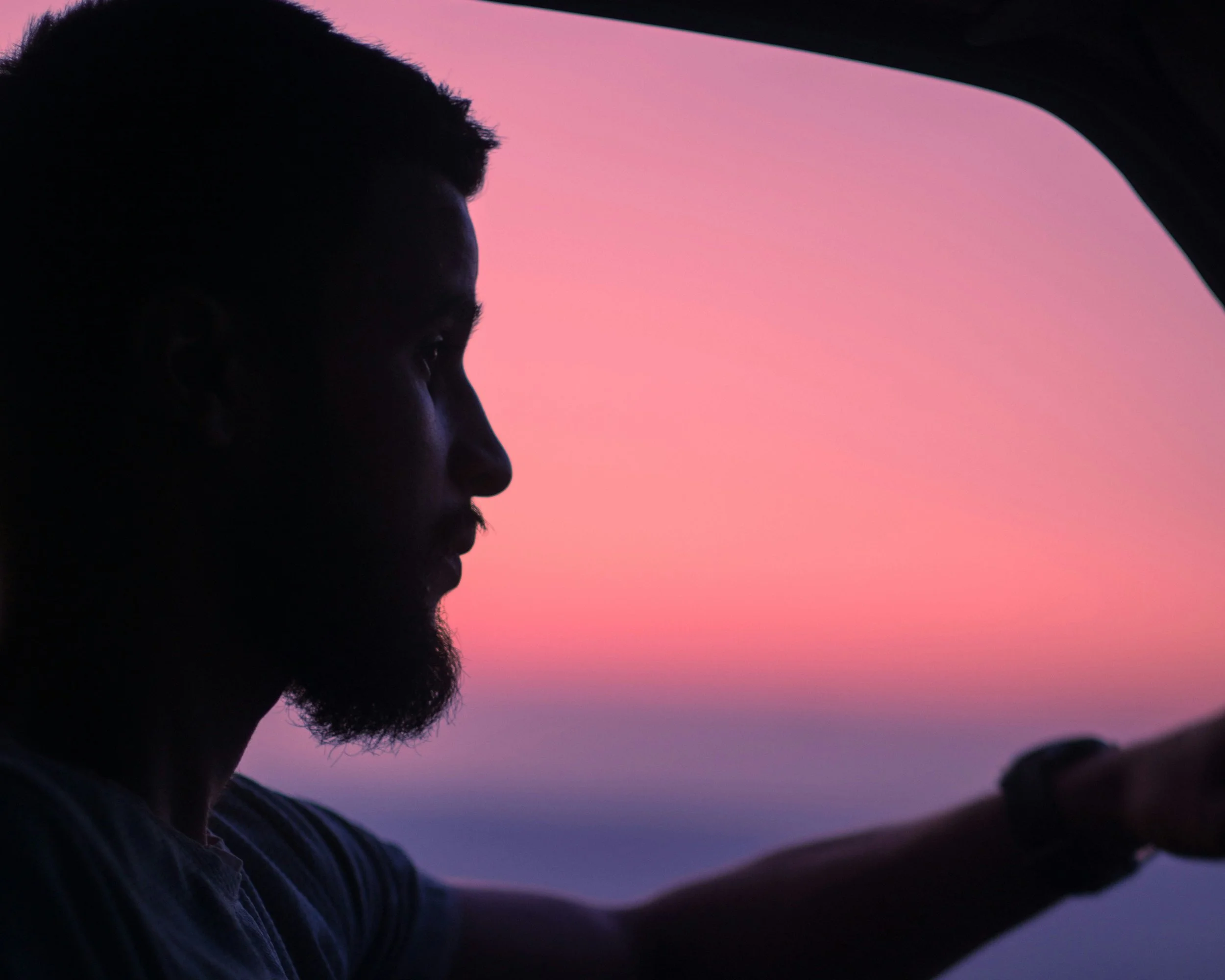
After surviving a devastating car accident caused by distracted driving, Greg Tilton reflects on trauma recovery, gratitude, and why life didn't change in the dramatic ways he expected.
A serious car accident can change your life in ways you never expect.
When filmmaker and podcaster Greg Tilton survived a car accident that first responders expected to be fatal, he walked away with injuries that eventually healed.
The emotional impact, however, unfolded much more quietly. Greg shares what recovery actually looked like, why he struggled with the expectation that he should feel transformed, and the lasting lesson distracted driving taught him.
Greg reflects on the physical and emotional aftermath of the accident, why he felt pressure to be "changed" by the experience, and the lasting lesson distracted driving left with him.
Listen to Greg Tilton’s Interview
Watch Greg Tilton’s Interview
What It Means to Be Human and the Power of Human Connection
Greg Tilton: Being human, to me, is interaction, people, social... whether it's giving or partying or whatever. I just love being with people. I am a supremely social being, and that's actually one thing, not to date the episode too much, but with all the shelter-in-place stuff, I've had a lot of time to think about how does a personality like mine handle that? Zoom happy hours are a big one.
But anyway, I'm getting off on tangents here. I think being human just has a lot to do with our interactions and being able to interact with people. I think that it's just critical, and it's core to our existence, really.
Brandi Fleck: Welcome back this week to the Human Amplified podcast. I'm your host, Brandi Fleck.
Greg Tilton, of New Orleans, Louisiana, narrowly escaped distracted driving. By that, I mean that he was in a car accident that the healthcare workers thought should have killed him. He walked away with an injured arm, the need for physical therapy, and a lot to think about.
Greg is a husband, new dad, a podcaster, and a cinematographer. He opens up about an idyllic childhood and having a great life. He was living his life when tragedy struck and luckily walked away mostly unscathed.
So what happens when you experience such an accident? Does it change your life? Does it make you closer to God?
Greg genuinely tells us about being in shock, how it impacted him over time, and how he's moved on sort of nonchalantly and happy-go-lucky, completely aligned with his excellent personality.
From this episode, you'll get insight into how time helps us overcome fears produced by trauma, that miracles do exist, and that it's okay to be happy even if you've been through some crazy events.
Now let's hear from Greg.
Brandi Fleck: Greg, welcome to the show today. How are you today?
Greg Tilton: Thank you so much for having me on, Brandi. I am doing great. Had a big, full day of editing today, so it's nice to record something that I'm not responsible for.
Brandi Fleck: Yeah, I bet. Well, this is going to be a really interesting interview. I'm super excited to have you here today.
So real quick, before we dive in, can you just tell us who you are and what you do?
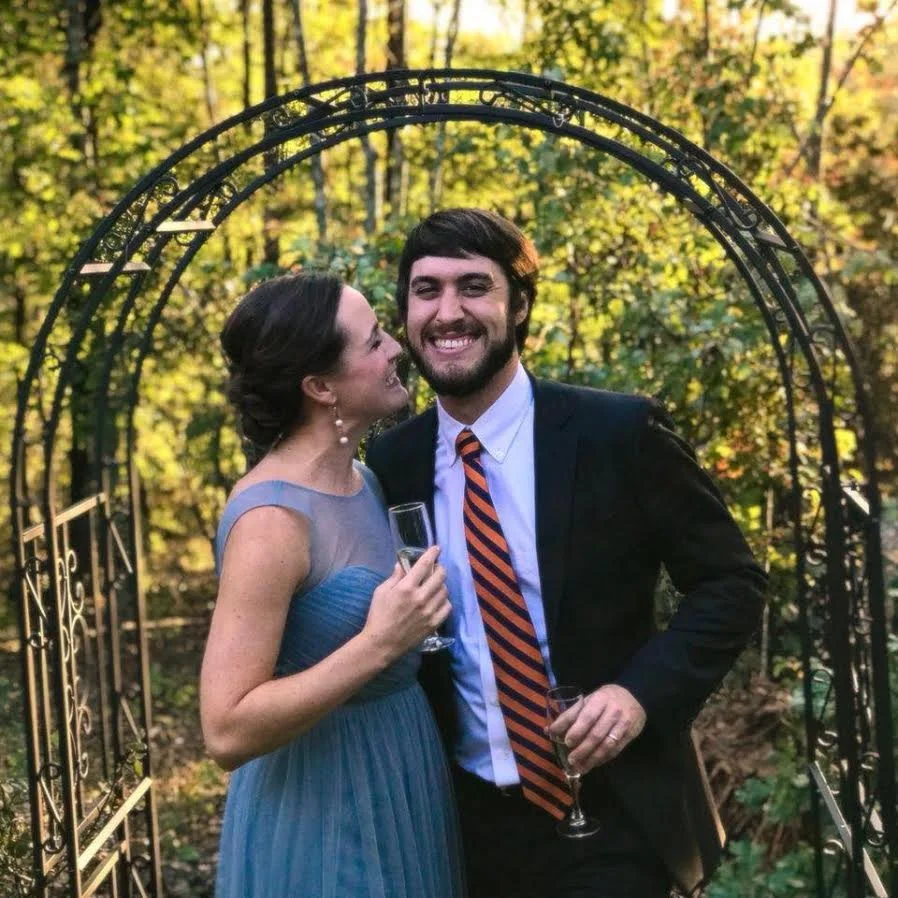
Greg Tilton: Yes. My name is Greg Tilton. I am a content creator in New Orleans. I hate saying it. It makes me cringe. It just feels so pretentious and nondescript.
But my main income, my main hustle, is film production, video production, editing, commercials, social media, narrative, documentary. We kind of do it all. Music videos, whatever.
I do a lot of content creation, and in the last half year or so, I've expanded a lot more into podcast production, so that's been a big thing. The occasional writing, but I wouldn't say that's a main part.
Brandi Fleck: Well, that's awesome.
So you probably get a lot of social interaction in there, or no? Does that go with your personality as well as you'd like?
Greg Tilton: I don't want to go too off on a tangent here, but the short answer is film production, definitely. It takes a village to raise a child applies there, right? It takes a village to make a film.
It's just an inherently cooperative and crew-based work. You're generally not soloing. There's a lot of solo work out there, but most of the work I do, there's at least four or five of us working together, upwards of 100-plus. So that's just inherent to it.
With podcasting, that actually kind of started as a fun hobby that became an experiment, especially as my shows started to develop and taking a back seat and being more man behind the curtain and not dominating conversation. So it kind of hits both sides of it, I guess.
Brandi Fleck: Yeah, awesome. Very cool.
Well, Greg, can you give us your life story? I mean, this is big. Your whole life story in five minutes or less.
Greg Tilton: Born. School. Met school in New Orleans. College in Virginia. Film. Done.
No.
Basically, I was born and raised in New Orleans. My parents are both just inspirational figures to me. They are very accomplished physicians. I'm very proud to be their son.
In a lot of ways, that's always been a guiding force for me, trying to be as intelligent and thoughtful and educated as they are.
Being raised in New Orleans is obviously very unique, and you really don't appreciate it till you leave. Obviously, during Katrina, I was in Texas for half a year. Learned to appreciate New Orleans then, for sure. Sorry, Texas. Not for me.
Virginia, went and got my history degree. Came back here, bought a camera I couldn't afford, and started working in film production. One of my dear friend's brothers-in-law is my business partner. It's just kind of all... like everyone else, there's always kind of a wild trajectory. You never quite wind up where you think you're going to, especially our generation. Our degrees rarely have much to do with what we end up doing, right?
History degree to film production. I'm kind of a tech geek. I love reading about sensors and pixel counts and ISO and noise. Tech has always kind of driven me as a person in that way.
I got into podcasting, and this feels all very rambly, but I guess this is kind of how my brain operates.
The long and short of it is born and cultivated by my city, love creating, love working with people, love being back here in New Orleans. That's kind of it.
Most of my friends will tell you the first thing you'll learn about me is that I'm from New Orleans before you'll even know my name.
Brandi Fleck: Gotcha. All right.
Well, can you describe your personality for us just a little bit more so our listeners can really get to know who you are? Maybe give us an example of something that is just uniquely you.
Greg Tilton: I don't think it's unfair to say I can be a little self-absorbed. I don't think it means I don't care about people. I do care greatly about my relationships and my friendships.
I think that my opinions and my thoughts are probably more interesting, and interesting to other people, than they are. But I love telling a good story. I think that's probably a unifying theme about me as a person.
Social interaction, my work... I just love telling stories. I’ll tell you a stand-up bit I heard. I'll tell you some random thing from my childhood that you said reminds me of.
If I had to describe myself in one word, it's storyteller. That kind of really encapsulates me as a person. Many people can find it aggressive and loud and obnoxious, and I like to think some people do find it mildly entertaining.
Near-Death Experience After a Serious Car Accident
Brandi Fleck: Greg, we're here today to talk about a near-death experience, and perhaps more of a close call. I'm not sure of all the details yet, but what was your experience?
Greg Tilton: When you posted on Facebook, you were asking for people with stories, and I almost didn't answer. I felt like it was kind of ridiculous of me in some ways, but I was like, well, she's directly asking people, and I have something that quite fits the bill. You also agreed to my one little stipulation, which I'll get to later.
I was actually in a near-fatal car wreck a few years ago. There's this strip of road here called River Road that's 35 miles per hour for most of it. Well, I actually don't know if it's for most of it, but for one of the busiest strips of it. It's undivided, one lane each way, and there are turns. Classic dangerous road.
Basically, this guy nearly head-on collided with me. I turned at the last second, and he hit my door. I didn't black out or pass out, but naturally you go into shock. Everything's kind of a blur, and I crashed into a fence or something.
The short version is basically they Jaws of Lifed the door off my car. Thank God for side-deploying airbags. I then got ambulanced off to the hospital and had, luckily, no severe neck or back injuries or anything. But the type of wreck was one of those things where the police showed up and said they expected a DOA based on the car wreck they saw.
Brandi Fleck: Wow.
Greg Tilton: So thank God for modern engineering, y'all. I was very lucky. I was driving my mom's car at the time because my car was in the shop, so I got lucky in that regard.
Basically, I have a nice gnarly scar that they'll not be able to see on audio, obviously, but I cut my arm all up on glass. I was discharged from the hospital that night. I didn't have to stay overnight or anything. No crazy story of having to relearn walking, but just very, very lucky to have a very severe car wreck in which I was able to walk away.
Brandi Fleck: Yeah, wow. What kind of car were you in?
Greg Tilton: It was an older 5 Series BMW from, like, 2008 or 2007. It was about a 10-year-old car, but it had side-deploying airbags.
Distracted Driving and the Life-Changing Consequences of Texting While Driving
The thing I wanted to mention was my little 30-second soapbox, if you don't mind.
Brandi Fleck: Sure.
Greg Tilton: The guy admitted fault because he was looking at his cell phone and just crashed into me on an undivided road at 6:00 at night.
I was actually on my way to record a podcast with my buddies and Josh, which I'm sure I'll talk about later. I'm not going to start inserting plugs in the middle of your show.
I was on the way to record, and I still remember I get hit, and the first thing I do, because you're in shock and you don't think about important things, was I text them. I go, "Hey guys, I was just in a wreck. I think I'm okay. I'll talk to y'all later. Record without me." Something along those lines.
That was the first thing I did. It was the most inappropriate thing to do at the time. Not calling the police.
This guy admits to looking at his phone, and I just want everyone to know, I've done it. Even after this, I still feel the pull occasionally, and I constantly remind myself, don't look at your damn cell phones, please, especially on undivided roads.
It's amazing how quick it happens. I was fully focused on the road, and it just I've just got to get that little PSA out. Please. It's not worth it.
I could tell the guy was genuinely mortified at what happened, and all he was thinking about was, "What if I killed this guy?"
Please keep that in mind. Drive safe. Watch those Werner Herzog short documentaries about texting and driving, whatever you've got to do. Be safe.
Brandi Fleck: Yes. Was he hurt at all?
Greg Tilton: No, he was perfectly fine.
It's kind of vague. I'm pretty sure actually some passerby stopped and pulled over and helped me. I didn't call the police. I didn't call an ambulance. Someone else did.
I do remember some stranger helped out and left me their number and was like, "I saw it. If anything happens, please let me know."
Shout out to all the kindness of strangers out there.
Brandi Fleck: Yeah.
Okay, so you've already gotten into sort of what prompted you to leave when you did because you were on your way to go record a podcast episode, but what was the split second before the impact like? Did you realize what was about to happen?
Greg Tilton: I remember I'm pretty sure I was turning right. It was a right hook, and I think I was listening to Blurry Photos or some podcast like that. I can't remember, though. I'm pretty sure I was listening to a podcast because basically at that time that's all I did, was research podcasts.
I remember hearing a horn honk. I don't know if it was me hitting the horn, but it happened very quickly. I don't even remember registering it.
The next thing I knew, I was in a fence, kind of in this metal chain-link fence with my car, just looking around. I'm covered in glass, and I'm just like, "Okay, rule number one, don't move."
It was very quick. Typical answer: it happened so fast.
Brandi Fleck: Yeah.
Okay, so the next thing you know, you're sitting there with glass, and you're not moving, and you think to text your friends, which I still can't believe you did.
Was there anything else that was going through your head in the time between when you realized where you were and then the ambulance got there or the paramedics got there? What happened in that time?
Greg Tilton: Honestly, I do distinctly remember being like, "Okay, I know I'm in shock. I'm not feeling pain, and there's a distinct possibility I could pass out without any warning."
I remember very much all synapses firing, being like, "What do I need to do? What do I need to do? What do I need to do?" These moments are very important.
After I did the stupid, stupid text message, I called my dad and was like, "Hey, I was in a car wreck. It's really bad, but I think I'm okay. I need you to..."
This was actually shortly after the ambulance came because the wreck was actually very close to the hospital, so luckily I didn't wait very long. But I called my dad and I went, "I don't know if I'm going to pass out or what. I need you to call my girlfriend at the time," who is now my wife, "and let her know what's up."
He was like, "Okay, tell me what hospital you're going to. Where are you?" He was rattling off these details I needed because he was in the same boat. He's like, "Yeah, you might just pass out, so let's get critical information." That was the entire name of the game.
I've actually never passed out in my life, and when I was in the ambulance, I do distinctly remember them talking to me. I ended the phone call, and they said, "Okay, how are you doing?" I started kind of talking a little... I just started slowing down and losing it.
They nuked me with air conditioning. They had this frigid A/C. It shocked me back up. I'm like, "I'm good. I'm good. All right, all right, all right."
They were like, "Yeah, you need to stay awake for us, buddy."
So it was mainly, what do I do now? Call your dad. Get the information out. Don't do anything stupid. Don't try to get out of the car yourself.
Brandi Fleck: Yeah.
Trauma Recovery After a Car Accident
Can you describe for us a little more about how you were saved? You said the Jaws of Life came in, and then you went on an ambulance ride. Once you got to the hospital, what did that entail as far as saving you?

Greg Tilton: They pried the door off, got me in the ambulance, they kept me awake, and then it was actually a lot of waiting around at first.
Then I actually got moved to a different hospital just because of huge wait times and stuff. It also technically fell under emergency, but I wasn't at risk of dying, right? My arm was not in good shape, but it wasn't neck, back, I wasn't unconscious.
So I transferred to the hospital, waited around a little while. It was mainly just a very painful process.
This might be a little graphic for people, so heads up.
They were plucking glass out of my arm. There was a lot of glass in there because those windows are designed to shatter so you can get out if you fall into the water.
I had some fat exposed in my arm. No bone or anything, because I actually do remember... that reminds me. In the ambulance ride, they said, "Hey, how squeamish are you?" Because I asked them how bad it was. I said, "Well, if it's white, don't tell me."
They said, "Well, how do you feel about yellow?"
I went, "Well, that's not great, but I can live with that."
So they basically brought me in, plucked all the glass out, cleaned it out, tons of stitches. I don't remember exactly how many.
My scar is probably an inch and a half, two inches. It's basically a little above my elbow most of the way up my forearm. That might not be two inches. I'm so bad at guesstimating distances.
Point being, it was lengthy. They just cleaned it up, got me home, and basically I was just like, "Okay, let's have this scar heal."
Another time, when I went to the same podcast recordings, we always would hang out after, and we were all chilling in our buddy's garage. We were playing a little beer pong just because we hadn't done that in years, and someone suggested it. We were like, "Yeah, sure, why not?"
I leaned on the table, and all of a sudden I kind of got a weird sensation. I'm like, "That doesn't feel right."
It was like three weeks later, and I ended up getting my shoulder checked later. I had a posterior labral tear, so the impact into the side of the door... we didn't realize it at the time. I guess the initial checkup with the doctor didn't catch it.
It's actually a common baseball injury from pitchers who throw. It's below the rotator cuff.
I had the shoulder injury, and then cue months of physical therapy and workouts to strengthen the muscles around it.
Luckily, I didn't have to get surgery. It's still technically on the table. I can get it, but I think it's healed pretty decently. I can do the bench press and deadlifts, so I think that's good enough. I don't feel like having someone dig around on my shoulder if it's not causing me that many problems.
Brandi Fleck: Right, right.
How Near-Death Experiences Change Your Perspective on Life
Greg, I don't know if you are a spiritual person, but did any spirituality come into play during this whole experience for you?
Greg Tilton: It's funny you bring that up. I actually haven't thought about this in a long time, so well done.
Less God, spiritual, religion... I always liked this phrase. There was this professor at my college who had a course called Spiritual but Not Religious, and I like your language in particular because there's definitely this weird almost guilt afterward.
You always hear these stories of near-death experiences or surviving cancer and all these things. A lot of times you find these people, maybe they don't turn their life around, but they go on to start foundations, or they quit their job and do what they love, or they rebuild relationships with lost family members. These very inspiring stories of kind of turning a corner, and this horrible event that you survived or dodged or whatever is the catalyst.
There was definitely this kind of hang-up I had for a while of, "Should I feel and be different?"
It was weird. It was a very strange sensation.
Again, I really haven't talked about it since the wreck. I felt that for months. Anytime I would have a hangover like anybody has in their twenties, or anytime you just waste time on social media, I'm just like, "Shouldn't I have had this awakening that made me not piss away time? Life is so precious."
What's funny is, I do think I got everything I was going to get out of it that could be positive.
I think I have a greater appreciation for my physical capabilities. I think just the ability to use my left arm... I have a six-week-old son, and I can hold him. That was put in jeopardy.
I could pick up a camera two months later. My left arm, where I got hurt, that's where I hold the lens and pull focus. I could have very well lost the ability not just to do my job but to do the thing I love.
I'm not trying to be overdramatic about it because I do think about that a lot.
It didn't fundamentally alter the person I am, but I do think it gave me an appreciation.
So maybe it wasn't a spiritual thing, but I definitely did try to think about the larger consequences and what is the larger impact of all of this. I don't know.
Brandi Fleck: Mm-hmm. It's a good question.
Greg Tilton: I wouldn't say I found God or anything. I was raised Roman Catholic. I live in New Orleans. You're all Baptist or Catholic here.
You obviously think about that stuff, but I'd say just on the most basic level, I definitely think it did some recalibrating, even if it didn't fundamentally alter me.
Brandi Fleck: Yeah. Maybe you were already on the path you were supposed to be on.
Greg Tilton: That's a nice thought. I honestly never thought of that. I like that. I want to use your answer.
Brandi Fleck: Yeah.
Greg Tilton: I mean, I was perfect. I didn't need a car wreck to tell me to shape up.
Healing After Trauma and Returning to Everyday Life
Brandi Fleck: Well, I want to hear about your support system and your healing process. What were both of those things like?
Greg Tilton: My parents were obviously great. Having doctors is, privilege is not the word to describe that. I am so lucky in that I don't face the same healthcare adversities that other people.
Not to get too political, but I think we mostly agree that the American healthcare system is difficult to navigate. I've been so lucky that I didn't really learn that until I was older, until college. I was kind of insulated from that reality.
My parents were just instrumental. I don't know how to handle health insurance properly. I'd never had to file a claim before, not for a serious wreck. It's one thing to go provide health insurance and get medication you need. It's another to fight with insurance and go through all this stuff.
To have my parents there to help me was just instrumental. They knew how to talk to doctors. They weren't involved. They didn't piss off doctors or anything. They were just like, "Hey, show me those X-rays too, and we can help you make these decisions."
My now wife, obviously, was huge. Just moral support, loving, helping me when my arm was kind of out of commission, helping me do basic...
Greg Tilton: ...things. I mean, I couldn't really type and do normal things for a minute. It wasn't like I was in a cast for three months, but there are a lot of basic things you can't do.
So having someone who can just change out ice packs or help you with prepping things for a shower and all those little things really fall through the cracks if you don't have someone who's there and loves you and really is putting in all that time and energy to help you.
She was just so gracious. I don't know. So, big shout-out to her on that.
My friends were great. My colleagues were great. I had a job the next day, and we were able to scramble and get someone in. They covered for me. They really didn't want to do the job. I remember we had trouble hiring for it, but he was just like, "Yeah, I've got you."
I'm so lucky to have friends and family that the answer was yes. There was no discussion for anything I needed, whether personal, professional, whatever. I'm very lucky in that regard.
Brandi Fleck: Mm-hmm. Well, that's great.
Can you describe your healing process for us? What was that like?
Greg Tilton: I was very concerned with... working in the film industry, especially at that stage of my career, it's all referrals. It doesn't matter... you've got to be a legend for it to not be referrals and for people to just cold call you, right? You've got to be like Roger Deakins. Maybe not that intense, but it's not traditional.
We're perpetually applying for jobs, if you think about it. We're never stable.
So I was very concerned with this idea that if too many people knew I was hurt, they wouldn't call me. Not because of anything out of spite. It's not like they were mad at me or something. It was just, "Oh yeah, Greg's out of commission. He was in a car wreck."
So I actually had to kind of be quiet about it. The people I did tell, I was like, "You cannot talk about this." I didn't post that on Facebook. I didn't really post about it. Maybe it should just be a personal experience anyway.
The point being that I had to kind of keep it quiet. So part of the healing wasn't just my arm recovering, which wasn't as severe as you'd think.
The PT was a problem, and shout-out to the team. They did an amazing job. My doctor was amazing. I saw improvement so fast. I was having these aches every day, and then it reduced to now I get my shoulder hurting every three or four months.
The healing process wasn't so bad. Just a lot of work for a few months. It really was just about, don't let this affect your professional life.
Dealing with the insurance, it was a lot of mental energy and a lot of time. Maybe it sounds a little spoiled to me, but I'm just like, it just sucks. It's bad enough I was already in a car wreck. I don't want to deal with all this crap.
So the healing was just a lot of getting my life back on track.
Overcoming the Fear of Driving After a Car Accident
Brandi Fleck: Was there any emotional or mental aspect of it where you became afraid of being in a car or maybe other people being on their phones or anything like that?
Greg Tilton: River Road. I didn't drive on it for, I mean, it's a major way to get places out toward a certain area of New Orleans along the river. It's a primary route.
I would have Google Maps direct me toward it, and I'm like, "Nope." I probably didn't drive on it for over a year. I drive it now, but if it's dark out, it's a 50/50 shot I just won't.
Brandi Fleck: Gotcha. How did you decide to go back on it?
Greg Tilton: Convenience and laziness.
You get further away from things. Human beings are so amazing at adapting and accepting circumstances. A part of you is just kind of like, well, what's the chance it'll happen again, right?
Brandi Fleck: Yeah. No, that makes total sense. It's human nature.
Greg Tilton: I'll feel like a fool if it happens again.
I definitely, when I'm on it, am just eyes glued, pay attention. I try to take what's called Jeff Highway generally to get out there unless I'm really pushed for time.
I think it's just typical. We accept things. We make pledges to ourselves all the time. I'll never do X again or Y again, and you're doing it a month later, and you're like, "Well, I didn't really mean it."
Brandi Fleck: Well, I think it's okay that you got back out there. You don't really have control over what other people do. You can only control your own actions, and you're doing what you're supposed to be doing.
You mentioned earlier, you've talked a lot about your career, podcasts, filmmaking, things like that. Where can people find your stuff if they want to hear more from you and see all these amazing things you're doing?
Greg Tilton: Well, before I start the shameless plugs, I really appreciate you having me on. I hope these answers were helpful. I hope people find something relatable.
I feel like I ramble a lot. Probably don't feel like it. I think that's just reality.
I do appreciate you having me on, and I hope this was helpful and useful, and I hope it's a story worth telling.
Brandi Fleck: Absolutely. Well, you've been a very gracious guest.
Greg Tilton: Yeah. I have a lot of irons in the fire.
I've got to give a shout-out to Josh and Ryan again, the guys I was going to see when the car wreck happened.
We have Rumor Flies. It's a podcast that's kind of like Snopes meets MythBusters, but a little more comedic and a lot fewer degrees. It's less Sasquatch and JFK assassination and more anti-vax myths or "Can you do a citizen's arrest?" All these things you hear at bar tops.
By the way, we are very pro-vaccine. Sorry if people don't like that.
And yes, you can do a citizen's arrest, but it's a terrible idea and you'll probably get sued.
The other show is Jacks of Trades. It's a comic book review show. Mike and Davis are amazing. They do such a great deep dive into the books, all the context. They parse it with all these amazing social cues and just reads that blow me away.
I didn't even read comic books until I started producing the show, and now I can't read enough of them.
My most recent show is We'll Be Right Back: The Future of Hospitality. It's a podcast I launched with my sister and our colleague and friend Barry about how New Orleans' service and hospitality sector is navigating and charting a path forward in the wake of COVID-19.
That's been a very interesting project, and we've had a lot of great support.
So if any of this sounds interesting to y'all, please check them out. They're all pretty Google-able.
And I'm at gregtilton.com.
Brandi Fleck: Awesome.
Well, guys, all of that will be in the show notes if you want to go get those links.
Why Distracted Driving Is Never Worth It
Greg, I know you said no phones while driving, but do you want to reiterate that? What is some closing wisdom you can leave for our listeners?
Greg Tilton: It can wait. Again, I've got to give a shout-out to Werner Herzog. He did this series with AT&T about texting and driving that's just soul-sucking and makes you feel guilt-rattled for every time you even peeked at your phone.
I am a hypocrite. I still occasionally do it. I can't sit here and lie to y'all about that, right? It's hard. Our phones are an extension of us now.
But I really try to be aware of it. We've really got to work on it. A lot of lives can be saved. A lot of injuries can be avoided.
I'm not just here to guilt you. We all know this.
Just please, please, please pay attention to the road. It's so important.
Brandi Fleck: All right. Thank you so much, Greg. It has been an absolute pleasure today.
Greg Tilton: Thank you again. This was wonderful. You're a great host, and I appreciate you indulging me.
Brandi Fleck: So there you have it. I hope you enjoyed this episode.
Join the conversation!
Feel free to share your own experience and let me know if you have any questions in the comments.
Related Posts




Hi, I’m the founder of Human Amplified. I’m Brandi Fleck, a recognized communications and interviewing expert, a writer, an artist, and a private practice, certified trauma-informed life coach and Reiki healer. No matter how you interact with me, I help you tell and change your story so you can feel more like yourself. So welcome!
Find More on the Blog
Topic
- ADHD
- AI
- Atlanta
- Black and BIPOC
- DIY
- FAQ
- LGBTQIA plus
- Los Angeles
- Nashville
- Seattle
- St Louis
- St. Louis
- UFOS/UAPs/ETs
- abuse
- accountability
- addiction and recovery
- adoption
- affirmations
- afterlife
- altered state
- angels
- animals
- anxiety management
- art
- astrology
- atlanta
- attachment
- awakening
- beauty
- behind the scenes
- being human
- body image
- body work
- boundaries
- brandi fleck
- breathwork
- bullying
- burn out
- burnout
- cancer
- career
- caretaking
- chakras
- channeled
- clarity-dive
- clarity-practice
- clarity-primer
- clean products
- coach
- codependency
Recent Blog Posts
Visit the Full Podcast Audio Archive

Affiliate


Spiritual practice can bring calm, clarity, and self-awareness, but it can also become a polished way to avoid what still hurts. In this guest article, Pat Crilley explores spiritual bypassing, emotional suppression, and how to tell the difference between true healing and performing peace.