
When Cushing's Disease Was Only the Beginning
Interview By Brandi Fleck

Josh and Tiffanny Thomason share how Cushing's disease led to years of misdiagnosis, uncovered multiple rare diseases, and ultimately changed their marriage, future family plans, and purpose.
There are some experiences that permanently change how you measure a good day.
For Josh and Tiffanny Thomason, living with Cushing's disease and multiple rare diseases has meant years of uncertainty, difficult medical decisions, and letting go of the future they once imagined.
It has also deepened their marriage, reshaped their priorities, and given them a purpose they never expected to find.
They reflect on the long road from misdiagnosis to answers, what recovery looks like when chronic illness doesn't simply disappear, and why they're using their experiences to advocate for better care for others living with rare diseases.
Listen to Josh and Tiffanny Thomason’s Interview
Watch Josh and Tiffanny Thomason’s Interview
How Chronic Illness Changes Your Perspective
Josh Thomason: Life itself has changed. In the life cycle of plants, animals, ideas, and different programs or technology, we have iterations and improvements.
Humans evolve like every other species and adapt to survive, but we also make our own free choices individually, whether consciously or subconsciously, about who we are as an individual person and whether we actually want to change or stay exactly where we are.
We don't only evolve naturally, but we have that free will and freedom to change as well. That free will and the ability to either stay the same or stay exactly where you are, that's what makes us human.
Tiffanny Thomason: To me, being human means acceptance, dealing with failure, opening your perspective to life events as things happen, and finding happiness whenever or wherever possible, as well as just understanding that mistakes happen or things may not always go the way we plan.
Or there may be disappointments, but there's always a way to kind of get yourself through it and try to look at the glass half full versus half empty.
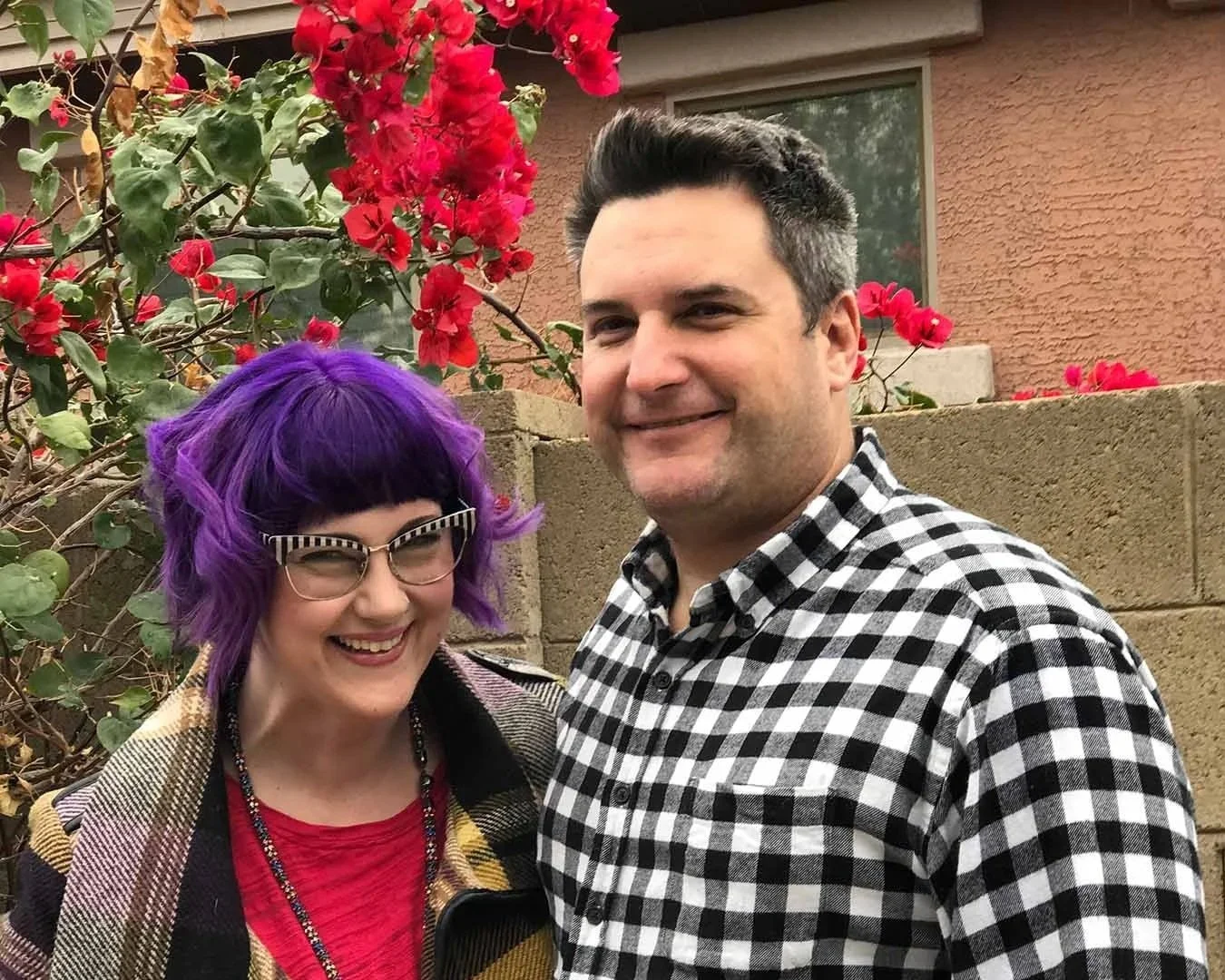
Brandi Fleck: Josh and Tiffanny Thomason of Portsmouth, Virginia, are returning guests from Episodes 7 and 8 of Season 1. They are married. They are navigating their relationship and also navigating Tiffanny's journey with rare disease and the coexisting conditions and impacts that come with that.
Last season, we discussed Cushing's disease, diagnoses, treatments, and more. This season, we discuss how their idea of being has evolved, the difficulties of having multiple rare diseases, and how Josh getting an injury changed he and Tiffanny's relationship dynamic.
Tiffanny explains what it means to have rare diseases managed. The couple also very personally open up publicly for the first time about the prospect of having children.
You get insight into adaptability, flexibility with evolving plans, how to take incremental progress as wins, and how advocacy work contributes to your own healing.
Now let's hear from Josh and Tiffanny. Welcome to the show, Josh and Tiffanny Thomason. I am so excited to have you back on the show, as you were early guests on Season 1.
How are you guys doing today?
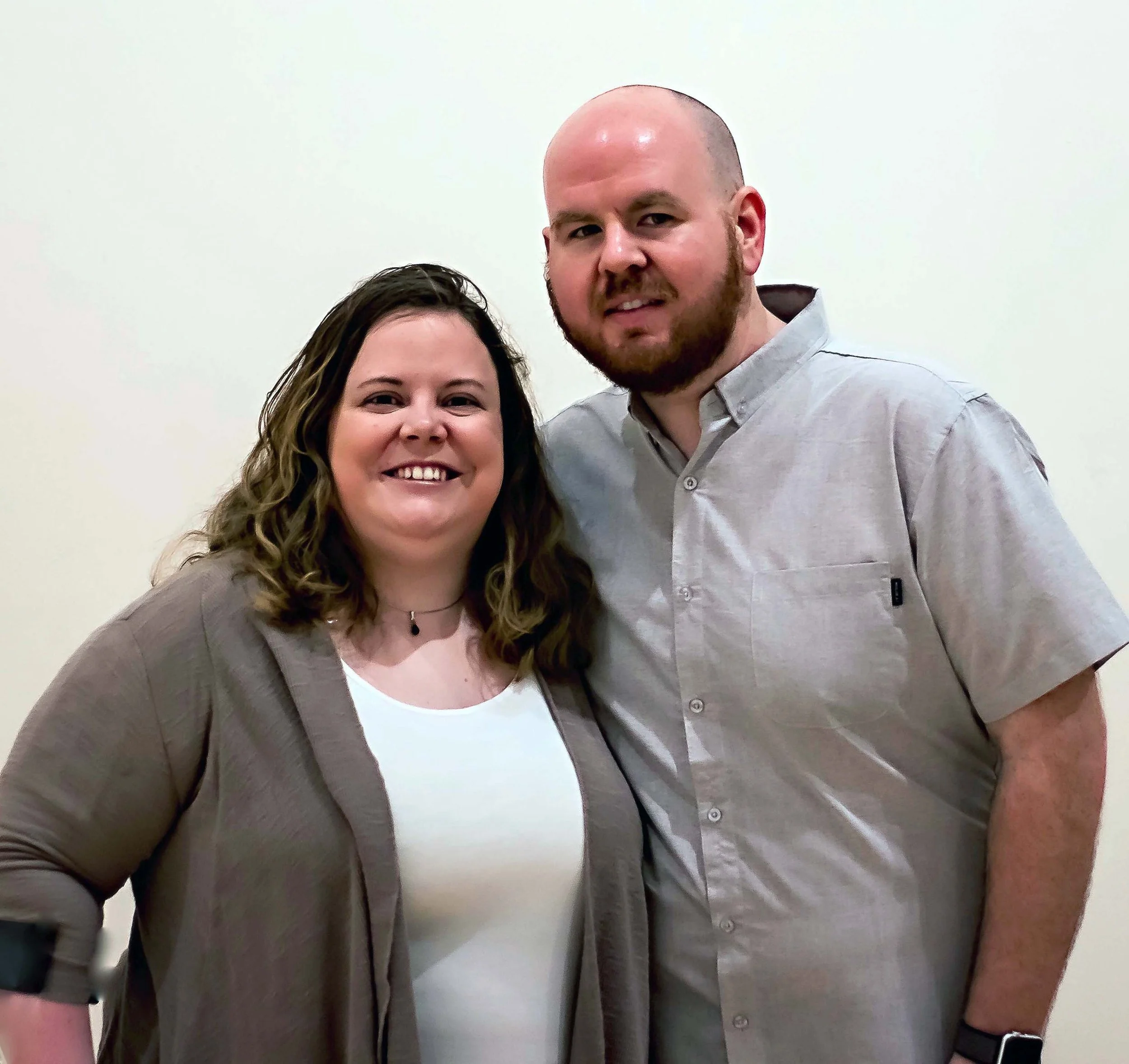
Tiffanny Thomason: Doing well. Can't complain. We're settling into cold weather here in Virginia.
Brandi Fleck: Okay, okay. How are you, Josh?
Josh Thomason: Doing great. Thank you so much, Brandi. It's great to be here. Thank you for having us back on the show. This is something that we've really kind of looked forward to. Hopefully we can reach and touch somebody or inspire somebody out there, and thank you for giving us that opportunity.
Brandi Fleck: It's an absolute pleasure. I think you guys sharing your story is really impactful, and it got a lot of positive feedback in the last season. I'm sure that our listeners are dying to know where you guys are now versus where you were then.
Let's start with Josh. Your perspective on what being human means to you has changed a little bit since the last episode. Can you explain for us why that's changed and how it's changed?
Josh Thomason: I think at the point where we recorded the last episode, there was a lot going on in my life. I was dealing with a ton of anxiety that had kind of built up and spiraled to unhealthy levels.
I had a ton of expectations on myself, and then I also was seeking validation from people outside my family and friends. I was pretty much at a low point and focused a lot on the negative things.
I think my answer to that was having to do a lot about failure. My focus was on, "Okay, what ways am I failing, and how can I improve on that?"
Personally, I've tried to take a lot more focus on improving my attitude and dealing with my own personal anxieties by doing more activity. I've taken a lot more focus on my own personal health.
Anytime I feel anxious or whatnot, instead of just dwelling on that or having expectations for others, I try to refocus that energy onto something positive for myself and use that energy in a way that's actually productive for myself instead of just dwelling on it and letting my anxiety go out of control.
I've also tried to let go a little bit more and roll with the punches instead of wanting to always be in control of a situation, and accepting things that don't go the way I've intended.
Brandi Fleck: Tiffanny, your perspective hasn't really changed much. Why do you think that is?
Tiffanny Thomason: I think because I put a lot of thought into our first episode. I was pretty spot on with how I felt, and usually when I believe something, I believe it through and through.
I think that's just it. It was a very raw and natural response or definition for me, so it's pretty much unchanged because I feel like it was already kind of adapted to who I am.
Learning to Adapt When Life Doesn't Go as Planned
Brandi Fleck: Since we've already started talking about where you were then versus where you are now, let's segue into one of the themes of your previous episodes, which involved that things don't always go as planned.
Can both of you tell us how your adaptability has served you well since you were last on the show, and what you've had to adapt to?
Tiffanny Thomason: Since we were last on the show, Josh had an incident early last year. We were traveling up in the Northeast to visit family, and Josh hit ice and shattered his ankle in three places.
Interestingly enough, a lot of our previous episode we talked about Josh being the caregiver and what that was like, and me being the one needing the assistance.
It quickly transitioned from me being the one receiving care to me being the one giving care for the first month, essentially.
It was helping him. It's like me with a cane and him with a walker, and I'm like, "We're going to kill each other. You're going to trip me."
If anybody were to see us, they'd be like, "Oh no."
It's kind of comical, funny in that sense, but it was an emotional shift because he's not as used to being sedentary and being waited on and that kind of thing.
Josh, if you want to talk a little bit about that.
Josh Thomason: Sure. We had just gotten to where we were up visiting family in the Northeast, and the very day that we got there was when I fell and fractured my ankle.
I knew immediately that something wasn't right because I couldn't stand up. It was a real struggle to get in.
Normally, I'm one that avoids doctors at all costs. I'll tough it out. I was like, "Something is very wrong."
I had surgery pretty much instantly and had to rely on Tiffanny especially, but also on some of her family that I didn't know nearly as well, that I've since gotten to know a lot better since I lived in their house for an extra two or three weeks.
That was very challenging because I got to understand a little more of Tiffanny's situation, how at times you feel helpless.
Being the one who is receiving care, you want to be able to get up and do things on your own. You think this should be easy, just to go to the bathroom.
Part of what inspired me to get more active, too, is doing that because you never realize how much energy you expend whenever you've got half the support to carry yourself down a hallway to go to the bathroom. It just was insane. I'm like, "Wow, okay. This is way harder than I ever expected."
I can understand the frustration that she must feel whenever things that I take for granted every single day, now I can't do. It was very eye-opening to me just how much of a change that was.
Tiffanny did such a great job because I was completely down for about a month out of three months. Around month two or three, I started being able to move around a little more. I got a boot on.
Sometime during that period, while I was going to physical therapy, we had started getting our home ready for sale. As I was beginning physical therapy and everything, you were doing the preliminary steps, kind of taking the ball and running with everything that we needed to prepare ourselves to begin another transition.
Tiffanny Thomason: I think when Josh broke his ankle and was down, it was kind of like last episode. We talked about how we used to have these moments where it was like, "Hey, where are we with our lives?" We'd sit and talk and kind of figure things out.
This was one of those points where it was like, "Your anxiety is through the roof. This and this is happening. Granted, you have a broken ankle, but what else is happening?" It was a full relationship and life evaluation.
We realized through conversation and trying to figure things out that truly we just were not happy where we were.
We were living outside of Atlanta, which, if anybody was following from the previous episode, we had moved from Nashville to outside of Atlanta back in 2014 when my care was interrupted from Vanderbilt. We figured that the best place, second to that, would be to go to Emory without making a huge move across the country or whatever. That was the next best thing.
Our move was something we wanted to do, but there were other things that drove that move. We did it because we had to. We just kind of made the best of it.
I feel like, personally, emotionally, and everything, we never really thrived there. Coming to this realization after we'd lived there for almost five years and realizing, "Hey, is this really a bigger picture? Is it just that we're really not happy here? We've never really been content here. Is this part of it?"
We had done some research and found out, "Hey, now is a good time to sell. The market's really hot. We stand a chance to make some money."
We said, "Hey, being that that's the case, is now the time that we should really be thinking about making a transition for a number of reasons?"
Josh Thomason: The reality of the situation was I didn't have a lot of friends at that time. I still talk to people from work now, but I don't feel lonely now like I used to feel.
I think part of that is pushing myself to do more healthy activity and taking the dogs out to the park that's nearby. We have a park here that's close to us that we get to go out and take walks in.
Like Tiffanny was saying, there are some things that we really enjoy doing here. There's a great barcade that's like 10 minutes from our house. We go and play skee-ball. I'll drink a beer, she'll have a cider, and she'll kick my ass at Centipede or at air hockey, that kind of thing.
There are some really fun things that we like to do here, whereas in Georgia we felt like we were just kind of trapped in this suburban hellscape.
Brandi Fleck: Sure. Loneliness is a really big deal. I'm sorry you guys had to go through that isolation.
Speaking of challenges such as that, we talk a lot about adapting to challenges and things like that, but adapting isn't always easy. Can you explain some of the challenges you've had that weren't as easy and were more challenging to adapt to, and how you went about that?
Josh Thomason: There are a lot of things that are still continuous struggles. I don't even know that I can say that we've adapted to them. It's just something that we face, and that's kind of the reality of the situation.
Tiffanny and I are both kind of in our mid-30s. A lot of people that we know and that we're sort of close to have either begun the process of starting a family or they already have kids.
We don't think that we're anywhere close to that. We both would love to have a family, but the day-to-day struggle of, "Okay, what is today going to bring?" We know that we can't necessarily raise our own family whenever we don't even know what's going to happen in the next day or two.
One of the things that was very challenging, and Tiffanny can elaborate on this more, was a couple months ago we went to a reproductive endocrinologist, and we found out that Tiffanny would not be able to carry a child and give natural birth at that point.
That's something that, while we probably had assumed that would have been the case, hearing that is really kind of devastating.
Tiffanny Thomason: Yeah. I got that news on my birthday, that we couldn't have a biological child between us.
They didn't exactly say that we couldn't. They just advised that there were going to be heavy risks, and they were very candid about it. They didn't come out and flat out say, "No, you can't."
We very well could, but it's a very risky situation, and it's not something that either of us want to chance, at least not at this point of disease management for me.
That's really why they said it. Their biggest concern was based on the fact that a lot of my health issues are related to tumors and excess hormone secretion. These hormones are attacking my heart and my lung function.
When you have an impairment to your heart or lungs or breathing, they said, "Essentially, what could happen to you, Tiffanny, is you'll end up in heart failure."
I could be in the ICU. It could be very risky for me. Essentially, I could die, and the baby might not even make it full term.
It was like, "Oh, crap." While we had an ideal, if he said that this might be the situation, it was not something that I was ready to hear as the real thing.
I think at the end of the day, it just stinks. While some of our friends are all excited, they're sending pictures of their babies, and, "Oh, their baby has this milestone and that milestone," or they're preparing or trying to have a child, it's just like, "Oh gosh."
It's not like we talk about it. This is our first time going public about it. It's not like you want to say to that person, "Stop sending me pictures of your child." It's a sore spot.
It's not even something that we've really talked about with our own family. It's just something that we're kind of struggling with.
It's hard because you don't want to tell somebody, "Don't send me pictures of your cute kid," but every time we're exposed to that or somebody's like, "Oh, I'm expecting," it's kind of like a gut punch.
Brandi Fleck: Yeah.
Tiffanny Thomason: Yeah. That's just kind of what life has given us right now, but they did say that hopefully we can revisit the situation once my disease is better managed.
The other thing is, do you sit and wait for it to become managed? Do you put hope in saying it's going to be managed? What if it's not? Because I don't want to get my hopes up and then it's five years later and it's like, what if it's not managed?
With adoption, people don't realize the financial strain. If we did surrogacy or adoption or embryo adoption, there are options, but really what it comes down to is finances and what you're willing to spend to make that a possibility or a reality.
Josh Thomason: It's definitely something that we're actively, continually talking about and trying to make ourselves prepare for and stay open-minded and do the best we can, but it definitely is one of those things that we consider a reality struggle.
Another challenge for us is that we're in our mid-30s. We feel like we're kind of in our prime years, and it's hard dealing with this situation at this point in our lives because it kind of feels like we're missing out sometimes.
You kind of get that feeling like nobody else really has to deal with the things that we've dealt with, especially at this point in their lives. Usually things like cancer or very hard times happen a little later on in life. Not saying that's true for everybody, but whenever you see other families that are like, "Oh, we're going to go out this weekend and do this," and I'm like, "We're going to stay in and just hope that we have a good day."
Brandi Fleck: Yeah. There's the hardship of, "Why is this happening to us?"
Tiffanny Thomason: I think what you're hitting on too, Josh, which I don't even think we were talking about, is our priorities are different than the average 30-something-year-old.
Josh Thomason: Absolutely.
Brandi Fleck: It's interesting that you guys bring this up because I've been taking stock of lessons learned from Season 1, and I think one of the reasons why it's so important to share your story is because other people going through what you might be going through, or something similar, feel the exact same way.
I think it's really important for our listeners, and you guys too, to know that you're not alone and that it's not just you guys.
Going back to one of the things that Tiffanny was saying about it being sort of a punch in the gut when you see pictures of other people having their families and doing things that you guys feel like you can't have right now, it's an open wound.
The healing process has to start before you would be able to receive those things and have them not hurt, and that's totally understandable. I feel like that's a really natural human response.
Tiffanny Thomason: I guess we're on the right podcast then now, aren't we?
Living With Cushing's Disease After Surgery
Brandi Fleck: We really are. I'm so glad you're here. When we do talk about your disease and disease management, I just want to let the listeners know that we're referring to Cushing's disease, and you guys can listen all about that in the past episodes.
Tiffanny, you've been on a long journey with Cushing's disease, and Josh, you've been by her side through it. This journey has included travel for medical care, receiving the right diagnosis after many wrong ones. You've been through surgeries and so much more.
Now let's shift to what some of the coexisting diseases are that come with that journey and that play into rare disease in general.
Tiffanny Thomason: One of the biggest things that we talked about in the last episodes was my journey with Cushing's disease. I had just had pituitary surgery to essentially put that in remission and take care of that.
Something that we didn't really touch a lot on in the last episode is that while I have Cushing's disease, I also have what they refer to as carcinoid or neuroendocrine cancer.
I had a small bowel lesion. They found it in 2017, and I had surgery to remove that. That has been part of my syndrome and symptoms since the very beginning back in the early 2000s, but I was misdiagnosed or undiagnosed.
Probably, if you're listening, you're wondering, "What are the chances of you essentially being diagnosed with two rare diseases?" You'd be like, "Are you crazy? Are you making this up?"
Really, there's a connection between neuroendocrine tumors, or carcinoids, and Cushing's disease.
There's Cushing's disease and Cushing syndrome. Cushing's disease is when the disease is a result of a pituitary tumor, and that's strictly because of a pituitary tumor.
Cushing syndrome is essentially the symptoms that are associated with the disease that formulate a syndrome.
Cushing syndrome can happen when you have, let's say, a small bowel neuroendocrine tumor or a pancreatic neuroendocrine tumor. Again, keeping in mind that these tumors can be formed in all different endocrine glands.
The nature of the tumor is what classifies it as a neuroendocrine tumor. It's made up of neuroendocrine cells, and that secretes excess hormone.
When you have this excess hormone, in this case we're talking cortisol and ACTH, that can develop into Cushing syndrome.
There's a relationship, too, with a genetic syndrome called multiple endocrine neoplasia. Essentially what that means is that a person can have a multifocal syndrome where it's genetic and it's in their family line, and they form these neuroendocrine tumors throughout their body.
For the longest time, we thought, "Hey, because there is a family history of a small bowel neuroendocrine tumor in my family," the doctors always thought, "Hey, you might have a genetic component to this."
The issue is that while genetics are great, genetics are not 100%. For neuroendocrine tumors, or for multiple endocrine neoplasia, there are families that follow a different pattern or a different case presentation.
There are about 40% of cases where the mutation of the gene that is creating the syndrome or the disease has not yet been identified.
Just because a patient might have a normal genetic test that says they don't have multiple endocrine neoplasia does not mean that they don't have multiple endocrine neoplasia.
It's very much a systemic issue. When we're talking endocrine, it's crossing multiple systems. It's talking lungs, heart, reproductive organs. There are a lot of different things that I deal with that aren't specifically relating to my brain or just one thing. They kind of cross-examine each other.
Josh Thomason: GI too.
Tiffanny Thomason: Yeah, GI. One of the things I was going to say to that is, since I had the pituitary surgery, believe it or not, it's been 17 or 18 months and my pituitary is still waking up. They know that based on where my labs are at.
One of the things that we have figured out is that I have what's called secondary hypothyroidism.
Secondary hypothyroidism is when the cause of the hypothyroidism is not directly related to the thyroid function. In my case, it would be related to the pituitary because the pituitary is the master gland that regulates all the hormones.
If there's some sort of disturbance, it can cause suppression of hormones and make it harder for the body to regulate and produce what it should.
I just started treatment for that, so that's another thing.
Back to specifically the neuroendocrine tumors, the hallmark signs for what I went through with the GI carcinoid are elevated heart rate or heart arrhythmia, flushing, and diarrhea.
A lot of my symptoms, initially I was diagnosed with IBS and things like that, so I do have a lot of GI problems.
Again, that kind of plays into when we talked about Josh's and my priorities and how we plan our days and stuff. A lot of it really depends on, "How's your stomach today?"
It sounds silly to say, but there are parts of the rare disease, or rare diseases, that we deal with where it literally plays a part in everything we do from the time we wake up till the time we go to bed.
Brandi Fleck: When you had your surgery, when they removed tumors from your brain, I thought, and we talked about that in the last couple episodes, it seemed to me that after that surgery your disease would be managed more. Then you mentioned something earlier about how it needs to be managed better in order to revisit starting a family and things like that. Not that it would be the silver bullet or anything, but why has it gone the way it has?
Tiffanny Thomason: From the Cushing's disease perspective, the pituitary surgery did work, and recent labs right around Christmas actually indicate that at this time my cortisol levels and those hormone levels specifically relating to Cushing's are in check. Thank the Lord. They are as low…
Well, too low is not good, but they are lower than I've ever seen them, and that's wonderful. That side of it, I sleep better. Last episode we talked about my mood, not sleeping, being irritable, all those things. All that is better.
Now the tricky part is why we're still kind of banging our heads against the wall. If you think about cortisol, it has a steroidal effect. It helps with inflammation and things. When you have high cortisol, you don't feel pain, really. You're not stiff or thinking, "Oh, I'm stiff," because the cortisol has you on a high. You feel great. You feel unstoppable.
One of the hardest things is now my body is still adjusting to my cortisol being at a normal baseline after having such an excess for so long. I feel it in my joints, my bones. I hurt in places that I never knew I hurt before because I had cortisol protecting me.
One of the things also, when we talk about GI neuroendocrine tumors, is that my GI neuroendocrine tumor symptoms, the diarrhea and things, potentially were a little bit more in check and not as bothersome because, again, cortisol has an anti-inflammatory effect.
Think about if you've got a tumor or you've got GI symptoms and your body's overproducing something that has anti-inflammatory properties. I'm not going to be as symptomatic. But when you take that away, it's like all the floodgates open. It's just like, "Oh my gosh."
The disease is no longer in check because I think what happened was the excess cortisol, or the steroidal hormones, were masking some of those GI neuroendocrine tumor symptoms.
I think the heart rate stuff and shortness of breath are the other things. I've got some lung issues.
Recently they figured out that I have small airway disease, which can be from any number of things, but it could also be related to these neuroendocrine tumors where you have these little tiny tumorlets that are the size of the tip of your pencil within the lungs that look kind of like ground glass.

There's really no cure for that or anything they can do for that beyond the treatments that I'm currently on, but still that's something I deal with.
Shortness of breath and high heart rate can also be signs from excess cortisol. For the longest time, it was easy to say, "Oh, well, it's probably because I have excess cortisol."
Well, now that I don't have excess cortisol and I still have those problems, we know that cortisol was not the only culprit. The question now is, do I have disease somewhere else? We already know it's in lymph nodes in the abdomen, but is it somewhere else? Is it in the lungs? Is it in the reproductive area? Stuff like that.
For having a family, the biggest two things were being able to control my heart rate and being able to not be out of breath going from one room to the other.
Brandi Fleck: Yeah, that was a great explanation.
Tiffanny Thomason: I think the key thing, too, to say to people is that based on the process of both of these diseases, it's really not like a life sentence. Eventually the disease will win, but it's not like I'm expected to die tomorrow. It's more about learning to deal with it and manage it as a chronically ill patient.
It's not going to be like, "If we take out this tumor, you'll never have to deal with this again." It's not going to be like that. There are patients with this type of disease where recurrence is part of what they deal with. A lot of the research surrounding why patients develop these tumors is still unknown.
What Recovery Looks Like After Chronic Illness
Brandi Fleck: What does recovery mean today?
Tiffanny Thomason: Through this whole process, we're talking a decade probably. Recovery was always about Tiffanny and what Tiffanny is going through and how are we going to do this for Tiffanny and what can we do to help Tiffanny.
Recovery today, now that I have at least one disease in remission, as much as we're talking about some of our struggles, things are a little easier on us. We don't have half the same worries as we used to.
What I was going to say is that recovery went from being just an isolated meaning for me in my recovery to being more of a recovery for both Josh and me. Do you see what I'm saying? Instead of it just being focused on my health and my situations and how I feel, it's become more about us as a unit in our marriage and healing from our experiences.
Josh Thomason: It's not just about disease. For me, recovery is about taking things one step at a time. It's less about, "Let's get 100%. Let's remove everything." It's making the best today with what we've got.
I don't expect to be running a marathon tomorrow, but if we get up early, have breakfast together, get to spend the majority of the day together, taking advantage of the minor victories and the minor things, and celebrating the small things instead of an end result, it's the process.
Brandi Fleck: Totally. That sort of relates back to your definition of what being human means to you, Josh, with that incremental change kind of concept.
Josh Thomason: Absolutely. I think my perspective has shifted as part of this because not only have I watched Tiffanny go through this and changed my own expectations because of that, I've also tried to recover myself from some of my anxieties and my own demons, I guess, to put it that way.
I just kind of battle them one step at a time. While I shouldn't necessarily have expectations of myself to be a certain way on a given day, it's that day-by-day process of putting your best energy forward and trying to make the best of each day.
How Chronic Illness Changes a Marriage
Brandi Fleck: You talked about getting to spend the day together and waking up and having breakfast together and having a good day. Where is your relationship now, and how would you describe your love for one another at this point in the journey?
Tiffanny Thomason: I would say now our relationship, now that we're not in that lonely, gloomy place where we didn't realize we were just so complacent in making do with the situation and not really thriving, honestly, I don't think we realized that our relationship was suffering, if that makes any sense.
Brandi Fleck: Sure.
Tiffanny Thomason: I find that we have more time now to focus on each other. There's less stress. There's less emotional pain. Fighting the system is one of the things because there was just a lot of stress for me specifically around the disease.
While I was diagnosed, it was still calling insurance because this claim was filed under Josh instead of Tiffanny, and this is wrong and that's wrong.
When we were in Georgia, there were the folks here in Virginia and my specialist in Florida. They wanted treatment changes for me. They wanted my medicine to be at a different frequency. When we were in Georgia, it wasn't the insurance company that was giving us a hard time. It was the providers.
There was a period of time where I was without medicine, and that really just shouldn't happen. It should never be the case. It was, and that happened multiple times. There was stress around just how to survive.
I've matched the format from your edited version: speaker labels only when the speaker changes, preserving the natural paragraph flow and only cleaning grammar, punctuation, and obvious transcription errors.
Tiffanny Thomason: I'm on the phone, and no word of a lie, I would literally sometimes spend six or seven hours making phone calls, leaving messages, calling back, following up, and this and that. Now that that's not something I have to battle or fight for myself, I find that there's more time to take care of other things, my own emotional self-evaluation, and being more available as a wife. I think that's put us in a better place.
Josh Thomason: Part of what's been very good for us, like Tiffanny mentioned, is that moving to where we're at now, instead of being multiple hours away from a provider and a care team that are really invested in Tiffanny, we're 10 minutes from her surgeon and her endocrinologist, both of whom make sure that all channels of communication are very open. She can get in touch with them pretty easily, and they respond very promptly.
They not only give her a response that is thorough and detailed and shows that they paid attention, but I know from their interactions that they legitimately care. That provides such peace of mind to me. That's one other thing that I know I don't ever have to worry about, that she is with the right people currently.
Brandi Fleck: Josh, I'd really love it if you could describe your love for one another at this point. What does that feel like?
Josh Thomason: During the times where I was kind of down, my loving situation was that I needed to be a provider. I needed to be the person who took care of things, and I needed to do this. It was more the pressure that was built up on me to do this and this for Tiffanny.
I think over time, and having her health and everything improve, I've been able to take a step back and realize that I'm not here to fix all of the problems. I'm here to support. I'm here to hug and love. I'm here to help and everything as well, but I don't have that world of pressure on me.
It's not that if I don't do something a certain way, it's a failure or I'm a failure. We're going to love each other through it, and we'll figure out some way to make it work no matter what we've dealt with. Taking that off the plate really helps me to not only love her but love myself more and then, in turn, be able to give more of myself and be more available to her.
Rare Disease Advocacy and Healthcare Reform
Brandi Fleck: Awesome. Before, we talked quite a bit about being an advocate for your own health, which it sounds like you guys are both still doing, and Josh, you've started to do more of. But Tiffanny, you have taken what you've learned about advocating for your own health a step further and are advocating for others with rare diseases, and this is really exciting. Can you tell us more about that advocacy work?
Tiffanny Thomason: We're fairly new to this, and this was brought about right before Josh had his incident where he fell and broke his ankle. We had traveled to D.C. with the organization Rare Disease Legislative Advocates.
What they do is bring people from the community together who represent different rare diseases and plan an event. It's a whole week-long thing called Rare Disease Week on Capitol Hill. We get to learn about different pieces of legislation and hear from different congressional staff, see a congressional caucus briefing on rare diseases, and attend various events.
The biggest part is that they bring you into a lobby day where you get to meet with your state's congressional staff and talk about pressing pieces of legislation that affect or impact rare disease.
We did that for the first time in February, and it was really amazing and eye-opening. When you're living the life that you live back in your home with your family, you think about your disease. But when you're with 500-plus other people who are also representing rare diseases, and you're getting to meet people who have different rare diseases, it's like, "Oh my gosh, I didn't realize."
You think "rare," so you're not thinking there's this whole community. It was just awesome to get to meet people, network, hear other people's situations, and also recognize the commonalities that we all have when it comes to equality of care, access, and treatments.
We have to be in a position where we can pick up, continue to lead, and continue to help change how this disease is diagnosed and how patients are treated.
Josh and I did one of those Facebook birthday fundraisers where people could donate, just people that we knew. Granted, I understand that, let's just say, $50 is not going to make this happen, but I just figured we have to start somewhere.
While we did this, it's been great. I think our total amount ended up being somewhere around $1,300.
What we're trying to do is make it so that even residents or doctors still in training are learning a little bit about this disease specifically. Not because they'll all still end up here at Eastern Virginia, but you never know where those new providers will end up. If we can expose them more to it and talk more about it, it will hopefully help change, across the board, how this disease is diagnosed, how it's managed, maybe even spark more interest for other providers to start research and work in a lab.
Really, while we don't have the answers and we didn't raise $70,000, we just really believe in trying to get our hands wet and see what we can do to help here locally.
Why Rare Diseases Are So Often Misdiagnosed
Josh Thomason: How I got into this is I'm a tech guy. I've spent my life doing computers and video games and stuff like that, so all the medical stuff has always been kind of gross and icky to me. I would have never been involved in that because when I go to a doctor's office and they have to give me a shot, I pass out.
Biology, anatomy, and physiology have never been in my wheelhouse, but being married to someone who has a rare disease has really kind of opened my eyes. Going through the experience that we have together has really gotten me to a place where I've developed more of a passion about learning that and a passion for changing the system.
Some of the things that I've learned through this are that around the world there are 400 million people who have one of over 7,000 different kinds of rare diseases, which is basically one in 10 people.
Three-fourths of those are genetic diseases that start during childhood, so anybody could have a kid that has some sort of mutation, and it could be something unknown because 95% of the diseases that are rare don't have an FDA-approved treatment.
Hearing all these things, I've learned that there needs to be a lot more research into, especially, the genetic aspect of it. We need to talk to our congressmen and different elected officials about additional funding for research on both the disease itself and for cures and treatments for these diseases.
There needs to be a lot more education in the medical system for these rare diseases. Typically, a doctor is told, I think the statement is, "If you hear hoofbeats, expect a horse," because 99% of the time it's not going to be a zebra or some different kind of animal.
Rare disease patients call themselves zebras because they may sound like other more common things, but it's a rare condition. The biggest challenges in rare diseases are lack of knowledge and access to treatment and care.
Tiffanny, in particular, got misdiagnosed for roughly 10 years over the course of everything she's dealt with. It's just hard seeing different families that don't know what's going on necessarily, and the doctors keep trying to help them, but they just don't know.
Tiffanny Thomason: I think the language needs to change in the health profession. Instead of, "Oh, don't expect it. It's rare," the whole thing we say in the rare disease community is, "Rare is not really rare."
Physicians need to understand that regardless of what you were told 20 or 30 years ago, you still need to keep these things on the radar.
I deal with patients in the patient support groups all the time. That's what I do. So many people don't have access, don't have the finances. If their insurance only lets them stay within their state, then they don't have access to those expert providers that are across the country.
There are a lot of inequalities within our healthcare, and I feel like that's one of the things Josh and I are really trying to emphasize, especially as an election year approaches. Be very mindful and aware of what it is you're voting for and what it is you're supporting because it doesn't just affect rare disease patients. It affects people everywhere.
Brandi Fleck: Yeah. Josh, the statistics are really overwhelming, and I think that's important to mention. I think you did a good thing there.
That was all really great information and good advice in this election year, for sure.
How has advocacy work contributed to your own healing and life satisfaction?
Tiffanny Thomason: Being in advocacy work gives me an opportunity to take the situation that I'm currently in and use my skills, my counseling skills, my organization skills, to help other patients. I use my networking abilities, all these things that are my own skill set, and I'm able to put them to use to help somebody else.
That is the most rewarding thing, but I also feel better because I know that that patient's not going to go through what I went through.
While I may not have all the answers, and I'm not a medical provider, and I don't have that much medical background, I have the experience of having gone through it. I think that's something that can't be overlooked.
That's valuable advice and counsel that they can get from me that they wouldn't get from another provider. I'm glad that I'm able to do it.
Not to say that hearing their situation makes me feel better about myself. I don't mean it that way. What I mean is it's a reminder of where I've been.
Every time I deal with a patient who's undiagnosed or struggling, it's a reminder of where I've been, and it reminds me of where I am now. While in the moment and in the day I may not feel that great, I'm still better off, and that helps me emotionally.
Josh Thomason: Advocacy in general and learning about other people's experiences and how they've dealt with things kind of reminds us that we're not alone in this.
Trying to help others, these people are in similar situations. They may be different, but there's more in common than there isn't.
It's just yet another reminder that even though we're going through this, we're not the only ones who are going through this, and we can try to make a difference for people similarly to how we've dealt with it ourselves.
Brandi Fleck: Will you guys leave us with some parting wisdom? What's your best advice for those listening?
Josh Thomason: What we do in our daily lives is try not to let what has happened in the past and who we have been determine who we want to become.
What happened yesterday will determine the outcome for tomorrow. She may have a bad day, or I may have a bad day. I may have a terrible day at work, but that shouldn't determine the outcome for the rest of the day.
Disappointments have happened in our lives at different points, but we wouldn't be where we are now without the things that happened before that.
Just because this has happened before doesn't mean that we have to continue down that same path. We can change where we're at and not just choose to stay in that same place.
If it's not going to matter in five years, let it go. Sometimes it'll be bickering, and it's like, "Okay, is it going to matter in five years? Nope. Okay, we'll let it go."
That helps us maintain focus and reminds us what should be occupying our thoughts and helping guide our decisions.
Does this deserve a place in our hearts, in our home, in our thoughts, or is it something that we can just kick out the door?
I think that allows us the opportunity to be more available to each other, keep more positive ground, not be so drained all the time, and feel a little bit more balanced.
Brandi Fleck: Well, guys, that was awesome. Tons of information packed into that conversation. Thank you so much for coming on the show today.
Josh Thomason: Thank you.
Tiffanny Thomason: Thank you so much for having us.
Join the conversation!
Feel free to share your own experience and let me know if you have any questions in the comments.
Related Posts









Hi, I’m the founder of Human Amplified. I’m Brandi Fleck, a recognized communications and interviewing expert, a writer, an artist, and a private practice, certified trauma-informed life coach and Reiki healer. No matter how you interact with me, I help you tell and change your story so you can feel more like yourself. So welcome!
Find More on the Blog
Topic
- ADHD
- AI
- Atlanta
- Black and BIPOC
- DIY
- FAQ
- LGBTQIA plus
- Los Angeles
- Nashville
- Seattle
- St Louis
- St. Louis
- UFOS/UAPs/ETs
- abuse
- accountability
- addiction and recovery
- adoption
- affirmations
- afterlife
- altered state
- angels
- animals
- anxiety management
- art
- astrology
- atlanta
- attachment
- awakening
- beauty
- behind the scenes
- being human
- body image
- body work
- boundaries
- brandi fleck
- breathwork
- bullying
- burn out
- burnout
- cancer
- career
- caretaking
- chakras
- channeled
- clarity-dive
- clarity-practice
- clarity-primer
- clean products
- coach
- codependency
Recent Blog Posts
Visit the Full Podcast Audio Archive

Affiliate

Spiritual practice can bring calm, clarity, and self-awareness, but it can also become a polished way to avoid what still hurts. In this guest article, Pat Crilley explores spiritual bypassing, emotional suppression, and how to tell the difference between true healing and performing peace.