Interview By Brandi Fleck
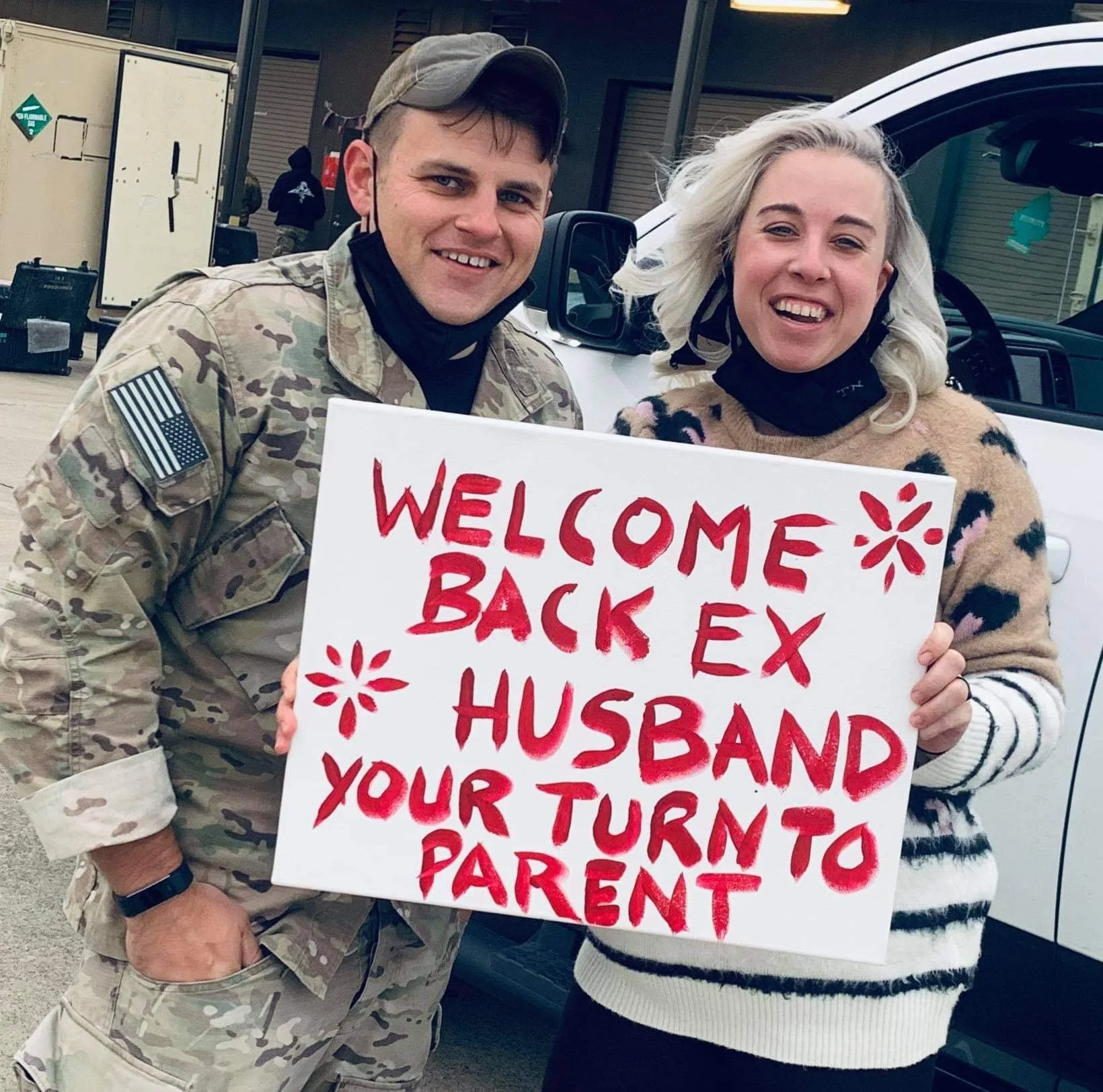
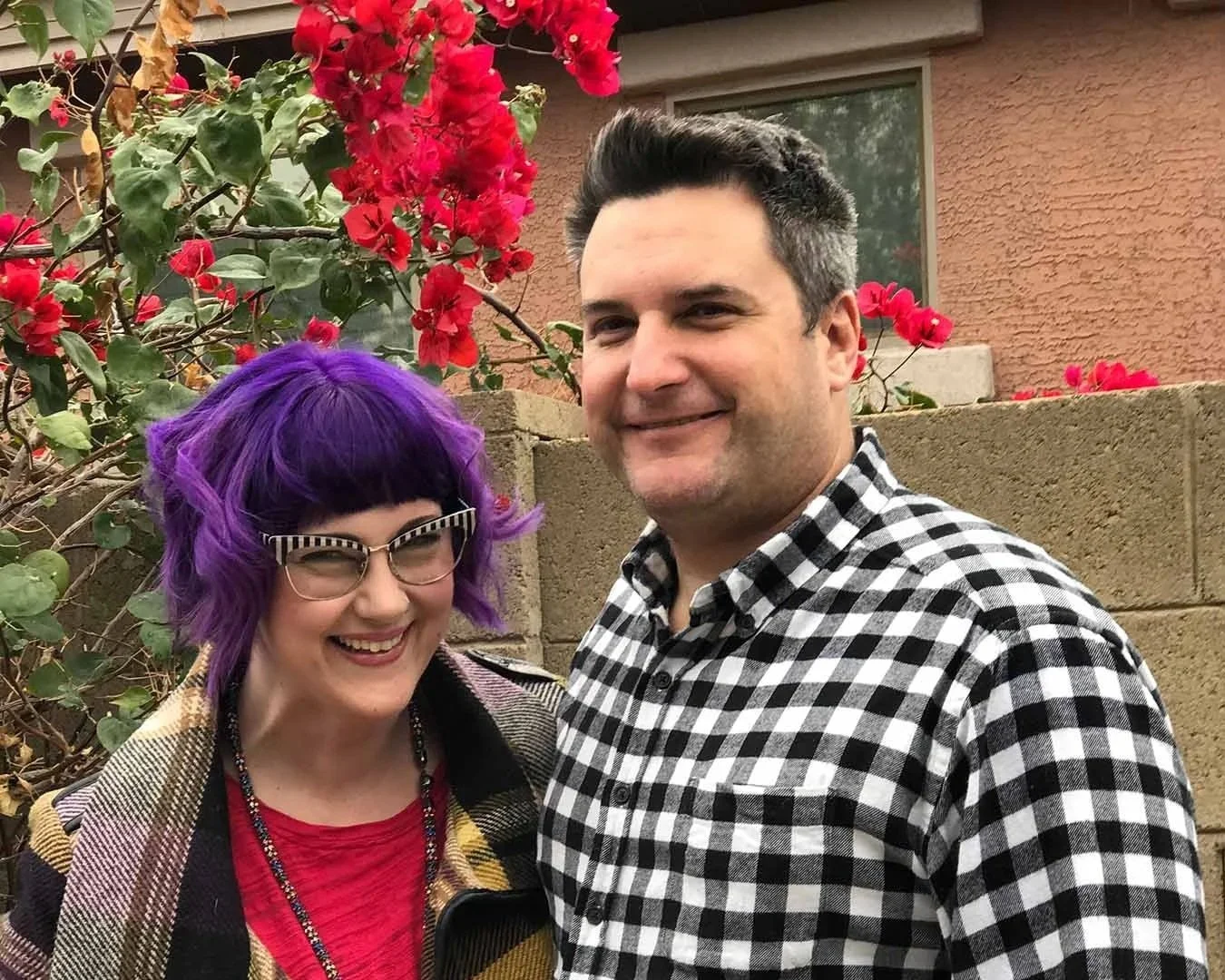
After ending their marriage, Aly and Ed Rosenberger found a way to stay friends, raise their son together, and build a co-parenting relationship that continues to grow stronger over time.
What happens when a marriage ends but the friendship remains?
For Aly and Ed Rosenberger, divorce wasn't the end of their family. Instead, it became the beginning of a different kind of relationship.
Today, they share holidays, communicate daily, support one another's relationships, and co-parent their son without a formal custody arrangement. Along the way, they've navigated difficult conversations, new partners, shifting expectations, and the realities of rebuilding life after divorce.
Their story won't look exactly like everyone else's, but it offers an honest look at what can happen when two parents remain committed to respect, communication, and putting their child first.
Listen to Aly Rosenberger’s Interview
Watch Aly Rosenberger’s Interview
Peaceful Co-Parenting After Divorce
Aly Rosenberger: My name is Aly Rosenberger. I am a mother. Nobody goes into a marriage thinking, "Hey, you know what? In a few years, this thing's going to be done. It's over with."
I think that you have to remember that it's not about you. It's about your kids. Peaceful co-parenting, keeping my best friend, the ultimate stepfather. And it works for us.
Brandi Fleck: February is here and romance is in the air with Valentine's Day around the corner. A fun day for some and a dreaded day for others.
But what happens if the romance dissolves and kids are involved?
First, you probably question everything you thought about marriage or long-term partnerships. And second, you have to navigate working together with someone who you just can't work with. Or can you?
Our guest today finds herself in this very real and not uncommon scenario where divorce was the last thing she and her ex-husband expected, but they ended up needing to work out what decoupling would look like and how to best support their son in the process.
This episode is part one of a two-part series where we explore Aly and Ed Rosenberger's, what I think is, a co-parenting anomaly because they do it so well.
Today, in part one, Aly explains from her perspective how she, her ex-husband, and her now significant other work together to put the kids first in a peaceful co-parenting arrangement that hinges on prioritizing the kids, trust, and communication.
Aly doesn't deny the difficulties they've encountered, but the way she's fought to keep a cohesive unit is admirable. May we all aspire to this level of commitment and maturity if the time comes, or if it has already come.
Aly gives us details. She tells us how she navigates relationship areas such as setting priorities, trust, follow-through, communication, respect, jealousy, compromise, disagreements, boundary setting, bonding, and all while ensuring her son's needs are at the front and center.
Since a big part of co-parenting can involve divorce as the catalyst, we also dive into how Aly dealt with that relationship change and helped her son transition through it too. She also opens up about including her significant other in the picture and what that looks like for co-parenting.
Next week, we'll hear from Ed, Aly's ex-husband and their son's biological father, who commits to and follows through with the same arrangement.
An important note about today's story is if you find yourself navigating co-parenting, it may not look exactly like Aly's and Ed's journey, but it is possible to co-parent peacefully in a way that works for you and your family.
I'd love your support. Thank you so much for your support. If you would like to continue supporting the show, you can always purchase some of our top-notch merch, which is at humanamplified.com/shop. You can leave us a rating and review on Apple Podcasts or on Facebook.
And if you haven't, subscribe, subscribe, subscribe to Human Amplified on your favorite podcast platform.
Aly Rosenberger: My name is Aly Rosenberger. I am a mother to an 11-year-old boy named Alex, and I also am in the data management field. I work for a company called Sigma, and I specialize in Agile.
Brandi Fleck: Awesome, awesome.
Okay, and so you are here because you're doing something amazing. I know I mentioned this a little earlier, but you and your ex-husband are peacefully co-parenting, and I've loved watching your journey on social media.
Did you guys ever think you would be in this situation?

Aly Rosenberger: Absolutely not.
Yeah, I think overall, we thought we would be together forever. We both have a really strong view when it comes to marriage, so we thought we would be able to work this out together. But when it didn't, we ended up in this peaceful, calm situation, and it works for us.
Brandi Fleck: Good, good.
Do you think that there are lessons in your situation that could extend to other people, even if their relationship dynamics are a little different?
Aly Rosenberger: Oh, absolutely.
I think that you have to remember that it's not about you. It's about your kids. Even when there are times you disagree, it's not about you. It's about what's best for your children, and you have to remember that. You seriously have to take that to heart when you make decisions, that what is best for them, not what's best for you, not what works best for you on that day or what works best for somebody else on that day. What works best for your child long-term is very important.
Brandi Fleck: I definitely agree.
What about, I know that there are situations where sometimes people disagree about what best for the children actually is. How do you guys come to a consensus on what the best for your child actually is?
Aly Rosenberger: Oh, we're no different from anybody else on that front. There are things that we disagree on.
It's definitely been a learning lesson that we do the same thing that we did in our marriage. We are a united front to our son's face. We agree with each other, whether or not it's something we actually agree to. Then offline, out of his view, is where we discuss those things and come to a middle ground and decide what we need to do to be on the same page.
It's not about who's right or who's wrong. It's how to get in the same space and for you both to agree.
Brandi Fleck: Okay, so compromise. Lots of compromise.
Aly Rosenberger: Oh, absolutely.
I would say overall we really haven't had to compromise that much since getting divorced. I think we did a lot more of that when he was in those terrible threes and fours on how his direction, on how he would be parented, would go.
I think it's a lot easier now that he's 11. We're both united on how he'll have to learn as far as being a teenager is concerned.
Brandi Fleck: Gotcha. Okay.
Well, so what is the best thing about co-parenting to you?
Aly Rosenberger: Keeping my best friend.
I didn't have to lose my best friend. I still have the person that understands what I'm going through from my perspective with our son, which makes it easy.
It doesn't matter whether you have another significant other or you have family. The only other person who's going to know your child the best is their other parent. So whether that's the mom or whether that's the dad, they're going to understand what you're going through with your child.
If your child's upset, if your child's stressed, they're going to be the person that relates to you the most. So it's good to be in this situation because I truly do still have my best friend.
I can call and say, "Our son's stressed about this," and he can relate because he understands our son to the depth that I do too.
Brandi Fleck: It makes me think too that because your son is part of both of you, he reacts to things in ways that either the dad reacts to or the mom reacts to. So you guys know how you would react in a situation. That probably helps, does it?
Aly Rosenberger: Oh, exactly.
Some of the ways he reacts are exactly like me. Some of them are exactly like his dad. So we are very fortunate enough to know each other well enough to know how to address how he acts in those situations.
Brandi Fleck: Awesome.
So we're going to dive into the context of your marriage and how it ended a little bit later to help us dissect the foundation that you guys had for setting up this peaceful co-parenting arrangement.
But I have to ask, you guys are still best friends. If you're best friends, why didn't it work? Is that okay for me to ask that?
Aly Rosenberger: Oh, absolutely. We've gone back and forth about this too on our own. A lot of it has to do with the fact that we were both careerists. We both really put our career over the other.
We spent more time in our job or with our child than we did in our relationship. So the most time that we would have together really was in a social setting with other people. It wasn't one-on-one.
It stopped being about our relationship, and it started being about group settings and sports and our career.
Brandi Fleck: That makes a lot of sense. Now that we've sort of got that picture, what does co-parenting mean to you, and what all does it actually involve more specifically?
Aly Rosenberger: So I see a lot on co-parenting and people considering co-parenting to be able to trade back and forth with their child and not necessarily having to deal so much with the courts.
But I'd like to think that it goes further than that. For us, we do not have a child custody plan. Our child gets to choose whose house he wants to go to during which time that suits him. It's based off parental schedule, so obviously if I'm out of town, he's going to be with his dad, or if his dad's out of town, he's going to be with me.
But other than that, we don't have set nights or days. It's solely up to the discretion of our son on who he gets to spend time with and when he wants to spend time with them.
However, we have made other choices around that too with the co-parenting. We agreed that we would have family dinner night once a week.
Brandi Fleck: That's awesome.
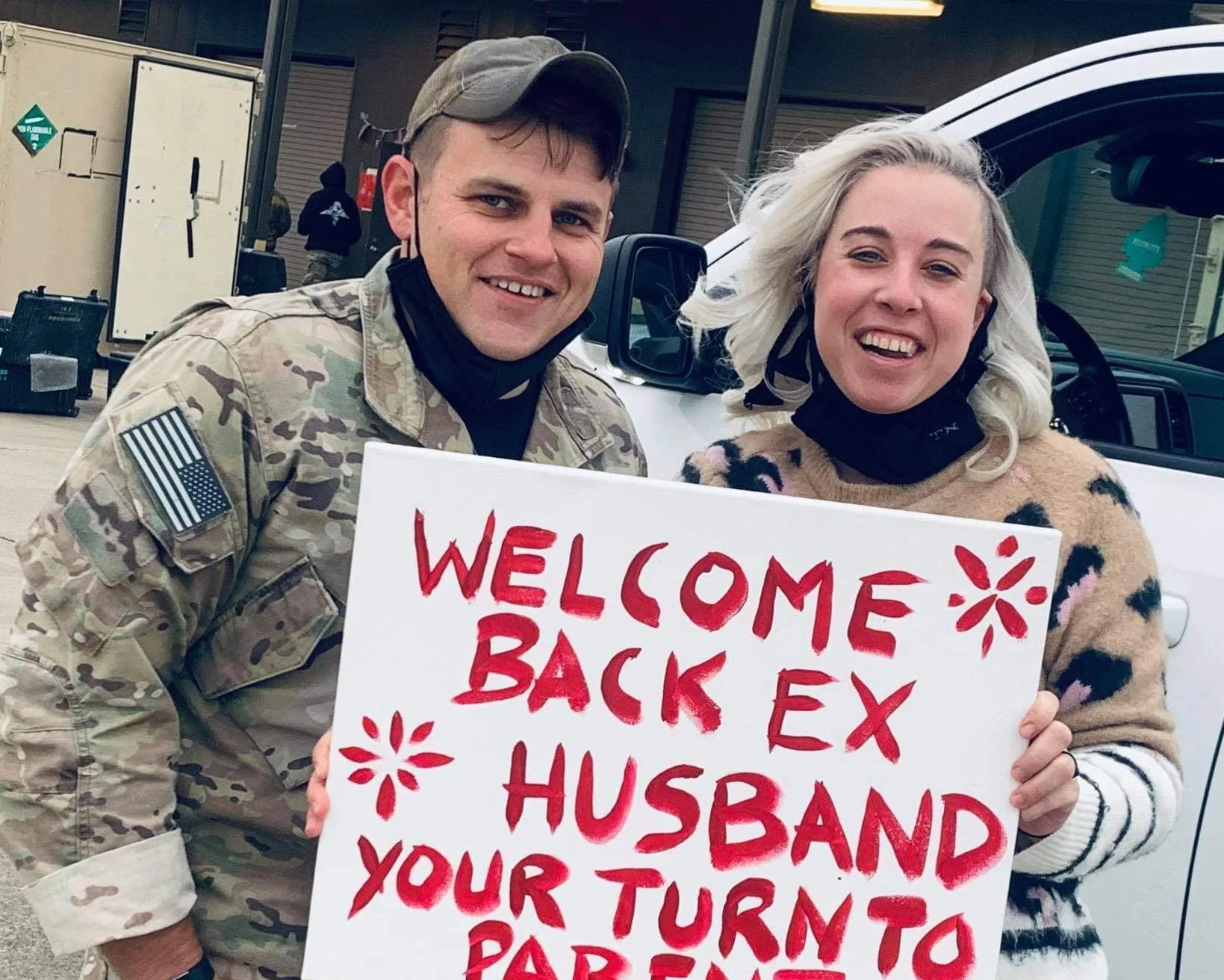
Aly Rosenberger: So regardless of whose house, we have family dinner night. We also spend a lot of time communicating. My ex-husband is deployed right now, and I talk to him on video probably at least four times a day.
Brandi Fleck: Okay.
Aly Rosenberger: And we catch up on how each of us are doing, how our child's doing, any sports going on, and how we can help each other even though we are a far distance apart.
So a lot of it has to do with communication. You can't close the lines of communication. You can't just email or text. To be able to truly co-parent, you need to be able to talk to each other face to face, and you need to be able to talk in a civil tone. You can't yell at each other. You have to be able to have a rational conversation and remember it's about your child.
Brandi Fleck: Yeah, yeah. That is so amazing. I don't know if I know anybody who goes without a plan.
How is your son responding to going back and forth, and does he go back and forth pretty equally when your ex-husband's not deployed?
Aly Rosenberger: So I'll answer that first part first.
He was a little upset. He found out that he was not getting two Christmases, so that definitely crushed his dreams. He didn't realize that he would be sharing holidays with his mom and dad every year.
So we also share all holidays. There's no split holidays. If we want to visit family, we are allowed to do that, but we give a heads up, and actually both our families accept it. So we can travel to each other's families if we really wanted to do it all together still.
Brandi Fleck: That's amazing.
Aly Rosenberger: So that's the cool thing about that.
Our son did not like that idea. He thought he was going to get two Christmases, which meant twice as many presents. So I would say other than the fact that he's not getting two Christmases, he's handling it very well.
Brandi Fleck: That's good.
Aly Rosenberger: As far as the back and forth, he's a daddy's boy, and I love that because his dad's deployed roughly every year. I encourage him to spend as much time with his dad as he can when his dad's home.
So I would say I get more time with him throughout the year overall based off the fact that his dad deploys. But when his dad's home, he gets a majority of the time unless he's traveling for work. And that works out too because I know that I'm fortunate enough to get a lot of alone time with him.
Brandi Fleck: Awesome, awesome.
Navigating Divorce When Children Are Involved
So speaking of your son's transition, I know you said that he was sort of disappointed about not having the two Christmases, but what other feelings did you have to help him transition through as far as, you know, Mom and Dad are splitting up? What does this mean for me? Was he upset? How did that go?
Aly Rosenberger: I would honestly say it went better than we expected.
We expected it to go very badly. I mean, you're an only child, your parents are getting divorced, you're 11. Well, he was 10 at the time.
So we expected that it would crush his dreams and that he would not be able to understand that we were still going to try to maintain a friendship, that we were going to still work through this together, and that we were still going to be a family.
So we expected it to be very hard. The day we told him, he handled it. It was a little rough, but overall he handled it pretty well. I think as time went on, he's realized that we truly are committed to staying friends, that other than having two houses, which by the way are four doors apart from each other.
Brandi Fleck: Ah, yes.
Aly Rosenberger: So we live on the same street. Works out great.
I think when he realized that truly wasn't going to change and that his life wasn't going to change apart from the two houses, that he's handled it really well. He's still a daddy's boy. He still maintains the same sense of lifestyle and same school. So nothing changed apart from us not living together.
The one thing we were surprised about is he wasn't really shocked.
We've never been ones to fight. Even still, we really don't fight. I would say we would argue behind closed doors, but we weren't even aware that our son knew that we really weren't spending that much time together. Not because we didn't care about each other, just we were caught up in our careers.
So when we did tell him, he honestly was not that shocked, which was news to us because he'd never brought it up. He'd never asked us if we were okay, never gave us any sense that he thought that we wouldn't stay married his whole life.
So yeah, it was more shocking, I think, to us that he was aware that we weren't the same as we'd been 10 years earlier or five years earlier.
Brandi Fleck: That's really interesting, how observant kids are and also how adaptable. It's pretty cool when you think about it.
A lot of what you're saying sounds to me like you are really well adjusted, and in order for you to provide that foundation for your son, you've had some really healthy coping mechanisms.
Can you tell us, what did you experience as you were having the realization that things had to change with your marriage, and how did you cope to get through this transition?
Aly Rosenberger: I would say it probably went worse for me than it did for my son.
Not on a coping-wise. It took a long time to finally realize that I felt like we were roommates, that we were really good best friends, but the spark just wasn't there anymore.
So when I finally talked to him about it, because I didn't choose to talk to him about it, I just kind of held it in. When I finally chose to talk about it, we spent a whole long day talking about, "Oh, hey, maybe we are kind of roommates."
And I think after that, I would say I held a lot of stuff in. I didn't tell my friends. I didn't want people to think that I failed at things.
And that's what kind of snapped me out of it. I would not want my son to think that he fails if something doesn't go his way.
Brandi Fleck: Gotcha.
Aly Rosenberger: If things don't end up as you planned them to.
Nobody goes into a marriage thinking, "Hey, you know what? In a few years this thing's gonna be done. It's over with."
Brandi Fleck: Yeah.
Aly Rosenberger: Nobody goes into it that way.
And I wouldn't want my son to think that they're automatically failing at life if something goes wrong in their life. So that's what kind of snapped me out of it and made me realize that I needed to put him as a priority, not me.
It made it a lot easier to realize that I needed to change my focus to focus on him.
Brandi Fleck: Gotcha, gotcha. That makes a lot of sense. Okay, I'm going to shift back into disagreements.
How to Successfully Co-Parent and Put Your Child First
You mentioned compromise earlier. Can you walk us through sort of y'all's process for reaching a compromise when you have a disagreement? Are you really methodical about weighing pros and cons, or do emotions get in the way? How do you typically get to where you need to be?
Aly Rosenberger: Well, we're all humans, so sometimes emotions do come into play.
I would say I'm less rational than Ed is. Ed is definitely the more rational of the two of us. So usually when we disagree, if a feeling comes into it, I would say it's me.
I think he's better at putting things down. Here's the pros or cons. I'm good at that once I have my little mini meltdown, but I don't have that meltdown with him. I'll have the little meltdown about the situation in general that we disagree on.
Most of the time, the things that we disagree on are things like Alex being grounded. What does that mean? How strict is that?
Brandi Fleck: Yeah, yeah.
Aly Rosenberger: Out of the two of us, I would say I'm probably more strict than he is. He's definitely the fun dad, and I tend to enact harsher punishments.
So punishment for a month, no electronics, things like that. Removal of doors if you slam the doors. Things along those lines are things that we've definitely had to talk about.
What we've come to agreement on is that when we do agree on whatever punishment suits the crime, that it flows to both houses. So it doesn't stay at one house. It also goes to the other.
So with that, the punishment becomes a joint punishment, and it's something that both parents respect and both parents hold our son accountable to.
Communication Strategies for Healthy Co-Parenting
Brandi Fleck: I love that word, respect. So this is really big because I think a lot of co-parenting breakdowns happen when there's a lack of respect.
So was there ever a time when you guys had lost respect for one another because of rough patches? And if so, how did you gain that respect back?
Aly Rosenberger: Oh, absolutely. Absolutely.
I know that he's probably lost respect for me at times. I'll let him tell those stories.
And then myself, when we first split up, we went through the dating game. The dating game is definitely something, and it's putting your focus elsewhere besides your child. We both went through that.
So I would say there were varying degrees of respect loss when it came to putting the needs of our son first.
I think when we both tried to start dating, we shifted our focus from our son to trying to fill those needs that we had, ultimately.
So we did have some tough discussions about that, and it took time. It really took time to build that back up and to set boundaries that if you're going to go on dates, you do it not on your time with our child, that you arrange that time so they're with the other parent.
Things along those lines were things that we had to discuss. They're not something you discuss when you're married, so it was a new discussion. And it helped build that respect, us being able to have that conversation.
Brandi Fleck: Okay, that's a good point. It's like if you keep communicating and sort of follow through.
Aly Rosenberger: Absolutely.
Brandi Fleck: Yeah, communication is key.
And when you do what you say you're going to do, I think that probably helps too because if you guys agreed to something and then one of you just didn't uphold that agreement, that would make it all sort of fall apart.
Aly Rosenberger: Oh, absolutely. You have to follow through with your commitments and your communication really is key.
Even if things change and plans change and you can't be there when you say you are, if you communicate that, it is way better received, especially in a situation where you're divorced.
You can't just send the text 45 minutes after you were supposed to be there and say, "Oops, my bad. I'm not going to be there." It doesn't work like that, and it doesn't work like that for your child.
So you have to make a lot of decisions when it comes to communication, that you are committing to being there, you're committing to communicating where you're at, and you're committing to ultimately stay in a friendship-type situation for your kid's sake.
There's never going to be a time that we're not allowed in the same room together because we can't agree.
Brandi Fleck: Right, right.

There's so much here I just want to ask you about, everything from family support to following through on your commitments. I mean, because you really have to mean it and do it.
But you did mention the dating game, so I would love to dive into that for a little while because a lot of people go through this.
When you introduce a significant other into the picture, do they enter that co-parenting relationship with you? Let's just start there.
Aly Rosenberger: Yes.
So we have a rule, and it was something that we decided jointly on together, that before anybody entered our child's life, they had to pass the other person.
Brandi Fleck: Okay.
Aly Rosenberger: And if they did not get a pass, then they do not get to stay.
Brandi Fleck: Okay.
Aly Rosenberger: Makes it a little difficult. Makes it definitely a different situation. But we really do want what's best for each other and want what's best for our child.
So I started dating, in a serious situation, somebody from my past. Somebody that I had joined the Army with, known through high school. He had to meet my ex first before he was allowed to meet our son.
And that was definitely something. One, I was nervous.
Brandi Fleck: I'm sure he was nervous.
Aly Rosenberger: Yeah, yeah.
And ultimately, Ed gave approval for him to meet our son and to continue being in my life and our son's life. They've developed a great friendship between each other.
But it also involves co-parenting because while they don't get to make the 100% decision when it comes to your child, they are still in that situation, and their parenting style is different. Their opinions still matter. Their communication matters just as much.
If you're going to be in a relationship with somebody and you have a child, you have to all be on the same page. It has to all be united.
So that was something that we made clear at the beginning and that Ed made clear to our son, was that what my significant other says still goes. If you have a problem with it, you're more than welcome to discuss it with your parents, but there is no opportunity to be disrespectful. That's not an option.
Introducing a New Partner Into a Co-Parenting Relationship
Brandi Fleck: Well, I have to ask, do feelings of jealousy come into play that you guys have to deal with on either side? Whether it's your significant other having to see you interact with your ex-husband so much, or you guys seeing each other with different people.
How have you guys sort of navigated those emotions?
Aly Rosenberger: As far as my significant other seeing me spend so much time with my ex, that was hard at first.
Brandi Fleck: Okay.
Aly Rosenberger: It definitely was a learning curve. And when he realized that it truly is a friendship, that there's nothing else, he's been 100% supportive and on board.
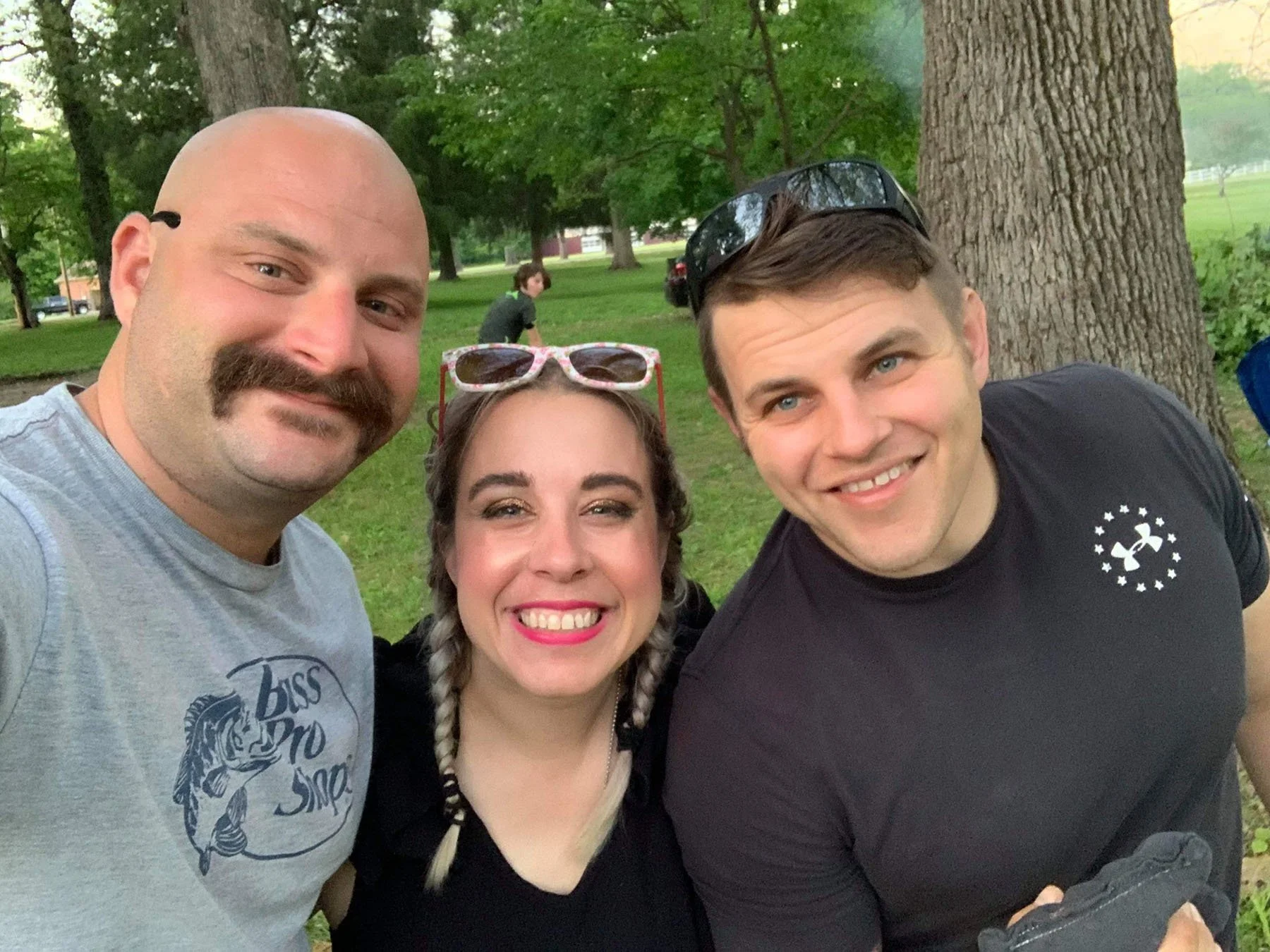
They actually probably talk an equal amount of time as I do, and they spend free time together. They go out shooting together. They spend a lot of time just them and bonding, or bonding with our son.
That aspect has been very good. It was hard at first because it's hard to understand. Even now, it's hard for people to understand how you can be best friends with your ex.
Brandi Fleck: Yeah.
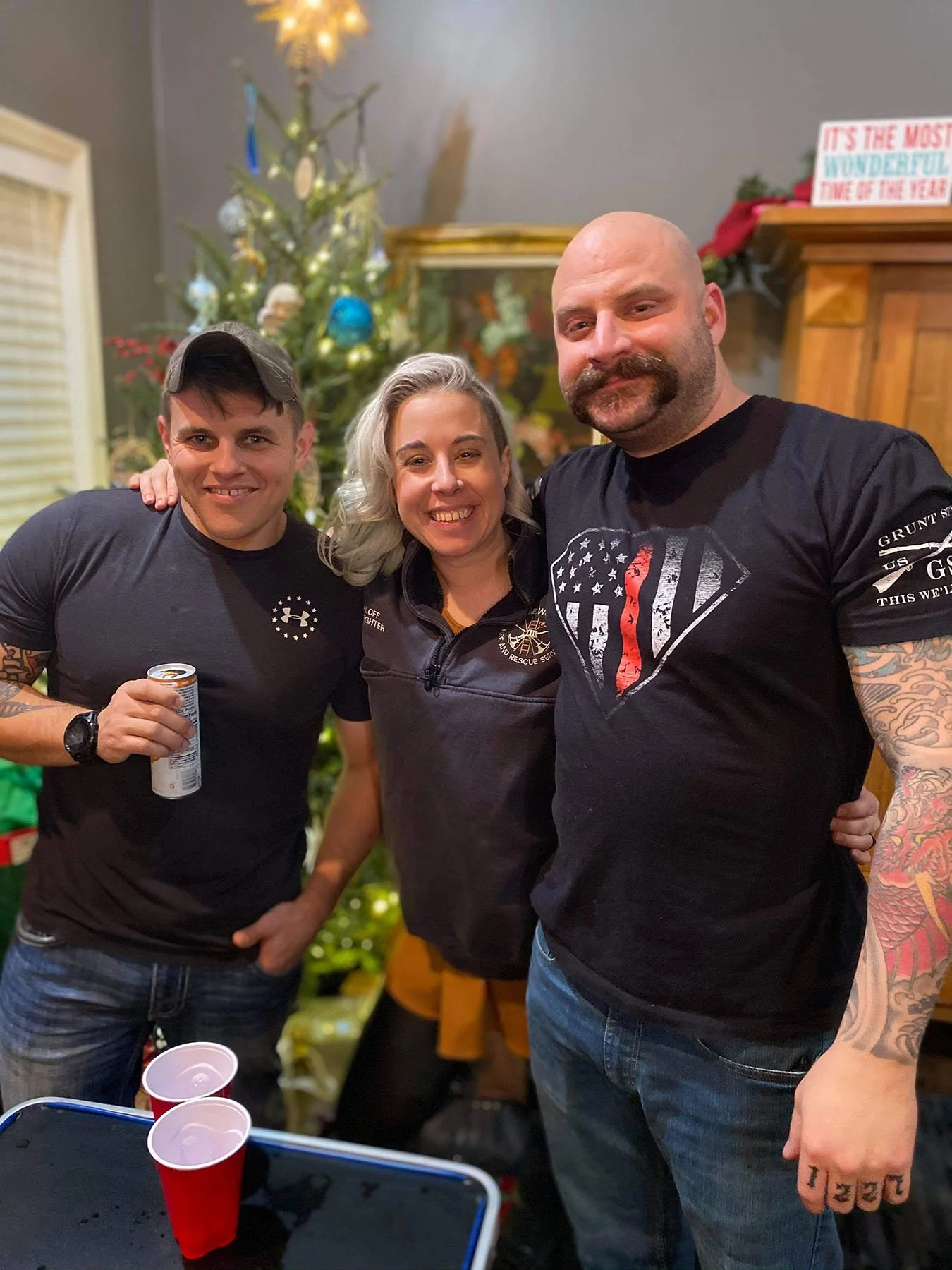
Aly Rosenberger: If you're best friends with your ex, why aren't you still married? Well, we just realized we weren't a great married couple.
Brandi Fleck: Yeah.
Aly Rosenberger: But that doesn't mean we can't be good friends. So that was hard. As far as jealousy against each other, I don't know. From his perspective, I think he'll have to give that.
From mine, no. I've been jealous about time that he has been on dates, I would say. Not jealous that he's out with somebody else, but jealous because sometimes I felt like, at the beginning, like I said with our dating game, that we needed to spend more time with our child.
Once we got into that motion of how things were the new norm, it was really easy to drop those feelings.
Now, I would say he would probably say I interfere because I want to find the right person for him. So I do kind of interview people.
I would say I put a few interviewing questions out on their life. So I would say he says I interfere more than jealousy. It'd be interference.
Brandi Fleck: Okay.
Aly Rosenberger: I do. I do interview candidates. I know that's really, really horrible, but I want him to find his best match, and I want him to find a person that's going to be great with our son too.
I want to be able to continue this for the next 30 years, that we can all spend time together and have no issues. That when we have grandchildren one day, we're all in the same room holding grandchildren.
So I would definitely say interview a little bit.
Brandi Fleck: That's awesome.
I mean, it makes sense, though, because to peacefully co-parent and to work together, you all have to get along. So any stepmother figure that would enter the picture would need to get along with you.
What would you say is your criteria for making sure that another person is good for your son?
Aly Rosenberger: Right now, I'd say a lot of patience.
Brandi Fleck: Okay.
Aly Rosenberger: I've got a pre-teen. He's already in middle school, so I would say patience is key at this point in his life.
He is very much independent and very much like me. So he can handle a lot on his own and likes to be on his own.
So I would say for my ex, I want somebody who loves him for him. Somebody that puts the time into being there.
He spends a lot of time gone, and he needs somebody that can understand that he's gone and that what he does is important, and can be there for him when he is home and be there for our son when he's gone and when he's home.
That when Dad's gone, it doesn't mean that in a stepmom situation you shouldn't care about their son. That's going to be your son too one day.
So it would be putting in that time whether or not Ed's there or not.
I mean, I have many criteria for how I think they need to be the best person for Ed. I want somebody who cooks for him, who can make a better apple pie than I do, because right now I have to make him his apple pie.
He can't do his laundry, so I need a girl who can step in and do his laundry so I can stop doing it.
I want somebody who ultimately loves him for him. He's a great guy. He's a great person. He has a great family. It just wasn't with me.
Brandi Fleck: Gosh, I feel what you're saying because, I mean, I've been there too. And I think a lot of people have.
So anyways, I'm just taking it all in. At the beginning of the episode, you mentioned your beliefs on marriage.
Lessons Learned From Divorce, Marriage, and Co-Parenting
Do you think you will ever get married again? And what were those initial beliefs, and then how have those beliefs changed after going through this experience?
Aly Rosenberger: If you would have asked me when I filed for divorce, or when we officially ripped the Band-Aid off, I would have said no. I wouldn't get remarried again.
I feel like I had a great partner that I ultimately did not put the time, or I would say give myself completely to them, in my marriage because I focused so much on my career.
You can't say that you ultimately give yourself to them in that situation. You put your job first, which means that they're second. And even in the situation with kids, that means that they're third. They take third place in your heart.
My son has always been my number one priority. So I would say no. I at first thought absolutely not. I tried. I went on one date before I started dating somebody from my past, and it was abysmal. He no-showed me.
Brandi Fleck: Oh.
Aly Rosenberger: And I will say I cried into a bucket of wine clams. They were delicious.
Brandi Fleck: It's not funny, but it's like...
Aly Rosenberger: Oh, I know. I laugh about it now.
I did not see myself dating. I did not see myself getting remarried. I honestly liked the idea of just focusing on my child and focusing on my job.
Then I was able to reconnect with somebody in my past, and it was always my "what if" person.
Brandi Fleck: Yeah.
Aly Rosenberger: And it made me change my mind.
I have definitely realized that I do want to get remarried. Actually, well, by the time this airs it'll be public news, I'm engaged.
Brandi Fleck: Congratulations.
Aly Rosenberger: Thank you.
So, 11/20/2021, that's when we will be getting married.
So I will say I did change my mind. I think he has turned into what I would dream as the ultimate stepfather.
And I think my ex would definitely agree, since he has agreed that he would love to be at our wedding and in it if I want him to.
Brandi Fleck: Wow. Okay.
Aly Rosenberger: I would say my vision has completely changed from where I felt I was before.
As far as my views on marriage, I do have very strict views on commitment and on marriage. I wanted the lasting, forever happily ever after, and I'm hoping that I get that opportunity now.
My parents both were divorced, both of them multiple times. Multiple divorces. And that wasn't something I wanted.

One of the things I really loved about Ed is that his family has been together forever. His family comes from a committed, long marriage, and it was something that I really liked seeing. It was really refreshing, parents that had been together their whole lives.
So I think both of us went into this having that view that this was it. The only option out was when one of us passes.
So I didn't see it coming, and I think that's part of the reason both of us, it took so long to finally pull the plug, is that it was ripping open a fresh wound. It was definitely tearing a piece out of you and making you feel a little bit lost.
It was something we didn't know how to do without each other.
I think that's why we've been able to be so strong as friends, is because we didn't have to lose the friendship we had and the ability to lean on each other, not being together.
Brandi Fleck: How long were you guys married?
Aly Rosenberger: It would have been 11 years in September this year. So we had been together quite a long time, about 13 years.
Brandi Fleck: Okay.
Aly Rosenberger: And still, we can talk about anything.
That's the one thing I'm very fortunate about. I talk about my dating problems. I called him when I got stood up. I called him when my date went well with Ryan.
I will say that he is the reason I went on the date in the first place. I told him I was too scared to go after the first time, and he said, "Worst comes to worst, he doesn't show up and you eat more clams."
Brandi Fleck: Yeah.
Aly Rosenberger: So no harm, no foul. With that, I'm very fortunate that I have somebody that I can walk this path with and still communicate and talk to.
Ultimately, I didn't lose the parts that I loved about my relationship, which was having somebody there to talk to.
Brandi Fleck: So when it comes to your new marriage that you are getting ready to embark upon, which that was such awesome news, by the way, do any lessons from focusing on your career and having that be priority over your ex-husband, how is that going to translate into your new marriage, and what are you doing in that regard?
Aly Rosenberger: Absolutely. And it was something that we discussed too at the beginning, that I didn't want to repeat my mistakes from the past. So in the last five years, I've been 50% travel.
Brandi Fleck: Okay.
Aly Rosenberger: So I have reduced that down to under 25% travel a year. So I'm home more.
So that was one of the commitments that I made. And then I also made a commitment to work from home so that I have the ability to be more flexible in my life and be there when I need to be.
Brandi Fleck: That's awesome.
Aly Rosenberger: Yep. It was a big change, but yeah, it's worth it. It's worth it.
Brandi Fleck: Good, good. Okay, and then what would you say your son gets from his relationship with his soon-to-be stepdad that maybe he wouldn't get from his relationship with Dad?
Aly Rosenberger: Oh, baseball. Hands down. And Ed will say too, the thing that he gets is his favorite thing in the world right now is playing baseball.
Brandi Fleck: Okay.
Aly Rosenberger: It is what he eats, sleeps, dreams, breathes. He watches videos on it. He reads books on it. He's consistently throwing balls in the backyard.
The one thing I would say that neither one of us have a strength in is baseball. We are always at the games. We are always there to help, but that's not our wheelhouse.
And ironically, that is my significant other's wheelhouse. So they spend hours upon hours out in the yard throwing the ball, improving his skills, working on batting, and it gives him that opportunity to have something special with him.
Brandi Fleck: Yeah.
Aly Rosenberger: That he doesn't have with one of us because it's something that's not something that we do.
So he has a hobby now that he can interact with Ryan with that Ed and I really weren't that good at. It was funny. It came up this year. Travel ball is going to be signing up soon, and he was like, "Mom, just know I want Ryan there and Dad, and then you can come if you have time."
So he automatically gravitated towards Ryan because he knew Ryan could help him.
Brandi Fleck: Yeah.
Aly Rosenberger: But Dad is always numero uno. He is for sure a daddy's boy. So Daddy got second place, and I got third if I have time to be there.
Building a Successful Blended Family
Brandi Fleck: Okay, all right. Well, hey, are you going to be a stepmom?
Aly Rosenberger: Yes, I am. Ryan has a son too, which works out great. He is eight years old, so elementary and a middle schooler.
Brandi Fleck: Okay.
Aly Rosenberger: And he has sole custody of his son, so I have the opportunity to have two children, two boys.
And it is an amazing journey to take together, and it's so rewarding. It's rewarding. I didn't think that you could love somebody the same way that wasn't biologically yours, and I swear having an extra little boy just brightens my heart on a daily basis.
He doesn't grow up with his mother, so that's a different situation. I was very fortunate enough, last week he made me breakfast. He made me a burnt bagel. Not on purpose. He tried to make me a bagel. He put it at my office desk in my office, and on top of it, it said, "I love you, Mommy A."
And it just melted my heart. I ugly cried right there. He still calls me Aly to my face, but he did write me my first mommy note, and that filled my heart with so much joy.
Brandi Fleck: Yeah. You're going to make me cry. It's so sweet.
Aly Rosenberger: Well, and that's what I'm hoping for too with my son, is that my son finds that other person with Ed that he loves too.
That's the me when I can't be around. I want somebody who can fill my space when I'm not available.
Brandi Fleck: Yeah.
Aly Rosenberger: And that's ultimately what you should want. And I'm very grateful that I have that situation, to be that stepmother figure, because I can see the struggles that they'll go through having a stepchild, that it is different. You do go through different struggles than you do with your own child.
So what might be the same for your own is not going to be the same for a step.
I'm hoping my experience helps me to understand when they struggle with my own son.
Brandi Fleck: Yes, that is so true. So you're not co-parenting for your stepson because you said Ryan has full custody, correct?
Aly Rosenberger: Yes. I have had interactions, mainly with court proceedings, but it is a very, very different situation.
It reminds me, and actually Ed has witnessed some of the situation, and I would say for both of us it was a real refreshing moment to realize how lucky we were that we have been able to put our son first.
We've seen the other side of things. We've seen the ugly side, how divorce can be and how child custody can be. I think that it pushes us even more to be what our son needs.
Brandi Fleck: Well, have you thought about when your stepson ends up seeing the relationship you have with Ed and how you guys sort of parent your biological son? How are you going to talk to your stepson about the differences?
Aly Rosenberger: See, that is one thing that I would say we're very lucky with.
Ed spends a lot of time with us, so my stepson has a lot of opportunities to see a healthy co-parenting situation. He spends a lot of time with Ed too, and Ed doesn't treat him any differently than he treats our son.
When we're all together, we are very much a co-parenting unit and treated as kind of a tribe, how our relationship works.
There's no, "Alex is my son. I'm not interacting with DJ because he's not mine." He treats him with the same respect and courtesy.
And DJ gets to see that Alex has two parents that spend a lot of time together.
We have had some questions because ultimately it's a different situation than his, but the thing that I always repeat to him is that there is a way to be friends and that there is a way to put your child first.
If he's ever in this situation, heaven forbid, obviously I don't want him to get married and get divorced. Nobody wants that.
But I want him to know that if he's ever in that situation, you can always take the high ground and attempt, you should attempt, to try to make it work for your child.
And I know that's not feasible in some situations. In his situation, it's not feasible.
It took me a long time to realize that because I wanted to believe that every relationship could be like ours.
Brandi Fleck: I want to believe that too. Why can't they? Why can't they?
Aly Rosenberger: But it takes both sides. Both sides have to 100% commit to the journey. That's something that you both have to work for.
And if there's one side that has no interest, it makes it hard and ultimately sad for your child. So I recommend you trying it, trying to communicate, trying to put their needs above your own because at the end of the day, they're the ones that are the children.
You're helping shape their life and their views on things. You already had that happen to you when you were a child. You're not 18 anymore. You're an adult.
So it's your opportunity to help shape theirs in a healthy manner and show them what healthy relationships look like.
So if anything, even if DJ can't have his parents like Alex is lucky enough to have his, hopefully I can show him through my relationship with Ed that you can still be an adult in situations like this.
Brandi Fleck: Well, Aly, that is all just so amazing and so refreshing, and I'm just really honored that you shared with us today.
Is there anything that I didn't ask you that you think is important to put out there?
Aly Rosenberger: No, I think that you hit me with some good ones, and I really enjoyed it because I do think more people should try to understand situations like this.
I will say it was hard when we announced it. We lost friends that couldn't understand how we could be friends.
Brandi Fleck: Oh.
Aly Rosenberger: We had family not understand.
Now our family is on board. My mom still calls Ed her son. I still talk to Ed's parents every week to check in and let them know how our son is doing and their grandson.
I actually got to see them this summer when our son went to spend two weeks with them. So it's taken time for people to realize that it wasn't a phase. It wasn't a theory.
As things have gone further, we have just gotten stronger in this mode and have been able to work together even better as time's gone on.
Brandi Fleck: Awesome. Well, thank you for coming on to the show and sharing your story. It has been an absolute pleasure.
Aly Rosenberger: Awesome. Thank you so much for having me.
Join the conversation!
Feel free to share your own experience and let me know if you have any questions in the comments.
Related Posts


















Hi, I’m the founder of Human Amplified. I’m Brandi Fleck, a recognized communications and interviewing expert, a writer, an artist, and a private practice, certified trauma-informed life coach and Reiki healer. No matter how you interact with me, I help you tell and change your story so you can feel more like yourself. So welcome!
Find More on the Blog
Topic
- ADHD
- AI
- Atlanta
- Black and BIPOC
- DIY
- FAQ
- LGBTQIA plus
- Los Angeles
- Nashville
- Seattle
- St Louis
- St. Louis
- UFOS/UAPs/ETs
- abuse
- accountability
- addiction and recovery
- adoption
- affirmations
- afterlife
- altered state
- angels
- animals
- anxiety management
- art
- astrology
- atlanta
- attachment
- awakening
- beauty
- behind the scenes
- being human
- body image
- body work
- boundaries
- brandi fleck
- breathwork
- bullying
- burn out
- burnout
- cancer
- career
- caretaking
- chakras
- channeled
- clarity-dive
- clarity-practice
- clarity-primer
- clean products
- coach
- codependency
Recent Blog Posts

Visit the Full Podcast Audio Archive

Affiliate