What Successful Co-Parenting Looks Like After Divorce
Interview By Brandi Fleck
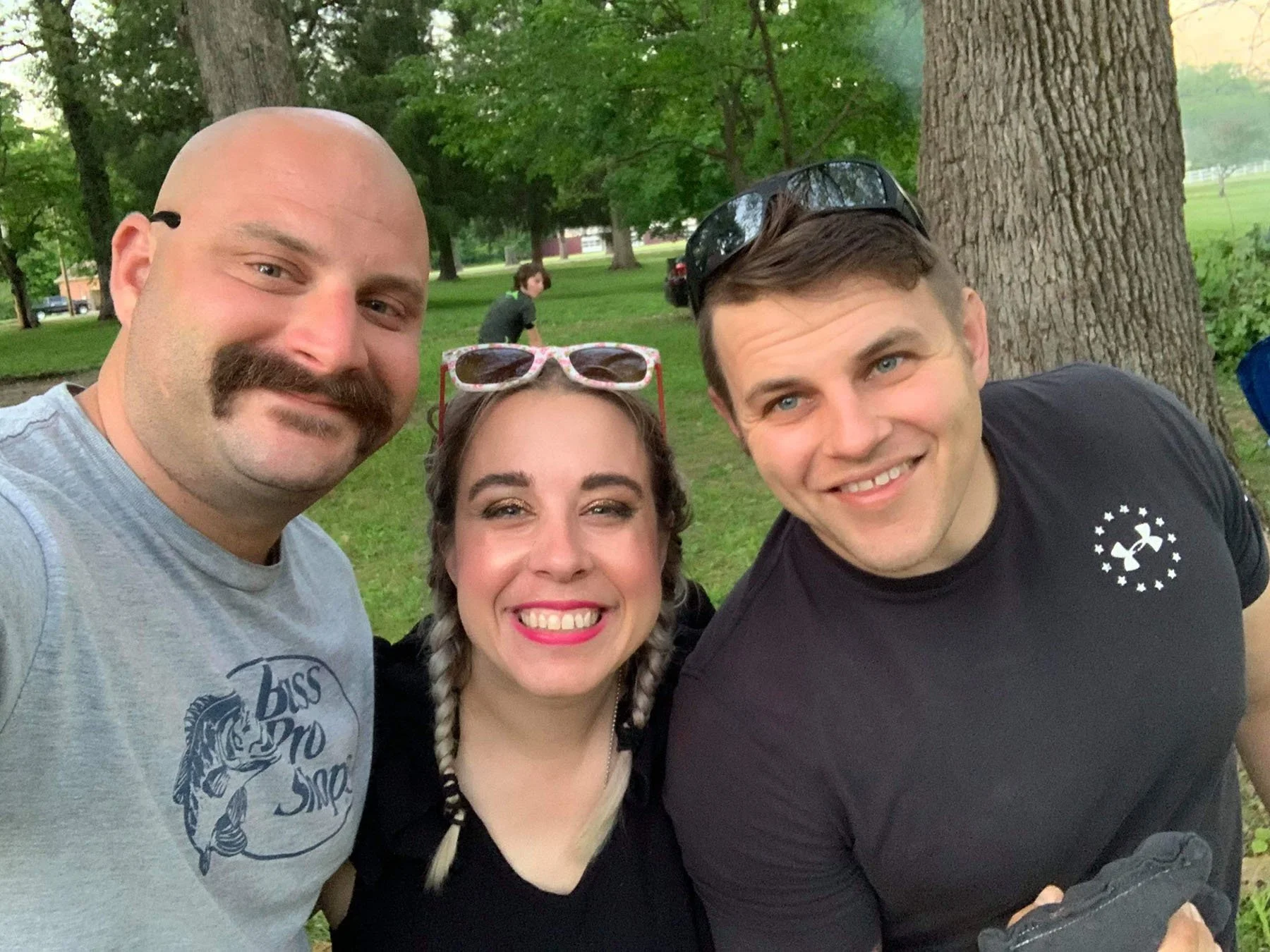
Ed Rosenberger shares how communication, mutual respect, and a child-first mindset helped him, his ex-wife, and her fiancé build a successful co-parenting relationship after divorce.
Divorce is often treated as the end of a relationship, but for parents, it's also the beginning of a new one.
While many families navigate conflict, custody battles, or years of lingering resentment, some parents make a different choice. Not because the divorce was easy, but because their child's well-being matters more than winning, being right, or holding onto old hurts.
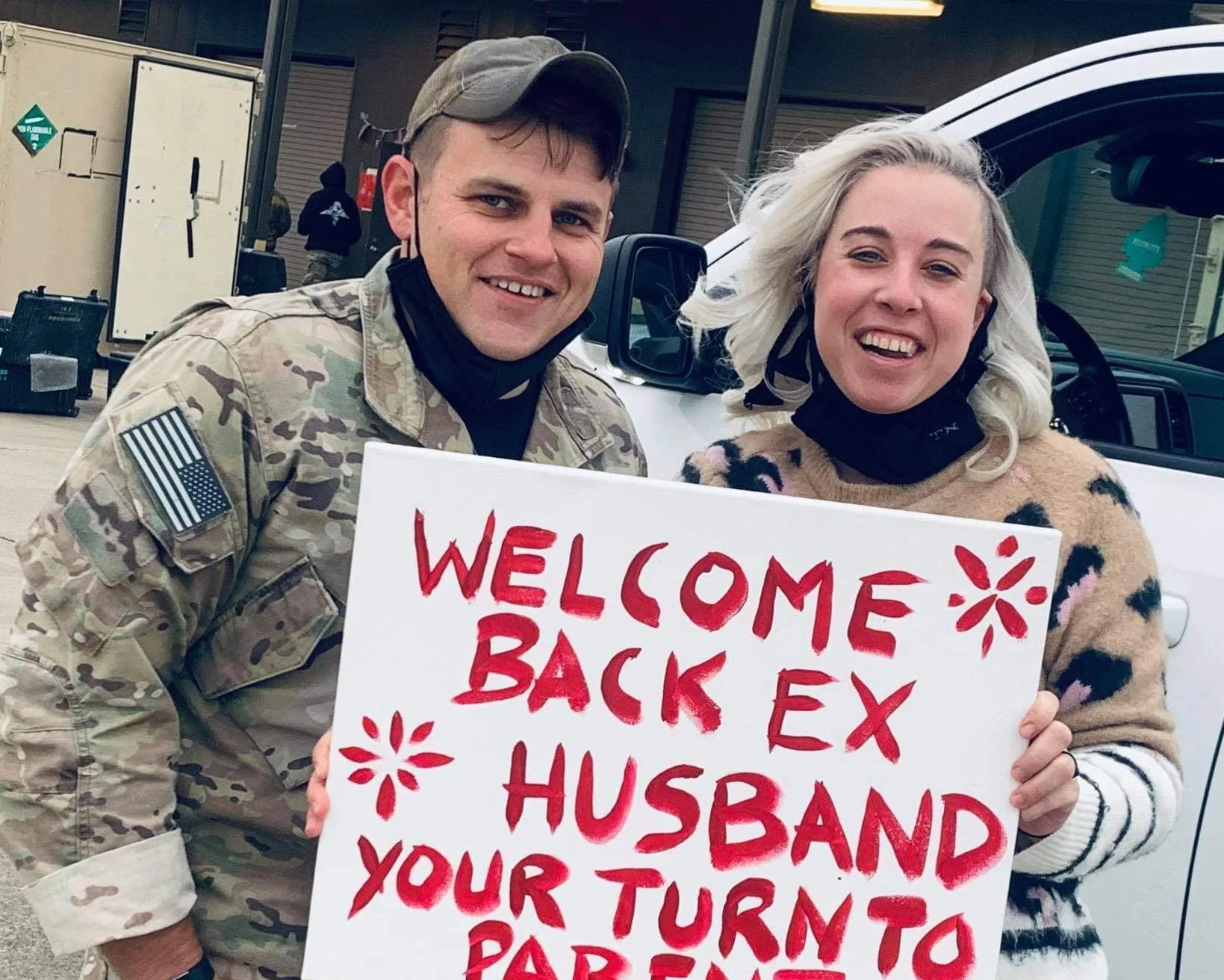
Ed Rosenberger shares how he, his ex-wife Aly, and her fiancé built a co-parenting relationship rooted in communication, respect, and shared responsibility. Their story challenges common assumptions about divorce, blended families, and what it means to truly put a child first.
From introducing a new father figure to maintaining consistency across households, Ed reflects on the decisions that helped their son adapt to a major life change without turning his world upside down.
Listen to Ed Rosenberger’s Interview
Watch Ed Rosenberger’s Interview
Life After Divorce and Finding Yourself Again
Ed Rosenberger: My name is Ed Rosenberger. Two weeks after Alex was born, I took my first deployment trip. You went from a baby you could hold in the palm of your hand to now he's up and walking around. The most important thing is definitely him. It's always been.
I think we're allowing him to see that we can get along and that you can still treat each other with respect. We're a team, the three of us. Us holding hate towards each other over things said and done does neither one of us any good.
Brandi Fleck: This episode is part two of a two-part series where we explore Aly and Ed Rosenberger's what I think is a co-parenting anomaly because they do it so well.
So if you haven't listened to part one yet, check out Episode 65 that dropped last week. But today, in part two, Episode 66, Ed Rosenberger explains, from his perspective, how he and his ex-wife and her significant other work together as a team to co-parent and why it's so important that they do.
Much like Aly's side of the story, Ed says communication is one of the main ingredients for success. Respect and consistency across homes is also a priority for this co-parenting trio.
We really dive deep into how Ed supports their son as a father and how he nurtures and protects their son's ability to grow, whether in sports, school, or with his relationship with his soon-to-be stepfather.
We talk about everything from the initial transition of the divorce to setting ground rules for discipline and how Ed's friendship with Ryan, Aly's fiancé, has grown.
Ed gets really personal and talks about what he expects from a future partner of his own and what he envisions for the future of this group's peaceful co-parenting relationship.
Ed has a military career in the U.S. Special Forces. He grew up in Athens, Pennsylvania, a small rural town. He describes it as having more cows than people. He sees his most important job as a parent in prioritizing his son.
Right now, Ed is getting to know himself again after divorce and has a positive outlook for the future. He enjoys hunting and jiu-jitsu.
Please note, when we recorded part one with Aly, Ed was deployed. Several months passed between Aly's and Ed's interviews. We waited for Ed to be home from deployment before we recorded. So if you notice any discrepancies in details, such as their living arrangements, for example, it's due to the passage of time.
Also, near the end of the interview, our internet connection got a little spotty, so the sound goes in and out for just a few seconds. The discussion is too good not to share, though, so just hang in there with us.
Just a couple years ago, I set out to find answers so we could stop relying on thoughts and prayers to change our world. Now I want to share those answers with you.
That's what the free ebook, What It Means to Be Human, is all about.
I've been asking people, "What does being human mean to you?" since November of 2017 as informal research into our existence and how we live.
Most people hesitate and don't know how to immediately answer that question, so it's a really fun one. The more you think about it, the more complex it gets.
So if you've ever thought about this, or even if you haven't, head over to humanamplified.com and tap the button at the very top of the homepage to go to our ebook and download it.
After reading this ebook, you'll walk away with the ability to end up with more connection, a better understanding of what makes us tick as humans, increased awareness and appreciation for our differences and similarities.
It's a free, beautiful PDF with real data gathered over two years from this five-star podcast. It even includes answers from our Season 3 guests whose answers you don't get to hear right now on this show.
It's based on 66 different perspectives, with 24 direct quotes broken down and analyzed over 20 pages.
There's one super easy little homework assignment if you'd like to be able to take action and learn from what you've read. And I give you a crazy truth-bomb answer to what it means to be human based on the patterns that have emerged from all the perspectives over the years that you don't get anywhere else but this ebook.
So once again, go to humanamplified.com. Tap the button at the very top of the page to go download your free ebook.
Ed Rosenberger: My name is Ed Rosenberger. I've been in the military, U.S. Special Forces, for 15 years now, so I just hit my 15-year mark.
Had a little bit of college experience prior to joining the military, but grew up in a country town, super country, where there's more cows than people.
Was married, not anymore. Have one wonderful son who just turned 12 the other day, so two days after Christmas. And just kind of go from there.
Brandi Fleck: Okay, awesome, awesome. What town did you grow up in?
Ed Rosenberger: Athens, Pennsylvania, on the northeast, well, northern border of Pennsylvania, right there with New York State.
Brandi Fleck: Okay, awesome. All right, so now let's just dive in and sort of get real deep immediately. Where are you in life now, and just describe what life is like for you today.
Ed Rosenberger: It's kind of a transition point right now. I just recently got back from deployment to Iraq, came back and moved back in with my ex-wife for a couple weeks until we get the housing situation settled.
Got to spend Christmas with Alex and Aly and her new fiancé and their son.
Right now, I'm trying to kind of figure out where I'm going in life. I know I've got five more years in the military. I've got a wonderful son, and we're just trying to move on from there.
It's just kind of finding myself right now.
Brandi Fleck: Okay. All right, let's talk about finding yourself a little bit. What are you doing to sort of form or get to know this identity of you that's not married and not like you had been for so many years?
Ed Rosenberger: Planned a bunch of trips with the guys that I work with. I've got a bunch of hunting trips. I love to shoot, love to hunt, love the outdoors, so I planned a bunch of trips.
Last weekend we had a hunting trip down in west Tennessee, just off Reelfoot. Really got into the ducks there and had a good time.
I'm taking leave right now, so I'm up to see my sister. Right now I'm at my sister's house. Going to see my older brother, and then after that picking up Alex at the airport. Then he's going to drive with me up to see my mom and dad.
Brandi Fleck: Awesome. And just so our listeners know, Alex is your son.
Ed Rosenberger: Yes.
And then after that, we've got just a bunch of trips planned between me and Alex, me and the guys, and just trying to keep busy with work and that type of stuff for now.
Brandi Fleck: Okay. All right. So did you ever think that you'd be where you are today in life? And now that you are, how do you feel about it?
Ed Rosenberger: No. This is definitely a new area for me. It's weird being a single father at 35 trying to figure out what you want to do.
So this was definitely not where I pictured myself five years ago.
Brandi Fleck: Are you happy?
Ed Rosenberger: Yes and no. I'm happy about a lot of things. There's times that you get lonely, but that's to be expected, I suppose.
But as far as overall happiness, I would say yes.
Brandi Fleck: Okay. Well, good. That's good.
So as you alluded to, you are peacefully co-parenting with the guest whose episode aired right before yours. Her name is Aly Rosenberger, and as you said, you guys have one son together.
So at the time of this interview, how long have you guys been co-parenting as an unmarried couple?
Ed Rosenberger: I think it was final in April, I believe, but we had announced it in December and probably had come up with the plan in the October-November timeframe of last year.
So we're talking just over a year since we made the decision.
Brandi Fleck: Okay. Was there any hesitation on your part about the current arrangement you have with no formal parenting plan and staying closely tied together?
Ed Rosenberger: Once we determined that we weren't going to be together, I got nervous because most divorces don't end very amicably and there's usually one person that feels slighted.
Definitely when we decided, I was nervous. There were points where I was a little bit hesitant about how we were going to go about this.
But after about a month or two of us talking about it and we came up with what we thought was a good plan, since that point I haven't been.
Brandi Fleck: Awesome. Yeah, I'm sort of assuming that our guests listened to Aly's episode, would you say it's fair to say that you are doing what's best for your son and you made the decisions you made for your son? Was that your driving motivation?
Ed Rosenberger: Oh, definitely. My parents were never divorced, so I didn't personally go through it, but I had friends that I'd seen go through it. Aly had her parents that were separated, and it was a nightmare for her, even to the point where she didn't talk to her dad for years.
I think we were already married by the time she had reconnected with her dad, so it had been like 10 or 12 years. It's gotten to the point where they won't even be in the same room. We can't do any type of vacations, birthdays, weddings, anything like that, and they can't be in the same room.
Brandi Fleck: Okay, so you were like, "This is not what we want for our son," because you'd seen it. So we need the conscious effort that we were going to do whatever we had to do to remain at least civil, if not continue to try to be good friends for his sake.
That's awesome. So give us a little context about what your son is like. What's his personality, and what do you guys do?
Raising a Son After Divorce
Ed Rosenberger: Oh wow. Like I said, he's 12 years old. He's already coming up on my height, which means he's going to be taller than me. He'll be 6'2", 6'3", tall, skinny.
Loves sports. Track, baseball. He had done jiu-jitsu for the longest time.
He's naturally talented at sports that he wants to be good at. If he's got drive, he'll be good. But if he doesn't care, then he can be a little bit lazy. Same thing goes with school.
If he enjoys it and he wants to be good at it, he'll do really good. But if he doesn't care, then you really have to stay on him to go to school, pay attention, and actually put the effort in.
Brandi Fleck: Yeah. And then what is it like for you being his dad?
Ed Rosenberger: I definitely love him to death. He's a joy. He's always doing sports. He's always trying to do stuff that I enjoy. He loves to go hunting with me. I do the jiu-jitsu, then he got into the jiu-jitsu.
A lot of the sports he's chosen were ones that I have done. There's definitely times he's got my attitude and his mom's mouth. I'm generally the calmer of the two parents.
She gets heated up real quick. I can usually stay calm, and I'm kind of the voice of reason when it comes to him because he likes to, as her and I get upset, they don't do real well. If you yell or anything like that, they just go the opposite direction.
Brandi Fleck: Okay. We talked to Aly a little bit about this, but what is your side of the story for what your marriage was like and just why it ended?
Military Family Life and Parenting Through Deployment
Ed Rosenberger: We started dating when we were both in the military. I would say we were really good friends or drinking buddies. We loved to go out. We loved to host parties. We loved to go do fun and exciting things.
It was like having the female best friend that drinks with you. Then, of course, we know where that goes. Next thing you know, we're having Alex. It definitely changed our lives. Slowed down the partying, the drinking, a lot of that stuff.
About the same time, I'd come to Group, so my job changed and now I was gone all the time. I think I'm on deployment, I just got back from deployment number eight or nine.
Brandi Fleck: Wow.
Ed Rosenberger: I've spent a lot of time in many different countries, whether it's Iraq multiple times, Afghanistan, Lebanon, Jordan, Syria. We've done trips all over the place.
I'm usually home for a year and then I'm gone for six, eight, ten months. Then I'll be back a year, year and a half, gone for six, eight, ten months.
It's a pretty routine schedule now where we're back for 15 months and then gone for six. But early on in the career, there were times we did Iraq trips where it was ten months over, six months back, ten months over, six months back.
It was definitely stressful, to say the least.
Brandi Fleck: Yeah. I was going to say, what's that like for you? How does that impact your relationships?
Ed Rosenberger: Two weeks after Alex was born, I took my first deployment trip. I was home for the birth, home for two weeks to take care of Alex, and then I left for Iraq for ten months.
I came back and you went from a baby you could hold in the palm of your hand to now he's up and walking around.
So it's definitely been challenging. New technology, Skype, FaceTime, all that stuff has been wonderful. It made things a lot easier.
The first trips were always the hardest. These last ones, he's kind of... I don't know if he understands, but he knows what to expect.
Brandi Fleck: Okay. Do you talk to him about why you have to be gone so much?
Ed Rosenberger: Oh yeah. We've had the discussion multiple times, kind of explaining what I do, why it's important, and whatnot.
I talked to Aly, and we've teetered on whether I was staying in, whether I was not staying in, that type of thing many times.
I think we'd kind of talk about it a little bit, and then I would end up just going and reenlisting anyway.
I think that happened once. We semi-talked about it. We didn't really come up with an exact plan. Then I'd be like, "Oh, by the way, reenlisted. We got five more years. Yay." That was a little interesting.

Brandi Fleck: Okay. Well, I mean, this is your career, right? Coming up on 20?
Ed Rosenberger: I got four years and change left, and then I can retire.
Brandi Fleck: Awesome.
With you being deployed quite a bit, I'm sure that had its challenges, but what was your role in helping your son through the transition of the end of your relationship with Aly, and how did you do it?
How to Tell Children About Divorce
Ed Rosenberger: Once we came up with when we were going to tell him and when we were going to tell everybody else, we obviously wanted to tell him first before we told anybody so he didn't find out from his friends.
We sat down and had a discussion with him at the dinner table one night. Told him that we were going to get divorced, but his life shouldn't change for the most part.
We were going to still be living in the same house. It was going to be a slow transition. I was going to be moving upstairs, and Aly was going to be keeping the house.
I'd move up into the huge bonus room, and we'd work through the transition because I knew I was deploying in six months.
Brandi Fleck: Aly has moved on, and she announced in her interview that she's engaged and all of those awesome things.
How has that impacted you, and how do you feel about your son having another father figure in his life?
Ed Rosenberger: Initially, the first thing you want to do is not like the guy. That's just a gut reaction.
To a point, I had to meet him before he could meet Alex. She did tell me that if I didn't like him, she would take that into consideration and she wouldn't date him if I couldn't stand to be around him. That it was more important that we'd be friends.
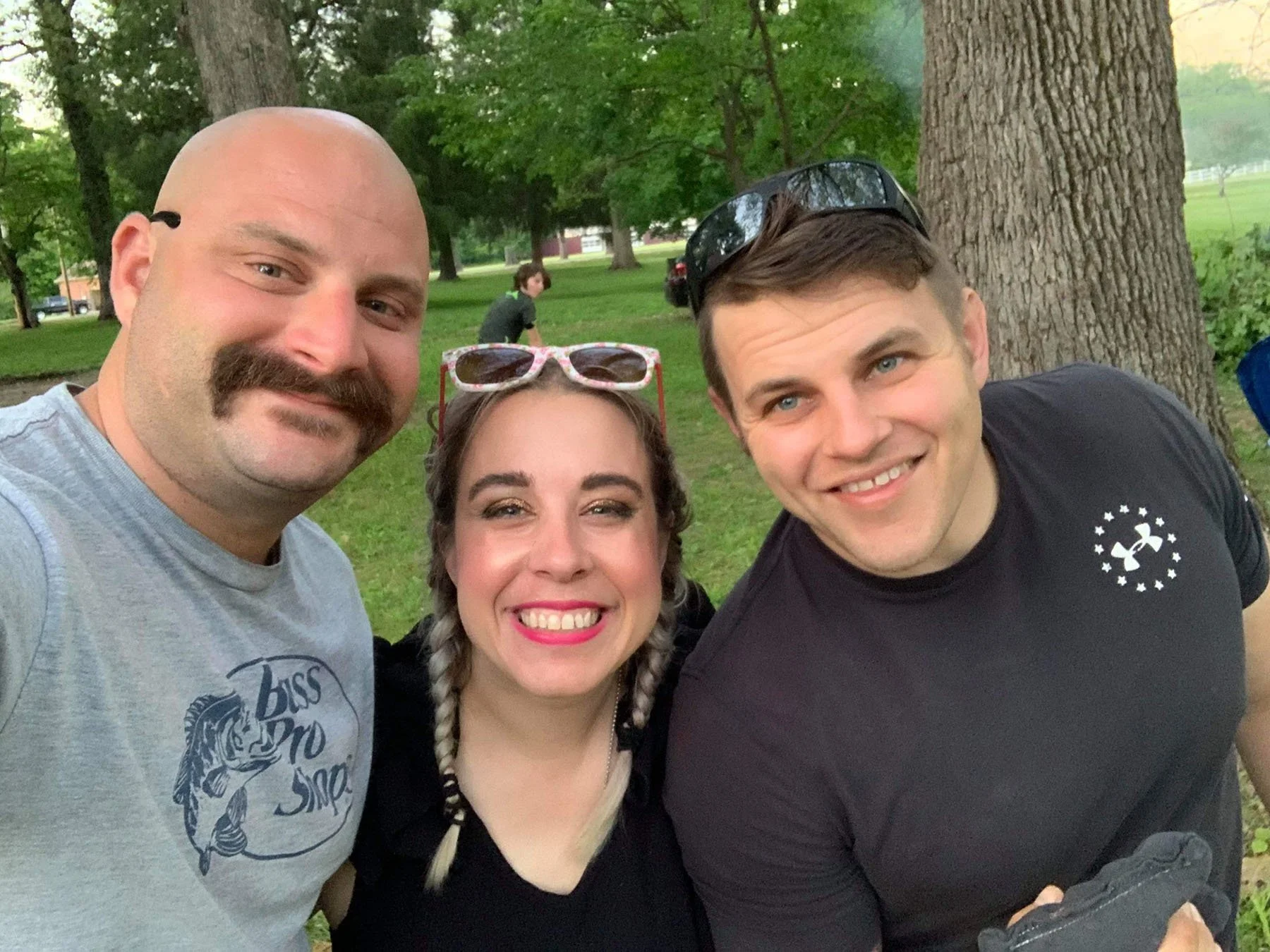
Once I met him, we got along really well. To the point now where it's nothing for us to go have a couple beers and drink. Usually when we go out together, it's me and him picking on Aly.
So it's the two of us first. We actually get along really well now, which is kind of surprising.
Brandi Fleck: Yeah. Well, that's really great, though.

Were you motivated to get along with him and try to become close to him because he was going to be in Alex's life?
Ed Rosenberger: Definitely, yes.
Especially with me being deployed as much as I am. It's not like he gets to go see him for a day or two and then he comes with me for a day or two.
He was going to spend six months out of a year, every couple years, with him being the only father figure there.
So it definitely made sense for us to be friends, come up with the same plan, so we're both on the same sheet of music when it comes to Alex and whatever he has going on.
And then actually just getting to know him, it was kind of hard not to like him.
Brandi Fleck: Awesome.
Co-Parenting Communication and Shared Parenting Decisions
All right. So there are a lot of people in the same situation as you, but they really struggle co-parenting with an ex and then, on top of that, an ex's new partner.
What approach do you take to keep that relationship with Aly and her partner healthy, and how would you recommend other people do the same?
Ed Rosenberger: That's a very good question. There's definitely times that are stressful, and we'd be lying if we said that there weren't.
It's trying to find the boundaries between the communication back and forth, where everybody's role is. That was definitely interesting.
Every time we hang out, I got back from deployment and he had been there staying with Aly. Ryan, which is her new fiancé, and Alex. He does something he's not supposed to, and Ryan yells at him.
Initially, the first reaction is like, "Whoa, what are you doing yelling at my son?"
But then you look back and it's like, well, for the last six months he has been the one that's been disciplining him as well. At the same time, he had a son that he brought into the relationship too. His son DJ lives at the house.
So when they're not there, I'm the parent. If I'm watching both kids, I'm the one disciplining his kid as well. It was just trying to find that balance of where you fall into and trying to make sure everybody's on the same sheet of music.
Brandi Fleck: Yeah. Did you guys talk about how you wanted to discipline?
Ed Rosenberger: We definitely had a lot of discussions on not necessarily how we wanted to discipline, but what we wanted to accomplish.
Not necessarily the means of discipline, but like, "Hey, this is unacceptable. You can't do this. You can't do that."
We kind of set these ground rules up, like, "All right, these are kind of your left and right limits."
As long as we're kind of falling in between there, there's no real issue.
Brandi Fleck: Okay, awesome. So I'm hearing you say communication's important, defined roles, and then ground rules.
What are your thoughts about? I know you're finding yourself right now, but if you ever do get a future girlfriend or a future wife, what are your thoughts about finding someone who fits into this situation that you guys have?
Do you think it'll be hard for someone to be accepting?
Ed Rosenberger: I think it's definitely going to be challenging, no matter what, just bringing another partner in bringing another partner into the very unique relationship we have now.
Speaking generally, girls are going to have more of an issue than the guys will. That's generally the way I've seen it.
I'm not sure if this is 100% accurate, but generally the girls don't get along as well as the guys. At the end of the day, if everything is kind of copacetic, we're not going to make a big deal out of it.
Aly has a very strong personality. You've known her for years. So it's definitely going to be a challenge, especially if I find someone else that has a strong personality as well.
Brandi Fleck: Are you looking for a strong personality?
Ed Rosenberger: I'm not sure. Kind of just seeing what's out there and what really meshes well with me.
Brandi Fleck: Yeah. So is it a priority for you that when you do find someone, they fit into this? Or do you ever see yourself pulling back from this situation?
Ed Rosenberger: I would say it's definitely a priority to find somebody that can mesh and at least be cordial, copacetic with Aly.
Which is probably not always going to be the same as it is right now. Right now we spend a lot of time together because we're living in the same house for about the next month.
So there's definitely going to have to be our own space. We can't all, it's never going to be two families living in the same house. I don't think that's a realistic request.
But being able to go over and have dinners, do family time, do any of the holiday stuff like that, I expect that to be able to happen.
To be able to have a good time, be cordial, and I would really hope that they get along.
Helping Children Adjust to Divorce and Family Changes
Brandi Fleck: Yeah, because of this arrangement. I say arrangement, but that's not the right word because it's y'all's life. It's just you guys being you and looking out for your son.
How have you seen him thrive because you're so accepting of each other and Ryan?
Ed Rosenberger: Initially, he was not very thrilled. I think the first thing he told Aly was, "I'm never calling him Dad."
He really tried to test his limits on what he could get away with. But I think we tried to put the kibosh on that real quick. Just letting him know that it's not acceptable to treat him that way. He's still an adult. He's one of the ones in charge.
We're all a team. When we don't live in the same house, when he gets punished at one house, he's still in trouble with the other house.
We're a team, the three of us. So it's not me versus Ryan and Aly. You can't pin us against each other.
As soon as we start having any issues, immediately we call. If I have issues with them, I'll call Aly so she knows exactly what's going on.
Brandi Fleck: Awesome. So now, has he sort of gotten on board and is having fun?
Ed Rosenberger: Oh yeah, he definitely does. Especially having a little brother now with DJ there.
He doesn't like to admit it, but as soon as you separate them, then they want to be back together. There were times I'd call on Skype and he'd be cuddled up with Ryan, watching movies and stuff like that.
He goes through highs and lows. There are times where he doesn't really want to, but then there are other times that he's 100% on board.
Brandi Fleck: Okay. And how do you support him through the lows?

Ed Rosenberger: I'm usually the one that does the long, drawn-out talks and tries to see what he's feeling and then try to come up with a plan.
We've had a lot of calming-down talks where he'll get super worked up and then he just can't function. He can't figure out what he wants to do.
I'll just sit up in his room and talk to him. It starts off with not really talking about anything before you can actually figure out what the root of the problem is.
I don't know. That was always the worst thing. As a kid, I'd rather just get the beating than the long, drawn-out disappointed dad talk.
My dad was pretty good about doing both, but the disappointed dad talk was always like, "Not this again."
So I don't quite go disappointed dad, but I'll go up and be like, "All right, what are we thinking? Why are you doing this?" and come up with the actual plan for what's going on.
Brandi Fleck: In a nutshell, if you had to pick one word that's your recipe for success for peacefully co-parenting, what would that be?
Ed Rosenberger: Definitely communication. You could go a hundred different ways, but it all wraps back down to us talking and coming up with the same plan, making sure everybody understands what's going on.
That was the big thing, just communicating. Not only what our intentions were, but how you're feeling, what you wanted out of it, your expectations.
So I think I can wrap everything right around to communication.
The Benefits of Peaceful Co-Parenting for Children
Brandi Fleck: Okay. Why do you think it would be important for other parents to really strive for this model of peacefully co-parenting? What are the benefits?
Ed Rosenberger: I can definitely say for Alex, I don't think we've really affected his life or his ability to grow.
He hasn't been shut in. He hasn't been acting any differently, really, for the most part.
I think we're allowing him to see that we can get along and that you can still treat each other with respect. We can still hang out.
So his life hasn't been given that 180-degree twist and thrown upside down. I think that was probably a key part.
Brandi Fleck: Yeah, to sort of minimize the trauma.
Ed Rosenberger: Sort of, exactly. It's definitely hard on him, whether he wants to admit it or not, that we were getting divorced.
You see a lot more of it now than you saw when I was a child.
He's got friends in school whose parents have gotten divorced or are getting divorced, and they aren't having anywhere close to the same kind of situation that we have.
He just doesn't get why they can't be friends and just get over it.
Brandi Fleck: Yeah. From the mouth of babes. Well, is there anything that I didn't ask you that you think is important to say?
Ed Rosenberger: The most important thing is definitely him. It's always been.
As we looked at this, it was his health, his well-being. Not just the immediate effects, but down the road, talking about his marriage, his first child, second child, any time they're in the hospital.
If we as adults can't get along to be there for our child, then what are we really doing? Us holding hate towards each other over things said and done does neither one of us any good.
As you look at it, it's all for him.
Brandi Fleck: Well, Ed, thanks so much for coming on the show today. It has been a pleasure.
Ed Rosenberger: Thank you so much for having me. It was great to see you again.
Join the conversation!
Feel free to share your own experience and let me know if you have any questions in the comments.
Related Posts











Hi, I’m the founder of Human Amplified. I’m Brandi Fleck, a recognized communications and interviewing expert, a writer, an artist, and a private practice, certified trauma-informed life coach and Reiki healer. No matter how you interact with me, I help you tell and change your story so you can feel more like yourself. So welcome!
Find More on the Blog
Topic
- ADHD
- AI
- Atlanta
- Black and BIPOC
- DIY
- FAQ
- LGBTQIA plus
- Los Angeles
- Nashville
- Seattle
- St Louis
- St. Louis
- UFOS/UAPs/ETs
- abuse
- accountability
- addiction and recovery
- adoption
- affirmations
- afterlife
- altered state
- angels
- animals
- anxiety management
- art
- astrology
- atlanta
- attachment
- awakening
- beauty
- behind the scenes
- being human
- body image
- body work
- boundaries
- brandi fleck
- breathwork
- bullying
- burn out
- burnout
- cancer
- career
- caretaking
- chakras
- channeled
- clarity-dive
- clarity-practice
- clarity-primer
- clean products
- coach
- codependency
Recent Blog Posts
Visit the Full Podcast Audio Archive

Affiliate