How Life Transitions Change the Relationships We Value Most
Interview By Brandi Fleck
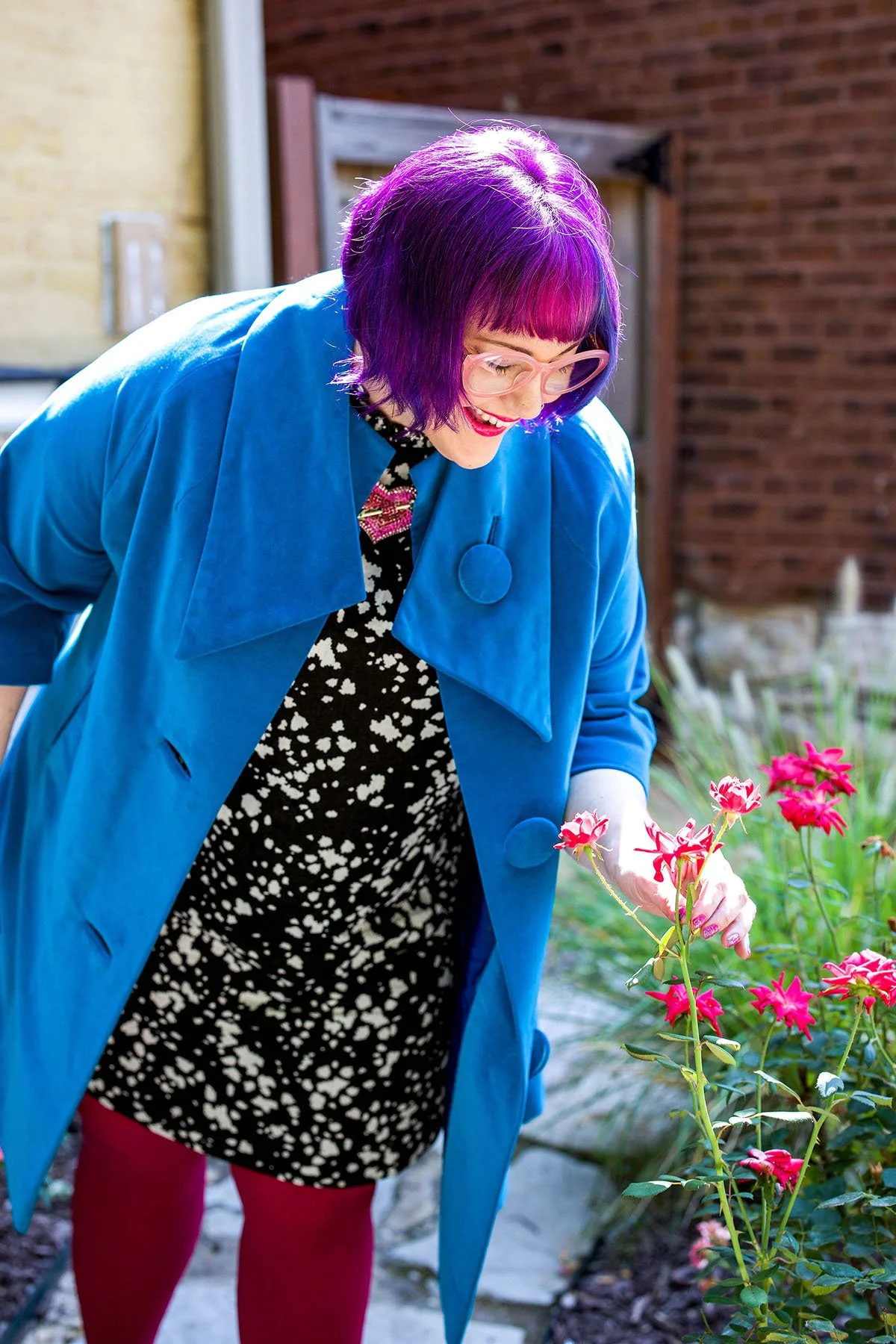
Life coach Meg Smidt shares lessons from blended family life, friendship changes, parenting adult children, and the emotional growth that often accompanies life's biggest transitions.
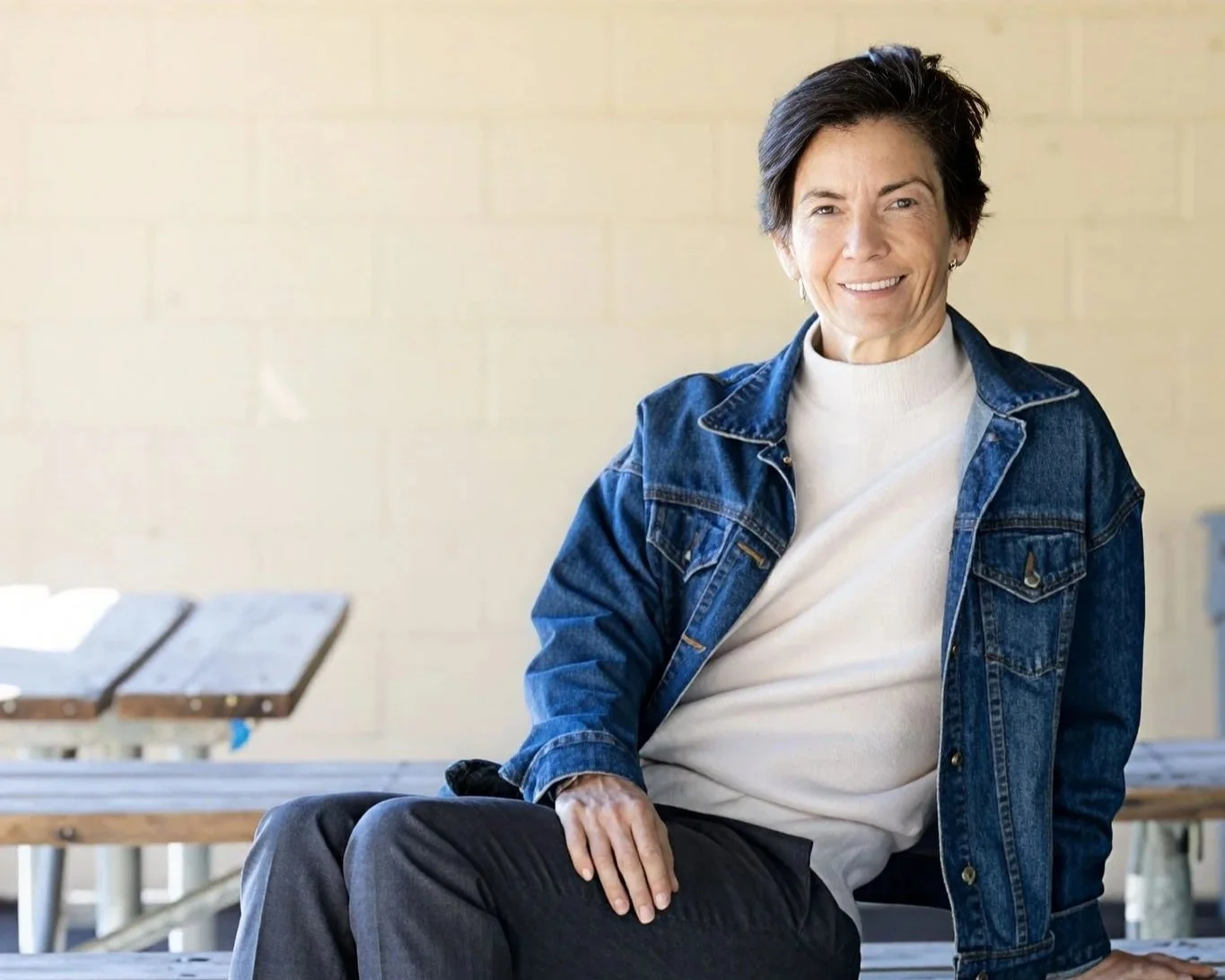
When Meg Smidt married her husband, she became a mother to five children almost overnight. What followed was not only a crash course in parenting, but also an education in relationships.
Over the next two decades, Meg navigated blended family dynamics, co-parenting challenges, military deployments, adult children, in-laws, friendship changes, and the many transitions that reshape the people we love and the roles we play in their lives.
Meg shares how those experiences taught her to let go of control, stop keeping score, and approach relationships with greater grace and intention.
Discover why life transitions often bring unresolved emotions to the surface and what it takes to stay connected when families, friendships, and circumstances continue to evolve.
Listen to Meg Smidt’s Interview
Watch Meg Smidt’s Interview
Becoming a Stepmom Overnight: Navigating Blended Family Challenges
Meg Smidt: Hi, I'm Meg. When you are navigating any sort of transition, it is so important that you give yourself the time and the space that you need.
I tried to control the situation that wasn't mine to control. It was much better for everybody if I would just focus on what I did have control over and what I really could have an impact on.
We all bring baggage. You're supposed to show up exactly who you were created to be.
Brandi Fleck: The world leads you on the surface. This episode is all about parent-child relationships that grow and blossom into mother-in-law and daughter-in-law relationships. However, that discussion is really the vehicle to get at what's underneath: nurturing your important relationships through the emotional baggage that accumulates through the changes of life and then surfaces in those relationships with your people.
By natural design, life is full of change, and that means our relationships are also full of change. Because relationships are a focal point of human existence, change can cause bliss and pain and a number of emotions in between.
As humans, our ability or inability to process emotions about change in our lives causes emotional baggage, and we take that with us into our present moment. We all do it.
This episode is so important because it comes at a time when we've been in constant transition for about a year, and there might be more accumulation of baggage there than you're used to.
That's why Meg Smidt, a certified life and business coach who's been at it for a decade, is on the show this week. This episode with Meg is a goldmine of advice, not only based on her personal experience, but also based on her years of coaching.
She really digs deep into her own story with transitioning from a successful retail career into being a mom to five nearly overnight and blending into a life and family she loves, but that she didn't necessarily expect to have.
As we go through Meg's wisdom, she and I span the spectrum of emotions as we crack up laughing and quietly nearly cry at times. That's because we talk about everything from recognizing baggage and nurturing our loved ones through their own, but also how you know when it's time to let go.
Meg's tangible tips that she sprinkles like confetti throughout are just as wide-ranging. She gives advice on how to accept your loved ones for who they truly are, letting go of control, leading with honor in complex interactions, having fun in commonality, having consistency, setting boundaries, navigating change, and the importance of reflecting, feeling grief, and growing through what you're going through.
In fact, Meg gives away so many gems that you can start applying to your life, we decided to give away a free Nurturing Yourself and Others Through Emotional Baggage tip sheet to download and take with you well after this episode is over.
One other thing that I just have to tell you about is I met up with Meg in her digital space, where she hosted me and we talked about how to grow through grief when life keeps changing around you.
That's a really nice extension of what we're going to talk about today, and there's even a free guide that goes along with that that you can download.
Make sure you go to yourcoachmeg.com and find the replay in her blog and download your free guide. So many goodies. Just so many goodies.
Hey guys, as always, thank you so much for listening, and thank you for your support. If you haven't already subscribed to the Human Amplified podcast, go ahead and subscribe on your favorite podcast platform of choice, and then leave us a rating and review.
You can even go follow us on Facebook, Instagram, Twitter, all the places, @HumanAmplified, and leave us a rating and review there. We love to hear from you. We love to know how we're doing and how we've impacted your life.
Just to give our listeners a little background, you were actually on the show very early on in season one. You did a Valentine's Day special with your honey.
Meg Smidt: So fun.
Brandi Fleck: Yeah, it was awesome. So I'm super excited to have you back.
Meg Smidt: Thank you.
Brandi Fleck: Would you just take a minute and introduce yourself to our listeners? For those of them who didn't hear your first episode, let them know who you are, what you do, and a little bit about yourself.
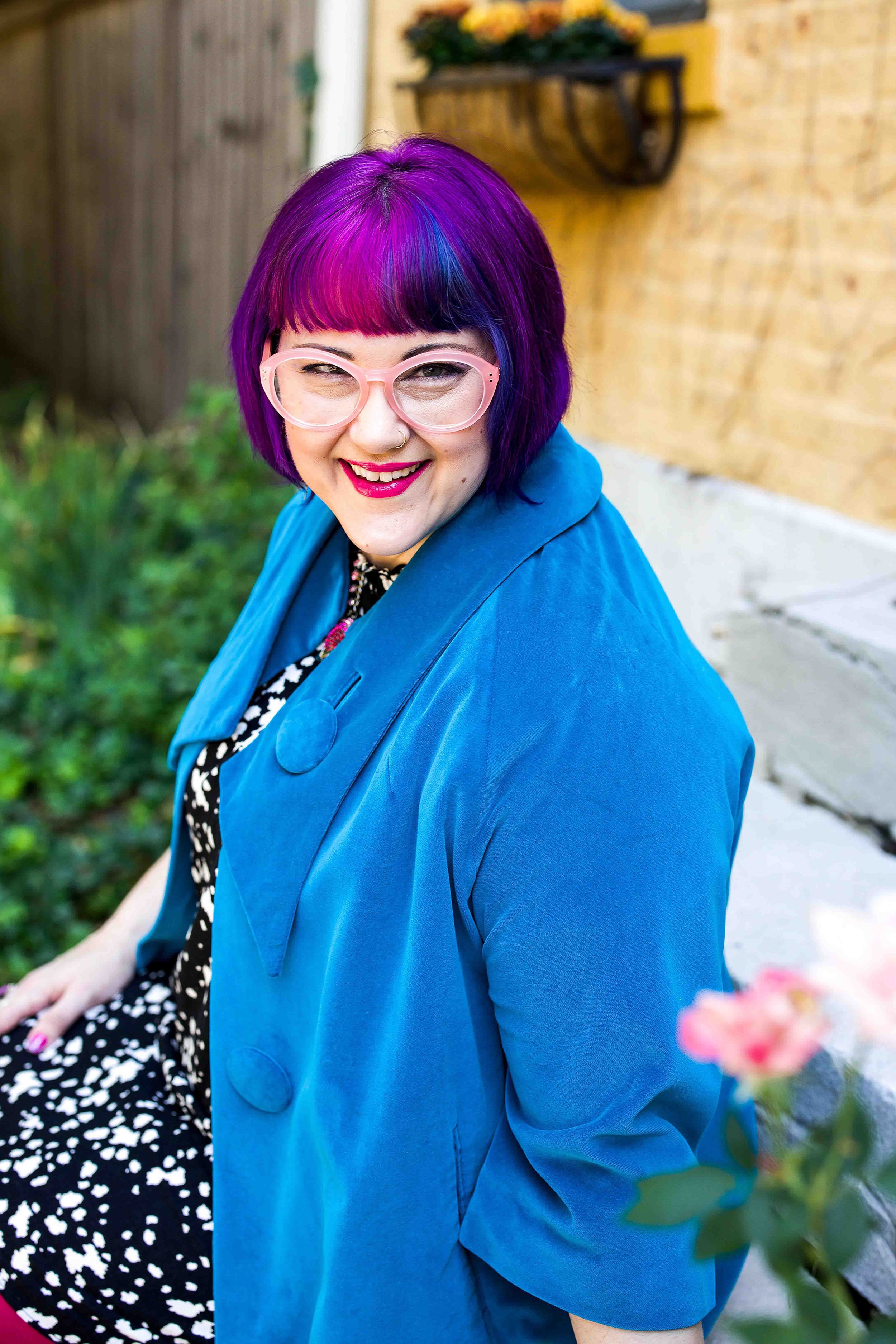
Meg Smidt: Absolutely. And definitely go back and listen to that episode. It's a doozy for sure.
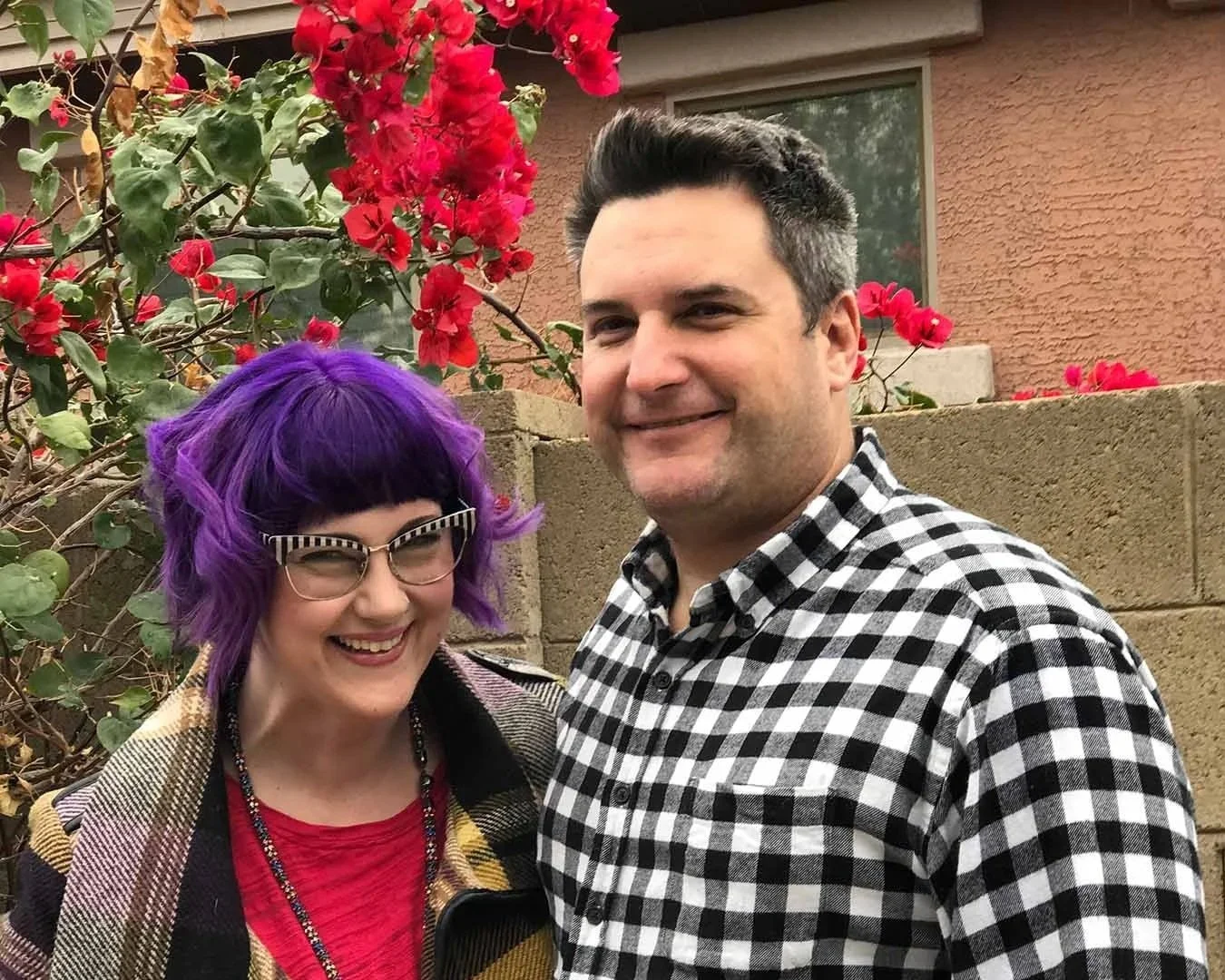
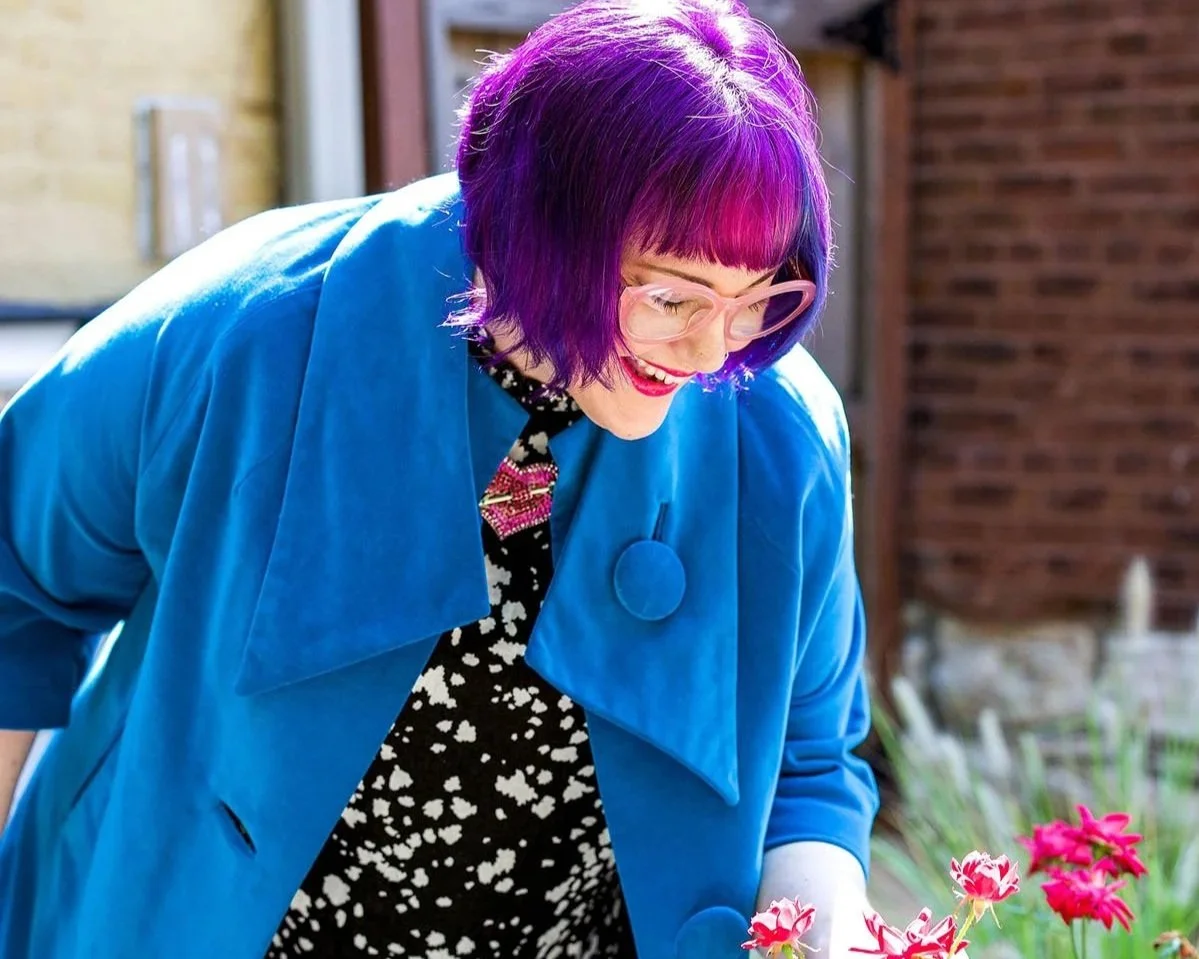
Hi, I'm Meg. I am 100% a confetti-throwing life and business coach with Your Coach Meg. I'm 45. I have bright purple hair.
Typically, in my life up until very recently, I had a bunch of kids running around my house. We have five adult kids currently that are ages 22 to 29, so they're all big adults out in the world.
I do actually have one grandbaby as well, which is super weird to be 45 and have a grandkid.
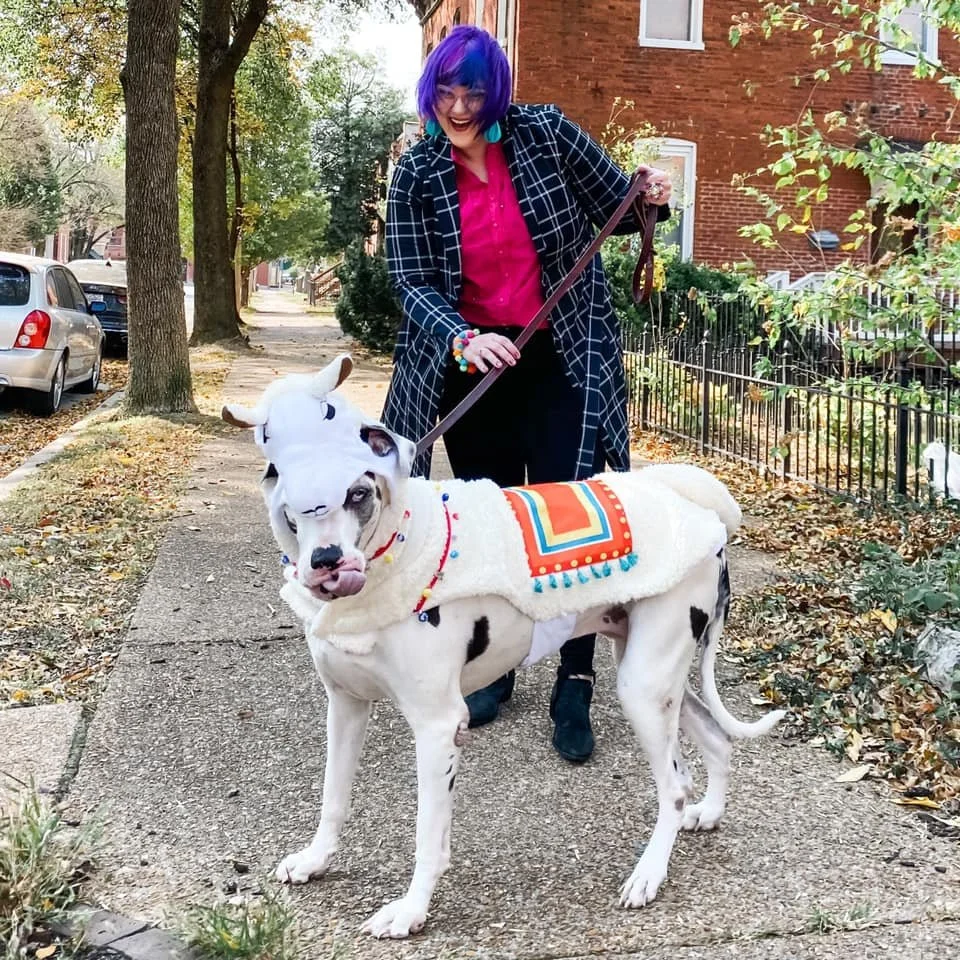
Currently, my babies are actually my two deaf Great Danes, Luna and Sassy, and they definitely keep us very busy.
I live in St. Louis with my husband Craig, our youngest, and the two dogs.
To be honest, I'm super passionate about small business and helping women live their very best lives and thrive through their businesses and careers, or really anything that they're passionate about doing.
Brandi Fleck: That's awesome.
Let's dive a little bit more into your personal story. You mentioned being married and having kids. Can you give us details about when you got married, when you became a mom, and then when you became a businesswoman?
Meg Smidt: Yeah. I was a businesswoman back in the day.
In 2003, I got together with this guy named Craig, and he completely rocked my world.
At the time, I was 27 when we got together, and both of us were just getting out of our first marriages. His lasted a lot longer than mine.
We started dating and pretty much instantly got full custody of his five kids, like overnight. This was around 2003. We were in a one-bedroom apartment. Super fun.
Honestly, those were some of our happiest times, to be real honest with you. This was in Southern California. We got together in 2003. At 27, I became a full-time mom to five kids, and it was a little crazy.
We got married in 2004, and I adopted all the kids in 2009, but I was a full-time mom that whole entire time. For a year, I was Dad's girlfriend and taking care of all the kid things. Then we got married.
I totally did things in a crazy order. Literally, you could never get any judgment on my end because I've done it all. Like I mentioned, I was in luxury retail before we got the kids. When we got the kids, I had to take a little bit of a step back.
To be honest, they were my priority. There was a lot of abandonment issues and just me kind of learning how to mom. I was all about me before then, and becoming a mom overnight to five kids completely changed my life.
At the time, they were ages four to 12. Then I went back into the working world in retail. I actually worked for a national bank starting in about 2005 or 2006 and did that until we moved to Tennessee in 2007.
In 2010, I actually became a life coach.
Brandi Fleck: Okay. 2010.
Meg Smidt: Yeah, that's when it all began. All my kids at the time were middle school and high school-ish ages.
Brandi Fleck: Okay, awesome.
Oh my gosh, from the abandonment issues to learning how to mom, can you give us some examples of what it was like gaining full custody overnight and how you dealt with some of those issues?
Meg Smidt: Yeah. I literally didn't even change a diaper until I was 42, so I'm very thankful that all my kids were potty trained by the time I came. I think they are too, to be honest.
In gaining five kids, I also gained an ex-wife. I also gained never really having any firsts. They all had a ton of firsts, and I didn't.
I think we might have even talked about that a little bit the last time I was on. That's hard. That's hard when they have all these memories that you aren't a part of and those types of things.
Honestly, one of the hardest parts of all of it for me was really my identity.
At that point in my life, my identity was wrapped into, I was in bands and stuff, so a lot of my identity was really into the fact that I was kind of big in a really small music scene. I performed all over the country in bands, did things like that. Craig and I actually had our own record label for a while. Stuff like that was going on.
Then my retail career. I had a very good career in luxury retail. I was great at it. I loved it. I climbed the ladder, did all the things.
Then all of a sudden, I'm taking care of kids 24/7 and helping them navigate this world of, "Where did my mom go?" She had a lot of health issues going on at the time, and none of us knew what we were doing. We just tried to do the best we could.
Getting them into therapy and getting myself into therapy and all the things. Just getting out of a horrible marriage myself, to be honest, and all of that.
Really, I think we all kind of had some abandonment issues, and we were just doing the best we could to navigate all of it.
I think the hardest part for me within all of that was the fact that I now kind of identified as Mom, even though I had no idea what I was doing. The only person I really felt understood my life was their bio mom, and she was the one person I could never talk to about it.
Brandi Fleck: Why couldn't you talk to her about it?
Meg Smidt: Well, understandably, she didn't like me very much. The kids weren't allowed to say my name around her, just stuff you do when you're dealing with a lot of hurt that was valid.
Brandi Fleck: Yeah, absolutely.
Meg Smidt: Her life completely turned upside down. But she literally was the one person in the world that could understand what I was going through, and that was hard.
We even had that conversation one day where I actually said to her, "I've realized you're the one person I can't talk to about it, but you're the only person that really understands." That's hard, and I had to grieve that.
Brandi Fleck: Yeah.
Meg Smidt: It's okay. We all made it through. It's fine. Helping a 10-year-old understand. One day, one of my kids, who was 10, said to me, "I want to go live with my mom."
I said, "I get that, but why? What's going on?"
He said, "Well, that's how I can make her see me all the time."
I'm like, "Oh God."
Just having to hold him and say, "I understand." Yeah, that stinks. I'm sorry you're having to deal with this right now. Just realizing that it wasn't about me. It's not about their dad. It's not about her. It's just about making sure the kids got what they needed.
While it wasn't easy, when you're a parent, it's like something just kicks in, or at least it did for me, where you just do what you have to do.
Brandi Fleck: Yeah. With everything happening as abruptly as it did, it seems like it would have had to have kicked in for you to embrace it the way that you did because it sounds like you really just embraced it and dove in.
Meg Smidt: Sure. I think it probably helped that my personality is whatever I do, I kind of do it to the nth degree.
I never wanted kids. Growing up, I remember telling my mom at the age of 10, "I'm never having kids."
She's like, "That's so weird. What are you talking about?"
I'm like, "I just know I'm never having kids."
In my brain, it was, "I'm never giving birth."
My brother was adopted, so I don't think I ever thought, "I'm never going to have kids in my life." But somehow I knew I wasn't going to have babies. I don't know where that came from or why.
My mom will say, "Yeah, you said that to me several times growing up."
When Craig came around, I remember we were dating and he actually said to me, "You realize for someone who never wanted kids, you're the most nurturing person on the planet."
I'm like, "Shut up. No, I'm not."
I never babysat. I never did those rites-of-passage things that you do as a kid. I never did that.
I just love people. When these little humans were literally put in my lap, and they were so craving someone who would make them the center of their world, I did that.
We got along like that. Our story is not a typical story. I think my oldest is the only one that kind of held out for a minute, but then once he saw that I saw him, you know what I mean?
He loved to read. He loved books and things like that. When I connected with him through that because I loved the same things, everything was fine.
He was like, "Wait a minute. Who are you?" But once they saw I wasn't going anywhere and that I actually cared and all these things, literally we didn't skip a beat.
Brandi Fleck: That's awesome.
Meg Smidt: I know it's not typical.
How Childhood Experiences and Family Dynamics Shape Relationships
Brandi Fleck: Can you just tell us, why are relationships complex?
Meg Smidt: Well, I really feel like part of being human means that we're flawed.
Literally no one is perfect. You can never be perfect. It's a thing you just have to come to terms with. As a human, you are flawed. I'm flawed. Everyone is flawed.
Honestly, it's hard to keep the main things the main things because we're also distracted all the time. I think we purposely keep ourselves distracted because it's hard dealing with our stuff.
It's so much easier for me to focus on you than it is to focus on me, or focus on the person who's making me mad.
Typically, if I do focus on the person that's making me mad, it's because I'm kind of mad that I do the same thing. But it's easier for me to just be mad about what they're doing than for me to focus on myself and try to grow and be better. Right?
Brandi Fleck: Yeah.
Meg Smidt: I think that's a big reason what makes us complex. Number one, we're flawed even though we don't want to be. We want to be perfect.
The second part of that is we let ourselves get distracted by things that really don't matter in the grand scheme of life because it's easier than dealing with our stuff.
I'm totally saying that from experience. I am in no way perfect or any of those things.
Brandi Fleck: Sure, sure. Okay, so I feel like we've set the foundation a little bit for why relationships are complex and some complex relationships that you've navigated.
How have you seen complicated parental relationships impact a person's ability to relate? How would a complicated parental relationship impact a person in general?
How Emotional Baggage in Relationships Affects Connection
Meg Smidt: Part of that could be if you were raised by a complicated parent or if you had a complicated relationship with your parent.
Naturally, that can impact what you do. We all bring baggage to everything, whether it's from our parents, family relationships, romantic relationships, friendships, anything.
We all bring that into our present, and a lot of times we know that for ourselves, but we don't really take that into account for the other people that we're in relationship with.
Brandi Fleck: True. That's really true.
Meg Smidt: Yeah, and it doesn't help. I feel like that's one aspect of how that can impact your ability to interact with other people or parent or whatever.
Speaking as a stepmom turned adoptive mom, I literally became a parent, and I don't know under the age of four, and at this point I don't know over the age of 29. That's my experience.
I didn't have the years leading up to when I became a parent where I think you kind of figure some things out through trial and error and what you go through.
I jumped in at a point where I already had these humans, and someone else had done the work that led up to that.

That was complicated in itself because there were already patterns and behaviors that had started that I had nothing to do with.
I don't feel like I can speak to my husband's story, and I don't feel like I can speak to bio mom's story. I can really only speak to mine in that situation.
I feel like the way that kind of impacted me being a parent, how that interacted with my ability to parent or relate to my kids, was that I really had to intentionally stick with what's happening right now and where do we want to go moving forward.
I can't impact anything that's already happened before me.
Brandi, I feel like this really works, too, if you're considering other relationships, right?
The fact that we all bring this baggage to the table in everything we do and all the relationships that we have.
If we just did this small thing, that's very big and very hard to do, but this small thing of not keeping that record of wrongs and not always going back to the past list of things that happened, but really taking what's right in front of you and trying to move forward.
If we all really tried to adopt that mindset with every relationship, I really feel like that's a difference-maker in uncomplicating things.
It's not easy. I'm not even pretending that's like, "Oh, okay, Meg. Sure. I got you. I'm going to do that."
It takes a lot of intentionality, and it takes a lot of letting go. I'm telling you, I've been through it.
In any complicated relationship situations I've been in, even with my kids, that's complicated, right? Especially as they've grown into adults and had a lot of questions and things like that.
I will tell you, one of my kids specifically and I had a pretty rocky relationship. If he was here with us, he'd be like, "Oh yeah."
Nothing we haven't talked through.
Building Strong Relationships Through Listening, Trust, and Connection
There was a time where we were really going through a rough time in our relationship, and he actually said to me, "Mom, if you could just stop bringing up all the things I've done that were hurtful in the past, that would really help me because I know I did all those things, and I'm not proud of it, and I don't feel good about it. I'm not even saying I'm never going to do them again. It doesn't help when I'm trying to help us move forward.”
I was like, dang.
It was a difference-maker for us in our relationship, just that one thing and me being like, wow, he is so right.
Brandi Fleck: Yeah. And something that you hit on there that I want to call out too is that you actually listened to him.
Meg Smidt: Yeah, for sure.
Brandi Fleck: That's a huge thing. I think sometimes parents find it hard to listen to their kids because they're in the role of teaching and parenting as opposed to, "Oh, I can actually learn from this person."
Meg Smidt: Yeah. Well, my kids now, as adults, have told me they appreciated the fact that I would actually apologize to them when I did things that weren't great and actually say, "Will you forgive me?"
And to actually say to them, "I'm human too. I'm going to mess up. But you can talk to me."
Maybe that's because I didn't have a rule book of any kind, and I kind of just had to make it up as I went along. I don't know.
But the conversations we've had now that they're adults, they've told me that they really appreciate that. Even as adults, I still do that with them.
Parenting Adult Children and Letting Go of Control
Brandi Fleck: Yeah. That's really awesome.
I also love how you brought up the topic of letting go as a way of not keeping score and moving forward in relationships. I definitely want to hit on that later.
We're going to talk about some transitions, but before we get into that, I want to say I heard you say that you approached nurturing your relationship with your kids by meeting them where they were at, connecting with them, seeing them, listening to them.
Are there any other things that you would say you did to nurture each of those relationships?
Meg Smidt: Sure. I mean, when there's five, it's not easy. Honestly, right along with that, I love the fact that we had other adults in our kids' lives. My husband's sister was awesome. Her gift to our kids every year for their birthday or whatever was actually a weekend with just them.
Brandi Fleck: Oh, that's awesome.
Meg Smidt: Without their siblings and stuff. When you have five kids, it's hard to have that much one-on-one time.
Not only was it helpful for us to intentionally carve out one-on-one time as often as we could, but we also had other adults in our lives who made that a priority to support us with that, which our kids loved so much.
They could pick what they did and all of that because when you have five, it's a fight. No one will ever agree on anything.
I remember when Craig and I first talked marriage. I told him the only way I would marry him is if all the kids agreed it was okay. He's like, "Meg, they won't even agree on a cereal, let alone having you as my wife."
But anyway, they did. They did. That's fine. Spoiler alert. I think that is a lot of it. Actually intentionally making time individually.
It doesn't have to mean they get a whole weekend or these huge grand gestures, but even just knowing them well enough to know what they're into or what they're interested in and talking to them about it.
Or, "Hey, I found this song. Have you heard it? I think you'd like it."
Just letting them know I see them was huge. Seeing them for who they are, not who I want them to be or any of those things, no matter what age they were or what kind of crazy they were into.
I can't talk. I was into some weird stuff when I was younger too.

Something else I did with most of the kids was, once they got to around middle school, where you kind of naturally shut down a little bit and don't really know how to relate, I ended up getting a spiral notebook that we would pass back and forth to each other.
The only rule was that we wouldn't talk about anything that was in the notebook out loud. It only happened in the notebook.
Brandi Fleck: Interesting.
Meg Smidt: I would make a plan with each one that I did this with, like where we were going to leave it for each other so only we knew about it and knew where it was.
A lot of times it was leaving it under my pillow, and I would leave it under their pillow.
The whole thing was that sometimes it's easier to write something down than to say it out loud. But then you also get it out, right?
Especially when you're starting that age group where things start getting rough. You're dealing with some weird stuff at that time.
I loved it because it was a way I could connect with them in a completely different way that no one else knew about. They didn't know I was doing that with all of them.
Brandi Fleck: Oh, interesting. Okay.
Meg Smidt: It was very much a one-on-one kind of thing.
Brandi Fleck: Well, that's great. You deal with all these things that happen in relationships as kids grow up, and then they become adults, and they get married, and they bring other wonderful people into our lives. You have one daughter-in-law?
Meg Smidt: That's correct. I do. Chelsea.
Brandi Fleck: Okay. So how did you approach nurturing that relationship with her? Was it in the same type of way? Obviously not from the younger kid perspective, but what did you do there?
Meg Smidt: Honestly, kind of similar, I think so. When she and my son Stephen started dating, they were both pretty young, in high school. We got to know her very quickly and pretty deeply, and her family.
Her family is wonderful. Amazing people.
I think all of us would admit, and have admitted even to each other, that we are night and day. My family is night and day from her family and vice versa.
We do a lot of things really differently, but we all love each other so much and appreciate each other.
The reason I say that is because she grew up in a completely different environment than our family looked like in a thousand ways. It's not like two people growing up in the exact same environment.
One of the big differences was the fact that our family is very direct. We don't beat around the bush. If there's an issue, we deal with it. We deal with it very openly.
Her family, not so much. Not that one is better than the other. I'm not putting any sort of judgment on that.
But those are big differences. If you're raised in a certain environment and then get plopped down into something that's the exact opposite, you kind of don't know what to do with that.
Brandi Fleck: Right.
Meg Smidt: I'm very hands-on with my kids. I love knowing all the things. Honestly, when I was 27, people thought I was their older sister, not their mom, because I looked young and all the things.
I think we've always kind of had a parent-kid relationship, but at the same time, my pulse is definitely on their lives.
I like the same music. I like a lot of the same things. I'm fun. When Chelsea came around, I instantly was like, I love her.
But she was very quiet. Very quiet. As you can tell, I'm not. She's very much an introvert. I'm definitely an extrovert.
We're opposites in a lot of ways, but I never tried to make her be someone she wasn't or expected her to be something else.
I let her really be who she is. I think that's something I've done with all my kids as much as I possibly can.
I do feel like I approached nurturing our relationship in very similar ways. I also knew a lot of the people she was friends with and that my son was friends with. I knew her life pretty well.
Brandi Fleck: Yeah, that's awesome.
I also would love to be involved and know everything about what all the kids are doing, but it's a little different because, like you mentioned, when things are set in motion before you got there, people are used to doing things a certain way. It's an adjustment for everyone.
Meg Smidt: It is. We had that going on in our family. Kind of along with what you're saying, Brandi, I will tell you, in the beginning, I did everything wrong. Everything.
Everything wrong with my relationship with our kids' biological mom.
I went through things where I was like, "I'm going to keep us organized. I'm going to have her deal with a binder." I would give her copies of all the kids' assignments and whatever.
Why? I wanted her to have an involvement with our kids that she didn't necessarily want.
I was trying to make her be someone in our kids' lives because it's what I think I would have wanted, but I wasn't taking anything into account about what she actually did want.
I tried to control the situation that wasn't mine to control.
Like we were talking about earlier, I didn't want to look at me and what I could possibly be growing or working on or changing.
Once I let that go and realized I am who I am in their lives and she is who she is, and that's exactly what needs to happen, I needed to stop forcing anything.
I needed to love her right where she's at and help the kids do the same thing and just be Meg to my kids, whatever that was going to look like.
The more I focused on that and not what I couldn't do or couldn't be. There was a time I wasn't allowed to cut my daughter's bangs because weird rules like that happen when you're a stepparent.
It was like, okay, her bangs are down to her nose, but it's fine.
Instead of fixating on that, which I did, when I realized what I was doing was crazy, it became, "Hey, let's go get some cute headbands," or, "Let's learn how to braid," or, "Let's learn how to do this."
Instead of fixating on the stuff that sucked or that I had no control over, I realized it was much better for everybody if I focused on what I did have control over and what I really could have an impact on.
I knew that I could 100% control what my relationship was with all these people. I couldn't control what I got back. None of us can. But I wanted to feel good about what I was doing and how I was leading myself. That I can control.
Brandi Fleck: Absolutely. It makes a lot of sense. You mentioned you're really hands-on and that you confront things directly. I want to preface this with: you recently wrote an article with Chelsea.
Meg Smidt: Yes.
Brandi Fleck: We're going to link to that article in the show notes, guys. It's all about their relationship, and it's really good.
In that article, she mentioned that early on in her young relationship with your son, you approached her with concerns.
Can you talk about what those concerns were and how she responded and how you guys got through that?
Meg Smidt: To be so honest with you, Brandi, I don't remember exactly what the concerns were.
I do believe her that that's what happened because I can imagine myself being like, "I don't know, you guys." I can imagine that.
Meg Smidt: But to be honest, I don't remember. Probably some of it had to do with the fact, like it does in any new relationship, where everybody else kind of doesn't exist and you're just tunnel vision with this person.
I think it might have been that. I wish she was here to give her two cents because I know she remembers everything.
I'm guessing it had something to do with that and that I was saying, "You guys could still hang out with your friends," or something like that. I don't remember.
At the time, I want to say she was maybe 16-ish, and he was maybe a junior or senior in high school.
Whatever I said, I obviously didn't think a whole lot of it because I don't even remember what it was.
Brandi Fleck: Yeah.
Meg Smidt: But what happened was her response to whatever that was. She sent me a very detailed Facebook message that was basically reaming me as a parent.
She ripped me up one side and down the other about everything I was doing wrong as a parent and how it was hurting my son and all of these things and how I needed to get my act together, kind of thing, in a nutshell.
Brandi Fleck: Yeah.
Meg Smidt: I read it, and I was like, oh bless her. Number one, she's got balls, and I really admire that. I didn't know she had it in her because she was very quiet.
Brandi Fleck: Yeah, you mentioned that.
Meg Smidt: Oh, she was very quiet. She wouldn't even say a word around us or anything.
I was kind of impressed. Then I was like, okay, I can't even get mad at this because, number one, this took a lot for her to send.
Number two, the only information she is going off of is my teenage son being frustrated with life. That's the perspective that she's getting. She's not a parent. She's never been a parent. She has her own tunnel-vision worldview at this point in her life anyway.
Literally, my response to her was, "I love you."
My husband was pissed, and part of me was too. But I responded and said, "I love you. I understand that you're aware that you only have part of this story, whatever it is. Just know that it's not my place to tell you what to do or tell my son what to do or any of those things.

But I do feel like, in time, you're going to understand a bigger picture of this situation than what you're currently seeing. I just want you to know I love you, and I appreciate you telling me that, and I can't wait to see you and give you a hug."
Basically, that was my response.
Brandi Fleck: Wow.
Meg Smidt: It was a minute before we saw each other again.
When we did, though, I just gave her a hug, and we never mentioned it. We never mentioned it until years later.
I was like, "Remember that message?"
She's like, "Oh my God, please never bring that up."
Now it's kind of a funny thing.
At the time, she really felt very passionate about that because all she knew was whatever she had grown up with and whatever Stephen had told her. That's all she knew.
She had no idea about anything outside of that, and she would have no way of knowing that.
It was okay.
Brandi Fleck: Yeah.
Well, I love that, though. I love that you reacted that way, and I think it's a great example for how people could react any time somebody sort of lashes out and they have a limited perspective.
People do that. They get upset or they respond emotionally, and love is the way to meet them.
Meg Smidt: Yeah. It's not like I'm this angel or anything. I've done dumb things. I've done stupid things and whatever.
When situations like that happen, of course I have the same knee-jerk reaction everyone else does of, "What the heck just happened?"
But then it's like, wait a minute. I think the problem is a lot of us just react.
What I really encourage a lot of my clients, myself, everyone, is that no one needs a response right away.
You are going to emotionally want to react, but I fully believe in leading with honor.
If I'm in a tough situation, relationship, or anything, and in the moment I really just want to scream my head off or whatever, because I'm a very emotional person and that's a superpower I have, what I've found is it's more helpful for me to stop.
If I need to take myself out of the situation, I take myself out of it.
If I don't need to, if it's just like, hmm, the question I ask myself in my head is, "How can I honor this person right now?" Or, "How can I honor me right now?" depending on the situation.
What I care about for me and what I care about for all of my clients and all of your listeners is that you feel good about how you respond.
Nine times out of ten, when you do an emotional knee-jerk reaction, you do not feel good about it later.
You beat yourself up. You replay it over and over in your head until it becomes something it never even started as.
That's what we do. My goal for myself and for everyone else that I have any sort of influence over is to literally stop.
If that means you need to leave the room, leave the room. If you don't need to, if your back's kind of turned and you can take a minute, ask yourself, "How can I show honor right now in this moment?"
Sometimes that means saying something that's really hard for the other person to hear. Sometimes honor means you have a really difficult conversation.
Brandi Fleck: Yeah.
Meg Smidt: But sometimes honor just means you give them a hug. Sometimes honor means, "You know what? I need a minute." Sometimes honor means, "It isn't okay for you to talk to me that way."
Brandi Fleck: Yeah.
Meg Smidt: It can mean different things in different situations.
But if all of us are committed to leading with honor, we are always going to feel good when that conversation is over, no matter what happens, even if it's difficult.
Brandi Fleck: Yeah.
Meg Smidt: It's a game-changer, really, to just look through everything with that lens.
My relationships with my kids have been crazy over the years. We've been through therapy and all the things, but there's still just all the stuff you go through.
We've gone through seasons that were tough. We've also gone through some amazing seasons.
But remembering that that's what they are. They're seasons. Each one of my kids went through them at different ages and different stages.
Our younger kids went through completely different kinds of things than our older kids did because of the ages they were when certain things happened.
They dealt with things in completely different ways than some of our older kids. Some good, some bad, whatever.
Every situation was different. I don't compare them to each other ever with anything. That's not fair. Just like I don't want them to compare me with anyone else. That's not fair either.
The more that we can, like we talked about, not keep that record of wrongs and really just look at what's in front of me right now with this person or this situation and ask, "What do I do from here?"
Brandi Fleck: Let's back up into your relationship with Chelsea for just a minute.
How has that relationship evolved over the years from that early young relationship to now?
Meg Smidt: It's been interesting.
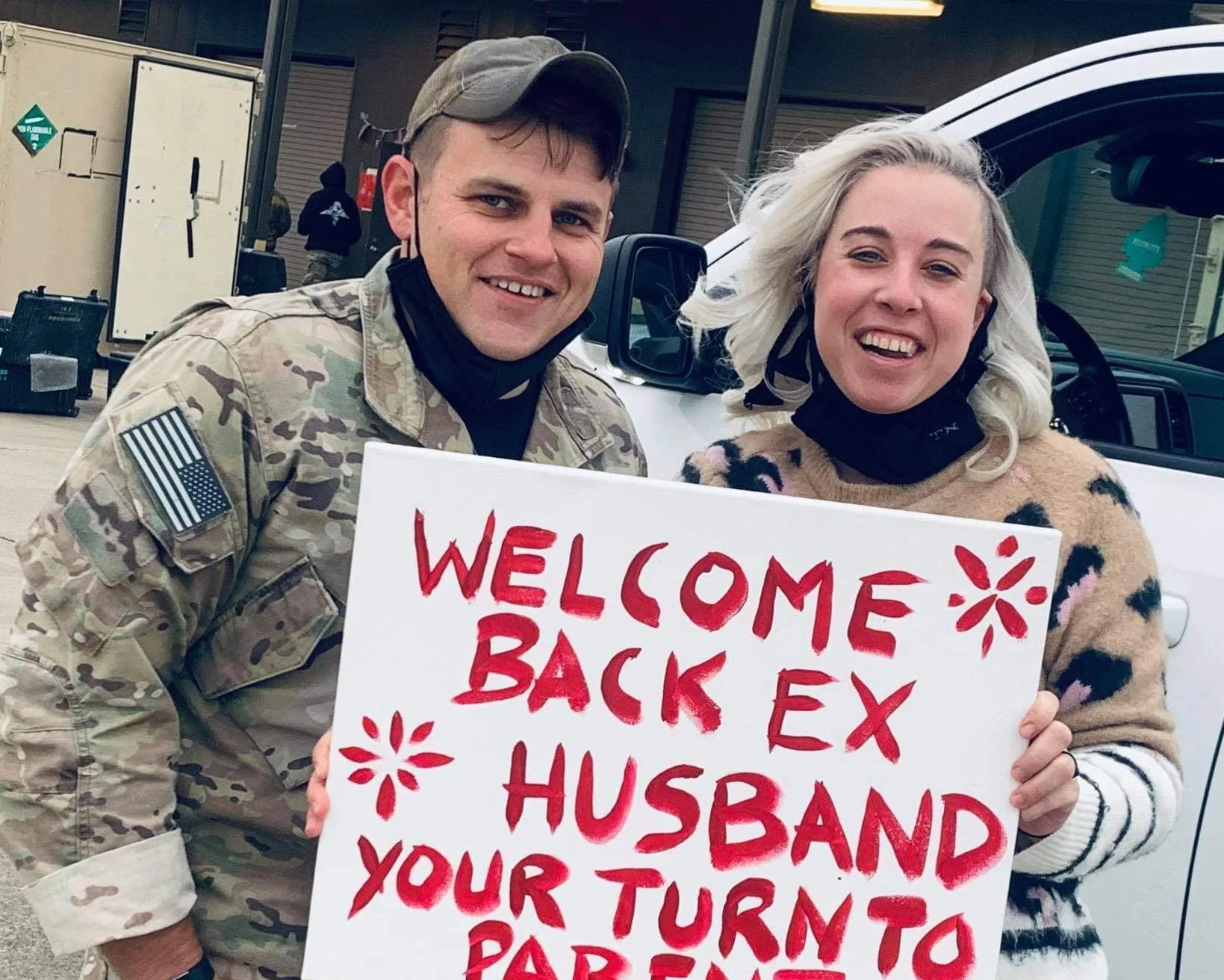
Two of my kids are in the military, and her husband is one of them. He's on his second deployment right now, his second year-long deployment in the time they've been together.
The first time, they were engaged, and then he deployed for a year. I very intentionally stayed very close to her during that time. She spent a lot of time at my house during that time. We spent a lot of time together.
It was really important to me to encourage her to explore her passions and her dreams.
She's a wonderful artist, and I really wanted to encourage her with that. She's very good. We did a lot of things together. We'd hang out. She'd just come over. Just keeping up with her like I do other people in my life.
I'd say even more intentionally through the deployment. When he came back, they got re-engaged, and then we were planning the wedding and all the things.
Absolutely, I took a backseat and was like, "Hey, your mom and you got this. Whatever you need, let me know. Whatever. I don't need to be involved."
Then there was bio mom too, right?
Same thing with my son. It was like, "Listen, however you want her involved, don't worry about me. I'm safe. If you want to do a dance with her, if you want to, whatever. I don't care. This is your party. This is your show. I don't need anything."
I know my relationship with you, and I don't need any of the pomp and circumstance. We're good.
I think that helped. That I was able to just say, without them even asking, "Don't worry about me. Do what you need to do for you guys."
The same thing once they were married and then you start figuring out holidays and all that.
My husband and I are always like, "Don't worry about us. Whatever. We're here if you want to hang out with us. If you don't, it's fine. Don't worry about us."
Now there's a grandbaby. Same thing when Jude was born and everything. My relationship with Chelsea during all that time has just been.
We did a lot of Marco Polo for a while where we would send video messages back and forth because we've moved a lot.
There's been a lot of us moving away, which is abandonment in some way.
I've had to be really intentional about staying in touch and checking in and seeing how they're doing. If I see things I know she would like, I'll send them to her, and she does the same with me.
She comes to some of my workshops and things. We like a lot of the same kind of stuff. We're into a lot of the same things. We both love art. We both love a lot of really creative things.
That helps. We have a lot in common that way. But we're also both very different people.
I think that's what helps. I'm not trying to make her be someone she isn't, and she doesn't do the same with me either.
Oh my gosh, Brandi, when they were planning the wedding, I asked her, "Do you want me to not have purple hair? Do you want to check my dress beforehand?"
She's like, "Oh my God. You can do whatever you want. Please show up as you."
I'm like, okay, good. But I also get it if she didn't want that. I don't know if I might get a wig and not change my hair, but you know what I mean.
I didn't know if she would want to look back on her pictures and things like that. Just being thoughtful and trying to make sure that I see her and that it's okay if she needs me to do anything different.
Every time she's like, "No. You're you, and that's fine."
Brandi Fleck: It seems really consistent when you say, "Don't worry about us. Whatever you need. We'll go with the flow."
It's you not trying to control something that you probably don't have control over anyway. It's really consistent with what you said earlier. Do you find that you still get sufficient time and sufficient involvement, even though you're saying, "Don't worry about us"?
Meg Smidt: Yeah, because they like being around us. I mean, I don't know. Does that sound bad? We have a really good time.
She used to always joke when they were a little bit younger that whenever she would leave hanging out with us, her face would hurt from laughing and smiling so much, which to me is the biggest compliment ever.
I think because we actually do have a lot in common and enjoy a lot of the same things, that's not difficult.
Of course, we've chosen to live away from a lot of our family, so part of it's our own doing, to be honest.
For the most part, she messaged me a little bit ago and said, "Hey, what does the last week of the year look like for you? Because I'm thinking about bringing up Jude the last week of the year."
I'm like, "Come on up."
We just talk about it. A new thing happened this past fall. Their biological mom actually moved from California to their area after 18 years.
Brandi Fleck: Wow.
Meg Smidt: That's new, right?
Brandi Fleck: Yeah.
Meg Smidt: To be honest, at first it was like, "Uhh."
But then it's like, wait. I just really hope this is great.
Setting Healthy Boundaries in Family Relationships
Brandi Fleck: All right. You've got some physical boundaries from important relationships, but in close relationships, whether you're physically together or apart, what about boundaries when it comes to being direct and communicating? Where are the boundaries, and how do you set those?
Meg Smidt: Honestly, it's communicating and setting expectations, and also asking for expectations.
Not only setting them on my end, but also asking from their end if they don't feel comfortable. Actually being a little bit proactive and asking. For example, now we're all in this weird COVID time, right?
Jude had just had his first birthday, and she had brought up to me, "My mom wants to do this big party. We want it for Jude. We want to do it early because Stephen was deploying."
They wanted to do it early while he was still there because he was going to be gone for his actual first birthday.
"This is what we're planning. Do you want to be a part of that?"
I basically said, "Listen, I'm not doing a big party. Love y'all. Maybe I'm interested in being on it virtually, but I just don't feel safe doing that right now."
I think it's great that you guys want to do it. Do whatever you want.
Even if I was there, I don't think I would be a part of that. Instead, we figured out our own way of being part of the birthday.
That's really what we do. Let's talk about it. I know they don't like it that we're not there for all the holidays and whatever, but we're kind of used to not having everyone around for holidays now.
We've kind of made our own traditions, just like we did when our kids were younger and bio mom got them every other year for holidays. We kind of got good at coming up with new traditions and different things.
Brandi Fleck: Something else that has been going in and out of this conversation is big transitions too because you've had a lot of those.
While the kids were growing up, you moved a lot. New relationships, evolving relationships. What is your advice in general for navigating big transitions?
How to Navigate Major Life Transitions and Change
Meg Smidt: Sure. Transition is just a big word for change. We all go through transitions all the time and probably don't even realize it unless it's a really hard one.
For example, the whole year of 2020 has been transition after transition, even daily transitions depending on what's happening in the world.
It doesn't happen all the time where the whole planet goes through transitions at the same time, but that is something we've all dealt with this year whether we wanted to or not.
I think that's important to note too, that not all transitions are things we do on purpose. I think that also makes it harder if it isn't our choice to do the transition. It's a choice when you choose to leave one job for another job. That doesn't mean it's easy.
Change is hard. Some people even say, "I love change. I welcome change."
Great. I do too sometimes, but that doesn't mean it's easy. I will say a lot of things we've been through are messy. Being in a big family is messy. Being in a family where I blended in and no one else did, I did. I blended into our family. Anytime those kinds of things happen, it's messy.
We are very direct and really deal with things head-on. While other people think that's crazy, it has been helpful with dealing with a lot of those transitions.
We don't just stuff things down or ignore them or put them off. Whether our kids ever liked it or not, we really were like, "No, we're going to talk about this. We're going to deal with it."
I think that is helpful. But I will also tell you, I'm a very bold person. I go very deep. That can be good, and that can be hard.
While on one end, me being a very deep and emotional person means when I'm happy, I can make the whole world happy around me.
But if I'm down, it's terrifying. A lot of the transitions that I've gone through have taken me to a very deep and dark place.
While at the time I hated it and it wasn't fun, it was absolutely so necessary, and I would do it again. I think that's a big part of it.
When you are navigating any sort of transition, whether it's big or little, it is so important that you give yourself the time and the space that you need to reflect, to grieve, to grow through what it is that you're going through.
I never wanted to while I was dealing with it. Sometimes I put it off as long as I could because it was so uncomfortable.
But once I finally said, "All right, this isn't working," and actually let myself sit and feel and be so sad and grieve and all of that, I started to go through it and grow and get to the other side of it.
Yeah, it's super uncomfortable. You're not going to want to do this at all, but it is so necessary in order to learn what is there for you in that moment and not miss it.
That's the lesson, right? That's where we grow. You can learn so much during those times, but so many of us try to avoid it because it's super uncomfortable and it's not fun and it's hard to feel all the feelings that come up in the middle of it.
Brandi Fleck: Yeah. Deep, dark places is not something that I associate with you. Can you give us an example of what a deep, dark place is?
Meg Smidt: Absolutely. For me, right off the top of my head, I think of when we moved to Arizona. First, we moved from Tennessee to St. Louis in 2015. It was the first time we ever lived in a big city. Even though St. Louis is the smallest big city ever, we weren't in the suburbs anymore.
We were in a city. There were other cultures and flavor and whatever, and I loved it. I literally did not know a soul when we moved here. We ended up living here a year and then relocated to Arizona because my husband took a job.
I'm like, "I've moved my whole life. What's another move? It's fine. I could live anywhere."
So we moved to Arizona, and literally I hated it.
Now, looking back, I'm very thankful for some of the relationships I made. I'm thankful for the season we had there. It did me a lot of good.
But being in that season was one of the hardest things I've gone through in my life. Where we physically lived was like the outskirts of the outskirts.
I had gone from being able to walk half a block and see my friends and be in all these creative stores and places and be seven minutes from anything I'd want to do in St. Louis, to literally living with cactuses around me and nothing.
Brandi Fleck: Yeah.
Meg Smidt: Plus, I was back in the suburbs where everybody has 2.5 kids and no one has time for anything.
I'm not in that season anymore. That would have worked if I was in that world, but I was living in a season where I could do anything, anytime I wanted to, but no one else could. I was really struggling to connect and find my people.
At the same time, my family was no longer a car ride away. They were a plane ride away, which is not easy.
I was coaching, and my clients were all over the phone and all over the country, so it's a different kind of connection.
I was doing that when I lived in St. Louis too, but it was just different because I was so isolated in so many ways.
I could not find a creative business community. I couldn't find anything that I had found and really loved in St. Louis. At the same time, I was dealing with some health things. I had found a lump in my breast.
Lots of things were going on with my body. I was also having some challenges with some of my kids who were dealing with a lot of big early-20s kinds of crises and trying to navigate that really well.
I was trying to build a business that I had started while my kids were in school, but now I was going to give it full time. As soon as I gave it full time and launched Your Coach Meg in 2017, it exploded.
I had more work than I knew what to do with, but I was dying inside. I poured everything into my work. Every other moment, I was silent and still and reflecting and being super uncomfortable and doing whatever I could to take care of me.
Finally, my husband was like, "We're going to get you back to St. Louis."
I'm like, "Thank you."
Then we got me back, and I'm happy as can be. It's been challenging being in St. Louis too. Everywhere you are, there are challenges. This year alone, I've gone through so much transition, just along with everybody else.
All my businesses that I coach have been going through transition. All my personal life coaching clients have been going through transition.
But I don't ignore it anymore. I sit in it, and I deal with it, and I cry, and I grieve, and I journal. I just do everything I know to do that helps me get through it and get to the other side.
Brandi Fleck: Yeah. Everything you said is super important, but the topic of grief with transition is something that I want our listeners to take away from this too because you are, something dies, right?
When to Let Go of a Relationship and When to Keep Trying
Even if you choose the transition, sometimes you still grieve what you chose not to have anymore.
Meg Smidt: Well, a way that I kind of look at that is, especially when you think of relationships, right?
When you think of change, or it's time to move on, and I'm not even talking about romantic relationships. This can even be friendships. Those go through transitions too, whether we expect it or like it or not.
A way that I kind of look at that that I think is helpful is thinking of plants or flowers. There's perennials and annuals, right?
All flowering types of plants follow the same basic steps in their cycle. Annuals complete their cycle in one growing season, whereas perennials live on for years or longer.
Where I typically notice struggles come in and where it's most hurtful is when we think that someone, like a friend, is a perennial, but they're really an annual.
Brandi Fleck: Yeah.
Meg Smidt: You put them in this box where they're going to be there year after year after year. They're your forever person.
But really, they might end up being an annual. Then that happens, and you're like, "What do I do now? I just invested everything, and I have to start over. I have to get a new person," or whatever.
You literally grieve it like a divorce, and you have to. But it's okay because what I know is we're always brought who we need.
We are always brought who we need in our life. They might look differently than what we expect, and we might not be treating them or putting them in a place where they really belong.
But I do believe we are brought exactly who we need in our lives. It's just up to us to notice and actually put them in that place and know when it's time for them to get out of that place.
Brandi Fleck: That's something. How do you know? How do you know when it's time to keep leaning in and working toward something and not let it go versus, okay, it's just time? It's an annual. It's not a perennial. It's time.
Meg Smidt: Some of that has to do with how well you know yourself.
If you know yourself really deeply at your core, things like your core values and the relationships and situations that you tend to thrive in, what you'll notice is typically when either a job or a relationship or whatever is starting to really tank and things are not gelling, that's because something in you, core-value-wise, is being hit in a negative way.
The more that you can articulate who you are at your core and what you value at your core, it's going to make more sense to you why this isn't vibing.
Whether that's a job or a relationship of any kind. That's where you have to take a look at that and think, okay, am I willing at this point in my life to work on this or adjust this?
All I can control is my portion of it. I can't control what they do. Even if I'm willing and able and all the things to try to make this work on my end, but they're not, or can't, or maybe they're not capable, then you have to know when to fold them.
Really. Because that's never going to get to be where you want it to unless they are willing to do the work, to communicate, to do XYZ, to have this work better.
If your inner friend circle consists mostly of people that take and you're not getting anything out of that, it's probably time to, number one, reflect on that and think, am I a part of this?
Am I constantly giving and not asking? Am I not giving them an opportunity for this to be a two-way street?
It could be. I know I've done that in my life. Or it's, you know what? I'm always that door open, but they keep taking. They keep taking. Then it's okay. I need to put them into a different circle of my friends.
They don't belong in this safe inner circle for me. We're not meant to have a lot of people in that circle. We're just not. We don't need to. You can, but that doesn't work for everybody. It doesn't work for me.
Brandi Fleck: Yeah. It's really hard to spend the quality time you would need to nurture a relationship if you're nurturing so many, especially if you have kids and all these other things pulling at you. We're just not meant to have that.
Meg Smidt: A lot of times what happens is we might move into a different season of life, or a friend might, and that naturally causes us to kind of vibe in a different way just because of life circumstances.
Maybe someone has a kid, goes through a divorce, moves. So many things happen that are kind of out of our control a lot of times. A lot of it's not something you did.
Sometimes it just happens, and that's okay. I think we all have some of those people in our lives that, no matter where we move, no matter how we transition, they are still there, and that's great.
That's where I think we get hung up a lot. I'm kind of weird for my season and age group, right?
When I had five kids, I was freaking 27. None of my friends knew what to do with me, and I don't blame them. I didn't know what to do with me at the time. The majority of my friends had no kids and were living the life.
Then all of a sudden, I have five kids. Can we come over? They didn't know what to do with us. I couldn't blame them. I didn't know what to do with all of us either.
Then the friends I had who were parents and had kids, they kind of didn't know what to do with me either because I was their weird friend or whatever.
I was like, "I don't know what I'm doing."
I really didn't fit in with anybody. Now, when Vicki and I go places together, people assume we're college roommates or something. It's kind of weird, but it's kind of cool too.
All that to say, I really think sometimes things happen with relationships and it's no hard feelings, but you still need to acknowledge it because it's not what you expected. You can't anticipate every single thing that's going to happen. You just can't.
Brandi Fleck: Okay.
Well, that is all my questions for you, but did you have anything you wanted to say that I did not ask you about?
Meg Smidt: The only other thing that I really want to mention that kind of goes along with that, especially speaking to this idea of knowing who you are really at your core, is just how helpful that is.
When you take that time to really know and embrace even all the things about you that drive you crazy about yourself and just realize, "That's me," and you own that and embrace it, you're able to really show up at that point in the world as your best in every aspect of your life.
When you do that, you really can thrive through every single aspect of your life. Everyone and everything and every place gets the very best of you. They get the very best of who you were actually created to be and impact the world as.
Everything is connected that way. Everything that you do, whether it's personally, professionally, you name it.
If you're struggling personally, if you're struggling professionally, both areas, the place to begin is inside and really getting to know who you are and getting so crystal clear on that.
Even if you don't like what some of the things are, just owning that and realizing there's a reason.
You're supposed to show up exactly who you were created to be. The world needs you that way because no one else can do it. Then you really start appreciating that in other people as well.
Brandi Fleck: Yeah. Oh, amen to that. That was beautifully said.
I've just appreciated everything you've offered up today in terms of your experience and your wisdom. Where can guests find you if they want more of this awesomeness?
Meg Smidt: Sure. You can pretty much find me anywhere in all the places at Your Coach Meg. YourCoachMeg.com is my website.
I want to meet you. I want to get to know you. Please reach out and let me know that you heard me on Human Amplified.
I would love to talk to you and hear your story.
Brandi Fleck: Awesome. Meg, thanks so much for coming on the show. It's been an absolute pleasure.
Join the conversation!
Feel free to share your own experience and let me know if you have any questions in the comments.
Related Posts
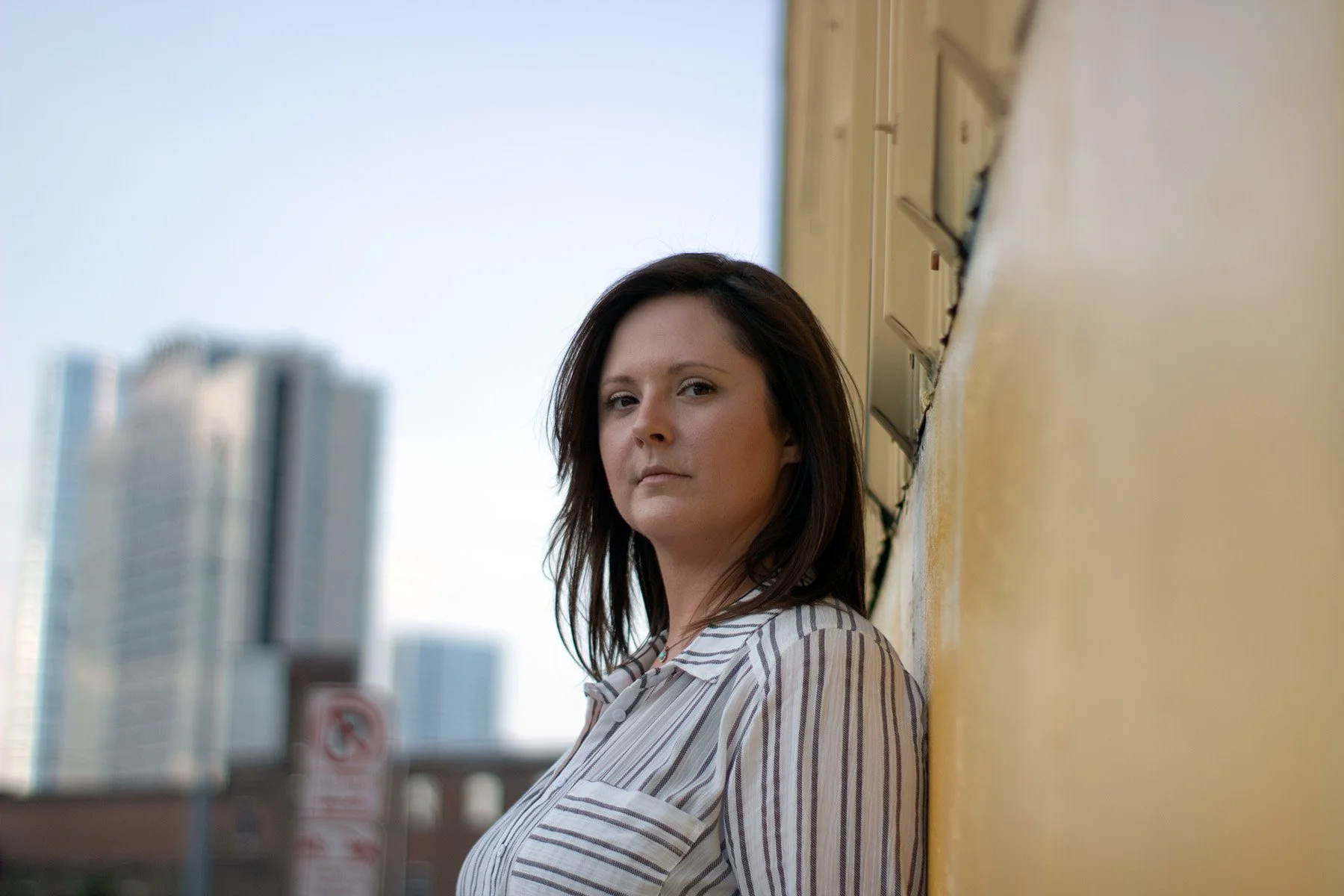











Hi, I’m the founder of Human Amplified. I’m Brandi Fleck, a recognized communications and interviewing expert, a writer, an artist, and a private practice, certified trauma-informed life coach and Reiki healer. No matter how you interact with me, I help you tell and change your story so you can feel more like yourself. So welcome!
Find More on the Blog
Topic
- ADHD
- AI
- Atlanta
- Black and BIPOC
- DIY
- FAQ
- LGBTQIA plus
- Los Angeles
- Nashville
- Seattle
- St Louis
- St. Louis
- UFOS/UAPs/ETs
- abuse
- accountability
- addiction and recovery
- adoption
- affirmations
- afterlife
- altered state
- angels
- animals
- anxiety management
- art
- astrology
- atlanta
- attachment
- awakening
- beauty
- behind the scenes
- being human
- body image
- body work
- boundaries
- brandi fleck
- breathwork
- bullying
- burn out
- burnout
- cancer
- career
- caretaking
- chakras
- channeled
- clarity-dive
- clarity-practice
- clarity-primer
- clean products
- coach
- codependency
Recent Blog Posts
Visit the Full Podcast Audio Archive

Affiliate