
Famous Conspiracy Theories and the Search for Reality
Interview By Brandi Fleck
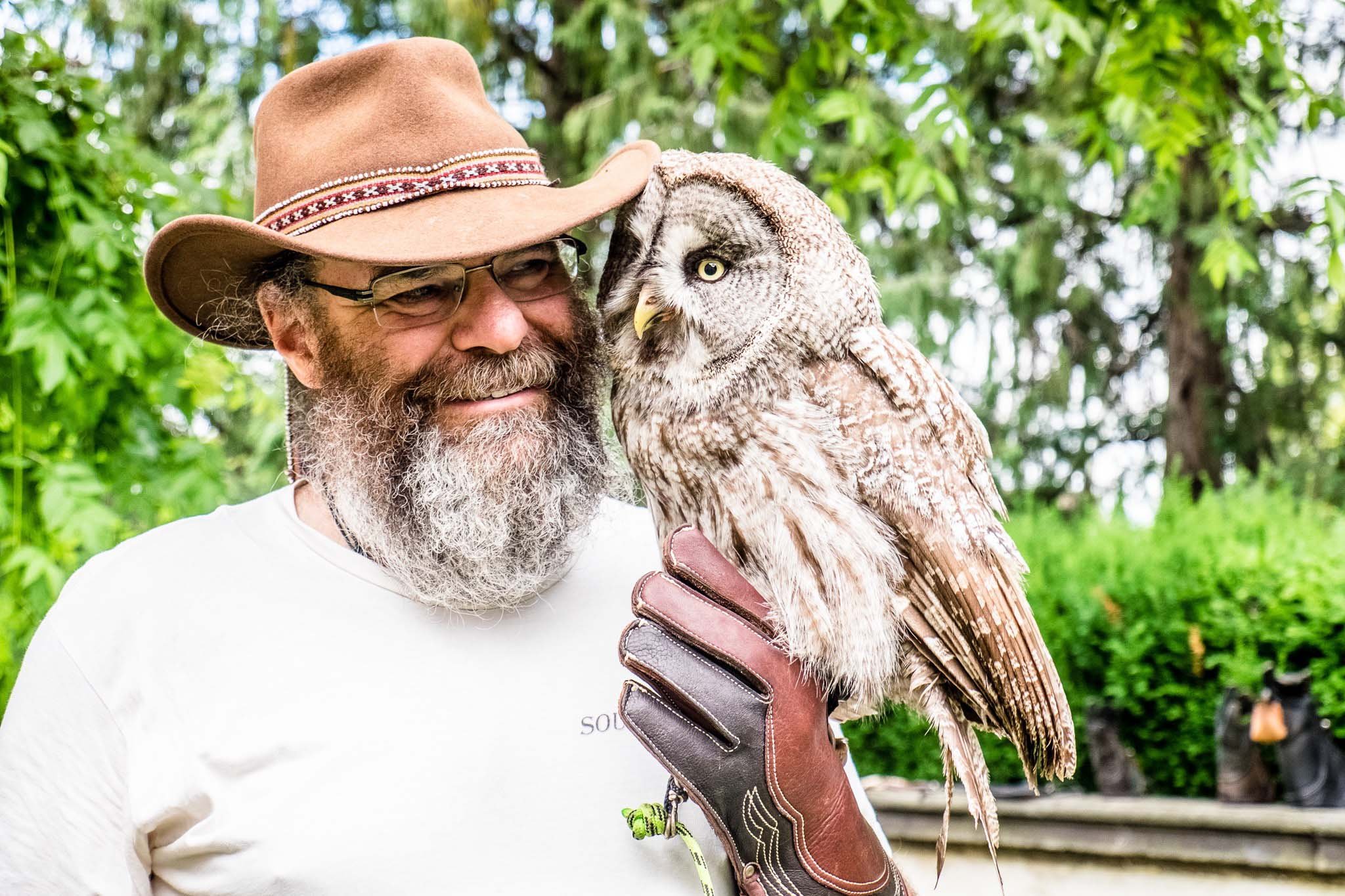
Dr. Richard Grossman explores famous conspiracy theories, chemtrails, contrails, the nocebo effect, propaganda, and why staying grounded in reality may begin with returning to the heart.
Famous conspiracy theories often begin with a question: What if something is happening that we are not being told?
From chemtrails and ancient aliens to UAPs, Epstein, 9/11 truthers, and COVID vaccine conspiracies, these ideas can reveal something deeper than suspicion alone. They show how fear, pattern recognition, propaganda, and belief can shape the way we experience reality.
In this conversation, Dr. Richard Grossman returns to Human Amplified for a thoughtful exploration of conspiracy theories, perception, and what happens when an idea becomes part of someone’s identity. Using chemtrails versus contrails as a central case study, he explains how belief can create physical responses through the nocebo effect, why misinformation can become so difficult to release, and how group consciousness can pull people away from the present moment.
This episode moves from aircraft trails in the sky to the deeper question underneath them: how do we know what is real, and what do we lose when fear takes over the heart?
Listen to Dr. Richard Grossman’s Second Interview
Watch Dr. Richard Grossman’s Second Interview
What is Reality?
Brandi Fleck: You've been on the show before, and you gave an extremely poetic and comprehensive answer to what it means to be human. So I am curious if anything has changed with how you define being human. Sometimes people's answers change. And from the conspiracy theory lens, is there anything about being human and our conception of reality that is part of that?
Dr. Richard Grossman: I think, in addition, it's the willingness to really dive deeply with the logic and intelligence that a person has when confronted by interesting ideas. And I use the term interesting ideas because conspiracy theories are certainly interesting ideas. They're kind of like, how to say it?
I heard once that if a person is very intelligent and they're totally caught up in a delusional mindset, it's very difficult to get them out of that delusional mindset because they have created such a strong package around it where everything is logical, everything makes sense. And so you can have a belief system that's completely logical, sensible, fills up all the gaps, there's no place for wiggle room in it, and it could be completely and totally wrong.
Brandi Fleck: Yes, completely, totally false. Really good point.
Dr. Richard Grossman: And it happens sometimes in schizophrenic ideation or delusions. That's what's going on. A lot of people experience that with plant medicines or other kinds of psychotropic medicines where suddenly this, some people call them downloads, this download will come and it makes absolutely perfect sense. But there's always going to be one.
What's that game, Jenga, where you're pulling out the blocks? There's always that one block you're going to pull out that's going to collapse the structure. And so I think these delusional or illusional mindsets, let's call it, because delusional is really a strong word. But these illusional mindsets, there's always going to be at least one thread that can be pulled that can collapse the whole thing. The question then becomes, of course, what does a person who has been carrying one of these things do with themselves afterwards? Because certainly a lot of people base their identity around some of these ideas and will spend vast amounts of their life energy and time researching it.
I find the word research these days to be hilarious, but they'll research it. And, of course, in the researching it, they only research those things that confirm their ideation, their ideas. And so what happens when that one thread is pulled? Can they handle it? Most people that I've seen that are in these kinds of thought processes have a very difficult time when that thread gets pulled.
Brandi Fleck: Okay. Everyone, I would love for you to help me welcome back to the show Dr. Richard Grossman. He was on the show last season. We talked a lot about plant medicine and some really cool things. So if you haven't heard that episode, please go back and check that out. It'll be linked below. And without further ado, Richard, welcome back to the show.
Dr. Richard Grossman: Thank you so much, Brandi. Really glad to be here again.
Brandi Fleck: Yeah, yeah. For the people who did not catch your first episode, can you just really quickly give us an idea of who you are?
Dr. Richard Grossman: Still trying to figure that out.
Well, I've been involved in healing work since I was a wee lad many, many moons ago. And my journey has gone through the gamut of things, diet and nutrition, massage, different kinds of medicine, plant medicines and such, becoming an acupuncturist and then a doctor of Chinese medicine. And giving that up basically due to a physical problem that I had that made it impossible for me to do that work anymore or improbable for me to do that work anymore, which was arthritis in my poor little needle thumb, which only hurt when I did needling.
And that led to me going to the Amazon. The fascination with plant medicines took me to the Amazon, where I spent quite a bit of time down there learning particularly ayahuasca and how to work with that medicine. And then coming back up here and leading ceremonies around the world for the last 20-something years.
Brandi Fleck: It's amazing. Very, very amazing. And that is one of the reasons I invited you back. Well, your background is the big reason why I invited you back to talk about conspiracy theories. And we're actually going to get into a little case study of chemtrails versus contrails today.
I should mention that Dr. Richard Grossman puts out a Substack that you guys should subscribe to. I subscribed to that and he posted an article about this. And that's how this episode came about because I was like, wow, people need to hear this.
Of course, more people than are subscribed, we want to get the word out. So with that in mind, I feel like your experience leading these ceremonies around the world with ayahuasca gives you a particularly interesting point of view around reality. And so I'm curious, to kick us off, if you could tell us how you define reality and why that kind of rubs up against conspiracy theory.
Dr. Richard Grossman: Such a deep question. I think I can only really get to it by kind of describing what unreality is first. There's the idea that's kind of entered common thought process of maya, the idea of illusion, that reality is an illusion and everything's an illusion. You can think everything's an illusion until you hit your little toe on a piece of furniture walking through your house, and then suddenly everything gets pretty darn real instantaneously.
But if we look at it in the context of the human mind, we have thoughts. Everybody has this continual stream of words going through their head. Everybody that I've ever talked to, anyway. A continual stream of words going through their head that's analyzing, thinking about, jumping to conclusions, utilizing experiences from the past to project what the future might be. All of the fears, all of the doubts, all of the self-judgments, all of the things other people may have told us that we accepted as being real without considering if it was real or not, told us about ourselves without considering whether it's real or not. And so I will then perceive my moment-to-moment reality through the filter of all of my past experiences and all of my future fears. That's not real.
Because my past experiences in truth no longer exist. They're memory. They exist only in the software of the brain and of the body as well. So that could be considered what is the unreal.
It's darkness. It's illusion. And sadly, our culture, our world considers that to be more real than the focused on, releasing into the present moment unfolding of reality that allows us to perceive our existence in a way that is not sullied by the continual flow of words going through our head. In other words, like a Taoist idea.
If I look at a tree, say there's a tree in my backyard. I happen to like trees a lot. And say there's a tree in my backyard. When I look at it, I might think, I don't remember when that was planted. I kissed this woman under there, and then we broke up under that tree. And I remember when there were birds in that tree, and suddenly there's this whole thought process going on in my head about this tree.
And then in Taoism, there's one of the things in the Tao Te Ching: see a tree as a tree. Can I be with a tree, with a person, with anything, just experiencing it and seeing it exactly as it is without this long chain of often unconscious, often below-awareness thoughts that go through a person's head when they're experiencing something?
So these things happen instantaneously. We might look at a person that we see on the street or in a subway or on a bus or in an airport or an airplane. And instantly there's a whole series of judgments that can pop up about them. What they're wearing, what their face looks like, what their sexuality is, what their race is, what their degree of personal hygiene is, for example. And all of those things could put a vast filter between yourself and that person.
How many times in a person's life have they jumped to conclusions about something or somebody, only to find that our conclusions were totally wrong? I'm good at it. I have a very active, fast mind. I can create stories about people and I can make them, just like we were talking about earlier, totally logical, real. This person is blah, blah, blah, blah, blah, blah, blah, blah. And yet quite often when I inquire into what's really going on, I discover that this ironclad idea in my head was nonsense, total nonsense.
It destroys relationships, it destroys friendships, it destroys countries, it destroys people. This whole judgmental mindset that we're going through, that would be what I would call illusion.
Reality is being able to perceive it through the lens or through, I call it, the eyes of the heart, or the eye of the heart. To perceive reality through clarity, through peace, through love, through joy. So that when I see a tree, I'm seeing a tree. When I see a person, I'm just seeing that person. When I'm hearing music, I'm just hearing music. I'm not adding on to it or subtracting from it by my own judgment.
We can take it a step further if we want to go into spiritual ideations of this is all illusion in a way because it's all based on atoms, which are based on subatomic particles, which are based on even smaller things, which don't even exist.
Real Danger vs. Assumed Danger
Brandi Fleck: Yeah. Well, the thing that's coming up as you're talking is this all makes sense. And at the same time, we kind of evolved with this pattern recognition or fear in order to stay alive. So how do we balance that biological instinct of pattern recognition to stay alive with not judging something based on the past or the future?
Dr. Richard Grossman: One of my favorite movies is Seven Samurai by Kurosawa, and Toshiro Mifune, he was the young man in that movie. An awesome, awesome movie to watch, a little bit long for most people. But there was one scene where the good samurai were in a room and they were about to be attacked by the bad samurai, and they were going to come through the door. And this one scene is so deeply ingrained in my mind. Toshiro Mifune is standing there with a sword ready, and he wasn't afraid. He was not in fear. He was not in assumption. He was just ready and totally still.
So who would have the better chance at survival, a person who's in that stillness, in that awareness, able to perceive real danger from assumed danger, or somebody who's panicking and not able to perceive real from unreal?
And that goes through all aspects of life where there's potential danger. If I'm facing any given situation from a place of awareness and stillness, do I not have a better chance of surviving than if I'm losing my marbles in that situation? If I'm walking across a pathway that might be dangerous in nature with a cliff or something.
Dr. Richard Grossman: And I do have a fear of heights. It's the only remaining fear that I have that I know of that I can't get rid of so far. But if I'm walking along the edge of a cliff, does the voice in my head telling me, you're going to fall, you're going to fall, you're going to fall, you're going to fall, does that help me not fall?
Brandi Fleck: No, I don't think.
Dr. Richard Grossman: There's a great Calvin and Hobbes cartoon quite a long time ago where Calvin's up on the top of a hill on his sled, and I'm going to paraphrase this, not exactly what happened, but he's like, this is going to be the best sled ride ever. Oh boy, but there's a rock down there, and if I hit that rock, I'll lose control. And if I lose control, I'll hit that tree. If I try to go over that cliff and, and, and. My brain's trying to kill me was the last panel.
And so I think the survival instinct is very powerful and very good. But when it is no longer based on reality, it becomes something that's even more dangerous than not having it.
Brandi Fleck: Ooh, okay. And to be based on reality, we need to be still in the present moment.
Dr. Richard Grossman: Yes.
Brandi Fleck: Okay.
Dr. Richard Grossman: At least close to stillness.
Brandi Fleck: Yeah. Okay.
Dr. Richard Grossman: It goes into relationships too. Or if I'm going to do business with somebody, for example, we're going to have a lunch meeting. And my first impressions might be good. They might be bad. And they might be good based on assumptions from the past. They might be bad based on assumptions from the past, in which case I could blow the whole meeting or make agreements that would be not to my benefit, thinking that it's good or thinking that it's bad, one or the other.
So it is that fine art of learning how to be in the moment.
Chemtrails vs. Contrails
Brandi Fleck: Okay. So some important things that have already come up that I think we're going to return to is that concept of real danger versus assumed danger and how that shows up and what happens when the thread, the one thread that can collapse an illusion, is pulled. I would love to get into that.
In order to go there, will you please tell us about your experience with a friend or an acquaintance who got physically ill when he thought there were chemtrails in the sky? And let's go into that case study. And I also think the way you debunked it in your Substack article is a really good example for how someone can make sure they're grounded in reality. So if you wouldn't mind, that would be great.
Dr. Richard Grossman: I'd love to. This is an amazing experience for me because I'd never really experienced anything like this before. And essentially, I was with some friends having some tea or maybe lunch inside of an apartment on Malibu, right across the street from the beach. It was a lovely gathering. And then it was getting to be a little bit later in the afternoon, and we were going to go down to the beach and watch the sunset from the beach.
And we walked out of the front door, and it was a beautiful late winter, early spring day, I think, if I recall. It was a long time ago. And one of the people with us looked up and saw crisscross trails through the sky. And he looked up and he said, oh my God, they're doing it again. I'm going to be sick.
And 30 seconds later, he was sick. He was sick. I mean sweating and having an anxiety attack and skin breaking out. And I'm watching this, and I'm looking up, and I'm thinking to myself, well, I know a little bit. I did at one point try to become a private pilot. I know a little bit about altitude, and those are about six miles up. If they fell from six miles, it would take a long time to hit the ground and the wind would blow it all over the place. It wouldn't be falling on this poor guy's head.
So I'm watching this and I try to tell him this, and he couldn't hear it. And he ended up going home because he had to get to his safe cave with filtered air and everything that would make him feel comfortable.
So I did a little bit of research on this thing, of chemtrails, and pretty much realized it's an impossibility that they're spraying stuff up there to land on us. When it first started, it was they're spraying poisons to kill us. Then it was they're spraying poisons to control our minds or nanoparticles or whatever it is. And now it's they're spraying things up there that are poisonous in order to control the climate. I haven't heard what the next iteration of it's going to be yet, but right now it's climate control.
So I did a little bit of study of like, well, what would it take for that to happen? And instantly, let me backtrack a little bit. I think it was Mark Twain. No, Benjamin Franklin, who said if you want to keep a secret, you can only tell three people, but two of them have to be dead. And I would say now it would be all three of them have to be dead to keep a secret.
First off, many people would have to research exactly what to spray there, how to manufacture it, how to distribute it, how much of it was needed to control the climate. Second, you'd need factories to make this, vast factories.
A couple of interesting little things here, I'm going to just reference some notes here that I have. So one aircraft alone, to have any kind of effect, to make these trails we see in the sky, would have to spend or utilize about 1,000 kilograms per flight of this substance. Okay, so 2,200 pounds per flight. If it just did three flights a day, it would be 6,600 pounds per day, or 1,200 tons per year for one airplane. One.
If we took it to 10,000 aircraft, which would be what it would require to make any kind of effect on a global or even a national level, we're getting up to 12 million tons of this substance per year, or about 1,300 truckloads, tanker loads per day going into the airports.
And you'd need factories to make it. These would not be small factories because we're talking about 12 million tons being manufactured. You couldn't do that in your garage. It's a lot. So you would be able to see these factories from the air. They would have to have safety inspections. They'd have to have all of the things that are required for a factory to exist. You'd have to have rail cars. You'd have to have tankers. You'd have to have a setup in every airplane flying to hold these pretty vast amounts of fluid to be chemtrailed out.
And, okay, so there's an app called FlightRadar24, where you can point it at the sky and identify every airplane that's flying over you. Military, civilian, airlines, whatever. You can identify everything. Where it started from, where it's going to, what altitude it is, how fast it's moving. It's a fascinating thing to look at if you're in a busy air area. Helicopters. I don't know if they do drones yet. Probably they will. But you look at this thing and it's like, well, that's a 747 flying from Japan to Tucson, for example. I don't know if that's realistic. It's probably not realistic, but from Japan to Phoenix, let's say.
Okay, so you know that it has this long, long, long, long trail after it. Another one might be a 707 or a 727. Another one might be an A380. And they're all civilian aircraft carrying passengers. You can't hide this. Every inch of the sky is controlled. Or at least there's awareness of every inch of the sky.
So you take a civilian aircraft, let's say a really big one like an A380 or 747. There's passengers. There's cargo. There's a little kitchen. There's the wings, which have the fuel. There's no place to put the mechanisms and the storage tanks to spray a thousand tons, a thousand pounds or whatever it is, of this fluid that's supposedly in these planes. There's no place in an airplane where that can be hidden.
And even if it could, you'd have all the people on the ground, the airframe mechanics, the people who do maintenance on these things. They would all know about it, too. So without going too much more into numbers and stuff, you'd have a conspiracy that would require literally hundreds of thousands of people keeping silent, which is probably not going to happen.
Brandi Fleck: This is not humanly possible.
Dr. Richard Grossman: This is not. Even like there's been only a few things in history that we know of that had that level of secrecy to it, and people kept silence of it when the atomic bomb was being developed. The scientists, the researchers, the technicians couldn't leave. They were basically stuck there. Now it wouldn't be a secret because we could go into Google Maps and go, oh, there it is. Look at that.
So a conspiracy of hundreds of thousands all over the world in every different culture, because I used to do a lot of flying around, and I've been in airplanes that were leaving these trails. And I've seen passenger jets fly by that were leaving these long, persistent trails. And even if you go back in time to the World War II era or even earlier, you can see pictures of the various fighter planes leaving huge amounts of contrails in the air long before this chemtrail conspiracy existed. And they persisted. They were persistent.
People like to say, well, there's the correct aircraft exhaust, which dissipates after a few feet, but then the chemtrails are the ones that last. And that's just a misunderstanding of upper atmospheric conditions and ice crystal formation.
What Are Contrails?
Brandi Fleck: Yeah. Will you explain to us what you explained in your article about what contrails are and how they dissipate based on atmospheric conditions?
Dr. Richard Grossman: Yeah, contrails are simple. And one of the things that I've noticed down here lately is people will see contrails up in the air, the chemtrailists. They'll look up and they'll see them and they'll say, ah, they're trying to make it rain because in a few days it might start to rain. We just had this happen here in Los Angeles.
And the only problem is that the contrails don't cause the rain. The contrails are an effect of the upper atmospheric conditions that allow for the contrails to form. So you have super cold, saturated air.
And I don't know if anybody's experienced this. It's a fascinating thing if you ever get to experience it. You pull a bottle of water out of the freezer and it's liquid and you just go bink [flicking with your finger or not he counter] on the side and within a second, it's all frozen solid.
It's the same thing that's happening up there. The air is super saturated. It's freezing cold, below freezing. And it just takes the water vapor, superheated water vapor, coming out of the jet engine. And this is fascinating. Every kilogram of jet fuel makes 1.2 kilograms of water vapor. 1.2 to 1.5, I think.
So this comes out of that jet engine, and it hits this super cold air, and it causes this cascade of ice crystals forming, which can persist for quite a long time, and that's what a contrail is. I hope that makes sense.
Brandi Fleck: Okay, good, good. Yeah, that does make sense. And depending on the temperature, the wind, the humidity, all of those things can determine if the contrail kind of evaporates or if it stays in the air.
Dr. Richard Grossman: Yeah. Or if it grows into a vast amount of cirrus clouds, which are the upper-level, very wispy kind of clouds that we see in preparation when the storm is coming quite often.
Brandi Fleck: Yeah. Yeah.
Dr. Richard Grossman: And then people like to talk about these crisscross patterns, right? That's a big thing. They're making crisscross patterns across the sky. So imagine I'm flying an airplane, or an airplane's flying overhead, and it makes one line across the sky. These lines can extend for up to 100 miles, by the way. They're big. From 30,000 feet up in the air, it's a long ways across the sky, going 500, 600 miles an hour.
So the air is blowing up there, so that line moves with the wind. Another one comes along, makes the same thing in the same place because planes tend to follow the same flight patterns. That one moves. Another one comes along. I need two more hands. That one moves. And pretty soon you have line, line, line, line, line, line, line. It looks like they're trying to cover the sky.
Maybe there's flights going perpendicular to those at a different elevation. Of course, they don't run into each other. Air traffic is massively controlled for safety. So the same thing's happening. They're moving too, and pretty soon you have a checkerboard pattern up there that looks ominous. But it's just the natural flow of air at the 30,000-foot elevation, six miles up, five, six miles up.
Nocebo Effect and the Mind-Body Connection
Brandi Fleck: Yeah, so this makes a lot of sense to me. Now, if we think about your friend who actually had a physical reaction when he noticed the contrails, what was going on there?
Dr. Richard Grossman: That is the famous nocebo response. We all know the word placebo. Everybody knows that because you take something that's a sugar pill when you're in a medical test and suddenly you feel better. Your mind is doing it. It's fascinating.
Sometimes the placebo effect is even better than the actual medical effect, which to me means we need to really study placebo effect and utilize it for healing more. Mind-body connection, we can call it.
The nocebo is the opposite. You feel something bad has happened to you. You've ingested something or breathed in something bad, and the mind then consciously or unconsciously obsesses with it and hits the amygdala, hits the fight or flight areas in the brain. And our brain is more than happy to do what we want it to do in these kinds of situations, even if it doesn't know that we don't want it to do it.
So it creates that cascade of chemistry that causes an actual illness, an actual response. This is so fascinating because you get into things like identical twins having similar responses. You get into people with what would be called, I don't know what the proper term is, multiple personality disorder, where they have actual discrete different personalities. One personality might be allergic to milk, the other personality might not be allergic to milk. One will have a full-blown allergic response if they have a little bit of milk, and the other personality won't in the same body. In the same body.
And that's the power of the mind to control us, to control our physiology. So this poor guy, and I've seen this happen with many people, they perceive a threat, and their mind perceives that threat automatically. In the same way that somebody who practices basketball in their mind can start hitting baskets, only the opposite. They've given themselves an illness without even knowing that they're doing it because their belief system is so ingrained that their body responds in a way that's congruent with their belief system. That's a nocebo.
Brandi Fleck: Okay. How do you tell the difference between nocebo effect and a real illness? Or is there any difference?
Dr. Richard Grossman: Well, the nocebo effect is causing a real illness. It's causing a real condition. And people break out. They have hives. They can go into congestion. And I suppose at some level it can kill you. I've never seen that. But I would imagine that's possible.
Brandi Fleck: Well, there are plenty of stories about that, people drinking something that they thought was poison and then dying, and it wasn't.
Dr. Richard Grossman: But how to tell? Good question. I don't know. Offhand, let me think about it.
Brandi Fleck: Okay. Yeah, it's a very good question.
Dr. Richard Grossman: I would think that, which comes first? I had the flu once. Thank you, only once. I was living in a house. I was at the top of a staircase, and the staircase led down to the main floor. And I started walking down the steps, and I hit the bottom of the flight. I was sick. I felt fine at the top, sick at the bottom. It hit me like a train, and that was a real illness, no doubt about it, because I didn't have any thought about it before.
Or perhaps if I'm thinking something's going to cause me injury or sickness first, that might be the way to see if it's real or not, if it's nocebo or an actual illness.
Brandi Fleck: Okay. That's definitely an interesting thought or something to try at least to look into it for yourself, for those who are listening. And definitely we need more research on the placebo. I agree with that. But there are definitely forces at play here that are mind-body-spirit connection kind of related, like you said. So it's interesting to think about that.
Dr. Richard Grossman: Yes.
Conspiracy Theories, Propaganda, and Distraction
Brandi Fleck: One thing that I'm curious about as well, and I'm wondering if you've been able to make sense of this, is if we look at, I've got two examples. So we could look at the Ancient Aliens TV show that has been really popular for many years. When it first came out, people kind of regarded it as conspiracy, things of that nature. And then over time, as the government has come out and said, oh, UFOs are now UAPs. These are real. People are like, oh, maybe it's not a conspiracy.
And then we've also got the example of the Epstein files, which is everywhere right now. And if you are consuming any of the media around that, we've got people online who are saying, I've been saying this for years. I was a victim. I've been saying this for years. Nobody believed me. Everyone thought it was a conspiracy because it was so outrageous. It almost couldn't seem true. And now that it's coming to light, we're like, maybe it wasn't a conspiracy.
So how do we grapple with that, knowing when something is actually a conspiracy theory or not?
Dr. Richard Grossman: I don't know that there's any way to really know, other than in a retrospective viewpoint. On the other hand, like with what I was just talking about, the chemtrail thing, does it make sense? It doesn't make any sense when you look at it in the biggest possible picture of hundreds of thousands of people involved in it and keeping secret. That doesn't make sense anymore.
Something with the Epstein files, you had this localized, discrete thing happening, not discrete, but this localized phenomenon happening on Epstein Island and in the parties and whatever. That was definitely occurring.
On the other hand, are there people who might be thinking they were part of it who weren't? It's so interesting to think about that. The other issue I would have would be, what's the motivation? Like, the motivation for Epstein files is pretty damn clear. We're pervs and we're keeping it secret. We're going to keep it secret.
Brandi Fleck: Yeah.
Dr. Richard Grossman: And for the purpose of continuing our perviosity. So, yeah, that makes sense. I think it's really important to understand that there are crazy people out there also. There are people who have very well-developed delusions going on.
And now I come into my grand unifying conspiracy theory of all conspiracy theories, is what if these conspiracy theories are being fed to us in a way to control our minds, to keep us focused on what's not real and keep us not looking at what's real?
If I'm obsessed by something like chemtrails, and I know people that are really obsessed with it, really obsessed with it, are they paying attention to the fact that the world's falling apart in many ways? In many ways, it's getting better. But in many ways, there's a lot of stuff going on that maybe there's people that understand the ability to influence people through the media, through social media, through TikTok, through memes, through whatever else, that are doing this for like the look there, don't look there.

Brandi Fleck: Distraction.
Dr. Richard Grossman: Distraction, yeah. And would I dare think for even an instant that this is not being done intentionally? I don't dare.
When you see super high-quality memes being produced moment by moment practically, super high-quality ideas being fed into the zeitgeist and fed into the group mind, is it not television commercials taken to the next level?
Brandi Fleck: Yeah, propaganda.
Dr. Richard Grossman: And certainly, a place where I get a little bit paranoid, mind you, is I know people study this stuff extensively. They study how to control people's minds and actions and thoughts extensively. Why will I pick brand A of toilet paper and not brand B? Because some part of me has been convinced beforehand that brand A is going to be better. It's going to make me happier to buy that.
Brandi Fleck: Yeah. So there could be this look there, don't look here thing going on too.
Dr. Richard Grossman: Yeah.
Brandi Fleck: And that propaganda creation is an inherent part of the capitalist machine. It's how it operates. It's how products and businesses compete for money.
Dr. Richard Grossman: And clicks.
Brandi Fleck: Yeah. Especially clicks. Yeah. What would the motivation be of a distraction using chemtrails? Who's motivated by that distraction?
Dr. Richard Grossman: Let me just say that I don't know that this is true.
Brandi Fleck: Sure.
Dr. Richard Grossman: So we're going into assumption land here.
Brandi Fleck: Yeah.
Dr. Richard Grossman: We're going into my imagination and your imagination. But it is, you know, look here, don't look there. Look at this. This is something that you really need to be obsessed about because they're trying to poison us and they're trying to control the weather. And they're doing this, and yikes.
In the meantime, water coming out of my tap is not necessarily fit to drink. In the meantime, people are going to war now when perhaps it's not the best choice to make. Maybe it is. Maybe it is. Maybe it isn't. But if my mind is obsessed by all of the factors that are being fed into my mind from people who know how to control minds subtly, so subtly that the best propaganda is the propaganda you don't know is propaganda, right? It's the stuff that, just call it the zeitgeist, it's the way we automatically think in any given situation that seems like we're doing it in our control.
But unless a person is socially isolated, especially from social media and television and movies, because every movie could be a way of influencing consciousness. Going back to aliens, we have fear. And I do know people that 20, 30 years later can come into a plant medicine ceremony and have flashbacks of these terror-based images that they got when they were children from movies or television.
Brandi Fleck: That makes sense.
Dr. Richard Grossman: I've seen that. I've seen it.
And so there's a battle for the most precious territory in the universe, for each individual person, which is here and here. There's a battle for our hearts and minds going on that we may or may not be aware of. And as I said, the best one is the one you don't know exists.
This term zeitgeist is such an interesting term, the way that reality is perceived, the way that a society conforms to itself, in a way. And that can be influenced by not even watching anything that's overtly propaganda, but by watching a movie or a television show.
And you can see it like a new word enters the world. I'm trying to think of what it was a while ago, but there was like a word that all of a sudden appeared all over the place, and I don't watch very much television at all. And suddenly everybody started saying this word. I can't remember what it was.
Brandi Fleck: I feel like epic was one of those words.
Dr. Richard Grossman: Epic was one of them, but there was another one. Maybe it'll come to me. Anyway, I traced it down to that it was being used in a very popular television show, and suddenly everybody's using this word. That's on a gross level.
And if I owned one of these corporations or businesses that was studying how to manipulate people's minds, I would be having the greatest aha experience to see something like that, and wondering how I can use that to even more influence people's minds, influence the way that they see reality.
So we do live in a constructed reality in a big way, in that, why is one society so different from another? Why is the North American society so different from a villager, a jungle person, a tribal person living in the deep part of the Amazon? They perceive reality very differently.
And so then the question comes up, what is real? We started talking about that in the beginning. And in my mind, what's real is connection to that still, soft, gentle point of the heart, connection to the present moment. Because if my mind is spinning out in all of these ideas, chemtrails, aliens, COVID vaccines with nanochips implanted in them, all of these really strange ideas. I always laugh when I make hand gestures and it pops up on the screen.
All of these weird ideas, I am missing on the most precious experience that a human being can have, which is connection to the heart. Connection to life itself. Connection to joy, to peace. And if I'm having that experience within myself, it is much less likely that my consciousness, my mind can be manipulated from the outside.
Brandi Fleck: Yeah.
Dr. Richard Grossman: And so I can become more aware. Going back to the starting of the conversation, that guy who came out and got sick, I was like, I didn't have a beard then, but if I did, I'd be going, hmm, this is interesting. So what's going on here? I was coming from a different place. I was in a place more of stillness in my own heart.
So when these, I think the common name is group hysteria or group mind control, group hysterics, when there's this wave of conspiracy ideas that go through a society, be it the COVID vaccine, be it Jews are bad, be it whatever it is, that's the point where I think every person needs to step back and find that still point in their heart again, or maybe for the first time, and really look at this stuff through stillness and logic and discernment to determine what is real and what is group hallucination.
Brandi Fleck: Okay.
Dr. Richard Grossman: What is group hallucination? It's a very big topic, and one that is not a topic that is safe to ignore, because if people are fighting for this precious territory, this precious territory, if I lose myself in that, I've lost the opportunity of being alive, of being in reality.
So be it aliens, be it whatever it is, I don't personally want to lose my center. I don't want to lose my joy. I don't want to stop seeing a tree as a tree and seeing a tree as a conspiracy theory. I want to be in the center. I want to perceive things from the Tao, from that center point inside, so that I'm not adding on a whole bunch of garbage to every experience I have in life.
There's a story, old story, about an Indian, I think she was Indian, saint named Mirabai, a South Asian saint named Mirabai, and long story, but somebody gave her a glass of poison and told her it was nectar. And with full trust, she drank this glass of poison, and somehow her body changed that into nectar. Her belief made it so.
The leper who touched Jesus' coat and was healed, what did Jesus say? He didn't say, yes, I have healed you. He said, your faith has made you whole. Two thousand something years ago, placebo effect was on display in the New Testament. Your faith made you whole. God didn't make you whole. I didn't make you whole. I didn't magically heal your leprosy, but your faith made you whole. The faith triggered the placebo effect.
What Happens When an Illusion Falls Apart?
Brandi Fleck: So beautiful, so powerful. It's like a hidden secret right there. Yeah, yeah. As you were talking, I guess if I try to think about motivation for why any group of people or person would want to compete for our minds and our hearts and to ensure we're disconnected is probably power. That seems like the primary motivator. And so this does all make sense to me. So I just wanted to throw that out there, is power as the motivator. Money can be related to power.
But also, I would love to pivot back into when the thread is pulled and the illusion crumbles. What have you seen that does happen? And why is it so hard for people to deal with this crumbling?
Dr. Richard Grossman: In my own life, I've had many times or several times where I did pull the thread or the thread was pulled. And initially, it's kind of scary. You mean I've put so much effort and time into this idea, and here it is crumbling into nothingness in front of me? On the other hand, it's really liberating if I can accept it.
You can keep on layer upon layer upon layer. That's what the schizophrenic mind does, is layer upon layer upon layer upon layer of very well thought out reasons for the key point of their delusion. A lot of that stuff happens with religious delusions, the famous Jerusalem syndrome, where a person in a nice tour group goes to Jerusalem and they're staying in their hotel, and the next thing you know, they've taken the sheets off their hotel. They've wrapped themselves in their sheets like a robe, and they're down on a corner preaching because they realize that they're Jesus returned.
Brandi Fleck: I haven't heard of that one.
Dr. Richard Grossman: It's so interesting. Jerusalem. It's a real thing. It's so real that hotels in Jerusalem actually check sheets.
Brandi Fleck: Wow. Okay, I'm going to have to look into that and read some about it.
Dr. Richard Grossman: It's so amazing. Nothing against used car salesmen, but a used car salesman from Idaho goes to Jerusalem on a religious trip, a religious, what do you call it, tour, and suddenly has a conversion experience and they think that they're Jesus or a prophet or something. And it usually passes, fortunately, pretty quickly.
Brandi Fleck: That's wild.
Dr. Richard Grossman: Wake up. That's how powerful these things can be.
Brandi Fleck: Okay. When you have pulled the thread in your own life and it was scary yet liberating, can you tell us how you got through it with, say, reality intact? But it's almost like reality changed. So was it actually intact? But how did you get through it?
Dr. Richard Grossman: I laughed a lot.
Brandi Fleck: Okay.
Dr. Richard Grossman: I love having illusions shattered. I don't really like it sometimes, mind you, but I love it. In that when an illusion is shattered, it was an illusion that was shattered. It was an illusion. So what good does it do me as a human being, as a discreet soul, as a sovereign soul, to be lost in an illusion? It doesn't do any good at all.
And admittedly, none of these things, like I didn't have a Grossman’s Illusion business running someplace. Some people have, their whole life is based around maintaining these conspiracy theories. And for them, it'd be a monetary loss. Their TikTok readership.
Freedom from Illusion
Dr. Richard Grossman: Viewership would go down if they suddenly said, well, I was wrong. So I think what it really boils down to is what does it mean to be human? That's what you're working with with people. What does it mean to be human?
And human means to be free. I think freedom is one of the highest human states. To be free from the outside, right? Being in a totalitarian environment would be horrible. And there are certainly places on this planet right now where that's happening. Hundreds of thousands of people dying because of the illusion that they're living under. So the freedom from that is wonderful.
Then there's the freedom from the real prison, which is the prison of thoughts, of memory, of mind. And I go over this over and over again. Am I here or am I here? What is the experience that a human being can have that is pulling that thread in the tower of blocks that collapses the blocks of illusion?
And few people are brave enough to go there because a very terrifying phrase is, what if I'm wrong? What if I spent 20 years building an illusion, and suddenly it's gone because somebody or myself realized that it was a castle made on sand, and the wave came and washed the sand away and the beautiful castle collapsed, or the ugly castle collapsed?
If a person is able to perceive that, allow it to happen, it is like taking off the backpack you didn't know you were wearing that has 20 pounds of bricks in it. Suddenly you don't have that part of your ego there anymore, but you're also free of that weight. So I encourage the process.
Definitely if somebody is so entrenched in their ideas that having the ideas shown to be false is a personality-shattering experience, they may need professional help to get through it. Or in the case of a plant medicine, a really good integration person to get through that.
But if we want to be free, we've got to do the work to be free. We've got to accept that even if it's not an obvious castle made of sand, we may be carrying many castles made of sand inside. And each brick taken out of the backpack is one less brick a person is carrying.
What does it mean to be free? And I put that question in the realm of this is a really good experiment to try, being free. Because I can't tell somebody else what it means to be free, but it is an interesting experiment to undertake. Like, what if this idea is false? And even if it's not false, I might still be carrying something that doesn't further me to carry, doesn't benefit me to carry.
Does it really matter to my life, I mean like really matter to my life right now in this moment, if there's aliens or not on the planet? It really doesn't matter. It could be a fascination, right? I could be fascinated by 9/11 truthers and all the amazing conspiracies or ideas that they've created or discovered. I could be fascinated by it. But does that really influence my life when I sit down to meditate or when I sit down to write or to sing or to make music or to heal somebody, to help somebody else heal, I should say? Does it benefit me? No, it doesn't. It's just territory being taken up because of this strange tendency human beings have to be fascinated about the weird. And we are fascinated by the weird.
Brandi Fleck: Absolutely.
From the Unreal to the Real
Dr. Richard Grossman: On the other hand, if the door opened up now and a seven-foot-tall gray alien walked in, I'd be like, okay, this is no longer my imagination. This is real. So far, it hasn't happened. I would really like it to happen. Beam me up, please, already.
Brandi Fleck: Save me.
Dr. Richard Grossman: Yeah, take me. Take me to the farthest stars. I want to see what the universe is out there. But so far it hasn't happened. I don't believe it's going to ever happen, but I'm totally willing for that to happen.
So it gets back to that idea of when Buddha sat down under the Bodhi tree. Who was he? He was Siddhartha. He was somebody who'd been really trying hard for years and years and years to discover why suffering exists and how to transcend suffering. And he sat down under the Bodhi tree for 40 days, I think it was, having all these internal battles, all these internal battles, until he got to a place where he became awakened. He woke up.
What did he wake up from? The dream that was going on in his head. The fighting of good versus evil, the fighting of temptations, the fighting of all of these things. He woke up from that and influenced the world thereafter because he was coming from a place of clarity.
So what is the benefit of any individual person at least getting closer to that? At least letting go of.
My most favorite, I usually don't like mantras too much, but my favorite one is: take me from the unreal to the real, take me from darkness to light, take me from ignorance to knowledge, take me from death to immortality.
The natural transition of going from asat to sat, from the lack of truth to the truth. And we're not talking about truth as in truth and false. We're talking about truth as in the universal truth that permeates every part of existence, from the tiniest atoms in my body to the deepest areas of the multiverse. Take me from ignorance to knowledge, from darkness to light. These are not theoretical ideas in this viewpoint.
Take me from death to immortality. Immortality doesn't mean that my body's going to live forever. It means that there's a place inside of me that's immortal. So if my mind is full of chemtrails, I'm not going to go there. That's where the problem with this stuff is. I don't have the real estate left to find the quiet place inside myself. I don't have all of the ability of my mind to focus on my heart.
And the truth is that when you're focused on what's real, when you're focused on the love inside, when you're focused on thought, truth, all of this other stuff doesn't make any sense at all. What makes sense is living life with integrity, with compassion, with care, with love, with joy, with song and music and prayer. That's what then becomes sensible in life.
And just perhaps that's what we're created for. What does it mean to be human? It means to sing. It means to dance. It means to love. It means to be in joy. It means to know that we're a tiny, tiny, tiny, tiny dot in the infinite universe, and yet we are so significant.
Brandi Fleck: Yeah.
Dr. Richard Grossman: What if there's eight billion Buddhas waking up? What if that's the purpose of all of this stuff, is to live in peace, to live in joy? It's a worthy experiment.
Brandi Fleck: Yeah. Let's say that would be an amazing outcome.
Dr. Richard Grossman: Yeah, it's a worthy experiment. So that's why, going back to conspiracy theories, that's why I think they're so bad. Not that you're right, I'm wrong. I'm wrong, you're right. I'm right, you're wrong. Not because of that, because that's going to be like just this.
Brandi Fleck: Yeah, the division.
Dr. Richard Grossman: But what if in reality it doesn't matter? In reality, we're distracted from what is real. We're distracted from what is love. We're distracted from what is joy. And that's the important part. What does it mean for a heart to heal? To be free.
Brandi Fleck: Which could be different from person to person.
Dr. Richard Grossman: Could be, but maybe it's very similar at the same time. Maybe what ensnares the heart's going to be different from person to person.
Brandi Fleck: That's a good point. For sure. Yeah.
Collective Awakening and Living From the Heart
Dr. Richard Grossman: What ensnares us is different, and that's cultural and familial and societal, and what television programs we've watched when we were kids that scared the bejesus out of us. That's all individual.
But maybe a free heart is just a free heart that is, as the saints have said in the past, the poets and mystics have said, your heart and my heart are one and the same. I don't have my love and you have your love. There's love, when we're talking about the infinite love.
And that's the experience people can have. Because I'm a musician, in those moments in a concert where it's like there's this collective wow. Collective effervescence. What just happened? What's happening here? So much beauty.
And then when I see it in ceremony, people say, well, I've got to go back to the real world tomorrow. Wait a second. You were just in the real world. You're going back into the illusion tomorrow.
Brandi Fleck: Yes.
Dr. Richard Grossman: Let's get our priorities straight here.
There's a beautiful Rumi-ish poem. I don't know if it's a real Rumi poem or a Rumi-ish poem, where he's talking about there's two kinds of learning. One comes from the outside to the inside. We learn it in school. We get graded. We get our marks. You rise in the world, depending on how much of that stuff you remember and can utilize. That's one kind of learning.
But then he says there's another kind that comes from the inside to the outside, and that's the effervescence and beauty of the soul. That's the true learning. As far as I can tell, that's the same in every person. And when that happens, there's joy. When that happens, there's peace. When that happens, skin color, religion, all that stuff is just nonsense.
Brandi Fleck: Yeah. Yeah, that is the reality.
Dr. Richard Grossman: Yeah, that is life without the illusion. And what will happen when eight billion of us are doing that? I hope we find out because I have no idea, but it'll be beautiful.
Brandi Fleck: Yeah.
Dr. Richard Grossman: It'll be magic. And perhaps the hundredth monkey idea is true, the idea that if enough people start having this experience, it'll become contagious. And the world will change from that. Maybe I'm pie in the sky, but maybe it's happening right now as we speak.
Brandi Fleck: It feels like it could be.
Dr. Richard Grossman: Doesn't it?
Brandi Fleck: Yeah.
Dr. Richard Grossman: Yeah, doesn't it?
Fine-Tuning Consciousness
Brandi Fleck: Well, Richard, I feel like this was a beautiful exploration, a very helpful case study and exploration. I'm definitely going to give you a chance to let people know where to find your work, but is there anything else you'd like to share before we close out today?
Dr. Richard Grossman: Go from the unreal to the real. Never stop. Because, I don't know if you've ever seen an old-fashioned shortwave radio.
Brandi Fleck: Mm-hmm.
Dr. Richard Grossman: They have two dials, right? One dial gets you close to the station, and the other dial fine-tunes it. So fine-tuning is forever. We can get really close, but you can always get closer. We can have an amazing experience of, call it God consciousness, call it love, call it peace, call it joy, call it sat-chit-ananda, call it whatever you want to call it. But there's always more. It can always be better. It can always be fine-tuned more.
Brandi Fleck: That practical experience.
Dr. Richard Grossman: It is, it is. On an infinite journey, there's no end. And if our souls are, as all the wise ones have said, beyond death, beyond time, beyond space, it's never as good as it gets.
Brandi Fleck: Okay. Yeah. Yeah. Where can listeners find you and your work?
Dr. Richard Grossman: I am so easy to find. Heartfeather.com. Heartfeather.com is the best place to start. I have a small Instagram channel and I have a small YouTube channel. I don't really do a lot of that stuff, although I try from time to time to be part of that world. I have a short attention span for that.
Heartfeather.com will connect you with me. I have a book written called Trust and Forgive: The Medicine of Your Life, which is available on Amazon. And there's a new book coming out that's called, drumroll, Feather on the Heart.
Brandi Fleck: Oh, okay.
Dr. Richard Grossman: And that's going to be a novel. It is a novel already. Just fine-tuning it right now.
Brandi Fleck: Okay. Yeah.
Dr. Richard Grossman: And it's a novel that if you read it with an open heart can change a life.
Brandi Fleck: Fantastic. Well, all of that will be linked in the show notes, and if you're watching the video, it'll be in the description box below. Dr. Richard, thank you so much for sharing a piece of your heart with us today and for coming on the show again.
Dr. Richard Grossman: Thank you so much. It's really a pleasure. Again, second-time pleasure.
Dr. Richard Grossman’s Feather On the Heart Debut Novel
It's the story of David Colburn, a physician whose six-year-old daughter wakes one night from a dream that a great cat is stalking her. She slowly begins to sicken in a way no doctor can name.
When medicine runs out of answers, David follows a pull he cannot explain into the Peruvian Amazon, and into a story that turns out to be half a million years old.
Before June 23, 2026, you can preorder your copy of Feather on the Heart on Amazon in Kindle format.
Feather On the Heart Trailer
Join the conversation!
Feel free to share your own experience and let me know if you have any questions in the comments.
Related Posts




Hi, I’m the founder of Human Amplified. I’m Brandi Fleck, a recognized communications and interviewing expert, a writer, an artist, and a private practice, certified trauma-informed life coach and Reiki healer. No matter how you interact with me, I help you tell and change your story so you can feel more like yourself. So welcome!
Find More on the Blog
Topic
- ADHD
- AI
- Atlanta
- Black and BIPOC
- DIY
- FAQ
- LGBTQIA plus
- Los Angeles
- Nashville
- Seattle
- St Louis
- St. Louis
- UFOS/UAPs/ETs
- abuse
- accountability
- addiction and recovery
- adoption
- affirmations
- afterlife
- altered state
- angels
- animals
- anxiety management
- art
- astrology
- atlanta
- attachment
- awakening
- beauty
- behind the scenes
- being human
- body image
- body work
- boundaries
- brandi fleck
- breathwork
- bullying
- burn out
- burnout
- cancer
- career
- caretaking
- chakras
- channeled
- clarity-dive
- clarity-practice
- clarity-primer
- clean products
- coach
- codependency
Recent Blog Posts

Visit the Full Podcast Audio Archive

Affiliate


My Nashville past life regression with hypnotherapist Hannah Bethel: womb memories, a desert shaman life, inner-child healing, and tangible headache relief.