Inside the World of a Real Life Mermaid
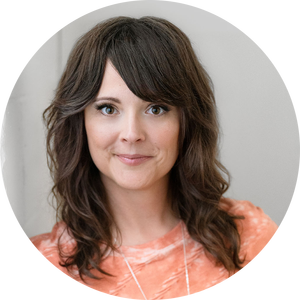
Interview By Brandi Fleck
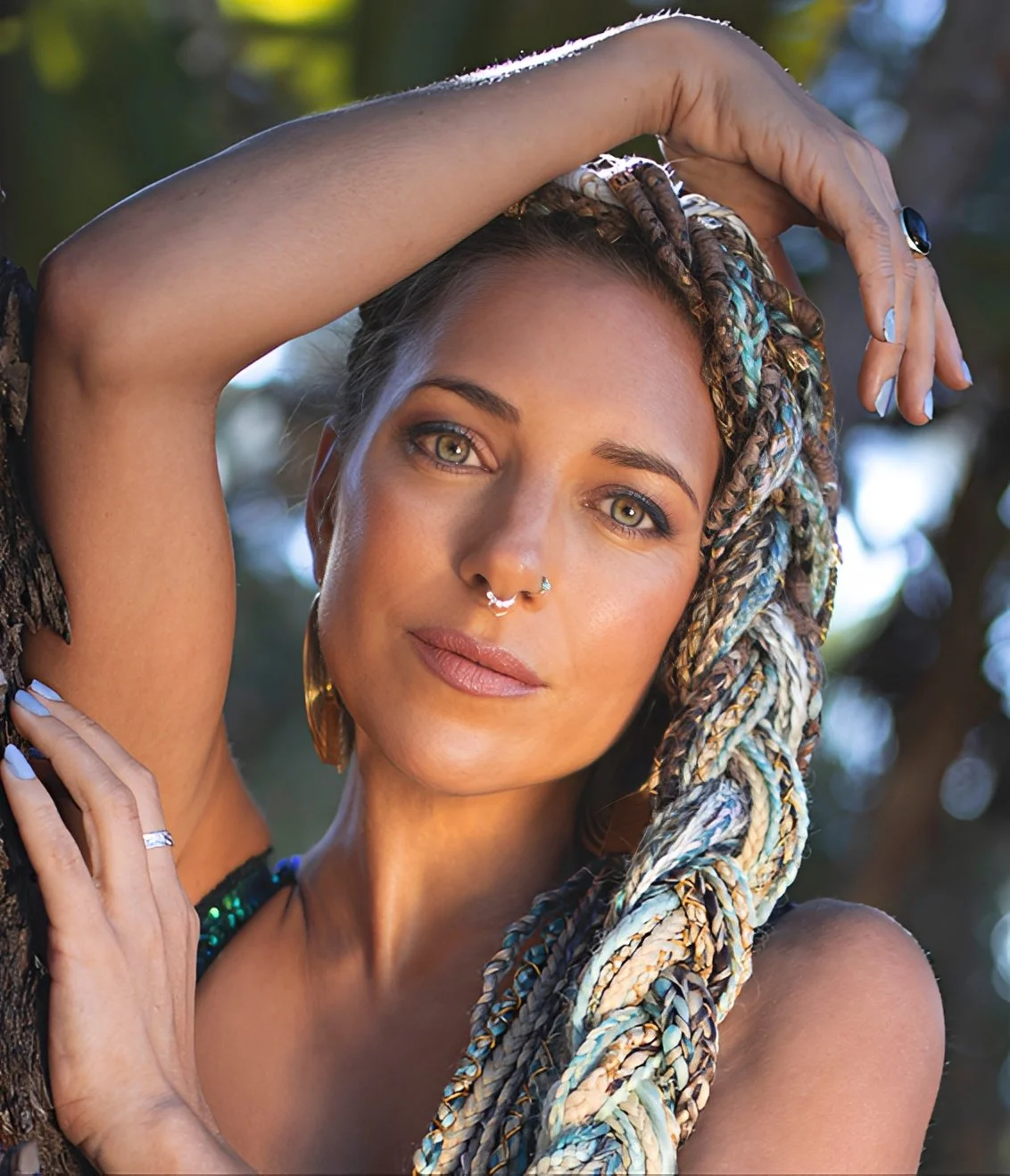
Professional mermaid Hannah Mermaid shares how underwater performance art, freediving, feminine power, and ocean activism became her life’s work.
Most people leave their childhood fantasies behind, but Hannah Mermaid built an entire life around hers.
In this episode of Human Amplified, the world-famous professional mermaid shares how a childhood obsession with mermaids evolved into a career in underwater performance art, freediving, ocean conservation, and environmental activism. What starts as a conversation about mermaid tails and swimming with sharks quickly becomes something much deeper.
We look at what it means to embody femininity without shrinking yourself, how fantasy and storytelling can create real-world change, and why the state of the ocean reflects the state of humanity itself.
Hannah also opens up about the physical realities of underwater modeling, near-death experiences in the ocean, breathwork, meditation, and the mindset required to build a life outside conventional expectations.
Listen to Hannah Mermaid’s Interview
Watch Hannah Mermaid’s Interview
Inside the World of Professional Mermaids
Hannah Mermaid: I am Hannah Mermaid. I live in Los Angeles, California. Whatever you could possibly need a mermaid for, that has been my life for the last 20 years. I've always been really interested in ways of utilizing iconography and fantasy to enact real-world change. I realized there was a real power in the icon of the mermaid in so far as how I could activate social consciousness around the ocean. I think strength of character gives you superhuman abilities.
Brandi Fleck: Welcome to the season 3 finale of the Human Amplified podcast. Thank you so much for hanging out with us this season, which has been an amazing and heartfelt journey of inspired storytelling within the human condition.
Today, world-famous Hannah Mermaid joins us in a down-to-earth, get-to-know-her-on-a-deeper-level discussion that was truly impactful in my life, and I know it will positively impact yours too.
She's an underwater model and performance artist, speaker, teacher, and servant of the sea. Hannah brings so many interesting perspectives to help you open your mind to everything from going with the flow and how that helps her underwater, to new ways of approaching activism.
We start out talking about Hannah Fraser's life, her childhood, her supportive mom, where she's from, and how she started making her own mermaid tails at an early age. Then we transition into how she transitioned into Hannah Mermaid, the first professional mermaid that paved the way for so many others, which is now a thriving and recognized career.
Hannah Mermaid gives you all the details, tells us about some of the most terrifying moments she's experienced underwater, but also some of the most beautiful moments of embracing her femininity and self-empowerment through art, fantasy, and iconography.
We dive deep into the differences between masculine and feminine power and Hannah's history with activism. She describes how powerful the mermaid icon is and her lived experience of that power, from successful protests to transformation in other people's lives who've reached out to her.
Hannah Mermaid also describes how the oceans have evolved since she started her career and what that says about the state of humanity.
Although we were having this conversation on opposite ends of the country over a sometimes crackling internet connection at the height of COVID infections, where Hannah was in LA, I felt like we were old friends picking up where we left off, balancing laughter with seriousness and the give-and-take in between.
After listening, you'll be inspired, and you'll have food for thought on how to reach your own self-empowerment in a way that works for you while enacting change. If you don't feel like you fit into that box that society wants you in, Hannah is a great example for how to recognize the world really is open for you to explore the possibilities of being your true self.
While you're thinking about that, also learn from Hannah Mermaid's example and remember to take care of yourself and the importance of breathing.
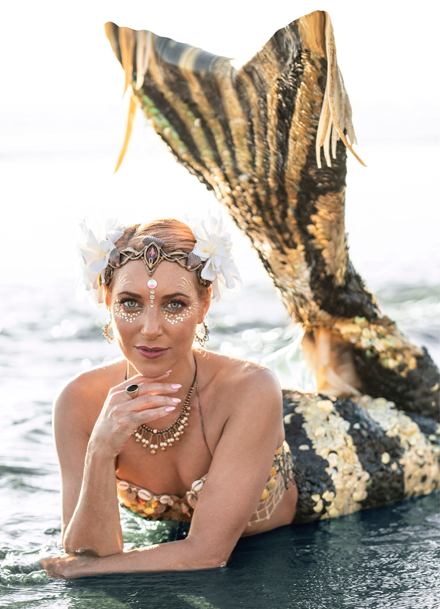
Hannah Mermaid: My name is Hannah Fraser, but I'm known as Hannah Mermaid. I was the first professional freelance mermaid performance artist starting 20 years ago as a professional, and that means I create tails that are works of art and fully functional underwater, and I perform in them for film, television, eco-conservation activities, live events, festivals, and private parties. So whatever you could possibly need a mermaid for, that has been my life for the last 20 years.
Brandi Fleck: That is just amazing. You are absolutely amazing, and I want to ask you all the questions. But are you okay if we start with some quick rapid-fire, just getting-to-know-you type of questions?
Hannah Mermaid: Sure.
Brandi Fleck: Okay, the first one is: how long can you hold your breath?
Hannah Mermaid: Two minutes while in action underwater, and five minutes is my maximum if I do a big breathe-up, meditate, do some decent breath work beforehand, staying stationary.
Brandi Fleck: Okay. Man, how long did it take you to get to be able to hold your breath that long?
Hannah Mermaid: I was really lucky because I grew up with a mother that was deeply involved in meditation, yoga, and breath work, and so she taught me all of these things, unknown to me, for the perfect platform for me to become a mermaid. So I already had a great breath hold of around a minute when I first started, and I've doubled that over the years.
Brandi Fleck: Okay, awesome. Well then this is a good segue into: do you have a favorite yoga app, and if so, what is it?
Hannah Mermaid: I don't actually have a favorite app because I do my own practice, kind of a cobble together pieces from my time in meditation ashrams in India as a child, my mother's hatha yoga practice, and the plethora of amazing yoga classes on offer in Los Angeles, plus all of the different retreats and things that I've attended over the years. I've just found something that works for me, and so I like to teach more than I like to watch someone else teach.
Brandi Fleck: That makes a lot of sense. I should make my own app for yoga.
Hannah Mermaid: Yeah, you should. That would be awesome. I teach it as part of my retreats and one-on-one sessions for being a mermaid, so I should probably make an app for it.
Brandi Fleck: Yeah, good idea. Thanks, Hannah.
Hannah Mermaid: No problem.
Brandi Fleck: I will totally subscribe to it, so just let me know when you get that going.
Hannah Mermaid: Fantastic. Right on.
Brandi Fleck: Okay, deepest you've ever swam with a tail on?
Hannah Mermaid: Sixty feet deep without any breathing apparatus. I'm not one of those people that's looking at my clock or looking at the dive watch to see how deep or how long. For me, everything has been about the experience, and if I can just get deep enough or hold my breath long enough to interact with these incredible animals like whales and sharks, then I'm happy. So I haven't really been all about numbers.
Brandi Fleck: Okay, favorite animal on land?
Hannah Mermaid: It would be cats. I just love cats. And then in the ocean, dolphins and whales.
Brandi Fleck: Okay, favorite place that you've ever swam at?
Hannah Mermaid: Everyone asks this. I still haven't been able to pinpoint one, but I would say probably for overall everything-awesomeness in the ocean is the Bahamas because the water's warm and there's so many different varieties of animals.
Brandi Fleck: Awesome. Well now let's just sort of dive in.
Hannah Mermaid: Dive right in, yeah.
Brandi Fleck: Okay, so I think I've seen on your bio some of the answers to these questions I have, but I think that you've always had a love of mermaids. Is that correct?
Hannah Mermaid: Yeah. I was that kid that was always at the bottom of the pool holding my breath as long as I could, saying, “Throw pennies in, I'll pick them up. Look at how long I can hold my breath,” and drawing pictures of mermaids since I could draw stick figures. And I made my first tail when I was only 9 years old after seeing the film Splash with Daryl Hannah. I was so obsessed and just swam around in my pool in that thing until we moved and I didn't have a pool nor live near the ocean until I was 20 years old.
And in that gap, I just drew mermaids incessantly. I wrote stories about them so that I found other avenues to pour my love of mermaids and the ocean into until I could actually become a true-life professional mermaid.
Brandi Fleck: Yeah. Hey, where are you originally from? You can pick up on the accent that's kind of a mishmash, huh?
Hannah Mermaid: I don't know, maybe, yeah. I was born in England, grew up in America for the first seven years of my life, and then went to Australia for most of my adult life until I moved back a decade ago to California.
Brandi Fleck: Okay, so it comes in and out. It's kind of a schizophrenic mess.
Hannah Mermaid: That makes a lot of sense. I mean, if you've lived in all those different places, it changes, I think.
Brandi Fleck: It does, yeah.
Hannah Mermaid: Yeah.
Brandi Fleck: And then my other question is, you said you didn't live near the ocean and you made your first tail when you were nine. What in the world did you make it out of at 9 years old?
Hannah Mermaid: It was a pretty hysterical little attempt at a tail. It was plastic orange tablecloth material with pillow stuffing stuffed in the end without even any flippers, so it was highly nonfunctional and did more to drown me than to help me to swim.
But I guess it was a sink-or-swim moment because as I got in with this thing and I'm sinking to the bottom with all this pillow stuffing wrapped around my legs, I learned how to get myself out of challenging situations and learned how to make that work for me and how to hold my breath a long time and how to push myself in the water. So I think that really set me up for much later in life when I found myself tied to reefs at the bottom of the ocean interacting with tiger sharks and so forth.
Brandi Fleck: Yeah. You know, I think that was really creative, though, to think of how to make a tail with a tablecloth and things like that.
Hannah Mermaid: My mom was always very artistic, so I have to give her credit. She always showed up for anything that I was like, “I want to make this,” and she would show me how to use the sewing machine and how to, you know, like, “Let's go get some gold paint from the craft store and you can use this brush to paint little scales on it.”
So she was very hands-on creative with me, and I credit her for all of the things I've been able to manifest.
Brandi Fleck: Very cool. How did you go from loving mermaids as a child to allowing it to remain not only a love and a dream into your adulthood, but actually pursuing it? Because I feel like a lot of people let go of their childhood dreams and their childhood loves. So how did you do that, especially when we're so pushed with like, “Oh, you need to be practical. You need to go pay your dues and do things that everybody has to do”? How did you get over that?
Hannah Mermaid: Totally. And again, I would credit my mother for being very supportive on a creative aspect. However, it wasn't until I was around my late 20s that I even managed to transition into being a professional mermaid.
However, I had been very creatively engaged since I started work, and as I mentioned, I've been creating artworks out of mermaids, and I became an illustrative artist. I went to graphic design school for a year and then realized this whole thing of needing to turn your art into something that's just going to make the most money and fit into a box was not working for me.
And at that point, when I was 20, 21, I just was like, “I can't do this whole structured thing.” I left university, I sold my belongings, I put everything into a camper van, and I drove myself up to Byron Bay, which is kind of like a beautiful surf hippie alternative-cultured town on the most easterly point of Australia. Gorgeous green rolling hills and rainforests and dolphins and whales jumping in the ocean. It was paradise.
But I had nothing, and I started by just creating my art into tiny little greeting cards, hand-done, selling them on the side of the street at the local markets, building it up until I had a business which serviced over 300 stores around Australia with my art and turning my mermaid passions into art.
And then I got into modeling, and it wasn't until I did an underwater shoot where I didn't think I would get the job at all because I was up against all these much younger, prettier, taller, all the things we tell ourselves girls, for a commercial for underwater work. And I had not done anything like that, but I thought, “I love the ocean. I'm kind of a mermaid at heart. Maybe I can pull it off.”
I got in there and they all looked like dying blowfish, and I pulled all these moves and I could hold my breath for a minute at a time, and they hired me on the spot, which never happened.
And at that moment, when I got those photos back and I saw that I had become my art, these things that I've been drawing in my head, that freedom, that weightlessness, that beauty, I was able to embody that when I was in the water. Then I was like, “Oh my God, if I had a mermaid tail, I would look exactly like my art pieces.”
And so that gave me the impetus to create this thing, which again, my second try as an adult wasn't that much better than my first try as a kid. It was made from a pair of flippers, an Australian plastic boomerang, a lot of duct tape wrapped around it to hold this structure together, and then some wetsuit neoprene over the top with lots of pretty painting on top.
And it was functional enough that I got the feeling of what it's like to swim with a monofin, and someone took some video, and you could just see in that shitty video that I was so excited to actually be embodying this creature of the sea again that I was hooked.
And from then on, I was like, “Okay, I'm going to get polyethylene board and bolt flippers to it and put silicone on it and figure out how to make a monofin and make the most realistic mermaid tail I could.”
And at that time, there was nowhere online that you could buy a mermaid tail. The only tails around were these amazing things built for film and television with huge special effects teams spending thousands of dollars.
Brandi Fleck: Yeah.
Hannah Mermaid: And I researched everywhere and there was just nowhere to be found. So I thought, “I'll do it myself.” And it was a lot of work and development, but here we are 19 years later, and I have about 14 different tails. Each one takes six months to make, hand-sewing tiny little scales all over it, hand-poured silicone fins, different artisans that I work with, and yeah, they're just a labor of love.
Brandi Fleck: Yeah.
Hannah Mermaid: I've never sold one because it's just, how do you put a price tag on that?
Brandi Fleck: Yeah, yeah. So how involved are you actually in the tails now? Do you do the design and actually do some of the construction, or how does that work?
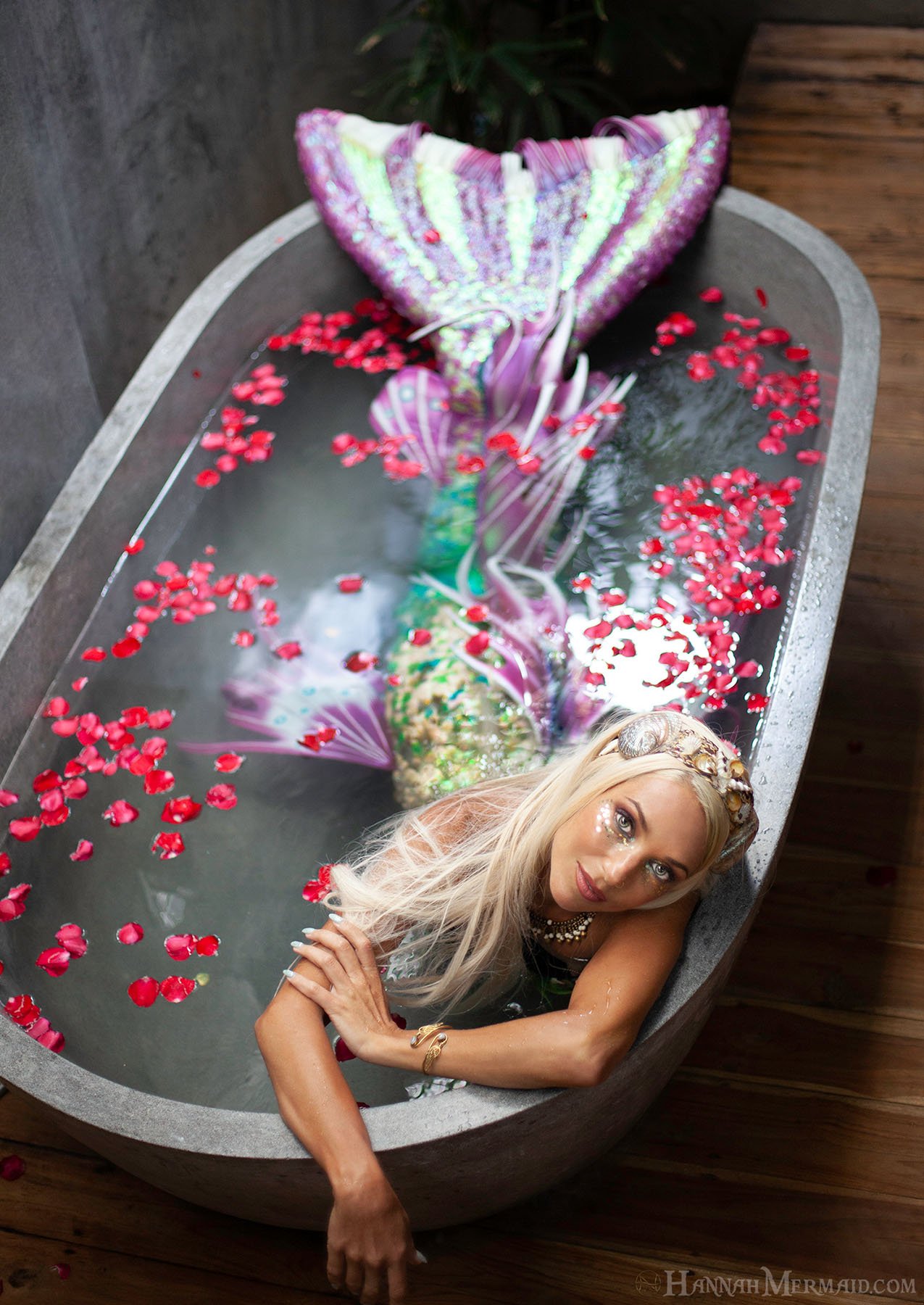
Hannah Mermaid: Yeah, I made about four of them entirely by myself, and then I was like, “Well, I don't have time to spend six months on a tail anymore.” And so now I literally lay out the scales, place them on the ground in exactly the pattern that I want, and shift the colors until I've got it exactly right, take a bunch of photos, and then I have someone do the sewing for me and get it to a certain stage.
Then I send it to a different person who's a silicone mold expert, and I design the fins and the colors and the shapes and everything, and we work together to collaborate on that.
And then they send the thing back to me, and then there's a lot of patches on the tail that haven't been filled in due to needing to leave space for the fins. So then I hand-sew all of the extra pieces into that.
So yeah, it's kind of a collaborative effort between like three, maybe four people.
Brandi Fleck: Okay. Like, condensed it takes six months, but it usually takes about a year from start to finish?
Hannah Mermaid: Okay. And so you've got 14, so that's like 14 years worth of work at least.
Brandi Fleck: One of you, yeah. Wow. Okay.
How to Become a Professional Mermaid
Hannah Mermaid: Yeah. Okay, to answer your question, like, how did I actually become a mermaid as a job? Once I created that tail, I started doing photo shoots and just kind of putting it out there. And I did a press release and actually said, “I get paid to travel around the world to be a mermaid for these different things.” I'd only gotten one tiny little job, but I was like, “I'm just going to claim it.”
And from then on, it was like people recognized that it was actually a thing. So there's something to be said for fake it till you make it if you truly believe in what you're doing, and then also having all of the portfolio to back it up and the skills built over a lifetime to be able to pull it off when you get asked to do these jobs.
A lot of what I did was bringing awareness to eco-conservation efforts and all the horrendous shark killing around the world and whale killing. So being involved and giving my time to different organizations that are helping these causes also helped me to be seen for what I do as a mermaid. So it's like there's a give-and-take as well. Being of service has been really important.
Brandi Fleck: Yeah. How does it feel, though, knowing that there are other people who are mermaids now and you had a hand in that?
Hannah Mermaid: It's a trip. At the beginning, when the girls started seeing what I was doing and copying my tail down to the scale and the thing, I kind of felt a bit like, “This is my thing. Why are you copying me?” And then I got over that and I was like, “No, there's a whole world of possibilities.”
And so I really started helping. I'd always send people, if they asked, “How do you make a tail?” I'd be like, “If you're willing to put six months of work into this, go right ahead. Here's how you do it.”
And I've had letters from mermaids like 15 years after they'd written an email to me that I don't even remember, and they say, “You were so generous in sharing how you do what you do that I actually became a mermaid and it's now my full-time career, so thank you.”
And I was like, “Oh wow, cool. I did a good job.”
And so then I headlined at the first mermaid convention called Mer-Con in Vegas, and since then there's been M-Fest and Mermania and Mermaid MegaFest, all these different mermaid conventions around the world.
And it just trips me out that when I first started, there was literally no one doing this, and now there's conventions and thousands of mermaids around the world and these incredible tail makers doing the most creative artistic things now. It's wild. It's beautiful, and it feels like a movement of people who are really interested in preserving our natural earth and the ocean and standing up for what is going to sustain our life as well as theirs.
Brandi Fleck: Yeah, I love that.
Okay, let's shift a little bit into how physically challenging your job actually is. It's sort of like breaking these social barriers was even challenging, but now you transform your body and by extension you're transforming the world around you, I feel like.
Hannah Mermaid: Yeah.
Brandi Fleck: So can you just describe how physically challenging your job is so we can have an idea of what you go through?
How to Hold Your Breath Longer Underwater
Hannah Mermaid: Sure. So let me put you physically into an experience that I've had.
It's freezing cold. It's midnight. You're on a boat, so you're kind of a little bit seasick, and it's time to get in the water. And you're wearing basically a bikini. Everything in your body is saying no. And it's dark in that water. You can't see anything.
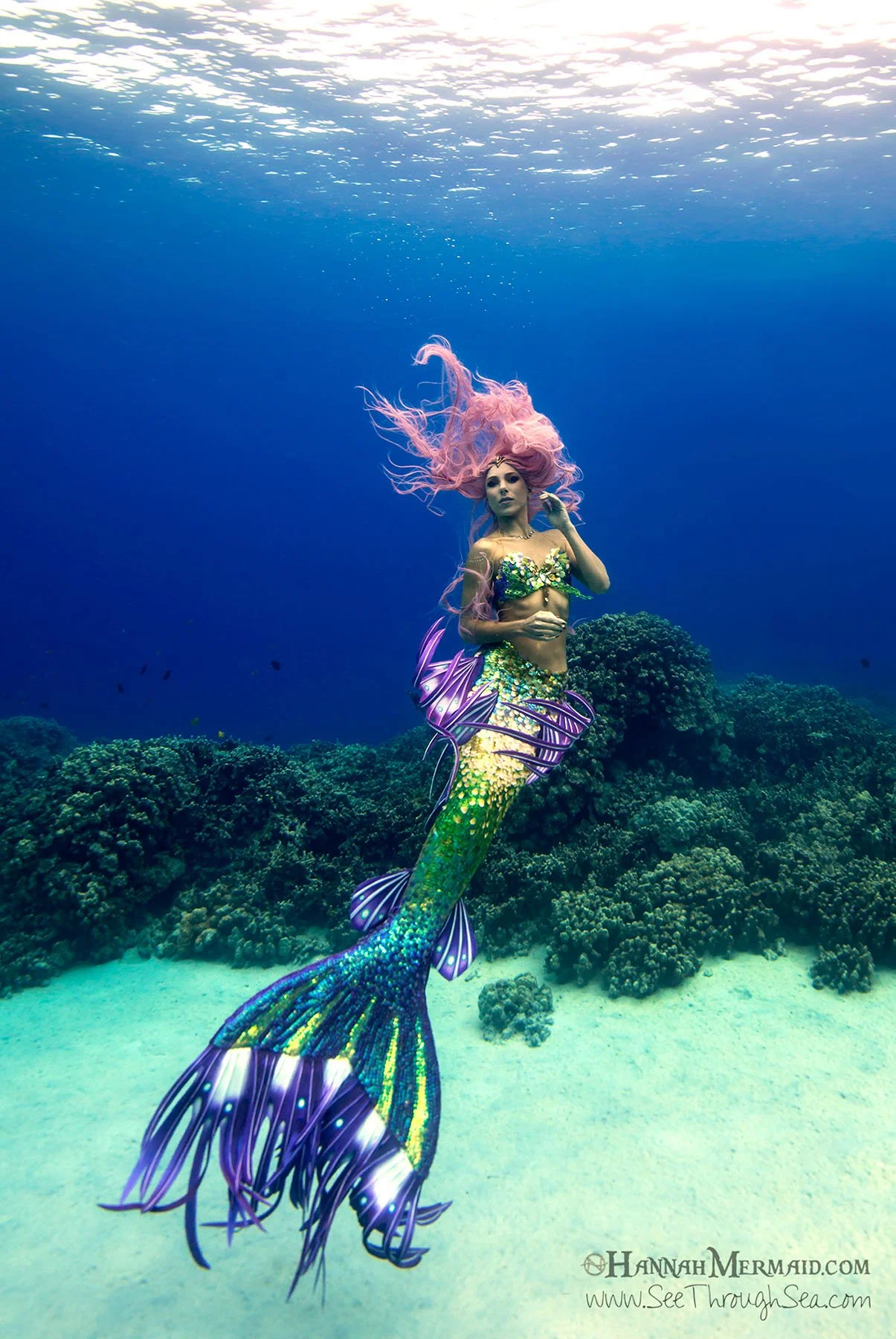
And you've got a little pair of goggles on, and then you're just using a regulator from another safety diver and clinging to his arm as you descend into the depths of this black, inky ocean.
You get down there and they put 50 pounds of weight tied to your ankle so you stay down. And then you're shivering and you're being pushed back and forth by currents onto rocky, sharp outcroppings on the bottom of the ocean.
You are relying on someone else seeing you when you can't see them when you ask for air like this, and you can't make sound, you can only gesture for it. And then you have to wait for like 10 seconds while you just hope that someone's seeing you and that they're bringing you air to take back into your mouth.
Brandi Fleck: Oh wow.
Hannah Mermaid: And then something wriggling around your legs. You don't find out till later, but that's a viper eel. And then manta rays show up and they're flying around you. They're huge. They're much bigger than you are, and they're just dipping and swirling in a single column of light around your body.
There's also lots of little shrimp around, tiny little shrimps that they're eating, and so those shrimps are also getting caught in your hair, around your eyes. It's just like a lot of ocean stuff in you.
And you're holding your breath. Your lungs are burning. You're shivering. You can't see properly because it's blurry. And you're exhausted because it's after midnight.
And that's the joy of the job.
Brandi Fleck: Wow.
Hannah Mermaid: So the challenges are really, really intense physically, and after a shoot where I'm creating a whole video, usually it'll take about a week and I'm diving every day or every night, and I usually end up with a pretty bad cold afterwards because I'm just pushing beyond everything that I've got inside me.
Okay, but on the general basis of how I look after my body to get myself to those situations, I've been really lucky. As I said, my mom, yoga, meditation, breath work really set me up. I'm really into just going out and dancing a lot, a lot of festivals, a lot of movement.
And I've been vegetarian since birth and vegan for most of that time. And I don't eat any sugar whatsoever, very little fruit even. I'm gluten-free. So my body just over the years has told me that these substances just don't react well with me. I either get really bloated or feel bad digestion or my skin breaks out.
And so I've just eliminated and eliminated until I'm living this plant-based diet that fuels me and keeps me young. I mean, I'm 47, so something seems to be working.
I don't smoke. I just try to stay happy and positive and do a lot of good things for my body.
Brandi Fleck: Yeah, yeah. That's amazing. And so when you're in these situations, do you have like a medic on board the boat just in case something goes awry?
Hannah Mermaid: So one of the first big shoots that I did was swimming in my tail with 17-foot great white sharks. And the first question I asked after I'd gotten on a tiny little plane to then a tiny little boat to another little boat to get to a stinky old fishing trawler that we were working on was, “Who's the medic on board?”
And they looked at me and they said, “Well, we have a first aid kit.”
[Music]
So sometimes no. Sometimes you're just winging a prayer and obviously being very aware of what situations you're going into, doing all the research and animal understanding that you can to keep yourself out of danger and to not do anything completely stupid.
But of course I have pushed the envelope. I've swum with great white sharks. I've swum with tiger sharks. I'm throwing myself into the ocean with whales the size of two buses.
And yeah, there's only so much you can do. And we generally have a plan for if anything goes wrong, but honestly, if a shark decides to take a bite out of you, generally out of curiosity because they're not interested in eating us, but they don't have hands, so if they're curious enough and they take a bite, there's really not much you could do. That could just be the end.
And that's the risk that I take to do what I do. And honestly, the risk is so much less than crossing the street every day.
Brandi Fleck: Okay, that makes sense.
Hannah Mermaid: Yeah. I mean, there's some wonderful statistics. You have more chance of being killed by a falling coconut or a mosquito or a vending machine falling on you than getting eaten by a shark.
I mean, obviously my chances are much higher because I go and seek them out, but they're really not as scary as one would imagine.
Brandi Fleck: Yeah. Okay, well then in terms of just having to put your complete trust in a diver that's got oxygen for you, do you trust these people or do you know them?
Hannah Mermaid: Yeah, I don't often have the luxury of having someone that I know. I'll generally show up to a shoot because I'm in a different country with just a photographer, and we're like, “Okay, we got to get a safety diver.” And we'll pick someone or they're the person that's available on the boat or whatever it is.
And I always talk to them first and I say, “Look, you have my life in your hands. This is an extraordinary circumstance. I'm going to be sucking air like there's no tomorrow, even though I'm holding my breath for a lot of that time. I will make up for it when you give me that regulator. So watch your air regulator.”
Because I've had moments where I'm 35 feet deep down and the guy hands me the air and nothing comes out, and he's just spaced out because he's expecting to usually stay down there for half an hour or something, and we've used up the oxygen in 15 minutes.
Brandi Fleck: Oh my God.
Hannah Mermaid: And I've had moments where we've had to turn to the photographer and share air between three people as we slowly ascend, and that's terrifying.
And I've had moments where a diver was just distracted by a shark and kind of looking at the shark, and I'm there just like, “Give me air.”
And I remember saying to a diver after that happened, I said, “You have to give me air. You cannot look anywhere else. You are my lifeline. Look me in the eye at all times, and I don't care if you have to push a shark out of the way to get air. When I ask for it, you need to be there for me.”
And I remember he actually did that the next dive we went down, though. I was asking and there was a big shark coming between, and he literally just pushed it out of the way and, “Okay, here, I got you.”
I'm like, “Okay, good.”
Brandi Fleck: Wow. A lot of trust going on.
Hannah Mermaid: Yeah.
Brandi Fleck: And I imagine, gosh, when you first started doing these kinds of things, these were probably things that you didn't even know that you didn't know, right? I mean, was it sort of trial by fire? Like you didn't know that oxygen was going to run out that fast?

Hannah Mermaid: Totally. I had no idea.
And the first underwater deep shoot that I ever did, I got hired to go to the Philippines for a film shoot, and they didn't tell me before I got there that I required a dive certificate. I'd never done my dive. I was just starting out. I was like, “I'm a great freediver. I can hold my breath.”
They're like, “Oh, we're going down to 30 feet. You need to be able to be on the air regulator.”
I was like, “Why? I don't have that skill.”
And they went, “Oh, never mind. Just go out the back with Pepe,” or whatever his name was, “and he'll teach you how to do it.”
And I was like, “Okay.”
I literally got a five-minute, like, “Here's your air, here's the thing, this is what we're going to do. Go under, breathe through it, let it out, okay.”
And then we went down and I was tied to a reef with invisible string in a mermaid tail, holding my breath, taking off the air, the mask, and letting go of the air. And that was my first experience of using scuba equipment.
And after that I was like, “Oh, I think I really need to go and get my license.”
So it was the first thing I did when I went back to Australia, and they asked in the class, “Has anyone done any scuba before?”
And I was like, “Well, yeah, I did this thing,” and reeled off what I did, and their faces just went white and they were like, “Everything you did was exactly what you're not supposed to do.”
Brandi Fleck: Oh no.
Hannah Mermaid: I was like, “Oh. That's my profession.”
Brandi Fleck: Yeah, okay. Well, since we're talking about physical challenges and close calls, what is the absolute scariest close call you've had, whether it's been with the lack of oxygen or where an animal got aggressive?
Swimming With Great White Sharks as a Mermaid
Hannah Mermaid: Yeah, there's three actually. I'll run through them fast.
When I was swimming with the great white sharks, usually they're very wary predators and they'll just swim around and kind of keep their distance, and I would swim after them, kind of following at the tail end.
And at one point during this week, this shark decided it wasn't scared of me anymore, and it just started coming straight towards me. And it wasn't like Jaws where it was like, “I'm going to eat you,” but it wasn't scared of me. And it was 17 feet long, and I was a six-foot shiny lure in a mermaid tail.
And I realized, time slowed down to milliseconds, and I realized I had to show it who's boss. And the people on the boat had been like, “You can't turn tail and swim away because that will activate its predatory instincts. You have to show it that you're the alpha.”
And so I put my hands up and I started screaming underwater at it. Basically sounded like “blahhhh,” but because I didn't act like a scared fish, I acted like a scary predator, it turned around and swam away.
And then I was insufferable for a month afterwards because I was like, “I can do anything. I scared off a great white shark.”
But it was definitely a scary moment.
And then another one, I was sitting on this big old shipwreck about 30 feet down, and there were swarms of reef sharks everywhere. And my air was really far down the other side of the shipwreck with the photographer, who was getting a long shot.
And so I knew I needed to swim quite a ways to get back to him, but I was like, “Wow, we're getting the shot. This is amazing. The sharks are right next to me.”
And then I was like, “Oh crap, now I need air.” And I start swimming, but I was going fast and I was really splashing my tail as I went. And I suddenly felt this grab on the back of my tail, and a shark had chewed on the end of it and just kind of swished me around a little bit.
I kept my composure. I didn't let my air out. I just held on and went limp, and then he let go. So my photographer snapped a shot at that moment, and then I swam and got the air, and I was just like snorting it like Darth Vader.
It was really intense.
And that was because I was moving too fast. I wasn't giving myself enough time. So I look at it as my error, not the shark wanting to attack me.
And then the other time was when I told you about the manta rays and being at the bottom of the ocean and being pulled back and forth. I was wearing this huge wedding dress, and the current pushed the dress up over my head with all these layers of fabric, and I'm being pulled back and forth and I'm scrabbling at it trying to get it back down so I can get air, and I couldn't get out of the fabric.
And so the safety diver was also pushing from the other side, and finally we managed to get it down and give me air. But that was also one of the most terrifying moments because it's just like, what do you do?
Brandi Fleck: Yeah, okay, yeah. You mentioned that when we first started talking that it was after midnight, so you were in the dark. Why would you shoot in the dark versus the day? What's the purpose?
Hannah Mermaid: Good question. Two reasons.
Practicality, as far as the manta rays showed up at the specific spot because at nighttime they would shine these huge lights into the ocean. Those lights would attract the krill and the shrimp, and then the manta rays would come and feed on that krill and shrimp.
And so there's no other way to kind of get manta rays to come to a specific spot that you're definitely going to be able to shoot with them. So it was like you need to show up at that time.
And also the way that it looked when everything's black and you just have this strong shaft of light and these manta rays flying through it, it's very cinematic and beautiful.
And we had to wait till after 12 because before that all of the other dive boats, the commercial dive boats, were bringing people to come and have that experience, and we had to wait till everybody else was finished.
And so they're just like, “I just want to be in bed.”
Brandi Fleck: Yeah, okay. So speaking of a beautiful experience, and since you're modeling underwater and you've got all this fabric or different things, how do you ensure that it stays the way you need it to stay, whether it's your makeup, your hair?
Hannah Mermaid: So the makeup, I use waterproof mascara and lipstick and powder. Strange as it sounds, I have a waterproof foundation powder that sort of sets the makeup.
But I don't like other people use waterproof sprays and things. I find that it creates some kind of weird whitish, pasty sheen on the skin that looks weird.
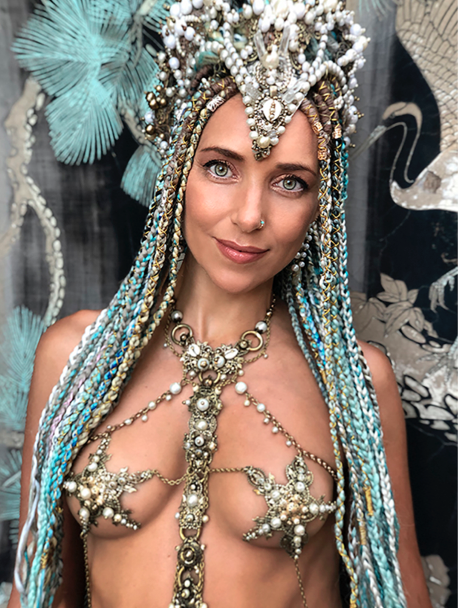
But mostly it's just not touching your face because people underwater always tend to kind of try to get water out of their eyes or something. So I just don't touch my face, and I've trained myself to be able to do that.
And as far as hair, I spend quite a lot of time during my retreats and coaching sessions teaching people how to move their hair underwater because it's one of those things where it just kind of is this ball of fluff around your face, and they don't know. They're kind of trying to shake it out of the way like you would above water, but underwater everything moves very, very slowly.
And so you have to learn how to kind of flow with it, and it's like a dance working with your hair or using the water and moving the water so that it floats it back off your face.
Brandi Fleck: Yeah.
Hannah Mermaid: And yeah, everything is about slowing down underwater and having patience and allowing the ripple effect to happen.
As you can see, I've got all these braids, and so for me this is kind of an easy, I don't have to do anything with my hair the rest of the time and just show up and it's all mermaidy and underwater anyway.
Otherwise I have quite thin hair, and I use a lot of wigs and attachments and things for the extra, extra long mermaid hair underwater. And that's a lot of brushing and maintenance and dealing with wigs.
Brandi Fleck: Okay, yeah. Well that is really cool. I feel like everything you just described is sort of a physical manifestation of creativity, the concept of creativity, where you have to get into the flow. You have to just sort of slow down and take it as it comes.
It's really interesting, the parallels there between being an artist and also just existing underwater. So very cool.
Hannah Mermaid: Yeah. I like that analogy.
Brandi Fleck: Yeah. So let's talk a little bit about embodying gentle feminine power while you're thriving in these challenging conditions because I know that's sort of something that you're known for, and I love the juxtaposition of femininity with the word power.
Feminine Energy and Female Empowerment
Hannah Mermaid: Yeah. So for me, I see the masculine, and I don't want to say men and women, but just the masculine and feminine energies that we're working with. For me, masculine energy is kind of exerting power over, and feminine energy is surrendering into and inviting into power.
So there's this thing that I can do underwater where there's a deep surrender to what is actually happening, where I am, and drawing on the personal reserves of my own self connected to nature that gives me a sense of empowerment and mastery over what I'm doing.
But it's at the same time a really deep surrender. It's not trying to change anything. It's tapping into what is in existence already. So for me, that is the essence of femininity and also inviting others into that power as opposed to trying to have power over.
Brandi Fleck: Okay, so what are your thoughts about strength in femininity, and how does strength play into it?
Hannah Mermaid: I think strength of character gives you superhuman abilities. So even though women or the feminine has been looked upon as the weaker sex in many ways, look at what we've had to deal with, overcome, how we give birth, how we deal with menstruation every month, just living in a masculine-dominated world and the reserves that we've built up in ourselves.
I think women are so much stronger than we have even given ourselves credit for, let alone the rest of the male populace.
And so I'm really happy to see that society as a whole is starting to recognize what feminine strength is and not try to dim the light of females.
And so for me, the whole mermaid experience has really been about finding my own self-empowerment because I was a very shy, inhibited child and felt really uncomfortable in my own skin.
And for me, this was a way to express my femininity, my sensuality, even my sexuality in an artistic, beautiful, empowered way by taking this mermaid myth and using it as a vehicle that people are open to, and then embodying that in the real world.
Brandi Fleck: Yeah. So what kind of impact are you seeing on humans since they're open to this image of what you're trying to embody?
How the Mermaid Archetype Represents Sensuality and Confidence
Hannah Mermaid: The first thing that comes to my mind is how many women have also come to embody that through the mermaid icon and how they're taking control of their deepest passions, of what they really want to do, how they want to express themselves, how they want to be sensual, how they connect to the water, how they stand up for the planet, how they can express their beauty.
It's a really interesting thing. I've been thinking about how the mermaid is a symbol of sensuality and sexuality in many ways, like the luring of the men off their ships and everything, and yet they're this sort of chaste thing where literally their legs are together. There's no legs. There's no sexual organs visible.
And so it's literally just an energetic frequency that they hold of beauty and sensuality. It doesn't have to be sex-based.
And so I think that's a really interesting line to walk when women are expressing themselves as a mermaid. There's no place where they start to kind of oversexualize it in a way.
So yeah, there's a lot to unpack in there that I've thought about.
Brandi Fleck: Yeah, there really is.
Hannah Mermaid: And another thing that just comes to mind is I was able to swim in the Dubai Aquarium & Underwater Zoo, which is the largest aquarium in the entire world, in the biggest mall in the entire world. Dubai likes to do things big.
And they had questions at first about, like, “Well, you might need to wear a bodysuit under your tail because it's a very Muslim country and women don't show their skin.” And they just kind of talked it out a bit, and I was like, “Well, this is my brand, and this is how I look. Everything's covered, but I'm a mermaid and it's a mythical creature.”
And they eventually let me do it, and nobody was upset. It was all fine. It was put under this bracket of, “Well, that's what a mermaid looks like.”
And yet I was able to express myself as a sensual, feminine being where a large percentage of the population of females there is covered from head to toe in a burqa.
And so it was an avenue to allow that feminine energy to be on display and to reach the subconscious in a way that people didn't really expect.
Brandi Fleck: Okay, let's shift in now to the environment because when we were talking a little bit about femininity, you were talking about interacting with the world or taking care of the planet, I think you mentioned.
How have the oceans actually changed since you started?
What Ocean Pollution Says About Human Nature
Hannah Mermaid: Kind of heartbreaking, honestly.
So I did a lot of travel over this last 20 years and going to places like Tonga and Fiji and Hawaii and all these gorgeous places and Bali, and I noticed that there would be beaches that previously had been gorgeous, spotless white sandy beaches. I would come back and they would have a lot of dead coral coming up and trash and pollution, and the water quality would have gone down a lot. There wouldn't be as many species of fish to look at. The big animals that we would have hoped to see before just weren't showing up anymore.
And there were places where they're doing fish bombing and coral bombing, where they would literally just put dynamite in and that shocks all of the fish and the fish come to the surface and then they scoop them up for sale. But it also annihilates all of the coral reefs and all the ecosystems.
I've been to places in Indonesia where one of the worst fish markets, where they're literally hauling dead baby manta rays and sharks off of these boats and just lining them up on the ground and hacking into them. It's just like the most heartbreaking things that you could see happening in the ocean.
And so I started off my career, one of the first mermaid things I ever did was sitting on this bridge where they were going to knock it down and destruct all of the waterways going into the ocean, creating a lot of pollution. And there was a community protest against the way that they were doing it, asking for more eco-conservation.
And I got my mermaid tail and I sat in the middle of this bridge with the sign, “Save our wetlands.” And the police came and moved everybody off, and I was still sitting there. And I was like, “I can't walk. I have a tail on. I'm a mermaid.”
And they didn't know what to do with me because they couldn't pick me up and haul me out of there because that would have been media fodder. And they sent everybody else away.
And there was a photo of me sitting there with a sign with a bunch of other protesters that got the front page of the local paper, and it was at that point that I realized there was a real power in the icon of the mermaid in so far as how I could activate social consciousness around the ocean.
And then I started helping my partner at the time, who created Surfers for Cetaceans, a nonprofit group. We went around the world to international whaling conventions and protested against whales being killed.
And then we went to the small town of Taiji in Japan where they kill many dolphins every year, and we swam out into the blood of dolphins being killed and watched this happening and were attacked by fishermen who were hitting us with sticks.
And my gosh, it was one of the most impactful scenes in a film called The Cove, which won the 2010 Best Documentary at the Oscars.
And so we were able to start getting the word out to a lot of people, and all these experiences made me realize how powerful being a mermaid can be if you push it in the right direction.
So I've always worked with Greenpeace and Sea Shepherd Conservation Society and all these different places around the world that I could lend a hand to, to be an icon for raising awareness and direct action.
Brandi Fleck: Yeah. In this type of activism, have you gotten a sense for if the state of the ocean is a reflection of the state of humanity?
Hannah Mermaid: One hundred percent.
I mean, okay, the ocean is absolutely a wonderful self-sustaining thing. It could continue on into millennia as a beautiful, natural, balanced thing. It is only because of human pollution, intervention, fishing, that we have any issues whatsoever.
And so the fact that it is a garbage dump literally right now, and there's land masses of trash floating in the ocean, is 100% just a reflection of where we are at as a human race.
And so I'm really trying to wake people up and say, “Well, we can't ignore that anymore. This is showcasing where we're at, and it's not a good place. We need to wake up.”
Brandi Fleck: Can you sort of put into words where you think we're at as a collective? If the garbage heaps in the ocean are a physical manifestation of where we're at, what does that say about us?
Hannah Mermaid: I think we're toddlers that haven't realized consequence yet. They're just in that terrible twos where they're like, “Mine, mine, mine, mine,” and poop anywhere and expect somebody else to clean it up.
Brandi Fleck: Yeah, okay. So why was it important for you to sort of venture into this activism after you started being a mermaid?
Hannah Mermaid: Venturing into activism was actually something that was already part of my life before I became a mermaid.
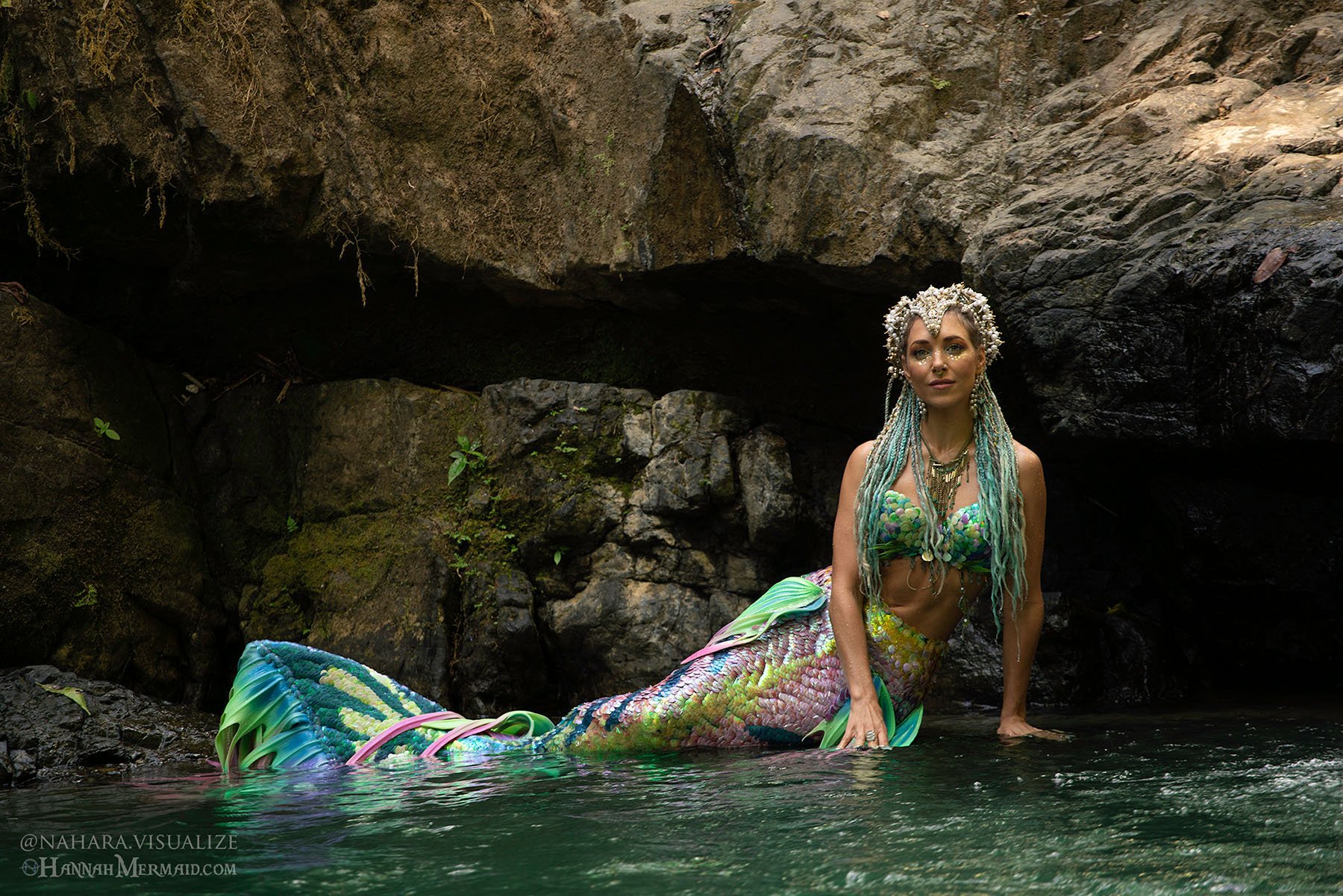
I actually remember dressing up like a fairy and going to old-growth forests up in the hills of Byron Bay and standing in front of big bulldozers that were trying to cut down these ancient trees and using an image of a forest fairy in the same way that I use a mermaid to be a protest.
And using, you know, I was born into a young female body that I can utilize that icon as the feminine power.
So I've always been really interested in ways of utilizing iconography and fantasy to enact real-world change, and the mermaid has just been the most effective vehicle for me.
Brandi Fleck: What is it about fantasy that you think speaks to people to allow that change to happen?
Hannah Mermaid: Yeah, I think it's because you're not guilting people. We've grown up in an age where we're the first generation being told that we may not have a planet to live on because we're messing it up so bad.
We've grown up with those TV commercials of like, “Save the whales, they're all dying,” climate change, it's overwhelming, and sometimes we all just want to have fun and we want to just feel like life is good and we're good people, and the constant barrage of guilt is really intense, and we tend to just switch off.
And so when you can create this fantasy element that gets people engaged on a creative level and makes them feel inspired as opposed to guilty, they're much more willing to take some action based on that because they feel an expansion rather than a contraction.
And when you feel expanded, you feel more generous, and then you might go and help or support and donate.
Brandi Fleck: Yeah, that's a really good point. I love that. So yeah, thank you for that.
Now let's just jump into what's new and what do you have coming up for the summer of 2021?
Hannah Mermaid: Wishing to get back in the ocean, like most people around the planet this last year. I have been pretty homebound.
I'm obviously taking the COVID thing pretty seriously. I'm in the hotspot of the planet right now in California, in Los Angeles, where they say at least one in three people have contracted it. And there's pretty heavy, we've got some extra bad gnarly strain going around.
And so there's been so many plans that I've had that I've canceled. I had retreats in Bali, I had retreats in the Bahamas, I was supposed to be in Mexico. I've canceled everything, and I'm just waiting until more people are vaccinated and we can get to a place where I feel confident that I'm not going to be spreading anything around the world with my travels because I have to be socially responsible.
But I am looking at going to Nicaragua to a small retreat center there and doing some mermaid workshops mid-year, and also another small retreat center in Mexico mid-year. And I'm hoping by then things will be looking brighter.
And then Bali to go and teach yoga, meditation, breath work, and mermaiding on a small island in Sumba with Momentum Circus residency.
Okay, and in between all of that, I've taken this time that I've had to not travel and not do my mermaid thing as much to collate and create mermaid films.
So I have so much footage from 20 years, as you can imagine, of these incredible adventures and all the behind-the-scenes things that have happened and the challenges, difficulties, the physical impossibilities that we've overcome to do this job, and all the wild, wacky people that I've met along the way and these shark aficionados.
And I'm pulling all of that footage together to hopefully create a documentary at some point.
And yeah, I'm also working on a coffee table book of beautiful imagery with stories like I've been telling you.
Brandi Fleck: Okay, well that's really awesome. Where can everybody find you and all of your stuff online or when this stuff comes out?
Hannah Mermaid: I'm really easy to find, yeah. Hannah Mermaid, Hannah Mermaid on Facebook, Hannah Mermaid on Instagram, and Hannah Mermaid on YouTube. Just put in “mermaid,” you'll find me.
Brandi Fleck: Okay. And is there anything that I didn't ask you about that you think is important to say?
Breathwork and the Power of Breathing
Hannah Mermaid: The thing that pops into my head is how important breath is. And it's strange coming from a mermaid because what I practice is not breathing. But to get to that point of suspended animation or whatever you want to call it, I have to do a lot of breath work so that I expand my lung capacity.
And this is not just to hold my breath, but it's for general health. I've been reading this incredible book called Breath by James Nestor, and it showcases exactly how important correct breathing techniques are. And pretty much 99% of the planet is doing it wrong, even if you think you're healthy and you're breathing well.
And so I would just recommend everybody check that book out because it's really inspiring me right now.
Brandi Fleck: Okay, well awesome guys, that will definitely be in the show notes. So if you want to go check that out, that will be there.
Hannah, just thank you so much for coming on the show. It's been an absolute pleasure, and I've loved hearing your stories.
Hannah Mermaid: Thank you, Brandi. Honestly, your questions are so wonderful and open up so many memories and stories for me. It's very easy to talk to you.
Join the conversation!
Feel free to share your own experience and let me know if you have any questions in the comments.
Related Posts



Hi, I’m the founder of Human Amplified. I’m Brandi Fleck, a recognized communications and interviewing expert, a writer, an artist, and a private practice, certified trauma-informed life coach and Reiki healer. No matter how you interact with me, I help you tell and change your story so you can feel more like yourself. So welcome!
Find More on the Blog
Topic
- ADHD
- AI
- Atlanta
- Black and BIPOC
- DIY
- FAQ
- LGBTQIA plus
- Los Angeles
- Nashville
- Seattle
- St Louis
- St. Louis
- UFOS/UAPs/ETs
- abuse
- accountability
- addiction and recovery
- adoption
- affirmations
- afterlife
- altered state
- angels
- animals
- anxiety management
- art
- astrology
- atlanta
- attachment
- awakening
- beauty
- behind the scenes
- being human
- body image
- body work
- boundaries
- brandi fleck
- breathwork
- bullying
- burn out
- burnout
- cancer
- career
- caretaking
- chakras
- channeled
- clarity-dive
- clarity-practice
- clarity-primer
- clean products
- coach
- codependency
Recent Blog Posts
Visit the Full Podcast Audio Archive

Affiliate