Why Great Teachers Leave the Classroom
Interview By Brandi Fleck
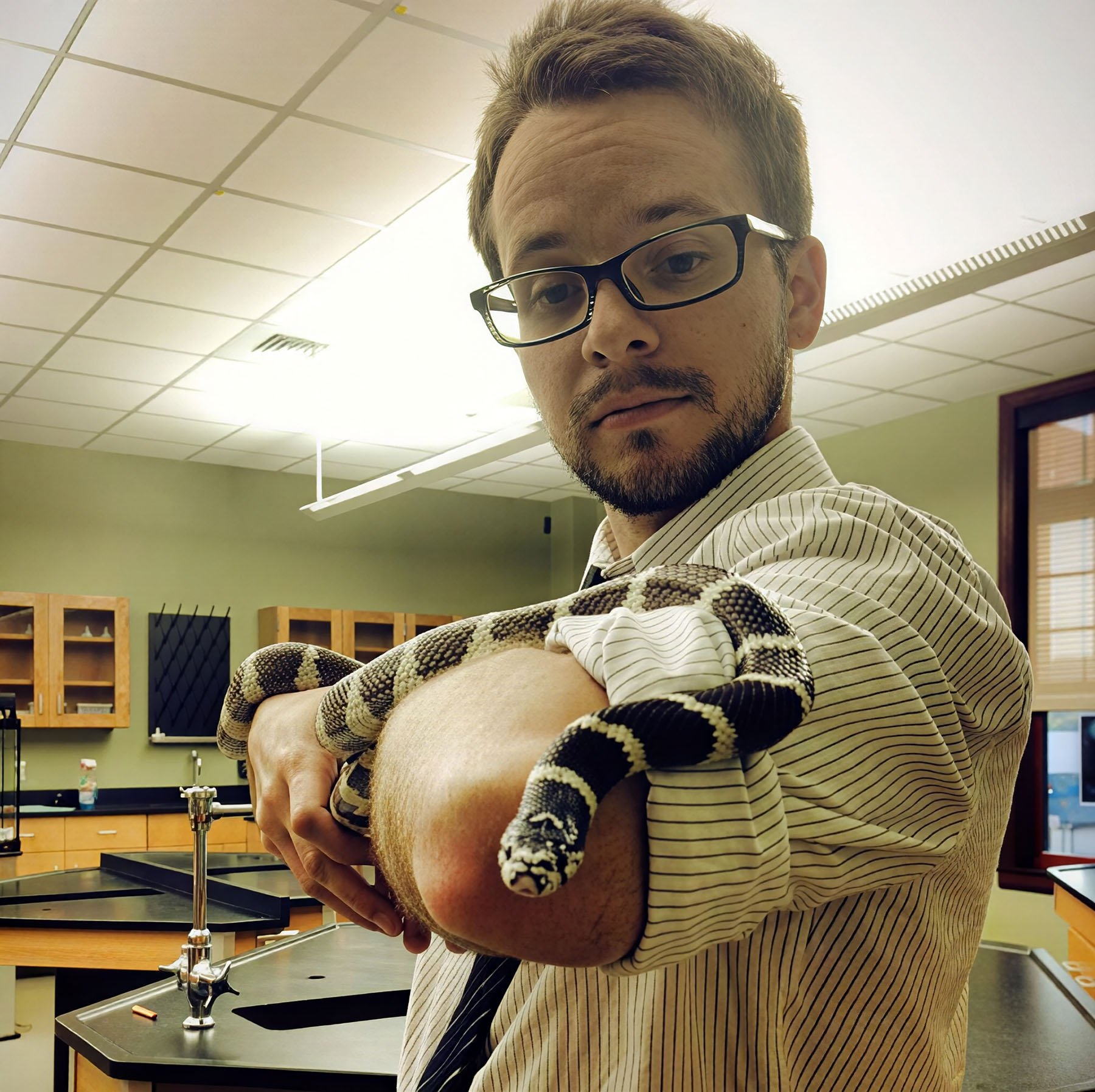
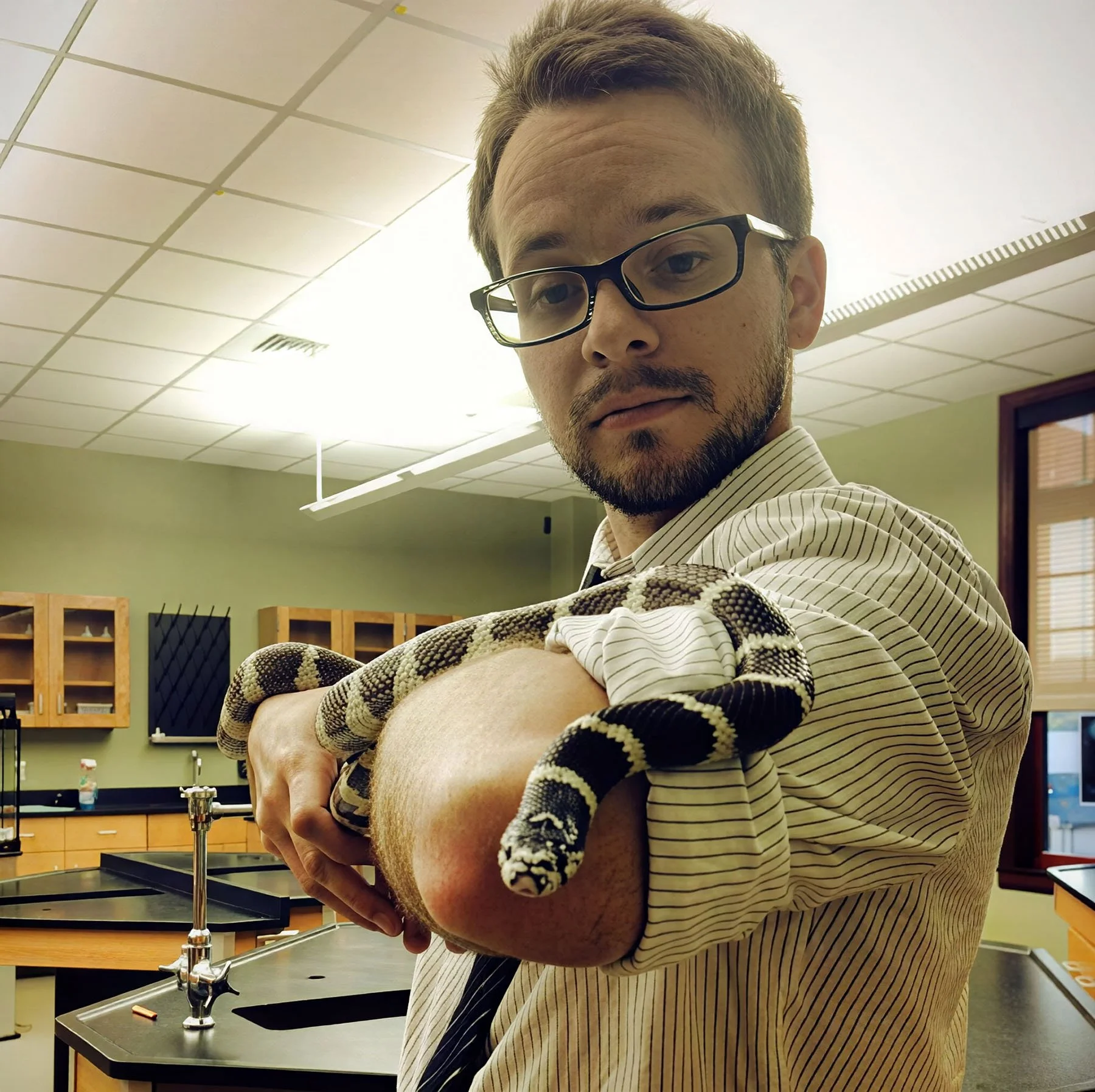
Former science teacher Trey Cokeroft shares why he walked away from education, what schools lose when good teachers leave, and what needs to change to keep passionate educators in the classroom.
Teaching wasn't something Trey Cokeroft happened to do. It was a calling he discovered long before he ever stepped into his own classroom.
As a former high school science teacher, lifelong drum instructor, and musician, Trey spent years helping students build confidence, overcome obstacles, and discover what they were capable of.
But despite loving education, he eventually made the difficult decision to leave the profession.
Trey reflects on what first inspired him to become a teacher, why so many educators struggle to stay in the classroom, and what schools lose when experienced teachers decide they can no longer make the career work.
Listen to Trey Cokeroft’s Interview
Watch Trey Cokeroft’s Interview
When Passion Isn't Enough to Stay in Teaching
Brandi Fleck: Welcome back to another soul-exposing exploration of what it means to be human.
In honor of Teacher Appreciation Week, this week's guest is Trey Cocroft, a drum instructor for the public school system, a former high school science teacher in the private sector, a musician from a long line of musicians, and a friend of mine for a very long time, since about 1999.
Trey is bright, caring, energetic, passionate, and has an introspective and practical perspective that really makes you think.
Trey details the special moment he knew he needed to be a teacher and then takes us through the details of what it was like to get there and also to let it go after six years.
He talks about letting go of old ways of life and teaching after deciding he wanted to have a house and a family, and how difficult but freeing the decision was.
We explore themes of control and letting go in other aspects of Trey's life and really dive into how he feels about education, that it's sacred.
This discussion was a brave expression not only of who Trey is and what he's been working on to improve his life, but an expression of being in a system in our society that is so important, yet seems to be in need of changes.
So stay tuned not only to get to know Trey better, but to learn what the first step is that we can take to better support our teachers in today's education system.
Brandi Fleck: Hi, Trey. Welcome to the show. How are you doing today?
Trey Cokeroft: I'm fantastic. Thanks for having me on.
Brandi Fleck: No problem. I am so excited to have you here. I think you are such a bright, talented person, and I really want listeners to get to know you before we dive into what this episode is all about.
The Journey to Self-Acceptance
Well, it's about you, so let's start with who are you as a person?
Trey Cokeroft: I think it's really a big question to ask somebody who they are as a person, so I'll try to be as distinct as possible.
I am someone that has had a lot of music in their life. I'm someone that loves his dog. I'm somebody that enjoys a good whiskey.
I try to approach each day with a fresh perspective, and that's been something that has slowly evolved over time.
I don't think that I have always been that way, but in the past, I'd probably say five or six years, I've really kind of come into who I am today more so than maybe all of the years before that.
I think a lot of that just has to do with enjoying some of the aspects about myself and appreciating myself for who I am.
That's really kind of what it is. It's really just about, I am me, and I'm not anybody else, and appreciating myself for who I am and allowing myself to be vulnerable.
I think that's really who I am. It's not who I was maybe five or six years ago, but it is who I am now, if that makes any sense.
Brandi Fleck: Yeah. Did you not used to appreciate who you are as a person?
Trey Cokeroft: I don't really think so, no.
Brandi Fleck: Okay.
Trey Cokeroft: I think that I thought that I did, but I was always trying to... I don't know. I had some kind of mask on, or I was concerned about how I appeared to other people, maybe to gain their favor or something.
I understand that perception is often reality, and that's the world that we live in, but I also understand that I can't really be in control of everything.
I can't be in control of what other people think. I can do my best to influence it in a positive way, but I used to really make my day-to-day about that, and that's a very anxious way of living.
Brandi Fleck: Sure.
Trey Cokeroft: Yeah. It's not a way that I wanted to live anymore.
Through some self-discovery, I think I finally kind of realized exactly who I am, and I like who I am, but it's taken a long time to get there.
Brandi Fleck: Sure. Well, that's awesome, and hopefully some of those things that you've discovered along the way and that characterize you as a person as you've come into yourself, hopefully we'll be able to touch on some of those throughout this episode.
But let's go into what do you believe is the most important thing in life?
Trey Cokeroft: The most important thing in life, I think, is to love.
It is very easy to say that, and it is very cliché to say that, but that is absolutely the most important thing.
You have to learn to love other people, and I think that before you can really truly do that, you have to love yourself.
By no means am I perfect. I have a lot of things that I focus on to adjust, maybe even to fix in a way, but it's very important to love.
It's the most important thing to love. That's what I think.
Brandi Fleck: I agree with you wholeheartedly.
Why Loving Yourself Comes Before Loving Others
So now I want to sort of transition into the really big topic of what is the hardest thing you've ever been through in life that has had a huge impact on how you are today?
Trey Cokeroft: I think the hardest thing that I've ever been through in my entire life was leaving the last job that I was at.
Brandi Fleck: Okay.
Trey Cokeroft: Easily. Easily the hardest thing.
There was a lot of passion and a lot of dedication and commitment that were associated with my last job, something that I had worked on for many, many years.
Learning to let that go was the most difficult thing that I've ever done.
I'm in a much better place for it.
What I decided to do, going from being a high school science educator to working in sales and technology, was not something that I had in mind for my life.
I don't know if that's where I'll be in a few years. I have no idea.
Brandi Fleck: Sure.
Trey Cokeroft: But I was so concerned with being in control of what I was doing at my job.
I wanted a career. I wanted to make a difference. I wanted to make a decent amount of money.
I don't think that I would have been able to accomplish those things.
It was very difficult to take a step away from that, away from the fact that I had gone to school once and gotten a degree, then taken a couple years off, and then gone back to pursue something that I should have gone for in the first place, racking up student loan debt, spending countless hours studying pedagogy and best practices as a teacher, to pivoting to something that was pretty different fundamentally.
Brandi Fleck: Sure.
Trey Cokeroft: That was really hard. It was really, really hard.
It's been about a year, and I think I'm way better for it. I'm in a way better place.
Brandi Fleck: Okay. I definitely want to hear more about that.
First, let me ask you, how long were you teaching in the classroom?
Trey Cokeroft: I taught for six years. Okay, I taught for six years.
How Music Shapes the Brain and Personal Growth
I was in the private sector, but I also, on the side, since 2003, I've been teaching in the realm of marching percussion, and that's pretty much always been in the public sector.
I taught at a number of high schools, and I don't think there's been a single year that I've taken off, so I would say I've been teaching since 2003 as someone that was being paid to do it, which I suppose is what could define a professional.
Brandi Fleck: Sure.
Trey Cokeroft: But in the classroom, managing my own roster of kids and grade database, since 2012 or 2013.
Brandi Fleck: Great. At your new job, do you not feel that you have the same impact that you had with a classroom of kids, or do you have other areas in your life where you can still make an impact, even if it's not professionally?
Trey Cokeroft: I do still make an impact. It is not necessarily the same impact or even the same magnitude of impact.
Brandi Fleck: Okay, gotcha.
Trey Cokeroft: What I do now is there's an educational piece that is associated with sales and account management, which is what I essentially do.
I work with resellers, and every day is a pleasure, and every day is an adventure. I have a pretty big account set, and they're all in the Northeast, so there are a lot of differences culturally in how we converse.
But there's still a common thread of being human and understanding that we're going to make mistakes along the way. There's a relationship that we have to build, and it won't be perfect, and there's a lot that we can learn from one another through that journey together, even if it's just something as simple sounding as selling somebody a set of computers.
I mean, it's actually a lot more complex than that.
Brandi Fleck: Sure.
Trey Cokeroft: It's not the exact same thing. I'm not talking to my partners, essentially, because they're in a partner program. I'm not talking to them about global warming and climate change like I would have been talking to my high schoolers.
Brandi Fleck: Sure.
Trey Cokeroft: But fundamentally, there is still the understanding of, I have some knowledge that I could give to you about a product or a process or something that's going on, and I have to meet them where they're at and take them to where they want to go.
Brandi Fleck: Sure.
Trey Cokeroft: I think fundamentally it's the exact same thing. It's just a different capacity. That's all.
Brandi Fleck: Yeah, yeah.
So let's go back a little bit to how you mentioned that you teach marching band, or you said marching percussion.
You're a musician. You're from a father who is also a musician. It's in your blood.
Tell us, what does drumming do for you, and why do you do it?
Trey Cokeroft: Well, there's a lot to unpack there because, honestly, I don't drum as much as I did when I was younger.
Brandi Fleck: Okay.
Trey Cokeroft: I've made time for other things, but I am involved in an educational capacity way more now than I was when I started teaching in 2003.
You kind of have to roll it all the way back.
My grandfather, my dad's dad, was in a very famous barbershop quartet called the Suntones. My granddad, Gene Cocroft, was a tenor.
My dad was also into barbershop, and he was a vocal major and went to a Baptist Bible college and studied music. He was often an interim music minister at various churches.
So I was exposed to a lot of choral music, not just from the barbershop side because of my roots, but also from the hymnal side and being in children's choirs and watching my dad direct small ensembles.
So when you ask a question like, "What does drumming do for me?" or "What does being around drumming do for me?" 100% of the time, I am engulfed in memories and things that I cherish and things that are very connected to my soul.
Because when I'm teaching marching percussion, for example, I feel like I'm on a different level of who I am in my day-to-day.
As weird as that is, my end goal is to be on that level. Whatever that feeling is, I want to be on that cloud as much as possible in things that aren't even necessarily related to music.
Brandi Fleck: Sure.
Trey Cokeroft: It's the act of being involved in that capacity of taking someone's consciousness, whether it's science or music or a product portfolio, taking their consciousness and raising it so they have a better understanding.
That makes me feel good, like I'm actually doing something.
I think that kind of relates back to how I make an impact. I find that feeling, and I latch onto it, and I try to recreate the situations that bring about that feeling as much as possible.
Like I said, there's a lot to unpack there. There are so many connections that are interwoven that are related to music.
It goes all the way back to my roots, from when I was really, really young to being a 35-year-old man. It's all connected.
Brandi Fleck: Sure.
I think the really interesting words that you've mentioned there are consciousness and soul and connection, and all of these things just sound really, really great. It's something that's part of your being. It's part of your essence. It's who you are. It's part of who you are.
Now I sort of want to pivot into, you produced a podcast for a while called Your Brain on Drums.
Trey Cokeroft: I did, yeah.
Brandi Fleck: So I want to know, what does drumming actually do to your brain? Then tell us a little bit about the podcast and what you covered.
Trey Cokeroft: Well, I'm happy to talk about that.
As far as what drumming does to your brain, there are books upon books on this. I would do it a disservice, honestly, to try and summarize it.
Brandi Fleck: Okay.
Trey Cokeroft: I know that in terms of the biochemistry and in terms of how that relates to other things that you do that you might enjoy, there's a lot of crossover.
For example, whenever we do something that gives us that sense of gratification, that's probably dopamine, right?
That's something that's actually triggering. It's like whenever you get the text message on your phone. The reason that you feel compelled to look at the phone and not be away from the phone for more than a minute at a time is because you get that reinforcement of pleasure, that dopamine spike.
For me, and for a lot of the kids that I teach and the groups that I work with, that is associated with playing the passage really well that I'm asking them to play or performing in front of an audience.
There is a high, essentially, that is associated with that.
Brandi Fleck: Oh yeah.
Trey Cokeroft: Then, in terms of how music... I talked about how music is interwoven into all these experiences that I've had, and they're all connected through music.
Learning how to play a passage well multiple times in a row and looking for that consistency has to do with how memories are formed and rote memorization of something, or muscle memory, as we often call it.
The tiny twitches in our fingers that we have to execute the passage the same way every single time and have the same dynamic contrast multiple repetitions in a row, there's actually a neural network that is created in your brain just from the act of doing it over and over again, getting the feedback, and perfecting it to the best of your ability.
That creates new pathways, and then you can send those electrical impulses faster and more efficiently because now you have a more direct route, or you have a more consistent methodology for executing something that you're being asked to execute.
That's why practice is important, for example.
We learned to write cursive because we did it multiple times.
Brandi Fleck: Which is dying, apparently.
Trey Cokeroft: Yeah.
But we learned to write cursive because we did it multiple times. We did write-offs, and we made little competitions out of it, and that's how you perfected the T's and the P's and the F's.
It's the same thing whenever you're learning how to play a certain rudiment on a certain instrument at a certain speed and a certain dynamic level. You just have to do it a lot the right way, and then you never really forget it.
Brandi Fleck: Yeah.
Trey Cokeroft: So there's a lot involved in terms of the science behind that.
But I did. I had the opportunity to create something, and I took it. I worked with some very wonderful people to create that podcast, and I knew...
Trey Cokeroft: I knew nothing about mixing, engineering, the recording process, the writing process, the branding, and the design. I seriously knew nothing, and I had to lean on all these other people.
I think what we came up with by the end was pretty awesome. We did eight episodes. I started in on the second season. I got about halfway through the guests for the second season, and I stopped.
Brandi Fleck: Why'd you stop?
Trey Cokeroft: Again, a lot to unpack there, but I think it can really be boiled down to, I feel like I did the thing.
You know, I accomplished what I wanted to accomplish. I think I made a little bit of a dent. I had a great time doing it. It was an adventure.
I got to a point in my life where I needed to redirect my energy into things that were a lot more pressing as an adult.
Brandi Fleck: Gotcha.
Trey Cokeroft: Time is something that you can't get back, right? You can always make more money. You can't make more time.
That's been a big theme, and I think that ties into why I'm not doing the project anymore because I have decided to allot my time to other pursuits that currently are a higher priority to me.
I'm very appreciative of everyone that was supportive. I was able to maybe impact somebody in a positive way. It was a lot of fun.
Brandi Fleck: Good. You were talking a lot about time and how it's sort of a non-renewable resource, and prioritizing the things that are important to you.
I think those are all great points, and I think it's totally okay to create and start a project and experience something, and if it's time to move on, it's time to move on.

Learning to Let Go of Control
Maybe quickly, can we talk a little bit about it seems like letting go is something that is coming up over and over in this conversation.
How are you able to let go? I know that in my life, that is something that is hard to put into words, but I'm hoping maybe you can express it.
Trey Cokeroft: At my new job, I'm currently enrolled in a leadership program. It's a privilege. It's not something that I have to do or that I was even forced to do or anything, but it's something I chose to do because I wanted to take a risk.
I was in a new place, and I thought it would be a good opportunity to meet some people and learn something new, and I'm really glad that I did.
It's a 13-week, whole-quarter program. We meet once a week for a couple hours, and I've gotten to meet a lot of people in the company and a lot of people outside the company that talk about their experiences and leadership.
The common theme throughout all of that, I think, has been letting go.
One of the hardest things to do is to surrender to the outcome of whatever is going on, to just take a step back and say, "I don't have any control over this. What is going to be the outcome? I'm okay with that."
That gets tricky because people like to be in control, and they don't like change.
So letting go, surrendering the outcome, are very inherently difficult things to do. They go against what is ingrained in our biology. We don't want to lose control.
When you have a big change, that means that things have to be different, and you can't control things that are new and different, so you're afraid of it.
Being authentic with yourself is a big step. It's a big step that I've had to take.
What I mean when I say being authentic is surrendering that outcome, letting go of that control, saying, "Listen, this is what I think, and this is what I feel, and I have got to be okay with that, and I have got to let it go."
It's super scary, but I have made it a point to know what my habits are whenever I start to grasp at straws and maintain control of certain things.
I have to take a step back. I have to take a deep breath, and I have to go, "Okay, man, it's okay that you let this go right now. It's okay that you are not at the wheel making every single turn in the situation."
That is the biggest part. Once you can take that first step, the rest of it's a little bit easier.
That's how you build trust in yourself. You get that self-confidence.
I had mentioned earlier that the last five or six years have been pretty insightful compared to all the years that were before in terms of what those years offered for life-changing events and opportunities for me to pivot and go from one direction to the next.
A lot of those involve relationship changes, life decisions with jobs, careers, financial decisions, and deciding what is acceptable and what is not acceptable.
I was so pent up for so long on maintaining control.
It doesn't mean that you release all control and be irrational with things. It just means you try to make a point of recognizing, "Hey, I cannot be in control of this situation, and thus I won't try to be."
Brandi Fleck: Gotcha.
Trey Cokeroft: That brings a big peace to me, and I think that that's really important.
I think that has kind of been my MO the past several months, if not the past year. Perhaps I didn't realize it until I started this leadership program, but it's been very valuable, and it's something that you do have to practice.
But it's been very valuable.
Brandi Fleck: Gotcha. That is a very interesting perspective, so thank you for sharing that.
How Great Teachers Inspire Students
I want to ask, we've talked a little bit about impact, so I imagine that's what inspired you to go into teaching.
But is it? Why did you decide to go that route?
Trey Cokeroft: It's a great question. I know the exact moment that I considered being a teacher as a profession, and it's very vivid to me because my dad was involved.
I think I was 17, and I was at the high school that I attended, Lee High School. It was after school had let out, and it was me and a couple other friends of mine that were in the drumline.
We had decided that we wanted to go audition for a drum corps, and we wanted to go together. We knew we might not make it, but we wanted to go together.
We were staying after school to work on some of the exercises and fundamentals that they would have as part of the audition.
I'd kind of gotten a head start on some of these things, so I was helping my friends break down part of the exercises and get better at them.
When my dad came in, he was watching me because he was there. He was on the band boosters. He was the vice president, so I think he had to be there for a meeting or something.
It was well after school, so he had been watching. I didn't know he was watching. I was going over each drum and helping each of my friends, playing with them. I guess he watched all that, and we finished, and he talked to me afterwards.
He was like, "Hey, I was watching you."
I was like, "Oh, thanks."
He said, "You know, you're really good at breaking things down and helping your friends understand it."
I remember very clearly, and I don't remember if he asked me while we were in the band room or if he asked me later at home, but I remember very clearly he asked me, "How does that make you feel?"
I remember very clearly that I told him it made me feel really good. That's when I knew that there's something there.
Of course, I didn't pursue education as a profession initially. Initially, I was a recording industry major because if you go to MTSU, that's what everybody picks.
I did that for two years, and just like most people, I decided that was not a good idea for me and switched majors.
Kudos to the people that stick with it, though. I went to regular business, and I completed that degree.
Then I took a couple years off to do some soul-searching and really think about what I wanted to do with myself.
Then I decided, "You know, I'm going to go pursue that education thing because I really like teaching drums. I don't want to be a band director, but I love education. I want to teach something."
What do I teach? Oh, I should teach science because I love science, and there's no way to get bored with that ever.
So that's what I did. I made straight A's. I got some scholarships, and I made wonderful relationships. I kicked that major's ass because I was so invested in it.
Compared to when I was a regular business major and I was doing okay, I guess, and not necessarily putting my best effort into all my classes, I did really well as a biology major because I figured out how to do school.
I figured out how to connect what I was putting my time into with something that I was really passionate about.
Like, "Oh, these line up."
So, yeah, this makes a lot of sense. Honestly, I have my dad to thank for that because my dad pointed out the moment.
He was there for the moment that I happened to be helping a few people figure some things out, and he said, "Hey, you're pretty good at that. How does that make you feel?"
That's really important. Not everybody has that kind of opportunity. Not everybody has a dad that'll be there to notice those things.
I'm very thankful that I had that, and I owe a lot to him for being in that moment. Of course, obviously my mom wasn't there at that moment, but my mom, of course, was extremely supportive of all...
Trey Cokeroft: Of my endeavors, especially in education.
She taught me some of the other things, some of the soft skills that are needed, like listening. Like, "Hey, shut up. Listen for a second. There's a lot that you can learn there."
So, yeah, that's something I'm very passionate about, and I'm very grateful that I did, and that I had people to support me.
Teacher Burnout, Low Pay, and Education Reform
Brandi Fleck: Awesome. So, Trey, why did you quit teaching science? It makes perfect sense because I've gone on and on to talk about how much I love education.
Trey Cokeroft: Yeah. Well, I bailed on it, but I did. I walked away.
Brandi Fleck: What happened?
Trey Cokeroft: I walked away because I realized that, as a career, there was nothing left for me there. One of the main reasons to have a job, in my opinion, is to get your financial needs met.
I don't think I was paid enough, to be completely frank.
Brandi Fleck: Yeah. Teachers are overworked and underpaid.
Trey Cokeroft: It is rampant in this country.
Personally, and this is anecdotal, of course, but I personally don't know a single educator, and I know hundreds, that would say, "Yeah, the amount of money that I am paid relative to the amount of work that I put in is one-to-one."
I don't know anybody that can walk away and say that after a day's work of being a teacher.
Teachers are incredibly tenacious people, especially the ones that last. I lasted a while. I made it past the three-year mark, which is when most people quit if they're going to.
I think it's like 50% of businesses fail within the first three years, and I think 50% of teachers quit within the first three years.
I made it to six, but I considered it well before then. It had nothing to do with the children that I was teaching or the coworkers that I had.
I taught wonderful children, worked with wonderful families, had wonderful coworkers, great administration for the overwhelming majority of my career as a teacher.
But I walked away because I realized there was nothing left for me there. There was no future.
I wasn't going to be making the amount of money that I felt that I needed to make to eventually support a family, to pay off the debts that I owe to the institutions of learning that I went to, or to invest in a college fund for a kid later, or whatever.
In a six-year span, I saw less than a $6,000 raise. That is, and I'm being authentic here, completely unacceptable. It's unacceptable.
I was afraid to ever ask for one because I knew the answer would be no. I knew it would be no, so I didn't bother. That wasn't something that was up to my immediate boss. It has to do with budgeting.
Again, it goes back to control. It goes back to what am I trying to control right now? Well, that's one thing I do have control over.
I do have control over where I spend my time every day, and I do have control over if I choose to spend my time there. Am I doing it because I'm being compensated well? In my current situation, it was not a sustainable place to be.
I think I was compensated pretty well at first, and then eventually I realized where I want to go in life. I'm not going to be able to do this anymore.
I weighed that because being a teacher, don't get me wrong, it's way more than just the money.
Brandi Fleck: Sure.
Trey Cokeroft: I weighed that against all the other things that were important. But at the end of the day, it is a job. It is something that you need to be compensated well for.
What I was inherently having to do as a teacher in the system that we currently have was not equally weighted against the payoff.
I can't pay my mortgage in the fact that little Johnny made me feel good because he got an A on his test after working so hard. I mean, that is wonderful, but it does not pay my bills.
Once you take that... This goes into my philosophy on jobs again because it sounds like it's a very cold way to approach it, but I think it's just a very matter-of-fact way to approach it.
Once you take money off the table, you're good at a job almost always.
You've got to get money off the table first. If I sit down and somebody wants to offer me a job, and I think that the job is worth, I don't know, $75,000, and they offer me $40,000, but at my last job I made $65,000, and this is more work, I'm not going to take the job.
I'm going to say, "This is ridiculous. This is not a good deal."
You have to be able to walk away. This is part of the reason, not the entire reason, why we see so many teachers striking across the country. You look at West Virginia. You look at Colorado. You look at California.
It has to do with a number of things, but pay is, I'm pretty sure, always tied to it. They're not being paid enough to do the work that they want to do.
I think that teachers don't want to make a lot of money. They just want to make enough money to not have to have a second job. Brandi, I have had a second job. I've had a second job since 2003.
I've had a job, and then I've also done drumline. Not everybody's that fortunate. I know a lot of teachers. They couldn't just go do band two days a week and then be able to fuel their savings account like I was.
Most of them have to go get a second job helping to run a Starbucks or working at a Starbucks. Not that there's anything wrong with Starbucks, but good Lord.
We're talking about people that are professionally trained. They went to school, and they got into debt so that they could do the job because they love it. We need to pay them a decent wage, and that is primary.
All the other stuff about reducing classroom size and all that other stuff, I think that is secondary to, let's get money off the table.
If you're paying a teacher $45,000, but they're easily doing $65,000 worth of work, give them the $65,000 and then actually be able to have a conversation about, "Okay, now that we're paying you enough, let's talk about making your life a little bit easier by reducing this class size or talking about how grading policy works or talking about parent buy-in."
You've got to get the money off the table.
Anyway, I've turned the whole conversation kind of into money.
I don't mean to sound cold, but I don't have that problem anymore, and I'm very, very fortunate to say I don't have that problem anymore.
Brandi Fleck: Right.
This is such a hard position to be in because you think, this is our future.
Trey Cokeroft: Absolutely.
Brandi Fleck: We have generations coming up, but what you're saying about being compensated for a job is true.
You can care about our future, but if you can't meet your current, present needs of survival or having a roof over your head or groceries in your refrigerator without working your life away, it's very much, you've got to take care of the present situation.
Trey Cokeroft: I'm a guy. I don't have a family that I have to support, and I didn't have a family that I had to support.
It was making ends meet for me. I had to have the second job in order to build the savings account. I had to have the money taken out of my paycheck in order to afford the HSA.
I did not invest in a 401(k). I wasn't able to do these things, or I chose not to do these things because I wanted to have a really cheap house and be a homeowner because I was burning money on rent.
I'm like, "Well, how long is that going to sustain whenever I do decide to get married and then support somebody else or have a kid or something to that degree?"
I'm very fortunate in that I probably could have stayed in that position if I was going to be single forever, which I'm not.
But people that have families, I mean, let's throw them a bone. I just don't understand it. It speaks against all logic to me. You know what I mean?
Brandi Fleck: Yeah.
Trey Cokeroft: It speaks against all logic.
I think a lot of it has to do, I did not realize it fully until I sat down and got an offer from another company and immediately experienced a 50% raise.
Immediately. I was like, "Wow."
Trey Cokeroft: I'm worth that much. They were like, "Yeah, you are because we're asking you to do a lot of work, so we're going to pay you."
Everything else falls into place. It's not all about money, but that's the first piece of information. You're at a job to get your financial needs met. That's why you are there. The rest of it can fall into place, but you have to get your financial needs met. That's what I think. I'm very firm in that.
Brandi Fleck: Yeah. So, Trey, what are your thoughts on changing some of these systemic societal issues with our education system and paying teachers? How would we even start to change?
Trey Cokeroft: You have to listen. That's the first thing. You have to listen.
People aren't listening to the teachers. They're saying that they are, but they're not. They're not listening. You've got an education secretary with zero experience in education, zero experience in the public sector, didn't even send her kids to public school, has never taken out student loans, doesn't understand the Individuals with Disabilities Education Act, doesn't understand special education. This is who's running the education department.
I know I'm getting political here, but this is who we have leading our Department of Education. Then you have strike after strike after strike, and the teachers get blamed. "Well, come on. Let's get the kids back in school. You're being selfish." All these things that you think are really important. Well, now the kids are missing out.
Again, it's a job. If you want it to be some kind of service, then give me some kind of mandatory minimum wage every month and take care of my family or something. Give us something. But you can't expect me to show up to work and not pay me really well and not listen to me and think that anything is going to get better.
That's the problem. We just don't listen. We don't seek to understand through listening. It's, "Hey, you say your thing, and then I say my thing," or everybody says their thing. That's bull. We don't get anywhere by doing that, especially not in education.
I love education more than I love kids, okay? I love working with kids, and I love working with families, but I love education more than those things. I think that most teachers, that's exactly where they're at as well.
There is a bigger... I'm saying this because I mean to say there is a bigger idea than just having good relationships with families and good relationships with the children that you work with. It's more than that. It is those things, but the process is a sacred thing, and we have to treat it as such. We don't. Until that conversation happens, nothing's going to change. You can't even have a conversation when someone's not listening.
Brandi Fleck: Well, good. Is it, right?
Trey Cokeroft: I felt that it was futile. Right now, I don't have a lot of faith in the system that we have in place. It is not something that I see as sustainable.
God bless the teachers that are sticking to it because I couldn't do it. I don't know how they do it. I've got a good friend that I worked with for several years that is a phenomenal educator. Oh my God, I don't understand how she does it. I have told her this, so I know she wouldn't mind that I'm saying it. I don't understand how she does it, but she does it, and I am so thankful that she does it. So thankful.
There are a lot of those teachers out there. I want those people to be compensated well, and I want them to be listened to, and I feel like they aren't. That discourages people that might actually be great teachers to stay in it.
I think I'm a pretty damn good teacher. If you give me something to teach, I think I'm pretty damn good at it. But I'm not going to go do it every single day in the current circumstances. I think that is an epidemic. You know what I mean?
Brandi Fleck: Absolutely. A loss. We need good educators. We definitely do.
The Lasting Impact of a Great Teacher
Going back to your teaching percussion, this reminds me a lot of, to go on a personal story here, it reminds me of how fortunate I was when I was in high school to have the teachers I had, specifically in the marching band, and the role models and the people who dedicated their time above and beyond even the regular school day, the grading, and all of that. The practices and all of those things.
Because of that discipline, support, team camaraderie, and creativity in that atmosphere with those role models, I was able to get through really traumatic abuse and experiences that I had in my teenage years.
As a teacher, have you had the opportunity to see the impact you've had on the lives of kids who may be going through something similar?
Trey Cokeroft: Absolutely.
Brandi Fleck: Yeah. So I guess the point that I'm getting at is that if you've had this impact and you see it, and you've helped change these people's lives and help them get through these traumatic experiences through music, if you're not there and if other people aren't there to do these things, what happens?
Can you tell us, what are some of the positive outcomes that you've seen?
Trey Cokeroft: I've had many students that I feel came a long way, and I had the privilege of being involved in that process.
I taught one kid that is going to stick with me for the rest of my life. He had severe dyslexia and had not had great experiences in school. I got him as a freshman and actually had a brother. I worked with his brother as well, who I could tell just as many great stories about as I can about him.
Two wonderful human beings that went through a lot of struggles with their own differences in the ways that they learned, the ways that they took information apart and tried to put it back together in ways that made sense to them.
They ran into a lot of barriers because of things that were out of their control: ADHD, dyslexia, and reading comprehension because of those things. But I know I made an impact because both of these gentlemen told me that I made an impact. They wrote me notes that I saved and were able to tell me, "Hey, I didn't really care about science and science education before I came into your class, and you helped me feel good about who I am and what I'm able to do."
I remember he wrote me a note. I don't have it on my person or I would read it, but he wrote me a tiny little note, and I kept it in my wallet.
Trey Cokeroft: I kept it for several years until I got a new wallet. I got a new wallet recently, so I'm sure I still have it, but I kept it in my wallet behind my license so that I wouldn't lose it because it was a reminder of what I'm able to witness by being a teacher.
I don't get that opportunity in the same way every day now, which is a bummer, to say the least. But I was very privileged to have that opportunity to work with him and his brother, those two boys, as well as several other kids that I can think of while I was teaching at that particular institution.
I can think of lots of drum kids that I've worked with that have been through some hard stuff. It doesn't have to be a learning difference. It could be parents getting divorced, a girlfriend breaking up with me, a boyfriend breaking up with me, dealing with trauma.
But it's not my job, and it's not an educator's job, to be a therapist. That's not what we do.
Brandi Fleck: Oh, sure.
Trey Cokeroft: But it is our job to be present and to do the listening that is so crucial for kids to have available.
One of my favorite interviews of all time, and I've watched a lot of them because I love interviews, was Michael Moore interviewing Marilyn Manson soon after the Columbine massacre had happened.
Marilyn Manson was implicated in having put out music that fueled these kids' rage. He was aware of that, and Michael Moore asked him, "Here's the situation. People are saying that you write music and that it fueled a little bit of these kids' rationale for doing the absolutely terrible things that they did. What would you say to those kids if you had an opportunity to sit down and have a conversation with them?"
Marilyn Manson said, "I wouldn't say anything. I would just listen because that's what nobody did."
That has always stuck with me, not just as an educator but as a human.
I am not perfect, but if we will listen, like I said earlier, so that we can seek to understand the other person's point of view or what they're going through, I think the world would be a better place.
That's what I tried to do.
Some of those kids, they got it. I taught a lot of kids that didn't get it, and that's okay. That's okay. It's not my job to change them.
My job is to take them to the hallway of ideas, open up all the doors, and say, "Here you go. Choose your path," and support them. That's my job, and I learned that really early on.
Some of those kids went down some really interesting hallways and chose some really interesting doors and now have very interesting lives. I'm very happy for that.
But they all have different stories. Everybody's dealing with something.
Brandi Fleck: Oh yeah. I think it's important we try to be sensitive to that. We need to listen to one another.
Why Vulnerability Creates Human Connection
All right, and on that note, Trey, I want to ask you, what does being human mean to you?
Trey Cokeroft: Being human means being vulnerable.
You have to be vulnerable in order to be connected to other people. What I mean by that is you have to let go and surrender to whatever the outcome is going to be and realize that that's okay.
It's okay that you are who you are and you're not in control of everything. Once you're okay with who you are, you can experience love on a completely different level.
You learn to love yourself. Then it's easy to be in the moment with people and love them as they are and allow yourself to be loved.
That's the thing. We're so much more deserving of being loved than we often give ourselves credit for, and that's, for some reason, very hard to accept.
I guess it's because we're afraid of being vulnerable. We're afraid of getting hurt. We're afraid of losing control.
In the animal kingdom, you don't want to be vulnerable. You want to be safe. You want to be protected.
As humans, we have the ability to submit to that vulnerability and still come out okay on the other side. That's how we make connections with people. That's how we make relationships that last. That's how we find value in fellowship with other people, allowing ourselves to be vulnerable.
I think that's what sets us apart.
Brandi Fleck: Well, that is some really powerful stuff. I like it. Trey, thank you so much for coming on the show today. It has been an absolute pleasure.
Trey Cokeroft: Thank you. I appreciate being here.
Brandi Fleck: You guys, isn't Trey just so awesome?
He authentically explored some tough topics today. I really respect Trey's insights and experience and know we can start listening to more teachers so that our future remains bright.
Join the conversation!
Feel free to share your own experience and let me know if you have any questions in the comments.
Related Posts














Hi, I’m the founder of Human Amplified. I’m Brandi Fleck, a recognized communications and interviewing expert, a writer, an artist, and a private practice, certified trauma-informed life coach and Reiki healer. No matter how you interact with me, I help you tell and change your story so you can feel more like yourself. So welcome!
Find More on the Blog
Topic
- ADHD
- AI
- Atlanta
- Black and BIPOC
- DIY
- FAQ
- LGBTQIA plus
- Los Angeles
- Nashville
- Seattle
- St Louis
- St. Louis
- UFOS/UAPs/ETs
- abuse
- accountability
- addiction and recovery
- adoption
- affirmations
- afterlife
- altered state
- angels
- animals
- anxiety management
- art
- astrology
- atlanta
- attachment
- awakening
- beauty
- behind the scenes
- being human
- body image
- body work
- boundaries
- brandi fleck
- breathwork
- bullying
- burn out
- burnout
- cancer
- career
- caretaking
- chakras
- channeled
- clarity-dive
- clarity-practice
- clarity-primer
- clean products
- coach
- codependency
Recent Blog Posts
Visit the Full Podcast Audio Archive

Affiliate