How Social Worker Burnout Led to a New Life of Service
Interview By Brandi Fleck

After years of helping children and families through the foster care system, Carmen Gosa reached a breaking point and discovered that compassion fatigue can change not only how you serve others, but how you care for yourself.
For 12 years, Carmen Gosa spent her days helping children and families navigate the foster care system.
She loved the work, but carrying other people's trauma eventually caught up with her. What began as a calling slowly became compassion fatigue, forcing her to ask difficult questions about purpose, boundaries, and how to keep serving others without losing herself.
Her answer came from an unexpected place.
Listen to Carmen Gosa’s Interview
Watch Carmen Gosa’s Interview
From Social Work to Military Service
Brandi Fleck: This week's guest, Carmen Gosa, was a social worker focusing on child welfare for about 12 years. She spent time working to reunite families, and if the families couldn't satisfy their plans to correct actions, she worked to find children stable, permanent families. Carmen also assisted youth 18 and older who had come out of the foster system, needing support for how to transition into adulthood, go to college, and more.
Carmen eventually experienced compassion fatigue and burnout, as many in social work can. In this episode, she opens up about how it's hard work trying not to become attached to some of the people you work with, and it's hard not to become attached to the outcomes. Some outcomes were positive, and some were negative. Carmen had to learn how to accept how her actions impacted families, hold on to the positive outcomes, and learn how to grieve.
Carmen truly has a servant's heart. After the compassion fatigue and burnout were too much, she changed her entire life by joining the military, still serving, but in a different way and gaining more confidence than ever. She loves her friends and family, loves learning and expanding her skills, and is currently living in California by way of Tennessee.
So let's dive in to see how Carmen experiences serving humanity, how that impacts her personal relationships, and discuss the healing that occurs while serving.
Brandi Fleck: Hi, Carmen. Welcome to the show. I'm so glad to have you here.
Carmen Gosa: Hi. Thanks for having me.
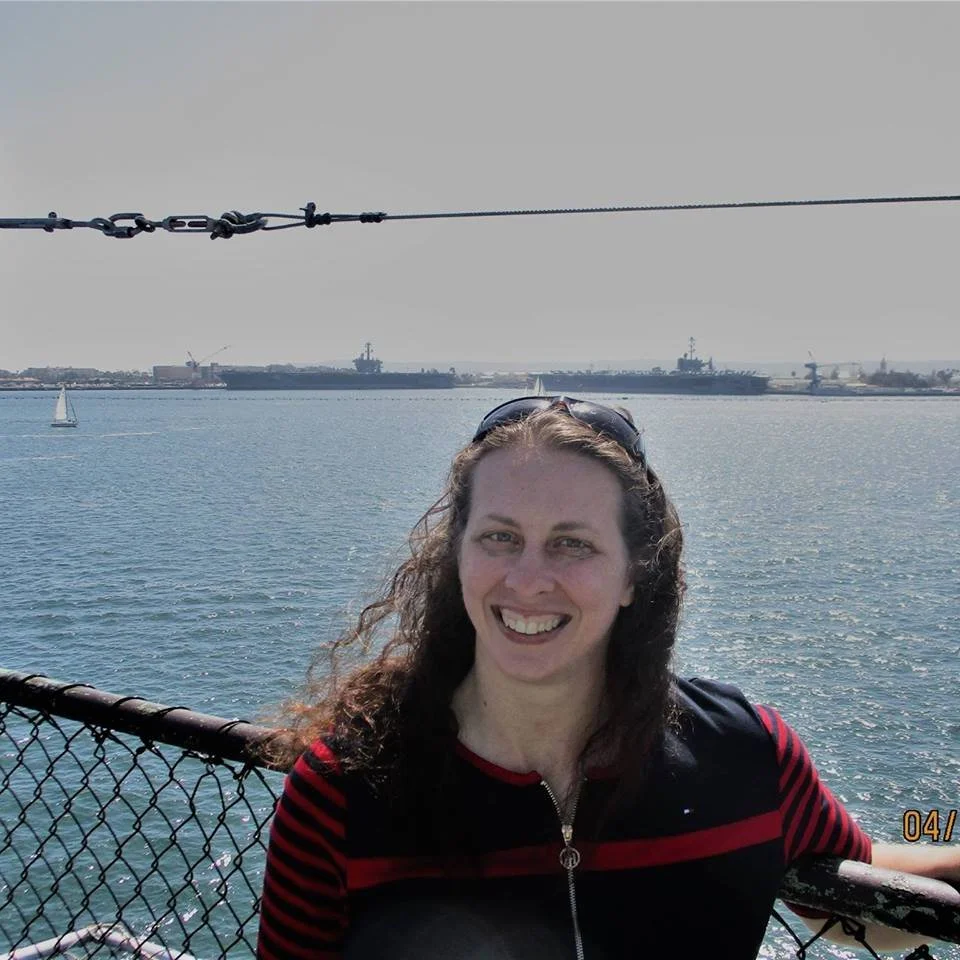
Brandi Fleck: No problem. I'm excited to have you here because over the years that I've gotten to know you, I've sort of thought that you are a servant to humanity and you really have a servant's heart. So I wanted to talk to you a little bit about your life and some of the things you've done for humanity and yourself and society.
Do you see yourself as a servant?
Carmen Gosa: I didn't really see myself that way until the past few years when I started getting more confidence in myself and seeing how I've had a pattern of jobs and interests that have been around that kind of a servant's mission. So it's been over the past few years that I've realized that's kind of who I am.
Brandi Fleck: Okay. You mentioned gaining confidence in yourself. For one, how did you start gaining confidence in yourself? And for two, how did that help you realize what your mission in life was?
Carmen Gosa: Well, I think I started getting confidence a few years ago. I had been at my previous job for a while, and it started to click for me. I started to feel confident in what I was doing there.
Then it really changed the past few years when I challenged myself by joining the military and realized what my strengths were and some things I needed to work on, of course. Just really testing myself and my limits and seeing what I was made of helped me realize that I had more confidence in myself.
In terms of the servant part, just feeling that call to serve in the military, not just from the family tradition of it, but just that call within myself. You know, this is my country. I feel like I can contribute something great.
Brandi Fleck: Great. Can you tell us a little bit about what your previous job was and then how you made a transition from that into the military?
Carmen Gosa: Okay. So when I graduated college, I went into child welfare. I got a job with the Department of Children's Services, and I was a social worker there for about 12 years. I kind of moved around within the agency doing different things.
That's a hard, stressful job, and a few years ago, it was about my 11-year mark, I was just feeling very burned out. There's a term called compassion fatigue, where you start struggling to show empathy for others because you're just overwhelmed with people's stress and suffering.
So I started to feel that. I wasn't feeling motivated for my job. I was getting to the point where I felt like I might be uncaring, and I didn't want that to prohibit my effectiveness as a worker.
So I had looked at the military, but I was only looking at the Reserves. I was like, I just need something to give me a break from what I'm doing, give me some extra money, and I was hoping it would also be a benchmark to a new career in a different field. My focus was kind of on medicine.
So that was what I looked at. Then when I was talking with the recruiter, I learned about some other opportunities, and I was able to get an opportunity to go forward as full-time support. So I get to actually travel and be stationed like active-duty people are instead of reservists.
Brandi Fleck: Great. So you're in the military full time right now?
Carmen Gosa: Correct. Yes, I am.
So basically, I'm what they call an electronics technician. I went to school to learn how to work on electronics. I learned a lot about voltage and things like that, so I was trained to work in a repair shop and fix whatever communications equipment goes down.
But I ended up in a different community where I focus more on radios and satellite communication. I'm basically in a training unit, so I go out and teach other squadrons how to use their communications equipment.
Brandi Fleck: You definitely did do a full change in career. What made you go into that first line of work with social work and the Department of Children's Services?
Carmen Gosa: That was actually kind of a spur-of-the-moment realization.
Traditionally, in college, I was a pre-med major, but the chemistry and calculus were subjects I was struggling in, and I got kind of downhearted.
I had started making social work my minor with that degree. When I switched to psychology for my degree, I kept social work as a minor.
My last semester of school, I took a class called Introduction to Child Welfare. That's where I learned about the foster care system. You hear about it, but I actually learned a little bit more about how it worked and the types of populations they dealt with. I became curious about it.
So when I graduated that December, I put in an application for the Department of Children's Services and ended up getting hired a couple of months later as a caseworker.
Brandi Fleck: Wow. I think that's really awesome. Do you mind describing for us a little bit what all that entailed and things that you had to do on that job that were fairly difficult?
Carmen Gosa: Sure. A lot of it was fairly difficult in the beginning, just figuring out how to be a working adult straight out of college.
Social work involves a lot of talking to people, and at that time in my life, I couldn't even make small talk with people. That was really challenging for me. I had to interview people because the first thing you need to be as a social worker is somebody people can talk to, and to do that, you have to talk to them. Figuring all that out was a bit challenging, but it got better.
Over the years, I worked different jobs. My first role really was as a custody case manager. My role was that if a child was in state foster care, I would work to put them back with their birth parents.
We would have a plan of services that the family would complete. There would be counseling or whatever services were needed to identify what brought the child into custody. I would work to give them the support they needed to complete that plan, and then we would review their progress. Over time, it depended on whether or not they could reunify with their children or if we have to look at other options for that child to have some kind of permanent family.
Brandi Fleck: Okay.
And then I went on from there. I worked with our post-custody youth, which are children who had turned 18 while they were in foster care and were looking to go to college or get support on their own as young adults.
Most people don't realize that children between the ages of 18 to 24 are still struggling. Even though they're legally adults, they have no support if they come out of foster care to pursue life as an adult.
Brandi Fleck: That's a really good point.
Compassion Fatigue and Social Worker Burnout
Were there ever times in either of these two roles where you had a hard time staying detached from the situation?
Carmen Gosa: Oh, yeah, in certain ways.
Sometimes you could really identify with a case. Whether you felt really upset with the birth family, it was really hard to maintain that professionalism because some of the families had done some pretty bad things to their children. It's hard to separate that from, "I have to help this family work through their issues," because you feel the pain of what they did to that child.
So that was sometimes hard to detach from.
There were other times, too, where a family was, I've had a couple of families that were very angry. It's understandable. Your child comes into foster care, and some families react with anger.
It was hard to detach in those cases because you felt a little bit intimidated or scared for what they might do to you. They'd make threats and things like that, so you kind of take that home with you.
Brandi Fleck: So you could identify with a case. You'd be upset with the birth family because they had done things to the children.
Was there ever a time when you had an internal struggle because you were supposed to be reuniting this family, but you didn't want to? How did you deal with that?
Carmen Gosa: It was really hard at times. A lot of the time, if that was happening, it was out of our hands. It was a decision made by the court and presented by the attorneys. That's kind of the legal side that we aren't able to really control.
All we can do is testify to what we tried to do for the family and whether or not they responded to us about those services.
So at the times when a decision was made that I didn't agree with, it was really hard to sleep at night. It depended on why the child had come into custody in the first place, and obviously some cases are more concerning than others in terms of reunification.
So all I could do was know that I had done everything I could to advocate for that child and to work with that family, and know that I had done my best. That's all I could do at the end of the day.
There were a few sleepless nights.
The good thing about those kinds of decisions is typically we have input afterward. The case is still open. We can still go out and make visits and see how the progress is going, and that would help mitigate it in my mind. I knew that I'd be able to go out in a week or so and see how things were going and still be able to give my opinion on how it was going and know that I was still able to advocate for that child after a decision like that had been made.
Brandi Fleck: That's good.
Family Reunification and Foster Care Outcomes
So were there times that a decision had been made for reunification and you went back out, and then it was reversed?
Carmen Gosa: Yes.
Brandi Fleck: Okay.
So, to turn the tables a little bit to a more positive side of things, what kind of impact did you see that you had on these children's lives when they were put back with their families or they got support to go to college and become productive adults? Were you able to see the positive impact you had in their lives?
Carmen Gosa: The good thing is, because I was there so long, I did see the positive too.
I saw the adoptions. Those were the best part of our job, seeing that a child had permanency with an adoptive family, whether that was a relative who had adopted them or a foster parent who had adopted them. They had stability, and we knew that they were in good families.
Then there were reunification cases. I saw some parents where it was like a wake-up call for them. They worked their plan, they were motivated, they addressed whatever had happened, and we were able to reunify them with their children. We never had problems with them again. They didn't come back into the system later on. We knew that they were good and happy and healthy.
As far as the older children, that one was harder. Teenagers tend to make a lot of rash, impulsive decisions. Every now and then there were young adults who were able to prove that they could commit to college, commit to their trade school, or whatever they were doing for their future.
There were those who did contribute and worked to become independent and part of society. They were able to find people as adults that, while they couldn't be adopted, kind of folded them into the family, or they had good friends and a support system, things like that.

How the Foster Care System Works
Brandi Fleck: Real quick, just to give a little background for maybe some people who don't know much about the foster care system, can you tell us what are some of the reasons that children would be placed into the foster system? And what would allow someone to be reunified with their family versus not?
Carmen Gosa: I've actually data-dumped a little bit of it over the years. As far as coming into custody, what happens is if something happens, it's not always a law enforcement case. It could be that somebody makes an allegation, and there's a CPS investigation.
If that investigation is substantiated, and it turns out that there's nothing they can do except bring the child into custody in order to prevent whatever is happening from continuing, then that's what happens.
It was always a last resort. Nobody ever wants to put a child in state custody. So if a child came into state custody, it was usually because somebody from DCS had been working with the family previously about some kind of identified need, and they weren't responding, or the child was in immediate danger from that family or from anybody else that the family was allowing near them.
Or there was some kind of law enforcement issue. Sometimes we got parents who were arrested and had no one to care for the children, and they were going to be in jail for a while. Things like that.
Brandi Fleck: Okay.
Carmen Gosa: So that's how a child could come into custody.
For reunification, there's a permanency plan that the family works. If they make progress on it, then they can work toward reunification. If they don't participate in it, don't do what's on the plan, or keep making decisions that don't support reunification, then that's when the court looks at other options for that child.
There's also a time frame for that. We don't want a child in custody longer than a year or two if we can help it.
Brandi Fleck: Does that permanency plan have, is it customized for each family, or are there standard things that everybody has to do?
Carmen Gosa: The standard things are more like medical and dental care for the child. We want every child to have the medical and dental care they need for their age and things like that.
But as far as services, a lot of them look alike because a lot of our families have the same issues.
The purpose of the meeting that's held right after a child comes into custody is to develop that plan with the family's input. Anybody who's involved in that child's life comes to that meeting, and they all have input in developing that plan.
Then the parents review it and make sure it incorporates what they want as much as we can put it in there. They sign off on it, is what I'm trying to say. So they're very aware of what the department is asking them to do. A lot of the time, they actually identify what services they would benefit from, and those services will end up on the plan. So it feels like their plan too, which it kind of is.
Brandi Fleck: Yeah, that's great because I guess the more buy-in you have, you're not... I mean, you are having to dictate things to them, but on the other hand, if they have a say in it, they're probably more likely to go along with it, I would imagine.
Let's shift a little bit into the impact on your life. I know we discussed it a little bit, but how has the service that you've provided to people in different ways impacted your close personal relationships?
Carmen Gosa: It's actually had a pretty hard impact, and not in a horribly bad way.
When I was a caseworker, that job has long hours. You're on call. You're stressed out a lot. It was hard for me to find time to do things with my friends and my family. It was really hard to carve out time.
When I did spend time with them, I was stressed, so most of my time was just relaxing and chilling by myself because I needed to decompress before I tried to interact and have fun with other people.
If they weren't social workers, they didn't understand what I was going through. It was hard to talk about my job and be stressed out that way because they didn't really have a frame of reference for what I was discussing.
The only thing with the military is that I'm just so far away, so it's kind of hard sometimes when they need me to be there. The time difference and the distance apart have been a little rough on them too.
Brandi Fleck: Okay, that definitely makes sense.
Do you get time off? Do you get to see your family? How does that work?
Carmen Gosa: Yeah. I'm still learning it, and it's been a process, but I have seen them. I was able to see them at Christmas.
Most of the military is usually pretty good about a holiday stand-down where, if you can, your command will let you go and spend the holidays with people or do what you need to do for that holiday leave.
I'm actually figuring out how my command works. They're really good. I'm at a shore command, so it's not quite the same as people who are out to sea and have to deploy a lot.
My command is very committed to personal time. You just put in leave like you would at any other job. You're like, "I need to take these two weeks off," or whatever, and they're usually pretty responsive to it as long as it doesn't interfere with what we're doing.
Brandi Fleck: Gotcha.
So it's an interesting dynamic. We've talked about the impact that it's had on your close personal relationships. You're impacted, but they're also impacted.
On a more macro level, based on things you've observed in your different roles and in your own personal life, what impact do you think close personal relationships have on people in general? How does that impact their mental and emotional health?
Carmen Gosa: I think it's a very good impact, as long as it's a good relationship that you have, because there are some close personal relationships that are not good for one or both of the parties in them.
But if you have a good, strong relationship with somebody, a close personal friend, a family member, a mentor, anything like that, I think in general it tends to make people relax within themselves.
I think people who feel supported, who feel like they have people they can talk to or people who can be there for them when they need them, ultimately trust themselves a little bit more. I feel like that makes them contribute to whatever part of the world they're in. Whatever they're doing in their life, they make it better because they have people who make their lives better.
Healing After Trauma and Compassion Fatigue
Brandi Fleck: Taking that a step further, did you see people, or do you now see people, experience healing and things like that? Is that more of a solitary thing, or does that involve close personal relationships?
And did you have to go through healing yourself after you transitioned to the military from social work?
Carmen Gosa: Yeah, I did see healing.
Like I said, there were some families where it was a wake-up call. They realized what they had done, the circumstances they had created, the decisions they had made, and how it affected the people in their life, not just their children being removed from them, but how their family dynamics had changed.
To see the ones who were able to get the help they needed, accept that help, and work on improving things, to see them reunify with their children, you could see their progress in counseling with their child and how that bond grew stronger.
You could see how the family support they had got past the rocky times in the beginning.
You could also see, personally, if that family member had a drug problem or something like that, their acceptance of it and realizing they had an issue and an addiction, working past that, staying sober, and things like that.
Even the families that ended up making the decision to surrender their parental rights, while that's a hard choice to make, they made it for their child. They knew they were not able to parent that child.
To me, those are some of the strongest people too because they recognized that their child was hurting and that they wanted that child to be with a permanent family that could actually support them and take care of them.
Brandi Fleck: And then as far as when you left social work... Was that the question? Learning to heal?
Brandi Fleck: Yes. When you left, did you have to go through healing?
Carmen Gosa: I had to, a little bit.
Not only was it a life change itself, but it was learning how to process everything I'd been through because I was kind of living that life day to day. I'd seen some of the impact it had on me, and I could recognize it, but it wasn't until I was doing another job, doing something different, that I was really able to see overall how being a social worker had affected me, both in good ways and in negative ways.
So I had to learn how to live with the choices that I had made in that work, some of the decisions I made, and just the stuff I'd been through.
One of the biggest things I had to learn how to do, not just when I left social work but while I was in it, was learning how to grieve.
Sometimes, unfortunately, there were people in my life, children, and foster parents who had passed away. You have this relationship with those people, and then one day they're gone. So it was learning how to handle that loss and move on.
Brandi Fleck: That's some really big stuff, I think.
What were some of the techniques or things you did to process those experiences?
Carmen Gosa: A lot of it, honestly, and this is no disrespect to everybody I worked with, but I had to turn it off for a while.
Like I'd mentioned, the compassion fatigue. I was so overwhelmed by all the feelings, all the stuff, everything, that I started to not care about people anymore. I was like, "This is not good."
I don't know about cool, but it was helpful that I was removed from that job. My last day was in March, and two weeks later I was in boot camp.
In boot camp, you focus on day to day, so I had kind of shut off that stuff. By the time I got out of boot camp and was starting to learn how to be a sailor, I was able to think back on what I had done. I'd removed myself from it a little bit.
That's what allowed me to introspect and reflect on what I had done. I had newfound confidence in myself after completing boot camp and realizing, "Okay, yeah, this is what happened. This is how you dealt with it. You did X, Y, and Z at the time, and it was a good decision that you made."
It was really just reflecting back on it and coming to terms with acceptance.
There were a couple of times I made bad decisions. I was still learning. I was young, and sometimes we don't make the best decisions in our jobs. I had to accept what I had failed to do for some of my families.
Brandi Fleck: I heard you say words like acceptance and reflection and stepping away from the situation for a while in order to gain more clarity.
Is that what it means to heal, or is there another definition or aspect of healing that we should talk about? What does it mean to heal?
Carmen Gosa: Gotcha.
I think it's kind of what I was saying. To me, healing is that you don't ever really forget what you went through, but it kind of dulls over time.
I think somebody who's been able to heal from whatever traumatic experience they've gone through has been able to work through it, through the emotions that came with it, through anything that they felt they could have done differently.
They get to a place where it's not hindering their ability to function. You're able to look back on it and say, "Okay, that happened. This is what I learned from it. This is what I may do again to prevent it from happening. This is what I might do to prevent it from getting that far."
It's not just in terms of losing a loved one, but also having made a bad decision, a mistake in your life, treating somebody unfairly or wrong, or anything you've done that doesn't sit well with you.
It's being able to work through that and figure out for yourself how to do better in the future.
I think people who heal can openly talk about it. They can talk about what they went through. They're open with their understanding of the situation. They're not trying to deflect it or deny that it happened or things like that.
Brandi Fleck: That's really good stuff. That makes a lot of sense to me.
Personally, I know a lot of people who have agreed to be guests on this show have gone through healing because they are very open about talking about their experiences.
How to Heal From Trauma and Move Forward
How can people find healing?
Carmen Gosa: I think that's a hard question to answer because I think it's different for everyone.
For me, I'm more of an introspective person, so I find healing by reflecting and processing.
I think other people need support. They need somebody they can talk to, whether it's a counselor, a close friend who understands their situation, or support groups.
For people like that, or even people who are more introspective, it's about knowing what their resources are and being able to take the steps to utilize them.
I think healing doesn't happen unless you make an active, conscious effort to heal.
If you're stuck in that traumatic cycle of reliving the traumatic event over and over again, you're not really going to heal until you make a decision to break that cycle in your mind and actually seek whatever it is you need to process it, get through the emotions, and find yourself on the other side of them.
Brandi Fleck: Do you have any tips for breaking that cycle of reliving that traumatic experience?
Carmen Gosa: Knowing what your resources are, who you can call, and making the effort in your mind.
Just knowing it's okay. We've all been through something. Trying to accept that within yourself.
Everybody has things in their past they're not proud of. The only way to move on from them is to heal from them.
The first step is knowing, "Okay, I did this, but it doesn't define who I am. I'm going to go get the help I need to find out who I really am," and things like that.
Brandi Fleck: Right. Nobody can do it for you. Even if you have all the support in the world, the healing sort of begins within you, is what I'm hearing you say. Is that right?
Carmen Gosa: Yeah. That's kind of my thought with it.
Brandi Fleck: Yeah. We've talked a lot about healing and serving and the ins and outs of social work, and then your transition to the military.
The Importance of Love, Respect, and Human Connection
At this point in time, as a culmination of all your experiences, what do you believe the most important thing in life is?
Carmen Gosa: That's hard to put into a one-word answer.
I don't want to sound cliché or anything, but I think it's love and respect.
I think it's multifold. You can love a stranger just as a fellow human, somebody who's on this Earth with you. You can show love by just being friendly. You know, "Hello, how are you doing?"
Then, all the way to the different spectrums, love your family, your friends, and, if you're in a significant relationship, whoever that may be.
Having that love and respect for people is important because that's where everything kind of starts.
If you don't raise your children to show that to other people, they're going to grow up and contribute negatively because they don't have respect and love for the people they're with.
I just feel like that's an important thing.
Not only does it help in terms of growing up and learning how to work with people, but I think it helps people become better because people react to being treated with love and respect in a more positive way.
Like I said before, it contributes overall. I don't know if there's a certain term for it. People call it paying it forward or something like that.
I can see that as a chain. When you express love, kindness, and respect to somebody, they react in kind. Then it might change how they react to other people, and it's just this chain reaction.
Brandi Fleck: Right, like a ripple effect.
Carmen Gosa: Yeah. It kind of spreads out.
I think that's what contributes the most, and I think that's what's important because that's where all your societal contributions, your happiness at home, your happiness with your job, or whatever, all kind of spiral out from just being treated like that.
Brandi Fleck: That's good stuff, Carmen. I really agree. Love and respect are really powerful things. Without them, it's hard to do other stuff.
Finding Purpose Through Shared Humanity
Let's go into what being human means to you.
Carmen Gosa: Yeah. I thought about this a few times, and I've kind of been reflecting on it the past few years. I've learned who I am and my place in this world.
I think being human is each person realizing that for themselves. How am I here? What can I do to make this world better for the people behind me? What can I do to expand upon, in a respectful manner, what's been done before me?
I just have so much respect. I love astronomy and things like that. Just to think that not only are we in our little hometowns and parts of the world, but we're part of a whole galaxy. With all the things they're talking about lately, like new galaxies forming, it just reminds me that we're a small part of a bigger scheme. For me, anyway, that's my personal perspective.
I know, for me, religion is important. I have a very spiritual respect for life and how it was created.
I feel like being human is recognizing, even if you're not religious, that we're all in kind of the same struggle. We all have the same hopes and fears. Some are different than others, but it's all pretty much the same general scheme.
Being able to recognize that in people and treat them, like I said, with love and respect helps make everybody feel like they're part of this world. They're part of a society. They're part of a loving place.
Being appreciative of the blessings I've been given and being able to share whatever parts of ourselves we can share with other people to make this world a better place, I think that's kind of what being human is all about.
Brandi Fleck: That's great. Thank you so much.
Before we stop here, I just want to ask, do you think you've recovered from your compassion fatigue?
Carmen Gosa: Oh yeah. I'm much, much better now.
Brandi Fleck: That's good.
Carmen Gosa: Not to expound too much on it, but part of my healing from that was realizing it's okay to not be everything to everybody all at once.
You've got to know what your limits are, know what you're strong at, and try not to overextend yourself.
That's helped a lot, realizing not only that I was doing that, but also that I had more to give than I thought I did.
Now that I've found more confidence in sharing myself with others, being able to care about them again is a great feeling.
Brandi Fleck: Oh, that's good. That makes me have a couple more questions for you. Is that okay?
Carmen Gosa: Yeah, that's fine.
Finding Purpose Through Serving Others
Brandi Fleck: You said you have more to give than you thought you did, and that brings us sort of full circle to being a servant and having a servant's heart.
Can you tell us what you think it means to be a servant and what defines having a servant's heart?
Carmen Gosa: Kind of tying on to what I was saying first, when I'm able to share myself, I can share not only what I've come across but what I've been through.
When I'm able to share mistakes I've made and what I learned from them, or if I share a time I felt insecure but this is how I overcame it, I feel like that's helping whoever I'm talking to. It might help them make their life a little bit better.
I feel like I'm sharing knowledge with them.
As a teacher in my current role, it feels good to teach people things. I've realized I'm kind of a teacher in that aspect. I like to see people learn, and however I can present that to them, it makes me feel good to know they're getting something back from it.
I think having a servant's heart is having that mindset of, "What can I do today to make somebody else's life better?" Without sacrificing your own life, but being able to share your blessings with other people when they've asked for help or if you see that they might be struggling.
If there's a kind word you can give them in that moment to help them have a little hope, I think that's important.
I think it's also being humble. I joke around a lot, but at heart I'm really humble. I don't like being praised.
I think people who are true servants do it because they feel like they're making life better, not because of how it makes them feel about themselves.
I think it's that kind of mindset of wanting to better things by sharing your blessings or your lessons with other people.
Brandi Fleck: Carmen, at what point in your life did you learn that you were meant to serve people, and how did you figure that out?
Carmen Gosa: I think we touched on it a little bit before when I was talking about gaining more confidence over the years, learning how to share myself with people, be more of a servant to them, and serve society as well.
I think it actually started when I was really young. I just never recognized it.
Looking back, I was the oldest of four children. I became used to taking care of people. I was an older sister, so if they were crying, I'd try to comfort them. I'd try to make them laugh, or I'd do things for them that they couldn't do for themselves.
When I was younger, the first profession I ever wanted was to be a teacher. I was always interested in helping professions. Then I was pre-med in college, then social work, and then the military.
I've seen that pattern, and it's interesting to me that it seems like it's always been ingrained in me. I just didn't really realize it.
On a personal level, I've always sought to be independent. I didn't really see that as a servant thing, but I think it's because I don't want to be a burden to other people. I want to take care of myself and share myself with people without being a burden to them, if that makes sense.
Brandi Fleck: It does. But do you allow people to help you too? Everybody probably needs another person at some point.
Carmen Gosa: Yes.
That's the thing. I will let people help me. I can be stubborn, but I do let people help me when I really, truly need it.
I've always liked feeling needed. I liked feeling like I was contributing to something bigger than myself. Over the years, that's just kind of how I've always felt.
Brandi Fleck: Well, that's really awesome.
Carmen, you've definitely had an interesting life and an interesting path with a lot of heavy things you've had to deal with. I appreciate you so much for coming on the show and sharing a little bit of that with us.
Best of luck in your future endeavors.
Carmen Gosa: Thank you so much. It was really a privilege being a part of this.
Join the conversation!
Feel free to share your own experience and let me know if you have any questions in the comments.
Related Posts









Hi, I’m the founder of Human Amplified. I’m Brandi Fleck, a recognized communications and interviewing expert, a writer, an artist, and a private practice, certified trauma-informed life coach and Reiki healer. No matter how you interact with me, I help you tell and change your story so you can feel more like yourself. So welcome!
Find More on the Blog
Topic
- ADHD
- AI
- Atlanta
- Black and BIPOC
- DIY
- FAQ
- LGBTQIA plus
- Los Angeles
- Nashville
- Seattle
- St Louis
- St. Louis
- UFOS/UAPs/ETs
- abuse
- accountability
- addiction and recovery
- adoption
- affirmations
- afterlife
- altered state
- angels
- animals
- anxiety management
- art
- astrology
- atlanta
- attachment
- awakening
- beauty
- behind the scenes
- being human
- body image
- body work
- boundaries
- brandi fleck
- breathwork
- bullying
- burn out
- burnout
- cancer
- career
- caretaking
- chakras
- channeled
- clarity-dive
- clarity-practice
- clarity-primer
- clean products
- coach
- codependency
Recent Blog Posts
Visit the Full Podcast Audio Archive

Affiliate