Rare Disease Spotlight: Finding Hope When There Seems to Be None
Interview By Brandi Fleck
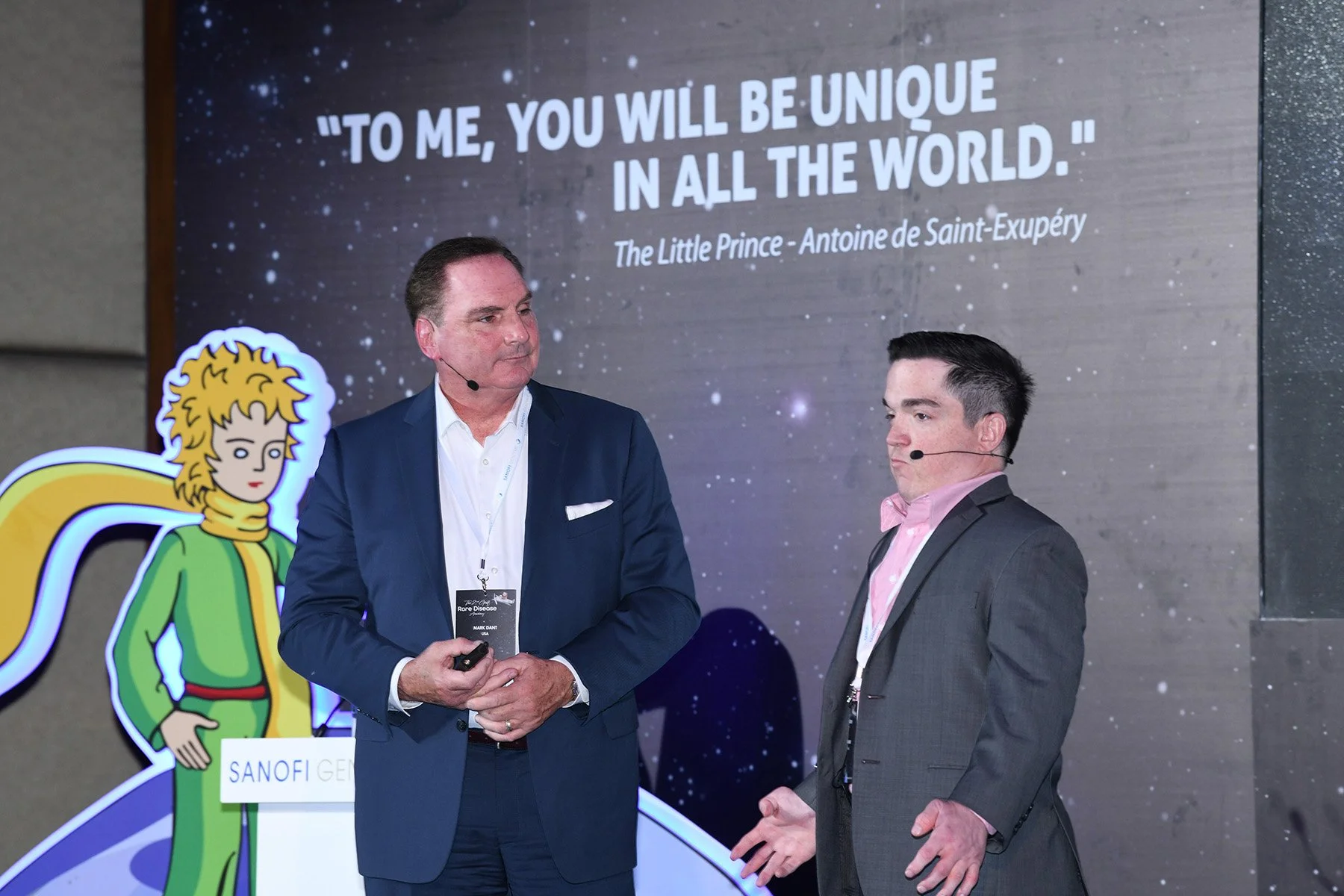
After being told his son would die before age 12, Mark Dant transformed grief into action, helping fund a treatment that changed the future for families around the world.
A doctor sat across from Mark Dant and told him his young son likely wouldn't live past age 12. In an instant, the future he and his wife imagined disappeared.
What followed wasn't a story about medicine alone. It was a story about grief, fear, hope, persistence, and the ordinary decisions that eventually create extraordinary outcomes.
Mark shares how a police officer with no scientific background learned enough about genetics to help drive a treatment forward, why he believes hope is an action rather than an emotion, and what it means to keep moving when the future you've imagined disappears overnight.
Listen to Mark Dant’s Interview
Watch Mark Dant’s Interview
Receiving a Life-Changing Diagnosis
Mark Dant: That moment in life when everything changes. Your son's going to pass away. There's nothing you can do about it. All the moments is a look back of Ryan's life. I realized that the moments were built off of his strength and courage. Our hope was found by connecting the voices of others. It is the mission to help bring treatment to the untreatable.
Brandi Fleck: Today we're talking with Mark Dant. He's a dad to a son named Ryan Dant. He's a husband and a volunteer board of directors chair at EveryLife Foundation in Washington, DC, as well as a volunteer executive director at the Ryan Foundation.
Both organizations exist to help families dealing with rare disease to have hope, empower their voices, and empower scientists to advance the treatments and cures for rare disease.
But Mark didn't start out in the rare disease world. In fact, he's retired from a 32-year police officer career where he was the police chief in Carrollton, Texas.
In this episode, we really explore how Mark dealt with a pivotal moment in not only his life, but also his wife's life and son's life, and that is when Ryan was diagnosed with MPS. Dr. Emil Kakkis, who could and did create the treatment Ryan Dant is on today, along with so many others with MPS.
This not only took courage and willpower, but emotional growth to transition from excelling at law enforcement to learning about science and the nonprofit world from the ground up, when libraries and books were the primary research methods.
Before we dive into today's episode, it's best if you know the complete backstory for context. So during the interview, I invite you to watch the Ryan Dant story on 60 Minutes with Mark. It's about 15 minutes long.
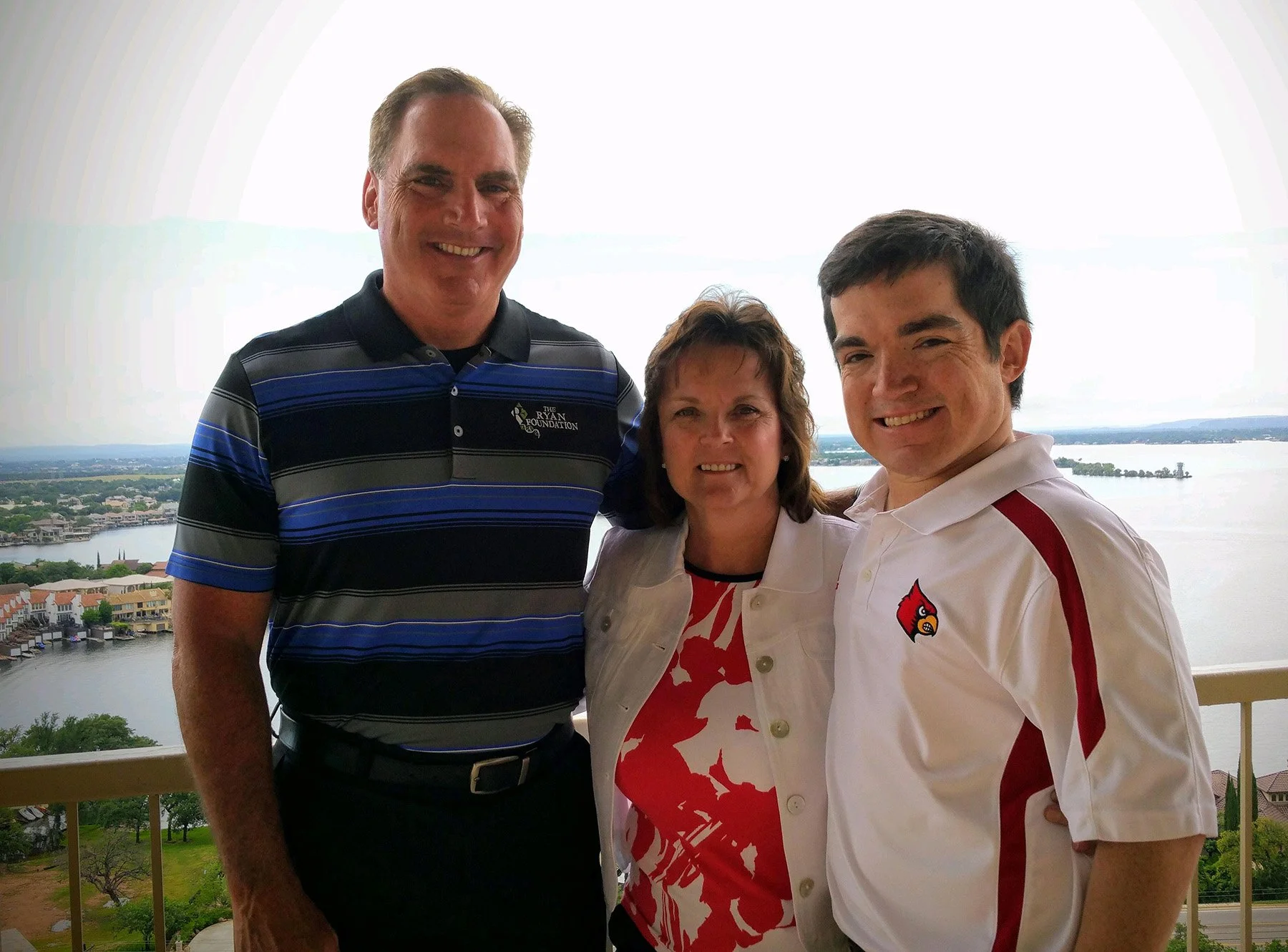
Here at Human Amplified, listening to Mark look back over his memories was an honor, an emotional ride, to be honest, where I related as being a parent, being able to see myself there with him and Jean lying on the floor next to Ryan's bed listening to him breathe in grief and then taking action in hope.
This episode will bring you to tears more than once. Tears of empathy and knowing how hard grief is and how having a child is like wearing your heart outside of your chest. And then tears of joy when you hear of the power held by a group of people on a mission to change the future.
Get ready to hear about an amazing chain of events that will blow your mind and inspire you to do what others say can't be done.
Mark Dant: My name is Mark Dant. I am a parent first and foremost, a husband, a father.
What I do now is, I'm retired from a former career. I was a police officer in Texas for 32 years. My wife and I moved back to Louisville, Kentucky, where we grew up, to take care of our parents and live happily ever after here.
What our passion is, obviously, our son. Our son was diagnosed with a very rare genetic disorder called MPS I, or mucopolysaccharidosis type one, a long time ago.
What I do now is I am a volunteer executive director of the Ryan Foundation, which funds science for rare disorders. I'm also the board chair of the EveryLife Foundation for Rare Diseases, a nonprofit based in Washington, DC, to help move forward science-based public policy.
Brandi Fleck: Amazing. That is so awesome.
When I was looking into your background and your story, and we talked a little bit before we got on this interview, I saw that your son is the longest-treated person in the world with MPS I. That's still true, correct?
Mark Dant: That's accurate. That's accurate, yes.
Brandi Fleck: Okay, so that's amazing. And just saying that, what does that bring up for you?
Mark Dant: It brings up remarkable memories of sad times, but empowering times. It brings up memories of hope brought to us by action from others who cared enough to move forward with us to try to find an answer for our son, and in so doing, found an answer for the world.
And I truly believe because of the incredible scientist who developed the therapy that Ryan is now the longest-treated person in the world on, he truly kicked off what some have titled the Golden Age of Rare Disease Treatments because of his tenacity of not giving up on science and focusing first, foremost, almost, and always on the opportunity to treat the untreatable, and that's those with rare disease.
So I look back on Ryan's journey and our family's journey, I see so many moments of hope and sadness and terror and happiness. And I look forward to tomorrow, which is the greatest gift we all have and oftentimes is lost when it's taken away.
Brandi Fleck: Yeah. Wow. Okay, so to provide some context for our listeners, your son being alive today is in large part due to your efforts to find treatment options and answers when there were none. And you alluded to that a little bit, the scientist who helped with that.
You dedicated your life to raising money, finding a scientist, doing research when nobody was, and then trying out the new treatment at the time.
This mission started. You didn't think your son would live past the age of 12. So what was that like for you?
When Doctors Told Us There Was No Hope
Mark Dant: It's the most terrifying moment in a family's journey. It's when a physician brings you to the office and sets you down in front of a team of physicians and tells you there basically is no tomorrow.
When our son was little, he was three and a half when my wife and I decided to enroll him in a more structured daycare so he could learn to be the big brother because we had hoped to have, I wanted five kids and my wife, Jean, wanted three, so we would have somewhere between three and five, probably three.
So we wanted Ryan to learn how to be a big brother by playing with other children.
So Jean brought Ryan to a preschool, pre-daycare physical, and a very astute young pediatrician named William Cokor in the Dallas area looked at Ryan and thought there were a few things that were not ordinary. His liver and spleen felt large to him, and his head was large.
To us, he looked like the normal average kid. I'm a pretty big guy, so I thought Ryan was just going to be a pretty big guy. He loved baseball. Even at the age of three and a half, he could throw an overhand fastball that was really hard to catch. It sounds ridiculous, but it was really true.
Sweetest kid. Nothing was wrong with Ryan.
Dr. Cokor was so concerned that before Jean left the office. I didn't go because it was a physical. He turned around and called Dallas Children's Hospital and made an appointment for Ryan to see a geneticist.
Okay, that concerned Jean immensely. For some reason, I wasn't concerned because I knew there was nothing wrong with Ryan.
So in two weeks, which is a side story, in the nation there are not enough geneticists, and oftentimes families who are referred to a geneticist have to wait three months to even get an appointment, maybe even longer. So it shows you the very deep concern Dr. Cokor had for Ryan, that in two weeks we had an appointment.
Jean and Ryan went. Dr. Lou Weaver examined Ryan, and he too thought Ryan had a disorder. Jean couldn't pronounce it because, once again, I didn't go because there was nothing wrong with Ryan.
Blood samples and other things. He said, "We'll call you when the tests come back."
He did call us in a few weeks and summoned us back to Dallas Children's.
This brings me back to my point of that moment in life when everything changes. Those on the rare disease journey, it's the moment of accurate diagnosis.
I picture that in my mind when everything changed for our family, sitting in front of us. Actually, I went with Jean and Ryan that time because I was going to tell the doctor, "Thanks anyway, but we'll keep an eye on it." We all know there's nothing wrong with him.
When the doctor walked in, he was to be by himself, maybe a nurse, but he came in with two other doctors, a family counselor, and a genetic counselor.
He explained to us that Ryan had this disease called mucopolysaccharidosis type one, or MPS type one, and the future would be short. He would pass away by the age of 10 or 12 and be in a lot of pain. His arms would draw up. His limbs would tighten up. He wouldn't be able to walk or run. Eventually he could be blind or deaf, mentally challenged, and then he would pass away.
When I challenged the doctor, Dr. Weaver, I told him, "Surely there are physicians or scientists who work on this disorder. Where are they?"
He said there really aren't very many because it's so rare.
"Well, there are companies that develop drugs. Where are they?" Because in my mind, that's how you fix things. You make a plan and you attack it.
He said there aren't any because your son's disease is so rare. It's called an orphan disease by the U.S. government because there are so few children with this disorder. Companies and scientists rarely adopt it. It's too difficult to build a business model, make a therapy that would work specifically in time for your son.
Living With a Terminal Prognosis
In a nutshell, he said, "Mr. Dant, your son's going to pass away, and there's nothing you can do about it."
So we did nothing for a year. We literally did nothing to him. We wanted his life to be normal.
So we played with him during the day and had dinner with him at night and played with him after dinner and then put him to bed. Then my wife and I would literally wander around our own little home realizing we wouldn't have any other children because a genetic disorder means that any children we would have in the future would have a one-in-four chance of dying as well.
So that wouldn't happen either.
Brandi Fleck: Okay. Where was Ryan when the doctors came in and gave you that news?
Mark Dant: As we look back in our life now, and I'm sure you're the same way, there are certain moments in your life where it's a snapshot. It's like a picture from your cell phone that stays with you forever.
I have a snapshot of that moment when the doctors walked into the room. We were in there forever because doctors are notoriously late. This one was as well.
I remember blowing up an examination glove and drawing stitches like a baseball on it, and he and I were throwing it around like we were playing baseball.
The moment the door opened, Ryan quickly climbed up on Jean's lap. He was sitting to my right, turned and faced her, his face away from the doctors.
So he was there listening, but he was three and a half, so the only thing he noted, and this is the moment of my snapshot, is Ryan taking the back of his hands and wiping Jean's tears from her cheeks because she was crying.
And he kept saying, "Well, it's going to be okay, Mom. It's going to be okay, Mommy."
But he didn't know. Jean and I knew. We also knew that nothing would be the same ever again.
Brandi Fleck: So what are some of your proudest moments with your son that you had over the years? Can you describe them in detail?
Mark Dant: These are more of my snapshots. And I'm convinced that every person alive has a snapshot in their mind of certain moments in time that change their tomorrows.
What Courage Looks Like in Real Life
Many of my proudest moments are of Ryan as he is pulled away from Jean and me for his surgeries. He's had about 14 now to help fix the problems that come about because of his disorder, and the strength he exhibits at those moments.
And the moments in time where he's doing all the things that other children in his classes in grade school and junior high and high school were not doing, and then the next day he would push forward to go back to school to be just like everybody else.
Those are moments of strength. All the moments, as you look back on Ryan's life, I realized that the moments were built off of his strength and courage to challenge what others have said would happen to you tomorrow but don't really know.
Because it's within you who can change what tomorrow happens, not someone else's book. It's your own.
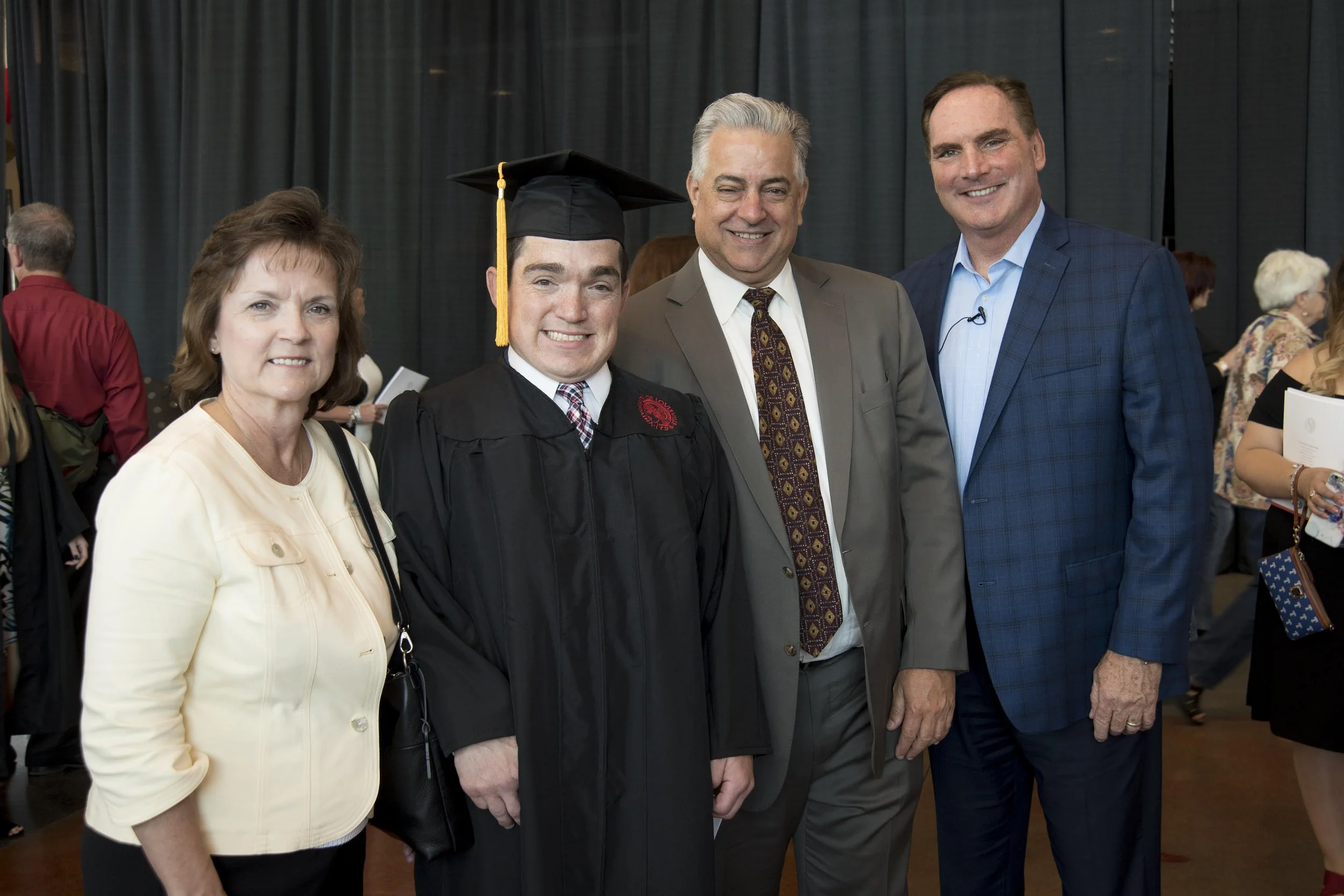
Ryan has taught me that. Graduating high school, that would never happen in his life if we had not found treatment.
Having his driver's license. Saving for his first car. Graduating college. And now he's engaged.
The moment he asked his fiancée to marry him and the photographs we have of that and how he did it was simply the sign of a wonderful person who cares about others the whole time.
So those are all things that I think all of us can look back and say, "That was a moment I will never forget."
Brandi Fleck: Yeah. Awesome.
Okay, so when you see your son Ryan as an adult now, is MPS I constantly on your mind, or is life more normal? Do you have more security in tomorrow?
Mark Dant: I think we all have levels of that. I think all of us, whether we have a difficult journey to face in the future that we don't know what might happen because of health reasons, should understand that there isn't a life in front of us that is already written.
So what I mean by that is, when I look at Ryan, I can easily say to myself there's nothing wrong and he can forge forward and everything will be fine. But he has health conditions you can now see visually a bit, and I can focus on that.
But my wife and I choose to focus on the opportunities that he has because of what others have brought to him.
His first IV, weekly, he has an IV infusion that lasts a little over four hours. So that's a constant reminder to us that his life is quite different than others. Orally, he has spinal taps, and there are other issues he must face as well.
But all of us have parts of our journey that are a little more difficult than others, but there are other people who have more difficult points in their life that are hard.
So I look at him and see both. Jean and I do constantly still worry about his health.
Another proud moment is seeing him take charge of his own health and not have us do it for him. He's interested in things that he must do to maintain and build on what he has.
Brandi Fleck: Okay. I do want to invite listeners to go to ryanfoundation.org and watch the video of your 60 Minutes interview. It gives the full story of your family's journey we just mentioned.
And here for the rest of the interview, I'd like to focus on you and how your life has evolved because of these events.
So can you tell us the part of your life story, starting a few years before your son was born and taking us through realizing your life was going to drastically change in terms of how your career was going to change, how your future was going to change, those types of issues?
What emotions did you go through when you knew that life was never going to be the same, and how did you deal with them?
When Life Takes an Unexpected Turn
Mark Dant: I think every emotion in the human existence my wife and I went through because you have a vision of where your family is going, as well as who you will be personally along the way.
And at that moment, when all of that is redirected to a different future, there simply was no road at all, and really no one to sit down and explain, "If you do this, then that will happen."
So there were many times in my life that changed me to where I am today.
Picture a police officer working shift work. Day shift, evening shift, and night shift, rotating every 30 days to one of the other two, then working 12-hour shifts where you're either nights or days, days or nights, then coming home to a completely different world of a wife and son.
And by the way, the son is terminally ill.
How do you address that?
After starting a nonprofit with a bake sale, which, looking back, is just the silliest idea, but really an idea that taught me the most basic of things: if you ask others to help you along the way, some cannot, some will not, but some will. And that's okay.
It took me a while to understand why some cannot and some will not and to start focusing on those that will because those that will help others truly have changed so many lives.
Ryan gets emails and Facebook contacts from families literally all over the world. We went to Dubai last year and met families in Taiwan whose lives changed because of the sacrifices by that scientist at UCLA. It changed everything for all of them around the world.
My life changed from focusing on work and being a police officer, wanting to be promoted, to realizing that's important because it helps the family exist, to focusing on what we can do for Ryan and, in so doing, what we can do for the rest of the rare disease families who felt just as lost as we did and don't have treatments.
So my personal focus changed from excelling and wanting to become a chief of police to excelling to want to learn science, want to learn nonprofits, how the two can connect to build a therapy.
Most importantly, it was about knowledge of science and business, and all of that combined together kind of made the concoction of nonprofits for all rare diseases.
Brandi Fleck: Something you said that was really interesting. I mean, this is all extremely interesting and really inspiring, but I want to ask you about it.
Why Some People Show Up and Others Don't
You said some people cannot help and some people will not help. Why do you think that is? What did you learn about that?
Mark Dant: It took me a while. A long while. Because when you're told that tomorrow is not going to be here for your child and there really is no reason to plan for tomorrow, it's so painful that, for me personally, I lost a lot of good friends because of me, not because of them.
Because of my inability to understand that every life has some challenges, and I don't know what their challenges were, but they didn't have the time or they didn't have the ability at that time to help.
And it made me angry. I didn't understand how they could not help this sweet little boy. But looking back, I realized that maybe they couldn't help. Maybe they had so many difficulties in their own life that I don't know about and didn't ask.
I was so selfish about wanting other people to help me. What is it that I should have done and could have done that could have helped them?
Some people won't help because they just don't want to spend their time doing that. That's not wrong. It's just not what I wanted, and that's okay.
Brandi Fleck: Yeah.
Mark Dant: There were so many people that did help. So many people.
And it's remarkable that people will help a disorder that they'll never meet a child with other than our son. More than likely, they never will in their life.
And that they changed everything in the world for all those kids around the world because of their willingness to say yes. Those are the ones we choose to focus on their efforts.
Brandi Fleck: Now, when you were going from wanting to excel as a police officer to then focusing on science and treatment and your life was changing, would you say it was rapidly changing, or was this a slow process?

Mark Dant: I'm going to have to say it was a slow process because even though everything changed in the dynamics of our little family of three and the moments we have with the doors closed and it's just the three of us, the reality of when you open the doors and enter the society that was just the same as it was yesterday is the same as today.
Those things change slowly. I still had to try to perform at work and do the right things there. Work provided insurance and income.
But I also needed to learn so much more about nonprofits. How to start one, how to make one efficient and effective, and most importantly, science. It is not an easy task for any person. And for someone, a layperson, to understand.
Actually, the physician that diagnosed Ryan is also a professor at UT Southwestern in genetics, and so he would give me his genetics books that he would teach from, and I would take them home and try and try to dive through them.
This is the days before the internet, so all of my learning was through the public library system about Ryan's disorder and also about how to build a nonprofit.
So it was a slow change. The first year was the slowest. The first year was the year where I think my wife and son and I grew closer together because we felt at that time it was the three of us in the world.
Brandi Fleck: Do you specifically remember any mindset shifts that you had to make to get into the different life that you ended up with? How did you get through it?
I mean, what did you do to make that shift mentally?
Mark Dant: I think we can all shift mentally when we start looking at others instead of self.
The first year, I thought only and solely of Ryan and Jean and Mark, the three of us.
And then when I started finally going out and learning how many others there were, not just with Ryan's disorder but with other rare diseases, that they were having difficult times as well, perhaps at those moments I started to realize it's the other person's journey that will affect yours the most.
When I started feeling the pain of the other families and realizing that there are so many that will never find treatment. And I know parents who have lost not one but two children through a rare disorder, and they tried everything that we did, as hard as we did, and yet their efforts didn't work for their own family. But they truly did change tomorrow for others without question.
So I think on our personal journey, it was the moments in time where we started to realize hope comes from other people. So think of them first and think of their journeys and their pain and their successes, and then you'll realize together there's a huge force much more powerful than self.
Brandi Fleck: Okay, that's really good stuff. You guys, listen. Listen to what Mark is saying.
Do you still go through any of the emotions that you had then today? Do you still have to work at shifting your mindset ever, or are you just there now? That's where you live?
Mark Dant: I think I wish that I could just put all of the issues of our son's health in a capsule and put it away. Maybe open it when it's necessary, but leave it there where we never see it.
I don't think that's possible. I still have many moments of sheer care, of worrying about, "I see he's changing a little bit, and I'm not sure where to go to fix that." We don't want to lose something. We have to be on the go to try to save what we have now.
So those are those moments.
But there's also the wonderful moments of planning a wedding and doing all the things that those in the world that we thought we would never see, we're having the opportunity to do.
So many things because of the combination of great science, a great scientist who was driven to make a change in everyone's life, and people who donated their time.
It can never be understated what someone's individual moments can do to help others.
I can list seven or eight families that literally put countless hours into a nonprofit that really didn't mean much to the rest of the world, but it meant everything to them.
And so whenever I get down, I think about those people. I think about, I wish they knew the power of what they've done. It is truly remarkable.
So there's a little bit of both.
I think we all encapsulate certain moments in our life to be happy, and then we allow ourselves to address the things that we have to, but try not to dwell on them.
Maybe that's where we find our successes.
Brandi Fleck: Okay. Can you give us a little bit of the nuts and bolts of how you made that transition?
So maybe looking at it in terms of a family who just got a diagnosis and now they want to take steps to do something. What are those steps to just change their life so that they can do what they need to do?
Hope Is an Action, Not an Emotion
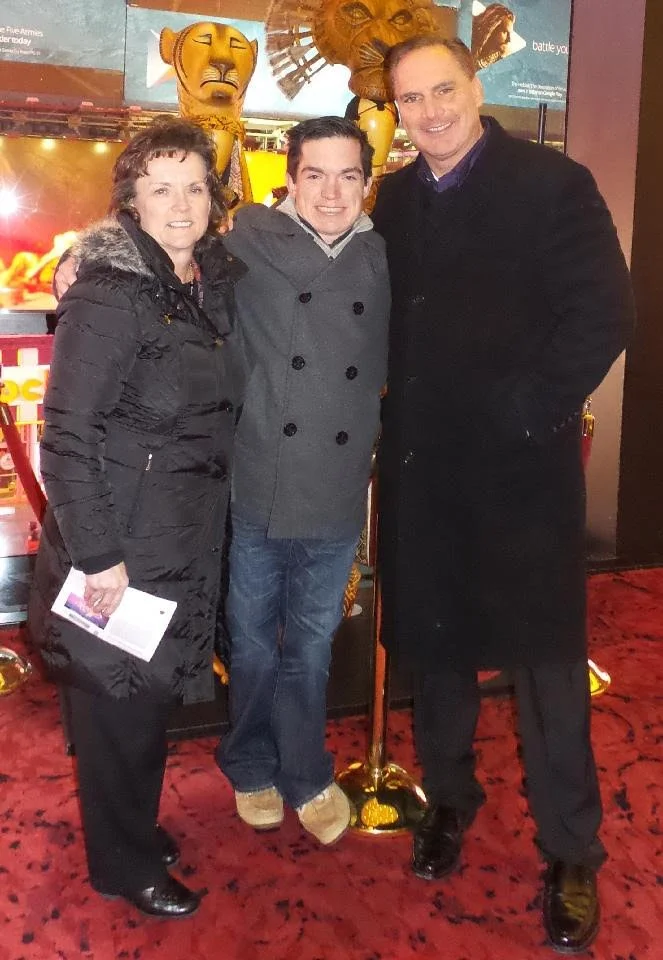
Mark Dant: As I look back over our journey, there were so many failures. There just were.
Of asking and trying and not getting to where we thought we would be. Those failures brought us to where we are today.
So what I tell the families, and I have the opportunity to talk to many families with many rare conditions literally all over the world now, I tell them the most important thing is to not give up on tomorrow.
To understand that what everyone, all of us, are looking for is hope.
And hope, to me, is not an emotion. Hope is an action. What we do today will bring us hope tomorrow.
If we keep thinking, "We'll have hope tomorrow," we won't unless we take the moments of the day today and build something in our mind that can change tomorrow and put it into action.
Find others who will help and work with them to try to help solve the problems of tomorrow.
We all have moments where we have to grieve, and that's vitally important, but we have to try to push ourselves beyond the grief and let it drive that action.
To find something. To learn something. If we hadn't had the desire to go to the libraries and do the difficult things of not understanding the science, we couldn't have had conversations with scientists.
So those actions that seemed purposeless, learning about the terror, the horrors of what's coming tomorrow for our son, actually taught us what things we would need to understand to work with the scientists.
So I think for all of us, all of us, if we could only understand that it is within us to change tomorrow, but don't wait until tomorrow to do it. Just do it right now.
Brandi Fleck: Words of wisdom for sure. How do you push through the grief? Do you have any advice on how to get through that?
Mark Dant: That's a very good question because everyone's grief timetable is different.
And that's understandable and okay.
Far be it from me to try to tell someone, "You've grieved for X number of moments now. It's time to do something else."
No, it's not. For me, if you can picture literally Jean and I laying on the floor next to Ryan's bed every single night because we'd go to bed and I'd wake up and find her not in bed, and I would find her laying next to Ryan's bed on the floor with a pillow, and then I would lay next to her.
Every night for a year. Not sleeping, but listening to him breathe.
In that year, though, in those moments of kind of wandering through that home that we thought we were going to have that never will be, that grief drove me to a desire to learn what we can do to fix the problem, to address an issue that was ours to address.
I think grief drove us off the floor. One step at a time, we have the power to do it. It's in our mind.
We just have to allow ourselves to say, "It's okay to grieve now, and now I'm going to do something different." Whatever it is, do that.
Brandi Fleck: Yeah.
Does that action help alleviate the grief? Because when the hope comes in, does the hope sort of counteract it, you think?
Mark Dant: I think that's maybe what hope is.
People like to say hope is an emotion, and hope never gives you anything. But I think hope gives you the ability to step on the accelerator and realize, "I have the ability to do something about this problem."
How a Small Fundraiser Sparked a Bigger Mission
Picture that bake sale that I talked about where we raised a massive amount of $342 to try to save someone's life, to save our little boy's life.
Actually, the bank for that bake sale was, in the old days, dads used to hand out cigars when their baby was born. I had an empty box of cigars that I'd handed out the night he was born, and I thought it was appropriate that we would use that as the bank that would collect the funds that would save his life.
I got in my car, drove back to our driveway, and I sat in the driveway. It was raining.
I remember opening the box and seeing coins and dollar bills, counting it to a massive total of $342.
But in that moment of grief, of seeing that there wasn't much there, of realizing we can't save Ryan with $342, believe it or not, there was hope.
It felt kind of good to actually say, "We are going to do everything we can. Everything."
In these moments, change tomorrows.
And that feeling of action gave me hope that something can happen tomorrow.
Our family, because of all the other families that helped and that scientist, we found our tomorrows in the hope of that little cigar box with $342 in it.
Brandi Fleck: Gosh, I've got so many questions.
I want to know what you did with that $342, and then how did you find that scientist?
Mark Dant: Well, we actually put it in the bank. We started a nonprofit account in one of the banks there in our town in Texas and titled it the Ryan Foundation for MPS Children.
I got a few articles in the newspaper and asked for other families to donate. We got some donations that way. So that's where the $342 went.
But it was the seed money that brought us to the next thing, which were chili cook-offs and other bake sales and raffles. I had a boxing tournament and just all kinds of silly things that brought us to bigger fundraisers and meeting more people.
Brandi Fleck: Okay. So then when you met more people, is that how you finally connected with the man who came up with this treatment for your son?
Mark Dant: Everything. I bet it's the same in your life. When you look back and try to connect the dots, you look forward, the dots aren't there and they never make sense.
You would never suggest that you're living where you are today because of what happened yesterday.
But frankly, you're living where you are today because of what happened yesterday. So when I look backwards and try to connect the dots, they all make sense.
My wife worked for American Airlines at the time, so we had the advantage of being able to fly around the world for free, just on standby. So in the library, I looked everywhere for anything on Ryan's disorder.
I found a flyer on an international symposium on something called lysosomal storage disorders, which is the classification where Ryan's disease is.
All these wonderful scientists were going to be there presenting. So I got a passport because I didn't have one and didn't need one, got on a flight, and flew to Düsseldorf, Germany.
There in Düsseldorf, I saw a pretty famous scientist present on another disease called Gaucher disease.
He talked about his treatment where he developed an enzyme replacement therapy that was a weekly IV. Actually, after he presented, I followed him off the stage, down the hall toward his hotel room.
He saw me following him, so he turned around and stopped. I was videotaping his presentation because I wanted to look at all the words I didn't understand and look them up. That's usually what I did when I went to a conference.
On the very first few minutes of the videotape was Ryan playing baseball at four. So I said, "Look at this."
I actually set the camera on his shoulder and had him look through the eyepiece. He watched Ryan playing baseball. He rounded second and headed to third.
He said, "Well, he's very cute. How old is he?"
Developing New Treatments to Create a Medical Breakthrough
Mark Dant: He's four, but he had MPS type one.
Let me ask you, is it possible for you to do what you did for this disease, Gaucher, for MPS I? You ask some more questions, but then he asked really two things that were very important.
"Well, how old is he?"
I told him that. Then he said, "Well, let me be frank with you. You don't have enough money because it's going to take a lot of money. You don't have enough time because your son is four. But it is possible."
So it's possible. We think about all the things that people say are impossible. We hear that word, "possible." That gives you hope because it's an action. An action that drives you to tomorrow.
We funded a symposium in the U.S. The Ryan Foundation did. They partnered with the National MPS Society, brought all the people with this disease to Orlando, and we brought in scientists.
I brought in a scientist I'd read a lot about in the public library. Her name was Elizabeth Neufeld.
I saw her in a bar that night. I went up and talked to her about the scientist in Germany.
She said, "Well, it's not only possible. I have a young researcher working in a World War II-era Quonset hut behind the county hospital in Torrance, California, who says he can do it. He's a former student of mine. He's brilliant, but he has no funds. He's going to end up closing his lab, but I think his science will work."
The next morning I called this doctor, Dr. Emil Kakkis, and said, "You don't know who we are, but every dollar we raise is coming to you, and we want to come see you."
Jean and Ryan and I flew to LA. We met him, and he was the most, and still is the most, remarkable person you'd ever want to meet.
His entire life is about treating the untreated. He developed the therapy. We partnered with him and brought in the cash, a good portion of the cash, that he needed to move forward faster.
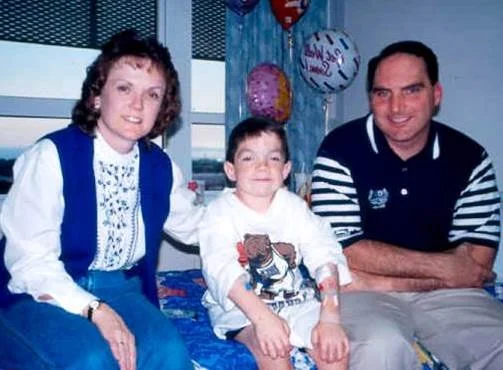
The trial started a few years later. Ryan was the third person treated in a 10-patient trial. The first two have since passed away, but Ryan and so many others.
Success came from asking the right questions and finding the right people who would bring hope. And he was the one that did it.
Brandi Fleck: Man, connecting the dots. Gosh, thank you for sharing all of this. It's giving me chills. It's just incredible.
That seems like such an adventure and so much effort and energy put into this mission to treat the untreatable.
What does a day in your life look like presently? Is it still this mission?
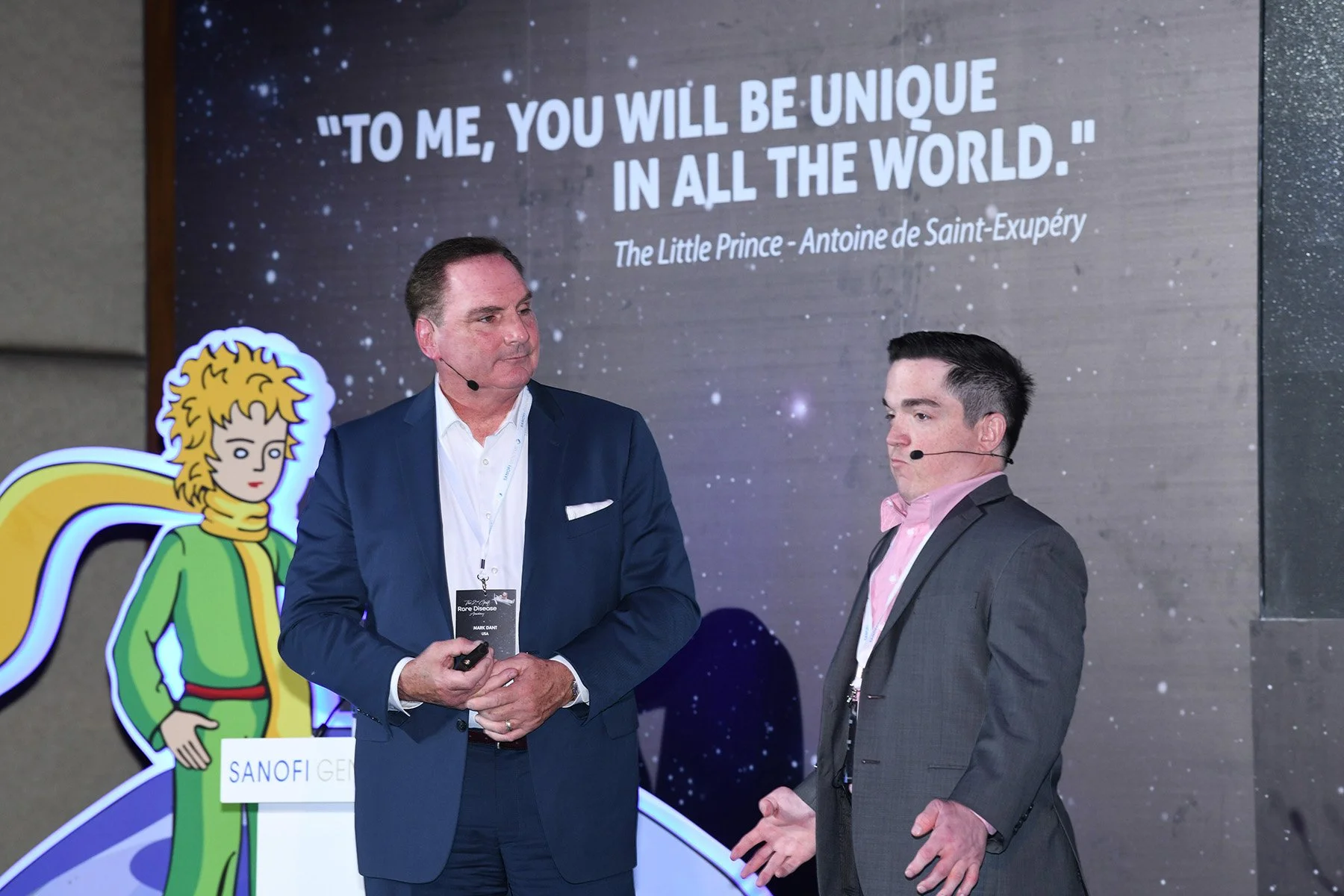
Mark Dant: It is the mission to help other families understand that it is their voice that can empower others to help bring treatment to the untreatable.
As retired now from my previous career, my time with the Ryan Foundation is still all volunteer, as it always was. My time with the EveryLife Foundation for Rare Diseases in DC is volunteer, as it always has and will be.
Our mission there is to find the families with rare disease who truly need help. We all need help.
To let all of us understand that together our voice is quite powerful, realizing that there are over 7,000 rare diseases. Only 5% of them have a treatment.
All the others are still wandering and looking and wanting to find their tomorrows, to find their hope.
I'm convinced that our hope was found by connecting the voices of others to find that treatment.
My time in DC has allowed me to hear stories like ours all across our nation. Families who are getting up off the floor. Those who are just diagnosed and are still laying on the floor next to their child's bed fearing what will come tomorrow and not knowing what steps to take.
My message to them is there are those of us around who want to walk with you, who want to put their hand down and help you up, to connect our voices and the voices in DC and across the states to find that treatment, to empower the scientists to focus on that family.
Their work really will bring through what they need. They need help as well.
It's the connection of our voices.
So my life today is, because of COVID, spent a lot of time on Zoom calls, talking to families and learning about their journey and providing some hope in our story.
We were told Ryan won't be here at 12, and yet on July 3, we get to watch him walk down the aisle with a beautiful third-grade bowling teacher in Arlington, Texas.
That was never going to happen, but it happened because of the hope brought to us by special people who said, "Yes, we will help you."
The Future We Never Thought We'd See
Brandi Fleck: Oh my gosh. Okay, so what's the best part about planning the wedding? Have you guys gotten to be involved in any of the details yet?
Mark Dant: Ryan has a personality much like mine. He's sweet like his mom and very smart like her, but he also wants to do everything himself.
Jean and I will cry, but it's up to Ryan and Sylvia to plan out their wedding.
They let us in on their color choices this past weekend, and I know they're tasting cakes and doing all the things that a young couple are supposed to do to prepare for the wedding.
It's going to be a wonderful celebration.
We hope that the COVID times are going to allow us to have the celebration that they deserve.
So it's just such a unique time in our family's life and in Sylvia's family's life to prepare for something that Jean and I packed away so long ago because it hurt too much to think about.
Now all we want to do is think about it and what can happen.
Brandi Fleck: Oh, okay.
Well, congratulations to you guys. And gosh, I would love to hear about how the wedding goes once you guys get there.
Stay connected.
Mark Dant: Yeah.
Brandi Fleck: So Mark, how can our listeners find your organizations, and how can they get involved if they want to help?
Mark Dant: Sure.
Most importantly, for the EveryLife Foundation for Rare Diseases, just go to everylifefoundation.org, and you can find all the ways that you can help those on the rare disease journey.
If you have a rare disease, absolutely connect to that website. There are so many people there that can help you and your disorder connect with all the other diseases that can help move us toward treatment.
That's what we're all about, treatment.
With the Ryan Foundation, we do the same thing. We look for unique science opportunities because this is not a cure for Ryan. All we're doing is buying time.
There are 12 MPS disorders.
Since Ryan's treatment was developed for MPS I, now because of that technology, that science, that scientist developed, there are now treatments for MPS II, MPS IV, MPS VI, and MPS VII.
There are trials going on for MPS IIIA and soon IIIB.
This is all the wonderment of wonderful science.
That's what the small nonprofit can do. It can fill the gaps, build the bridges from one project to the next toward treatment.
So ryanfoundation.org or specifically everylifefoundation.org, and there's a way you can help. There's a way you can be helped.
Brandi Fleck: Okay.
Is there anything I didn't ask you that you think is important to say?
Mark Dant: You're a good conversationalist. You really are good at your job.
Brandi Fleck: Thank you.
Mark Dant: Jean and I are empty nesters now. Ryan moved back to Dallas and started a job there at UT Southwestern, which is another unique circle.
That's where he was diagnosed, at UT Southwestern, and now he's working there as an adult.
Brandi Fleck: Wow.
All right, Mark. Thank you so much for coming on the show today. It has been an absolute pleasure.
I'm so glad you shared. I'm glad we got to connect. I really did enjoy it.
Mark Dant: Thank you.
Join the conversation!
Feel free to share your own experience and let me know if you have any questions in the comments.
Related Posts






Hi, I’m the founder of Human Amplified. I’m Brandi Fleck, a recognized communications and interviewing expert, a writer, an artist, and a private practice, certified trauma-informed life coach and Reiki healer. No matter how you interact with me, I help you tell and change your story so you can feel more like yourself. So welcome!
Find More on the Blog
Topic
- ADHD
- AI
- Atlanta
- Black and BIPOC
- DIY
- FAQ
- LGBTQIA plus
- Los Angeles
- Nashville
- Seattle
- St Louis
- St. Louis
- UFOS/UAPs/ETs
- abuse
- accountability
- addiction and recovery
- adoption
- affirmations
- afterlife
- altered state
- angels
- animals
- anxiety management
- art
- astrology
- atlanta
- attachment
- awakening
- beauty
- behind the scenes
- being human
- body image
- body work
- boundaries
- brandi fleck
- breathwork
- bullying
- burn out
- burnout
- cancer
- career
- caretaking
- chakras
- channeled
- clarity-dive
- clarity-practice
- clarity-primer
- clean products
- coach
- codependency
Recent Blog Posts
Visit the Full Podcast Audio Archive

Affiliate