Why Reading Fiction Is About More Than Entertainment
Interview By Brandi Fleck

Literary agent Holly Root explains why reading fiction helps us experience other lives, understand ourselves and others, and make sense of the human experience through stories.
Why do humans tell stories?
Long before books filled shelves, stories helped us make sense of the world, understand one another, and imagine lives beyond our own. They're one of the oldest ways we learn, connect, and process experience.
Literary agent Holly Root has spent her career helping stories find readers. In this conversation, she explains why we're naturally drawn to narrative, how fiction allows us to step into someone else's perspective, and why the right book often arrives at exactly the right moment.
Whether you're an avid reader or someone wondering why stories continue to matter in a world full of endless information, this episode offers a look at the role reading plays in shaping who we become.
Listen to Holly Root’s Interview
Watch Holly Root’s Interview
Why We Connect With Stories Through Reading
Brandi Fleck: You're listening to Episode 24 of the On Being Human podcast. Welcome to the On Being Human podcast, where we believe transforming ourselves can positively transform society. Your host, Brandi Fleck, has the honor of exploring the human condition with real people who bravely share their personal stories of adversity, healing, joy, and more. If you're seeking empowerment, strength, and inspiration, listen in to engage and explore tough topics that help us humanize one another, understand ourselves better, spread love, and connect.
Welcome back to another soul-exposing exploration of what it means to be human.
This week's guest reads about 100 books a year. Not only does she read as part of her career as a literary agent, but she tears through books in her limited spare time, whether it's during her kiddo's bedtime routine or reading nonfiction for fun.
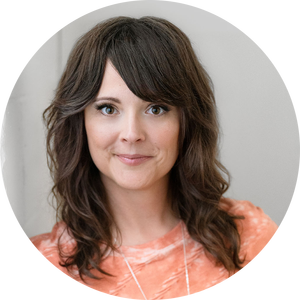
It is such a pleasure to introduce you to Holly Root, entrepreneur and owner of Root Literary, based in Los Angeles, California. Holly has launched more than two dozen New York Times bestsellers.
Holly started out in publishing in Nashville, where she learned that reading, rather than editing, was closer to what she wanted to do with her life. So she moved to New York to learn the ropes and eventually ended up in LA.
Approximately two years ago, Holly opened her own agency. She primarily signs authors who write general fiction, middle grade fiction, and science fiction, but really falls in love with an author's voice regardless of genre. Her agency is always accepting submissions.
When Holly isn't growing her business, she spends her time with her children and husband.
Today, Holly teaches us about how reading enables us to try on other people's lives, a way of satiating curiosity about the human condition and trying on scenarios that we may not safely be able to experience in our real lives. She essentially says that our minds make sense of the human condition and our experiences through narrative, so that's why fiction narratives are so compelling.
Also, you'll definitely want to tune in to hear Holly's opinion on whether or not you should keep reading books you're just not that into. What do you think? Should you?
For now, without further ado, let's hear from the energetic and brilliant Holly Root.
Brandi Fleck: Hi, Holly. Welcome to the show. How are you doing today?
Holly Root: I'm doing great. Thanks so much for having me.
Brandi Fleck: No problem. I'm so, so excited to have you here today to talk about the human condition in literature.
Before we get into who you are and what you do, though, something I ask everyone on the show is, what does being human mean to you?
Holly Root: I view being human, this is maybe a weird take, but as sort of a calling or responsibility.
Brandi Fleck: Okay.
Holly Root: That we are here, and we have these amazing connective skills and inclination. Our first, most basic response is to connect with others. So, to me, being human is about how we live out that connection.
Brandi Fleck: Awesome. Very cool.
We're going to talk about that connection and how we connect to stories in literature.
So our listeners know, you have launched dozens of books as New York Times bestsellers, and you own Root Literary, which is an agency in LA. Definitely you have some insight into what makes us tick in terms of connection and relating to stories.
What are your thoughts on that? What do people relate to in literature?
Holly Root: Yeah. I mean, I think much like the primal drive between connecting, the next thing we do is we narrativize.
I have little kids, and so it's been really cool to watch how their story-making brains work and to see that pure, unfiltered need to create story and architecture around the events of our lives.
Our brains are so fascinating, the way that they want to find these structures and these connections between what would otherwise just be a random assortment of events. The way that we learn is so much based in story.
I think that it's a really primal thing.
It's funny to think about, honestly, because in my day-to-day I'm thinking about, "Who do I think would read this? How do I reach those people?"
Just to give your readers a little bit of context, because literary agent is a weird job, I work with writers to sell their books to publishers and then continue to work with them after the point of sale to shape their careers and manage their professional lives.
It's funny because so much of our day-to-day is this very nuts and bolts of, "How are the books going to get there?" and "Did we meet the deadline?" and that kind of thing.
So it's good to tap into the more pure, human, essential reasons that we tell stories.
How Fiction Helps Us Understand Human Behavior
Brandi Fleck: Awesome. I'm glad that you explained what you do as a literary agent because I wanted to dive into a little bit of a statement you made on a wish list that you have online. It's about the types of work you respond to and like to represent.
In it you say, "I find the interplay of human relationships, when well done, every bit as potent a story driver as espionage."
Can you go a little deeper into that? What is it about human relationships that suck you into a story?
Holly Root: Yeah. I mean, this is one of those essential humanity things, I think.
We're all hardwired for gossip, for example. As much as it's not necessarily something that you want to indulge in too often, we have this real curiosity about what it's like to be in situations other than our own, and relationships other than our own.
The quote that you read was talking about a very specific subset of fiction, domestic suspense. If you've ever read Liane Moriarty or Gillian Flynn, then you've read domestic suspense.
Those are two really different kinds of books. If you've ever read those two authors, they're really different in terms of the amount of violence, in terms of the style of the prose.
What I was going for in saying that was helping people understand where on the spectrum I fall. For me, one of the things that is really page-turning is figuring out how people tick and why, what their relationships are like, and how they are acting in connection to each other.
I think that both of those authors do that beautifully, but that is the real appeal for me rather than how twisty-turny the plot is.
That's where that directive came from, but I think it just goes back to the fact that reading lets us live in lives and brains that are not our own. That's one of the things that keeps me coming back to stories, to fiction, to TV, to all the different kinds of narrative in our lives over and over again.
Brandi Fleck: Sure. Man, I really love that. That's a great perspective, and I hadn't thought about it like that before, so definitely some food for thought there.
You talk about how you prefer the interplay of relationships over maybe a twisty-turny plot. My next question was going to be, why must the story have conflict to keep moving?
I probably want to specify that conflict doesn't necessarily have to be huge, crazy plot twists or something like that, but any kind of conflict. Why are we, as humans, drawn to conflict in stories?
Holly Root: Well, I think it's one of the things that is most powerful about stories. It lets us work out situations that we might face in the future or have faced in our past. It gives us a playground to work through those and imagine ourselves in that position of that character.
A great example of this, I just read a book that just came out called My Lovely Wife, which is a world that I would absolutely not want to live in as a human.
The premise is that it's this very typical-presenting, picture-perfect suburban couple, but to keep their marriage fresh, they've taken to murdering people together.
Brandi Fleck: Oh.
Holly Root: Which is not a life choice that I ever want to participate in.
One of the things that was so amazing about that book, which is very plotty, very twisty, but really driven by the psychology of the characters, was that I didn't like these people at all, but I could not put it down because, even as I felt sort of sick to my stomach, I just had to know why. Why were they doing this? What made them tick? Because it was something that is so not a world I ever want to even come near.
Sure, I don't want to live in their neighborhood, but it was fascinating.
I think that opportunity to step outside of ourselves in a psychologically safe and appropriate fashion is one of the biggest and best gifts that story gives us.
Brandi Fleck: That is a really great point.
Just stepping outside of ourselves, this insatiable curiosity is really cool to think about.
I almost feel like maybe we're going to touch on the same type of answer here, but what is it about a fictional character's journey that appeals to our journeys?
There might be a subtle difference because, at times, some fictional characters can seem like caricatures of reality, and at other times it seems like real life can even be stranger than fiction, almost too outlandish to be believable in fiction.
What is really at the root of how we connect to a fictional character?
Holly Root: This is such a good and interesting question, and something I think about all the time because there is no one fixed answer to it.
There are so many different kinds of writers out there and so many different kinds of characters.
One thing that I have observed is that there are as many different reasons that characters connect with people as there are readers.
One of the things that I talk about a lot in my work life with my authors is that you know the author is without being aware of it because, once the author's work is done, they walk away.
In conversation with a reader, every book is not fully done until a reader comes to it.
What the reader brings to it is going to be different from person to person.
There are some characters that I have read and thought, "Okay," and the book just didn't necessarily click for me. Another reader comes to that and says, "I feel so seen. The way that character talked about this particular aspect of life just resonated for me. I fell right in and felt like I was that character."
I think part of the magic of connection is that it is individualized and that there is no one right way to read a book or to meet a character. Books are there for you at different times in your life as you become different people.
There have been books that I've read and thought, "Hmm," and dropped them, then come back two years later and thought, "Well, maybe I will check that one off the list," and fallen right in immediately and been totally sucked in.
As much as it's about the character, I find it's often about the reader.
Why Readers Connect With Fictional Characters
Brandi Fleck: Awesome. You touched on something there that maybe we should talk about a little bit, which is how our identity changes over the course of our life.
Tell me a little bit more about that in your own experience. What do you think about identity, especially as it interfaces with books?
Holly Root: It's such a big piece of it that you can't really know.
There's always a reader out there for every book. In my professional life, when I'm thinking about taking something on as a new client, usually how that process works for me is someone will have sent an email.
We're pretty much open for submissions all the time. Someone will have sent an email pitching a book, and I will have requested to read the book. I read the book and decide if I have the right vision for how to help that author launch it into the world.
All the time, we talk about the kismet that this entire business runs on because there are absolutely books that have gone on to wide acclaim that I had in on submission and either didn't know what to do with, was like, "Yeah, that's a thing, but I don't need to be the person who's on its team," or just totally missed. It didn't spark for me for whatever reason.
The only way that reality can keep you from going absolutely batty, because book publishing is a really small industry, we all kind of know each other. Within the realm of agents, most people are known to me by name and reputation, if not personally, but a lot of them are actually good friends. We know each other pretty well, and we know what other people are up to.
The only way that the fact that you just can't have everything is okay is by really accepting and coming to this very almost Zen place of, "Books end up where they are meant to be."
I think that has a lot to do with your own identity and your own sense of yourself.
Frankly, I think the same is true for readers. Books find readers at the right place and time.
That's why sometimes when I talk with friends who aren't in the business and they're like, "Oh yeah, I just keep trying to read that," I'm like, "Let it go. Don't force it. Life is too short. There are so many books. Let it go. It is meant for you later."
Maybe you never come back to it, but maybe it really is the kind of thing. One of my very favorite books was this book called Code Name Verity, which is a World War II historical young adult novel. It is an extraordinary friendship story. It is so beautiful.
The first couple times I picked it up, I just couldn't quite get into the right headspace for it. Again, it was me, not the book. The book is beautiful.
I just set it aside, and when I came back to it, it was at a point where I had not been paying a ton of attention to my friendships. I just didn't have a lot of bandwidth for it at that point in time.
Reading that book really encouraged me to reach back out and make a point of reconnecting with some people that I felt like I could stand to see more.
It's just a little example of the way that I think books find you at the exact right moment.
Brandi Fleck: Very cool. Very cool.
I love how you mentioned that people are trying to read books and they just can't get into them, and you're like, "Put it down."
I've been through that so many times. I can't tell you how many great books are on my to-read list that I've just had to put down. I think lots of people can relate to that.
Holly Root: Oh, I'm a huge advocate for quitting books. Life is too short to read something you don't like. Even if it's supposed to be the best thing ever, quit it, man. Move on. Find something you love.
Brandi Fleck: That's good to hear.
Do you think that what people learn from fiction can be applied in our daily lives? What are some examples of that?
Holly Root: Oh yeah. I don't know if this is just because I'm a grade-A book nerd or if this is something everybody does, but books that I really love, I find myself thinking about the characters, wondering what they're up to later after the fact. Obviously, that's more easily done with contemporary fiction.
I think about people and situations from books all the time.
Watching people, again like I said about the idea of fiction as a playground, I think watching other people go through things can help you in your own life and situations and circumstances.
I always think of it as, especially if you're reading a book about train wreck families or whatever, "Oh, I'm so glad that I read this so I didn't have to go make those mistakes myself."
I'm a big believer in applying those truths that are illuminated from fiction into our own lives.
Brandi Fleck: Wonderful.

How Books Shape Identity and Personal Growth
I want to dive into the literary technique of voice for a minute.
Can you tell us, what is voice in a book, and does it in any way connect with our ability as humans to have a voice and to be heard outside of a book?
Holly Root: Yeah. I love that question.
I tend to work with my authors for a really long time, over many books and many years. I find that the reason that is the case is because what I respond to as a reader is so often voice.
I will follow that person. I have an example literally on my list of an author I signed for a middle grade novel, and then we have since sold like 40 romance novels. That doesn't make sense. Middle grade is fiction for roughly 8- to 12-year-olds.
That's what I read from her, and then what we ended up doing was not that. The fact that I loved her then and I loved her in another genre, it's about voice.
I think that voice is highly individualized.
This has been years ago now, but I was getting caught up on reading. I read a lot of my submissions and my clients' works in progress on a Kindle because you can just email files to yourself, and it's nice to have on the go. It's much more pleasant than reading on a computer screen.
I opened up my Kindle, and for whatever reason I hadn't changed the file names on anything, so it was just a whole bunch of "WIP 122 Final" or whatever. Just gobbledygook file names that didn't indicate whom they were sent from.
I opened up this one and was like, "Oh my gosh, I love this. This is so good."
Then I turned the page and was like, "Of course it's good. It's my client."
I knew immediately who it was, then went back and checked and was like, "Yep, that was it."
I think that really is the purest distillation of voice, that I could open up a file on a Kindle with no identifying information and be like, "That's who that is."
I think voice does carry over. It can be changed, and it can be shaped, and it can be stylized. It also changes as a person and a writer grows, matures, and has different lived experiences.
Voices can change over time, and particularly working within different genres. Different genres have different expectations, so somebody's middle grade novel won't sound exactly like their romance novel.
But sure, you could tell that they were the same person.
If you have a favorite author, like Stephen King, who writes across a bunch of genres, you can always hear the essential Stephen King within that, whether it's super scary or more emotional or very fast-paced or a little bit more lyrical, there's an underlying drumbeat that is that authorial voice.
I think that is a really pure distillation of someone's essence, how they write and how they communicate. That's their emissary to their readership and their point of connection to that wider world.
Finding Your Writing Voice as an Author
Brandi Fleck: Wow. I really like that explanation.
That takes me to my next question. Do you think that authors can have several voices, even if that's their essence?
Is it possible for them to make up a voice that's not necessarily true to who they are but is useful for entertainment? Or is that the kind of thing that doesn't work because it's not genuine?
Holly Root: I think it's very hard to do.
There are some people who do have that skill set, in particular people who are really good ghostwriters. For them, I think it's almost more like an actor slipping into a role. They are inhabiting and channeling the person for whom they are writing, and that's a really specific and very valuable skill set.
But I think for most fiction writers, voice is something you can refine and shape. Like I said, if you're working in different genres, you're meeting different reader expectations. Everything's not going to sound exactly the same.
I think that there is a sort of permanence to it. Once you tap into your own voice and identify it, you don't want to mess with it too much.
The things that you're changing are more technical. You could improve your actual, literal writing craft, but voice tends to shine through regardless.
Sometimes people's voices just aren't good fits for things. There'll be a wave. I'm thinking right now there was a point around 2008 through 2010 when blogging and internet writing was really big. Maybe even earlier than that, maybe the early 2000s.
Everything had this very forced conversational voice. "Voicey" was the word that got said in the industry a lot. "It's so voicey."
Now it's aged really badly, and you can look back and see the people for whom it felt really natural, and then the people where you're like, "Oh, you're trying to sound like a moment."
Where their work has gone since then sounds more genuine.
I think people can do it, but I think a lot of times it doesn't result in people's very best work. Writing the book the way that only they could write it results in a more interesting and long-lasting product.
Brandi Fleck: Gotcha.
To shift a little bit, where is the line between entertainment and the enrichment of our minds? Or is there a line?
Holly Root: I would argue that, within the book world, I am not here for gatekeeping people's joy.
Sometimes people will say to me, I work in really commercial fiction. If I represent the Great American Novel, it'll be like, "Oh, whoops, that happened."
I'm trying to do things that matter to a lot of people, that a lot of people can connect with. That's a little reductive. Ideally, the Great American Novel also does that.
But my goal is not to do the neglected literary, experimental thing that might make a very big splash in an academic pond. My goal is to do the things that you could buy at Target.
So, caveat, I'm not some fancy pants. Sometimes people will say, "Oh, I just read comic books."
I'm like, "That's reading, dude. Don't feel bad. That's not something you need to say, 'Oh, I just...'"
I am not here for apologizing for anything that brings you joy. I think that reading is spectacular for people's brains, and if you are doing it at all, then good for you. Sometimes people will be like, "Oh, I only read e-books," or, "I only read audiobooks."
I'm like, "Yeah, dude. It's all still reading. It counts. It totally counts."
To me, I actually don't think that there is a point where you need to differentiate between the two. I do think there's value in pushing yourself sometimes out of your comfort zone.
In my own personal reading, I tend to read a lot of nonfiction because I don't do as much of it professionally, so it's easier for me to switch off the part of my brain that's in work mode and just enjoy.
I'm also a really curious person, and I find that nonfiction scratches that itch in a way that sometimes fiction doesn't.
I'm a big believer in pushing boundaries for yourself and setting yourself some challenges, trying to broaden your reach in what you are reading.
But that's more for fun, for yourself, not like there's only one right way to do it. I am not here for gatekeeping people's fun.
The Benefits of Reading for Mental Growth
Brandi Fleck: Great. That's an awesome answer. Thank you. I know you must read a ton. You do it for a living, and you just said you read in your spare time.
What has reading so much taught you about the human condition?
Holly Root: I learn so much all the time from books, from reading, because you're getting to climb inside someone's brain for a little bit. All the better if that brain is not exactly like yours.
Reading books from people who have very different backgrounds from mine, from people who've had different socioeconomic, racial, or geographical experiences, is an opportunity to walk around in a set of shoes that I've not gotten to try on before.
I think there's so much to be learned. It's an intimacy and an access that is so generous on behalf of the creators. The fact that you can just go wander around in these stories that somebody has given you, whether they're a memoir or a novel, is so intimate.
I'm so grateful that I've gotten to do that.
Like I said, my other love as a reader myself is science nonfiction. If you want to know anything about marine mammals, I am your girl.
I have read every book about marine mammals available. There are not enough for me. I would literally do nothing but read about whales all the time if I could.
Brandi Fleck: That's awesome.
Holly Root: I've learned a lot both about being human, although frankly I would argue humans are kind of the worst species. That's what reading so many books about marine mammals has taught me.
Listen, if the whales take over, I will serve them, and I will oppress my fellow humans in service of the whales.
I don't know if that's the right takeaway on being human, but listen, if you want to join me in service to our whale overlords, I'm available.
What Reading Teaches Us About Empathy
Brandi Fleck: That's awesome. Oh gosh. Like, I know that we don't necessarily treat the whales very nicely as a human race.
Holly Root: We're not great. We're not great.
Brandi Fleck: You have a point. It would be justified if they oppressed us.
Holly Root: Yeah, I think it would.
Brandi Fleck: Honestly.
Did you see the picture of the black hole? What did you think about that?
Holly Root: Oh, I was very into the black hole, and also the backstory of it. Female scientist, amazing. She'd been working on it for three years. That was pretty cool.
That was a very positive, nice cleansing of my Twitter timeline as everyone came together in joy about the accomplishment that represented.
Brandi Fleck: Yes.
Real quick, how many books a week or a month do you read?
Holly Root: It depends on what they are and also what the timeline is.
Obviously, if I have a client book that I need to read real quick because the client's concerned about it or they're on deadline or whatever, then that takes priority.
I'm looking at my whiteboard here. Thankfully these are not all my books, but I usually have between 30 and 40 books a year published from my clients, so start there.
Then there are new submissions, both for me and for my colleagues here at the agency, if I'm doing a supportive read because they wanted another opinion about whether a manuscript is something they should pursue.
It's hard to categorize because you don't read all of everything. Once you know that something's not for you, again, this is why it's so easy for me to be like, "Just quit," because if I didn't, I would literally never get through the amount of stuff that I have to engage with in a given year.
Brandi Fleck: Sure.
Holly Root: I don't read every single page of every single submission that comes in. Not because they're not good. There are a lot of reasons I would say no that don't have any reflection at all on the quality of the material.
Personally, I track my reading because the best way to keep up with something is to watch it.
My goal every year is to do 50 books that have nothing to do with my personal client list or submissions reading. Just published work that isn't making me money in any specific way.
I find it's important for me from a research standpoint to be current with what is working in the industry and also to read books from people I'd like to sell books to.
Then also just to remember why I like to do it because when you make your hobby your job, you take away one of the unfettered joys in your life.
Finding ways to stay tapped into, "Oh yes, I do like to do this. It's not just a bunch of stuff making me feel behind. It's also a joy and a pleasure."
Like I said, I try to do 50, and I am on a crazy tear this year. Some of it is just that I've read nothing but great books that I powered right through.
Also, I have gotten really far down the audiobook rabbit hole, and it has bumped up my number of books so dramatically. I was never an audio person. I still can't do fiction on audio. I can only do nonfiction.
Again, like I said, I prefer to read nonfiction for fun, so it actually works out really well.
Brandi Fleck: Awesome.
Holly Root: That's not really an answer to your question, but it's a lot. It's a lot.
Brandi Fleck: For sure.
Gosh, I feel like I'm such a slow reader. I don't know how I could even get through the amount of books that you read on a regular basis. That's astronomical, it seems like.
Holly Root: Most people in this business are really fast readers. My husband is just he more he enjoys something, the slower he goes. He's a savorer, and it makes me crazy.
It's very hard for me not to try to manage his fun and be like, "There are so many books in the world. Come on. How are you going to spend six months?"
He's like, "I just love living in this world, and the more I enjoy it, the slower I go."
I'm like, "You're killing me. I can't."
Brandi Fleck: That's so funny. It's true. I'll have been reading, and the world is so vivid and so amazing that I don't want to leave it. When the book is finally over, I almost mourn the loss of that world. It's crazy.
Holly Root: Yep.
Becoming a Literary Agent and Building a Publishing Career
Brandi Fleck: Why did you become a literary agent, and what made you decide to open your own agency?
Holly Root: My first jobs out of college were at publishing houses, working in Christian publishing.
I grew up in Tennessee, so that was the publishing that was nearest to me geographically. Being inside a publishing house, I figured out what I was good at and what I was not very good at.
I also had access to things like Publishers Weekly, and from those resources pieced together that the thing that seemed to have the most of the things I was good at and the fewest of the things I was bad at was actually being an agent, not being an editor.
I always thought it was editorial because I didn't even know that this was a job when I was in college. Admittedly, this was the dark ages when the internet was not the landscape it is now.
I just had no idea that this was even a thing. Once I got in-house and had those early editorial jobs, I realized, "Oh wait, this is close, but not quite right."
Then I moved to New York and hopped the fence and became an assistant at an agency, which is the very classic track for learning the business.
It's a real apprenticeship kind of job because you have to see it in action to understand all the moving parts and how you do it.
I was an assistant for about three years and worked my way up through various jobs within the company.
Then I moved over and was just an agent full time with no other jobs.
I was at that company, where I became an agent full time, for 10 years. It was a really good fit, and it's where I did the bulk of my list building, learning, and stretching my wings.
In the middle of that, I'd moved out to LA, and it just felt like the right next step. I'm really lucky. I worked with people I respect and still do. The best way I can think of to describe it is like a graduation. It was just time to do the next thing.
Some of the things that I was excited about involved building something bigger and replicating some of what I had done for my clients that had worked for them, and having a team of people that could do similarly.
The agency I was at before represented really different kinds of books than I did.
It wasn't like I was being a bad team player or didn't want to share. It was that different kinds of authors benefit from different kinds of services.
Some of the things that we are building and doing for our clients here just wouldn't have been value-adds there.
It's been really fun to think about those things.
You either are interested in that aspect of it, the entrepreneurship and the business ownership, or you're not.
Having done it now, I'm really wishing that I had been someone who was not, because it was very hard to do all that and also do my more than full-time job, but we did it, and here we are.
I don't have any regrets, but yes, it was a big lift.
Brandi Fleck: Well, that's an amazing accomplishment, so congratulations.
I'm so glad that you're doing what you do. On a personal note, can you just tell us a little bit about who you are as a person outside of work? What's your life like, and what's your story, Holly?
Holly Root: I have two kids who are almost six and three, and I have a husband who's an actor.
We live in Los Angeles. We lived in New York before. I grew up in Tennessee. Those are sort of the big data points. It's funny. I was at a party when my oldest was very small, and this person at the party was like, "So what do you do for fun?"
I just stared blankly at him and then said, "I have an 18-month-old." There was nothing else that I could say.
Brandi Fleck: Yeah.
Holly Root: Because, you know, phases of life.
Brandi Fleck: Exactly.
Holly Root: I feel like my equivalent now is, "My company's not yet two."
It has been a very intense time of work focus and having to double down and wear a lot of hats. I feel like every month we come further and further out of that, and we've accomplished more of the big-picture projects.
I'm able to think more about what I enjoy doing. I got back into doing Pilates. It was like, "Oh, moving my body feels nice."
The sort of self-care things that fall by the wayside. Right now, I'm in a phase where so much of my existence is this treadmill of work and kids and work and kids and work and kids.
It's the dark side of doing what you love. There's the meme of, "Do what you love and you'll never work a day in your life."
Then the counterpoint is, "Do what you love and you'll literally never stop working."
That is definitely true. I love where we live. I love that we're in an outdoor culture and can be outside all the time, pretty much year-round.
I think that's my Southern coming out. When we lived in New York, I had a really hard time with the long winters.
I love being in Southern California and not having that. When I can sneak it in, I'm a big theater and film person.
We love to see shows. I go back to New York a lot, so when I'm able, I sneak in a Broadway show or two.
That's what my husband did when we lived in New York, so it feels like a homecoming in a really fun way. Those are kind of my usuals.
Raising Kids Who Love Reading
Brandi Fleck: Awesome. You said you had a three-year-old and a six-year-old?
Holly Root: Yeah, almost.
Brandi Fleck: Do you read them tons of stories?
Holly Root: Oh, our bedtime routine is so out of control. It is absurd. When we talk to people, they're like, "No, we do one story and one song."
My kids, this is what happens when your mom is a literary agent and your dad is an actor.
First off, my children give me line readings. They're like, "Daddy does better voices for this, and you're supposed to say it like that."
I'm like, "Listen, Daddy is a paid professional. You get what you get, and you don't get upset."
I mean, it is so over the top. It's embarrassing. This is our one area in which we have bad boundaries.
My big kid now is starting to get into chapter books. We'll read a whole Bad Guys book or The Princess in Black. A whole one, because I'm a sucker.
I'll get to a breaking point and be like, "Okay, that's all for tonight."
He's like, "But Mama, I have to know what happens." I'm like, "Well..."
So we'll read a whole one of those, two picture books, then he's like, "Can you tell me a story that you make up?"
It's like, "Oh, sure."
An hour later, I'm still in there singing him original musical tunes. It's just over the top. So yes, we read so, so much with the boys.
Both of our boys are huge fans of books. The big one is just stepping into his own reader life. He has figured out reading.
He's finishing up kindergarten right now, and it's really cool to watch him spark to encountering stories on his own without the intermediary of a parent reading it to him.
Brandi Fleck: Yeah. That's all really great to hear. Where can listeners find you?
Holly Root: I am all over the internet. Our company Instagram is @rootliterary, and we post all about the books we've got coming up.
If you're in the market for a great read, especially if you like romance, women's fiction, young adult, middle grade, or picture books, you're welcome to join us there.
I am on Twitter, @hroot. The agency is also on Twitter, @rootliterary. That's mostly where we hang out.
Brandi Fleck: Holly, thank you so much for sharing your expertise and some of your personal story with us today. I had a lot of fun.
Holly Root: Thank you so much for inviting me. It was great to hang out.
Join the conversation!
Feel free to share your own experience and let me know if you have any questions in the comments.
Related Posts










Hi, I’m the founder of Human Amplified. I’m Brandi Fleck, a recognized communications and interviewing expert, a writer, an artist, and a private practice, certified trauma-informed life coach and Reiki healer. No matter how you interact with me, I help you tell and change your story so you can feel more like yourself. So welcome!
Find More on the Blog
Topic
- ADHD
- AI
- Atlanta
- Black and BIPOC
- DIY
- FAQ
- LGBTQIA plus
- Los Angeles
- Nashville
- Seattle
- St Louis
- St. Louis
- UFOS/UAPs/ETs
- abuse
- accountability
- addiction and recovery
- adoption
- affirmations
- afterlife
- altered state
- angels
- animals
- anxiety management
- art
- astrology
- atlanta
- attachment
- awakening
- beauty
- behind the scenes
- being human
- body image
- body work
- boundaries
- brandi fleck
- breathwork
- bullying
- burn out
- burnout
- cancer
- career
- caretaking
- chakras
- channeled
- clarity-dive
- clarity-practice
- clarity-primer
- clean products
- coach
- codependency
Recent Blog Posts
Visit the Full Podcast Audio Archive

Affiliate