What Happens After You Leave the Military
Interview By Brandi Fleck
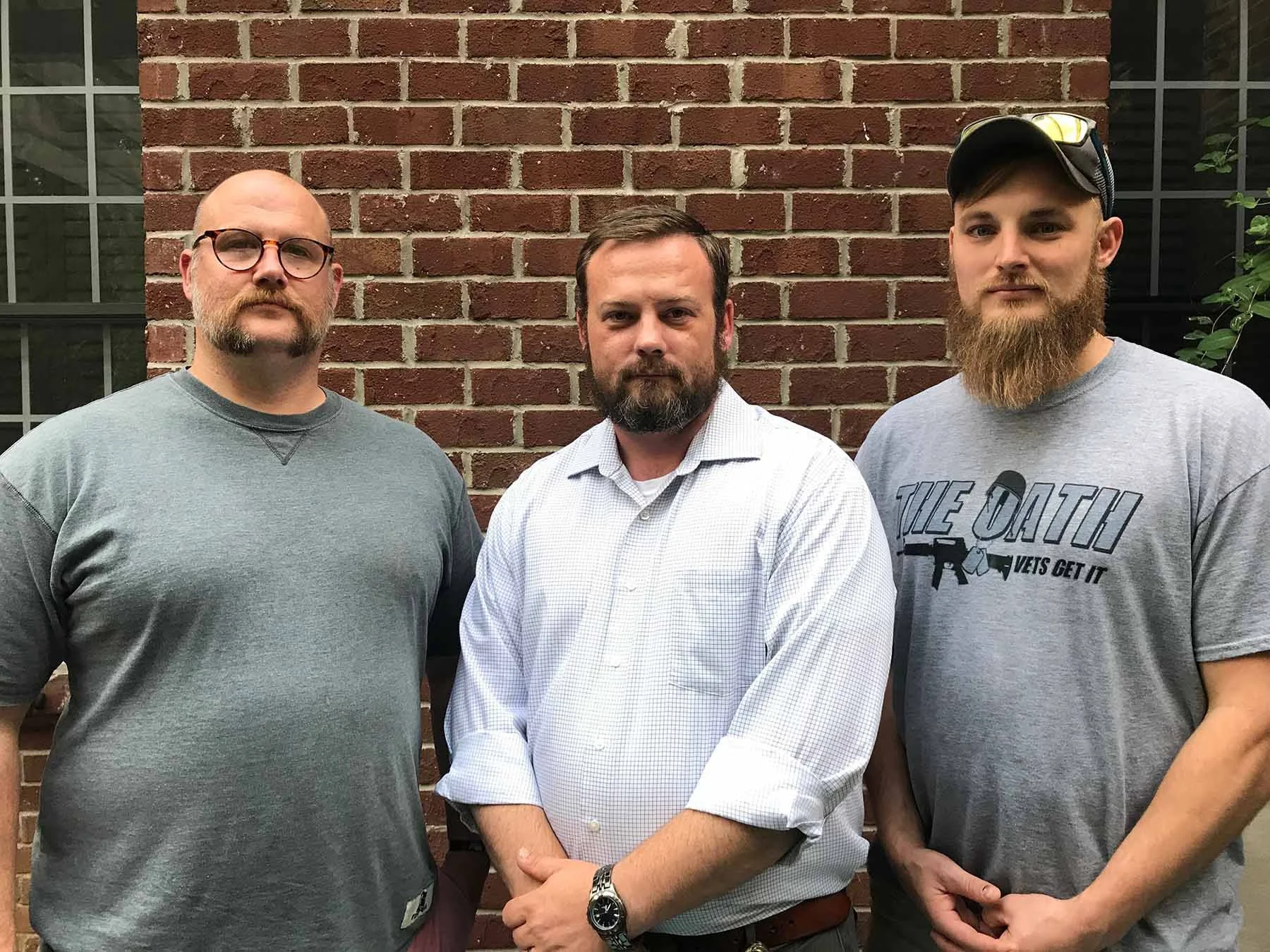
Three Marine veterans share what military service doesn't prepare you for, like rebuilding your identity, coping with PTSD, and finding purpose after coming home.
Military service has a beginning and an end. The transition home isn't nearly as clear.
Three Marine veterans share what happened after they left the military, from adjusting to civilian life and losing the structure they once depended on to navigating PTSD, alcoholism, grief, and survivor's guilt.
They also explain why finding other veterans who understood those experiences became one of the most important parts of healing.
Their experiences reveal just how complex the transition out of military service can be, and why connection often becomes as important as recovery itself.
Listen to Their Interview
Watch Their Interview
What It's Like to Serve in the U.S. Marine Corps
Brandi Fleck: Welcome back to another soul-exposing exploration of what it means to be human. You're listening to Episode 34, the Season One finale. Guys, this is a big deal!
Last week, Ryan S. and I opened up about our relationship. We answered listener questions in that episode. This week, we have three veterans here to tell you what it's like being a veteran, and they're going to talk a little bit about an Irreverent Warriors Silkies Hike that's coming up in Nashville in August, so you'll want to get all the details on that.
Now, there are three of them. They came for an in-person interview, which is a little different than how we do most of our interviews, so we get a little rowdy, we get a little personal, and you're going to hear us banging on the table and drinking drinks. But I really want you to feel like you're there with us.
Also, this is a really great time to listen to this episode because, as you know, Fourth of July is just a couple of days away, where we celebrate our freedom. When you hear some of these stories, it'll help you learn about how our freedom isn't really free, and it'll help us learn about some of the sacrifices that lots of ladies and gentlemen make for us as a society and as a country.
So it's a lot to think about.
We explore topics such as PTSD, alcoholism, reintegration back into society, and the transition between a very structured military life back to civilian life, and all the issues that come with that, such as the suicide statistics, depression, and just a host of issues that organizations like Irreverent Warriors and the Oath Vet Project really try to tackle and help each other with.
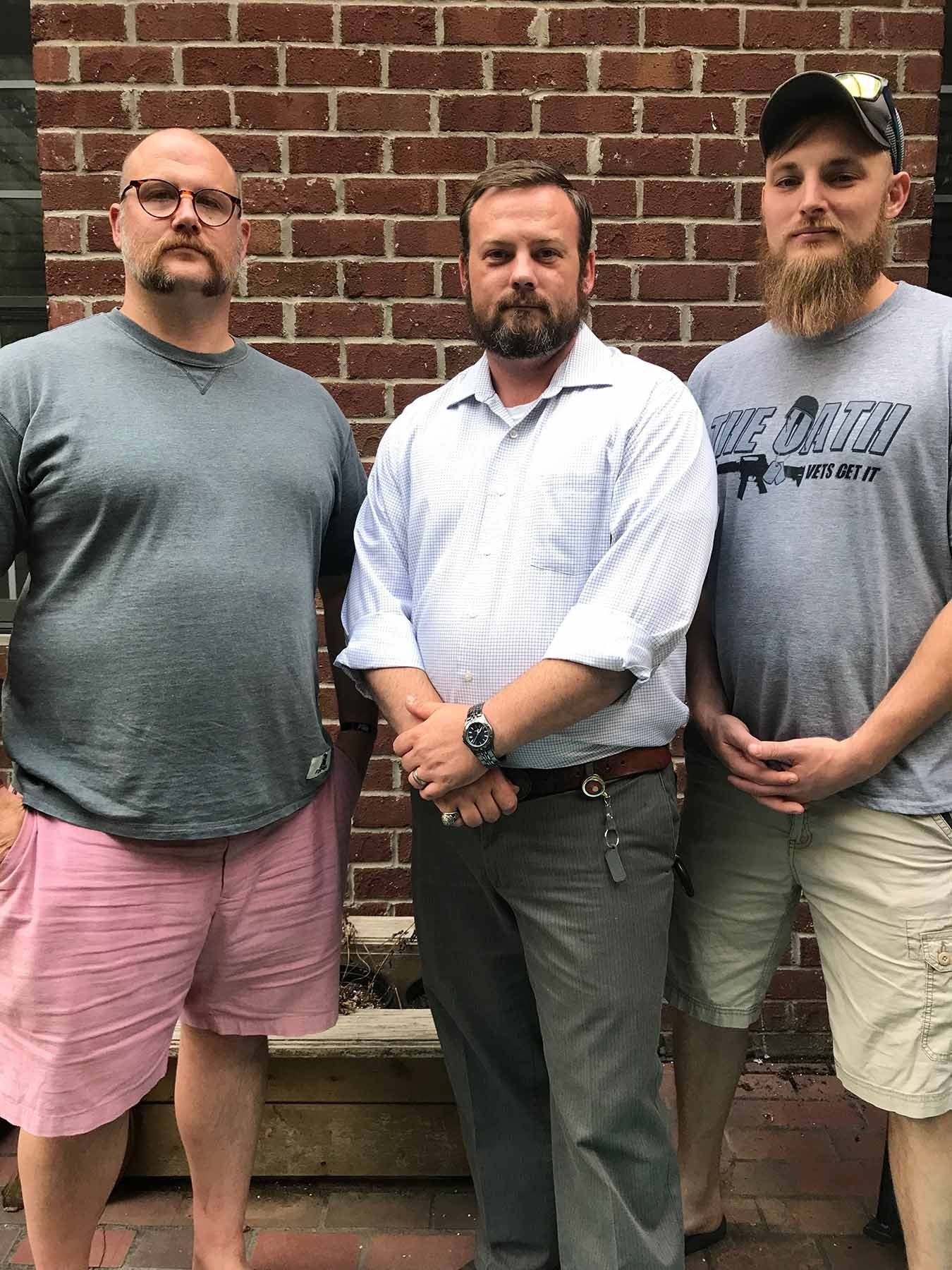
The gentlemen that we have start speaking in the order of Andrew Farrer, then Jarod Couch, and then Andy Littlefield. So here are their bios in that order.
Andrew Farrer is a Nashville native, but he was raised in New Hampshire. He went to boarding school and college in Florida. He worked at Sherwin-Williams after college until enlisting into the Marine Corps from 2004 to 2008. He was an infantry machine gunner with 3/8 India Company.
Now forgive me if I don't pronounce these things right. I am definitely a civilian, but I am definitely trying my best and want to be respectful here.
He was in the Fallujah campaign in 2005, the Battle of Ramadi in 2006, and the 22nd MEU. He was a Purple Heart recipient in 2006, and he's been a chef for 10 years. He is 100% dealing with PTSD, that is Post-Traumatic Stress Disorder, and he's a recovering alcoholic with 10 months sober.
His first Irreverent Warriors Silkies Hike was in Savannah, Georgia, in 2018. He is a life member of VFW Post 1291, and he's a newly elected adjutant. He's Senior Vice Commandant at MCL Detachment 1158 in Murfreesboro. He's the Irreverent Warriors Silkies Hike Nashville coordinator.
On a personal note, he lost his dad, who was a Navy veteran, to suicide in boot camp. He lost 25 friends in deployment. He lost a child in 2006 and a brother in 2014. He loves helping veterans and is a huge supporter of Irreverent Warriors.
Thank you so much, Andrew, for coming on the show, and congratulations on your amazing accomplishments.
Next we have Jarod Couch. He was born and raised in Texas. He joined the Marines right out of high school and went into the reserves with aspirations of running college cross country and track. He served from 2008 to 2016 as an Amphibious Assault Vehicle mechanic, MOS 2141, with OMCW Texas and then 4th Tracks in Galveston, Texas.
After getting out in 2016, he continued his career in HVAC controls and building automation, which brought him to Nashville, Tennessee, in February of 2019.
So welcome, Jarod, and thank you so much for coming on the show.
We should mention that Jarod is highly involved with the Oath Vet Project, which will be in the show notes, and all of the awesome things that they mention in this episode today will also be in the show notes, including information for that Silkies Hike.
And then, last but certainly not least, we have Andy Littlefield.
After graduating high school in 2002, he left home for Marine Corps recruit training in Parris Island, South Carolina. After earning the title of Marine, he was stationed at Camp Pendleton, California.
He served on two deployments, the first from 2003 to 2004 with the 13th Marine Expeditionary Unit in support of 1st Battalion, 1st Marine Regiment. On this deployment, he traveled around the Western Pacific on the USS Ogden and had the amazing opportunity to see six different countries in eight months.
His second deployment wasn't as glamorous. He was deployed to Ar Ramadi, Iraq, for nine months in 2005, this time supporting 1st Battalion, 5th Marine Regiment. This is where he would get his first taste of combat, but thankfully his entire platoon came home and was able to hug their loved ones.
After leaving the Corps in June of 2006, he started a career in the offshore drilling industry. His familiarity with being away for extended periods and working in harsh environments really worked to his favor to help make a great living for his family in that field.
In 2016, his family and Andy made the decision to move back to Tennessee, and he enrolled at Middle Tennessee State University. With the help of credits he earned while in the Corps, he graduated with his bachelor's degree in Criminal Justice and Management in 2018.
Congratulations. That's awesome.
His education helped him find work that allowed him to pursue his true passion of helping his brothers and sisters in arms through the Marine Corps League, of which he currently serves as Commandant of the Stones River Detachment in Rutherford County, Irreverent Warriors, and other worthy veteran causes.
So thank you so much for coming on the show, Andy. All three of you have some amazing stories.
Let's just dive in.
Brandi Fleck: Hello, everybody. I am here today with Andrew Farrer, Jarod Couch, and Andy Littlefield, three veterans who really care about supporting fellow veterans in many ways, including integrating soldiers back into civilian life, providing resources to deal with the many issues veterans face, and organizing activities for the veteran community.
They care about supporting fellow veterans so much.. They have created organizations and community initiatives to do just that, all of which we'll talk about today. So, guys, it's so good to have you here. How are you doing?
Andrew Farrer: Good. Thanks for asking.
Jarod Couch: Great.
Andy Littlefield: Great. It's a pleasure to be here.
Brandi Fleck: Awesome, awesome. So I guess we'll start with you, Andrew, and go around the group. I would love to know, what did each of you do in the military? How long did you serve? What are the high-level details of your careers?
Andrew Farrer: I served from 2004 to 2008 with 3rd Battalion, 8th Marines, India Company. I was a machine gunner. Three deployments, four years. Fallujah, 2005; Ramadi, 2006; and the 22nd MEU.
It was just a lot of deployments, not too much time back at home.
I've received the Purple Heart for getting wounded in 2006. I saw 14 countries in seven months on the 22nd MEU.
I don't know, I had a really good experience. It was good with my comrades, but we also lost a lot of people too. We lost like 26 or 27 guys in four years, and it was tough for a while. Especially when I got out, I was really... I was a mess when I got out.
Brandi Fleck: Gotcha. Okay. What about you, Jarod?
Jarod Couch: Well, I was in the Marine Corps from 2008 to 2014. I was a mechanic, an Amphibious Assault Vehicle mechanic. Basically, we don't like to use this term, but a tank that goes in water.
As far as that goes, I was in the reserves for the whole time. I didn't get any deployment time, but I got to see a lot of things. Being back home, I got to see a lot of people coming back and how they transitioned and stuff like that, and that's what got me interested in doing a lot of nonprofit stuff. That's kind of how we're starting this conversation today.
Brandi Fleck: Awesome. Okay. And you, Andy?
Andy Littlefield: Well, I was in the Marine Corps from 2002 to 2006. I was a combat engineer, so in layman's terms, I was construction and destruction. We built fortified structures, and we also built bombs, essentially. Blew a lot of stuff up.
Went on two deployments. One was on the 13th MEU, which is essentially where the Marines are stationed on naval vessels as they float around the oceans. Then my second deployment was to Ar Ramadi, Iraq. I actually left Ar Ramadi right about the time that Chris Kyle got there, so that's always kind of a special thing for me.
Yeah, he was there when I was there.
After the Corps, I went into about a 10-year career in the oil field. That's a really easy transition for somebody in the military because, especially going offshore, you're away from your family. The transition is easy because you're going to be away from your family a lot in the oil field, just like you are in the military. Plus, the money's not too bad.
Since then, I came back home to Tennessee, got my degree, and now I'm just trying to make a new career out of it because there's not a whole lot of oil fields up here in Tennessee.
The Challenges of Transitioning to Civilian Life
Brandi Fleck: Yeah. Okay. Well, let's start with you and go back the other way. What does service mean to you?
Andy Littlefield: Well, I think that definition may have changed over the years.
Back when you knew me, Brandi, service was about serving my country and doing what I thought needed to be done as far as protecting the homeland and that kind of stuff. But that's kind of a naïve teenager's generic answer.
Now it's different. It's not so much serving my country or protecting the homeland or anything like that. It's serving my fellow brothers in arms, my sisters in arms, and doing whatever I can to help them along in any way we can.
I'm sure we're going to talk about it a little bit more, but that's why I got involved in the Marine Corps League and why we got involved in this Irreverent Warriors Silkies Hike. If nothing else, just being there to talk to, being an ear for somebody to bend when they need it, that goes a long way.
Brandi Fleck: Okay. What about you, Jarod?
Jarod Couch: I would say a lot of the same, but I think I come at it from a different angle.
What I mean by that is, in high school, I knew I was going to serve. My brother was in the Marines. I saw him deploy multiple times. Right after 9/11, I knew kind of what was going on, but I didn't know exactly. I was still young.
With that being said, I always knew I wanted to be a Marine. I'd seen how his life had transitioned from him rebelling and getting in trouble in high school to all of a sudden people looked at him and he was an honorable man. That always stuck out with me.
So I saw him serving his country, and people were always looking at this as a very honorable thing, and I knew I wanted to be a part of that.
When I went in, some of that had changed that I didn't know because I got into the reserves. I didn't know how I was doing that by not deploying. When I got out, I realized I felt like I hadn't fulfilled my mission, and that's why I do a lot of the stuff that we do today.
That leads off onto what Andy was just saying about moving into a different brand. Not branch of service, but just a different, it's a continuation of service. It's a heart and mind mentality about giving back to your community, to your country, and all of that.
Brandi Fleck: Gotcha. And Andrew, what about you?
Andrew Farrer: Well, I was actually 26 when I enlisted in the Marine Corps.
Andrew Farrer: I had already gone to college. I got my BA. I was in Naples, Florida, and I was working for Sherwin-Williams. When 9/11 happened, I heard it on the radio. I was mixing paint in the back, and I was assistant manager at the time. All I wanted to do was go down to the recruiting office.
My parents didn't want me to go at that time. Actually, I wasn't 26. I was 23 at the time, and I waited three years. I enlisted at 26. I was one of the oldest guys in boot camp.
I just wanted to serve my country before I was 30. My dad was a lieutenant commander in the Navy. My uncle was a lieutenant in the Army in Vietnam. Through Ancestry.com, I found a lot of people in my family who had served, and I wanted to do the same thing.
I agree with both of these gentlemen. We do a lot of service. We all belong to the Marine Corps League, all three of us, to the same detachment. We all belong to the VFW. Some of us are officers, some not. We're just trying to give back to our fellow brothers and sisters in arms.
Irreverent Warriors is also great. I love Irreverent Warriors. I just came back from a Silkies Hike in Cincinnati. There's a lot of love, bringing veterans together. I'm all about the love. I like having their six and knowing those guys have mine too.
Brandi Fleck: Gotcha. Well, I'm going to go off script a little bit. Since Irreverent Warriors has come up, can you tell us a little bit about what it is and what you guys do there?
Andrew Farrer: Since Jarod is the senior because he's a coordinator in Waco, Texas, he's been to a thousand hikes. He can give us the 411 on Irreverent Warriors.
Jarod Couch: Okay. Irreverent Warriors is a great nonprofit. It was started in 2015 by Donnie O'Malley, who was a captain in the Marine Corps, in a grunt unit.
Donnie O'Malley started it. It wasn't originally a nonprofit. It was a unit hike. Basically, he had lost a lot of brothers, and he was tired of seeing that, so he wanted to get them all together.
In the Marine Corps, we do a lot of hikes. That's just something that we're known for. So he got all his brothers together and said, "Hey, let's go hike in our silkies through town. Let's have a good time."
That's what they did. Through that, they came together, and they were a lot closer in the days that followed.
Brandi Fleck: Wait. By silkies, do you mean like boxers?
Jarod Couch: Very close.
For those who don't know, silkies are the running shorts in the military. Mainly in the Marine Corps.
They're silky, silk-running shorts. They're very short. At these Silkies Hikes, they're short enough that they have an inside liner, so they have their own underwear. If you wear them out in public, you don't get arrested.
Brandi Fleck: Exactly. Okay, okay.
Jarod Couch: Long story short, Donnie did this, and it went viral. There was a lot of attention on it right off the bat. Then there were a couple of hikes that were thrown together in different cities, and they were very successful. They kept growing.
To date, there are about 40 cities that are doing this. They're all run by volunteers like Andrew, Andy, and me.
The whole mission of Irreverent Warriors is to reduce the effects of PTSD and eliminate veteran suicide. The way they're doing it is through humor and camaraderie by getting veterans together and making them laugh and enjoy themselves.
The whole thing about it is that on Friday before a hike, they could have a thousand things going on that nobody knows about. Saturday, when they get around 150 people who know exactly their mentality and make them laugh and open up, they're in a whole different mentality, a whole different world.
Now they have 150 other people they can reach out to, network with, and talk to about these issues. That's exactly what Irreverent Warriors is about, bringing veterans together.
Andy Littlefield: A big part of that humor is wearing the silkies because you can't not have a good time wearing something as ridiculous as those.
It's like when you dress up funny to go to a party or something like that. I guess it makes it even more so because this is something we used to wear on the daily. Every time we'd go PT, we'd wear them because they were comfortable and lightweight, but they look horrendous.
For us to be walking through downtown Nashville, all of us wearing these Daisy Duke-like shorts. Daisy Dukes are freedom.
Irreverent Warriors, the definition is showing a lack of respect for people or things that are generally taken seriously. That's what we do.
In the most horrendous situations, us Marines and us veterans can find humor in anything, in something that probably most people would say, "I can't believe he said that." That's how we cope with anything, through laughter and making fun of something.
I don't know. It just works for us. It doesn't transition well over to civilians too much.
I would say there's definitely a humor base in the veteran community that doesn't correspond to our civilian counterparts.
That's the biggest thing. When we try to communicate some of our mentality, some of our issues, even if you haven't been on deployment, it's still hard to do because you've come from a different mindset. You've been pre-programmed. You've been retaught how to live life and how to think.
When you get around a whole bunch of people that you can actually correspond with and have a meaningful conversation with and open up, it changes your life instantly.
Living With PTSD After Military Service
Brandi Fleck: Can you go into a little bit more detail about the reprogramming? How did you change?
Andy Littlefield: Can I take that? I've been asked this before, and I like to liken it to the process we all go through in high school when we're trying to discover ourselves and who we are.
I know for me, between junior high and high school, I went from Metallica to, by the time we met, wearing cowboy hats and rolling up the sleeves of my white T-shirts and all that.
There's a big transition that everybody goes through in adolescence trying to discover what they like and all that.
When you go into the military, the purpose of boot camp, and a little bit further once you get into the fleet is to, like he said, reprogram you in a way. Marine boot camp especially, they do a really great job at this.
Their first month and a half is just breaking you down mentally and physically so that once you get to that breaking point, they can start to build you back up in a way that matches the virtues and goals of the Marine Corps, or whatever branch you're in.
Then you come out at least a slightly different person. I can't tell you how many people, when I came back from boot camp, said I was acting completely different. I was standing up straighter. I was walking more in line. If I was going on a date, the date was always on my right side and that kind of stuff. You're making your bed.
Actually, I wasn't because I didn't have a bed at my house anymore, but if I did, I probably would have.
Brandi Fleck: So I guess what you're saying is it's more structure?
Andy Littlefield: Yeah, it's to orders.
Andrew Farrer: Sorry, go ahead.
They break us down and build us up into what they want us to be. As infantry, adhering to orders is very, very important, especially in a combat situation when to your left and to your right are your brothers.
You have their backs, and they have yours. You better listen to your squad leader or your platoon sergeant or your platoon commander because, if not, something bad is going to happen, and you need to be ready for that.
That's what I got out of boot camp and SOI, School of Infantry. They throw curveballs at you all the time to see if you can. Like, you're disassembling and assembling a 240 Golf while they're yelling and screaming in your ear, trying to do it in under two minutes.
Brandi Fleck: Just so your audience knows, a 240 Golf is a machine gun.
Andrew Farrer: It is.
Jarod Couch: Kind of to lead off on that. Basically, he was talking about the fog of war. They prepare you for the fog of war. We talk about it a lot in the Marine Corps.
The fog of war is when nothing is right. Everything is FUBAR. Nothing is as planned.
Basically, you have to know how to have, what's the term I'm looking for? Obedience to orders, immediate obedience.
So, basically, going back to that adherence, as soon as you hear something, you're automatically in action.
Andy Littlefield: Muscle memory.
Jarod Couch: Yeah, that too.
Andy Littlefield: To further expand that, once we get out, we still have that transition period of trying to rediscover who we are, especially if we go back to our home state and are around our family again.
Everybody's kind of expecting us to be the same kind of person we were four years ago or eight years ago, however long our enlistment or commission was. That's just not the case.
A lot of times we're so stubborn ourselves that we think we're the same person too. We have that struggle where we're kind of back in high school again, trying to rediscover who we are.
Sorry, there's the cat.
Without us kind of giving in to the fact that we're not the same person, it's hard for us as veterans to understand that. We're not going to do the same things the same way anymore. We've changed.
Hopefully we changed for the better, but in some cases we haven't changed for the better. We changed for the worse. We still need to understand and recognize that there is that change.
It's increasingly hard, I think, for a lot of us to recognize it. Matter of fact, I think for me it's probably taken a good 10 years to recognize that. Even still, on some level, I'm still trying to recognize how much I've changed from the Corps.
Andrew Farrer: I'm in cognitive behavioral therapy. I've done EMDR. I've done CBT. It's a hard process.
This is the first time I've actually, I've gotten all that, and it worked a little bit, but the program I'm in now, with Vet Support Group and Seeking Safety, and having other veterans to lean on, having a great support system, is the number one thing that we need to have.
The best people for us vets to lean on are other veterans. That's why Irreverent Warriors is so great. I haven't been involved in the Silkies Hikes as much as these guys, but every story I'm hearing, testimonies from people who have been on Silkies Hikes, is that they find that support group at the hike.
They make that networking connection and they're able to say, "Oh, well, you live like 20 minutes down the road."
"Yeah."
"Brother, if you need anything, call on me."
"No problem."
It's a great, the civilian term would be networking. It's a great place for us to network with each other, but it's so much more important for us to know there's somebody that we can count on.
That's why any of these veterans organizations. Every veteran I come across, I always tell them, "Get involved with the VFW. Get involved with the Marine Corps League, American Legion, Irreverent Warriors. Get involved with something, one of the big six at least."
If nothing else, there's somebody there you can call on.
Brandi Fleck: So would you say that when you get back and you're going through that transition, you're coping with rediscovering yourself but also the things you've been through? There's this compounded amount of things, for lack of a better word, that you have to deal with.
Andy Littlefield: I think minimally, if you don't see any action. Take, for example, somebody who joins the military and ends up being admin or something like that. They don't see any action. They stay behind a desk.
I think if nothing else, coming out of the military from that position, you're still going to have at least a little bit of anxiety just because of the transition and trying to rediscover yourself.
But definitely, we can compound that with combat action. I think PTSD is probably 90% going to happen.
Brandi Fleck: Gotcha.
Jarod Couch: A great example of that is being in the reserves and not going into combat.
I came back from boot camp, from MCT, and from my job school. For about a year and a half of my life, every moment of my day, I was told what to do. I knew I had a plan of action. I was told what to wear. I knew what I was supposed to do for 24 hours out of the day, seven days a week, for that time period.
Then I came home, and that wasn't the case. I knew I was an adult and I could handle that, but I didn't want to. That wasn't what I had set out to do anymore. I knew that my purpose was a little bit clouded at that point.
I started putting in requests to go back active because I knew that's what I wanted to do. I got denied on those requests. At this point, I'm in a zone where I wanted to be in the Marine Corps. I kind of was in a transitional period. I didn't know what to do now. I can't be fully a part of the Marine Corps like I want to.
I'm in this transitional period, and I feel like a lot of people, no matter where that transition happens, it really messes with your judgment because at that point your brain isn't functioning right. You're wanting to do one thing and you can't do it. You're used to doing one thing, and you're not doing that anymore.
However it may be, you're in a transitional period, and how you react to that is always going to affect how your life is going to turn out.
With that being said, a lot of guys come out with depression. A lot of guys deal with social anxiety. There's just a whole slew of things that come out of it.
Because of that, alcoholism, drug dependency, a lot of things happen because we're looking to fill a void in our life. We don't know what's happening anymore. We don't know how to feel right anymore because we've been told how to for however long we were in the service.
Brandi Fleck: Sure. Okay. So I heard you just list a host of issues that veterans are facing when they are transitioning back to civilian life.
I know that some of you. You mentioned PTSD, Andy.
Andrew, can you tell us a little bit about what it's like to live with PTSD?
Andrew Farrer: It's horrible.
When I got out. Okay, it all started. I was in boot camp in June of 2004, and in the second month my father committed suicide. He was, obviously, as I told you, a lieutenant commander in the Navy.
I went home for his funeral. They had taught us so well, that robot they build by breaking you down and building you up. My mom took me to a psychiatrist, and I was sitting there, left hand on left knee, right hand on right knee, back straight, eyes front.
The psychiatrist was like, "What's wrong with your son?"
Then I went back to boot camp, graduated after burying my father, went off on all these deployments, and I would push it all to the back of my head.
As soon as I got out, I had time to think about it, and it drove me to drink a lot.
I was taking mirtazapine and trazodone, citalopram. I was like a zombie. I couldn't function. I was living in my mom's guest bedroom for the entirety of the summer before I actually decided to go get help.

That was the first bout with AA. I've been through AA five times. This is my fifth time trying Alcoholics Anonymous.
I got in trouble 10 months ago after getting married because of alcohol. I thought I had it licked, and I did not.
I got in a lot of trouble, but I have a really good support system now, a good sponsor, good friends, and I'm working on all that stuff that I pushed into the back of my mind, like my father dying, all my friends that are buried. Half of them are buried in Arlington, and we go up every once in a while and we cheers them.
I'm trying not to cry right now.
It was tough.
While I was in, I was married and then got a divorce. My first child died in 2006 after we got back from Ramadi. I had a lot of death from 2005 to 2015. My brother passed away from colon cancer.
It was a lot of stuff on my plate, and I was trying to deal with it. The only way I knew how to do anything was to go to the bar and drink.
I was good at that. I did it in college. I did it in the Marine Corps. We didn't have that much time to drink, but I got in trouble for drinking in Iraq in 2005.
My cousin sent me a Listerine bottle full of Jack Daniel's. Me and some buddies... yeah, we did it.
I got caught. The lieutenant colonel, the battalion commander, and his battalion sergeant major gave us a ride to the chow hall after we had been drinking. They didn't smell anything on us, but I chose to go where the CB guys and the legal admin guys were. Every one of them had a bottle, and I decided, "Yeah, you know what? I'm going to have fun."
I went to the MWR where we make phone calls and use the internet and MySpace back in the day, when MySpace was awesome.
Brandi Fleck: Totally.
Andrew Farrer: Way better than Facebook.
I got off the phone with my ex-wife, and the next thing I knew I woke up with my M16 between my legs on a Jersey barrier, laid back like this.
The only thing I see are these two gold oak leaves, and I was like, "Holy shit."
Brandi Fleck: Because that's a major.
Andrew Farrer: He was the battalion anesthesiologist.
He's like, "You all right, Marine?"
I'm like, "Yeah, I'm just dehydrated, sir."
They took me to Charlie Surgical, Charlie Med, in Fallujah at Camp Fallujah.
The truth came out, and then I was on every single working party for the next five and a half months. I cleaned porta-potties. You name it, I did it.
I think at this point, is it okay for us to cuss?
Brandi Fleck: Yes.
Andrew Farrer: Okay. I was trying to hold back. You Marines cuss a lot.
Then we went to Ramadi in 2006, and it was a better deployment. I was more locked on. I was 182 pounds. I was ready to go.
By the time we got out, I had nothing left. My wife and I got divorced. I had lost a child. I had to move back to Savannah with my mom.
I drank. From 2008 to 2010, I was a horrible alcoholic. I remember one time. I'm sorry I'm taking all this time, guys.
I remember one time one of my fellow Marines came up from Florida to visit me. We got hammered. We went down to River Street, got hammered, came back to my mom's place, and I started wrecking stuff.
I destroyed my computer. We basically left the house, got a Best Western hotel room for like three days, and just partied like crazy.
Then I had to sober up and come back to reality. I had to come back and say sorry to my mom. It's been a rough go. Alcoholism is a bad thing.
I don't have it licked, and I don't think I'll ever have it licked. But I go to meetings. I have a sponsor. I've worked the steps. It's a good program. It works if you work it.
Brandi Fleck: Gotcha. Do you think alcoholism is related to PTSD?
Why Alcoholism Is Common Among Veterans
Andrew Farrer: See, I've been trying to figure this out. What came first, the alcoholism or the PTSD? It's kind of a chicken-and-the-egg thing.
I will definitely say the Marine Corps encourages drinking. It does. That's how we resolve our problems.
They don't teach you. A minute ago he was talking about it. They don't teach you how to manage problems. They teach you to suppress everything, but they teach you how to drink.
Something happens, you end up at a bar. I went to the VA one time, and I had a former Navy corpsman who was a nurse practitioner. I told her, "Look, I hate these questionnaires that y'all give us. It's always asking about how many cigarettes you smoke a day, how many beers, how many drinks you have a day.”
Every time I fill that out and I'm honest about it, I get a dirty look because my number, even to this point, is probably around eight to ten beers a night, every night. On weekends, even more because I start earlier. You know, you show up to work earlier, you get more pay.
I honestly don't think it hampers my ability to wake up in the morning, go to work, and function. Some may call me a functional alcoholic. I don't know.
I was talking to this nurse practitioner, and I said, "These questionnaires are bullshit."
She goes, "Look, I was attached to Marines when I was in, and I grew up in El Paso, Texas, so I've been drinking since I was 15 because I'd just jump the border and go to Mexico. I drink just as much as you do. I get it, but put the damn answers down so I can have the form back."
Ever since then, I've always kind of, I think it's just normal. It may not be a good thing, but it's a normal thing for veterans to be heavier drinkers than most everyday civilians.
I knew people when I was in who would literally start a Friday night out with a 30-pack. That was before they went out to the bars. They would function. They'd go out to the bar. They wouldn't be stumbling. They'd walk in the door, the bouncer would look them in the eyes, and they're seeing straight.
That was the beginning of their night. When we transition, it's like you've got a whole new world with this alcoholism. It's like, what do you do now? Well, I know how to drink.
Brandi Fleck: Yeah.
Andrew Farrer: Okay. Well, this is interesting.
Andy Littlefield: I think we're scaring Brandi a little bit.
Brandi Fleck: No.
Andrew Farrer: If you were lucky enough, a 96 is 96 hours away from being on duty. It's a four-day weekend.
Did your platoon sergeant or your gunny, whoever it was... We used to have a gunny who'd give one liberty speech. "I have a shovel, a bag of lime, and a shotgun in the back of my trunk. If you guys have any problems, give us a call."
He was crazy when he said that. We always got the safe sex talk.
Andy Littlefield: Oh yeah.
Andrew Farrer: "Don't wrestle the love muscle," and that kind of stuff.
Andy Littlefield: "Don't add to the population."
Andrew Farrer: "Don't subtract from the population."
Andy Littlefield: If you're in jail...
Andrew Farrer: What is it?
Andy Littlefield: Establish dominance.
Andrew Farrer: Yeah, establish dominance.
Andy Littlefield: There's that humor again that a civilian wouldn't get, but we think that's hilarious.
Brandi Fleck: I'm like, I don't know how to transition into another question after that.
Let's get just a little bit serious and talk about what it's like recovering and healing from these issues for veterans.
How Veterans Can Prevent Isolation and Suicide
Jarod Couch: Okay. I'll talk about how Irreverent Warriors has affected my life.
I told you there, for a while in the reserves, I didn't really know what I wanted to do. I knew I wanted to be back on active duty. I saw all my buddies deploying. I didn't get those opportunities, but I was really kind of at a loss in my life.
I wasn't happy. The things that I wanted to do, I couldn't.
At the same time, I also saw buddies not coming back. I saw that, and I didn't know how to deal with it.
I didn't realize it until probably a year or two ago. I don't like to use this term at all, but I had a lawyer that I talked to about some legal issues, and she was like, "Have you ever heard of survivor's guilt?"
I was like, "Survivor's guilt? What are you talking about?"
She said, "Survivor's guilt, PTSD. It's a very serious thing. Most people don't want to claim it, but you might want to look into it. It'd probably explain a lot of stuff in your life."
She said it's for someone who's seen something or had people in a branch where all their buddies went off and they didn't get to join them, and their buddies didn't make it back.
I thought about that for a long time, and I was like, "You know what? I've dealt with depression. I've dealt with alcoholism. I've dealt with coping with things in ways that should never happen."
To transition into the recovery. When I got out of the Marine Corps in 2014, I was still struggling with a career and stuff like that.
I was introduced to Irreverent Warriors. At that point, I was very depressed. I was in and out of a relationship. I was trying really hard to find a relationship. I was trying to force myself into a relationship because when I was in a relationship, I was happy.
Then, two months later, when we'd break up, it was world-crushing. That was my life for probably a couple of years.
A really good buddy of mine, Jacob Romero, introduced me to Irreverent Warriors. That hike was the first time I knew true happiness in over two years. At that point in my life, there was nothing that really could make me happy.
When I was able to just let loose and not worry about a thing because I was with my brothers and my sisters, all of a sudden the world just kind of lifted off my shoulders, and I knew I was at home.
I got involved with the organization because I realized it's all over the nation and we can make more of an impact.
Basically, I can enjoy that. I go on vacation at hikes. I find where hikes are across the nation. I say, "I'm taking a week off. I want to go see Oceanside," or D.C.
It's been a great experience.
The moment I joined Irreverent Warriors and started doing these hikes, I noticed an uptick in my life.
For the first time ever, I had a passion to want to go to work. For the first time ever, I didn't have to have that extra drink. For the first time ever, I didn't worry if that girl didn't like me.
For the first time, I was just able to enjoy life and smile a little bit more because I had all these buddies who I knew were trying to do the same thing in their life, and I could call them at any moment in time.
That was a positive thing for me. That's kind of how I've transitioned, and I know it's been a very positive impact for a lot of people around the nation.
Brandi Fleck: Well, that's really cool.
It sounds like the healing process started when you found your community.
Jarod Couch: Exactly. Exactly. The network. It's odd when you think about it. The cause of our PTSD is also the solution to our PTSD. Getting back into the fold, obviously not living the lifestyle anymore, but getting back into the fold with our brothers and sisters, that does so much for us.
Andrew Farrer: It's the camaraderie. That's what I miss the most out of the Marine Corps.
Do I want to go back? Yeah, I do. But I want to go back to see my boys. I don't want to get yelled at. I don't want to have to salute anyone anymore. I just want to see them.
Being in an infantry unit and being a Marine, Jared's my brother. Andy's my brother.
Andy Littlefield: Even with that, I'm sure everyone at this table. Well, all three of us at least, have had the thought about actually putting the uniform back on and going back in.
Why does that thought come up? Because we know we can protect our brothers over there. We know we have the knowledge and the skill to do what needs to be done to make sure at least one more comes back.
That's where the camaraderie comes from.
The saddest thing is the fact that we have to transition because more veterans are homeless and more veterans are committing suicide than are dying on the front lines right now. That's a sad statistic.
That's the reality. We have to be just as vigilant here because that buddy that we didn't call yesterday might have been dealing with something we didn't know about. That buddy might be thinking about putting a rifle or a pistol up against his head.
That's a very sad reality of the world we live in right now. There's a lot of quick solutions to temporary problems, and for the people who are still back here, it's not a quick solution.
To touch on the statistics, everybody's heard the term "22 a day." If you really look at that number, it's a little inaccurate. My personal belief is it's probably closer to the 30s a day.
There are a lot of variables in place where we can't necessarily get a really accurate number. The next highest demographic for suicide is teenage girls, and they're about 15 a day.
We're easily at least getting close to doubling that demographic every day.
Jarod Couch: Just to touch on the statistic that was done by the VA, I want to say in 2015 if I'm not mistaken, the reason why it's a skewed statistic is because it didn't include many of your large states like California or Texas that hold a large percentage of veterans.
I know when I was in, they joked all the time in the Marines that you could look down a line and see 20 Marines from Texas. There's a lot of Texas Marines.
When they're enlisting that many people into the service, they're going to make up a large percentage of those numbers. If you're not including them, that's a very skewed statistic there.
Brandi Fleck: Gotcha. Okay.
We are definitely going to get into more details about the hike and some resources available for veterans facing these issues.
Real quick, before we dive into those details, I want to ask you, Andy, do you have stories to share from your time in the service that you think people would want to hear?
Andy Littlefield: The one story that I tried to share on Memorial Day.
My time in service and my time in Iraq was more fortunate than most. My entire platoon came back, at least in the condition that they left in.
We had some deaths in the company, in the battalion that we were attached to, but my platoon. Being that we were combat engineers, we were attached to an infantry battalion. Within my platoon, the ones I was closest with, obviously, we all came back.
There was this one night. I have a buddy of mine, his name is Jason Eakins. I don't think he's too much online, so he probably won't hear this, so I won't embarrass him.
We met each other at our MOS training school and went from there into the fleet. We went on our first deployment together on the Navy ship, and then our second deployment was in Ar Ramadi, Iraq.
I knew his wife, lovely lady. I was there a couple of days after the birth of his first son. Ever since then, we've kept in touch. He now lives in Alaska with plans of possibly moving back down here in a couple of years.
We were on patrol at night, and for whatever reason the highest rank we had with us was a sergeant. Everybody above that was still back at the base.
I was in the second vehicle in the convoy, and we rolled through this major intersection in town. It was a four-way intersection with an alley coming into the intersection as well, so essentially five roads coming into the intersection all at once.
Andrew Farrer: Michigan.
Andy Littlefield: Oh yeah, yeah. Chicago.
Andrew Farrer: It was in Ramadi, right?
Andy Littlefield: Yeah.
Andrew Farrer: It wasn't Firecracker, was it?
Andy Littlefield: No, it was up the road from Firecracker.
There used to be a building there, but you wouldn't have seen it because I blew it up.
Well, I say I, but our platoon blew it up.
Andrew Farrer: That's why I love the CBs, man.
Andy Littlefield: This is the reason why we blew it up.
When we came through the intersection, we got hit by an IED, an improvised explosive device.
Months before we went on deployment, we spent an entire freaking weekend driving a convoy around Camp Pendleton, stopping every 20 minutes. Somebody would say, "IED."
We'd jump out, post security, do the whole nine yards.
We did it nonstop for 10 hours on Saturday and another 10 hours on Sunday. Nonstop. It was brutal. We hated every second of it. We were cussing Gunny out, cussing out the lieutenant. We just freaking hated it.
I was thankful for that weekend that night. We rolled through the intersection, the IED went off, and the first thing we do is radio up and make sure every vehicle that can talk says they're okay.
The first vehicle radios up, "We're okay."
Second vehicle, my vehicle, we radio up, "We're okay."
Third vehicle, "We're okay."
Fourth vehicle, no answer.
Go to the fifth vehicle, we get an answer.
My buddy was in the fourth vehicle. For a split second, the longest split second in my life, I'm thinking about what am I going to tell Leah, his wife? What about Daniel, his new son?
It was just an amazing wave of confusion and emotion coming over me for one split second.
Then instantly my training kicked in. The obedience to orders and all that we were talking about before. Some people may think that's a bad thing, but it's a good thing because that immediate obedience to orders kicked in.
My training told me what I needed to do. The first gun truck's job was to radio higher and get backup. Me, being the commander of the second vehicle, my job was to post security.
We had four gun trucks. Like I said, we had five lanes. I got all four gun trucks pointed down the major lanes, then I got two people out on foot to post security down the fifth lane.
I walked the line and made sure everybody was right where they needed to be because usually after an IED there's an ambush.
Luckily, that wasn't the case on this night.
I put everybody in place, made sure everybody was being vigilant, checked with the first gun truck to make sure we were getting somebody to come out, and only then did I even think to check on Jason.
Well, that's not right. I thought about checking on Jason the entire freaking time, but I knew I couldn't. One thing was more important than the other because if I was too concerned with Jason, somebody else could go down.
Once I made sure everything was good and my job was complete, at least for the time being, then I finally checked on Jason. Thank God the IED was designed for a Humvee, and he was in a five-ton truck, so most of the blast went into the tire.
Jason and the driver both walked away with just ringing in their ears. After we got back to the base, I said, "Happy birthday, Jason."
It was his 22nd birthday that night.
Brandi Fleck: Oh wow. Oh my God.
Andy Littlefield: A few weeks after that, there was another incident where we got hit by another IED coming back from doing a cache site south of town.
The Humvee that I was supposed to be in got hit. I can't remember why, but the order got switched up, and I was actually two Humvees back.
Jason didn't know that. Jason was ahead, so he had his own scare that night. I’m thinking the same things that went through my head the night his truck got hit.
My experience in Iraq, if the worst stories I've got are two close calls, I had a really good time. I know many, many other people who didn't come back.
A close friend of mine from when I was in Boy Scouts, Tyler Cates, went to Iraq and never came back.
I want to say there's somebody else I knew from high school that didn't come back from Iraq, but I can't remember the name.
Andrew here, I know he's got all kinds of names flowing through his head. Jarod, we don't talk too much. I don't know if you have names or not, but I do have a few.
Honestly, some guys rattle off names, and they don't float right to the front of my head, but I know they're there. I kind of leave those names be. Not out of disrespect or anything. I kind of silently remember them and leave it at that.
If you ask me my stories, though, they're always going to be a little bit lighter for the most part.
Two terms come to mind when I think of the Marine Corps: "Welcome to the suck," and, "If it ain't raining, we ain't training."
I was just thinking about that today. Damn, this story includes both of those.
We were out on a field op, basically just some training. We went out to Fort Hood.
We're on this Army base. Marines don't like being on an Army base, but that's all that was around, so they always put us way out in the middle of nowhere because they don't want us around the soldiers.
It's been raining from the moment we got out there, so much so that the whole weekend they're watching weather reports to see if we're even going to be able to make it up the road to get out of there.
We went on this patrol, and we were out on patrol for like three hours.
I'm like, "Man, this is getting really annoying because we're just going in circles right beside our FOB," which stands for Forward Operating Base.
We're 50 yards away from it. I can see it the whole time. I'm just like, "Can I just go back over there and sit down and eat?"
When you're out in the field, chow is continuous, which means basically you carry your food with you, and you can just eat whenever you have a free moment. The reason why is because everybody's doing different things. Everybody's in a million different directions.
I like not carrying a whole bunch of gear. I didn't bring my chow. I'm hungry. I don't have any water on me. I was just light-packed.
We're starting to come back toward the FOB, and it's right beside a little creek. The creek is just starting to wash its banks out because it's raining so bad.
Lo and behold, there's a Humvee stuck in the creek right in front of us.
When there's gear unsecured, you secure it. That meant we had to sit down in this creek and provide security until someone could tow it.
I keep hearing talking around me, and I look through the trees. Twenty yards away is the FOB, and I could see the recovery vehicle, which was the vehicle that I was an NCO of, which meant I was normally the one giving the call to my guys who I could see to start that vehicle up.
But my job right now is to provide security and maintain obedience to orders, so I have to sit here and lay in this creek that's rising for about two hours until they come the whole 20 yards with this vehicle.
It's kind of funny. You're laying in a creek, it's raining, the water's coming up every 10 minutes, and you have to move to get out of the water.
It's just part of the suck.
Welcome to the suck.
Andrew Farrer: Yeah. Yeah, it is, man.
Brandi Fleck: That's funny. You guys, I do want to thank you for your service, and I think it's really amazing that you're sharing your stories. I really appreciate it.
What Happens at an Irreverent Warriors Silkies Hike
I would love for you guys to give details about the hike now and tell people where it's at, how they can join, what to expect, all the good stuff.
Andrew Farrer: Okay. Well, I guess that's me then.
The hike is August 10, 2019. We have a meeting on Saturday, and we're going to nail down some actual finite resolutions to this hike, but we have a route. It's 8.3 miles around the city.
We have three refreshment stops and three water stops. Mission BBQ will be catering the lunch at the Parthenon in Centennial Park.
It's going to be a whole hell of a lot of fun. Bring your silkies. Bring your ruck. Bring your boots.
Bring cash and a credit card. Put it in your ALICE pack. Put it in that little pocket that we have in our silkies. Obviously, bring your ID if you're going to have the adult beverages.
We're going to have safety vehicles. We're going to have EMTs. Like I said, it's going to be a lot of fun. We already have a lot of people signed up. We want more. Cincinnati had 81.
Brandi Fleck: So how do you do that? How do you sign up?
Andrew Farrer: You go onto Facebook and type in Irreverent Warriors Silkies Hike Nashville.
Go onto the event page, and about three lines down you'll see "Tickets." Push that button.
When you push "Tickets," it goes to Eventbrite, and that's how you register for the hike.
Brandi Fleck: All those links, you guys, will be in the show notes for this episode. If you didn't get all that, just go to the webpage and you'll find it, and you'll have the instructions.
Andrew Farrer: You can also go to the Irreverent Warriors Facebook page or IrreverentWarriors.com. It'll show the full hike listings, and then you can get to the events that way as well to register.
We have a lot of events coming up. Nashville is our hike, but we also want to give a shout-out to all the other hikes.
Memphis, September 14th. Ashland, Nebraska, July 13th. Savannah, Philadelphia, Boston, New York City. The list goes on. Virginia Beach.
There are five in Texas. How great is that? You can go to Houston, San Antonio, Waco, Longview...
Jarod Couch: ...and Clear Lake.
Andrew Farrer: Yeah, I think so. Clear Lake, Texas. I mean, Texas. That's where it's at, man. But we want you to come to Nashville because it's going to be fun.
Nashville is a great city. I was born here, and it has grown so much since those days.
Jarod Couch: Yeah, but if you're going to talk about hiking in Texas, it's all flat.
Come to Nashville.
Andrew Farrer: Hold on, hold on, hold on. We've got the coordinator who's going to pipe in right now.
Jarod Couch: August 10th. What time are we stepping off?
Andrew Farrer: We step off at 0900 in the morning.
Jarod Couch: Okay. So where do we meet up?
Andrew Farrer: We meet up at VFW Post 1291.
Jarod Couch: At what time?
Andrew Farrer: At 7:00, 7:30. That's on Lebanon Pike, too, by the way. It's 1907 Lebanon Pike, Nashville, Tennessee.
We'll be bussed over by Redneck Riviera to the Tennessee War Memorial Plaza, and we'll start the hike by taking a left on Martin Luther King Jr. Boulevard, going three miles to Centennial Park.
We'll make a roundabout to Broadway, then go up Broadway to 17th Street, take a right, take a left on Division.
We'll stop at Party Fowl and Jackalope Brewery, then continue on, take 8th Street around the roundabout back to Broadway.
There we'll stop at Downtown Sporting Club. The second floor has already been confirmed for us. We'll have axe throwing, a bar, and a restaurant.
Now, if you're going to do the axe throwing, you have to be completely sober. They are very, very particular about this.
Another stop will be Redneck Riviera. Again, we have the second floor confirmed.
After Redneck Riviera, we'll be going over the walking bridge around Nissan Stadium, another water stop, and then come back to where we started. From there, we go back to the VFW, where there will be a hog roast.
Heroes Vodka, Travis McVey, a fellow Marine and veteran-owned business, will be doing a signature cocktail at the post-hike party.
It's going to be a blast. We're going to have a bounce house, a water slide, and a dunk tank. We've got the DAV that's going to be there. AMVETS is going to be there. The Marine Corps League will be there. Obviously, the VFW will be there. Veteran Carvings will be there as well, selling wooden flags with whatever emblem you want: Army, Navy, Marine Corps, Coast Guard, or Air Force.
We're all going to be there, and it's all good. It's going to be fun, and we're not going to have any incidents because, you know why? We're going to police our own because we are veterans. We can do it.
If you're a vet out there, bring a friend. Please sign up on Eventbrite.
If you're a business owner that just wants to get your name out there, we have sponsorship opportunities. Get in touch with us through the Facebook page, or if you know any one of us in person, get in touch with us that way. It doesn't matter. Even if you're just a business looking to support some veterans, give us a shout because we can definitely get you some support out there and do some sponsorships.
Brandi Fleck: I've got one more question for you guys, but it's the last question that I have to ask all of you, which is: What does being human mean to you?
Veteran Organizations That Make a Difference
Before we get into that, let's hear about the Oath Vet Project.
Jarod Couch: The Oath Vet Project started a while back.
I got away from Irreverent Warriors for a little bit, and I noticed a decline in my life. When I came back, I said, "If I'm going to come back into the veteran community, I want to do something where I have more of an impact than just attending and doing things like that."
I stepped up for Irreverent Warriors and helped host a couple of events, but at the same time I started the Oath Vet Project.
The reason why we call it a project is because it's an ever-moving collaboration. The whole thing about the Oath is we're trying to do the same thing as Irreverent Warriors: reduce the effects of PTSD and eliminate veteran suicide.
What we're trying to do that through is media. We're trying to do that through resources that we've gathered. We're trying to do that through networking.
A lot of what we do is working with different organizations and figuring out what they need to grow, what they need to be successful, and how they work with veterans. If there are younger VSOs trying to get veteran service organizations or businesses off the ground, we can mentor them.
That's one of the skills we've gained from doing this for a few years. We want to help people who have the same mentality get off the ground. We want to teach people how to be an effective part of the community. We want to put them in places to succeed, whether that's helping them get involved with organizations that already exist or helping them start their own.
There's a lot of different things that we do.
We're going to transition soon into a project that I'm pretty excited about. We're going to be doing some podcasts.
The whole idea is that it'll be an audio and video podcast airing once a week. We're going to bring on a different veteran organization leader or veteran-owned business every week and talk about what they bring to the community, how they're affecting the community, and how they're creating change.
Brandi Fleck: Very cool. Very cool. Well, guys, again, all of that will be in the show notes, so take a look over there.
Empathy, Free Will, and Human Nature
Now I can't wait to hear your answers. What does being human mean to you?
Andrew Farrer: Andy, you and I just talked about this last night. I think I'd like to take the last turn.
Do you want to go?
Jarod Couch: Do you want to go?
Andrew Farrer: Okay.
Well, I was a Classical Studies major in college, so I had to study Socrates, Plato, Aristotle, Nietzsche, Descartes, all the greats.
Back in the Greek days, they would have a symposium, which in Greek means a drinking party. They would all get together, drink, and talk. What is it that's so great about being human? Is it love? Is it compassion? Is it virtue? Morals? Ethics? What is truly good that makes you human?
I actually had to remind myself. I looked up what they define as being human, and it's to have compassion for another human being.
I'm not going crazy here, but it's how you treat other people. It goes back to the Golden Rule. It goes back to Confucius. It goes back to treating people the way you want to be treated. That makes us human.
Humans are social creatures. We cannot be isolated or... what's the other one? Lonely.
We need interaction with other human beings. Trying to have compassion and empathy for everybody, that's what it means to be human. That's my take on being human.
Brandi Fleck: Sure. I like it.
Andrew Farrer: It's humanities. Liberal arts.
That's a liberal arts education from Rollins College, Winter Park, Florida. Thank you, Dr. Roubar.
That's what I think being human is.
Jarod Couch: I would say a lot of the same.
I like to watch a lot of documentaries. It's funny watching animals compared to humans because they interact in a lot of different ways, but also in a lot of the same ways.
Recently I saw this viral video about a monkey doing CPR on another monkey to bring it back to life, and it worked. He actually performed this procedure that he had seen, and I was like, "Well, what makes him so much different from a human? He has empathy. He's trying to save another life."
It kind of made me contemplate that very question.
What is it to be human?
Jarod Couch: You know, empathy is a lot of it. Free will is a lot of it too because with free will, we are able to do, think, and comprehend in ways that no other being on this... I mean, he's not going to think the same way I am. You're not going to think the same way I am.
We're individual creatures that have the ability to think at the highest level, to perform at the highest level in whatever that is. How we do that impacts the rest of this world.
The ability to impact change on a broader spectrum, the ability to show empathy, but also impact change through that, I think that's what it means to be human.
Brandi Fleck: Nice. I like that too.
Andrew Farrer: Yeah, I do too.
Andy Littlefield: All right. Get ready not to like this answer.
I'm going to agree and disagree with both of my colleagues. I say "colleagues.” I just like saying colleagues. It sounds good to me.
When I think about the basics of humanity, I like to turn to the child.
When you observe a four- or five-year-old child, you notice that they don't necessarily know what's good and bad. We all start off this way. We start off sociopathic in the sense that we don't know what it is to be good and what it is to be bad. It's something that has to be taught to us.
In the animal kingdom, they have instincts they rely on to know, "This is where I should live. This is the kind of food I need to eat. This is the place where I need to do my business because I don't want to eat where I'm doing my business."
If you look at some other examples, the only other creature in the animal kingdom that is comparable to us in intelligence—some people would say maybe even more intelligent than us—is a dolphin.
I've never personally experienced or seen it, thank God, but I understand they're the only other animal that rapes, has sex for fun, and masturbates on occasion.
I think our ability to have intelligence can go astray really quickly. Because of that, it's more important for us to exercise empathy than anything else because I think empathy is what keeps us in line and keeps us from going batshit crazy on one another.
Jarod Couch: I think we have the biggest impact for change.
Andy Littlefield: Yeah. We have the biggest impact for change, for sure, but that change can either be good or it can be bad. It's up to us to decide which way we want to go.
Many of us veterans have already seen so much of the bad that it gets to the point where either you make the conscious decision to turn away from the bad or you go further and further down the rabbit hole on that side.
That's where the veteran suicide rate comes from. That's where we get people like, well, Lee Harvey Oswald was a Marine. I don't know his name off the top of my head, but the gentleman that killed Chris Kyle, he was a Marine.
If we don't focus on what's good in our lives and have empathy for other people, at least to the extent where we understand that we don't know what they're going through, it can be very dangerous for us to go down the slippery slope and do something that will forever change our lives or somebody else's life.
Brandi Fleck: Definitely. I like that answer too.
I think it's really important to note, and it goes along with the theme of a lot of the other episodes on this show, so it perfectly wraps up the season, guys, because it is possible to choose the good path.
That's like cognitive behavioral therapy. You've got the situation, you've got feelings, then you've got self-talk, then behavior, then consequence.
I'm just learning about this now. Before, I would make the bad choice, and it would be really easy to make that. It's very hard to go the other way and do the right thing.
But I'm training my brain to do the right thing more now these days than back when I was just getting out.
Andrew Farrer: It's trying to flip the switch.
Brandi Fleck: Yeah.
Andrew Farrer: It's hard. It's really hard. We've all tried it. Getting back, like Andy said before, we'll never be the same again after boot camp, after our four years, after our eight years, after 17 years. We'll never be the same again.
My mom wants me to be the sweet boy that I was, and I was like, "Mom, that kid's gone. He's been gone a long time. He's not coming back."
But it's progress, not perfection.
Brandi Fleck: There you go. All right. Well, you guys, thank you so much for coming on the show today. I really appreciate it.
Andrew Farrer: Thank you, Brandi.
Jarod Couch: Yeah, thank you.
Andy Littlefield: Appreciate you.
Join the conversation!
Feel free to share your own experience and let me know if you have any questions in the comments.
Related Posts



Hi, I’m the founder of Human Amplified. I’m Brandi Fleck, a recognized communications and interviewing expert, a writer, an artist, and a private practice, certified trauma-informed life coach and Reiki healer. No matter how you interact with me, I help you tell and change your story so you can feel more like yourself. So welcome!
Find More on the Blog
Topic
- ADHD
- AI
- Atlanta
- Black and BIPOC
- DIY
- FAQ
- LGBTQIA plus
- Los Angeles
- Nashville
- Seattle
- St Louis
- St. Louis
- UFOS/UAPs/ETs
- abuse
- accountability
- addiction and recovery
- adoption
- affirmations
- afterlife
- altered state
- angels
- animals
- anxiety management
- art
- astrology
- atlanta
- attachment
- awakening
- beauty
- behind the scenes
- being human
- body image
- body work
- boundaries
- brandi fleck
- breathwork
- bullying
- burn out
- burnout
- cancer
- career
- caretaking
- chakras
- channeled
- clarity-dive
- clarity-practice
- clarity-primer
- clean products
- coach
- codependency
Recent Blog Posts
Visit the Full Podcast Audio Archive

Affiliate