
Political Polarization in America: What Travel Teaches Us About Empathy and Common Values
Interview By Brandi Fleck
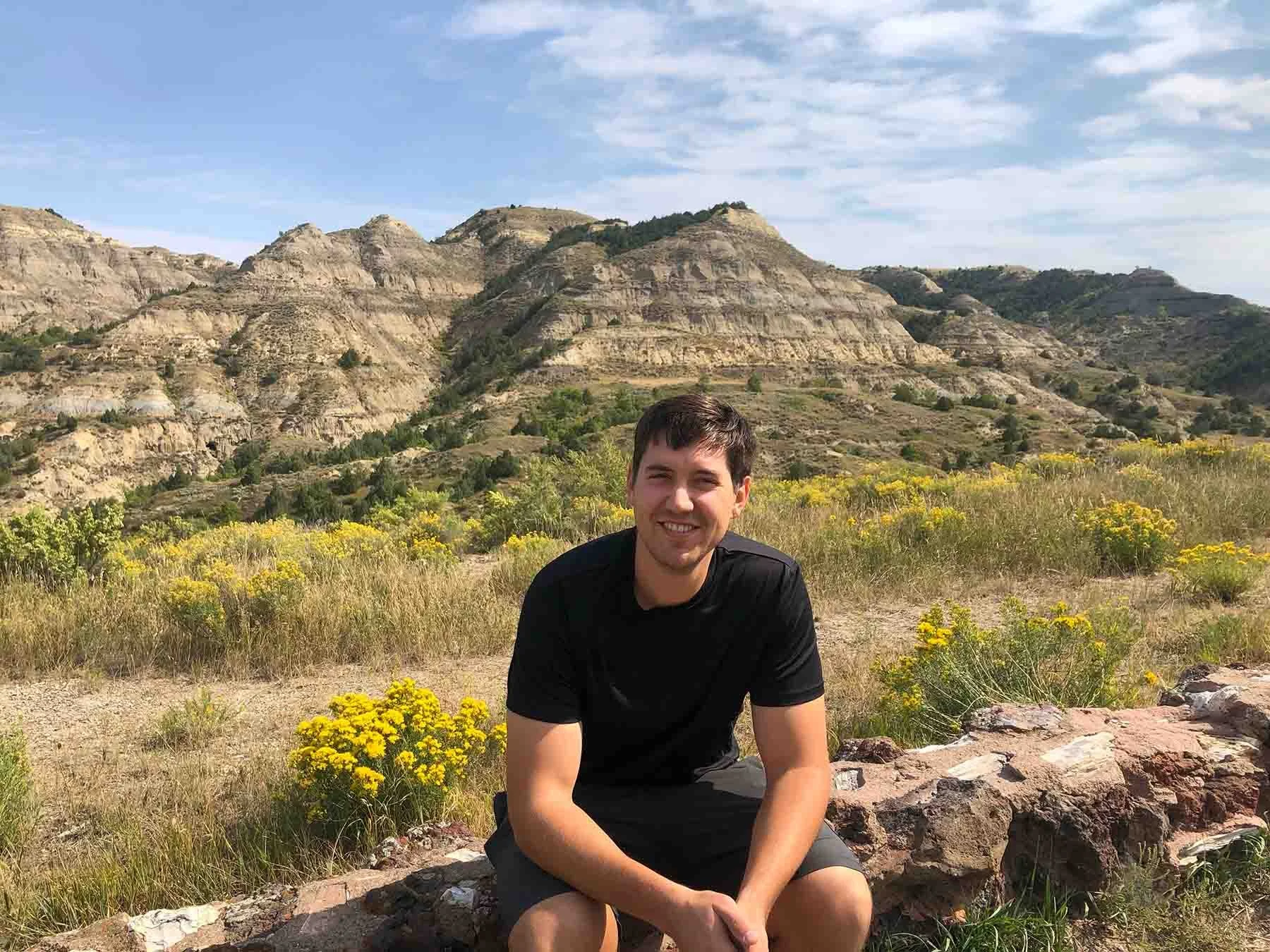
After traveling from India and South Korea to rural America, data analyst Wesley Warshawer explains how leaving familiar social and geographic bubbles can challenge stereotypes, expose misinformation, and help us find common ground across cultural and political differences.
What if some of what divides us comes from believing we understand people we’ve never actually spent time with?
Wesley Warshawer has spent years intentionally leaving his own bubble. His travels have taken him from India and South Korea to an 18-month journey through rural America, where he set out to understand communities that looked very different from Silicon Valley, the place he called home.
What he found complicated many of his assumptions about political polarization in America.
In this conversation with Human Amplified host Brandi Fleck, Wesley shares how cultural misunderstandings taught him to distinguish ignorance from malice, why political labels can hide the values people actually share, and how misinformation thrives when we reduce entire communities to a single data point.
Their conversation explores what happens when we replace ridicule with curiosity—and why expanding our geographic, cultural, and social bubbles may help us understand both other people and ourselves more clearly.
Listen to Wesley Warshawer’s Interview
Watch Wesley Warshawer’s Interview
Self Reflection as a Uniquely Human Trait
Brandi Fleck: Wesley, what does being human mean to you?
Wesley Warshawer: For me, being human is about being self-reflective. I've heard from zoologists that animals can learn, but to really reflect is a human emotion. And so being able to reflect on ourselves, mistakes, and to grow, I think that's a human thing.
Brandi Fleck: Wonderful. Thank you, everyone. Today is the season seven finale of Human Amplified, and I am just so happy with how this season has turned out. We've been exploring our evolving identity as humans, and it's been really good. So I just want to say a quick thanks for being here and that we'll be back in 2027 with more interviews and stories that you love. In the meantime, we have a vast amount of resources you can dig through on humanamplified.com and Human Amplified on YouTube, so be sure to check those resources out.

And without further ado, today we're welcoming Wesley Warshawer to the show. He is a business analyst in Silicon Valley's semiconductor industry, a Fulbright scholar to South Korea, essayist, podcast host, and speaker. We'll be leaving you with the thought that it's important to expand your geographical bubble, and maybe other bubbles, we'll see, to break down barriers and build connection in life and whatever else comes up around that topic today. So I am excited that you're here, Wesley, and welcome to the show.
Wesley Warshawer: Thank you so much. Super excited to talk with you.
How Travel Helps You Grow and Learn About Yourself
Brandi Fleck: I am really excited about this topic. I think it's important for everyone to think about, and I can't wait to hear some of your stories. Before we dive in too deep, can you just tell us who you are as a person?
Wesley Warshawer: My name is Wesley Warshawer. Professionally, I'm a data nerd. That's what I do. I look at numbers all day and communicate about it. I love my job. But there's another part of me that is very important to me, which is about improving myself through travel. And travel is kind of a big word. I think sometimes people think it means getting on a flight, flying a long way away. Sometimes it's like that, but sometimes it could be going to a new restaurant or a new part of town or to a new event or club or meeting new people. So for me, finding that wisdom through travel is a very big part of my personal life.
Brandi Fleck: Nice. I really love that. And it's interesting because you're coming from a completely different perspective, I think, than this. But I work a lot in the trauma healing space, and movement is so important for healing and just staying well. And that reminds me a lot about what you're saying with travel, because if you think about it, it's movement.
Wesley Warshawer: And I've heard you say also before about—I don't want to butcher your quote—but meeting other people is an antidote to social isolation. Sorry if I've said it wrong, but I've heard you say something like that. And so I absolutely agree. There's a lot of benefits to leaving your bubble. And so I'm very big into that word and trying to leave your bubble in order to learn about yourself and to grow.
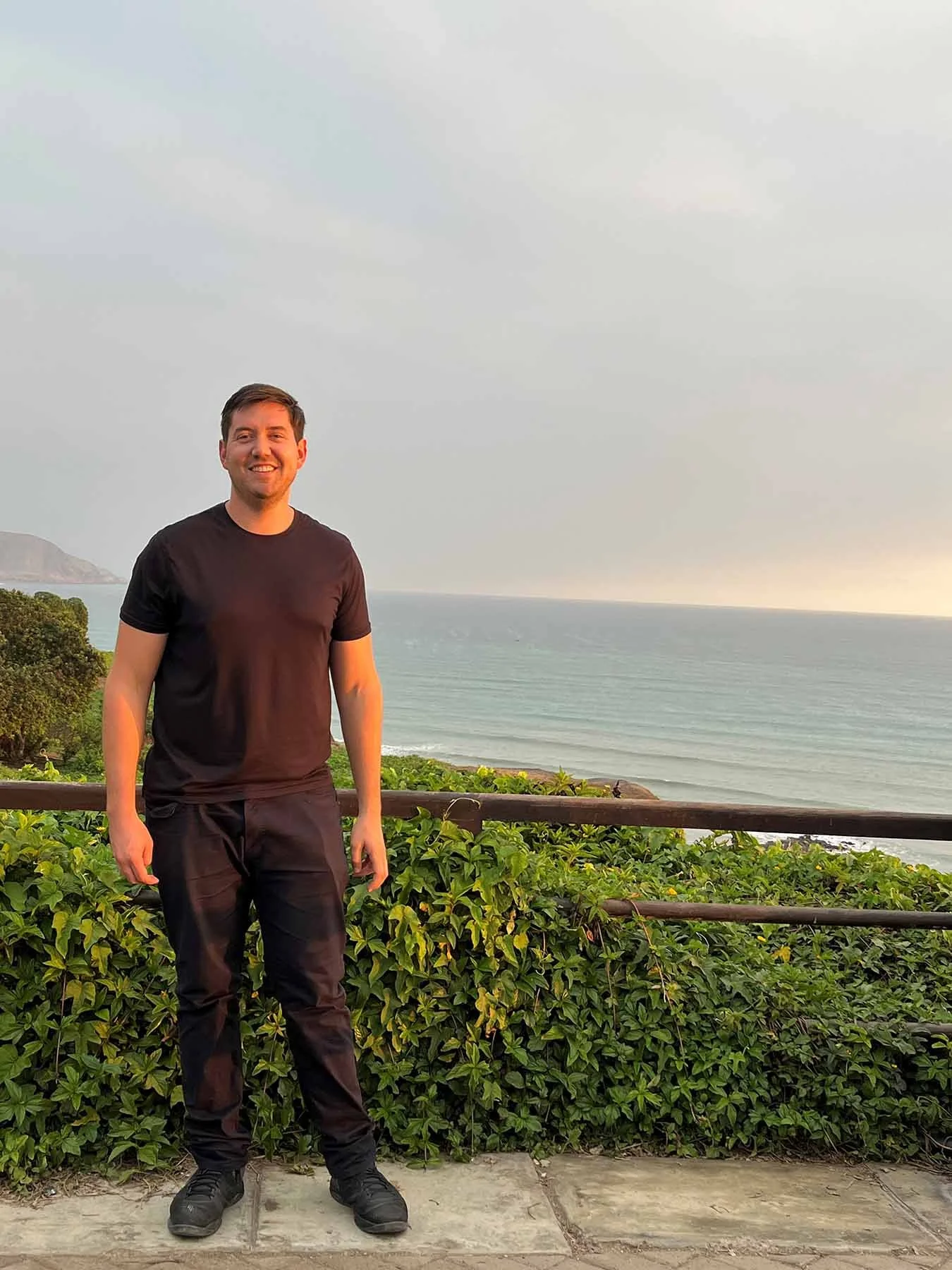
Brandi Fleck: Well, so, okay, you've left your bubble quite a bit, I think. I know you've traveled to South Korea and India. Can you tell us a little bit about your world travels, just so we get the whole picture of where you've been and those things?
Wesley Warshawer: Sure. Well, I'll start off by saying I was born close to the Mexican border, so I never really thought international things were really so far away. Especially when I was a kid, people would go to Mexico for dinner. It was that easy and simple to go. So I never really thought of it being a very big thing. My dad is from Los Angeles. My mom is from rural Indiana. My parents came from different political parties. It was just never really that strange to be outside your, quote, bubble because, you know, it was all just so close. It was all just around me all the time. So I feel very fortunate that that's how I grew up. I was never scared or weirded out by something that I thought was strange, because that was family and that was home.
So I feel very fortunate for that. My life changed when I was 19 years old. I'm going to school, studying information systems, and I got a scholarship to study abroad in India for a semester. And my entire trajectory of my life changed because I realized that there was so much wisdom in travel. This is the data nerd in me talking, but I was thinking about how many epiphany moments I had in India just in one semester, moments that forever changed how I see myself or see others.
It was insane. It was an incredible amount of them. And I can ask you this—I ask this question a lot—but when people are just in their bubble, living their routine, how many epiphany moments do people have in a given year? I'll tell you, when I ask people this question, people usually, if they're just kind of living their normal routine, people say, "Tell me, one a year." I don't know if you feel differently about that, but it's like when you're traveling, you could have one a month. And so just the rate of growth was incredible for me.
Brandi Fleck: Those epiphany moments, I feel like if you're meditating or journaling or actively working to, in some way, improve yourself, even if you're not traveling—well, I guess you are kind of traveling spiritually, if you think about it that way—you can have epiphanies. But I agree, they're way more frequent when you're outside of your normal place.
Wesley Warshawer: And so I became addicted to this idea, and I decided I wanted to be outside my bubble as frequently as I could. And so a couple years later, I applied for and won the Fulbright Scholarship, which is a grant that the United States, the U.S. State Department, provides Americans to go abroad and for foreigners to come into the United States. And I went to South Korea, and I was there for two years, getting my master's degree in global economics.
And again, just incredible. A lot of these moments where I had never conceptualized another society to be like that, another culture to be like that. And so it really made me grow as a person at a much faster rate than just two years going to grad school in my local hometown. So it just enforced that. It continued to enforce that.
Cultural Differences and Cross-Cultural Communication
Brandi Fleck: Are you able to tell us about some of these epiphany moments that you had?
Wesley Warshawer: I love them. I know storytelling is—you also love storytelling as a way to discuss ideas and to grow.
One moment that just completely changed my life, and it's kind of embarrassing, but that's where the growth is. I remember I was in Korea, and I had a tutor, a Korean tutor, and she's teaching me Korean. And so one day we're at a coffee shop, we're studying, and we finish our tutoring session, and we walk outside, and it's dark. And so I looked at her and said, "Would you like me to walk you home?" I'm trying to be a nice, chivalrous person. And she looks at me and she says, "Walk me home?" And I said, "Yeah, just make sure you get home safely." She said, "Why would I not get home safely?" And I thought, I don't—I'm kind of stuttering here. I'm not really sure, but I just want to make sure you get home safely. "Would you like me to walk you back to your apartment?" And she says, "You want to go to my apartment?"
And so we kind of go back and forth, back and forth, and it just hits me: she thinks I'm trying to go home with her. She thinks I'm trying to make a move here. And that was not my intention at all. I was trying to be a chivalrous person. And it's because in Korea, they don't have violent crime. And so this whole paradigm of walking someone home to make sure they're getting home safely doesn't even exist.
And so here I was, I was intending to do something kind, and I came across like a creep. I mean, that was not the relationship. It was a professional relationship, and here I was coming across as a creepo. So that was a huge epiphany moment of, even when your intentions are good, which my intentions were good, I could be classified as a scary or inappropriate or rude person. And it's just because I didn't know the culture. I was ignorant of something, and that produced a reaction from her where she thought it came from malice.
And so I really think about, whenever I see someone committing any type of faux pas, I really think now, are they committing that faux pas out of ignorance, like I was, or are they committing that faux pas out of real malice?
And so I had never conceptualized the world when you see mistakes or a faux pas of some type, how are you classifying that? It wasn't until it happened to me that I really thought, huh, we should really differentiate that between someone's trying to commit—trying to do something bad—or no, they're just ignorant of something.
Brandi Fleck: So I can see how that kind of grew your compassion and empathy, maybe, for other people around you. That's a really good point. Sorry. Do you have any other stories you want to share?
Wesley Warshawer: I mean, I have many stories. We can talk about them along the way or now. But there's so many times where just something kind of simple, like walking someone home. I remember when I was in India, I raised my hand in a classroom and asked a question and didn't think anything of it. I'm American. I ask questions. That's what we do in school. And another classmate came to me later and said, "Hey, you shouldn't be asking questions."
And I thought, "Why not?" And he said, "Well, in India, when you ask a question, you're kind of indicating to the professor that the professor didn't explain the lecture perfectly. Because if you have a question, then obviously something wasn't clear. So you're kind of insulting the professor by indicating that they didn't give a clear lecture. So I wouldn't ask a question because you might offend him." I was like, whoa. I had never even conceptualized raising my hand as offense. And so all these moments like that, silly things that you never would think that raising your hand would cause such a reflection on yourself and into the culture you're from, they just seem to keep coming out. And so you're right, I feel like I've grown a lot more empathy along the way.
Brandi Fleck: Nice. Okay. Well, I know you mentioned scholarships as kind of the way you started traveling. Was there anything deeper or within you that inspired you to travel?
Wesley Warshawer: Well, I definitely always wanted to travel, maybe selfishly, but I don't think I knew that there was so much wisdom out there to be gained. I always thought it was going to be a fun adventure. And I think a lot of times people do think superficially, I want to go to Machu Picchu because I want to go hiking. And going to Machu Picchu and hiking is cool. I want to go to the Grand Canyon so I can take a picture. That's cool. I think a lot of times people think of it for the superficial reason and not really the deeper part of travel. I don't think I appreciated it early in life, but I have a picture of me next to the Taj Mahal. It's cool, but that's not what I remember about India. And so I think I probably went into travel in a bit more superficial way, and it wasn't the Taj Mahal that I think about. It's conversations with classmates. It's those types of discussions that really changed me. I think that's the evolution of travel.
Why Leaving Your Comfort Zone Builds Empathy
Brandi Fleck: Wesley, so I've done some traveling in my lifetime, probably not as much as you, but the common feeling I got from people that I met in Europe, in the UK, those types of places, was that there's this feeling that Americans don't travel, we're naive when it comes to other cultures and those types of things. And I feel like the level of travel that you've done is rare for most Americans. Do you agree? And if so, why do you think that is?
Wesley Warshawer: It might be, but I feel like Europe is the size of the United States. So when people in Europe say they've been to 10 countries, that's like us saying we've been to 10 states. So I think that's the pros and cons. I know you've spent some time in London, and I'm sure you had some epiphany moments along the way. It is real. I know Americans travel less internationally than other people, but I also think that's just a result of our geography. I mean, I think Europe is approximately the same size with approximately the same number of people, but they have 28 different languages and different cultures and religions, and they see the world a little bit differently. So, it is maybe a bit more rare, but I also don't think that's a uniquely American problem. It's just the fact that our country is the size of other continents, I think, leads to that.
Brandi Fleck: That's a really good point. There are people who do travel a lot within the United States, and it's a huge country. So absolutely. And on that note, I would love to get into why it's important to expand your bubble.
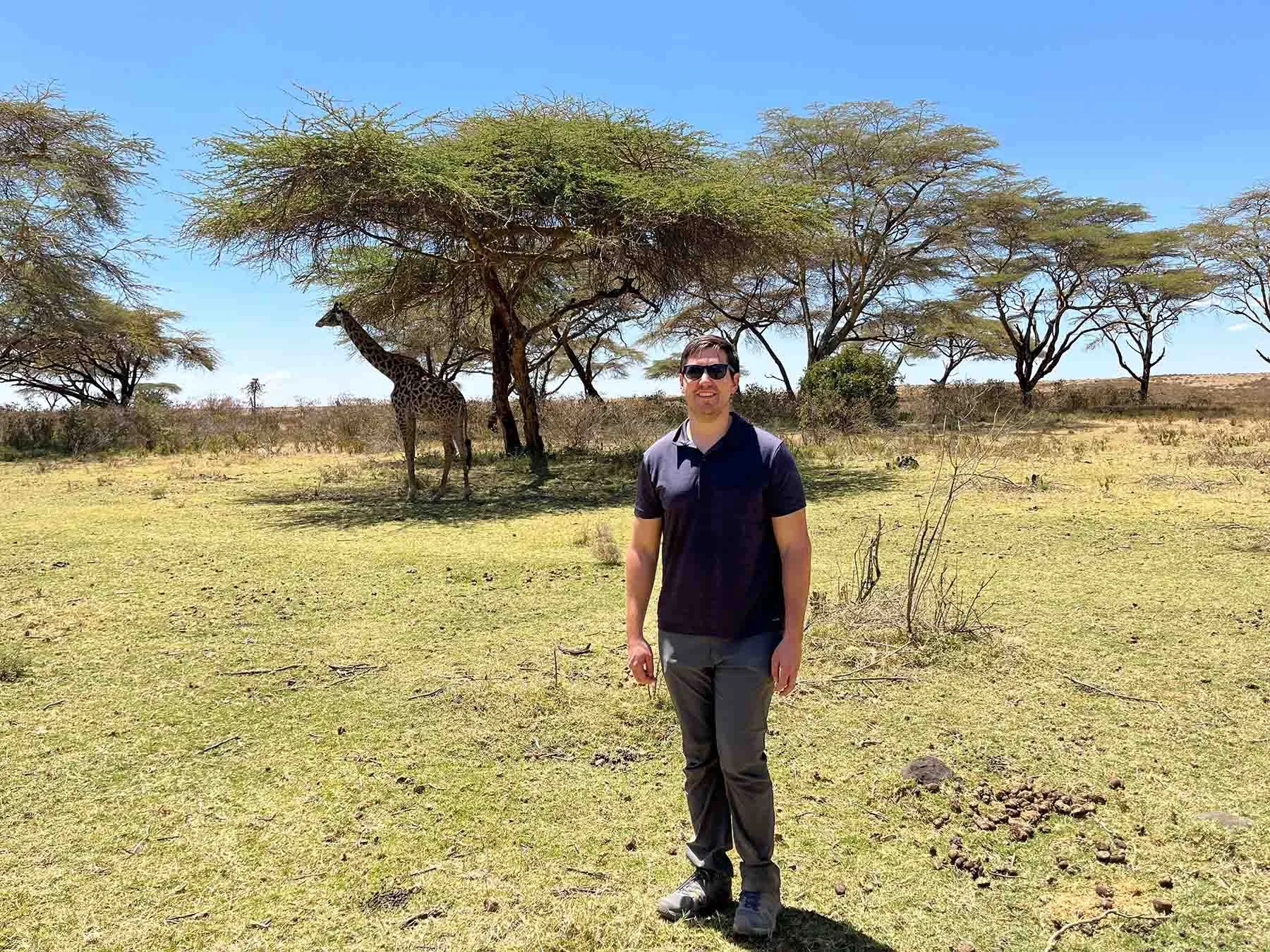
I feel like it causes discomfort, but it also, like you said, causes epiphany. So if you could just expand on that, that would be great.
Wesley Warshawer: Definitely. Leaving your bubble is uncomfortable. I just told you a story where I insulted a professor and insulted my tutor.
And so those moments are embarrassing, and I apologize profusely for that, but it's kind of what you have to do to grow. It's funny. Everyone knows that if I want to make big muscles, you have to go to the gym, and it's uncomfortable and it's painful, but it ultimately leads to growth. Everyone recognizes that paradigm for physical growth, but somehow for emotional growth, people don't understand that that's the same structure.
And so I do think that leaving your bubble is an important part. I'll tell another story. I remember when I was a kid. I was from Southern Arizona, close to the border. What food do we eat? Mexican food. That is local food. So I remember being a kid, maybe in middle school or something, and I remember overhearing someone else order some food at a Mexican restaurant, a local place, and I overheard them say, "Something, something, I want to order the burrito with flour tortillas." And to an Arizona person, we know that it's pronounced tortilla.
And I remember being a kid and kind of laughing at them, kind of mocking them, like, "Oh, how could they not know something so simple like that?"
I remember a similar thing when I was maybe in high school. I met someone who asked me if I was—they weren't from around Tucson—and they said, "Are you into sports?" And I said, "Yes." And they said, "Oh, that's so cool. You should join the ski team. My son's on the ski team." I had never seen snow before. It's a desert. And so I remember having these moments where I really kind of looked down on people because they didn't know these basic facts.
But when you leave your bubble, you realize how many basic facts you don't know. And once the tables have turned and now you're the one in someone else's bubble and you're making comparable, quote, ridiculous statements. I thought it was ridiculous that someone didn't know how to pronounce tortilla and that someone didn't know that Tucson doesn't have skiing. But really, you realize that is ubiquitous. I can put you or me, the smartest, the most well-traveled person, in some foreign bubble, and they will make the most simple mistakes. And so I think really travel, there's a lot of great things, a lot of fun, but really the point is to gain empathy for when people are coming into your bubble and making silly mistakes. Before we judge them, as I have judged the tortilla guy and the ski person, maybe we shouldn't be so judgmental because when I'm outside my bubble, I'm making the exact same mistakes. And so sometimes when the tables turn and now you're the one being ridiculed, then you think, hmm, maybe I'm a little bit too harsh on Mr. Tortilla.
Political Polarization in America and the Problem of Social Bubbles
Brandi Fleck: Gosh, I'm trying to think about how to smoothly pivot into the political atmosphere of the United States right now and how that's related.
And so maybe talking about your most recent 18-month travel stint could get us there.
So let's see where that takes us. But I know that you traveled in conservative rural America, and that's all I know. It was 18 months. How did this begin? What were your goals with this trip? Tell us all about it.
Wesley Warshawer: So I finished up some travels internationally, and I come back to the U.S. It's time to get a job. I get a job, as I said, as a data nerd in Silicon Valley. Silicon Valley is a very particular bubble. And so I had lived there for a few years, and it is what it is. That's what it's like. And I remember having a life-changing epiphany by reading a random poll. And the poll was something like, the poll said approximately half of American voters voted for Trump. Approximately half of Americans live in a house with a gun. And approximately a third of Americans believe that the Adam and Eve story is literal historic fact.
And I was completely shocked by that. Not that those statistics were true. Of course I knew Trump had won the election. Not that. But I was shocked by those statistics, thinking, do 50% of the people I'm interacting with on a daily basis at work, at the gym, are those people? Fifty percent of them, did they vote for Trump? Do 50% of them live in a household with a gun?
Do one-third of them believe that the Adam and Eve story is literal truth? Anyone who's been to San Jose knows that's not even close. And so it wasn't a politically-minded epiphany. As I said, I don't really care too much about the politics part of it. It's that I realized that I was in an unbelievable bubble that was not reflective of the United States.
So I'm in San Jose, California. It's 2017. And I read this poll. And the poll says that about 50% of Americans voted for Donald Trump. Approximately 50% of Americans lived in a house with a gun. And about a third of Americans believe that the Adam and Eve story is literal historic fact. And that was a very shocking thing for me to read, not necessarily for any political reason. As I've mentioned before, I don't care too much about the politics of it, but it was shocking to me because that was not the bubble that I was living in. And so I was thinking about the people that I'm meeting at the gym, people I'm meeting at work, people I'm meeting at the grocery store. Did 50% of them vote for Trump or live in a house with a gun?
And I realized absolutely not. Any of your listeners who have been to San Jose know that that is not a representative sample size of the Bay Area. So I remember reading that and feeling a bit out of touch, kind of ashamed, because these were the statistics about the United States, and those were not the statistics in my day-to-day life. And so I thought about that poll a lot over the next couple of years, and I'm still working in San Jose. That's my normal job, data analyst, and I'm living my normal life in California, but then all of a sudden my job went remote because COVID happened. And so all the software people were given a remote job. And so I decided that I would go and get rid of all of my things, get rid of my apartment, and go see this other side of America that I had read about. And so I looked online: what city of over 100,000 people has the highest voter percentage for Donald Trump? And the answer was Bismarck, North Dakota. And so I got in my car and I went there, and I rented an Airbnb. And it set me on this incredible journey through a very different bubble, rural America, from Bismarck to Biloxi, Mississippi, and with the purpose of just trying to learn this other part of America that I had read about but not experienced.
Brandi Fleck: Wow. I got chills as you were talking because I feel like, for one, that's really brave to just go try to understand another part of the country and leave all of your stuff behind, get rid of it. And secondly, I love the curiosity and the drive to just go figure this out.
Wesley Warshawer: I mean, I wasn't really nervous. As I said, I don't have any political persuasions, really, because my parents and my family are all from different sides. So it never really struck me as weird. It was just like I wanted to see a different part of the country. And so my formula was go to a new place, book an Airbnb for a month, and join a gym, find a favorite restaurant, find a favorite butcher or bakery or something, and try to see the same people and talk to them. And sometimes it would just be normal conversation. Sometimes it would go into politics. But the point of it was just to learn. And I found that people were very excited to talk about their hometown. I mean, people ask me, "Wow, how did you do it?" And for me, it was like, I just say, "Hey, I'm new here. What should I—I've never been to this restaurant. What should I order?" Or, "I've never been to this city. What should I do this weekend?" And people are very excited to talk about their hometowns and their communities, and they're proud of it. And so it was so—maybe it's a small-town America thing too—but people were excited to talk, and it was one of the greatest adventures of my entire life.
Brandi Fleck: Whoa. Well, that's really cool. What made it so great?
How to Find Common Ground Across Political Differences
Wesley Warshawer: Well, I think one of the greatest things was that I had heard so much. I'm sure—I know you're in Tennessee, and I'm sure there's stereotypes about Californians—but Californians and everyone has these kind of prejudices about other people. And I had heard that. I was part of it, I guess. And it was so great to talk to people and find that America was not as divided as the media portrays.
One example sometimes I give is if you ask a person in California, or let's call it Bismarck, North Dakota, and you ask the question, "What do you think about Obamacare?" Fifty percent will say they like it. Californians, 50% will say they don't like it. Aha, that shows division. And I think if you change the question a little bit to, "Paint me a picture of what you think a fair healthcare system would be," the paintings that I was receiving, the pictures that everyone was painting for me, were remarkably similar.
And so when people say and quote these polls that show division, I believe those polls. When you ask a binary question, you get a binary answer. But when you ask a deeper question, I don't really care if you like Obamacare or you want to build a wall. That doesn't interest me much. But I do care about what's your morality? What's your ethical code that drives you?
And so when I ask those bigger-picture questions, I was delighted to see that some guy in rural Arkansas just gave me an answer that I think a Californian would agree with. And so it just made me an optimist. It made me proud of the country. It made me optimistic that we can figure out our problems. It was just a glorious journey to go through.
Brandi Fleck: That does sound really cool. And as you're talking, I've had several things come up. One is, it is really interesting. Right now, what's happening in Tennessee is there has been an influx of people moving from California, which is totally fine with me. But in the Tennessee local Facebook groups and all of those community places, people have so much hate and resentment. And I don't necessarily understand it, but if everybody just took a little bit of time to get to know one another, I think they would find what you're talking about, which is, hey, we have a lot more in common than we think we do, and this is not necessarily a bad thing.
Change is inevitable, so people moving and relocating is just part of the evolution of where we live.
Wesley Warshawer: And I know you're in Nashville. So you see Nashville is a hot place to move to. I know some Californians who have moved there.
And I am willing to see the point that America does have some political divisions. No question. Fifty percent vote for candidate A, 50% vote for candidate B. But when you really think about it, do I really care about who you vote for? I don't. I care about what your morality is.
Are you a good person? Do we agree on what's justice or what's fair? And so I think people get bogged down in these polarizing opinion polls about candidate A or what they think about this law or all of these types of things when they're missing, hey, underneath all of that political layer, there's a moral layer of a foundation of ethics and code that we actually agree with each other.
And I think we miss the story because we're very excited to ridicule people who are in a different political bubble than us, that we've divided ourselves so politically that we've forgotten that below all of those politics, there's another layer that actually quite unites us.
And again, this is related to my leaving-my-bubble worldview, but when you go to other countries, you will see real division, not just political, but deep divisions in ethics and frameworks. I remember when I was digital nomading, I went to Uganda, and I was there when they passed the law to kill all gay people.
And the divisions that they were having in the street are, are these people, or is this an animal to be put down? I mean, that is a serious division. They do not agree on the moral, ethical framework in which they're working with. That's not a political fight. That's an ethical fight. And I think when you go through travels, you can really see deep cracks in the foundation of other countries. Of course, we do have that to a degree. I'm not minimizing that. But largely, when you ask people, "What do you think about something from a moral level?" I was so encouraged that I could get in a car in California and drive 30 hours and find that people largely did agree about the moral, the ethical code, the compass we're kind of at least all going to. I was just so encouraged that it was pretty dang similar. And I think that is a unique thing about the United States.
Brandi Fleck: And one interesting thing, too, is we have some hate groups. We have some people who are on the side of oppression, I believe. And I do think they're the minority, and I do think that they're very vocal and loud and emboldened to be visible right now.
And then we have people who are opposite of that, I think, just based on my observations. And there's a lot to unpack there. So let me just start with the question: How do we reconcile the underlying morality and ethics that are similar, but somehow people are still voting for different people in different ways to carry out their morality and ethics? And that has led to hate in a lot of ways, if that makes sense.
Misinformation, Ignorance, and Why We Misjudge Other People
Wesley Warshawer: It absolutely makes sense. And I think that is the most important question that the country is facing. I think you summed it up well. Obviously, I don't know the answer.
But my first kind of intuition is, I'm going to go back to my epiphanies overseas. We're mistaking ignorance with malice. And I'll give an example. One time I was in rural Indiana, and I was talking to someone. She was in college and young and educated. And we were talking, and she asked where I was from. And I said, "Oh, Southern Arizona by the border." And she said, "Southern Arizona by the border? No way. I could never do something like that." And I said, "What do you mean?" And she said, "Oh, I've seen all those videos of all these caravans coming to the border. I mean, that must have been so difficult for you." And I said, "Well, I've seen the videos, but what do you mean?" And she said, "You're at university, you're in high school. Wasn't it really disruptive to your educational experience when migrants are running through your campus?"
Anyone who's listening from Southern Arizona knows that's never happened. That's never happened before. And that is not an experience of someone from Southern Arizona.
I've never seen that in my whole life, migrants running through campus, interrupting my study time. And so I told her, "Hey, I hear what you're saying, but that's not really what it's like to be nearby the border. I believe you've seen those videos, but that's never happened to anyone that I've ever met on a college campus or in high school."
And she said, "Really?" And so we kind of go back and forth on this. And I just said, "That is not the experience of people who live in Southern Arizona." She said, "Okay, okay." And I remember telling this story to some of my Southern Arizona friends, and they all started laughing. "Oh, how could she think that? That's ridiculous. Of course it's not like that. That's not how we live. That's never happened. We've never been overrun," which is true. And then someone said, "Oh, she's so dumb. She's so evil."
And I thought, no, that's too far. She's not evil. She's mistaken. She's ignorant about something. But she's not evil. She's just mistaken. And so this gets me back to malice is not the same thing as ignorance. She's ignorant about what it's like to be near the southern border, to grow up close to the southern border. But she's not a bad person. Her moral, ethical code is wrong. Just her data is wrong. And so I chastised my friends. That's too far.
And I think in the United States, I'm trying to answer the question of how do we move forward when someone says something that is ridiculous? And according to your bubble, you know that something is not true, that that's wrong. That's a factual mistake.
We should call out those mistakes, but not judge them at a moral level, because they could be a morally bad person. Maybe this girl in Indiana is an evil person, but I don't think so. I think she's just mistaken. And people that travel and go to different parts, they realize that they make a lot of factual mistakes, as I've shared with you.
And so I think in the United States, we have this culture where we ridicule people too harshly at a moral level. Instead of just correcting a factual problem, we judge them morally. And I think that's a cultural problem and a behavioral problem that we have in the United States now.
Brandi Fleck: Yes. Wow. This is a really interesting perspective, and I'm glad you're saying it.
Because it is a problem that we're facing at the moment. I don't know if there's anyone who would be listening to this who hasn't experienced this in the last two, three years, maybe longer.
So there are some really interesting things that I want to dig into. So if ignorance is not the same thing as malice, how do we change the ignorance situation?
How Media and Ridicule Culture Deepen Political Division
Wesley Warshawer: I would think we should start with the other part first. It's when someone does make—I mean, everyone is going to be ignorant of a million things. You know millions of things that I don't know anything about. And I hope that if I say something that you know to be wrong, you can correct me, but I hope you don't put me in the bucket of Wesley Warshawer is a bad person. And I think that's the way we should interact. So ignorance is always going to be a problem. And people don't like when you use the word ignorance because it has kind of a negative—I don't mean it that way. I'm ignorant of millions of things. Just lack of knowledge.
And so I think it's going to be very difficult to deal with the ignorance problem because there's so many things we should all know more about. But I want to fight against the cultural problem of thinking it's kind of cool to put people in a box because they've made a factual mistake, put them into an ethical box. I'm not sure.
One thing I've grown to dislike more is there's a lot of shows on YouTube and on TV about where—maybe you've seen it—Jordan Klepper on Comedy Central goes to Trump rallies, and he puts a microphone in front of people, and they say ridiculous things that are ridiculous. And he laughs at them and kind of makes fun of them. And Jesse Watters has a show on Fox News where he goes to kind of liberal events, and he finds people that say ridiculous things that are ridiculous, and he smugly kind of mocks them.
And those types of shows are kind of popular. I see a lot of stuff on YouTube. "Watch this conservative get owned by facts." "Watch this woke leftist get crushed by common sense." That's really common. And I have grown to despise that culture because that's so childish. It's so not productive. It makes you feel better about yourself because you knew that mistake was bad. But maybe they didn't know, and I could put a microphone in front of you and ask you about 100 topics or 1,000 topics where you would look silly. And that's not a reflection of you at all.
And so I think what I want to kind of attack is this ridicule culture that has become cool and popular, where people sit in their bubble, in the comfort of their liberal or conservative or rural or urban bubble, and they talk to just people inside of their bubble and mock those outside it.
I've grown to hate that because I think that's really not constructive. It's not even true. And I think it's a way for us to feel a bit elite about ourselves while mocking those outside our bubble. And so that's the first problem I want to tackle in reference to this.
Brandi Fleck: I'm glad you said that because I think a lot of people go straight to the ignorance problem. Like, you hear the phrase willful ignorance and just, "Oh, we need to learn more, learn more, learn more." But as you've been talking, I've started thinking back over what I know about what it means to be human, just based on all the conversations I've had with so many humans over the years and what they think and what I think.
And it seems kind of true that, if just as part of being human, we are going to have blind spots, we are all going to be ignorant about something, it's probably impossible to know everything. And therefore, it makes sense that we would tackle the cultural problem first because, in a way, that gives grace to us for being humans.
Wesley Warshawer: Absolutely. I'm happy you said the word grace. Absolutely. Let's be a little bit less—have a little less prejudice. And like you said, I mean, there are actual bad actors. There is evil in our country, in the world. We need to have some space where we know and can identify those people, those groups, and really say no to that group, like Uganda is facing today.
But if we're so busy just saying everyone who voted blue or everyone who voted red is bad, then you've lost the thread. You've lost the ability to really identify the real problems that we do have in the real small sectors, like you said, of society. So let's not paint with such a broad brush and really identify those beliefs and ideologies that are detrimental to the country.
Brandi Fleck: So how do you tell the difference between someone who's just, you know, has a blind spot versus somebody who's actually a bad actor?
Wesley Warshawer: It can be tough. I think that is part of the problem. I think it's tough. For example, I remember I went to a place, a barbecue place in rural Alabama, and I walk into the place, and I had read about it online. Great barbecue. I had never been to Alabama, so I go in, and I start talking to this guy who works there, and he's very friendly, and he kind of stops and he says, "Where's that accent from?"
And of course, I laughed because I thought he was the one with the accent. And I said, "I'm working in California now." And he said, "California?" And he said, "You can eat here if you want, but don't bring that California socialism over here." And I laughed because I'm not a socialist.
I work in Silicon Valley where there's no socialists there. I mean, there's very few socialists in the country, real socialists. So I kind of joked and I said, "All right, I won't bring it. I won't bring the socialism here." And he just put me in a box based on one data point, that I'm from California, that he knows my position on world governance.
And so I kind of laugh at that. And the opposite is absolutely true as well. I mean, I remember having—there was a discussion where there was a couple of Democrats and Republicans. They were talking, and someone said that they voted for Trump or something. And another person said, "You voted for Trump? So you probably like putting kids in cages," which, this person, if you knew anything about this person, they absolutely don't think that.
So now you're not having to defend what the candidate is. Now every person who votes for anyone has to defend the worst thing that a particular candidate says and doesn't necessarily have to go, who is this person? And maybe they made a bad decision, a wrong decision. You differ in the calculation of how to prioritize things.
But is that person a bad person for voting the way they did? Maybe, but maybe not. And so it's kind of—it's a difficult problem. It's very easy to just say people that are of this race are like that. People who vote in this party are like that. People from this country are like this.
Very simplistic and very easy to sort out in your mind. But it's very difficult when you say, you know, people from any race, any country, any political party could be a wonderful person that you would be glad to have as your neighbor. Those are really nuanced questions and difficult. And so, of course, people gravitate towards the simplest answer of putting people in boxes.
Brandi Fleck: I think one thing that really stood out to me that you said is that he put you in a box based on one data point. And so usually when we only have one data point, it's really hard to come to an accurate conclusion or to see a pattern or anything like that. And so I love how this ties back into actually what you do for a living. And that's an important thing to know, is that patterns usually happen over more than one data point.
And then another thing that I've been thinking as you've been talking is that misinformation played a key role, like online and in the media, played a key role in the girl from Indiana thinking that you had weird immigrants running through your classrooms and things in Arizona.
And so in order to combat the misinformation and to get more data points, I think it's on us as citizens to talk to people, to be part of our community and expand our bubble like you've done, so that we can break down that misinformation and gather more data points together.
Wesley Warshawer: Absolutely. I mean, I think we—I bet you have some. Do you have any cool stories to share? I can ask you a question. Do you have any cool stories to share about—I'm sure, I mean, where you're at right now is probably a really interesting spot.
Brandi Fleck: I don't even know where—oh my gosh. I don't usually share the stories. I mean, I do, but, well, like stories about travel, or—
Wesley Warshawer: Or no, I mean like this, the clash of the bubbles where people presume stuff.
I'll tell one story, and you can see if this jogs anything. I remember I'm in California, very particular bubble. And I remember telling one of my coworkers, who was a friend of mine, that I was going to North Dakota, and I was getting ready to go. And she's a Vietnamese American.
And she said to me, "That's really cool that you're going there, but I would never be accepted in a place like that." And I said, "Oh, really? I don't know, why do you say that?" And she said, "I don't know. I don't know about North Dakota either, but they probably wouldn't accept a person like me. I come from children of refugees after the Vietnam War. They probably wouldn't like that."
And I said, "I actually don't know anything about that, but okay." And so I took her comment. I went to North Dakota, there for a few days, and I go to the North Dakota State Museum. This is their state museum that talks about the history of North Dakota. A third of the museum is about their love of refugees.
Immigration, Refugees, and Breaking Down Stereotypes
Wesley Warshawer: I didn't know this, but North Dakota brings in more refugees per capita than any state in the United States. The capital city is called Bismarck because when Russia, 150 years ago, was kicking out the Germans, North Dakota wanted Germans to come and thought that if they named their capital after a German, that it would encourage immigrants to come. And still that legacy has continued today. And of any state in America, North Dakota brings in the most refugees, resettles the most. And so what she said was just a factually wrong statement. She was putting some people in North Dakota in a box, but really that wasn't true at all. And they really embrace, they lean into, their refugee and immigrant acceptance.
And so she just didn't know. Does that spark anything, like when you're talking with people, the Californians that are coming or the real locals, some kind of conflict that's born out of ignorance, not really malice?
Brandi Fleck: Actually. So I did think of something. So I work in a wellness center part-time, and I won't give any identifying information, of course, but a man came in, and he was very concerned about just maintaining his health as he's aging. And he was telling me about all the things that he does and that he wanted to add massage and maybe Reiki into his regimen.
And in the process of telling me all the things he does, he said that he's a pureblood. And I was like, "What does that mean?"
That sounds very Nazi-esque to me. And so I just was like, whoa. And then he explained that he had never gotten the COVID vaccine and that basically he's done everything that he thinks he should do based on the health professionals in his life, what they've told him. And there's this phrase of pureblood if you haven't gotten the jab, as people say.
And so I think that was one of those moments where there could have been an incredible miscommunication. And depending on who he was saying that to, it could have alienated someone or he could have been confronted violently, or so many things could have happened. But I just thought about it and was like, I think he's concerned about his health. He might have heard other people in his bubble talk about it in this way. And that doesn't necessarily mean he's a Nazi.
And so I just held on to that a little bit. But nothing much came out of that other than he comes in, there's no friction or anything like that. And I don't think that if he saw someone else in our facility that was Black or Hispanic or anything like that, that there would be a problem.
So, yeah.
Wesley Warshawer: That's a great story. And that you didn't judge him about it. Maybe he meant something racial, or maybe in his community—I had never heard that phrase—but maybe in that community that is only talking about COVID shots. I think that's really cool how you handled it.
Brandi Fleck: Thanks. And, well, I'll be completely honest. I did judge him at first. I did. And then I paused and thought, he needs wellness just like everybody else. And let's just see how this goes.
Because if I find out that there was something hateful behind it, then that's a different story. Then I'll handle that differently. But if I don't, then it'll be fine. And it was fine.
Wesley Warshawer: That's awesome. That's so great. If someone tells you something evil, then yes, maybe they're filled with malice. But maybe it's a communication problem, like you said. So that's a really beautiful story.
Brandi Fleck: Well, thanks for asking. Well, I want to ask you, is there anything we haven't talked about today that you feel is important to share?
How to Expand Your Bubble and Build More Empathy
Wesley Warshawer: I guess I would maybe harp on a bit just this, like, the power of our clicks on YouTube, on social media. It's like, I know that these kind of shows are funny, and I do think that they can be hilarious to see some weird people saying some weird stuff. But actually, we shouldn't reward that type of content or that type of culture. It's not funny to make fun of other people. And I think a lot of shows are gravitating towards that.
So I hope, just as a cultural rebellion, we can just say, like, we don't want to watch that type of content.
And this idea of leaving your bubble, I talked about India, I talked about Korea. Yes, it can be something massive like that, but it can also be going across to a different part of town. Maybe you live on the north side, go to the south side. You live on the east side, go to the west side.
I've heard 50 moments from people who went to a dance class. They'd never danced before. They went to a dance class, and the people were different, the learnings were different. I don't know, something about it created unbelievable personal growth.
And so I think it doesn't have to be get on a plane and fly around the world. It can be just going to a new type of restaurant, going to a different side of town. It can be small. And so I think that's the beauty of it, is that no matter where you're going, no matter how far you're traveling, you can grow as a person and reflect on yourself. And we can all do that.
Brandi Fleck: Wonderful. All right. And on that note, Wesley, where can our listeners find you and the work you're doing in the world?
Wesley Warshawer: Well, as I said, my full-time job, I'm a data analyst. That's what I do. But I've been thinking more about these topics and reflecting on the epiphany moments I've had along the way. So I have a Substack that I write for, just Wesley Warshawer at Substack. You'll find me. And that's where I collect my thoughts on this topic. I love to hear your epiphanies, share mine. I think we indulge it as a person and also just as a culture and country.
Brandi Fleck: Wonderful. Well, this has been an absolute pleasure. So really, thank you so much for coming on the show. And everyone, ways to connect with Wesley and find his writing will be in the show notes, so be sure to go check those out. And until next season, talk to you later. Thanks, Wesley.
Wesley Warshawer: Thank you so much.
Join the conversation!
Feel free to share your own experience and let me know if you have any questions in the comments.
Related Posts



Hi, I’m the founder of Human Amplified. I’m Brandi Fleck, a recognized communications and interviewing expert, a writer, an artist, and a private practice, certified trauma-informed life coach and Reiki Master. No matter how you interact with me, I help you tell and change your story so you can feel more like yourself. So welcome!
Find More on the Blog
Topic
- ADHD
- AI
- Atlanta
- Black and BIPOC
- DIY
- FAQ
- LGBTQIA plus
- Los Angeles
- Nashville
- Seattle
- St Louis
- St. Louis
- UFOS/UAPs/ETs
- abuse
- accountability
- addiction and recovery
- adoption
- affirmations
- afterlife
- altered state
- angels
- animals
- anxiety management
- art
- astrology
- atlanta
- attachment
- awakening
- beauty
- behind the scenes
- being human
- body image
- body work
- boundaries
- brandi fleck
- breathwork
- bullying
- burn out
- burnout
- cancer
- career
- caretaking
- chakras
- channeled
- clarity-dive
- clarity-practice
- clarity-primer
- clean products
- coach
- codependency
Recent Blog Posts
Visit the Full Podcast Audio Archive

Affiliate


This is a personal story from a professional musician turned software developer about learning to appreciate self-expression in all it’s forms — you don’t have to be great at something creative to get your story out, embrace it, and still have fun while you’re doing it. Read on for inspiration to get started.