Healing Trauma: The Answer to Human Sustainability
Interview By Brandi Fleck
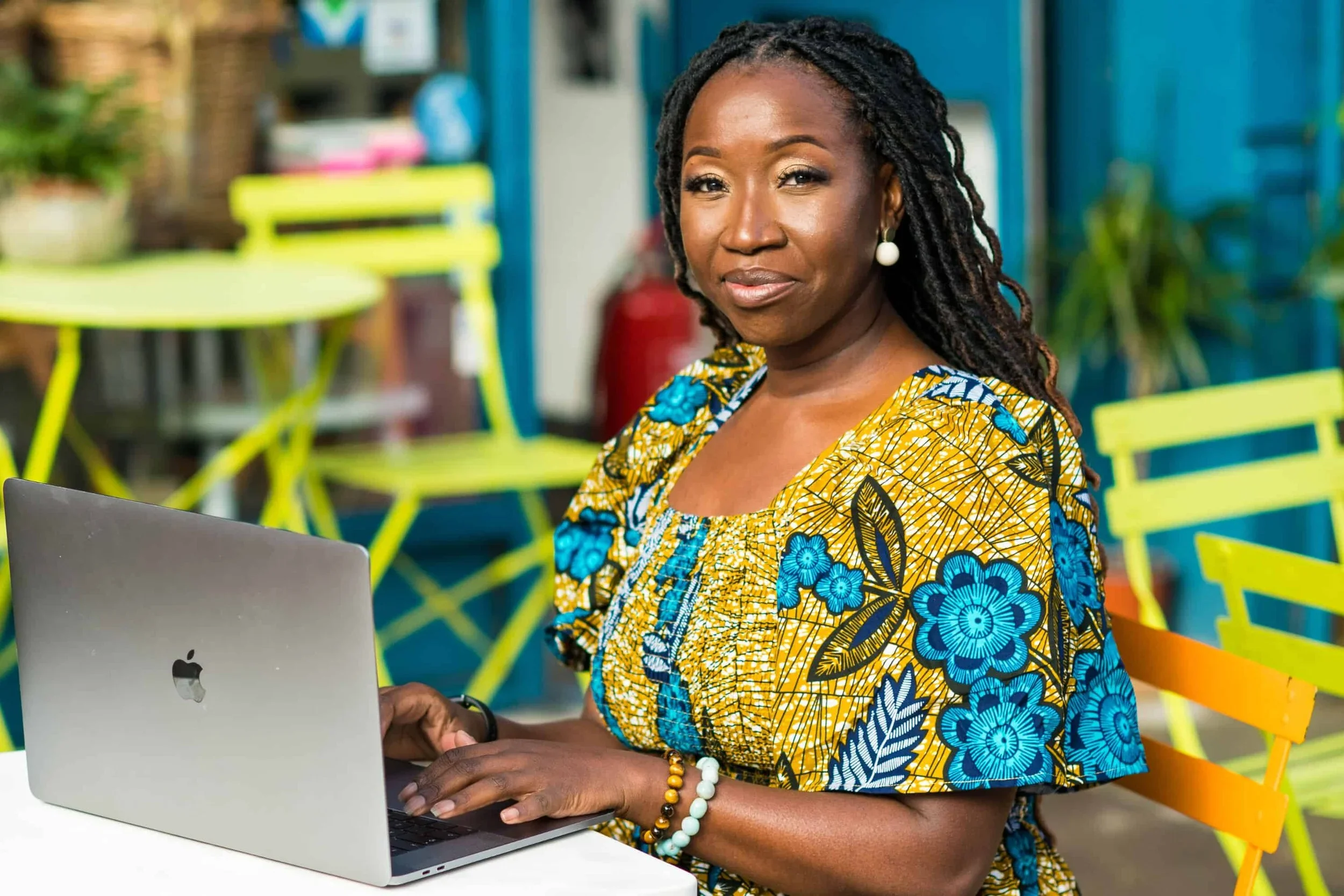
Yemi Penn shares how childhood trauma shaped her voice, relationships, and identity and why healing starts with understanding what happens after the event.
Trauma is often framed as something that happens in a moment. A single event with a clear beginning and end.
But for many people, the real impact comes after. In the patterns we develop, the ways we adapt, and the identities we form without fully understanding why.
In this conversation, Yemi Penn, an engineer, author, and trauma researcher, shares how her experience with childhood abuse shaped her voice, relationships, and sense of self over time.
We explore dissociation, how trauma becomes embedded in personality, and what it looks like to begin doing the work of healing. The conversation also touches on parenting and the ways trauma can be unintentionally passed on.
If you’ve ever wondered why certain patterns repeat or how past experiences continue to influence you, this offers a more honest look at what it means to face and work through trauma.
Listen to Yemi Penn’s Interview
Watch Yemi Penn’s Interview
What Is Trauma and How Does It Actually Affect Us?
Brandi Fleck: Everybody, today we are welcoming Yemi Penn to Human Amplified. Yemi, thank you so much for coming on the show. How are you doing today?
Yemi Penn: Thank you so much for having me. I’m doing good. I’ve been looking forward to this because Human Amplified. I mean, what an amazing name. I can’t wait to actually share things that I’m going to find out about me for the first time. So thank you so much for having me on.
Brandi Fleck: That’s awesome. What a great way to look at it, as an exploration and discovery.
Yemi Penn: It is. Some people think, I mean, this is why sometimes I try not to have questions or even look at the questions before, because for me, being human is about feeling. So why don’t I just feel into the question as it comes?
Brandi Fleck: Yeah. Okay, well, that’s wonderful. How about before we dive in, please introduce yourself to our listeners. Tell them a little bit about who you are and what you do.
Yemi Penn: Yeah, this is going to be very choppy because I’m actually going through a change of who I am, how I show up in the world. But if I could probably go back to my old definitions, which is still relevant, I’m an engineer by profession, an entrepreneur by passion, but a transformation thought leader by mission. Meaning that I am dedicated to the sustainability of humanity.
We keep on talking about sustaining our planet, and I’m doing this double take of, are we going to have more leaders talking about the fact that we need our humans to be sustainable because they are the custodians of the planet?
A lot of my work is focused around that. To which end, I’m currently studying a PhD on trauma, finding out if it can be transformative, because I think this is the way we need to go in order to sustain humanity.
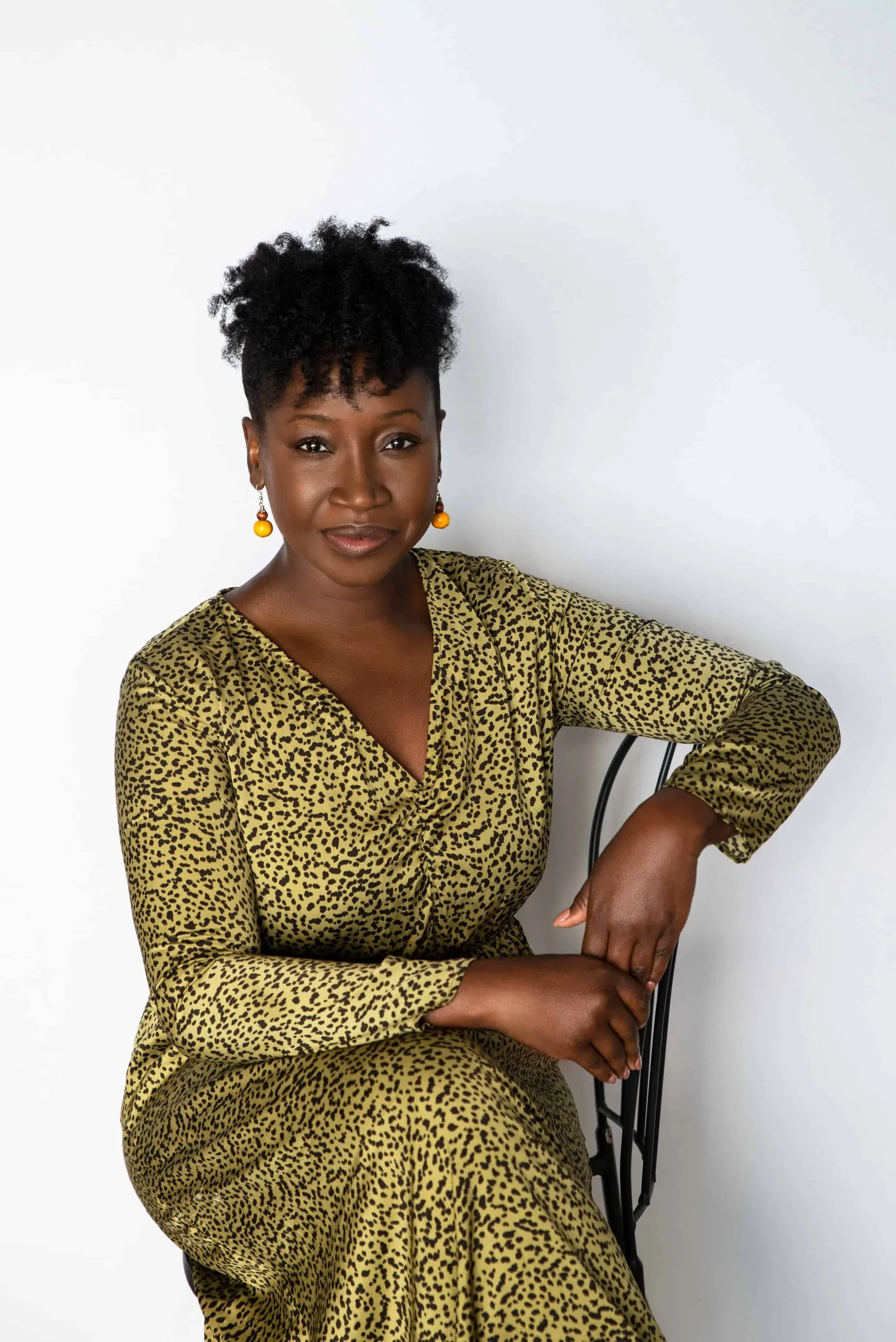
Brandi Fleck: Oh my goodness, I got chills the entire time you were talking. Totally, that just came out.
Yemi Penn: Yeah, it came out. We have to fix the trauma. We have to do something about it to keep going. I totally agree.
Brandi Fleck: Absolutely.
Yemi Penn: And it’s in your face. My goodness. Anyway, let me cool down and stay focused. I’ll let you lead with the questions, but yes, trauma is a big part of my why.
Brandi Fleck: Sure. We’ll definitely get into trauma quite a bit in this discussion. I think to kick it off, let me ask you: when I say the phrase “the ripple is real,” what does that bring up for you?
Yemi Penn: Cause and effect. Meaning whatever action, and sometimes inaction, you take, there will be an effect.
The reason why I pause in my responses is because I don’t want my tone to right or wrong anything. “The ripple is real” just seems to be a statement, which is whatever you do or don’t do, there is an effect. That doing or not doing is the cause.
That’s what comes to mind. I don’t even know if I’ve answered it in the right way, but that’s exactly what I felt in my knowing.
Brandi Fleck: Whatever you felt was the right way, so I wasn’t looking for anything specific.
Yemi Penn: Good, good, good.
Brandi Fleck: Okay, I think that’s a good starting point, maybe a little foundation or a little window into who you are and how you think and feel. I would love to get into your personal story and get to know you a little more.
I saw on your website that over a decade ago you were homeless. Can you tell us a little bit about that?
Yemi Penn: Yeah. It’s funny because I was telling a friend yesterday. It’s just part of my story that I’m still not fully integrated with. I think that’s because I don’t see it as that big of a deal. But in saying that, I probably take away that some people have lived their experience and are still living it.
I am now actually showing up as a different person to even who I was yesterday when I was sharing the exact same story on a podcast.
I had graduated from university—engineering—and I remember thinking, is this it? We’ve just done a roller coaster. Am I just now meant to go to work indefinitely until it’s time to retire?
I guess I started looking while I was already in a relationship, and I thought, let’s start a family. But it never really occurred to us to get married first, so I effectively got pregnant outside of marriage, which, according to my tradition at the time, was taboo.
As much as my parents have always supported me. And they still do today, whether they like what I’m doing or not. It was that we needed to get married. Both of us didn’t want to, so it was a case of, okay, you need to find your own place.
I was allowed to stay there for a couple of months. I think I was six or seven months pregnant. My partner at the time didn’t have the space to take me because he was in shared living. I was doing a bit of sofa surfing until it got to the crux, and I had to literally be on the doorstep of what we call the council, where they house people, somewhere between midnight and early morning, trying to be the first in the queue because I was so desperate to be housed.
I remember thinking at that point, this is a low point. This is a really low point. How did you get here? How do you graduate with a first-class degree. Which I definitely see as a privilege for me, which is why there was a bit of shame attached to this story, and then be here?
I was put in what some people call a halfway house, where people were coming off drugs. That was mostly the people in there. Here I was in a room with rodents going across, thinking, wow, this is my life now.
I think something internally kind of tweaked, but yeah, that was the stage of my life that probably needed to happen. I was just so surprised it was happening to me.
Why Life Doesn’t Have to Be a Struggle
Brandi Fleck: Yeah. Okay. This is somewhat related, I believe, but it also says on your website that you almost inherited a story that suggested life needed to be a struggle.
Why doesn’t life need to be a struggle? I find this question interesting after you just said that being unhoused is not fully integrated because you didn’t see it as that big of a deal. I feel like that’s connected.
Yemi Penn: Yeah. You’re asking why life doesn’t have to be a struggle. That’s such a good question.
It’s going to sound… but stay with me. I don’t believe it has to be a struggle because I think life just is. Don’t get me wrong, I think humans have complicated things.
I don’t know if we think there’s anything or anyone else out there, but at the moment, I believe we are the custodians of life as we know it. Systems, the Earth, all of that. I think it just is.
These are the theories I’m trying to figure out in some of my research. Trauma, some people say it’s a distressing event, but my research is beginning to show it’s not actually the event; it’s the aftermath of the event that becomes the trauma within us.
This isn’t to reduce the severity of it, but to give us a different perspective. That’s the different perspective I’m trying to show.
So when you say why, it’s because life just is. It’s our ability to manage and reintegrate after that becomes our work. The suffering and the struggle that I was going for was this theory that in order to get what I wanted, I needed to work crazy hours or I needed to fight when relationships were about to end. This is all the stuff that is being shown on TV sometimes, to make more money, to create more news. I think we’ve created that.
Life, to me, just is. We’ve just got so many competing things that I think most of us will struggle to accept that. Those are my genuine, innate thoughts. Sometimes I’ve experienced it—maybe a week maximum at a time, where life has just felt like it was. But then I needed to create chaos because it wasn’t giving me the standard life I’ve been used to living for decades.
Yeah, there’s a lot in there, but I definitely don’t think it needs to be. All you’ve got to do is go to traditional cultures back in the day. I live in Australia, we’ve got the Aboriginal people who share their history of “it just was.” When things went really bad was when we had colonizers come over here. So there’s always sometimes an external unsettlement, but within their own communities, it just was.
If people did things that were unsettling within their communities, there was a way to deal with that. We’ve lost that.
The Hidden Impact of Trauma After the Event
Brandi Fleck: Okay, yeah. I love your answer. Just watching your process is really fun because you mentioned that trauma isn’t actually the event, it’s the aftermath of the event. So it’s sort of like how we react to it?
Yemi Penn: That’s one theory. This is the fascinating thing about the research I’m doing, and even when I teach as a thought leader, is that there can’t be one version of reality. Some people might believe it is the event. So if you have a shock event that goes into your body immediately, like a car accident, but sometimes that goes into something more complex.
I’m trying to challenge and differentiate and say: can we still be traumatized if we are not in the event that initiated the trauma? Because if we’ve moved on, then something else has happened, and that’s what we need to be looking at. But we keep going back to the incident, and we understand why we’re going bad.
The integrative process that I’m beginning to question is, well, the fact that you are not in that traumatic event anymore. Then your trauma is now something else. That’s one theory, but I do know that there are a lot of academics and theorists who think it’s either the event or an experience.
Brandi Fleck: Okay, then I’m going to ask this question, and you can correct my wording if I’m off base. But do you think that our traumatic experiences. Or maybe whatever it is that we’re having after the event, puts us in those struggles in life that maybe we’ve complicated to overcome them? Is that part of the human experience, just innately?

Yemi Penn: I believe it is, Brandi. I really do. I believe it is. For a world that is so obsessed with data, we might not have that in encyclopedias or academic books, but for the few people—a couple hundred, possibly going into the thousands—that I speak to, it appears so. It’s very difficult to figure out whether the experience of the trauma is the nucleus of the individual, or whether some of us try to hide it.
Michael Singer says it really well in his book The Untethered Soul. He refers to what I call “traumas” as painless thorns. We’ve got these thorns sticking out of our body, but what we’ve done a really good job of is putting bubble wrap around them so we don’t feel the pain.
Then what happens when we’re triggered is we get into a relationship that is so related to the thorn, but what they’re effectively doing is taking that bubble wrap off, and it hurts. I love his analogy because that’s what I believe we do with our trauma. We protect it.
For me, I dissociate. I mentally remove myself from the situation to avoid feeling. That’s my bubble wrap. But when someone comes in and they’re in my face and they’re triggering me with any kind of trauma I’ve had, that’s when it feels like they’re pressing against the thorn.
The invitation is: are you going to nurse it? Do you need to clip the thorn? Do you need to just accept it and be more aware when you walk around not to bump into things? I think it is. I actually think it’s a critical part of the human experience. I really do. That’s hard to hear for some, I can imagine.
The Role of Trauma in the Human Experience and Personal Growth
Brandi Fleck: Yeah. So let’s go a little bit deeper into that and just explore: what is the point of trauma?
Yemi Penn: With the knowledge that I have, with the life that I’m living, I look at my children. I have two children. I’ve got an eight-year-old and a 15-year-old. They both have different dads.
Although I told myself and promised myself that I would never have them be separated, when I went to therapy, that fear was the reason why I was feeling overwhelmed with always having the parents involved. For them to go to their fathers would mean they were actually going to different countries.
When I explain that from my view, I can automatically see how that might be traumatizing for them. So here I am in the now, fully aware that my actions or inactions can be traumatizing for them, even though that is not my intention.
Most of my work when it comes to transformation is: put yourself in the driver’s seat. We have such a good ability to say what others are doing wrong, but all you’ve got to do is look at yourself, and that’s where empathy comes from.
I’m fully aware that I might be the source, even though it’s not my intention. So can we avoid trauma? That’s where I am now. I’m just not convinced, with the way we’ve set up the world, that we can.
I think a big part of what we need to do is acceptance, but not being willing to let it continue in the way that it is, or to the impact and harm that it is. That’s the bit I haven’t unhinged, which is: what role are we meant to play as a result of having experienced trauma?
When I think of my traumatic incident, which I’m more than happy to share with you if your audience is open to hear it, I actually think. Even though I didn’t orchestrate for that to happen to me, it’s happened. So what am I going to do about it?
In an ideal world, I’m going to stop the perpetrators doing what was done to me because I know what was lost, but I also know what I’m gaining in the process. It’s a really thin line and almost feels very oxymoronic, because would I be doing this if I didn’t experience that trauma?
Does that mean everyone needs to experience that? I’m uncomfortable with that. I’m uncomfortable with saying everyone does. But sometimes we just have to accept certain facts. So what? My question is: what are we going to do about it rather than wallow in it? What are we going to do about it?
Brandi Fleck: Okay. If you would like to share your traumatic experience, you’re more than welcome to. I think the audience would have a lot to learn from you.
I was going to mention, you do have a documentary that was really beautifully done. It’s called Did I Choose My Trauma, and it’s at yemipenn.com/documentary. I’ll put that in the show notes if our listeners are interested in going over there and checking that out. But please share whatever you feel comfortable sharing.
Yemi Penn: Yeah. The title in itself could be triggering, but I learned from Tony Robbins, who I studied and followed a lot of his work for a while, that the quality of your questions sometimes determines the quality of your life.
I’d say how you ask those questions is what’s important. The more I got involved in alternative methods of healing and resolving, that question was prominent. When people watch it, I ask that they have an open mind.
I think everyone has a trauma story. Some might think it’s a big “T,” some a little “t.” I don’t think we should get into the habit of comparing because we then lose focus on the healing.
Healing from Sexual Abuse: Yemi Penn’s Trauma and Advocacy Journey
For me, one of the events that I’m pretty confident has defined me and continues to explain why I feel a certain way or do certain things was that, as a child, my power—my sexual power—was taken away. It was abused by an uncle. He abused his power.
Someone asked me yesterday, “How do you feel when you share this?” I said, “I’m getting stronger every day, but I had to change the way I shared it…” Because sometimes I would just say it—I was sexually abused as a child—and that would sometimes leave people in their own terror, their own flight, their own fight.
I have to remember, Brandi, that when you look at the stats just for this particular type of trauma, one in three, one in four women and girls have experienced this. For boys and men, it’s one in five, one in six. This varies according to country, but let’s just say the Western world who pick up this data.
I have to be aware that there’s a pretty solid percentage who are even listening to me say it. It’s trying to find that balance, but I also didn’t want to glaze over it as if it was insignificant.
Because I continue to do the work and I speak about it, that’s the one that I think really formed how I showed up as a kid. I used to tell people, even as an adult, that I wasn’t shy—I just hid when my uncle came around. I wasn’t able to detach that from 10-year-old Yemi, 12, 15, 20, 30 years old, who was still saying she was shy.
How Unresolved Trauma Shapes Personality, Behavior, and Relationships
I’m not shy. I’m an introvert. I like to come and go, but when I get on stage and I’m speaking, I appear extroverted. That’s, I’m not shy.
So what else do we have in our personality traits that have actually been hinged to a traumatic incident that we haven’t even looked into? That’s where I’m currently working on my third documentary, titled Cleaning Our Trauma.
The invitation is not to get rid of it, because I don’t think we can, but to just have a look and say, is the trauma that I experienced making me show up in a limited way? What would it look like if I just cleaned it?
Cleaning it meaning that you don’t bleed it through others, because you tend to find a lot of people who have been traumatized subconsciously start traumatizing others in almost exactly the same way. That’s a lot of my work at the moment.
How Childhood Trauma Affects Voice, Identity, and Self-Expression
Brandi Fleck: Okay, so going to the topic of limits and how we’re limited, can you describe for us how that experience impacted your voice?
Yemi Penn: Probably a couple of ways that I will still be finding out in the years to come, because who has time to investigate what they went through in such granular detail?
You have neuroscientists who are looking at the brain to see what happens when someone is reminded, who’s got time for that? People have to go and work. I feel fortunate enough to have it, and that’s why I think I’ll keep learning.
But the two ways that that particular trauma impacted me with my voice was this “shyness” thing. I wouldn’t speak because if I spoke, that means you’re going to see me and you’re going to hear me. I didn’t want that for a very long time, but without knowing that that was the link.
It was just, you don’t show up. “Oh yeah, Yemi’s shy. Yemi doesn’t argue back. Yemi is the good kid because she doesn’t argue back.”
Then the second one, which is very closely linked. No, you’ve got that wrong, because I told you when my uncle was doing this, but it doesn’t appear that anyone did anything. Then I just stopped talking about it.
I can’t remember. Someone might have said, “Just shush. Stop talking about this.” When someone says that, that’s them saying it’s okay. Of course I thought that was okay until I started to grow up, read stuff, watch movies that made those behaviors “bad.”
But my voice was still numb. Then in 2012, when this uncle comes back into the sphere of my existence in London, because my abuse was happening in Nigeria, I find that he’s looking after a little girl. I’m like, yeah, I need to speak up.
I start doing this radical thing of ringing up every family member and telling them, because I’m thinking, hold up. Nobody was listening to me when I was speaking when I was seven, eight years old, so maybe you should listen to me now.
I still think it’s a bad idea for him to look after any little girls. Sadly, I was too late, because by the time I’d done the phone call, he had already once again abused another little girl of her power. This was 2012, so I’m in my 30s at this point.
I was shut down again. So what did I do? I married a beautiful man. However, we did not know each other as well as we should have for compatibility, and I relocated to Japan.
When you see people doing things that appear to be “crazy,” we need to look in a bit more and say, “Hey, is everything okay? What are you running away from?” Because that was my voice again—gone.
I just thought, I’m out. Let me silence my voice in the UK. But now my voice is getting stronger because I’ve got a documentary out there that’s a finalist. At some point, it will be on Netflix.
Restorative Justice and New Approaches to Trauma Healing
I want to make it clear, my mission isn’t on the perpetrator. My mission is on those who are still trying to heal from the impacts of trauma as a whole, but also those who perpetrate.
Do I think there’s work to do with perpetrators of trauma? Absolutely. Do I think we need a different approach to how we have done it through punitive punishment over the past decades and centuries? Yes, because it’s not working.
Brandi Fleck: That’s a good point.
Yemi Penn: Yeah, it’s not working. We don’t want to blame everything on patriarchy, but we appreciate that brutality and punishment were forms of just taking what wasn’t ours. It’s not even working for those who are doing harm.
I think we need a different approach.
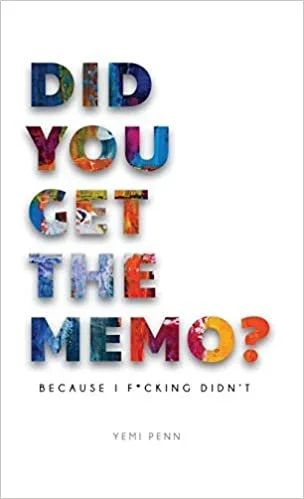
Brandi Fleck: Listeners, we’re talking with Yemi Penn, based in Sydney, Australia. She’s an engineer, author, documentary producer, speaker, and is currently pursuing her PhD in trauma. Her latest book is called Did You Get the Memo.
It’s time for a quick break. I’m your host, Brandi Fleck, and this is Human Amplified.
When I look back at the whole of Season 4, I see an evolution that parallels the evolution of the human spirit. We don’t have to be what we’ve always been. We can change. We can move forward. We can create a life—and by extension, a society—that works better for us.
That, my friend, is what it’s all about. We can’t change the past, but we can change the here, now, and future. When you’re ready, I’m here for you as a trauma-informed coach to hold space for you as you build awareness and heal your trauma.
Post-traumatic growth is possible. The inner work looks different for everybody, but together, over time, we can practice regulating your nervous system, rerouting neural pathways, and reconnecting your body, mind, and spirit so that you feel more peace and freedom to be your authentic and beautiful self.
To get started, book your free discovery call by emailing me at brandyfleck@humanamplified.com or visit the show notes at humanamplified.com/episodes/104 and click the button that says “Book Now.”
Now back to the show. We’re talking to Yemi Penn, engineer, author, documentary producer, speaker, and trauma PhD candidate. Her latest book is called Did You Get the Memo.
Spiritual Healing and Alternative Therapies for Trauma Recovery
Let’s talk about transmutation and transformation, because I feel like that’s sort of what you’re going through. When you came on, you said you’re in the middle of a transition. You’re changing, you’re getting your voice back.
Is transformation and transmutation the same thing? And why is it important that we transmute our trauma?
Yemi Penn: I think they’re very close, but if I could give two different views of my definition. For me, transformation is a shift in perspective. I love that definition. I think I heard it from a gentleman who owns Mindvalley. It was just a shift in perspective.
That seems simple, because in doing so, I think you just have a more rounded way of being. When we assume there’s only one way to look at things, we close off any ability to grow.
So I think in transformation, there’s an element of growth, but simplistically, I think it’s a shift in perspective that then allows for expansion, for want of a better word.
For me, to transmute feels like the art of alchemy, the art of taking something that appeared to be really painful, ugly. Not in the attractive sense, but ugly in the feeling sense, into something powerful. That transmute really is The alchemy is the only way. I mean, what’s the name? The Alchemist. That book was profound. The story of this boy who seems to come from not much, but he was on this journey. That journey felt really long, but it was so sweet at the end.
That, for me, is the art of alchemy, going through the journey to create something profound. That’s what transmutation means.
It’s almost the kind of version of, sadly, what we hear when people say, you know, whether they’ve got an illness or cancer, that there’s an aggression attached to that. This one, there is beauty, there is greatness, even in the ugly.
The ugly can be the cancers, but the transmutation is: who have you become from this? What were you before? Who have you become because of these difficult things? What’s the beauty that has come through?
I also liken it to the Japanese form of art, kintsugi, where if something breaks, they refill the cracks with gold liquid. That, for me, is what transmutation is, the beauty in the brokenness.
Brandi Fleck: Okay. I know you weren’t heard when you tried to speak up before and help keep this from happening to other girls, but now when you speak up, do you think that it helps people not go through the same thing? Is that part of transmutation?
Yemi Penn: No, I’m definitely not there yet with my speaking. I think when I speak now, what I do is allow people who have experienced something similar, or any other type of trauma, to at least acknowledge what they went through.
I think my voice at the moment is purely the acknowledgment. It’s the acknowledgment and awareness. However, it’s nowhere near the stopping.
That’s where, when I say I’m going through this change, that’s where I’m at right now—how big do I want to take this? Because I know with the things that I’ve achieved so far in life, through transformation, through shifts in my perspective, I know it’s possible for me to go really global with what I’m doing, which is a different way to look into things.
I’m not the only one. There are other people who are looking at this, but it hasn’t got to the point that it’s stopped it. I definitely can’t do it alone. It’s going to have to be collaborations, partnerships.
I’ve started a foundation with a few other people, but we need the time and the funds to be able to get back to kickstart where we start having worldly circles—healing circles—what the Indigenous people here call yarning circles, where speaking is a big part of healing.
But remember that we can also be speaking to the people who are the ones committing some of these heinous acts.
Brandi Fleck: That’s a good point.
Yemi Penn: What have I missed? Don’t get me wrong, I’m not trying to say forgiveness needs to come immediately. Forgiveness is a personal journey.
But I spoke to a lady in Canada. She sadly was raped by, I don’t know if it was someone she knew, but she really fought for him to be part of a restorative justice process, which very simply meant that while he served, he had therapy to find out why exactly he did this and why not to do it again.
We’ve used fear to try to stop lots of things, just the same way my uncle would have used elements of fear. He was very kind, he was very gentle. I didn’t walk down the street and fear that he would hit me. The fear was different.
The fear was: you’re going to take my choice away. The fear is: you’re going to take my voice away. The fear is: you are going to touch me and I don’t want you to. It’s the whole consent thing. But to be abused at a power where a kid is still trying to form what is okay and normal is cruel. Maybe his brain doesn’t think it’s cruel, but we need to have a conversation.
There’s still a lot of denial on his part. There was a whole heap of flow there, but yeah, totally. Thank you for letting me share that.
Brandi Fleck: Yeah. So I feel like part of this journey has been spiritual for you. Is that true?
Yemi Penn: Definitely, maybe the latter part. It hadn’t been to begin with.
My deep journey on healing or acknowledgment really started about five years ago. After I had tried talk therapy, there was this yearning to do other things.
I’d find out about Reiki, energetic healing. I’d find out about someone reading my numbers of when I was born. I used to read horoscopes, but that was just tidbits in newspapers and magazines, and most of the time it was the same stuff.
This felt a little bit deeper. I really started to investigate, and I’m an engineer by profession, so from a scientific perspective, I was really intrigued.
I thought, why do we keep calling this “spiritual” and term it “woo-woo” in a derogatory way, when in actual fact all I’ve got to do is come out of my house and look at the stars? People talk about constellations—so why do we try to separate the two: science and what we call spirituality?
Something just felt amiss, and the only way I was going to be able to join it was to experience it. So I’ve experienced a range of different things.
Very recently, I experienced ayahuasca, which was a big thing for me. It’s a South Amazon plant medicine ceremony, and that was huge. That’s something I would have never done—ever.
So transformation is a shift in perspective. Are you willing to change how you think is the only way to be? I was, because I was not fully happy with the world that I was living in.
Ayahuasca and Psychedelic Therapy for Trauma Healing
Brandi Fleck: What happened with the, did you call it ayahuasca?
Yemi Penn: Yeah. What did you do?
The way it works is. You know, shamans, I probably don’t even know if I’m going to get the name right. But it originated in South America. Basically, this plant is eventually used as medicine.
I grew up in Africa, we used plants as medicine. They are very medicinal. We see it in our everyday lives. It’s just that we tend to add a few more things to it to make it smell nice or whatever.
In Africa, we had different ones. This particular one is quite potent according to the standard, but it still very much works with the alchemy of the body on the premise that you eat right and you’ve got the right person guiding you.
So I drink it and ingest it, and in ingesting it, it puts me in a different state. I must highlight that I have never done drugs, never done anything, so any open state of consciousness I’ve never really had, maybe apart from having three glasses of wine.
This is another reason why it was always going to take me a very long while to do this. But because I’d heard, especially from psychologists and therapists, how powerful this had been for healing trauma, I was intrigued.
The best way to describe it is that I’m in an altered state of consciousness. For me personally, it feels like I’m having a conversation with somebody. Some person, maybe myself.
Later on, I thought it was what I call my higher self. I would ask, why does this keep happening? The information would come really strongly. Someone would come into my cycle. For me, that was it. Others saw different things, they actually had visions of themselves in a different life.
For me, I actually had a conversation with my uncle, but him as a little boy. That kind of experience, some people could still question, but the research that has been done so far on psychedelics, when used in the right way, is that it’s provided a lot of relief for people who have post-traumatic stress disorders as a result of their traumas.
For me, it was more informative. It was more getting to know my deeper, innermost thoughts at a deeper level. That’s the best way to describe it.
Brandi Fleck: Was that healing for you?
Yemi Penn: The integration process afterwards was healing. During it, it didn’t feel like it.
I call that experience confronting but enlightening, and that is almost the work of looking at trauma. I can understand why people would not want to look at it.
I can understand why someone says, “Nothing bad happens to me, I’m fine. That wasn’t a big deal. Everybody goes through war. Oh yeah, my dad doesn’t talk to me, it’s fine. My dog died when I was little, and apparently I didn’t talk for a year, but I’m over it now.”
That’s what you hear, and that may be true. But I think part of it is there’s no willingness to even look at it because it will challenge their current balance.
My theory says it pops up in other ways. It pops up when you’re triggered in a very similar way in a relationship. It pops up when you have children. It pops up with family members.
So confronting and enlightening was the experience.
Brandi Fleck: And is that healing afterwards?
Yemi Penn: Absolutely. In doing some of the work, it’s just so uncomfortable. It’s so uncomfortable.
Brandi Fleck: Yeah. How do you get comfortable enough to start doing the work?
Yemi Penn: The desire and belief that there is gold on the other side.
Gold not as in sparkly, but gold as in peace, as in joy, as in happiness, as in love. You just think of yourself in the Maldives, going on a little seaplane and it’s taking you to your little hut, if that’s what you like doing. For others, it might be climbing mountains.
Wherever your place is, that is what you get at the end. I do get it. I get it when I deliver keynotes. I get it when I’m facilitating small conversations and we are just connecting with our stories, our eyes, our hearts.
But it’s this notion of getting comfortable with being uncomfortable. There’s nothing wrong—we can stay as we are. There’s nothing wrong with that.
But if you find yourself restless, thinking, I think it’s time to change my job, or this relationship isn’t working for me, or I want a relationship. That’s usually your soul saying there’s something.
So yeah, it’s like anything. There’s a bit of work to it, but this isn’t even the physical grind, “let me sweat” work. This is the inner work, which is some of the scariest. Which is why when you ask what does it mean to be human, it’s to feel. I think that’s what fears a lot of us, is to feel.
Dissociation: What It Is, Why It Happens, and How It Manifests
Brandi Fleck: Yeah. Okay, let’s backtrack a little bit to dissociation, if that’s okay with you.
Yemi Penn: Sure, yeah.
Brandi Fleck: Okay. Can you describe for us what it physically, mentally, and emotionally feels like to dissociate, or how you know that you’re dissociating?
Yemi Penn: If I go back to the memory I do have as a little kid. And for anyone who’s listening, I’m very respectful with it. If this is difficult, the best thing to do is just brace yourself.
I usually put my left hand underneath my right armpit and my right hand on my arm, just as a way to soothe yourself. I want to give you that invitation to do that.
For me, the first time of dissociating was when my uncle was on top of me. To leave my body, and people say, well, what does that mean? This is part of our challenge as human beings: we want everything to be described in English language, and when we can’t do that, we disconnect.
I have no other way to describe it than either me closing my eyes or just not being there. Thinking of unicorns, thinking of rainbows. I did what a child needed to do because she physically felt she couldn’t move out of that situation.
So that was dissociation, version one Yemi. Then as I grow older, I’m no longer thinking about ponies and rainbows, but I’m thinking about, okay, you’ve got that project to do, you’ve got that. Okay, you’ve got to do this, whereas I’m just finding out that my daughter was self-harming.
Why am I thinking about the projects and this and that? I’m dissociating.
For me, that was my version. To change it to say, okay, yep, I’m going to get you a therapist. Still functional. I’m very highly functioning even when there’s lots of stuff going on, but there’s still dissociation.
I didn’t know until I spoke to my daughter’s counselor, who said, look, maybe you should get some help as well. I didn’t think I needed to, but it turns out when I sat with my psychologist that when my daughter was experiencing something traumatic, although it wasn’t my traumatic event, I dissociated.
It probably still happens today.
Brandi Fleck: How does that dissociation impact your relationships or your relationship with your daughter?
Yemi Penn: With my daughter, it didn’t, because like I said, I’m still very highly functioning. I just kind of have this limit. For my own safety. It’s like a safety catch. For my own safety, mentally, I’m just going to pause from this.
But I can at least now, I’m aware. That’s where the awareness and acknowledgment is great, just to be aware that it’s happening.
With my daughter, most of the time, I don’t think it’s an issue. But sometimes I didn’t hear her. I didn’t hear her when she needed to be heard.
I think this is part of my struggle about this human sustainability. We are wanting unhealed parents to be available to heal their children. It’s just crazy.
This is why there was a period that I thought I was going to be very judgmental of my parents’ parenting style. I’m living it. Maybe we would do things differently to our parents, but seriously, how do you expect unhealed people to heal people?
Can Trauma Be Prevented? Exploring Trauma Mapping and Conscious Parenting
Brandi Fleck: Yeah. I think you just illustrated a point you made earlier, that sometimes we unknowingly perpetuate the same trauma or reactions that we had on other people, because you didn’t feel heard, but then you didn’t hear her.
Yemi Penn: Yeah, exactly. That’s interesting. Exactly.
Does that mean that I go out in my room and try not to? I’m just trying to show up the best way I can. I’ve had to change my parenting style, which has been so difficult, because I was raised to be the parent and say what to do.
Then I attend this woman, Dr. Shefali Tsabary, who talks about conscious parenting, which really highlights that parents just think they’re here to control their kids.
I believe in respect, so I have values, but now I’ve found that middle ground. It’s tough, and I’m in the now. What’s going to happen later?
My daughter and I always joke about what might happen. I say, yeah, it’s okay, you can make a documentary when you grow up. We joke about it, and there is love, but I have to be prepared for it.
I didn’t grow up with physical contact with my parents. I knew they loved me because their love was shown in their hard work. I can now understand why maybe they weren’t necessarily physical sometimes in their approach to love or saying “I love you.”
So with my daughter as my first child. If I grew up in a house where we didn’t say “I love you,” where do people think I’m going to get that from? From watching The Fresh Prince of Bel-Air? It’s not ingrained in me.
This is the empathy I want people to have, I didn’t have that. So what’s the risk? We are passing on trauma, and This is why one of the things that I will be proposing in my research is trauma mapping. I feel uncomfortable saying it anyway, but yeah, trauma mapping.
Could we help our kids? Because apparently the best way to prevent the impacts and aftermath of trauma once a child comes out of childhood is to deal with it then and there.
So if I was to map the things that I think might have been traumatizing for my kids, even though it was not my intention. And this is only based on what I know, is there stuff that we could start working on before it becomes patterns and behaviors?
Breaking Generational Trauma and Imagining a Healed Humanity
Brandi Fleck: Okay, let me just ask you this big question. If we get rid of trauma in a distant future where humanity has evolved and healed, and maybe we can just imagine that we’ve learned to integrate all the lessons and get rid of it so that we don’t keep passing it to future generations, what do you think that would be like? And would we still be able to grow as humans?
Yemi Penn: Yeah, because trauma still happens. People die. So we’ve got to, and for some, the way we look at it, death is traumatic.
When my dad died in 2018, there was a different view. I remember the people who were playing music lovingly shouting at us to dance, and we were like, what? And they said, you dance to celebrate that you are outliving your father. That was the message they sent.
So everything’s got a different perspective, but death is a minimum. When we say what would happen, I don’t know, but from the little things I get from Indigenous cultures, my African background, there was a time when people were living okay.
Yes, we didn’t have the great things we have now, but can we not take some of those practices? Can we not take the practice? The Indigenous people here say part of their culture is to not have more than five of anything, which is really nice.
I don’t have that many shoes, but I understand why I want yellow shoes, blue shoes, to go with the dresses. It’s going to have to be a change in how we are, because I think greed comes from people maybe having lack in the past.
So when you say what could it look like, it could look pretty solid. It could look like what it was like before, but even richer, because now the human brain has evolved with amazing technology, amazing science.
But it’s got to be not at the cost of greed or controlling, so that one or a small percentage has dominion over others. It’s a radical culture change.
My gut tells me, based on Indigenous cultures who are still living and breathing hard despite what they’ve been through, there was a way to live peacefully and happily.
Yes, trauma still happened, people would still lose babies, sadly. People would still pass away. People would still potentially have illnesses. But we wouldn’t be going and perpetrating it on others. It would be life.
Brandi Fleck: That’s beautiful. Thank you for sharing just a lot of your inner world with us today. Is there anything that I didn’t ask you that you think is important to say?
Yemi Penn: No, your questions were really profound, and I can’t wait for this to come out so I can just share. Really profound.
You’ve given me a gift. I think you’ve asked everything and more, because my brain was searching the depths of my soul. Really good. Really good questions. Thank you.
Brandi Fleck: Well, thank you so much, and I really do appreciate you being so open and soul-searching. Where can our listeners find you and your work?
Yemi Penn:
Instagram is probably the best at the moment because I highlight things I’m doing. So I’m just there at yemi.penn.
The same with my website, yemipenn.com. I know you’ll put that in the show notes, but that’s where I’ll have updates.
I am a LinkedIn girl as well, because I do think working with corporates is probably going to be a big way for some of this radical change, because they are the ones who have workhorses who are building the world.
So I think it’d be good if they took a bit of responsibility and offered for the sustainability of humanity. I’m on LinkedIn every now and again, giving some of our leaders a nudge to make a difference.
Brandi Fleck: Awesome. Well, thank you so much, Yemi. It has been a pleasure.
Well, y’all, it’s been a hell of a podcast season. Thanks for listening. Let us know how the season impacted you in a rating and review on Google, Apple Podcasts, or Facebook.
You can find links to all of these places and more in the show notes at humanamplified.com/episodes/104.
This is your host, Brandi Fleck, signing off. And until next time, rock on.
Watch Yemi’s Documentary: Did I Choose My Trauma?
TRIGGER WARNING: Viewer discretion is advised.
Join the conversation!
Feel free to share your own experience and let me know if you have any questions in the comments.
Related Posts



Hi, I’m the founder of Human Amplified. I’m Brandi Fleck, a recognized communications and interviewing expert, a writer, an artist, and a private practice, certified trauma-informed life coach and Reiki healer. No matter how you interact with me, I help you tell and change your story so you can feel more like yourself. So welcome!
Find More on the Blog
Topic
- ADHD
- AI
- Atlanta
- Black and BIPOC
- DIY
- FAQ
- LGBTQIA plus
- Los Angeles
- Nashville
- Seattle
- St Louis
- St. Louis
- UFOS/UAPs/ETs
- abuse
- accountability
- addiction and recovery
- adoption
- affirmations
- afterlife
- altered state
- angels
- animals
- anxiety management
- art
- astrology
- atlanta
- attachment
- awakening
- beauty
- behind the scenes
- being human
- body image
- body work
- boundaries
- brandi fleck
- breathwork
- bullying
- burn out
- burnout
- cancer
- career
- caretaking
- chakras
- channeled
- clarity-dive
- clarity-practice
- clarity-primer
- clean products
- coach
- codependency
Recent Blog Posts
Visit the Full Podcast Audio Archive

Affiliate