
Healing Abandonment Wounds and Finding Personal Power
Interview By Brandi Fleck
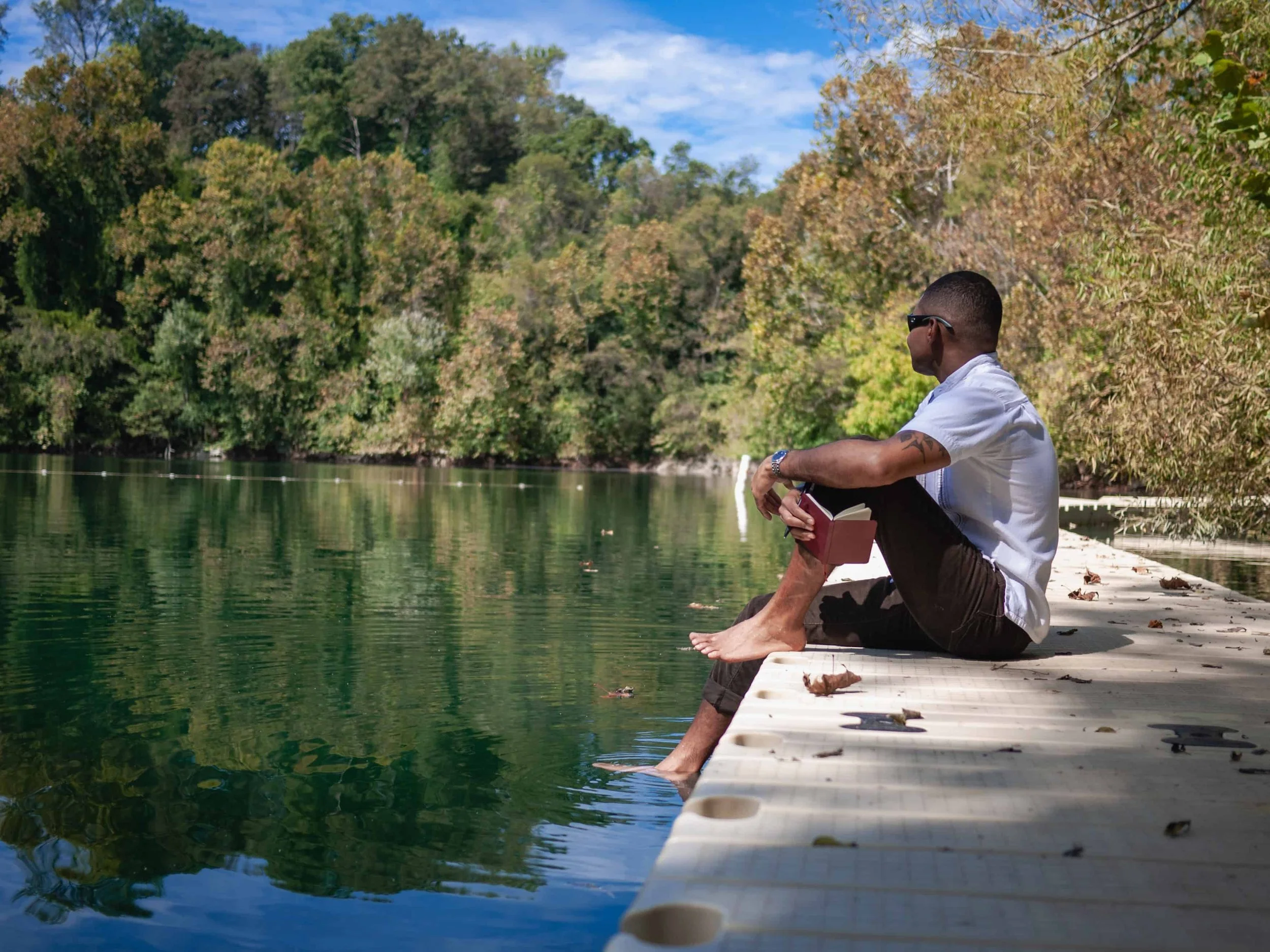
Psych-K facilitator Ty Briggs explores subconscious beliefs, childhood trauma, authority, self-authority, spirituality, and how changing the mind can transform the way we experience life.
What if the patterns running your life were formed long before you consciously chose them?
In this episode of Human Amplified, I sit down with Psych-K facilitator Ty Briggs for a conversation about subconscious beliefs, childhood abandonment wounds, authority, spirituality, personal power, and the search for truth in a confusing world.
Together, we explore how unresolved experiences can quietly shape relationships, self-worth, emotional patterns, and even the way we respond to authority figures. Ty shares how growing up in the U.S. Virgin Islands, navigating deep abandonment wounds, and reconnecting with his father eventually led him toward Psych-K as a practical tool for self-awareness and transformation.
This conversation also moves into deeper territory: self-authority versus personal power, selfishness versus selflessness, Christianity and consciousness, and why healing often begins by changing the stories we unconsciously carry about ourselves.
If you’ve ever wondered why certain patterns keep repeating in your life or how the subconscious mind may be influencing your reality more than you realize, this episode offers both philosophical exploration and grounded insight.
Listen to Ty Briggs’ Interview
Watch Ty Briggs’ Interview
Why Nature Feels Spiritual in Our Human Experience
Brandi Fleck: What does being human mean to you?
Ty Briggs: That is a great question, Brandi. To me, I am a really big Bible nerd. So being human to me is being an image bearer of God, of the divine creator of all things seen and unseen. And I think it's beautiful that we get a chance to express divinity through us as people that are fragile and have a start date and an end date. But that seems to me what being human is.
Brandi Fleck: Everybody, I would love to welcome to the show today, Ty Briggs. He is joining us from Knoxville, Tennessee, which is really close to where I'm at in Nashville. And so I always love to have a fellow Tennessean on here. But I'm really excited for this conversation. How are you doing today, Ty?
Ty Briggs: I'm doing great. I'm doing great. Glad to be on here with you, Brandi, and I guess I'll have to give a go Vols.
Brandi Fleck: Yeah, for sure.
Well, before we get too deep into our conversation today, which is going to involve some information about Psych-K and Ty's personal journey through life, tell us who you are as a person.
Ty Briggs: Yeah. Wow. What a profound question. Well, I am a son, a brother, a child of God. I facilitate Psych-K with partners, and I do vocational ministry. So it's a little bit about me as a person.

Brandi Fleck: Yeah. Yeah. What do you love to do and just love about life?
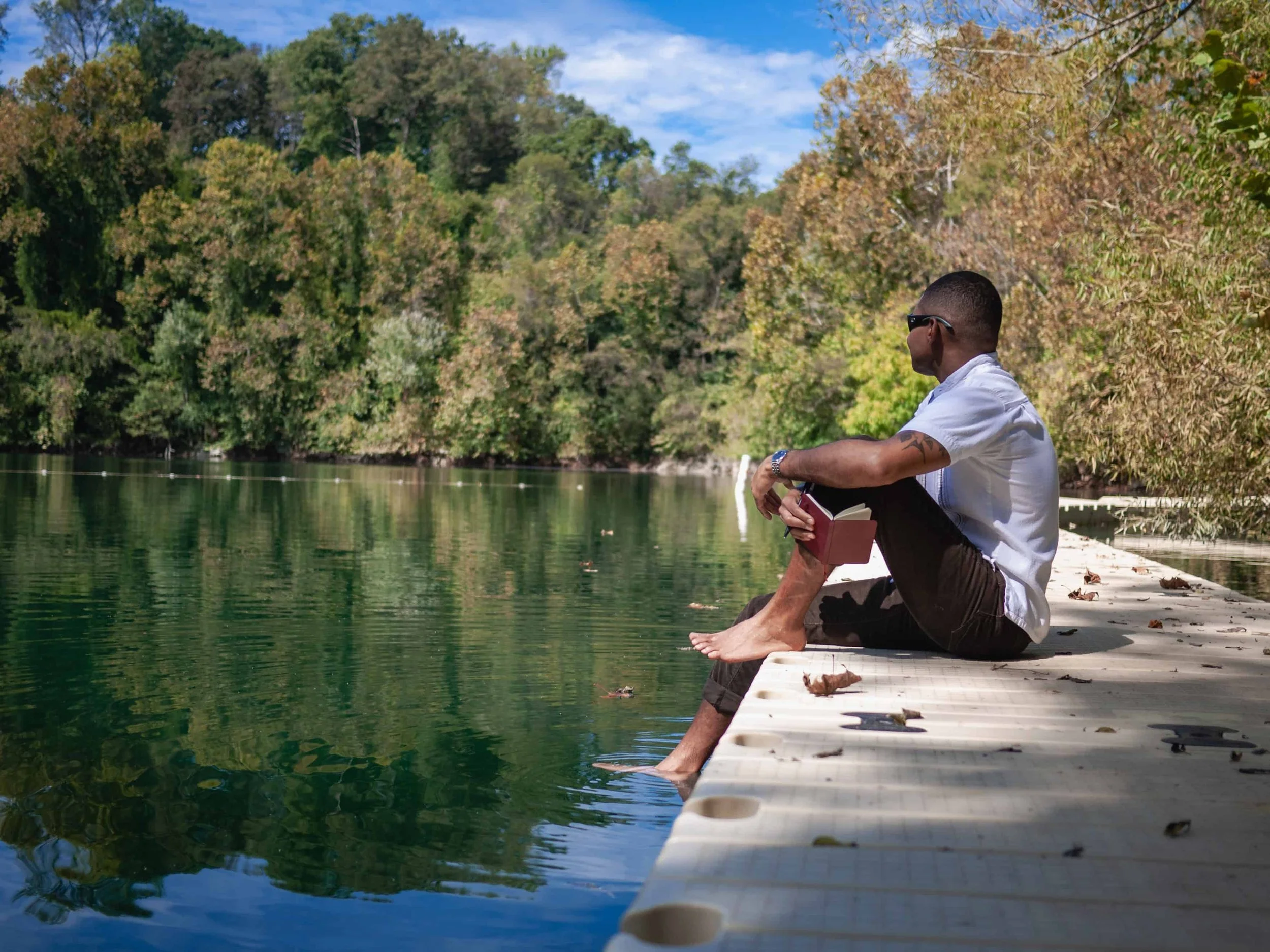
Ty Briggs: I love nature. I feel at peace in nature. And East Tennessee is a great place to explore this wonderful creation. And I love hiking, fishing, whitewater rafting. Just get me outside and leave the phones and the laptops inside, and we'll have a great time.
Brandi Fleck: Yeah, yeah. Do you feel closer to God when you're in nature?
Ty Briggs: Yes. Nature is both extremely beautiful and peaceful and also extremely violent and cruel.
But at the same time, I think that it expresses just the nature of life really eloquently. And sometimes I can be a very intellectual person, and I can get wrapped up in philosophy and all kinds of wavy thoughts. But just getting out there in nature feels very practical and grounding and speaks more clearly than words do sometimes.
Brandi Fleck: Ooh. Ooh, can you tell me a little bit more about that? Just it speaking more clearly than words.
Ty Briggs: Yeah. Well, I wish I could take the laptop outside and just do a walk through the woods, but things just tend to work, whether they work in a way that we want them to or not, or whether in a way that we think is fair or not. Nature just tends to seem to express itself in a way that's sustainable and moving from a state of chaos to equilibrium without us as people having to get our grubby little hands on it.
And when we try to recreate nature, it's not quite the same.
Brandi Fleck: Yeah. That's really interesting that it just works without thinking about what's fair or not. It just expresses. So I love the way you put that. And I feel like we could be more in touch with that in how we live our lives. Are you able to incorporate that into your life?
How Nature, Silence, and Spiritual Practices Create Inner Peace
Ty Briggs: Yes. I spend a lot of time in silence and solitude in nature. I think it's a good reset for me, as long as I don't habituate it to a point where it's like a checkmark thing. As long as it feels organic, it's something that really serves me and serves me well.
And also, to be honest, Psych-K is a tool that I use personally that allows me to just realize that things are going to work out whether I feel like they're working out or not.
And it's also a mechanism by which I can be honest with myself about what is within my control and what is not and just change the things that are in my control because our beliefs create our thoughts, and our thoughts create our words, and our words create our actions, and our actions create our habits, and our habits sort of manifest themselves in a way that we build values about what life is.
And so, yeah, it all starts sort of in the battle of the mind. So if we can take captive the mind and win that battle, then our world starts to open up and change.
What Is Psych-K and How the Subconscious Mind Shapes Your Life
Brandi Fleck: Interesting. Okay. Well, I would love for you to tell us a little more about what Psych-K is. And just full transparency with you, I've interviewed, out of the whole seven seasons this show has been on, one other Psych-K facilitator. And we talked a lot about how the subconscious mind works and how working with it can change your life. But I still don't really grasp what even happens inside a Psych-K session.
So please.
Ty Briggs: Yeah. Well, I'm not surprised, Brandi.
Psych-K is not meant to be this esoteric thing that's hard to grasp and understand, but at the same time, the most powerful way to interact with it is to experience it. Similar to what I was just describing about nature, I could tell you all the science behind a flower, but if you've never seen a flower or smelled a flower, the best way to interact with it is really just to go outside and experience it and smell it and look at it and take in its beauty.
So I think that Psych-K works in a similar way to that. It's been really popularly discussed as a spiritual process with physical and psychological benefits.
I use it as a way to interact with my subconscious mind. Our conscious mind is kind of hamstrung. Consciously, we decided what we wanted to eat for breakfast this morning. We decided what shirts we wanted to put on for this time together here on this podcast.
Those are all conscious choices. But our subconscious is running behind the scenes, and it really dictates a lot of the habits that we have. Maybe, to some degree, the type of toothpaste that we buy or the things that we tell ourselves about ourselves. And these are deeply ingrained things that might feel out of touch or out of our control.
And Psych-K is a practical, tangible process, for lack of better words, in which we can interact with the subconscious mind and see if we are able to potentially even change some of those beliefs if they're not serving us currently in this season of life.
Muscle Testing, Subconscious Beliefs, and How Psych-K Sessions Work
Brandi Fleck: Okay, so if you were in session with a client, what would happen?
Ty Briggs: Yeah, that's a great question. So it varies slightly between whether the session is in person, like the person is physically in the same room as me, or whether it's online. The efficacy of how a Psych-K session works is the same. I've even done a few sessions over the phone with people.
However, what we would do is we would get together. And I typically ask people to share two or three beliefs that they feel like they would like to change in their life.
And so we'll start there. And I love, Brandi, to pray for the partners. We call clients partners in Psych-K, just for verbiage's sake. But I like to pray for the partners that I work with before the session and then set an intention, if they're okay with that. We will set an intention together that the time together will be fun, effective, and they will get everything they need out of it, as long as they're cool with that.
Really, Brandi, I just listen. A word that is used by the developer of Psych-K, Rob Williams, may he rest in peace, is “assumata.” So all Psych-K facilitators seek to be assumatas. And this is a word from the Inuit culture. And it, to my understanding, best translates as “the one who holds the stories.”
And if you think back to ancient Near Eastern religions, man, stories can be powerful.

So my partner in these sessions will express some stories about their life. I will simply ask, with very minimal words, a few targeted questions about what they have expressed. And then we use Psych-K to get a binary yes or no response from the subconscious mind through muscle testing.
Ty Briggs: Are you familiar with muscle testing?
Brandi Fleck: Yeah, yeah. In case our listeners aren't, though, would you mind describing it a little bit?
Ty Briggs: Yes, yes. So muscle testing can look different with different practitioners outside of Psych-K versus in Psych-K, but for Psych-K purposes, we can see if a muscle response goes strong or weak based off of a person repeating a statement orally and holding it in mind.
Typically, they'd be looking slightly down with their feet on the ground, arms uncrossed, and chin parallel to the floor. And if the response is weak with their muscles when we push down on their solar plexus, then it means that their subconscious does not hold that belief that they stated orally. If it's a strong response, then it is affirming that their subconscious does hold that belief.
So we're really using the physical body as a mechanism by which to interact with the subconscious mind. It's just very simple, yes or no. It's not that complicated.
Brandi Fleck: Okay. I love how you're basically tapping into the wisdom of the body in order to change beliefs. I mean, I feel like lots of different healing modalities do that just in different ways. And that connection to the body is really connecting back to nature. So I feel like this all fits.
Ty Briggs: Yeah, there's a lot of literature, especially over the last, I'd say, 20 years, that talks about how the physical body may present what the mind is thinking in terms of, unfortunately, states of dis-ease.
But that's a huge benefit of Psych-K, is that we provide a practical avenue for people to move from a state of dis-ease into a state of ease and empowerment and wholeness.
Brandi Fleck: Yeah.
And so if I'm understanding correctly, it's sort of like if you can use the body's wisdom to tap into subconscious beliefs, once you know what those beliefs are, you guys can start working on changing those beliefs. Is that basically it?
Ty Briggs: Correct. Correct. Very astute observation. The mind is so powerful.
As a man thinketh, so shall he be, is what it says in an ancient proverb attributed to Solomon from thousands of years ago. So people have known of the power of the mind, the Greeks, the Romans, the Israelites.
And if we can change our minds, we can change how we interact with the world. So Psych-K is honestly, the inventor of Psych-K, Rob Williams, he considers that it was something that was kind of—he uses the word “download.” I just imagine him sort of feverishly writing as he received this information or insight.
But he says that he believes that it came from something long ago that was practiced long ago.
And yeah, what's more powerful than being able to affirm that you have indeed the tools to change your life.
Childhood Trauma, Abandonment Issues, and Healing Relationships
Brandi Fleck: Yeah, exactly. Ooh, okay. And on that note, I am so curious about your life and how you got to where you are. And I was looking at your website. I know that you've mentioned publicly before that you've had challenges with your father. This led to maybe an impact on your relationship with authority figures, God, other relationships. I would love for you to just take as much time as you need to explain that journey to us. Please.
Ty Briggs: Yeah, yeah, for sure. I grew up in the U.S. Virgin Islands. Beautiful place. I think as I grow older and prayerfully wiser as I grow in age, that I see that that shaped a lot of how I view the world and how I perceive reality, living in such a beautiful place as a child.
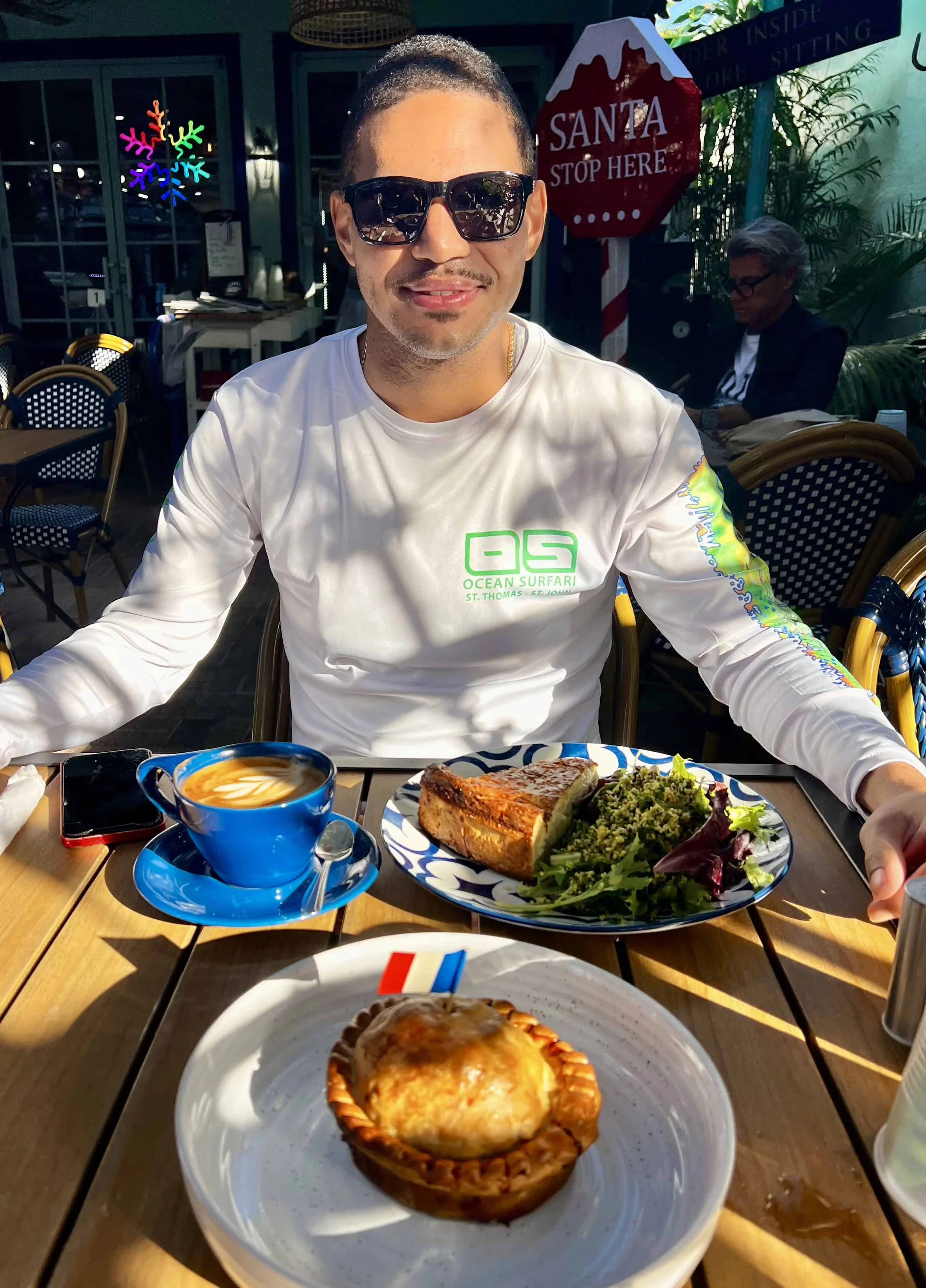
And so I had a great childhood, but unfortunately my parents split up, which is growing more and more common in sort of Western culture. And my father started another family, and I had really deep-seated abandonment issues that resulted out of that.
So that really shaped the way in which I viewed authority figures like coaches in sports growing up. And then it moved to employers as an adult and teachers and professors in high school and college and that type of thing. And you can kind of get a gist of how that would be something that one would need to change.
It also manifested its way in difficulties expressing myself emotionally with romantic partners and fears of being left alone if I let people into my life.
And I will candidly admit that my father and I kind of restored, or at least started to lay the foundations of restoring our relationship with one another before I encountered Psych-K. But man, Psych-K really found me in a place where it was able to affirm that the sort of hurts and maybe, for lack of better words, trauma—I don't want to overuse that word trauma—but the hurts and trauma that I had experienced as a child were producing habits that I could see throughout my adult life.
And I was able to utilize Psych-K to heal some of those wounds, to start the healing process, or take it maybe to a deeper place would be better terminology.
It really allows us to be honest with ourselves and take a lay of the land of where we're at. If we have a problem in our lives, sometimes we get pigeonholed in looking at the problem from one angle. And Psych-K helped me personally to look at my abandonment issues just from taking a step right over here or maybe 180 degrees and developing different habits and different techniques.
And I'm happy to report, like I said, that my relationship with my own father is now much better than it was even before we started working on it. My romantic relationships are much better than before I had encountered Psych-K. My career is much better. I'm a better employee, a better son, a better boyfriend.
So, you know, there are other spiritual disciplines like prayer and meditation and fasting. I'm a very zealous and I think pretty orthodox or straight-thinking Christian, so I want to give credit to these other spiritual disciplines. But Psych-K has been a huge tool that I'm passionate about, and I want other people to know about as well because it's pretty uncommon or behind the scenes.
Healing Your Relationship With Authority and Finding Emotional Balance
Brandi Fleck: Yeah. Yeah, it really is. I don't feel like it's in our mainstream zeitgeist yet, I guess.
But something that I would love to dive in a little bit more is the impact on your relationship with authority figures because I feel like we're in an interesting time in human existence and the leadership in the United States. Well, people are having trouble. I'll just say that without getting too specific at this moment.
And so we've got almost like respect for authority crumbling because the authority is not necessarily—I don't know, I can't even think of the way to put it. Maybe not the real authority, but maybe it is.
So what are you seeing in these bigger systemic patterns? And also, how does that relate to just an individual relationship with authority, if that makes sense?
Ty Briggs: Yes, yes, that's a great question. Well, I pray that this podcast will age like fine wine, so I won't get too into the nitty-gritty of what's going on at our time of recording here in 2026 at the beginning of the year.
But I will say that this is a phenomenon that has been going on for thousands of years. If we look back to the first century A.D., Jesus, when asked if his followers should pay taxes, he's like, “Give unto Caesar what is Caesar's.”
It's hard for me, Brandi, to have a candid conversation without getting really passionate about Jesus.
Brandi Fleck: Go for it.
Ty Briggs: Yeah, yeah, yeah. Because I think especially with authority, he speaks so eloquently about how to subvert the powers and principalities of our time as people, but still to respect their role in our lives.
So I do wrestle sometimes reading things like Martin Luther King's address that he wrote when he was in prison. I read that recently, and he spoke very passionately about not being caught in a neutral place. If you're neutral, you stand for nothing. If you stand on the fence, then you don't stand for anything.
So I want to be careful not to come off sounding like I don't have a stake in the ground on things. But at the same time, I guess this is really healthy for me too. On this podcast, I'm just kind of wrestling with what is the proper posture for one to have in the face of injustice.
I suppose all the prophets in the Old Testament of the Bible spoke zealously against injustice and that it is not healthy for society to stay in a place of hurt and harm. It's against the intention of God's creation.
But at the same time, it takes a lot of prayer, meditation, self-control to advocate for justice in a way that is in right standing with our true and proper purpose here.
Brandi Fleck: What is our true and proper purpose here?
Ty Briggs: So I think it is to be image bearers of God, to be representatives of his divinity here on earth.
And only, in my opinion, only Christ did that perfectly. Someone who I consider a teacher and a mentor, even though I never met them, is Sir Dr. David Hawkins. And he goes on to also add the Buddha as another person who was just a hair below expressing the full divinity of God.
But it really takes a lot of selflessness. And it's hard to be an extremist and maintain this sort of selflessness.
We are indeed humans, and we do make mistakes, and none of us are perfect, and we can get wrapped up in what we want more than what's best for everyone sometimes.
I think that's a pretty challenging wrestling match when we look at how to interact with authority in the face of injustice. And I don't know if that quite answered your question or not, but yeah, that's my thoughts.
Brandi Fleck: I think it's valuable that you are just kind of parsing through your thoughts here in real time for everybody to hear and see. Because I mean, I feel like a lot of people are going through that and trying to figure out where they are in relationship to everything else. And it's a confusing time.
Ty Briggs: It is.
Brandi Fleck: But what I see happening as you explore is you're leaning on teachings of Christ, even examples of the Buddha, other people who have done things that you think are valuable.
And so that's a good place to start, I think, for anybody who might be wanting to do something similar.
I want to know a little bit more about your personal relationship with authority to see if there are any parallels to the bigger picture. But also, I'm going to put a pin in the topic of selfishness versus selflessness because this comes up so much. I see clients as well. I'm not a Psych-K facilitator, but I'm a trauma-informed coach and Reiki master. And this topic is so prevalent. So let's come back to that.
But yeah, tell me a little bit more about your personal relationship with authority.
Ty Briggs: Yeah, yeah. On a personal level, like I was sharing, because of the sort of childhood subconscious beliefs that I had formed about abandonment from an authority figure, from a parent, right, I think that had shaped patterns in my life where I had a hard time fully respecting teachers and school coaches and sports employers.
And once it gets that deep-seated, that's an issue that needs to be fixed and resolved.
And I guess as I'm answering, I'll share as well that while I have a lot of growth in this area and I feel very good with where I'm at now, I am not coming before you, Brandi, as a sage who holds all the answers and who is walking on rarefied air.
Like I said earlier, as Psych-K facilitators, we use the word assumata, which is just “one who holds the stories.” And just as a person, I'm constantly growing and evolving.
But going back to how I was answering that question about how I interact with authority, Psych-K has really helped me to take a lay of the land of, wow, I do have these patterns in my life where I don't respect or I didn't use to respect authority.
And sometimes there are people in your life where they don't deserve your respect, but we're called to forgive. And forgiveness looks different with different boundaries in different relationships with different people.
And then sometimes if it's an employer, you got to pay the bills and keep the lights on. Just because you don't respect that person doesn't mean that you can automatically quit. Maybe you got a family you're providing for, you got a mortgage.
So yeah, I think definitely, like I said, prayer and meditation and fasting are huge to me, so I do want to bring those up. And those are ways in which I have prayed without ceasing, as St. Paul says in his book to 1 Thessalonians.
But Psych-K is also a really practical tool to just get a different perspective and look at things from a different angle and see if there are any deep-seated beliefs that we're carrying and that we can kind of let down and put down and stop carrying and start moving in a different direction that's less cumbersome and burdensome.
And so I hope that's a more intentional answer to your question there about how I've had these wrestling matches or battles with my perception of authority in the past and things that have helped.
Brandi Fleck: Yeah, for sure. And so I'm hearing you say that you didn't respect authority, you noticed this was a pattern, and then you took some steps to kind of start respecting authority.
The things that are coming up for me as you're talking are, okay, where does self-authority fit in? And also, when is it okay to not respect authority? Because I feel like there are times and places for both.
And how is that even—I mean, you've spent all this time healing your relationship with authority, and now we're in a moment where we're questioning it. That seems huge.
Ty Briggs: Yeah, that is. I think once someone has the answer to that question, they can write a New York Times bestselling novel, if I'm being honest.
That's a really good question, and I'm not convinced I have the answer.
As I ponder self-authority, I have a lot of thoughts that come to mind. Sometimes we deceive ourselves.
So again, I think for me, talking to God really helps to surrender myself to something higher.
Self-Authority, Personal Power, and Consciousness Explained
Ty Briggs: And ask for insight and wisdom beyond what is within my capacity. I know that there are other people that don't have the same beliefs that might take a different avenue. But that seems like that's typically what I do, I suppose.
And then Psych-K is a way in which it's not replacing any belief systems. In fact, it's helped build my faith in my belief systems even more deeply and helped me to search more intellectually into what I believe.
And so Psych-K is a tool that I have been able to use to see if there are certain seasons of my life where I need to pivot from certain relationships with authority figures, or whether I need better boundaries with certain relationships with authority figures.
Brandi Fleck: Yeah.
Ty Briggs: You know, I think all of us who are listening to this podcast and who are kind of in this space of, for lack of better words, self-improvement or wanting to know about consciousness and the way that reality works have done a lot of work. We've done a lot of work and a lot of research and a lot of searching.
And Jesus says you seek truth and you'll find it, right? So one really cool thing about Psych-K is that it validates that you have done the work and that the answers are within you or between you and God, depending on what you perceive about the self with like a small S versus a big S.
So it's basically saying, it's basically kind of affirming and empowering that you don't have to give someone else your power. You can figure this out. You're pretty smart. You're a smart guy or gal.
Brandi Fleck: So is self-authority the same thing as personal power?
Ty Briggs: Yeah.
I don't feel inclined to say yes, because again, the self, we can deceive ourselves. Not every thought we have is the best thought. Sometimes we just got to let thoughts go by like clouds in the sky.
But I think again to Sir Dr. David Hawkins. He wrote this whole book called Power Versus Force, which is a great read. All his books are great reads.
He talks about what power is, and he attributes a scale to certain belief systems with disempowering belief systems like shame, guilt, base desires, anger, being very low, and courage, acceptance, willingness, healingness, love, joy, peace, these fruits, fruit of the spirit the Bible talks about, being very empowering.
And I think that if we're operating in a space of self-authority in these low states of consciousness, then it's not serving us. But if we are sort of in my, what I would perceive to be, surrendering ourselves to something higher—some other people who believe different things might use different verbiage for that—and then walking in these empowering states of consciousness in self-authority, then it's a whole other story.
Brandi Fleck: Yeah, I really like that distinction. That resonates a lot with me. And I think a lot of the people here, it'll resonate with. So that makes a lot of sense.
Okay. Is there anything else you want to say about just your path before we kind of dive more into Psych-K?
Ty Briggs: I don't think so. I think we've touched on daddy issues. We've talked about God. We're moving along great.
Why Psych-K Is Powerful for Personal Growth and Healing
Brandi Fleck: Okay. Well, then I know we have been talking about current events a little bit in a kind of abstract way, but why is Psych-K uniquely relevant and powerful in 2026?
Ty Briggs: Yeah, that's a great question. I have a belief system that nothing is a coincidence, and I don't pretend to know all the answers. I don't know why good things happen to bad people and vice versa, and I think it's pretty crass to try and pontificate on why sometimes.
I think that Psych-K is a way in which people can very practically walk into a one-hour session desiring to improve their life and walk out feeling affirmed that they have the tools they need to improve their life.
And it's not because of anything anyone said to them. It's not because of anything external. It's because of validating who they are.
And for people who want to grow either in consciousness or in their faith or in very practical kind of worldly things like their nutrition and dietary and exercise habits or their career, typically we've put a lot of work into these things and Psych-K kind of brings more access to where we've stored those thoughts and memories. It helps bring forth revelation in people's lives.
So I think that's always powerful, whether it's 2026 or 2036.
Selfishness vs Selflessness and the Search for Balance
Brandi Fleck: Yeah. Okay. So I heard you say it validates who they are. It validates the self. And this brings us back full circle to selfishness and selflessness.
One, I think living as your true self and having confidence in that kind of helps you navigate muddy waters and helps you change the world in a way. Because if you change the internal, the external around you just automatically starts to shift.
Ty Briggs: Mm-hmm.
Brandi Fleck: And then secondly, so I guess what's coming up is that if you're living as your true self, there is some amount of selfishness in that. So what are your thoughts there?
Ty Briggs: Yeah. Yeah. Yeah. People are imperfect. As I said before, the only person who a perfect life was ever attributed to is Jesus. No one else can make any kind of a claim that anyone would believe that they lived a perfect life.
So we're going to have shortcomings and mistakes and these thoughts and feelings and actions, unfortunately, that Christianity and Judaism call sin, right? Falling short, missing the mark.
And both of these religions that I just mentioned have a lot of really great teachings about grace and mercy and forgiveness. But oftentimes we don't remember that we need to give ourselves grace and mercy and forgiveness.
And Jesus said that depending on what translation of the Bible you like, the kingdom is within you. The kingdom of God is within you. It is amongst you. It is around you. It is in your midst. So all those different translations mean that it's tangible, like it's grabbable, like we could be living a life that is much better than the life that we have.
And I think that all starts in our battle within our minds. So yeah, does that answer your question?
Brandi Fleck: Maybe I'm just gonna—it's early. We're doing like, this is really philosophical. And I think I'm gonna challenge you here in just a minute, if that's okay.
Ty Briggs: Yeah, yeah.
Brandi Fleck: Okay. What I feel like there's an underlying belief here that selfishness is bad or something that we need to extend grace for ourselves for. But if we are looking at being our true self as actually good and powerful, then does that not imply that some amount of selfishness is actually our true nature, which is also okay?
Ty Briggs: That's a good question. I think that we have to take care of ourselves. If we don't, then we die.
Brandi Fleck: Yeah.
Ty Briggs: So there's an element of self-preservation that is healthy and needed and necessary. That's a good point that you bring up. And I don't mean to over—it's probably not even a word—but like over-philosophize.
Brandi Fleck: I think that's okay. Philosophize.
Ty Briggs: But I just don't tend to, I don't think I would use personally just selfish with something I want.
Brandi Fleck: Yeah. Okay. So you would classify it a little differently. Self-preservation isn't necessarily selfish.
Ty Briggs: Yeah.
Brandi Fleck: And then if we get onto the topic of selfless, if we are always selfless and we are giving up of the self, then where does that authority or power go? So I feel like we can't just be completely selfless all the time either. Just like nature. I feel like we've come full circle.
Ty Briggs: Exactly, exactly. Right.
There are these great examples in the, for better or worse, however people feel about the Catholic Church—and Catholic means universal, so ironically, I consider myself Catholic, but not like what we would typically in the year 2026 call a Catholic—but Catholicism has a tradition of being around for a really long time.
And there are these what they would call saints from the medieval period of Europe who great things are written about. These men and women who lived a life of selflessness.
But I must admit that as someone who likes certain things in this life, like the computer I'm talking to you on and like my car and a good steak dinner, I don't envy the lives of these saints, even though they were incredible people, because they lived a life where I don't see very much self-preservation, right?
I think of Francesco of Assisi in particular, a man who is the patron saint of nature, apparently, and who had a very admirable life and contributed so much to this world that here we are talking about him maybe 800 or 900 years later. But I don't want his life. I don't envy him.
Brandi Fleck: Yeah. So it's an interesting thing to think about and to discuss. For sure. Well, I really appreciate you kind of just exploring it with me, because I think these are important things for people to think about and explore on their own as they're finding balance and they're trying to heal. So I appreciate it.
What to Expect From a Psych-K Session and Where to Start
Brandi Fleck: So to just kind of sum things up today, we've talked about what Psych-K is, kind of your life and how it's helped you change some things in your life. If there was one thing you could say to somebody who was considering Psych-K, what would you want them to know?

Ty Briggs: Yeah, that's a great question. I used the flower analogy earlier. You can talk about a flower ad nauseam. There's probably books that break down all of the little components of a flower.
And yet if you don't go see it and smell it, you have no idea what you had just learned about. So I just encourage anyone who's hearing this, if this is resonating with them, to experience Psych-K.
And there's lots of different ways to do that. I do encourage them, not because we are, as Psych-K facilitators, people who hold esoteric wisdom. That's not what I want anyone to leave this thinking at all. But I think that there might be some materials out there on the internet that are not fully expressing what Psych-K is.
It's pretty, like I said, it's a flower. If you're trying to describe a flower, you're not actually experiencing it. So I would encourage them to check out a facilitator who's listed on the Psych-K website or to sign themselves up for a workshop. A workshop will teach you how to do Psych-K with yourself. And what's more empowering than that?
So that would be my advice.
Brandi Fleck: Nice.
Ty Briggs: Well, unsolicited—well, I guess it was solicited.
Brandi Fleck: Ty, where can people find you and the work you're doing in the world?
Ty Briggs: Yeah, you can find me at my website, which is theveritasconsulting.com. You can find me under the Psych-K preferred facilitators list on the Psych-K website. Just type in Ty Briggs, and you'll see me there.
And my social media is pretty inactive because I haven't done enough work with myself to affirm that that's something I want. So those are probably the two best places to catch up with me.
Brandi Fleck: Gotcha. Well, all of that will be in the show notes for everybody to go check out.
So yeah, look Ty up. Do schedule a session if you want to give it a try. And Ty, thank you so much for coming on the show today.
Ty Briggs: Brandi, it was a pleasure.
Join the conversation!
Feel free to share your own experience and let me know if you have any questions in the comments.
Related Posts











Hi, I’m the founder of Human Amplified. I’m Brandi Fleck, a recognized communications and interviewing expert, a writer, an artist, and a private practice, certified trauma-informed life coach and Reiki healer. No matter how you interact with me, I help you tell and change your story so you can feel more like yourself. So welcome!
Find More on the Blog
Topic
- ADHD
- AI
- Atlanta
- Black and BIPOC
- DIY
- FAQ
- LGBTQIA plus
- Los Angeles
- Nashville
- Seattle
- St Louis
- St. Louis
- UFOS/UAPs/ETs
- abuse
- accountability
- addiction and recovery
- adoption
- affirmations
- afterlife
- altered state
- angels
- animals
- anxiety management
- art
- astrology
- atlanta
- attachment
- awakening
- beauty
- behind the scenes
- being human
- body image
- body work
- boundaries
- brandi fleck
- breathwork
- bullying
- burn out
- burnout
- cancer
- career
- caretaking
- chakras
- channeled
- clarity-dive
- clarity-practice
- clarity-primer
- clean products
- coach
- codependency
Recent Blog Posts

Visit the Full Podcast Audio Archive

Affiliate


Psychology specialist Corey Hatfield explains character strengths, anxiety, mindfulness, and why two people can experience the same situation in completely different ways.