
How to Find Meaning in an Impermanent Life
Interview By Brandi Fleck

John M. DeMarco reflects on impermanence and the tension between control and acceptance. He explores how meaning, legacy, and peace take shape in a life where nothing stays the same.
We spend a lot of time trying to hold things in place. Our identity, our relationships, our sense of control. But what if nothing is meant to stay the same?
In this conversation, John M. DeMarco reflects on impermanence and what it means to live fully within it. Instead of resisting change, he explores how awareness, presence, and acceptance can lead to a deeper sense of meaning.
He talks about the tension between wanting things to last and knowing they will not. The way we chase certainty, avoid discomfort, and hold onto versions of ourselves that no longer fit. And what starts to shift when you stop trying to control every outcome and begin paying attention to what actually feels meaningful.
From the mind-body connection to legacy and purpose, this is a grounded look at how meaning is not something you arrive at once, but something you notice repeatedly as you live.
Listen to John M. DeMarco’s Interview
Watch John M. DeMarco’s Interview
Why Presence and Awareness Define the Human Experience
Brandi Fleck: What does being human mean to you?
John M. DeMarco: I love that you asked that consistent question of everyone. For me, it's being in touch with what's happening inside my body, actually feeling things in real time, like having my head and my body be connected, rather than just being lost in thought, because you can be lost in thought and still be human, using the brain.
But I find that I feel most alive when there's this symphony between my breath, my mind, my body. And when I'm able to generate that symphony through mindfulness or meditation or those wonderful moments of flow or being in the zone, I feel this deeper joy and sense of purpose and excitement. That's when I feel most alive, and therefore that's when I feel most human.
Not sure how that aligns with what other guests say, but that's what comes to mind for me.
Brandi Fleck: It's interesting because I've been asking people this question since the fall of 2017, and it has changed over the years. It's really interesting because people are starting to talk about their bodies and getting back to the basics of reconnecting, and I find it so interesting.
There's this connective tissue between conversations of different people from all different backgrounds across time.
John M. DeMarco: Yeah, and I love that you used the word symphony. It reminds me of that too. It's like all the different pieces and parts come together to make the whole, and it's this beautiful thing. So I love that.
Brandi Fleck: Everybody, I would love to welcome to the show today, John M. DeMarco.
John, thank you so much for being here, and welcome.
John M. DeMarco: Thank you, Brandi. It's great to be here, a real honor.
Brandi Fleck: Awesome. I'm looking forward to our conversation today. Before we jump in, can you just give our listeners a rundown on who you are and what you do?
John M. DeMarco: Yeah, certainly. I'm a professional executive coach. I coach executives, managers, high-potential individual contributors.
I do a lot of 360 coaching and assessment coaching. I spent 18 years as an internal coach within HR departments, primarily in technology and healthcare. Now I'm running my own full-time coaching practice out of my home base in Nashville and anywhere else that has an internet or an airport.
Brandi Fleck: Awesome. And aren't you an author as well?
John M. DeMarco: I am. I've been writing since I was a kid. It's always been my first love.
I was a journalist in my 20s. I did a lot of creative writing growing up and have written and published three books and do a lot of articles and scripts. I love creating content and always have.
Brandi Fleck: Awesome. I know some of the things we're going to talk about today are things that you work on with your coaching clients, but also you work these themes into your characters when you're writing fiction. Is that true?
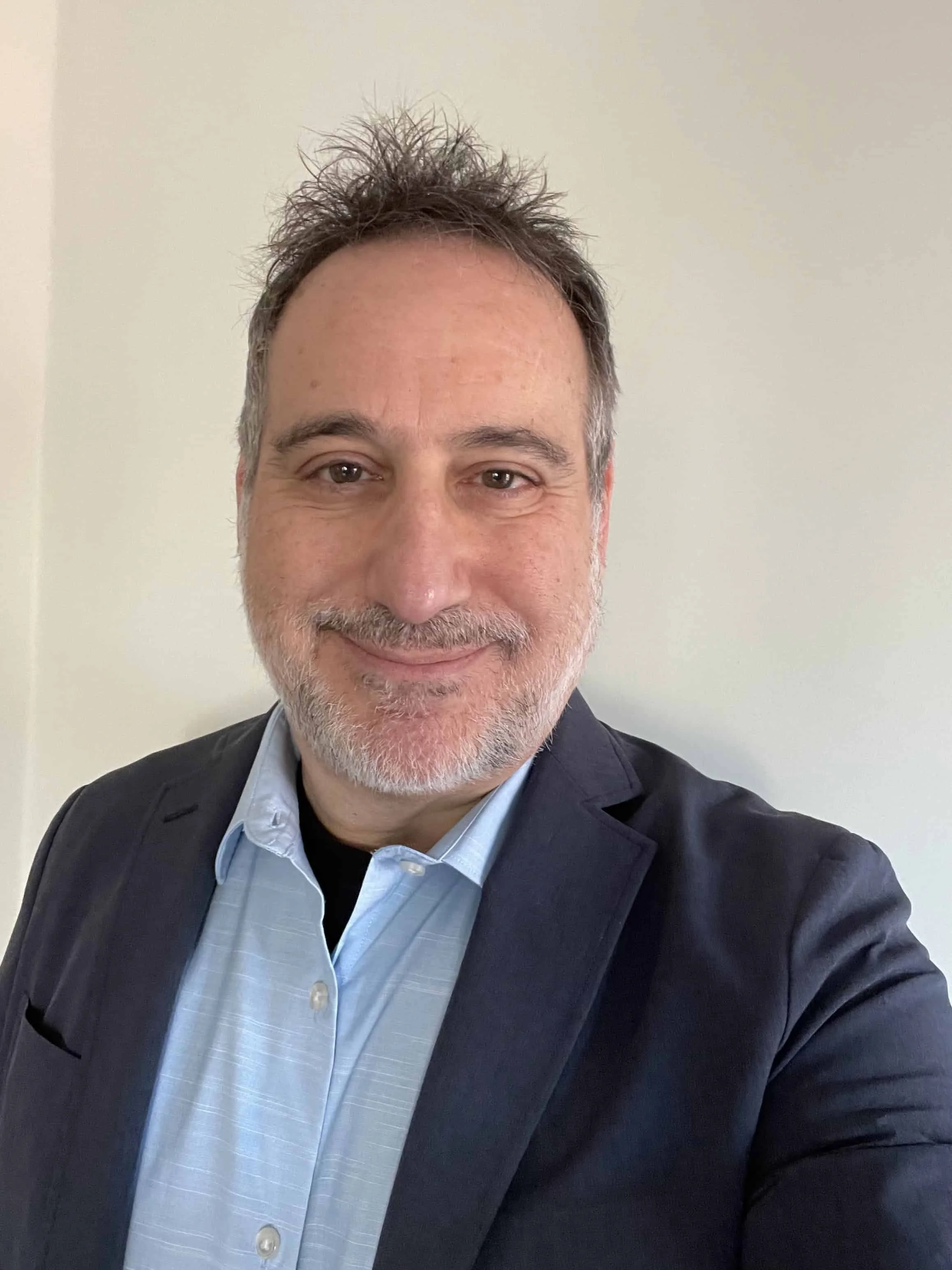
John M. DeMarco: I do. That's really interesting. The last six or seven years, it's not like an era, but it seems that somewhere around 2017 or 2018 there was a shift toward reading even more of certain kinds of books, mindfulness books by authors who were different than me, more diverse backgrounds, and then really beginning to lean into reading about technology and AI and virtual reality and all those things, and connecting some of those dots.
The last time I published any work of fiction was early 2018. I have been living with this group of characters that I first started dreaming up around 2017 or 2018.
They have moved into various different potential writing projects. About three and a half or four years ago, they finally found a home in this novel that I've been planning and researching since late 2020. It's amazing how much things have developed, how much the characters have changed, how much I've changed, and how my thinking has iterated.
I feel like I say this every few months, but I'm pretty close now to actually starting the first draft.
I do have a very robust outline. I know what I think is going to happen, which, of course, you learn so much about your characters and the story along the way, which is exciting and kind of terrifying, because it could suck. That's why I said it. If I say one word, it might suck. I can say that, right?
Brandi Fleck: Yeah, you can say that. But I'm sure it won't suck. Putting yourself out there as a writer does have a certain vulnerability that comes with it, because those characters seem like they're pieces of you. Would you agree?
John M. DeMarco: I think any fiction writer builds people out of thin air, but each of the characters. There are really four key characters, one main and three very high-level supporting, and even though as a whole they're very different from me, they each have parts of me.
What's been kind of fun is this is where it connects back to some of my work. These themes that I've been thinking and writing about in terms of things I put on my website or LinkedIn, topics around AI, impermanence, meaning, business, and career sustainability. These are also themes that my characters are wrestling with as part of the storyline. That was not something that I planned out.
I realized that these themes gradually are emerging and they tie together. Because I'm both a fiction writer and a nonfiction writer and speaker, I want to explore these in multiple directions. That's the challenge. I have to make sure my novel doesn't read like a group of blogs or essays. It's got to be a story. It's got to have a story hook and keep readers curious about what's going to happen next.
I love being able to take areas where I've been thinking deeply and populate them into different parts of my work. Depending on the client, these could also be things that clients bring up as things they're wrestling with.
Understanding Impermanence and Why Everything Changes
Brandi Fleck: Yeah, for sure. I love this multidimensionality that you're exemplifying. Maybe we can dive into that a little bit. I'm excited to see if any of the pieces come together as we discuss this.
You mentioned the topic of impermanence. In the real world right now, people are dealing with lots of transitions and uncertainty, so it seems like a really relevant topic. What does it mean to manage expectations around impermanence?
John M. DeMarco: It's something I didn't really start thinking deeply about until about five years ago. Somewhere around 12 to 14 years ago, I started reading books about mindfulness but still had mainly a superficial understanding.
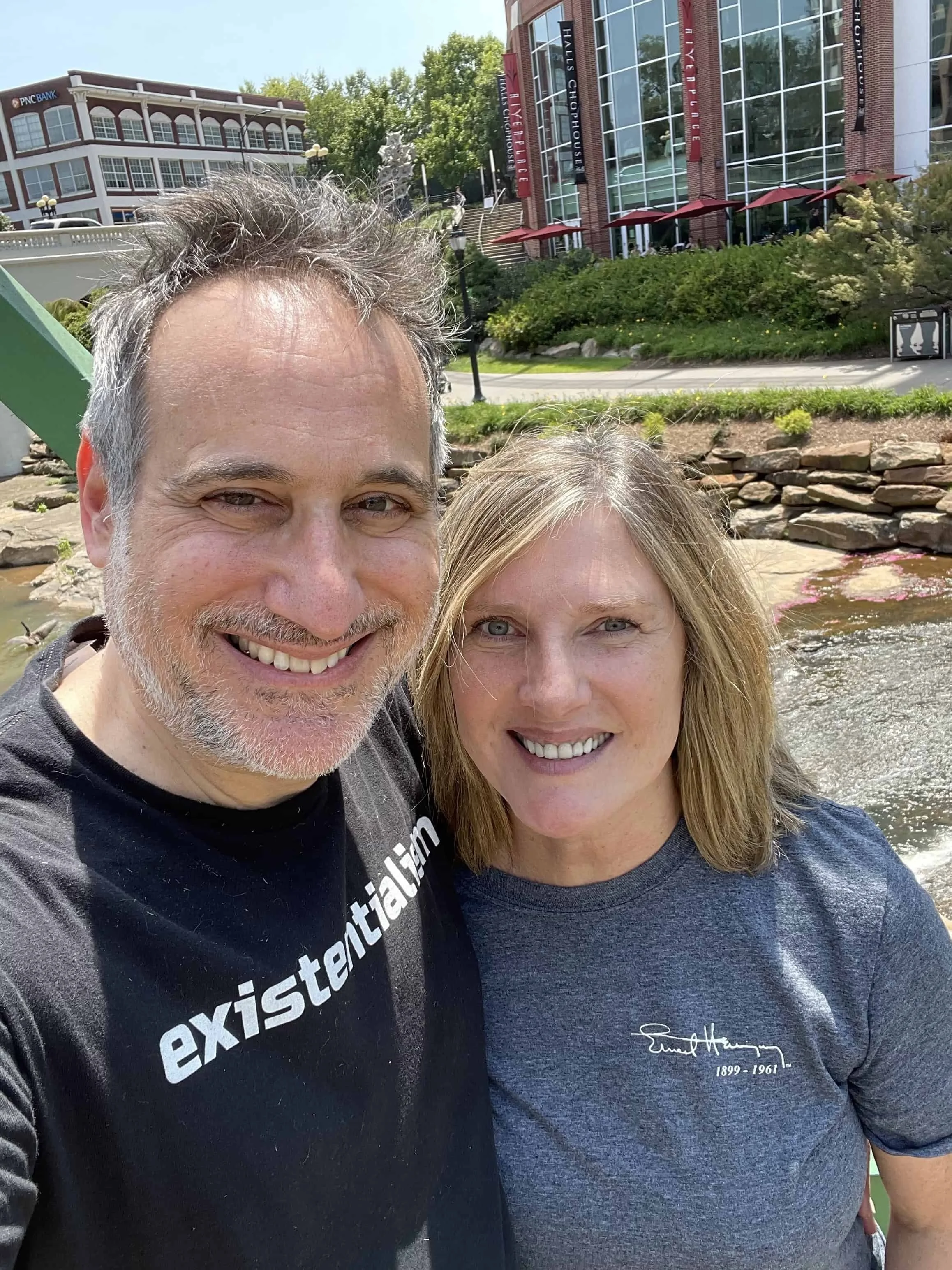
A little more than five years ago, I was on a flight to Italy with my wife, and I brought along a book by Thich Nhat Hanh, the late Buddhist monk and an amazing thought leader. It was a book that was a deep overview of Buddhism.
While I had been studying and trying, with limited success, to practice mindfulness, I hadn't gone deep into the source literature. Buddhism is ultimately a toolbox, a set of teachings. Some see it as a religion. Some, like me, see it as a toolbox, very universal things that you can apply to almost any context or belief system.
What struck me in that book was when Thich Nhat Hanh said there's something deeper to the Buddhist teaching than the Four Noble Truths and the Noble Eightfold Path, which Buddhism is most known for. I was reading and thought, what could be deeper than that? He starts talking about impermanence.
It's one of those things that hides in plain sight. We know about it, yet we don't know about it. What I came to realize is how everything and everyone is constantly changing.
Every second, we've got cellular turnover happening by the millions in our bodies. We're processing and digesting. Kids and adolescents are growing and creating new neurological pathways. Plants are evolving. Animals are interacting and changing their habitats. Rivers and oceans are causing erosion and creating new pathways. The earth is shifting. Light and shadow, nothing is ever fully standing still.
That cuts across the board. I've tried to think of something that stays the same from one moment to the next, but I haven't been able to come up with it.
We know none of this is going to last, from possessions to careers to the people we love to our lives. Even if technology extends life, at some point the clock runs out. Impermanence is always this undercurrent that's there whether we acknowledge it or not, and it shapes how we engage reality and others.
What has worked for me is writing out some of these key practices and mantras in journals. I'll write it out, use it for a while, and rewrite it. I've probably done it 40 or 50 times. I like having those notes to keep me grounded.
Based on what I've come to understand, managing expectations around impermanence means being willing to acknowledge that things are impermanent. Because of that, there are two other things that are important to realize.
Because nothing lasts, nothing is ever fully satisfying. If you think about the human condition, we're always a little bit restless. We're always looking for that next experience, opportunity, text message, emoji, or like.
Even when we're satisfied, there's part of us that wonders if there's more. I think it's because we know deep inside that things don't last forever.
In addition, because nothing lasts, ultimately that means there's no separate self in the sense that we're all connected to all other living beings. We come from stardust after all.
John M. DeMarco: And so how can we be this permanent, separate self if we're this impermanent gathering of water, air, fire… the fourth element.
Brandi Fleck: Earth?
John M. DeMarco: Earth, yes.
It's hard for us to embrace the reality that things are going to change, that people are going to die, that we're going to die, that jobs and careers will go away. I also think it's hard for us to get our arms around the fact that we were never fully separate from each other.
And therefore, when we condemn someone else, we're in some way condemning ourselves because there's not truly a separation like we want there to be. It seems so important for us to have an identity that's unique, where we feel like we are this solidified, permanent kind of person.
What I've learned and noticed in my own life experience, in terms of managing our expectations around impermanence, is that when we don't manage them well, we give in to things like greed and selfishness. We want things to last. We want to be this separate, special kind of person. We want to be fully satisfied.
That leads to poor decisions in how we interact with people, in relationships, in choices we make, and in things we use to escape in unhealthy ways, like addictions.
In addition to that sense of greed, wanting things to be a certain way, we can also, when we feel threatened, when something we want is not being given to us or we fear it being taken away, get caught up in fear, anger, and aversion toward others. Again, the impact that has on relationships and our careers.
Sometimes the third way we poorly manage our expectations around impermanence is just being delusional. We've convinced ourselves that something is going to be a certain way and stay that way. Then all of a sudden, the rug is pulled out from under us, and we're shocked because we haven't really managed impermanence by being willing to see it.
I have a counter observation of how we can effectively manage impermanence as opposed to what I just shared. Do you want me to go into that now?
How to Let Go of Control and Embrace Uncertainty
Brandi Fleck: Sure. While you were talking, I was thinking, I feel like one way to effectively manage impermanence is to go with the flow. What would you say about it?
John M. DeMarco: Yeah, I like the way you phrased that, go with the flow, because I think that ties into what I see as a healthier, more effective way to manage expectations.
That is through embracing what is. Being willing to see things for what they are and doing what we can to influence things, but learning how to let go of the need to control outcomes of every aspect of our lives.
Knowing that in the end all of this is going away, it's kind of like, how do we make the most of it while we're here? How can we spread love, kindness, compassion, and joy? How can we live in a place of equanimity where we have a more balanced approach to things?
Another clarity I've gained around mindfulness, grounded in the teachings of Buddhism, is that when we're practicing mindfulness, we are honing in on impermanence.
We are noticing how everything is arising and passing away. The in-breath, the out-breath. Nothing is staying the same. We can learn to have curiosity and observation without feeling destroyed or threatened by it. It's recognizing that this is reality. Everything is arising and passing away.
You might think that could lead to disillusionment or nihilism, or a sense of, "This life sucks, how do I get out?" But I have found that the more I lean into seeing things as they are, impermanent, arising, passing away, there's this undercurrent of joy. Things start to feel more meaningful. There's a sense of peace.
That is especially amplified through a practice that I always butcher the pronunciation of—the Brahmaviharas. It's sometimes called the four immeasurables.
It's a set of mantras around four areas: loving-kindness, compassion, sympathetic or altruistic joy, and equanimity.
When I am consistently reciting and leaning into these mantras, that becomes a way to not just cope but thrive in a world where nothing lasts. It's a way to nurture yourself and also have deep, abiding feelings of love, respect, and kindness for other people, which is not always easy in day-to-day life.
Brandi Fleck: Yeah. I really love how you connected impermanence to meaning-making or having a meaningful life. I think we'll go there in just a second.
But before we do, how does this philosophy or this deep thinking that you do, I'm assuming for your own personal management of impermanence. How does this look in a coaching relationship?
John M. DeMarco: The important thing to know about coaching is that the coach doesn't bring the agenda to the table. The client brings the topic.
I start every coaching session with some version of, "What would you like to talk about today?" or "What are you hoping to walk away with today?"

There are times when a client brings up a topic related to mindfulness, either directly or tangentially. There are also moments when a client is talking about feeling a lot of stress or having a hard time feeling connected to their body or trying meditation.
I try to be aware, like I am with any topic, that this person might be curious about how to live more mindfully. If they surface that topic, there are times when I ask permission to explore it more.
There have been times when, with the client's permission, I've led them through a brief activity, like a breathing exercise or a body scan.
I don't brand myself as a mindfulness coach. Mindfulness is a tool in my coaching toolbox that I bring out when it's appropriate based on what the client is bringing.
Brandi Fleck: Gotcha. That's really interesting to me because I'm also a coach. Something that comes up for my clients quite a bit is legacy.
It's on their mind, and it doesn't necessarily have to be because they're older. I've noticed it comes up across all ages at certain points.
What Is Legacy and How Do You Want to Be Remembered?
What are your thoughts on legacy? Is it important? Does it have to do with not dealing with impermanence? What's there?
John M. DeMarco: I was thinking about that question as I was preparing for this interview. I keep thinking of a line from Hamilton, which I’ve played so many times it's stuck in my brain.
There's a refrain that says you have no control who lives, who dies, who tells your story. I think there's a lot of truth in that.
Whether we want to or not, each of us has or will have some kind of legacy. It's impossible to go through life and not impact other people or organizations in some way. Good, bad, or indifferent.
John M. DeMarco: And so it's sort of like I had a professor in graduate school who was talking about, it was a class on public speaking, but he pointed to something larger, saying in terms of communication that you cannot not communicate. Every second you're around other people, your body language, your tone, your inflection, whatever it happens to be, you are communicating something.
And like with organizations, with branding, every brand is always telling a story. Every organization is known for something. Every individual, because we have personal brands, is always communicating our value or lack thereof. So I see legacy in the same way.
We touch the people around us. What can be tough is we know each of us has made some deep positive contributions in the lives of others, and then each of us has messed up as well.
One of the challenging things for me as I've gotten older is learning to live with the fact that there are some people who have crossed paths with me where my legacy might not endure in a positive way with them. There's nothing I can do about that.
Being willing to live with the imperfections within impermanence and to focus on how to spread as much love, compassion, and goodness as I can. Knowing that it's not going to land with everybody, but that I can have a sense of peace and meaning that I did my part to try to make the world a little bit better, to bring a little more kindness to the world.
So that's how I view legacy.
Brandi Fleck: What's really interesting is how you brought the multidimensionality into the discussion about legacy. I think I've always looked at it as we have one legacy that we leave behind.
But what's cool about what you just said is that your legacy changes depending on who you're talking to that you've impacted. You could have a million legacies because you've crossed paths with so many different people in your lifetime.
I don't want just one. What if it's bad? Yeah, that's really interesting to think about.
John M. DeMarco: Ultimately, these things we're talking about, there is this connective tissue between all of them. I found that preparing for this. I was writing out my thoughts and putting them into clusters and buckets, then drawing arrows back and forth.
These ultimately come back to the same thing: how do we create meaning and spread joy and love in a world where nothing lasts?
Brandi Fleck: Does the legacy last?
John M. DeMarco: I think legacies that are passed on last.
Brandi Fleck: Like through tradition?
John M. DeMarco: Traditions or memories. My father is no longer living, and my daughters only knew him briefly when they were little, but I've been able to share stories about him.
So in some sense, his legacy lives on. If they choose, if they have children someday, hopefully not for a long time, they may pass on those stories.
As a writer, we always hope that our work will be read, certainly in our lifetimes, but also after we're gone. Some legacies will endure in pieces, maybe fragments. Some things won't. There are probably things we do or say that will be long forgotten.
Again, learning to live with that tension, learning to let go of control and influence what we can, but ultimately being willing to accept things as they are instead of being tormented by them.
How to Accept the Past Without Being Tormented by It
Brandi Fleck: Can you tell me a little bit more, and I did not plan to ask you this, but can you tell me a little bit more on acceptance?
How does somebody even start to accept what is as opposed to being tormented by it?
John M. DeMarco: That's been my lifelong journey, Brandi. People process, learn, and grow in different ways. For me, it's always been not just reading, but especially writing things out in response to what I'm learning. From a book, a film, another person, or what's bubbling inside my own head.
What has helped me is constantly writing out and processing things, looking at them, trying to see connections, and eventually trying to stop repeating the same behaviors or thought patterns.
I've especially leaned into areas of pain, things that have been harder for me to accept. Times when I've let my children down or hurt others in relationships.
First, being willing to look at it and say, okay, yes, these things actually happened. These are the things that have brought me joy, and these are the things that have brought me sorrow or anguish or brought that to others.
Through reflecting on them regularly over time, processing them sometimes in therapy or with family or friends, learning to acknowledge that it's the truth instead of trying to create a cultivated persona in my own head, like we do online with social media.
Being willing to keep it real inside my own head. We don't need to tell the world everything we feel about ourselves, but it's been helpful for me to see it and own it. Then through practices like compassion, kindness, and equanimity.
It's a lifelong process because I'm trying to unlearn decades of wiring and neural pathways. This is still recent in my life. I mentioned exploring mindfulness 12 to 14 years ago, but it wasn't until about five years ago that I really started to go deeper and be consistent.
It's crazy what sticks in our memory, the tension and pain we hold in our body, things that pop back into our head, self-condemnation from when we were teenagers or young adults that still lingers.
Acceptance may not be an event, but an ongoing process, like everything else. The only thing arriving is hopefully getting closer.
Brandi Fleck: My wheels are turning here because I'm like, how does this relate to impermanence and legacy? But when you're talking about how it's a process, it reminds me of what you said in the beginning about managing and accepting impermanence.
John M. DeMarco: Yeah. It may be the central problem that we face as human beings. I don't know if it gets any bigger than the fact that we're all going to die. Mindfulness is hard.
Brandi Fleck: It can be. I feel like it's a really beautiful process, even though it's hard.
John M. DeMarco: Yeah. When you attempt it and keep at it, it's like you're touching some kind of goodness.
I think about what Martin Luther King Jr. said about the moral arc of the universe bending toward justice.
You tap into this acceptance of things as they are and practice mindfulness. I'm feeling right now, just while we're talking, this sense of an undercurrent of peace trying to break in and become part of the dialogue of all the things going through our minds at any given moment.
I can't fully put my finger on it. My spiritual life has evolved to the point where I'm not sure what kind of being may or may not be out there. But as I press into these things we've been talking about, I feel some kind of abiding energy or presence, some deeper sense that there's a small part of something that could be quite majestic and wonderful.
I don't want to miss out on experiencing that while I'm here.
Brandi Fleck: Yeah, I'm not sure I'm going to go with that. But that's okay. That's really beautiful. I got full body chills while you were talking. So let's pivot a little bit into making meaning.
How to Find Meaning, Purpose, and Joy in Everyday Life
Why does making meaning matter, and where does the meaning come from?
John M. DeMarco: I think the meaning comes from paying attention to the stuff that helps us feel most vibrant and excited amid this temporary Earth suit that we're wearing.
Brandi Fleck: The meat suit.
John M. DeMarco: And this maybe ties into identifying where our key values are. I've noticed that I have three foundational values, and like all values, they've evolved over time.
For me, that's self-care, relationships, and vocation, a sense of purpose.
When I'm attentive to nurturing those areas, I'm not as caught up in my head, worrying about not getting what I want or losing what I have or feeling like other people are the enemy or that I'm somehow special and excluded from suffering.
It's not like I'm thinking in the moment, this is meaningful. It's more noticing over time.
Practicing self-care, relationships, and vocation. And I use vocation loosely because it doesn't just cover my professional work. My work has always felt like a calling, but it's also experiencing the arts. I love jazz. I love music. I like going to museums.
I don't always love it, but I appreciate it. Just the things that nourish me.
At some point, things don't stay in one category. If you're willing to embrace the long haul of this journey, pay attention to the things that give you that sense of peace, excitement, and joy.
Do what you can to position yourself to experience those things again and again.
Hopefully, if you're able to lean into those things each day, you have those little moments of meaning. Those are wonderful moments.
Brandi Fleck: What is meaning?
John M. DeMarco: I don't know. What do you think it is? When I think about my values of self-care, relationships, and vocation, I feel like those values inform what I really want.
And I notice that I use the words joy, meaning, and peace interchangeably. Over time, through struggles and failures and setbacks, my humanity feels amplified when there are moments of joy, meaning, or peace.
I don't really know how to differentiate them. I'm sure others could, but they blend together for me. I don't know where joy ends and meaning begins or where meaning ends and peace begins.
It's just this abiding sense of, yes, that's meaning.
I realize as I'm answering that I don't know if I've ever tried to put it into a sentence. I've thought about what creates meaning or what has lasting meaning.
I guess meaning is any experience where we feel part of something bigger and that life is worth it. Maybe we'll stick around, be loving, and give it our all.
Brandi Fleck: Yeah, I really like that explanation.
John M. DeMarco: I just thought it up.
Brandi Fleck: I've never given too much intentional thought to that either. If I think about it, for me it has to do with purpose.
Meaning is purpose. Then that ties back into joy and peace and being part of something bigger than ourselves, which goes back to your point about oneness.
It's a lot to think about, but I think a takeaway for our listeners is that if you can fully feel in your body a yes, then there's some kind of meaning there. It's important. I'm not sure how you would quantify that.
John M. DeMarco: Yes. What kind of yes?
Brandi Fleck: You know, yes. A true yes. Sometimes you just know.
John M. DeMarco: Not just a yes, but a yes beyond the words.
Brandi Fleck: Yeah. We've talked about a lot. It's been philosophical and spiritual, and I love these conversations. I want to make sure we covered everything you think is important. Is there anything I didn't ask that you want to share?
John M. DeMarco: No. I'm grateful whenever I can have one of these conversations.
I haven't been a podcast guest many times, so it's a privilege to be invited to your show. I've learned more about myself by grappling with these questions in real time and hearing what comes out of my mouth.
I think about things I want to explore more or understand better. I can't think of anything else to cover. I feel like we covered a lot, mostly because I talked a lot.
Brandi Fleck: No, I think it was great. Thank you so much. I'm honored you came on the show. I was excited to have you, so thank you for being here.
John M. DeMarco: Thank you, Brandi.
Join the conversation!
Feel free to share your own experience and let me know if you have any questions in the comments.
Related Posts
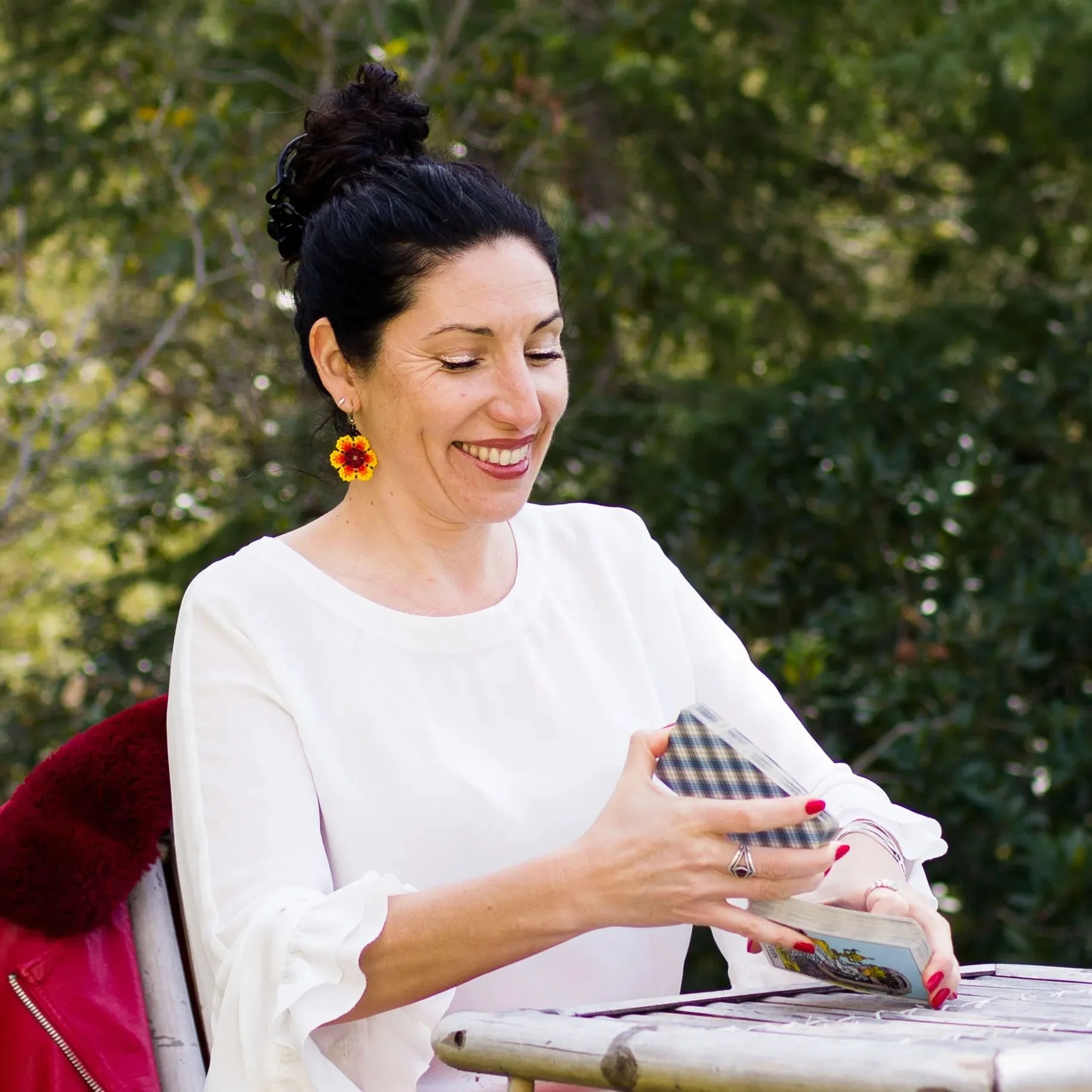










Hi, I’m the founder of Human Amplified. I’m Brandi Fleck, a recognized communications and interviewing expert, a writer, an artist, and a private practice, certified trauma-informed life coach and trauma recovery coach. No matter how you interact with me, I help you tell and change your story so you can feel more like yourself. So welcome!
Find More on the Blog
Topic
- ADHD
- AI
- Atlanta
- Black and BIPOC
- DIY
- FAQ
- LGBTQIA plus
- Los Angeles
- Nashville
- Seattle
- St Louis
- St. Louis
- UFOS/UAPs/ETs
- abuse
- accountability
- addiction and recovery
- adoption
- affirmations
- afterlife
- altered state
- angels
- animals
- anxiety management
- art
- astrology
- atlanta
- attachment
- awakening
- beauty
- behind the scenes
- being human
- body image
- body work
- boundaries
- brandi fleck
- breathwork
- bullying
- burn out
- burnout
- cancer
- career
- caretaking
- chakras
- channeled
- clarity-dive
- clarity-practice
- clarity-primer
- clean products
- coach
- codependency
Recent Blog Posts

Explore More on the Podcast

Latest from the Podcast
Shop My Socially Conscious, Playful Art



Psychology specialist Corey Hatfield explains character strengths, anxiety, mindfulness, and why two people can experience the same situation in completely different ways.