How to Reconnect With Your Body After Trauma
Interview By Brandi Fleck
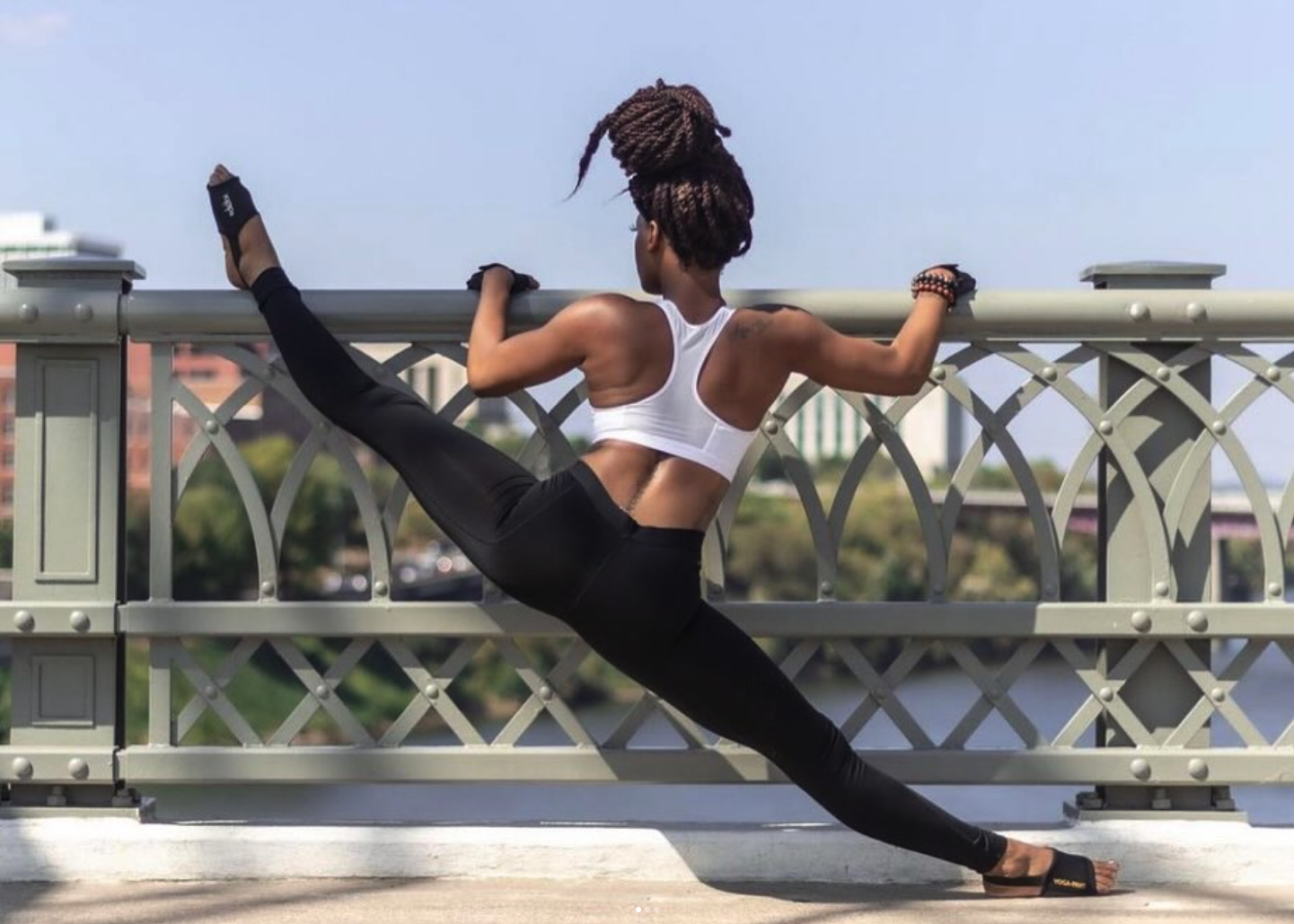
Renee Watkins shares how trauma and stress disrupt body awareness and how reconnecting through breath, boundaries, and lived experience changes how you move through daily life.
For a lot of people, disconnection doesn’t feel dramatic. It feels normal.
You go through your day. You handle what’s in front of you. You react, move on, and keep going. Over time, you stop noticing what your body is telling you, or you notice it and learn not to trust it.
Renee Watkins, a yoga instructor and doula, talks about what that disconnection actually looks like in real life, from everyday stress to labor and delivery. She shares why learning to pay attention again isn’t abstract work, it’s practical.
We get into how trauma shows up physically, why breath is often the first place people regain control, and what it means to advocate for your body in moments where it matters most.
Listen to Renee Watkins Interview
Watch Renee Watkin’s Interview
Understanding the Human Experience Through Yoga and Life
Brandi Fleck: What does being human mean to you?
Renee Watkins: I have never been asked that question before. I don’t know. I think being human to me means sharing similar experiences and just understanding that life is life. Things happen, and whatever happens, the sun is still going to rise and set.
Brandi Fleck: All right, everybody. Today we are welcoming to the show Renee Watkins. She’s a yoga instructor and a doula, correct?
Renee Watkins: Yes.
Brandi Fleck: Okay, and she’s coming to us from Nashville, Tennessee. Renee, can you just tell our listeners a little bit about who you are and what you do?
Renee Watkins: I am Renee Watkins. I am a mom first. I am a certified yoga instructor. I’m certified in vinyasa prenatal yoga and rocket yoga. I am a trained doula, lactation consultant, and an activist. According to my four-year-old niece, I’m the best auntie in the world.
Brandi Fleck: Awesome. That’s always good. There’s a lot to cover there, and I love that you do all of these things. I feel like they’re all sort of connected. Would you say that they’re connected?
Renee Watkins: Absolutely.
Brandi Fleck: Yeah? Okay. First off, let’s jump into the yoga aspect of things. What’s your favorite style of yoga?
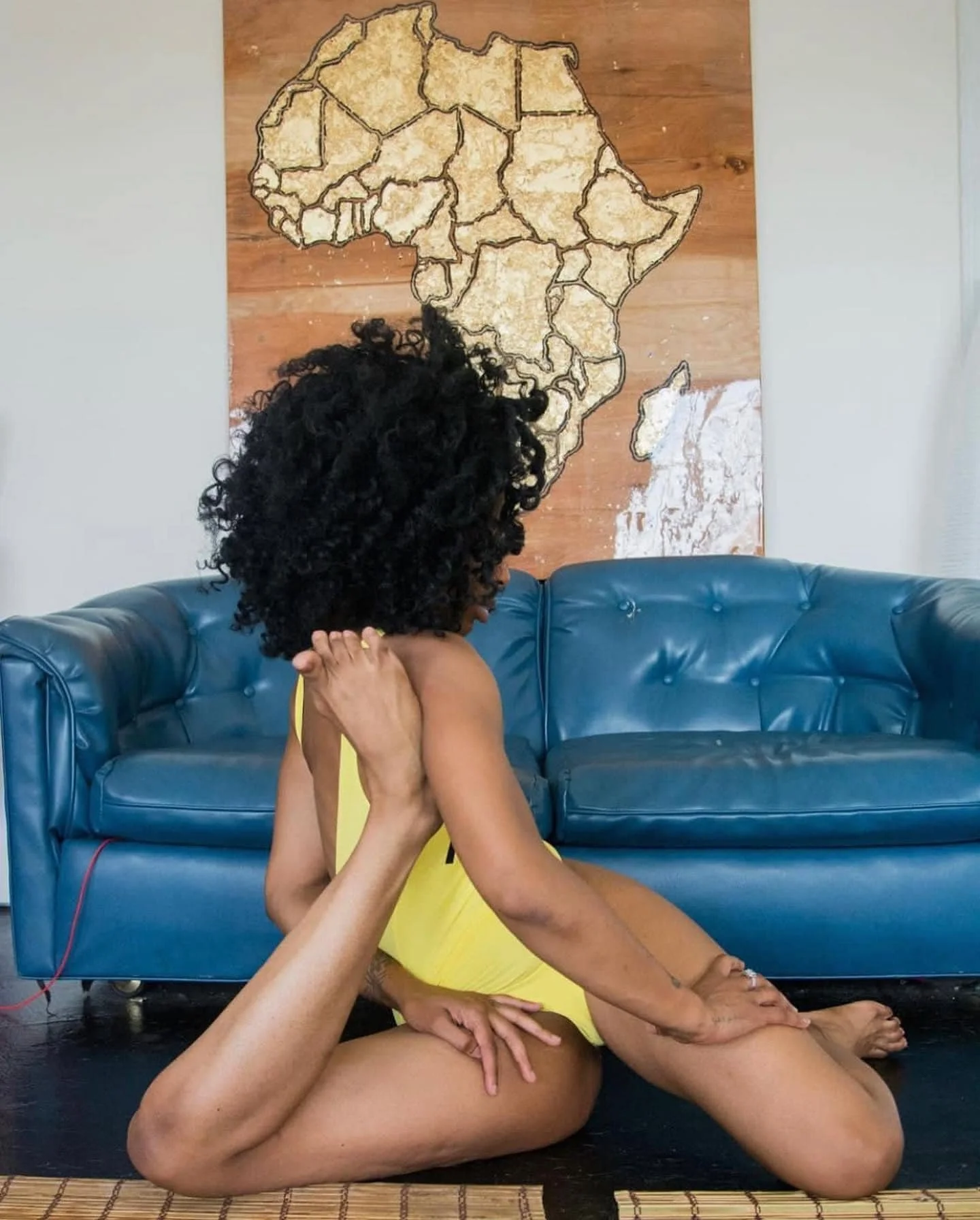
Renee Watkins: You know what’s funny? Ashtanga yoga is my favorite. I don’t teach it. I’ve never taught it. I don’t think I could ever teach it, but it’s a series, and it’s extremely challenging on the body. It’s a lot of bendy, flexible, balancing poses that I like. I love it. I love it so much.
Brandi Fleck: Do you love it because of the challenge, or what’s so great about it?
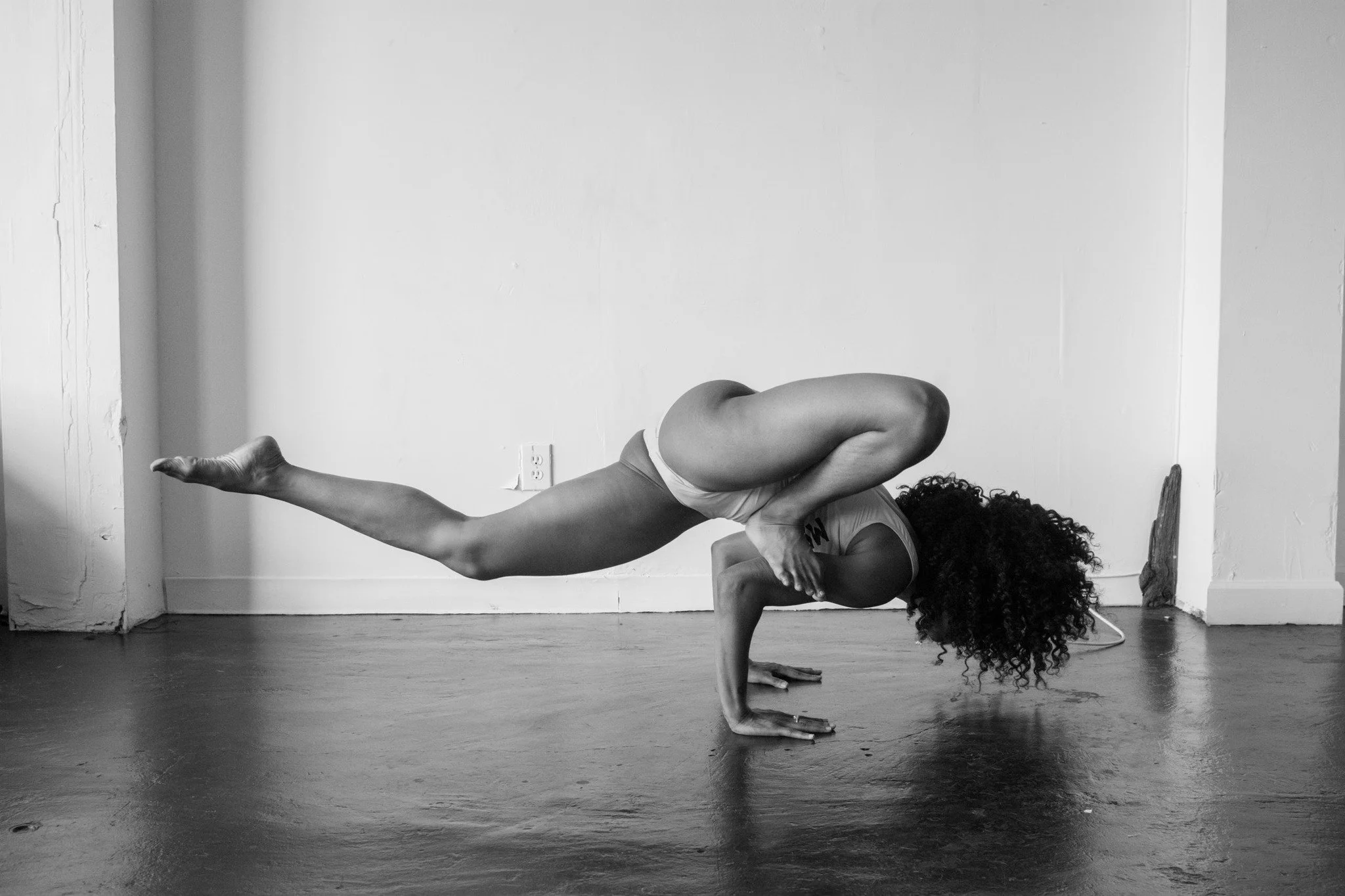
Renee Watkins: It’s the challenge. When I first started yoga, I started from an Instagram challenge. The challenge I did was from Kino Yoga, and she’s one of the top Ashtanga yoga instructors that I know. There was this pose, it was a wounded peacock pose. Basically, it’s a pose where you’re balancing on one hand.
You’re literally balancing your whole body on one hand. I was like, I think I can do that, and I did it. From there, I took some of her online classes, and then I found other Ashtanga instructors online, and I kind of did that. I don’t think I’ve ever taken an Ashtanga class in person, but I’m going to look for some. It’s amazing. You should try it.
Brandi Fleck: Awesome. I’ll look into that. I’ve always done vinyasa yoga. You mentioned that you’re an activist, and I was reading on your website that you are breaking down stereotypes around yoga. I would love for you to tell us a little more about how you do that with your practice, what those stereotypes are, or anything about that.
Diversity in Yoga and Breaking Stereotypes
Renee Watkins: The history of America is it’s always been in black and white, and there has always been some type of racism or prejudice surrounding skin color. When I first started teaching yoga, I went to Kaluga Yoga here in Nashville, and there was only me and one other person, Jamal Hutchinson. He’s actually the reason why I got my yoga teacher certification. We were the first two Black people to ever go through their yoga teacher training program, and that was in 2014. For me, I was like, I think it’s too late in life for Black people to still be doing the first of anything. Why is that still the case?
When we went through the program, I noticed there were not many Black people that came to class, or brown people, or any other people other than white people or white-presenting people. I’m like, why is that? But then I also understood you go where you’re comfortable. If I go into a place where it’s only white people, I’m probably not going to feel comfortable in that space, because in a lot of situations we don’t have the same experiences. I’m like, yoga is the one place where it shouldn’t feel like that.
One thing I had to think about is the price of yoga. Sometimes you can get a yoga class for $45 a session. That’s expensive to me. Maybe because I’m cheap, but not everybody can afford that. When I was going through training, one of the things I was told was never go teach at public parks because they’re not going to appreciate you. But then the classes were $3, so I was like, I’m going to go there.
Again, it was the same experience. A lot of my students were white. I didn’t have a problem with it, but I was like, no, let’s get more people here. Because of that space, and because I taught at parks that were in low-income neighborhoods, I taught at all the parks, but I requested the ones in low-income neighborhoods specifically. I was like, let’s see if we can get more diversity in the room. It happened. I was like, it could be diverse if you allow it to be. It doesn’t have to be this one thing.
I remember my dad was like, that’s only for skinny white women. I’m not a skinny white woman, so that’s not true. I think it was being more intentional about making people feel safe in my classes, and I think it helped.
Brandi Fleck: That leads me to how do you make people feel safe? How do you create a safe space, and how can other practitioners do the same?
How to Create a Safe Space in Yoga
Renee Watkins: I show up as me, and I think that’s what I appreciate. I also think I’m hilarious. I think I’m the funniest person in the world. Even if you don’t laugh, I laugh at myself. Just going into a space and making people feel the way I would want to feel. The golden rule, treat people the way you want to be treated, and just showing up as that.
Not making it about the money. There have been so many times where people came to class and they didn’t have the five or three dollars for class, and I’m like, okay, I’ll take care of it. It’s a cup of coffee. I’ll take care of it. Or just allowing people to bring their kids. There was a young girl who had a newborn, and the baby was crying during class, and I was teaching while holding the baby.
Never allowing it to be a place where you can’t come. I will say, if you know your kid is going to run around the class, let’s just be mindful of the other people in the room. But also, those kids, I’ll say, do you want to teach my class for me? Let’s do cartwheels in class. Just making it so nobody feels bad for whatever reason they think they can’t come.
Even on my website, not giving anybody room or an excuse to say they can’t come. If you couldn’t come to the in-person class, there was a virtual link available. If you couldn’t afford it, I’d ask if you receive government assistance. If you can show me proof, we can work on whatever you can pay. Going back to kids, if you don’t have a babysitter, it’s a public park. You can bring them. They can run around while you take class, or they can come into class.
Brandi Fleck: Do the yoga class with us, yeah. Removing obstacles for people, that’s awesome. Let’s pivot a little bit into being in tune with our bodies, because I feel like so many people are disconnected from their bodies at this point in time. Why is it so important to tune in?
Renee Watkins: That question, I want to be really careful about my words. I feel like we are in a place where everybody’s losing their minds. It’s so easy to disconnect from what you feel physically and mentally. The reason why it’s so important is because once you detach from the physical body, you’re just out here.
I always say, are you living or existing? If you’re just existing, you’re going with the day to day, and you’re not really experiencing life. It’s important to tap in with your body so you can know, like, hey, this thing is happening in the world and I don’t like it. I don’t feel good about it. Being in tune with your body allows you to have a human experience. It goes back to that human experience. I don’t think a lot of us are even having that.
Brandi Fleck: That is, I love your answer. I didn’t think about it like that, but without tuning in to our bodies, it disconnects us from the entire human experience. Wow.
Okay, so you mentioned when you were talking about tuning into your body, it allows you to feel. It allows you to know if you like something, if you don’t like something. What else can your body tell you?

Renee Watkins: It can tell you when something isn’t normal. For me, I don’t watch the news. I don’t. One thing, I don’t know who told me this, but let’s say there’s a tragedy in your neighborhood. You can go help clean up, you can offer people food, you could go search for somebody who’s missing. But if something happens in China, there’s literally nothing you can do.
Your body reacts to not being able to do anything, and you feel helpless. If you’re watching the news every single day, there’s a moment where you’re feeling helpless about something you have absolutely no control over. You can’t help. The only thing you can do is donate to a GoFundMe, and sometimes people just want to do more.
With that being said, I think it’s important to control what you consume. It’s the same thing as what you eat. If you know that chicken makes your stomach hurt, you’re not going to eat it. If you know watching the news is going to hurt your feelings, why watch it? Some people say they watch the news for the weather, and I’m like, you can get that on your phone. You don’t have to do that. Just putting yourself in a place where you’re controlling what you consume all the time.
Mind Body Connection and Emotional Awareness
Brandi Fleck: No, I think that’s a really great point, because you said your body can tell you when something’s not normal. What I’m taking away from what you’re saying is that there are toxins, more than just physical toxins. There are toxins that enter your body in all kinds of ways, and I think toxins disconnect you from your body.
Renee Watkins: Of course. If everything around you is negative, that’s what you’re going to be. If you’re negative, that’s not normal for a person to always be angry, always be sad, always be hurt. What happens is, I used to hold grudges a lot when I was little, and I also had stomach problems. My grandma was like, let it go.
You’re mad at somebody about something they probably don’t even know they did to you, and your stomach is hurting because you’re upset. A lot of these things manifest in your body. If you are walking around with an angry face all the time, you probably get a lot of headaches. It will manifest in your body if you need to let it go. So let it go.
Brandi Fleck: What about the people who feel like they need to be informed so that they can do something? How would you go about being informed to then help?
Renee Watkins: That is such a loaded question. You can’t save everybody. It’s not realistic. I get it, and that’s the same thought that I had about doula work. I was like, I’m going to go change the narrative for all Black birthing moms. It’s like, no, you can’t do that. You have to do what is immediately around you.
I remember when I was little, the Feed the Children commercials. I used to always feel like I had to give those people all of my money, and my granddad was like, you know there are people here in Nashville who could use that same help. There are people who probably live next door to you who need food. There are people down the street, people you walk past every single day who need their light bill paid or their rent paid or clothes or shoes.
My motto is, I’m not going to ignore you if you need my help. If I can see you, I’ll help you. But sometimes you have to be selfish about what you can and can’t do. You can’t save every single person. You’re not going to be able to save every single person, but it’s really important to try to help the people who are in your immediate community.
Brandi Fleck: Awesome. Wonderful point. Okay, so that brings me to emotional healing being tied to the body. Why and how is it all tied together?
Renee Watkins: So remember the statement I made about if you hold grudges, your stomach is going to hurt. That’s important because whatever you are thinking and manifest in your body, and I am a firm believer, a firm believer, that whatever you interact with, whatever emotion that you feel in your mind, you feel it in your body. It’s so true. You can research it, and it’ll tell you, like, hey, if you’re having trouble with your feet, this is probably what you’re going through in life. If you have neck pain, this is a direct relation. If you have kidney problems or liver problems, it’s so detailed.
One of my favorite books is The Secret, and it talks so much about manifesting your thoughts. If your thought is always, I’m going to have a bad day, you’re absolutely going to have a bad day. Or if your thought is, my boyfriend is going to break up with me, then hey, babe, we need to talk.
Just being mindful about what you’re thinking, and again going back to what you’re consuming. If you’re watching the news and every time you watch it, it frustrates you or makes you sad, why do you keep doing it? Just being mindful of what you’re thinking and what you’re consuming is important for your physical and mental well-being.
Brandi Fleck: I was reading in your bio that when you got into yoga, and please correct me if I’m wrong, but I’m pretty sure I saw that when you got into yoga, you experienced way more emotional healing than you had anticipated. Can you tell us a little bit about that?
Renee Watkins: Oh yeah. When I was little, we grew up in the housing projects. My uncle, my mom’s little brother, her only brother, would always say, you’re going to have to fight a lot because you’re different. You talk different. You don’t look like everybody else.
I was tall and skinny with really big lips, and I had this really weird red-looking hair. I was extremely proper growing up in the projects. There was a saying, and I still get it, you talk like a white girl. I’m like, what does that mean? I didn’t understand. I would always challenge people. I’m one of those people who knows really random facts for absolutely no reason.
I remember him telling me from the time I was five, and he was right. I used to have to fight all the time. When I got older, I was always angry and always on edge because I was always ready to fight, because somebody was going to try to challenge me in a way that I didn’t like. Getting older, that causes trouble.
When I started yoga, it was because my runway coach was like, hey, we have this fashion show coming up. I think it was either a lingerie or a swimsuit show. He was like, I don’t like going to the gym because I bulk up. I don’t like that. I want to stay slender, I want to stay toned. He was like, do yoga or Pilates. I had seen Pilates classes, and they looked crazy. They looked so hard. I was like, let’s try yoga, because what I thought is probably what a lot of people think. It’s going to be like you just sitting there, you’re praying, you’re stretching, and that’s the class.
But when I first started, I was like, oh, I’m sweating. Again, going back to me starting from yoga challenges on Instagram, one of the very first poses that I came in contact with was a headstand. Trying to do a headstand and being angry does not work. I fell into the walls, I fell on the side, I had a bruise on my forehead. You can’t do it angry.
I had to calm myself down so I could get into it. I learned very early on, take deep breaths. I’m frustrated because I can’t get this pose, just take a breath, come back to it later, and then you can do it. That’s how I started to deal with life. I’m frustrated with my mom, I’m frustrated with traffic, I’m frustrated with school or work or the kids. You can’t deal with anything if you’re already upset, because if you’re mad, you’re just going to make everything worse.
Take a deep breath. Okay, let’s deal with this now. It makes life so much easier. Even now, I teach my son, before you do anything, inhale and exhale, and then proceed. That’s how I do it now.
Brandi Fleck: How did you actually let the anger go? Was it just, did the breath release it?
Renee Watkins: It did. Going back to Jamal Hutchinson, one thing he would always say is, inhale, you enter hell. Exhale, you exit hell. If you inhale and you’re holding on, because you can’t hold on, if I tell you to inhale right now and I don’t tell you to exhale, you’re eventually going to exhale yourself. You’ll be like, I’m turning blue, I’m dying.
If you think about it that way, if you and I have a negative experience, I’m going to take it in. It’s natural for me to take it in and be like, dang, she really just pissed me off. I can choose to hold that and make every situation around me based on that one negative experience, or I can say, you know what, okay, that’s what happened, and then release it.
If you inhale, you pull in something that you need. If you exhale, you release everything that does not serve you. It works every single time.
Brandi Fleck: Okay, so breathwork is part of yoga. Do you do breathwork in all of your classes?
Renee Watkins: Yes, all the time, because people breathe the wrong way naturally. I don’t think we’re ever taught how to breathe. A lot of times when people inhale, they flatten their chest and their belly, when in actuality, when you inhale, you’re supposed to lift your chest and your belly is supposed to expand. If you think about it, you’re pulling something in, you’re filling your belly, you’re filling your lungs, so it should get bigger. When you exhale, it’s supposed to go flat.
A lot of people are used to working out, and they’re panting, they’re lightheaded, they’re breathing in through their mouth. I’m like, are you tired or are you breathing wrong? If I tell you to breathe in through your nose and out through your nose, that’s going to help you a lot. Or if I tell you to breathe in through your nose and out through your mouth, that’s going to slow your heart rate.
I teach that in classes a lot. It’s even a part of vinyasa. On a pose where you’re coming up, you inhale. On the pose where you go down, you exhale. I definitely teach that in class, because my classes are a little bit harder than other people’s classes, so if I’m not teaching you about breath, you’re not going to make it.
Brandi Fleck: Why do you think people breathe that way?
Renee Watkins: I don’t know. I don’t think I’ve ever researched it enough to know. When babies breathe, babies are literally perfect, so they breathe correctly. I don’t know at what point in life it becomes doing it the wrong way. Are you thinking about your breath? Because you don’t have to think about your breath.
Brandi Fleck: It’s funny that you brought this up, because I went through some trauma-informed coaching training a couple years ago, and as part of that, I basically relearned how to breathe. I realized what was happening, and then when I would talk to clients, I’d be like, breathe like this, and they’re like, that feels weird.
I started to think back to childhood, and I have memories of focusing on breathing with your stomach going out. And I’m like, I wonder if trauma changes it. It has to. If that is the case, there’s a point in every person’s life where some type of trauma changes your breath. What is that trauma? Do we all share the same trauma? Is it a nightmare or something that changes your breath? I don’t know. It’s interesting to think about.
How Your Body Responds to Stress and Trauma
Okay, so let’s pivot here. There are definitely some other things I want to get to, but maybe we can talk about your doula work for a minute, because we were just talking about trauma. The mortality rates in the U.S., especially for Black women, are staggering, especially for a developed nation. What are your thoughts around that? Is there anything we can do? What’s going on?
Renee Watkins: I say this a lot, and people get mad at me. I think we need to put sex ed back in schools. That’s where it’s going to start, because for me, when I was younger, I don’t remember a point where my parents ever talked to me about sex. It was just kind of like, it can happen.
My granddad, bless his soul, would tell us if you ever kissed a guy, you’d get AIDS. It’s not realistic. He was old, and he didn’t want his grandbabies to have kids. He had three daughters and one boy, and then my mom had three girls. It’s scary.
Sex ed teaches boys and girls about their bodies. It teaches you about your reproductive system. It teaches you what happens if you do have sex. I think if we had that in school, the easier job for parents would be to say, I don’t want you to have sex because of everything that comes with it, but if you do, this is how you protect yourself. If you don’t want to have sex, this is how you get yourself out of that situation. These are the people it’s okay for you to have sex with. All of these different things.
What happens is, there are a lot of women, when you get into labor and delivery, they know more about their car seat and their stroller and their gender reveal pictures than they do about their actual bodies. There are so many women who don’t know that you have three holes on the bottom part of your body. I had this one lady who thought, and I don’t know if I can say this on here, but she thought she urinated out of her clitoris. I wanted to understand. I could see how you could think that, but no.
She didn’t know that there was a separate opening for urination. I’m like, what do you think you pee from? She said her clitoris, and I’m like, no, you don’t. Even where she has her cycle, she didn’t know where that came from.
In sex ed, I remember when I went to school, we had a sex ed class. It was the scariest thing I had ever seen because we watched someone have a baby, but I remember learning that in class when I was like 12. Just being more informed about your body is a great start, because a lot of women just don’t know. Of course men don’t know.
Why would you? You don’t have a vagina. I think it’s important for parents to have the tools to have those conversations, and again, in school, I think you should have that information. It’s not there anymore. Kids are having sex, so let’s talk to them about it.
Doula Work and Birth Trauma Awareness
Brandi Fleck: Yeah. And then for the people who do make it through the birthing process alive, how can we minimize trauma during that whole experience and even after?
Renee Watkins: A doula is always going to be my go-to. I think all OBGYNs and birth nurses should go through doula training, because a lot of it is bedside manner.
I had this first-time mom, she panicked. I don’t like going to the hospital, so I almost get to the point where my clients are about to have their baby before I say, okay, let’s go to the hospital. I had this one birth mom, she was panicking, and I knew what it was. When you are scared, you tense up. I knew she was squeezing that baby in. I was like, you have to relax.
The OB-GYN she had kept coming in the room and saying, if you don’t hurry up and have this baby, your baby is going to die. Why would you tell her that? The nurses kept wanting to check her, and she said it hurts. I said, stop checking her. You can tell them to stop checking you.
She was like, you can’t just sit in the hospital all day. I said, that is literally what you do in the hospital. You come in, you sit until you’re okay, you sit until you’re better. Even that, if someone understood this is a first-time mom, she’s scared out of her mind, if you understood how to talk to her, like, I need you to relax, what can we do to help you relax?
We were doing breath work, and they kept coming in saying, you need to lay down. It’s almost like they’re not even asking. It’s like, I’m going to do this. No, you can ask if you can check her cervix. You can ask if you can take her blood pressure. You can ask to take her blood. You can ask all of these questions, and she has the option to say yes or no.
That goes back to education for mom and dad. Education when you’re a kid so that you know what your rights are when you go to the hospital. You don’t have to have your cervix checked at any point of pregnancy, but a lot of women don’t know that. They think when you go in there, you have to let these people check your cervix, and that’s not the case.
Brandi Fleck: Okay, yeah, I didn’t know that.
Renee Watkins: No, you can tell them no. You can tell them no about everything, honestly.
Brandi Fleck: Wow. That would have made it so much better. So you’re basically an advocate for these moms as a doula?
Renee Watkins: Yeah, that’s what it is. That’s part of the job title. You’re advocating for mom and baby.
Brandi Fleck: How does your doula work tie into the yoga work that you do?
Renee Watkins: All of my doula clients, I offer them yoga. It’s just part of it. One of the major components of it. A lot of people think the physical part is yoga. Yoga is actually, the physical part you see is called asana, but breath work, or pranayama, is another part of yoga. Yoga has eight limbs.
A part of that, I teach them about breath work. If you are in pain or if you’re scared, it’s natural for you to hold your breath. If you’re in pain and you’re holding your breath, that means you’re focusing on the pain, so it hurts more.
Have you ever seen videos of kids about to get a vaccine, and the doctor distracts them or makes something funny, and the kid is not even thinking about it, so they don’t even know they got the shot? It’s the same thing. If I’m telling you to breathe or focus on something completely different, it’s not going to be as bad.
Even in yoga, if I’m telling you to focus on your breath, you’re not thinking about me telling you to do like 100 push-ups. Just focus on your breath, don’t think about it. It kind of goes hand in hand.
What’s funny about it is when I went through doula training with the Homeless Heart Birth and Wellness Collective, it’s a community doula program here in Nashville, and I think it’s absolutely amazing. When I was going through the program, I had already been thinking about doing my prenatal yoga teacher training.
Kristen Mahia, the lady who’s over the program, reached out and was like, hey, you want to do prenatal yoga? I was like, I’m actually about to pay a lot of money to go through the training. She said, I’ll take care of it. We need a prenatal yoga instructor through the program. That’s how I got my certification.
Brandi Fleck: Okay, so the doors just opened up?
Renee Watkins: Yeah, they just opened up.
Brandi Fleck: Do you feel like this is a calling for you?
Renee Watkins: I have my moments. I have my moments, because I took a sabbatical from doula work. I took a sabbatical from life, honestly, but it was mainly doula work. The statement I made earlier about you can’t save everybody, Batman, it came from wanting to change the experience of every birth mom that I came in contact with. Even now, if I’m at Walmart and I see a pregnant lady, I want to ask her a million questions. I want to change her posture, the way she’s breathing. I want to change the fact that she’s in Walmart, because I hate Walmart. Don’t come here, it’s stressful.
I had to take a step back and be like, Renee, you can’t. At the end of the day, I can give you all the information in the world, but you’re still going to do what you want to do. That old saying, you can lead a horse to water, but you can’t make them drink.
Whereas I personally have not ever lost a mom or baby while they were under my care, I do know what happens. I know people who have lost friends and family members. I know people who have even lost clients. Even when you hear about it, you’re like, wow.
Working with people, I’m one of those people where if I’m telling you my price, I’ll say, my price for my whole package is $3,500. If you say you don’t want to pay that, I’m like, okay, what can you pay? Because I want to help. I know that being Black and going into the labor and delivery room, my experience is not going to be like your experience.
I’m not saying you’re not going to have a terrible experience, but when you think about Serena Williams, one of the most notable athletes in American culture, for her to have her baby and almost die because the doctors and nurses were ignoring her when she was telling them something was wrong, that says so much about the average woman who goes into labor and delivery.
It’s like, hey, before I had this baby, it was normal for me to breathe. I’m trying to catch my breath, and I can’t, and they’re like, oh, it’s in your mind.
I remember when I was having my son, I had him when I was 21 or 22, and I had a reaction to something they gave me. I think it was Percocet. I don’t know why you would give somebody that during labor. I had a reaction where I was itching from head to toe.
I got to the point where I was scratching blood out of my legs, and my grandma was holding my hands because I was itching so bad. The nurse said, oh, it’s not that serious, you need to calm down. I was so happy my grandma was there, because she went off. She was like, no, it is serious, look at her legs. She literally has her own flesh under her fingernails.
They did something, and all the pain came back. They wanted to give me an epidural. They did it wrong, so I still felt everything. They don’t tell you an epidural can sometimes be like a spinal tap, where your legs go numb but you still feel everything.
My son was huge. He was about nine pounds, over nine pounds, about 22 inches long. He was massive. When he came out, he had his chest out, and he got stuck in the birth canal. The nurse said, do you want us to break your hip or break his shoulder? His dad was 6’3”, 300 pounds.
I remember going to my doctor’s appointment before that and asking if I could have a C-section. It was kind of a joke, but kind of serious, because I knew the baby was going to be big. That day, the nurse checked my cervix and accidentally broke my water after I told her I didn’t want my cervix checked. If I had known I could say no, she wouldn’t have done it.
My grandma later told me that when she was younger, they would sometimes break a baby’s shoulder to get them out, and you would never know. But the fact that the nurse asked me that made it so traumatic. I was like, I’m never going to have another kid, ever.
Just remembering my own experience when I walk into situations with other women makes me want to hold them, answer all their questions, and save them from even having an experience where a nurse has an attitude with you. Even then, you can ask for a different nurse at any point. If you tell them you don’t want this OB or nurse in the room, they have to listen to you because it’s your experience.
Brandi Fleck: Yeah.
Renee Watkins: Even if you don’t know anything, remember “charge nurse.” The charge nurse is the nurse over all the other nurses. You can ask for her and say, I don’t like this person you sent in here, I need someone else. They have to send somebody else.
Brandi Fleck: Okay, yeah.
Well, you don’t have to answer this if you don’t want to, but what happened with his shoulder or your hip?
Renee Watkins: They didn’t break anything. I don’t think they broke anything. They just did a lot of rotating him, and his big head and wide shoulders came out. His shoulders are fine. He’s 12 now, and his shoulders are completely fine.
Brandi Fleck: Okay, good.
Going back to what you said about sex education, that’s all part of this. It’s how we get to this point where we’re having children, but it seems like nobody talks about it or really embraces it. That’s a huge generalization, obviously, there’s a spectrum of what people embrace and what they do sexually. But for people who feel repressed, what can we do to embrace sensuality and sexuality more in our lives? Is that even important?
The Connection Between Sensuality and Creative Energy
Renee Watkins: It is very important, and I want to be careful about this, because there’s a fine line between sensuality and sexuality. I do believe they’re completely different. A lot of your creative energy comes from your sexuality or your sensuality. If you think about, I don’t know what you know about chakras, but if you think about the sacral chakra, that’s where your creativity lies.
Somebody who is repressed sexually is not going to express any form of sensuality. They’re going to think it’s wrong to live in your physical body. I think a lot of that falls into trauma. It falls into trauma.
Were you sexually abused as a child, or were you told it was wrong when you asked your mom about something? For little boys, did you get caught exploring yourself and then somebody made you feel like that’s disgusting, you’re going to go to hell, you’re going to go blind? Just getting to the root of where the issue is, because if there is any repression, there is a reason.
I don’t think people just grow up like that, because babies, going back to kids being perfect, a kid will run through the house and not feel like anything’s wrong. They’ll come have a full conversation with you, nothing’s wrong with that. But then as you age, you have this moment where if you’re nude, you’re kind of like.
Even with your sexual partners, there are moments, I’ll speak for myself, where with my body I’m kind of like, you know what I mean. That comes from trauma of my own. I think it’s important to get to the why. Why do you feel like this? Where is this coming from? Can we talk about it? Is it something worth talking about? Because that’s important. It affects your day-to-day life.
Brandi Fleck: Okay, so you mentioned that sensuality is more of that creativity, that type of energy. Are there other differences between sexuality and sensuality that are important?
Renee Watkins: When you talk about sexuality, it’s more so your preference, whether you identify as heterosexual, homosexual, or everything in between. What do you like to feel when engaged in that moment? That’s more about the act or your preferences. Your sensuality is more so your personality.
Brandi Fleck: We have covered so many topics today, and it’s been really interesting. Is there anything that I didn’t ask you that you think is important to share?
Renee Watkins: No, not this early on a Saturday morning. My brain doesn’t always register. I’m happy that I was able to answer the questions.
Brandi Fleck: Awesome. Okay, Renee, how can listeners find you and your work?
Renee Watkins: I have a love-hate relationship with social media, so right now you can find me everywhere under “I Am Renee Watkins.” It’ll get you to where you need to go. My website is RWyoga.net, but if you type in iamreneewatkins.com, it’ll still pull up the same website.
Brandi Fleck: Okay, so everybody, all of that will be in the show notes for you to go check out. Grab those links, go visit Renee’s site and her social media. Renee, thank you so much for coming on the show today and the work you’re doing in the world.
Renee Watkins: Thank you so much for having me.
Brandi Fleck: Thank you. Thanks for tuning in. Check out more of our episodes here and at Human Amplified. Remember to subscribe.
Join the conversation!
Feel free to share your own experience and let me know if you have any questions in the comments.
Related Posts









Hi, I’m the founder of Human Amplified. I’m Brandi Fleck, a recognized communications and interviewing expert, a writer, an artist, and a private practice, certified trauma-informed life coach and Reiki healer. No matter how you interact with me, I help you tell and change your story so you can feel more like yourself. So welcome!
Find More on the Blog
Topic
- ADHD
- AI
- Atlanta
- Black and BIPOC
- DIY
- FAQ
- LGBTQIA plus
- Los Angeles
- Nashville
- Seattle
- St Louis
- St. Louis
- UFOS/UAPs/ETs
- abuse
- accountability
- addiction and recovery
- adoption
- affirmations
- afterlife
- altered state
- angels
- animals
- anxiety management
- art
- astrology
- atlanta
- attachment
- awakening
- beauty
- behind the scenes
- being human
- body image
- body work
- boundaries
- brandi fleck
- breathwork
- bullying
- burn out
- burnout
- cancer
- career
- caretaking
- chakras
- channeled
- clarity-dive
- clarity-practice
- clarity-primer
- clean products
- coach
- codependency
Recent Blog Posts
Visit the Full Podcast Audio Archive

Affiliate