
Interview By Brandi Fleck
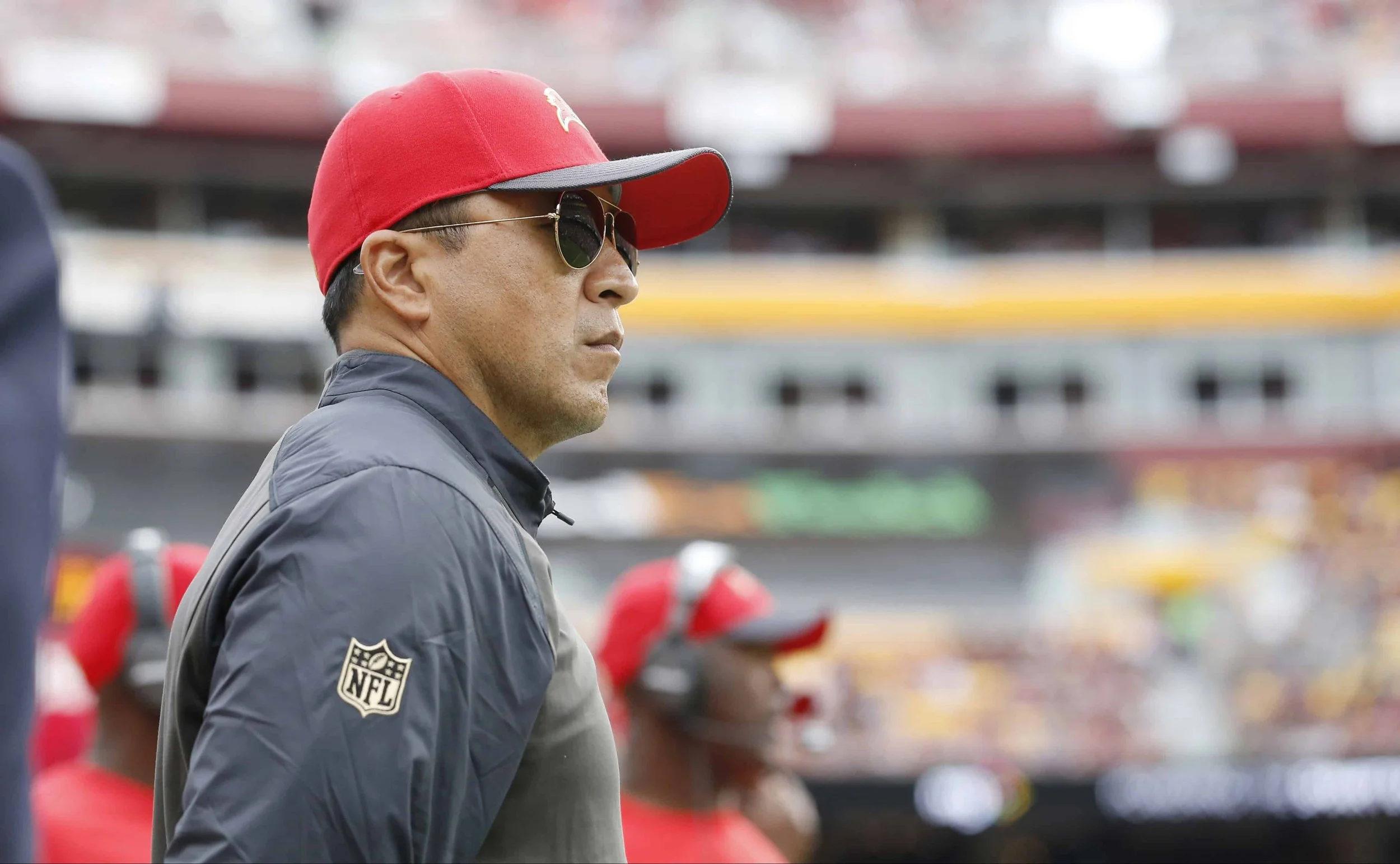
This is a conversation with Dr. Tommy Rhee on regenerative medicine, healing faster, longevity, and how your body actually recovers.
We’ve been taught that healing takes time and that pushing through pain is part of the process.
But what if that’s only part of the story?
In this conversation, Dr. Tommy Rhee breaks down what’s actually happening inside your body when you heal and why recovery, not force, is the key to getting stronger. From overtraining and injury to stem cells, longevity, and the signals that control how your body repairs itself, this episode explores where modern medicine is headed and what it means for how we live in our bodies now.
If you’ve ever wondered why your body isn’t bouncing back the way it used to, or how to support it better, this is where to start.
Listen to Dr. Tommy Rhee’s Interview
Watch Dr. Tommy Rhee’s Interview
What It Means to Be Human: Self-Awareness, Health, and Personal Growth
Brandi Fleck: What does being human mean to you?
Dr. Tommy Rhee: Being human to me is—I look at it almost two approaches. It’s looking in and looking out. Looking in in the sense of self-awareness, being healthy, being aware of yourself. And then the opposite or the other side of it is looking out and treating people well. Being a good person, being a role model for what you really want to do, to be treated that way. So it’s almost that mirroring effect. You look at yourself and then you portray that outwards too.
Brandi Fleck: Ooh, I like that a lot. And I almost feel like your answer, the themes in your answer might pop up today in our conversation. So I’ll be interested to see if they do. Okay. Today, we’re welcoming Dr. Tommy Rhee to the show. I will let him explain who he is today, but welcome. I’m so glad to have you here.
Chiropractic Care for Athletes: Injury Prevention, Recovery, and Performance
Dr. Tommy Rhee: Oh, thank you very much. I would like to start off by saying thank you. I’m excited about the show. Something about me—well, it started off as a kid. I was very active, and my dad was a surgeon. Everybody around me were doctors, medical. So it was almost like encoded into me to become a doctor. But I was very active and playing sports, and those two sort of married together. But I didn’t really believe in the invasive world of medicine. It was more of the conservative—you let your body heal itself, the innate approach to healing. So because of that approach and being sports-oriented, I wanted to be that provider or doctor. And that’s how chiropractic came about. It married well together.
So when you look at athletes or anybody in general, it’s all about preventative. You want to be taking care of your body so you can get prepared for that future game event or that aging process. I started off at UCLA in the athletic department and was a chiropractor working with the teams—track and field, football, soccer, and all those sports. And then from there, these kids would graduate, and as they go into the pro world, I would follow along with them.
When I go along with this kind of caliber of athletes, now you’re at the professional level, you’re seeing what they’re doing as far as their therapy, their workout, and their recovery. So I really tuned into the prehab and the posthab recovery component of it.
Once you start understanding what these athletes are doing and then you become that type of doctor, you’re kind of being sought after. So then I moved to Tampa, Florida, and started working with WWE, professional athletes, Olympians, and then the Tampa Buccaneers as their doctor for the chiropractic stuff.
And with that, again, it’s about working out and recovering—recovering from a workout, recovering from an injury. It’s recovering. So through this process, I learned that a lot of things they do—not just nutrition and how you work out—but recovery and regenerative medicine, the stem cell world. So I saw that evolve from all the way from what they call prolotherapy, PRP, stem cell injections. And now you see it evolving more into the topical application. And that’s where the fun thing is. That’s how I’m at this position right now, and that’s why we’re having this conversation.
Alternative Medicine vs Traditional Medicine: Key Differences and Benefits
Brandi Fleck: That is such an interesting career. And I love that we’re going into a conversation kind of about recovery. And I also love that you said you were more interested in the non-invasive aspects of things. So on that note, I would just love to know a little bit more about who you are as a person beneath the doctor. Where did that philosophy come from?
Dr. Tommy Rhee: So when I was growing up, believe it or not, my dad—a surgeon, medical—he never gave us any type of medication. I remember getting stitches. I’m a kid, I do some things, and I have to get stitches. He would sew me back up without any anesthesia. From that point on, every time I got sick, it was basically—he’d get the right type of nutrients and the fluids and say, you’ll get better that way. So it was sort of put into me at an early age.
Then you start going into the world of seeing your relatives, and they’re in the medication world, and you see the multiple pills they have to take, or it’s just compounding. And it seems like when you take a medication, there’s a side effect, and you have to take another medication to counteract that side effect. So it’s that cascade of effect that you’re going to go down if you’re not really tuning into your body.
Then you see the other side of it where you hear about stories and you do your research and you find out if your body is in proper homeostasis—good balance—and you’re in that perfect environment, you can combat a lot of these things. A lot of these things are easily solved by just exercise, diet, and being under that perfect type of scenario where there’s less stress. So those are components that I see. So that’s how I moved into this world, just knowing that if you put your body in the best environment, you can perform. And that’s performing in sports or just your weekend warriors or just everyday lifestyle.
Brandi Fleck: You touched on something there that I am so curious about. There is this tension in society right now with conventional medicine and other types of medicine—functional, maybe even chiropractics—with some of the therapies I’ve seen on your website that are kind of—I don’t know if they’re cutting edge, but they might not all necessarily be mainstream.
And so there’s this philosophical disconnect between conventional medicine and people who are trying to push the envelope. How are you experiencing that and dealing with it?
Dr. Tommy Rhee: Medicine has its purposes. When it comes to lifesaving or oncology, it has its purpose. But when you look at creating the right environment, you want to find that type of provider, doctor that understands the extra steps you need to take. You want someone that’s willing to say, all right, I’ll look into that type of therapy, that kind of machine or something, and then see where it goes.
Because if you look at the body, the body has this normal function. And if you understand the normal function, the anatomy and the physiology of that particular body part, then you know, all right, if I can give it the right environment, it can flourish. It can do what it’s supposed to do.
So if you look at something that’s inhibiting—let’s say something like insulin—and then you understand about diabetes and you understand, all right, I might have some resistance from some genetic issues, but there’s alternative—not only medication—but just simple exercise can break down those glucose molecules in your bloodstream. So you don’t get that thick blood or that problem down that distal end.
It’s all about understanding your body, just really educating. And that’s what’s fantastic about these shows. These shows really educate listeners about what’s possible out there and who gives that type of option. Because you want to look at medicine and its purposes—fantastic—but there’s also an alternative to it.
And I guess the simplest thing is that when you go to a doctor and they look at you—lose some weight, increase exercise, watch your diet—I mean, that’s the basic formula. But it’s that behavior to change that. So that’s why when you look at advanced equipment, you’re just trying to get the body into the best environment.
Regenerative Medicine Explained: Benefits, Treatments, and How It Works
Brandi Fleck: And I’m hearing you say that there are alternatives out there. I know that you’re in regenerative medicine. This is an alternative, is it not? Or is this considered a mainstream thing?
Dr. Tommy Rhee: Everything, when it comes to—it starts off alternative. It really starts off experimental, alternative, then mainstream. So that’s the evolution. Right now it’s becoming—I wouldn’t say alternative—but it’s almost blending into alternative. Because when you start going mainstream, which it’s slowly moving into, then you look at insurance reimbursements where they acknowledge that this does its job of regenerating tissue, heals faster, recovers faster. And then you get that insurance world paying for that type of service.
So it hasn’t gone to that point yet, but it’s definitely known out there. Everybody knows about regenerative medicine, stem cell therapy. It’s very common as far as the words. Now the mechanism or the knowledge behind it—that’s the confusion. People don’t know what’s going on, but they know there’s a point where it does help people.
There are a lot of stories out there you hear about—I had this issue, I went through a therapy session, I feel fantastic, I feel like I’m back, I got my shoulder back, I got my knee back, I got my whole autoimmune issue solved because of this therapy. So there’s some merit to it. It just needs to be a little bit more research and further along the pathway where mainstream catches on faster.
Brandi Fleck: I feel like we’re touching on something that’s really important, and we’re definitely going to keep diving deeper. Before we go deeper, though, what do you think might change for us by the end of this conversation?
Dr. Tommy Rhee: Curiosity. You’re going to get more curious of why. Why are people talking about stem cells, and why are people now starting moving into the signaling? It’s the information, not so much the cells that you’re looking for. You’re looking for the information that’s secreted, and it turns into a signaling.
And remember, your tissue has its own DNA chromosome and it has its code. Nobody can duplicate that. You can’t get this match, that match. But you can get the signal to turn on your existing tissue. That’s all. It’s about your own existing tissue to have the mechanism to say, turn on. So we’re going to learn more about that, and we’re going to be really curious by the end of this episode.
Brandi Fleck: I love that. I love to invite our listeners into curiosity because we need to be asking these questions and learning these things. Let me just ask for a definition first. For those who don’t know, what is regenerative medicine?
Dr. Tommy Rhee: Regenerative medicine is a tissue that’s gone through a process of either being injured or slowly dying off, and you have to replace it. You replace it with something. So your body does a replacement. It always destroys and recycles. That replacing is the regenerative side of it.
So regenerative medicine is the ability to speed up that process, or if you’re losing that ability, it’s to get it back to normal. You always have that one-to-one ratio—one cell dies, one cell rebuilds.
So when you do a workout, you are breaking down muscle tissue. So when you recover or when you go into the regenerative world, you’re going into a rebuilding of bigger, stronger tissue. And that’s why you get that bigger muscle.
So regenerative medicine helps you speed up that process. If you’re lacking in that healing, especially when we age, it takes longer for us to heal or recover. You want to speed that up, and that’s what regenerative medicine is. And that means either through stem cell therapy, a device—anything that helps speed up that process is part of that whole umbrella of regenerative medicine.
Why Rest and Recovery Matter: Avoiding Overtraining and Injury
Brandi Fleck: Culturally, we’re impatient with healing, and people are often looking for quick fixes. So in your work with accelerating recovery, how do you distinguish between intelligent acceleration versus pressure to bypass what the body actually needs to heal?
Dr. Tommy Rhee: That is a good question because that’s the fine line right there. If you speed up the healing and you’re going beyond the ability of that perfect recovery—for instance, let’s do a workout. You do a workout and you know that soreness feeling. That’s muscles that have that inflammatory response because you broke down some muscle tissue and you have to rebuild that tissue to get your bigger, better, stronger muscle.
Some people will work out quicker than the recovery period. So let’s say you’re at 100%, you go through a workout. You break it down to where now you have 80% of your muscle fibers, but the 20% needs to be rebuilt.
Now, if it only gets to 10% and then you go do the same exercise, you’re going to break it down to 20. So you’re doing that one step forward, two steps back. It’s called overtraining. You’re breaking down more than you actually recover.
When you see that, you’re starting to feel that edge where the mental side thinks, all right, no pain, no gain, let’s work through it. The problem is that, physiology speaking, your body or the cells are not up to speed. So now you’re doing more damage than good.
The problem is that people look at injury or soreness as a sign of, okay, you’re just mentally weak, push through it, whereas you should really acknowledge it. So that’s a great question. You really have to get with someone that understands your workouts, your goals, and what you need to do to recover from this hard workout.
It’s really hard to identify in your own body because you have to go through the learning process. You’re going to really hurt yourself, and then from that, that’s where you get your learning. So if you had a coach, they’ll put you in that quicker process of learning.
Brandi Fleck: Okay, so it’s almost like a trial and error of learning your own body, and it’s different for everybody?
Dr. Tommy Rhee: Different for everybody, especially age-related. So when you look at someone in their teens versus someone in their 60s, it’s a longer process when you’re older.
Now, the older person will identify that and will rest. They’ll do one workout, maybe rest five, seven days. Whereas a younger person, they may overtrain, overtrain, but because of that learning curve, they haven’t learned. They’ll push themselves through it, and then because of that, they’ll get into that overtraining state.
Then the next point is that they’ll get mentally fatigued. Now they think that there’s something wrong with them mentally because the physical side is not catching up. So it turns into a cascade of events from the physical recovery not being there.
Here comes the mental side of it. Here comes depression. So to identify how to really figure out what you’re doing and what’s going on, it really takes a team. You should be advised by a coach that tells you, hey, this is a workout. Shut it down. Don’t push yourself anymore.
I think athletes understand that. Where the problem comes is when you have someone that’s on their own and trying to push themselves beyond their capability.
Brandi Fleck: I know you’re in the athletic world. Most of the listeners listening are not athletes, but I feel like there’s a parallel here—you have to rest. There has to be a recovery period. No matter what you’re doing, you can’t just push yourself straight through all the time. We’re not machines. Do you agree with that?
Dr. Tommy Rhee: Oh, absolutely. But here’s the thing—athletes, weekend warriors, everyday people—it’s the same mindset. Everybody wants to be active or in the capacity of either playing on the field or just going for a walk at a park. There’s going to be some type of activity in there.
What gets them is that when they get injured from either overuse or tripping and spraining their ankle, that’s where the physical side of everything comes into play where they say, all right, I want to get better. I want to get back to my activity.
Again, if you get injured, just like an athlete, and you’re not allowed to do that activity you enjoy, like walking, it changes you. It changes your behavior. Now you’re not doing that morning walk or that activity that you enjoy. Now you have to change your behavior.
When you change your behavior, it plays a mental game with you of, okay, am I going to resolve this or am I going to accept it or am I going to try to fix this injury to get back to my activity?
And that’s that scenario that you have to catch yourself before you fall down too far.
Brandi Fleck: What would you say to somebody who has been injured and it’s taking a long time for them to get back to physical activity?
Dr. Tommy Rhee: When you get injured, right away find someone like me. Find a doctor just to give you an assessment of what’s going on. You want to know the future of this whole injury.
You want to know how bad the injury is and what a typical recovery time is. And then if you don’t do therapy, you can do things at home to do your own home therapy. But you have to know what you’re about to deal with.
There’s nothing worse than having an injury and then the unknown is there. You go, well, is it going to take six weeks, six months, six years? I want to know exactly what I’m dealing with. Maybe there’s a shortcut.
I think education is really important. So when you get the education and what you’re dealing with, now your mind is set like, all right, I know I’m going to sit out for six weeks because the standard at my age to recover from this by myself is six weeks.
So then I should be doing the proper steps with someone like me, another therapist, another doctor that can coach you through this process. Because there’s nothing worse than not knowing. So you want to see the process and then go through it, and then we’ll take it from that point on.
Signs an Injury Is Healing: When Your Body Is Ready to Move Forward
Brandi Fleck: What specifically tells you when the body is ready to move forward?
Dr. Tommy Rhee: There are going to be some tests. It’s almost like you want to go through milestones in the recovery stage.
Let’s say you have a sprained ankle. You can’t bear weight. You’ve got the swelling, the bruising, the classic swollen ankle scenario.
So the first thing you want to do is make sure that you’re able to get the inflammation out, reduce the bruising, and then start doing what they call no load. So the first stage is no load, just range of motion. Get the full range of motion of your ankle without loading it, meaning not standing on it.
When you get that range of motion back and you see the swelling go down, now the next thing you want to do is do a static stand. Stand on that ankle and just put weight on there. Shift your weight from the good to the bad, good to the bad, and start introducing your body into that.
These are stages you have to go through. Once you get past that point, now you’re able to do some easy exercises—what they call closed chain stuff—meaning you can do little calf raises. You can mimic the same thing with the range of motion, but now you’re loading it up.
Sit on your chair and just do ankle raises. Pump your ankle up and do the alphabets with your foot. Then eventually you’re able to start introducing yourself to walking.
Now you’re having these little milestones met, and then you’re moving on from that point on. So it’s like little victories as you move along to where it all totals to now you’re doing your activity that you wanted.
Brandi Fleck: Okay, so once you’re able to do a smaller step consistently, then that’s kind of an indication that you can keep going?
Dr. Tommy Rhee: Yeah. Again, if you seek me, there are things on the internet, but there are stages that you want to look at. You want to say, okay, I’m here. I should be here in one week. Let’s do these exercises to get me there.
So it’s like homework. You get the little baby quizzes and tests, and then hopefully the final exam is the end. So it’s a little journey.

How to Heal Faster Naturally: Reducing Inflammation and Supporting Recovery
Brandi Fleck: Let’s talk about how to speed it up. I know that your work speeds things up, but how do you know when to do that, and what does it do?
Dr. Tommy Rhee: Like I said, the first thing you want to do is find someone like me. From that point on, to speed it up, you have to understand your body, your physiology.
What is the first thing we want to do? We want to get rid of the inflammation. You want to see the stages of where you’re at. When you find the stage of where you’re at, then you know that if I get the inflammation out with maybe a device that pushes that fluid out, or you can elevate your foot to get the gravity pulled out of the ankle area and then down the knee to the hip, you want to find something that can speed things up.
Now the last piece is the healing factor. You want to find something that heals that tissue faster. It’s tough as you age because these cells in our body have the ability to heal. It’s just that we have circulation issues or we have poor signaling.
Signaling in the form of some information—some little protein, some little microRNA—something that tells the existing tissue to have that ability to regenerate, to turn on.
So as we age, those signals decrease, they slow down. It’s almost like driving without your brights on. You have a low dim. If you get the bright lights or the high beams on, you can see more, and then the information is out there better. So you need better information.
When you get to that point and your tissue is not performing like you think it should because it’s not healing correctly, you’ve got to speed it up. And that speeding up process is signaling, and you’ve got to get that signal from somewhere.
That’s where regenerative medicine, stem cell therapy, and what they call the EVs—signals from the stem cells to the existing tissue to turn on—come in.
Brandi Fleck: How is this regenerative medicine related to longevity? Because you mentioned as we age, we don’t heal as efficiently. How is all that related?
Dr. Tommy Rhee: Let’s go back to that one-to-one ratio of our cells always basically recycling. We destroy one cell and we rebuild one cell cycle. So as that signal is nice and strong when we’re young, it’s still the one-to-one ratio. As we age, the signal slows down.
Can Regenerative Medicine Slow Aging? The Science of Longevity and Healing
Dr. Tommy Rhee: When the signal slows down, then you have, let’s say, one cell gets built, but then two cells get destroyed. One cell gets built, two cells get destroyed. It’s like one step forward, two steps back. And that’s where you start getting that muscle wasting, osteoporosis, you start getting a little atrophy, what they call sarcopenia. Then you go in that world.
Now, when you look at longevity, you want to sustain that one-to-one ratio as long as you can. So you’re looking for those signals, the signals that get you back to that one-to-one ratio, that information.
So if you look at every single cell, there are little teeny things that can help along with that multiplication of cells that makes that one-to-one ratio. When you look at the simple things that you hear about, like telomeres—when you look at telomeres, that’s a secret thing in chromosomes where it’s at the very end. So when you start doing these replications, these telomeres get down to a point where it goes to neutral or a senescence or a zombie state. It just sits there and sits around.
If you can get that telomere to grow back to its normal length, well, you’re back to its cell function. And that information is what we need. And that information is called an enzyme, telomerase. That enzyme gives you the ability to grow those telomeres back. And now you’re back to that growth, that regeneration.
So now when you get those cells occupying that one-to-one ratio, now you’re extending your life. Your active lifestyle and your age is expanding out. So if you didn’t have those bright signals, you’re probably genetically going to stop at 75, 80. But if you get that information that’s signaling correctly, you can extend it out to maybe 100 years old.
So that’s what this whole thing is all about, is getting the right signal for your own body to do its job.
Brandi Fleck: Wow. And to actually live longer.
Dr. Tommy Rhee: Yeah. That’s a big deal.
Brandi Fleck: Absolutely. That’s a fun one. Let’s go there. Let’s shift from the mechanics for a minute and talk about what are you seeing culturally around longevity, and how is this impacting who we are?
Dr. Tommy Rhee: It’s kind of neat right now because I’m in that space. I’m 58 years old, so I’m a perfect candidate because I’m searching up that answer.
So here we go. We’re looking around. And when you see people, especially in my clinic, I see from the young to the old. And when it comes to people in their 80s and 90s, I see their lifestyle and I see their activity level. And I ask them, what is your secret? What’s going on?
So they tell me about nutrition, the classic stuff—nutrition, activity, exercise, and understanding about stress, reducing stress.
So the trend that I know, that in myself and my peers or my age group, we want to stay active. We want to still have that ability to be retired but travel the world, not be pulled down by some type of physical problem that means you can’t travel or something. That’s the worst thing that you want to go through.
And I see in my patients that have the ability to travel, but they’re at that age of retirement, and because of their physical problem, they can’t. I don’t want to be that person. So myself and others, we want to have that world. We want to stay sharp, bright, active, so then we can see that age get pushed out to 100 years old.
So it’s a fun trend that you’ll start seeing more and more, especially the younger people that really acknowledge the lifespan and they start earlier because the earlier you start, the better it is.
At my age, I’m okay. I was very active. I’m told I’m okay. But when you see someone at my age that wants to reverse a lot of their bad behavior of not exercising, poor diet, it’s a tougher road. You’ve got to get that information and that signal up to speed as fast as possible because they don’t have that muscle memory or that tissue that’s been in that world before.
So it’s a longer road for them. It’s doable, but you have to understand that the trend is moving toward that way. So that’s why you start seeing a lot of these groups of longevity, conventions, and a lot of nutrition, and they really harp on that issue about extending that lifespan.
What Is Biohacking? Diet, Lifestyle, and Simple Ways to Improve Health
Brandi Fleck: Yeah. And these biohacking movements that are really popular—is anything you do related to biohacking?
Dr. Tommy Rhee: Yeah. Well, biohacking in general is anything you can think of that changes your cells to do better. And that includes stem cell therapy, or that can include nutrition or red light therapy. An environment that puts you in that perfect environment that also gives you great signals, that’s biohacking. You’re looking for that code. You’re looking for that simple little tablet or something like that, right? But it’s more than that.
You have to take the bulk of the information and then pick what you feel comfortable with and work on that to your best advantage. If it’s changing your diet, reducing the actual processed food, that’s the biggest thing. Processed food is the worst thing for our body. I know it’s easy and we’re on the go a lot, but it’s tough to really change that behavior of slowing down and prepping your food, finding out the source of your food, and then making sure that’s going into your body.
Brandi Fleck: Oh my goodness. Lots of behaviors that are hard to change. But I think it’s worth it for a longer lifespan and just the thought of having a longer life. And I don’t know if this is dark or not, but what would you say to the people who’ve had hard lives who are like, oh, it’s just a trudge. Why would I want to go longer?
Dr. Tommy Rhee: What is the old saying, right? You can lead a horse to water, right? So you can go so far.
I tell them you can always become that person. You always can. You just have to think five years from now, if you continue your lifestyle, where will you be at? Versus if you change just a little bit of behavior, where would you be with that new person?
So you try to educate them as much as possible. And then you place them five years from now, or maybe have a family history of this and that. Then you say you’re going down the pathway of your parents’ cardiovascular issues, diabetes issues. You show them this future, and then you can change it.
And I think the biggest thing is that it’s just educating them. Here’s a funny thing. The majority of patients that are in that risk factor, and it’s a simple thing of just exercising, diet, stress—they know what to do. They know everything. It’s just that first step. The first step is an intimidating fact of, oh my gosh, I’ve got to do all these things.
Well, the beautiful thing is that you have time. You have time to change one thing. Just pick one simple thing and start with that. For instance, diet. Diet is complex in its long-scale things. Like, I’ve got to reduce my intake by 3,000 calories because I love eating these big meals.
Well, then start slow. Start slow and maybe skip one piece of that meal. Then once you get conditioned to that, then go with two pieces. Now start thinking about it. So it’s about little micro victories. You just have to think that it’s a long game here. It’s a long haul.
And if you look at, I want to lose 20 pounds in two weeks, you’re not going to win with that one. You want to think about, in five years, I want to be this person. Five years gives you so much time. And there are going to be mistakes during that process. Make your mistakes. It’s no big deal.
In two weeks, one mistake, it’s like, okay, I give up. Let me go back to my bad behavior again. That’s the thing.
Brandi Fleck: If I’m hearing you correctly, it sounds like some mindset shifts are needed in order to make micro changes and kind of look at time differently and take baby steps. Would you say that’s correct?
Dr. Tommy Rhee: Yeah. Believe it or not, my job is education. Educate the patient. Educate the patient what they have and what may be the cause.
It might not be—I’m a musculoskeletal guy, sports, right? But there’s maybe a mental side of things that I try to go a little further into. Let’s say it’s an ankle issue, but I see their behavior and I see what pattern they’re doing at home besides that physical problem. And then we open this conversation up to that part.
The hardest thing is that when you start going into that world of teaching them and then showing them things and they kind of say, I know, I know, I know, then you just have to ask the next question and then they hopefully will tell you the real issue.
The real issue is that commitment. They don’t see that commitment or they don’t think the results of changing their diet will turn into that perfect idea. So that’s the hard thing. That’s stepping stones.
So that’s why you say, all right, let’s just do one little thing and then just get to that one thing. And then once you get that one simple thing, it seems like they’ll come back the next week and say, oh, that was easy. Okay, great. Let’s go with another thing. And you just go slowly with that.
Don’t give the big complexity of, I’m going to change your diet, I’m going to add some exercise, we’re going to reduce your stress. That’s too much for somebody. That is so much information to put in and apply. So that’s why you just take a little bit at a time.
Then you’ll start seeing six months to one year from now, they become that person. They are really aware of what they need to do. Now it’s just basically you put anything in front of them, they attack it. They love it. They love that challenge. But it takes time to become that person.
Brandi Fleck: It’s almost like changing an identity to be able—I mean, it does change your identity if you’re making these huge lifestyle changes.
Dr. Tommy Rhee: Yeah, but huge in the long term. It’s not that bad, right?
Brandi Fleck: Yeah, small that eventually make it a huge change.
Dr. Tommy Rhee: Yes.
Is Stem Cell Therapy Safe? Risks, Ethics, and What to Know Before Treatment
Brandi Fleck: I’d love to shift our conversation into ethics for a moment because you’ve mentioned stem cells and some other things about regeneration. So what are the most important dimensions around what you have to consider to regenerate ethically?
Dr. Tommy Rhee: So the biggest concern right now is when you look at stem cell therapy, you have to start with the donor site.
So the donor site is either from your own tissue or where it’s evolving now—from when you have a C-section delivery, there’s the umbilical cord and the placenta. It has its stem cells. The good thing about that—it’s young, it’s vibrant, and it’s got a powerful signal. So that’s where you hear a lot of people talking about this type of stem cell being obtained from this site.
Once you get that, you go to a lab and then they get the stem cells out of there. And right now the procedure is done by injection. Then they’ll cryo-ship it to you, and at the clinic, they’ll have a provider thaw it down and then inject it into the damaged tissue.
So there is a process. Where the ethics get involved is where the source is coming from. Is it really coming from that source?
Because the funny thing about this industry is it’s not really regulated by the FDA. The FDA doesn’t consider regenerative medicine or stem cell therapy a classification drug. It’s sort of like a therapy because the tissue is considered biological waste.
But now they’ve discovered there’s a lot of importance to it. When you think about the industry moving fast, a lot of people are inquiring about it. There are only so many donors that can provide this tissue. So then when they run out of tissue, what tissue are they using?
So the FDA is right now slowing down their process of granting new licenses to labs or closing labs down because they are doing something illegal or unethical by taking tissue that’s supposed to be from the umbilical cord, the Wharton’s jelly, and maybe using some other tissue.
Sometimes you hear stories that they’re using animal tissue. They’re using embryo tissue. They’re using aborted babies. So now you’re going down that path.
So that’s why it’s very important for anyone doing stem cell therapy to have traceability, to see where this tissue is really coming from. Is it coming from this or that?
Brandi Fleck: How do you do that?
Dr. Tommy Rhee: Ask your clinic. Say, can I see something that shows me exactly where it comes from? And they should give you some type of form that shows the actual donor’s information.
That information could be a questionnaire, serology blood tests. You want to make sure they don’t have any pathology, no type of STD. You should be able to get that kind of information.
So the big thing with that is that you’ve got to make sure where your sourcing comes from because, like I said, it could come from aborted babies and other tissue.
So the ethics involved start at every level—from the clinic all the way down to the lab that gets that tissue.
Brandi Fleck: Is it common that when you’re going to get this type of regenerative medicine that you need to advocate for yourself in that way? What if they—are there clinics that won’t show you that information?
Dr. Tommy Rhee: That’s the question. They should show you that. Everybody that gets a sample or a vial of that tissue should have the ability to trace it back to the actual person that donated that tissue.
So donation occurs when a mother going through pregnancy may ask, can I bank my cord for my child, for their future? So the place will say, yeah, you can. If you donate some of that tissue to us, we’ll give you discounts.
So that’s how it starts off. They go through a vetting process and make sure they don’t have any pathology, any diseases, family history issues.
So that’s how it starts off. But again, as the industry starts growing fast, you’re starting to run out of these donor sites. And then that’s where the unethical side comes in.
Now you’re saying, all right, I’m trying to sell this stuff. I don’t care. They don’t know what these cells are from. It could come from pig, cow—it could come from anywhere. You don’t know what you’re putting into your body.
That’s why you have to be very careful.
So here’s another thing you have to be aware of. There are a lot of clinics talking about live cells. I injected 10 million live cells, live cells.
Well, when you think about a live cell, a live cell is basically a cell that has a nucleus. A nucleus consists of the chromosome DNA. That DNA is going to replicate, turn into something.
Now, there’s no way that your chromosome, if you have damage like your tendon, is going to match up from the donor site. It’s impossible. They call it differentiate, but what it really does is signal.
So you don’t want the real live cells. You want the secretory—the stuff that it secretes out—the signals that give the information to tell your existing tissue to do something.
If you put a live cell in your body, it may turn into something else. And now you’re in that world of tumor formation. You don’t want that.
So that’s why you have to be very cognizant of what’s really going on. The information is what’s really important, not so much the live cell in your body.
Brandi Fleck: And that brings me to—I know you have a product that is Regen.
Dr. Tommy Rhee: Yes.
Cell-Free Therapy Explained: How Stem Cell Signals Trigger Healing
Brandi Fleck: I was looking at it and it says it’s cell-free. Is that correct?
Dr. Tommy Rhee: Yes.
Brandi Fleck: How does it work if it’s cell-free?
Dr. Tommy Rhee: Going back to those mesenchymal stem cells—stem cells from the umbilical cord called Wharton’s jelly—you take those cells and then what you’re doing is getting what they call the EVs, extracellular vesicles. That’s what you’re trying to get. That’s cell-free. There’s no nucleus. There’s no DNA component there. Just information in the form of protein, cytokine, enzyme—information.
And then we take that and we encapsulate that with a lipid nanoparticle that provides protection so you have a longer shelf life. Then with that, we put it into our cream that has an agent in there that does a transdermal component that gets through the skin.
So when you rub it on your skin, it goes right through your skin to the deep tissue—the tendon, muscle, ligament, bones—and then it signals your existing tissue to turn on. That’s the information.
So the neat thing about that is when you do these stem cell injections, it’s one shot and you’re going to get that process delivered. This is the same way, except now you can avoid the needle, the high cost of that provider, the clinic, and it’s done at home. You take it home for 30 days straight and you apply it, and it yields as much as the injections.
Brandi Fleck: Well, that’s really interesting and innovative. And so that’s a good thing for listeners to just keep in mind.
And now I have a really kind of personal question for you. As a doctor who’s in this experimental world that’s starting to become mainstream, do you ever grapple with spiritual concerns? Does it ever push up against your humanity, the work you’re doing?
Dr. Tommy Rhee: I don’t think it puts—I’m not against it. I’m a very spiritual person too. So I’m just going with it. It’s like it’s given to me.
Look, I shouldn’t be here. I’ll be honest with you. I shouldn’t be here. With my personality and my—I wouldn’t call it a disability—but I have a learning issue. I’ve got dyslexia. Then I’ve got ADHD. So those two combinations don’t work well with anything.
But for some reason, because of my hurdles and what I’ve been through and my persistence of helping people, it made me become this person where now it’s like through this process of being with athletes and going through their healing process and regeneration, it was given to me. It’s like I’m supposed to do this, and that’s what’s pushing me forward.
So as far as—it’s very difficult to answer that without understanding how I feel. I feel natural doing this. This is so easy to me because of all the lessons I’ve been through and the knowledge that I accumulated.
It becomes an easy process where it’s been guided through my whole life to be here. That’s why I embrace it. I understand what I’m doing.
And it’s not just me. I would love to say, yeah, I’m doing this because—it’s really something bigger than me. It’s driving this.
So spiritually speaking, I think that’s the big thing. It’s just something that needs to be done, and I just need to put it forward.
Finding Purpose Through Healing: Discipline, Growth, and Life Direction
Brandi Fleck: I can completely relate to that. Would you be okay sharing some of the lessons that you learned that got you to where you are, feeling like this is just what you’re meant to be doing?
Dr. Tommy Rhee: I guess the first one—the lessons in life—I call them forks in the road. There’s always a fork. And everybody, if they can look back, they’ll say, I remember this, I remember that. And that’s where I’m at now.
So the big lesson I learned—I’ve got several of them, of course. I’m 58 years old. I’ve come across a lot of those things.
So the big one was, as a kid, I was rebellious. I was the Asian kid in a white neighborhood, and it was very traumatizing because I couldn’t relate in the cultural sense. So I had a lot of rebellion in me.
So with that, I got in a lot of trouble. Luckily, the military—going into the military straightened me out. It gave me purpose and it taught me how to be a goal setter and achieve those goals by going back to this micro victories learning.
So with that, that started the process of giving me a template of don’t look at the big picture, just go one at a time. Focus on just a little task. Don’t go too far ahead in your head.
How to Build Healthy Habits That Last: Small Changes That Transform Your Life
Dr. Tommy Rhee: Once you apply that standard and then you put it into practice, and then you’re learning through that procedure in the military, learning all this stuff, then when I get out, it’s easy. Just stick things in there and then you work your way into it.
Another thing is that—I don’t know why—but it seems easy when I work with athletes or just people in general because I think I’m relatable. I’m not going to tell you something that I haven’t been through. So I’ve been injured. I know what it feels like. I know the physical, and I know the mental side of what it does to you with being injured, not doing the activity, and then having that walk along that depression world. It goes there.
So knowing that, I feel the need to help people. I feel like that’s my calling. I need to get out there and spread the word that we can get out of that state of depression that may start a long time ago with something physical or something else.
So it’s just me getting out the word. I think the big thing is that it’s just the calling. It’s just that information that I want to get out there, especially starting with that template of the military, working my way to where I’m at now.
So I guess the big thing is that the military was probably the biggest thing. I think about it every day.
Brandi Fleck: So the military provided you with a template—discipline or direction, would you say?
Dr. Tommy Rhee: Discipline. Yeah, because direction—you can apply that discipline in any direction. Depending on who you are, you can apply that to bad behavior, good behavior, but there’s discipline there.
So I knew deep down what I wanted to do. I knew I wanted to be a provider, a doctor, a helper, an educator. And with that, you put the discipline and you just plug in the pieces in there, and then you become that person.
I’m still becoming that person. I’m not even close to who I think I should be. I just love conversations and reaching out to people that may have an issue or something that they may relate to in this conversation. They say, hey, if this guy can do it, I can do it. And I love to have that conversation.
Brandi Fleck: Well, and you said that you shouldn’t be here, but you are. And so if you live to be 100, are you still going to be doing this calling?
Dr. Tommy Rhee: Oh, absolutely. This is fun to me. This is because it’s just like a conversation. It’s a conversation between you and I, and then we’ve got people eavesdropping, people listening. It’s not that big of a deal. I like this.
And the neat thing about this is that you educate me, I educate you, and I learn. It’s always about learning. If you’re not learning, it’s not fun in life. Learning is a fun activity. So I like to teach and learn at the same time.
Brandi Fleck: So we have kind of spanned the gamut here—from what you do, how it works, all the way to things that are going on philosophically in society and culturally. Is there anything that I haven’t asked you that you feel is important to share today?
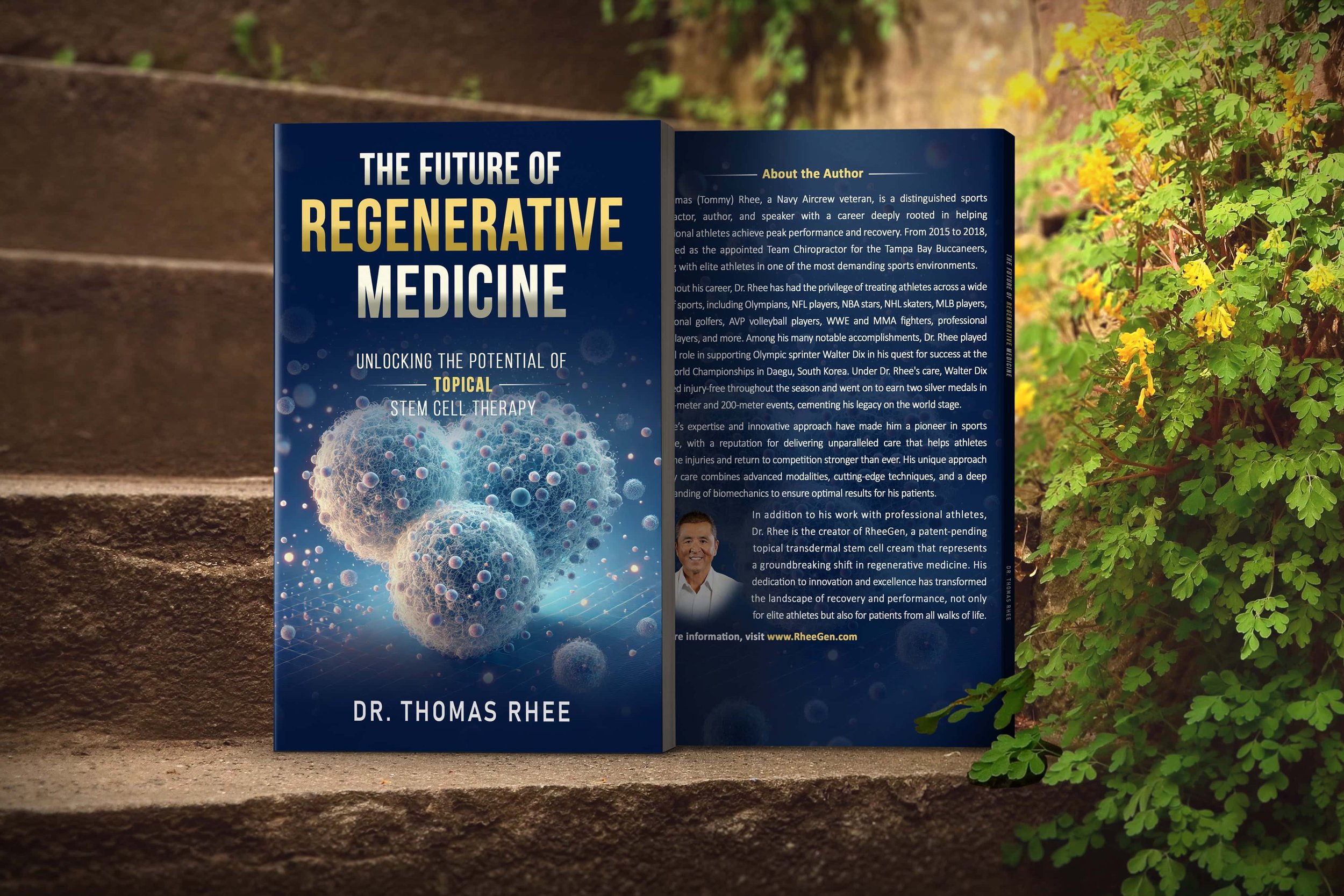
Dr. Tommy Rhee: I think the one thing that I’d like to mention is the education component of it. I would always get asked the same sort of questions about what is stem cell, what does it do, where is it going.
So because of those repetitive questions that I would answer, I decided to write a book. So there’s a book that I just want to tell people about. If they have questions about stem cell therapy and the future of stem cell therapy, if you go to Amazon and you can look at the title, which is The Future of Regenerative Medicine and my last name, Rhee, it’s a really easy book. It’s like 150 pages.
It talks about the science of it, and also there are layman’s terms in there so you can follow along. It’s a simple description of what’s really going on with stem cell therapy.
Brandi Fleck: People can find that on Amazon. What’s your website? Where can people find all the other work that you do?
Dr. Tommy Rhee: Okay, you can go on rheegen.com, and then you can see and understand about the topical stem cell cream I have. And also if you have questions, you can go on info.com and ask me a question.
Brandi Fleck: Dr. Tommy, thank you so much for being here today. It’s been an absolute pleasure.
Dr. Tommy Rhee: Thank you very much for this opportunity. It was enjoyable.
Join the conversation!
Feel free to share your own experience and let me know if you have any questions in the comments.
Related Posts










Hi, I’m the founder of Human Amplified. I’m Brandi Fleck, a recognized communications and interviewing expert, a writer, an artist, and a private practice, certified trauma-informed life coach and Reiki healer. No matter how you interact with me, I help you tell and change your story so you can feel more like yourself. So welcome!
Find More on the Blog
Topic
- ADHD
- AI
- Atlanta
- Black and BIPOC
- DIY
- FAQ
- LGBTQIA plus
- Los Angeles
- Nashville
- Seattle
- St Louis
- St. Louis
- UFOS/UAPs/ETs
- abuse
- accountability
- addiction and recovery
- adoption
- affirmations
- afterlife
- altered state
- angels
- animals
- anxiety management
- art
- astrology
- atlanta
- attachment
- awakening
- beauty
- behind the scenes
- being human
- body image
- body work
- boundaries
- brandi fleck
- breathwork
- bullying
- burn out
- burnout
- cancer
- career
- caretaking
- chakras
- channeled
- clarity-dive
- clarity-practice
- clarity-primer
- clean products
- coach
- codependency
Recent Blog Posts
Visit the Full Podcast Audio Archive

Affiliate


Spiritual practice can bring calm, clarity, and self-awareness, but it can also become a polished way to avoid what still hurts. In this guest article, Pat Crilley explores spiritual bypassing, emotional suppression, and how to tell the difference between true healing and performing peace.