Gender Roles, Masculinity, and Identity: Craig Pomranz on the Meaning Behind Made by Raffi
Interview By Brandi Fleck
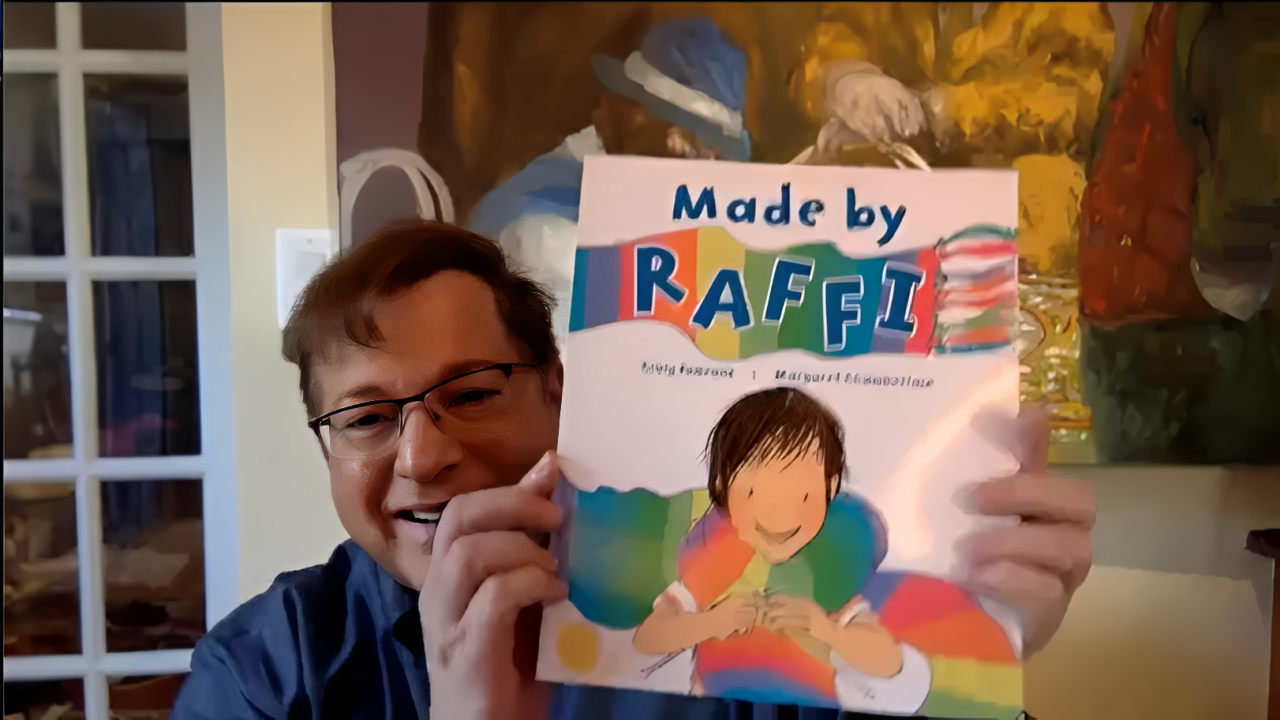
Author and performer Craig Pomranz joins Brandi to explore gender roles, identity, and the subtle ways labels shape how we see ourselves and others. Through the story behind his book Made by Raffi, they discuss masculinity, femininity, stereotypes, and the importance of authenticity.
Craig Pomranz (vocalist, performer, and author of the children’s book Made by Rafi) shares how one simple question from his godson — “Is there such a thing as a Tom girl?” — turned into a bigger conversation about identity, labels, and the quiet judgments baked into gender expectations.
We unpack why “feminine” can still be treated like an insult, how boys get punished for being emotional or artistic, and what it looks like to support kids (and ourselves) in staying authentic without forcing them to fit a single “right” way to be.
If you’ve ever felt boxed in by labels — or you’re raising a child who doesn’t fit the mold — this episode will help you think differently about acceptance, respect, and what being fully human really means.
Note: This conversation was originally recorded in 2021 and was re-released on the blog and released for the first time on the Human Amplified podcast in 2026.
Listen to Craig Pomranz’s Interview
Watch Craig Pomranz’s Interview
Read the Transcript with Craig Pomranz and Brandi Fleck
Why Human Connection Matters
Brandi Fleck: Craig, what does being human mean to you?
Craig Pomranz: Wow. It really does mean engaging and living with other humans without judgment. And I say that because trying to be nonjudgmental is a good goal, but it’s not an easy goal because it’s something we have to learn. I mean, we’re hardwired to categorize and be suspicious. And we live in a society full of labels, which is why I came out with my book. Labels, in and of themselves, are judgments. I long for a less self-centered time and a more open, evolved time where we can just look at people and try and accept them for who they are and who they show us that they are.
Brandi Fleck: All right. Well, Craig, welcome to Human Amplified. I’m really excited to have you here today and would love for you to introduce yourself to our readers, to our listeners—who you are, what you do, where you’re from, all of that.
Craig Pomranz: Great. So my name is Craig Pomranz. I’m originally from St. Louis, Missouri. I am based in New York City, and I say that because I travel internationally as a vocalist, a singer in nightclubs, as well as with my book. And I have written several children’s books. So I travel all around the world—mostly London—and then in the United States, all over the United States.
Brandi Fleck: I love London. It’s so amazing.
Craig Pomranz: Me too. But I think it’s all been a very interesting thing because I’m diving right in. I hope that’s okay.
Brandi Fleck: Oh, yeah.
Craig Pomranz: Part of what came from all of this, from writing a children’s book—which was based on an incident with my godson—was discovering not only about myself and about him, but about the world and how basically, as we all like to say, we’re all basically the same people. And this kind of conversation crosses all cultures. And it’s a wonderful thing to see, and also disturbing to see, in different areas who is more evolved and who has sort of fallen backwards or has not been able to move forward in all of these conversations.
Brandi Fleck: Yeah, that has been interesting, to say the least. And then in the States as well. It’s not just an international thing.
Craig Pomranz: Yeah. As we know, we go state to state and things are different, even though ultimately we’re all the same.
Brandi Fleck: Yeah. And if we could just accept that part of it, then we could probably get past a lot of things.
Craig Pomranz: Agreed.
Made by Rafi, Gender Roles, and Breaking Gender Stereotypes
Brandi Fleck: Well, so you mentioned your children’s book. I want to try and describe what I think the synopsis is, and you tell me if that’s a fair representation. Is it Made by Rafi?
Craig Pomranz: Made by Rafi.
Brandi Fleck: Rafi. Okay. So basically, Rafi is different from accepted societal norms and gender roles. And as you said, this was prompted by something that happened with your godson, where he asked his parents if there was such a thing as a “tom girl.” And so then you, as his godfather, came in and encouraged him to knit to sort of get something of his own, and he ends up being really respected for all of the cool things he creates in his classroom. Is that a fair description?
Craig Pomranz: Yeah, it’s fair. What was interesting was he was spending the night one night, and he was talking about how at his school all the kids say “dude,” and they like rough play, and they like sports. And he had his challenges, and one of them was he didn’t like loud noise, and he liked to be quiet, and he liked art, and he liked music, and he felt very different. And so I was trying to help him be more comfortable in his own skin. I actually wanted to give him dancing lessons because I’m a dancer as well, but his parents didn’t want me to do that. But that’s probably another conversation.
But anyway, I ended up giving him knitting needles because he had an hour-and-a-half bus ride to go to school. And so I thought it would give him time to focus and things to do and to concentrate. And he learned to love it.
But this night, he happened to say to his mother, “Is there such a thing as a tom girl?” There was no—he sort of coined that word. And it hit me immediately because, you know, a tomboy in this day and age is like a positive thing. She’s assertive. She can do things. But the minute that I heard “tom girl,” I thought it immediately has this negative connotation to it. And I just thought, well, this is a story that has to be told. And why is that?
And then one of the fascinating things as we go on—and we can talk about the book—was it added all these layers to what the book meant and what it said to other people about gender stereotypes and what we do and how we behave. So it was a really interesting learning curve for me as well.
Brandi Fleck: Can you dive in just a little bit deeper into why the story had to be told from the “tom girl” angle? Can you dive a little deeper into what those negative connotations are and why?
Craig Pomranz: I can. One of the things that came from it was the concept of why is feminine a negative thing? And why is it that girls are immediately raised with this “less than” idea of who they are in our society? Because a tomboy, as I said, people respect that idea. Whereas a “tom girl,” people think immediately—one of the problems is immediately people go to a sexual identity, which this is not about. They go there, and then they also go, to use words like “sissy-ish” and stuff like that.
But then there comes a question: Is having emotion not masculine as well? That was the point. “Tom girl”—what does that mean and why? How are those differences—and why are they so negative? Because as I said, a tomboy seems to be so positive, but the idea of a boy being emotional, or liking the arts, or wanting to do— I don’t know if that makes it a feminine thing, but that seems to be the issue.
It was complicated. I quote Gloria Steinem a lot, where she said—we’ve begun to raise our daughters more like our sons, but few have the courage to raise our sons more like our daughters. And it’s hard. There are so many issues even there, because the question is: is it about the feminization of boys, or is it about a sexual identity? I think it’s both of those things. And why are any of those things bad?
Identity, Authenticity, and the Pressure to Fit In
Brandi Fleck: How’s your godson doing today? How long has it been since that happened?
Craig Pomranz: It’s a long time. And he understands his differences. We live in an urban area. I think that makes a very big difference. If you’re in a college town or any other urban area, it’s a lot easier to be different. And so he has his struggles, but not about who he is. His struggles are just the regular struggles of, like, it’s a pandemic, I can’t get a job.
But other than that, I’m really proud that he sticks to who he is and is as authentic as anyone can be. And I think that that is the struggle we all have our entire lives.
Brandi Fleck: That’s awesome. Well, I’m glad to hear that he’s doing really well. You mentioned identity and sexual identity, but where do gender roles fit into this discussion, and are they harmful?
Craig Pomranz: I don’t think they’re necessarily harmful in and of themselves. I think comfort with stereotypical roles is a perfectly fine thing. The problem is when people insist that there’s only one way to be and that they must conform to something, and that there’s something wrong if you don’t—if you’re atypical.
And also, I think we get lost in the idea of what social media and social behavior says we should be and have. I guess the question is: what is gender, right? So it’s harmful to hold yourself back from trying on different skins. How do you know who you are as a whole person if you don’t explore all facets of yourself?
Part of the problem in most of our society is that there’s a lot of repressed behavior going on, and people hide things and keep secrets. And if you can’t open yourself up to being hurt and making mistakes and then learning from them—if you’re not learning from anything—how do you grow? How do you become a whole person of your own?
Brandi Fleck: And maybe the judgment that we have—like you touched on that a little bit earlier—maybe the fear of judgment of others is part of the reason why people repress those things.
Craig Pomranz: Completely. And not just other people—family. I think it comes at a younger age in particular, more than it does from your peers and your teachers and just from looking at a magazine. It comes from your family.
One of the things that I remark upon is very evolved parents—friends of mine, very evolved—and their kid at a very young age wanted to wear his mother’s high heels. And they were perfectly cool with that. “That’s great. Go ahead.” And then one time they were going out and he wanted to wear the heels, and his mother said to him, “You should probably only do that at home. You shouldn’t do that out where the world can see you.” And I said to them, “You understand that you’re now doubling down on the problem.” Because now you’re telling— it’s one thing to say it’s okay, but now you’re saying it’s really not okay.
It never occurred to them. And they’re lovely people, but they were still afraid of their child going out in high heels. It is a hard one, depending on where you live, although you’re there to support. There’s a difference between supporting someone and pushing an idea on somebody.
Brandi Fleck: That makes sense. What do you think would have happened with this particular family, based on knowing them and where they live, had they let their son go out in heels?
Craig Pomranz: They’re lucky enough living in New York City—probably nothing. And even if something, they could have handled it. I think it took them a long time. They were very fearful. We talk a lot about hovering parents and helicopter parents, and there was an aspect of that.
And to remind people: you cannot protect your children from everything, nor should you. Because if you can’t experience the world around you and your own world and how you perceive it, how do you grow from it? How do you learn from it? Then you live in this bubble that’s much more damaging.
And you become fearful. If you recognize those as fearful things, it makes you more afraid. And in this case, considering we’re talking about human relationships, it makes it much more difficult to have a human relationship because you don’t know how to authentically interface with another human being because you’re so busy trying to not be something.
Brandi Fleck: Yeah, that’s a really good point.
Craig Pomranz: Right.
Brandi Fleck: Man, I feel like—and I’m just guessing here—that you have been able to handle these situations like with your godson and your friends because of your own personal experience in life. So I was going to go down the road of asking you: How did your own identity and your experience with your own identity impact what you put into the book? Or did the book impact your identity in any way as you were creating?
Craig Pomranz: That’s a hard one. I think that because we all live in our own little worlds, we forget that other people are living in their own little worlds and that every single person feels different in some way. So that’s really the issue. It’s not so much do I feel different and was I different, but we all feel different. And then we have to battle that idea of what does that mean to find out who we are.
That is a lifelong struggle because you change where you live, you change who you interact with. So writing the book reminded me a lot about how it was true. The black-and-white things—like the idea that because I, at a very young age, was singing and actually a professional performer when I was a kid, it was very unusual in my community. So there were some people who teased me a little bit because they didn’t understand it.
Like the book: when we say “ignorance,” and people get offended, but it is the truth—the actual word “ignorance.” Not knowing what’s in front of you makes you uncomfortable. So the minute that people saw, “Oh, he can do this well and he has something to contribute,” all of that stuff went away.
And the same thing with Rafi and his knitting: it was uncomfortable for everybody, him being different, but the more they recognized that he had something to contribute, then they started to respect him for what he did.
So, yeah, it reminded me a lot of various things growing up, but it’s constant. We live in a world where we relive these things every year. Something new happens and we have to relive this idea of how we interact.

Self-Worth, Human Value, and the Need to Belong
Brandi Fleck: So you just hit on something that has come up quite a bit at Human Amplified. You said Rafi was basically respected after he had something to contribute. But isn’t there an intrinsic value in just being human? Like, what if he ended up not contributing to the class play as he did in the book? Shouldn’t his peers still see his value? And how can we help people see the value of just being?
Craig Pomranz: Absolutely. I think they could. And I think part of that is the wherewithal of sticking to your guns, as it were, or just being able to say, “This is who I am, and this is what I’m doing, and I don’t need to apologize for it.” Not that one shouldn’t apologize—I’m a great believer in apologizing.
But when people take you more seriously because they realize that it’s a part of who you are in a very different way, that’s another way to respect you.
The knitting thing or the contribution is a faster and more outward way of finding acceptance. But among his peers, if people start noticing him—if he’s sitting in a garden and he’s knitting and someone walks by and they find that somehow calming, which is one of the things he found, that knitting was very calming and meditative for him—then they’re able to respect that as well.
In every way, you contribute. Maybe “contribute” is not the right word. Maybe it’s what we said at the beginning—engaging. If you’re engaging in some way, that’s your contribution.
Brandi Fleck: That makes a lot of sense.
Craig Pomranz: Yeah.
Craig Pomranz on Singing, Theater, and Creative Expression
Brandi Fleck: Okay. Well, how did you get into singing, dancing, and theater at such a young age? I would love to hear a little bit of your life story.
Craig Pomranz: Well, I was raised in a very Orthodox community, and I was an extraordinarily shy child. And I say that and everyone around me would be laughing hysterically at that, because I think that most performers are shy, which is one of the reasons they perform.
I had a teacher in elementary school where music and art was very important at the time in our schools—which is sad that it’s not there now. She was teaching us songs, and I guess I could sing, and she made solos for me. And I was really, really young, and I loved the attention. Because I was so shy, my parents thought that was a good way to help me not be shy.
And then the more I did it, the more I loved doing it, the more I sought out to do more of it. My parents did not want that for me. They went against it. They thought, in St. Louis, Missouri, “How can you have a career as an actor in St. Louis, Missouri?” But you could. And I did. And I actually earned money for our family at a very young age.
And then it just grew from there. Every time I heard about an audition, I would audition.
But that’s another way, though, of where I isolated myself. My dad would always say, “You have so many friends.” I would say, “I don’t have any friends really.” I was always working, and I was the lead in shows and stuff like that. It was very fulfilling, but in many ways it was also very isolating. So I don’t know if I did friends that well.
Brandi Fleck: Do you have a big friend group now, or is it still…?
Craig Pomranz: I think that I have a very engaged emotional family group, and luckily around the world. I could move to London, I could move to Chicago, I could move to Los Angeles and go back to St. Louis, and there’s a large group of people that I consider family. That’s a good question, though, and I hope they feel that way.
I think I’m a really good friend, but I think I probably could be more generous about myself. I worry more about how everyone else is than I do about myself.
Brandi Fleck: Do you find yourself listening to them more as opposed to sharing parts of your inner self?
Craig Pomranz: All the time.
Brandi Fleck: Okay.
Craig Pomranz: But when I was a kid— I was telling someone this story the other day—when I was a kid, and I’m talking 12 maybe, there was a woman who lived across the street from us who was the prettiest woman on the block, in my opinion. And I had a mad crush on her. And for whatever reason, she came over and wanted to talk to me about the fact that she was thinking about getting divorced from her husband.
And I listened to her and I talked to her about it in a very—as adult as one could at 12—way. But the first thing I said to her was, “I may not be the right person because I don’t like your husband, so I may not be the right person to talk to. But I can tell you what I don’t like about him and why I think you could probably do better.”
It was interesting. That sort of parlayed to other things. Other adults would come and talk to me. But rather than people my own age, I always talked to my great-great-granduncle. I wanted to know the history of everything. I was always talking to the adults. I was much more friendly and conversational with adults than I was with kids my own age.
Brandi Fleck: Yeah. Okay. Yeah, 12 years old—I can’t imagine giving divorce advice.
My brothers were shocked when my mom and dad came to me to talk to me about their relationship, again, at a really young age, because they were concerned with what we as kids would think. And I’m the youngest one in the family, but I don’t know why. They just felt like they could talk to me about it before they could talk to my older brothers.
Craig Pomranz: Okay. That’s great.
Brandi Fleck: It was interesting.
Craig Pomranz: It gives one a little bit of an ego to think, “Oh, I see, I communicate with the adults.” But I think there’s a certain—I don’t know. Maybe because of theater and reading, I had a certain kind of understanding that maybe some other children who didn’t read like I read had, so I was able to communicate differently.
Brandi Fleck: That makes a lot of sense. I think reading absolutely—psychology is involved—and it helps you understand human nature, even if it’s fiction, just as your book helps us understand human nature.
I would love for you—well, you just talked about a memory that you had from your childhood—but what is one of your favorite memories of you singing or dancing or doing theater? Immerse us in it.
Craig Pomranz: Oh, my God. I really don’t know where to begin with that because there are so many. I think it’s interesting because I may not be the most famous vocalist in the country or the world or anywhere, but I have wonderful moments of what I call “creating silence.”
It’s this idea of when you’re in a room full of people who are eating or talking or chatting, and you are telling your story in song, that you create silence because everyone just stops to listen and focus on what you’re trying to say. And that’s my favorite thing to happen—creating silence.
Brandi Fleck: Okay. That’s pretty cool.
Craig Pomranz: It is cool.
Identity, Labels, and Career Challenges in Entertainment
Brandi Fleck: So I want to go back to: Did anything identity related ever happen that made it difficult to pursue these passions? Or did it just seem like door after door was opening for you?
Craig Pomranz: There are never any doors open. I mean, there are for some people, for very lucky people there are. But no—the part of being a human being is you follow a path, you create that path.
I came to New York with a dance company and then started singing right away. It never occurred to me that I would make a living singing in clubs. I always thought I would be on the stage and in films and TV, which I still think I will do.
But you follow these paths, and then what we’re talking about when it comes to labels: people label you. Because I came here with a dance company, everyone would say, “Well, you’re the dancer.” Then when I moved into singing, everyone said, “Oh, well, you’re the club singer.” It was always something else.
But what was wonderful about the path was discovering what singing in a small club is about and how it impacts people, and how intimate and wonderful performing in a club is.
Brandi Fleck: Did anything identity related ever happen that made it difficult to pursue your passions?
Craig Pomranz: It’s always difficult because, as I said, it’s the same thing. The fact that they said, “Well, you’re the dancer, you shouldn’t be able to”—even though I was trained in university that in order to be a good actor, you have to know how to dance, you have to know how to sing.
I believe why my singing is important—why people like my singing—is because I’m a good actor, because I tell a story through song.
So yeah, it’s the same thing. We all have these stories of our brush with fame and famous people, or just fame ourselves, and all the times that I did a test with—it was between me and one other person—for all these films and stuff like that.
Some people were like, “We wanted someone with brown hair.” “We wanted someone who was blonde.” “You don’t look Jewish enough,” or “You don’t look…” So yeah, in that regard, because there are so many people out there vying for the same thing, they really like to limit what they have to look for so they can do it quickly, I guess.
But that’s about the only identity problem that I had. It was more like, how do you fit into this role that you’re trying to audition for?
Labels, Judgment, and Social Stereotypes in Everyday Life
Brandi Fleck: Yeah, that makes sense. So labels have come up just a couple of times. Before we pivot into some other concepts about the way society is with masculinity and femininity, I would love to explore labels.
You mentioned that labels are judgments. And I’ve oftentimes, in my own personal life, thought about this and struggled with it because if I can’t put words to a situation, it might be hard to process it or understand it. What would you say, or how do you reconcile the need to not label something but also understand it?
Craig Pomranz: We need—we’re people who need some sort of mark, some sort of identity mark. The question is not so much that we shouldn’t label, it’s just: does that label totally define us? And are we able to move past the label to show that we have other aspects to us?
In a broader sense, when we’re talking about stereotyping—what should a boy do, what should a girl do—I think that’s a serious problem in our world. But as individuals, as you were saying, we also need to find ourselves for ourselves and our friends and our family in the world so that we can go out in the world and get a job, or whatever. If we have something that we want to say, we put our position up against what other people are looking at and what they hear us say.
And the problem is people don’t often hear what you have to say. They’re not necessarily paying attention, or they see what they want to see immediately, with judgment, because that’s how our society is trained.
Brandi Fleck: Well, that was really helpful. Thank you for that perspective.
Craig Pomranz: I hope so. I like being helpful if I can be.
These are issues we struggle with every day. And the problem is it’s hard to talk about those things because they seem so obvious. So people don’t want to broach the topic.
Although now we live in a world where all we do is talk about very specific things that, to me, should just exist in your mind. You should go out in the world and embrace what’s out there and deal with it. But now everything is a conversation that’s black or white. If you don’t believe this, you’re wrong. If you do believe this— and they don’t seem to want to really have a conversation about why do you feel that way, or how does that affect you or me or whomever, which is a much more important conversation.
We’re living with each other, hopefully.
Toxic Masculinity, Toxic Femininity, and Gender Expectations
Brandi Fleck: Absolutely, yeah. Maybe this transitions smoothly, or maybe not, but we’ll see. How would you define toxic masculinity?
Craig Pomranz: Oh, God. The way the world sees toxic masculinity is military, macho, rough guys. But they’re not necessarily the only way toxic.
I think a lot of women and men might say that mansplaining is toxic masculinity. The concept of manly behavior, manly language, one-upping—those things abbreviate the idea of toxic masculinity, but they’re also true of women. So that’s why it’s a hard topic.
So what I would say toxic masculinity seems to be, at this point—because I think things are ever evolving—is the limited notion that it can change. And the mansplaining and the forcefulness of, “You have to be a certain way.” The fear of being judged—the fear of all those things.
I’m not so sure that they couldn’t apply to toxic femininity.
Brandi Fleck: I was going to ask you: How would you define toxic femininity?
Craig Pomranz: Yeah. It would be the same. I’m the son of, I would say, a very macho father, and yet there was a real balance in their relationship. And my mom really had control of everything that went on. But my dad had those other issues: the temper and the language and those very stereotyped ideas of what men should be.
The problem with all of these stereotypes is it places us all in a position of failing because you can’t live up to any of these things. And when you do live up to them, they don’t work. So it’s a failed idea.
That’s why this whole concept—if we could get rid of these major label things—would be so much easier. Everyone is basically, as I said, boys can cry and be emotional, and girls can beat up boys—although I don’t think that’s the right thing.
I hate this idea that Hollywood is so big on empowering women, but their idea of empowering women seems to be: we can produce movies where women are as horrible as men. So we can make National Lampoon but just do it with women—so women are as stupid as men are in National Lampoon. And I’m like, don’t women have a better story to tell?
Isn’t empowering people empowering your own personal story, not living up to this strain? I know it’s a financial thing, but it amuses me and distresses me that this is what they think empowering women is. It’s like, “Yeah, you can be a superhero and beat up people.” Well, women can be a superhero and not beat up people as men. Men can be a superhero and be teachers. It doesn’t have to be about taking out a knife and shoving it into something.
Brandi Fleck: I got chills when you were saying that. That’s a really good point. I hadn’t thought about it that way. But it is—in the name of empowering, when you’re still trying to fit people into a certain societal mold, it gets tricky and it can become toxic.
So would you say the opposite of toxic masculinity and femininity—the healthier version—would be not labeling and not fitting into boxes?
Craig Pomranz: I think that’s basically what you said. I think it’s hard to say “no labels” because it’s inherent with how we grow and live. But the point is to be able to move beyond the labels or to be able to see around them.
We forget that we live in a world where there’s hierarchy. People need to position themselves in some way. So there’s always going to be, “I’m looking at you to see how we are alike, how we are different, where do I fit in?” And those issues can become bullying or they can become engaging. But there’s always going to be that moment where you’re pressed up against someone else and then you have to define yourselves and figure out how to live together—who gets to be at the top of the mountain and who gets to be in the middle. And that’s a struggle. That’s always a struggle.
How to Handle Judgment, Bullying, and Bad Behavior
Brandi Fleck: Yeah, that makes sense. How do you react or confront toxic masculinity or femininity when it comes to you and when that happens in your personal life?
Craig Pomranz: It depends on the situation, but I tend to not shy away from things. It’s not my wish to exacerbate a problem. It’s not my wish to create violence or anything like that.
And it’s an old-fashioned and perhaps sometimes naive idea, but I often think if you can talk a certain way, people hear it and see it differently. There are some times when you have to walk away. You can see it happening and you think, I can’t get involved because that person is in a certain mode and it’ll just get worse if I do.
But depending on what’s happening, I would probably talk to the person that’s being talked down to, or the one that’s being treated badly, as I perceive it, to make them understand: this is their insecurity, not your insecurity. You don’t have to worry about it—without using that word so that person doesn’t get mad.
I’m a great believer that you can’t cater to bad behavior. And it’s not easy. When someone tells a racist joke or an off-color joke, you can’t just sit there and laugh it off, because when you do that, you only encourage it.
Now, not every time and in every circumstance. I don’t want to be too black or white. Among my friends who know me well enough, someone can tell an off-color joke without thinking someone’s going to say I’m a sexist.
But it’s a dilemma we all live with right now: how do we talk to each other? And also, because we’re in a pandemic, people are forgetting how to talk to people in general because they don’t see people. It’s like learning how to talk all over again and being engaged in a way that’s nice and kind.
It’s always nice to be kind, I find. You can’t fight with kindness. What can you do? Don’t be kind to me.
How to Stay True to Yourself in a Judgmental World
Brandi Fleck: When you’ve been discouraged in the past because of the way society is and how we interact with each other, how do you manage that? What are some tips for staying focused on who you authentically are without feeding into that discouragement and letting it overtake you?
Craig Pomranz: It’s hard. It’s really hard. I often have to remind myself how lucky I am and how grateful I am for the wonderful life that I have, even if it’s not the life that I thought I would have, even if it’s not the life that I wish I had—to be grateful for what I do have.
That comes from having the friends that I have. And it comes from—as I said before—I was in London performing, and there was an elderly couple in the front row. And this man was petting his wife’s hair and touching her hand. Afterwards, he came up to me and he said, “This is the third time we’ve come to see you, and my wife has Alzheimer’s, and we listen to your CD. Listening to you sing is the only thing that calms her down.”
And I was like, okay—now you know why you do something.
And I’ve had a lot of those moments. So that’s one wonderful way. But that doesn’t mean— I’ve gone through a year now without performing live and I never realized how difficult that would be. It’s incredibly difficult.
Now things are opening up, and I have to start again: how do I put together a show, and how do I do it?
So it’s a challenge in its own way. I want to be positive about it, but very often things move slowly and they don’t move the way you want them to. It’s hard.
So the ways that I do it: I remind myself how grateful I am. I live in New York City, but I have a huge garden, so I can go out into my garden—unlike most people. That’s restorative. I can do that.
And I have people that I can Zoom with and call all over the world. A lot of the time I feel like it’s more for other people than for me, but also the main aspect is: I’m doing it because that’s who I am, and it’s for me.
It’s interesting. We sort of passed over—one of the amazing things about writing the book was I had forgotten how impactful a children’s book could be. After I wrote this book, I remembered all of my children’s books—what they said to me and how I related.
And then the fact that I get notes from all around the world. People write me. Some of them say, “My child is the bully, and I didn’t know that until I read your book.” Then others write to me and say, “Oh my God, that experience happened to me.” Or even a little girl from Korea wrote to my publishers and sent them a picture of a scarf that she thought Rafi should knit. She wanted me to include it.
It’s remarkable. The impact is there. And also, as we were talking about earlier, it crosses all cultures.
Human Identity Across Cultures and Universal Human Experience
Brandi Fleck: Human beings are human beings if you allow them to be who they are.
Craig Pomranz: Absolutely.
Brandi Fleck: A couple follow-up questions based on what you just said. What is it about human identity that is universal? Can you identify what that thing is that spans cultures?
Craig Pomranz: Yeah. If that makes sense as a question—it makes sense. I just don’t know what the answer is.
The fact that this book is in 11 countries and eight different languages—and we’re talking about the Netherlands and Asia and countries that are very different than ours—says how people can read themselves into anything.
But then the other example is: as much as I want to say right now—India is going through a terrible thing right now—but there are publishers in India that are interested in publishing the book there. And it’s a very different culture, so I’ll be fascinated to see how that works.
Even back here, when the book first came out, I remember a publisher of a newspaper in Texas wrote to me saying they’d gotten the book for their grandson and that they loved the book and were hoping to write about it. But they realized that in that part of Texas, they couldn’t write about this book. But they understood what the book was about and why.
That could change. I had been to Istanbul because publishers there wanted to publish the book right before the coup. And then when the coup happened, they said, “We can’t publish it now. This is not along the lines of what they think here politically,” so they wouldn’t let it happen.
Brandi Fleck: Wow. Okay. Maybe you hit the nail on the head with: maybe identity is fluid.
Craig Pomranz: Absolutely. It’s fluid. And our humanity is what binds us together because we can all relate on some human level, even if we don’t live in the same culture.
And I think the question is: why the fear of the unknown? Why is everyone so repressed or so afraid to go beyond their little world to see that we are all the same? We could all get along and do all these things if we just allowed it to happen. But whether it’s religion, or politics, or just a neighborhood, we put all these barriers up.
The question is: how do we break down those barriers to understand who we all are? You’re free to do what you want to do and feel it as long as no one’s hurt and there’s no violence. These are good things because this is how we discover new things in the world and exciting behaviors.
Made by Rafi Book Excerpt
Brandi Fleck: Real quick before we wrap up, would you mind reading an excerpt from your book?
Craig Pomranz: Oh, okay. I don’t know how long an excerpt, so I’ll read this.
So this is Rafi saying to his mother. She says, “Is something going on at school?” And Rafi says, “It’s just that the boys at school, they talk about football all the time. Mom, is there such a thing as a tom girl?” And she responds, “Tom girl, Rafi, you are our wonderful boy with your own special interests. And Dad and I are very proud of you.” And then he says, “Okay, then I can finish Dad’s scarf.”
So the point being that they’re supporting him in the right way: you are who you are, you’re your own wonderful person, and we love you for that. So that’s my favorite part of the book.
Brandi Fleck: Awesome. Thank you so much for that.
Craig Pomranz: Thank you. Thank you for doing it.
Brandi Fleck: Oh, yeah. You should totally hold it up because if we post this video—
Beautiful. Beautiful. Wonderful.
Craig Pomranz Books, Website, Social Media, and Where to Buy Made by Rafi
Brandi Fleck: So what’s next for you, and how can people find you and what you do?
Craig Pomranz: If you spell my name correctly—which is not always easy—it’s Craig Pomranz: C-R-A-I-G P-O-M-R-A-N-Z. You can go to my website, craigpomranz.com, or my YouTube channel to listen to music. It would be Craig Pomranz.
I love to hear from people. If you want to write me on Facebook or Twitter, I’m @MadeByRafi. And also Instagram—Craig Pomranz here. All the social media stuff. I love hearing from people.
Then you can find out where I’m performing next. I’m supposed to go to Greece in September if things open up well enough, and I’m excited about that, and London, and then back in the States.
Brandi Fleck: Awesome. And can people get your book on Amazon, or is there anywhere else they can find your book?
Craig Pomranz: They can get the book online anywhere, and they can also reach out to me because I have my own copies that I can also send to them.
Brandi Fleck: Okay. Fantastic. I have to do that as well. Yay.
Final Thoughts on Femininity, Girls, and Social Conditioning
Brandi Fleck: Well, Craig, thank you so much for this discussion today. It has been just a blast. I’ve had a ton of fun.
Craig Pomranz: I hope so. I’m glad. I want to thank you because there are a million podcasts out there and they all have their place, but I think that this idea of your podcast should be so rewarding because it makes you think, and I just love that. So I thank you so much for the work you’re doing.
Brandi Fleck: Oh, thank you. Hey, just out of curiosity, how did you find us?
Craig Pomranz: That’s a really good question. I think there was an article written about gender, and the podcast was mentioned in the article.
Brandi Fleck: Oh, interesting. Yeah, I’m going to look into that.
Okay. Well, that’s all for me. Is there anything that I didn’t ask you that you feel is important to say?
Craig Pomranz: I don’t know. I feel like I jumped around so much.
Brandi Fleck: No, I thought it was great, honestly.
Craig Pomranz: Oh, good. You thought it was good.
Brandi Fleck: As I said, it’s not like we’re a topic that’s one little thing, so there’s so much to cover.
Craig Pomranz: No, I think it’s good. I think I’m newly fascinated with this idea of why is feminine a negative word. And I’m trying to write a book about it, and I’m having a really hard time, which is unfortunate. I just think this idea that our girls are growing up thinking they’re lesser than is horrible—really horrible. And I would love to put something out there so they can realize that it’s not true.
But no, it was fun. It was fun.
Join the conversation!
Feel free to share your own experience and let me know if you have any questions in the comments.
Related Posts














Hi, I’m the founder of Human Amplified. I’m Brandi Fleck, a recognized communications and interviewing expert, a writer, an artist, and a private practice, certified trauma-informed life coach and Reiki healer. No matter how you interact with me, I help you tell and change your story so you can feel more like yourself. So welcome!
Find More on the Blog
Topic
- ADHD
- AI
- Atlanta
- Black and BIPOC
- DIY
- FAQ
- LGBTQIA plus
- Los Angeles
- Nashville
- Seattle
- St Louis
- St. Louis
- UFOS/UAPs/ETs
- abuse
- accountability
- addiction and recovery
- adoption
- affirmations
- afterlife
- altered state
- angels
- animals
- anxiety management
- art
- astrology
- atlanta
- attachment
- awakening
- beauty
- behind the scenes
- being human
- body image
- body work
- boundaries
- brandi fleck
- breathwork
- bullying
- burn out
- burnout
- cancer
- career
- caretaking
- chakras
- channeled
- clarity-dive
- clarity-practice
- clarity-primer
- clean products
- coach
- codependency
Recent Blog Posts

Visit the Full Podcast Audio Archive

Affiliate