
Harnessing the Subconscious for Spiritual Healing
Interview By Brandi Fleck
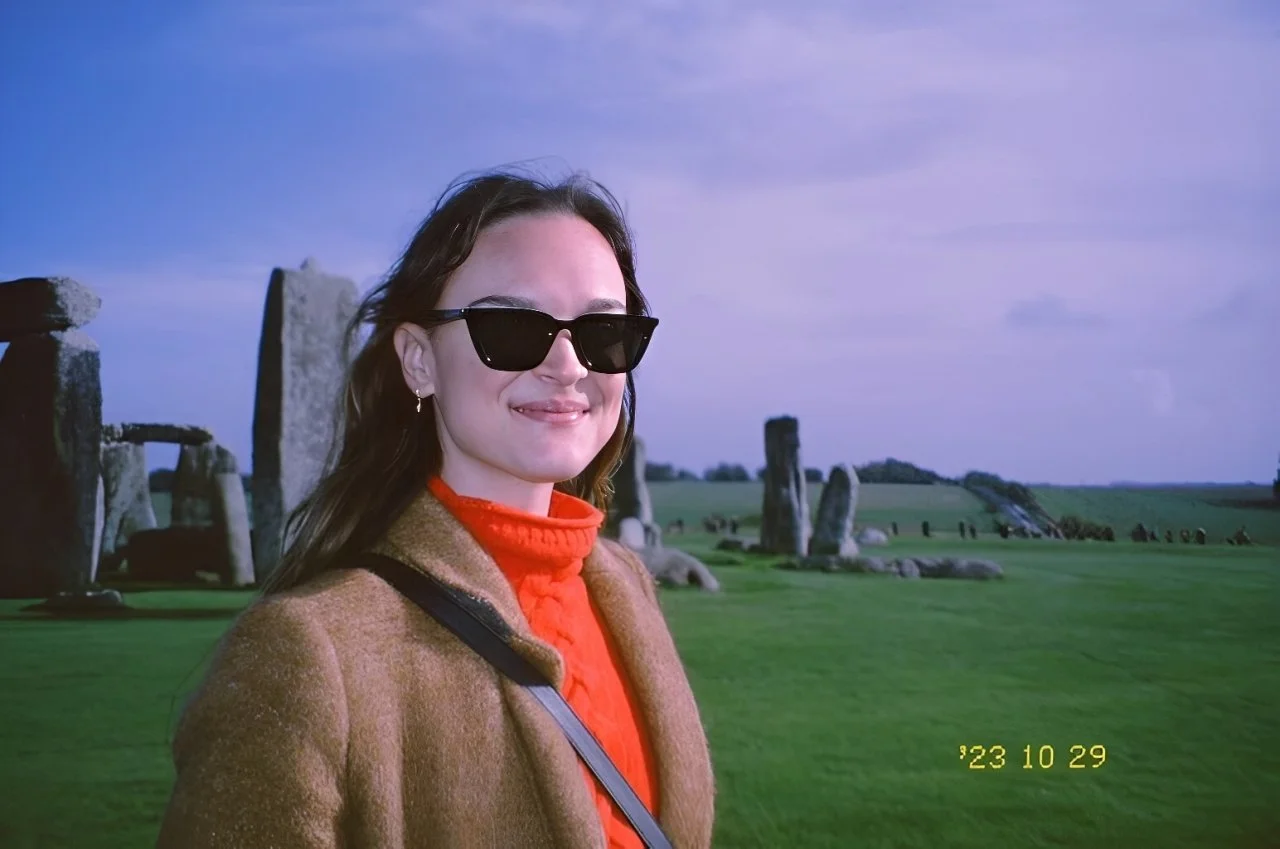
Hannah Bethel explains how hypnotherapy, past life regression, and subconscious beliefs shape emotional healing and personal growth.
Before hypnotherapy became a mainstream wellness tool, it lived mostly at the edges. Part clinical, part spiritual, and often misunderstood.
In this conversation, Hannah Bethel, a hypnotherapist, musician, and energy practitioner, walks through what actually happens beneath the surface when people start working with the subconscious. Not just what it is, but what changes when you stop trying to think your way through patterns and start feeling them in a different way.
We get into past life regression, but not as spectacle or curiosity, but as a lens. One that can help people understand emotional patterns, release what they’ve been carrying, and shift how they show up in their current life.
If you’ve ever felt like insight alone isn’t enough to create real change, this conversation offers a different way to think about healing, embodiment, and the role your subconscious plays in both.
Listen to Hannah Bethel’s Interview
Watch Hannah Bethel’s Interview
What Is Hypnotherapy and How Does It Work?
Hannah Bethel: Being human, to me, is allowing myself to be fully available to every beautiful, wonderful, terrible, delicious, devastating, exquisite piece of this existence, and trusting that each experience colors my world and opens my heart in a way that would not have been available to me without that experience.
Brandi Fleck: All right, everybody, today we are welcoming back Hannah Bethel to the show. Hannah, how are you doing?
Hannah Bethel: I'm good. I'm so happy to be back. I always enjoy chatting with you, and especially on your podcast. You're such a great host. You ask such great questions, so I'm excited to chat with you more today.
Brandi Fleck: Thanks. I'm really excited about this conversation. We're going to dive into some of my favorite topics.
Hannah Bethel: Me too.
Brandi Fleck: Before we do that, will you please just give our listeners a rundown on who you are and what you do, especially if they haven't heard the first episode you did on the show?
Hannah Bethel: Sure. I have had a very colorful, multifaceted life. I'm a transpersonal hypnotherapist and Reiki master teacher, and also a singer-songwriter and performer. I've spent most of the last 15 years of my life touring all over the country.
I was always curious about the big questions of what are we doing here, how did we get here, what is God, where is God? All these kinds of big questions. I had been seeking and asking and studying without realizing that I was studying to move into the work I'm doing now as a healer.

In the seeking of God and of the divine, I realized there was a deep seeking for myself to know myself more deeply. I'm still on that path. I don't think it's one that ever really ends, and I think that is the point of it in many ways.
Brandi Fleck: You did refer to yourself as a healer, and your practice is called Hi-Fi Healing, correct
Hannah Bethel: Yes.
Brandi Fleck: And you're based in Nashville?
Hannah Bethel: Yes.
Brandi Fleck: Thanks for adding those details. I'm really curious to know how it all fits together, but for our listeners who aren't as familiar with hypnotherapy, can you give us a quick overview of what it is and how it helps?
Hannah Bethel: Yes. So hypnotherapy is therapy in the subconscious space. A lot of talk therapy operates more in the conscious mind space, with the conscious mind being the part of us that is linear, logical, and rational. We're trying to get things to make sense in this space. This is the part of our brain that helps us handle all of the physical logistics of our human life, which is very important because here we are, being humans in these physical bodies.
Subconscious Beliefs and How They Shape Your Life
The subconscious is where our emotional body lives, and it's also where all of our beliefs about life exist. Most of those beliefs have been created unconsciously through oftentimes early childhood experiences or particularly emotionally charged experiences that maybe we've had later in life. Then those beliefs create the train tracks on which we proceed through life because we believe this about how men treat women and how women treat men. We believe this about how money works or doesn't work.
Until we really examine those beliefs and even discover that they're there running us, we can't do a lot to shift them. In hypnotherapy, all of this work is figuring out what are those beliefs that I don't even realize that I have that are running my life and why I keep finding myself in the same situation again and again. Then we do the work on shifting it and healing it.
All those neural pathways that are created when we do something habitually become much more malleable when we do this work in the subconscious space.
Brandi Fleck: It's interesting because as a coach, I work with beliefs as well, but it's so different than the hypnotherapy route to get there. I feel like it's just good for people to know that there are all kinds of alternative ways to go about getting to the bottom of something, like the pattern. So I love that.
How does Reiki or energy work tie into hypnotherapy?
Hannah Bethel: Yes. I want to backtrack first and bounce off what you just said because I think this is a really important piece for us. Each side is needed. It's not just looking at therapy from the conscious mind or subconscious mind space. We have to think of things holistically.
I like to think of it as the yin and the yang, with the conscious being the more masculine aspect and the subconscious being more feminine. We don't want to just focus on one or the other. Both pieces are really vital.
Depending on where you are in your journey of healing or processing your trauma, doing the work in the more conscious space can be a really important first step. You need to begin to process, like, okay, this dynamic was dysfunctional, that behavior was inappropriate. These are vital first steps that we need to get into relationship with before we can begin to do the deeper emotional work.
So I just want to emphasize the importance of each. It's not just one or the other.
Brandi Fleck: I'm so glad you brought that up because I totally agree.
Hannah Bethel: Yeah, and sometimes if I have clients come to me who are really fresh in the grief stage or really fresh in a separation in a romantic relationship, or somebody just died last week, this is maybe not the time to go into deeper emotional work. You might just need to spend some time processing what you just experienced and then begin going into the emotional piece.
So yeah, there's a place and time for everything.
Brandi Fleck: That makes sense. There are a lot of moving parts and pieces. So real quick, how do you know when it's the right time to address other parts and pieces?
And not to load you up with too many questions, but I'm going to ask one more. You mentioned sometimes you need to process, and we hear that word a lot, but what does it actually mean to process an experience?
Hannah Bethel: Wow, great question. I think it's something I'm still figuring out and something that can be somewhat unique to each individual.
A lot of times when we're in crisis mode, like something terrible just happened—we had a separation, realized a partner's been unfaithful, or somebody just died—we're really in that crisis mode. We want to get out of it as quickly as possible, so we start reaching out for all these different things to get us out of this pain and discomfort.
I think it's really important to know that this pain and discomfort is a really important part of the process. We don't want to sit in it and drown in it forever, but we also don't want to completely distract from it. We want to find a balance of being with the emotion while also taking care of ourselves and nurturing ourselves.
If we don't allow ourselves to feel and process the emotion, it will come up later for us to look at. It's like something you pick up on your journey, and it just stays in your pack until you take the time to look at it.
The sooner you can feel it and let it run through you, the better off you are. Also, deviating a little bit, the difference between pain and suffering. Pain is unavoidable. This is something we will all experience in different ways. Suffering is optional.
Suffering can come when we hold on to things for a long time, and it starts to create beliefs for us. We make it mean something about us: things never work out for me, this always happens to me, I knew I would be single at this age. These kinds of beliefs and stories create suffering.
That suffering happens when we don't let ourselves really experience what we're feeling. We also want to fully experience the good things too.
So that was a bit of a deviation, but I think processing is allowing yourself to be where you are, even when it sucks.
Brandi Fleck: I love that. I also want to reiterate what you said, you said suffering is optional. I think that's so hard for so many people to believe.
I love how you tied it into the meaning we're making. The meaning we place onto an experience, whether it's good or bad, adds to whether or not we suffer.
Hannah Bethel: Yeah, I believe so. I also believe that suffering, in many ways, is necessary until it's no longer necessary. Sometimes we need it to get it. We need to go there in order to come through to the other side.
Partially because of the nature of our universe, we'll get into this a little later, we need contrast to understand what is available. I think sometimes suffering does serve a great purpose and is exactly what is needed to knock us back in the other direction.
You hear so many times about people hitting rock bottom and then completely changing their life. If they had never hit rock bottom, if they had just coasted along feeling pretty crappy but never allowed themselves to really crash and burn, would they have been able to come back? Maybe, maybe not.
Sometimes it is necessary until it is no longer necessary.
Brandi Fleck: Similarly, some symbolism that's been coming up for me personally lately is the oyster with the pearl and how there has to be irritation from the sand in order for the beautiful pearl to form over time.
I totally resonate with what you're saying. So many times I've seen people hit rock bottom, and that triggers a massive spiritual awakening. They see things differently and experience life differently because of it. Eventually, they no longer have to suffer.
It's pretty cool how we have these things available to us.
Hannah Bethel: Yeah, it is really cool.
The Nature of the Universe: Duality, Consciousness, and Growth
Brandi Fleck: Okay then, well, let me ask. What insight can you give us into the nature of the universe?
Hannah Bethel: What a fun question. I think the nature of our universe is one of duality. The first piece of this is that we need contrast in order to encourage growth and evolution.
The objective of consciousness, if I may, is to experience every single facet of itself in every way, shape, and form. So this contrast, when I have known peace and happiness and safety, and then I don’t have those things, there is a stark difference within me.
This creates that friction that you were talking about, and then we do with that what we will. We can use it to suffer and stay in this space of not moving and evolving, or we can use it to propel us forward.
For some reason, I think our universe is set up so that we need this piece to understand what’s going on and to continue this movement. Whether that’s forward movement or spiral movement. I don’t know exactly. It’s probably not linear, would be my guess.
The thing we tend to do with that is judge one as good and one as bad, or one as desirable and one as undesirable. This is another place where we can go into suffering. When we say daytime, warm, sun, good; nighttime, cold, dark, scary, bad, then we’re in judgment.
I think the other piece of this universe of duality is that it’s not necessarily either/or. It’s both/and. The more that I turn to that piece, the more peace I find.
In our conscious mind, when we’re processing things, especially trauma or something we just went through. We want to know, is it this or is it this? Which is it? I want to understand.
I have yet to find a time, in my own experience or in the experiences of my clients, when it has just been this or this. It is always both/and. The more that we can hold that, the more informed we can become, the more compassion and grace we can have as we move through our world, and the more wise we become in how we interact with each other.
This also allows us to really own our piece in our life. How am I showing up to create this experience of my life? What is my responsibility? What am I not holding that I should be holding? What am I holding that I shouldn’t be holding?
That’s, in a nutshell, the nature of the universe. I could ramble on forever, but yeah.
Brandi Fleck: Oh my goodness, I’ve been thinking about duality so much. It’s a constant topic on my mind. I used to think that it was necessary, and I know it’s part of the way our universe is set up, even being on this earth with night and day like you mentioned.
But then I thought, what happens if we get rid of duality? Maybe seeing it from the both/and perspective sort of does that.
Hannah Bethel: Yeah, I think about this a lot too. I think the Garden of Eden story really lays this out in a mythological or archetypal sense. You’ve got Adam and Eve living in bliss and harmony in the garden, and God walks with them.

Then they’re instructed not to eat from the tree of the knowledge of good and evil. So they eat from the tree, and now they know. They know good, they know evil. They’ve brought judgment into their reality. This is good, this is evil.
In a more Western thought, this is the fall of man, the point at which everything went wrong. But is it? Or is it the point when everything began, when everything woke up?
We all would love to have this idealistic existence where everything is frictionless and beautiful and easy. I just don’t know that the evolution we desire at the core of our being is available without some level of that friction.
I mean that individually and collectively as the human species. I think we could do it a lot better than we are, certainly, but to some degree, like you said with the oyster analogy, that little bit of friction is needed to move it along.
Because if you get too comfortable, you might not want to move. You might not want to go anywhere. Then how do you evolve?
Brandi Fleck: Yeah. I think our listeners can see the deep spirituality that surrounds your presence and how you approach the world and your clients.
I would love to ask you, assuming you believe we have spirit guides or spiritual guidance, how does your spiritual team and the spiritual teams of your clients impact the work you do with them?
Spiritual Guidance, Intuition, and Working With Energy
Hannah Bethel: Yeah, I love this question. This is so cool.
Every time I go into session with a client, I set an intention, say a prayer, asking for my highest guidance and the highest guidance of my client to be present with us as we move through the session.
It’s a combination of me using the skill set I’ve been trained in, trusting my intuition, and trusting that we are always being guided by a higher power. Call that whatever you want. I believe there is a divine hand in our existence.
The more we can become quiet, listen, and surrender to that, the more we can allow it to guide us. That’s my objective in these sessions. I always set that intention.
The more I can surrender and the more my client can surrender, the more amazing things can come through. A lot of times there’s messaging coming through me or through the client. Sometimes I have an idea of what we need to look at, and then sometimes we get them in trance and go somewhere totally different.
I always trust the client’s highest guidance. I trust that their body and subconscious wisdom know what they need to look at and in what order to help them unpack whatever they have going on.
In regards to the spirit team, I know people have different ideas of what these are and what they look like. I tend to stay really open. I’m open to a number of possibilities of what is actually going on here.
Ultimately, I believe we are all one. I am you, you are me, I am God, God is me—we are all one. That’s the basis of my belief system, so we’re not creating a hierarchy or putting ourselves below something else.
There are levels of wisdom and consciousness that might not be available to me in my conscious state as Hannah. So I can allow in different levels of wisdom without judging them as better or worse.
Maybe this is guides, those who have come before us, ancestors, family members coming in to guide the session. Maybe it’s other dimensional beings, maybe it’s angels, maybe it’s all just you and aspects of your subconscious. I don’t know exactly, but I do know that something is going on.
And then sometimes people’s guides will come into our session, and they’re very anthropomorphized. They have names and physical structure, and we can kind of see how they show up.
Is that how this being is, or is that how the client has constructed it? Is it all their hallucination, so to speak? People have been having visions of all kinds of deities since the beginning of time. What’s real? What’s true? What’s the filter through which your conscious mind has created everything?
You know the saying, we don’t see the world as it is, we see the world as we are. Does that carry over when we’re interacting with this kind of spirit realm? I don’t know.
There’s a lot of “I don’t know exactly what’s going on,” but I know that something is. I know that it is guiding us, and I know that it is loving and here to help us pull out this thread of chaos and confusion that we tend to weave through everything. It brings it down to the simplest terms, which is love.
Brandi Fleck: There’s so much there that I want to ask you about. This is so fun—my favorite thing to talk about.
I’m thinking, in order to create, there’s typically chaos at the beginning of creation. That’s really interesting. If I think about it from an artist’s perspective, you’ve got all these materials, all these ideas jumbling around in your head, and you put them together in a certain way through the lens of you and all of your parts.
Then it comes out into this beautiful creation that maybe looks like an idea or a symbol or a real-life image. You’ve taken that chaos and distilled it down into a simpler, beautiful thing that’s sort of miraculous when you think about it.
So that same creative process is happening in hypnotherapy, it sounds like.
And then the other thing is, if you believe, and I also believe, that we’re all one, you are me, I am you, I am God, God is me, then whatever’s happening would all be just us, but it can be a deity at the same time, perhaps.
Hannah Bethel: Yeah, both/and.
Brandi Fleck: Oh my gosh.
Hannah Bethel: Yeah, totally. I think that’s it. I could be wrong, but that’s where I’m at now.
Brandi Fleck: I love that. Let’s follow the creative thread for a minute. You’re a musician, you’re a healer, you do lots of different creative things. How does it all tie together for you?
Hannah Bethel: I think it’s all the same channel. It all comes through the same place.
I didn’t realize during all my years of songwriting how much channeling I was doing. I’d spend time learning the craft, hours writing, really trying to understand why this alliteration sounds good, why this rhyme scheme works, the number of syllables, all of that.
That’s a piece of it, but the times when things felt the most magical were when they came out all at once. Then I’d go back and compare it to what I know about writing, and it would meet the rules, but also twist them in the most perfect way.
It’s effortless when it comes out. You’re like, that was cool, I don’t know what that was. Later I realized, this is what channeling is. You allow it to come through, and it just makes sense.
We’re not trying to do the math first. The math was created out of that kind of divine information coming through. The math didn’t create the divine, if that makes sense.
It’s a very similar feeling when I drop in with clients and when we drop into the trance state. We both kind of go into trance when we’re in session together. It’s that same place of allowing information to come through.
A lot of times, clients are speaking these lessons and messages to themselves. If you were to read them on a card, you might think, yeah, love yourself, basic. We already know this. Where’s the good stuff?
But when they’re speaking these messages to themselves in an embodied state, they’re able to receive them in a different way.
I think this is part of consciousness trying to experience every facet of itself. Maybe that’s why there are so many humans. Maybe it ties into past lives or reincarnation, we can talk about that later.
If we’re all one and having all these life experiences, we’re having the embodied knowing of these different lessons. If I just tell you something like, you need to love yourself, you might understand it consciously, but until you feel it in your body, you don’t really get it.
You might know it intellectually, but until you feel it, you might not be able to transcend it when you come up against it again.
That embodied knowing is the purpose behind potentially having all these life experiences. It’s something we can access, to some degree, in subconscious work, getting you to that embodied knowing of those lessons so you feel them to be true in your body as you move through the world.
Like, wow, I am worthy of love. I am worthy of respect. I’m worthy of amazing things. I really feel this and know it to be true. Not just affirmations we’re reading off the mirror, like “I’m lovable, I’m worthy.”
You can feel the difference between what you actually believe and what you’re trying to convince yourself is true. Does that make sense?
Brandi Fleck: I think it does. A little roundabout, but it’s okay. I feel like it’s all related, everything we’ve been talking about.
What It Means to Transcend Trauma and Set Emotional Boundaries
You mentioned that if you don’t embody it, then you can’t transcend it. What’s the importance of transcending?
Hannah Bethel: That word can be understood in a lot of different ways, but what I mean in this context is your energetic boundary with certain things.
This changes and evolves throughout your life. At one point, your boundary might be, I can’t imagine having less than $500 in my bank account. Someone else might say, I can’t imagine getting evicted. Someone else might say, I could imagine getting evicted, but I can’t imagine not having my car to sleep in.
Someone else might say, I can’t imagine having less than a million dollars in the bank. Or, I can’t imagine being in a relationship where someone treats me this way.
Everyone has different energetic boundaries.
So maybe you’ve been in a relationship that was abusive or inappropriate, and you’ve come to a point where you know your worth. You understand those dynamics. You can see them when people come into your life, and you choose something different.
Now your energetic boundary, your threshold, is somewhere different because you could never imagine allowing yourself to be in that situation again. In that way, you have transcended that. You’ve embodied “I am worthy of something different,” and you’ve moved in some way.
Brandi Fleck: Okay, that totally makes sense. Thank you for explaining that.
Reiki, Energy Healing, and the Chakra System Explained
This is the perfect point to go back and ask, how does Reiki fit into the work you do? Because that is a type of energy work.
Hannah Bethel: Yeah, and I love Reiki so much. It’s so cool.
It’s a very simple energetic practice. Anyone can learn it. It’s very accessible, no matter what your background is. It helps us in a lot of ways. It helps the body relax, which is really important. It helps the nervous system recalibrate.
When the body is relaxed and the nervous system is calming, we’re in a much better place to receive healing and begin doing this work. So I use it in conjunction with my hypnotherapy practice initially for that purpose. How can we get you into a really accessible state so you’re letting information in and letting information out.
I also use it when there’s stuff stuck in the body. Reiki predominantly works with the chakra system, if you’re familiar with that, the seven main energy centers along the spinal column.
We’re looking at those energy centers, which govern different aspects of our life and consciousness. Starting with the root chakra at the base of the spine, it governs our base needs. Am I safe, do I have a home, do I have food, is there money in the bank. That looks different depending on your culture and time, but it’s about establishing that foundation of safety.
From there, sometimes we have emotional things trapped in the body. I believe there is a mental and emotional correlation associated with everything physical happening in the body—whether that’s illness, injury, or imbalance.
I do a lot of this work in my practice, so Reiki can help shift that energy if it’s accumulated in a specific place. I use it in that way, and I also teach Reiki.
In my classes, I focus on teaching people how to use Reiki as a complementary practice. It can stand alone, but it’s so accessible that there’s no reason not to weave it into whatever else you’re doing.
So Reiki complements hypnotherapy nicely. It helps people relax and helps you focus on where there might be blockages or areas to dive deeper into in hypnotherapy.
Brandi Fleck: Okay, yes.
Hannah Bethel: It also teaches you how to connect with your own intuition more deeply. As I’m working on people, what I feel in my body, what I see, what I sense, it’s a great teacher for tapping into these aspects of our being.
Brandi Fleck: I follow a lot of channelers online, and you mentioned channeling earlier. I feel like many of them started with Reiki, and then it sort of morphed into more, more things coming through, more downloads, whatever you want to call it, like we were talking about earlier.
What Is Past Life Regression and How Does It Help?
So I feel like this is a good time to touch on the past life regression piece because I’m so curious about it. I’m super interested, and I know it’s a specific form of hypnotherapy that you do. Can you tell us about it? What is past life regression like in your practice?
Hannah Bethel: Yeah, so past life regression is going into a past, alternate, or other life experience.
Regression essentially means going back in time. We do current life regression a lot in my practice too, going back to childhood or an earlier time. Past life just means a different life than the name, body, and identity you’re in now.
There’s a lot of conjecture about what exactly is going on. In the most simplistic sense, there’s the idea of reincarnation. That we live many lives, and when we die, we get recycled back into the world.
I think that’s a very simplistic view of what’s happening, but it serves to some extent. When we’re in these sessions, I’m open to it being a number of different things.
Is this an experience your soul has lived that we’re touching on? Is this a life within your ancestral lineage? Is this a generational memory passed down in the cells of the body? Is this an elaborate metaphor your subconscious has created to help you look at a block in a new way?
Or if we’re all one, are we tapping into the collective and choosing something that resonates most closely with what we’re trying to break through now?
I don’t know. It could be any of these things. I do get a sense sometimes in sessions. This feels generational, or this feels like a past life. Other times it feels more like a metaphor, like something constructed by the imagination.
There’s no judgment on what it is if it serves the purpose of helping us break through, which is my objective.
I call it clinical past life regression because I want it to serve the purpose of helping you evolve and elevate your current life experience. I’m not interested in just dabbling in that world.
It’s fascinating, and it’s easy to get lost in the details or romanticize it, but I think it’s really important and responsible to use this spiritual work to support how we show up in this life.
So we’re not going into fantasy, and we’re not departing from our responsibility in this life, in this body, with this family and community we’ve been assigned or chosen.
How can I use what I’ve learned and seen and known through an embodied experience? Because when we’re doing regression work, you’re dropping into the thoughts and feelings of that other life. You’re getting an embodied knowing of that lesson or experience.
Then you bring that back into your current life and body. I’m always asking, how can we tie this all in. How can we use this to serve you now, on your mission in this incarnation? Because it’s really important that we stay present in this reality as we’re bringing in all this other spiritual work.

Brandi Fleck: Gotcha. It sounds like, well, I was going to ask what the purpose of doing a past life regression is, but it sounds like it’s to pull some lesson into this life that can serve you in breaking through or elevating in some way.
Hannah Bethel: Yeah. A lot of people are seeking it because they’re curious, which is why I started to get into this work. I just wanted to see what was going on, what is happening?
That’s great, but at some point, you have to turn it over to the therapeutic aspect of it. Otherwise, you can get lost in fantasy and in collecting mystical experiences, which I’ve certainly done plenty of in my life.
It’s incredible. It makes us feel connected to God. It makes us feel like we might be part of some kind of magic. All of that is good, but it’s all true even without those experiences.
So how can we use them to serve us as we’re serving here and now?
Brandi Fleck: Okay, that makes sense. That makes a lot of sense.
That feels like a higher purpose for those experiences. And maybe for you, is this a calling?
Hannah Bethel: Yeah, I definitely think so. It’s one that kind of fell onto me. I never thought I would be hypnotizing people. It’s still so funny to me.
It was really put upon my heart, both with Reiki and hypnotherapy. I was researching and collecting mystical experiences, and it just felt like an intuitive hit. Go do this now. I was like, huh, what? Okay. And I just followed it, and it’s led to this.
It has also been the greatest teacher in my life and the greatest catalyst for my own healing, helping other people heal. That’s what’s so beautiful about it.
I’m sure you notice this in your practice too. This is the beauty of us coming together as humans. As I serve you, you are serving me. I see mirrored in you what I am doing or what I’ve already walked through.
I can help you walk through something because I see things you might not see yet, because I’m a few steps ahead. It’s incredible how the energy flows both ways in this work.
Yeah, I do feel like it’s a calling.
Brandi Fleck: That’s really beautiful.
What is one of the most standout experiences you’re able to share with us that you’ve had in a hypnotherapy session, whether it be past life or any type?
Hannah Bethel: Oh my gosh, there have been a lot. I had some ideas, and now I have other ideas coming in.
I’ll share this one. This is a past life session. I had a client who came in. He was very excited and nervous. Everyone is excited and nervous and not sure if they’re going to be able to be hypnotized. Everyone is concerned about this.
Everyone can be hypnotized. You’re allowing it to happen. We’re equal participants in the process. I’m not making you do anything. It’s not a magic trick. Everyone can do it.
So this guy comes in, and in my past life facilitation, I move us backward down the timeline of the current life. We visit a few early childhood memories first, then go into the womb in this life, and from there, we go back to another experience.
We can direct that depending on what the client wants to examine.
He’s really nervous he’s not going to be able to do it, but he regresses beautifully through the current life work. Then, right before I drop him into the past life, he says he has to go to the bathroom. He pauses the session.
I tell him that’s totally okay. These sessions are longer, so it happens. He comes back, still a little nervous, and then he drops into his death scene, which sometimes happens.
He’s in a samurai fight or something, kind of violent. He’s observing it objectively, not emotionally reacting, which is what we want in those moments. We don’t want him to re-experience the violence, just gather data.
He’s still a bit skeptical, so I guide him to go earlier in the life and move toward the death transition. I can’t remember if we visited another scene first, but then he drops into his wedding day. He says, “I’m getting married. It’s my wedding day.”
I ask him to look at his bride, to see if he can see her. I see his eyes moving under his eyelids, which is so endearing to me during sessions. Then all of a sudden, he gasps. His eyes fill with tears, and he says, “Oh my God, she’s so beautiful.”
That’s when he was fully in it. The emotion in these sessions is so powerful, you are there.
I just gave myself goosebumps. It was really amazing. He’s crying, I’m crying, and we were able to move through the rest of the session smoothly after that emotional connection, which is really important.
Then he actually went on to meet that woman later in this life.
Brandi Fleck: In this life?
Hannah Bethel: Yeah. They had a journey together. I don’t think they ended up staying together, but he told me later, “I met her shortly after that session.”
Brandi Fleck: Wow. I’m like, whoa, dude. That’s so cool. I wonder how he knew that he met her. I wonder if there’s a feeling.
Hannah Bethel: Yeah, I think it’s a resonance. You feel it. I’ve had that experience a couple of times with meeting people, where you recognize their frequency.
That one was very special. It also opens up the mystery and the wonder of how we really have no idea what’s going on, and the beauty of how it’s all woven together.
I spoke to this a little bit in the beginning, but trusting every piece, even when it doesn’t make sense, even in their experience of coming together in this life and then separating.
We all want it to be like, “and then they lived happily ever after,” because that’s where the movie ends. But it’s not the end. It’s always evolving, always moving.
Trusting that each piece is what you need and is critical for your growth and evolution, and that it never gets to a place of being static. We don’t want it to either.
Physical Pain, Trauma, and Past Life Connections
Brandi Fleck: Yeah. What about your own life? Have you ever done a past life regression yourself, and do you have a favorite experience?
Hannah Bethel: Oh my God, yes. I’ve done a lot myself.
I’ll share this one. I may have told you this story before, but I’ll tell it again.
I had a partner years ago, about ten years ago. Very early in our relationship, within the first week. We were dating, and I got in a go-kart accident and got really bad whiplash in my neck.
Throughout that relationship, I would have episodes where my neck would seize up and be really painful and stiff. I couldn’t move it. Then I discovered chiropractic, which helped a lot.
The dynamic of that relationship was that we had some fundamental spiritual differences. I was a little too “witchy” for him, and he was more on the conservative Christian side. So the relationship didn’t work out.
At the time, I was very sad about it. I was hurt. I wanted love to be enough. I wanted it to work.
Years later, I’m doing my hypnotherapy training. In the training, we’re experiencing the work a lot, everyone practicing on each other. It’s a super intense combination of therapy and learning.
One morning, I woke up and my neck was really stiff again. My neck issues had mostly dissipated after that relationship ended, and this was four or five years later. I thought, this is crazy, I haven’t had my neck hurt like this in a long time.
I go into class that day, and it’s my turn to be practiced on. I’ll share a bit about how I dropped into the experience because I think it might be helpful.
Even for me, I sometimes have that moment of, am I making this up? Am I going to drop in? So it’s about trusting that you are and being open to the different ways information can come through.
I’m getting dropped into a past life, and the first thing I see is an outline behind my eyes, like when a bright light flashes and you can still see it when you close your eyes.
Eventually, I recognize the shape as a mount of antlers, like an elk mounted on a wall. As soon as I identify it, I drop into the scene. I can see every detail. I’m in a bedroom in an old European house, in bed with this man—who was my boyfriend from years ago.
In that life, I was a servant in the household, having an affair with him. He was married and had children. I was very young, and he was older. It felt like this was something he did often.
Fast forward, his wife finds out about the affair and has me framed as a witch and hung. I go to that scene, and I’m like, oh my God, I’m being hung. I’m at the gallows. I think I was also pregnant. It was a very intense experience.
I started connecting all these pieces. When I met this person in this life, I had this neck injury that bothered me the entire relationship, especially when things were stressful. Then the relationship ended, and the neck issues went away.
Then I do this regression, and in that life, I was hung. I’m like, this is crazy.
Brandi Fleck: Yeah. And I’m wondering, you said you were a little too “witchy” for him and he was conservative Christian, is that how it was supposed to go so you could release that energy that may have been stuck?
Hannah Bethel: Yeah, good question. It almost feels like, “you thought I was with you then, let me show you now.”
Maybe. I think there are other aspects too, but it was very interesting. I see things like that come up a lot. Physical issues being associated with past life experiences, and also current life experiences. Emotional things or trauma can be associated with different parts of the body or specific illnesses.
It comes up with past life work too. That one was pretty wild. I was kind of reeling over it for a couple of weeks, like, whoa, okay.
Brandi Fleck: It’s bananas. It’s so cool.
Hannah Bethel: It really is.
Brandi Fleck: What did you take away from it?
Hannah Bethel: That was healing. I felt like I was able to really release an aspect of that relationship that I was still holding, even though it was years later.
There was a bit of judgment for myself, trusting my path, trusting what I feel my divine guidance is, and trusting that it’s right for me. Not letting myself be weighed down by the voice of another person speaking what is true for them.
I was able to step more freely into this archetype as a healer in a way that I had not fully done before, and really trust that path for myself.
How Christianity and Spiritual Healing Can Co-Exist
Brandi Fleck: Awesome. I’ve got one more question for you before we start to wrap up. I’m glad you brought up that relationship with someone more conservative Christian, and then there’s you doing this work.
We do live in a very Christian part of the country, and I know sometimes there’s fear around this type of work. That it might be evil, or that “witchy” can’t be Christian, things like that.
So I’m curious, do you have clients who are Christians who come in for hypnotherapy or past life regressions? And how do you deal with that fear or cognitive dissonance that might come up?
Hannah Bethel: Yeah, great question. I actually find that pretty much everyone I work with is very open, even if they’re coming from a Christian background. They tend to have a more non-traditional understanding of those teachings.
This is an example of transcending something. Earlier in my time living in Nashville, I found myself constantly around people who challenged my beliefs, questioned my interests, and made me feel wrong for how I was seeking the divine.
But when I got to the point where I trusted my path, trusted what was right for me, and accepted that a traditional religious path wasn’t mine, those experiences disappeared.
I don’t have those experiences anymore because I’ve transcended that. I trust myself and my own guidance. I don’t know everything, but I trust myself to know what I need to do at each step.
So the people who come to me are very open. I do have clients from Christian backgrounds who are open to another level of the spiritual experience, and it’s not necessarily in conflict for them.
Brandi Fleck: That’s what I was curious about. For someone listening who comes from that background, it doesn’t have to be in conflict.
Hannah Bethel: Yes, absolutely. To me, the most important piece is having grace for each other on our journeys and believing in a divine hand that guides us in some way.
I also believe that this divine hand trusts us with what it has given us. That’s something I find really meaningful. When we’re in chaos, suffering, heartbreak, or whatever we’re going through, it can feel like we’ve been abandoned and that God is far away.
But on the other side of those experiences, I’ve found that it was never that. It was that this divine hand was trusting me to move through the experience and trusting that I would be stronger on the other side. That perspective is fundamental to me when working with people. I work with people from all kinds of belief systems, or no belief system at all, and it doesn’t matter to me.
The goal is stepping into the most healed and loving version of yourself that’s available to you. That’s available to all of us. It’s kind of like all roads lead home.
Brandi Fleck: I love that perspective. Hannah, is there anything I haven’t asked you that you think is important to share?
Hannah Bethel: I do see clients live in Nashville or virtually. I also teach Reiki classes.
I offer a group past life regression the first Monday of every month via Zoom, so you can join from wherever you are.
I’d love to be part of anyone’s journey if they’re looking for another way to approach healing, especially a more emotionally based process and one rooted in surrender and trust in yourself and something bigger.
I think all of us come into this world with an energetic blueprint for this experience. That blueprint holds information for our physical body. How our cells reproduce, our physical traits.
It also holds information about our personality, tendencies, and how we show up in the world. And there’s a blueprint for our purpose, what we’re here to do.
Through this work, we’re able to drop into that more fully and eliminate the things that are obstructing us from allowing that natural process to unfold.
The more we remove what’s inhibiting that natural healing process, the more we allow ourselves to be guided.
It’s like trying to heal your body while putting toxins into it, it’s harder to regenerate. The same is true for mental and emotional toxins, stress, and things we’re carrying.
The more we sift through that and let it go, the more we allow the natural process to take place. It’s happening anyway. We just get out of the way and let the magic happen.
Brandi Fleck: Where can our listeners find you and your work?
Hannah Bethel: They can go to hifihealing.com. I’m also on Instagram at HiFi Healing. They can read more, book a session, or sign up for a class there.
Brandi Fleck: Hannah, thank you for this amazing conversation and for the work you’re doing in the world. I appreciate it.
Hannah Bethel: Thank you, Brandi. It’s always a pleasure to chat with you about these things. I love it. Thank you for having me.
Brandi Fleck: Thanks for tuning in. Check out more of our episodes here and at humanamplified.com. Remember to subscribe.
Join the conversation!
Feel free to share your own experience and let me know if you have any questions in the comments.
Related Posts



















Hi, I’m the founder of Human Amplified. I’m Brandi Fleck, a recognized communications and interviewing expert, a writer, an artist, and a private practice, certified trauma-informed life coach and Reiki healer. No matter how you interact with me, I help you tell and change your story so you can feel more like yourself. So welcome!
Find More on the Blog
Topic
- ADHD
- AI
- Atlanta
- Black and BIPOC
- DIY
- FAQ
- LGBTQIA plus
- Los Angeles
- Nashville
- Seattle
- St Louis
- St. Louis
- UFOS/UAPs/ETs
- abuse
- accountability
- addiction and recovery
- adoption
- affirmations
- afterlife
- altered state
- angels
- animals
- anxiety management
- art
- astrology
- atlanta
- attachment
- awakening
- beauty
- behind the scenes
- being human
- body image
- body work
- boundaries
- brandi fleck
- breathwork
- bullying
- burn out
- burnout
- cancer
- career
- caretaking
- chakras
- channeled
- clarity-dive
- clarity-practice
- clarity-primer
- clean products
- coach
- codependency
Recent Blog Posts
Visit the Full Podcast Audio Archive

Affiliate


What if remembering you’re a starseed isn’t about escaping your humanity, but embracing it more deeply? As you explore where your soul may have come from, there are a few important truths that can keep you grounded, embodied, connected, and fully present for the human life you’re here to experience.