
Interview By Brandi Fleck
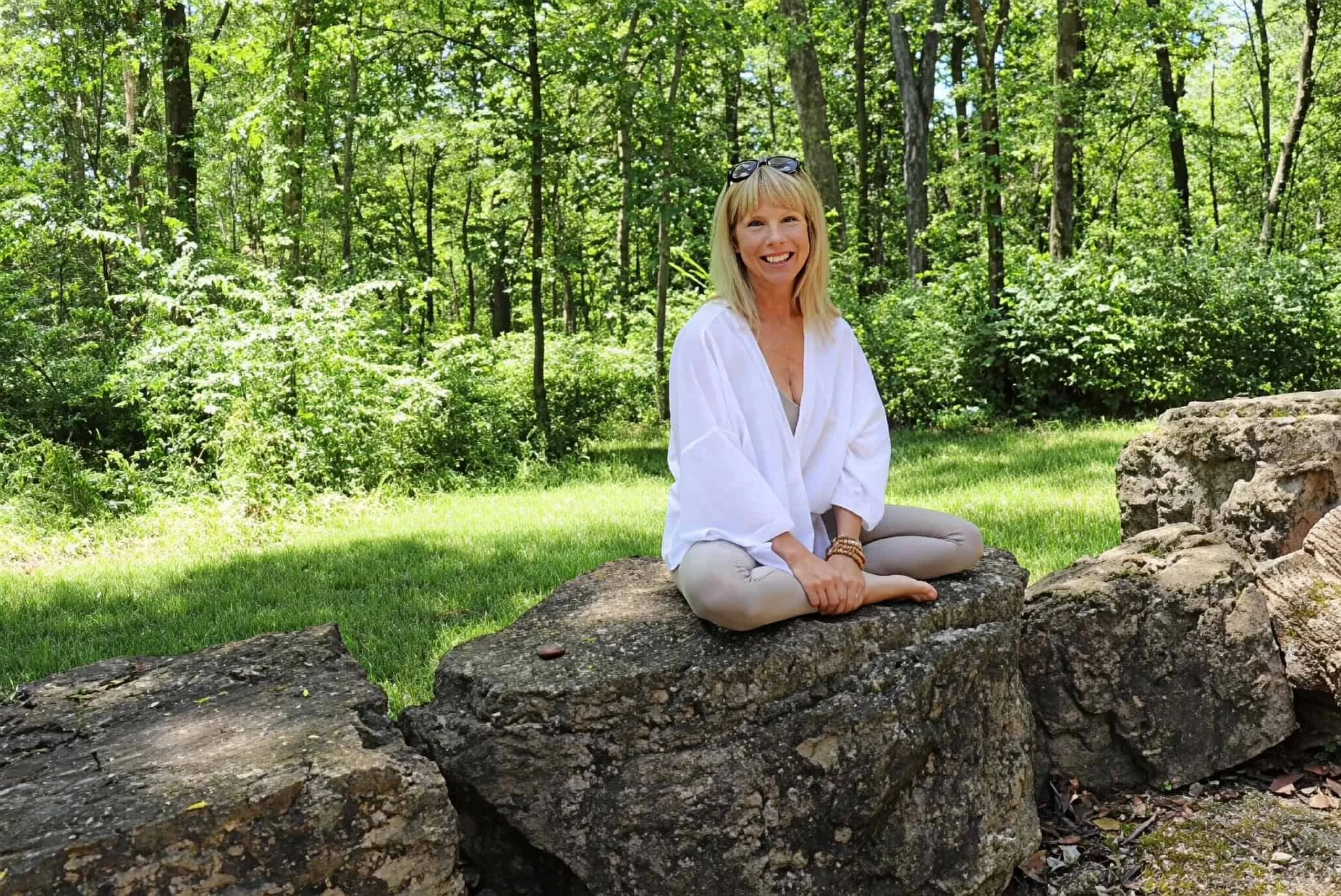
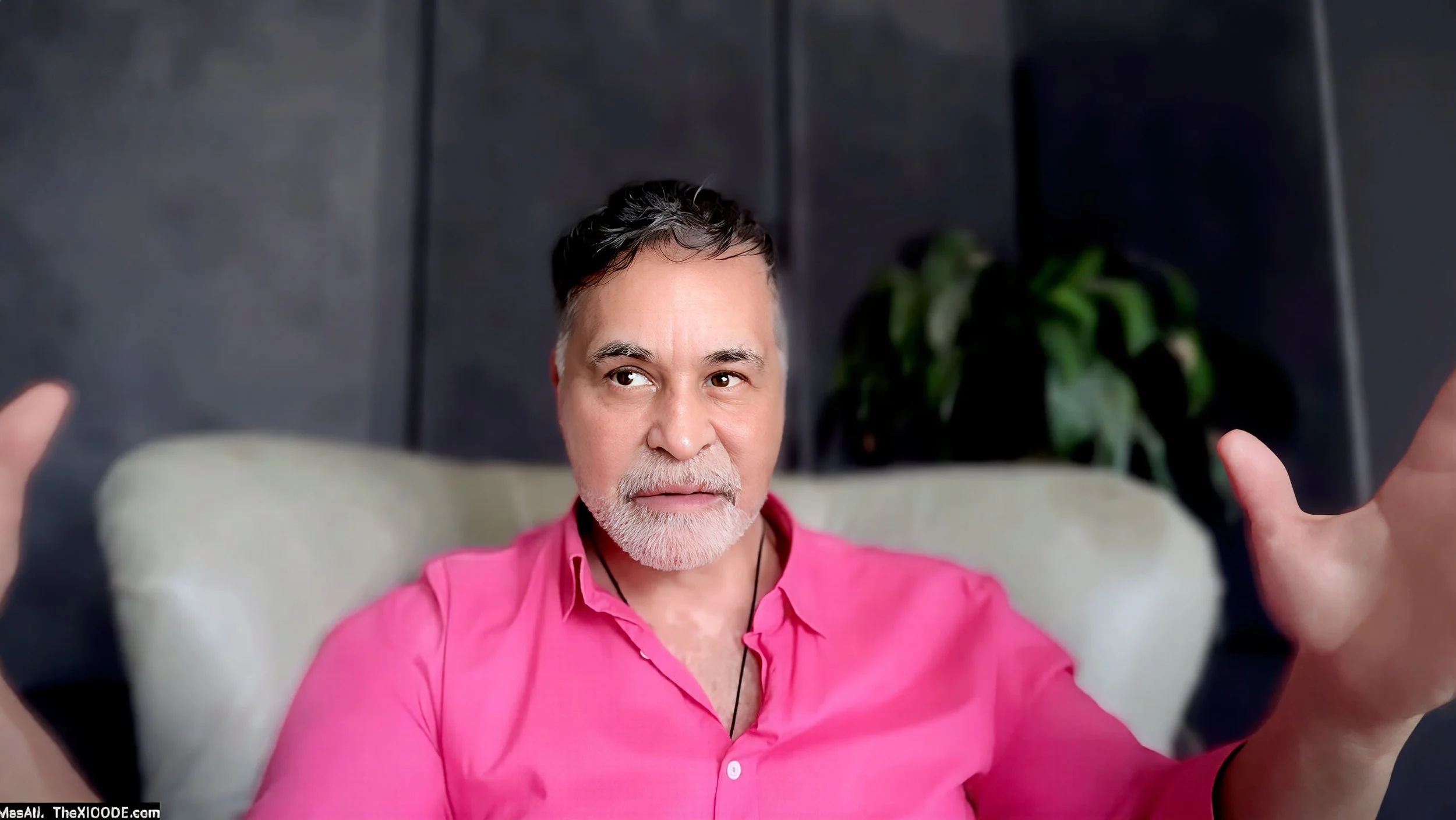
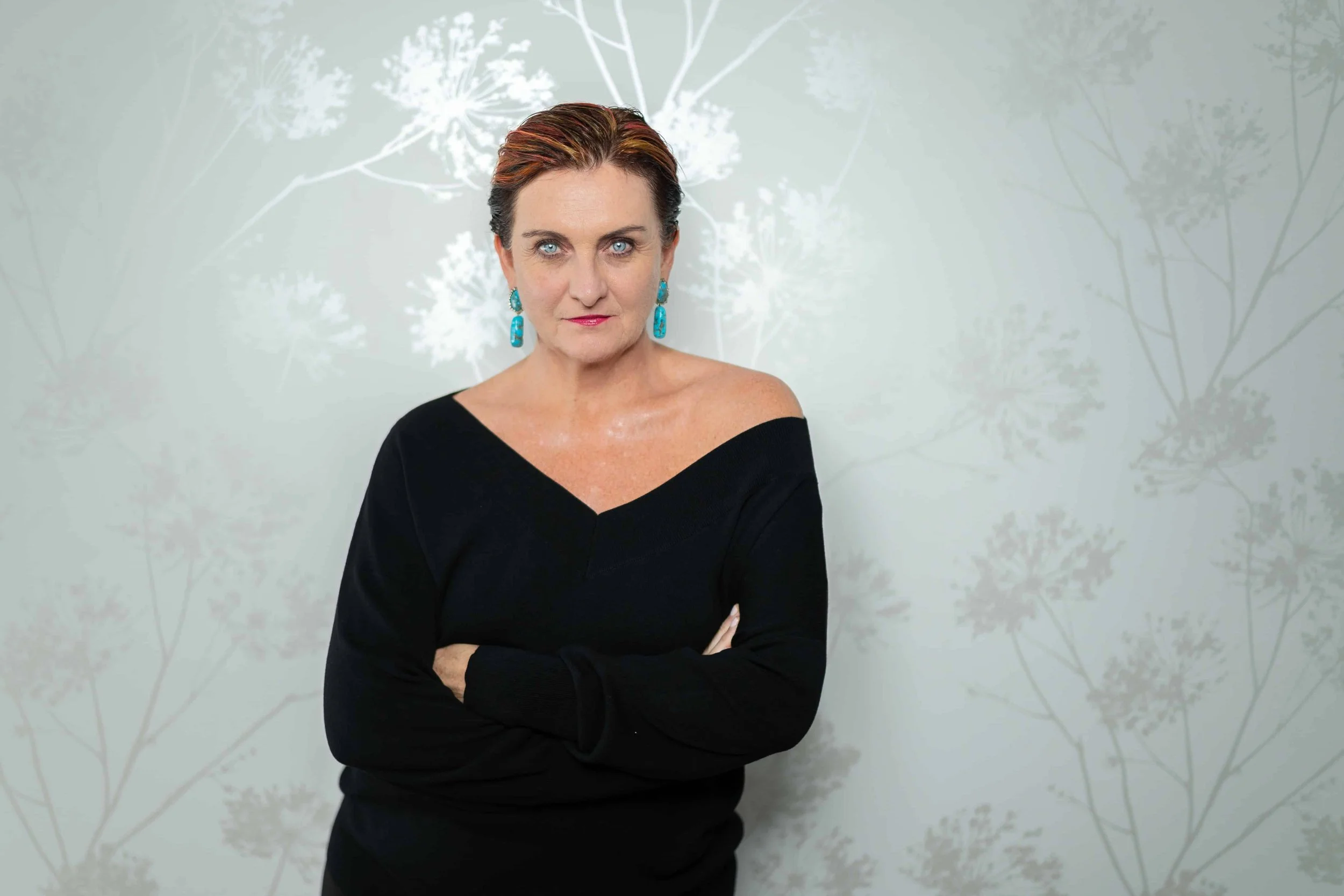
A spiritual teacher, Regan Caruthers, shares her journey through trauma, awakening, darkness, and a life-threatening medical crisis, plus what it reveals about healing, consciousness, and the power of love.
What happens when spiritual awakening doesn’t feel peaceful, but confronts you with everything you’ve tried to avoid?
In this conversation, Regan Caruthers shares a life shaped by intensity: a childhood marked by emotional volatility and intuitive sensitivity, a sudden awakening that opened her to both profound love and profound darkness, and a moment later in life where her body could no longer sustain itself.
But this isn’t just a story about trauma or survival.
It’s about what it takes to transform it.
We explore what healing actually requires beneath the surface, how trauma lives in the body, how awareness changes your response to fear, and why awakening isn’t about escaping darkness, but learning how to hold light within it.
From corporate success to spiritual surrender, from terror to unconditional love, from facing death back to deeper purpose, this is a conversation about coming home to your heart, your truth, and the part of you that doesn’t disappear when everything else does.
Listen to Regan Caruthers’ Interview
Watch Regan Caruthers’ Interview
What It Means to Be Human and Divine
Brandi Fleck: What does being human mean to you?
Regan Caruthers: Yeah, well, I mean, I think right out of the gate, it is a material challenge to consciously embody your divine nature in a form, a physical form, that is really hard to hold. Can we both figure out how to be the best human we can in all the ways that that means while also realizing that we're so much more than that?
Brandi Fleck: Thank you for that. That was a beautiful answer. I do agree with the tension that you pointed out between being physical and embodying our divine. It is a challenge. Everybody, I would love to welcome Regan Caruthers to the show. Before we dive in, also, who are you, Regan? Tell everybody about who you are.
Regan Caruthers: The big question. I'm a seeker and a teacher. It is my life's work to help people remember the truth of who they are. So what that looks like is I'm a yoga teacher. I have private clients that I call my work inner life coaching, like how does one develop a healthy inner life and a disciplined inner life? I try every day, some days are easier than others, to be a human embodiment of God's love and for that energy to inform everything I do and how I do it. It's not so much what we do as people, it's how we do it.
Yeah, and I mean, I've had a complicated life. I think we all have. I write in my book, imagine if we had poster board affixed to ourselves front and back with our traumas delineated like a grocery list. I think we would be kinder to each other. And I think we would realize just from looking at that list how much we all have in common. And yeah, so I'm just here doing what I can in my small way, really, to help people remember that they are divine and that they are eternal. And when you truly know that, when you are able to connect to the felt sense, the feeling of that, everything changes. And you don't live your life in fear, because when you know you're eternal, what's there to be afraid of? What's there to be scared of?
So yeah, that's an answer. There's many ways I could answer that question, but that's the answer today.
Brandi Fleck: Yeah. Okay. Well, it makes sense that you're here because we have the same life mission, and it's really interesting to me how it kind of manifests in different ways for different people. There are so many ways to accomplish the same goal. It's kind of amazing and miraculous that we are all different with such similarities.
Regan Caruthers: Yeah, absolutely.
Brandi Fleck: Regan, so today we had planned on talking about your life story, which does involve traumas and healing and that tension between being a spiritual being and also being a human, I would imagine. And we're still going to get to that. But I would love to give context to our listeners right now about where we're at when we're recording. We're recording on February 12th, and we're existing in a kind of heavy shock and moment where the Epstein files have kind of saturated the collective consciousness, and we're all feeling it. And so I think before we started recording, it came up that we need to talk about this. So I would love for you, Regan, to just let us know how you're feeling and what's on your heart about it.
Regan Caruthers: Yeah, thanks. I hope by the time this airs that we as a collective are marching in the streets and demanding justice for the victims, that we hold these elites accountable. Because right now, there's none of it. We have a woman in prison for her role in it. Well, what? Huh? Okay. But what about the rest of it? I mean, it's so dark. And I think as a collective, we have to understand that the things that these files have revealed, it's an old story.
This has been going on since the dawn of time. Yeshua, Jesus, my teacher, what's the big act that got him in a lot of trouble? Calling out all the corruption in the temple around blood sacrifice. And now these satanists doing their weird stuff, I mean, hunger games, all of it. It's all so hard to understand for the average person, because I think the average person is good.
So that contrast is an incredibly hard thing to acknowledge and to hold. And as a collective, this is warfare. And the spiritual warfare, even though it might feel for the average light worker that it's getting dialed up, I'm not sure that's true. I think it's the same as it's always been. Dark magic, those that really worship the energy of evil, and in my time in a past life in Egypt, we called that Set. That was the god of chaos. And there were priests and dark magicians really honoring that and thinking that that was the way.
It's the same thing. It is a way. It's not the way.
That's actually what the earliest followers of Jesus called it, the way. It's incredibly narrow. It requires discipline to hold the love of God in your heart in the presence of such darkness. It's hard to do.
Yeah. And I had my own little personal initiation into all of this in my 20s. I had this dramatic awakening where I felt nothing but the love of God. I had nothing but forgiveness, not just for things that had happened to me, but to the collective, our collective choices. It was beautiful to feel that quality of love and to hold it in my system for about three years. But what also came with it was an initiation into such profound darkness. And a lot of people, a lot of spiritual teachers, don't talk about this part. And a lot of this has been taken out of a lot of sacred recollections of what it means to hold the love of God. In order to do that, you have to be able, and the analogy I have is like Star Wars, not the terrible movies that came later but those first three good ones, and when Luke is being trained as a Jedi, he's being trained how to hold the light.
So what does Yoda do? Make sure that he is so scared. He goes and trains in that portal with Darth Vader and all these other dark entities coming at him. And his task is to hold the light, to be that sovereign light worker in the presence of that darkness. That's Jedi training. Well, newsflash, that's all of our trainings. How do we learn how to hold the love of God, the light of God, in the presence of darkness? And for me, when I was being attacked by demonic energy, if I told you about it, you'd think I was mentally ill, but it's the truth, it's what happened. And when I finally learned, and nobody could help me, which is interesting, there's no manual for this post-awakening handbook, but when I learned how to unconditionally love those forces that were visiting me at night, literally pulling me out of my body against my will, I know it sounds nuts, but it's the truth, when I could finally love them, they stopped visiting me.
Okay. So yeah, I mean, I think that's our collective task. How do you hold love, not human love, big love, like with the capital L love, in the presence of evil? Because if you don't know how to do that, you slowly become something else. You become energetically a little closer to that evil that has shocked you, that you don't know what to do with. But if you can't figure out how to get to a place of that quality of love within you while acknowledging the presence of that, then we become in our own small ways a little bit more like it.

So finding our way, holding on to the energy of hope. I have this analogy in my teaching. So imagine there's a shipwreck and there's one man who survived and he's in this little rickety boat out in the middle of the ocean. And he's been there a long time. He's crispy from the sun. He's dehydrated. He's starving to death. And he's basically given up. He doesn't have anything other than his pain. And then he sees the shore. And all of a sudden, he's got so much energy to paddle. He is reborn. And the only thing that's different is the energy of hope, that that is able to power him from death's door to getting to land.
That's the analogy I feel for these times. We're in that rowboat. We are crispy. We are starving to death. We are without hope. We're like, oh my God, what an evil mess. But we need to find that energy to row home and to row home to the love of God within our own heart.
Brandi Fleck: Wonderful. Yeah. It is an interesting thing to see unfold. And as you were talking, it reminded me of something that I've grappled with quite a bit over the years in my own awakenings and initiations, and is that darkness is part of Earth. Like you said, these things have been going on since the dawn of time. We can't have light without dark, dark without light. It kind of is the duality nature of this existence in the 3D. And I've often thought that evil is distorted darkness because darkness in and of itself isn't always bad. We develop in the womb where it's dark and warm. We can create from a void where there's just nothing but pure energetic material before it becomes something physical, and none of that stuff feels evil to me. But this darkness is different, and I think it's the distortion of power and the distortion of wounds that, if they can be healed, could give us hope. What are your thoughts about that?
Regan Caruthers: Well, I mean, I think darkness is light turned way down.
Right. Think of it not so much as duality. Think of it more like a scale, like a spectrum.
And I think when there is the absence of light, just like if we were walking in darkness, in the absence of light, we lose our way, literally lose our way. It's hard to walk in the dark. Clearly, if every human being understood and was able to connect to the felt sense of the divinity within them, because even those evildoers are divine too, that's a hard pill to swallow. It's like, huh?
Healing Trauma Through Self-Awareness and Inner Work
Regan Caruthers: The work is first, heal yourself, because everything's energy. And so if we want, as a collective, the energetic conditions to create something different, well, the collective energy needs to be different. It needs to be a higher frequency. The only way that happens is for each individual energy being to broadcast something higher. And the way you do that is by doing the inner work, by bringing what I call loving witness, understanding, getting really honest about all the darkness, all the trauma that you've known. Because a lot of people can't even acknowledge that. So get really honest. Understand what those traumatic events created in you, what beliefs, what ways of coping, how you then view yourself, all the things. And once you've done that unpacking, birth to, I don't know, now, which for me would be 59, it's a lot of unpacking. But can you bring the energy of divine love, that loving witness, to those traumatized parts of yourself? That's the work. You have to learn how to love all of it, how to accept all of it, not because it was okay.
Brandi Fleck: Right.
Regan Caruthers: Yeah. I mean, forgiveness is more about, gosh, what happened was so not OK. I'm choosing not to be connected to that anymore. And the only way you liberate yourself from that is by loving it.
Brandi Fleck: Yeah, I agree with you on a lot of that. And so it's really interesting, your perspective on the spectrum of light and dark versus the duality. And I'm going to spend some time thinking on that. I love the different perspectives that we can bring. So thank you for that.
And I want to, I'm really curious about the demonic things that happened. Maybe this will come up, though. Let's go ahead and dive into your life story. Just tell us about who you are, or what your life was like in your childhood and maybe your teenage years.
Childhood Trauma, Intuition, and Growing Up Highly Sensitive
Regan Caruthers: Sure. It was complex. My mother diagnosed herself while sitting in front of a panel of psychiatrists in 1961. She diagnosed herself as a manic depressive. That was really before it was much in the clinical vernacular. But as a clairvoyant, she could just literally pull things out of the air, so she did. And she really identified with that diagnosis. I didn't. I just knew that the energy that she was connected to, and I think this is true for all mentally ill people, she didn't know what to do. She didn't know how to turn it on or off or up or down. And so she could be the greatest embodiment of God that I have ever known and then be something very polar to that. So that's intense, to grow up into that kind of energetic complexity.
And she then, from that dysregulated place, made misdirected decisions, including partnering with a man that she ended up marrying, who she met in the mental hospital. Not a great place to find your person.
So he brought even more intensity into the home. He brought violence. He brought alcohol. Yeah. And my father, my biological father, who I later became quite close to, I only saw on Sundays for lunch. And when he died, he was characterized as the greatest legal mind of the second half of the 20th century in St. Louis. And my mother had experienced such excellence that if she talked about her young life, people thought she was a pathological liar. I mean, she was able, again, through the energetics of what she held, to experience remarkable things. She was asked to represent the United States to post-war Europe after the Second World War by the Red Cross to go to Europe. In 1949, imagine what that 16-year-old saw. Right? And her task was to give speeches to other young people about the hope of the post-war era. She went to Northwestern. She did her postgraduate work at the Sorbonne, which is like the Harvard of France. In the 1950s, women didn't do that. And then when she was done with that work, she's like, okay, what's next? I don't want to be a teacher, and I don't want to be a nurse, or a secretary. Those seemed to be the three options.
And she's like, well, I love to travel. I love this cross-cultural work. She spoke nine languages at this time. So she decided to be a flight attendant for Pan American Airlines in the 50s when these people were like celebrities. And she was immediately promoted to fly all the dignitary flights for President Eisenhower.
She dated the King of Jordan. I have letters in my—yeah. I mean, here was a woman that from abject poverty, she was the daughter of a single mother in this yucky industrial town called Fulton, New York. And yet she was able to create all of that. So I grew up with a lot of intensity and a lot of complexity. And like my mother, I could see things that people didn't seem to be able to see. And I could hear things that people didn't seem to be able to hear. And one of the things I could hear was someone's inner thoughts. Well, if you're eight years old, that's not anything you want to have visibility into. Right. So my sensory system was completely overloaded, not just from the day to day, my mother being either God or the devil.
Yeah, just what I could see and sense as a little girl and not understanding it and thinking that it was evil somehow because it was so powerful. And I knew even as a little kid that I could make people do whatever I wanted. And that was true, just through the charisma, through the energy of that. And so that was all too much. And on one fateful day, I was doing gymnastics in my basement, and there was this one entity, for lack of a better word, a man, that used to just follow me around and scare me to death. And I saw him on top of my washing machine in this fiery throne.
And I ran up the basement stairs and I screamed out loud for it all to stop. I commanded it. And the veil came down. I was nine. And from nine to 27, all I was trying to do was figure out how to, quote unquote, be normal. And as an adolescent, it was all about exiting. I wanted to be anywhere else but my home. So I prioritized social ascendancy because if I was popular, that meant I had safe places to go. I had sleepovers. So my aim for most of my childhood was social acceptance and trying to figure out for myself how to accept conventional norms, which even when I was young seemed quite crazy. Even high school never made any sense to me. It just didn't. And so I found my way rebelling. My dad had a full ride to Harvard when he was 16 years old. I was born with a lot of capacity because of my lineage. So I could rebel in high school. I never went to class, hardly. I never studied and was a B student until my senior year when God told me to start paying attention.
So, yeah. Married young at the age of 23. Thought that a corporate career, if I could ascend the corporate ladder, would lead to safety. Because that's what I was longing for.
Spiritual Awakening Story: A Life-Changing Encounter With Fear and Love
Regan Caruthers: Another newsflash: corporate ascendancy does not lead to safety. And then I had a dramatic awakening at 27. I was at a national sales meeting for a global publisher. In my 20s, I was managing over $12 million in revenue, this junior exec that had access to the company leadership. What a dysfunctional bunch that they were. And at this meeting, all I wanted was a decent night's sleep. I was so stressed out. I'm chain smoking and downing shots of vodka. Learned that my mentor had been raped by one of these men. I mean, it just was really intense. And my best friend came to visit me in San Francisco. That's where the meeting was, because she was interviewing for a job in the city. And I said, “Oh, just come to my suite. I'll take care of you.” And she brings to me a gift, the book Return to Love by Marianne Williamson. This is before the awakening event. And I remember looking at it and opening it and it's like Christ consciousness, this and that. And I, smoking my cigarette, just looked at her and said, “Heidi, I love you, but I don't have time for this.” And then off I went, downing my vodka to lead my next session. Okay, so that's the scene. And she's partying in the city. I just want to get a good night's sleep. I don't know what time it is. It's probably after midnight.
And I awaken from my sleep. My eyes are still closed. And I'm terrified. I know someone's in my room. I could feel it. And I open my eyes, and sure enough, the same entity that used to terrorize me as a little girl, that man, is standing at the foot of my bed. And his arms are crossed, kind of like he's studying me. Because keep in mind, I'm fighting the good fight at work. I am being so courageous. I am bringing truth to stupid. I am doing all of that. So that's part of what was in me at the time. And I sit up in bed and here's this man that literally caused so much fear and terror in me as a kid, and I just looked at him and said, “Oh, it's you. It's only you. I'm not afraid of you.” And I went back to sleep. When I woke up the next morning, all I could feel was God's love. I had nothing but forgiveness, at a cellular level, for my stepfather who was so abusive to me. I understood my mother with such clarity. Everything made sense. And I was this embodiment of this energy. And all I wanted to do was call home. I just wanted to talk to my mother. I didn't know how long this change in my consciousness was going to last. And the only person I could reach by phone was my stepdad.
And I told him that I loved him and that I forgave him. And I also told him that the only reason we exist is to learn how to love, truly love, like love as the spiritual masters have tried to teach us. Krishna, Yeshua, Muhammad, the Buddha, it's all the same message. And I told him that and he dropped the phone because I could hear it clinking around. And he comes back and he said, “Well, Blonde Beauty, I don't have an explanation for this, but a golden eagle just landed on the crabapple tree in the backyard.” He comes back again a few seconds later. He goes, “Now there's a red fox at the base of the tree looking up at the eagle.” Well, part of his lineage is, part of him is Comanche. He's also Sicilian and a Scorpio and an atheist. It's quite the bundle of traits. Anyway, in the indigenous traditions, the eagle represents God. It represents the divine. And the red fox represents a noble messenger. Well, from that moment, and that was over 30 years ago, this violent man has been nothing but kind and gentle.
Reverent, almost. And so just like Jesus could heal people, I'm no Jesus, but I was a little like him that day. And whatever I was able to hold and transmit to him changed him. And I changed too. But it was in that post-awakening experience that I had a lot of those dark visitations at night, which was similar to what I experienced as a kid. I always had to sleep with the light on because all this dark stuff, and part of that was probably just the energetic conditions of my home. I could see how that would be attracted, but not at the age of 27. But anyway, that's what would happen. I would awaken in the middle of the night, open my eyes, and be surrounded by dark energy. And I would be awakened. And then I would witness my body in bed, but be somewhere else. And it was like I was being given a tour of all the darkness that lives in the universe. When people say, “Oh, it's only love and light,” that's just BS. That's just not true.
Yeah, and what I learned in that process was how to hold the light, how to hold that same quality of love that I'd known in its presence. And I think in all of our small ways, that's what we're here to learn how to do.
Brandi Fleck: I see. So this is, I dare to say, personal to you.
Spiritual Awakening and Facing Darkness After Enlightenment
Regan Caruthers: Yeah, everything that's going on right now. Absolutely. I've known it in my own small way, certainly. And in previous incarnations, I have had direct experience of the similar rituals that these elites are doing. It's their spiritual practice.
And they think they are righteous and right in doing it.
Brandi Fleck: Yeah. When you were given a tour of all the darkness in the universe, what did you see?
Regan Caruthers: Well, I'm sure I didn't see all of it.
Brandi Fleck: Yeah.
Regan Caruthers: That would have taken more than two years, because that was basically how long this process took post-awakening for me. I mean, I'm not even sure it's worth talking about. It's more, not so much what I saw, but how I felt.
Brandi Fleck: I see. Yeah. Okay.
Regan Caruthers: Right, like being put in conditions where the felt sense of terror is your response, is your immediate response. And then learning how to respond differently.
Brandi Fleck: Wow, that's really healing trauma in a nutshell, is literally just responding differently in the face of terror. Wow. Regan, yeah, this is very big. I can see it was impactful in your life.
After that awakening, I know that you had some other things happen. You worked at the HeartMath Institute for a while.
Regan Caruthers: I did. Yeah, that was post-awakening. I went to my first HeartMath retreat about two years after I awakened. And then I started working with them pretty much right after that.
Brandi Fleck: And then I know that you also had to have a life-saving open-heart surgery.
Regan Caruthers: Oh, yeah. That was more recent.
Brandi Fleck: Yes.
Regan Caruthers: Yeah. That was a recent event.
Brandi Fleck: Okay. Do you want me to tell that story?
Regan Caruthers: Yeah.
Brandi Fleck: Yeah, I would love to kind of understand, though, how you went from the awakening to HeartMath Institute to ending up in open-heart surgery.
HeartMath Institute, Corporate Life, and Returning to Spiritual Purpose
Regan Caruthers: Sure. Okay, so my awakening was in the mid-90s. What I found myself doing for work as a new mother, because I conceived my son Connor as soon as I got back to St. Louis. So he came into my system in this highest frequency that I was holding. Lucky guy. Not really. He's navigating a lot of his own stuff.
Anyway, so I was working for a parent educator, a woman named Peggy Jenkins, Dr. Peggy Jenkins. She wrote the book The Joyful Child. And when I read that book, it was the closest to how I was educated. So that's one thing we didn't talk about. But from the age of three to 11, my grade school, we meditated every day. We sang devotional songs. We did Tai Chi for gym. We photographed our energy field with Kirlian film.
We learned Latin and read Shakespeare and algebra and all the things. So that was an incredibly helpful and foundational education that I received. So when I read her book, I was like, oh, wow, it was like coming home. And I found myself working with her shortly after that, representing her work, leading retreats and programs for her. She had won an award at the United Nations for her contribution to children. Anyway, and Joseph Chilton Pearce, who wrote a number of groundbreaking books, including The Magical Child, was a friend of hers, and he suggested to her that we check out the HeartMath Institute. It had opened in ’91, and this is now ’95.
So I went to a parenting retreat there, and I just knew in my heart that that was the work that I was to do next. And then the CEO, Bruce Cryer, soon after gave me an unconditional offer and just said, “Anytime you want to come to the Institute and be part of this, you can.” So that took me a while. There was a lot of organizing to do, but my husband at the time sold his companies, and off we went. We headed west in our Volvo station wagon with our four-year-old son. And I really thought that that was going to be my life's work. And then on my first day there, I felt like I had made a tremendous mistake. I write a lot about this in my book, so I don't want to give away too many spoilers. But anyway, I led retreats and programs for the HeartMath Institute to business audiences, mostly with Bruce Cryer, the CEO. He and I were kind of like a tag team in that work.
I didn't work there too long, got pregnant with my second son, and needed to go for lots of reasons. Not to take anything away from the Institute because what they've developed is life-changing for people. The research they've done is compelling. The technology they've developed to help people learn how to emotionally self-regulate, it's all beautiful.
But the organization, kind of how it's organized and what's required of you when you're part of it, just wasn't anything that I was interested in doing for too long. So, anywho, I had to go back to corporate work. My husband at the time, yeah, we were running out of money. We were living on the proceeds of the sales of the businesses because I, at HeartMath, was, you know, basically a renunciate. You're not making money working at the HeartMath Institute.
So anyway, I went back to corporate life, a life I didn't think I was ever going to return to, but circumstances kind of forced me to. I mean, maybe I could have made a different choice, but that was the choice I made. And became an executive in Silicon Valley in the educational software sector. Worked for the leadership of the state of California, leading academic innovation projects. I mean, I was doing big, beautiful work for sure. Still holding, I mean, I still had, I was the same person that had the awakening and the exceptional education as a kid and all the things. I didn't have a lot of time to dedicate to my spiritual practice, but I tried to fit it in, certainly, every day.
And anyway, my circumstances changed. I ended up getting remarried to a man who really wanted to take care of me. So I was able to quit my corporate life in, what year was that, 2014 or 2015, finally? Got out of the corporate machine, and I could just go back to my real work. And that was as a spiritual teacher. I did yoga teacher training, I did lots of different things. And I had all these files of leading a youth group in my past, my work at HeartMath, all the stuff. So I was getting reacquainted with parts of myself that had expressed and was told by this voice that I've been in relationship with since I was a kid, which I now know is the voice of Yeshua, Jesus. I was told first to write a book, to write my story. So I was like, oh God, really? Okay.
Following Intuition: Leaving Everything to Start Over
Regan Caruthers: So I was working on that. I had flown to Joshua Tree. This was during the pandemic. We were still locked down. So now it's ’21. California, it's like the most dystopian thing you could ever imagine how that state responded to that virus. But anyway, I just wanted to write and get out of the house and have some privacy. And anyway, I had this certain ritual that I would do, prayer, meditation before I would sit to write. And on this fateful night in the middle of nowhere in the high desert, that trusted voice said, “You must urgently move home.”
Well, home was St. Louis. I had built a life in Santa Cruz, California for 25 years. I lived literally across the street from Monterey Bay in a resort neighborhood where I could walk to an organic grocer. I had this beautiful life. But I knew the truth of that voice, and I knew to be obedient to that voice. So I literally came out of meditation, looked to see if I had enough bars to make a phone call, did. First call I made was to a realtor friend in St. Louis and said, “God says I have to urgently move home. Will you work with me?” She's like, “Of course.” And then my second call was to my husband.
And he's like, “Well, I'm not getting in the way of you and God.” So I flew out of Palm Springs that morning, the next morning, to see where God wanted me to be. And I'm looking at houses with my friend, and it's like, it doesn't feel resonant. So I tune back in, and God says Franklin County. And I didn't really know what that meant. Well, that's a county an hour west of St. Louis. My father had a property, a country estate in Franklin County when I was younger, but I didn't really connect all those dots. So anyway, so we open up the MLS. I see a home, the home I now live in. It looks amazing, but it doesn't have its own water, which was a problem because I had $400 water bills back in California and wanted my own.
Anyway, we go to see the house, even though I have this objection about the water, which has not been communicated. And Dale, the owner, comes up one of the driveways in a golf cart and waves at me. I say hello, and the first thing he says to me is, “Young lady, I should tell you, we have a geothermal well here.” I knew in that moment, I didn't even have to go in the house. I knew that that was where I was supposed to be, and that I was to convert a large garage into a yoga center to bring my spiritual teachings to this community. That's all I knew. I didn't know anything else. So within three months, we had sold our beautiful beach house and we had moved to rural Missouri.
Everybody thinks I am cuckoo as Cocoa Puffs, right? My younger son was like, “Mom, I don't know who you're connected to or who you listen to, but why would they say this?” Now, granted, my home is beautiful. I have 10 acres. It's like a resort here. I feel so blessed to live where I do, and the people are kind. It's very narrow here, which I'm grappling with, but I understand why God asked me to come. And then I was teaching yoga on my back lawn. I was getting my big garage renovated for my yoga center, meditating and praying every day. And on this fateful day, it's now June of ’22. So I was told in December of ’21 to urgently move home, was here in March, and now it's June. I'm finally getting acquainted, because I know no one.
Facing Death and Emergency Open-Heart Surgery Story
Regan Caruthers: I'm in my now late 50s, moving to rural America, not knowing a single soul, just doing the best I could with the directives I had. And on this fateful day, God says, “You must go to a doctor.”
I'm like, okay, God, sure. I look on Google. I find this country doctor. He has five stars.
And when you live in a small town, you can see a doctor right away. So that was literally the next day. And what do doctors do? They listen to your heart. He listened to mine. He said, “Regan, something's terribly wrong. You've got a really loud murmur.” I'm like, okay. He said, “We need to get you scheduled for an echocardiogram as quickly as possible,” which was the following day. We actually have a hospital here in Washington, which serves a lot of the rural communities. So they did an ultrasound on my heart. And the day after that, I was told I was dying and that I had a congenital birth defect. I was born with a, it's called a bicuspid aortic valve. And because, I mean, I was a competitive athlete, I was doing high-impact aerobics. I had sort of pivoted away from that, again, intuitive guidance, which is good because it would have killed me. But anyway, yeah. And so the only solution to the state of my heart was to replace my aortic valve.
Okay. Well, the reason God called me back to St. Louis is Barnes Hospital, where I was born, where my older son was born, just happens to be one of the best places in the world, literally, for aortic valve replacement.
Brandi Fleck: Wow.
Regan Caruthers: So that was done on a Friday morning in July. I was cleared from the ICU the following morning, and they saw you in half and take your heart. I mean, it's kind of a big deal. And yeah, I was cleared from the ICU the following morning.
And I was home by Tuesday. Wow. And the head of cardiothoracic surgery, who was my surgeon, Ralph Damiano, came to see me. I was so glad to be going home and going home so quickly. And he patted my leg playfully on this day, and it makes me emotional thinking about it. He just looked at me and said, “Regan, there is no explanation. I don't have a medical or clinical explanation of you.” So I had less than 0.2 centimeters for blood to flow through my aortic valve, which is considered in the discipline of cardiology as incapable of sustaining life. He said, “I don't know how you were alive. I don't know how you were walking, much less teaching yoga on your back lawn.”
Brandi Fleck: Wow.
Regan Caruthers: And I looked at him and I said, “Do you believe in Jesus Christ?” And I asked that from a wide point of view. I do not have a traditional relationship with that man. He said, “I do.” I said, “Well, that's the only explanation I have.”
And then months later, when I was at a funeral for a Christian mystic friend of mine who died from the COVID vaccine, I was in the bathroom. I was going to head to the beach after the service. I was full of grief. I was so sad about it all. And I'm naked in the bathroom, putting on my bathing suit or about to, and I'm like, my scar looks different. Oh, and it's Palm Sunday. That's how Christian I am. I had to search on Google, “What is Palm Sunday?” Because that was the day of the memorial service for my Christian mystic pastor shaman friend. Anyway, so yeah, I'm staring at myself. I get closer to the mirror, and sure enough, I don't know when it happened because I looked at my scar every day, but my scar is now in the shape of a crucifix on my chest.
Brandi Fleck: Wow. What was the shape before?
Regan Caruthers: Just, I don't know, just looked like a line.
Brandi Fleck: A line. Oh man. And I showed that to my surgeon. He wept. He said, “Well, Regan, that's another miracle. It's a vertical cut.” Okay, what a story. What was your internal experience as you were going through that process of literally learning, this should not sustain life, but I am here for this reason and I am alive? Just what was that internal experience?
Regan Caruthers: I don't know. It felt very blissful. I mean, the depth of my devotion and my desire to be of service, all of that. Again, if we're thinking of things as a scale or a spectrum, yeah, I mean, I just knew without reservation that God wanted me here doing as I do, but doing more of it, and doing it really as an act of service. Most of what I do in my community, I don't charge. It doesn't even feel right. I mean, I got to pay my propane bill. But yeah, because of my awakening and that process of awakening, and when I was pulled out of my body against my will, one of the things I didn't mention was when that whole process ended for me, one of the things that I knew how to do, I don't do it because once you know how, it's not anything to play with. But I learned how to leave my body at will and return to it. The yogis teach that.
So that deepened the felt sense back in my 20s that I'm not my body. If you can learn how to leave it and return to it, well, you know that you're not it. So I've known that for a long time. And when I learned I was dying, again, because of what I've known, I was not afraid. I didn't have any fear. My kids were afraid. My husband was afraid. Everybody was afraid. But I wasn't. I was completely surrendered. And I knew that if my time was done, it was done, and there was nothing I could do about it one way or another. But when I opened my eyes in the ICU that morning, or it was afternoon by then, I write about this in the book, I expected to be there even though I wasn't conscious of that. When I awakened, that's exactly where I knew I would be.
So yeah, I mean, when you face death, and we all will. That's the other crazy thing about how we behave as a collective. The one thing you're guaranteed to experience is your own death.
And yet most people live their entire lives afraid of that event, unprepared for that event, not at peace about that event. I mean, that just makes no sense. That's pretty irrational. So I just, I do what I can. I do what I can. And some people are more ready to understand what I know, so I just try to meet people where they are.
What It Means to Come Home to Yourself and Your Heart
Brandi Fleck: Gotcha. Okay. Well, thank you so much for sharing your life story with us. I want to tell you that my first son's name is also Connor. So I love that.
And there are several themes going on as you've been talking. So this spectrum of light has kind of revealed itself through your whole story, depending on what you're experiencing. And then even learning how to leave your body and come back reminds me of you being called to come home. It's just this constant returning home at every level, even as it's ascending. So what does coming home mean to you?
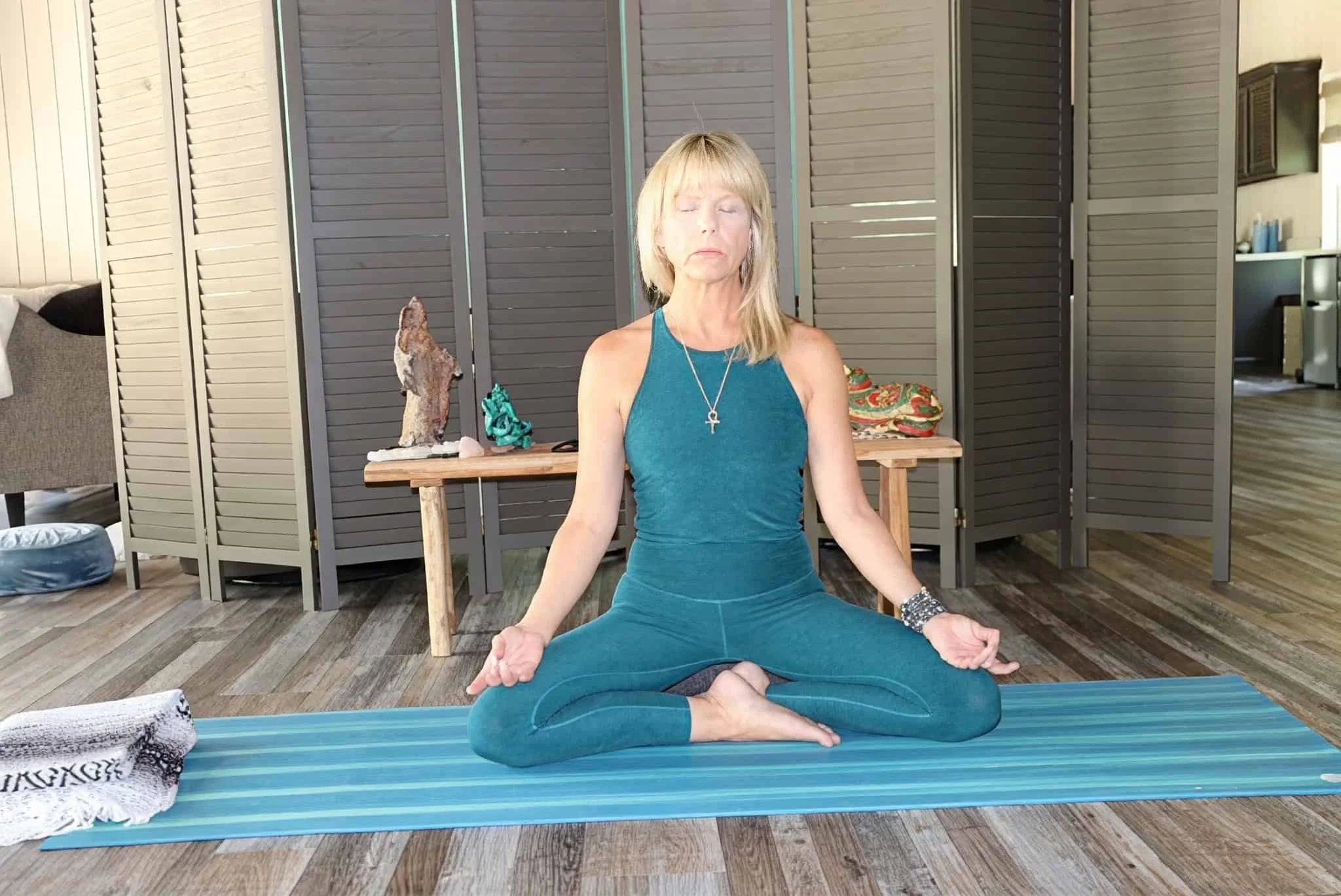
Regan Caruthers: Well, I think it's the felt sense of the home that I always wished I had and didn't, right? It's coming home to the heart. When I teach yoga, and I'm always trying to bridge the yoga tradition with Christianity because I live in a very traditional Christian community where there's a great deal of misinformation about what yoga is. And it really turns me on, invigorates me to take that on. So anyway, I'm doing that. But one of the things that I have my students do in meditation, and I speak to Luke 17:21 when Yeshua, Jesus, said, “The kingdom of God is within you.” Everybody has their eyes closed. And I ask them, “Point on your body where you believe that kingdom lives.” And everybody puts their hands over their heart. Nobody goes like this. Nobody puts their hands on top of their head. We have this innate knowing that something here in the center of our chest is different than all the rest of it. So to me, coming home, coming home to yourself, coming home to your divinity, is all about the relationship you have with your own heart.
Wow. So it's interesting to me that I used to work at HeartMath. I mean, my whole life, I had this broken heart. And then the other wild thing is where I lived for the greatest chunk of my life as a kid with my stepdad that was causing all that tumult was a suburb of St. Louis called Creve Coeur, which means broken heart in French.
Brandi Fleck: Wow. Man, this is very powerful, powerful stuff. I think. Yeah. And it just, it makes me think about the people who don't pay attention to the arc of their lives or the themes in their lives, but if you really pay attention and look at it, there's meaning in all of it.
And it's all connected. And so this is a wonderful example that you're sharing with us. So thank you.
Regan Caruthers: Yeah. I mean, even my mother's polarity, right? Like she could be literally God and its opposite. So for whatever reason, for my soul's education this time around, it's all about that. Yeah. Yeah. Okay. It's all about that. Like how to love when it's hard. Because that's the point. It's not about when it's easy. What would be? There'd be no power in that, right? Walking around in the Garden of Eden like Adam and Eve, completely unconscious, just in this unconscious union with God, this bliss. Well, again, newsflash, there's no learning happening there.
It's the power of contrast. Contrast is the teacher.
Brandi Fleck: Okay. We have a lot of contrast right now.
Regan Caruthers: Oh, we sure do. Okay. That's why we got to turn it up, like turn up your light.
Brandi Fleck: Yeah. Okay. Turn it up. Well, and I'm definitely going to give you a chance to let people know how to find you and your work and your book, especially. Before we do that, is there anything I didn't ask you that you feel is important to share today?
Regan Caruthers: No. No. I mean, we could have gone a little bit deeper in the profundity of my early education. I mean, the way children are indoctrinated right now, again, it's not an accident.
The Power of Choice, Consciousness, and Spiritual Education
Brandi Fleck: Tell me more about that. What do you mean?
Regan Caruthers: Well, I think schools are godless places. Children are told to sit down and shut up. You succeed by parroting back what you're told. You get some chance, a little bit of a chance, to do your own interpretation, but that interpretation of what you're told is only accepted within certain boundaries.
Brandi Fleck: Gotcha.
Regan Caruthers: Right. Like, I'm apolitical, but imagine if a little boy wore a Trump hat to school, what would happen?
Brandi Fleck: I guess it depends on where he's located.
Regan Caruthers: But I'm just saying, schools have a point of view. And I don't believe that point of view to children is, “You're divine. You have this eternal and infinite capacity to express meaning and create, be your own mirror of God's love.” You can't say that in schools. And again, because God has become this thing associated with doctrine, not infinite love, not this amazing capacity.
So anyway, I was blessed, and it helped me a lot in terms of navigating what I needed to navigate, to have sang devotional songs every morning about the power of God's love, about the power that we have to choose. I'll just close with, when I went to see the founder of my grade school after my awakening and I was pregnant with my first son, and she was like a whiskey-drinking, chain-smoking mystic. Was not what I was expecting. But anyway, I go to see her and she's telling me a lot about the history of the school and I'm learning so much. And I asked her, I said, “What did you want the lasting legacy of our education to be?” And she didn't hesitate. She said, “I wanted you to know that every thought and feeling you have is your choice. Peace.”
So that kind of sovereignty, being in a school where you are being taught the power that you have to choose, and in making that choice, ideally guided and directed by God, you're creating your life.
I mean, I could sing you the songs we sang every morning. And Maxwell Maltz, who wrote the book Psycho-Cybernetics, which birthed the positive psychology movement, was on the board of my school and was a mentor to the founder. So a lot of the pedagogy reflected his research, which was, you know, what you tell yourself about yourself will become your lived experience, so choose carefully.
Brandi Fleck: Yeah. Okay. That would be very powerful to have as a foundation.
Regan Caruthers: Yeah. Yeah. And we would photograph our energy field with Kirlian film. So imagine how that impacts you. Like you learn, right, of the non-local truth of who you are.
Brandi Fleck: Yeah. So makes you less scared for sure.
Regan Caruthers: For sure.
Brandi Fleck: And on that note, I would love to let our listeners know how they can learn more about the truth of who you are. Where is your website? How do they get your book? Tell us all about it.
Regan Caruthers: Oh, thanks. So regancaruthers.com, my long name, my middle name is O'Connor. So it's Regan O'Connor Caruthers. Like, that's a mouthful. But anyway, regancaruthers.com is my website. So I share some content there. I need to refresh it. I have a lot of other writings that I need to put on there. Anyway, so that's one way. My memoir, Tragic Magic, you can purchase on Amazon or Barnes & Noble, either as a paperback or an e-book.
If people want to work with me, on my website, there's a section about my inner life coaching and they can set up a free discovery call with me and we get acquainted and then see if it's a good fit. And I'm at a point right now where I have probably the most discretion I've ever had in terms of working with people. There needs to be the felt sense of a certain readiness and a certain capacity for self-discipline, so we kind of, I need to feel all that when we get acquainted. And then on Instagram, I'm not active on Instagram right now. God has asked me not to be and that's been true now for almost five months. But if you find me on Instagram through my name, there's so much content. If you look through my grid, so many videos and things that I've shared about whatever was working in my heart that I wanted to communicate. And I'll get back there, probably sooner than later. But there's a lot of good legacy content on Instagram if people want to check that out.
And then where I'm most active right now is on Substack. So I try to write an essay at least once a week. I don't do that all the time. I think I'm a little bit behind right now. But again, you can go on Substack, search my name, and find me. I don't charge for people to subscribe to my writing.
Yeah, I got lots of juicy essays on there. Yeah, I think that's why God wanted me off Instagram, because the depth of what I need to communicate, I can't really do that with integrity in a video that's 45 seconds. You know what I mean? It just.
Yeah. So anyway, find me on Substack. That would be amazing. And yeah, that's about it.
Brandi Fleck: Fantastic. All right. So all of that will be in the show notes for everybody to go check out. Regan, thank you so much for coming on the show today. It's been an absolute pleasure.
Regan Caruthers: Thank you, Brandi, for having me. Good day.
Join the conversation!
Feel free to share your own experience and let me know if you have any questions in the comments.
Related Posts






Hi, I’m the founder of Human Amplified. I’m Brandi Fleck, a recognized communications and interviewing expert, a writer, an artist, and a private practice, certified trauma-informed life coach and Reiki healer. No matter how you interact with me, I help you tell and change your story so you can feel more like yourself. So welcome!
Find More on the Blog
Topic
- ADHD
- AI
- Atlanta
- Black and BIPOC
- DIY
- FAQ
- LGBTQIA plus
- Los Angeles
- Nashville
- Seattle
- St Louis
- St. Louis
- UFOS/UAPs/ETs
- abuse
- accountability
- addiction and recovery
- adoption
- affirmations
- afterlife
- altered state
- angels
- animals
- anxiety management
- art
- astrology
- atlanta
- attachment
- awakening
- beauty
- behind the scenes
- being human
- body image
- body work
- boundaries
- brandi fleck
- breathwork
- bullying
- burn out
- burnout
- cancer
- career
- caretaking
- chakras
- channeled
- clarity-dive
- clarity-practice
- clarity-primer
- clean products
- coach
- codependency
Recent Blog Posts
Visit the Full Podcast Audio Archive

Affiliate


What if remembering you’re a starseed isn’t about escaping your humanity, but embracing it more deeply? As you explore where your soul may have come from, there are a few important truths that can keep you grounded, embodied, connected, and fully present for the human life you’re here to experience.