
Interview By Brandi Fleck
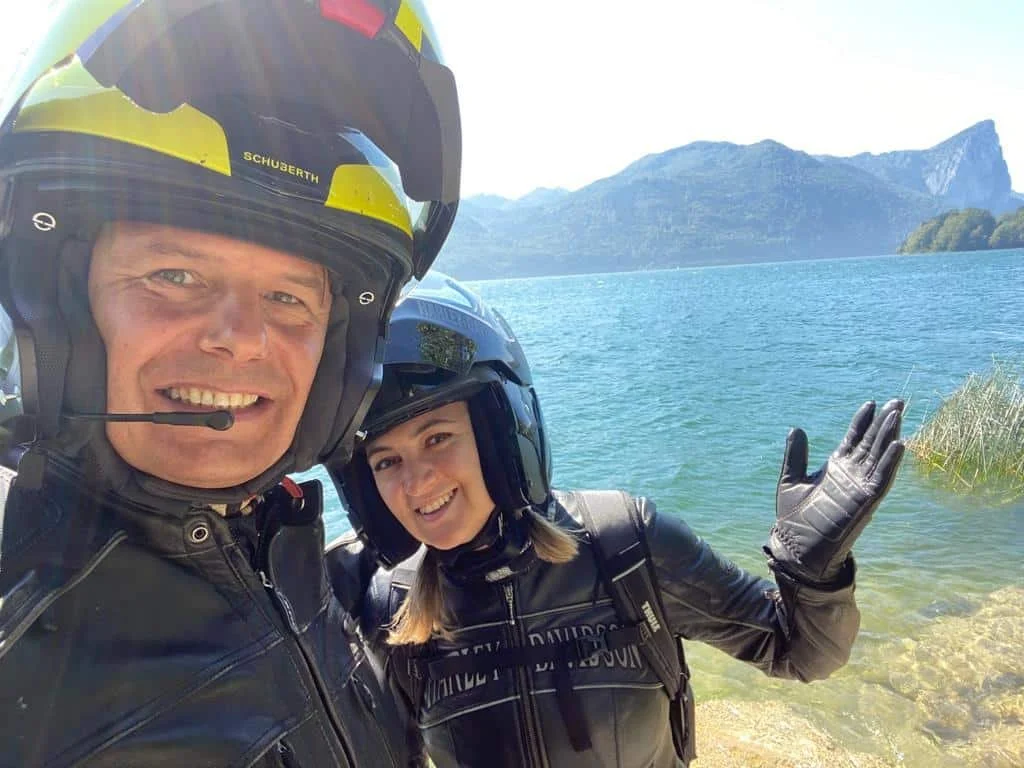
Airline captain Emil Dobrovolschi and entrepreneur Octavian Pantis explain how pilots prepare for uncertainty, communicate under pressure, and stay grounded during crisis, and how those same skills apply to everyday life.
Most people think pilots are trained to stay calm during emergencies. But long before a crisis happens, they’ve already imagined it.
They’ve walked through worst-case scenarios in simulators, practiced communication under pressure, and learned how to make decisions without letting panic take over. In aviation, preparation matters more than confidence.
In this episode, Brandi Fleck talks with airline captain Emil Dobrovolschi and entrepreneur Octavian Pantis about what the cockpit can teach us about stress, leadership, uncertainty, and staying grounded when life feels unstable.
Together, they explore why the best leaders create space instead of controlling everything, how communication breaks down under stress, and why asking “what if?” can actually reduce fear instead of increase it. They also reflect on identity loss during the pandemic, emotional resilience during major life changes, and the surprising role perspective plays in moments of chaos.
If you’ve ever felt overwhelmed by uncertainty, struggled to think clearly under pressure, or wondered how to move through crisis without losing yourself in the process, this conversation offers a calmer and more grounded way to approach the unknown.
Listen to Octavian & Emil’s Interview
Watch Octavian & Emil’s Interview
Leadership Lessons From Aviation
Brandi Fleck: I'm your host, Brandi Fleck, and this is Human Amplified. We're on a mission to revamp society by amplifying your humanity. This week on the show:
Octavian Pantis: Hi, my name is Octavian Pantis, and I'm based in Bucharest, Romania, Europe.
Emil Dobrovolschi: Hello, everyone. I'm Emil Dobrovolschi, and I'm also in Bucharest, preparing for my flight.
Octavian Pantis: These are the biggest changes of our generation, and it's up to us to choose the map that we use for this reality.
Emil Dobrovolschi: When you are in a crisis, just pull your chair back. Have a better overview.
Octavian Pantis: When you accept that you are not perfect, this is the real challenge and the real lesson for leadership.
Brandi Fleck: Today we're talking to entrepreneur, author, and public speaker Octavian Pantis and his friend Captain Emil Dobrovolschi. He's a pilot, pilot instructor, and pilot examiner. They're both based in Bucharest, Romania, in Europe.
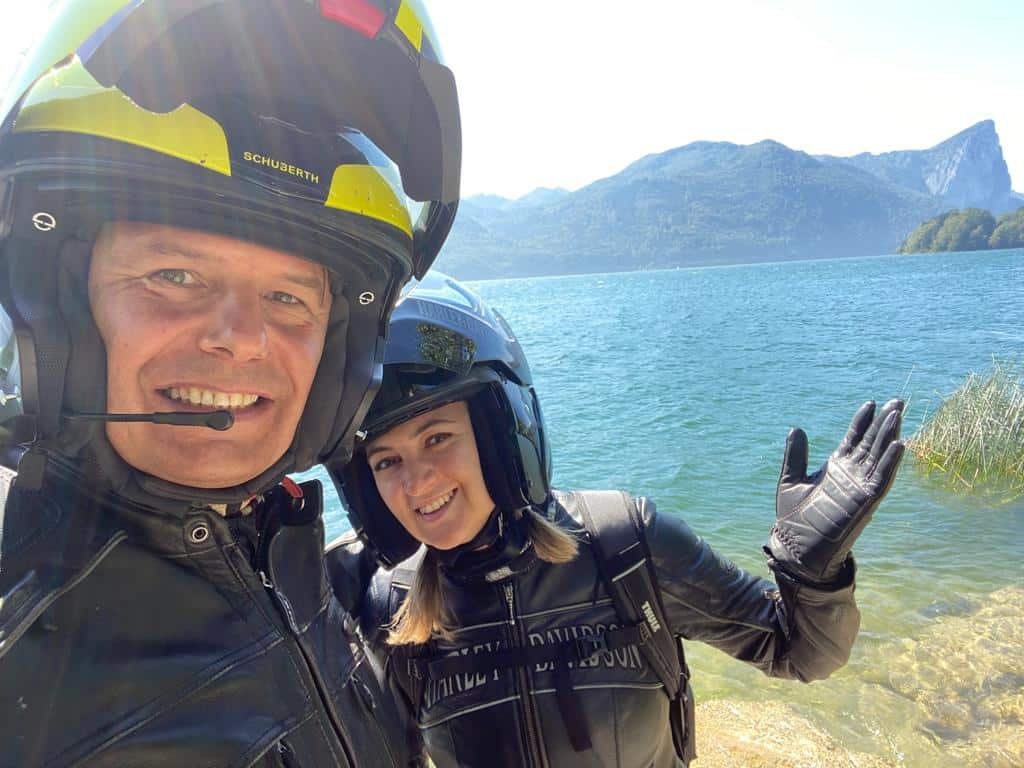
Octavian and Emil are co-authors of their book, Dark Cockpit. In his spare time, Octavian loves to collect and study old maps. Emil spends time with his family and rides his Harley-Davidson all over Romania with his wife.
We start out this episode by connecting these interests to their leadership approaches and how it's all related to keeping a big-picture view of life as a way to manage change, no matter how big or small.
This episode is for you if you're looking for creative ways to have a smoother life, even in times of loss or post-trauma. Octavian and Emil explain techniques in being prepared or being in control, as these leaders would call it, leadership, whether they're in your personal or professional life, and excellent communication.
Not only do they explain how each area works to create more ease and peace of mind, but they give us personal stories and examples from aviation to help illustrate the points.
At most, you'll walk away from this episode thinking about what leadership means to you and how you can leverage techniques used by pilots to handle crises that are coming up at this late point in the pandemic, whatever that may look like for you.
Perhaps that means making better-informed decisions or educating yourself in an area you feel unsure about. Or maybe it looks like perspective shifts to find what's working amid the change.
At the very least, if you're afraid to fly, you'll realize how many safety preparations go into keeping a flight smooth and perhaps gain some confidence in air travel.
It was such a pleasure talking to these genuinely kind, caring, and insightful guys. Enjoy.
I would love to welcome you both to the Human Amplified podcast. I'm very excited to have you here today. How are you guys doing?
Octavian Pantis: We're fine. Thank you. Thank you for having us on the show, and hello to everybody who's listening or watching.
Emil Dobrovolschi: Thank you very much for the invitation. I'm very busy flying, and I'm busy doing speeches here and different conferences and different audiences. In between my flights, I'm very busy.
Brandi Fleck: Yeah, it sounds like it, and that sounds very exciting. We're going to talk about how some of those experiences apply to our listeners' lives, but first, will you please introduce yourselves? Tell our listeners a little bit about who you are and what you do.
Octavian Pantis: Hello, my name is Octavian, and you could say I have three hats.
The first one is that I'm an entrepreneur. I've been an entrepreneur for 22 years now. We have a company in the training and development industry, working with multinationals as well as entrepreneurial companies, helping them grow, helping them build a healthy company culture, and helping them build stronger leadership teams.
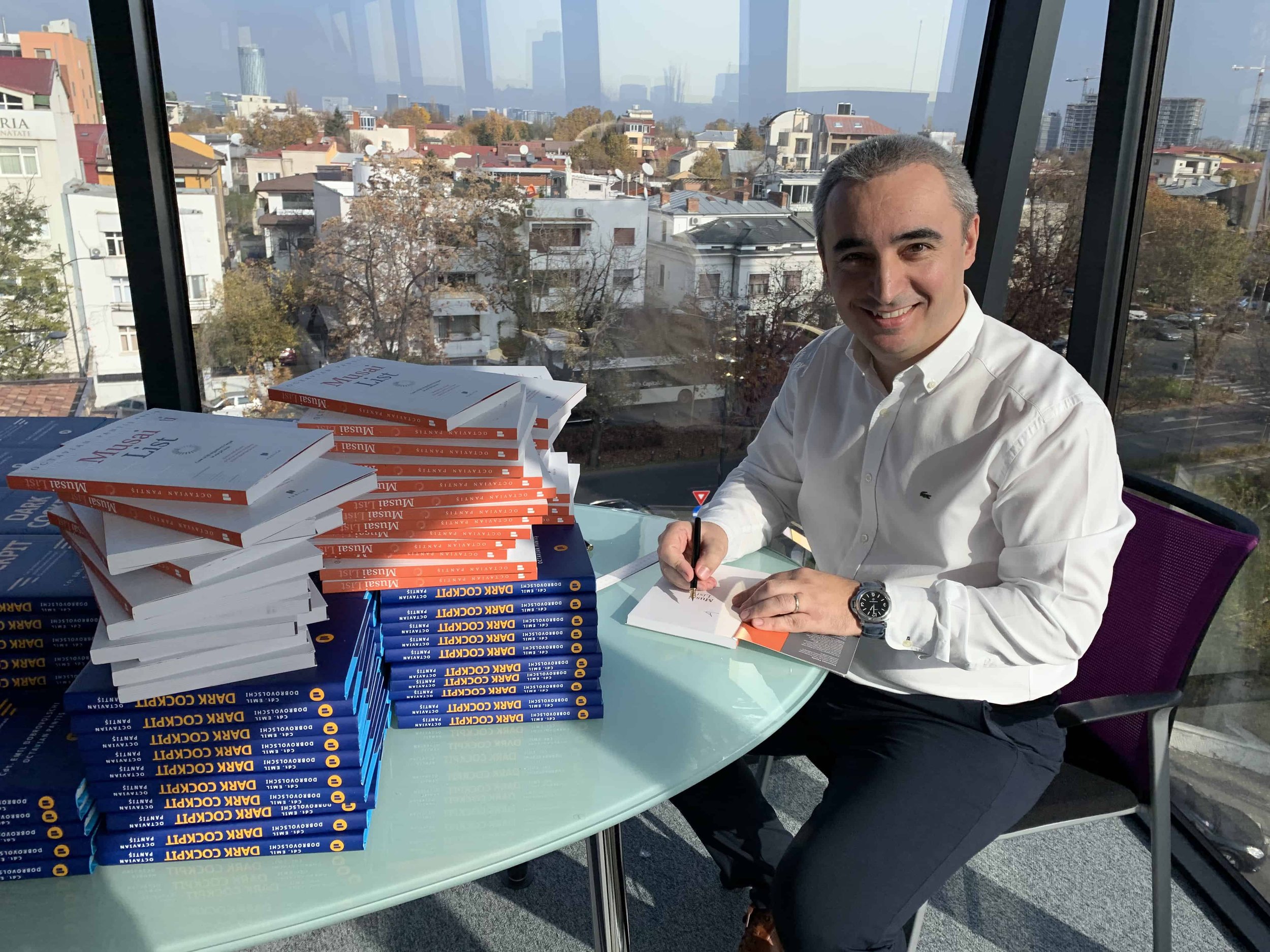
My second hat is I'm an author. I wrote four audiobooks on personal development and also one book on time management and work-life balance. Together with Emil, today here on the podcast, we wrote the book Dark Cockpit, which taps into the treasure of know-how from aviation and makes it available for people who are not piloting the plane, but who are piloting their own projects, their own lives, you could say, their own professional careers or their teams, if that's a responsibility.
My third hat is I'm a trainer myself and a speaker to audiences, large and small.
Emil Dobrovolschi: I'm a pilot. I'm a professional pilot. I have more than 30 years now as a professional pilot, and I have 28 years flying for the same company, the Romanian national carrier. I did some short-term contracts in Ireland or in Egypt, other places of the world.
For the last 18 years, I'm an examiner with the European Union Aviation Safety Agency, and I'm checking people. I'm checking professional pilots to revalidate or renew or issue their flying licenses.
I'm also a speaker. For the last seven years or so, I've been giving speeches in front of different audiences, especially in Romania, both in English and Romanian, about the things we are doing as professional pilots. I found them very useful for other businesses, for other parts of industry where people are professionals. They have the same goal, the same challenges, to perform well, to finish their tasks in a timely manner.
Brandi Fleck: Okay, thank you for those lovely introductions. I'm going to dive into some of your hobbies and your personal lives for just a minute so we can get to know you before we really start talking about communication, leadership, and control, which are, I know, the three main points in your book.
So, Octavian, I know that you collect old maps. What do you have, and what is interesting about it to you?
Perspective Shifts During Uncertainty and Change
Octavian Pantis: Yeah, well, maps are fascinating. I collect and study old maps, and the collect part is much smaller than the study part.
I have a few. What's fascinating about maps, and I'm talking about geography maps, not as much about political maps like country borders because they change in time, obviously, but the geography maps, those that are 300, 400, 500, or even more years old, they're different. The way they shaped a certain island, the Mediterranean Sea, the continent, it's slightly different than it is today.
It's not because there was a drawing error. It's not because the young apprentice did not pay attention to what his master told him to draw, but it's because that was what they knew at the time. With their knowledge, with their tools, with their capabilities to travel and study, that was it.
Now we know more. Now we know that a certain island that they marked as northwest to southeast, now we know it's longer than that and it's north to south, for instance.
What that tells us is that people change and the way we see the world changes, and that we're always a work in progress. Sometimes the more errors I find in the map, the more vivid is, for me, the following message: if I look at what I have done some years ago, I might look at them and say, "Oh, I could have done that way better than I did," whether it was a small thing, a proposal to a customer, or some bigger decision.
The challenge then is even more important for me, and I guess for all of us, to really take into account as much as possible when we make the big decisions because we don't want to look back at them in six months, two years, five years, and say, "Oh my God, that's so far out."
It's fascinating to see what people knew, what they believed was true, and how they marked different continents, islands, and everything. You never get bored.
Of course, all museums are good. All museums are fascinating. Everybody has their own preferences, but when you go into a museum of maps, you can stay there for hours if you're curious enough to dive deeper into what people have drawn there and draw conclusions from you today.
Brandi Fleck: Yeah, that is a really fantastic perspective and explanation of that that I hadn't thought about before in depth. Thank you.
Do you know if, even though our perceptions of the way we are viewing the world have changed, was the geography actually changing itself too? Was the world changing as we were changing?
Octavian Pantis: Yes. Of course there are the big things, like Columbus went around the world. He thought he arrived in India and called them Indians. They were not in India. These are the big ones.
But there are several smaller details. For instance, some islands or a sea or something, we know now that they look differently to how they looked then.
It's easy to say, "Ah, this map is not good," and whoever made it, to say, "Oh, that guy really did not know his business." But that guy might have known his business way better than I know my business now. That was the best of their ability to do that thing then.
Of course, perception shifts now. We have accuracy, and Emil can talk for hours about GPS and maps and how aviation uses that. Even if it's 100% fog, they can land the plane in a big airport if they have the ILS instrument landing system. It's not like, "Oh, it's foggy. I thought this was New York, but it turns out it's Boston." That never happens.
Now we know. But whenever we look at an old map and think, "Hey, come on, my country or my area or my lake or my water does not look like that," I think there's a learning there.
What we do now can be judged in the future. "Oh, that was a very poor decision." We don't want people to say about us, "Okay, those were idiots."
Therefore, what can we do? Take into account everything before we make an important decision because the outer world doesn't care. But you care. You will want to look back in six months or six years or 15 years and say, "Ah, I should have taken the left option at that crossroads, not the right. If only I had listened to a few more people, I would have made a better decision."
The Great Resignation and the Future of Work
If I may just comment 30 seconds more, we're going through the pandemic now, right? For one and a half years now, in terms of how people work, these are the biggest changes of our generation.
I'm talking about the so-called knowledge workers. If people work in a factory, they still need to report to that factory. If you're a bus driver, you cannot work from home. If you're a surgeon, you cannot work from home. But if you work in an advertising company, if you work in an IT company, you can work from home.
There are many changes, and these changes provide us, me, you, everyone who watches or listens, with a number of opportunities. It's up to us to choose the map that we use for this reality.
We can look and say, "Oh my God, there's so much instability, uncertainty. I don't know what I want to do. My employers don't know. My employer does not know. They tell me come to the office, don't come to the office, get vaccinated, get tested."
Some other people look at it differently. "Hey, I've always hated the commute, whatever how long it was. I've always worked in an open space where I took my headphones with me to get some silence."
Now I'm in a slightly different way. How can I use whatever is going on to shape the kind of work life for me that's good for me, for my family, for what I want to achieve in life?
If there's something that you wanted to change for years, now is the time to ask for it.
Three years ago, in many companies, if you wanted to work from home a day a week or a day a month, you would have to fill in a form similar to requesting holiday leave out of your 21 or 25 days.
Now you can make requests that all of a sudden seem reasonable, but you have to decide what it is that you want because if you keep complaining, then nothing good will come of it.
It's a time of opportunity, and the invitation for everyone is to really choose. Get informed well, talk to whoever you want to, but choose and make the ask now because it's much more likely that you get a positive response than it was two years ago.
Especially if you're good at what you're doing. If you're good at what you're doing, you can ask for almost anything.
If your job is hanging by a thread of hair, "I hope they don't fire me, I hope they don't fire me," then the situation is different. But if you're good, and I'm sure you're good at what you're doing, then your negotiation power has increased because you've been in that team for years. Your manager knows that they can leave you alone and you'll get the result.
The last thing they want is for you to say, "Oh, I want to leave," and then have a new person and spend time instructing them with nobody next to them. "Oh, it's going to take six months for them to teach the new guy online what they would have taught them in three weeks."
So that's even more of an incentive for them to keep you. It's an opportunity there.
Brandi Fleck: Opportunity, absolutely.
I'm already drawing a connection between why you guys came together to collaborate. I feel like you're looking at these maps and you're interested in geography, and you sort of have a bird's-eye view of the world in that way. Emil, you have a bird's-eye view of the world when you're flying and doing all of these things that you've been doing for years.
When I say the phrase "bird's-eye view," how does that perspective help you excel in life, and what does it mean to you?
Emil Dobrovolschi: Actually, the way I'm doing my job, me and my colleagues being in a container, in a pressurized container, which is my aircraft, actually, because we put life in a metal tube with chairs. Without us, it will just sit there on the tarmac, isn't it?
The way we are trained to solve things by ourselves when we are at 39,000 feet flying at 500 miles per hour, this is a character-shaping experience.
The leadership you'll find in our aviation industry is without equal somewhere else because we practice it every day. It's a challenge when you have a new team every day to present in front of them as a leader, not as a boss, in order to make them follow you, in order to let them know what the common objectives are.
Sometimes you are in the same, let's not say aircraft, but if you are in a business and you're not sure if the other colleagues or members of your team have the same objectives as you have, they're not on the same page all the time.
Sometimes in the simulator, when I'm examining professional pilots, because of some gaps in their training, I can see that they are flying, actually, they're both in front of me, but they're not in the same aircraft.
This starts with the captain, the leader, who doesn't know how to make the other one understand, how to communicate with the team members in order to have them on the same aircraft doing the same flight all together.
This is a shaping experience for us because we know when we close the door of our aircraft and we take off with it, from that moment on, you cannot set the parking brake and ask somebody for help. You cannot stop the aircraft, freeze it in midair or at cruising altitude to ask for help, call a friend.
We know that only us, with our knowledge, with our skills, and with our soft skills, are the only ones that can resolve the situation.

Of course, like many other industries or businesses, we are in a hostile environment. In the aircraft, it's pressurized, it's well-conditioned, you can raise the temperature or drop the temperature, you can ask for a coffee, but all this can suddenly change. From this very cozy environment, you can turn into chaos or a nightmare if you don't know what to do.
To manage this level of stress, flying every day from A to B with passengers, because this is my project, this is my job, and to manage the level of stress, you need some special skills. You can develop them, you can train them, but it's only in aviation sometimes.
I think in the book we put some subjects on the table that are a challenge for everybody in any industry or for anybody who leads a team of two or ten or 100 people.
Brandi Fleck: Okay. Does anything that you do in aviation apply to your love for writing, your Harley?
Emil Dobrovolschi: I was a little bit thinking about how you asked him about his hobby and nothing about my hobbies.
Brandi Fleck: It was coming. It was coming.
Emil Dobrovolschi: No, actually, I'm spending my entire life with my family. I have three children, and most of the time I'm spending time with my little one. She's only three and a half.
They are occupying my entire time. When I have a gap, I'm listening to music, I'm watching movies, and when I have time for myself or together with my wife, we are riding our Harley-Davidson all around Europe.
Brandi Fleck: That's amazing.
Emil Dobrovolschi: I just came back. Look, I'm putting together work and pleasure. I came Sunday from my training center in Sofia. It's about 400 kilometers away. I went there in November. Everybody thought I'm crazy riding my Harley there and back. This is my hobby.
Brandi Fleck: Okay, we are going to dive into the topics in your book, but I would love to know how you guys met.
Emil Dobrovolschi: This is a story Octavian tells better, so I will let him do it.
Octavian Pantis: In short, I was flying on vacation with my family, and we were flying Tarom, the national airline. The flight was fine, but what was a little bit different to other flights was that whenever the captain addressed the passengers at the beginning of the flight and then right before approach and landing, we could understand 100% of what he was saying.
I'm sure you, Brandi, and our listeners or viewers have been on flights where the captain speaks and you have absolutely no idea what they're saying. It's like they're holding their nose.
"But this is 5123 from New York..." You get some clues, like the temperature outside is something, and say, "Okay, okay, I'm going to stay inside."
I asked the flight attendant, "Excuse me, who is the captain of this flight? Because I would like to just say hello."
"Oh, it's Captain Emil."
That's how we met. Then we stayed in touch, and we invited Emil to come speak to our team several times about what happens in aviation, to take us behind the scenes in the cockpit, and how you make decisions there and how you manage risk.
We were all fascinated. Not only were the stories interesting, but they were valuable to us. We could take ideas and apply them into our lives.
How Pilots Make Decisions Under Pressure
Let me quickly just give one example we discussed in the book, and Emil says that, hey, imagine that there's an emergency landing somewhere and one engine is on fire, and it's night, and it's foggy. After the plane comes to a full stop, what is it that the captain does?
He asked us, and our hands went up. We said, "Extinguish the fire."
He said, "No."
"Communicate with the tower."
"No."
"Tell the flight attendants to open the..."
"No."
Whatever we were saying, he said, "No, no, no."
"Okay, what is he doing? Is he sleeping in the cockpit?"
By design, in a moment like that, the co-pilot is very busy. The co-pilot is the one extinguishing the fire, communicating, and doing a number of other things that need to be done in that situation.
The flight attendants, again by design, are very busy. They're checking what's outside, looking at the passengers, preparing them for the emergency accident.
What does the captain do? Please notice the phrasing. It sounds a little bit unusual. They don't make a decision. They build a decision.
Meaning they are, by design, in the standard operating procedures, in what everyone should do, left with some space there so they can take into account all the information that's going on so that they can make the best decision.
What side are we going to go out on? What are we going to do next?
We say this is useful to us because, by contrast, if there's an emergency in an entrepreneurial company or even a multinational company, who is the busiest in the room? The boss, right?
It is them who make all the calls, who talk to all the people. They send people, "Give me coffee, get me whatever." They become the node of communication and decision-making.
That's not good because they are limited. As amazing as they could be, their time is limited, their capacity is limited.
In aviation, by design, this is avoided. The captain, the most experienced one in that cockpit, is not busy with things that someone else can do, but is given some space to make the right decisions in order to save everybody.
We took Emil as a speaker to some of our clients, and every time, whatever the industry was, banking and pharma and IT and whatever, again two things happened.
"Oh, great stories."
And number two, "Useful to us."
There were many insights. About three years ago or two years ago, I said, "Emil, you have to write a book because there are so many principles in aviation. There's so much rationale for doing things right, for communication, leadership, and especially managing risk because the stakes are high."
"You should write a book."
Luckily for me, he said, "Why don't you write it together, Octavian?"

So we did. The name of the book is Dark Cockpit. It came out in English this summer, so a couple of months ago. It's available on Amazon and everything.
The feedback we have from that is very good. People from all walks of life have bought it. People who are 30, 50 years old, they've bought it for themselves, they've bought it for their kids, they've bought it for their parents. Companies have bought it as a gift to employees, as a gift to customers, and so on.
We get this feedback that, "Oh, it's fascinating, and we're learning." We also got very good feedback that was not intended, but it's welcome, from people who are afraid of flying because they are, and that happens.
We've now heard several times, "Now I know how much preparation goes into every flight and how many layers of safety there are in aviation, and I feel a little more confident flying."
Some people are afraid to fly, but still they have to for various reasons. Maybe you've seen them. If they sit next to you, they hold the handle, especially during takeoff.
Now people like that are a little more confident because the book we wrote is not a science book for people who are passionate about aviation. It's not for pilots. It's for normal people, you would say.
It's not a list of accidents and what you can learn. It's not his biography. Maybe he'll write that one day.
It's a how-to book, so it's easy to read, easy to connect to whatever it is that we're doing.
If somehow the internet connection stops now, just remember this message: in the biggest crisis, who is the busiest in real life? It's the entrepreneur, it's the boss.
In aviation, because we know there are many limits to that, the captain is given space, and everybody else who can do different things, the tower, the co-pilot, the flight attendants, the fire team who comes and extinguishes the fire, they are very busy.
The captain is given time to reflect. Not hours, but sometimes a few minutes, enough to avoid maybe a very bad situation.
Emil Dobrovolschi: Yeah, if I may, I want to refer to this example because actually, in my history of being an instructor, I saw some of the pilots, the most inexperienced ones, being what I call the orchestra men.
They try to impress somebody. They are very well equipped with skills and competencies, and they want to do everything by themselves.
Sometimes it works, but sometimes it doesn't. In aviation, when passengers' lives are our responsibility, to see somebody who is in a hurry or wants to do everything by himself or by herself and then evacuate the passengers on the side with an engine running because they skipped some lines on the emergency drill, this is not the way we do things.
I know Octavian doesn't like this word, but when I told him the story, I said, "What the captain is doing..."
Everybody tried to figure it out, but they said, "No, the captain does nothing. He pulls his chair back to have a better overview."
This is the best way to act when you are in a crisis. Just pull your chair back, have a better overview, delegate some responsibilities. Some of the actions can be done by your crew because they are professionals. They are trained. They are there for a reason.
If they do that, they will do their part, and on their shoulders there will be some responsibility for what they are doing, actually.
This is the best way to come out with an outcome, and always this outcome is better than the one with the orchestra man doing everything by himself or by herself because she or he knows better.
Brandi Fleck: This is really great, and I think it could apply to not only a business setting but everyday life too.
Some of the biggest takeaways I think our listeners need to get from what you guys just said are: give the captain space so the captain can have a better overview, and also educate yourself so that you don't have to be afraid of something.
Whether it's flying or anything, learning more about it and having that transparency into it will give you confidence. That was a really good takeaway.
Your latest book is called Dark Cockpit. I want to go backwards through your main points in the book and talk about control first. Why is control important? I'm not totally sure if it's related to the example you guys just gave, but let's see if it is.
How to Manage Stress Levels and Stay in Control
Emil Dobrovolschi: Actually, in the book we have many examples of how to be in control and how to manage the level of stress, as I said earlier, because this is the main part.
I have some stories. They're in the book. Some stories are not in the book. Just a week ago, we had one of the aircraft returning because one of the engines was stalling. They ingested two large birds in the engine.
Brandi Fleck: Oh no.
Emil Dobrovolschi: Yeah. Actually, the whole airport looked at this aircraft taking off with huge bangs from the right engine and flames coming out of the right engine.
They took off and returned immediately, and they did it in such a manner that not one passenger left the aircraft frightened. They were re-embarked on another aircraft and went to the next destination.
Amazing, isn't it?
I spoke with the captain. He's a very experienced captain, and he told me that he was not...
Of course, in situations like this, there's a startling effect on everybody. I can get scared in a second. But pilots are trained to look for the future. They anticipate things.
In critical moments of flight, we have landmarks. We have landmarks of speed, landmarks of altitude, landmarks of time.
We are flying from one landmark to another to anticipate. If something happens at 100 knots, there's something I will do. If something happens at a certain speed, there's something else I will do. Based on altitude and based on the situation, I know what to do in case of an emergency.
What he told me a few days ago was, "Look, I didn't get scared at all. It was exactly like in the simulator."
The only thing, he said, was he could see the light coming and the whole passenger cabin, the whole fuselage, was lighting up on the side with these bangs.
He said, "We took off. It was exactly like in the simulator." We did what we knew to do. We reduced the idle on that engine, and we returned.
I was thinking just today about something he told me at the end, which is so encouraging. He told me, "Look, the purser didn't call me at all until we were about to land to give me the cabin ready because she knew."
She told me afterwards, "We are busy."
In those moments when you have to deal with the stress in the cabin and everybody knows what to do, one is piloting the flight itself, the other one is talking to the tower or managing the situation, reducing the engine, stopping systems, and things like this, doing emergency drills in the cockpit, to add to this chaos, or stressful situation, these calls from the cabin...
You should answer because maybe she's concerned that you are incapacitated or something. She will call you just to tell her, "Okay, take your seats," or things like this.
Eventually they did, but she didn't call. She waited until they finished their emergency drill.
That means they were on the same aircraft, on the same page. They knew exactly what to do. This supports what I said earlier.
Octavian Pantis: Yeah. What Emil is describing here, if I may, is an excellent example of at least three people, pilot, co-pilot, and the chief flight attendant, purser, being very skilled, very capable, very knowledgeable about what they need to do.
They avoided something which could have ended in the news with horrific consequences.
It would be great if in real life we arrived at this level.
How can we get to that level?
There are many things we cannot control. Rightly, we believe that up there it's God who is in charge of everything. But there are things that we need to do.
One particular thing we can do is become very good friends with a certain question, and that question is: "What if?"
Whenever you start something, of course there's planning involved, but ask yourself this question repeatedly: "What if that goes wrong? What if that happens? What if that happens?"
At least mentally think about what you'll do if that happens. If it can have very bad consequences, even if the likelihood is very low, there should be some formal preparation for that.
This is a good question: "What if?"
Captains, when they take off, never say, "Okay, let's see if we can manage this today. It would be great if we do."
No, they don't. They do all the preparation.
Why Checklists Prevent Mistakes
What was amazing for me to learn from Emil and from studying aviation in these two years it took us to write the book is that we see the captains in the airport terminals with the entire crew. We move to the side. They go confidently with their heads high and everything, and it feels like they're 10 feet tall.
But please notice, there's a checklist for every single stage of the flight. Which means that something is written. There's a list. "We need to do this. You need to do this."
They check it. The co-pilot and the captain go through that checklist every single time.
For instance, they fly from the home airport to another airport. Maybe they don't even leave the cockpit. Passengers disembark, the aircraft is cleaned, new passengers come on, so in maybe 45 minutes or one hour they fly back.
Not once do they say, "Ah, come on, the checklist on fuel and everything, we know the fuel. We just checked it 20 minutes ago."
They don't say that. They do it, and they don't think it's beneath them to do that again.
Parallel that to companies. If you work with an executive and there's an important meeting coming up, and if you go to him or her and say, "Hey, there's a checklist for the success of this meeting. Do we have the agenda? Do we have..."
Now that executive might say, "Come on, this is not my first rodeo. I've been doing this for 20 years."
In aviation, pilots don't say, "I've been flying..." Emil has been flying 16,000 hours now. Imagine that.
They don't say, "Ah, come on, I know the checklist by heart. Let's not do it. Let me just look around. Everything's fine. It's been a long day."
They don't do that.
Octavian Pantis: They don't think it's beneath them.
Sometimes we find excuses. "I've done this several times. I know this road like the palm of my hand," or "I'm too much in a hurry now," or "The other call took longer," or "We have some new people in here. I don't want to be the old guy reading a checklist from a paper as if I'm the new guy."
Because we don't do this now and then, maybe not a disaster happens, but maybe it's a negotiation out of which I don't get what I could have gotten because I was not well prepared or because I was less prepared than the other party, for instance.
Or there's a delicate discussion with somebody in my team, and I was not able to solve that somehow, and I did not see what could have been done, and the person left, for instance, and it's hard to replace them.
The invitation for everybody is to become friends with the "what if" question. We may have a dog or cat, that's fine, but also become friends with the "what if" question.
Sometimes that's all it takes. In aviation, it's manuals and manuals, but the principle is the same.
"Hey, you're up there. What if that happens? What will you do then?"
"I'll do this. I'll do that."
In the example Captain Emil just gave, people were prepared and everything went smoothly. No one got scared and no one said, "I don't want to fly again for 10 years," with all that bang.
Just imagine being on that plane in seat 7F, for instance, and watching the fire and the noise. You don't feel like, "Okay, please move to aircraft B and you'll still go to Paris."
Some people would say, "I'm not going anywhere unless it's a bike or a car." But no, everyone went. Why? Because things were done well.
Brandi Fleck: Yeah, yeah.
Okay, so I want to see if you guys can apply some of your expertise to a situation where I know a lot of our listeners might be going through a healing journey. They've had trauma in their past and they're trying to break negative cycles in their life.
A lot of times in these journeys, they're told acceptance and surrender and vulnerability are ways to heal, but also I can see the value in being prepared and controlling a situation to alleviate fear.
Where's the line between vulnerability and needing to be prepared and having control?
Recovering From Trauma, Loss, and Major Life Changes
Emil Dobrovolschi: The only answer that people should give to this, if they want to surrender, because surrender sometimes has a different value for anybody...
But if your plans are to continue because you are in a bad situation now, let me give you my example.
Last year, I was only flying the humanitarian flights I volunteered for. I was flying only in my overalls with my face shield and mask and two pairs of gloves and special shoes and things like this in the cockpit.
Other than just a few flights a month, I was sitting on the ground, me, the examiner, the test pilot, the training captain, looking on an empty sky.
I felt that I lost my meaning as a professional. I was no longer needed. Aviation was grounded. All the aircraft.
When I went for my flights, just a few flights a month, I was seeing the empty parking lots, just my car there.
I was not even there to laugh about it because it was such a strange situation. Empty aircraft, huge airports in Europe, jumbos parked on the runways because there was no space on the aprons or on the taxiways.
This is a very strange situation for us, and I felt myself out of my world. But I knew that aviation would start again somehow, somewhere, sometime. I knew that aviation would be the first to start.
My next question was: it will start with whom? Who will be the one setting the first step in the cockpit?
It will be a trained pilot, isn't it? It will be a trained pilot with a good level of knowledge, with a good level of skills, with a good attitude.
I gave myself the example I give now and then when we have upgrade exams from co-pilot to captain position. It's a huge leap for a person because this responsibility cannot just be taught to somebody.
That meter from the right-hand side of the cockpit to the left-hand side, on the captain's seat, is huge.
Sometimes, of course, people are failing the exams. Sometimes they are well trained, they have a good level of knowledge, but they fail.
Sometimes they come with this excuse. They say, "Yeah, if I only knew there would be an exam, I would have learned more."
My advice always was, "Come on, you're reading, you are keeping yourself at a higher level of competency just for an exam? Just for if you'll be upgrading something? You're not doing this for yourself to be a well-prepared professional every day?"
I applied this advice to myself. What I did last summer on the ground, looking at an empty sky with no trails whatsoever, no aircraft in the sky, was read a lot. I prepared myself.
Being an instructor, I went to so many simulators to train people because my company made the sacrifice and paid for the training of their pilots.
What I did was I was with them 100%. I was not in the pilot seat, but I was looking and actively imagining myself in the seat, actively imagining myself managing the situation onboard.
Doing that and having this attitude, when it started again, I was well prepared and eager to fly again.
Brandi Fleck: Yeah, that's really helpful. It sounds like you shifted your perspective. You let yourself feel the emotions, but you still moved forward with that perspective shift to get things done.
Emil Dobrovolschi: Otherwise you'll surrender to... I don't know. You feel out of luck. You feel lower than you should.
This will affect you. It will affect you one month, two months, three months. What about six months if you do this? This will affect your mental health somehow.
Brandi Fleck: Yeah. Okay, well thank you for that. Let's go into leadership now. Is it important to be a leader in all areas of your life?
Maybe this is a two-part question. If there's already a leader, how is it possible for everybody to be a leader? Don't we need some followers?
Emil Dobrovolschi: Let me start with a short example.
Look, in my business, being a leader doesn't mean you're the big boss and you know better than anybody else.
If in the cockpit I have a very inexperienced co-pilot and when I ask about the situation, what her or his opinion is, and if her opinion or his opinion is better than mine, I will immediately adopt that solution.
I will adopt that solution. I will tell them that it's better than mine and I will tell the next day to everyone, "Look, I was in a flight and I had two options, and this guy's option was better than mine. We adopted it. We went there. We diverted to that airport because actually it was better than my original idea."
Will this make one of my stripes fall down from my shoulder? Not at all.
I'm lucky that in my personal life I have a partner, my wife, and we are really partners. Nobody is the boss in the family. We are together in this, and we feel ourselves like we are in a cockpit.
Sometimes I'm the leader, sometimes she's the leader, and we do things together in such a way that I feel at home, like in a cockpit all the time.
I'm very fortunate to have this as a regulation. If you apply this kind of leadership, when you accept that you're not perfect and you accept that you're human and you can make mistakes, and you accept feedback or criticism from others, especially from people who are not ranked as high as you are, this is, for me, for aviators, the real challenge and the real lesson for leadership.
Brandi Fleck: Octavian, what are your thoughts?
Leadership During Crisis and Organizational Change
Octavian Pantis: Yeah. If I may, let me just say three quick things about recovering from suffering, trauma, loss of something, in addition to what Emil said.
Everything he said is great. I was talking with Emil throughout the year last year, and we met a couple of times. It's really true that he kept himself busy with things that are related to the future, not related to the past.
What can we do? Number one, we need to understand that healing or recovering, whatever we call it, takes time. For some people it takes longer than for others.
Simply expecting that "I will recover now because the other one recovered," it's not right. It takes longer for some, shorter for others. Number one.
Number two, do not rush it because there's always a lesson. It could be a bitter lesson in the loss of something.
Sometimes, speaking also about leaders, some leaders are rushing. "Come on, come on, we lost the customer," or "we lost somebody, let's move on, let's move on, the future is waiting."
Yes, yes, but if we don't allow enough time for people to reflect, to share, to open up a little bit, we go ahead, but then we never know when a new conflict will show up because the previous conflict was not properly solved.
If you feel like listening to a not-so-happy song one more day, do that. Take your time.
When do you know you can move on? When you've taken out the value. What is the lesson from that for me? Again, it could be a bitter lesson, but still there is a lesson there.
Number three, in a loss situation it seems that everything's black. However, I think in all fairness we can all agree that even when everything seems black, there's always something good there.
When many things don't work, some things do work. Identify them and focus on them.
In Emil's case, it was, "I'm not flying now. There's empty airports. London, which used to be packed all the time, there's nobody there. I can park anywhere, land anytime."
It's sad, yes, but what is it? "I have time to catch up. I have time to prepare even more. I have time to focus on what is future related."
For instance, many companies lost business last year, right? We've lost customers.
Do you still have some customers? "Yeah, we still have some."
Well, love those. Help those. Make sure they are happy.
"But they're only 20 out of the 100."
Focus on those, and those 20 will become 30, will increase even more.
"We've lost people."
Have you lost all the team? "No, we've lost a couple of key people."
Have you lost everybody? No.
Take care of those that you have left. "I have more time."
Fine, spend more time with kids. Find out, when many things don't work, what's working, and these things are even more important if you are leading a team.
Some people say in our leadership workshops, "Should the leader be an example?"
It's not a choice. Whatever the leader does is an example. Everybody looks at the leader, even if it's a video call, a Zoom call, and somebody brings bad news.
They look on the screen to see where the boss is. If they see the boss go crazy and explode, that tells them something.
Of course, if they see the boss say, "Hey, no problem," that's exaggerated. But if they see the boss accepting, understanding, asking a few questions, and then looking for the good things and focusing on those, that's the sort of thing there.
You are an example. They look to you to see how you handle the turmoil. Leading means sometimes you have to be the first one to identify and focus on the good things.
These are important, and a leader is more important now than ever. If everything is stable, the leader can disappear on holiday for two weeks. Everybody knows what they need to do. It's the same old thing.
But in storms like these, leaders get shaped. Leaders become better.
Some leaders lose responsibility, respect, or whatever forever, or at least for a couple of years because they wanted to move too fast or they were blocked in panic and in the past, for instance.
It takes a little introspection. Take your time, but then focus on what works and build on that. Even if you're not a leader, if you are responsible for a team of five or 500, it's even more important that you do that.
Brandi Fleck: Yeah, and speaking of loss, I know here in the States there's a lot of talk about the Great Resignation. Are you guys experiencing that as well?
Octavian Pantis: Yeah, it happens all over the world now.
Whether it's the Great Resignation or just some people shifting jobs, that remains to be seen, but it's times of change.
Many people, speaking of leadership, are fed up with lack of respect. Of course not everybody, but too many people have not been rewarded, appreciated, not in money, but in kindness, in words, in "thank you" for what they were doing.
They were treated like they're expendable, and they don't want that anymore.
We've seen many CEOs saying, "From the first of September, all of you have to be in the office or else."
Is that the best way to try to engage your people? Many people say, "No thank you."
Who are the ones who are leaving? In many cases, it's the best ones who are leaving because they know they have options.
If I don't treat my people right, I'll end up with the people who don't have too many options. I mean, they're happy they have a job, right?
So it's even more .important than ever to really take care of people.
That's what we deal with in our business. We deal with the human side of business performance. This is what we deal with.
If it's a factory, you see it on YouTube, how they make chewing gum and how they make rubber, but if it's people-related, that's essential today. Otherwise companies will lose their most valuable talent.
Brandi Fleck: I'm just sitting here processing everything you guys are saying. It's good stuff, and I want to make sure we have enough time to get everything in.
What are your best tips for clear, excellent communication? Then let's go into what are the benefits of excellent communication.
Communication Skills for High-Stress Environments
Emil Dobrovolschi: Let me start with this because I'm telling everybody, first of all my pilots in my briefings or simulator briefings or post-flight briefings, that pilots are excellent communicators.
Why? Because they have to pass the message unequivocally. They don't see each other to validate because they are facing forward. They don't see each other. It's a dark environment. They have headsets on their ears. You have chatter and conversation on the headset, and they pass the message without a doubt.
That's one first rule. The second one is that communication in a cockpit is impersonal. You're not talking about, "We are playing the ball."
Let me give you an example. Just a few weeks ago I had this line flight under supervision. The co-pilot, it's a female, 28 years old. She's an engineer coming from another company. She just stepped into aviation, so she's not used yet to our rules.
I call her a commentator because she finds every time a comment which is extra. Every time I said, "Look, in a timely manner we have to solve this and this."
"I didn't forget about it, but I left it for afterwards."
She has comments for everything. I said, "Look, this is not working for you because I give you the feedback in a way which is impersonal. You should have done that 10 minutes ago."
If I find it now on a checklist, I'm not saying you forgot about it, but it's not done, so just do it in a timely manner.
Then we flew together to Heathrow, and she yelled at me once. She said, "Gear down."
I realized I was so focused, my area of interest was in another part, and I didn't hear her for the first two times when she ordered it.
She was flying. "Gear down."
She found this way to reach me. She raised her voice and said, "Gear down."
So I lowered the gear for landing, and then she was scared about what the outcome of this would be. I told her, "Look, thank you very much."
Of course it's not orthodox to do that, but this is the way you found to attract my attention, to make me know that I didn't hear your first two comments.
I was concentrating on other things at that moment and didn't hear your comments. This is a very good way to communicate. I congratulate you.
She couldn't believe it. I said, "Look, this is the way we do things in the cockpit."
If you tell me "speed" because I'm not keeping the speed I said I would keep, you're not saying about me that I'm stupid and cannot keep the speed. It's just feedback helping me be better.
I accept your feedback. I accept your criticism every time you see something. You are obliged to say it in a cockpit.
This is a very good way of communicating because pilots are not focusing on interaction between themselves about "What he said," "How old is she," "How old is he," "How are we experiencing things like this."
We are focusing on solving things. We are looking to the future. We are looking to solve things. We are looking to bring passengers from A to B in a safe manner all the time.
This is the proper way to communicate, in my opinion.
How to Build Better Team Communication
Octavian Pantis: Building up on that, summarizing a few principles, for instance where she said "gear down."
What is one rule that we can take and apply to have clear communication?
Number one, have a clear message in your mind, what you want to say, and say it as precisely as possible.
Because it's one thing to say "gear down." It's something else to say, "We're approaching landing. We will be landing in just a few minutes, and if we don't have the landing gear down then that's not good."
Why these two minutes? What do you want? Have the gear down.
This happens a lot. Some people in a team are complaining a lot. "Is there something you want to tell me?"
"Yes, I would like to ask for a raise," or "I would like to ask for flexible hours."
Fine. Have a clear message and say it as clearly as possible.
Number two, if you're on the receiving end and you did not somehow understand what the message was because of noise, wording, or whatever, don't assume it's bad news, good news, whatever. Check for the message to be sent again or repeat the message just to clarify.
It's better to do that on the spot than to do it three weeks later.
"Oh, I thought you asked me to do that, not this."
"Oh my God, what are we going to do now? The customer is waiting."
It's better to do it on the spot. So have a clear message.
Number two, if you're receiving and didn't get it, confirm it. If we do these things on a regular basis, check for understanding.
When you are the one passing the message, forget the question, "Did you understand?"
It's unlikely people will say, "No, I've always been the not-so-smart guy in the room. I don't understand. Don't fire me."
It's pointless to say, "Did you understand?"
If you want feedback, ask something like, "Okay, what are we going to do next then?"
Because what they say will tell you how much they understood from your 10-minute presentation and your slide deck and everything. Become friends with the "what if" and forget the question "Did you understand?"
It even sounds a little bit like you're up here and they are down there. It's condescending. Rather find something else. These are just two or three tips.
What are the benefits of communication? A better life if we talk about communication with friends, spouses, kids, and everything. If we talk about things in business, what are the benefits of communication?
Octavian Pantis: You avoid wasting time, wasting resources. You don't lose customers.
The customer calls with a complaint. If we communicate well with that customer in that moment, showing empathy, sharing that we'll fix it, trying to understand what went wrong, and if the communication is good in that particular situation, you'll keep the customer.
If the communication is bad, "It's your fault, sir," or "What do you mean?" or "No, we cannot do that," or whatever, communication is poor, you might lose the customer.
There are many benefits, but if I were to summarize it: better life, better business, better relationships.
We all know whenever people complain that something went wrong, among the reasons, if not the first one, definitely in the top three, it's "Our communication was poor."
Start with that. Make sure that communication is good.
Brandi Fleck: I love it. On that note, guys, where can people find your book and find you?
Octavian Pantis: Our book is available on Kindle and paperback on Amazon and everywhere. Dark Cockpit. It's an aviation term. We'll leave you the surprise to discover what it means. It's a good thing, by the way.
The easiest place to reach us is on LinkedIn. You can easily find our names. Feel free, if anybody has some questions after today's session, to get in touch with us.
If you read the book and you'd like to share feedback with us, we look forward to receiving it.
Emil Dobrovolschi: You can also find us on the webpage of the book, which is darkcockpitbook.com, and read chapter five, which is on the website for free as a sample of the book.
I'm not saying it's the best chapter, but it's one of the best, and it will give you an impression of what is in the book, what is the know-how we would like our readers to find in the book.
Brandi Fleck: Okay. Very good, very good. Well listeners, all of that will be in the show notes, so be sure to go check that out. Guys, thank you for coming on the show, and have a great rest of your day.
Octavian Pantis: Thank you very much. Hello to everybody. All the best to everybody.
Emil Dobrovolschi: Thank you very much for the invitation, Brandi. Hope to see you soon, and maybe in America sometime we'll meet when we'll be on stage as speakers.
Brandi Fleck: That would be great.
Join the conversation!
Feel free to share your own experience and let me know if you have any questions in the comments.
Related Posts







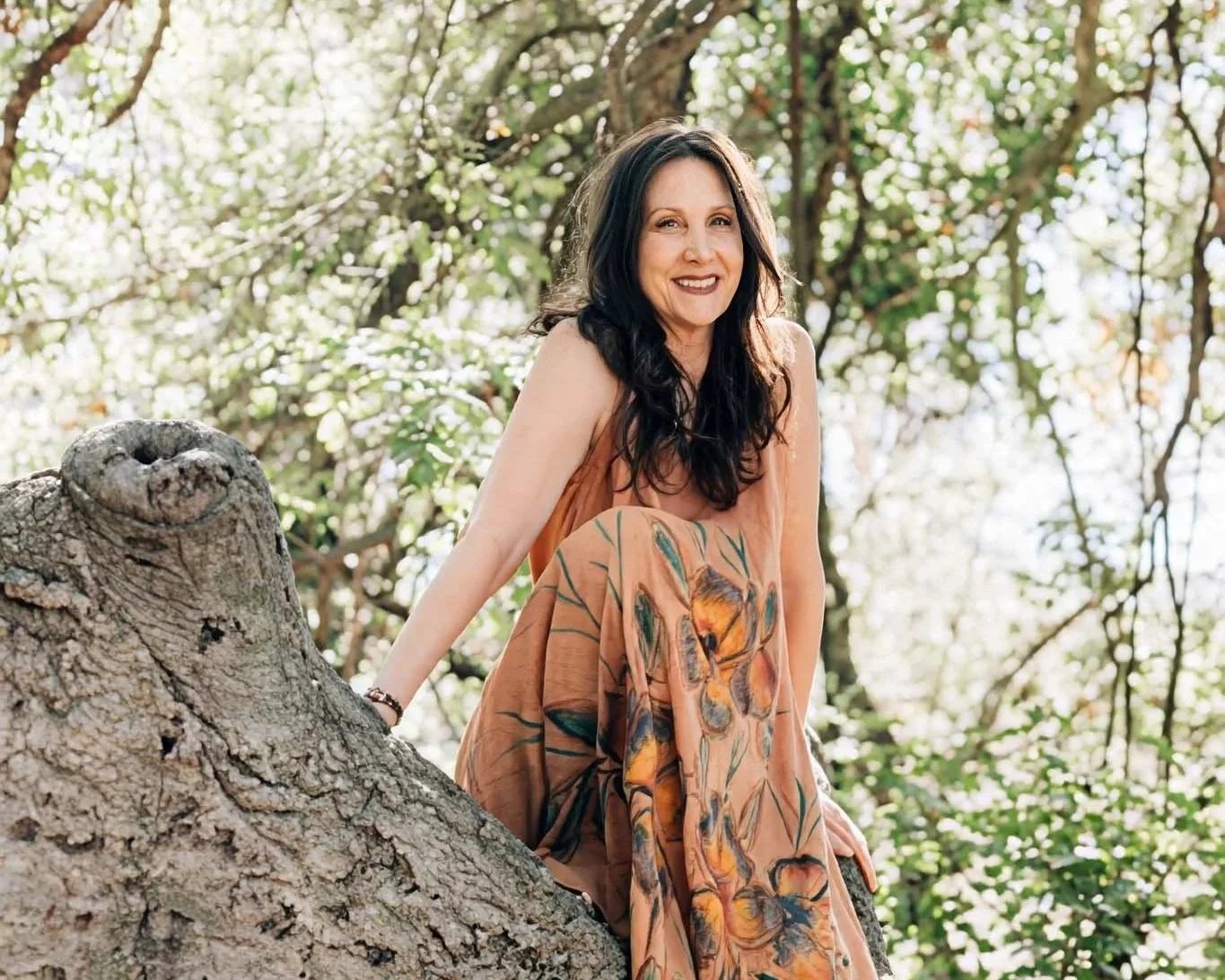








Hi, I’m the founder of Human Amplified. I’m Brandi Fleck, a recognized communications and interviewing expert, a writer, an artist, and a private practice, certified trauma-informed life coach and Reiki healer. No matter how you interact with me, I help you tell and change your story so you can feel more like yourself. So welcome!
Find More on the Blog
Topic
- ADHD
- AI
- Atlanta
- Black and BIPOC
- DIY
- FAQ
- LGBTQIA plus
- Los Angeles
- Nashville
- Seattle
- St Louis
- St. Louis
- UFOS/UAPs/ETs
- abuse
- accountability
- addiction and recovery
- adoption
- affirmations
- afterlife
- altered state
- angels
- animals
- anxiety management
- art
- astrology
- atlanta
- attachment
- awakening
- beauty
- behind the scenes
- being human
- body image
- body work
- boundaries
- brandi fleck
- breathwork
- bullying
- burn out
- burnout
- cancer
- career
- caretaking
- chakras
- channeled
- clarity-dive
- clarity-practice
- clarity-primer
- clean products
- coach
- codependency
Recent Blog Posts

Visit the Full Podcast Audio Archive

Affiliate


Psychology specialist Corey Hatfield explains character strengths, anxiety, mindfulness, and why two people can experience the same situation in completely different ways.