
Why We Resist Change: What It Takes to Live Authentically
Interview By Brandi Fleck
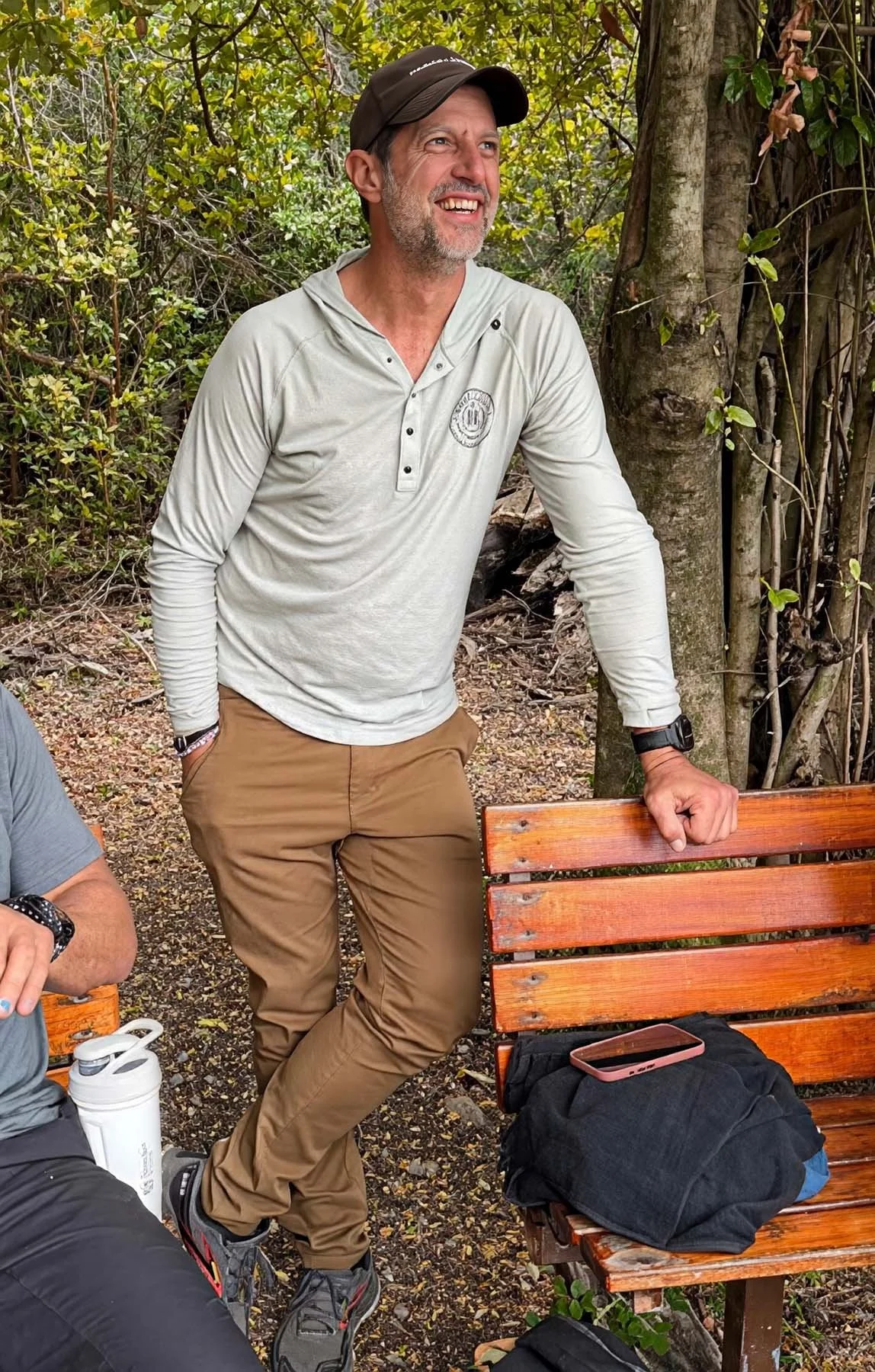
Wayfinders founder Mike Brcic explores why resistance to change can feel protective, how emotional safety makes authentic connection possible, and how depression, wilderness, play, and music shaped his path toward a more aligned life.
Sometimes you know exactly what needs to change—and still find yourself building a perfectly logical case for staying where you are.
That tension does not necessarily mean you are confused, incapable, or unwilling to grow. It may be the part of you that learned familiarity equals safety, even when the familiar no longer fits the person you are becoming.
In this conversation, Wayfinders founder Mike Brcic joins Brandi Fleck to explore why clarity so often collides with resistance, how childhood defense mechanisms shape our adult identities, and why authentic connection depends on feeling safe enough to stop performing.
Mike also shares the depression that transformed his understanding of suffering, the combination of support and practices that helped him recover, and the return of the inner music that showed him he was healing. Moving from the wilderness of Mongolia and Papua New Guinea to intimate relationships, emotional safety, play, and collective joy, this is a conversation about recognizing when life is calling you forward—and finding the courage to answer.
Listen to Mike Brcic’s Interview
Watch Mike Brcic’s Interview
What It Means to Be Human and Live an Authentic Life
Brandi Fleck: What does being human mean to you?
Mike Brcic: What does being human mean to me? I knew you were going to ask this question, so I spent some time reflecting on it. It took me in a few different directions, but I'll tell you where it's landed as of now.
What I thought of is that we humans are just another animal on this planet. We're maybe a unique kind of animal, but we are just one of many animals on the planet. And I thought, what makes us distinct?
If I think about an ant, an ant knows what its job is. It performs its job really well and just stays focused on that. Even a higher-order animal like a dolphin, which we've equated with high intelligence, has a pretty limited range of possible lives and ways to interpret that life. It searches for food. Maybe it plays every now and then, but life is pretty similar from dolphin to dolphin. But with humans, we have so many different interpretations of what it means to be human and how we live.
I think we're all trying to live a good human life. And I've been blessed to travel all over the world. I've traveled to some of the most remote parts of the planet. I've migrated with the nomads of Mongolia. I've spent time meditating with the monks of Bhutan. I've spent time with villagers in remote communities in Papua New Guinea. And it's incredible to me just how many different interpretations there are of what it means to be human and how to live a human life.
I think core to all of that human experience is this journey of what Jung might have called self-actualization: actually discovering who you are at your core and then trying to live a life in accordance with that, which is easier said than done. That's a hard journey. Some people never get to that journey, and they look back on their deathbed with regret. Some people really commit to that journey, and I like to think I'm one of those. I'm really trying to discover who I am, what is my life to live, and live my life accordingly.
So, what it means to be human is to embark on that journey of discovery, of self-actualization, of living your life instead of what other people have decided your life should be. Whoever you are, whether you're a Westerner like you and me or a nomad in Mongolia, if you're a young nomad in Western Mongolia, maybe you decide one day, “I don't want to be a nomad. I want to be a tech entrepreneur in San Francisco,” or something like that. But that's your journey to discover. So there's my answer.
Brandi Fleck: That is beautiful. Thank you so much for that. I just have to ask you really quickly: Do you feel like your travels and experiences in all of these remote places with these different types of people have expanded your definition of what it means to be human, or did they kind of compress it into one singular truth?
Mike Brcic: I think both are true, and both coexist. Obviously, the life of the typical tribal villager in Papua New Guinea is very different from mine, but I was actually there about a year ago, almost exactly a year ago, in Papua New Guinea.
One of the really interesting things about Papua New Guinea is that people still live very, very traditional lives in these small villages, often quite remote. Papua New Guinea is extremely mountainous, so villages are often very remote and separated from others. There are, I think, over a thousand different languages spoken in Papua New Guinea.
But what's interesting is that, because the missionaries were so active and continue to be very active there, a lot of people speak English. So you can spend time with Indigenous people in this remote village that's two hours from anything, and many of them speak English, which is very different from going to Mongolia or other places. You can have a really detailed, in-depth conversation with somebody.
I had these wonderful conversations with people there. It starts off like, “Hey, tell me a little bit about your life.” But then you get into deeper conversations, like, “What do you dream about? What are you hoping for? What are you worried about?” And you realize that they often have the same hopes. The actual specifics of it might be different, but they want to live safely. They want to have food on their table. They want their families to be safe. All these kinds of things.
You realize people are very, very similar no matter where you go, and yet the actual day-to-day details of their lives are so different.
I think what I discovered through all these travels is, as I said, these two things at once: these universal truths and these very unique, specific interpretations of what it means to live a good life.
For a monk in Bhutan, a good life is spending a lot of time in solitude, spending a lot of time chanting and meditating, trying to conquer what they call the monkey mind, and trying to bring internal peace. Whereas, for the average Westerner, the idea of, “I'm going to go sit in a cave for three years,” is cruel and unusual punishment, right? That's solitary confinement.
But they are trying to achieve the same thing, which is this universal human truth: We want to live a life that feels right for us. We want to feel calm. We want to feel inner peace. We want to be surrounded by people we love, and we want to support the people we love.
No matter where I go, those seem to be very universally true. It's just that the specifics of how we achieve these things are very, very different.
How Travel and Cultural Immersion Create Personal Transformation
Brandi Fleck: That makes a lot of sense. Thank you for that. Everybody, today we are welcoming Mike Brcic to the show. He is coming to us from Toronto, Canada, and he is the founder of Wayfinders, an adventure company that helps entrepreneurs. On that note, welcome, Mike, and thank you so much for being here.
Mike Brcic: I'm thrilled to be here. Thank you for the opportunity.
Brandi Fleck: Before we get too deeply into some of these philosophical things we're going to be talking about today, who are you?
Mike Brcic: Should I list all my identities, all my achievements? There are so many ways to meet that question. I'll try to meet it on a meta level.
I'm just a human trying to figure out who the hell he is and live my life accordingly. On a specific level, I'm a father of three. I'll list a few of these identities. I'm a father of three. I'm a serial entrepreneur. I've been an entrepreneur for 27 years. I'm really good at creating things, but not so good at following orders.
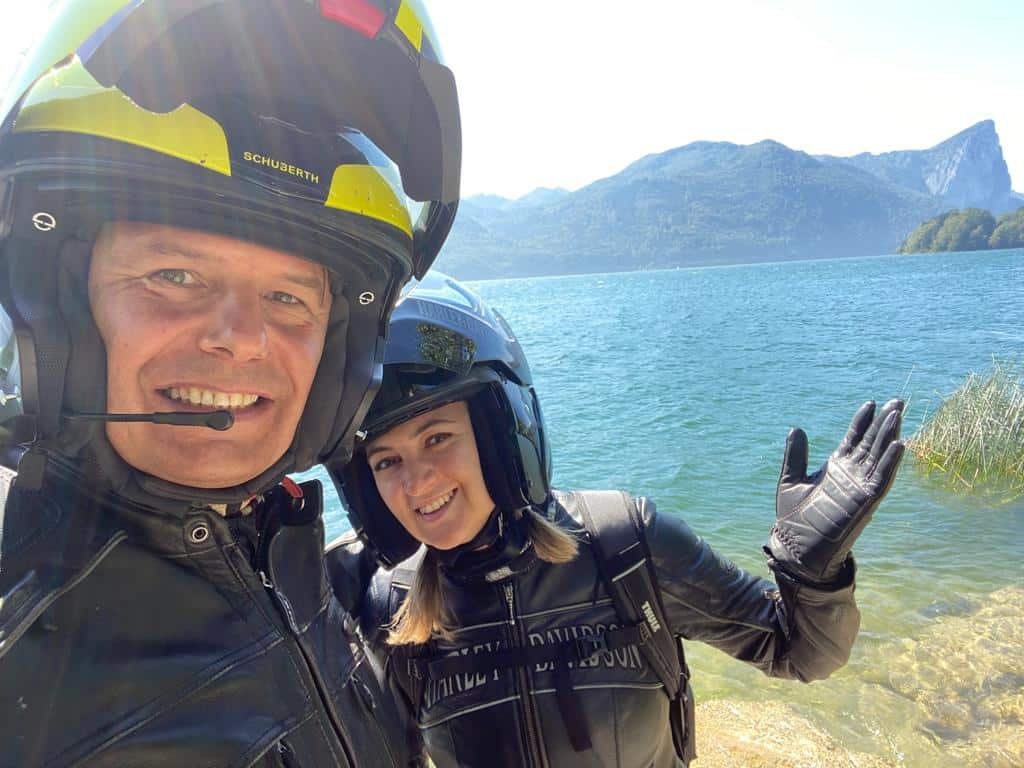
I am a passionate mountain biker, skier, and canoeist. I love being in the wilderness. I love connecting with nature. I love doing that with friends, especially.
And I am a convener of circles. One of my favorite things in this world is to bring people together in small groups for connection, good dialogue, discussion, sharing, and all these things.
Those are a few of the many identities and roles I inhabit in this world. They're always changing, and it's interesting to see what new ones come up all the time.
Brandi Fleck: For sure. I love that you approached it from multiple identities. It's always interesting to see how people answer that question because, oftentimes, we think, “Who am I? What do I do?” And we define ourselves by that. But there are so many ways you could approach it.
Before we dive in, will you tell us a little bit about Wayfinders? I feel like that will give us context for the conversation that's going to unfold.
Mike Brcic: I often describe Wayfinders, when people ask me, “What do you do?” by responding, “I take entrepreneurs to faraway places, and I make them cry.”
That is my shorthand, glib response to this kind of complicated idea, which is that I create these experiences in some of the wildest places on Earth. I've listed a few, like Mongolia and Papua New Guinea—remote places that other people typically wouldn't take you to or that you wouldn't go to.
There are two reasons why I choose the places that I do. One is that I have found that the farther I can take people away from their regular, familiar context, the more it creates ripe, fertile ground for self-reflection, awareness, clarity, and transformation.
Einstein had this saying: You can't solve a problem with the same level of thinking that created the problem. If we're stuck in whatever area of life and we're still sitting within the same context that created that problem, trying to think our way out of it, usually we're going to stay pretty stuck.
When I take people to the middle of nowhere in Mongolia, for instance, and we spend time migrating with the nomads and being exposed to this vastly different way of life, it triggers different ideas. Or, if I tell them, “I want you to go sit in the wilderness for three or four hours,” which I do all the time, I just send people off on their own and say, “Just sit. Don't journal. Definitely don't pull out your phone. Just see what comes up.” It's amazing what can come up for people in just a few hours.
So that's part of it. It's just a very different context. The other part of it is this exposure to these very different cultures. As we talked about before, these are just different interpretations of the human experience and how to live a good, fulfilling life.
We in the Western context are exposed to one very particular idea. We climb the ladder of success. We try to get ahead. We have goals, and we try to achieve them. We have a family, move up the corporate ladder, grow our business, or whatever that may be.
We take that as a given. But when you travel to all these different places, you realize that's just one story. It's one of thousands and millions of different stories of how you can live a life. It's kind of like shaking up the snow globe, and you start to see life a little bit differently.
What it looks like in practice is that I take people to these places, and I create a context for them to really reflect on who they are and the life they're living. We'll have really cool adventures, go on great hikes, or ride horseback with the nomads. But then there's also time every day for facilitation, and I take people through a process.
That might look very different from day to day. On day one, it might be just asking you some questions to reflect on. Day two might be a really deep, structured dialogue. Day three might be going to sit in the wilderness. Day four might be some breathwork or something like that.
There are all these different modalities that are trying to unlock people's own wisdom and their own clarity. Hopefully, I've done a good job of describing what it is.
One thing I also forgot to mention is that tears often come up because, when you're confronting these various truths, it can be difficult. But there's also a ton of laughter, a ton of joy, and a ton of fun. We try to make sure that there's lots of dancing, fun, and just having a blast as well.
Brandi Fleck: It makes sense that having a different context or a physically different perspective would unlock things more quickly than if you stayed in the same context.
Why Clarity Does Not Always Lead to Lasting Change
Brandi Fleck: Do you find that when people come back into their own environment, the perspective shift sticks?
Mike Brcic: That's a great question. I think what you're essentially asking is, does clarity turn into action? Does it turn into meaningful change?
The answer is, it depends. It depends on the person. It depends on the context. It depends on the environment, the people who are supporting them, and all that kind of stuff.
I've seen people come away from these events with incredible clarity, and they're just so sure, whatever it is—whether it's work, a relationship, or something else—they're just very sure that this part of their life has been out of alignment, and they need to make some decision to bring it into alignment with what's true at their core. Then they come home, and inertia, momentum, and fear take over.
This is something I've put a lot of time into over the last year or two, really diving into what the science of behavior change and transformation says about this. There's something I developed called the Momentum Map, and it's trying to help you take that clarity into sustained action and meaningful change when you get home. So we spend a lot of time planning for that in advance.
Stephen Pressfield had this great book called The War of Art, and he talks about this force of resistance being one of the most toxic forces on the planet. His example is that you want to write a book or put something out into the world, and then resistance takes over.
Recognizing that, we try to plan for it, understanding that no matter who you are, when you get home, some form of resistance is going to take over. How do we plan for that in advance? We try to identify the obstacles that are going to come up when you come home—logistical obstacles or internal obstacles like fear—and then come up with a plan.
Who's in my support crew for this? There are different types of people that you need in your support. You need somebody who's going to champion you. You need somebody who's going to challenge you. You need somebody qualified, if it's something big, like a therapist or whoever, to guide you through it.
We spend a lot of time really digging into that so that it's clarity, a plan, and then, when you get home, it's actually sustained, meaningful action and support.
Brandi Fleck: That makes sense. I'm glad you brought up that clarity is a different thing from sustained action. It's almost like, just because you have clarity, it doesn't necessarily mean you're going to do anything with it. What purpose does resistance play?
How Resistance, Fear, and the Nervous System Keep Us Stuck
Mike Brcic: Resistance is there to keep us safe.
We humans really don't like change. We tend to prefer the familiar, and our brains are wired for the familiar. If you were to rewind 100,000 years or whatever, you're living in your small tribe in the African savannah. You know your surroundings intimately. You know every single sound. This sound is a hyena. This sound is a lion. You know that environment very, very intimately.
If you change that environment and, all of a sudden, you're faced with this entirely new environment and new sounds and new animals, that can be really terrifying, and it can spell your doom. So we became wired for familiarity and wanting to stay in the familiar, and that persists to this day.
Basically, that resistance is, “Hey, change is scary. I'm going to put up internal psychological resistance so that you don't follow through on this change.” Because on a subconscious or soul level, or whatever you want to call it, we don't actually want that change, even though we have that clarity and we know that something needs to change.
That resistance usually doesn't manifest as, “Oh no, this change is scary,” something obvious like that, because that's a little bit too obvious. Usually, it manifests as logic: “That makes no sense right now. It makes more sense to wait another year,” or different rationales. It comes packaged in this very convincing, rational argument about why you shouldn't do this thing.
I can give you countless examples of people who've gone through my events with clarity and how those rationales present themselves. Again, this is stuff we explore during the event. How is this going to actually manifest? What will this look like? So that you can recognize it and say, “There it is. There it is trying to keep me safe. I knew this was going to happen. Here's my plan for how to get through it.”
Brandi Fleck: It's so important that you just brought up that resistance can show up in a package of logic.
I'm a coach, and I work with clients. I also experience people rationalizing away the changes that they actually really want to make. What do you follow instead of logic, or how do you reconcile wanting to be logical with also wanting to make change?
Mike Brcic: I want to point out one thing as well with that. Our nervous systems, our bodies, are wired for a specific, familiar level of whatever it is that we're seeking.
Say we want to increase our income or the amount of love and connection that we have in our lives. Let's just use finances as an example. If we grew up in an environment where we weren't exposed to financial abundance—we grew up with a lot of poverty, and a lot of the people around us did not have financial abundance—that feels familiar to us, and it feels safe.
The idea of, “Next year, I want to make $200,000,” well, we can say that to ourselves all we want. If we're used to earning $40,000 a year, and we grew up with everybody we knew roughly around that level, there are all sorts of internal stories and operating systems running under the surface that are going to prevent us from getting there.

If we grew up with messages like, “Rich people are greedy,” or all these other messages around money, it's going to be really hard to reach that level without dealing with what's going on underneath there, all that programming.
To use that example, I've had to do a lot of internal rewiring myself around abundance because I grew up in a middle-class, kind of lower-middle-class environment. Some of the goals that I set for myself, if I had told them to my parents growing up, they would have said, “Oh my God, that's so greedy. Rich people are jerks and mean,” or whatever—all these stories around money.
If this internal story inside me is, “If I make a lot of money, I'm going to turn into a jerk,” I'm going to protect myself from that. So we need to get at those. I forgot what your original question was. Sorry.
Brandi Fleck: That's okay. We were reconciling using logic to not make change with what you would follow instead.
Mike Brcic: Right. That's part of it, diving into those deeper messages and asking, “What are some of the belief systems around this?”
I've had people come on my events, and they become very clear through that reflection, through dialogue with others, or whatever, that the relationship they're in is not very aligned, that they haven't felt happy in their relationship for a long time, or they don't feel alignment with their partner.
To be clear, I always tell people, your first order of business when it comes to your intimate partner relationship is to work on the relationship. Take responsibility for your part in it. Work on that. Work really hard on it. Invite your partner into that process. See where that takes you.
It's very easy to just say, “No, I'm going to cut bait and run.” Then, as the saying goes, wherever you go, there you are. So you just take that all into the next relationship. Do the work first.
But then, if you're very clear that there's a lack of alignment here and you need to move on, for instance, that's something you feel deep in your heart and in your body—that you need to be free of this dynamic, this relationship, or whatever.
But the logic is going to manifest as, “Oh my God, that's crazy. Divorce is expensive. What about the kids?” This and that.
If you indeed have that clarity deep within your body, that's where you need to return—returning to the body, returning to that sense of inner knowing. I take people through different exercises that help them connect with their body, whether it's through movement, breathwork, guided meditation, or whatever. So that's part of it.
The other part is that there's a lot of value in a good mantra or a phrase. That's part of the momentum process. What is a phrase that you can repeat to yourself? You can write it on your bathroom mirror. You can put it on your screensaver or whatever is going to help keep you committed to the path.
That's the reminder, and it'll take you back. I try to get people to visualize where they are. If we're in Mongolia at this beautiful viewpoint overlooking a river, the mountains, the horses, and all that kind of stuff, take yourself back to that moment. Close your eyes. Take yourself back to that moment when you felt that clarity and when you felt it deep inside your body.
Try to bring yourself back there and repeat that mantra because that's going to help. That's going to help overcome some of that logic that's flooding your brain with fear, trying to keep you in the familiar, trying to keep you comfortable. That's such a powerful force, and it keeps people stuck for years, decades, or their entire lives.
Brandi Fleck: It definitely can.
Human Nature, Mother Nature, and the Call to Change
Brandi Fleck: I would love to pivot for a minute. When I heard you say that resistance is wired into our nervous system to keep us safe, it almost felt like resistance is part of human nature. What are your thoughts on how human nature parallels Mother Nature?
Mike Brcic: I love that question.
I have long held this belief and conviction that I'm inseparable from the natural world. We are intimately connected, and not just connected through molecules or whatever, but on a deep energetic level, and that, in some way, we are just different expressions of the same consciousness.
One form of consciousness expresses itself in a tree in the Amazon jungle. Another expresses itself as me, manifested in the world. I've been blessed to spend time with shamans in the Peruvian jungle, for instance. There was one whom I spent time with when we were at this lodge deep in the Amazon jungle. I spent most of the day with him walking through the jungle, one of the most biodiverse regions on the planet, with literally tens of thousands of different species of ants, beetles, trees, and you name it.
He knew every one of these creatures intimately. Not only did he know them, but he knew everything about their relationship to the forest around them. He got to this knowing because he spent 30 years studying before he felt he could call himself a shaman.
Most people hear “shaman,” and they think ayahuasca or whatever. That's certainly part of his overall domain, but that's actually a small part. The biggest part of his role as a shaman is this understanding of the deep interconnectedness of the entire world and how all of this operates together, his role in it, his ability to interpret that and bring it back to the village, and all these kinds of things. I align with that very deeply.
When you ask me, “How does human nature, this idea of resistance, mirror Mother Nature?” it's a really interesting question. I've never reflected on that one before because my experience with Mother Nature and the wilderness is that it's extremely resilient, extremely adaptive, and extremely resilient to change.
You throw a bunch of change at it, whether it's a forest fire or whatever. You can wipe out an entire forest with a forest fire. Within 40 or 50 years, you'll see this entirely new forest that has sprung up from that.
I honestly don't know how to answer that question about resistance because I look at Mother Nature, and I don't see a lot of resistance. On one level, if you look at a natural ecosystem, everything is in equilibrium in that system, down to the smallest level. I suppose maybe that's one interpretation of resistance: Mother Nature is keeping these systems in harmonious balance.
I don't know what that means. I'm going to take that, reflect on it, and think about it. I think I might just go out to the woods and reflect on that because I do believe the human experience is a mirror of the natural world.
If there's this powerful force that exists within humans as a resistance to change, where does that show up? Where does that manifest in the natural world, and how? What can we learn from that? I don't have an immediate answer for you, but I can come back to you on that after I go sit in the woods.
Brandi Fleck: I would love to hear what you come up with. I don't necessarily know if I have a fully formed answer to that either. But as you're talking, it brought up for me: Is resistance something that humans have manufactured that's not of nature?
But then, there are also physical forces of push and pull that are part of an equilibrium or a balanced system. I'm wondering if our experience of resistance is just an imbalanced version of that right now, where we are. Those are just thoughts that have come up.
Mike Brcic: Very good thoughts. Very valid ones, too.
I'll also say that, with this idea of resistance, one of the other models that I like to work with and explore is the hero's journey or the heroine's journey, as Joseph Campbell outlined it.
The idea is that we're living in our ordinary world, just going about life, and then this call comes. This shows up in literature and movies. Luke is just farming away on his planet, and then Obi-Wan shows up and basically wants him to be a Jedi.
The next stage after the call is resistance, and that usually manifests as trying to ignore the call, trying to stay stuck in your familiar world, or whatever. Again, that shows up in all sorts of insidious ways.
Usually, the call shows up in your life as this inner feeling that something's off. You can't quite put your finger on it. You just know that life feels off. Our usual response to that, because we don't like that feeling, is to dive into whatever our favorite distraction is, whether it's Netflix, work, drugs, sex, or whatever. We don't like that feeling, so we dive deeper. That's the resistance.
It's only when we actually open ourselves up to the fact that there's a call going on here—life is asking something of me, my soul is asking something of me, and it wants to take me somewhere different, to a different version of me—that we can move forward.
Once you actually stop, realize a call is happening, and start to pay attention, it's about being still enough to understand what is going on. That might be sitting in the woods. It might be meditating and being quiet. It might mean working with a therapist or whatever.
But it's about understanding that the friction is not a bug. It's a feature of the system. The soul is calling you forward, and it's asking you to go inward and understand what's going on.
That's actually happening to me right now. The last few months have been difficult, to be honest, like a bit of a grind, whereas before, it was feeling very flowy. On the surface, it's puzzling.
But having been through this enough times in my life and having had some pretty big crises in my life, each one of those crises took me somewhere better—to a different, better, more evolved version of myself that felt truer.
Now, as I'm going through that, I can say, “It's happening again.” I don't have to sit here and think, “Why is this happening? This is so awful. Why is life so shitty right now?” It's like, “There's a call happening. What am I here to learn about myself, about the world, or whatever?”
I wanted to introduce that idea for listeners who might be going through something really difficult. Instead of trying to think your way through the problem, solve it, and whatever, just stop and spend some time listening to yourself. Get curious about what's actually happening because that might lead you somewhere beautiful. It probably will.
Brandi Fleck: Absolutely. Very good takeaway. It's a feature, not a bug. I love that.
Why Authentic Connection Requires Emotional Safety
Brandi Fleck: We've touched on themes of connection throughout this conversation. One thing that the people you work with have in common with the Human Amplified audience is that we're looking for more connection in our lives. When people say they want more connection, what's actually going on there?
Mike Brcic: When I hear people talking about isolation or wanting more connection, it's usually not, “I want more connections in my life. I want more people in my life.”
They want some context, environments, and people where they feel they can show up and be completely, authentically themselves. They don't have to hide. They don't have to posture. They don't have to pretend. They want places where they can feel safe to be themselves and just be completely, unabashedly themselves.
I think you, I, and all of your listeners can relate to being in environments where we don't feel that, where we feel like we have to pretend to be some other version of ourselves.
One of the reasons I started Wayfinders is because I went to all these entrepreneur conferences, and everybody was puffing out their chest and talking about how awesome they were, all their achievements, and how many zeros they had on their profit-and-loss statement or whatever.
It really didn't feel good to me to have to operate on that level. I wanted to create an environment where people could just show up and be themselves, warts and all, struggles and all, suffering and all—just completely be themselves.
Lo and behold, when you create those environments, it's so refreshing for people to be able to show up and say, “I don't have to pretend. I can be next to this person who's running a hundred-million-dollar company, and they're extremely accomplished, but they just told me how insecure they feel most of the time.”
You realize, “Oh my God, they're just a messy human, just like me.”
When people tell me they're looking for more connection in their lives, it's generally not that they want more connections. They want deeper and more genuine connections with people who get them, accept them, and understand them.
You really only need a few of those people in your life to feel a deep and genuine sense of connection.
Brandi Fleck: Gotcha. I find it really interesting that the concept of safety came back up, and people want to feel safe to be themselves.
When people are pretending or are not able to be themselves, are you finding or observing that it's more related to suppressing who they really are because they want to be accepted or care about external validation? Or is it more about truly being disconnected from who they are?
Mike Brcic: I think what's at play, and I've seen this so often, is insecurity. It's some version of this story: If people see the real me, they will reject me. They won't want to be with me. They won't want to spend time with me, whatever.
Interestingly enough, this typically shows up in some of the most accomplished people I know. Those accomplishments are a mask for what they're feeling underneath. They think, “Okay, well, if I achieve all these things, and I get all these awards, and I do all these things, then people will accept me.”
Of course, we don't accept people because of their accomplishments. We accept people for who they are at their core, for the level of truth and safety we feel around them, and all these kinds of things.
I remember it was my second-ever event, and there was this guy who showed up. He was posturing right from the first minute. I remember the first lunch or something. We were sitting around a table, five or six of us, and he just went on and on about all of his sports cars and how amazing these sports cars were, how amazing he was, his business, and all this kind of thing. I could see people just tuning him out.
I think it was the next day or day three or something. I took him aside, and I said, “Hey, listen, none of that is necessary here. I can see you are a genuinely beautiful, wonderful human. You've got an amazing sense of humor. You're really warm and caring, but you're wearing this mask, and you're wearing this costume of what a successful entrepreneur should look like.”
I said, “People don't really care about that. They want to connect with the real you. Who is that person underneath? What are you struggling with? What keeps you up at night?” All these kinds of things.
He took baby steps, but he started opening up. By the end of the event, he was so many people's favorite human at that event because he was just such a genuinely warm, likable guy beneath all of that stuff.
But it was this deep insecurity, like, “People don't want to see that person. That person's a loser,” or whatever—all these internal stories. Once we let go of all of that and just say, “Hey, this is me. I struggle with this. I love playing Dungeons & Dragons, even though I'm 45 years old,” or whatever the story may be, when people are genuine and authentic, it draws people in.
Yet the story we tell ourselves is the exact opposite—that people will reject us for that. But it's not true.
Childhood Defense Mechanisms, Identity, and the Loyal Soldier
Brandi Fleck: Do you feel like these masks are distortions of our identity, or is it something else, if that makes sense?
Mike Brcic: It does make sense. They're distortions of our identity or identities, but they're defense mechanisms.
Again, this idea of safety is such an important theme to me because, once you see how it plays out in human dynamics and relationships, you can't unsee it. It's such an important dynamic, particularly in an intimate relationship.
I've had intimate relationships in the past that felt very unsafe. I couldn't bring up what was on my heart. It would be stomped on, whatever. My current partnership is incredibly safe, with this beautiful, warm environment where we can share whatever is going on internally for us and on our hearts, and it's accepted with love and grace.
One of my mentors, a fellow by the name of Bill Plotkin, wrote this great book called Soulcraft. He does similar things. He does it mostly in North America. He takes people out into the wilderness. He goes a little bit more extreme, where he'll drop people off in the middle of nowhere in Nevada or wherever for four days, and they'll have a sort of vision quest.
But he has this wonderful metaphor that he calls the loyal soldier. It's based on all these soldiers, by the thousands, who were scattered all over the South Pacific—Japanese soldiers after the war ended. In many cases, they were hiding in the jungle in the Philippines or these other islands or wherever. It took the government years to find all these people and bring them back. I think the last one came back in ’71, 26 years after the war.
They had been so thoroughly indoctrinated in war that they couldn't believe the war was over. They wanted to keep fighting. Rather than shaming all these soldiers or hiding them away, like America did with its Vietnam vets, to use one example, it celebrated them. It threw a parade for them, thanked them for their service, and said, “Thank you for your service. You can lay down your arms now. The war is over.”
The way Bill Plotkin ties this metaphor into the human experience is this idea that, as children, we develop all these loyal soldiers, as he calls them—all these defense mechanisms.
In our household, if we spoke up and got yelled at or worse, if we got beaten or whatever, we learned, “Don't speak up. Don't say your truth. Don't rock the boat,” or whatever. That carries on into adulthood.
We learn to suppress our truth because saying our truth and speaking up feels really dangerous to us, even though it's probably not in that adult environment.
These masks and these personas are just another version of the loyal soldier. They're those defense mechanisms that have grown up.
If we grew up in an environment where—I think in New Zealand, here's one example—they call it tall poppy syndrome, which is, “Don't try to get too big for your britches. Don't try to be too accomplished,” or whatever, because then you'll get cut down to size.
That becomes your defense mechanism. “I'm just going to keep things small. Even though I have these big ambitions or whatever, I'd better keep things small because that feels unsafe.”
Ultimately, it all goes back to childhood and all these messages we learned and internalized in our childhood. Our goal as adults is to become aware of them and make adult choices.
Depression, Suicidal Thoughts, and the Path to Recovery
Brandi Fleck: That makes a lot of sense. This is a personal question, which, if you don't want to answer it, obviously, you don't have to.
Mike Brcic: I'm good.
Brandi Fleck: What did you have to go through personally? Do you have any examples from your life of changing things in order to do this kind of work with other people?
Mike Brcic: Great question. I'm happy to share.
In my early 30s, I was about 10 years into running my first business. My first business ran high-end mountain bike trips all over the world.
I had started the company in British Columbia, and we were mainly operating in British Columbia. I was starting to expand it around the world, but I went through a really profound experience of depression and darkness for about two and a half years in my early 30s.
At the time, it was just a grindingly painful, unbelievable experience. There was so much darkness. Every day, I woke up with this voice telling me over and over, “Life is terrible. It'll never get better again. Just end it.”
I was never actually tempted to take my own life, but that message was constantly running in the background. Who I was going into that experience and who I was coming out of it were almost two completely different people.
Before that experience, I was living out West. I was skiing all the time. I was running my company during the summer. I was playing in a band. I was having as much fun as I possibly could. Life was really just oriented toward my pleasure and my happiness.
I did a pretty good job of that, even though it was increasingly, as time went by, making me less and less happy. I couldn't put my finger on it. Again, that was the call. “What is actually going on here? Life is good. Why do I feel so crappy inside?”
As usually happens in the resistance phase, you double down on the things you know. I would party harder. I would ski harder. I would do all these things even harder and kept getting more and more unhappy.
Then, one day, the bubble burst, and I went into this dark place. What emerged on the other side of that was someone who was much more empathic, who understood the human experience much more profoundly.
Even though I didn't have an amazing, perfect life and there was plenty of struggle, I had never gone through an experience of real suffering. That experience opened my eyes. I thought, “This is what suffering is like.” Then I could see it everywhere.
As I started talking about my story, so many other people shared theirs with me. I could say, “Suffering is normal. It's such a common part of the human experience.” I didn't know that at the time.
When I was suffering, I just thought, “Oh my God, I'm the biggest loser in the world. Everybody else is living a great life. What is wrong with me?”
But that experience opened my eyes to the entirety of the human experience. I became much more compassionate. I became much more understanding of the human experience.
I look back at that experience with such gratitude now. I wish it hadn't taken so long. I wish I could have just gotten it over with in a month or something like that, not two and a half years of agony. But I'm so grateful for that today because of who I became in the process and where it brought me.
That directly informs the work that I do because I try to bring a lot of compassion into my work, and I try to understand the human experience a little better.
There have been other crises along the way that have changed me and opened my eyes, and I'm grateful for all of them.
Brandi Fleck: How did you come out of that darkness?
Mike Brcic: I definitely prolonged that experience longer than it needed to be, perhaps. There was an initial period of about three or four months when I barely got out of bed. I would get out of bed, maybe make a meal, go to the bathroom, whatever, and crawl back into bed. I was basically just in bed for months.
Then I finally got around to seeing a doctor. He diagnosed me with depression. He wrote a prescription.
Mike Brcic: I took the medication. I didn't like taking the medication. There was all sorts of shame and stigma attached to that, so then I'd stop taking it. Usually, I would stop taking it cold turkey, which is the worst thing you can do with SSRIs and related medication. Then I would sink even deeper.
I was on this roller coaster for over a year. Things would get really dark, and then I would be in the darkness for long enough that I'd think, “I've got to do something.” I'd go back to my doctor and take medication.
I finally ended up moving back to Toronto. I had one night when I woke up at three in the morning, completely shaking. I was basically having a panic attack, and that voice I was talking about was yelling at me. It was basically yelling, “Life sucks. It'll never get better. You've got to end this now because you can't take this anymore.”
That's when I actually started seriously thinking about it. It was like, “Okay, I can't—I don't know if I can make it through this night, let alone another year, two years, or a lifetime of this. So it's time to start thinking about that.”
I started thinking about how I was actually going to do it. There's this blank period in my memory because I don't know how I managed to get back to sleep that night. But I got back to sleep, and I woke up the next morning and said, “This has got to stop. I have to do something about this. I can't be going to that place again.”
I went and saw my doctor that same day, and I said, “I'm ready. I'm ready to commit.” He wrote me another prescription. I committed to that.
I knew going into that that medication wasn't the answer, but I needed some sort of foundation so that I wouldn't sink so low into this black hole, that it would at least be some sort of floor. From there, I could build the foundation.
I was seeing a therapist, but I really committed to seeing that therapist. He enrolled me in this group program that he and his wife had created, which was transformational. I started doing yoga. I eventually became a yoga teacher. I never really became a teacher, but I did the teacher training just to deepen my practice. I started meditating, exercising, and doing all these other things.
But I never could have gotten there without committing to the medication because I would curl up in bed for days, and I couldn't even get out of bed.
If people are struggling and they come to me, I don't write off medication as a solution. It's just not the total solution. It's part of the equation, but other things have to happen.
What was interesting is that the trigger for my going into that dark place was Christmas Eve 2004, when my girlfriend dumped me. It wasn't really so much about the relationship because we'd only been dating for three months, but it was a trigger. It was an old wound of abandonment and all these things that sent me into that dark place.
A lot of the time, I walk around through life with music, humming music in my head, or I'm writing songs. There's always music in my head. I call that the day the music died because that music died almost instantly, and it was replaced by this terrible voice.
After I moved back to Toronto and committed to all these things, there was one day about two or two and a half years later when I noticed there was music happening again between my ears. I was like, “Welcome back.” That was when I knew I was on the recovery journey.
Brandi Fleck: Gotcha. Thank you so much for sharing that. I feel like it'll be helpful for people who might be going through something similar.
Why Play, Joy, and Pleasure Matter for Well-Being
Brandi Fleck: Let's pivot one more time into fun and pleasure because that was part of your story. I know a lot of people, once we become grown and are dealing with all the responsibilities of life, or maybe we're in high leadership positions, fun and pleasure may not be something we allow ourselves to have. It's something like, “That's not responsible. That's not adult.” What do you say about that?
Mike Brcic: I know I can fall into that trap sometimes, but I'm also very lucky in that three or four times a year, at the very least, when I'm running my events, there's a lot of laughter, play, and joy during those events. So I have this sort of minimum viable dose that makes sure that I play.
But sometimes, in between that, I can get a little too focused on work, and I forget to make time for play and joy. I think it's this puritanical message of, “Just put your head down and work.” To have fun and play is either not productive, ungodly, or whatever that may be.
My experience of it is that it's one of the most godly, holy things I can do—to just have fun and joy. Because when I do that, especially when I'm with other people, I spread it to other people. I think it's a beautiful manifestation.
If we look at creatures in the wild, like dolphins or bonobos or whatever, play is such a part of their lives.
When I run my events, it would be very easy to say, “We're here to do serious work. We're here to take stock of our lives. We're here to go deep.” It would be very easy to over-index on that. Maybe we would get some really profound work done, but it would feel so heavy.
It's important to balance that with joy. That's why we create a lot of room for laughter. We have joke contests. We have dance parties. We have all this kind of stuff. It's such an important part of the human experience.
I also operated a charity for 12 years and was surrounded by a lot of people in the charitable sector. I saw it a lot in that world, where it was like, “We have to be serious. We're doing serious work. We're solving the world's problems. I have to be a serious person.”
I saw a lot of people burn out because they weren't creating room for play, joy, and celebration, almost like they were guilty for doing that because there's suffering in the world. “I can't play or express joy because how can you do that when there's suffering in the world?”
You are not solving anybody's suffering by suffering yourself. I think it's vitally important that we do it because it energizes us. If we are doing important work, we need that energy, the clarity, and the lightness that come with play and joy. It's vitally important.
Brandi Fleck: Absolutely.
Music, Collective Effervescence, and Creating Belonging
Brandi Fleck: In just a second, I would love for you to tell listeners where they can find you. But is there anything I have not asked you today that you feel is important to share?
Mike Brcic: You can ask me about my music project.
Brandi Fleck: Okay. Tell me, what kind of music are you doing?
Mike Brcic: I'm not doing it yet, but I wanted to put this on the public record to commit myself to it.
I used to be a professional musician. I was in a band that toured all over North America and Europe in my late 20s and early 30s. Then I left that and, shortly after that, started a family. I have three wonderful kids, but it became kind of hard to fit in music. Family, running a business, and music—something had to give, and it wasn't going to be the first two.
Lately, I've been feeling that call again. It's a music-shaped hole in my heart. When we talk about joy, there's almost nothing quite like the experience of making music with other people, for other people, in front of other people.
The band I was in was pretty high-energy. We would have these concerts with a few hundred or a few thousand people in front of us, and they were responding to what we were doing. We would do a lot of improv as well. When you're having that dialogue with your fellow musicians and the crowd is picking it up, it's this incredible, ethereal joy.
There's this amazing term for it: collective effervescence. When you're at a rave, a sporting event, or whatever, you're feeling this collective experience of joy.
I'm realizing that I get little snippets of it at my events and things like that, but nothing comes close to that feeling when I'm creating music.
I was asking myself, “What kind of musical experience do I want to create?” Again, I've had the blessing of traveling all over the world to these incredible places. Most of them are not like Papua New Guinea, where I can speak to people in English. I speak Spanish, French, and Croatian as well, but those tend not to come in handy when you're in the middle of nowhere in Mongolia or wherever.
But I've had these amazing experiences of being able to converse with people through music. In Morocco, for instance, we were deep in the Sahara Desert with the Berbers. They brought their banjos, guitars, basses, and whatever else. They were playing, and then I said, “Could I join you guys?”
For two hours, I joined them. I didn't really know their language. They didn't really speak English. But we had this amazing conversation through music. Again, it was collective effervescence.
Back to the project, Toronto is beautifully and well-positioned for this because it's one of the most diverse cities on Earth. You pick a country, and there's a community. Sierra Leone—there's a community of people from Sierra Leone. Pick another country, whatever. There are people there from it, and there are musicians from this community.
I want to bring together this collective of musicians from around the world to create this musical dialogue. But the interesting twist is that I also want to get people moving. I want to introduce this element of EDM, electronic dance music, and bring in an amazing producer-slash-DJ who's going to bring that to it.
Then create these events that are kind of like raves, but with a lot of live instruments from around the world. I also want to introduce this element: I'm really good at creating spaces and circles of belonging, and I want to introduce that into the events themselves.
You're not just showing up and listening to music. You're connecting with the people around you. You're connecting with the band. All this kind of thing.
I've had this idea in my brain for two years, and I'm doing the resistance thing. I'm coming up with all sorts of logical justifications for why I shouldn't do this. One of them is, “That's a lot of work, finding all these people and putting it all together.”
But it doesn't have to mean that I'm doing it alone. I'm sure there are other people who align with that vision who would say, “I'll help you with that. I'll help find musicians. I'll help with this,” or whatever.
That is going to happen at some point in the next two months. I'm picking away at it. I want to find a really amazing EDM producer first and then start to assemble the other people.
Brandi Fleck: That sounds amazing. Once that gets up and going, maybe I'll take a trip to Toronto. Is it going to be in Toronto?
Mike Brcic: Who knows? Maybe we'll come down to Nashville.
Brandi Fleck: Okay. It's really interesting that the music came back on the inside, and now it's almost trying to burst out of you. You got so excited when you were talking about it.
I just have to throw in there, too, that my husband has had a really similar journey with music. He was a professional musician in his early 20s and earlier in life. He traveled, started a family, and works a normal job. He's a jazz musician, among other things, and has talked extensively about collective effervescence and how amazing of an experience it is. It's really cool that you brought that up—a little common area there.
Mike Brcic: Love it.
Brandi Fleck: All right. Well, Mike, where can our listeners find your work, what you do, and all you've got going on?
Mike Brcic: If you go to way-finders.com, you can find a little bit about the company, what I do, how we do it, and that kind of stuff. We actually just launched a beautiful new website. I'm super proud of it. I love how it looks.
Probably at the end of April 2026, I'm going to announce our 2027 adventures. Those will be going live pretty soon.
Brandi Fleck: Nice. All of that information will be in the show notes. If you're watching the video, it will be in the description below.
Mike, thank you so much for coming on the show today. It's been an awesome conversation.
Mike Brcic: Likewise. Thank you so much.
Join the conversation!
Feel free to share your own experience and let me know if you have any questions in the comments.
Related Posts












Hi, I’m the founder of Human Amplified. I’m Brandi Fleck, a recognized communications and interviewing expert, a writer, an artist, and a private practice, certified trauma-informed life coach and Reiki healer. No matter how you interact with me, I help you tell and change your story so you can feel more like yourself. So welcome!
Find More on the Blog
Topic
- ADHD
- AI
- Atlanta
- Black and BIPOC
- DIY
- FAQ
- LGBTQIA plus
- Los Angeles
- Nashville
- Seattle
- St Louis
- St. Louis
- UFOS/UAPs/ETs
- abuse
- accountability
- addiction and recovery
- adoption
- affirmations
- afterlife
- altered state
- angels
- animals
- anxiety management
- art
- astrology
- atlanta
- attachment
- awakening
- beauty
- behind the scenes
- being human
- body image
- body work
- boundaries
- brandi fleck
- breathwork
- bullying
- burn out
- burnout
- cancer
- career
- caretaking
- chakras
- channeled
- clarity-dive
- clarity-practice
- clarity-primer
- clean products
- coach
- codependency
Recent Blog Posts

Visit the Full Podcast Audio Archive

Affiliate


Psychology specialist Corey Hatfield explains character strengths, anxiety, mindfulness, and why two people can experience the same situation in completely different ways.