
What Self-Betrayal Looks Like and How to Stop Abandoning Yourself
Interview By Brandi Fleck

Coach and author Oliveyah Fisch explores how self-betrayal shows up in everyday life, why overriding your needs and intuition can erode self-worth and personal power, and how radical honesty, boundaries, vulnerability, and self-leadership can help you reconnect with yourself.
Self-betrayal rarely begins with one enormous decision. More often, it happens quietly: you say yes when something in you says no. You promise yourself you’ll rest, then keep working. You feel the nudge to speak up, leave, slow down, or change direction—and override it.
Those small moments can seem harmless. But repeated often enough, they can change the relationship you have with yourself.
Coach and author Oliveyah Fisch describes self-betrayal as knowing, somewhere inside you, what you need and repeatedly choosing not to honor it. Over time, she says, that disconnection can show up in self-esteem, relationships, boundaries, work, vulnerability, and even your ability to recognize when something doesn’t feel right.
In this conversation with Human Amplified host Brandi Fleck, Oliveyah explores the subtle ways we abandon ourselves, how childhood experiences can shape patterns of over-functioning and people-pleasing, why intuition often speaks before life gets louder, and what it takes to begin listening again.
Because coming back to yourself may not start with becoming someone new. It may start with finally honoring what you already know.
Listen to Oliveyah Fisch’s Interview
Watch Oliveyah Fisch’s Interview
Brandi Fleck: What does being human mean to you?
Oliveyah Fisch: Oh, man, that's a good one to start off with here. You're not messing around. Being human lately for me means the ability to really just be medicine to myself and practice being medicine to other people by living a love-centered life.
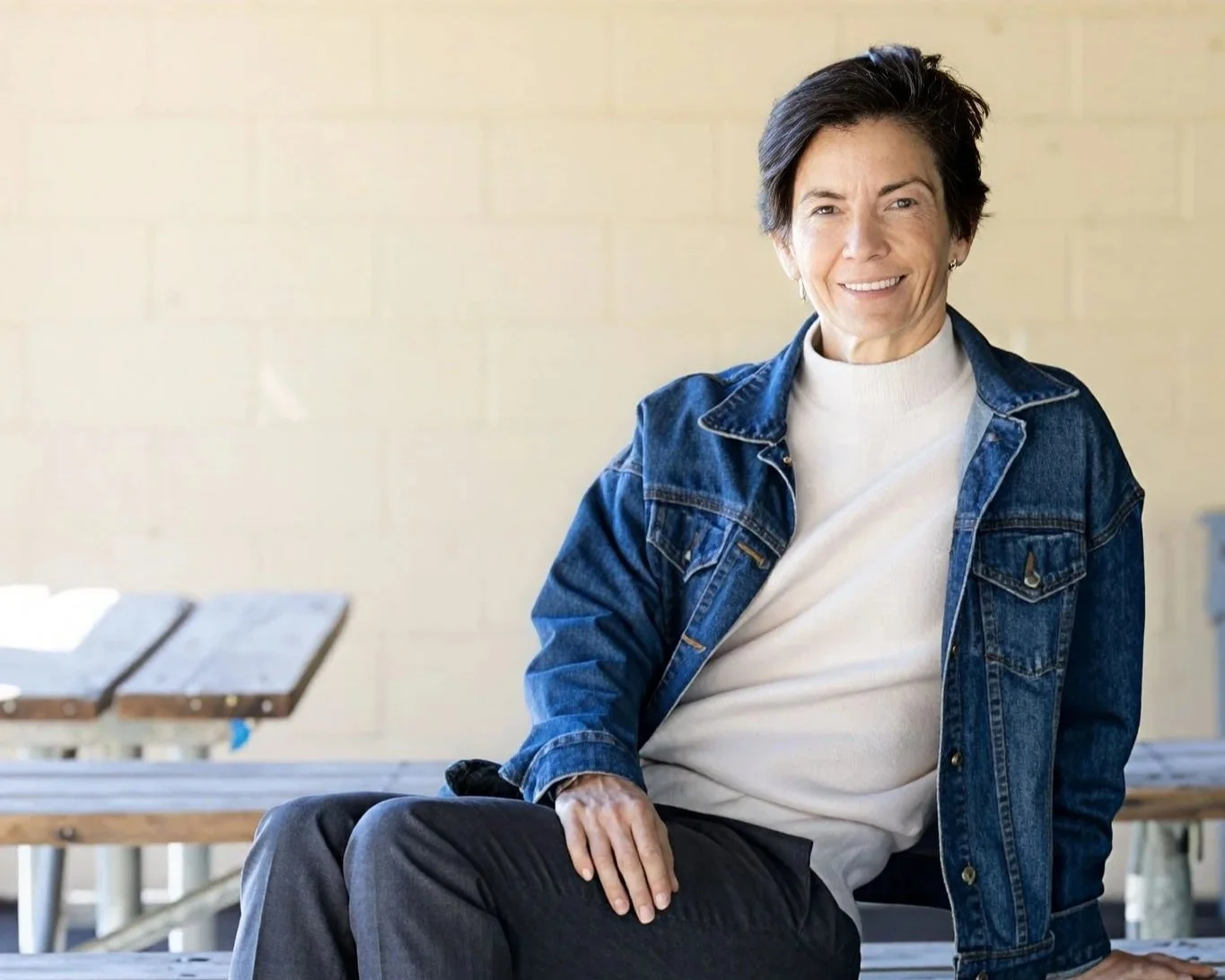
Brandi Fleck: I love that. A love-centered life. Everybody, today we are welcoming Oliveyah Fisch to the show. She is affectionately known as Liv. She is a coach, an author, and a group facilitator coming to us from San Francisco, California. So, Liv, welcome to the show.
Oliveyah Fisch: Thank you, Brandi, for having me.
Brandi Fleck: Yeah, it's great to have you here. I'm excited to talk about some of these topics. I think a lot of them will be very helpful in the personal development space. We might also dive into a little bit of cultural things that are bubbling to the surface right now. So let's just see where this takes us. And before we do, can you please tell us who you are as a person?
Oliveyah Fisch: Who I am as a person?
Brandi Fleck: Yes.
Oliveyah Fisch: So I am a mother. I'm a wife. I am a daughter, and I am a sister to many people. I am someone who is very creative. I like to learn constantly. I'm a forever student. I am someone who is willing to learn and unlearn as many times as I possibly need to, to continue to grow and heal. And I do my best in my day and my professional life to support others on their journey to do their own soul work in this life.
Brandi Fleck: Beautiful. Thank you. Now, before—I'm really interested, honestly, in your personal story. So before we get too into the personal development side of things, and this is probably related, but can you just tell us how you got to where you are today? I feel like, and correct me if I'm wrong, that you are living an authentic life on the path you were supposed to be on. And I would just love to know how you got there.

Healing From Trauma and Finding Your Authentic Self
Oliveyah Fisch: Yes. So I'm on the path I'm on because if I wasn't living an authentic life, I most likely would have been dead by now or suffering greatly. And so life gave me the opportunity at a pretty early age to decide how I was going to live authentically, how I was going to live an empowered life, how I was going to stay in integrity with the truth of who I am.
And that happened because I grew up in an environment where many people around me, if not all, were giving their power away to somebody else. And really, I had chosen at a very early age that I was going to decide to own and honor my bright light power. So I grew up in an environment here that is very cult-like. My family and people who are involved in it, we call it a cult.
And when you have a situation where you're born in that environment, there's a lot of disempowering modeling happening around you. And when you're young and you are watching that, you recognize that, oh, the people around me don't actually know how to take care of me. But that's going to be too terrifying to a little body. So we internalize that as, well, then I'm not enough. I must be bad because I can't have them be bad because they're there to take care of me.
So this is what we do when we're in traumatic events and environments as a young person. We internalize it. And so even though at a very young age I was watching people and recognizing that they were in a disempowered space, it was hard still not to internalize that as, I'm not enough, I'm not good enough, something's wrong with me.
And so I grew up feeling quite unsafe. And that disconnection to myself and disconnection to safety and security in the body led to a lot of obsessive-compulsive behavior growing up. So at eight years old, it looked like not stepping on cracks and tapping poles and washing hands and picking my face and redoing my ponytail a million times or making sure my bed was perfectly made.
In my 20s, it looked like over-exercising, over-training, and being paid to do it, by the way. And in my 30s, it looked like overworking, over-functioning, over-extending myself to make sure I felt safe and loved in the world. So it's been a journey for me to recognize truth and not truth, know when I'm in self-betrayal, know how to come back to my right road, really focus on being radically honest with myself every day where I might be in self-betrayal still, and learning how to recognize that any obstacle or any resistance or any challenge that comes into my space, there's an opportunity or there's an offering or there's a gift in it. And that's how I've decided to live my life.
What Self-Betrayal Is and How to Stop Abandoning Yourself
Brandi Fleck: Gotcha. What is self-betrayal?
Oliveyah Fisch: Self-betrayal is the act of not taking care of yourself when you are knowing intuitively how to take care of yourself. So it's when wisdom has shared with you what to do or be or become, but you have not yet taken the steps to do that, or you ignored all of the signs and signals because you were distracted.
One of the things I share with my clients, and it's a practice I do every single day, is to ask myself at the end of the day, where have I been in self-betrayal today? And many people might hear that and be like, well, no, I wasn't. And I would say to them, look a little closer.
Because most likely, there are things that might not be drastic in your life in this season. But it's nice if you just hear the taps so that you don't have to get the punch in the face. Because the punch in the face is devastating. It's a lot of disruption. There's a rupture. There's a big moment in life where you have to now change, essentially.
But life gives us these beautiful tasks every single day to allow us to know where to move and to grow and to be on purpose with what we're meant to be doing. So this is not about necessarily telling people to be more disciplined, even. It's more about learning how to connect with yourself so that it becomes easy to do what we are meant to be doing. And when we're not doing those things and we're not being those things, we are in self-betrayal. And it can be something very big or very tiny.
So it can be me waking up in the morning and saying, I'm going to drink water and eat really healthy today, but by dinner time eating the chips and guac or something. So it's saying, oh, I think I'm going to cut down on my drinking. And then you're out with girlfriends and then you're on your second glass of wine.
So there can be an opportunity to really look a little bit deeper to see where might I be contributing, essentially participating, in what I call these everyday addictions that nobody is going to say anything about, but that are actually quite harmful for who I actually am, for what is actually meant for me. And that requires us to be connecting with our wisdom and our intuitive self every single day.
Brandi Fleck: Yeah. Oh, I have so many questions for you now. As you've been talking, they're coming. And so I guess the one I'll go to next is this has been coming up a lot lately with clients that I work with, in my own life, is when something—there are these competing parts that we all have, and sometimes they have competing wants and needs. And so there's a part of, say, you that has this need to socialize with your girlfriends and enjoys that glass of wine. And then there's the part of you that doesn't want to drink it.
I guess what I'm trying to ask is, how do you integrate those two parts so that you're not betraying either one? And is it okay sometimes to indulge even if there's a part of you that doesn't want to?
Oliveyah Fisch: What a great question. So I think that in those moments, they seem like they're competing because it feels real, right? You're like, okay, I wanted to go to the gym, but I'm tired and I should probably get some sleep. Something like that, right? It's like, which one do I choose? I thought I was going to go on a walk, but there's work to be done, and I will feel good when I get that work done.
And so we live in this lie that says it's one or the other. It's like black or white, this or that. And I don't think that's actually the reality. It's just a different sophisticated form of an excuse. It's like a better, better sophisticated excuse to not do the thing that you know you need to be doing and setting up the environment and setting yourself up for success so that both can be true, because that takes more effort.
It's easier to say, well, I needed a day off and I needed to be social, so I know I'm not drinking, but it was really fun with the girlfriends. It's an easy thing to do, and nobody's going to say anything about it. It's like, well, good job for you. You go, girl, or whatever. You needed that break. And unfortunately, the world will tell you you're doing a good job in those moments, especially if you can spin it well.
Here's where radical honesty is necessary. This is why we have to ask ourselves daily, where was I in self-betrayal? Because without that honesty, we won't then be able to ask a different question, which is, how am I going to make a way out of no way? How can I be social and then still take care of my body? How can I get the rest I need and get my workout in? How can I make sure that I'm setting up my environment so that I'm able to rest more and not over-function and work? Whatever it is that you're trying to do, we have to be able to ask better questions.
And I think that oftentimes we let ourselves off the hook, and everybody glorifies that. Let me share this with you, Brandi. The reason why people are not more honest with us as well, and why people are glorifying those moments of, like, you needed that day off or something like that, is because it makes people feel okay that they've actually also betrayed themselves that day. And if you're also betraying yourself, that makes it okay for me now to betray myself. And that's not love. That's not friendship.
That actually requires a new level of deciding who do you want to be in your life and how do you want them to be in your life. And you don't have to get rid of your friends. You can just say, hey, I would love to have a friendship where, when I'm in self-betrayal, you mirror that back for me because I actually want to do better for myself now. I'd actually rather you be honest, and that is a form of kindness. That honesty is kindness to me.
And that can be done with anybody—a friend, a partner, someone you live with, your children even. And there's an opportunity for us to practice being honest with ourselves without shaming. Because most of the time when we make mistakes, we've been taught to go down a shame spiral. And so we don't want to even think about that we made a mistake that day because, like, who wants to think of that?
But if we can recognize that if we are honest about the mistake, then we have choice to say, where do we want to go next? So that's how I view these opportunities. It's not an either/or. There's an opportunity to say, well, of course you deserve both of those. And how are you going to create that? And that's when it gets fun.
Brandi Fleck: I love that you look at it as a fun kind of challenge or thing to create because there's no reason why we can't have both. Or I don't want to say all. I don't know. Do you think we can have it all?
Oliveyah Fisch: I do. I think that we are meant to actually have it all. I don't always know if we're meant to have it all at the same time, meaning it can't be summer and winter in the same day. It's going to be, like, summer or winter. What is the season of life you're in?
And so we can experience all of the seasons. We can have all of the experiences that we want, but I don't know if they need to happen all at the same time. And when we try to make them happen at the same time, I call that the gimme-gimme energy, like the greedy-greedy energy. And when we get into that, what I'll call selfishness, we are actually disconnected to nature. We're disconnected to self again.
So it's important to recognize the season of life you're in and what is meant for you at the time, and then to move in that direction knowing that, yes, you can have everything, but you want to really take a pulse on, well, what is the season of life I'm in right now, and what is available to me now, knowing that I can plant the seeds for when spring comes? You can set yourself up for success for the next season.
How to Recognize Intuition, Inner Wisdom, and Life’s Warning Signs
Brandi Fleck: Yeah, that makes a lot of sense. The seasonality, the cyclicalness of life. And something you said is bringing me back—well, something you said just now is taking me back to when you were talking about how life taps you along the way. How do you know that life is tapping you? What's an example of a tap?
Oliveyah Fisch: Okay, let me actually make it super simple, and then we can get more into the esoteric. You have a body intelligence. I think most people are aware that they have a body intelligence. It's like, okay, I have to go to the bathroom. Okay, I can go to the bathroom. I'm thirsty. Okay, let me go get some water. I'm tired. Let me go to sleep. I'm hungry. I need to eat. Oh, I'm full. I can stop eating.
So we have signals all the time to how to take care of this beautiful body of ours. That's a tap. Say that you're somebody that the body signals, hey, I have to go to the bathroom, and then you don't go to the bathroom for, like, an hour because you're very, very, very, very, very busy. And then you do that a couple of days in a row, and then what happens? You get, like, an infection most likely, or something is not working well for the body because you overrode a signal.
So I think most people get that because we experience that in the body. It feels more tangible. So this is actually occurring for all aspects of life, but you have to be willing to tune into it. I feel like you have a question for me here.
Brandi Fleck: Oh, no, I'm just processing.
Oliveyah Fisch: Okay, okay. So here's—let me see if I can break this down. Say that you want something. You have a desire, a beautiful desire for a business idea or for love to enter your life or something. I don't know, whatever it is you want. That is also a tap, tap, tap. Desire is a tap as well.
Brandi Fleck: Yeah.
Oliveyah Fisch: If you have a desire, most people think of desires like their own thing, like, very, like, that was my desire. But desire is how artists talk about creativity. Like, the book came to me. The song came to me. Their artists know that they didn't make that song. A song came. They had to write it down or it was going to be gone and given to somebody else. If you talk to—I work with a lot of artists—they will say this over and over and over again.
So think of your desires like the same. They're around in the universe, and they're saying, hey, are you a vessel for this desire to make happen? So we can actually recognize that desires are taps. We can recognize that we have body intelligence and we get taps. We'll have intuitive nudges of somebody that comes to mind. Usually they're coming to mind for a reason. Can you go reach out to that person when you're getting that tap?
It can be in the form of self-betrayal, like we talked about before. Oftentimes people know that they're meant to be doing something different or being something different. Like, if you ask enough questions, they're like, yep, I know I need to be doing X, Y, and Z. And that's a tap. That knowing. It's like, well, why? Well, I just know. It's like a gut instinct. We know. And these are taps.
What happens is, let's use the example of creativity. Let's say you have all of these things coming to you about creativity in your workspace, and then you don't do anything with it. It just sits there. What happens is that that creativity becomes toxic because it wasn't able to move through you. And then from that, maybe you feel like, oh, I'm so down. I'm just so exhausted. Oh, I'm so depressed. It's like, well, yes, of course, because you're not honoring your creativity and honoring your ambition. And now it's turned into apathy. It's turned into depression. It's turned into exhaustion. And so this is what life does to us, not to cause us a problem, but to get our attention.
Making sense?
Brandi Fleck: Yeah. So if you ignore the tap long enough, it becomes louder and louder and maybe turns into something else, like the apathy or the depression. And you've almost become disconnected from the initial signal. And then it's like, oh, how do I get back to the point where I can even recognize the initial signal?
Oliveyah Fisch: And that's where we are really hard on ourselves, right? Especially as women. It's like, okay, I didn't listen to the signals. I'm so intuitive. I know I didn't listen to the signals, and now I'm sick in some way mentally, physically, emotionally, spiritually. And now I'm shooting myself with another arrow because I'm shaming myself for not doing the thing.
In those moments when you're having a reckoning with yourself that you might have not been listening to those taps, and now it's turned into what I call the punch in the face, I'm wondering if we can all reframe that moment for a minute. Because it's not that you weren't up to something. You were doing something with yourself. Even if you're just lying in bed, you were doing something. You just were not doing what you want to do now.
And life is so amazing because every night you go to bed, you fall asleep, you practically die, and then you get another chance to do it again. It's like this miracle every single day, every single morning. And we can very easily and quickly decide to be and do something else the next day if we can recognize that was the death of me.
Like, tonight I'm going to bed. That part of me is dying. I'm going to shed that skin, and I'm going to wake up anew. And I'm going to have to stay focused because I'm building my muscle of pride again. Because I've betrayed myself so much, I have no pride. I don't think I actually matter. I forgot. I'm in a full illusion.
And now I have to stay so focused on what matters, and I can slowly build up my muscle of pride by taking these actions moment by moment by moment that allow me to stay on my right road, essentially. And so my invitation to listeners, the thing I'm reminding myself constantly—it's like, I share all this, I teach all this, and yeah, sometimes I'm in complete—I'm in an illusion for many, many days. And then I'm like, oh, I'm doing it again.
It could even just be my energy, like a stress energy in my space. So there's just an opportunity to say there's always an opportunity to start again, to begin again. And I love that I get that opportunity every single day when I go to bed. Like, I'm like, okay, I'm going to let go of all the things. I can take inventory. Where did I self-betray today? Okay, great. Let me go to bed, and I'm going to try again the next day. I get to do it again.
And we're in this beautiful life, and it is like a little Groundhog Day. You get to just go again and have a restart and go again. And if you decide to be somebody who's wanting and seeking and searching for the truth of things, it actually becomes really fun. And you've mentioned this idea of fun. The fun part is really important because it can feel tedious otherwise.
So we do want to make this game of life fun. So you want to find creative ways for yourself to do that. It is really fun for me to go to bed and think, okay, I'm going to die, and then I get to restart. I get to reboot. Whatever I want to say to myself, right? To say, let me see how well I can play the game tomorrow. What is it that you would need to say to yourself when you go to bed at night and when you wake up to do this life well? That would be my invitation to the listener.
How Self-Abandonment Affects Self-Esteem and Relationships
Brandi Fleck: Yeah, beautiful. And one thing that I took away from what you said is that self-betrayal or self-abandonment, even, I think, can lead to low self-esteem. So that's an interesting connection there for anybody who is dealing with low self-esteem.
Oliveyah Fisch: Yeah.
Brandi Fleck: Yeah.
Oliveyah Fisch: Do you want me to speak on that?
Brandi Fleck: Sure.
Oliveyah Fisch: Okay. Let me give you an example of that because sometimes it can be really subtle. I'll give you this example. I am at my house. I'm sitting at my office, and it's been a long day, and my husband comes in and says, hey, you're going to be ready? We're going to go out in about an hour. And I say, okay, I'm so sorry, I can't go out with you tonight. I'm going to take care of myself. I'm going to run a bath. I'm going to take the night off, and I'm going to stop working and just do what I need to do to take care of myself. You go out and you go have fun.
Then my husband comes home four hours later, and he sees me stressed out in the clothes I was in, trying to find food in the fridge, super frazzled. He's like, hey, how was your night? How'd it go? How are you doing? My call was terrible. An email came through. I had to do it. And then my mom called, and then I had to go talk to my mom. She's going through this thing. Oh, my goodness. Oh, my goodness. Oh, my goodness. Da, da, da, da, da, da, da. Talking about the thing.
In that moment, I have now taught my husband a lot of things. I have taught my husband, first of all, that I cannot be trusted, first and foremost. If I am with, as I am, a masculine man, he is now not going to trust me. He is going to next time think she doesn't know what she actually needs, so I should tell her what she needs because she doesn't know what she needs.
Brandi Fleck: Oh, that's a good point.
Oliveyah Fisch: Because when people are in confusion, delusion, illusion, like I was, this is not his fault, by the way. I'm in this state. What is he going to want to do? Well, he's going to want to protect me, and he's going to protect me by trying to control me because he's going to think he knows better because I didn't keep my word. I didn't do what I said I was going to do.

So even though this is a very benign, not a big deal, this example I'm giving, when this happens on repeat, this is how people end up in even relationships where they're just like, oh my gosh, why do I feel like I have no power in this relationship? Or what happened here? Why do I feel like I'm not being respected, or I'm not being validated for what I bring in, or I don't have recognition?
And part of this is, yes, the partner can be in lots of different things. Like, if I was in a coaching session just with that partner, great, that person can have a coaching session for sure around empathy, compassion, not to be the hero. I can give that person a coaching session all day long.
But if I'm with that person in the room talking about, I'm not validated, I'm not getting recognition, I'm not getting respect, I have low self-esteem, and my husband doesn't respect me, or whatever the story is, actually the coaching session for that person is around where have you been, like you said, abandoning yourself? Where are you saying, not keeping your word, like, hey, this is what I'm going to prioritize, but then I don't? And then on and on and on and on.
And it's not usually these big betrayals that I'm talking about. Those suck, but those actually aren't usually the problem because we notice them. What I'm talking about is the little cuts that we do to ourselves every day when we're not actually listening, when we go into people-pleasing, when we say, I'm going to go be the helper to everyone else before I help myself. That's where we get into trouble.
Self-Leadership, Victim Mentality, and Power Dynamics at Work
Brandi Fleck: Yes. I'm really glad that you brought up this example. And I know you do a lot of work with teams and things like that, and I also am glad that you brought up the power dynamics in the relationship and how you're kind of giving power away in certain instances. And where I really want to go is how that plays out on an organizational level when you're in a career, but then also, what are the parallels of that in society? And right now, the big thing that is on a lot of people's mind is rape culture and what's going on there. And so I just feel like there's parallels there. Can you take us through those?
Oliveyah Fisch: Yeah, that's a great question. So I think part of the reason why I'm actually able to help a lot of different kinds of individuals with different kinds of problems is because, really, the problems are actually the same even though the pain point sounds different.
So this example I gave was the example between a woman and a man in a relationship. Let's say that same example is with a coworker or somebody who's your superior. When we are in a victim mentality—so in this last example, the husband comes home, my husband comes home, I'm all frazzled, I'm in a victim state complaining about all the things that are overwhelming me in my experience.
Even if you're in a work setting and you're pretending to be okay and you're not, you're in a performative state in that way where you're seeming to be all together. You've got the outfit. You've got the hairdo. You're sitting at that desk. You're going to assert yourself. You're going to say your ideas. You're going to do the thing that you're going to do.
If what's running the show underneath is, I'm overwhelmed, I don't feel safe right now, I'm not sure how I'm being perceived, and that's affecting my cortisol levels, all that stress response is actually being picked up. So even if you're saying the right thing, it actually matters how you're feeling.
I call this being lined up. So what you're thinking, what you're feeling, and what you're saying has to actually line up with your spiritual self as well, like what your spirit is asking of you as well. So what you're thinking, what you're feeling, what you're saying, what you're doing, and your spiritual self is lined up, then you actually are in a leadership position. You're in an authoritative mindset or state.
Let's go back to the example where I'm in the kitchen, he comes home, I'm frazzled, I'm in a victim mentality. We have to be aware that that state, if we are doing that anywhere, we're most likely doing it everywhere.
Because how we do something somewhere is most likely how we're going to just do it everywhere. And we think we're doing it differently because we have that happier outfit on or whatever it is. But that's not the case because it's leaking out in other areas, and the people around you are picking it up.
Let's give an example, too, around, let's say you're the boss. You're running the show. Now you've got people on your team, and you're stressed out about something. You're, again, in a victim mindset. You're overwhelmed by your experience. You think, well, I just won't tell them that I'm worried about the budget, or I won't tell them I'm worried about this deal falling through. I won't tell them whatever. I can just show up.
When, again, your nervous system is not actually in alignment with what you're saying, they're going to pick that up anyway. They're actually going to be able to feel that stress from you. And then guess what happens? They're going to be stressed because of the power dynamic there, because you're the alpha in the room, and now they're going to be stressed. And now they're stressed, and they're not doing the work to the capability that they need to or that you want them to anymore, and now you're pissed about that, and now they're scared to lose their job, and then there's a cycle that goes on within an organization or in a team.
And so I say all of this to emphasize the importance of being able to self-lead, because when we can self-lead, then we can actually be leaders in our home, in our businesses, in our workspaces, and in our community. And so I think that that's how that translates.
If you're operating below the line of effectiveness in that victim mentality, even if you're pretending you're not, I promise you it's leaking out somewhere, which is why it's important to raise your level of consciousness and, at minimum, be in a “this is happening for me” state of consciousness, which is a powerful zone to be in.
And eventually, from there, you can build up into higher states of consciousness. But if you're seeing the world as happening to you or even by you, like if it's not going to work unless I make it happen, and you end up in the rush zone of life, you will always be controlled because someone will say, oh, you don't know how to do your life? Okay, I know how to do it better.
Brandi Fleck: Yeah. And I don't want to—so I want to be clear here. I don't think that this is related to victim blaming in any way. Like, if somebody is coerced into something, even if we're not talking about in a sexual setting, say we're talking about at work and your boundary is pushed and somebody's like, you have to do this or you'll lose your job or something like that, and they coerce you into something, you have a choice there.
And I guess what I'm trying to say is that I don't think what you're doing is victim blaming. You're just saying this is a state that you're in that sets the stage for how you feel in your life, in your relationships in your life. Is that accurate?
Oliveyah Fisch: Okay, let me see if we can move this because I haven't actually touched on your question about rape culture. So let me see if we can go into that space now. So first, I'm explaining that you have levels of consciousness. It's important to know where you're at.
So again, you can be what I call the danger zone in a victim mentality, where you're just overwhelmed by your experience. You can be in fight, flight. You can just be hungry, essentially, sometimes in that state. Then you have this state of this is happening to me. And then this is happening by me.
You're ending up in, like, this rush zone of, I have to do it right. I got to do it perfectly. I need to make sure that I am functioning so I'm keeping up. I'm usually in comparison. I'm having high anxiety, trying to do all the things all the time, usually leading to over-functioning. That's the by-me state of consciousness. It could be helpful to know where we're at.
When you're above the line of consciousness, you can be in a more powerful state, or you can be in your zone of genius. You can be feeling like, oh, life is happening through me or even as me. These are different levels of consciousness.
Rape Culture, Boundaries, and Trusting Your Intuition
Oliveyah Fisch: Now, let's just put that aside, but it's helpful to know when we're talking about all of this. There are things in life that are going to happen to you. There are things in life that you did not try to manifest. There are things in life that are going to be brought to your doorstep, whether you called for it or not. And that can be an inappropriate touch, somebody saying something to you, anything around rape culture. In my opinion, you did not ask for that. That wasn't because you were in a victim state of consciousness or anything like that. That's life. Life is going to continue to be life no matter your state of consciousness.
Brandi Fleck: Gotcha.
Oliveyah Fisch: What I am saying is that if your level of consciousness is in a powerful state or higher, when that happens, things happen differently. So that would happen. But then what happens after that is our responsibility.
What happens after that moment, we get to actually decide, I'm going to turn this into an offering, a gift, or an opportunity. Life is happening for me. This is happening. Okay, great. What am I going to make of this now from a powerful state? Can I actually recognize that if that happens and that pushes me down into a victim mindset, I'm going to be doing something very different than if I can stay in a powerful state? Is that making sense?
Brandi Fleck: It does. From the first clue as well. Because predators test the waters.
Oliveyah Fisch: I'm going to pause on that. Predators will test the waters, meaning don't wait until the big thing happens, because they most likely did a tap, tap, tap. They said something a little bit weird and you let it go. And then there was a little bit of a touch and then you let it go. Oh, he just brushed my arm. You let it—like, things got—you just didn't see the signal because you were overriding yourself, because you're also most likely overriding yourself in other areas, like the chips and the guac, and then you didn't get up on time and go to the gym, right? Because you were overriding yourself in other areas, you were actually not seeing the signals.
And I've worked with a lot of women. I've led many, many, many assault prevention workshops. So my family—I don't know if you know this, actually—but my family—
Brandi Fleck: Yeah.
Oliveyah Fisch: So my family teaches, or my dad actually teaches, Kung Fu Sansu. So I grew up in a martial arts studio. And with that came teaching women's assault prevention classes. And here's the thing we have to know as women: predators are going to go after women who are not taking care of themselves and who are saying, I'm not worth fighting for.
And they do this by testing the waters. They do this by seeing what they can get away with. So let me go back. Nothing that has happened to you that was inappropriate is your fault, ever. Ever. It never should be happening. And when something happens and your intuition is like, oh, that didn't feel good, even a little bit, you get to trust yourself and fight for yourself as you would if that was happening to your daughter or someone you deeply love. And I think that that's where there's an overlap in your question.
Brandi Fleck: That makes a lot of sense. That makes a lot of sense. Yes. Thank you for putting all the pieces together because our lives are these holistic things. Things don't happen in a vacuum. So that was wonderful.
Vulnerability in Relationships, Emotional Safety, and Discernment
Brandi Fleck: And this brings me to the topic of vulnerability in the sense that I know that being vulnerable in a relationship can oftentimes enhance the connection. Even if it's a relationship with self, I would imagine that vulnerability in some way can enhance the connection. So how, in this type of culture, do we start to feel safe enough to be vulnerable? And in what situations is that okay?
Oliveyah Fisch: Oh, gosh, great question. So I think there's a practice of being vulnerable with yourself by what we've talked about already, which is being honest with yourself. So the more honest you can be with yourself, the better. So that's got to be the base. Because we can't actually be vulnerable and honest with other people unless we feel safe enough to just be there and honest with ourselves without shaming ourselves.
And that, I think, is actually a practice because it wasn't modeled. So we have to practice it, for most of us. Maybe for some, it was modeled. So that would be the first step.
What I would say around when we can be vulnerable to other people—so yes, I do agree, us being able to be transparent, vulnerable with other people will provide for more connection because then they get to see more of you, all of you. And what I would share with people is that you are not meant for everybody.
Not everyone deserves to know all of you and know all the intricate, all the little parts of who you are and what encompasses you. And so we get to use discernment to decide what we share, what we don't share, and who we let in and who we don't. And this is not saying that you've got a big wall around you, but I would say you get to have your bubble around you that people can see you, and it's there, but you get to keep this really sacred bubble around you that is full of your light and your love.
And not everybody needs to know every single thing about who you are. So there's discernment that gets to be practiced.

I will share, in my own experience, that vulnerability has been a challenge for me. And not when I'm the leader, not when I'm speaking on a podcast like this. This is easy. I could tell you anything about me, and I'll be vulnerable. I'll even cry and do the thing.
I can say whatever because I'm in the seat of a leadership position right now with you. But if I can actually move in—what I'm working on now more and more is, can I actually be vulnerable with my husband? Can I let him help me? Can I share with my friends what is going on in a more vulnerable way so that they can support me?
Brandi Fleck: That makes sense.
Oliveyah Fisch: So I can start to receive from people. I think that, as women, we have not actually been taught how to receive. We don't know how to receive fully. And then that creates the wall of disconnection from other people.
And so part of what I would share is we do get to have connection with other people. We do get to be as vulnerable and authentic as we need to be with the people around us. And we get to just know that not everyone needs to know everything about us as well.
I would ask each person listening, where is my growth edge? Like, I'm sharing my growth edge. Mine is with the people I'm closest to. But for someone else listening, it might be with strangers. It might be putting themselves out there in the world, right? So you got to know what your coaching session is. Like, what's your coaching session about?
And most of the time, there is a growth edge for people around vulnerability, and it's in those three buckets. It's either the people closest to you, strangers, or acquaintances. And so you get to see, like, oh, what's my growth edge here so I can step into the highest version of myself and be visible? And part of being visible and being effective is being visible and being vulnerable at the same time.
Feminine Energy, Receiving, and Reciprocity in Relationships
Brandi Fleck: Gotcha. Gotcha. One of the things you said about women not being taught how to receive almost makes me think about how feminine energy is kind of wired to receive. So it takes me back to that disconnection from self, honestly.
Oliveyah Fisch: Yeah. I think that we have to recognize that there gets to be reciprocity to create balance. And women often, too, are givers. We're caregivers. We're giving to others. We're helpful. We hold. We're holders. And so when you're just doing this and it's going this way, it's coming out of you, and if it doesn't come back to you as well, we get depleted.
So it gets to go both ways. And the more connected we can be with ourselves, with nature, with divine energy, it becomes a lot easier.
Brandi Fleck: Gotcha. Okay. Well, Liv, thank you so much for all of the wisdom you've shared with us today. Where can listeners find you and your work?
Oliveyah Fisch: Yeah, so you can go check out Oliveyah Fisch pretty much anywhere. My name is spelled a little different. So it's spelled like Olive, O-L-I-V-E, and then Y-A-H. And follow me on socials. Find my website there as well. And come and join the spaces and containers and forums that we have and we put together to create community. And I would love to have anybody reach out.
Brandi Fleck: Beautiful. All right. Well, everyone, those links will be in the show notes, so be sure to go get those. And Oliveyah, thank you so much for coming on the show today. It's been a pleasure.
Oliveyah Fisch: Thank you for having me.
Join the conversation!
Feel free to share your own experience and let me know if you have any questions in the comments.
Related Posts













Hi, I’m the founder of Human Amplified. I’m Brandi Fleck, a recognized communications and interviewing expert, a writer, an artist, and a private practice, certified trauma-informed life coach and Reiki healer. No matter how you interact with me, I help you tell and change your story so you can feel more like yourself. So welcome!
Find More on the Blog
Topic
- ADHD
- AI
- Atlanta
- Black and BIPOC
- DIY
- FAQ
- LGBTQIA plus
- Los Angeles
- Nashville
- Seattle
- St Louis
- St. Louis
- UFOS/UAPs/ETs
- abuse
- accountability
- addiction and recovery
- adoption
- affirmations
- afterlife
- altered state
- angels
- animals
- anxiety management
- art
- astrology
- atlanta
- attachment
- awakening
- beauty
- behind the scenes
- being human
- body image
- body work
- boundaries
- brandi fleck
- breathwork
- bullying
- burn out
- burnout
- cancer
- career
- caretaking
- chakras
- channeled
- clarity-dive
- clarity-practice
- clarity-primer
- clean products
- coach
- codependency
Recent Blog Posts

Visit the Full Podcast Audio Archive

Affiliate


What if remembering you’re a starseed isn’t about escaping your humanity, but embracing it more deeply? As you explore where your soul may have come from, there are a few important truths that can keep you grounded, embodied, connected, and fully present for the human life you’re here to experience.