How Burlesque Builds Confidence and Self-Expression
Interview By Brandi Fleck
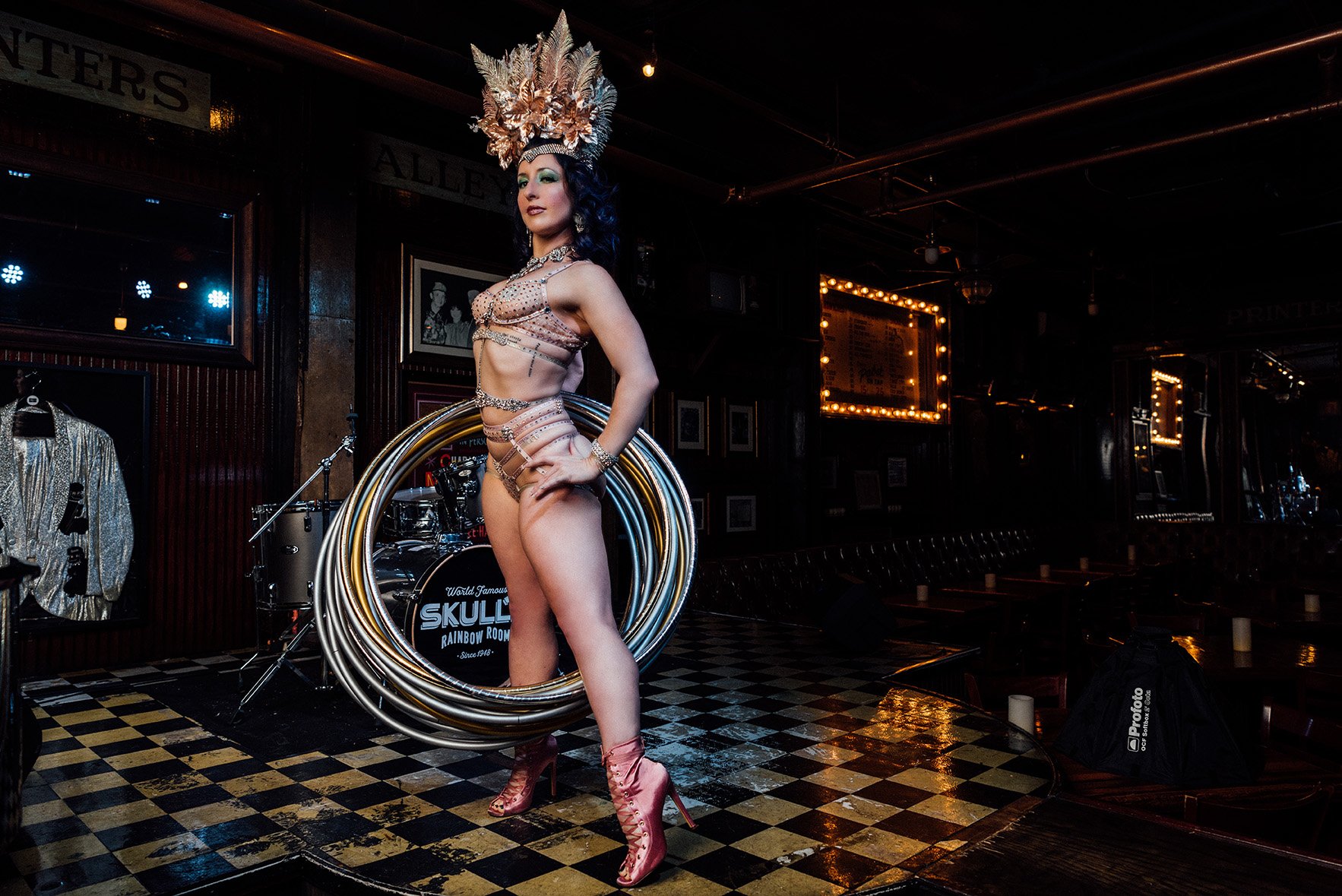
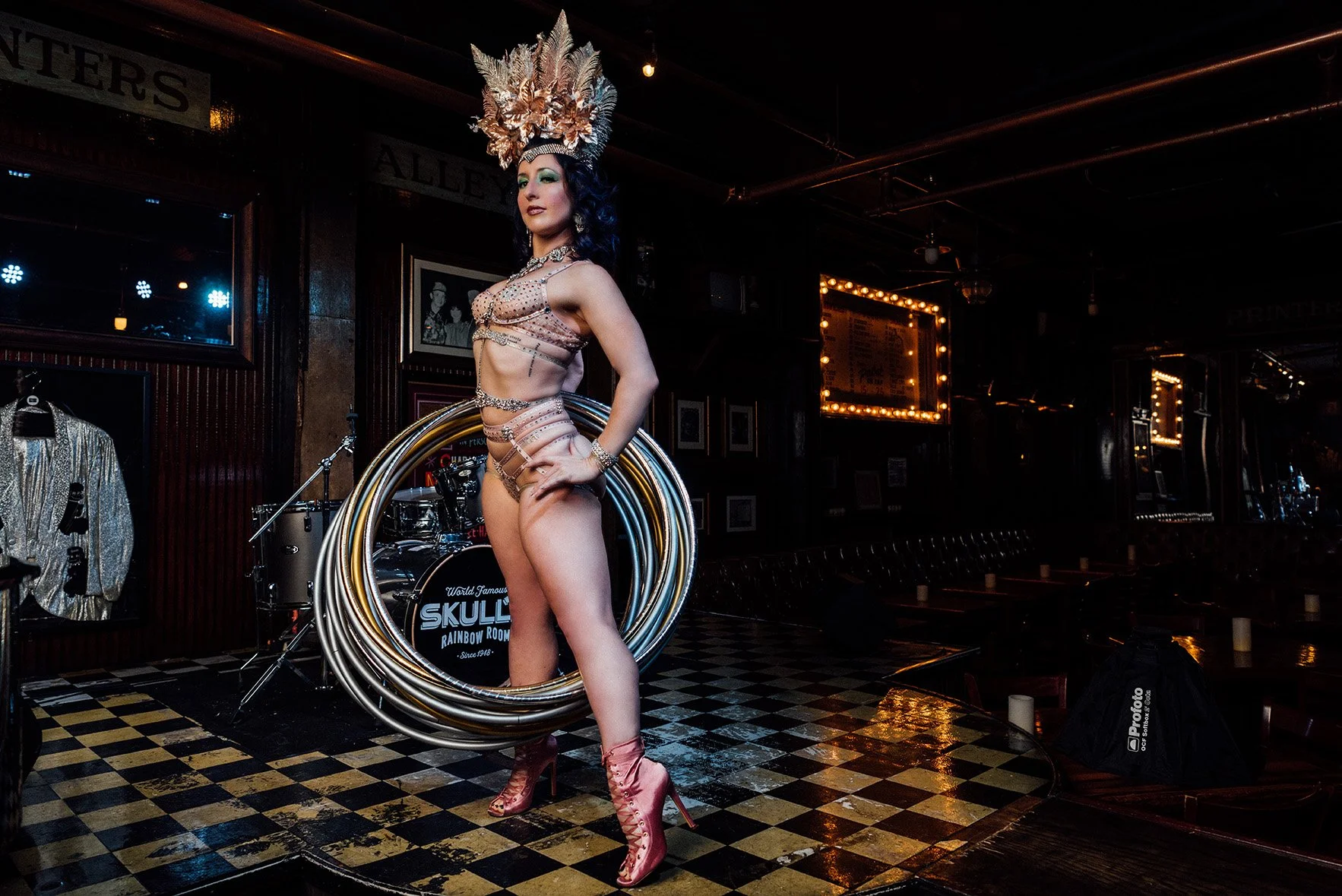
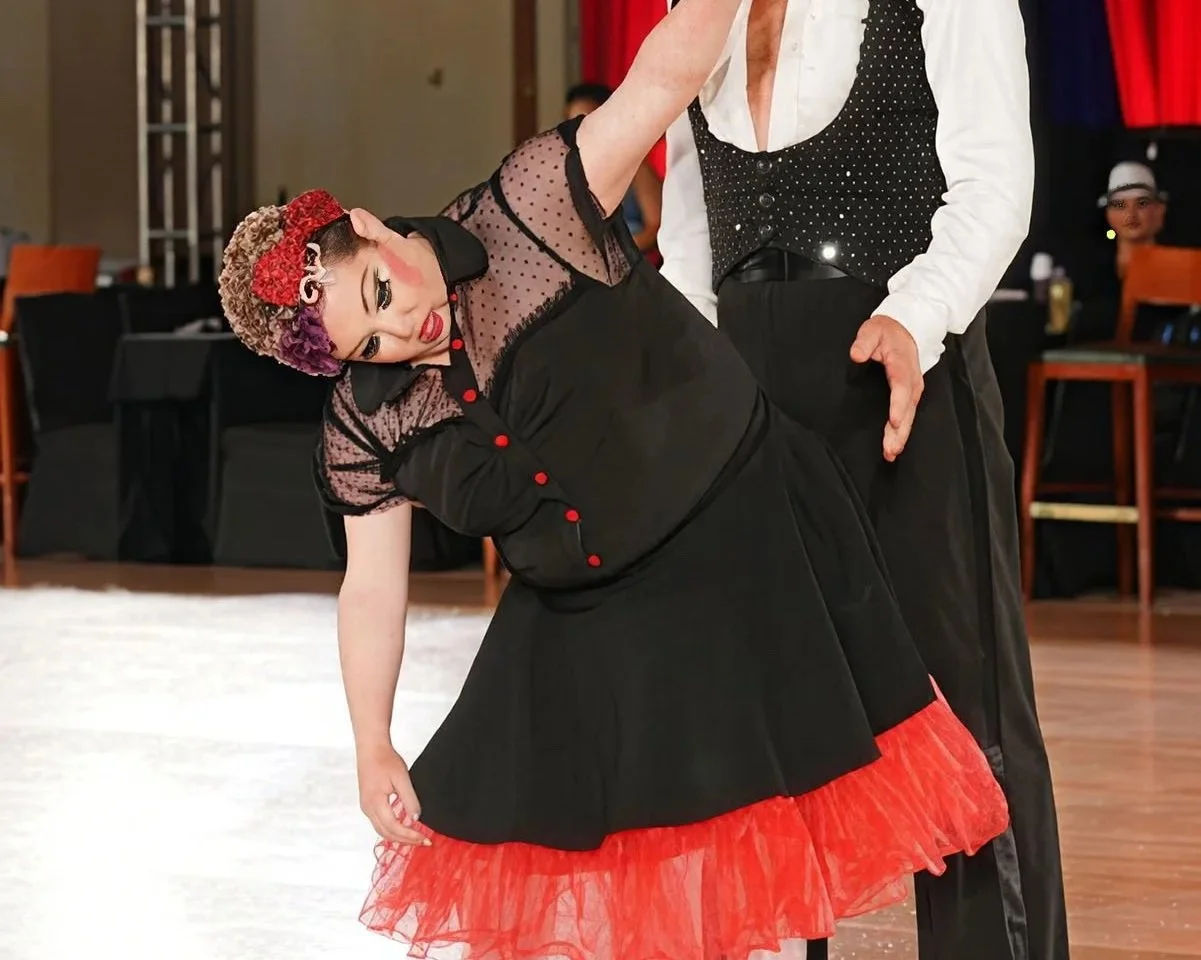
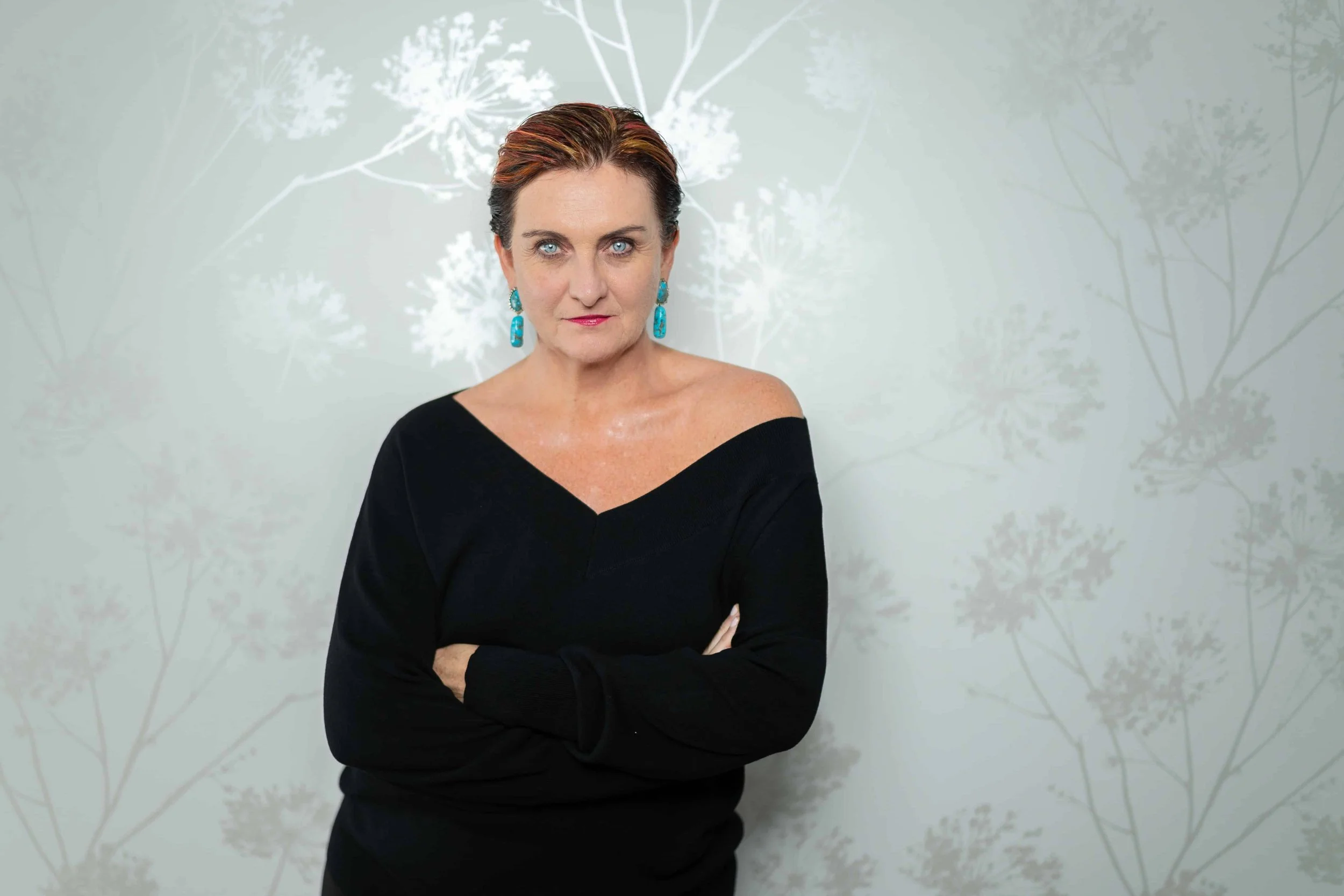
Photo by Adrian Morales for Skull’s Rainbow Room.
Circus performer and burlesque artist Kristen Teffeteller shares how movement, performance, and embracing vulnerability transformed the way she sees herself, her body, and the world around her.
When Kristen Teffeteller bought her first hula hoop after a music festival, she was simply looking for a new hobby.
She had no idea it would lead her into circus arts, burlesque, and a profession built around movement and live performance. Over time, those experiences reshaped her confidence, her relationship with her body, and her understanding of creative expression.
We unpack the unexpected lessons that come from performing, why movement affects your emotions, and what happens when you stop waiting to feel ready and simply begin.
Listen to Kinetic Kristen’s Interview
Watch Kinetic Kristen’s Interview
Learning Through Every Experience
Brandi Fleck: Kristen, what does being human mean to you?
Kristen Teffeteller: It's about taking your experiences and opportunities and being in those moments, not trying to be in the future or the what-ifs, and learning from them no matter what the outcome is. Taking all the good and the bad and everything, just feeling it and enjoying that, and enjoying how others also express that.
Brandi Fleck: Last week's guest detailed trauma stemming from being unseen and staying small in the world. This week, we transition into a story of empowerment through being seen, performing on stage in the circus arts.
By circus arts, we're talking aerial acrobatics, hula hooping, Cyr wheel, and burlesque dancing.
Kristen Teffeteller, known on stage as Kinetic Kristen, of Nashville, Tennessee, is a 4-foot-11 wild child who just loves her job. She describes it as "playing with toys," basically.
Now, it's not all about the striptease, but Kristen tells us how she decided to go for it, plus the importance of movement, expressing yourself, and listening to your body.
Kristen Teffeteller: You get empowerment to love your body, to have control over your own body, know that it's okay to be seen, and an understanding that your physical health is tied to your mental health and ability to relate to the world around you. Movement is just so important to the human condition.
Brandi Fleck: Welcome to the show, Kristen. How are you doing today?
Kristen Teffeteller: Doing pretty good. Just getting mentally prepared for my show tonight.
Brandi Fleck: That's awesome. Awesome. Where are you performing tonight?
Kristen Teffeteller: I'll be at Skull's Rainbow Room. We have a cabaret show there three times a week, Thursday through Saturday, so I'm on tonight, which happens to be Friday.
Brandi Fleck: Awesome. Awesome. We're recording this quite a bit before it will air, but are you there regularly?
Kristen Teffeteller: Yes, I am. My schedule changes every month, but between that and our other location at Nudie's Honky Tonk on Broadway, I'm usually performing at one of those two places at least once a week.
Brandi Fleck: Awesome. Good to know.
So, with all that in mind, can you please just introduce yourself to our listeners? Tell them a little bit about who you are and what you do.
Kristen Teffeteller: My professional name is Kinetic Kristen, and I am a circus performer and burlesque performer in Nashville, but also across the country.
In short, I get paid to play with children's toys and dress up in fancy costumes, and it's probably the best job I've ever had.
How to Become a Circus Performer
Brandi Fleck: That's awesome. So how did you get involved in what you do, and was there a turning point in your life that led you down this path?
Kristen Teffeteller: Yeah. So I graduated from MTSU in the Recording Industry program in 2006, and the industry just wasn't doing good at the time. So I thought I would step away, go work Joe jobs for a while.
I was like, "I don't have anything to fill my time with now that I'm not in school, not doing other school activities. I need a hobby."
Things like video games and painting and all that, none of that was fulfilling for me.
I went to the Summer Camp Music Festival in Illinois back in '08 with a bunch of my friends, and I saw this group of beautiful little hippie girls just out dancing with these giant hula hoops. I was like, "That looks like a lot of fun."
But I was way too shy to go ask if I could join them or even try, even though my friends were telling me that I should.
So when I got back home, I did some Google research, found out what it was called, and ended up buying my very first hula hoop from two girls that were at MTSU.
It was kind of strange that two years after school, I ended up buying a colorful plastic circle from people that I didn't know were into that back in school.
I just spent hours and hours and tons of YouTube videos and lots of swearing and breaking things just to learn.
About a year after that, I had a chance to perform, and I took that chance. I was scared to death, but it was so much fun that I was like, "Okay, well, I'll keep trying."
Eventually, I ended up with a corporate entertainment group based out of Asheville called Playing by Air, and got gigs working as a non-striptease circus performer in burlesque shows around town.
Then it just kind of escalated from there, and now this year is my 12th anniversary doing hoop dance. I've been doing aerial arts for over a decade now as well.
A few years ago, I started working in the striptease aspect of burlesque shows, so it just kind of all fit together.
Looking back, it's just like I went to a hippie music festival and saw people playing with children's toys and decided I wanted to do that, and now here I am.
Brandi Fleck: Yeah, that's really awesome. That's awesome. You can follow your dreams, I guess, but you didn't really know it was a dream until you did it.
Kristen Teffeteller: Yeah, because I danced as a kid. I took dance lessons for about seven years, and at one point I wanted to be a Rockette, but I'm 4-foot-11. Rockettes are taller than that, so that wasn't going to happen.
So I just kept dancing for fun, and it was a great way to dance, but I never expected, one, that I would get hired to do anything with it, and two, that it was even a job in the first place.
I always had the thought that you had to be born into the circus in order to do it. Now I've discovered that there are a lot of people who weren't. They just found it as a kid or as an adult and literally ran off to join the circus.
Brandi Fleck: Yeah. Yeah.
Okay, well, let's back up a little bit. Can you describe yourself as a person? What is the most you that comes to mind?
Kristen Teffeteller: Coffee and rock and roll.
Brandi Fleck: That's awesome.
Kristen Teffeteller: Yeah. I am very much known for that, especially in the Nashville burlesque and circus circles, my innate love for coffee and rock and roll.
I guess that would say about me that I am high energy and a little outrageous sometimes, depending on if we're thinking about '80s hair metal or early 2000s emo. It kind of depends.
But it also says that there's a great range there too. I'm always changing in terms of my look, crazy hair colors, wigs, all of that.
I like to think that I strive to be a kind, understanding person. I do grow and change as a person should, to be better.
Brandi Fleck: Gotcha. Then how would you describe yourself as a performer?
Kristen Teffeteller: I'm thinking the same way, maybe.
I've had some people tell me that they find me as a performer to be very fierce.
I've seen some of the photos, too, that people catch when I don't realize they're taking a picture, and I'm like, "Okay, I'm not necessarily scary, but I wouldn't make me angry," with the look that I give sometimes when the moment calls for it or the act calls for it.
Having the ability to be soft, especially with facial expressions, since talking is not a thing in my act. I don't do the singing acts or the speaking-into-a-microphone act, so everything has to be done with my face and body language.
Being able to communicate that range of emotions and personality through that. But I would say that the hallmark of all of my acts, no matter what apparatus or song I'm doing, is that I come across as confident and very outgoing.
Building Confidence Through Burlesque
Brandi Fleck: Awesome. Well, I'm really interested to hear, how did you get comfortable or decide to go the striptease route after having not done that for so long?
Kristen Teffeteller: I was in a local troupe for a while, and I was taking on a second contract for the Holiday World theme park. Since I was going to be gone for three months, the second year in a row, and I just had so much going on with my circus career, I wanted to take a step back from being a voting member within the burlesque troupe.
We had a '90s show coming up, and a friend asked me, "If you could do a strip act to any '90s song, what would it be?"
I wanted to do "Closer" by Nine Inch Nails just because it makes sense to do it as a strip act.
She was like, "Do you want to do it as a duet?"
I was like, "Okay, let's do it. It's my last show as a troupe member. It might be my last burlesque show ever. I don't know yet, but what a way to go out."
We did it, and it took a lot of us practicing together in the studio because I was scared. I was just like, "Even though I sometimes wear skimpy costumes, I keep my clothes on. I just don't know about this."
She was there to kind of hold my hand through it because she was already doing striptease, but we pushed her boundaries by putting in some acro.
It was a lot. It was trying to be comfortable with the fact that you're as legally naked as you can get on stage.
Right before the show, I ended up asking her to make me a bikini-style bra top out of nude mesh, and I put my pasties on top of that because I was a little frightened. My husband at the time just was not into the idea of me going as naked as the burlesque dancers.
It was like, "Okay, this makes him comfortable, makes me a little more comfortable."
I did that, and when I came off stage, I was like, "I got naked on stage, and people cheered."
All the thoughts that had been going in my head saying nobody's going to like it, you're going to look dumb, all of this... when I got backstage, I was like, "I actually felt really good, very empowered."
Especially with doing that song, when it's about people using celebrity to get somewhere else in their life.
I was like, "That was fun. I don't know if I'll ever do that again."
Then it so happened that later that summer, Skull's Rainbow Room reopened after having been closed for, I think, almost 20 years.
A lot of my friends started performing there, and I would go and watch them when I came home. I was just like, "Oh, this is really cool."
Granted, they're doing a 10-minute act, but they're getting to interact with their audience and do things a little bit differently than what we would do on a big stage where you can't get in the crowd.
It was like, "One day, maybe if they ever do circus acts in here or something."
I finally did a couple more striptease acts at our local studio. They would always be one-offs, and I'd be like, "It's the only time everyone's ever going to get to see me in pasties again."
Then it just got to the point where I was like, "You know what? This is so much fun, and I can still do the circus aspect while doing this. I think I want to keep trying."
So I finally asked the showrunner at the time at Skull's if I could start working there.
I started as a stage kitten, an assistant picking up all the clothes and working the door because, even though I'd been performing for almost a decade by that point, I wanted to make sure that I was going to do it right. Start from the bottom, work your way up.
I was getting to watch these fabulous humans perform and was learning just by watching them, learning what works, what doesn't, things that appealed to me, like a facial expression or a movement, things that didn't appeal to me.
Basically learning by watching and discarding what I felt wouldn't work for me.
Yeah, and that first time I had to get on that Skull's stage, I was terrified. It wasn't so much the "I'm going to get naked." That part, I've got. It's fine. You can probably see more in a bikini.
It was, "I'm going to get stuck in my costume, or I'm going to accidentally kick somebody in the face, or I'm going to fall off the stage."
There is, it's not a far fall. It's about three or four feet, but still, you're going to fall off the stage.
Once that show was over, I was sitting in the dressing room. I was just like, "Okay, yeah. Again, this was an empowering thing."
It took a long time, about three months or so, for me to become comfortable being able to step on the stage however I was that day.
You're going to have good days. You're going to have bad days. Every time I got on that stage, I started getting more comfortable with how I looked, no matter what, and taking off a piece of clothing, interacting with the people.
Now I even talk to somebody in the middle of my performance, whereas before I could barely look them in the eye.
It's definitely been a journey. Like I said, the getting naked part wasn't the hardest part. A lot of people think that would be.
I have people come up and tell me, "Oh, I couldn't do that."
I'm like, "Yeah, that part's actually the easy part. But you can do this."
Brandi Fleck: Well, I think it's really interesting that even though you had performed for about a decade at that point, you still had nerves before you performed.
But it's really cool how you described how you worked through them or just sort of did it.
What the Circus Arts Are
You've mentioned circus arts. Can you describe for our listeners what circus arts is?
Kristen Teffeteller: Circus arts encompasses anything that you would see in the circus, whether it's what is known as traditional sawdust or three-ring circuses like Barnum & Bailey, Ringling Bros., but also Cirque du Soleil, more contemporary companies.
Those happen to be the three biggest circus companies in the world.
Trick bicycle riding at this point is considered a circus art because it's been done in circus.
Doing aerial fabrics, or silks, as they get called, or trapeze, and hula hoop, and contortion, and tumbling, and fire breathing, all of that is pretty much under the umbrella of circus arts at this point.
Brandi Fleck: Gotcha.
So you do performances with hoop and the Cyr wheel and acrobatic dance, as you've mentioned. Can you describe the different types of movements for those different things?
Kristen Teffeteller: Hula hoop is probably the easiest to describe because everybody knows exactly what a hula hoop is. Little plastic circles that little kids play with.
Yes, there is a lot of hip gyration similar to Elvis, but with hoop dance, I'm also pulling in elements of my ballet and jazz training, sometimes a little bit of hip-hop, and then adding it into burlesque too.
A lot of the traditional burlesque movements, such as hip rolls and shoulder shimmies and bumps and grinds, and also trying to take clothes off while doing that sometimes.
Then adding in very traditional circus elements, like adding in multiple hoops, finishing my act with the slinky hoop, which is... I've had upwards of 40 hoops all together at once on my body because it's a big flashy finish.
I don't do that for every act because it doesn't fit every act, but that's what people usually think when they think of circus hoop.
Okay, with the Cyr wheel, big, big hula hoop, like big enough for me to stand inside of. The Vitruvian Man is another way of describing how you would stand inside of it, or the human inside the circle.
That is another way to do gymnastics, like tumbling-type stuff, except your hands push the wheel into the floor.
So if I were to go upside down in it, my hands don't actually touch the floor. The wheel's between my hand and the floor. In a way, I'm tumbling within a safety circle.
But it's a lot of spinning, and I do get dizzy. I have smooshed my fingers, but not too bad. My brain usually tells my hand to open up and occasionally just forgets.
Brandi Fleck: Gotcha.
Kristen Teffeteller: Then acrobatic dance is taking traditional dance and melding it with different tumbling aspects.
The type of tumbling that I do depends on my stage and also the act.
I don't do handsprings and back tucks just because that doesn't suit my style, but also it doesn't work for a lot of the stages I'm on anyhow.
Sometimes I do it with a chair, and sometimes I climb on top of other humans, just depending.
Brandi Fleck: Okay. Okay.

So what is the difference between circus arts and burlesque, and are they related?
Kristen Teffeteller: They are actually related in a lot of the theatricality, where both are telling a story, usually without any kind of words, but telling the story through your choice of music and movement, or not moving, and your facial expressions.
Sometimes it doesn't make any sense at all. It just exists. There are some burlesque acts where it just exists to titillate, and that's it. There's some circus acts that exist just to wow or scare an audience, and they're trying to tell a story.
They're all fantastic, no matter what they are, because they're all happening for whatever reason the artists wanted to do them.
The burlesque shows got their start, I think, in the U.S. They've been going on in cabarets like the Moulin Rouge and Crazy Horse and stuff like that in Paris and in England.
But in the U.S., they were part of these vaudeville shows. Burlesque means "to make a mockery of."
Those vaudeville shows would have political skits, sideshow acts like sword swallowing and fire eating. Sometimes they would have circus acts, especially if the vaudeville show was part of a touring circus show.
Then they would also have stripteasers. They had always kind of been in conjunction with each other. I don't know historically if there were a lot of crossover acts.
I've seen videos, I think from the '50s and '60s, where there were contortionist burlesque dancers.
But I didn't see or know of anybody who was doing aerial fabric or trapeze who was a burlesque performer, not until after, I want to say, '98, when they started having this new burlesque movement.
People started crossing things over because they wanted to differentiate themselves from the next dancer.
There's actually a lot of circus performers, particularly ones that graduated from the same circus school I did, who have worked or continue to work in the burlesque scene.
It's always interesting when I meet somebody at a show and they might say, "Oh yeah, you graduated from the same circus school as I did, but you were six years ahead of me."
We get to talk about how it's strange and fun that, even though we did a lot of this traditional circus training, we find ourselves on this other side of it.
Brandi Fleck: Yeah. Well, so how does your circus arts background translate into your burlesque acts?
Kristen Teffeteller: I do a lot of flexibility work in my acts. My minor at circus school, on paper, was contortion and acrobatics.
I am not an official contortionist. It's something I'm working toward, but I don't claim to be a professional contortionist at all. I'm just really flexible.
I do a lot of that because an audience member, whether they've been to 500 burlesque shows or none, they're going to be wowed by splits and backbends because most people don't have that range of flexibility.
But I like to push it a little bit and make it a very sexy thing with the backbend. Sometimes that can be creepy. I did a demon act at Halloween, and it was just like, "How creepy can I get without cracking up?"
It was a lot of weird backbends and side-bendy things and trying to walk across the stage in a backbend. Then I do hula hoop too on certain nights because I'm pretty picky about which acts I'll do hula hoop with. It's a lot for that small area at Skull's.
Brandi Fleck: Do you ever run into people who disapprove of what you do? If so, how do you handle that?
Kristen Teffeteller: Being in the South, I do.
Thankfully, not as far as I know, nobody within my family or friends.
Usually when I come across somebody who disapproves or will ask something like, "What does your boyfriend think of that?"
Well, I don't care what they think because it's me.
It always kind of takes me back a little bit. I'm just like, "Oh, this is 2020," but some people still have these antiquated notions about what someone else can do with their body.
Depending on the person, if they're kind of hostile about it, I'll just be like, "Oh, okay. Well, nice talking to you," and move on.
But if it seems like they're coming from a place of curiosity or concern, I'll try to talk to them about why burlesque is a great thing, no matter somebody's gender or their looks.
How it is an empowerment thing, a way for people to be able, in what we call "art stripper" mode, to put on a piece trying to bring awareness to something that's happening, whether it's within their immediate locality or something greater in the world.
In the last few years, I've noticed a lot more burlesque acts involving political skits. Ten years ago, I didn't really see that. It was more, "Hey, we're pretty and we're sexy, and this is all fun."
Now I'm seeing a lot more of the political acts. The, "Hey, we've got some serious things wrong with the world. Here's one of them. Let's bring awareness to it."
Brandi Fleck: Sure.
Kristen Teffeteller: Yeah. So I try to tell people about that. I was like, "It's not about we just want to get on stage and get naked."
There's nothing wrong with that, but there is a greater thing to it too.
Brandi Fleck: Sure. Yeah. As with all art, I guess it's supposed to make you think, right?
Kristen Teffeteller: Yeah. Exactly.
Brandi Fleck: Okay.
I feel like what you do celebrates the human body, and you've mentioned empowerment a couple of times. Can you talk about the celebration of the human body in general and how it plays into what you do?
Kristen Teffeteller: Yeah. With burlesque in particular, it is mostly female-dominated, but we do have a lot of male-identifying and non-binary performers as well throughout the world.
It's a way for people to claim their space and just be like, "This is me. This is who I am, and I love myself. I want you to see this love that I have for myself."
One of my favorite performers is actually a local, Freya West. She has a singing strip act called I Don't Want to Get Thin.
It's an old song, but she had reworked it to make it applicable to the digital age.
She has a line about Facebook ads and bad diets, and it's all about her going, "Hey, look. I know that I am curvy. I'm fat. I'm whatever. But I love myself. This is why, and I don't want to change just because society says that we have to."
Which I think is amazing.
I know that everybody, every human, no matter if they're fat, thin, Arnold Schwarzenegger buff, whatever, everybody has days where they don't like their physical appearance, even us performers.
With burlesque, it's a way of being able to go, "Hey, you know what? Yeah, I had a bad brain day. I'm not liking the way my butt looks in this costume, but I'm going to get up here and I'm going to show my butt some love, and people are going to like it because I am showing my body love, no matter where it's at."
With burlesque, that's how that goes.
With circus, that is actually a little bit harder because when you're a circus artist, everyone expects you to be thin and muscular.
Thankfully, the school that I went to, we had a range of body types, and it was really great to see that and see that it didn't matter.
Even if you were differently abled, the coaches would find something for you and were always willing to work and adapt for people because at the New England Center for Circus Arts, where I went to school, one of their taglines is, "Circus is for everybody."
Brandi Fleck: Well, that's awesome.
Kristen Teffeteller: It's like, no matter what, we will find something for you so that you can enjoy circus.
You don't have to be a professional. You can do this just for fun. This can be your exercise. This can be part of your mental therapy.
As a circus performer, since our bodies are our tools, no matter what apparatus we use, when you get injured, it's just like, "Why is my body betraying me? I can't do the thing that I love."
But then you learn to adapt and work with that, and you find creativity within your limitations.
It's hard. It's hard convincing yourself that you'll be able to do it.
Brandi Fleck: What have you learned about your own body through the different forms of movement that you do?
Kristen Teffeteller: Specifically with circus, I learned that I put on muscle very easily.
Tight sleeves are no longer a thing. I've busted a few sleeves, so can't do that anymore.
I've learned about physical imbalances that I didn't know I had before I started doing circus because I wasn't as finely attuned to what my body was saying.
Before, it would be, "Oh, my back hurts. My neck hurts," or whatever.
Now I can go, "It's this part right here."
I can look it up in a book and be like, "Okay, it's this muscle, and this is what causes this, and I have to figure out what exercises or massage therapy or something to do."
I've also discovered things that my body totally loves to do.
I adapt very well to spinning, which is probably why I took to Cyr wheel as well as I did because I had already been doing spinning trapeze and hula hoop.
I don't get as dizzy as quickly as a lot of other people when they first start out on it. But then I also learned that my body doesn't like high impact.
Brandi Fleck: Gotcha.
Kristen Teffeteller: Hence why I don't do handsprings and tucks anymore. It just said, "We're not going to do that."
Brandi Fleck: Did you get injured?
Kristen Teffeteller: Yes.
Brandi Fleck: Okay.
Kristen Teffeteller: I've had minor injuries doing tumbling.
Then this past fall, I was teaching an aerial fabric class, and as I tell the kids I was teaching, I did a dumb and performed a drop that I was way too low for.
It was a freak accident. My brain just forgot that I was too low and just did it like I normally do.
So I accidentally dislocated my right knee.
Brandi Fleck: Oh.
Kristen Teffeteller: I'm fully healed, did all the PT, no surgery required.
But it was like once I could start doing things again and I would test out the things that I used to do, I was like, "Okay, my body really doesn't like that anymore."
Just like, "Okay, we're going to retire these movements."
The Benefits of Movement for Mental Health
Brandi Fleck: Gotcha. You mentioned movement in general. Why is movement important?
I sort of ask this question from the perspective of we have quite a bit of a sedentary culture, and a lot of people have sedentary lifestyles, and your life is so full of movement.
Why is it important?
Kristen Teffeteller: There's the obvious exercise.
In particular, dance and circus is a great form of exercise.
For me personally, it really helps with my mental state.
I have probably my entire life, but definitely since I was a teenager, struggled with anxiety and depression.
I find that if I don't have some kind of movement, even if it's just taking a walk in the park, some kind of creative movement at least every other day, I can feel myself being really bummed out or unnecessarily anxious about things.
I know other people who are like that, where it does help out with their mental state a lot.
They go and do whatever their movement is, whether it's dance or lifting weights, and that's their time to just focus on one thing.
Then when they're done, they're just like, "Oh, well, now I can probably solve something else that was going on in my life."
Which I think is absolutely wonderful. It definitely helps with the mental state and mental clarity.
The bonus is getting in exercise without having to go do traditional exercise.
Brandi Fleck: Yeah. So I guess it's safe to say that dancing, acrobatics, the movement that you do is an outlet for you.
You've sort of told us that it helps you decrease anxiety and stuff like that. Are there other ways that it helps you in your personal life?
Kristen Teffeteller: I would say yes. I know what I eat has definitely I'll still eat trash fast food, but I've become better about what I put in my body because I know it's going to fuel me for whatever I have to do that day or the next day.
So I'm not necessarily going to devour an entire DiGiorno's frozen pizza, but I might just be like, "Okay, well, I'll have one slice because I do have to perform tomorrow."
Just being aware of things that don't have lasting effects. For example, drinking. I find that I really can't have more than a couple drinks.
It's probably as I get older too, but having two drinks, even the next day, trying to do handstands, my equilibrium will be completely thrown off even though it's been 24 hours and I've drunk lots of water and eaten.
It's just being like, "Okay, well, that's not a thing that I can really do all that often, if ever."
Brandi Fleck: No more crazy nights.
Kristen Teffeteller: Which is fine.
If I've had a really good training session, it helps me sleep because it wears me out and kind of puts my mind in a better spot to be ready to go to sleep.
Why Dance and Performance Matter
Brandi Fleck: Gotcha. Why do you think movement and dance and art are important to society and the human condition as a whole?
Kristen Teffeteller: If we didn't have art of any kind, the world would be a very bleak place because it's so ingrained in us now.
We can't go anywhere without hearing music or seeing some sort of visual art or coming across something that's written or printed.
Movement, we move out of joy. I see people I know who claim to, "I'm not a dancer. I'm not a dancer."
But they'll do a little dance of joy when something great has happened. We need to move and make shapes with our body and express our emotions that way.
If people weren't doing that, one, we wouldn't be able to identify with others because it's a great thing when you can look at somebody performing on stage and you're like, "I get that reference. I know that feeling," or, "I want to feel like that. How do I do that?"
Brandi Fleck: That makes a lot of sense. That's a really good point because even if you're happy or you're sad, you naturally make movements with your body, even if you're not trying to dance.
I feel like a lot of that is replicated through performance. Those are benefits for the people moving in society, but what about the spectators and the people who come to the show? How does that benefit them?
Kristen Teffeteller: I would say, especially for the people who come and see the burlesque shows, it's getting to see quote-unquote "normal-looking" people get up on stage and do these fantastical things.
Very few people look like Dita Von Teese, who's one of the most famous burlesque performers ever.
When we're not in our crazy costumes and makeup and wigs, we literally look like the same kind of people that you would pass walking through the streets.
It's getting to see these people embody a fantasy.
Especially in the shows at Skull's and Nudie's, where we're so close, it's just like, "Hey, we're real. We are real people, and we look like you underneath all of this. You can do this too."
We have so many people that will come up to us after the show and say, "That was amazing. I want to do this. How do I get into this?"
Even if people are just like, "I just want to do it at home by myself. It just looks like so much fun."
That's always a joy for me when people are just like, "I want to do this."
We had somebody have their coming out party. Their whole group came to Skull's, and they were just sitting at a table. I didn't know what their celebration was for. I just knew that table was celebrating.
I happened to wrap a costume piece around the person whose coming out party it was. Later they came up to me and were just like, "Thank you so much. This is why we were all here tonight."
It was just so fabulous, and I enjoyed it. "I want to try this myself, and I'm going to go back home and look all this up."
It just made me so happy. Even if this person never performs on a stage, they found something that they can say, "Hey, I can identify myself on this stage."
In these costumes, I can see myself being able to embody a fantasy character. I think that's really lovely. Then with circus, especially when I did the theme park, having little kids come up to me and go, "I want to do what you do. I want to grow up to be like you."
That just made me absolutely happy. Myself and the aerialist on that contract, we were both women in our 30s, and almost everybody else in our cast were these young 22-year-olds straight out of college who were singing.
We're up there, super muscular and everything, and having these little kids, especially these little girls, come up and say, "I want to be like you when I grow up."
It's just like, "Yes, you can."
You can see that you can be a dancer, or you can be a circus performer, you can be a singer. Just seeing that there are these things that you can be, and you can come from nothing and do this.
All it takes is just saying, "That's what I want to do," finding out how to do it, and taking that step.
Brandi Fleck: That's really cool. It's very powerful, I guess, when you hear those things.
Well, on that note, can you tell our listeners where they can find you online if they want to look you up? Where are you at on socials? What's your website? All that good stuff.
Kristen Teffeteller: My website is kinetickristen.com. Then I can be found on Facebook and Instagram @KineticKristen.
I know I have YouTube and all that, but I never remember those usernames because they're all linked to my other socials that I use.
Following Your Passion Without Fear
Brandi Fleck: Do you have any parting wisdom today that you can leave for our listeners?
Kristen Teffeteller: Yes. Do the damn thing. Whatever it is, find out how you can get involved and do it.
If you want to play guitar in a punk band but you don't even know how to play guitar, go buy a cheap guitar. You can find one at Goodwill or something.
Look up online how to play and learn, and then go from there. Find like-minded people who want to do the same thing and hang out with them.
You can find that maybe you won't do it professionally. You're doing it for the love or just to fulfill a childhood dream.
But do it. Don't ever think that you are too old or too this or too that. Just do it. You never know what's going to happen in your life if you just do it.
Brandi Fleck: Well, Kristen, thank you so much for coming on the show today. It has been an absolute pleasure to talk to you.
Kristen Teffeteller: Thank you so much.
Join the conversation!
Feel free to share your own experience and let me know if you have any questions in the comments.
Related Posts












Hi, I’m the founder of Human Amplified. I’m Brandi Fleck, a recognized communications and interviewing expert, a writer, an artist, and a private practice, certified trauma-informed life coach and Reiki healer. No matter how you interact with me, I help you tell and change your story so you can feel more like yourself. So welcome!
Find More on the Blog
Topic
- ADHD
- AI
- Atlanta
- Black and BIPOC
- DIY
- FAQ
- LGBTQIA plus
- Los Angeles
- Nashville
- Seattle
- St Louis
- St. Louis
- UFOS/UAPs/ETs
- abuse
- accountability
- addiction and recovery
- adoption
- affirmations
- afterlife
- altered state
- angels
- animals
- anxiety management
- art
- astrology
- atlanta
- attachment
- awakening
- beauty
- behind the scenes
- being human
- body image
- body work
- boundaries
- brandi fleck
- breathwork
- bullying
- burn out
- burnout
- cancer
- career
- caretaking
- chakras
- channeled
- clarity-dive
- clarity-practice
- clarity-primer
- clean products
- coach
- codependency
Recent Blog Posts
Visit the Full Podcast Audio Archive

Affiliate