Growing Up Black in America
Interview By Brandi Fleck
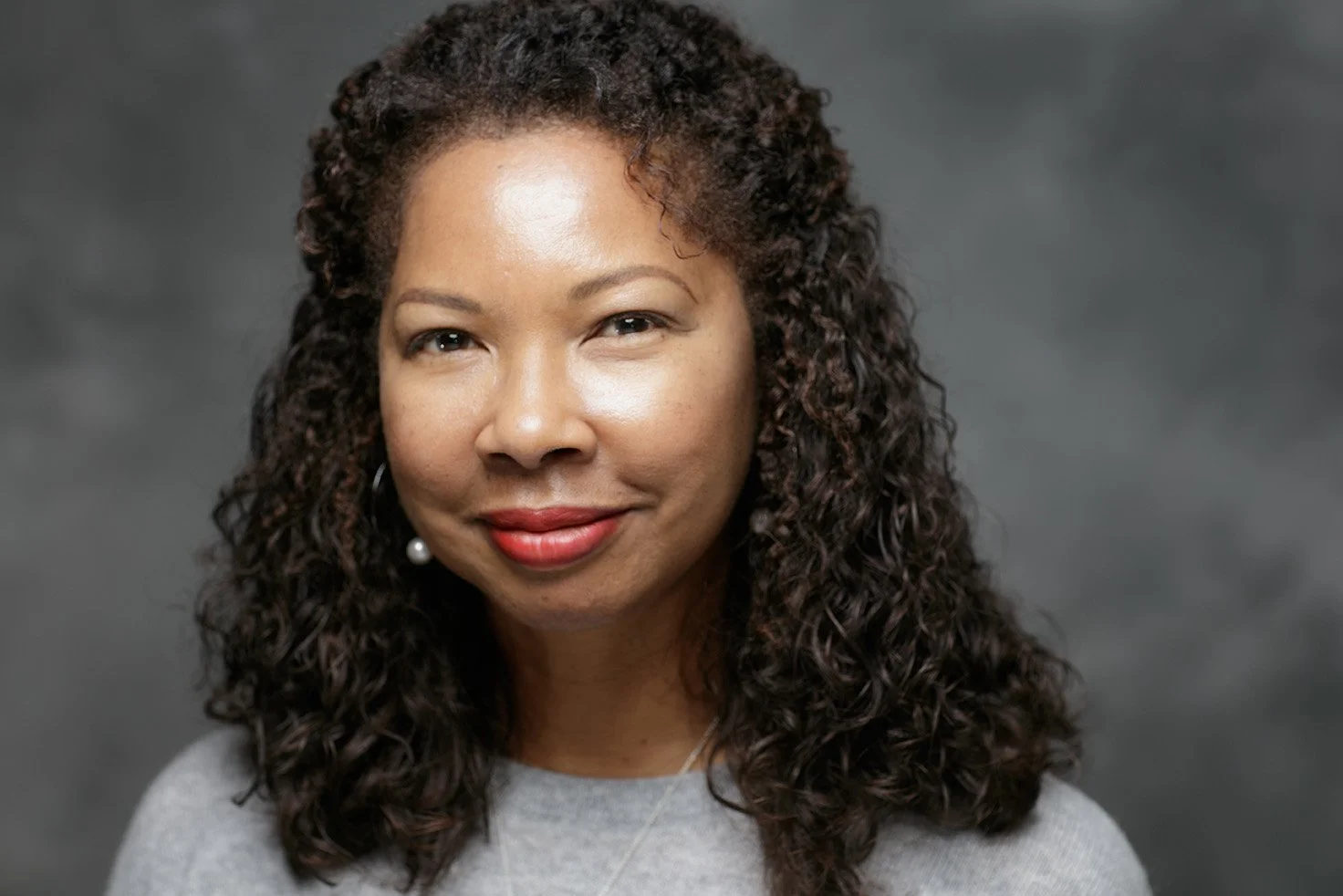
Belinda Harvey shares how growing up in South Central Los Angeles shaped her experiences with racism, policing, corporate America, activism, and raising a Black son.
Belinda Harvey learned early that some people experience America differently than others.
Growing up in South Central Los Angeles, she witnessed gang violence, lived with constant uncertainty, and learned not to expect help when police were called.
Those experiences stayed with her as she built a successful career in corporate America, raised a son of her own, and watched the events of 2020 force long-overdue conversations about race into the national spotlight.
Belinda reflects on the realities of growing up Black in America, the emotional toll of code-switching, her family's deep roots in the civil rights movement, and why she remains hopeful that meaningful change is possible.
Listen to Belinda Harvey’s Interview
Watch Belinda Harvey’s Interview
Black Lives Matter and Systemic Racism in America
Belinda Harvey: Being human to me means showing compassion, love, and empathy for all people regardless of their race, religion, background, mental, physical, or emotional state. That's what being human means to me.
Brandi Fleck: Welcome back this week to the Human Amplified podcast. I'm your host, Brandi Fleck.
Before we jump into the intro, I just want to tell you guys to tune into the View From the Carnival podcast on astronetradio.com on Tuesday, July 28th at 7:00 p.m. Central Daylight Time. Host Robin Land of Tyler, Texas interviewed me, and I can't wait for you guys to hear our critical conversation about mental health, prescription medications, and breaking the cycle of abuse.
If you missed the live airing, you can always tune in later on astronetradio.com. It was a lot of fun and an interesting conversation and definitely pushed me to expand my comfort zone. I will say that much.
Today on On Being Human, our guest is Belinda Harvey of Los Angeles, California. She's an IT sales executive with more than 30 years at the same Fortune 100 company. She's a thoughtful and proactive leader. She's not only a daughter, sister, mom, and girlfriend, but she's been reinvigorated as an activist for Black lives because the year 2020 has been an emotional ride in uncovering existing systemic racism that the country and world had perhaps gotten complacent about.
Belinda describes her present emotions, her experiences growing up in a rough neighborhood in LA, which led to her first experiences with the police. She tells us how she got out, her family history of activism, and what it's like raising a Black son in our world and being a Black woman in corporate America.
She tells us what it's been like protesting, and we even have a special clip from one of the LA protests where she led a cathartic chant.
From this episode, you'll get powerful insight into the types of systemic racism that exist in corporate America, our society, and the toll it's taken on the Black community, including the toll of code-switching because of the societal pressure to suppress natural cultural Black human nature.
Belinda and I discuss abusive patterns in our government and society that need to change so you can start taking action too. And not least of all, you'll get inspiration and hope because of the positive changes that are already happening despite the overwhelm. Belinda is excited for what's to come.
Belinda, welcome to the show today. I'm so glad to have you here.
Belinda Harvey: Brandi, it's a pleasure being here. Thank you for having me. I really appreciate it.
Brandi Fleck: You're going to tell us about your personal experience in life, and I'm very grateful that you want to share that with the On Being Human community. But before we get started, can you just tell us a little more about who you are and what you do?
Belinda Harvey: So I am an IT sales executive for a Fortune 100 company, and I have been there for over 30 years.
With my company, I would say that I'm known for being a thoughtful and proactive leader and have a history of delivering outstanding client satisfaction and, at the same time, helping my clients deliver positive business outcomes.
I live in Los Angeles, and I've been here for most of my life. So that's who I am.
Brandi Fleck: What are some of your hobbies and interests that bring you the most joy in your personal life?
Belinda Harvey: Ah, Brandi, I love to sew, and it's something that I really wish I had more time to do.
I took a sewing class during my freshman year in high school, so it's been a long time since I've actually used a machine. But I sort of developed an interest in it about five years ago because I love to watch the show Project Runway and watch how they create these beautiful looks out of, like, nothing.
So a friend of mine had an old sewing machine in her garage that she wanted to get rid of, and so she gave it to me. I was immediately hooked. I got on YouTube and kind of retaught myself.
Belinda Harvey: How to sew because I hadn't sewn since I was 14 years old.
Yeah, and so far I've made pajamas for my son and an apron, and I actually have a mask project that I'm just dying to get to. I've got all my materials, but I just haven't had time yet to get to that. So I love to sew.
And then I also do like to work out. It really helps me to kind of get some balance with my physical and emotional health. So I try to work out at least two or three times a week in spin class, running, walking, lifting weights, and then mixing in some yoga whenever I can.
Brandi Fleck: Oh, that's awesome. I definitely need to get back to working out. Are you going to make masks for your friends and family, or what's your plan there?
Belinda Harvey: It really is kind of a friends-and-family sort of project, and I have a theme. I'm a big sports fan, and my family tends to be big sports fans, so my themes are actually masks that represent different colleges around the country.
So I've got the college material kind of showing on the outside, as well as some professional teams like the Dodgers and the Lakers, the Oakland Raiders. So that's kind of my theme. I'm dying to get to it, and I just haven't had time.
Brandi Fleck: Awesome. All right, well, let's start digging into your story a little more. I'd like to start from the present and work our way backwards.
So if you could tell us, what is life like today in general for you as a mom, a friend, and a successful Black woman?
Belinda Harvey: I think I'll start with the friend part of that question.
I would say, given COVID and the need to quarantine and social distance, life as a friend has been challenging because I haven't been able to see my friends in person as much as I'd like to. However, California is starting to slowly open up, and so I'm having an opportunity to meet with them in kind of a socially distant format, I guess, on a limited basis. So it's been difficult to meet with my friends, and I do miss them, but we're getting there.
As a successful Black woman, boy, I love that. I would say that from that perspective, things have been a bit challenging.
And it's been challenging because the recent killing of George Floyd has kind of sparked this movement, and it's sort of laid bare the systemic racism that exists in our government, in policing, and also in corporate America.
So as a Black woman in corporate America, over the last probably three or four weeks, my life has been kind of overwhelming in the sense that I'm trying to deal with the daily stressors of my job in sales and explain to my company why I feel that bias exists inside the company. I'm trying to help some of my white friends and coworkers understand what I've experienced in terms of racism on a daily basis and then fielding questions from them on how to help.
So that's been a little bit overwhelming.
Brandi Fleck: Yeah, yeah.
Raising a Black Son in America
Belinda Harvey: And I would say as a mom, what life is like today is that things have been difficult. Again, with the killing of George Floyd, it sort of brought up a lot of feelings of fear and anger and sadness because George Floyd, I mean, he could have been my son or even the son of a family member or friend.
Yeah, those are kind of my feelings in those sort of three categories: friend, Black woman, and as a mom.
Brandi Fleck: Okay. Well, at work and when you're helping your white friends sort of understand the Black experience and you're being overwhelmed by these questions, are you okay with that, or is this something that you wish you didn't have to do?
Belinda Harvey: Brandi, I would say that it's probably a bit of both.
I am overwhelmed with it in that I've had lots of reach-outs, and am I okay with having to explain it? I would say that my emotions kind of go between being happy that they're asking and then kind of sad that they don't realize that these things have been happening for years.
So my emotions are sort of back and forth on how I approach answering the questions that come from my white coworkers.
Brandi Fleck: Okay. Well, thank you for being here and sharing.
Can you tell us how you've talked to your Black adult son over the years about what to do if he gets pulled over by the cops and his reaction? I know you mentioned that George Floyd has brought up emotions of, "That could have been my son," or, "That could have been a family member's son." How do you help him be prepared to go out into the world?
Belinda Harvey: That's also something that's been on my mind a lot with the killing of George Floyd.
And I would say that since my son was probably 16 years old, when he started driving, I have always told him that if he gets pulled over by the police, he should remain calm. He should keep both hands on the steering wheel. Don't make any unnecessary moves in the car. Be respectful and make eye contact with the officer when the officer speaks to him.
And because my son suffers from some mental health challenges, I'm sort of even more fearful for him as I send him out into the world because I don't know how capable the police are of dealing with people with mental health challenges. Their ability to deal with Black men with mental health issues is also very concerning.
So I worry when my son goes out into the world.
Brandi Fleck: Okay. And it's just like a constant, would you say, low-grade anxiety type of feeling?
Belinda Harvey: Absolutely. Absolutely. A constant low grade, sometimes high grade, depending on what's going on in the world. But always, at a minimum, a low grade of anxiety as it relates to him.
Brandi Fleck: Sure.
At this point in your life, are you and your son insulated at all from systemic racism, or is it something that is basically affecting you every day of your life, or somewhere in between?
Belinda Harvey: I'll start with my son and systemic racism.
It's interesting because my son would probably say he has felt a bit insulated from racism because he's grown up in a predominantly white neighborhood, attended private schools, and played sports and gone to school with kids who are mostly white. In fact, most of his friends are white, and he's been treated very well by them.
So he would say that he probably hasn't experienced a lot of racism. So it's sometimes difficult when I have to remind him that he's been somewhat sheltered from it based on his environment.
In fact, he used to get upset with me when I told him what to do if the cops pulled him over. I would tell him, "If you're in the car with your white friends and you get pulled over by the cops, the cops are more than likely to look at you as possibly having done something wrong versus them."
So we used to kind of get into a tussle over that, but I think now he's beginning to understand it more as he's gotten older and kind of gone through his own experiences.
So I've had to remind him that while he has friends who are of all races, that he is still a Black man in America, and no matter how many white friends he may have, he's still going to get treated differently based on the color of his skin.
Racism in Corporate America
So with me, in terms of systemic racism in my life, because I've been in corporate America for over 30 years, I think that corporations and businesses as a whole tend to hire and promote people who look like them. And I think they do that because it just makes them feel more comfortable, and they have a certain level of trust with people who look like them.
So that's why you see most senior leadership in corporations is predominantly white because it gives them a sense of comfort.
And I've worked in my field, as I said, for over 30 years, and I could probably count on one hand the number of Black people who have been my clients who have actually had decision-making authority.
So that's 30 years, and I could probably count on one hand the number of African American people who've been in a position of making a decision on a large purchase.
Brandi Fleck: Gotcha.
Belinda Harvey: So I do experience systemic racism at this point in my life.
Brandi Fleck: A lot of "all lives matter" folks are saying the past is in the past and are having trouble sort of grappling with the racial injustice protests that are going on and people speaking out.

But I know personally that oftentimes we must confront the past and the shadows in order to overcome them and stop a cycle of abuse rather than suppressing the past and then repeating the cycle. And I really feel like racism is a form of abuse, and when the cycle repeats, it becomes the present.
So I'd say now is the time of reckoning to stop the cycle of abuse that has gone on within our country and the world when it comes to race.
Would you agree or disagree with that?
The Lasting Impact of Slavery and Racial Inequality
Belinda Harvey: I absolutely agree that racism is a form of abuse, and I also 100% agree that you really can't move forward without confronting the past.
Okay, and from a historical perspective, Brandi, slavery is really a stain on the birth of our nation, and in some ways it's sort of a birth defect.
And just as parents don't like to accept sometimes when their kid is born with some sort of birth defect or some sort of physical challenge, I think that America needs to kind of accept the fact that we have this birth defect and that we have to deal with it.
I mean, the fact that this country was stolen from Native Americans and Black people were brought here from Africa as slaves, those are stains. And the result of that is really oppression, oppression of those groups over years and years and years. In fact, probably 400 years since we were brought here.
So until you admit that you've got this birth defect and recognize the privilege that one group has enjoyed since the birth of this nation, I don't think you can move forward.
And my view is that all lives do matter, and I have felt like all lives have mattered over many years with the exception of Black lives. So that's been my view and what I've experienced. All lives matter with the exception of Black lives.
Brandi Fleck: Okay. Well, from that lens, how and what events of 2020 have brought up feelings of oppression and racial injustice for you, and why?
The 2020 Racial Justice Movement
Belinda Harvey: I would say that starting with COVID-19 and self-quarantine and social distancing due to COVID-19, these were already kind of causing feelings of loneliness and isolation because we've all been sort of locked in homes for weeks and weeks and weeks.
So when you couple that with the fact that, as you look at COVID, people of color have been disproportionately dying of COVID-19, that sort of brought up feelings of oppression because it points to the lack of health care and education that exists in poor Black communities around the country. So they don't have access to testing.
So that kind of brought up feelings of oppression.
And then you couple that with the killings of Ahmaud Arbery, Breonna Taylor, and George Floyd, and it really only exacerbated those feelings.
So watching Ahmaud Arbery being hunted down like an animal by two white men in Georgia and then shot was just unbelievable. And understanding that Breonna Taylor was gunned down in her home because the police were able to enter with a no-knock warrant, that was also unbelievable.
And then finally, watching a police officer sort of casually and in broad daylight, with his hands in his pockets, kneel on George Floyd's neck for eight minutes and 47 seconds until he squeezed the life out of him, that kind of sent me into a downward spiral.
So the feelings of oppression really continued, and I would say it brought up feelings that I had suppressed over the numerous killings and beatings that have been caught on tape, and yet nothing has happened over the years.
It brought up for me the Rodney King beating by four white police officers 30 years ago in LA, which was videotaped and played in living rooms around the world.
And because I live in LA, I remember that beating vividly. I remember the trial where the officers were acquitted, and I remember the subsequent rioting that kind of set the city on fire.
In fact, I caught the bus in high school for four years, and I caught the bus at the spot on Florence and Normandy in Los Angeles, which was sort of the flash point of the riots after the Rodney King beating. It was where that white trucker, Reginald Denny, was beaten by rioters.
So it kind of brought up all these feelings for me.
And so here we were, 30 years later from the Rodney King beating, and still we weren't seeing any change.
And then there were just numerous beatings and killings that haven't been recorded, and they go back years and years.
So it's a very frustrating feeling.
So yes, 2020 has brought up tremendous feelings of oppression for me.
Brandi Fleck: Do you think that you had suppressed some of those emotions over the years as sort of a coping mechanism?
Belinda Harvey: Absolutely.
And I think I definitely speak for myself, and I probably speak for, I think, a good majority of Black people, in that we suppress those feelings because it just sort of becomes a way of life.
And we probably speak about it amongst ourselves, but we don't speak about it in the world in which we live and in our daily work environment.
And I think it's because, to some extent, Black people have to do what I think we all call, or at least in the Black community call, sort of code switching.
So we have one way of behaving when we're around our family and our Black friends, and then another way in which we must behave when we're out in the world and working, especially in corporate America.
So we code-switch so much that we tend to suppress feelings because it just sort of becomes a way of life.
Black Lives Matter Protests and Community Activism
Brandi Fleck: Okay. Well, you mentioned the riots in LA 30 years ago, and now there are protests going on, and you've been to several of the protests. Can you describe the atmosphere and experience of the protests you attended in LA?
Belinda Harvey: I have attended four protests in Los Angeles, and the atmosphere has been electric. It's been very positive.
And for me, seeing people of all ethnic backgrounds holding up Black Lives Matter signs and calling for justice has just been amazing. It's been uplifting and emotional and motivating for me.
In fact, at one of the protests, the organizer handed me her bullhorn and asked me to lead a chant of "No justice, no peace." At first I was kind of shy about it, but I tell you, Brandi, once I got that bullhorn in my hand, it was amazing.
And it felt really empowering to kind of unleash my feelings using that bullhorn, and all that anger that I had been feeling and all that oppression and aggression and sadness really came across as I led the chant of "No justice, no peace" using that bullhorn.
No justice, no peace.
The other interesting thing, as I mentioned, is that at the vast majority of the protests that I've attended, most of the people have not been Black. And that's been inspiring.
And it was emotional for me because as I looked at the crowd and I saw all those non-Black faces, I felt overwhelmed, and in a few cases I actually teared up because I was seeing people who did not look like me, but we were all there for the same cause.
And one of my regrets is that it crossed my mind to kind of go up and thank each and every one of them because at least two of the protests were fairly small, and I wanted to thank all of the white people for just being there. And I was actually too shy to do it.
So instead, what I just decided to do was thank God and pray that we actually had those people out there, those white people out there, for this cause because I know that change is really not going to happen until non-Black voices are raised and heard because Black people have been raising our voices for years and not a whole lot has happened.
Brandi Fleck: Gotcha. What was your personal motivation for going to the protests to begin with?
Belinda Harvey: After the George Floyd killing and I saw all the unrest that was kind of breaking out not only in the United States but around the world, I just had this strong feeling deep down in my soul that I had to get out there and do something.
And I knew that I couldn't make change happen by watching everything from my sofa.
I also had a couple of friends, a dear friend of mine who lives around the corner from me and also a very dear friend who's been my hairstylist for many years, who were starting to get out there and protest. And so they motivated me as well.
So I just couldn't sit on my couch and watch and do nothing.
And I also thought about my son and my brother and the sons of my Black friends and knowing that their lives are in jeopardy. That compelled me to go out and protest.
And so I've since actually bought my own bullhorn, and I'm planning a protest of my own on Black mothers and our sons.
Brandi Fleck: Wow.
Belinda Harvey: And then I also thought about my parents and grandparents. My parents were part of the Jim Crow era. My grandparents were also deeply involved in the Jim Crow era in the South.
And I thought, you know what? If they can do it, then I can do it.
Brandi Fleck: Yeah. When is your protest going to happen?
Belinda Harvey: I have to set a date, Brandi, and I'm thinking it will probably happen sometime in the middle of July.
Brandi Fleck: Okay, that's amazing. Well, if you have any details you want me to post about it for people to get involved, I'd be happy to put those in the show notes.
Belinda Harvey: Oh, terrific. I appreciate that.
Brandi Fleck: Sure.
Belinda Harvey: At the same time, protesting alone is not going to solve anything. So I've also kind of been reaching out to my local congresspeople to get meetings with them to understand what we can do in the city of Los Angeles as it relates to police reform and things like no-knock warrants and also chokeholds.
So my plan is to get more active in legislation to make sure that some change happens because it is systemic, and it's at the core of our country. It's at the core of our laws. It's at the core of our regulations.
So I think that's where the change has to happen.
Brandi Fleck: That's a good point. That's a really good point.
You mentioned your family, your grandparents in the Jim Crow South. What is your family history with activism? And can you give us details specifically about what your grandparents went through in the Jim Crow South and what your grandfather's known for?
Belinda Harvey: Yes.
Family History of the Civil Rights Movement
So I was born in Birmingham, Alabama, in the 1960s, and I also have three sisters.
During the 1960s, it was a time when Jim Crow laws and blatant racism were taking place.
My grandfather has always, or had always, been an activist, and he passed away in 2008 at age 95.
And so I had an opportunity to interview my grandfather for his 90th birthday and kind of get a recording of the history of the family and what he had seen over his 90 years.
Brandi Fleck: That's amazing.
Belinda Harvey: It was fascinating. It was really fascinating.
I recorded him, mic'd him up, and recorded him in my backyard, and he talked about the family history. This is on my father's side of the family. He talked about what he had gone through coming up in Mississippi and then later the family moving to Birmingham, Alabama, meeting my grandmother when she was 13 and he was 17.
And I think he married her when she was 15, so things were very, very different back then.
So that was really fascinating.
I thought, boy, you were actually robbing the cradle, is what I call it. And you would be charged with all kinds of stuff these days with that approach. But it was a different time, and they were married for over 60 years, so it all ended up working out.
Brandi Fleck: Yeah.
Belinda Harvey: But hearing about what life was like for him growing up in Birmingham in those days was amazing.
And he was a great man. He was really a great man. He worked for the post office for many, many years and was not able to get a college education during the time when most people normally get one. Like, you turn 18 and you graduate and you go to college. He had to go to work right away.
But he did go back to college while he was working at the post office, and he got his degree in history. So he was quite a historian.
He also was a Baptist minister as well.
Brandi Fleck: Okay.
Belinda Harvey: So he wore a lot of hats.
And I will say that during that time, my mother, on her side of the family, her brothers and also my mom marched with Dr. Martin Luther King.
While I don't remember it, my mother tells me that we visited the 16th Street Baptist Church where the four little girls were killed after the church was bombed by white supremacists in 1963. I was told that we visited that church as a child, and again, I don't remember it.
But back to my grandfather. He, as I mentioned, was a Baptist minister, and he was also president of the Birmingham chapter of the NAACP for many years.
So he was known for fighting for civil rights all of his life.
In fact, there's an African American history museum called the Birmingham Civil Rights Institute on 16th Street in Birmingham that opened in 1992. It's right across the street from the 16th Street Baptist Church that I mentioned a bit ago.
There's also a park across the street from the museum, and there's a statue that's erected in that park. My grandfather's name is listed on that statue as a key figure in the fight for civil rights in Birmingham.
In fact, we held his 90th birthday celebration at that museum years ago.
So quite a history of activism in my family.
Brandi Fleck: Yeah, that's amazing.
Well, it's really interesting to hear you talk about carrying on this spirit of activism.
Let's jump back to your childhood and growing up in a rough neighborhood in LA. You told me a little bit about this before we got on this call.
Can you tell us what your life was like growing up there?
Growing Up in South Central Los Angeles
Belinda Harvey: Life growing up in Los Angeles was challenging.
My parents moved to California when I was about five years old, and we moved to California because my dad was in the Navy. So we moved to San Diego, which is where he was stationed.
When he got out of the Navy, we moved north to Los Angeles and settled in an area of LA that was known back then as South Central LA, now known as just South LA, a predominantly Black neighborhood that was having some challenges.
So there were lots of folks growing up in that neighborhood who were part of gangs. Drugs were prevalent, and it was very difficult for my parents, who actually ended up getting divorced.
My father ended up moving from Los Angeles to the East Coast to sort of find himself and find his way in the world and left my mom in Los Angeles to raise three girls on her own.
As a single parent trying to raise kids in LA in a very difficult and rough neighborhood, she had a lot of challenges.
But I would say that the one thing that she knew was that education was the key to getting out of those circumstances. So she somehow found a way to get us enrolled in Catholic schools.
My sisters and I attended the local Catholic school and became Catholic and attended Mass and got very involved in that community in the midst of all the chaos that was going on around us in our neighborhood.
So kudos to her for making that decision because it really changed the trajectory of my life and also the lives of my sisters, who are all successful in their own right.
So growing up in LA in the late '60s, '70s, '80s, and '90s was very difficult because there was a lot going on in terms of drugs and gangs.
Brandi Fleck: Gotcha. And it was right next door to you, wasn't it?
Belinda Harvey: Gangs were literally next door.
Because we lived on a street that was fairly gang-infested, and directly next door to us was a young man who was part of, back then, the Crips. Back then there was a second gang called the Brims, who later became the Bloods.
But the neighbor right next door was a member of the Crips.
So at points in time, there would be people running through our backyard with guns because they were chasing him.
Or at one point in time, we had a gunshot come through our front window.
And with the drug environment at that time, angel dust was a popular drug. So there would be people who were addicted to angel dust who would be wandering up and down the street in a drug-induced sort of coma.
A lot of the neighbors did not get along, so there was fighting amongst the neighbors. It was fairly chaotic.
And in the midst of all that, my sisters and I were just trying to study and do our work.
Brandi Fleck: Yeah.
Okay, so you had mentioned earlier to me that you were the one that had to call the cops several times in this environment.
Can you tell us what were some of the reasons you had to call the cops over the various years, and what were the actual events that made calling the cops necessary?
Resilience in the Face of Adversity
Belinda Harvey: Some of those events that made it necessary to call the cops were, I mentioned a bit ago that there was fighting amongst the neighbors.
The neighbors did not get along on our street, and specifically we did not get along well with a neighbor who was directly across the street.
She was, frankly, an alcoholic, an older woman, and she had daughters who were on drugs and a granddaughter who liked to stir things up.
So her granddaughter would stir things up with me and my sisters, and then my mom would get upset and go over to knock on the door and try to understand what was going on.
Then my mother would get into a fight with her mother, or her grandmother, and before you knew it, things were just a wreck.
So we'd have to call the cops in that case to try and calm things down.
So that was one example.
Brandi Fleck: Okay.
Belinda Harvey: And then my parents, as I mentioned, were divorced, but my mother dated some guys over those years who were not the best guys in the world, or who were actually decent guys, but they would still get into it.
Typically it was my mother who kind of got things going, and we'd have to call the cops to kind of calm her down.
And I mentioned the gang member next door. With people running through the yard with guns, we'd get afraid, and so I'd have to call the cops to see if that could get them to come out and try and scare those guys away.
So those are kind of the three situations, I would say, when I had to call the cops, Brandi.
Brandi Fleck: Okay. Did the cops help?
Belinda Harvey: The cops did not help because in many instances either they did not show up or, if they showed up, they showed up like two to three hours later when things had pretty much settled down.
And I guess what I learned later when I became older was that, at least at that time, the cops did not like to come to domestic violence or domestic issues because they feared for their own lives, right? Because they knew emotions were kind of running high.
So that's what I sort of learned later.
But to answer your question, in most cases they didn't show up, or they showed up two hours later. And when they showed up two hours later, they had an attitude. So they were not the friendliest people in the world, and they were not happy to be there when they showed up.
Brandi Fleck: Okay. What did you do when the cops didn't show up? Like, say a gunshot occurred and you were scared and nobody came to help. What were some of the outcomes of those situations?
Belinda Harvey: I thank God that none of those outcomes were that anybody in my family was ever shot or that I witnessed anyone being shot.
I would say when the cops didn't show up, for me it brought up, number one, feelings of fear and also sadness that here we are, we're kind of stuck in this situation and no one's going to help us.
And actually, for me, I developed a fair amount of anxiety around it as a kid.
For me, anxiety kind of tended to sit in my stomach, so I had what my mother called a nervous stomach. So whenever anything kicked off, I could feel the pain in my stomach kind of starting, and I'd be in and out of the bathroom.
So I think what I've come to realize later in life is that all that anxiety was not healthy, certainly at that time.
But it also, for me, is where my mistrust of the police really started.
So it started when I was very young because they never showed up, or if they showed up, they had an attitude.
So that's really basically what it developed for me, was this mistrust and also this anxiety that I felt, and I think that my sisters felt as well, as a result of growing up in all of that chaos.
Brandi Fleck: Okay, with no one to help. How do you think that that anxiety and sort of mistrust has impacted you?
Well, you sort of mentioned the short term with the nervous stomach, but the short term and the long term.
Belinda Harvey: I would say, in the short term, you're right. The short-term impact of it was these feelings of just being alone and not able to kind of get out of that situation because I was a kid.
I didn't have any money. I couldn't move. My mother was a single parent. She didn't have money to just move us out of that environment.
And at times we were on welfare and on food stamps because she couldn't find work and she had no skills. She was a domestic, so she cleaned office buildings.
In fact, I used to go with her to help her clean office buildings because I was afraid for her to be out in the world by herself. Because she had to clean at night, I was afraid for her to be at night by herself.
So I would say long term, what it developed was what I would call strength.
Because I think once you've gone through that level of adversity, where at points in time you've feared for your life or for the life of your parent or your sisters, you really develop, I think, a lot of strength.
And you learn that if you can get through that, you can pretty much get through anything.
So those life experiences teach you to be tough and resilient because you have to keep going. You can't let it get you.
So I think long term it's really helped me to develop a lot of resiliency and toughness.
Brandi Fleck: Well, Belinda, your experiences are something. It's a lot to have gone through.
That's all my questions for you, but do you have anything else you want to say that I didn't ask you about?
Belinda Harvey: I would say, Brandi, first of all, thank you once again for having me on.
Brandi Fleck: Absolutely.
Belinda Harvey: This has been fantastic. It's been kind of cathartic for me and almost like a therapy session to walk through some of these things.
So thank you so much for having me on. And I would say that I'm just excited about the future.
The fact that we're having these kinds of conversations in 2020, and we've gone through COVID and actually continue to go through COVID, and at the same time have this social justice movement happening and racial prejudices that are being recognized, and that things are already happening to make our world better, is really, really encouraging for me.
So while this is a really crazy time, it's also a really exciting time because change is happening.
And I feel like I'm blessed to have been born at this point in time in the history of our country and in the history of the world.
Brandi Fleck: That's awesome.
Well, I'm excited too. And just thank you so much for coming on the show, and I wish you the best of luck. I really can't wait to hear about your protest.
Belinda Harvey: Thank you very much, Brandi. I'll keep you posted.
Join the conversation!
Feel free to share your own experience and let me know if you have any questions in the comments.
Related Posts


Hi, I’m the founder of Human Amplified. I’m Brandi Fleck, a recognized communications and interviewing expert, a writer, an artist, and a private practice, certified trauma-informed life coach and Reiki healer. No matter how you interact with me, I help you tell and change your story so you can feel more like yourself. So welcome!
Find More on the Blog
Topic
- ADHD
- AI
- Atlanta
- Black and BIPOC
- DIY
- FAQ
- LGBTQIA plus
- Los Angeles
- Nashville
- Seattle
- St Louis
- St. Louis
- UFOS/UAPs/ETs
- abuse
- accountability
- addiction and recovery
- adoption
- affirmations
- afterlife
- altered state
- angels
- animals
- anxiety management
- art
- astrology
- atlanta
- attachment
- awakening
- beauty
- behind the scenes
- being human
- body image
- body work
- boundaries
- brandi fleck
- breathwork
- bullying
- burn out
- burnout
- cancer
- career
- caretaking
- chakras
- channeled
- clarity-dive
- clarity-practice
- clarity-primer
- clean products
- coach
- codependency
Recent Blog Posts
Visit the Full Podcast Audio Archive

Affiliate