Faith Is More Complex Than Most People Think
Interview By Brandi Fleck

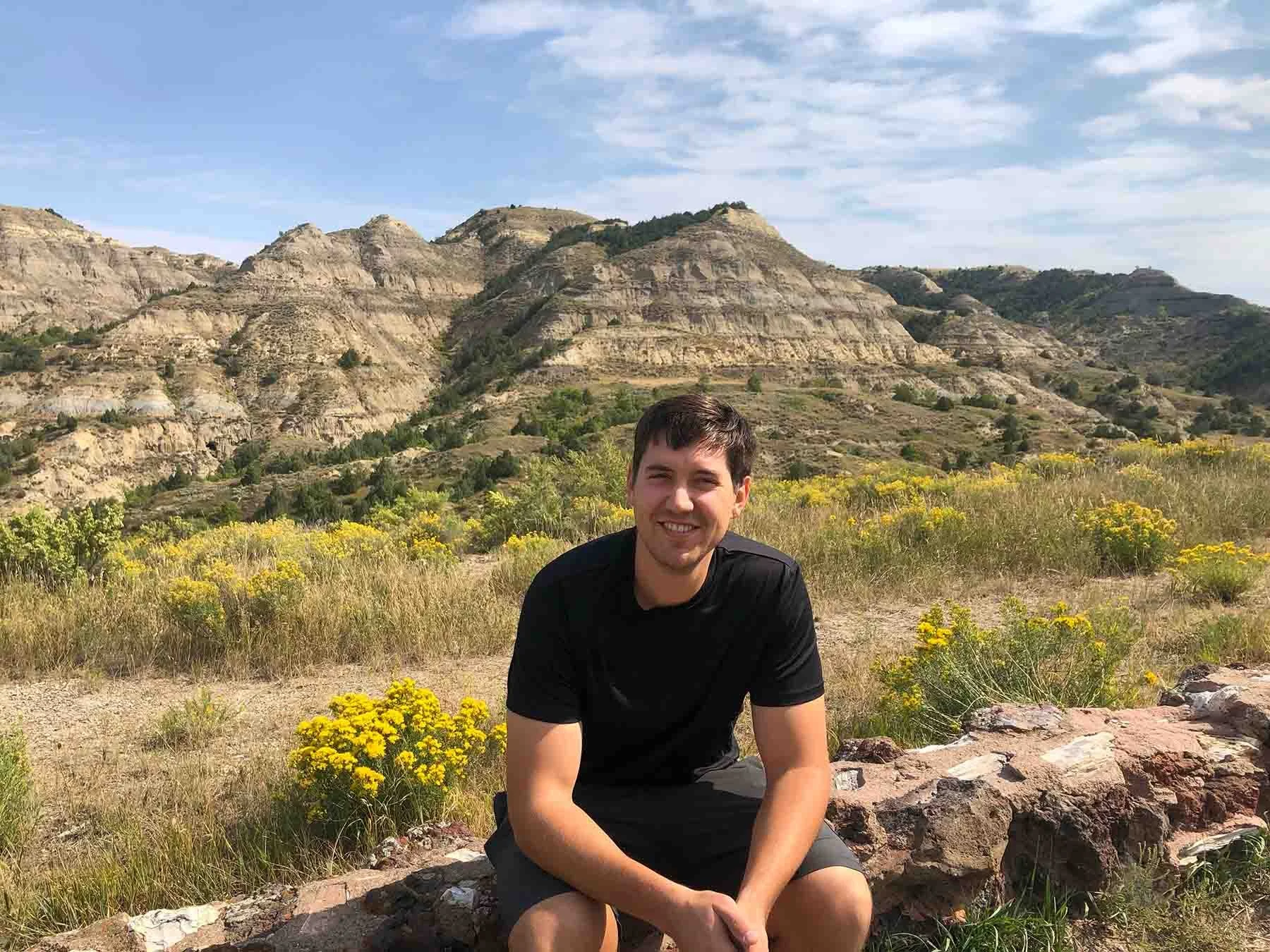
Theology student and future pastor Mike Hutchinson explores why faith is more than belief, how Christianity defines it, and why understanding faith requires history, doctrine, and a deeper look at what it means to be human.
Faith is one of the most common words in our vocabulary, yet it's also one of the least defined. Depending on who you ask, faith is belief, trust, hope, optimism, religion, or simply something deeply personal. Those definitions often overlap, but they don't always mean the same thing.
Mike Hutchinson, a theology student, pastor-in-training, and host of The True Presbyterian podcast, explores how Christianity has historically defined faith and why that definition reaches far beyond simply believing something is true.
Along the way, he explains the differences between religion and spirituality, introduces key ideas from Reformed theology, and examines how philosophy, history, and even secular thought continue to shape the way we understand faith today.
Whether you're a Christian, spiritually curious, or simply interested in how different worldviews approach life's biggest questions, this episode offers historical context and a richer understanding of one of humanity's oldest ideas.
Listen to Mike Hutchinson’s Interview
Watch Mike Hutchinson’s Interview
What It Means to Be Human Through a Christian Lens
Mike Hutchinson: Being human means being made in the image of God. It means being fallen and fallible on this side of Eden, where we live. It means having incredible resilience. It means having incredible compassion. It means having the ability to have a great deal of hope.
It also means having the capacity for indescribable evil, as I think history amply proves. But it also means that we have an unbelievable potential for some of the most amazing acts of kindness and compassion that you can imagine. So that's what being human means.
Brandi Fleck: Welcome to the Human Amplified podcast, where we believe transforming ourselves can positively transform society.
Your host, Brandi Fleck, has the honor of exploring the human condition with real people who bravely share their personal stories of adversity, healing, joy, and more.
If you're seeking empowerment, strength, and inspiration, listen in to engage and explore tough topics that help us humanize one another, understand ourselves better, spread love, and connect.
Mike Hutchinson: Nobody ever brings up the evil.
Brandi Fleck: I think, yeah.
Mike Hutchinson: Sometimes you have to stare the evil right in the face if you want to deal with reality.
Brandi Fleck: Our guest today, Mike Hutchinson, affectionately known as Hutch, is a student of Christian Reformed theology and host of the True Presbyterian podcast. He lives in Chattanooga, Tennessee, with his wife, by way of South Carolina. He's been through seminary and is studying to become ordained later this year.
This is part one of a two-part series with Hutch, where he really dives deep to explore what faith is from different perspectives, including that of the theologian, the pastor, the secularist, and himself personally.
In part one, we focus on a historical and scholarly foundation, and in part two, we get more personal and introspective.
Overall, we explore what faith is, how it can be elusive at times, how to have it, why it's important, and how it shapes the human condition and society.
To be more specific, in part one today, we get to know Hutch's journey into becoming a pastor, what seminary was like, the difference between religion and spirituality, the types of non-Christian and Christian faith, a light history of Reformed Presbyterians, what "Reformed" means, and deep technical definitions of faith based on an explanation of doctrine.
We wrap up part one with Hutch making the argument that you can't make a distinction between secularity and spirituality, and I cannot wait to hear what you guys think about it.
From this episode, you'll learn that defining terms and having the context of history is really important in understanding faith from a Christian theological perspective.
Underneath the scholarly discussion, you'll learn that we have a primary purpose in life according to Christian doctrine. Through Hutch's example and in the show notes, you'll get an impressive list of reading if you wish to study further.
Somewhat related, you guys should know that last week we had on a guest who talked about escaping spiritual abuse, so you might be interested in hearing her story. She sustained it for the first 30 years of her life, and that's Episode 50, so go check that out too.
Now let's hear from Hutch.
Well, Hutch, welcome to the show today. How are you doing?
Mike Hutchinson: I am doing okay. Life is what life is. I'm standing upright and breathing, which is a great start, so I'll take it.
Brandi Fleck: Awesome. Well, thank you so much for coming on the show today. I'm excited that we're going to talk about faith, and we're going to really dive into some deep aspects of it.
Mike Hutchinson: I think so.
Becoming a Pastor and Studying Reformed Theology
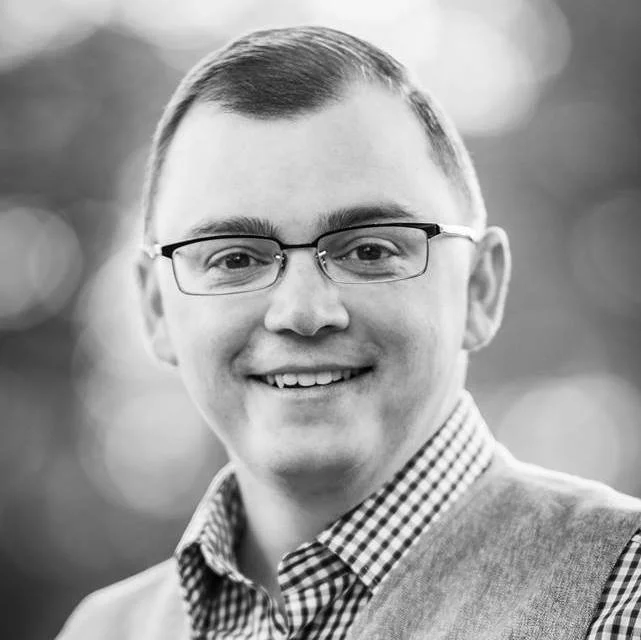
Brandi Fleck: Before we do that, please tell us a little bit more about who you are and what you do.
Mike Hutchinson: I am Mike Hutchinson. I live with my wife in the city of Chattanooga, Tennessee. I only halfway jokingly say that I've been exiled here from my home in the great state of South Carolina. We moved here about five years ago.
I am a student of Christian theology, particularly in the Reformation, or Reformed, stream. I'm also the host of a podcast called The True Presbyterian. It's an educational show, primarily. We're trying to introduce folks to Reformed theology, which can be a little difficult for people to wade into sometimes. There's a lot of material that's out there, so I wanted to try and create the lowest barrier to entry that I possibly could.
I'm trying to do that by interviewing some of the best theologians that I can get my hands on. That's been relatively successful so far.
Mike Hutchinson: I'm also a ministerial candidate in the Presbyterian Church. I'm a son, I'm a husband, I am an inveterate reader. I'm sitting in a room with about 7,000 books right now. I'm also a completely unapologetic fan of Bob Seger and the Silver Bullet Band.
Brandi Fleck: Awesome, awesome. Well, what part of South Carolina are you from? Because I am also a transplant in Tennessee by way of South Carolina, so that's really cool.
Mike Hutchinson: The family is all originally from Marion County, so we're all from down around Nichols and Mullins and Marion and that area. But I grew up in the panhandle of Lancaster County, up near Charlotte.
Brandi Fleck: Okay.
Mike Hutchinson: So I grew up there, went to high school there, and that's where my family is now. But historically, the Hutchinsons have always been down in the Pee Dee region.
Brandi Fleck: Gotcha, gotcha. I grew up in Greenville, so Upstate too. But that is where we moved to Chattanooga from.
Mike Hutchinson: That's where I went to seminary.
Brandi Fleck: Was it Greenville Presbyterian Theological Seminary?
Mike Hutchinson: Wow.
Brandi Fleck: Okay, well it's a really small world.
Mike Hutchinson: Yeah, it is. I will say, in fairness, that I don't miss the traffic on Woodruff Road.
Brandi Fleck: Yeah, yeah, for sure. Well, I'm really excited to have you here today because throughout the course of this show, many people have stated that faith is a huge source of strength for them when they're struggling, and especially when they're going through trauma. So we're definitely going to explore faith from several different angles, but let's just get to know you a little bit more. How did you decide to become a pastor, and how do theology and personal faith tie into that decision for you?
Mike Hutchinson: Okay, well, on the pastor side of things, I'll tell a little story that's kind of historic. It doesn't necessarily connect directly to my life, although it does tangentially in some ways.
So when John Calvin had to flee France early on in the Reformation, when he first came to Reformed convictions, he wound up passing through the city of Geneva in Switzerland. He's not intending to stay there for more than a single night. He's on his way to Strasbourg, but there is this wild redheaded maniac of a reformer in the city of Geneva. The guy's name is William Farel, and he hears that this young, brilliant, very capable scholar named John Calvin is staying in the city.
Now Calvin's 22 years old. He's written a major work of theology already. So Farel goes to see him where he's staying and tries to convince him to stay in Geneva and help him with his work of Reformation. Calvin refuses. He says, "I don't want to be here. This isn't what I'm after. I just want to be in my study with my books and write and do that sort of thing, and go on to the city of Strasbourg."
Farel's response was, "May God curse both you and your studies if you do not join me in the work God has for you."
The joke in the Reformed world is that we call that being Fareled. I kind of felt like I got Fareled into this job.
I got out of the Army and moved back home. I was hanging out at a coffee shop in Pineville, North Carolina, called The Well. Little did I know at the time that it was actually The Well of Hope Lutheran Church. They were renting this building and decided that since we're paying the inordinate amount of money that we're paying for rent, we might as well use it more than three hours a week. So they turned it into a coffee shop six nights a week, and the church met there for worship on Sunday.
I got to be really good friends with the guy who was the pastor there. There was a lot of stuff that had gone on in my life leading up to that point, but eventually he and I were having a conversation, and I asked him, "So what's the deal with this Jesus guy? What matters? Is it the person, or is it the words, or is it the works? How does that all work?"
He encouraged me to go back and read the New Testament with new eyes. That's what I did.
If I had to point to a moment where my life really was extraordinarily altered, it would be when I was reading the book of Romans. When I got to Romans 2:4, where it says, "It's the kindness of God that's meant to lead you to repentance," for a guy that came out of a pretty hardcore independent fundamental, holy-rolling, pew-jumping Baptist background, that was kind of a shock text. The idea that it was God's kindness that was meant to lead me to repentance was really shocking.
If I had to point to a moment in time where I'd say, "Yeah, that's when I became a Christian. That's when the heart of stone was removed and the heart of flesh was given by God," that was probably it. I was hooked.
From that point forward, it was nonstop study and trying to understand theology for me. The folks at the church identified some gifts in me. They saw that I was capable at teaching and studying, and even at preaching, because I got the opportunity to do that some. They kind of Fareled me. I was getting this constant, "You really need to go to seminary."
I was like, "Yeah, but I really don't want to go to seminary. This is not what I really want to do."
Part of that is that, and again I say this somewhat tongue-in-cheek, but only somewhat, I had read the New Testament, and the Pharisees were paid religious professionals, effectively. It was paid religious professionals who killed Jesus. So I wasn't real interested in being a paid religious professional.
I was working in the restaurant business, and I was successful at that. I was good at it, and I was making good money at it. But over time, what happened was that I realized I was only happy when I was preaching. The work in the restaurant was nice, don't get me wrong, and I appreciated the paycheck that it offered, but it didn't make me happy. Preaching did.
We talk about the difference between an external and an internal call to pastoral ministry. The man who's called to work as a pastor needs to have a real deep sense of his own internal call to this work. Then the church as well needs to be able to speak from outside and say, "Yes, we believe that this person is called and capable and has the gifts necessary."
For me, it was kind of backwards. The external call happened first, where the church saw these gifts in me. Then I realized there was a sense of internal call there as well.
One of the things that really changed whether or not to go to seminary for me was reading a book by a guy named John Piper titled Brothers, We Are Not Professionals. That was the antidote I needed to the idea that being a pastor meant you were going to have to be this paid religious professional.
The pastorate is a lot of things, but we are not professionals the way that lawyers or doctors are. I'm not a professional Christian. That's a really different way of approaching things.
That was the real turning point. I had just met my now-wife and was thinking about going to seminary. I realized two things. One, I was looking at going to seminary in Minneapolis, and there was just no way I was moving back north of the Mason-Dixon Line. I lived in upstate New York when I was stationed there in the Army, and it was God-awful. There was no way I was going back.
I thought, "All right, I can't do this. I can't go back to that cold. At least I can't go back to that cold without her."
So we got engaged, and we were looking around. I stumbled across the website for Greenville Presbyterian Theological Seminary. I had already come to Presbyterian and Reformed convictions, so it was very providential. It was very hand in glove for me to wind up there.
We got married, went on our honeymoon, and started seminary all in the space of three weeks.
Brandi Fleck: Wow. Okay.
Mike Hutchinson: Yeah. If I had that to do over again, I'd do it very differently. I would have at least a year with my wife before seminary started. That would have been much better.
What Seminary Is Really Like
Brandi Fleck: Gotcha. What was seminary like?
Mike Hutchinson: It's going to depend on where you go to seminary. For me, seminary was rather intense.
Greenville is a very old-school seminary, and I mean that in the technical sense and in kind of a metaphorical sense. There is a controversy in Presbyterian history back in 1837 called the Old School–New School Division, and Greenville Seminary is on the Old School side of that.
It's also old-school in the sense that it's the sort of education you would have gotten 200 years ago. A lot of seminaries now don't require Biblical languages, you can take them as an elective if you want to. Where I went, most seminary programs are three years. At Greenville, it's four because we do a propedeutic, or foundations, year.
One of the things that's happened in the last 50 years is you've got guys who are coming into seminary who did their undergraduate degree in the sciences or engineering rather than in the arts. So they need that first year to learn things like logic and rhetoric.
Then we had to do three years of Hebrew, three years of Greek. I also took theological German as well as Latin. I had to do all of the classes on systematic theology, Old Testament, New Testament, history of redemption, and church history. The program at Greenville is 122 credit hours, so it's an intense program.
But on the flip side of that, you get really good at the languages. You either sink or swim. By the end of your third year, you ought to be able to sit down to the Greek New Testament and just go. Maybe you'll be able to do that with the Hebrew. That's a little tougher, though, because Hebrew's written backwards. It looks like somebody dipped a drunk chicken's feet in ink and let it wander across a page. Hebrew was never my strength. I have to stay on top of it every day if I don't want to lose it. But seminary was intense. It's a great education.
Brandi Fleck: It sounds intense. Right now, our listeners can know you have a strong theological background.
Mike Hutchinson: Well, I hope so. I don't know. They might disagree.
Brandi Fleck: All right. Well, let's create a foundation of understanding before we dig into the big topic, because we have a range of spiritual and religious beliefs among our listeners of this show.
Religion vs. Spirituality: What's the Difference?
To you, what is the difference between religion and spirituality? Do the two have to be mutually exclusive?
Mike Hutchinson: That's actually a very insightful question.
The answer to that is really going to depend on whether or not you have a hard definition or a soft definition of either term. Whether you have a hard or soft definition of religion, or whether you have a hard or soft definition of spirituality.
In the U.S., what's happened in the last 25 or 30 years is we've seen the rise of what are called the "nones." When various studies are done on the state of religion in the United States, these are people who describe themselves as either having no particular religious affiliation, or they describe themselves as being spiritual but not religious. That's a really, really broad category of people.
For the folks specifically who call themselves spiritual but not religious, usually what's meant by that is that the elements of a religious worldview are present in a significant way, but they don't have the attachment to a sort of institutional structure.
The other piece of that puzzle is some work that was done by a sociologist named Christian Smith in 2006. He talks about moralistic therapeutic deism as the new civil religion in the United States, and I think he's onto something there.
If you were to ask the man on the street, or to be fair, his study started with Christian young people, so this is not something that exists simply outside the church. It exists within the church too, and that's actually a problem for us.
The idea behind moralistic therapeutic deism, there are really five central things.
One is God exists and watches over humanity.
Second, God wants people to be good, and He wants people to be nice.
Third would be that the goal of life is to feel good and to be happy.
Fourth would be that God doesn't really need to be called on, or God doesn't need to be dealt with or interacted with in any sort of way unless you have a problem. Then that's when you need to have some sort of interaction with the divine.
The fifth point of moralistic therapeutic deism is that good people go to heaven. Nobody goes to hell except for maybe Adolf Hitler, Joseph Stalin, and your crazy ex-boyfriend.
That's kind of the central tenets of moralistic therapeutic deism, and that's really widespread.
In a different sense than thinking of spirituality as something that's not attached to an institutional religious structure and thinking of religion as something that's more rigid, what I would say is that religion is the larger system of doctrine, the larger system of belief, and then spirituality is how that doctrine actually gets put into practice.
What you believe needs to be consonant with how you believe, if that makes sense.
Brandi Fleck: Okay.
Mike Hutchinson: I would say, do they have to be mutually exclusive? No. But that's also really going to depend on how you're defining your terms from the outset. They don't have to be mutually exclusive, but very often they are.
Brandi Fleck: Okay. Thank you for that, because I was just really curious about what you were going to say there, and that was really helpful.
As you have mentioned, and we are coming from a Christian, specifically a Reformed Presbyterian perspective, but do you have to be a Christian to have faith?
Mike Hutchinson: I imagine your listeners are going to get really tired of hearing me say this throughout this interview, but it's all going to depend on what you mean by faith. Defining terms is super important.
My answer would be yes and no.
No, you don't need to be a Christian to have faith in the most general sense of the word. Faith in that sense would be something like a conviction based on reliable testimony, including trust.
People have faith in all sorts of things in that sense. In that sense, faith is, we might say, nothing more than assent to a particular proposition.
In that regard, yeah, people have faith all the time.
From a Christian standpoint, yes, you do need to be a Christian to have faith in the Christian sense of faith.
Brandi Fleck: Okay.
Mike Hutchinson: We would distinguish within the Christian world between four types of faith.
There's a temporary faith, where Johnny shows up to the local revival meeting and he gets religion, walks the aisle, and boo-hoos at the altar, then never sets foot back in the church. His life never changes. He still goes home and dogs his wife. Nothing in this guy's life is altered.
We would refer to that as temporary faith. He seemed like he had faith, but there's no evidence of it.
The parable that Jesus tells in the Gospels is the parable of the soils. That's the seed that's spread on soil that goes down, hits rock, and immediately dies out. It doesn't go anywhere.
Then we would also talk about a sort of historical faith, where you'll meet people who really know Christian doctrine very well and can explain it in a very profound way. They would have assent to a certain amount of the historicity of the Old and New Testaments. That's going to

differ scholar to scholar, one might say. But they don't actually have faith. It's just a mere sort of intellectual knowledge.
Then there's saving faith, and that's what we usually talk about when we're talking about faith in Christianity.
The answer to your question is yes and no. Sure, you can have faith without being a Christian, but when we're talking about faith in the narrowly Christian sense, no.
The faith that you have might be temporary or historical or that sort of thing. That's a needle that has to be threaded.
Reformed Theology and Presbyterian Beliefs Explained
Brandi Fleck: Real quick, can you explain to us what a Reformed Presbyterian is?
Mike Hutchinson: Sure.
There are kind of two pieces to that puzzle.
The first piece is that there is a denomination called the Reformed Presbyterians. You'll find them in Scotland and in Ireland and here in the U.S. and some other places. Here it's the Reformed Presbyterian Church of North America. They are descended from a group of Presbyterians in Scotland in the 17th century who were called the Covenanters.
They are a very interesting group of people. I have a great deal in common with them. I share a lot of their convictions. They come from a very, very unique time in history.
If your listeners are interested in reading about a particular period of church history, I'd recommend you read up on the Covenanters because there was a time during their existence that was known as the Killing Times, where over 15,000 Covenanters were killed in the space of a very short period of time during the Wars of Religion in Scotland, when the English nation was trying to enforce episcopacy on the Church of Scotland, and they refused. They just weren't having it.
Having a Bible and a copy of the Psalms for singing in your home at that point in time was enough for the British troops to just kill you. That was the Killing Times.
More often, when I speak of this, where my convictions are is that I would say that I am Reformed and Presbyterian. There are two pieces of that that kind of go together.
Reformed would refer to a particular body of doctrine that was developed in the Reformation period that traces itself back to guys like Martin Bucer and Heinrich Bullinger and John Calvin and Ulrich Zwingli. It's distinct from the Lutheran Reformation that begins in 1517.
On the European continent, you will find these referred to specifically as Reformed churches. If you're in Germany, you'll see it's the Evangelisch-Reformierte Kirche. If you're in the Netherlands, it's the Hervormde Kerk or it's the Gereformeerde Gemeenten.
That same body of doctrine is brought to Scotland by a man named John Knox, who most of your listeners will probably be familiar with. Doctrinally, he didn't have major differences with Bullinger or Zwingli or Calvin or Bucer, but when it lands in Scotland, that movement gets called Presbyterianism based on the form of church government.
We share the same body of doctrine with our Continental brothers. We share the same form of church government with our Continental brothers, but for some reason, historically, that I cannot figure out for the life of me, we're called Reformed on the European continent and we're called Presbyterians in Scotland.
When I say I am Reformed and Presbyterian, what I mean is that I subscribe, or would sign my name, we might say, to the Westminster Confession of Faith and Larger and Shorter Catechisms that were produced in 1647.
I don't simply embrace those as the confession of my church, that it's my church's confession of faith. I embrace those very much as my confession of faith, and that's what I believe.
That's the beautiful thing about being Presbyterian. When people ask you, "What do you believe?" you've got a book you can just hand right to them. You don't have to show up and wonder, "What do these people believe?" or go chase down Pastor Johnny and find out what Pastor Johnny believes. We've got a written summary of our doctrine that you can go and look at.
Brandi Fleck: Okay.
Mike Hutchinson: I am Reformed in doctrine, Presbyterian in church government.
What Faith Is According to Christian Theology
Brandi Fleck: Okay. Well, now let's dive into the faith part.
It's always been hard for me to describe faith because it seems so intangible. How do you define or describe faith? I know you said definitions are important, so here's your chance.
Mike Hutchinson: This answer is going to take a second because I've got to lay a certain amount of groundwork. For your listeners, hang with me. I promise I'm going to get there. It's going to take me a minute, though.
I just mentioned the Westminster Standards. That's the Westminster Confession of Faith and the Larger and Shorter Catechisms.
When the Westminster Shorter Catechism begins, a catechism is nothing more than a series of questions and answers that are used to instruct people in the faith.
The opening question of the Westminster Shorter Catechism might be one of the most famous in history: "What is the chief end of man?" Some of your listeners will have encountered that maybe in reading Henry David Thoreau or some others.
The answer to the question is that man's chief end is to glorify God and enjoy Him forever.
The second question of the catechism is, "What rule hath God given to direct us how we may glorify and enjoy Him?"
The answer to that question is, "The Word of God, which is contained in the Old and New Testaments, is the only rule to direct us how we may glorify and enjoy Him."
There's sort of two things we can take from that in summary.
One, man has a primary purpose in life. That's what the catechism is talking about when it uses the phrase "chief end." What is mankind's primary purpose? It's to glorify God and enjoy Him forever.
Then the way that we discover how we are to glorify God and enjoy Him forever is that we discover that purpose in God's Word.
Now you and I and everyone else listening to this, we're all downstream of Genesis chapter 3. Everybody's looking for this high point in history. It's behind us, and we all just have to deal with it. The high point for us is a long time ago, and everything else is just downhill.
When Adam is created together with Eve prior to the Fall in Genesis 3, he's created in what we would refer to as a covenant of works. A covenant is nothing more than an agreement between two parties. Think of it almost like a contract.
The covenant of works was this agreement that God had entered into with Adam, and the conditions of the covenant on Adam's side were perfect, perpetual, personal obedience.
Adam's job is pretty straightforward. He needs to obey God's law perfectly. He needs to obey it perpetually, and he needs to obey it personally. He was in a place where he could do that in Genesis chapter 2.
But then everything goes sideways, and Adam and Eve fall, and the world that we know now begins in this really particular way.
On the other side of the Fall, God enters into another covenant with Adam as a representative of humankind, and that's the covenant of grace, where life and salvation are now offered freely to sinners. The conditions of the covenant, life and salvation, are offered freely to sinners, and what's required of them is faith in Christ so that they may be saved.
If I were looking to define faith, because that gives us a sort of historical narrative context for where we are and the reality that we find ourselves in, I would go to John chapter 1, verses 11 and 12.
Speaking of Christ's incarnation, that's who the "He" is at the beginning of this verse. It says, "He," or that is Christ, "came to His own, but His own people did not receive Him. But to all who did receive Him, who believed in His name, He gave the right," or the authority, we might say, "or the power to become children of God."
Faith in that particular passage is defined as receiving Christ.
Within Christian theology, within the narrow bounds that are defined by that, I would say that faith is an act of the soul by which it receives God as our highest good, and it receives Christ as the only mediator between God and humanity.
Apart from this faith, we are not able to glorify God and enjoy Him forever, which takes us back around to Westminster Shorter Catechism Question and Answer One, where I started this.
If you go to Psalm 37:7, faith is also described as resting. There is this idea of rest that's involved in faith.
Psalm 37:7 says, "Rest in the Lord and wait patiently for Him."
There's this sense that faith is not simply receiving. It's also resting. There is a certain amount of trust, you might say.
Historically, if you move into a more systematic presentation of theology, the Reformed and the Lutherans together have defined faith as having three constituent elements.
Notitia, which is knowledge. You have to know something in order to have faith in it. It makes no sense to say, "I have faith that the electricity is going to come on," if you don't know what electricity is.
Brandi Fleck: Right.
Mike Hutchinson: Then there's assensus, which would be assent, meaning not just that I believe this, but I agree that these things are true.
Then there is fiducia, which is faith resting.
It would be like, "I have faith that this chair is going to hold me up," and the reason that you know that is because my rear end is resting in it right now.
Brandi Fleck: Okay. That makes sense.
Mike Hutchinson: Those are sort of the pieces of the puzzle. When I talk about faith from a narrowly Christian standpoint, that's what I'm talking about.
Brandi Fleck: Okay. The word "surrender" sort of comes to mind for me. Do you think that's synonymous with resting?
Mike Hutchinson: That is certainly an aspect of it.
Brandi Fleck: Okay.
Mike Hutchinson: We could be here for a couple of hours talking about all of the aspects that come together in faith. Surrender is certainly part of it.
I think that would definitely go to fiducia. That would go to resting because it's a recognition that there are some things that are just beyond our power.
If any of your listeners are members of Alcoholics Anonymous, and please don't out yourselves, please, Anonymous, don't violate the rules, one of the things that they will talk about is that they cannot overcome this issue apart from the help of the god of their understanding.
There is a certain surrender that's involved there because it's a surrender to the reality that I understand that I can't fix this. That is part and parcel of faith.
Comparing Faith in Religious and Non-Religious Contexts
Brandi Fleck: Okay. Now I guess this might be a little complex, and I'm not sure if we already covered some of this, but is there a difference in the definition or concept of faith depending on whether humanity is coming from a theological perspective, a pastor's perspective, or from a personal experience, whether spiritual or secular? Do all these perspectives connect?
Mike Hutchinson: Another insightful and difficult question.
Again, just kind of bear with me. There is a certain amount of overlap between those four categories, so I think that would probably be the best place to start.
The answer that you give regarding faith is going to be slightly different from a secular point of view because there are enough variations within a largely secular worldview that it would be hard to nail down particularly. I'm just going to have to deal with secularism really generally. I can't dive too deep on specifics because then someone's going to listen to this and go, "Well, that's not what I believe, and I consider myself a secularist." There's a really wide perspective and a really widespread there.
The theological and the pastoral and the personal, though, those are really intertwined very, very powerfully, especially in my own life and for the lives of others as well.
I'm a theologian by trade. I'm a pastor in training. I'm, by God's grace, hopefully going to be a better Christian tomorrow than I was today. Although some days I'm not the guy that you want to talk to about this stuff because I've got a very, very limited amount of money in the emotional bank account, so you've got to be kind of careful how you spend it.
If you call me at 2:00 a.m., somebody needs to be either dead or dying, or about to be dead, because otherwise we're going to have a problem. I want my sleep. If you're looking for me to be the nice, cuddly, fuzzy guy that you need in that pastoral situation at 2:00 a.m., you're probably going to be disappointed.
Those three things are related, so I can't separate, in my own life, approaching faith theologically, pastorally, and personally because all of them are involved in my life.
By the same token, the theological definition that I provided a little bit ago is the definition that informs my personal faith. It's the definition that informs my pastoral labors. It's the definition that has come from my years now of studying theology. That's kind of where I would land there.
Now, where it comes to the more broadly spiritual, we'd say our spiritual-but-not-religious friends or our friends who are secular, I would say this:
I don't think that you can make the hard and fast division between the spiritual and secular as easily as most people want to.
I think that's true from a number of viewpoints. You can certainly see it historically. That's what's behind a lot of Chapter 4 of Mark C. Taylor's book After God, which was published by the University of Chicago Press, I think, six or seven years ago. He spends an entire chapter of that book really talking about what he calls religious secularity.
You can find the same idea present in the work of Friedrich Nietzsche when he wrote his little essay titled The Madman, which is amazing. I actually highly recommend that people read that for themselves and don't just get it from the 13-year-old atheists on 4chan because they don't understand what they've read.
Brandi Fleck: Gotcha.
Mike Hutchinson: That's where the famous quote "God is dead" came from. It comes from Nietzsche's essay The Madman. Nietzsche, contrary to popular belief, doesn't say that in a good way.
The story is this: this madman is roaming through this town looking for God, and the people in this marketplace start to mock him. "Oh, did He wander away like a child? Is He lost and can't find His way home?"
It says, "Then the madman leapt into the center of them with a lantern in his hand and said, 'I'll tell you where God is. God is dead, and we have killed Him. What sponge or soap is there that can be used to blot away this horrendous crime?'"
Nietzsche's view is that God being dead was actually really terrible, and that what was going to come downstream of that was nothing more than the will to power, and that the 20th century would be bathed in blood.
Let's be fair, Nietzsche wasn't wrong.
Brandi Fleck: Yeah.
Mike Hutchinson: All you have to do is look at the history of the 20th century to see that.
What's behind Nietzsche there, what's going on, is that he's pointing out that the state that Christianity found itself in in 19th-century Germany was such that it had sown the seeds of its own destruction, in his opinion.
Secularity is really the outcome of Protestant Christianity. It's the same thing that Dr. Charles Taylor talks about in his book A Secular Age. Carl Jung also tackles this in his work Aion.
This is really everywhere that you look. The idea that you can make this hard and fast distinction between secularity and spirituality, I don't think, can really stand up to a great deal of scrutiny because secularity is the outgrowth of the Enlightenment, that period that runs from 1687 to about 1800.
The Enlightenment itself is the product of the Protestant Reformation. In reality, despite all of its efforts, and it's made a lot of efforts, secularism has never really been able to escape its Christian roots, and I don't think it can.
It relies so much on the Christian underpinnings that have gone before it for 2,000 years that it really can't get away from them.
Faith, Art, and the Search for Meaning
I think that connection can be seen even apart from history. I think you can see it in art. It's incredibly difficult to produce truly secular art, even for someone who would describe themselves as a secularist.
You can see that, for example, in Pablo Picasso's painting Guernica. It's one of the most disturbing and deeply moving paintings that I've ever seen. He painted it in the aftermath of the firebombing of the city of Guernica during the Spanish Civil War.
If you can stand in front of Guernica and not be moved, there is something deeply wrong with you.
You can see it in Van Gogh, in his painting Starry Night Over the Rhône. That's not The Starry Night that most people think of when they hear Starry Night. It's not the one that everyone recognizes. It's a different painting entirely.
Brandi Fleck: Okay.
Mike Hutchinson: You can see it in Van Gogh's other painting, The Hospital at Arles. You can see it in literature. It shows up in the works of Yuri Trifonov, particularly in his book The House on the Embankment.
You can also see it in the work of Yuri Slezkine. He wrote a book called The House of Government about five years ago that was about the shape and state of things after the Russian Revolution.
Two things come out of that. The central thesis of his book, that I think is more than amply proven, is that the secularism that was married to the Marxist-Leninism of the Russian Revolution was actually a millennial religious cult, and what they were trying to do was bring the new heavens to earth by their own efforts.
Even there, in all of this literature, art, music, wherever you go, it's really difficult to escape the spiritual. You can't get away from it. It's always there, and it's always lurking in the background.
Brandi Fleck: Okay. That's my answer.
Guys, this episode was jam-packed with information on faith. Remember to come back next week to finish out this two-part series on faith with Hutch.
Next week we'll be shifting focus from the scholarly aspect of faith, although that's still there, but we'll be shifting focus to providing context for why people rely on faith in hard times.
We also get personal. I ask Hutch to give us examples from his personal life of times he's been short on faith and also when he's only had faith to rely on. He lets us know, so don't miss it.
Join the conversation!
Feel free to share your own experience and let me know if you have any questions in the comments.
Related Posts









Hi, I’m the founder of Human Amplified. I’m Brandi Fleck, a recognized communications and interviewing expert, a writer, an artist, and a private practice, certified trauma-informed life coach and Reiki healer. No matter how you interact with me, I help you tell and change your story so you can feel more like yourself. So welcome!
Find More on the Blog
Topic
- ADHD
- AI
- Atlanta
- Black and BIPOC
- DIY
- FAQ
- LGBTQIA plus
- Los Angeles
- Nashville
- Seattle
- St Louis
- St. Louis
- UFOS/UAPs/ETs
- abuse
- accountability
- addiction and recovery
- adoption
- affirmations
- afterlife
- altered state
- angels
- animals
- anxiety management
- art
- astrology
- atlanta
- attachment
- awakening
- beauty
- behind the scenes
- being human
- body image
- body work
- boundaries
- brandi fleck
- breathwork
- bullying
- burn out
- burnout
- cancer
- career
- caretaking
- chakras
- channeled
- clarity-dive
- clarity-practice
- clarity-primer
- clean products
- coach
- codependency
Recent Blog Posts

Visit the Full Podcast Audio Archive

Affiliate