Clergy Burnout and the Hidden Cost of Caring
Interview By Brandi Fleck
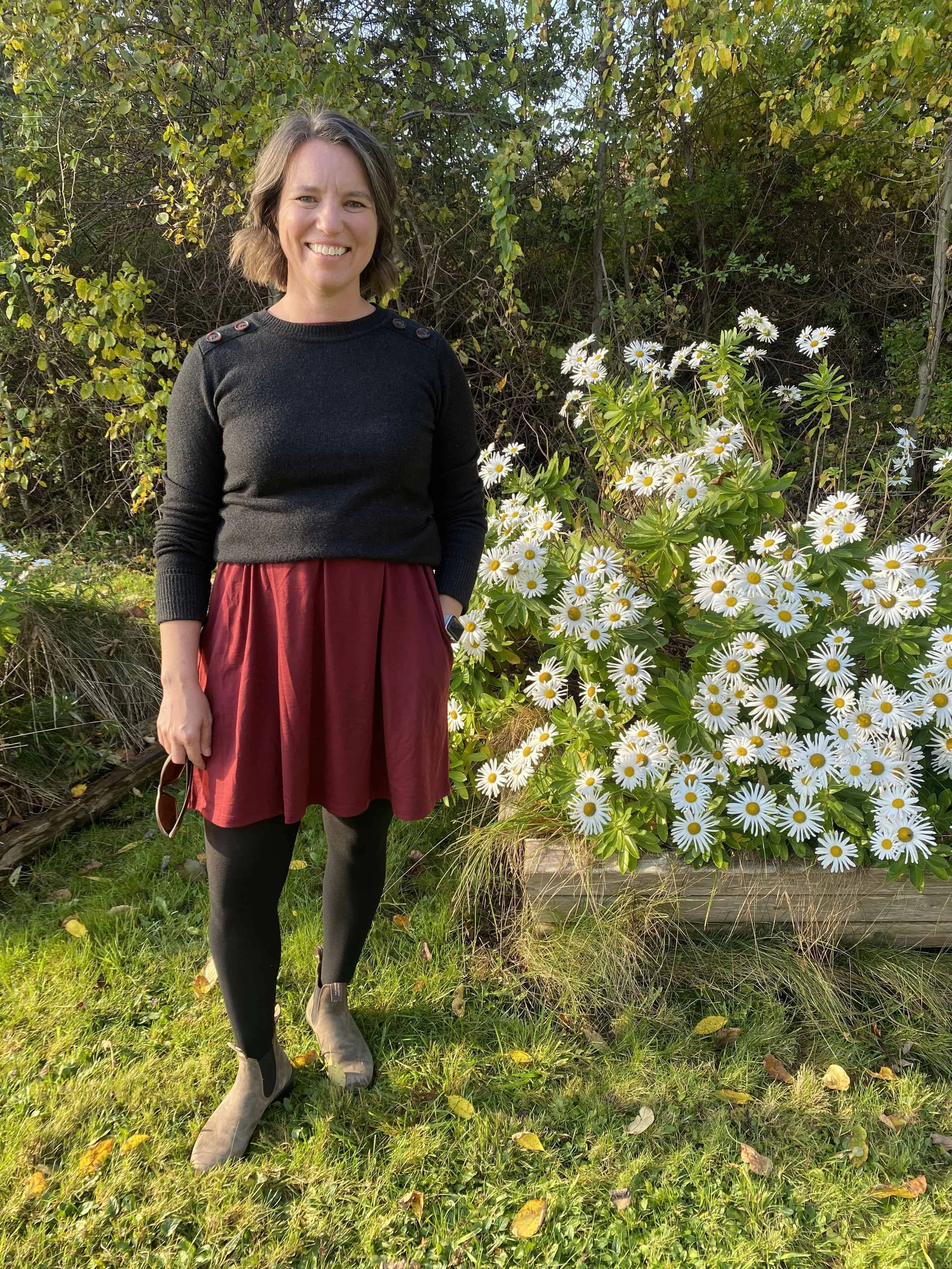
Stephanie Dunn shares what clergy burnout really looks like, why it’s rising, and how helpers can rebuild safety, purpose, and sustainable ways of caring.
Burnout doesn’t usually arrive all at once.
It builds slowly, in the spaces no one sees. The extra call you take on your day off. The expectations that are never clearly defined but always feel too high. The quiet pressure to keep showing up, no matter what it costs you.
For many clergy women, and helpers more broadly, burnout isn’t about the big, visible moments. It’s the accumulation of everything beneath the surface.
In this conversation, Stephanie Dunn shares what burnout actually is, why it’s different from compassion fatigue, and what it really takes to recover. From psychological safety to agency to the loss of self that can happen along the way, this is a grounded look at what it means to care for others without losing yourself.
Listen to Stephanie Dunn’s Interview
Watch Stephanie Dunn’s Interview
Sacred Worth and the Meaning of Being Human
Brandi Fleck: Stephanie, a question I ask every guest who comes on the show is, what does being human mean to you?
Stephanie Dunn: I love that question, and it feels like you could write a dissertation about what that means. I think the way I understand it is, it's hard for me to separate it from my lens, my faith lens. That's just that every human has sacred worth and is created in God's image. So we are all, every human. To be human is to have inherent worth and value.
Brandi Fleck: I love that. All right, everybody, let's welcome to the show today, Stephanie Dunn. Stephanie, I'm so excited for you to be here today. I've been looking forward to this conversation, so thank you. And how are you?
Stephanie Dunn: I'm good. I'm really good. It's Monday, the weather is perfect here in Nashville, and so life feels good today.
Brandi Fleck: Good. So before we get into our full discussion, will you please tell listeners a little bit about who you are and what you do?
Stephanie Dunn: I am a United Methodist minister, and I've served in local churches for about 15 years before stepping away. I spent a couple of years after that thinking about what was going to come next. I had some wandering, both with an O and an A, time of where I would spend. How I would spend my time vocationally after that. Then I stepped into coaching, and I launched my business about a year ago, and it has just been a really beautiful shift for me.
My work mostly is doing one-on-one coaching, group coaching for clergy women addressing burnout. A really fun space that I'm standing in right now, as far as coaching goes, is that I'm a team coach for a research project, which is so fun. So yeah, that's a little bit about me, just the tip of the iceberg. I'm married and have a couple of kids and live close to Nashville's airport. So yeah, that's a little bit about me.
Brandi Fleck: Awesome, awesome. And so tell us a little bit more about your coaching and what inspired you to shift into that.
The Reality of Clergy Burnout and Emotional Labor
Stephanie Dunn: Over this past weekend, I was in a retreat series by the Center for Courage and Renewal, which is Parker Palmer's, one of his projects that started years and years ago. In that work, I found some old notes from 2019, which is probably when I started to sense that there was going to be a shift for me.
It was so interesting because in the note, I had said that I imagined eventually doing something where I could hold space with people and help them to live into their integrity and identify their values and live the life that comes out of that. Coaching was not on my radar at all. I didn't know anything about it.
It was at a Center for Courage and Renewal event that I learned that some of their facilitators also are coaches, and that in many ways, the soul work that they really tap into is coaching. For me, it's holding space for people who have all sorts of questions, big and little, about how they can live lives of integrity and purpose. It's been a good shift.
Brandi Fleck: I love that. And just so our listeners know, we actually met through the International Coaching Federation. We were both there as new members, and it was like, oh, what do you do, what do you do, and then we just sort of met up. So it's been a really fun process getting to know you and having a coaching journey that's at a similar phase.
Stephanie Dunn: Yeah, it's been so rich. So much of my life before coaching happened within a big small circle that is the United Methodist Church, and it has been such a gift to break out of that. You have certainly been one of those gifts. I tell all of my friends, did you know that trauma-informed coaching is a thing? We need more of them.
Brandi Fleck: Yeah, we need a lot of healing, but I do appreciate that. And I've appreciated getting to know you, so that's awesome. You mentioned clergy and coaching, like clergy women with burnout. What is important to you about focusing on clergy women?

Stephanie Dunn: I think that we function, clergy women, not just in our world but in the larger world too, trying to function in systems that were never meant for us. Our systems were put in place at a time before women were in any of these roles, at a time when giving, for a man, a single man especially, to be able to give 100% of himself was never probably reasonable, but it also has become less and less reasonable over time.
It's a community that I know and that I'm familiar with, and that I also have had the experience as a clergy woman in burnout. That particular community, holding space for them feels really natural for me. I love them very much and want for them to be well cared for in a way that is healing and affirming.
Brandi Fleck: Some of our listeners may not know, but can you describe for us what the full role of any clergy person is? Because I think there's a lot that goes into it that we don't see.
Stephanie Dunn: That is such a good question, and it is almost impossible to answer, which is part of what makes it such a great question. Part of what makes it a great job is that, in theory, your unique gifts, skills, and abilities get a chance to shine wherever you are.
Some people are really great preachers, public speakers, and so they can really lean into that. Some people are really good at care, at showing up at hospitals and caring for people. Some are really good at organization. So in theory, each person would be given the opportunity to shine in different areas.
The reality is that for most people, I think they're expected to be all of the things all at the same time with no growth spots. What you see in a weekly worship service is just the tip of the iceberg.
There are some things that are just universally true, I think, for pastors, or at least universal expectations. That's that they attend to a community in a way that cares for the life cycle of a person. So we talk about it from cradle to grave. Being present for officiating at weddings and presiding at funerals and celebrating milestones and walking alongside families and their brief journeys.
As a part of that, I wanted to also be sure to mention this because I think it's important for our context today. As a part of connecting to the community, it includes justice work, showing up for people and communities that are on the margins. That can be particularly challenging in our charged environment.
Brandi Fleck: Yeah, I love that you mentioned that. There are a lot of aspects to this, and the whole community needs to be taken care of spiritually, and not just spiritually. I guess there’s other stuff involved.
Stephanie Dunn: Yeah. One of the most sacred spaces that I’ve ever been able to hold was receiving a phone call to go to someone’s mother’s house who had unexpectedly died overnight. It was in a senior living apartment, and everyone understandably in this space was really disoriented.
I was able to be sort of the neutral party. As coroners were coming in and family members and friends were coming and going, I showed up in a body that looks like a young woman, and that could just be somebody standing in a corner. But I am able to use the sentence, “I am the pastor,” and all of a sudden I have access to helpful information to be able to communicate.
So yeah, it is so much more than 60 minutes on Sunday morning.
Burnout vs Compassion Fatigue: What’s the Difference
Brandi Fleck: Okay, so then this leads into my next question, which is what is burnout? And is it the same thing as compassion fatigue? Because I know I hear that with other helping professions, so what’s there?
Stephanie Dunn: I think that is such a good question because both of those are such important things. I don’t think that they’re the same thing. While compassion fatigue can certainly be a part of it, they can overlap pretty significantly sometimes.
Most of the ministers that I know experience the caring part of their work as the work that gives them the most life. Burnout, at this point, a pretty universally agreed upon understanding is that there is prolonged, regular stress that has not been addressed. So there’s a lack of support and care.
While the distinction between burnout and compassion fatigue can be fuzzy, I see a distinction. Almost every pastor I know has had weeks where they have three or four funerals. Funerals you don’t plan, they just happen. So all of a sudden, you’ve got a funeral on a Saturday, a Tuesday, and a Friday. That’s three additional sermons in addition to a Sunday sermon, and with families.
In the same regard, I don’t know any of those people who haven’t experienced compassion fatigue at the end of that week. Alongside that, there are healthy recovery strategies where somebody can get the rest that they need to recover from their fatigue.
Ashes to Art, are you familiar with them? It’s an organization out of Virginia, and their work is to engage with first responders in creating art as a tool for managing the trauma that they experience in their work. It’s great, great work, and I think that’s a really great model for recovering from compassion fatigue, which feels more immediate, where burnout is much more of a prolonged experience.
Brandi Fleck: Okay, and I love that you just brought up recovery strategies, and rest is really important and actually necessary. So that’s one for fatigue. So you need more than just rest to recover from burnout.
Stephanie Dunn: Yes. Yeah, you do.
To the point about rest, the people who I know and who I work with, they don’t experience burnout because of the 3:00 a.m. emergency phone calls. In my group coaching, we have started talking about it as a form of death by a thousand paper cuts.

So it’s the person that’s annoyed that you’re not working on your day off, or the anonymous criticisms of how your voice sounds in the pulpit, or the unexpected 10 p.m. phone call from the fire alarm malfunctioning.
So it’s all of the sort of, I’m on 24 hours a day, and the expectations are consistently unclear but always too high. That’s where burnout comes from.
Brandi Fleck: Okay, I was curious, and I think you might have just hit on this, but why do clergy women in particular experience it, and how might that be different from someone in a corporate job? If I understand you correctly, it’s being on 24/7 is the root of it.
Why Clergy Women Experience Burnout Differently
Stephanie Dunn: Yeah, for sure, and that’s true for all clergy. I think that clergy women face unique obstacles when it comes to burnout.
First, it’s just the patriarchy. Like I said, we’re working in a system that was not built for us and hasn’t adapted to work for us. Pastors endure a lot of behaviors in workplaces that, in the corporate world, would never be accepted in any other environment.
I don’t know a single clergy woman who hasn’t had a congregant comment on their body. Mostly it’s about weight. I know all of us—oftentimes it’s about what you’re wearing, whether it’s high heels or a sleeveless shirt, not even a spaghetti strap, but just a sleeveless shirt because it’s 95 degrees outside.
So they endure just incredible comments. Even our most well-meaning male colleagues—that’s not their lived experience, so I’m not sure that they can really have a handle on what that feels like and what that experience is like.
We’re in the United Methodist Church. We’re experiencing a very big shift in who we are right now, and the experiences of my female colleagues has been especially hard because they’ve had to navigate things differently than our male colleagues. That has been really hard.
Brandi Fleck: It almost makes me think of a split within a split. There’s lots of fragmentation going on, maybe, even though I think we all know about the main split that has happened.
Okay, so I was going to ask you next, what can clergy women do to heal from burnout, but that seems like such a huge question. Let me just say, I had no idea that people felt so entitled to comment on the bodies of clergy women. Why do you think people feel like it’s okay to do that?
Stephanie Dunn: That’s a really great question, and I don’t have the answer. I think that faith communities. Anybody, in theory, is welcome, and people often show up not as their best selves, which means that they behave and speak in ways that. It’s not a professional environment for most people.
So when they show up, they’re in a different mode than they would be in other places. Imagine it being more like your kitchen table than a conference room table.
Stephanie Dunn: You know, we all have the family members who say things at the kitchen table that we’re like, oh my goodness. They’re members of churches, they’re in faith communities of all different stripes. That’s not to bash on faith communities. It’s good that people have places that they can go when they are broken.
I think that one of the struggles that churches have always had, and I’m assuming all faith communities have had, is that while everybody is welcome here, not all behavior is welcome here. We have not done a very good job of making a distinction between those two things. You can’t treat people that way, even if you’ve had a very bad day.
Brandi Fleck: Right, right. It’s so funny to hear that. That’s such an assumed thing in our world. We teach that to our kids. I say that exact thing to our kids, so that’s very interesting.
Stephanie Dunn: Yeah, they are really good people in churches.
Brandi Fleck: Yeah, absolutely.
Stephanie Dunn: There’s good and bad experiences. There’s good and bad behavior everywhere we look. It’s just this is in the context of what contributes to burnout and being able to adapt a system to the people who are part of it.
Brandi Fleck: Right, yeah, for sure.
Stephanie Dunn: Part of this work for me has been, when I stopped serving in the local church, that was one clergy woman serving in the local church, which I’m happy for myself, and also very aware that that is something that I grieve.
There’s just a significant exit of clergy women. There’s a significant exit of clergy, period, but women are especially moving on, which is really. I think of my kids. I have twin girls, and that makes me really sad for them that there are fewer and fewer women in the pulpit.
Brandi Fleck: That would make sense that that would be sad because they will have less role models in those positions and things like that.
Stephanie Dunn: I will say that they were probably four or five when one of them started using her go-to pronoun for pastors as “she.”
Brandi Fleck: That’s cute.
Stephanie Dunn: So there’s still time.
How to Recover from Burnout and Rebuild Safety
Brandi Fleck: Well, let’s pivot into recovery strategies and healing. I know you mentioned rest earlier, but what are some other things people can do, or clergy women specifically can do, to heal from burnout?
Stephanie Dunn: I think that a starting point is to get to a place of psychological safety. For some people, that will mean strengthening boundaries while they stay in their context.
Kind of to the point that we were just talking about, for some of them that’s going to mean stepping away from the local church, which both of those are hard. Burnout is hard. Recovery from burnout is really hard.
I’m sure that you have talked about this on here, but when you’re stepping out of burnout or trauma, your body responds, and all of a sudden people notice that they’re sick and their blood pressure spikes.
Burnout is hard, and coming out of it is not a cakewalk either, because you have to start making decisions that address things that have been going on for a long time, and it’s really hard.
Getting to a place where you feel safe in all of the ways that that means. Also, in terms of healing from burnout, I think you’ve got to establish a professional community of support.
That would look like, for many if not most people, finding a mental health provider that you connect well with. For some, that could mean finding a spiritual director, or for others that could mean finding a coach, finding a trauma-informed coach who can help you move forward.
So I think those are sort of a professional support system, and being in a place that you feel emotionally and physically safe are the key things that you need to step outside of it, go through the tunnel of your feelings to get to the other side.
Brandi Fleck: I think it’s really important to note that you’ve sort of, and I don’t think you said it directly, but you’ve sort of coupled burnout with trauma, because in a lot of ways it goes hand in hand.
When you’re experiencing the feeling of burnout, it is your body experiencing trauma responses, and your nervous system is dysregulated. So it does take a lot of time to undo that, and I love that you mentioned psychological safety as a first step, and that can be really difficult.
You’ve learned your whole self, your body, your brain, your emotions have all learned to regulate in an unhealthy place. So to recover, you’re having to change your whole makeup, really.
In your group coaching with clergy women, what are you finding that people are doing for psychological safety? In your groups, are they leaving, or are they just figuring out better ways to exist in the system?
Stephanie Dunn: I would say that it’s mixed. I think there are boundaries that people are establishing.
One of the things that comes up a lot is attaching a why to your no. Even if your no is, I will be taking two weeks of vacation because I’m a human and I need to recover.
Even if it sounds not super important to some, being able to attach a why to your boundaries is a way of creating safety around yourself. You’re taking some ownership and having some agency in what it takes for you to be healthy and whole.
There’s a lot of learned helplessness. Many of us, myself included, we have a bachelor’s degree in religion and a master of divinity, and so we kind of get stuck in this thing of like, oh my gosh, I have no other skills. I really need this job.
For a lot of people, their job comes with housing, so if I don’t have this job, then I don’t have a home. So a lot of the work is, I would say that one of the strongest parts of coaching with this particular group is identifying where you have agency and leaning into that and celebrating it.
So for most people, I would say it’s baby steps. For some, it’s a major life shift.
Brandi Fleck: Okay, thank you for explaining that. That, to me, sounds like healing trauma, so it’s really cool that you brought up agency and empowering people to make choices where they can and to do what they can. I feel like that’s a good takeaway for our listeners.
On the other hand, how can people prevent burnout in the first place?
Stephanie Dunn: I think this gets to the rest point that has popped up over and over again.
One of my cousins, she modeled something for me so well in her parenting. When one of her kids is getting really upset, she’ll ask three questions: have you had anything to eat, have you had anything to drink, and do you need to take a nap?
I think those are such good questions for all of us. What’s my food intake like? Have I drank enough water today? Do I just need to take a rest? Such basic things, but we forget to do them.
Brandi Fleck: Yeah, we do.
Stephanie Dunn: So those are three of them. I also think that moving is so important, which, truthfully for me, is probably the hardest one. Because when I am in a stressful place, that’s the first one to go.
I am good at resting when I’m having a hard time. Getting out of bed can be really hard. But we know that that’s how we close our stress cycle. Our bodies must have movement.
I think it’s important for people to know, so much of my stuff on burnout, just to throw a resource out there, comes from Amelia and Emily Nagoski’s book on burnout. They use the image of somebody being chased by a lion as how you close that stress cycle, and that you have to move your body for it to be complete.
So there’s moving. There’s also breathing, which I’m not going to get it right, but there’s a number about how many healthy breaths in a minute are good for us to aim for for a good, healthy body. Then there’s the number that most Americans get, which is dramatically lower than what our bodies could really benefit from.
So we’re all just kind of walking around hyperventilating all the time because we’re not feeding our body enough oxygen. So breathwork is so important.
Social support, one thing that I say in our groups, and part of what I think might be the fundamental goal of those groups, is to strengthen your community that prioritizes your care and your well-being.
So people who, it’s not going to be the person who’s upset with you for not being there on your day off. It’s the person who’s going to be upset with you because you were there on your day off. It’s like, are you taking a day? Just people who, more than anything, see your humanity.
Stephanie Dunn: And they want you to be healthy in your humanity.
Actually, the person who helped me sort of discern my path toward coaching, she put in the bottom of her emails for a while, “Be patient with me, I’m moving at the pace of being a human,” which I just think is a great way to close an email because I’m terrible at getting back to people on time—unless it’s coaching-related, and then I’ll get back to you super fast.
I thought that that was just a really smart way to shift a very practical thing, emails, where people expect immediate responses. To say, remember there’s a human behind this, and I’m moving as fast as a human can, slower some days than others.
Brandi Fleck: Yeah, I really love how you differentiated between a supportive person as someone who sees your humanity and wants you to rest in it or do what you need to do because of it, and the non-supportive person. I think we take for granted sometimes that we know what that means, and then we find ourselves without support. Maybe we do this to people too. Lots of us probably have these expectations that don’t necessarily support our humanity, so that’s really important.
Stephanie Dunn: Yeah, thank you.
Supporting Yourself as a Helper Without Losing Yourself
Brandi Fleck: Let me shift to a more general question and just say, how can helpers in general honor being helpers while also taking care of themselves?
Stephanie Dunn: I think that it’s all of those things that we said, and also it’s honoring your humanity.
Helpers have a tendency to start to count their days or their hours differently than people who are not helpers. That there are 24 hours in a day, so surely I can attend to all of these needs. You don’t have 24 hours a day to attend to the needs.
I heard a really great stat recently that people have about three hours a day of max productivity, and that it’s helpful for you to identify what your block of time is.
Helpers often fall into the trap that I do have 24 hours a day to work with to meet all of these needs, and the list is never-ending. In that, they begin to deny their humanity.
So a way for them to take care of themselves is to be a human, and that comes with all of the really incredible things that we’re all capable of, but it also comes with acknowledging that you are limited in your capacity, just like everybody else.
When you begin to feel burnout creeping in, you go back to: have you had anything to eat, have you moved your body, do you need to take a nap? So just listening to your body and honoring what it is telling you.
Brandi Fleck: Gosh, again going back to those basics of just basic humanity, but things that we don’t typically do as a society, I think. It takes me back to your first response to what it means to be a human too, with our intrinsic worth.
To take care of yourself and to honor yourself in that way, you have to be able to see that worth. Do you notice a lot of self-worth, or low self-worth, coming up with your clients?
Stephanie Dunn: Yeah, and I think that goes to the, this is all that I can do, I have no other skills, no transferable skills.
Also, one would hope that in this work there’s a strong sense of purpose, and it’s really easy to get bogged down in the weeds and feel like you’re losing your sense of purpose. I think that contributes to a lower sense of self-worth.
We all kind of go into it feeling like we have all these ideas for what our work will look like, and that’s true, I think, for all people pursuing something that takes a long time to get there. There’s a good image of where you’re going, and then you get there and you’re like, I’m not sure that these things match, which is completely normal.
It can leave you wondering how you got there and what your value actually is to the world, to the people in your community, to yourself. So yeah, I would definitely say that that’s something for this community to work on.
Transferable Skills and Finding a New Path After Burnout
Brandi Fleck: It’s interesting that you brought up the non-transferable skills, and I feel like there’s got to be some way for the skills to transfer. Do you have any ideas? Where is the next step?
Stephanie Dunn: I love coaching clergy women through that because I certainly was in that experience, that trap, for myself.
Coming out of burnout, the work that gave me a path forward was sitting down and thinking, okay, what do I enjoy doing? What do I feel like I’m really good at that can work in multiple settings?
I did a chapel for the preschool at the church I served for a long time, and that was probably my favorite part of every week. The power of that work that I saw was that I got to be part of creating a space that felt inviting and affirming and special to each kid.
I’ve found a way to be able to do that in another setting, and that has just been, I feel like I get to do chapel with preschoolers that are grown-ups every time I get to coach.
Brandi Fleck: That’s awesome.
Stephanie Dunn: So for clients, that looks like doing work with the inner critic, having some good conversations with that voice that we all have in our head. It looks different, it sounds different, but we’ve all got it.
Sometimes we’ve got to figure out how to transform the face and voice of that critic that lives in our head. For other people, it means befriending that inner voice and then stepping outside of ourselves.
How would you have this conversation if you were outside of yourself? If you were talking to a friend and they said, I have no transferable skills, what would you say to that, and what would you help them identify?
So the self-worth piece is so tricky, and nobody shows up in the world without that. There are tools and skills that we can develop and lean into that help.
Brandi Fleck: Hopefully that gives some people out there hope if they’re feeling burnout, and that if you’re feeling like you need to make a change in your life, it is possible to make a change and look at your skills from a different perspective.
Let’s pivot back to the actual church. We started talking about it a little bit in the beginning, but I know that I’ve heard that church numbers are dwindling. I would love to get your take on why that is, and is it connected in any way to what we’ve been talking about today?
Stephanie Dunn: Yeah, I think that’s a great question. It is not a secret that that’s the case. There are so many different directions to go with this, so if I get a little bit squirrely, help me bring it back to whatever is helpful.
Stephanie Dunn: There is a sense of, yes, we know that that’s true and we know that this is our future, and also let’s panic and try to fix all the things.
It’s not a new issue. Church membership has been in decline for decades, for all of my life, so it’s not anything new. The panic about fixing it is not new.
What I am seeing in my clients is that they know that and they understand that, and really there’s even a sense of, it’s okay. It’s not like, I don’t think that there were a lot more people who were living lives of integrity and faithfulness, whatever that looks like, in the 1950s than there are today. If anything, hopefully there are fewer country club churches.
I hate to use that phrase in a public platform.
Brandi Fleck: I’ve never heard that phrase.
Stephanie Dunn: Oh, for sure. It’s a status symbol. It’s attending a church that is a status symbol, where people of influence would be going there. It’s a connection point. It’s a way to network.
Which is fine, and also people are finding other ways to do that in a way that doesn’t connect. My hope is that church is a place where people connect to their faith and all of the other stuff is peripheral, rather than being motivated by that.
So I am not bothered by attendance decline. Most of my clients are not either. What is really hard. There are some parts of it that are really difficult.
Something that I sort of alluded to earlier, the decline of clergy is really troubling, I think, for me and for most of my clients. It feels like support is being lost. As people are leaving, they’re going to do other things, so the community of support is getting smaller, and that’s really hard.
This, for some people I’m sure will come across as gross. But people are worried about job security. If there are fewer members, then it’s going to be harder for people to find positions.
Brandi Fleck: Well, that’s a legitimate concern.
Stephanie Dunn: Yeah, for sure. Living indeed, you do.
So in my tradition, we have had, it's one of the big mainline churches, we’ve been able to have full-time positions in large number for a really long time, and we’re having to start thinking more toward people being what we would call bivocational, so being a minister of a church and having a second job.
Which will be a really interesting thing when it comes to clergy burnout. How are we going to navigate that? Because it also is not so secret that we often hire in churches for part-time positions that. You’re getting paid for 20 hours a week, but you’re working 40 to 50.
So that will be a hard shift for pastors and congregations, because that’s going to start happening more and more.
The Future of the Church and Generational Shifts
Brandi Fleck: For sure. Okay, good question. I’m not sure if it’s clear if it’s related in terms of burnout not causing dwindling numbers. It’s almost like the dwindling numbers are somehow contributing to the burnout, but also the system not necessarily adapting to the people who are in it.
Stephanie Dunn: Yeah, it’s really interesting to see the generational shifts.
Right now there are multiple generations around the table, and I would say these are all just stereotypes and assumptions based on how things generally are. But I would say that for older generations who are still serving, there’s frustration with younger people for not just “sucking it up,” because that’s just the nature of the work.
They’re not coming from a place of intending to do harm. They just see that as how they handled themselves and their work.
For younger people, there’s a sense of, I’m just not going to do that. So they’re much more comfortable walking away than older generations have been, and that’s for all sorts of reasons.
Sort of to get to the benefits thing, in my tradition we have pretty good retirement plans that are shrinking, and so a lot of older folks are like, well, at least there’s good retirement, and younger people are like, not for us.
So yeah, there are just some really different assumptions that the different generations are making. Again, that’s very broad and isn’t universally true.
Brandi Fleck: My mind wants to be like, so do you think the church is going to last? I know that would be so hard to speculate on, so I’ll just leave that out there if you want to speculate on it.
Also, do you have a vision for what you would like the future of the church to be and how it can incorporate wellness and adapt?
Stephanie Dunn: Really good questions, and ones that are happening every day around church lunch tables.
Okay, I don’t know, and this is pretty crude, I don’t care. I believe—my belief is that God is faithful and that God has always been at work regardless of institutions or human activity.
I don’t think that it is anyone’s job to save the church. I believe that God is faithful, and that’s just my own sort of take on it, with the understanding that I think of people whose entire livelihoods are wrapped up in the survival of this thing.
So if the church were just going to go away, it would not be without a lot of grief. What would my hope be for the future of the church? There are so many different ways of thinking about the church, like institutionally and local community.
My hope is that we would model what it is to have a rich understanding of what it is to be human, and that goes back to the inherent worth, sacred worth, image of God.
That when we see our neighbors, we see them as full humans that should be held and cared for, every one of them. That would be my hope.
I’m afraid that we’re missing lots of really big opportunities to do that. Alongside that, in my own geographic area of Middle Tennessee and Western Kentucky, we are having conversations with pastors who are providers, mental health providers, coaches, chaplains, about how we can care well for one another.
So all hope is not lost, and also there’s a lot of work to be done on ourselves mostly, and in the world.
Brandi Fleck: Thank you for sharing that answer. I feel like it’s really powerful, so thank you.
Stephanie Dunn: Thank you.
Brandi Fleck: Yeah, thank you for offering it. Like I said, today there are probably thousands of people having that conversation around. Actually, yeah, I will say that starting today, the United Methodist Church is having a global meeting that lasts two weeks and, in theory, happens every four years, but COVID put us off our schedule.
So it’s a really stressful time for a lot of United Methodists who are sitting around and asking these exact same questions in a very formal setting.
Stephanie Dunn: Gotcha.
Brandi Fleck: Okay, see, for our everyday listeners, I didn’t know that. Lots of people probably didn’t know that, so that’s really interesting that it’s happening, it’s a thing that people are talking about. Where can our listeners find you and your work?
Stephanie Dunn: I have a website. It’s www.stephaniedunn.com. Interestingly, there is a stephaniedunncoaching.com, and that is not me. I’ve looked at her website, and she is from California, and she’s International Coaching Federation, so I’m sure she’s a great coach, but mine is stephaniedunn.com.
I also have a presence on Facebook, Instagram, and LinkedIn. On my website, there’s more information about my coaching groups, which registration is open for the fall groups.
I’m also curious about how that work could translate into other communities of people who are helpers. Nonprofit leaders and that sort of stuff. So if anyone is interested and curious about how that could look within their context, I would be so happy to get to work with people in other settings too.
Clergy women are my heart, but I also have a lot of fun with all sorts of people.
Brandi Fleck: Yeah, that makes a lot of sense. And so guys, all of those links and even the resources that Stephanie mentioned throughout this discussion will be in the show notes for you to go check out, so be sure to do that.
Stephanie, thank you so much.
Stephanie Dunn: Thank you. I appreciate it.
Brandi Fleck: Good conversation. Thanks for tuning in. Check out more of our episodes here and at Human Amplified. Remember to subscribe.
Join the conversation!
Feel free to share your own experience and let me know if you have any questions in the comments.
Related Posts













Hi, I’m the founder of Human Amplified. I’m Brandi Fleck, a recognized communications and interviewing expert, a writer, an artist, and a private practice, certified trauma-informed life coach and Reiki healer. No matter how you interact with me, I help you tell and change your story so you can feel more like yourself. So welcome!
Find More on the Blog
Topic
- ADHD
- AI
- Atlanta
- Black and BIPOC
- DIY
- FAQ
- LGBTQIA plus
- Los Angeles
- Nashville
- Seattle
- St Louis
- St. Louis
- UFOS/UAPs/ETs
- abuse
- accountability
- addiction and recovery
- adoption
- affirmations
- afterlife
- altered state
- angels
- animals
- anxiety management
- art
- astrology
- atlanta
- attachment
- awakening
- beauty
- behind the scenes
- being human
- body image
- body work
- boundaries
- brandi fleck
- breathwork
- bullying
- burn out
- burnout
- cancer
- career
- caretaking
- chakras
- channeled
- clarity-dive
- clarity-practice
- clarity-primer
- clean products
- coach
- codependency
Recent Blog Posts
Visit the Full Podcast Audio Archive

Affiliate