Lessons From Serving Nashville's Homeless
Interview By Brandi Fleck
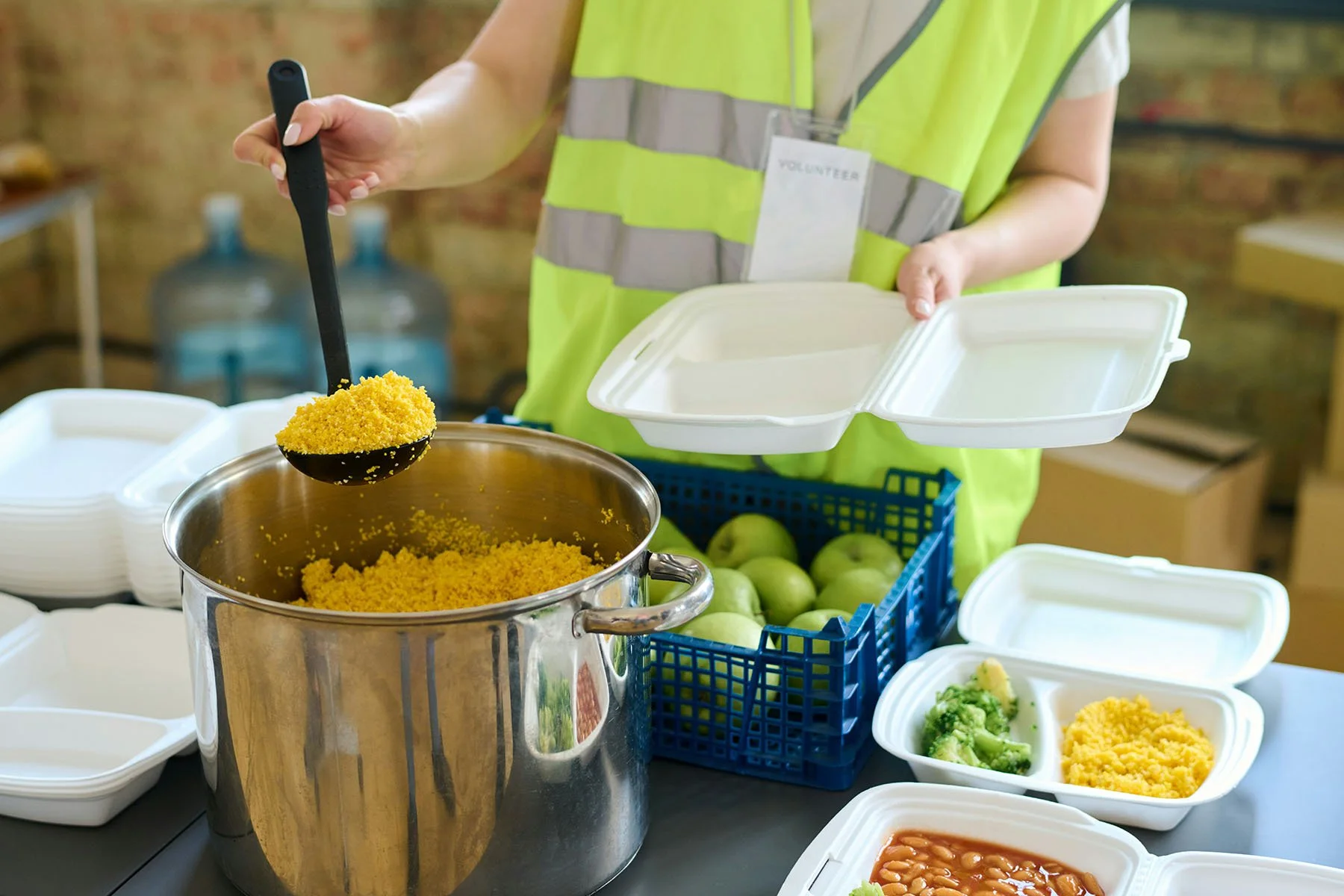
Josh Stephenson shares how serving people experiencing homelessness transformed his faith, deepened his compassion, and helped him discover purpose in unexpected places.
Every month, Josh Stephenson walks the streets of Nashville to build relationships with people experiencing homelessness. What began as a simple opportunity to serve eventually became a calling that transformed the way he sees faith, purpose, and human connection.
Josh shares what years of serving Nashville's homeless community have taught him about compassion, the misconceptions surrounding homelessness, and why some of life's greatest lessons come from the people we often overlook.
We also dive into what it means to recognize a calling, how serving others changes the person offering help, and why showing up consistently can have a lasting impact on everyone involved.
Listen to Josh Stephenson’s Interview
Watch Josh Stephenson’s Interview
Finding Purpose Through Faith and God's Calling
Brandi Fleck: For "I intend to be about my Father's business." That's the phrase this week's guest, Josh Stephenson, is known by.
Josh is the leader of a homeless outreach ministry called Dirty Hands. He's also a soft-spoken ordained minister who lives in Smyrna with his wife and daughter. He grew up the son of a preacher and in a blended family. God and faith as a foundation for life are really important to Josh.
This episode focuses on his Christian faith in God as the vehicle to his ministry. We talk about the concept of home, what it means to be homeless, and how to help fellow humans who are homeless. We also talk about lessons Josh has learned from being in the ministry and the successes of some of those he's ministered to.
Josh is the kind of person who lights up a room when he enters, and I've seen firsthand how he puts smiles on the faces of those he serves and those he serves with. He has an air of no judgment and genuinely cares about others. Plus, he tells you how to get involved in the ministry if you're feeling led to do that kind of work.
You'll want to stick around to the end of the episode to hear how to donate if you want to, as the Dirty Hands Ministry is actively taking donations for the women's shelter here in Nashville up until March 16.
No matter what your spiritual beliefs or religious affiliation are, this episode has something for you. It's packed with takeaways like learning what a calling looks like, how it may be uncomfortable or unsettling at first, and how it feels right when you're on the right path regardless.
So let's hear more.
Brandi Fleck: Hey, Josh. Welcome to the show.
Josh Stephenson: Thank you, Brandi, for having me.
Brandi Fleck: It is so awesome to have you here. I am very excited about your story and this ministry that you're going to tell everybody about. But before we get into that, let's get to know you as a person and let our listeners know you first.
Josh Stephenson: Well, thank you. I'm a middle-aged man, I guess you can say. I was born in Indiana. We moved all the way down here to Smyrna, Tennessee in about '87 or '88. I've got two younger brothers from my mom and dad, and we grew up here in Smyrna. Obviously, we graduated here in Smyrna.
My parents got divorced when I was in elementary school. My dad remarried about middle school or high school, and I gained four more stepbrothers and sisters.
Brandi Fleck: Oh, I didn't realize that.
Josh Stephenson: Yeah. I actually had stepsisters, so going from a house of all boys, then you got these girls in here, and you're like, "Oh, what am I going to do with these girls?" But it was good. It was a good learning experience. I've learned a lot from them, and hopefully they've learned from me.
Married, got a daughter that's in middle school now. She'll be 12 in April. It's a very busy life, but when you're not busy, it's the devil's playground. If you're constantly trying to do something, then you won't have time to be getting into things that get you into trouble and all that stuff.
Brandi Fleck: Gotcha. Well, that brings me to something I ask every guest on the show. What does being human mean to you?
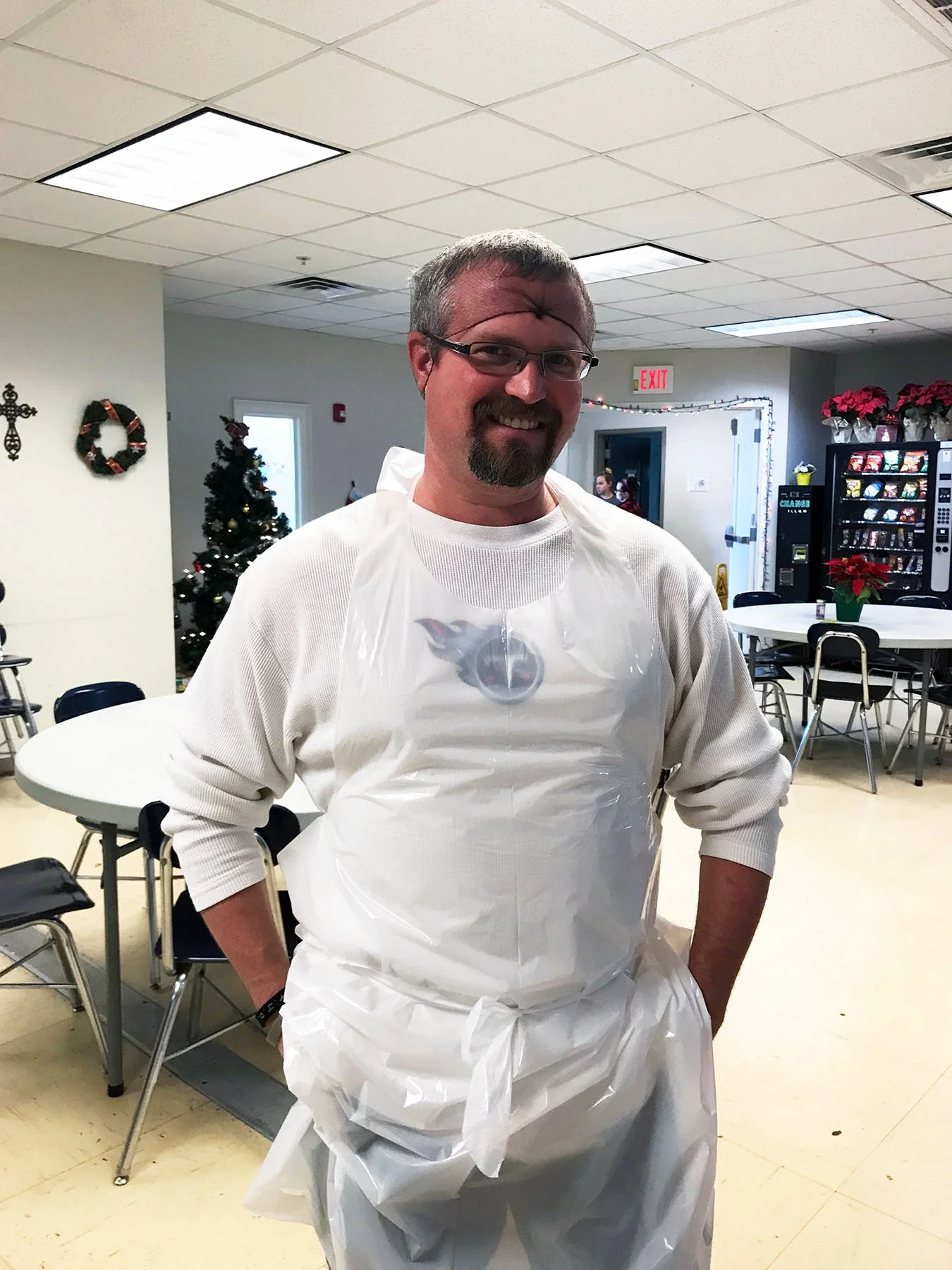
Josh Stephenson: I've really tried to meditate on what being human means to me. As a man of God now, I learned a little while ago that we can love and we can make mistakes, and that is part of being human, is loving others and making mistakes, and to know that that is not bad. It's not a bad thing.
We are all a son or a daughter, and most of all, we're all a son and daughter of God. We all have scars. We all have a past. To know that whatever from the past has happened has happened, there's nothing you can change. You can use that to fuel and change your future.
We're all human. We've all done things that we regret, but the trophy doesn't go to the one with a good beginning. It goes to the one who finishes. That's a lyric from a rap song that I like, and once I heard that, it really hit home that no matter how good you started or how bad you started, it's about how you finish and what you did to finish.
Brandi Fleck: Do you feel like you had a bad start?
Josh Stephenson: I didn't have a bad start. I never grew up without. Things in my life that I've overcome have molded me into the man that I am today.
There's a lot of worse people out there, but there are things that I've gone through that people who have it... I listened to your first podcast, and I heard your story and what you went through. I never had a lot of that, but I've got things that you probably didn't.
We all have a past. Like I said, we all sin. We all fall short every day. But to know that God is there for us, He loves us, and in the end, He's going to be there for us, and we have grace to overcome.
Brandi Fleck: Okay. So what makes you you? What are some things you like, and how do you approach life?
Josh Stephenson: Let's see. What makes me me?
I'm not a man's man. I don't like hunting. I don't like camping and stuff like that. I grew up city life.
Brandi Fleck: Okay.
Josh Stephenson: I don't even change my own oil. I probably could, but I just choose not to.
Brandi Fleck: Hey, that's okay.
Josh Stephenson: I like action heroes and Marvel. I love hard rock and rap. I like to stay hyped up.
I'm not too big of a journal junkie, but I like to stay hyped up. My outlook on life is to share love and to share that hypeness with someone and to make somebody smile. That's my goal. If I make you smile, then I've changed your day. I've made your day brighter.
A lot of times I like being silly and goofy, but then somebody will smile and say, "Look, I made you smile today." If I make God smile, I can make you smile. That's what makes me me. I try to share love. I try to share joy and happiness because we're all in it together. We're all in this life, and life sucks. It's just going to get worse. It's hard out there, so why try to make it even harder for somebody else?
Brandi Fleck: I could say bad things happen to good people, but it doesn't necessarily have to suck, right? I think we can still find joy, and you've hit on that a little bit.
I did a teaser on my Facebook a while back saying that I was going to serve at the Nashville Rescue Mission with a future podcast guest, and you are that guest.
Josh Stephenson: That's right.
Brandi Fleck: Yes. So hopefully, you listeners out there saw that little clip.
I do want to say that the things that Josh just mentioned about making someone smile, I saw that in action when we were there at the mission. We were at the women's shelter, and I think every single person you talked to, you put a smile on their face. It was pretty fun to see.
Josh Stephenson: It was awesome, and it feels awesome. I don't do it for myself. I get joy from it, but that's not why I do it. These people probably haven't smiled in days. They probably don't have anything right now making them smile. To know that you gave them three seconds of a glee moment, that right there. God can turn that into anything. If you try to do that with numerous people during the day, you know, an ant isn't a strong insect, but if you get thousands of ants together, they can do something.
So that's like that with any small task or any positive thing that you do. One small positive thing may not seem like a lot, but a lot of them together can overcome.
Brandi Fleck: So I think I know the answer to this question, but if you'll humor me, what do you believe the most important thing in life is?
Josh Stephenson: Let's see. If I had to say one thing, the most important thing in life is obviously God, in my eyes. I'm a man of God. I have been for four or five years now. My ministry started about four years ago.
I didn't grow up in church. My dad, obviously after my parents got divorced, started feeling his calling into ministry, so that's when we started going to church more often. But growing up over the years, I feel like having something to put faith into is important because that's your foundation. That's your rock.
If you just go about with nothing to anchor you down, you're just going to be floating around like waves of an ocean. There's no peace in that.
I try to tell people who are struggling that if you know the difference between the waves of a lake, where it's real calm and still, that's peaceful. You can relax on that. You can't relax in the ocean where you're constantly going back and forth, back and forth.
So to me, the most important thing about life is having a good, firm foundation and faith.
What Home Really Means Beyond a Physical Place
Brandi Fleck: Gotcha. Let's shift a little bit into the concept of home. I know you mentioned foundation and anchor and things like that, so it sort of reminds me of home as well because a lot of people would say that home is a foundation for you, a place where you lay your roots and things like that.
But what does home mean to you, and what is the importance of home?
Josh Stephenson: The definition of a home is a place where one lives. Home is where you can decompress. Home is where you can regroup.
Home definitely doesn't have to be a building where you lay your head. Home is where you feel life. That could be a church. That could be with a friend. That could be anywhere.
So home is not a physical structure to me. Home is where you go to decompress and just regroup. That's your safe zone. That's your panic room. That's where you go to regroup and just refuel on life.
Brandi Fleck: Gotcha. Do you think people can have more than one home?
Josh Stephenson: I believe you could.
Me personally, Sunday morning church is a home for me. I go there to regroup and to worship, and I feel love. I get to share God with other faith family and call them brothers and sisters because they are. They've been there more often than my real family.
People can have more than one place where they go to decompress or to find life. A lot of people go to the lake to relax or to get a new outlook on life. That could be your home. A certain fishing spot.
The beach. I love going to the beach, and I can joke around saying that's a second home to me because I go there to relax. I see God there, and that to me is... so yes, you can have more than one home.
Brandi Fleck: Cool. Very cool. That's a question I've asked myself a lot, so it's interesting to hear other perspectives, for sure.
Now, can I ask you questions?
Josh Stephenson: Sure.
Brandi Fleck: Nobody's done that before on the show.
Josh Stephenson: Hey, I'm a rebel. I like to do things weird. So define your home. Define a place for home.
Brandi Fleck: Oh my goodness. I have sort of a similar view as you do, actually.
I've had a lot of different places that I've lived, physical structures. I moved so much, probably like eight times in the last 10 years, from different states just for one reason or another with my family.
I've come to find that home is typically where I feel unconditional love. So it can be with a friend. It can be in a church or in spirituality.
I've always felt the most at home when I was with my grandma. I always felt like she was a great example of unconditional love. So it's more of a feeling to me.
Josh Stephenson: That's what I wanted to hit on, was home is not structure. It's a feeling. It's a place where you go to feel.
Brandi Fleck: Yeah.
So you do some work with the homeless through your ministry, the Dirty Hands Ministry, and we'll get to that a little later in the show. But since we're talking about home, and you do work with the homeless, and we're defining home as a feeling, what does it mean to be homeless?
Understanding Homelessness Beyond the Stereotypes
Josh Stephenson: Homeless doesn't really have to be just physically without a home.
Homeless can be someone who's lost, someone who doesn't know their meaning of life, doesn't know their way of life, doesn't know who they are.
I grew up all throughout middle school, high school, even after that, not knowing who I was because I was so focused on trying to please everyone else. I didn't have an identity. I didn't have a me. Nobody knew the real me. I was flip-flopping back and forth. "I like this. I'm going to be this guy. No, wait, that guy's cooler. I'm going to be like him." Even though I don't fit in, I'm going to try to be like this guy over here.
So I never had a good foundation. I was wandering. It was almost like I was homeless.
Homelessness could be a sense of feeling where you're going back and forth. You don't have a good anchor. You don't have a place where you feel life.
So yeah, homeless could be a feeling, not just where you don't have a place to lay your head.
Brandi Fleck: Right. So in your work with the homeless, and when we say homeless in this sense, it's typically people who don't have physical structures, correct?
Josh Stephenson: People who live on the streets, who sleep on sidewalks, who sleep underneath bridges and on park benches. It's sad.
Brandi Fleck: W, I don't know if speculating is a great idea, but I want to speculate just a little bit. Or maybe it's not speculation. Maybe you know from talking to some folks.
Do you think that folks who don't have physical structures to lay their head in have other homelessness going on as well, or is that too big of a generalization? What causes it?
Josh Stephenson: I think there's a lot of people who I've talked to who are physically homeless, are spiritually homeless, are mentally homeless due to the fact that they lost something and they don't know what happened. They don't know the next step.
A lot of them are just trying to live the day, and there is no foundation in that.
There are a lot of them that I've talked to who are good. They have a good foundation. They know where they're at. They know what they're going to do, and it's just a state that they're in right now. Unfortunate circumstances have made it to where they're homeless.
But there are a lot of times where I've talked to people who are physically homeless and spiritually and mentally homeless.
Brandi Fleck: Got it. In that sense, obviously you have a servant's heart.
Josh Stephenson: I'm glad you see that because, man, that's a rough heart.
Brandi Fleck: Yeah.
Brandi Fleck: What do you mean by that?
Josh Stephenson: A servant's heart really can be draining because you're constantly giving of yourself.
I never thought of it that way. I've never thought of that gift as me having... really, now that you said that, it makes sense to me now.
Brandi Fleck: Yeah, you definitely do.
At the mission, even the people who were there to be in the shelter, they were smiling. The people that served with you were smiling too. You brought joy to everybody that you talked to.
I like finding people with servant's hearts and talking to them. I feel like it's a similar trait that certain people share.
Josh Stephenson: I think you just answered a question of mine.
Brandi Fleck: So you answered your prayer, really?
Josh Stephenson: Wow. I want to hear what it is. I don't know if you want it on the show or not, but I've always... one of my prayers is to know what gifts I have. I have thoughts of what my gifts would be, but what are they?
As soon as you said that, it clicked in my head.
Brandi Fleck: Interesting. It's hard to see sometimes for yourself, and it takes a little bit of perspective, maybe.
Well, I believe that you serve humanity through following God and spreading the word about God, but what does serving do for you?
Josh Stephenson: Like I mentioned earlier, serving... I don't serve for myself.
There was a time when I used to do that early in my ministry. I'm sorry to say that. I still had a prideful heart.
But serving someone really just warms you inside to know that you're making a difference in somebody's life. Obviously, I'm not changing the world, but I'm changing the world in somebody. I'm changing their world.
Be it through a warm sandwich or just a pat on the back, telling somebody that you love them and meaning it.
Love is such a word that we throw around without meaning now, but to have it in your eyes and to actually tell somebody, "I love you, and I care about you," that really hits home to some people.
It warms my heart.
I tell these people that I minister to down on the streets, there's a lot of times where I may be ministering to you, but you minister to me. You're showing me... it's a back-and-forth thing. I feed you, you're feeding me as well. Even though physically they're not helping me at all, they're teaching me something.
Serving just warms my heart. To see the smile on somebody's face, to know that you put that there, how can you not smile back?
Brandi Fleck: Yeah, that's great.
Josh Stephenson: Like I said, I don't do it to brag or to boast, but I do it because God loves me and He told me to do it.
Brandi Fleck: Right. You're definitely here talking about it because I asked you to be, so I know that's hard for some folks.
Josh Stephenson: It is. I don't talk about myself a lot, but I'll talk about God all day.
Brandi Fleck: Yeah, exactly.
It seems like the Dirty Hands Ministry is a calling for you. Would you say it's a calling?
Josh Stephenson: Yes, it was.
Brandi Fleck: How did you recognize that you had that calling, and what were some of the signs?
Josh Stephenson: Well, it didn't start off that way.
I guess it was about four years ago. I really started getting back into church, really started getting back into praying and stuff like that.
Like I said, we didn't grow up in church, but when Dad started preaching, obviously we went. Of course, I rebelled and fell out after high school.
Brandi Fleck: That happens.
Josh Stephenson: Yes, but I came back.
We started going back to church, and it was almost like during sermons I would feel like God was calling me to ministry.

At that time, being a preacher's kid, I thought that meant being a pastor of a church. I don't want to do that. I can preach, I have preached, and I don't mind preaching, but I didn't want to do it every Sunday. I don't want that.
So I went from, "Okay, well, this is what I'll do. I'll be an evangelist." That didn't work out. I'm just not that type.
Finally, talking to my pastor and doing this and that with him, learning, doing devotions, talking to other Christians, and getting my faith deeper, I had told him that I wanted to be in ministry.
He took me down to the men's mission, and he had me preach down there.
Once I saw their faces... growing up, you hear the term "homeless." You see it in movies. You see it in the news. But once you see it up close, physically, you see them right there in front of you, it changed me.
To see that, wow, that guy doesn't have a home. That guy eats stuff out of the trash can. That guy lays his head on rocks. Once you put that into a physical picture, it changed me.
I was like, "Wow. I feel like I need to help him. How do I do that?"
A few years ago, I guess about three years ago, I still really felt led to serve, to minister, and learning then that I don't have to be behind a pulpit to be a part of a ministry.
I was like, "You know what? I think I want to start helping these homeless people," because they kept coming back to my mind.
If something keeps coming back to your mind over and over and over, generally that's God showing you, "This is what you need to do."
Brandi Fleck: That makes sense.
Josh Stephenson: This is what... He's showing you, "This is what I need you to do."
They kept coming back. I would hear about it in stories. Somebody would say something about homelessness, and it was like, "Wow, why does it keep being brought up?"
I was like, "You know what? Okay."
Fortunately, small world, my pastor used to do some type of street ministry.
Brandi Fleck: Okay.
Josh Stephenson: He was like, "You know what? You want to do this? Let me show you where I used to go, and you can start from there."
He took me out a few times. I got to know the little route. We'd do this, then do that.
That's why I was like, "All right, let's start doing it."
We started doing the little route we used to go, once or twice a month, handing out a McDonald's cheeseburger or whatever and just talking to people.
We don't push God. We don't condemn. We ask, "Hey, do you know Jesus? Do you know God?"
But there's a scripture in the Bible that says you can lead others through your actions and your deeds.
I like to stand firm on that because through my actions and deeds, I can show you God's love.
I'm not very eloquent with my speech, as you can tell. I was praying today about Moses. Moses wasn't eloquent in speech. He stuttered. But he showed people God through his actions and through his deeds, through his teachings, and through who he was.
He didn't talk pretty. He did the part.
Brandi Fleck: Yeah.
Okay. Well, there are a couple of things that you have said there that I want to go back to.
You mentioned that if something just keeps being shown to you, that might be a sign that that's where you need to go next. God showing you that that might be your calling.
Josh Stephenson: Right. If you feel something being tugged on your heart, normally that's God saying, "Hey. Hello. I'm trying to talk to you. This is your next step."
Of course, then that was my first step. It was, "Okay, you need to be in ministry."
I'll never forget...
Josh Stephenson: I'll never forget one morning. I was fighting it. I was like, "No, I don't want to be a pastor. I don't want to do it."
I was talking to a lady that I used to work with, and she was very godly, very godly. As soon as she mentioned Jonah, my heart raced. My heart was just fluttering, and I felt God call me Jonah.
The story of Jonah is where he was called to go preach to a certain group of people, but he ran from God. He was like, "I don't want to do it."
As soon as she talked about the story of Jonah, my heart went... I knew that, okay, that was it. Obviously, I'm running from God, so let's turn around and do this.
Then with the homeless thing, after I preached and saw them face to face, they kept being on my mind. I was like, "Okay, if I want to serve, if I want to do ministry, where do I go? How do I do it?"
What about these people? What about the people that seem like they're forgotten? The people who feel unloved, who feel dirty?
Brandi Fleck: Right. So a calling isn't necessarily easy.
Josh Stephenson: No, it's not easy.
Brandi Fleck: Okay. It's not easy. Just because something's being shown to you and you feel like it's where you need to go doesn't mean you want to go there at first, and you have to sort of overcome it.
I guess, not to keep pushing on it, but how did you overcome that urge to go the other way?
Josh Stephenson: Finally giving in and surrendering is one of the hardest things a human being can do to God.
When you finally surrender and say, "Look, okay, this is it. I'm going to start. Disciple me, God." You start really talking to people who know their stuff. I started doing that, and I started saying, "All right, this is what You want me to do. Show me what to do."
Just being a part of it...
Yes, a calling can be a very hard thing to do.
Imagine when Jesus was on the water. He was calling out to Peter to step out on the water with Him. According to the story, I bet that was scary.
Brandi Fleck: That's true.
Josh Stephenson: Stepping on water.
God doesn't promise a rose garden. He doesn't promise anything's going to be easy.
Whenever God calls you to do something, normally it's uncomfortable, and it's going to be unsettling. But the benefits are always greater than... our flesh is going to scorn it. We don't want to do that. We want to stay in our comfort zones.
So when you finally surrender and go do what you're supposed to do through God, it's going to be tough at first, but you'll get used to it.
Brandi Fleck: Okay. Then it eventually starts...
Well, I imagine if you're on the right path, even though it was hard at first to take the turn to get there, it feels right once you get there.
Josh Stephenson: It feels right.
My first night, of course, I didn't say two words. I'm down here just handing out a cheeseburger, saying hi. These people are strangers. These people don't know me from Jack to Jill, and you want me to love on these people?
That was scary.
But now, after doing it, I look forward to it.
We haven't been since the middle of December, and we're going here in a few days. I can tell when I haven't been because I'm starting to miss it. I'm starting to get an itch for it again.
It's almost like I need my high.
It's amazing at the end of the night knowing that 15 or 20 people got loved on. Giving them a cheeseburger, a bag of supplies, or a lot of times it's just a hug and a prayer and telling them that they are loved and not forgotten, and that good things are on their way.
Sometimes that's what makes my night.
Now it's better. It's easier. I enjoy it.
When you're on your path, when you're in your bang zone, there's no feeling greater.
Brandi Fleck: Yeah.
Helping People Experiencing Homelessness With Compassion
So are there people that were on your route to begin with that have actually gone on to improve their lives and that you don't see anymore because they got what they needed, support and things like that?
Josh Stephenson: I've been waiting for you to ask me this question.
Brandi Fleck: Oh yeah? Okay, I want to hear.
Josh Stephenson: We used to go to the library park. There's a park across from the library there in Nashville. Now, I don't know street names. I think it's Church Street, but I know where I'm at.
There have been a lot of people who have gotten a place, have gotten jobs, who have overcome abuse, who have overcome alcoholism and stuff.
There's one guy in particular. I don't want to say his name.
When I first started, he didn't want anything to do with me. Nothing to do with me.
I'd come around. He didn't want prayer. He didn't want any of the stuff we handed out. He didn't want a touch. He didn't want me to touch him. Nothing. Hardly even a hello. He didn't even want to know my name. He didn't want to give me his name.
I've been seeing him for probably about three years now.
The very last time I saw him was back in December.
This guy now hugs on me. We'll sit there and talk. It could be 30 minutes, and I'm sitting there like, "We've got to go. The hamburgers are getting cold. We've got all these people to see."
He'll pray. He's prayed. He's starting to go to church. He's starting to have a better outlook on life.
Is it me? No. It's God working through me to him.
To see... are we all perfect? No. We all fall short every day, but grace picks us up.
To see this guy, who is twice my age, cry... he'll walk up to me and start crying, just asking me and pleading with me and talking with me about life itself and wondering why this and why that.
That guy right there, he makes my night. He's one of my favorites. I don't have favorites, but he's one of my favorites.
I'll never forget this one night. He was across the street stumbling drunk.
He sees us across the way, and he walks through the street, stopping cars, slurring, walking back and forth.
We talked to this guy for 30 or 45 minutes. By the end of that, he had sobered up and started talking right.
Obviously, when he was drunk, he was not talking right. He was cursing and talking about women in a bad way.
At the end of the night, he was talking straight, praying.
To see the Holy Spirit sober that man up enough where he was walking straight when we left... man, that was just God right there.
Brandi Fleck: Yeah.
Josh Stephenson: He's one of my favorites. I've seen him get better.
Obviously, he's still on the streets, but spiritually he's in a better place.
I've seen people move on. Somebody who's gone through the women's shelter program and moved on to housing and bettered herself.
I've seen many stories, and it's sad because I don't see them again, but then I'm thrilled to know that they're not sleeping in the park, they're not sleeping underneath a bridge, or by a dumpster against a church or something.
Brandi Fleck: Yeah. So it's sad, but it's thrilling because...
Yeah, that's great. That's really uplifting to know that it's making a difference.
Josh Stephenson: It is. I'm...
Josh Stephenson: Putting that smile on someone's face and telling them that God loves them and that they are not forgotten, that they are not a burden, can really alter someone's life.
Brandi Fleck: Yeah. Change your perspective, for sure.
How Serving Others Changes Your Life
What are some of the lessons you've personally learned by going out and being compassionate and assisting? Like you said, it's a give and take. You feed them, and they're feeding you. What are some of those lessons?
Josh Stephenson: The first major one that I can think of is to be grateful.
A lot of times we have this "Why me?" emotion in us, but there's someone out there who has it worse. Your stomach's full. You have a heated house, a comfy bed.
So to be grateful, that's something that has really taught me. Selfishly, that's the major thing.
To see people who are that low still praising God, still spreading joy themselves, giving me smiles, telling me jokes, or telling me that they're going to pray for me or they love me, that never ceases to amaze me. Someone who is worse off than me cares about me and shows it.
We think of homelessness, and we think, "Well, they must be addicted to drugs or alcohol," or whatever.
I've heard stories. One story in particular that I remember was a guy who lost his wife. In his mourning, bills kept coming in. He lost his job because he couldn't go to work. Obviously, they couldn't pay him or whatever. He lost his job, so one step after another, you lose your house.
He said, "I've never drank. I don't do drugs. I just lost my wife."
Some of them just take the wrong turn.
Some people come here looking for a job. No job. Or they get a job and it's promised, they work for two days, and then it goes away, and they're stuck here. They took all their money to move here, and they get stuck here.
So it's not always your stereotypes.
Homelessness is not just the addicts. It's the fact that any turn, one left turn in your life, could have put you there.
Most Americans are a paycheck away from being homeless themselves.
To realize that fact... I look back in my life, and if there was one turn that I didn't take, I could be in that spot.
So it's definitely gratitude and definitely just knowing that life... we're all human. We all make mistakes. Their mistakes have obviously put them there.
Definitely learning from your mistakes as well. If you don't learn from your mistakes, then you're just a fool.
Brandi Fleck: Wow. This is all really good stuff. Great lessons.
Using Your Story to Help Others Heal
I think there are a lot of good takeaways here for our listeners in a lot of ways, whether they're trying to find their own calling or recognize it, or they're having trouble in their own lives.
Now I want to get into the nitty-gritty details about the ministry. Where can people find it? How can people get involved? That kind of stuff.
Josh Stephenson: Well, it's called Dirty Hands.
For a while I was trying to think of... you see, I'm the cool kid, so I wanted a cool name. I didn't want to just call it "Homeless Ministry." I was trying to come up with this and that.
One day I said something about getting my hands dirty, and people didn't understand why.
I was like, "Well, these people are actually dirty. They've done things or they're doing things that people would call dirty."
I was like, "You know, I'm not scared to get my hands dirty."
I realized that's exactly what I'm doing right now.
Not just with homelessness. I've dealt with drug addicts and people who are trying to get clean. That's dirty too.
People who are fighting pornography or something like that, that's all dirtiness. I don't mind getting my hands dirty.
With that name, Dirty Hands Ministry, I wanted a name that encompassed everything, and I really feel like that fit.
The things that you went through can be used for someone else to overcome.
You're talking about being human. You take that and you help train somebody else who's going through that thing.
Someone who has lost a parent at an early age, that was a rough thing to go through, but you're able to help someone who's losing a parent now.
Or someone who's lost someone in a car wreck or anything else.
Major things that you've gone through in life, you're able to minister to someone who's going through it now and say, "Look, I've been through it. I survived. I'm stronger. God has done this for me. Let me show you. Let me teach you."
Because one day you're going to show it to somebody else.
Brandi Fleck: Gotcha.
How to Volunteer With Dirty Hands Ministry
So, this is through your church. Do you mind telling us what the church is? Does it take volunteers? Can other people come and be a part of it with you?
Josh Stephenson: Oh yes.
Our church is called Christ Community. It's in Smyrna.
We have a website called Christ Community. You can also contact me. You can hit me up on Facebook or let me know that you want to be a part of this.
We go through the women's shelter. We try to go every other month or so.
The street ministry it isn't about who our church is. We operate under the big "C" Church, God's Church.
When we went to the women's shelter, you came along, and we had two other ladies who came who didn't even go to our church. I used to work with them.
I've gone out with people who go to other churches.
We're all serving God. We don't serve under a church.
Brandi Fleck: Gotcha.
Josh Stephenson: Our church just absorbed us in and helps with the logistics and all that stuff.
Brandi Fleck: Pretty much.
Well, you guys, Josh's information, the website you just heard, and all of that stuff will be in the show notes, so make sure you go over there when you're done.
Join the conversation!
Feel free to share your own experience and let me know if you have any questions in the comments.
Related Posts













Hi, I’m the founder of Human Amplified. I’m Brandi Fleck, a recognized communications and interviewing expert, a writer, an artist, and a private practice, certified trauma-informed life coach and Reiki healer. No matter how you interact with me, I help you tell and change your story so you can feel more like yourself. So welcome!
Find More on the Blog
Topic
- ADHD
- AI
- Atlanta
- Black and BIPOC
- DIY
- FAQ
- LGBTQIA plus
- Los Angeles
- Nashville
- Seattle
- St Louis
- St. Louis
- UFOS/UAPs/ETs
- abuse
- accountability
- addiction and recovery
- adoption
- affirmations
- afterlife
- altered state
- angels
- animals
- anxiety management
- art
- astrology
- atlanta
- attachment
- awakening
- beauty
- behind the scenes
- being human
- body image
- body work
- boundaries
- brandi fleck
- breathwork
- bullying
- burn out
- burnout
- cancer
- career
- caretaking
- chakras
- channeled
- clarity-dive
- clarity-practice
- clarity-primer
- clean products
- coach
- codependency
Recent Blog Posts

Visit the Full Podcast Audio Archive

Affiliate