How Following Your Passion Can Help You Heal After Trauma
Interview By Brandi Fleck

Singer and marketing executive Christina Reckard shares how surviving an armed robbery, leaning on community, and staying true to her passion for music helped her heal and move forward with courage.
Trauma can change your life in an instant. The challenge isn't just surviving what happened. It's deciding who you'll become afterward.
When professional singer Christina Reckard was held at gunpoint outside her own home, everything she thought she knew about safety, trust, and control was tested.
Yet instead of allowing fear to define her future, she found strength through faith, supportive relationships, and an unwavering commitment to the passions that had always grounded her.
Christina shares the terrifying experience of surviving an armed robbery, the practical lessons she learned about personal safety, and why pursuing what you love can become an unexpected source of healing after trauma.
Listen to Christina Reckard’s Interview
Watch Christina Reckard’s Interview
Following Your Passion to Build a Music Career
Brandi Fleck: This week's guest, Christina Reckard, is truly an example of someone who does what it takes to follow her passions and be true to herself, regardless of what comes her way.
You guys, Christina was held at gunpoint about three years ago but bounced back like the rock star she is. She's going to tell you what she went through and what it was like to heal from that traumatic experience.
Christina is a professional singer here in Nashville, Tennessee, who also currently works as a marketing executive for a well-known media personality in town. When Christina first moved to Nashville, she started out working for a record label, where she gained valuable industry experience from the other side of the mic too. But live performance is what Christina loves, mainly because of the people.
She's been performing since she was four years old. She's performed on cruise ships in various bands over the years, full-time and part-time, depending on what else was going on in life. She successfully did some soul-searching to figure out what her own music really sounds like and made a record you can find on iTunes, Spotify, Amazon, and any other place you listen to music.
So let's dive in to hear about how Christina got to where she is today, which is all part of the mentality and resilience that helped her through the hard times.
Brandi Fleck: Hi, Christina. Welcome to the show. How are you doing today?
Christina Reckard: I'm doing great. Thanks for having me.
Brandi Fleck: Yeah. Thank you so much for coming on. I'm really excited to have you here because I feel like your life is just so interesting. So to get started, can you just tell us about yourself? What is your life like today?
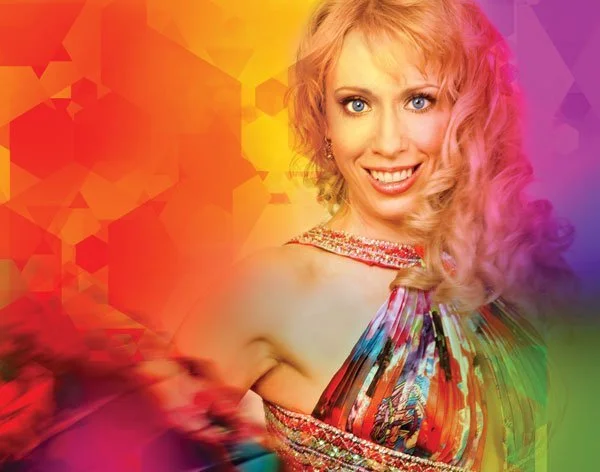
Christina Reckard: Yeah. Well, today, I guess going back a little bit just to give some people some context, I grew up in Indiana in a little rural community and really got excited about music, which was a little bit unusual. My mom taught piano lessons but was certainly not someone who ever wanted to pursue music as a career, and my father was a CPA, so very, very practical.
But I always grew up just wanting to do music professionally and really wanting to see what else was out there. I actually started performing for the first time in my life at about four years old.
Brandi Fleck: Wow.
Christina Reckard: At our church.
Brandi Fleck: Yeah.
Christina Reckard: It was just something that I immediately took to. I was passionate about it. I ended up going to college for music as a vocal performance major. While I was in school, I actually got the opportunity to go and do some cruise ship work over the summer. In between semesters, I would go and either work on a cruise ship, or I did a theme park for a few summers, and really got to experience some different things.
I'd never been anywhere on an airplane before.
Brandi Fleck: Gotcha.
Christina Reckard: I had never been in a cab. I had to fly to Miami by myself, figure out how to get in a cab, how to get around. It was a very cool experience and a very interesting way to learn things very, very quickly.
So I got to do that for a while, went back to school, and after school, I got the opportunity to continue to do the cruise ship work, which was fantastic, singing and dancing and getting to do my own shows, and really just getting to meet people from all over the world and getting to experience different things, which was really all I had been wanting to do.
Shortly after that, I was supposed to go on another ship. There was a company that was starting a new cruise line, and they were going to be bringing one of their first ships out of Italy and had asked me to come work as a performer on that inaugural cruise. At the last minute, they had to cancel the performers because they needed those rooms for technical staff.
So at the last minute, I had no job. I had no place to be. I had already broken my lease. I had quit the band I was performing in at the time locally. So I just decided, I kind of threw a dart at a map and decided to move to Nashville.
So that's really what brought me to Nashville.
Brandi Fleck: Interesting.
Christina Reckard: Yeah. So it wasn't intentional at all. Shortly thereafter, I found a job working at a record label and was able to work there. I started on the phone, and then we had a salesperson who unfortunately was in a car accident. She ended up being fine but needed to be out for a while, so I moved into sales and then moved into marketing.
I really enjoyed that, and it gave me the flexibility to continue to pursue what I truly loved, which was performing. I was able to really pursue a recording career while I was working full-time at the label and really gaining that business experience to give me a good understanding, not only from the artist perspective but also from the label perspective. I think that was really, really beneficial.
Brandi Fleck: Gotcha.
Christina Reckard: Following that, at some point, I did the whole pursuing-the-deal thing, had management and producers and the whole nine yards, and was really actively trying to pursue a country deal.
At some point, it really just hit me that everyone else was telling me who I wanted to be, and I was not telling myself the kind of music that I wanted to do.
I'd had a crossroads like that earlier in my career where I had an opportunity to go to Europe and do kind of a pop/hip-hop type project that I originally agreed to do. Then at some point, I just found myself on the floor of my apartment crying because the biggest fear I had was that that would actually be successful.
Brandi Fleck: Oh.
Christina Reckard: I knew it wasn't what I wanted. It wasn't what I wanted to do. To me, nothing could be worse than to follow my dream but then have it be a nightmare and not have it be what was truly me.
Brandi Fleck: Right.
Christina Reckard: So at that point, I just kind of made the decision that if I was going to continue to pursue music, it had to be music that I loved. I was fortunate enough that I'd met a lot of people here in town and got to know lots of different musicians. One day, someone asked me, "If you could do anything and you could work with anyone, who would that be and what would you do?"
I just said, "Well, I love the music of The Mavericks." They were a 1990s country, Tejano, Cuban-influenced, really eclectic group, and their lead singer, Raul Malo, was one of my biggest musical influences.
I didn't really understand that the person I was talking to had been working with him for a very long time and had the ability to introduce me.
Brandi Fleck: That's crazy.
Christina Reckard: It was insane. By the next day, I had a meeting at Raul's studio, and he was playing me music. He asked me what I wanted to do, and that really kind of led me in a new musical direction and really just changed how I view music and what being successful in music means to me. It really brought me to my current state as far as my music career goes.
Brandi Fleck: Okay, so what is your current state, and what kind of music do you sing?
Christina Reckard: Yeah. What we ended up doing, I worked with Raul and then also the guitar player from The Mavericks. His name is Eddie Perez. We worked together on a project called Kaleidoscope, and it ended up being, I guess for lack of a better term, you'd call it Americana music.
Brandi Fleck: Okay.
Christina Reckard: It's definitely pop-influenced. There's a lot of Cuban music influence. There's some jazz, there's some swing, there's a little country, a little Everly Brothers-type sound in there. So definitely eclectic, but it finally felt like me.
I was so excited to get to do that. In addition to that, I've just been so blessed to get to sing with lots of different bands here in town that do private parties, festivals, and lots of types of music. Lots of '70s and '80s and party band music, which I always enjoy getting to do because generally those types of bands get to perform at people's biggest celebrations. It's big birthdays, it's your wedding, it's your class reunion, it's a big charity event that you care about, and I just really enjoy getting to see people at those moments in their life that you know are going to be really pivotal to them.
Brandi Fleck: Sure. And are you actively playing with a band right now?
Christina Reckard: Actually, right now I'm working. I've kind of decided I wanted to do my own thing again, so I'm working to put a new band together to focus more on Americana music. Hopefully we will be out and about soon.
In the meantime, I'm still subbing with some bands, doing some '70s and '80s music, but I'm really excited to get back out there and do my own music again.
Finding Happiness Through Relationships and Life Balance
Brandi Fleck: Awesome. Well, that's good to hear.
We've talked a little bit about what you love about life. I take it music makes you very happy, but is there anything else that you love about life, and what else makes you happy?
Christina Reckard: Yeah. For me, life is just kind of an adventure, so I like to be able to experience new things. I've always been blessed that in my career, whether it's music or my day job, I've always been able to travel and try new things and meet new people, and that just brings me so much joy.
Being able to entertain and really bring happiness to people is something I love, mostly live entertainment. Recording is wonderful, but I like to be there with the people and the crowds.
But I think overall, the thing that truly, truly makes me happy, and I think I recognize this more every single year, are the people that I love. Just truly getting to spend time with people that matter in my life.
For so many years, I was on the road. I traveled a lot. I missed important events. I missed birthdays and weddings and funerals and just things that I wasn't able to make it home for.
So now in my life, really the top priority is making sure I'm available to those people that matter the most to me.
Brandi Fleck: Gotcha. Yeah, I think that's a lesson that I've learned too. Of course, I didn't travel like you did. I'm not in the music industry, but definitely a good lesson.
Christina Reckard: Yeah.
Brandi Fleck: So not only are you a beautiful singer, but you're also a marketing executive for a really well-known company here in Middle Tennessee. So tying that into the personal relationships that are important to you, can you tell us how you manage your time and balance being an executive with pursuing music and also maintaining those relationships?
Christina Reckard: Yeah, absolutely. I think that's a challenge everybody has in their lives. I think the whole balance between your work and your personal life and trying to keep everything in a healthy place is so difficult.
For me, I really try to work full out while I'm at work, and some of that bleeds over at home. But I've really gotten much better over the last few years. When I'm at home, I'm home. When I'm with my family, I'm with my family. When I'm with my friends, I'm not on my phone. I really try to compartmentalize it as much as I possibly can.
It really takes a lot of discipline, and I have to live my life out of a lot of lists and make sure that I'm doing all the things and making sure that everything's running smoothly.
A lot of it has to do, too, with the fact that I'm so fortunate. In my current role, I've been able to build my own team from scratch, and all the people who work for me there at the company are so amazing. I can delegate, and I can trust. It's such a collaborative environment that it just makes it so much easier for me to walk away and go home in a way that I couldn't have several years ago.
So I think that's part of it too, really figuring out who those people are in your life that you can delegate to, whether it's at home or at work, and really building that trust so that people don't feel like it's all on them.
I think women in particular are absolutely terrible about thinking we have to do everything and we have to be Superwoman, and we've got to be the best at this and at that, and if not, we're failing people. I just think that's not a fair thing to put on ourselves.
At some point, you have to be able to trust others and admit that sometimes you're not going to be able to devote quite as much time and attention to something as you wanted, as long as you're choosing the right thing to dedicate that time to.
How to Pursue Your Passion Without Regret
Brandi Fleck: Awesome. I think there are a lot of good takeaways there. Some of the things I heard you say for the listeners to take away would be list building, delegating, trusting those around you to help you, really.
Yeah, in a lot of the interviews I've done, the theme of support systems comes up a lot.
Christina Reckard: Oh yeah.
Brandi Fleck: Just having that support from people around you is really important.
Christina Reckard: Absolutely. It's huge. I think we try to go it alone, and if there's one thing we've learned over the years, especially as we've become so much more of a social media culture, it's that we've kind of substituted that level of interaction with people for true personal interaction.
Brandi Fleck: Yeah.
Christina Reckard: I think it's just so important to maintain those personal relationships and make time for the people that you love and trust the people around you. I think that we may have become a little bit gun-shy.
Brandi Fleck: What advice would you give someone who maybe isn't pursuing what they're truly passionate about because they feel like they have to be practical?
Christina Reckard: I think you have to make your passion a priority first. I don't know if that's right for everybody, but I've known that since I was a kid. If I didn't have music as a big part of my life, I would never be happy.
I didn't always take a very conventional route to my career or my life choices, but for me and what I cared the most about, I knew that I would never be happy, and I'd live a whole life of "what if" if I didn't go out and pursue music in my life.
So for me, to this day, it always has to be a part of my life, whether it's singing in my local church or doing charity events or recording or doing gigs or whatever that might be. It has to stay a constant part of my life for me to really feel like I'm fulfilled, or I just sort of feel like I'm not myself. I'm playing a role, and I'm somebody else, and I don't think that's a comfortable place to be in.
Brandi Fleck: Sure.
Christina Reckard: I just think that if people are going to be truly, truly happy, life is just too short to not try those things that you've always wanted to try and just go out there and pursue those things that bring you joy and bring you happiness.
I don't think it always has to be your career. I've had times in my life where my entire career was music, and there are times like now where it's a part of my life, but it's not necessarily where I make my living full-time. It's okay either way. I think that people just need to give themselves the grace to actually go out and pursue what makes them happy.
Brandi Fleck: That's a really good point. To do that, I guess you make decisions in your life to involve your passions, right?
Christina Reckard: Yeah.
Brandi Fleck: Do you actively, intentionally seek it out?
Christina Reckard: I do. I think if you don't, you will let it go because something will always be more important. I think that we live our lives based on the urgent instead of what truly is important.
I think the urgent becomes important, but if we really stop and look and evaluate what brings us the most happiness, the most fulfillment, it's not always those urgent things that seem to pop up during our days and distract us.
So you have to be really intentional because no one nowadays has just this free time laying around to pursue their passion, or they may not feel like they have enough money to make that happen or enough freedom, or they have too many responsibilities.
I think we can all find some way to incorporate those things that we're really passionate about into our daily life, but I don't think it happens without intentionality.

Brandi Fleck: Gotcha. So to pivot a little bit, I know that you are a newlywed and you recently got married.
Christina Reckard: I did. I did, yeah.
Brandi Fleck: How's that going?
Christina Reckard: You know what? It's great. I will say, though, being married later in life is very different than getting married in your twenties.
Brandi Fleck: Okay.
Christina Reckard: I think people underestimate that a little bit. In so many ways, it's so much better because you both know who you are as people. You're pretty established in your life and in who you are and in what's important to you.
But I think, too, it can be a little challenging because you've got two adults with two very separate lives, and trying to combine those into one can be a challenge.
But it's been absolutely fantastic. He's great. He's supportive. It's just great to be intentional in this part of my life and really search out somebody who adds so much value to my life.
Brandi Fleck: Good. So I imagine, is he involved in, I guess, your music endeavors or just in a support role? How does that work with you guys?
Christina Reckard: Yeah, so he is also a musician. He does not do that full-time for a living, but he does pursue music as well, and he's incredibly talented.
It's interesting. We're trying to figure out how that works together. We both volunteer and lead music at our church, and we do that together. Then he goes off and does gigs on his own, and I've done gigs on my own.
We're kind of trying to figure out what do we do together because my type of music may not be his type of music. So we're really trying to learn which things we're going to do as a team and which things we're going to say, "Hey, that's your thing. You go do it, and I will be there and cheer you on."
It's been fun to kind of figure that out and let each other know that's okay. If I want to do something that you're not excited about being a part of musically, that's totally okay. There will be those things that we want to do together, and there'll be some things that we want to do on our own.
Brandi Fleck: Awesome.
Surviving an Armed Robbery and Being Held at Gunpoint
So to shift again to a different personal experience of yours that must have been surreal and frightening and devastating, you have been through the traumatic event of being held at gunpoint.
Christina Reckard: Yes.
Brandi Fleck: This kind of thing can be a pivotal point in a person's life. Was it for you?
Christina Reckard: It was eye-opening. I felt like I was always a person who was pretty cautious, who was aware. Obviously, I've traveled all over the place. I've traveled alone, so I've always been someone who considered myself aware of my surroundings and didn't feel like I would likely be a victim of something like this.
So it really has changed my perception of things and made me hyper-aware of my circumstances at any given time.
Brandi Fleck: Gotcha. Just to go back a little bit, we had touched on the topic of trust earlier. Has it impacted your ability to trust others?
Christina Reckard: I don't think it's impacted my ability to trust, but it has made me more aware of situations. It's certainly made me more cautious.
I do still trust people, but I would say it's more of a "trust but verify" type situation.
Brandi Fleck: Sure.
Christina Reckard: So it's definitely there, but I'm just very thankful that it hasn't caused me to change my daily rhythms or change the way I go about my daily life. It really hasn't caused me to make significant changes in that way.
Brandi Fleck: Good. Good.
Can you tell us what happened? What were the details?
Christina Reckard: Yeah, absolutely. It was a few years ago now, and it was actually a Sunday afternoon. I had gone out for brunch with a girlfriend of mine, and it was very strange. We went out for lunch, and as I was leaving, she kind of stopped me, and she didn't want me to go. I couldn't figure out why, but she just had a very bad feeling.
After I left her, I just had an errand to run very quickly. So I came back to my side of town, and I needed to run into a store and drop something off.
So I went in, I did my return, I came back out to the parking lot, and drove home. It was about a mile from my house. It's the middle of the afternoon, sunny day, on a Sunday afternoon, so I didn't think anything of it.
I got back to my house, and the way my home is situated, I can park behind my house, which I always thought was more of a safety feature because people wouldn't see me getting out of the car or in and out of the car with packages. So I never really gave it much thought.
I'm getting out of the car, and I'm walking up my back deck, and I hear somebody shouting at me. I look down from my deck, and there's a guy approaching me.
There was just something about the way he was looking at me and shouting that I knew I was in trouble instantly.
I immediately just told him, "You've got to get off my property or I'm calling the cops."
So I pulled my phone out and immediately started to dial 911, but before I could get that accomplished, he had run up the back deck and was holding a gun to my head.
Brandi Fleck: Oh.
Christina Reckard: Yeah. It was so surreal. What's crazy is, while that part of it happened so quickly, the rest of it seemed to almost happen in slow motion.
He's shouting at me, and he's trying to get me to let him into the house. All I kept thinking was, "I can't let this person in my home. If I let him in there, I live alone. Nobody's going to know, and he could do anything."
So I thought, worst-case scenario, I'm running. He can shoot at me if he wants, and I'm going to jump off this back deck if I have to.
But I screamed, and evidently when I screamed, it startled him. He didn't expect me to scream, and so that kind of changed his plans because we're in the middle of the afternoon. There's people everywhere. I live in a very active neighborhood.
So he changed his plan and said, "Just give me your purse."
I had seen on television before that if you throw the purse at the attacker, he will likely turn and try to catch it. So I kept my keys, I kept my phone, and I threw my purse at him. He dropped the gun to catch the purse, and I let myself into the house and locked the door behind me.
I ran in, I called 911, and I locked myself in a bathroom in the house. It was a few seconds later I could hear someone at the back door pounding on the back door and just hollering at me. I was absolutely certain that it was him trying to get into my home.
I'm on the phone with 911. They're sending the police. Finally, the police get here. I don't hear the pounding anymore, and the 911 operator assures me. She's like, "You stay on the phone with me, but the cops are at your front door. I promise you it's the cops. You go ahead, you stay on the phone with me, and you answer the door."
So I went to the door, and the detectives were there, and they were absolutely fantastic. They sat with me. They comforted me.
It turns out that the pounding that I heard while I was in the bathroom was actually a neighbor.
Brandi Fleck: Oh.
Christina Reckard: He heard me scream, and he thought I'd been shot, so he came running.
He had noticed earlier, and this was something I could not see from where I was behind the house, that the guy who was robbing me, his girlfriend drove him to my home.
Brandi Fleck: Okay.
Christina Reckard: She parked kind of perpendicular to my driveway, blocking my driveway. My neighbor had security cameras that had a view of my house and happened to see that on a screen in his house and thought that was strange. He'd never seen anyone park like that in front of my house. He knew I lived alone.
So he was already kind of heading outside. When he heard me screaming, he came running, and he happened to get outside in time to catch a partial license plate as well.
Brandi Fleck: Oh, wow.
Christina Reckard: Yeah. So that was super helpful.
The police were absolutely wonderful and really kind of stayed with me for quite a while. I was fortunate enough to have the good friend who I'd been at brunch with. I called her, and she was over at my home immediately to sit with me while I waited to hear back from the cops and find out kind of where things were.
But that was the events of the day.
Brandi Fleck: Okay.
Christina Reckard: I was fortunate enough that several hours later, right before I was getting ready to go to bed, I was still kind of sitting with my girlfriend and talking through the day, and the lead detective called me and let me know that they had caught the perpetrator.
Brandi Fleck: Oh, good.
Christina Reckard: And his girlfriend. It was amazing. I couldn't believe they caught them so quickly.
We were in court a few days later, and they were both sentenced.
I have to say, the detectives kept me in a separate room in the courthouse, so I didn't need to be in front of my attacker, and they sat with me all afternoon. It really made me feel so much better about the people who are protecting us every day. How I was treated was just phenomenal, and the fact that they cared enough to go track him down and convict him within such a short period of time was absolutely amazing.
Brandi Fleck: Awesome. So did you find out why he chose you?
Christina Reckard: Yeah. I sat and talked to the detectives that day in court and asked them a lot of questions because we were there most of the day.
They were telling me that this guy had been going to, he had a very long juvenile record. He was only 21, but he'd had a very long juvenile record.
Brandi Fleck: Okay.
Christina Reckard: And many, many gun offenses. So this was not his first time.
They said he'd been going to local businesses, grocery stores, home improvement stores, the library, and looking for people to follow home. It was drug-related. He's looking for money, prescription drugs, you name it.
They said, "Looking at you right now, the way you looked when we came to your house," I was dressed up because I'd gone to church that morning, so I was dressed nicely. I was alone.
They said, "You were at a home improvement store by yourself on a weekend. Odds are, if you are a woman alone at a home improvement store on a weekend, you're likely single."
So there were just lots of different factors that they said would have made me a target. I looked like an easy target. It looked like I lived alone. So they just chose me to follow home.
Brandi Fleck: So what did you feel and think while you were going through this and while it was happening?
Christina Reckard: It's amazing. It really is. It sounds so cliché, but you really do kind of see your whole life in front of your face.
I just stopped to think that this could be it. This could be it.
I've always been a person of faith, and to me, I just thought, "If this is how my life ends, and it ends here today, that's going to be okay. I'm okay with it, but I'm not going to go down without a fight."
Brandi Fleck: Gotcha.
Christina Reckard: I felt very calm at the time, actually. I didn't cry and didn't break down until after the detectives got to my home.
I think I was in such a state of, "I have to take action, and I need to figure out a way out of this," that the adrenaline just kept me going until I felt like I was safe.
That was the first time I really let myself kind of be vulnerable and break, and it was at that point there was just a flood of emotions.
Brandi Fleck: Gotcha.
Christina Reckard: But I have to say, it was amazing. So many people offered me a place to stay if I didn't want to stay in my house. Not just for the short term. They were giving me rental properties they had if I wanted to stay for several months or if I wanted to move. People offered to come stay with me.
I was just really blown away by how caring so many people in my life were.
I had a girl that I worked with who took the day off work the day I had to go into court to sit there with me all day. She wanted to make sure I was not alone if I had to see the man who attacked me.
It just meant so much to me. I think in those situations, you really get to see the goodness in a lot of people. Even though it's a terrible situation, you really get to see the best in people.
Brandi Fleck: Yeah.
Christina Reckard: That was really my experience with it.
Brandi Fleck: That is sort of comforting, I think, to hear that.
So would you say you're healed from that experience now?
Christina Reckard: I am. I am.
At that point, I just decided, "Okay, I'm going to be so much more vigilant. I'm going to take steps to protect myself. I'm going to make sure that I'm not setting myself up to be a victim in any way ever again."
So it felt much more empowering. I didn't feel victimized. I really felt educated. This is what can happen.
Recovering From Trauma and Learning Personal Safety
I've been able to share that with a lot of the people that I've come into contact with. There's a lot of younger women that I work with every day that live alone and you know, just don't take normal safety precautions. I've really kind of taken that on myself to tell my story to other people so that they're being aware and don't feel like they're being paranoid.
If you think somebody's following you around the grocery store, don't go out to your car alone. Grab the security guard at the front of the store and ask them to walk you out, or just let somebody know.
It's okay to trust your gut and trust your instinct. Even if you're like me and you had no idea that somebody's behind you, just be aware. Before you turn into your driveway, take a nice look behind you. Make sure that you don't see something that looks out of place, and if it does, just keep driving and circle around until you feel comfortable going home.
That doesn't make you paranoid. It just makes you aware.
Brandi Fleck: Gotcha. Really good takeaways there.
What did the healing process look like? From what I understand, it sounds like it was sort of short, but am I understanding that correctly?
Christina Reckard: Yeah, it was. I would say it was short. I felt comfort from the fact that they caught him so quickly.
Going to court was difficult. It was difficult to stand up in front of him. He had accepted a deal and then several days later recanted on that deal, and I thought we were going to have to go to court and that we were going to have to go through this all over again. That went on for several weeks, so there was just a lot of uncertainty there.
I really was not eager to have to testify in court, especially because he did have a lot of gang associations. My neighbor, who was wonderful and came to my rescue, was tentative about testifying because of some of his affiliations. So there was a lot of uncertainty around all of that for me.
But as soon as I could get past all of that, and I think a lot of it came from just making the decision. Lots of people tried to convince me that I needed to move out of my neighborhood and really change the way I lived, get roommates.
I talked to the officers who were working my case and just asked them, "You guys are in my neighborhood every day, and you guys see this. What would you do?"
They were wonderful. They just told me, "Listen, someone could follow you home from anywhere."
Brandi Fleck: Yeah.
Christina Reckard: From the nicest neighborhood. It's just something that unfortunately happens, and you shouldn't let that dictate how you're going to live your life.
Once they told me that, I really felt convicted. I never once spent a night outside of my home. I decided then and there I was going to stick it out. I wasn't going to let somebody drive me out of my house that I loved so much and my neighborhood that I loved so much.
So in that way, it was somewhat quick in the fact that I kind of made that decision, and once you make that decision, it kind of informs your other decisions.
Brandi Fleck: Gotcha.
Christina Reckard: But I would say there are definitely moments, especially if I see something on television or I'm watching an episode of Dateline or something, I'll have a little moment of kind of a flashback, and I can kind of take myself right back there.
But it's definitely something that I think has made me stronger overall.
How Music and Community Support Helped With Healing
Brandi Fleck: Gotcha. So did your passion for music play a part in your healing process?
Christina Reckard: I think from the standpoint that I've just always been unafraid to do things that were a little different than what everybody else wanted me to do.
Nobody wanted me to stay in my house. Nobody thought I should stay in this neighborhood. Most people didn't think I should have pursued a career in music. There are so many parallels in the fact that sometimes you've got to take the path that doesn't seem obvious to other people, and I've always really kind of taken that to heart.
I'd say in addition to that, so many of the people that came to my side and really stood by me during that time were people that I met through music.
The friend that I was having brunch with and that came immediately over to my house that night, she and I had been in a band together for years. Those relationships have been some of the strongest in my life, and those are the people who came to my side.
A girlfriend of mine I used to sing with, who had since moved to California, called me that night and said, "I know we don't talk every day anymore, but I'll fly out there tonight if you need me."
It's those relationships that are probably the most important thing about music and healing me, are the people that share that common interest and how those people have shown up over and over again in my life. Every time I've had a difficult time or had something really hard, I can count on those people, those relationships, to really build me back up.
Brandi Fleck: Awesome. That's really, really awesome. Going back to the support system too, I think it's just a common theme.
Giving More Than You Take and Living a Life of Service
So now I want to ask you something that I ask every guest on the show. What does being human mean to you?
Christina Reckard: I think for me it's really just about giving more than I'm taking.
I really want to deserve all of the love and all of the blessings that I've gotten in this life, and I want to be sure that I'm prioritizing other people before myself.
I think that's the biggest key to life, to me. If you're going to be a caring, loving person, that is so much more important than being successful by anybody else's standards. It's really about being there for other people like they've been there for you.
To me, that's the most important thing.
Brandi Fleck: And then, of course, we must know, where can listeners find your music?
Christina Reckard: You can find me at ChristinaReckard.com, and my music is available also on Amazon, iTunes, and Spotify, so pretty much anywhere you go to listen to your music, you can find mine there.
Brandi Fleck: Awesome. Well, thank you so much for coming on the show today, Christina, and sharing your amazing story.
Christina Reckard: Thank you so much for having me. I really appreciate it.
Brandi Fleck: You guys, Christina is so brave and is such a go-getter. I loved hearing about how she bounced back from the adversities in her life and how embracing her passion for music really helps her be herself.
Join the conversation!
Feel free to share your own experience and let me know if you have any questions in the comments.
Related Posts



Hi, I’m the founder of Human Amplified. I’m Brandi Fleck, a recognized communications and interviewing expert, a writer, an artist, and a private practice, certified trauma-informed life coach and Reiki healer. No matter how you interact with me, I help you tell and change your story so you can feel more like yourself. So welcome!
Find More on the Blog
Topic
- ADHD
- AI
- Atlanta
- Black and BIPOC
- DIY
- FAQ
- LGBTQIA plus
- Los Angeles
- Nashville
- Seattle
- St Louis
- St. Louis
- UFOS/UAPs/ETs
- abuse
- accountability
- addiction and recovery
- adoption
- affirmations
- afterlife
- altered state
- angels
- animals
- anxiety management
- art
- astrology
- atlanta
- attachment
- awakening
- beauty
- behind the scenes
- being human
- body image
- body work
- boundaries
- brandi fleck
- breathwork
- bullying
- burn out
- burnout
- cancer
- career
- caretaking
- chakras
- channeled
- clarity-dive
- clarity-practice
- clarity-primer
- clean products
- coach
- codependency
Recent Blog Posts
Visit the Full Podcast Audio Archive

Affiliate