Death Brings New Life After Loss
Interview By Brandi Fleck
Brandi Fleck reflects on the loved ones she has lost, the experiences that shaped her beliefs about life after death, and why she believes death brings new life through every ending and new beginning.
“Death brings new life.”
That simple message changed the way Brandi Fleck thinks about grief, loss, and new beginnings.
She shares what it was like losing loved ones, seeing some of them after their deaths, and the ways she's learned to move through grief by trying to understand their experiences.
Brandi also reflects on a childhood encounter with a mysterious mass of energy that saved her from a dangerous fall, why she believes science and spirituality belong together, and the message that carried her through her grandmother's death and her divorce. It continues to guide her through life's most difficult seasons.
Listen to Brandi Fleck’s Perspective
Watch Brandi Fleck’s Perspective
How Death Shapes the Way We Experience Life
Brandi Fleck: We all waited our turns to go into the closet-sized room to see her.
I stood at the open door looking in on my friends and family surrounding my friend Darlene. Her mom stroked her smooth blonde hair that was pulled back into a loose ponytail. Her mom just kept saying, "She's just sleeping. Somebody wake her up. Wake my baby up. Wake her up."
She looked at Darlene's brother and said, "You can touch her, baby. She's just sleeping. Somebody's going to wake her up."
Darlene's hands were stiff and still, a stark contrast from how they were in life. Her fingernails were always chewed to the quick so you could see the ends of her fingers above them. The part of her finger where the cuticle connected to the nail was always puffed up and swollen. In the car, when she would change the radio station or smoke a cigarette, I would notice. She talked with her hands a lot, always sort of waving her puffy fingers in your face.
She had just gotten a new car, and she was so proud of it. One day while we were eating together, she told me three times over the course of our lunch that she'd washed it that day. The silver paint and rims shone in the sun when I drove up before our lunch.
The next time I saw Darlene's car, it was at the junkyard where it had been taken after her accident. The silver was still blinding except for where the utility pole had left its mark. The roof wasn't connected to the broken windshield because the paramedics had to cut her out. What was supposed to be the front was curved around to mirror the back, so the car was in a C shape, if that makes sense.
The seat belt was still intact because Darlene hadn't been wearing it. The steering wheel was bent where her chest had gotten crushed. The frame of the car had bowed up in the middle, pushing her into the steering wheel. There were sprays of blood on the windshield, not because her face got scratched, even though it was, but because her lungs took a beating.
There were three strands of blonde hair stuck on the horn and a tube of lipstick in the console.
Darlene had been driving about 70 around a sharp curve, following a friend. I don't remember where they were going. Darlene was 26.
I remember seeing Darlene's hands. They were small and curled, just like her colorless bottom lip around a breathing tube that had stolen her color and packaged it up in one tiny cylinder of red bubbles. The bubbles were from the internal injuries to her lungs caused by the steering wheel.
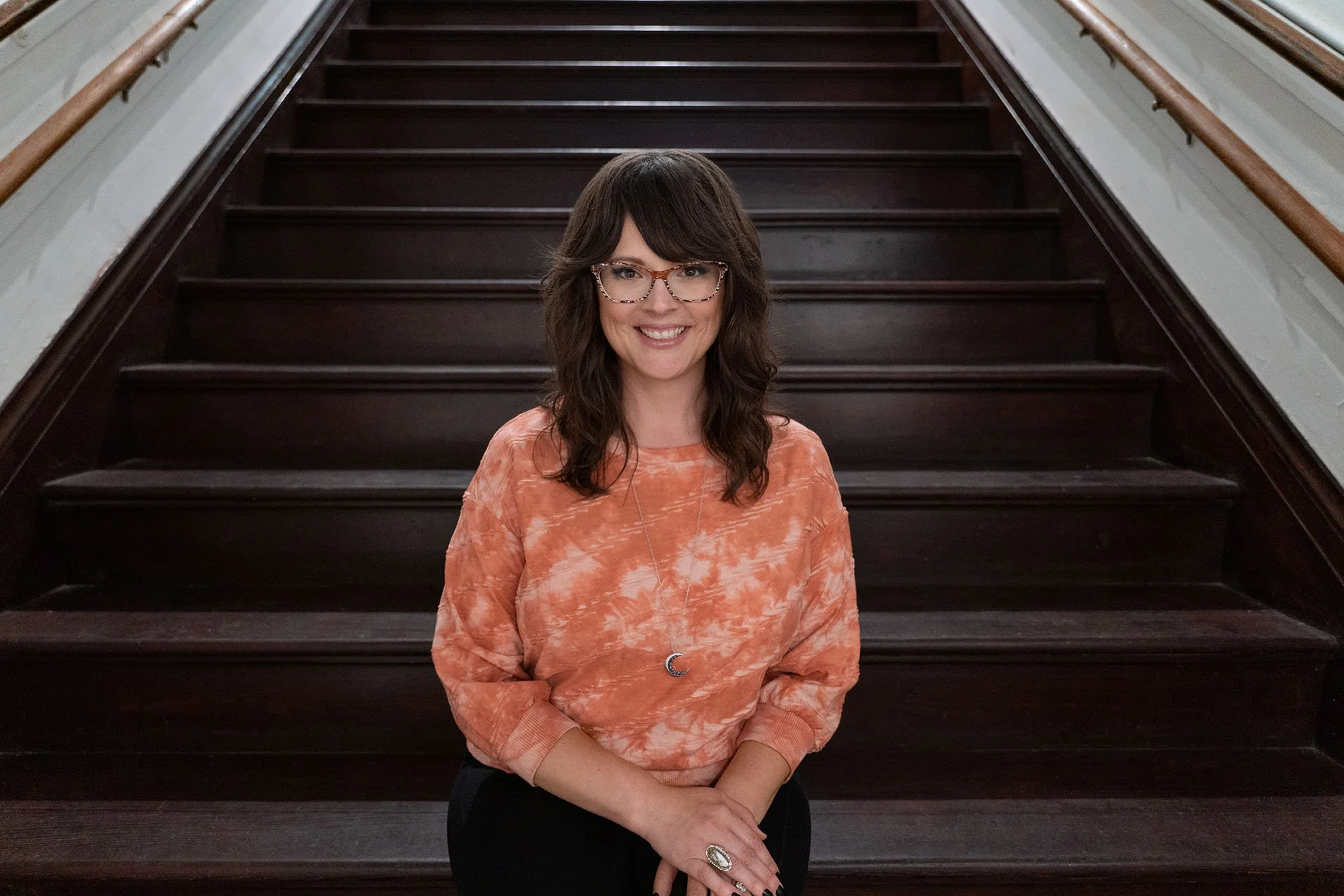
Hello, I'm your host, Brandi Fleck, and the story you just heard is my memory of a friend dying when I was 21. It was pretty traumatic at the time, and I will never forget it.
I'm going to talk about death and dying in this episode, and we're going to think about it literally and figuratively. The point being that death brings new life.
To put it another way, when one door closes, another opens, or endings signify new beginnings. Spring is about to be here. All the foliage around us will start to bloom after having died off during winter. Life comes back. Death in winter is necessary for new growth and all that.
So here we are on the precipice of a new beginning. Death and dying has been on my mind in some form or fashion since I was 15 because that's when the people closest to me started passing away.
My great-grandmother, who helped raise me while Mom was in college, died when I was 15. She was 78.
As I mentioned earlier, Darlene died when I was 21. She was 26. My stepdad that my mom and I talked about in last week's Episode 18, he passed away in March of 2011. I was 27, and he was 50.
Two weeks later, my best friend, who I had known since I was eight, died in a car crash at 27, similar to how Darlene died. He was driving and hit a tree.
We are actually in the time period in March right now that is between the two death anniversaries of my former stepdad and my late best friend.
My grandma on my mom's side passed away at 67. I was 30.
My grandfather on my dad's side passed away this past summer, and shortly thereafter, only three days before this podcast was to launch in October of 2018, my ex-husband, my son's father, who was only 33, was suddenly gone. He died, and we're still dealing with that and working through that.
My late ex-husband is the only other person I've seen in the closet-sized room at the hospital just hours after passing, with a breathing tube and IV still hooked up and all the other things that get stuck on you as a result of paramedics or healthcare professionals trying to save your life.
I remember the colorlessness of his lips and his hands too, and I'm glad I got to see him, hold his hand, and look at his hand one last time in awe of how much my son's hands look like his.
Because I saw Darlene in a similar circumstance when I was younger, I was prepared when I got to the hospital to see my late ex-husband. By prepared, I don't mean I was fine. I was quite the opposite, but I knew what the scene would look like and wasn't necessarily startled by it and all the medical equipment.
So death is an inevitable part of life, if not only part of being human, but of being alive. No matter what kind of animal or plant you are, or any living thing, whether you're an ant, fish, mouse, lion, even a tree or a flower, a person.

We can talk about how we experience death from the perspective of loss and grief, but we can't really talk about it from the perspective of having been there. The mystery of it and the seeming finality of it can make it scary.
Part of how I deal with feelings of fear about a topic is to learn about it, to try to unshroud the mystery around it, whatever that is.
Part of what helps me deal with grief is not only learning about what a person went through and experienced, but also knowing deep within my heart and soul, having real faith that there is an afterlife, that there is a higher power.
So let's go on a tangent now for a minute, shall we?
I have never been able to understand why creationism and science are two separate camps of thought. They go together hand in hand, and it doesn't make sense to me.
Finding Common Ground Between Science and Spirituality
That they wouldn't. Science can be an explanation of how something happened, but it's not really an explanation for why something happened.
For instance, God said, "Let there be light," and there was light. Genesis 1:3.
And God said, "Let the earth bring forth living creatures of every kind." Genesis 1:24.
Nowhere does it say that it only took a split second. Nowhere does it say, "Poof," it just appeared.
Who's to say a process involving energy, matter, and all the parts that make up what we know of as life today didn't start working their way together in the primordial soup at God's command, only to become what it is today through evolution?
One side does not have to have a stigma to the other side. Seeing scientific evidence of something spiritual doesn't mean you're not spiritual. It also doesn't mean you're sacrilegious. Believing that there are unseen spiritual phenomena at work when physical scientific evidence comes together does not mean that you're unintelligent.
To think we can see all that exists is very limiting in a universe that is really limitless. And y'all, why does evolution happening mean that God doesn't exist? It just doesn't.
Spirituality and science don't have to be mutually exclusive. Look, I just said that like it's a choice, but it's not a choice. So let me say it again another way.
Spirituality and science are not mutually exclusive. So it would seem that we just went on a tangent, but we really didn't.
The law of conservation of energy states that energy can neither be created nor destroyed. So what happens to our energy once it disperses from our physical body? It doesn't go away. It is released, and it transforms.
Why the Law of Conservation of Energy Changed Her Perspective on Death
So let's go all the way back to the beginning for an example.
When I was a young toddler to a young teenage mother, I was walking and talking, so probably about three-ish. I had no preconceived notions of what life and death meant. I didn't know what energy was.
I fell backwards off of a countertop in the kitchen. I remember it vividly, except the one part that's fuzzy is I don't know if Kenny Rogers was actually playing in the background. I've superimposed a Kenny Rogers playlist over all my memories from the late '80s. Granted, my mom listened to him a lot, but I can no longer tell when it was really there.
But anyways, music was on. It was probably Kenny Rogers. So Mom said, "Be right back. Don't move, okay?"
I stayed facing the cabinets with my back to the fall. My body flinched, as toddler bodies do, and I tumbled backwards right into a misty sort of translucent formation. It almost looked like the heat coming off a hot blacktop at the height of a Tennessee summer, but not quite.
And I am not kidding at all. I comfortably, slowly, and with no surprise to my own toddler brain, floated right to the floor without a scratch. I was set down gently.
Now, my family likes to joke that I fell so hard I only think I floated, but I really did float. I'm really not kidding.
I ran to where my mom was, and she asked me how I got down. She tells me that I told her I floated. Was it a spirit? Was it an angel? I don't know. I wish I did.
But what I do know is that whatever helped me to the ground was energy.
Looking to Near-Death Experiences for Answers About the Afterlife
Thank goodness. The closest we can know about death and learn about what it's like to die is by listening to those who have had near-death experiences, talking to those who take care of the dying, talking to those who have the ability to communicate with spirit, and by being strong in our own spirituality.
I recently read an article called "What It Felt Like to Almost Die" by Christen O'Brien.
The author talks about what it was like as she was physically dying. She talks about what she felt physically and emotionally, and what she saw, thought, and knew as truth in that moment. She talks about what she heard, not with her ears, but with her soul.
I heard something with my soul once, probably more than once, but I clearly remember this particular occasion.
I wasn't dying, but my grandma had just died, and my marriage was dying. Fast forward to the beginning of August 2014.
My son was 10 months old. My husband at the time was sick with a chronic condition. He lived in his own world, and I lived in mine, which was separate from his. It was very lonely for both of us.
At the time, we were renting a cute little white house with a red door and a front porch that spanned the whole front of the house.
I had been a stay-at-home mom since our son was born. I found out that's not my purpose in life fairly quickly and went back to work when my son was 15 months old, but that's a story for another day.
I was trying to keep a freelance graphic design business going, had launched an Etsy store in the early spring, was taking care of and playing with my son, was traveling an hour and a half round trip to my grandmother about three or four times a week with my baby to cook dinners, clean some, and visit while she was dying.
It was hard keeping our heads above water.
So I called in family reinforcements to get the house landscaping back in shape because I just couldn't do it on my own.
And y'all, my entire family, except Grandma and Grandpa, of course, showed up with hedge trimmers, weed eaters, chainsaws. I made chicken sliders for everyone's lunch, and for something like eight hours we mowed, pruned trees, did flower beds, edged the yard and flower beds. It was immaculate.
During this huge cleanup out back, we cut down what we thought was a dead rose bush. I pulled out what I could, and Mom cut the rest down flush to the ground.
Then fast forward a few days into September 2014.
I look in the rose bed, and one single red rose had not only sprouted up by about a foot but was in full bloom. One rose. It had a weed wrapped around it, but it was so beautiful.
It meant so much to me to see this rose rise from what was dead. I had a little glimpse of hope.
Why Death Brings New Life Even During Our Hardest Seasons
Then fast forward to one month before the divorce was filed. This was spring of 2015, beginning of the summer.
I'm in the shower weeping, sobbing, breaking down. The grief of my grandma passing seemed almost too much to bear. My marriage was also falling apart, and it seemed almost too much to bear.
My heart was racing. My mind was racing. My soul was aching. And then I heard it.
"Death brings new life."
This stopped me in my tracks. I caught my breath and stood there, not moving, trying to process what had just happened.
It was a man's voice, and I had this overwhelming feeling that the message applied to all things in the universe, not just my grandmother's death.
It applied to my marriage. It applied to the rose bush I had cut down, not knowing it would come back. It applied to death in general not being the end.
Beginnings come from endings. Endings are a form of healing. Endings are new beginnings.
When one door closes, another opens. Death brings new life. So ultimately, no matter what happens, the point is everything is going to be okay.
You're going to be okay. I'm going to be okay. As a society, we're going to be okay.
I believe it, and I truly hope you believe it. Thanks for listening, guys.
Join the conversation!
Feel free to share your own experience and let me know if you have any questions in the comments.
Related Posts
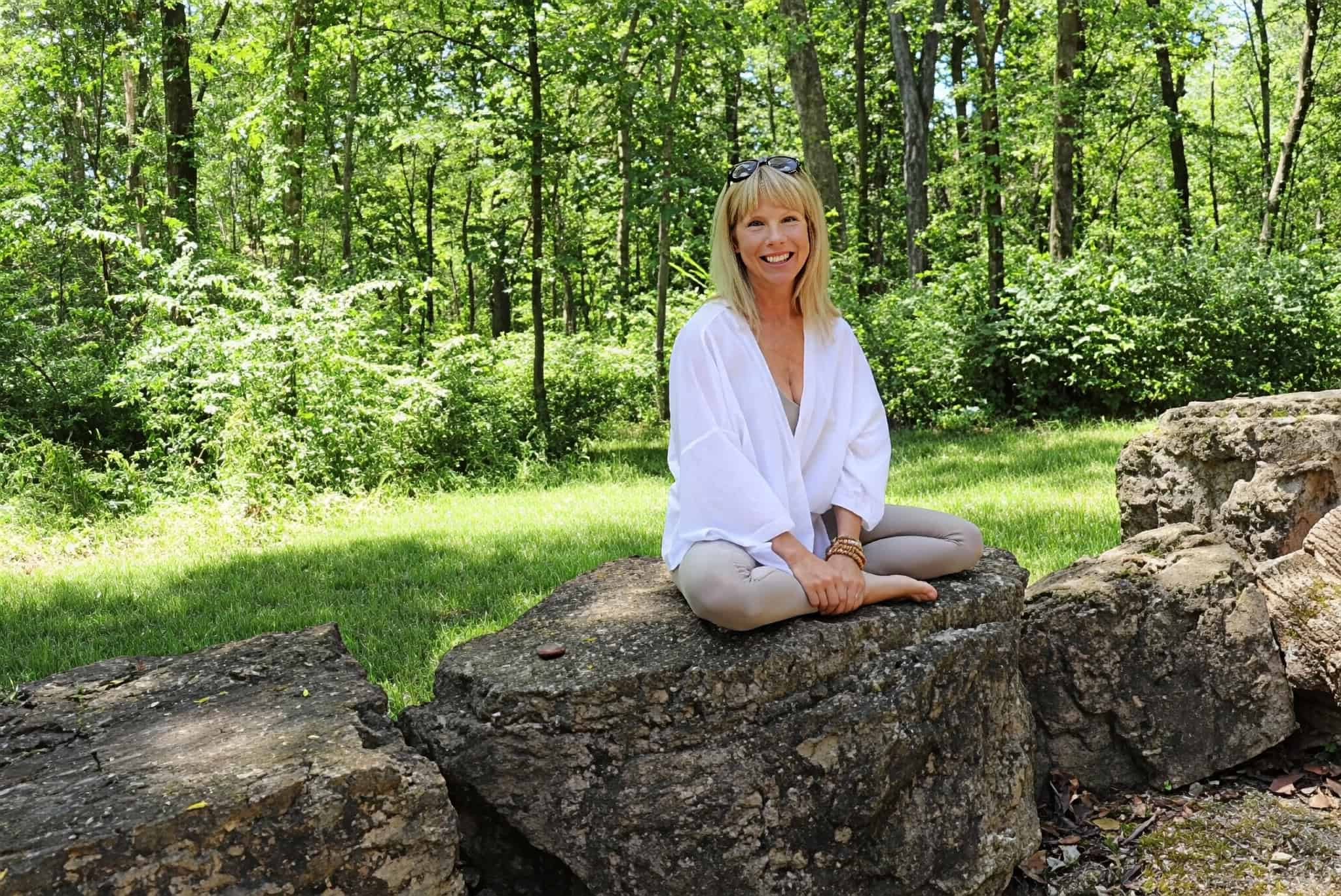


Hi, I’m the founder of Human Amplified. I’m Brandi Fleck, a recognized communications and interviewing expert, a writer, an artist, and a private practice, certified trauma-informed life coach and Reiki healer. No matter how you interact with me, I help you tell and change your story so you can feel more like yourself. So welcome!
Find More on the Blog
Topic
- ADHD
- AI
- Atlanta
- Black and BIPOC
- DIY
- FAQ
- LGBTQIA plus
- Los Angeles
- Nashville
- Seattle
- St Louis
- St. Louis
- UFOS/UAPs/ETs
- abuse
- accountability
- addiction and recovery
- adoption
- affirmations
- afterlife
- altered state
- angels
- animals
- anxiety management
- art
- astrology
- atlanta
- attachment
- awakening
- beauty
- behind the scenes
- being human
- body image
- body work
- boundaries
- brandi fleck
- breathwork
- bullying
- burn out
- burnout
- cancer
- career
- caretaking
- chakras
- channeled
- clarity-dive
- clarity-practice
- clarity-primer
- clean products
- coach
- codependency
Recent Blog Posts
Visit the Full Podcast Audio Archive

Affiliate