How Grief Changes You Forever
Interview By Brandi Fleck
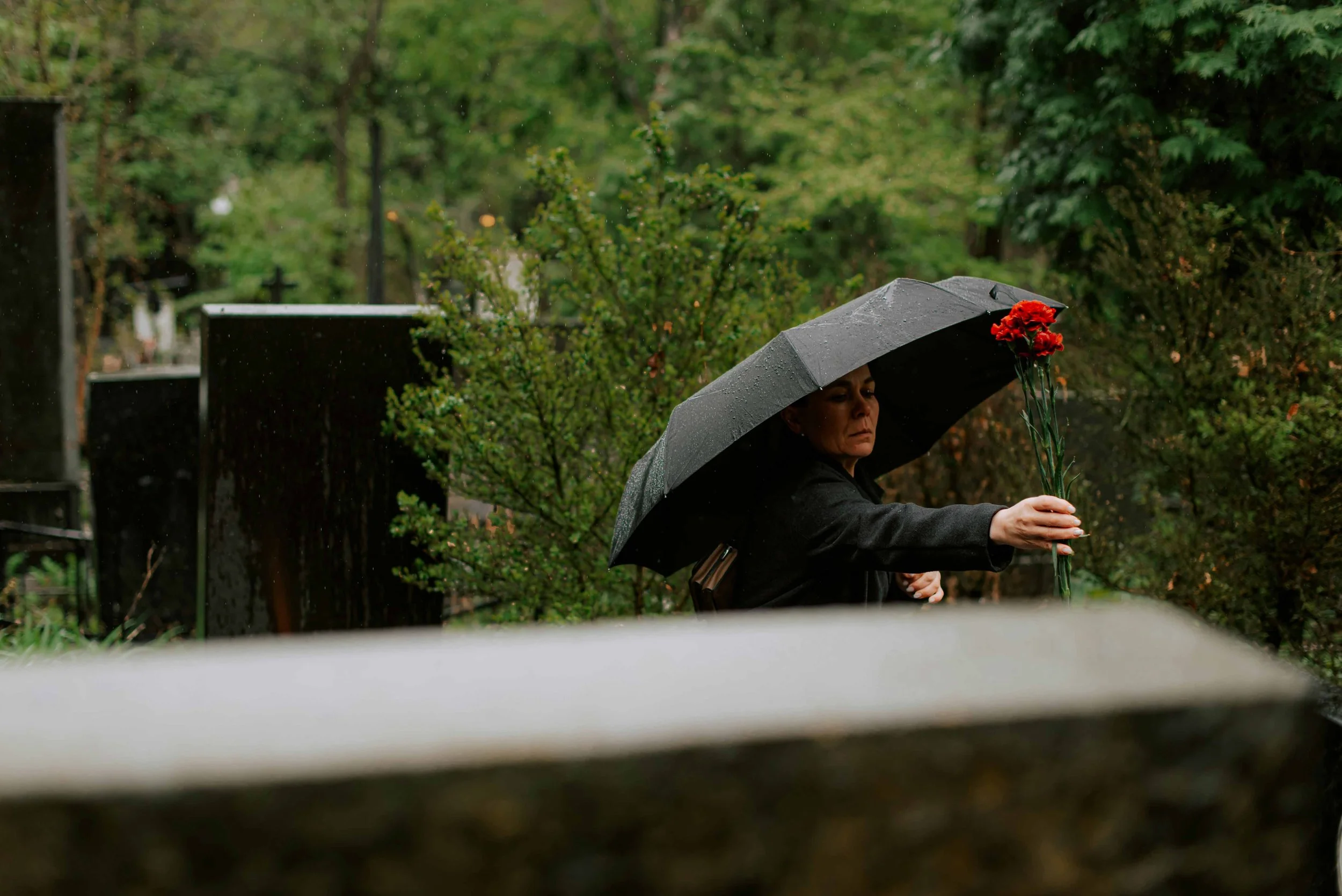
Laurah Jurca reflects on losing her husband and mother just 12 days apart, sharing how grief reshapes identity, relationships, and the long process of learning to live with loss.
Grief doesn't end after the funeral. It follows you into ordinary moments, changes the way you think, and asks you to build a life that no longer looks the way you expected.
When Laurah Jurca unexpectedly lost her husband, she was thrust into a reality no one prepares for. Twelve days later, her mother also passed away.
She shares what it felt like to experience two devastating losses back to back, the challenges of navigating widowhood while still processing another loss, what has helped her survive the hardest days, and why showing up for someone in grief matters more than saying the perfect thing.
Listen to Laurah Jurca’s Interview
Watch Laurah Jurca’s Interview
When Life Changes in an Instant
Brandi Fleck: Being human means loving and losing people along the way.
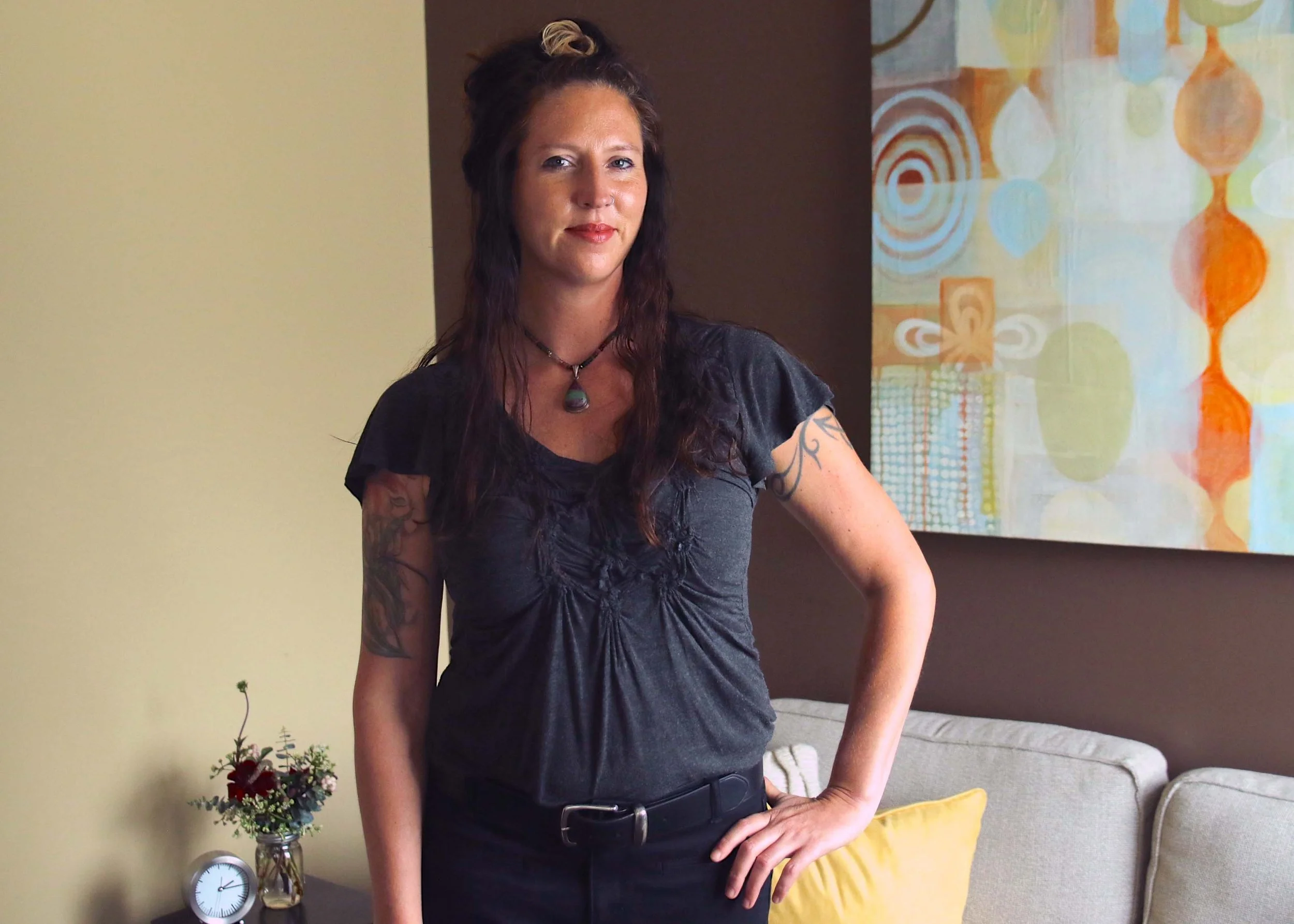
Laurah Jurca, originally from Roanoke, Virginia, and now hailing from Washington, D.C., after spending many years in Knoxville, Tennessee, is an ESL instructional coach, a historic reenactor, and a longtime friend.
I had been trying to get Laurah to come on the show since 2018, as she's such an interesting person. I truly am sorry we ended up landing on the topic of today's show, even though it's important, and my heart goes out to Laurah, and I want you to know that I love you, lady.
Laurah is a new widow who also lost her mom about two weeks after her husband in 2019. Laurah is experiencing a crushing, compounded grief that she opens up about as part of her healing and in hopes that it will help someone going through a similar grieving process.
I truly admire Laurah for sharing her sacred story with us today.
In this episode, Laurah talks about her relationships with her loved ones in the physical world, where they were at, and where they were going before they ended. She then describes the emotions she's grappling with now and how she's coming into her own and trying to heal and manage.
You'll get insight into the grieving process, how you may help a friend who's grieving, or perhaps realize you're not alone in your own strong emotions. You can realize that a person next to you could be going through the same thing and deserves grace.
Okay, guys, since this episode deals with death and dying, it may be distressing to some listeners, so keep that in mind before proceeding.
Now let's hear from Laurah. Welcome to the show, Laurah. Today, everybody, we are going to talk to Laurah Jurca, one of my favorite people on the planet, who I've known for a really long time. How are you doing today, Laurah?
Laurah Jurca: I'm okay, Brandi. It's good to talk to you.
Brandi Fleck: Yeah, it's good to talk to you too.
Before we jump into the main point of why we're here today, can you introduce yourself and tell our listeners who you are and what you do?
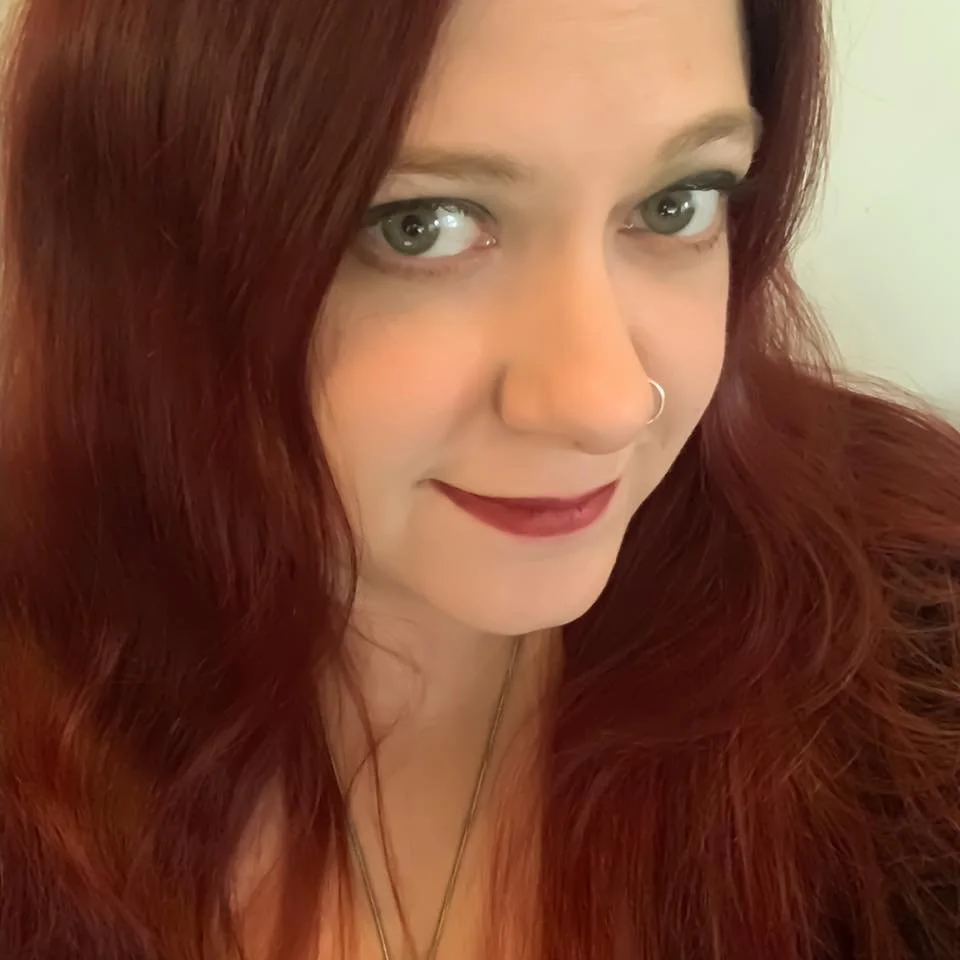
Laurah Jurca: I am Laurah Jurca. I am currently an elementary ESOL instructional coach in the D.C. metro area. I train and work with teachers who have English language learners in their classrooms.
Brandi Fleck: And you're fluent in Spanish, correct?
Laurah Jurca: I am, yes.
Brandi Fleck: That is so cool.
Laurah Jurca: And I have a few other languages under my belt too.
Brandi Fleck: Awesome, awesome. What would you say is the most important thing in life to you?
Laurah Jurca: People. Definitely the people that I choose to surround myself with. I'm very selective about the people that I spend a lot of time with and the people that I consider important.
That is probably the most important thing in my life, is my people, my friends.
Brandi Fleck: Gotcha. That makes a lot of sense. We're primarily here today to talk about grief, compounded grief, being a widow, and what you're going through in that regard.
So your husband passed in August of 2019, and shortly thereafter your mom passed. Were those losses unexpected? Give us a little context around that.
Laurah Jurca: Both losses were completely unexpected.
I got the call about my husband while I was on vacation in Pennsylvania, and pretty much I went and spent a week with him in the hospital, and then he passed.
Pretty much as soon as I wrapped up his funeral, I got a call that my mom was having emergency surgery and went straight to her hospital room.
It was basically a straight month of sitting in hospitals, planning funerals, and that sort of thing. But yeah, both losses were very unexpected.
Brandi Fleck: Gotcha. So what happened with both of those?
Laurah Jurca: Well, I'll start with my husband. He had basically a massive heart attack, a very sudden massive heart attack.
Like I said, I was on vacation. He had been drinking, and he was chatting with his roommate, a good friend of ours. She said he was fine. He was cheerful, he was upbeat, and then he went to the bathroom.
When he came out, he told her something was very wrong and she needed to call an ambulance.
He coded before the ambulance arrived. He coded for 20 minutes on the way to the hospital. They finally got a heartbeat back, but then when they moved him from the emergency department to the ICU, he coded again for about another 25 minutes.
So all in all, he lost his heartbeat for about 45 minutes. Of course, the brain without oxygen for that long does not function right.
Brandi Fleck: Like brain damage definitely occurred, right?
Laurah Jurca: Yes.
Brandi Fleck: And he was in his 30s, correct?
Laurah Jurca: He was 34, yes. Okay, with Mom, she was in treatment for a tumor. She was undergoing chemo, and the tumor was shrinking.
It wasn't the cancer that killed her. She basically died from complications of the chemo. It caused her bowel to rupture.
She ended up having a colostomy, and then from there things just went downhill very quickly.
Up until that point, her treatment had been going very well. She was doing very good, so we had no reason to believe that this round of chemo would be any different.
Brandi Fleck: Well, I'm really sorry about all that. We've known each other for years, and I know this was devastating. So I'm glad you're here today to talk about it, to sort of help others and let people know what you're going through.
Most importantly, are you okay today?
Laurah Jurca: No, I'm not. Yeah, I'm functioning. I keep going. I have good moments. I have good days, but I have a lot of bad moments and days too.
So am I okay? No. But I'm here. I keep going.
Brandi Fleck: Sure. Do you have hope that eventually you'll be okay?
Laurah Jurca: No. That sounds really negative when I say that, but grief, especially this kind of grief, is something that changes you forever.
I will never be the same person again. So I have hope that it will get easier, but I don't think I'll ever be okay, if that makes sense.
Brandi Fleck: Sure. So listeners can get a glimpse of who your loved ones were in life. Can you tell us what your life was like growing up?
Laurah Jurca: I had a good childhood.
My parents made sure that I had everything that I needed and some of the things that I wanted, and kept me on the straight and narrow as much as you can keep me on the straight and narrow anyway.
I didn't have a particularly difficult or memorable childhood. It was fairly normal, I guess.
Brandi Fleck: Do you have any standout memories that are the epitome of what your childhood was like?
Laurah Jurca: I have memories of vacations and things like that with my parents. That's one of the things that they did, is they made sure we traveled and went places.
Probably one of the most memorable is the year that we had our Spanish exchange student. That poor girl, we dragged her all up and down the East Coast. We did so many fun things together, so yeah, that really sticks out.
Brandi Fleck: Awesome. So it sounds like they helped mold you into a more worldly person, which might be some of the reason why you focus on ESL and maybe the way your career has gone. Would you say?
Laurah Jurca: Yeah. They made sure that I had opportunities, opportunities that they didn't have, so chances to travel overseas as a teen and things like that.
Brandi Fleck: Yeah, that's awesome. So can you describe your relationship with your mom and characterize it for us?
Laurah Jurca: Mom and I often had a difficult relationship. We were not as close as I would have liked, or I think as she would have liked.
My mom was almost 40 when I was born, so she was very old-fashioned. She was the type of person who called her mom every day and didn't quite understand why I didn't want to talk every day.
I love my mom. She's a wonderful lady. We just weren't as close as I would have liked.
Brandi Fleck: Well, I know she loved you very much.
Laurah Jurca: She did, and she was so proud of me. I loved her very much. My mother's a very religious person, and I am not.
Brandi Fleck: Gotcha.
Laurah Jurca: So there are some differences in viewpoints and things there that probably interfered with our relationship a little bit.
Brandi Fleck: Gotcha.
Life After Losing a Spouse
Can you describe your relationship with Mike, your husband, and characterize it for us?
Laurah Jurca: Epic, I guess, is the word that I would use.
He and I met when he was 17, and I was just barely 18. We had a few hiccups along the way before we even got married.
Marriage is wonderful, and it's beautiful, but it can also be messy, and we had some of those messy times along the way.
But overall, we loved each other so fiercely.
It kind of breaks my heart that he's not here anymore because once you've had somebody love you that way, it's really lonely when it's gone.
Brandi Fleck: And you guys were together for more of your lives than not.
Laurah Jurca: I would say we were together basically half our lives. Seventeen years.
Brandi Fleck: Yeah, yeah. So how did you meet Mike? Can you tell us the story of how your love began?
Laurah Jurca: Sure. I think, were you there that night, Brandi?
Brandi Fleck: I was.
Laurah Jurca: I thought so. Yeah, so you and I used to go to the 11th Street Coffee House in downtown Knoxville.
Brandi Fleck: Oh yeah, for goth coffee night.
Laurah Jurca: And we were there one Friday night out on the back porch. It was cold because it had to be in November.
He and some of the other guys were fencing on that back porch, and I thought he was cute.
I guess he thought I was cute because I was cold, and he gave me his hat and his coat.
Then I remember when we parted ways that evening and I gave him his hat and coat back, he said that he really liked me, but he could never date another Laurah because the last one broke his heart.
Brandi Fleck: So did you go on a date after that?
Laurah Jurca: I don't know that it was really a date.
You know how relationships sometimes go. You just kind of start spending lots of time together, and it goes from there.
We met up at some other coffee nights and goth events and things like that.
Brandi Fleck: Right. And I remember you guys talking on the phone nonstop for what seemed like months because we were in the same dorm, and if you weren't together, you were always talking.
He snuck into the dorm once. It was an all-girls dorm.
Laurah Jurca: I was actually just telling somebody about that the other day.
Brandi Fleck: We put that Bettie Page wig on him, and we put some of my clothes on him, and somebody that did acting or something had some fake boobs.
Laurah Jurca: Mm-hmm, like silicone.
Brandi Fleck: Yeah. So we put him in one of my bras and some of my clothes and those fake boobs and a Bettie Page wig and snuck him into the dorm because you were gone for the weekend.
The plan was to tell them—and this is what we did—we told them he was deaf so he wouldn't have to talk.
We pulled it off, but like a year or two later, one of the RAs was like, "I mean, you know we knew, right?"
And I was like, "You did?"
That's pretty funny. That's how I remember your guys' relationship for the most part. There were always some kind of funny antics going on, no matter what.
Laurah Jurca: Oh, always. Antics and adventures.
Brandi Fleck: Yeah, yeah. Can you tell us where your relationship was when Mike passed?
Laurah Jurca: We were separated.
We were trying to work past some difficulties, which makes losing him even harder because I feel like we wasted the last of the time that we had together.
Brandi Fleck: How long had y'all been separated?
Laurah Jurca: Maybe eight months. We were working things out, figuring it out.

How Grief Changes Your Daily Life
Brandi Fleck: What has your journey through grief been like, from the beginning until now?
Laurah Jurca: Really difficult. That doesn't even really put words to it.
The first couple of months, I was almost just numb. I didn't believe it.
Even still, there are some days where I just can't believe either of them is gone.
Losing Mom 12 days after Mike, one of those alone is a lot to deal with and process, but both of them at the same time… honestly, it's overwhelming.
I don't feel like I've had time to adequately, or to even really start to deal with Mom's death because I'm still trying to deal with losing my husband.
Brandi Fleck: That makes sense. So how has your life changed?
Laurah Jurca: The day-to-day hasn't changed a lot because my mom lived four hours away.
Small things. She used to mail me cards for holidays. It sounds really dumb, but I didn't get a Valentine this year. Mom used to always send me a Valentine.
So I guess the day-to-day hasn't really changed other than with Mike. I come home to a cat instead of a husband.
I had to learn to do things like hang curtains and use a drill and all of the other things that he used to take care of.
Brandi Fleck: Do you notice now more the things that he took care of?
Laurah Jurca: Yes, I do. Just like they say, you don't realize something until it's gone.
So yeah, now that he's not here, the things that he used to do are really obvious to me.
Brandi Fleck: Well, what's your support system like? Because I know in times like these, that's really important. So how's that going?
Laurah Jurca: Honestly, my friends have been amazing and wonderful. I really couldn't ask for more.
It's hard because people don't know how to deal with grieving. So I have people who check in on me frequently, especially my mom's friends and stuff like that. I've gotten some really nice cards.
My biggest support has been my little sister, Anastasia. She's not a blood sister, but we do reenactment together, and she's my hero.
She and her family have put up with me crying on their couch and being a zombie in their house, making sure that I'm eating and the basic things that I was too distraught to think about.
Brandi Fleck: You mentioned the reenactment. Can we talk about that a little bit?
You did that with Mike. That was one of the primary things you guys did together.
Have you gotten out of that, or are you getting back into it? How's that going?
Laurah Jurca: I'm going to keep doing it. Mike and I started our own household, I guess is the best term that people will understand.
Laurah Jurca: Within the reenactment scene, he and I founded a group. We put it together five or six years ago, and that group has really grown. We are very much like a family. I know that I can count on them for anything. They will help me keep Mike's legacy alive.
Brandi Fleck: We got into this conversation, we were sort of led here by talking about your support system, and it sounds like many of your friends and close people are in reenactment with you. You mentioned your little sister who's been helping you through, making sure that you've had food to eat and you were there with people.
What are examples of some of the things that have helped you get through the days when you have to sort of wake up and go through the motions on your own? You still have to go to work, right? You still have to do these things. What are some things you do to make sure you get through it?
Laurah Jurca: I make sure to take my meds every day. That's a good start.
Other than that, every day is different. One of the biggest things that helps me right now is my kitty cat, my Hannibal. He seems to pick up on my mood, I guess, and when I'm sad, he just wants to snuggle.
I just try to do the best I can to get through. Focusing on my work helps. I really like what I do.
But lately I just feel... I don't know. I've heard it referred to as "widow fog." I don't feel like my brain works as well as it used to right now.
I'm forgetful. I'm a lot more scattered than I used to be, and I have trouble concentrating sometimes on whatever I'm trying to work on.
How to Help Someone Who Is Grieving
Brandi Fleck: So if someone listening wants to know how to help a loved one who is grieving, in your experience, what can they do to help?
Laurah Jurca: First of all, reach out.
So many people, I've noticed, are worried about saying the right thing, and there is no right thing to say.
There's definitely wrong things to say, but there is no right thing to say in a situation like that.
So even if you don't know what to say, reach out and just be honest. "I don't know what to say, but I'm thinking about you. I'm here for you." That sort of thing.
That was really helpful for me, and just the number of people that would message me and say, "Don't worry about responding. I just want you to know..."
That really meant a lot because I didn't feel pressured to respond if I didn't have the spoons to do so.
Brandi Fleck: Gotcha.
Laurah Jurca: Other than that, a lot of people say, "Well, tell me what I can do to help."
The offer and the sentiment behind that is really appreciated, but when someone is especially freshly grieving, they don't know what they need.
People would tell me that, and I'd think, "Yeah, there's a hundred things I need. I can't think of any of them right now."
So maybe just finding something to do that you can manage.
One of my widow friends said that one of her good friends did her laundry for like two weeks. She would just leave it on the porch, the friend would come by, pick it up, and then bring it back.
So just something, one thing that she had to not worry about. I'm from the South, and food. When people die, it's always food.
Brandi Fleck: Yeah.
Laurah Jurca: Just something to make their life easier that they don't really have to necessarily think about, if that makes sense.
Brandi Fleck: Yeah, that makes total sense.
Laurah Jurca: Also, don't stop inviting a grieving person out. They might say no. They might say no a lot of times, but just being asked goes a long way. Really, the most important thing is being present.
It's really hard to stand on the edge of someone else's grief because as humans, we want to fix things. We want to say the right thing and make it better.
Brandi Fleck: Yeah, right.
Laurah Jurca: Just having somebody there who's willing to listen and cry with you and scream into the void with you is a really powerful thing.
Brandi Fleck: Yeah. Just sort of accept that you're in this state and don't try to change it. Just let it evolve as it does.
Laurah Jurca: Yes. The biggest thing that I've learned is grief is so different for everyone.
People handle things differently, and even for one person, the grief from day to day is different. It has to go on its own timeline for each person, and you can't rush it.
Brandi Fleck: Especially in your situation with the compounded grief, and you said that you haven't even had time to process your mom because you were sort of thrown into this situation with your husband.
It seems traumatic. Obviously that goes without saying. It's traumatic, and it's going to take a long time to work through.
Mental Health After Losing Loved Ones
Would you mind telling us how this has impacted your mental health?
Laurah Jurca: Well, it was definitely traumatic. I had never seen anyone die before, and in a 12-day span I watched two of the most important people in the world to me take their last breath.
Before any of this happened, I already had a diagnosis of bipolar disorder. Yes, I'm getting help. I take anxiety meds, I take sleep meds, I take a mood stabilizer, and I take an antidepressant.
I do still have a lot of insomnia. When I do sleep, I have wild, vivid dreams. Bipolar probably makes this harder than it would be otherwise because sometimes, even when everything is going all right, I get into a bout of depression and it's hard to get out of bed.
Right now, getting out of bed is a victory.
Brandi Fleck: Every day. Do you think that you're in a place where you can describe some of the things you loved about your mom and some of the things you loved about Mike and who they were as people?
Laurah Jurca: My mom was so kind. I knew she was well-loved. I don't think I realized until the funeral and the visitation how loved she was.
The night of the visitation, hundreds and hundreds and hundreds of people came through. At one point, my dad and I were next to the casket, and I literally heard that the receiving line was down the hall, through the lobby, and out the door.
Some people even came in for a few minutes and then left because the receiving line was so long.
I knew she was well-loved. That really brought it home for me. She never met a stranger.
Then Mike, he was such a creative soul. Anything that he did, he went all in on it, and that includes loving me.
When he decided to do something, he gave it 100%. Mike and our best friend Dave did metal casting, and Mike was always doing research.
He had a GED because his dad died when he was 17, so he went ahead and got his GED. But I'm telling you, he was probably smarter than me. He could talk circles around me about theoretical physics and astronomy and things like that.
Like I said, when he decided to do something, he went in 100%. So when they decided to start metal casting, they built their own forge and basically learned how to do everything by themselves. They didn't have any experienced person teaching them.
Mike would do research, and he would make reproductions and things like that. He found some Roman beads that were basically just little penises, so he started casting a bunch of little penises.
Laurah Jurca: So I was like, "Well, now I want a necklace made out of these beads."
So he and Dave made me a necklace that had 18 little bronze penises on it.
Brandi Fleck: They were bronze? I was wondering what metal they were.
Laurah Jurca: They were bronze. The necklace had 18 of them, plus a goddess figure. It was really heavy. I mean, we're probably talking this necklace was like half a pound.
So they present me with this necklace, and I'm like, "You know, this is like some high priestess..."
Brandi Fleck: Yeah.
Laurah Jurca: "I feel like I'm the High Priestess of the Order of the Golden Phallus."
And they're like, "What?"
And I'm like, "Oh yeah, I'm starting the Order of the Golden Phallus."
And they're like, "What's the Golden Phallus?"
And I was like, "I don't know, but we need belt favors."
So I made a bunch of Golden Phallus belt favors. Mike's like, "Okay, so what's the Order of the Golden Phallus?"
And I was like, "I don't know yet, but we need a banner."
So I made a big Golden Phallus banner. As things went on, they're finally like, "Well, how are we inducting people into this Order of the Golden Phallus?"
So we settled on having a party. I think Olympics, only penis-themed.
Brandi Fleck: Okay.
Laurah Jurca: We came up with all of these penis-themed games, like Baseballocks. I won't even explain the rules. It's very complicated.
He carved a baseball bat into a penis for this game. So for a couple of years at Pennsic now, our camp hosts the Golden Phallus Games, and people come and they play the Golden Phallus Games and sometimes leave with a penis bead or something like that.
It was really a lot of fun coming up with all of the games and just the concept in general.
Brandi Fleck: Gotcha. That's awesome.
Laurah Jurca: I would say Mike was unashamed of who he was, and that's a good thing.
He was an example of how to be yourself and be proud of who you are and like the things you like and have fun with it.
Really, he had no fucks to give about what anybody else thought of him.
Brandi Fleck: Yeah.
Laurah Jurca: I always really liked that about him. That's never a thing I've been able to master. I've always admired that.
Brandi Fleck: When you come up with something you want to do or make, you guys just do it, and you do it.
I think that you gave him a lot of that strength to actually manifest things into reality, and he brought the creative, artistic side of it, and it resulted in some pretty fun stuff, I would say.
Laurah Jurca: Yeah. I was a big instigator for getting him to manifest the things that he had in his head.
I was a big push for getting him to start the metal casting.
He could have been talking about it for years, and then we were at Thanksgiving one year, and my brother, I don't know the correct term for this, but he reloads his own ammo.
If the casings are okay, then he refills them and uses them. But any casings that are too bent or whatever, he puts aside.
So he had this big giant bag of casings, and he was like, "You do this reenactment thing. Do you know anybody who can use this?"
And I was like, "We'll take it."
I was like, "Okay, Mike, now you have no excuse not to. We have the source of metal. You've been talking about building a foundry, so here you go. Now you have to do it."
Finding Meaning After Loss
Brandi Fleck: Awesome. Yeah, I've always loved that about you guys.
Is there anything else you want to talk about, put out into the world, about your memories of Mike and your mom before we wrap things up?
Laurah Jurca: I really miss both of them. My life is not as good without them.
Brandi Fleck: It's still valuable, though. You know that, right?
Laurah Jurca: Oh yeah, I know that. I still have a lot to give and to put out into the world.
It's just... you know when a light bulb goes out? It's a little darker than it used to be.
Brandi Fleck: Can you leave our guests with any parting wisdom?
Laurah Jurca: I guess the parting wisdom is, and it sounds really trite, but I learned this the hard way.
Tomorrow is not promised. I have a lot of guilt, I guess. My biggest advice is make sure you have no regrets.
If somebody close to you were to die tomorrow, what would you want them to know? What would you say to them?
Then say it. That's my best advice.
Brandi Fleck: Well, that's really good advice that I think we can all take to heart.
Laurah, I knew this was difficult. It's pretty close to losing these very important people, and I just really appreciate you coming on and sharing your story. Thank you.
Laurah Jurca: Thank you so much.
Join the conversation!
Feel free to share your own experience and let me know if you have any questions in the comments.
Related Posts







Hi, I’m the founder of Human Amplified. I’m Brandi Fleck, a recognized communications and interviewing expert, a writer, an artist, and a private practice, certified trauma-informed life coach and Reiki healer. No matter how you interact with me, I help you tell and change your story so you can feel more like yourself. So welcome!
Find More on the Blog
Topic
- ADHD
- AI
- Atlanta
- Black and BIPOC
- DIY
- FAQ
- LGBTQIA plus
- Los Angeles
- Nashville
- Seattle
- St Louis
- St. Louis
- UFOS/UAPs/ETs
- abuse
- accountability
- addiction and recovery
- adoption
- affirmations
- afterlife
- altered state
- angels
- animals
- anxiety management
- art
- astrology
- atlanta
- attachment
- awakening
- beauty
- behind the scenes
- being human
- body image
- body work
- boundaries
- brandi fleck
- breathwork
- bullying
- burn out
- burnout
- cancer
- career
- caretaking
- chakras
- channeled
- clarity-dive
- clarity-practice
- clarity-primer
- clean products
- coach
- codependency
Recent Blog Posts
Visit the Full Podcast Audio Archive

Affiliate