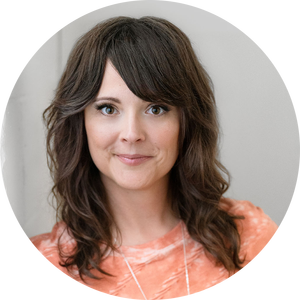
How Chronic Illness Changes More Than Your Health
Interview By Brandi Fleck

After years of unexplained headaches, brain fog, and chronic pain, Lynnette Henderson shares how a cerebrospinal fluid (CSF) leak changed her life and what she's learned about resilience, identity, and advocating for herself along the way.
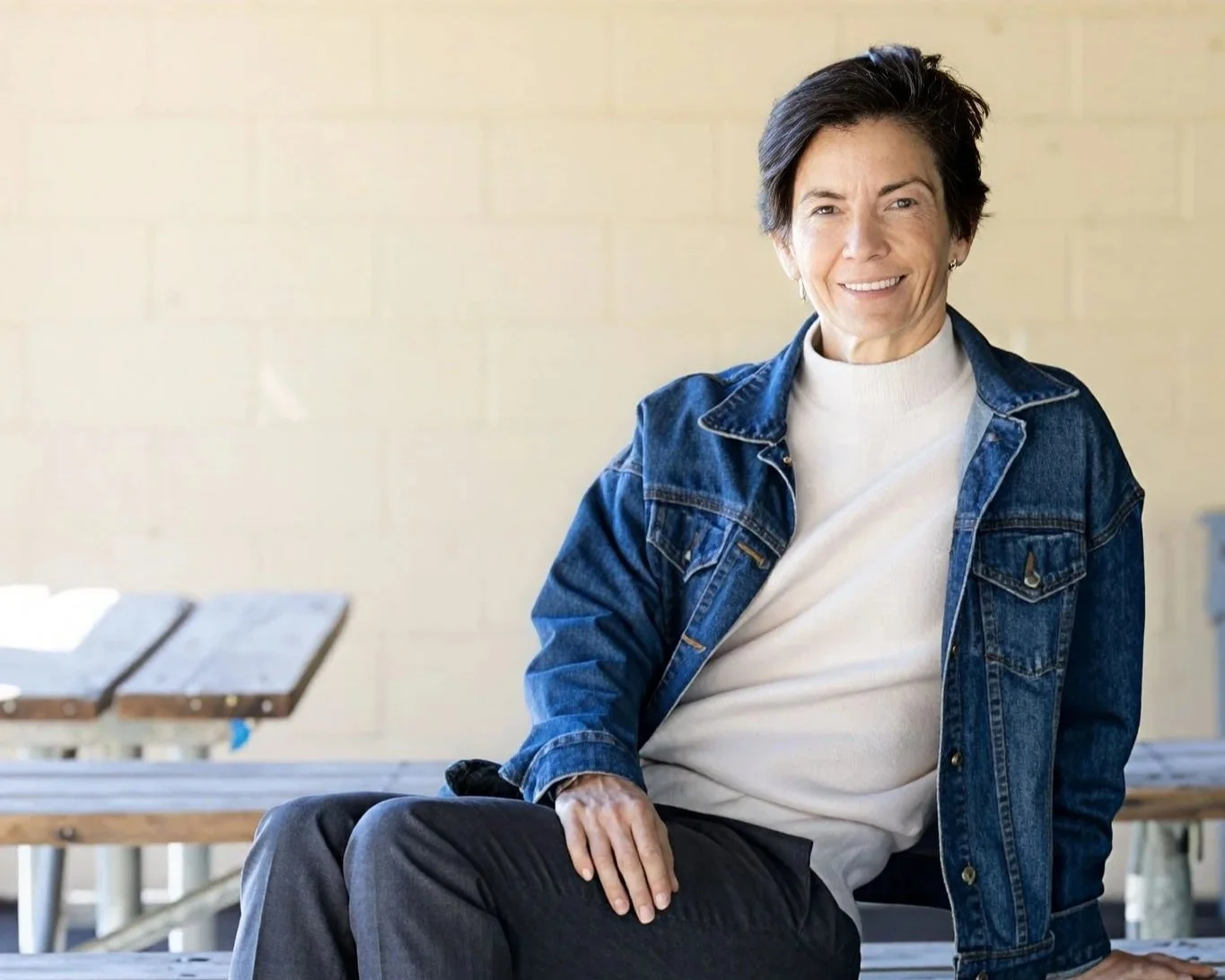
For years, Lynnette Henderson built a career around research, education, and helping others. Then chronic headaches, debilitating fatigue, and brain fog forced her to step away from the work that had defined much of her life.
After years of searching for answers, Lynnette was diagnosed with a cerebrospinal fluid (CSF) leak caused by Ehlers-Danlos syndrome.
She shares what it has been like navigating chronic illness, specialized medical care, and the uncertainty that comes with a condition few people understand.
She also reflects on the challenges of advocating for yourself when your symptoms are dismissed, the emotional impact of losing the life you once knew, and what it means to rebuild when your future no longer looks the way you imagined.
Listen to Lynnette Henderson’s Interview
Watch Lynnette Henderson’s Interview
A Career Built on Research and Helping Others
Lynnette Henderson: Being human is being. It's not a human doing.
For many years, I was so caught up in production and external validation that I had to have many conversations about the fact that we are human beings. We are not human doings. In my reduced circumstances now, that becomes especially clear, that all I am responsible for is to be. I don't have to do.
Brandi Fleck: Lynnette Henderson of Smyrna, Tennessee, has been a traveler, student, teacher, and trailblazer for most of her life. She was an early childhood educator and a teacher of teachers before getting her PhD in special education and neuroscience.
Lynnette has been an avid researcher for a living and pioneered programs around communication in children, autism, stress in parents of children with autism, and employment of people with disabilities.
Lynnette has had a busy and amazing career while also being a mother and wife, but her career was halted by a cerebrospinal fluid leak, also known as a CSF leak.
Lynnette opens up about what it's like living with her CSF leak caused by Ehlers-Danlos syndrome, which also results in depression. She tells us about diagnosis and the ups and downs of trial-and-error treatments. She also tells us about the impact on her daily activities, personal relationships, and her outlook on life.
One of the interesting points about Lynnette's story is that she admits to relying on external validation through her career for fulfillment, and she's had to recalibrate and relearn what it means to be human now with less productivity and more being in the moment as she is on a journey to improve her health and help others in the process.
You'll learn about the importance of education, blazing your own trail, but also about the importance of health as your foundation and being your own healthcare advocate. Plus, it's okay to embrace the being portion of our human existence. Now let's hear from Lynnette.
Brandi Fleck: All right. Hi, Lynnette. Welcome to the show. How are you doing today?
Lynnette Henderson: I'm about normal.
Brandi Fleck: Okay. That's always a hard question, "How are you doing today?" It's hard to answer with everything that goes on with you, right?
So what does normal mean for you?
Lynnette Henderson: The pain is there, but not debilitating. I'm able to get up for a while and do things for myself and around the house.
On days that are bad, that's not true. And on days that are good, I can push myself to go out and accomplish errands and things like that.
Brandi Fleck: Gotcha. So this sort of gives listeners a little preview of what we're going to be talking about today, but I just want to say real quick that I'm so happy to have you here.
I think you're such an intelligent and successful person, and I really want listeners to get to know you before we talk about the main topic of today's show.
Can you just let us know who you are as a person?
Lynnette Henderson: Okay. Well, let's see.
I have lived all over the South in multiple places, most often in Tennessee. The longest stretch I've ever lived anywhere is where I live now, and we've been 30-something years in this house. Before that, I was rarely more than two years anywhere.
So, in my heart, I'm a vagabond.
My family loves education. As I was growing up, my parents were going to college, and it was important to them that we go to college.
I got my first degree right after high school in three years in early childhood and elementary education. I taught for a year or two, and then I was home having babies. Then I worked at a preschool, and I got a master's in gifted and early childhood education.
Then I wanted to go ahead and get my doctorate, but at that time I didn't have a job anymore, and so I was kind of in this big limbo that was very hard.
Finally, in 1995, I started my doctorate at Vanderbilt University, Peabody College, in the special education department. My goal was to work on gifted education and neuroscience.
Brandi Fleck: Wow.
Lynnette Henderson: I was one of the first few who did that big crossover into neuroscience. At the time, there wasn't even a major that was neuroscience.
So it was an interesting journey in trailblazing.
The Kennedy Center has a well-known EEG lab that's run very well by my friend Sasha Key, but my dissertation is the study that set it up.
Brandi Fleck: Wow. Okay.
Lynnette Henderson: It was fun to be a part of that at the Vanderbilt Kennedy Center and the Vanderbilt special education department.
When I finished in 2000, it took me five years, which was longer than any of my cohort, but only one other person in my cohort had a child. I also was the only one doing groundbreaking work.
When I graduated in 2000, I started at Austin Peay, and I taught teachers in early childhood and special education. I trained teachers and did a lot of supervision of teachers.
I did that for three years, and at that point I was starting to miss research.
I checked back in with some of my mentors at Vanderbilt, and there was a postdoc available in autism.
My dissertation had been about early communication in typical children, but looking at the ways in which they communicate nonverbally, which is a deficit in autism, so it made sense. I had been...
Lynnette Henderson: I had been interested in autism for some time. I had done a research competency on it, so it was a good fit. I had a really great couple of years there.
Then I transitioned to the Vanderbilt Kennedy Center and ran their recruitment for a while. When we got a University Center for Excellence in Developmental Disabilities, I worked more in that.
Brandi Fleck: Okay.
Lynnette Henderson: I did a lot of what would basically be PR and media work in terms of being out and doing a lot of events and having a booth at conventions and conferences and such.
Brandi Fleck: Okay.
Lynnette Henderson: I also was involved in some of the first studies we did at Vanderbilt in sleep and autism. I helped get that set up.
I also was involved in our study of stress in parents of kids with autism. We did a treatment study on how to help parental stress for parents who have kids with disabilities.
Then I started working on employment of people with disabilities. I was involved in helping us get and run the five-year systems and policy change grant that was called TennesseeWorks.
Brandi Fleck: Okay. That is so much. That's more than you need.
Lynnette Henderson: No.
Brandi Fleck: That's awesome. It blows my mind. That's so amazing because how we knew each other before, you just knew me as Holly and Susan's mama.
Lynnette Henderson: Well, yeah.
Brandi Fleck: But I knew that you had gotten your PhD, but that was about the extent of it. So that's awesome.
It sounds like your career was really important to you.
Lynnette Henderson: Yes. Probably too important because a lot of my life was built around external validation that I got through work.
Brandi Fleck: Gotcha. Maybe more than it needed to be.
So what do you believe is the most important thing in life now?
Lynnette Henderson: Faith, family, health. I think health is undervalued by many people.
What A Cerebrospinal Fluid (CSF) Leak Means
Brandi Fleck: So that brings us to what you're here to talk about today, some health complications that you've been going through for a while, primarily a cerebrospinal fluid leak, which is also called a CSF leak.
Can you tell our listeners what that is?
Lynnette Henderson: Sure.
I have a genetic disorder called Ehlers-Danlos syndrome, and it means that the genes that tell my body to make collagen, which is the fiber in all of our organs and tissues, help my body make it badly.
Brandi Fleck: Okay.
Lynnette Henderson: It's just not well constructed.
So my joints and ligaments are too stretchy, and that's the hypermobile part. My tissues can be very fragile, and the tissue that comes to bear in the cerebrospinal fluid leak is the dura mater, is what it's called.
It's the thick covering around your brain and spinal cord that's designed to protect it and also to hold the fluid that it floats in.
So it's the balloon, if you will, that cushions your brain and your spinal cord.
People with Ehlers-Danlos are more likely to get a cerebrospinal fluid leak because our tissues are funky and not put together well. Also, collagen is in your bones, and so I also have a lot of bone spurs, mostly in my back.
What we have come to understand is that at least one of the places where I was leaking was where a bone spur was just poking holes in it.
Brandi Fleck: Oh.
Lynnette Henderson: Depending on how I would move or bend or whatever, it would poke a different hole. So there was a whole section around that bone spur that was porous, like a soaker hose.
I had surgery in April of 2018. It was hard to see the bone spur, but they could see it, and so they said, "Okay, we can fix that."
I went to LA to the top neurosurgeon who deals with cerebrospinal fluid leaks, and his name is Dr. Wouter Schievink.
Brandi Fleck: Okay.
Lynnette Henderson: He opened up my spine, and he had to hand off the bone spur, patch the porous part with a patch of artificial dura, and then sew all that back up.
That's what I had done, and that helped for four and a half months. Then I started leaking again.
Brandi Fleck: Do you know why you started leaking again?
Lynnette Henderson: Not for sure.
Brandi Fleck: Okay.
Lynnette Henderson: Because we haven't been able to find another bone spur. My assumption scientifically is that the process that caused bone spurs doesn't only happen in one place and that the likelihood of there being another bone spur is good. The fact that we can't see it to know where it is is just my bad luck.
Brandi Fleck: Gotcha. Well, what was recovery like for you with that kind of surgery?
Lynnette Henderson: It was a good few months before it quit really hurting, and it's still sensitive back there even more than a year later.
I'm still regrowing the nerves, so there are numb patches around it. Also, I have a dear friend who loves to hug me and pat me. Part of her hug is patting me on the back, and I have to say, "Whoa, whoa, whoa, whoa. Gentle."
She's learned that she has to change her hug with me. This was at the beginning of April, so at the end of May I started PT again to try and get normal strength back from having been in bed so long.
I left this part out. A CSF leak means that you don't have as much CSF cradling your brain.
Brandi Fleck: Okay.
Lynnette Henderson: So while it should float, it actually slumps down in your skull.
Brandi Fleck: Okay.
Lynnette Henderson: It may draw down through the foramen that separates the skull from the spine. The brain may sag down through there.
That's not very good for the structures that it does. It causes your meninges, which are another coating around your brain, to swell. It tries to make up the difference.
Your brain is constantly making CSF fluid, which is a good thing, but if it can't get down into your spine well because your brain is in the hole and is not where it should be, not floating, then it doesn't circulate well.
Brandi Fleck: Gotcha.
Lynnette Henderson: There's just a lot of things that can happen from it.
The First Signs Something Was Wrong
Brandi Fleck: Okay. So what is it like living with a CSF leak? What are some of the physical symptoms you experience, and also the emotional and mental consequences that come up?
Lynnette Henderson: I am genetically more at risk for depression because of the Ehlers-Danlos and some other genetic stuff going on.
I've actually been in some form of treatment or remission from depression since I was 28 or 29.
Brandi Fleck: Okay.
Lynnette Henderson: I probably could have used it before then, but that's when I started getting help.
I've been on antidepressants and have usually been affiliated with some form of a therapist almost nonstop since then, and I'm 58, so more than half my life.
The depression for me mostly makes me doubt myself. It makes it difficult for me to start things, and it does affect my sleep.
Sometimes depression shows itself as insomnia for me. Mostly it shows itself as needing more sleep. That's Esther making a guest appearance.
Brandi Fleck: Nice.
Lynnette Henderson: Having a CSF leak is not good for your brain. I started having headaches every day in 2010.
Brandi Fleck: Okay.
Lynnette Henderson: I'm not sure exactly why. It may have been that's when I finally started developing the bone spurs. It may have been because I had a wreck. I'm not sure.
But I started talking to doctors about, "I'm fatigued and I have headaches," in 2010, and they said, "Hey, you turned 50," and surprising that you're slowing down.”
I'm like, "No, no, no. You don't understand. Prior to this, I was an Energizer Bunny, and this is not normal."
So for years I was talking to different people about this and different medical people about why I feel this way, that sort of thing.
In 2012 they got really bad with a migraine-like focus. I have had migraines in the past, but not to the extent that I had then. Part of it was food allergies that I finally figured out caused my migraines. They're triggers.
But I also don't know how much of it was, was I leaking then? I don't know.
We don't know how long I've been leaking. Because I've had a headache every day since 2010, it started getting a lot worse in 2015 and 2016.
Brandi Fleck: Okay.
Lynnette Henderson: It was starting to interfere with my ability to work.
After I would have a big event where I would be on my feet or be really engaged and busy for two or three days, I would basically break down. I would have the flu, is what it felt like.
Brandi Fleck: Okay.
Lynnette Henderson: I would be in bed and sleep 20 hours a day and have a headache and hurt all over. Then after three or four days, I'd be fine.
I knew it wasn't really the flu, but I didn't have any other way to understand it.
Now I know that it was Ehlers-Danlos flares because I've done too much and asked too much of my body.
Brandi Fleck: Okay.
Lynnette Henderson: There may have been some element of CSF leak in there as well.
By 2016 I was having trouble getting to work on time. I was having trouble getting there more than three days a week. It was because the headaches were so much worse, and they were all the time.
In addition to the headache, there's also this real brain fog that happens because your brain isn't floating like it should be, and so it doesn't work as well as it should.
So I have trouble with word-finding and concentration. When your mind is supposed to be the major tool of your work and it's not showing up for the job, everything becomes very effortful.
Brandi Fleck: Right.
Lynnette Henderson: I also had very common symptoms, including neck pain and pain in the middle of my shoulder blades. Those are very common symptoms as well.
Brandi Fleck: Gotcha.
Lynnette Henderson: I couldn't figure out the position. One of the big markers for a CSF leak is that your headache goes away if you lay down.
Because I was still trying to work and everything, I just wasn't picking up on the positional nature of it.
So in 2017 I had to have an unrelated surgery on my abdomen, and I had to wear a binder for two weeks, this big elastic band that goes around your body.
I was like, "Wow. I must be on good drugs because my head doesn't hurt for the first time I can remember. My head is not hurting."
I put it off to the drugs, and then it didn't hurt, and it didn't hurt. I was like, "Wow. This is great. I feel wonderful. I don't know what it is." Then the two weeks were up, and I took the binder off.
I was hit with this massive headache that was worse than any I had before. It was not a migraine because I tried my migraine medicine, and it didn't touch it. I spent a week like this, and I'm like, "I don't understand what's going on."
So I started Googling around, as you do, and finally realized that it was positional, that if I laid down it would go away.
When I put positional together with the binder, I found out that those two things. The binder increases CSF pressure because it's increasing pressure throughout your body.
One of the things that they used to do was put a binder on to help people function with their CSF leak. They also mentioned there was this big rebound effect, that once you took it off, the headache came back with a vengeance.
I realized that's what had happened and that that's what was going on with me.
Most people don't think Google diagnostics is a good idea, but I have to tell you, most of us with CSF leaks diagnose ourselves, and then we go to the doctors and try to get some help.

The Long Road to Getting a Correct Diagnosis
Brandi Fleck: Interesting. You mentioned a little bit about some of your journey with going through the surgery and trial and error, figuring out what was going on.
How did you get diagnosed, and have there been trial-and-error treatments? How is that going?
Lynnette Henderson: I definitely diagnosed myself. Then I went to the emergency room and said, "I have a positional headache that was worse after I took my binder off."
You try not to tell the doctors what it is.
Brandi Fleck: Yeah.
Lynnette Henderson: But you lay the clues so that they come up with it on their own.
Brandi Fleck: Right. You have to know how this works.
Lynnette Henderson: Yeah. Anyway, they did an MRI of my brain, and they said, "Oh, it looks normal, except for places in the white matter," which is the covering of your nerve cells.
There are breaks in it which are consistent with migraine because apparently migraine permanently damages your brain.
Brandi Fleck: Good to know. Yeah, I didn't know that.
Lynnette Henderson: Yeah. It definitely does. They patted me on the head and sent me on my way and said, "Well, you need to see a neurologist."
They set me an appointment for August, and this was April. I said, "Well, that's not going to work for me."
So I checked around Vanderbilt since I was a dear Peabody College graduate and basically said, "This is what's going on with me. Do you have expertise in this field?"
Although Vanderbilt has some excellent people who work on cranial leaks, so those are when there's a leak in your head itself rather than in the spine, they have people who work on those and do really good work.
I didn't find anyone who worked on spinal CSF leaks. The symptoms are different, which is why I knew I probably didn't have a cranial leak.
So then I got online and found a Facebook page and a website, the Spinal CSF Leak Foundation.
Brandi Fleck: Okay.
Lynnette Henderson: It lays out all the symptoms and what to do and how to get diagnosed and stuff like that.
The Facebook group also said there are three major people. My thought was, if I'm going to have this done and I can't get it done at Vanderbilt, then I'm going to go to the best.
Cedars-Sinai in LA and Duke in North Carolina are the two major centers. They're trying to train more people at different places, but those are the two that do most of the research, have dedicated centers for that, and are leading the field.
Because I have children, I have two adult daughters in LA, I thought, "I'm going to go to LA because at least I'll have a place to stay."
Brandi Fleck: Yeah.
Lynnette Henderson: So I contacted Dr. Schievink with a letter in May of 2017.
I got scheduled to go and see them, and I saw them in late July of 2017, before I could have gotten into a neurologist at Vanderbilt.
Brandi Fleck: Yeah. Wow.
Lynnette Henderson: They do very specialized imaging.
You actually are put under, and they stop your breathing for a minute so they can do the imaging without the motion of your breathing.
Blood Patches, Surgery, and the Search for Relief
Lynnette Henderson: Then they do that one day, and the next day you'll come in and they'll do the patch.
An epidural blood patch is the first treatment. Basically, the idea is that they put a little blood on the outside of your dura and want it to run up and down wherever that might need to be so that it forms a scab over the hole so that it has time to heal.
I had that done at the end of July in 2017, and I got two and a half good weeks out of it.
Brandi Fleck: Okay.
Lynnette Henderson: Before I assume the bone spur poked my scab, and that was the end of that.
It was very discouraging because particularly my husband was under the impression that this would be a one-and-done, fix-it kind of thing.
I'd read enough stories online to know that that might not be the case, but I was thrilled when I got such good results.
The thing about it is that you spend all your time in bed, horizontal, and going out or doing anything results in pain and more time in bed.
Then you go and you have this treatment, and you get two and a half weeks.
Brandi Fleck: Yeah.
Lynnette Henderson: Then we decided that maybe I would try to see what Vanderbilt could do now that we'd identified the fact that I had a leak. Maybe they would help me.
Brandi Fleck: Okay.
Lynnette Henderson: In September I tried a different kind of imaging to look for the leak at Vanderbilt.
They don't do that in LA anymore because it's not considered to be as effective, but at Vanderbilt that's what they wanted to do.
It involved injecting dye into my CSF fluid, and then they were watching to see where it would leak out.
The only place they saw it was in my urine, so who knows what that meant. It didn't help them identify where it was leaking.
Knowing now that it was so porous, that makes sense that it didn't end up showing up much. Then I tried a blood patch in October at Vanderbilt. It was a very different system.
At Cedars, they do the blood patch. It's guided by fluoroscopy, so they can see where they're putting the needle and everything. Then they keep you flat for four to six hours so that the patch can form. They recommend that you stay flat for 72 hours after that, after you get home.
At Vanderbilt, I did it outpatient. I came in. They were able to get very little blood in me, and it hurt like crazy. They expected me to walk out right after it was done.
Brandi Fleck: Oh, good.
Lynnette Henderson: It did not help. It was the most painful one I've ever had.
Brandi Fleck: Okay.
Lynnette Henderson: When that didn't work, I got back in touch with people in LA.
I went back, and I had two patches the day after Christmas. Amy and I were in LA, and Holly and her family were in St. Louis with her husband's family.
My husband and my parents were in my house in Tennessee because my husband had just had his knees replaced and still needed help. So it was a very distributed Christmas.
Brandi Fleck: Gotcha.
Lynnette Henderson: They did two patches that time, one in my lumbar, which is where they do most of them, and then the other one in my thoracic region because they thought they saw that bone spur and they thought maybe that would help.
Brandi Fleck: Okay.
Lynnette Henderson: I didn't really have a definitive, "Yes, I'm better," or, "No, I'm not."
But by the end of January it was pretty clear to me that we hadn't gained anything. Also by that time my job was done, so that was a big transition.
In some ways I had been at home a lot anyway, just being flat, but it was difficult to leave that job that I loved.
Brandi Fleck: Sure.
Lynnette Henderson: At the end of January I got back in touch with my surgeon at Cedars and said, "Okay, this isn't working."
They had me come in at the end of March, and I spent four days in the hospital. They put a catheter into my spine and filled me up with saline so that they could see if I really did have a leak.
The thought was that if they filled me up and I felt better, then it was for sure a leak.
They filled me up, and I definitely felt better. It was wonderful to not have a headache for a change.
Also, as an indicator that my brain had started floating again, all my vitals went crazy.
My blood pressure would drop down to 60 over 40, and then the next hour it would be 120 over 90. It just went everywhere.
Brandi Fleck: Wow.
Lynnette Henderson: My temperature fluctuated. It was all those brainstem functions, the autonomic functions that should be going on automatically, just kind of had to reset after they started floating again.
That determined that, yes, I definitely had a leak. They decided that the bone spur was the most likely place to fix.
On April 2nd, we did the surgery. Like I said, I got four and a half months. I started leaking again at the end of July, first of August, in there. It's not exactly clear.
It seemed as though it was because of some overzealous PT.
We transitioned into a different phase of PT because I was doing okay, and after that I started having the positional headaches again.
I started talking to them in LA again and said, "Things aren't working."
They said, "Do a new MRI."
I had to wait, so I got that done here and sent it to them. I went out and had another blood patch. It was iffy how much it helped.
I had a better December. It's not clear to me whether it was because I saw my family as much as I did or if I actually was better.
Then in January I got in touch with my doctor, and I said, "Okay, look. It's clear to me that blood patches aren't helping. The one piece that did help was taking the bone spur off. What do we need to do next?"
The doctor basically said, "I don't think you have any more bone spurs, and you should just go see a headache doctor."
I thought, "Hmm. I'm not okay with that."
Brandi Fleck: Yeah.
Lynnette Henderson: So I got my information together, and I sent it to Duke, which is the other major place.
They are known for their innovative and groundbreaking ways of imaging. My hope is that Duke would be able to use their magic imaging to find another place to fix.
Brandi Fleck: Gotcha.
Lynnette Henderson: To find another bone spur or something. I sent my stuff to them in March.
At the beginning of March they got it, March 5th. At the end of March they asked for my imaging records from Cedars-Sinai in LA.
In mid-April I got a call that said, "Yes, we've looked at your stuff, and yes, we will be taking you as a patient."
Brandi Fleck: Awesome.
Lynnette Henderson: Yeah. "There are 80 people in front of you, so we don't know when it'll be."
Brandi Fleck: Oh, no.
Okay.
Lynnette Henderson: I called them two weeks ago, and they said it would definitely not be August. It might be September, more likely October.
How Chronic Illness Changed Every Part of Life
Brandi Fleck: Okay. It sounds like you've had a pretty long journey so far. You've done some trial-and-error stuff.
I'm hearing you say you're definitely your own advocate in terms of your healthcare and making progress in treatment that you want to see.
Lynnette Henderson: Oh, absolutely.
It's exhausting.
Brandi Fleck: Yeah. It sounds like it.
Lynnette Henderson: To manage this, I got a new primary care doctor in the hopes that they would become my guide and help me manage all the things because there's other stuff going on too.
She was like, "Yeah, I don't know anything about this."
She helps me get the pre-labs when I go to have surgery, and other than that she's just kind of like, "You do you."
Brandi Fleck: You're definitely managing that stuff. It sounds like you've had to cope with, you've mentioned transition. It's impacted your career.
Can you just touch on how your personal relationships have been impacted as you've been going through this?
Lynnette Henderson: Yeah. Well, it's not been positive for my husband.
I think the worst thing was it was a shock that we had to adjust to. Just his pay, we've done okay, but for a lot of families that might not have been the case.
I'd always been the one who carried our insurance, and now he had to do that.
Some of the things we did as a couple is we always went to church together, and on Friday nights we went to dinner and movies with our two best friends.
On Saturdays in the fall, we went to every Vanderbilt game, and we traveled, and we had a lot of fun.
That's just not part of our life anymore, and that's been very difficult for him.
Particularly the fact that it's hard for me to go to church. Getting ready is exhausting, and my insomnia is so bad that the only time I'm likely to be sleeping is at 9:00 in the morning because you can't guarantee that I'll be asleep at 3:00 in the morning. In fact, you can pretty much guarantee I won't be. But 9:00 in the morning, almost every day.
So you take what you can get.
Brandi Fleck: Yeah.
Lynnette Henderson: It's just been no fun. This is nobody's idea of fun. My girls have been fabulous supports, and that's been great.
I've actually gotten to see the ones in LA more often than I would otherwise because I'm going out there twice a year or once a year and laying on their couch.
I can read to my grandkids, and we find lots of ways to have fun that don't involve me picking up things or bending or twisting or any of the things I'm not supposed to do. But it constrains everything.
I've had lovely support from people at church who send me cards and tell me they're thinking about me, but I don't see people. As a former extrovert, that is hard. I say former because I've had a lot of personality change because my brain's not the same, so I'm not the same.
Being in pain does not lend itself toward having a rousing good time. When I'm out in public, everything is too loud or too bright or both because that's the way my brain works now.
Sitting up straight is difficult. When I'm at home, if I sit up, I'm in my recliner and I have a heating pad on my back, but I can't do that out.
Brandi Fleck: Sure.
Have you been able to develop any coping mechanisms? What do you do to cope with these changes, basically, and transitions, and to get yourself through these times?
Lynnette Henderson: The Osher Center for Integrative Health at Vanderbilt has been a huge partner ever since I got my Ehlers-Danlos diagnosis.
Brandi Fleck: Okay.
Lynnette Henderson: Of course, with the CSF leaks I've done classes there on mindfulness.
I've done classes on grieving, particularly related to grieving a diagnosis, grieving the loss of health, that sort of thing.
I have a doctor there who knows chronic illness, so she manages the pain and issues around my Ehlers-Danlos.
I've also done PT there off and on. If I want to try something new, I talk with her about it, and we try it.
This year, when I was kind of in a "people have washed their hands of me" way, I went to a Reiki healer.
The first time I went, I got two and a half good weeks of sleep. I didn't get that the second time, but that was interesting. I'm also doing craniosacral therapy, which helps the lymphatic system and the CSF flow.
The main thing that's done is it's completely changed the nature of the migraines I get, so they are much less painful and somewhat less often.
I also saw a naturopath, and she helped me recognize some foods that were increasing inflammation.
So I'm now, in addition to not eating corn and chocolate, also trying to avoid wheat and dairy.
I've moved to A2 milk and goat cheese. I'm also trying not to eat potatoes and peanut butter and soy.
The other trigger for migraines is weather. If the barometric pressure does something big, either drops or goes up, I'm likely to get a migraine.
That seems to have been better with the craniosacral therapist. I also see a therapist weekly to talk about how this is not fun.
Brandi Fleck: Yeah.
So that's a lot of stuff, and it seems like a lot to maintain.
Can you tell me a little bit about maintaining this pace of these different therapies and things that you have to do? Is there any hope that you'll come off of some of them?
Lynnette Henderson: I haven't done any of them all at once.
Brandi Fleck: Okay.
Lynnette Henderson: I've kind of done them serially, if you will.
Brandi Fleck: Okay.
Lynnette Henderson: Most are not covered by insurance, those last three that I talked about.
Truthfully, though, I'm looking at my weekly appointment with my therapist, and if I am not well enough to go that day, I call him and tell him I'm not well enough to go that day, and he knows that it's true.
It's not a problem.
So that's good.
I would rarely have more than one other appointment a week.
Brandi Fleck: Okay.
Lynnette Henderson: It's not overwhelming in that way because I don't get to see them that often, for one thing.
Also, I didn't do it all at once.
Brandi Fleck: Gotcha.
Lynnette Henderson: I'm very careful with how I plan to be out of bed or go places.
Brandi Fleck: Yeah. That makes sense.
Lynnette Henderson: I don't do it lightly.
If I go out, I'll go to the appointment I'm going to, and then I'll do maybe one other thing that I need to do that's outside the house while I'm out.
Then I come home, and I have to go to bed, and I usually fall asleep.
Finding Hope Through Community and Purpose
Brandi Fleck: Lynnette, if you met someone in a similar situation or who has the same diagnosis, and they were having trouble maintaining hope and getting through it, what advice would you give?
Lynnette Henderson: Two weeks ago I had to take Susan to the emergency room, which basically means a seven-hour visit.
While I was there, I saw this couple come in, and the woman looked like she was in pain. They had a huge pillow, and they had this big bag of stuff with them.
I thought, "That is an ER pro. She has been here before."
I thought, "I wonder if she's a leaker," because the pillow kind of, nothing's really private in an ER waiting room.
She went back, and she didn't come back out. I heard her husband say that she was back there laying down because she did better laying down.
I went, "Ding." I'm nosy anyway, so I went over and said hi and basically said "I have a CSF leak," which means a positional headache, and it sounds like maybe something like that's going on with your wife.
Come to find out, it had been almost two years that she'd been having headaches, and they had just, two or three days before this, found a pretty good-sized tear in her dura.
She was there because she was in a lot of pain, and come to find out she had chemical meningitis, which happens sometimes. It's a known complication of treatment.
Meningitis means you've got an infection or swelling of your meninges, which are membranes that protect your brain. Hers were swelling and reacting to the testing she'd been having, and so that's why it's chemical meningitis.
Brandi Fleck: Okay.
Lynnette Henderson: So I talked to him, gave him my contact information, and said, "When she's ready, if she wants to talk to somebody else who's been through this, I'm happy to do that."
Also, there's this great Facebook group. They know everything because they've been through everything.
There are people on there who have gotten healed and done great, and they pop by and tell us their success stories.
There are also people on there who've been leaking for 20 years or who've had over 80 blood patches. There's a wide variety of "we've been there, done that."
She did, in fact, when she got well enough to look at a screen, contact me, and I got her connected.
If I was going to say, I sent her the link to CSFLeaks.org, and I got her connected with the Facebook page, which is a private one.
That's what I would do because people come alongside you, and they know what you're going through.
If you need to say, "I don't know how I can do this anymore," they'll tell you.
The online communities have been huge in helping. The best way to not wallow is to think about other people. It helps me every day to see that somebody's had some success or that somebody else needs help and I can help them.
That gets me out of my own pity party. Helping was huge in my professional life.
Brandi Fleck: Yeah.
Lynnette Henderson: It's just a real big part of who I am personally.
Having the ability to sometimes do that for others through the Facebook group or other avenues, like that crazy night we were at the ER, that's important.
Also, when things get bad for the depression, I go talk to my psychiatrist at the Osher Center.
We've changed my meds in the last three years, and we've upped my meds in the last six months.
I have a list of why it's a good idea for me not to die, and I regularly add things to that list of stuff I'm looking forward to that is a good reason to stay on the planet.
Brandi Fleck: Wow. I was taking it all in. I really appreciate you sharing this. That's some pretty personal stuff.
Like you said, helping people is important, and I think you sharing your story will definitely help some people.
Why Reading Became Her Lifeline
Is there anything that I didn't ask you that you think is important to say?
Lynnette Henderson: Yeah, I do need to say one thing. One of my major coping strategies is that all my life I've been a reader.
I've been reading myself to sleep since I could read, and often that sleep did not happen at a normal hour, so that's nothing new.
Reading has become a huge escape, slash reason for waking up.
I use Goodreads, which is an app that keeps up with what you've read and what authors you like and things like that.
I have 560-something books on my "to read" page, so that always is like, "I've still got a lot to read."
Brandi Fleck: Yeah.
Lynnette Henderson: I've read 450-something already this year.
Brandi Fleck: Oh my goodness.
Lynnette Henderson: I think that's right. Maybe it's just 350. I don't know. So many. But yeah, I'll go over 600 this year. I think it was 500-something last year.
Brandi Fleck: Awesome. But what's your favorite book?
Lynnette Henderson: Oh, I don't have a favorite book. How could you? It's like, "What's your favorite sunset?"
I have many books I love, but I don't have a favorite.
Brandi Fleck: Gotcha.
Lynnette Henderson: Anyway, reading is huge for me because you can do it laying down. I mostly read on my phone using the library apps or electronic books, so it's easy to do.
I've always loved it, and it takes you out of yourself because you're somewhere else in the book.
Brandi Fleck: Right. I want to say, too, you've mentioned lots of links and organizations and even Goodreads and all of those things.
Just so our listeners know, they'll all be in the show notes, so they'll have access to all those places you mentioned. Lynnette, thank you so much for coming on the show. It was an absolute pleasure.
Lynnette Henderson: I hope it helped somebody. Helping is important.
Brandi Fleck: I have to tell you that this was the first episode we recorded for Season Two of the podcast.
We recorded it well in advance of today's air date, so we got a little update from Lynnette. We got one from her back in January of 2020, and then she gave us another one in March of 2020.
Here it is.
She says:
When I went to Duke in September 2019, they agreed that I didn't have a CSF leak, but unlike my California specialist, he suggested that my orthostatic headache might be due to dysautonomia and has referred me to the nationally recognized clinic at Vanderbilt.
I am on week 12 of the 14-week review period where they decide whether to take my case. After they decide, it is four to five months until appointments are available, so I'm waiting again.
But I did read 654 books in 2019, though.
Brandi Fleck: Oh my gosh. That is so impressive. 654. At this point, Lynnette has a June 2020 spot with the dysautonomia clinic, so that's awesome.
I wish you the best of luck in your healthcare journey, Lynnette.
Join the conversation!
Feel free to share your own experience and let me know if you have any questions in the comments.
Related Posts













Hi, I’m the founder of Human Amplified. I’m Brandi Fleck, a recognized communications and interviewing expert, a writer, an artist, and a private practice, certified trauma-informed life coach and Reiki healer. No matter how you interact with me, I help you tell and change your story so you can feel more like yourself. So welcome!
Find More on the Blog
Topic
- ADHD
- AI
- Atlanta
- Black and BIPOC
- DIY
- FAQ
- LGBTQIA plus
- Los Angeles
- Nashville
- Seattle
- St Louis
- St. Louis
- UFOS/UAPs/ETs
- abuse
- accountability
- addiction and recovery
- adoption
- affirmations
- afterlife
- altered state
- angels
- animals
- anxiety management
- art
- astrology
- atlanta
- attachment
- awakening
- beauty
- behind the scenes
- being human
- body image
- body work
- boundaries
- brandi fleck
- breathwork
- bullying
- burn out
- burnout
- cancer
- career
- caretaking
- chakras
- channeled
- clarity-dive
- clarity-practice
- clarity-primer
- clean products
- coach
- codependency
Recent Blog Posts
Visit the Full Podcast Audio Archive

Affiliate