How Tattoos Help Breast Cancer Survivors Heal
Interview By Brandi Fleck
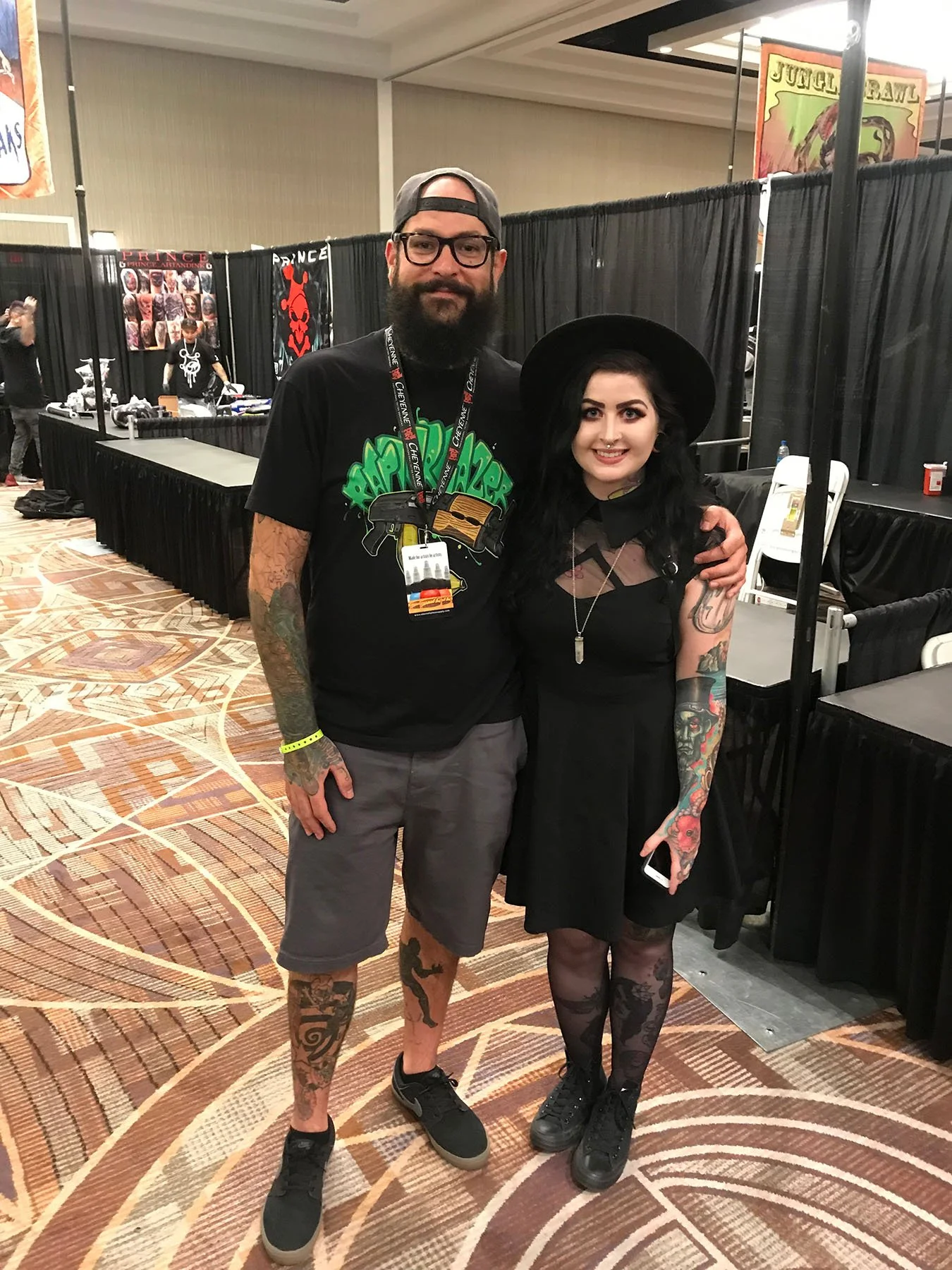
Tattoo artists Jeff Barnard and Caitlyn Campbell share how tattooing became a path to healing, grief recovery, body transformation, and emotional connection.
What happens when tattooing becomes more than art?
Tattoo artists Jeff Barnard and Caitlyn Campbell explore the emotional side of tattoo culture, from memorial tattoos and scar coverups to free areola tattoos for breast cancer survivors at Golden Yeti Art Collective in Franklin, Tennessee.
They share how tattoos help people reclaim their bodies after trauma, grief, abuse, and cancer, and why the bond between tattoo artist and client can feel deeply personal. Jeff and Caitlyn also share what life is really like inside the tattoo industry, including apprenticeships, sexism, and tattoos becoming mainstream.
The conversation takes an unexpected turn when Jeff opens up about his own kidney cancer diagnosis and how years of working with survivors reshaped his understanding of fear, healing, and recovery.
Listen to Golden Yeti’s Interview
Watch Golden Yeti’s Interview
Tattoo Artist Career Journey
Jeff Barnard: My name is Jeff Barnard.
Caitlyn Campbell: My name is Caitlyn Campbell. We're kind of like therapists in a way, listening. I would have never known I'd be a tattooer. If you'd asked me six months before I started tattooing.
Found a tattoo apprenticeship with Jeff here, and he taught me everything I know.
Jeff Barnard: Not everything, just the basics. One of the big changes I really watched was the art shift. It's a very intimate process of tattooing. We're the last high five on that journey of beating cancer.
Brandi Fleck: On the surface, this episode is all about what it's like to be a tattooer. Underneath, it's about the intimacy of forming relationships, doing what you love amid challenges, setting boundaries, and providing healing and body transformation while sharing in the pain of others.
Specifically at the Golden Yeti Art Collective tattoo shop in Franklin, Tennessee, tattooers not only get creative and take pride in their work, but they provide emotional support and, as owner Jeff Barnard puts it, the last high five on the journey of beating cancer.
Jeff and fellow tattooer Caitlyn Campbell provide free areola tattoos every Friday for breast cancer survivors, and they tell us all about why going to a tattoo shop for that job is better than letting a plastic surgeon do it.
Not only do we learn about the much-needed and life-changing service, but we really get to know Jeff and Caitlyn over the next hour. We start out talking about everything from Jeff and Caitlyn's differing backgrounds in art to the atmosphere of their safe and open floor plan and how COVID impacted business.
After getting acquainted, we dive deep into the impact of being a heavily tattooed parent, what it's like being a woman in a male-dominated industry, and how to find respect. We really do talk a lot of shop and get technical about what makes a good tattooer, what a good apprenticeship entails, and how tattoos going from taboo to mainstream across the generations has opened up the possibilities for amazing artwork, different styles, and top-notch talent.
Jeff and Caitlyn also tell us about the most memorable tattoos they've ever done, from memorials to coverups. This episode is fun and informative.
I went into the interview super excited to learn everything I could about why Jeff and Caitlyn volunteered their time to help breast cancer survivors, but here's the kicker. We wrap up learning about Jeff's own cancer diagnosis and recovery that came at the beginning of this year. You won't believe the circumstances surrounding how he found out, and you'll be in awe at the 700-woman support system that came through as an inspiration and lifeline when Jeff needed it most.
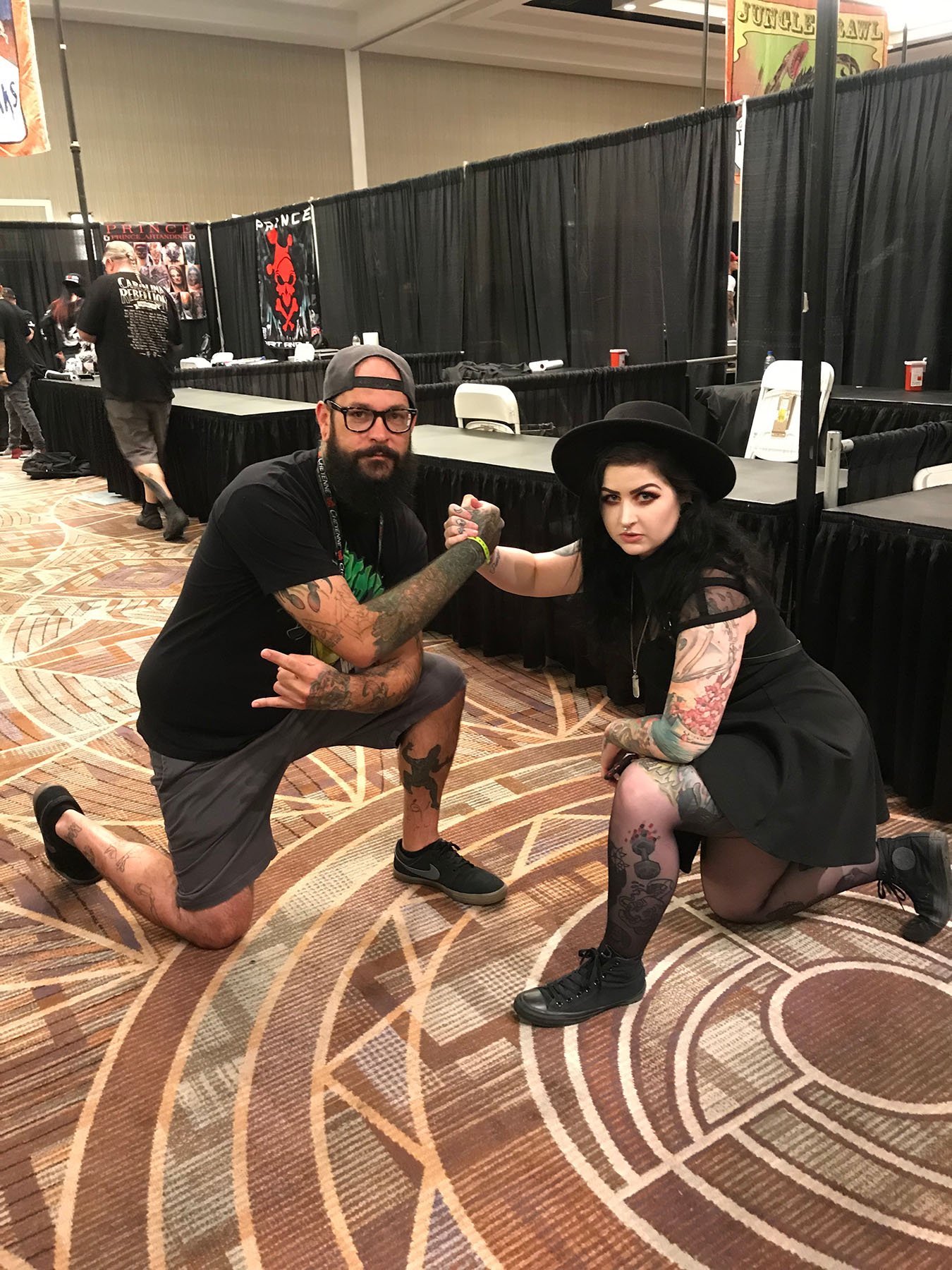
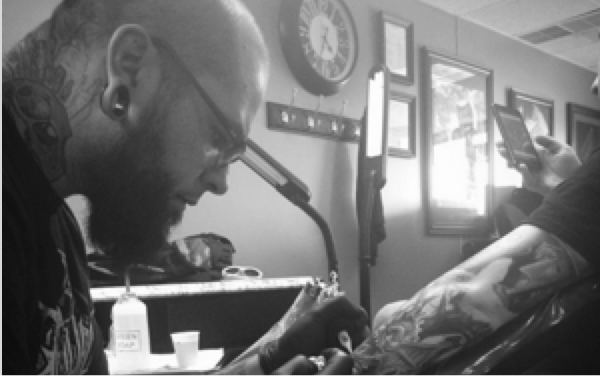
Jeff Barnard: My name is Jeff Barnard. I tattoo at Golden Yeti Art Collective. Been tattooing for about 14 years now. Been out in Tennessee for maybe seven or eight and enjoyed every minute of it.
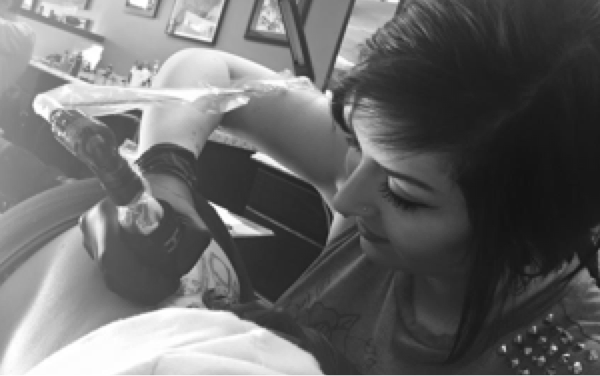
Caitlyn Campbell: My name is Caitlyn Campbell. I'm also a tattooer. Been tattooing for about five years. I moved from a small town in Kentucky to Nashville to go to art school, actually, and then found a tattoo apprenticeship with Jeff here, and he taught me everything I know.
Jeff Barnard: Not everything, just the basics.
Brandi Fleck: So Jeff, what brought you to Tennessee?
Jeff Barnard: My wife worked for a drug rehab, and their main office was located in Tennessee. We were looking for a reason to relocate and try something new. I'd been in California my entire life. So when the opportunity came, we came out and visited, we loved it, and we figured it was time just to move.
So we up and moved. My son was almost a year old, so it was a complete fresh start coming out here. Zero regrets on it.
And then now my sister and my mom have also moved out here, and my brother already lived in Knoxville, so it's kind of cool how it all worked out.
Brandi Fleck: Great, great. What part of California did you come from?
Jeff Barnard: Riverside County. It was actually a town named Corona, but gosh, yeah, that's where I grew up.
Brandi Fleck: Okay, yeah, it was kind of in between Palm Springs, LA, and San Diego?
Jeff Barnard: Kind of right there in the middle of the desert.
Brandi Fleck: Okay, all right. Well, what was your journey into becoming tattooers? Why did you decide to do that with your career?
Jeff Barnard: I never had intention for it. Got a bad tattoo at a shop. Me and my buddy thought it'd be smarter to buy our own thing, which is the worst idea if anybody who's listening tattoos.
But we bought our own stuff and started tattooing each other, tattooing truck drivers at hotels, and it was kind of just a thing to pass time. Then kind of came across an apprenticeship, and the opportunity kind of just worked out, so I went with it.
Didn't technically finish it at that point. Had some disagreements with people there and then came back to it maybe like a year afterwards and finally finished. Ever since, it's been something I can't leave.
But up until I was in it, I never thought that's where I'd be going. I kind of learned all my art post being a tattooer. Wasn't really coming into it with a huge skill set.
So it was a very long, drawn-out road that could have been quicker if I'd done it the right way. But yeah, it was kind of just by chance how things lined up. I would have never known I'd be a tattooer if you'd asked me six months before I started tattooing.
Brandi Fleck: Gotcha. What were you doing before that?
Jeff Barnard: A lot of construction, warehouse work, worked in low voltage, did backyards, pools, things like that.
Brandi Fleck: Okay, so your art came second. And then Caitlyn, your art sort of came first. What was your story there?
Caitlyn Campbell: Well, I've done art pretty much my whole life. All through high school I was in all the art classes, and then I went to Watkins for fine art.
But I kind of knew I wanted to be a tattooer in high school. I was kind of leaning more towards either being a tattoo artist or special effects makeup. I just didn't know.
But once I started getting tattoos, I just fell in love with it, and I just felt like that was the way to go. I quit Watkins about halfway through a bachelor's and just haven't looked back.
Brandi Fleck: Okay, so is Golden Yeti, you say you got an apprenticeship there, but is that the first place you've been since Watkins?
Caitlyn Campbell: Yeah, yeah.
Brandi Fleck: Okay, so how does your fine art experience translate into your tattoo work? How does it sort of manifest on people's bodies?
Caitlyn Campbell: I definitely do take a more painterly approach to it. In the beginning, I had issues with finding line work before the composition and the colors because my painting process has always been building it up in an oil painting manner.
But it's really fun in that regard tattooing-wise because there's a lot of room for experimentation as well. It also helps with color theory. That has helped me a lot in tattooing, just finding colors that go well together, mixing my own colors, that kind of thing.
Brandi Fleck: Great. Now Jeff, so you own Golden Yeti. What made you decide to own your own shop?
Jeff Barnard: We were working at another place, and they were kind of going through a shift in what they were doing with ownership and everything. Kind of felt like it was just time to step out and maybe run our own ship.
Opening a Tattoo Shop in Franklin Tennessee
So we left there, started looking for a place, and just kind of wanted something that we could control the atmosphere, control how things went, how we worked.
Every shop I've worked at, they've been great, but there's always that thing you wish you could change or do differently or something you didn't agree with. So it was something that kind of built up.
I think over the career, working at different shops and just kind of wanting to go forward with it and see if your idea and how to run a shop or how it could be would work. And it's been great being able to make sure everybody there has the same standard on what they want to do.
We don't have to deal with somebody getting hired that totally throws off the vibe of everything. We're really big on being close, and I don't think I've ever worked in a shop where it felt more like family. It's nice being able to almost protect that from someone greedy just wanting to hire somebody we don't want to work with.
For us, I didn't want it to be money-based. I wanted it to be based about what we're producing, what we're making coming out of there, and what people think of us and how it helps all of our careers.
To this point, we've been super lucky. Caitlyn came in probably maybe a month after we had opened it. It was fairly quick, so she's been there since the beginning. Then Brad Hill, me and him were the ones that were first there when we opened.
We've built the crew slow and just added the right people. We've had a few come through that stay and go and stuff, but overall, it's been a perfect ride so far.
Brandi Fleck: Good. How long has it been open?
Jeff Barnard: We're at now, I think, six years in March.
Caitlyn Campbell: Yeah, March 11th.
Jeff Barnard: So it'll be six years, which is crazy because I remember being scared that we wouldn't make it past a year. And then here we are this far later.
And then through recent things that have happened, we've stood strong, so it's been good.
Brandi Fleck: That's awesome. I was going to say, how is Franklin treating you? Like that location at this point?
Jeff Barnard: Franklin loves us. It's great. I think at first it was a bit of adjustment being down there. I don't think it was the usual downtown Franklin business.
But we haven't had anybody try to throw us out or anything. To be honest, it was more hard trying to find a place to let us open. We looked for a really long time, and we were turned down for some reasons that were really dumb.
Brandi Fleck: Oh wow.
Jeff Barnard: There were some locations that I don't understand why we couldn't be in them. But in the end it worked out because we ended up as close to downtown Franklin as you could want, where before there were dirt fields we were trying to open up in that they turned us down on.
So in the end, I feel like it all worked out for the better because some of the spots we looked at, I'm so glad we have what we have now. Those spots are still empty, so obviously it was a good thing to have that pushback a little bit.
But at this point, the town welcomes us. Prior to everything with COVID, every weekend we'd have walk-in days and we'd have people lined up out there waiting. We have super loyal clients, and it's kind of insane when you look at the whole picture of how much that town embraces us and keeps us going.
Brandi Fleck: That's awesome, yeah. So how has COVID impacted what you guys do?
Jeff Barnard: In the effect of, like, me and Caitlyn travel a lot. We do a lot of different conventions, guest spots. That obviously is completely gone at this point, which is rough. I think we had like nine shows we had to cancel.
But as far as being in the shop, we're already pretty much appointment only. So really the big change for us is we're already super cautious on everything. We already take a lot of precautions to make sure it was clean.
So the addition of face masks, I guess, would be the big change. But for the most part it doesn't feel largely different just because we were already so worried about everybody being safe from getting sick.
Yeah, I think it was just the vibe coming back. I mean, I probably never had that much time off in my life. That's probably the weirdest thing. I don't think I've ever had over like five days off, and I took off like a month and a half.
Caitlyn Campbell: I think we were two months we were down here.
Jeff Barnard: Yeah, two and a half months, right? And we were some of the first states to come back. So coming back, we didn't know how to handle COVID. So we didn't know, let's try this out. It was an experience.
But at this point, we've stayed just as busy, if not busier. But if I was an artist waiting for people to walk in every day, it'd be a drastically big difference because that's went down a lot.
But we were already booked out for a few months at a time, so for us it's kind of that same process really.
Brandi Fleck: Okay. And now you mentioned that when you opened, it was really important to sort of control the atmosphere. So I'd like to hear from Caitlyn. How would you describe the atmosphere of Golden Yeti?
Caitlyn Campbell: We're very open. It's an open floor plan. We're very welcoming. We try not to put on that intimidation kind of thing that you see in a lot of tattoo shops because we're just not those kinds of people.
We want you to be there. We want you to feel safe, and we want you to not be afraid to sit down, get tattooed, and that kind of thing.
Brandi Fleck: Yeah. Jeff, you've been in the industry since 2007, correct?
Jeff Barnard: Yes. 2006 maybe.
Brandi Fleck: Okay. So I think tattoos have become more mainstream over the years than they used to be, even since you started in the industry. Can you take us through the evolution of any societal stigma you've been through over the years and what has that evolution looked like for you personally and what you've seen in the industry?
How Tattoos Became Mainstream
Jeff Barnard: So my start date is weird because 2007 is when I started tattooing professionally, but when I had apprenticed and first got started was probably around 2003, 2004.
So when I first got into it, it was right before the TV shows were taking off and you started seeing it more on that. So I do remember seeing that tail end of it kind of being a taboo thing, its own little niche.
You only saw certain people coming in. Then all of a sudden you started seeing stay-at-home parents coming in. You started seeing kids younger coming in and getting a little bit more ballsier pieces. They weren't just getting hidden ones. They were starting to do more drastic stuff.
But I would say one of the big changes I really watched was the art shift in tattooing, where it was like you did tattoos based on the styles of tattoos that were there, to all of a sudden everybody was really, really good at art.
I feel like there was this wave of kids coming out that were seeking tattooing, and it was easier to get in. I mean in a sense of, like, you didn't have to go through as much crap during your apprenticeships. You could actually have a real apprenticeship where you were taught, and it wasn't about how much crap you could deal with to get through it. It actually based on your skills at art, people taking it really serious.
So it was a huge shift in the kind of tattooers you saw, the art you saw from it, the diversity in which the industry grew. Then when you started getting more people willing to come in and get tattooed, it wasn't as taboo for people. That kind of opened the door too for a lot of stuff.
You started getting all walks of life wanting work. You started getting more styles meshing in, and it kind of just became this thing.
When I first started to now, the caliber of tattooers is insane. The stuff we, you know, when I first started, if you were at a certain level you owned that. Now that's just starting requirements.
But I do notice a huge difference in just acceptance of it. Kids with jobs. I mean, I remember the days of Band-Aids over tattoos at stores not to show them and wearing gloves if you're a cashier because you can't show your hand tattoo.
Then now it's no big deal to have your whole neck blasted and you can work at any store. So it's good and bad.
As much as it is cool to have a wider spectrum of people you can tattoo from a business standpoint, there was also the nice feeling of it being a little smaller of a group.
Now if you don't have tattoos, that's like being old school tattoos. It's now very trendy and in to get it. No one's like, "Oh my God, are you nervous for having that?" I mean, that was like the number one question a long time ago. "Are you worried you're going to regret that?"
Now it's just like, "I tattooed my hand. I got nothing else on my body. I don't care."
Caitlyn Campbell: Or the face.
Face Tattoos and Tattoo Stigma
Jeff Barnard: Or the face, yeah. Face tattoos. Tattooing the face used to be some extreme stuff, and now it's just like an 18-year-old comes in and is like, "I want my first tattoo."
I’m like, "Where at?"
"On my face."
And it's hard because part of you is like, you know, the whole parents trying to make your kids not do technology stuff because it's bad for them, but they need that tool growing forward. Different times.
It makes me question if I'm just in a different time when you didn't tattoo your face unless you were a serious tattooer not going anywhere, or if it still does ruin jobs.
Because at this point I'm not sure what the effects are in that face-wise. But yeah, the face tattoos are starting to pop up more and more and more.
And at this point I still won't do them, but you got to be heavily covered before I'll tattoo your face. It's just one of those things.
You know it's like having a kid or being married. People can tell you, "Make sure you're ready for it," and you think you are. Then when you're in that chair, you realize what being ready for it is.
And not that I get treated drastically different everywhere I go, but throughout time I have dealt with the assumptions of who I am based on my looks with tattoos and being treated certain ways in stores or different situations.
Brandi Fleck: Right, yeah.
Jeff Barnard: And a lot of people say they don't care about that, but let it sit there for 15 years of everybody. I feel like I'm always digging myself out of a hole that people assume you're in in certain situations.
That's where the face tattoo thing comes in, where it's like, man, if you have your face tattooed, it's even worse. I don't think some of these people really take in what changes that can make as they get older and decisions with family.
When my kid started school, I never cared how people perceived me. I'll be who I want to be. Then you put your kid in school, and then you see how they get treated differently based on how you look and you represent yourself.
Brandi Fleck: Oh.
Jeff Barnard: Then I feel like it all sinks in. I'm always learning more and more how being heavily tattooed is affecting stuff, and it keeps finding new ways to surprise me.
But there are those things where, if I have it covered in gibberish, how serious are people going to take me when I'm trying to open a business in downtown Franklin?
Brandi Fleck: Right.

Jeff Barnard: You know, where's that line? So it's one of those things that I think we're still filling out with repercussions on these things. The generation isn't old enough yet to see 45 and half them face tattooed. That's when we really know.
Because right now I would say most of the population has a sleeve. You walk into a store, someone there has a sleeve of tattoos. So it's not as shocking, and you get less and less.
But back in the day, if you had a sleeve and hand tattoos, you were the only person in that store, and it was awkward. I'm sure it'll keep changing. I'm just old now.
Brandi Fleck: It's really interesting. I had never thought of it from that perspective of once you put your kid in school, how they get treated based on how you look.
Have you talked to your son about it? Or has it just made you feel sort of bad? How did that go?
Jeff Barnard: We've had the talks about it because everybody he knows is tattooed. He probably finds people without tattoos weird. His standard normal is probably way off from most kids his age.
But we've had the talks about things you do and how people will perceive you and making sure when you make a big statement that it is you and that you're not doing it for the wrong reasons.
We've had talks of tattooing. We've had talks about people not liking it. We've even had talks about if I go in a store and someone treats me a certain way.
I'm all kill-them-with-kindness kind of person. I want to leave them with a situation where they encountered something they didn't see before, and they had nothing negative to say about it. I want them to remember that I was nice the whole time, respectful.
So we've had those talks about those things. But for the most part, we haven't had many weird situations where he's been sitting there for it, so we haven't had to have those awkward talks at this point.
He's also part Hispanic, so we've had talks about having two sides of the family and the differences and kind of giving him the generalized version.
But trying to think back, I don't think there's really ever been a part where he's been older where it has been awkward. The school situations, I just felt there were times there was some singling out, and it didn't make sense.
Then you would sit with a person and see how they look at you versus others. My wife looks very normal and business-y, and if she leads in a room, it's different than if I lead in a room.
I have to kind of tiptoe with people because they already kind of assume I'm going to be an asshole.
Brandi Fleck: Yeah.
Jeff Barnard: So you're always kind of working yourself out of that spotlight. But I also think that comes with being tall, any of it. Everybody has to adjust their surroundings no matter what it is.
So I don't try to dwell too much on it with him. I want him to live freely and do his decision-making. I just always want to make sure he understands that you have to kind of absorb the repercussions or whatever that particular thing puts you in a situation.
Brandi Fleck: Yeah. Man, it seems like we would be over that at this point, but yeah, it's really interesting.
Jeff Barnard: And for the most part, I'll say I think we are okay. The general idea of it all is when you talk to old-school people, their stories are harsh. The way they're being treated by other people, the places they're forced to open up in, the way that people looked at them, and the people that were attracted to them based on how they thought they were also shitty people.
Now there's not groups of people telling you to get out of the store. I've never had a group of dads line up like, "You're not welcome here." We're not having that really.
What it is, I would say there are certain age groups that didn't grow up in it, and no matter what they're not going to know how to act around it.
I think a lot of people take it wrong. Most people that look at me weird, make an attempt to talk to them, and most times they're just curious about my tattoos, but they don't know how to initiate that conversation. They don't know how to ask it without worrying about making me mad.
Kids are always curious. They'll just stare at me and they'll come up and they'll have a question. Parents are like, "Oh, leave him alone."
I'm like, "You can ask me about the picture of the shark arm."
So I think it's more just people uncomfortable in general talking to people they don't know. But for the most part, I don't see a huge divide.
I think walking down the street, you're making up in your mind what you think that person's thinking. Someone's staring at you, they could be thinking, "What's wrong with that person? Why are they covered in pictures?"
But chances are they're probably just trying to see what the picture is on you without looking like they're looking.
Because I've known some people that take everything to offense, like everybody's looking at them weird, every store mistreated them. When I walk with those people, I was like, no, they're just, you know, if you have pictures on you, people are going to look at you. That's kind of how it goes.
So I do think that's heavily gone. I think people can be tattooed and for the most part live a normal life and not have too much trouble.
Unless you're just trying to buy something that requires, like if I walk into a furniture store, I'm not being hunted down to sell big stuff to. They usually think I'm broke.
Brandi Fleck: Okay.
Jeff Barnard: Then you get into school system stuff still has its outlook on it.
Brandi Fleck: Wow. Okay. And you guys can correct me if I'm wrong, but I think there used to also be sort of a stigma around women being tattooers back in the day. Is that true? And Caitlyn, how does being a woman in your career have an impact on you?
Being a Woman in the Tattoo Industry
Caitlyn Campbell: There's a lot to that. So yeah, there is a stigma against women being tattooers. Maybe not so much right now, but even five years ago when I was apprenticing, I did have some comments.
Someone asking about my tattoos out in public, and then I'll be like, "Oh, I'm actually a tattooer."
And they're like, "Oh, you tattoo? Like you do that?"
Stuff like that kind of thing.
Also, this is kind of with any woman in a male-dominated industry. It is kind of like a boys club. You have to keep your guard up. You have to be careful with everything.
There's always going to be sexism in regards to the people you deal with as clients. It's a very intimate process of tattooing. You're touching them. A lot of times their hand is in your lap.
You just got to set good boundaries. You got to be upfront. If they touch you the wrong way, you move their hand. You're like, "No, we're not going to do that."
I'm also very lucky that we're in a very open floor plan, and Jeff and Brad would never let anyone mess with me.
I'm also very careful about not staying alone by myself with someone I don't know that's in the chair. You don't want to put yourself in these situations because they do happen, and they will happen if you're not careful.
Yeah, there's something else I wanted to say too about this just because there's so much that goes with being a female tattooer and just not being either taken seriously or people looking at you like a sex object.
It can be very daunting and very scary, but it is worth it in the end, that's for sure.
Tattoo Apprenticeships and Tattoo Shop Culture
And to any female apprentices or people that want to tattoo, I just want to say, be careful. Finding a tattoo apprenticeship is very hard.
Before I met Jeff and Brad, some tattooers that I did approach about this, it was not a fun time.
Very disrespectful. It was degrading, and the times that it was degrading, I just didn't go that route. I just told myself, just wait. You'll find something. You'll find people that will respect you and not take advantage of you being a young female.
And I'm very glad that I did. I'm very glad that I didn't just go out and try to find the very first thing possible because that's when bad things happen.
Jeff Barnard: Yeah. The industry is a lot more serious and legit than some places like to think it is. So if you're in a weird apprenticeship, and not hazing stuff, but if it's legitimately violating your human rights, there are better shops out there.
That's a nice thing about what changed over the years. Not every shop is some dingy place where they're just beating everybody up. It's becoming more and more where there is no more intimidation factor between shops, and there is no more intimidation factor of the owner of the shop dominating your choices and things in life.
You can go get a legit apprenticeship from a legit shop that's going to treat you with respect.
Caitlyn Campbell: And like I said, I'm very lucky because that's with any industry. It's not just the tattoo industry. There's decent people and there's horrible people everywhere you go.
In regards to how women are being treated everywhere you go, you have to be careful. You have to pick and choose who you surround yourself with.
And even if you feel like it's going to get you a leg up in the industry, if you just think, this is a good tattoo artist, I want to apprentice under this person, but they're a shitty human being, how far is that going to get you?
If you just wait for someone that's going to respect you and you feel safe and confident, even if it does take you five more years to get there, it's safe. You'll end up feeling better about yourself and art and how you got there, and you're going to learn so much better when you're comfortable.
Jeff Barnard: That was a big thing when Caitlyn came in. Caitlyn was the first full apprentice I had. I've been at shops where we had apprentices and we all kind of apprenticed them or gave advice to tattooers, but as far as someone I felt solely responsible for, making sure they were able to do this, would have been Caitlyn.
I wanted to test out just letting somebody come and learn and enjoy it. She still cleaned. She ran the shop. She did all the things we needed, but just removed any of the hazing.
We still gave her shit, but nothing degrading, nothing disrespectful. I wanted someone who wanted to be there after their apprenticeship. I didn't want to have her not be able to wait to get the fuck out of the shop because she hated all of us and we treated her like shit.
There's making them earn it, and she earned it. I mean, she worked her ass off, and we didn't give her any free cards or passes on stuff.
I mean, I told her to quit school, which I'm glad that worked out because I was a little nervous it wouldn't.
But you can earn it in different ways, and it's not in degrading you as a person or just taking advantage of you. That goes for guy and girl on that with apprenticeships.
There is this feeling that if I don't get this, I'm never going to be able to be a tattooer. Apprenticeships are hard to get. They're very rare.
Sometimes you sit there and you deal with shit that maybe you don't need to. I wanted to make everything based around making her a better tattooer.
So anything that was required of her job was to make her appreciate tattooing, love tattooing, make it hard on her so after she gets this it feels so good that she never wants to give it up. Really build a bond with that career.
And we did that through her actually working, not through insulting her, degrading her, just treating her like shit.
Caitlyn Campbell: Yeah. I can't imagine being anywhere else either. Anytime I imagine working somewhere else, like moving, I'm like, I don't know because these people are my family.
Whereas a lot of other people can't say that. Most of the female tattooers I know don't work at their home shop. They had a horrible experience and they hate who taught them.
I don't have that. I'm very lucky. But my sympathy and empathy goes out to those people that had such a horrible experience and don't even want to go back to where they learned and where their roots are. Very unfortunate.
Brandi Fleck: Is that experience more common than not, you'd say?
Jeff Barnard: It really just varies. It's case to case. I know a lot of people who have no issues with them, but I know a lot of people who wouldn't even spit on the grave of the person who taught them, which is weird.
But I don't know if it's just an industry problem or if it's just a person problem. There's a lot of shit in the world, and it's kind of that luck of the draw or also how much you can recognize that stuff beforehand.
I've also worked with people who apprenticed under people that I know they don't get along with. They're both nice people. People just didn't agree.
And there are some people I know who everyone who's ever worked with them does not like them and never wants to talk to them again.
I know it's a business to make money. It's not like that's not the end goal, but I never wanted decisions to be based on pay or based on you work here and I own you.
I wanted it to feel like I'm in charge of the room because this shit's mine, don't break it, but be yourself. Run your own business.
I want Caitlyn marketing herself in a way, if no one else is there, making decisions. I want her to really be able to make her career what it is, what she wants it to be.
I'm not big on the vibe of boss or owner type stuff. I don't want to hire anybody at the shop that can't run themselves. I don't need to micromanage people.
And if you're the type of person that needs micromanaging, you're not the type of person we wanted at the shop. We're not here to hold hands. We're here to help each other grow, but not do basic shit.
I think that also helps all of us keep a better relationship because I've worked for people who had to hire whoever, and then they get some people that weren't that great, and they were constantly yelling and screaming at those people to get them to work.
I feel like that kind of stuff just deteriorates the shop, tears it down, makes those weird grudges.
I would like to think anybody who's ever left the shop, we're all on good terms to this day. I don't want to have to have bad bridges with people just because we work together or they worked at the shop or whatever.
Like Caitlyn, she was smart enough to walk out of the shops that weren't going to treat her right. Some people, and this goes to people's parents and teachers though, but give your kids some more confidence in themselves so when they walk into a shitty situation they don't feel like everything's based on that one decision.
They feel like they could go to a different spot and make the same shit.
The shop doesn't make you able to tattoo or not. They're just giving you a place to learn. So you just need to find a place to learn and people there who have answers to those questions.
Some people act like they just need to get in that shop, and they go and learn under some of the shittiest artists being treated like shit.
Not that it's an epidemic of this happening everywhere, but the fact that it still exists in some shops is still, you know, it shouldn't be.
But we're doing the work to get rid of it though. Back in the day, you were the bad guy if you were to call out a shop for doing something horrible.
But now if you can do that, if you call someone out, you're going to have multiple people behind your back be like, okay, fuck them. Let's shut them down if they're doing something shady. We don't want that in our industry.
So I think it is changing with the generations, and then the next generation will be even better about it. There will be less and less of that because we're not afraid to speak out against it, men and women.
Caitlyn Campbell: I mean with women, we're slowly but surely not afraid to speak out against, you know, like with the Me Too movement and all of that. That was unheard of back then.
We accepted it and we decided, okay, that happened. I'm not going to talk about it. It's okay.
Then more victims and more victims happen, and now we're just like, you know what? No, we're not going to do this anymore. Let's call out these places. Let's end it.
And if a specific tattooer is doing this, we don't want them in our industry. Fuck them.
Brandi Fleck: Yeah. Well, all right. So there definitely has been an evolution, and I really like what you guys are doing.
And I know, Jeff, you mentioned that you want everybody to just be able to be good tattooers and help them be good tattooers and do the artwork that they want to do.
Can you guys tell us what the hallmark of a good tattooer is like? What are the characteristics that a good tattooer has?
What Makes a Good Tattoo Artist
Jeff Barnard: Let's see if Caitlyn learned anything. What's a good tattooer, Caitlyn? When you see a good tattooer, what are they usually doing? What's their core abilities?
Caitlyn Campbell: Well, from a technical aspect, definitely just very clean. Clean in their work and clean in their technique, but also clean germ-wise.
Making sure you're not contaminating anything with biohazard. That's a telltale right there because you definitely don't want to go to anyone dirty that would give you an infection or some kind of disease.
Jeff Barnard: Yeah. No tattoo is pretty enough. You got to know your bloodborne pathogens, that's for sure, to be a good tattooer.
Brandi Fleck: Okay.
Caitlyn Campbell: Yeah. And also being someone that is flexible. Don't be so close-minded when it comes to the art.
You can always talk with the person that you're tattooing to make a better tattoo. They might not even know how to express what they want, so the words they're saying probably doesn't make any sense to the artist.
So they're like, this is going to be horrible. But if they were to try to put it in their own words and come to agreement with the client to make a good tattoo that the artist wants to do and do a good job, I feel like that's what makes a good tattoo as well.
Because some artists will just go exactly verbatim what the client wants, but the client's not an artist, so they don't really know how to express what they want, and then the tattoo ends up—
:::
Caitlyn Campbell: Not very good because there was miscommunication going on.
Brandi Fleck: Yeah, so communication also makes a good artist as well. Awesome.
So now I want to hear about what does putting artwork on other people do for you, and then taking that a little further, knowing it will likely be on that person for the rest of their lives, how does that make you feel to be part of that?
Jeff Barnard: When I first started, I couldn't draw very well. I wasn't very good. Like I said, I took the long road.
So the first bit kind of just felt shitty because you felt like you should be doing better stuff on these people.
At this point, what I love about it is meeting so many people and getting to ask so many questions, in-depth questions and things you wouldn't normally. They'll tell me anything because I don't know them in their personal life, so we can have real conversations about stuff.
So for me, I think tattooing, just that exchange, it's how I get to be in that spot.
Definitely at first it's very nerve-wracking just because I wanted it to be great and I wanted them to love it. But like you said, at first you aren't that great, so you're the entire time just clenching your butthole like, I hope this turns out well.
But after years and years, you get a relationship with a lot of these people, like a friendship, and they see you grow. You get new clients that let you do some awesome stuff on them that you're stoked to do, and it's really fun.
My goal is to make them love their arm, and I want to love it, and I want to make sure that it is the best possible.
Caitlyn Campbell: I also just love meeting new people. The people that I've tattooed a lot and we've become friends, and we get together, we talk about our lives, and I get to learn more about different types of people.
And also helping people. Being a tattooer or like a hairdresser, we're kind of like therapists in a way. They tell us all our problems, and I love hearing what they have to say and what their issues are and maybe trying to help them just by talking to them, listening.
I love listening, and I feel like a lot of these people just need a listener, and I'm here to listen.
Brandi Fleck: Awesome.
Jeff Barnard: Yeah, people definitely, you start to realize some people are just coming in because it's another excuse to come hang out. We're all too dumb just to hang out outside of work. We keep sitting there through this shit.
But I've had clients who come in and are like, whatever you want to do today, you go and pick because they're just there because they just want to come get tattooed because they just want to hang out.
In the shop, we're all, like Caitlyn said, open floor plan. We all talk the whole time to each other, the clients. Some clients love to sit and listen to the whole shop talk shit and five conversations going on. Sometimes they join in.
A lot of times you have clients who just go to whoever is available. They just want to come in. They love all of us.
That's kind of cool because the whole idea of doing better artwork and doing better tattoos, if you don't feel that, you shouldn't be tattooing.
That's a baseline thing. Everybody doing this, and in any job you do, you should always want to strive to make each day better, should always want to do better each tattoo or each whatever.
Finding personal goals to tweak and finesse things better. The things sometimes I work on are shit that probably doesn't even matter. Most people wouldn't even notice the difference, but you got to find those things to keep you going.
Yeah, it's just cool, that relationship you get.
At this point, I've been tattooing people so damn long they'll have their kid with them. They're like, "When I turn 18, I'm getting my tattoo from you."
And I'm like, "Yeah, sure, in 900 years."
Then I'm sitting there tattooing them, and I'm like, fuck, my hair falls out more and I'm getting older.
But it's cool that you've known people so long that I've now seen kids have kids. I've seen clients with their little kid, now their little kid has a kid.
Sure, one day I'm going to tattoo that kid too, which is weird.
Caitlyn Campbell: And it's so wholesome just seeing that kind of thing, seeing these relationships grow and then also being part of someone's life like that. It's very honoring.
Jeff Barnard: That's a good word.
Brandi Fleck: Yeah, that makes a lot of sense. You get to be part of it.
So what is the most rewarding tattoo you've ever done for someone? And then I want to hear about what's the craziest experience you've had while tattooing someone.
Jeff Barnard: So I would say probably, I don't know, but anytime you do memorial tattoos, for me I always felt more attached with those than other stuff.
So when I first started, I lacked a lot of emotional sympathy or whatever. I was very detached from like, oh, that's your problem, cool.
But over the years, especially working with Caitlyn, she doesn't let us. She makes us more empathetic to everybody.
Caitlyn Campbell: I'm a crybaby. I'm very emotional.
Jeff Barnard: But when I first started, I had this guy come in for a tattoo. An accident had happened where his kid had died, and he did nothing wrong. The kid ran behind his truck. Kid was supposed to be inside. It wasn't 100 percent, just horrible timing and luck.
But this kid had died, and it was because of him. So he came in and he wanted to get a letter down his arm to his son. Son was like three.
I had no kids at the time, no way to relate to this person. We sat there and I was literally writing on his arm as he was talking to his son, and his whole arm was that.
That one always stuck with me. I feel like that was one of those tattoos that kind of woke me up to feeling, sharing pain with people.
And I felt because I was part of that. He came for me to tattoo him, and there probably wasn't much thought process on his side. I'm sure it wasn't he sought me out because he had this bond with me. It was just he walked in a shop and he was all messed up from it and wanted somebody to tattoo him.
But that was probably one of the first times I felt a lot of pressure. It was the first heavy tattoo I did. I felt a lot of pressure to make that one look and be what he wanted it to be.
It was probably one of the most raw tattoos I've ever done as far as he just sat there and talked to his son and I wrote it down on his arm. That was huge.
And then a lady, her husband had cancer and he only had a couple weeks to live, and I did his memorial for him and he was still alive, so he was going to see it.
Brandi Fleck: Oh.
Jeff Barnard: And that one fucked me up. It's one thing to do a memorial on somebody, and I want to make sure when they look down that represents how they want to remember that person.
It's one thing when the person's going to get to see it, and you're like, damn, am I going to make this dude feel good when he sees that? Or is he going to be like, that's what you did for me?
So those two were probably the heaviest that stuck with me. Those were year one. I was very new.
I don't know if I've done any tattoos since that were as heavy as those two, but those are probably the most burned in my brain as far as emotionally connecting you with somebody tattooing.
Brandi Fleck: What about you, Caitlyn?
Tattoo Cover Ups and Healing Through Tattoos
Caitlyn Campbell: That's a hard one because there's a lot of meaningful ones out there. Like you said, the memorial ones always get me in the feels. They always get my heart a little bit, feeling their pain.
Also ones that really mean a lot to me is covering things up that brings them a lot of pain. I can feel that pain a lot of the times, like when they really just want to get rid of this.
Whether it be some kind of scar from someone or themselves, or say they have a tattoo of a name of someone that was abusive or just horrible, and they want to get themselves back. They want to be able to look at their body and not be reminded of something that was tragic, or they want to be healed from all of the past stuff.
Those mean a lot to me. They really do get to me, and I love that.
But also recently, I got to tattoo my grandmother. That meant a lot to me. She was like my mom pretty much.
My grandfather was a really good painter. He was actually the one who taught me when I was like 11. He passed away when I was about 11 or 12, but ever since he passed away I haven't stopped doing art.
I tattooed one of his paintings on her just like a couple weeks ago, and it was just so awesome seeing that. I've seen that painting my entire life, and I tattooed it on her.
Brandi Fleck: That's really cool.
Jeff Barnard: Forgot to say, her most meaningful tattoo is the puppy monkey baby she first started.
Caitlyn Campbell: Puppy monkey baby? Oh Lord.
Jeff Barnard: Do you remember that Mountain Dew commercial with the baby that was a puppy? It had a puppy head, a baby body, and monkey arms and tails.
Caitlyn Campbell: Yeah, it was like monkey arms with a tail and had a diaper on. It was like a pug face.
Jeff Barnard: She was obsessed with it when she was first tattooing, and she was like, "I want to do this. I want to do this on somebody."
She kept talking about it, and I was tattooing this guy, or this guy or lady and her husband. They were the funniest people. They were just super chill. Everything's awesome. We love these people.
You would not think he would want to get that because he was like an older gentleman, super clean-cut and nice.
He's like, "I'll get your puppy monkey baby."
So she got to do it.
Brandi Fleck: That's awesome.
Caitlyn Campbell: I think he got his dog's head.
Jeff Barnard: Yeah, I think it was a Shih Tzu instead of a pug, but still awesome.
We love doing animal tattoos. Anybody wants their pet tattooed, that's like, you want to pump up our day in the shop, come in and say you want a portrait of your dog or a tattoo of your dog.
We're all animal lovers. I've done so many caricatures of people's dogs. It's fun every time.
Brandi Fleck: Awesome. Caitlyn, you touched on a really interesting thing that I think about a lot, and that's transforming your body and healing from scars and covering up things, turning something that was bad into something that's now awesome to look at and that makes you feel good that it's there.
So one of the coolest things about what you guys do at Golden Yeti that I saw on your website is the free nipple areola tattoos for breast cancer survivors.
So can you guys tell us a little bit more about that? What made you decide to do that service for free, and how does it help the people that get it?
Free Areola Tattoos for Breast Cancer Survivors
Jeff Barnard: When I first came out to Tennessee working at a shop in Franklin, I'd never done any areola reconstruction tattooing, nothing like that. But I did portrait work, and it's just a portrait.
So a lady came in and she wanted to get it done, wanted to know if I would do it, wanted to know the price. She said that she went to someone else in the state and paid her $6,700 for this tattoo.
She said she couldn't afford that. She said all her treatment for cancer, and he was like, "Sorry, it's special needles, special bunch of shit."
So she came to me, and I was like, man. I'll say this too, I don't look bad at anybody who wants to charge for this. Charge for your work. It is work.
But charge what you would charge for any tattoo. Don't charge based on knowing that that person, A, is not part of the industry and knows what shit costs, and they just came out of hospitals getting gouged.
And don't prey on the fact that they just want to get this done because they want to be done with it, and they know they'll pay more money because they just want it over with.
So it was kind of that kind of situation happening to this lady. So I told her, "I'll do it for you."
And our shop minimum was 50 bucks, so I was—
Jeff Barnard: Like, fuck it, I'm just going to charge you $50 and we'll get this on you.
She comes in, did them. Super fun lady. Her and her husband were really awesome.
When she left, she went to go see her doctor. Well, when he saw it, the work, doctors try to do this sometimes. Sorry doctors, you suck at it. They realize they can't tattoo them as well.
So he's like, "Will he take other patients?"
Then I started getting a bunch of ladies requesting for me to do these tattoos on them. So I was just doing them for a shop minimum, just 50 bucks, and really just worked with those two doctors. It was Dr. Higdon and Dr. Ducasse, both amazing surgeons.
Just kind of stayed at that for a while. It wasn't my shop. You got to charge money when you work at businesses or whatever.
So when we moved shops, it was one of those things that I enjoyed doing so much. I didn't realize how rewarding it would be, and I also didn't realize how much this affected them.
You think like, oh, you don't have nipples, whatever. But then you talk to somebody who doesn't have them, and it is insane what that does to them mentally and how much more the scars show up.
Your eyes, they're used to seeing certain things. Your peripheral view, if it doesn't look right, your mind focuses on it and then searches that area.
So when your chest doesn't have areolas on it, their eyes focus on it, then they start seeing their scars a lot.
I noticed that you can put something like an areola over part of the scar, and the rest of the scar disappears to them. Now their eyes aren't searching anymore. They're getting that view they want to see, and it's like they don't even notice them anymore.
So it's one of those things. When we opened the shop, I wanted to do it for free. I wanted it to be a thing that we could do for people.
At the time it was just me doing it, and then when Caitlyn started apprenticing, she basically set me up for each of them. She was sitting there for all of them.
It's one of those things that, you know, it's free work. I would never make anybody do that, but it was awesome that when she got done, she also wanted to start going into that.
To me, I know we do a lot of tattoos for people that help them, but you're charging for it. For some reason, I don't feel goodness in my heart giving you something when I then ask for money for it because I'm doing a service. I'm not doing it for free.
So it's hard to really find a way to help people in need with tattooing. You can't take tattooing into the streets and help people feed their families and stuff.
So it was one way I saw that we could actually do something for somebody and use our tattooing ability to do that for them.
And then too, like I said, doctors suck. They suck at doing tattoos. I shouldn't do a surgery just because I have a table and gloves. They shouldn't be doing tattooing just because they did plastic surgery.
And they charge like $2,000 for them, and they're horrible. They don't last, they scar up, and it's just to get more money out of these women that shouldn't have to.
We fix a lot of them, and it's crazy because throughout the years, less and less hospitals out here are doing them, and they're sending them to us.
When it started off, I had two doctors. Now I would say everybody in the state at this point. Once we tattoo a person and they go show their surgeon, all the doctor's like, "Can I send more people?"
People from Alabama, Florida, we've had a lot of people from all kinds of surrounding states.
We want people to realize you can go into a tattoo shop and get this, and you can go into most tattoo shops and get this. You may pay for it, and there's nothing wrong with that, but it is an option.
And we're really, really good at it. Tattooing an areola is actually a really simple tattoo when you think of the other things we do.
With women coming in, at this point we've done it for so long, it's a lot smoother. People can bring in a picture of themselves from before, and we'll do a portrait of that back on it.
I've done other things. I've had women want the shapes of butterflies and everything else you could think of.
But there's more option than just getting that standard peach-colored circle that you're going to get at a plastic surgeon.
What I found too is they don't want to do them either. They're like, cool, I can send it to somebody else because I don't think they thought they could send it to anybody else.
A lot of the women that I've tattooed that have tried to have their nipples saved and put back on and all that stuff, it just doesn't heal smooth and it doesn't look as nice.
With the tattoo, you're going to look like you have a real nipple there. It's less invasive on the body, it's easier, and then it's also cool just to kind of be there at the end of that.
We're the last high five on that journey of beating cancer, and they're not getting gouged. It's not a bad situation.
A lot of them would have never stepped foot in a tattoo shop.
So many of them are like, "I would have never walked in here," and now they're like my best friends. So it is cool in that aspect.
Caitlyn Campbell: Yeah, some come back to get small tattoos as well, and they're like, "I never thought I'd get tattooed." They're just these sweet innocent old ladies getting a little tattoo on their ankle after they got the areolas done.
Brandi Fleck: I didn't even know that doctors did that.
Jeff Barnard: Yeah. I tried to go to a lawyer and try to make it some kind of illegal because there's no way that they should be able to be doing this.
Technically, you have to have a year tattoo apprenticeship to even use a cosmetic tattoo machine, which they use.
Cosmetic tattoo machines are meant for the face. They're not meant for scar tissue on the breast for a long-lasting tattoo. They're meant for temporary eyebrows, and that's what they're using.
That's why it doesn't last and that's why it doesn't look good.
Tattooing scars is so hard. That's something that you learn over time and learning tattooing.
If you sat down and did one tattoo a month, you would never get it. You have to tattoo every day.
Your apprenticeship is you learn how to be clean and learning to shut up and listen. You learn to tattoo once you start repeatedly tattooing every day.
So the idea that a surgeon is doing one of these once in a while, you're never going to master scar tissue.
A lot of times they go really light. It's no fault to them. They don't know how to tattoo.
But it is weird that they don't have to have a license because for what we have to do, Caitlyn had to apprentice. It doesn't matter anything else.
Now today in Tennessee, even cosmetic tattooers have to have a year tattoo apprenticeship to be able to do these, but somehow doctors are just sliding by and are able to do this and charge these women $2,000 for garbage because it all goes through insurance companies.
Brandi Fleck: Ah.
Jeff Barnard: So the women aren't getting that full bill, so it's like let's charge whatever we want type thing.
It's one of those things that could really be done better by tattooers.
I don't think a lot of tattooers even realize how easy it is to do.
One thing that is rough is we worked with those two primary surgeons who, like I said, I've never seen work like theirs before. They're really good with the things that they do.
But now that we get people from all over, there's different levels of surgeons like anything.
You get some really hard scarring, some really weird tissue that they've used, and that kind of stuff should be handled by tattooers because we understand how to handle weird skin situations.
Where I feel like if I was the doctor's nurse, like, "Oh, go do that," and you've never tattooed but three times and some lady's got a skin graft slash scar slash your old skin and you got to hit it between that, that's heavy.
Like I said, I did that lady tattoo. I never thought it would be more than that.
But really, man, if you want perspective on your day, sit with a cancer survivor each week.
There was one lady, super, super cool lady, but she would come in and some of these women do have it come back.
There was a day where a lady came in and she was in the best mood ever, and she just found out she was terminal. But she was more happy than any of us because we were bitching about just having to be at work or whatever.
That shit puts your mind in perspective on what's important and weird how it all works out.
So no one in my family had cancer. I didn't have any friends with cancer. For some reason there's a story going around that my mom had breast cancer and that's why I do this. She never had breast cancer.
But a couple days before New Year's, got some food poisoning from good old Taco Bell, and when I went in they scanned me and found a large cancerous tumor in my kidney.
Brandi Fleck: Oh.
Jeff Barnard: So I had to cancel some appointments that were upcoming, and some of those women were the breast cancer survivors.
In a situation that probably would have felt overwhelming and extremely hard, so many of them reached out to me.
And then also I could pull from so many, what, eight years I've been doing this now? At least one or two a week.
That was the payment that I never saw I was going to get. Something I couldn't foresee happening.
It didn't feel hard because I had so many stories and people and then the current women that I still talk to.
It's one thing for someone to tell you you'll be okay when they don't know anything about it. It's another when you have 700 women who have done it and worse telling you you'd be fine.
So that was huge. That was insane.
It's just crazy how things work out in the end, that you don't realize what you're going to end up needing and how you'll need it.
Because I can't imagine it happening and me not have that part of my life with all these women.
It's not just breast cancer. They have breast cancer and stomach cancer, throat cancer. They're getting half their body stuff removed from them and going through extensive treatments.
The people that actually go through shit don't talk about it. The war vet who talks about things probably didn't do the things. It's the one quiet who doesn't want to talk about it.
People who go through trauma don't like to sit in the room and tell their trauma story.
Not that I never thought breast cancer wasn't hard, but you don't realize how hard any cancer is.
When you sit down with these ladies and they tell you everything that happened and what it took, what they went through, it's humbling. It's amazing to just hear what these people go through.
I don't think we give people like that enough credit. What chemo does to your body and just mentally what it does.
Kidney Cancer Survivor Story
Jeff Barnard: You can be fortunate with cancer. I was fortunate that it had stayed to my kidney, and two weeks later the kidney's out and cancer hadn't spread. So I got off really easy.
It was just go snip something. I basically slept for four hours and I woke up sore.
I probably would have been more pissed and down about my situation, but man, for me it's all about perspective and what could be versus what you have.
Knowing that all I had to do was get a surgery, probably all those women, 99 percent of them, would have loved to switch shoes with me because theirs was way more extensive.
I got a scar on my stomach, but they're getting their breasts removed, getting part of their stomach removed. I lost something that I have two of.
So as far as being lucky, it was in that situation.
That's something that just recently I realized what I'm really getting out of all this. Even for my family stuff, we have a lot to pull from.
I think it made my wife feel better because she's the one that does all my booking and stuff, so she's talking with these women too. It just kind of gives you perspective on how bad it could be, and even they got through it.
Brandi Fleck: Yeah. Your mindset is insane. That's amazing. So you didn't have to do chemo or anything? It was just the surgery?
Jeff Barnard: Yeah. So I've never had food poisoning in my life. I don't eat Taco Bell. Hate it.
My wife was like, "Let's order Taco Bell," and I kept putting it off. I was like, no, no, fuck that.
I was like, all right, fine, just give me some tacos. That night I learned what food poisoning is. I don't go to doctors. I do now. But at the time I was not a doctor person.
It went on for so long, even into the next day, that I was like, fuck, I need to go to the ER because I don't want to feel this right now.
So I went in, and it was food poisoning or whatever, but they found something in my, I think your white blood cells are high or whatever, something from infection, so they wanted to do a scan on me.
We almost didn't even do the scan because it cost more money. We're like, how much is that scan going to be? So we're like, screw it, let's just do it.
That moment, you never think you're going to hear. We walked in, and it's like, "Yeah, we found a large mass on your kidney."
The way shit works out, it's insane.
I was doing my paperwork for my ER visit, and because of COVID everything's remote, so I'm on FaceTime basically with some nurse. She's there for them telling me this.
Then we go back to the paperwork part, and she's like, "Just so you know, I'm a two-time cancer survivor."
I've never met so many people in short moments that I needed it, which is weird how that lines up.
Even the nurse who I'm talking to about paperwork, people just reassuring you.
Went to a doctor a few days later, and they were like, "Yeah, we're 90 percent sure it is. Do you want to chop it out or test it?"
Then they said if we test it, we could open it, it could spread. So I was like, fuck it, just cut it out. Two kidneys is for losers anyway. I was probably going to get it removed as it was, so just get ahead of it.
There you go. Crazy. A month later we were good.
Brandi Fleck: Taco Bell saved your life.
Jeff Barnard: Saved by the Bell is a statement in my life.
But that's the thing too. No chemo, no nothing. Literally I found out two days before New Year's, and by the 18th it was out of me.
For how fast it moved, how quick it did, that's another thing too about the shop and there being family.
I was able to focus on not losing my mind and spending time with my family and healing. They held it down. Probably didn't even bug me if they needed to.
That's where this shit's amazing. That's where I love our crew and what we have together.
Me being able to step away, I don't know many businesses where you can step away from your business for two months and not have to think or worry about it.
Forever grateful for that. I can't do anything but feel fortunate on this situation because I shouldn't have found it. I shouldn't have been able to know it's there. I shouldn't have had 700 women I know that have beat cancer.
So many things at that moment kind of come together, and it's just cool when you can have that kind of people around you backing you.
Brandi Fleck: Oh my goodness. That is crazy. That's like some crazy good karma, miracle stuff.
Life After Cancer Perspective
Jeff Barnard: Yeah, it just kind of blew our mind.
Even the doctor was weirded out when he told me because I was kind of pumped.
But it was just like, that was there regardless if I got it checked or not. It wasn't the doctor gave it to me. It wasn't coming in. It was there.
And the idea like I wouldn't have seen 40, but now I'm going to.
Then too, there's something, you know when you watch someone eat a meal and they're really enjoying it, you kind of wish you loved that food as much as they did, but you don't taste it the same way they do.
You tattoo those women who have beat cancer, there's something there enjoying in life and that perspective, and you can't know it until you know it.
You can think you sympathize, but most of us don't know what it's like to be told something's trying to kill us on the inside.
Most of us don't know what it's like to come that close to not having a future. Now mine wasn't as bad as theirs. I can't hold a candle to what they went through, but now I get it. I kind of know.
So in a way, if you're going to take positives from it, I'm 36. I get to have the perspective of everything else is extra time. I wasn't guaranteed.
So it makes you appreciate shit a lot more. I'm now going to be the one crying at the shop every time I look at Caitlyn.
But no, it wakes you up from a lot of shit mindset-wise. So I take it as a blessing, and hopefully this is my one run with it.
I got it out of the way early. The doctors were amazing, and so fast at getting it out was insane.
Brandi Fleck: Good, good. Well hey guys, how can our listeners find Golden Yeti online and in person? What are all the ways?
Jeff Barnard: The quick ways, I mean obviously we have our website, GoldenYetiArt.com.
But Instagram is kind of the new way of keeping everybody updated, so I would say we have our shop Instagram, which is GoldenYetiArt.
We have a stack of amazing people that work at the shop. They can find all their stuff there, or individually just mine's Golden underscore Yeti, and then Caitlyn is underscore space zombie.
So those are probably the quickest ways.
As far as we're always there in person at the shop, which is in downtown Franklin. We're maybe one block off from the main strip.
But yeah, I would say Instagram is probably the best way to stay updated.
Brandi Fleck: Hey, well guys, you heard it here, and all of that information will be in the show notes for you to go check out.
And Jeff and Caitlyn, thank you so much for sharing today and coming on the show. I've really enjoyed hearing y'all's stories.
Jeff Barnard: Oh, thanks for listening.
And too, something that I'm sure I speak for Caitlyn on this too, we want everybody to know as far as the areola reconstructive stuff, we do that for everybody.
Every Friday, we do one person a week. There's no requirements on you live in a certain state, no requirements for your surgery to have just happened.
Your surgery could have happened 20 years ago. You could already have them, and we'll fix them, make them look better.
So it goes for everybody. We don't want anybody to feel like that doesn't apply to them.
Make you feel beautiful again, feel like yourself. Something everybody's entitled to.
Brandi Fleck: That's awesome. I'll put that in the show notes too.
Jeff Barnard: Me and her really want that out there.
There's a bit of a wait now at this point because we have a lot of people, but we're going to get to all of them. Even if it's a few-month wait or whatever, we're going to make sure it looks how it needs to look, make sure it's a good experience.
Let them experience tattoo shops. Maybe they've never been in one. They don't have to be scared to come into one now.
Caitlyn Campbell: Yeah, we have scented candles. It's a nice environment.
Join the conversation!
Feel free to share your own experience and let me know if you have any questions in the comments.
Related Posts




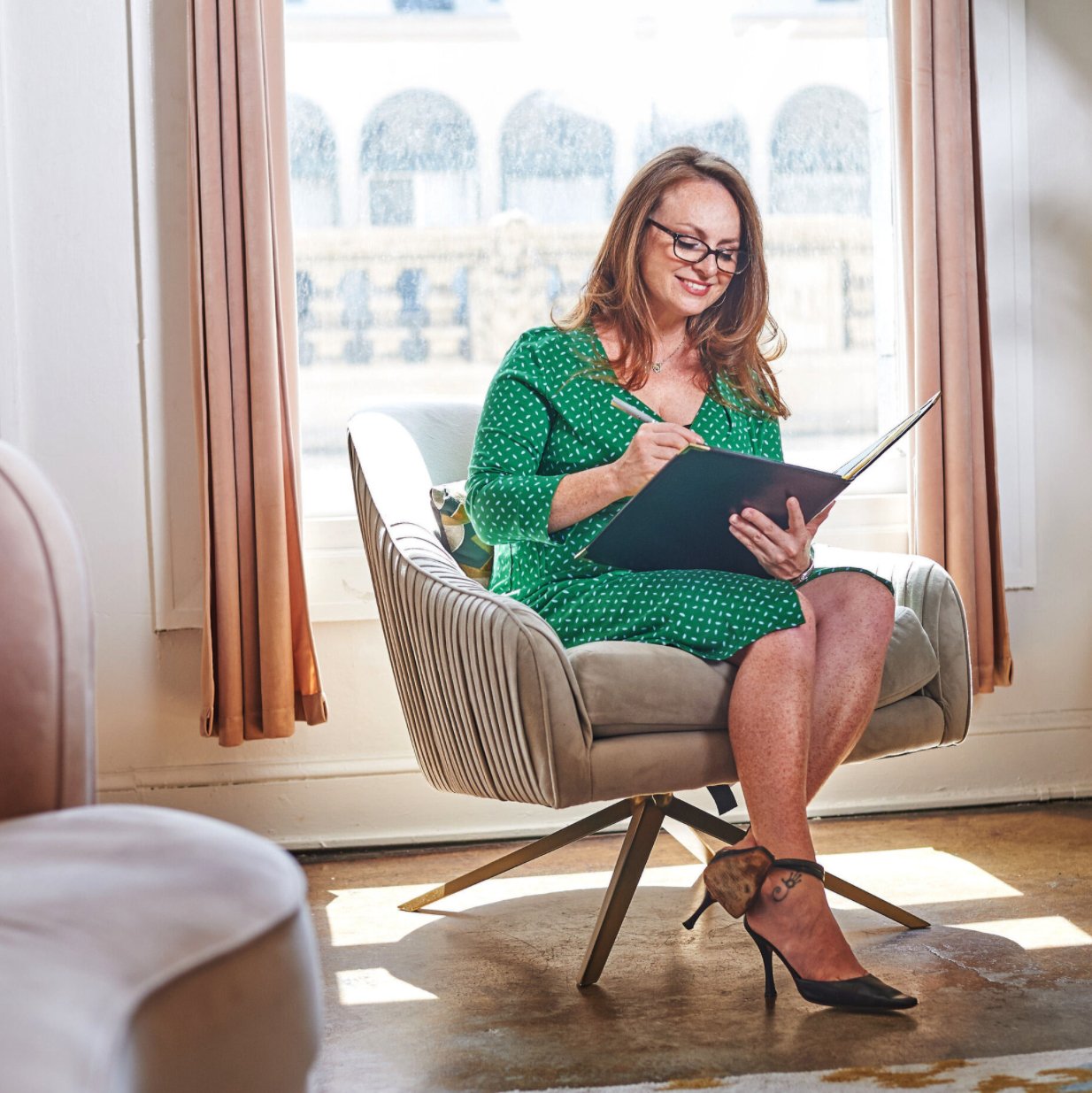

Hi, I’m the founder of Human Amplified. I’m Brandi Fleck, a recognized communications and interviewing expert, a writer, an artist, and a private practice, certified trauma-informed life coach and Reiki healer. No matter how you interact with me, I help you tell and change your story so you can feel more like yourself. So welcome!
Find More on the Blog
Topic
- ADHD
- AI
- Atlanta
- Black and BIPOC
- DIY
- FAQ
- LGBTQIA plus
- Los Angeles
- Nashville
- Seattle
- St Louis
- St. Louis
- UFOS/UAPs/ETs
- abuse
- accountability
- addiction and recovery
- adoption
- affirmations
- afterlife
- altered state
- angels
- animals
- anxiety management
- art
- astrology
- atlanta
- attachment
- awakening
- beauty
- behind the scenes
- being human
- body image
- body work
- boundaries
- brandi fleck
- breathwork
- bullying
- burn out
- burnout
- cancer
- career
- caretaking
- chakras
- channeled
- clarity-dive
- clarity-practice
- clarity-primer
- clean products
- coach
- codependency
Recent Blog Posts
Visit the Full Podcast Audio Archive

Affiliate