When Gender Transition Doesn’t Fit the Expected Story
Interview By Brandi Fleck
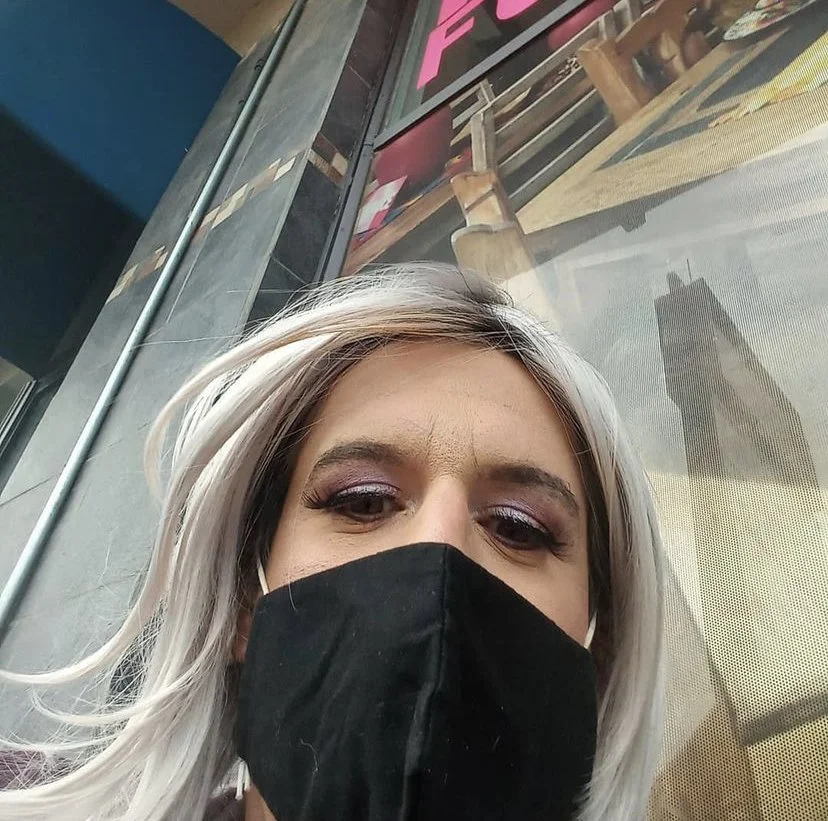
Winter Breedlove shares her personal journey through gender transition, religious shame, trauma, HIV stigma, and self-acceptance while trying to reclaim control over her life and identity.
What happens when your struggle with identity doesn’t fit the narrative people expect?
For Winter Breedlove, gender transition was never a clean, linear story. It was tangled up with religious shame, sexual trauma, perfectionism, HIV stigma, heartbreak, addiction, family conditioning, and years of trying to survive inside an identity that never fully felt like her own.
Winter opens up about what it’s really like to transition later in life while navigating mental health struggles, complicated family dynamics, and the exhausting pressure to become “fully” yourself in a culture obsessed with perfection and instant gratification.
But underneath the conversation about gender is something far more universal. It's the human desire to feel comfortable in your own body, reclaim agency over your life, and decide for yourself what “enough” looks like.
Trigger Warning: This episode contains discussions of sexual trauma, rape, addiction, conversion therapy, suicidal ideation, mental health hospitalization, HIV stigma, religious shame, and explicit sexual language. Please listen with care and take care of yourself while engaging with this conversation.
Listen to Winter Breedlove’s Interview
Watch Winter Breedlove’s Interview
Trying to Feel Comfortable in Your Own Body
Winter Breedlove: My name is Winter Breedlove. I feel like with this gender transition lately, I'm trying to really control the narrative as much as I can. And that's not a traditional transgender narrative, of course, but that's my narrative. And it's just about this slow unraveling now. Really, you could spend the rest of your life going through this process. It's just a question of how much is enough. I feel very powerful.
Brandi Fleck: Before we dive in, this is your trigger warning. In this episode, we discuss various areas of trauma. This content may cause distress to some listeners. In addition, we discuss adult topics with adult language, so make sure the kids aren't around when you listen.
On the surface, this episode is about one woman's story of gender transition. Underneath, it's about the struggle to find comfort in your own body while dealing with the pain caused by cultural conditioning rooted in shame.
Today's guest is Winter Breedlove. Winter is a friend from long ago in our college days. We ate fried chicken, hung out at Nashville Pride, talked guys, and worked on the college newspaper together.
Now Winter is currently on a cross-country trip to LA, where she'll pursue a more transgender-friendly life than what she's found in Nashville, Tennessee. This interview took place before she left Nashville, the place she's from, the place she left to pursue a career in New York, and the place she came back to to regroup after trauma unfolded.
She tells us about when she decided to transition, what led up to that decision, the obstacles she's faced over two years while transitioning, but also she tells us about what parts are going well.
She admits her transgender narrative is not the quote “normal born this way” unquote story, so we spend the episode unpacking her own narrative and how she's taking control over it to guide her life.
For the first time in her life, Winter controlling her own narrative looks like amazing healing from a lifetime of what she refers to as programming.
We cover everything from instant gratification and perfectionism culture to being sent to conversion therapy as a child growing up in a conservative Christian home. We briefly look at the impacts of unrequited love, asexuality, and drugs, and then we explore hormone therapy and what adequate transgender healthcare looks like.
On almost every topic we cover, you can apply Winter's question of how much is enough.
This episode is not only about LGBTQ+ rights and Winter's lived experience, but it's about empowerment and feeling good about who you are, what you're doing, and being true to yourself, whatever that may look like.
As humans, we confront barriers and must manage expectations of other humans. As Winter explains, the struggle often divides us, but can also bring us together in a shared understanding of what it means to be human, what it means to be ourself, and if we're living in a way that's untrue to ourself, that struggle can direct us to how we can transform to live more authentically.
Hey guys, I just wanted to take a minute to tell you what another fabulous human is saying about Human Amplified.
You may remember guest Mal Foster of episode 64 this season. He's also host of the amazing Dimed Out podcast, and he said:
“A fellow curious mind, Brandi is a multi-talented, absolutely charming human being who is focusing her energy on other human beings. Human Amplified is basically a great open source for people to open up, open up themselves, open up their stories, just talk about their experiences, just be and communicate and connect with other people. It is a real multifaceted beast that is just growing by the day, and you definitely want to check it out.”
So thanks, Mal, for that awesome feedback.
Okay everybody, today we are here with Miss Winter Breedlove. Welcome to the show. I'm so excited to have you here. How are you doing today?
Winter Breedlove: Well, I just ripped some lawn furniture trying to sit down, but other than that, I suppose I'm gonna have to buy some new lawn furniture. But otherwise, good.
Brandi Fleck: Well, I'm glad you're doing good. Let's just dive in and get to know you. Can you just introduce our listeners to yourself? Tell us a little bit about who you are and what you do.
Winter Breedlove: Well, you know, I did go, you know, I knew you in college or whatever, and I went to journalism school, and then I moved to New York City and I worked for some magazines. Then I had a gender identity freakout, specifically involving my genitalia, and then I had a mental breakdown, moved back to Nashville, and it's been a fucking show ever since.
But, you know, I'm really trying hard, and now I'm putting myself out there. You know, I'm almost 60 years old at this point. I'm really old, you know, but I'm trying to get it together, and I feel like 2020 is my year finally.
Brandi Fleck: That's awesome. I'm glad you're putting yourself out there. And, you know, we went to college together. I had no idea you were almost 60 years old. No idea.
Winter Breedlove: Well, I exaggerate. I always wanted to be like an older woman, you know? That's been my chief motivator. If I could have Estelle Getty's career, you know, that's like half the battle. I want to be Sophia on The Golden Girls.
Brandi Fleck: There you go. Okay, okay. That was a great little intro, and we'll get into a lot of those topics throughout this episode, but I want to paint a picture of you as a person.
So can you just tell me something like, what's your favorite color?
Winter Breedlove: Well, I guess black and pink. They have a lot of that aesthetic lately.
Brandi Fleck: Okay. And what's your favorite food?
Winter Breedlove: This year I'm on the keto diet, so it's kind of changed, I suppose. But I guess for the most part it's shrimp.
Brandi Fleck: Okay. I was going to ask you your favorite TV show. Is it The Golden Girls?
Winter Breedlove: No, probably, I mean, I watch The View every day, and I love Meghan McCain. You know, back in my past life, she bought my ex a salad one time in New York City. And ever since then, because she loves the gays, you know what I'm saying, she's been my favorite Republican. And she's always starting shit on The View, and I'm always starting shit online, so I feel like we're very on the same wavelength.
Brandi Fleck: And then what did you want to be when you were growing up?
Winter Breedlove: Probably Catwoman.
Brandi Fleck: Awesome. And then, like you mentioned, we went to college together at MTSU. You studied journalism. We were in mass communications. At that point in your life, what were your hopes and dreams? What did you envision?
Winter Breedlove: I don't know. It's changed over the years and fluctuated. As you know, I've had a long, hard life.
And yesterday, as you saw on Facebook, I was working at the Hustler store sticking price tags on dildos. And I want to say, I tried to get a job there yesterday too. I told her, I was like, “I love sticking price tags on dildos.” I was like, “I don't feel any connection because I'm asexual now, but there's just something gratifying about the price tag placement on a dildo. It's just very gratifying to me.”
And I told her that, and she was like, “Well, we'll try to find you a job here sticking price tags on dildos full time.”
And I was like, “Well, you better because I'm having the time of my life.”
Brandi Fleck: What's so gratifying about it?
Winter Breedlove: Well, I guess I think what's gratifying about it is everyone there, for the most part, was trans supportive. And I was just in a back corner, had a bunch of dildos on the table, and people just left me alone all day. I love that type of job.
Brandi Fleck: Awesome, awesome. So you mentioned that you moved to New York and you wrote for some really sort of high-profile publications there. What was that like? Did you enjoy it? And this is sort of a lot, a big question, but can you tell us about your time in New York as well?
Winter Breedlove: Yeah. So yeah, I wrote for, or didn't write, but I was a fact checker for Us Weekly for a couple years, and I did like that job because, speaking of shrimp, they would bring in, on the bottom floor—
:::
Winter Breedlove: They had this, kid of, what was that place they always went to on Sex and the City? I don't know. But they brought in a bunch of catered food all the time. And, you know, I love food, so that's why I kept it for two years. I was just like, they keep feeding me and I'm set for life or whatever.
Then there was this D-list Real Housewife of New York City, and she was only on a couple of episodes. She wasn't one of the main cast, but she had a costume jewelry company, and I worked for her for about a year or so. And she was crazy. I guess I can say that. She knows she's crazy if she's listening to this podcast.
She was getting sued by the Coty Corporation for like a million dollars, and she was going off the wall. She literally one day climbed the wall because there was a wall separation between the main office and the back studio, and she was locked out and having a mental breakdown. And I saw her ass climb the damn wall. That was a summary of New York City, like the high stress of New York City, because the bitch was climbing the damn wall.
Yeah, so anyway, I had a bunch of personal issues in my family. Specifically my grandma died at that time, and she was the only family member I was really close to and still is. Also, I was having gender identity struggles too. And of course New York's expensive, so I had a mental breakdown.
There was one time when I almost stripped naked and went jogging through the streets of Harlem, and that's when they, you know, I went back to Nashville, Tennessee. That was the great mental health hospital tour of 2011, I suppose. I went to every mental health facility in Nashville.

Brandi Fleck: Gotcha. You're originally from Nashville or Franklin, Tennessee?
Winter Breedlove: Yeah, from Franklin.
Brandi Fleck: Okay, so you're a native.
Okay, so you talked a little bit about your gender identity crisis. Did it start while you were in New York, or has it been something that's just been part of your whole life?
Winter Breedlove: I guess that's a good question. On my most recent hospitalization last year, a nurse asked me that same question, and I feel like it's been all the rapes and also American success and how Americans view gender too.
And I feel like with this gender transition lately, I'm trying to really control the narrative as much as I can. And I don't feel like that's a traditional transgender story, of course, because it's always that born that way narrative. But I feel like I had a lot of trauma, and I feel like that's what kind of spurred it along, is what I'm trying to say.
Brandi Fleck: Gotcha. Gosh, there's a lot to unpack there. Maybe you can tell us a little bit about some of the trauma in your life, but let's talk about the actual transition first.
So when you came back, how did you start even making that transition?
Winter Breedlove: I guess my first step, because I always heard Starbucks was a good place to transition, which didn't turn out to be the case, but I got a job at Starbucks. And there was a lesbian store manager at the time, and she was like, “Yes, we accept all the LGBTs over here.”
Yeah, I don't know. I guess two years, it's just been two years of pretty much hell, I'd say, especially in Nashville. And I was trying to get out of Tennessee this year, and then the coronavirus happened, so it's been a crazy year.
I've been doing a lot of voice therapy, and that's something that has changed. This past weekend I was singing along to Lizzo and harmonizing, and when you used to know me I sounded like an atonal Tom Waits. But I was impressed with myself. I was like, I'm hitting these high notes and harmonizing with Lizzo right now.
And that's all thanks to my vocal instructor Barbara. I don't know how to pronounce her last name. She's 86 years old, and she's Deborah Harry's voice coach, and she works with a lot of Broadway singers or whatever. And, you know, Miss Barbara knows her shit, honey.
She really helped me. She really has challenged me. The first few times that we did it, she would make me almost gag in my throat, and I felt like it was an after-school special about bulimia or something. And I had to sit down after the lessons because they were so intense. But yeah, Miss Barbara knows what she's doing.
Brandi Fleck: Okay. Yeah, I think you sound great. I think you look great. Just by looking at you and talking to you, I wouldn't necessarily know why it's been such hell. What have been some of the obstacles?
Winter Breedlove: I guess also because Americans have perfectionism too, and also I guess it's the expectations of people, even in the LGBT community.
The chief issue, of course, that most people struggle with is obtaining surgeries and going forward. Like what surgery is going to make you feel the most like a woman, essentially.
And at Vanderbilt, I had to go to Dr. Wier, and it was just a bunch of—he didn't answer my questions. And I had good insurance through Starbucks, but it still was dismissive of me. Then there was a bunch of insurance wrangling and so on and so forth.
I got a transgender grant this year for $6,000, which isn't a lot of money, but now I'm working with people at Marvel Cosmetic Surgery in Nashville, and I like them better. They answer my questions, and they don't charge me for consultations either. And they're also giving me some free surgery on top of the grant or what have you.
I guess the most challenging part is when is it going to be over? In America we have expectations of instant gratification and perfectionism, and a lot of people have preconceived notions about gender too. So it's all about managing all of those expectations. I think that's what the most challenging aspect of it is.
Brandi Fleck: Gotcha. So are these your expectations, or are you managing the expectations of people around you and society?
Winter Breedlove: Yeah, and I guess it would be helpful for me to talk to a therapist instead of talking to you about it, but whatever. I've had 21 different therapists.
So yeah, I guess that's what it is. It's managing my own expectations. Even this weekend at Hustler Hollywood, there was an LGBT supportive person, but she kind of misgendered me a couple of times. I've learned not to get bothered by it as much, but it still pissed me off.
And I had a mental breakdown outside of the Green Hills Mall parking lot. I still have those cycles of people saying shit and then I have a mental breakdown. Not a mental breakdown where I have to be hospitalized, but where I'm crying in a public space.
Brandi Fleck: Gotcha. Well yeah, because I can imagine that it hurts in a way. Can you describe what it feels like when you are misgendered, even if it's by a supportive person?
Winter Breedlove: I think it goes back to my expectations because I want this process done already and to move on with my life. I think that's what is the most irritating part of it. It's just like, can it be goddamn done already and can I move on?
I'm trying to go as fast as I can through this gender transition, which for some people takes 20 years or something. And I'm like, I don't have time. It's coronavirus 2020. Let's get this shit done.
Then I get really wound up, and I start cussing people out in the middle of a Target. That's pretty much managing all those expectations on a daily basis.
And this weekend I did start smoking cigarettes again because I am stressed. America is stressing me the fuck out right now. I just was like, I can't take it anymore. Yesterday I bought some Marlboro Lights for the first time in years. But I'm chewing my nicotine gum now because I just want to manage the stress of it all.
Brandi Fleck: Yeah. Okay, so I'm hearing you say stressful, and you feel like there's not enough time. Once this transition is over, what do you see it being like for you?
Winter Breedlove: Well, I guess that's the interesting part of it. I'm learning how to take control for the first time in my life. I'm working with a lot of different individuals, like a fashion stylist and a makeup artist and a life coach.
I'm trying to gain control of, essentially, the penis. I decided I'm going, like one of my life coaches was like, “You need to design a penis Medusa wig, you know, and just get on with your fucking life already.” And that's what I'm doing. I'm learning how to manage it, and I'm just like, fuck it.
That specific body part has caused me such consternation, and it will probably continue to cause me consternation for the rest of my life. But try to do it in a way that owns it, you know what I'm saying?
Building a Public Identity Through Comedy and Performance
I guess I should preface with, I started doing stand-up comedy before corona. And one of my life coaches was like, “You need to be very visual to compete with the drag queens on Instagram,” because she does life coaching for a lot of kind of well-known drag queens and so forth.
And she's like, “I looked at your Instagram page and it's boring, and you're not gonna compete with drag queens with that Instagram page.”
I was like, you're right, because I don't like doing that first of all. So then we came up with this penis Medusa wig mask idea, which I kind of—I mean it was my idea too. I just had to talk it out with somebody.
Brandi Fleck: Yeah, yeah. Well gosh, there's a lot there I want to ask you so much about. So first of all, are you still pursuing stand-up comedy? And how do you see that going after corona, or maybe while corona is going on? I don't know if it's ever going to end.
Winter Breedlove: Yeah, I'm trying to get really visual and get all the pieces in place where I can feel comfortable pursuing it again because I was doing really good before coronavirus happened. People were like, “Oh, you're really funny.” And people still ask me about it, like, “We want to come see your show again because you were so funny.”
I'm just gonna get out there and do it and just low-key do it like I was doing before corona. I'm finding LGBTQ virtual comedy places online to do it with. So I'm really working hard at finding places going forward.
Because I like doing it too, and I'm good at doing it.
When I started doing it at the end of last year, I had a lot of nervous energy, of course, because I don't like being in front of people. I guess that's a thing a lot of people have, trans or not, or genitalia issues or not. But I channeled the nervous ticks and made it more interesting to watch. Like, this person's onstage having nervous ticks, but it's hilarious anyway.
Okay, so that's what I went with earlier this year.
Brandi Fleck: Great. Well hey, if you have any upcoming gigs that you want people to know about, just let me know and I'll post them on the website and we'll put them in your show notes.
I want to go back a little bit earlier. You mentioned gaining control of the penis and that this body part has given you a lot of consternation, or you've had issues with it. Can you tell us a little more about that? What is it about it?
Growing Up With Religious Shame Around Gender and Sexuality
Winter Breedlove: I guess this all goes down to my evangelical family and a lot of shame around it, and the fact that it's an anatomical part that has a specific name that correlated with my last name years prior.
So I felt like, oh my God, everyone in this family knows that I've sucked a lot of dick, and now I have this body part. I can't even be a Walmart greeter.
There was a year I lived in a closet in McMinnville, Tennessee. A walk-in closet for a year. I just had a lot of shame with it, you know? And that's not a traditional transgender narrative, of course, but that's my narrative.
And so I guess as you can see, I have a lot of ways that I'm working through it currently.
Brandi Fleck: Sure, as opposed to living in a walk-in closet for a year eating Taco Bell and watching Absolutely Fabulous on Netflix, because that's what I did in 2017.
Sure. Yeah. Now you are being who you want to be, and you said you're taking control. You're in charge of that.
Winter Breedlove: Also as a rape survivor, that's another reason I want to take control. I want to take control from the people that raped me, control from my evangelical family, control from my arch nemesis unrequited lover. That's what I'm trying to do at this point in my life.
I feel very powerful, actually, for the first time in my life. It's weird because I usually feel like a victim. I have that victim mentality.
Brandi Fleck: Okay, well that's great that you're taking control over it. Does your family accept you now, or do you still have a complicated, complex relationship with your family?
Unraveling Family Conditioning and Learning to Live Authentically
Winter Breedlove: That's another good question. I thought about it actually yesterday.
I'm having to unravel a lot of the programming over the years because, again, I haven't really gone to a Christmas gathering since 2011. And that was when I was sitting in the closet with a bottle of wine, which I'm sitting in a lot of closets, you notice. That's another recurring theme in my life.
But I thought about it because I'm talking with my lesbian cousin now, and I'm talking with other people. And it's just about this slow unraveling now. This was everyone's preconceived roles for several years, and now it's starting to change.
So it's also about managing their expectations too.
Brandi Fleck: Yeah. It's a really complicated process. And again, I probably should be in therapy, but I'm also irritated with most therapists.
So yeah, you mentioned you've had 21 therapists. Are they just not helping? Do they not understand?
Why Therapy and Mental Health Treatment Felt So Frustrating
Winter Breedlove: Well, the life coach, the one I had before my current one, which I still like and I might go back to, she was like, “Yeah, some of these problems are very complex.” She was like, “I only have an hour each week, and I might need two or three hours with you every day to sort through all these issues.”
So I probably should be back in therapy, but I just feel like a lot of therapists, they're programmed with this born this way narrative. So it's a very sticky situation in terms of political correctness. Like, oh, we can't really get down to what's bothering this person because—
Like I went to ex-gay therapy too. There's so many issues at the root. And people especially that claim they're LGBT friendly, there's this culture of political correctness where I can't get my issues adequately addressed.
And it's taken like 21 therapists, and at the end of it I was just like, I'm done, you know what I'm saying?
Brandi Fleck: Do they want to just prescribe you medication?
Winter Breedlove: Yeah, that too. I've been prescribed different medications and none of them work. But I feel like with the two life coaches it has been helpful talking about these issues at a core level rather than talking around these issues and prescribing medications.
Brandi Fleck: I love life coaches. I've had two different life coaches and they are so helpful in my opinion, so I totally hear that.
You mentioned ex-gay therapy. That had to be insane. What was that like?
Winter Breedlove: Oh yeah, sure. So it was here in Brentwood, Tennessee. I only went for a couple of months really.
One of the things he wanted to do was like, “I want to record your voice and take it to Kroger and demonstrate how masculine you are.”
Brandi Fleck: Really?
Winter Breedlove: That's the only thing I remember.
Brandi Fleck: Wow. Did you sort of block it out? Secondly, did your family want you to go or why did you go?
Winter Breedlove: Yeah, I don't really remember much else. Not because it was specifically traumatic, just because I've had a lot of therapists and I've done a lot of drugs and I've blocked out a lot of shit in my life. And that's probably also, I’m old. I'm not 60 really, but I really would like to be an elderly woman.
Secondly, my biological father, my bio dad, I guess I can just be comfortable saying my dad finally, even though we don't have the same last name anymore—he was reading a book by an ex-gay therapist in Texas, and it was recommended in the back of the book to go to this person in Brentwood, Tennessee.
So my dad really wanted me to go, and my mom kind of went along for the ride. Then after the Kroger voice recording incident, they were like, “Oh yeah, this person sounds crazy.” And it was also their money too, so they're like, “Oh, that was $70 of craziness.”
Brandi Fleck: Yeah. Okay, we've sort of gone in a little windy path talking about your life and how you've gotten to where you are now, but what are some of the good things about your gender transition so far?
Winter Breedlove: Well, like I said, I really like Barbara, and I have fun working with her every week.
Yesterday, this is a good example, at the Hustler Hollywood, I was like, you know what, I've been getting a lot of temp jobs lately after quarantine lockdown, and also people have donated money, so I have some money built up.
And at Hustler Hollywood yesterday there was this rhinestone dress that was really—I just loved it. I was like, I want to wear that dress. When I was doing inventory I was like, oh my God.
Then I had a rhinestone mask, and I bought this new wig that's silver and looks really interesting. So I bought all those kind of threads yesterday because, again, one of my life coaches was like, “You need to be more visual to compete with people on Instagram.”
So after this interview and this other interview that I'm doing with the vice presidential candidate for the Green Party for Autostraddle.com, which is an LGBTQ website that's pretty popular, after I do that, because I've had a rough couple of days, I might be moving into a lesbian chicken co-op in Ashland City, Tennessee.
So I'm going to go over and visit the lesbians, wear my gold rhinestone dress, sniff some poppers, smoke some weed, take some chickens near my gold rhinestone dress, and take some pictures on Instagram for my life coach to demonstrate that I can be a visual person.
So I don't know, that's kind of something fun for me that I'm excited about doing.
Brandi Fleck: Good, good.
All right, Winter, so we've talked about the good and the bad of the gender transition, a little bit about your life growing up and what brought you to where you are.
You've mentioned being a rape survivor, and I know that you are living with HIV and you've been pretty vocal about it on social media. So I wanted to ask you, what is it like living with HIV, and has that complicated your treatment or how you go about life?
Navigating HIV Stigma, Fear, and Becoming Undetectable
Winter Breedlove: I'm currently living with my parents and so, you know, they're very conservative. My mom was a pharmacist in a hospital here in the Nashville area, but they watch a lot of Fox News and they're very conservative.
So the only thing really, how it's been impacted, I get my own bathroom because everyone in this family thinks that I'm going to give them HIV from the toilet seat even though I'm undetectable and this isn't 1989, but whatever.
But then, you know, the wonderful thing, if there is such a wonderful thing, about the coronavirus is now they think I'm going to give them the coronavirus. So with HIV, they don't even give a shit about that anymore. Now it's like the coronavirus is the hot new disease of 2020.
So I guess that's really the only thing that's been problematic or whatever. It's not like a really major issue anymore, you know? It's 2020.
But it has impacted because I am programmed by my parents, and that's another reason I don't have sex because I'm just terrified about getting it. Most of my life when I was, you know, hoeing it up, yes, quote Lizzo, “Once upon a time I was a hoe,” yes, yes, we know, I sucked a lot of dick.
And so now I'm just like, also with the hormones, because I'm taking so many goddamn hormones, I really cannot—I tried yesterday at the Hustler Hollywood. I saw that this porn star, Diego Sans or something, and I was like, oh, he's interesting. So I looked him up online, but I was like, this really doesn't do anything for me because I'm on so many hormones.
Did that answer your question? I don't know what the hell the original question was.
Brandi Fleck: One, sort of living with HIV, and what has your journey with HIV been like from the time you found out you had it until you became undetectable?
Winter Breedlove: Well, I was living in McMinnville, Tennessee at the time. And even then I was trying to be the asexual trans woman of my parents’ dreams or nightmares.
I moved to this town specifically for the genderqueer commune near that town. I can't divulge its specific location. I feel like I'm already banished from this commune anyway because I talk a lot of shit about people because they piss me off.
But I was living at this commune, or near this commune at the time, which is in another town close by. And McMinnville, Tennessee is one of the top 10 meth places in Tennessee.
So I really didn't have any friends except for the Republican makeup artist and my apartment manager. And there was this one person affiliated with the commune, and he was kind of attractive. So he was the only person I was really having sex with that year, and I'm pretty sure that's where I got the HIV from.
Yeah, we would, again, I'd go over to his house on a Saturday night, smoke meth, and then, you know, bada bing bada boom, you got the HIV.
So I had a breakdown on the floor of my apartment in McMinnville, Tennessee and I cried a lot. But now I really don't think about it that much. I don't really think about it that much because it's not a big issue anymore.
Yeah, I don't know how I came to that place. It didn't happen the next day, of course.
I guess I went to Nashville CARES, and the only person at Vanderbilt that I really liked was Dr. Anna Person, and she's the HIV doctor at Vanderbilt. And that was really helpful because she knows her shit too.
And even though I told everybody else affiliated with the transgender department of Vanderbilt to go fuck themselves, I really want Anna Person to know that she was an incredible doctor. And she really, I think, helped me progress along the path of not caring as much about the fact that I'm HIV undetectable. It was just going to Anna Person every two months and being educated.
Brandi Fleck: Gotcha. So education was a big piece of emotionally and mentally healing and getting where you are.
That's great. Tell us a little bit about asexuality and what is it like, and why have you chosen that? I believe you said part of the narrative was choosing that, or did it just come with the hormones?
Winter Breedlove: Well, you know, Susan Ruth, who's another podcaster, I was interviewed on her show and she really challenged me about it because it's not like I don't have any sexual thoughts. It's just very muted.
And it's the fact that I came to this place with Vanderbilt where I could see I wasn't getting much help because one of the doctors at Vanderbilt told me to take the estrogen pill incorrectly. She told me to swallow it instead of sticking the pill underneath my tongue.
And so when coronavirus happened, I got irritated. Like I said, I told a lot of doctors at Vanderbilt to go fuck themselves. Then coronavirus lockdown happened, and I was like, you know what. And I feel like this is emblematic of why trans people go through alternative ways of obtaining hormones, I started ordering a lot of hormones off the internet.
And I also had a stockpile of HIV meds, and I was like, I never want to talk to another doctor ever again, you know, when the Coronavirus was happening, so I'm on a really high dose of hormones right now, and that's helped with, again, the asexuality aspect of it all.
And then, of course, that genderqueer commune, I fell in love with this person that was very narcissistic and one of those pretty boys that really wants to be a player and kind of put that energy out into the world. And I'm not the only person who has said that.
But I fell in love with this person, and it was just three to four years of tumultuous drama. And it was all instigated on my part, but of course I was under the impression at the onset that this person had feelings for me back, so that really fucked with me.
So after that experience with that person, yeah, that's also kind of spurred the process of asexuality along too, where I'm like, I do not want to fall in love with another individual.
And I did have feelings, I'm not going to talk about it because I don't want to talk about him on this podcast, for another person, but it was also a lot of drama. And I'm just like, you know, I'm at the point of my life where I have too much shit going on, and I'm doing a pretty good job at managing it all.
I also do not have time to fuck around with dudes. I don't have time. There's too much shit that I'm trying to manage every day in my life.
So the hormones, the stress, all of these things kind of factored into the asexuality.
Brandi Fleck: Yeah, okay. Do you think that'll ever change in the future once the transition is over?
Winter Breedlove: I don't know. That's another thing that's very complicated that I probably need a therapist instead of Brandi Fleck's podcast to talk through.
But yeah, I don't know. I'm not sure. I'm working through it. There's a lot of issues to work through, and I'm not really sure one way or another what's gonna happen.
Brandi Fleck: All right, I've got one more question for you. Before I ask it, let's go ahead and give everyone your Venmo so they can give you donations for your gender transition if they so please.
The Emotional and Financial Reality of Gender Transition
Winter Breedlove: Oh yeah, and like I say, I'm doing pretty good, so if you're struggling or whatever, you don't have to.
But I do have a surgery lined up this year, and I have a grant for it, but I also want to get other procedures along with it, even though I have another free surgery coming up too. I'm trying to get it going.
And you know, this process is very expensive. I think I read somewhere that you could spend upwards of $100,000 trying to complete this process.
But I feel like I'm coming to the place of, if I can get, you know, my breasts are starting to come together. I call them my little Chinese hormone titty nubs because I get my hormones imported from China.
And yeah, I have my little Chinese hormone titty nubs right now, and then I want my bottom surgery, and you know I'm getting the facial feminization with the grants and also for free on other procedures.
But yeah, I don't know. I feel like maybe that might be it for me because you really could spend the rest of your life going through this process. It's just a question of how much is enough.
You know, I guess that's another thing about being human. How much is enough? Yeah, I guess that's what I should have led with instead of ended with, but whatever.
But yeah, my Venmo is Winter-Breedlove on Venmo if people feel compelled to donate. And if not, that's fine too. I know times are really difficult for a lot of people right now.
Brandi Fleck: Yeah, yeah. Okay, well if you could give your younger self advice based on hindsight being 2020, what you know now, what would you say?
Winter Breedlove: Oh my God, I don't even know. Probably stay away from crack is my advice. Stay away from crack, stay away from meth. That would be my, I guess, simple answer.
Brandi Fleck: There you go.
Okay, well Winter, thank you so much for coming on the show. It's been an absolute pleasure talking to you, and I hope that this goes smoothly for you from here on out. I'd love to hear how it goes. I will follow you on socials.
And if people want to follow you on Instagram, where do they go for that?
Winter Breedlove: On Instagram it's Winter Breedlove, or it might be Winter Breedloves with an S. Okay, I don't know.
But my Twitter account is twitter.com/tvonthefritz, which is easy for me to remember because that's the platform I use the most.
Brandi Fleck: Okay, well we'll put all that in the show notes. So once again, just thank you so much for being here today.
Winter Breedlove: Oh yeah, thank you.
Join the conversation!
Feel free to share your own experience and let me know if you have any questions in the comments.
Related Posts









Hi, I’m the founder of Human Amplified. I’m Brandi Fleck, a recognized communications and interviewing expert, a writer, an artist, and a private practice, certified trauma-informed life coach and Reiki healer. No matter how you interact with me, I help you tell and change your story so you can feel more like yourself. So welcome!
Find More on the Blog
Topic
- ADHD
- AI
- Atlanta
- Black and BIPOC
- DIY
- FAQ
- LGBTQIA plus
- Los Angeles
- Nashville
- Seattle
- St Louis
- St. Louis
- UFOS/UAPs/ETs
- abuse
- accountability
- addiction and recovery
- adoption
- affirmations
- afterlife
- altered state
- angels
- animals
- anxiety management
- art
- astrology
- atlanta
- attachment
- awakening
- beauty
- behind the scenes
- being human
- body image
- body work
- boundaries
- brandi fleck
- breathwork
- bullying
- burn out
- burnout
- cancer
- career
- caretaking
- chakras
- channeled
- clarity-dive
- clarity-practice
- clarity-primer
- clean products
- coach
- codependency
Recent Blog Posts
Visit the Full Podcast Audio Archive

Affiliate