Hospice Care and End-of-Life Planning Explained
Interview By Brandi Fleck
Hospice nurse Fran Cooper Van Allen explains how hospice care works, what families can expect at the end of life, and why planning ahead can bring greater comfort, dignity, and peace.
Talking about death isn't easy, but avoiding the conversation often leaves families unprepared when they need each other most.
Hospice nurse Fran Cooper Van Allen shares what really happens during hospice care, how families can recognize the final stages of life, and why advance planning is one of the greatest gifts you can give the people you love.
With compassionate stories from nearly two decades of hospice nursing, she gives us a perspective on death that is grounded, practical, and surprisingly hopeful.
Listen to Fran Cooper Van Allen’s Interview
Watch Fran Cooper Van Allen’s Interview
Why Fran Chose a Career in Hospice Nursing
Brandi Fleck: This week's guest is Fran Cooper Van Allen, a hospice nurse for about 20 years. She's now semi-retired and is a caregiver for the elderly. She's a wife, a mother, and an administrator for an Al-Anon and Nar-Anon support group.
Fran lives on a hobby farm in Georgia, is an avid gardener, and she's interested in beekeeping and yoga. She reads, writes, and crafts. She loves life and giving back to society.
Fran is such a kind and joyful person. Today she's going to teach us about what hospice is, why it's important, and how spiritual and important end of life can be. She describes how she helps families deal with the impending death of a loved one and how she helps patients cope with pain and the thought of dying.
It might seem like a tough topic on the surface, but I want you to tune in today for takeaways about making choices for yourself and living wills to take that burden off of family, and to hear a beautiful message of love and spirituality.
Plus, Fran tells us stories of what it's like to be with someone when they pass, examples sure to provide hope that our energy doesn't end here on this planet when our bodies do.
On a personal note, a couple days ago, before this episode's original air date, I learned that a dear great-aunt of mine has entered hospice. I'm sending much love and prayer to my extended family right now, and this episode is very special to me. I think hospice is a very special gift, so I'm excited for you guys to get to learn about it and the importance of it.
Brandi Fleck: Hi, Fran. Welcome to the show again. How are you doing today?
Fran Cooper Van Allen: I'm doing great. How are you doing?
Brandi Fleck: I'm doing very well, thank you. I'm so excited to have you back. We just had so, so much ground to cover, we had to do a second episode because we really want to dive into hospice today.
So if you don't mind, we'll just dive in, and I'll start asking you questions.
What makes you happy, and how do you approach life?
Fran Cooper Van Allen: I think the first thing that makes me happiest is my family. I'm married to my friend of 30 years, and we have a wonderful marriage. I have three beautiful kids and two grandkids, and one on the way, so I'm really excited about that. Watching them grow and make memories with them. So my family is the most important thing to me.
And then my friends give me so much joy and acceptance and fun.
Fran Cooper Van Allen: Nature's super important to me, so getting my hands dirty is a real necessity for me. It's therapy. When I'm really stressed, digging in the dirt helps me.
Also, my animals. My animals give me so much peace and joy. We have a farm, and we have alpacas, chickens, dogs, a cat, and we just added seven baby chicks today.
Brandi Fleck: Awesome!
Fran Cooper Van Allen: Yeah, that makes me super happy.
Also, music, song, and dance. They're a huge part of my life. My husband's a musician, and I met him through music.
I approach life, I try to keep a grateful heart and be happy and joyous for all the blessings that I have because I have a great life, and I have so much to be thankful for. So I try to keep that always in the forefront of my mind and be really grateful.
I think that with a happy heart and a good attitude, you can pretty much do anything you put your mind to.
Brandi Fleck: Awesome. Well, that's all really cool.
I will just say for our listeners that if they didn't hear the first episode you did, that'll be at onbeinghumanpodcast.com/fr020, so they can go check that out.
But if they haven't listened to that yet, can you please tell us what you do for a living and how your career has evolved?
Fran Cooper Van Allen: I sure will.
I'm a semi-retired hospice nurse, and I started out in nursing in 1996. I went to school for three years while raising three kids and being married.
I worked in home hospice right out of school. We had moved to Houston, Texas, and the only people that would hire me was hospice. I was kind of leery about that, but when I started hospice, I just fell in love with it. It's a very special calling.
I worked in hospice all over Georgia, Texas, and California for about 18 years. I developed a blood clot in my leg. I had to come off the road, and I went to a hospice house. For those that don't know, it's called an inpatient unit. It's where the very, very ill go to be treated, or people can go for what's called respite, and we'll talk about that later.
But then my back blew out, so now I'm just doing private-duty sitting. I have some elderly ladies that I take care of, and each one gets me two days a week.
In my spare time, I'm working on a training for hospice caregivers and for families and friends of those with dementia. We also have the hobby farm, like I said, so that's another little sideline we have, a little pet thing going on.
Brandi Fleck: Yeah. Okay. Well, you said you're working on a training. Is this an online course people would access, or do you go around and teach at hospice centers or things like that?
Fran Cooper Van Allen: It's still in the works, but my goal would be to do both.
Brandi Fleck: Okay, awesome.
Fran Cooper Van Allen: I find that a lot of hospice caregivers, people think that they can just jump into hospice and do it, and it's a completely different calling and set of circumstances and ethics, all kinds of things that are wrapped up in it. It's way more complex than people anticipate.
So I would love to help hospice caregivers be more empathetic and more understanding, and also give them support because it's a really tough calling.
Brandi Fleck: Gotcha. Well, I can't wait to learn more about it, but before we get into those details, since you are a caretaker now for the elderly, can you tell us first, what are your thoughts on aging and how our society handles it?
How American Culture Shapes the Way We View Aging
Fran Cooper Van Allen: How much time do you have?
Yeah, I feel that we are in denial of aging as a culture, and mostly the American culture. We shove our elderly into nursing homes, assisted living, personal care homes because of our society and because of our work habits here.
People are sandwiched between having kids and taking care of their jobs, and then they have elderly parents that they have to take care of. So the elderly kind of gets shoved away.
I think a lot of it is because we like to defy age. TV is just covered with all these creams that are going to make you look younger and all these ways to look better. So much time and money and energy is spent on trying to look young or younger and hiding from age.
I have a cute story. My 8-year-old granddaughter and I were sitting and watching TV. A commercial came on for a cream called Crepe Erase. It gets rid of the wrinkles under your arms and the flabby skin. She looked at me, touched me on the face, and said, "Nemo, you need Crepe Erase."
Brandi Fleck: Oh, no.
Fran Cooper Van Allen: But an 8-year-old thinks that my wrinkles need to be gone, and to me, there's something wrong with that.
We rush in for our elderly. We don't know how to communicate with them. We listen to them briefly, and then we rush back out. They're just a lot of trouble.
I think a lot of people are terrified about what happens after death, so that's another reason for us to run from getting old. We cover up and pretend like it's not going to happen.
Brandi Fleck: Sure. Well, those are all really good points.
I often find myself wishing that we had a society that had systems set up that valued human life more, and I think that taking care of our elderly is a really huge part of that and valuing life because life is not over until it's over, and there are still lots of things to consider.
So what are your thoughts on how our society handles death and dying?
Fear of Death and Why End-of-Life Conversations Matter
Fran Cooper Van Allen: It's just as bad as aging.
Like I said earlier, so many people are afraid. They're afraid of the unknown, and from what I've seen, a lot of people don't buy into their afterlife vision or their professed faith or doctrine. They don't buy into their descriptions of heaven and hell, and so the separation from a loved one is terrifying to a lot of people.
I know I lost my dad to suicide when I was 12, and so I have often supported others that have gone through the same thing.
I also feel that society takes advantage of death. At the time of death, people are sold huge, expensive funerals to honor the deceased loved one, when really that's just for the people that are still here. But when someone's in such deep grief, they're going to spend every penny that they can to do whatever seems to make the death a good thing, make it a positive thing, I think.
But the funeral costs can be astronomical and just unreasonable.
So a really important thing for everyone to do is to have an advance directive and have someone that you trust, that you know is going to follow through with your wishes to be what's called your power of attorney for health care, or your health care agent. It depends on what state you're in.
Talking about what you want at the end of life is super important as well. Having that dialogue before you become ill or before you're at death's door helps your family have some sense of comfort and a roadmap to follow when they're in that deep grief.
Brandi Fleck: Sure, sure. And less likely to get taken advantage of, I suppose, if they have that roadmap.
Fran Cooper Van Allen: Yes.
Brandi Fleck: Those are all really good takeaways. They'll definitely be in the show notes.
For those who don't know, what is hospice care, and why is it beneficial?
Understanding Hospice Care and Who It Helps
Fran Cooper Van Allen: Okay. Hospice care is care that is provided for someone who has a limited life expectancy. The regulations say six months or less. That is an educated guess by a physician and a team of health care professionals.
If someone lives longer than six months, they're not going to get kicked off of hospice. They have what's called a recertification period. Periodically, they are recertified for hospice. If they still meet the guidelines, then they stay on hospice and continue to reap the benefits.
Hospice itself is, like I said, care that is provided for someone who has a limited prognosis.
There are four levels of care for hospice.
The first is called routine home care, and that is provided in the patient's home. That can be anywhere. If they live in a nursing home, an assisted living facility, under a bridge, or in a homeless shelter, hospice will go to that patient.
There's a team of professionals. It is led by a physician, but the physician usually doesn't see the patient. He's on the team.
The team is headed up by an RN and an LPN. Usually, they will see the patient at least once a week.
Then they have a home health aide to help with activities of daily living, bathing, changing the bed, meals, whatever that is.
There's also a chaplain if they want one. The chaplain can go and address the spiritual needs of someone who is facing death.
There's a social worker. Social work is a great resource for any resources that the family may be available for. Maybe somebody doesn't know that they're eligible for food stamps, and the social worker can help them get that process going.
They also have volunteers. So let's say you have a veteran that's on hospice. Maybe there's a veteran who has volunteered, and they can swap war stories or whatever and just add to the quality of life for that person who's dying.
There's also an RN that's on call 24 hours a day, seven days a week, 365 days a year. So if you call at 3:00 in the morning and your loved one is throwing up and in pain and you don't know what to do, you can get ahold of a nurse within minutes. If need be, she'll come and make a visit at your house.
Brandi Fleck: Wow.
Fran Cooper Van Allen: Yeah.
There's also bereavement care. After the patient has passed, the hospice should follow that family for 13 months. So that first year, all those anniversaries, birthdays, Mother's Day, Father's Day, whatever, you've got a team that's following you. If somebody's really having a hard time, you can let them know, and they can be another resource for you.
So that's basic hospice care, and that's called routine home care.
Now there are three other levels of care.
Continuous care, again, can be provided in the home, and it's if there are symptoms that are out of control. Again, I'll use pain because that is something that people are definitely very afraid of, is dying in pain.
We may need to put a nurse in the home for a period of between 8 to 24 hours. The nurse may administer medications. She may titrate the medications up or down. She's in constant contact with the doctor and giving the family support.
So that's continuous care.
General inpatient is another level of care. That is given at a freestanding facility or a contract facility. Some hospices don't have their own building, so they contract with a hospital to provide that same level of really intensive care with pain and symptom control.
Then finally, there's respite care.
Caregiving for someone who is on hospice is exhausting for the family. I'm not sure of the regs now, but it used to be like every five weeks they could have what's called respite care, where their loved one would go to a facility. The hospice pays to get them there and bring them home. They stay there for five days, and then they go home.
We've had families that have gone on vacation for five days or just stayed at home and vegged for five days without having to care for this person.
So those are the four levels of care for hospice.
Brandi Fleck: That makes me wonder, has anyone ever passed away on respite care and their family wasn't there for it? Or would they not be able to go on respite care if they were super close? Or how does that work?
Fran Cooper Van Allen: Usually with respite care, it's for folks that are doing okay, but not necessarily. I mean, because you need a break, especially when things get really, really rough.
A lot of times what would happen in the inpatient unit where I worked is someone would come in on respite care, and then they may have to transition to general inpatient because their symptoms got out of control or they started what we call actively dying.
Brandi Fleck: Okay. What does actively dying mean?
Recognizing the Signs That Someone Is Actively Dying
Fran Cooper Van Allen: Actively dying is where they are within days to hours of death.
There's a different breathing pattern. They may see people that have passed on. They may see angels. Some people see animals. They'll talk to those people. They may reach out to them.
Their body starts to change. They'll start having different breathing patterns. They'll take really deep breaths, and it seems like they're holding their breath. Then they'll let it out, and then it'll be minutes before they take the next one. Or they'll breathe really rapidly.
They may run a really high fever, as high as 104 or 105.
Brandi Fleck: Oh, wow.
Fran Cooper Van Allen: Yeah. Then their skin may change color.
So there are signs that we know someone is actively dying. Not everybody does that, but if someone does start that process, we have time to say, "Okay, you need to call your son in Fort Lauderdale and get him up here because it's going to be the next 24 to 48 hours."
Brandi Fleck: And you actually let the patient know that that's coming?
Fran Cooper Van Allen: No. The patient is usually, at that point, not responsive.
Brandi Fleck: Okay. Okay.
Fran Cooper Van Allen: Yeah. Most of the time they're not responsive, so we're just there mostly for the family at this point and to make the patient comfortable.
Brandi Fleck: Okay. Then I have one more follow-up question that your explanation sparked.
So the difference between routine home care and then inpatient, where they're in a facility, it seems like a lot of people would not want to pass away in a facility, so what are the criteria for having to go? You had said something about if symptoms get really out of control. Can you give us some examples?
Fran Cooper Van Allen: Sure.
Intractable nausea, like nausea you cannot stop. They're throwing up, throwing up, throwing up, throwing up, throwing up. We've tried continuous care at the home, and nothing we do at home is working.
We may need to start an IV with some kind of IV medication, so they'll take them to the inpatient unit where we can actually start that IV and give that medication intravenously.
Same thing with pain. A lot of times pain gets so out of control that the oral medications at home don't control it. So a patient would come into the inpatient unit to have that medication titrated or changed, the route changed, or we may have to change medications or add another one.
So it's kind of like being in an inpatient unit, but the goal is comfort and not cure.
Brandi Fleck: Gotcha. Okay.
How Hospice Care Improves Comfort and Quality of Life
Then on a more philosophical level, why is hospice care so important?
Fran Cooper Van Allen: So many reasons.
Part of it, honestly, is because our society is so death-defying and so afraid of death.
If hospice is used as it should be, which means for the last six months of life, that gives the hospice time to prepare both the patient and the family for the upcoming death.
It provides all types of support. It decreases health care costs and increases life expectancy. There is a study that says folks on hospice live about 30 days longer than if they weren't on hospice.
Brandi Fleck: Oh, wow.
Fran Cooper Van Allen: I think that's because of all the different attention they're getting, and their symptoms are being controlled so they can actually concentrate on the job of living and just having quality of life.
I spoke of costs being decreased. On hospice, a patient no longer goes back and forth to the hospital.
Let's say your grandmother's 98 years old, and she keeps getting bladder infections, and she has kidney stones, and she has gallstones, and she's been back and forth to the hospital, back and forth to the hospital. She's tired, and she doesn't want to go anymore.
So you decide, "Okay, Granny, we're going to put you on hospice."
Now Granny doesn't have to go to the hospital anymore. If she starts getting sick in the middle of the night, you call the hospice nurse.

So the cost of an ER visit or a hospital stay is eliminated. Also, when you send someone to the hospital, it just messes up their schedule, especially an elderly person with dementia. That's the worst thing you can do, is take them out of their environment. So again, that's another benefit.
It also eliminates expensive treatments. I've mentioned before that, in my opinion, giving blood to a 98-year-old woman with a terminal illness is inhumane, and it's a waste of resources that could be used for someone else. Those treatments are not usually done in hospice, so again, you're eliminating expensive treatments.
Hospice pays for supplies, medications, all that staff that comes in. They'll also pay for medical equipment: hospital beds, oxygen, shower chairs, bedside commodes, over-bed tables, wheelchairs. It's 100% paid for by Medicare and Medicaid, and most insurance plans pay for hospice or they have a hospice benefit.
Brandi Fleck: Wow. Okay.
Fran Cooper Van Allen: They're also required to take non-funded patients. A certain portion of their census must be non-funded.
More benefits of having hospice: it's comfort, pain control, and the patient's able to stay in their home.
As you said earlier, most people don't want to die in a facility. They want to be in their own home, in their bed, surrounded by their family and their things, and hospice allows that to happen.
We also, like I said, support the family, prepare them, and we can also help with final arrangements. We can help with things like advance directives, living wills, all those types of things that are so overwhelming when someone does receive a terminal diagnosis.
Finally, it almost guarantees dignity and quality of life versus quantity.
Brandi Fleck: Gotcha.
Knowing When It's Time to Begin Hospice Care
You had mentioned a couple of times that hospice is intended to be used for the last six months, not just maybe the last week or last day or something like that.
How would a family know when it's time to call hospice?
Fran Cooper Van Allen: I'm glad you asked me that question.
That is the doctor's job.
Unfortunately, our physicians either buy into, they're so afraid of death and dying. Again, a lot of docs have never thought about their own mortality, and facing death and dying is not something that they really talk about in medical school.
That is improving. I know a lot of physicians would come to the hospice house for a rotation, but it was just to come and see what we did. It wasn't actually to spend time.
Again, my opinion, I think they should spend a couple of weeks with hospice.
So physicians don't refer in a timely manner, but it is a physician's job, and I believe Medicare now requires them to have an end-of-life discussion with their patients.
Brandi Fleck: Okay.
Fran Cooper Van Allen: Hopefully we'll see that change and people utilize hospice sooner.
Brandi Fleck: Gotcha.
Can you describe for us what types of patients come into hospice? Are they different ages?
Fran Cooper Van Allen: Many different diagnoses qualify a patient for hospice.
I have taken care of a newborn, and the oldest patient I've taken care of was 107. That newborn taught me so much, and her family taught me so much.
The 107-year-old would jump up out of her chair and say, "I'm Johnny Jump Up."
So I had both ends of the scale.
All diagnoses.
People think of hospice as being only for cancer patients, and that's absolutely not true.
Heart disease, dementias, diabetic complications, stroke, trisomy, which is what the baby had, Down syndrome, all different stages of disease, and sometimes there may be complications from, say, birth defects.
I had a Down syndrome patient that had heart disease, and that's ultimately what took him.
Let's see, what else? Kidney failure, liver disease, AIDS, HIV, COPD is a big one. So many smokers, and so many folks, people didn't know how bad cigarettes were for them, and now they're just all over the place.
That is one of the hardest deaths to watch for me, is someone who can't breathe. Being able to relieve that suffering is super important.
Brandi Fleck: For sure.
I'm going to skip around a little bit from what we had planned because death and dying is a very emotional thing, obviously, and you describing the types of patients that come in there got to me a little bit, but do you ever become attached to the patients? And if so, how do you cope with their loss?
Fran Cooper Van Allen: I do become attached.
I don't think I would be a good nurse if I was completely detached, but I learned early on in hospice that if I was going to be effective, I had to put up a boundary.
So I try to put that up when I meet my patient because I know it's going to be for a short term and that I'm there to make their life better. Keeping that in the back of my mind helps, but it is difficult.
As with the baby, there were all kinds of other things that came into play with some of the nurses and other staff members.
So it is super emotional, but I grieve. I grieve with the families. I'll cry. I stay in touch with some of them. I have some families that, even though we're not supposed to do that, you kind of bump into each other on Facebook or in town, and I do stay in touch with some of them.
The biggest thing is to allow myself to grieve and to know that I did a good job, and I did the best thing I could for them. I made their death a good one and a comfortable one.
Brandi Fleck: Gotcha.
So how do you help the families cope with the loss of a loved one after the death?
Fran Cooper Van Allen: That's more a function of the bereavement department or coordinator, but at the immediate time of death, there's a process that I go through immediately after death.
There's a lot of tears, a lot of pain and anguish, and I just allow them to feel that. We talk about it, and I'll hug and comfort and get tissues and just stand there and just be a presence.
I pray with patients or families. Just listening to them, being there for them, that's really all I can do at that moment and just know that my presence is comforting for them.
Brandi Fleck: Sure.
Before the death, do you help them deal with the fact that it's coming?
Fran Cooper Van Allen: Yes.
I had one little lady that was British. She had breast cancer and had had an arm removed, so she said that she only had one wing.
One day she looked at me and she said, "Am I going to die soon?"
I told her, "Yes, you are."
She said, "Will you promise to keep me comfortable?"
I said, "Yes, I will."
And I did. I was able to be there when she started through the process and was able to administer medications for her to make her comfortable. I was actually there when she passed away and was able to support her husband.
Lessons From Life as a Hospice Nurse
Brandi Fleck: So what has working with the patients and the families taught you about life?
Fran Cooper Van Allen: I think mostly that we're all alike. We're more alike than we're different, and I think that's something that we forget so often.
It's also taught me to be nice to your family if you can. Sometimes family is not the kind of people you want to be nice to, or you're not able to be nice to your family. But if you can be nice to your family, it's important.
Also, enjoy silly things, special moments.
Every Christmas we get Christmas pajamas, and this last Christmas I got a unicorn onesie. If I'm really depressed, I put on my unicorn onesie and run around the house, and it makes me feel better.
So being silly, you don't get a second chance to do this stuff.
Get off your cell phone and talk to people. We don't talk to people. We don't communicate anymore. So talking to people is super, super important.
Play games. Get a hobby. Do the things you might do someday, if possible, because someday may be sooner than you think.
Like you keep saying, you want to go to Alaska. Go as soon as you can afford it. Go. Don't wait.
Use your good china. Don't keep it in the cabinet.
Be prepared for and talk about getting old, feeble, and eventually dying. Talk to your family and loved ones about it. Have an advance directive and a power of attorney for health care, no matter how old you are. You can always change it.
Also, move. Keep your body moving and keep your mind moving.
Brandi Fleck: All very good tips.
Sort of logistically, what does a day in the life of a hospice nurse look like, and what are the common things that you have to do?
I know you've mentioned some of it, but if you could sort of take us through the common tasks to paint a picture, that would be great.
Fran Cooper Van Allen: Well, in the hospice unit, it's a lot like I said, almost like being on a hospital floor or an ICU.
We have med passes and then incontinent care and feeding and rounds and repositioning, procedures, and starting IVs. Then you've got all the other stuff that goes along with it.
So that's a pretty cut-and-dried set of functions.
There's tons of psychosocial support for the families, and sometimes the patient if they're alert and oriented, and lots and lots of paperwork. The paperwork, of course, because it is government-funded, is astronomical, like any other health care.
Home hospice is different. It's extremely hard.
There is a lot of driving. When I was doing on-call, I could get a call at 3:00 in the morning and have to drive 150 miles.
Brandi Fleck: Oh, wow.
Fran Cooper Van Allen: Go see my patient.
Brandi Fleck: Yes.
Fran Cooper Van Allen: And then come back, and then I could get another call in the middle of the night. It was super taxing, very, very tiring.
A routine day would be I go into the home, take a health history, see how they've been doing that week, take their vital signs. If I need to set up their medications, sometimes I would do that. Order any medications that need to be refilled.
If they're having symptoms, we address those, especially pain, urinary retention. A lot of times they can't pee, and that causes a lot of issues.
They may have wounds and anorexia. So all these symptoms we have to address whenever we're in the home.
Usually you spend about an hour per patient, and then you can spend another hour driving to your next patient.
Then you have documentation. I got into a horrible habit of not documenting at the bedside and bringing it home with me. My kitchen table used to be piled with papers, and then when we finally had computers, the computer was always on the table, open.
You also could have admissions, which take about four hours. A death could take who knows how long, and then a condition change.
So you've got your routine folks that you're planning on seeing, but you've got all these curveballs that may be thrown at you too.
Being a hospice nurse, you have to be really flexible. You have to be able to kind of change on a dime and not freak out and not be real regimented because you just can't.
Brandi Fleck: Gotcha.
So was death and dying scary to you before you started your career?
Fran Cooper Van Allen: Not really. Not so much because I had been through my father dying when I was young, and then my mother died when my youngest son was a year old. So I had been around death a lot.
What scared me, and this is going to sound silly, but dead animals used to petrify me. I could never touch one of my pets that had died. So I freaked out thinking about the first death that I had to attend. I was so worried because I knew the patient was going to pass that day. I was really freaked out, like, "Oh my God, can I do this?"
But after I saw her, it was like she was so peaceful, and I knew she'd been suffering. It was like, "Oh, she's released."
So no, it's really beautiful. It's very holy, very spiritual, and all kinds of weird things happen, especially in the inpatient unit at the time of death.
We had one lady that passed, and all the lights went off for a second and then came back on.
Brandi Fleck: Oh, wow.
Fran Cooper Van Allen: Yeah, I've got tons of those stories.
So for me, that says a lot of things. We just don't disappear. We don't just go away and go into nothing. We go to a better place, and we go to rest. I feel it's peaceful and beautiful and loving and released from the body that's broken.
Death and dying, to me, is a really sacred thing now. When I get to my own death, I don't know.
Brandi Fleck: Sure, sure.
What the Final Moments of Life Can Look Like
I was actually thinking about asking you what it's like experiencing someone actually dying in that moment. Are there any other stories that you could add or any more details you could tell us about?
Fran Cooper Van Allen: Oh, so many.
I know that we choose the minute that we leave unless we're in some kind of traumatic injury or accident or something and can't really have any control.
We were giving a man a bath, and his daughter had been sitting at the bedside just 24/7. She never left his side. We asked her to leave so we could bathe him because we knew he was close.
We rolled him over, and a lot of times when you do that, they will pass. He did.
My partner that was helping me said, "I think he's gone."
I rolled him back over, and I called his nickname, and I said, "You better not be gone. She's out there waiting for you."
Of course he was. He had just passed in that moment.
One of the second patients whose death I witnessed was actually on my birthday. I had taken care of her for several months. She had dementia. She didn't smile.
They called me and said that she was about to go and asked if I wanted to be there. I was off, and I went.
I was holding her hand, and all of a sudden a smile came from one side of her mouth to the other. She had this big, beautiful smile, and she took a deep breath, and then she was gone.
Brandi Fleck: So it's not like a dramatic thing then?
Fran Cooper Van Allen: No. It's just one moment. You can almost see when the soul or spirit or essence, whatever you call it, leaves the body.
Some people, their mouth will kind of just twitch a little bit, like they're being separated from something.
But it's always peaceful. It's always holy and spiritual and beautiful.
Brandi Fleck: Yeah.
Well, thank you so much for sharing that.
I think we've covered most of my questions and really the stuff that I was curious about and hopefully that our listeners were curious about.
Is there anything that I didn't ask you that you think is important for us to know?
Fran Cooper Van Allen: I think, again, it's so important to plan for the future for yourself and for your family so that you know that what you want to happen will happen.
Advance directives are super, super important.
If you don't want CPR done and life-sustaining measures, let somebody know and write it down. You can always change your mind.
Each state has different advance directives, so I think you can probably Google your state's government website, and they should be able to provide you with an advance directive. You should be able to download it off the internet, or hospices will provide you with an advance directive.
So those are just some super important things I wanted to reiterate, but I think you pretty much covered everything.
Brandi Fleck: Okay. Can you tell us real quick what happens if you don't have an advance directive?
Fran Cooper Van Allen: Then whoever is your next of kin makes your decisions for you.
It is different in different states. I have a friend who passed in North Carolina, and his children were all of age, so his children had to make decisions about his funeral.
His parents couldn't make any decisions at all, so they had to stand by. If they didn't agree with what the children had decided, it was too bad.
So it's super important to make that known because your next of kin may be somebody that doesn't care if you suffer.
Brandi Fleck: Gotcha. That makes a lot of sense. Well, Fran, thank you so much. It was an absolute pleasure having you on the show today.
Fran Cooper Van Allen: Thanks. I really enjoyed it.
Join the conversation!
Feel free to share your own experience and let me know if you have any questions in the comments.
Related Posts
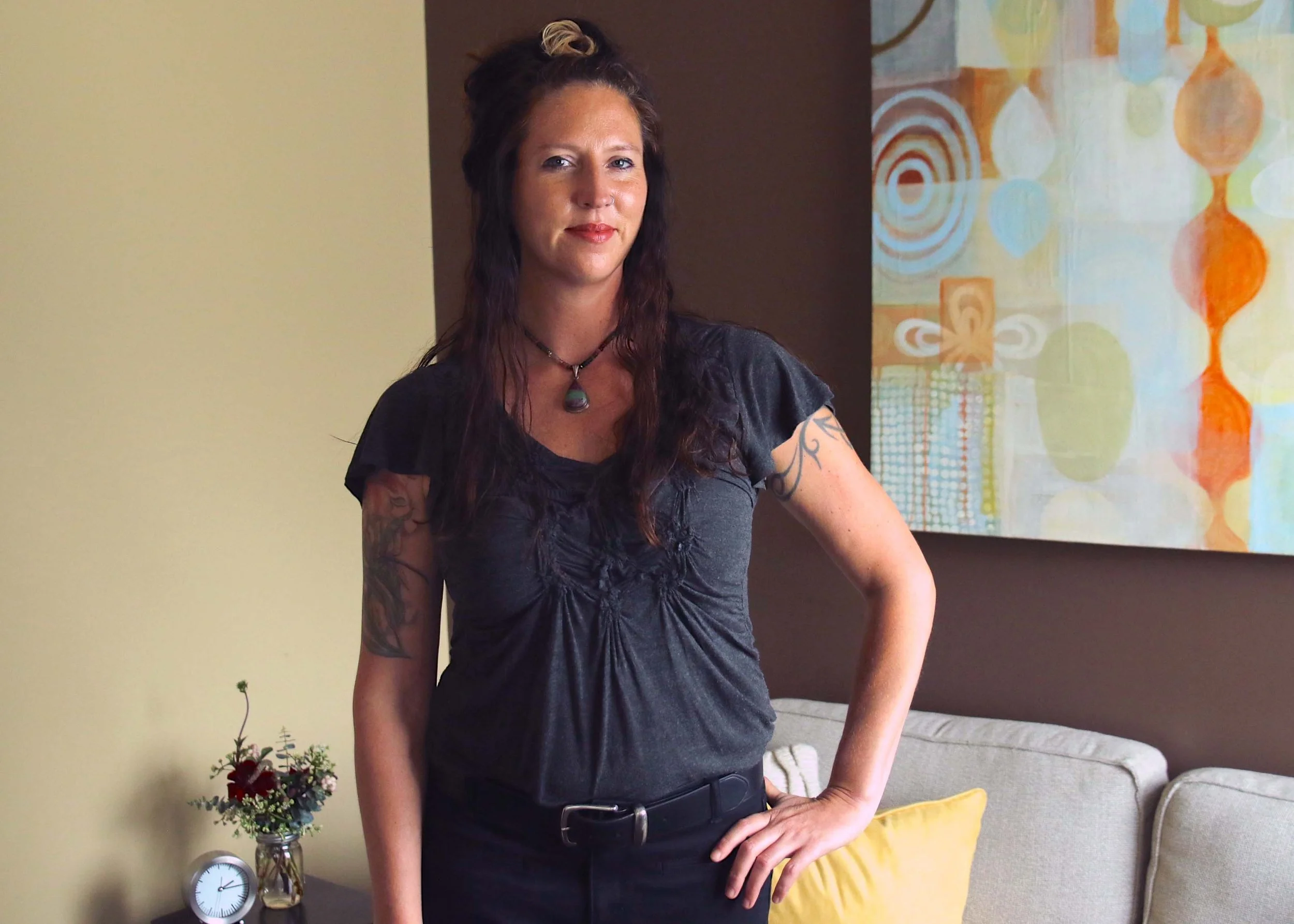


Hi, I’m the founder of Human Amplified. I’m Brandi Fleck, a recognized communications and interviewing expert, a writer, an artist, and a private practice, certified trauma-informed life coach and Reiki healer. No matter how you interact with me, I help you tell and change your story so you can feel more like yourself. So welcome!
Find More on the Blog
Topic
- ADHD
- Atlanta
- Black and BIPOC
- DIY
- FAQ
- LGBTQIA plus
- Los Angeles
- Nashville
- Seattle
- St Louis
- St. Louis
- UFOS/UAPs/ETs
- abuse
- accountability
- addiction and recovery
- adoption
- affirmations
- afterlife
- angels
- animals
- anxiety management
- art
- astrology
- atlanta
- awakening
- beauty
- behind the scenes
- being human
- body image
- body work
- boundaries
- brandi fleck
- breathwork
- bullying
- burn out
- burnout
- cancer
- career
- caretaking
- chakras
- channeled
- clarity-dive
- clarity-practice
- clarity-primer
- clean products
- coach
- codependency
- communication
- community
- confidence
Recent Blog Posts


Visit the Full Podcast Audio Archive

Affiliate