Finding Purpose Again in Life After Military Service
Interview By Brandi Fleck
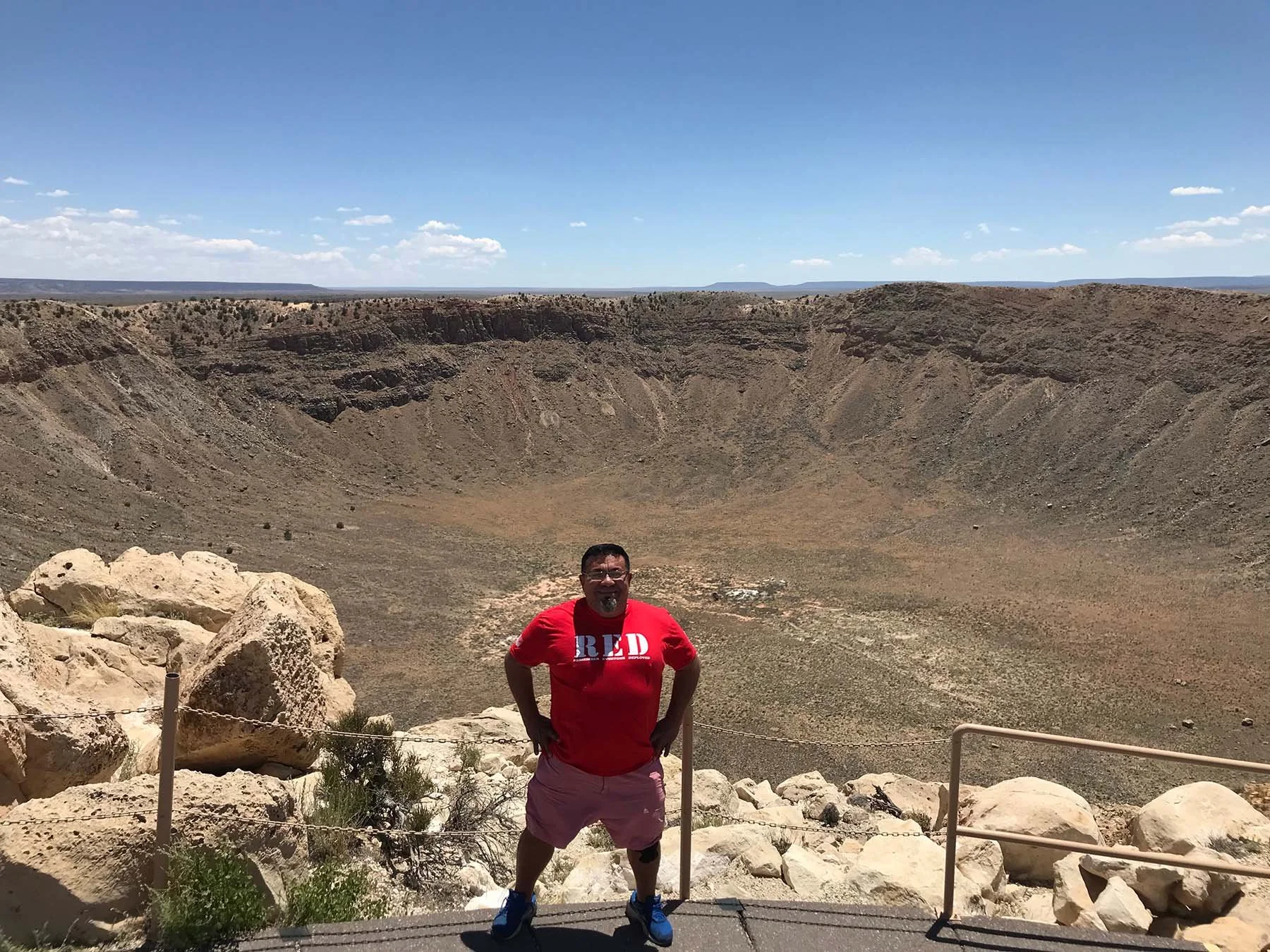
Marine veteran Oscar La Madrid shares why purpose, structure, and community are essential for veterans trying to rebuild life after deployment.
What happens after service ends? For many veterans, coming home is not the relief people imagine. It can mean losing structure, identity, purpose, and the sense of belonging that military life once provided.
Marine veteran and Angels Alive founder Oscar La Madrid shares how immigrating from Peru, growing up in poverty in Georgia, and serving in the Marines shaped his mission to help veterans rebuild their lives after deployment.
We dive into PTSD, homelessness, masculinity, reintegration, and why so many veterans struggle in silence long after they return home.
Listen to Oscar La Madrid’s Interview
Watch Oscar La Madrid’s Interview
Growing Up Between Peru and Georgia as an Immigrant
Oscar La Madrid: My name is Oscar La Madrid. We immigrated in '72. I did a little time in the Marine Corps. Did I tell you the exciting part of my life? There's a lot of implications, a lot of impacts from a deployment. Founder of a nonprofit. The whole point is to re-engage that person that was in crisis, a transition point for them to go into the real world, take their training hopefully, and transition that into civilian life. Be a giver, not a taker.
Brandi Fleck: This episode so perfectly embodies the personality of guest Oscar La Madrid. He's a dad, husband, Marine veteran, and founder of Angels Alive, a nonprofit near Atlanta, Georgia that feeds, rehabilitates, and now aims to house veterans who are struggling to integrate into society.
We start out with Oscar talking about his own intensity, which leads us into his family's immigration story. He came to America from Lima, Peru when he was 12. He details the poverty he worked his way up from and how that has fueled his desire for success in life. In seeing his own success and relying on his intensity, he's found a way to help facilitate success for others and explains why this is so important for veterans in crisis.
This leads us into talking about his nonprofit, Angels Alive, how it got started, how he channels himself into it, and how it's evolved since inception. Angels Alive partners with businesses to achieve the rehabilitation needs their veterans have, such as hot meals, clothing for job interviews, therapeutic activities such as farming and scuba diving, and they even partner with local law enforcement to diffuse situations where combat veterans need to be understood so a situation can deescalate.
In fact, I met Oscar because he was looking for a community partner to tell the story of a veteran who rode in the Hoka Hey motorcycle challenge in August of 2020 to raise money for Angels Alive. If you follow Human Amplified on Facebook and Instagram, you probably saw some of that inspirational story about Rider 954, who comes up in this conversation.
The evolution of Angels Alive is really a manifestation of Oscar's presence and intention coupled with his life experience because through all the services Angels Alive offers to give veterans a sense of purpose, contribution, community, and connection, Oscar has married his family values, including his love for cooking with his grandmother in Peru, to his own understanding of reintegrating into society after coming home from the Marines in 1992.
Oscar La Madrid: My name is Oscar La Madrid. I'm the father of five amazing children. I have an amazing wife, Julie Nicole, who's really been an anchor to keep so many things together during good times and certainly during not-so-good times.
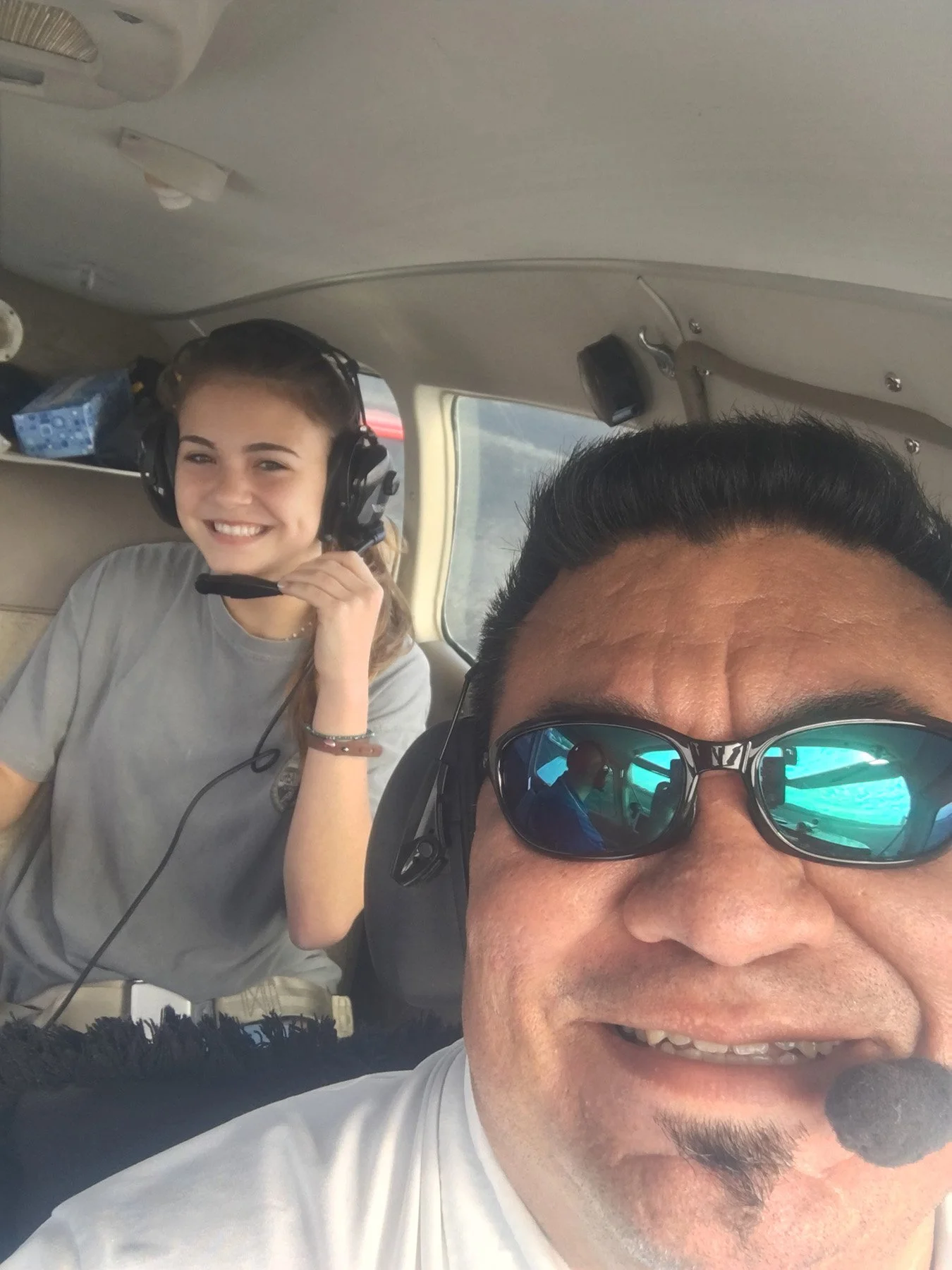
I have so many different profiles, right? There's the founder of a nonprofit, there's the engineer in telecommunications, there's the father, the husband, there is the friend, the neighbor, the uncle, the godfather a couple times over.
So I've got a goddaughter and a godson who just keep the wallet really empty. And a couple of dogs don't help either. But all in all, a family that's helped me kind of travel through the world, if you will.
And in '07, post the Marine Corps, we founded a nonprofit to really help our children learn what it's like to be altruistic adults, learn what it's like to be a giver, not a taker.
This day and age, everybody is on their phones, their iPads, etc., and it becomes really difficult to identify your profile for humanity. And so that's why initially I started with, you know, it'd be nice to be kind one day.
Brandi Fleck: Yeah, I've never had those attributes.
Oscar La Madrid: I think you're nicer than you think you are. Maybe you're a bit humble.
I must be humble because every day I truly feel a calling. Every day I thank the Lord and Savior above because it's one more day on Earth. There was a time in my life, a very dark moment, where I did not think I'd have any of those.
And I've had so many traumatic events that I feel like a cat that's about to run out of lives, okay? And I just don't know which one that is.
I mean, just high level, I've completely submerged a brand new car into a lake, inundated in water. I've had an 18-ton piece of granite land on top of me, literally. I've been up under a tractor trailer on a motorcycle that came out the other end.
Brandi Fleck: Oh my gosh.
Marine Corps Leadership and High Performance Mindset
Oscar La Madrid: I still visit the lady who experienced it because I feel horrible, the impact. I did a little time in the Marine Corps. Did I tell you the exciting part of my life?
And so, yeah, there's a part of me who really believes that humility and grounding, right. My wife is very good at keeping me grounded. She pops the balloon quite often to make sure I stay on the ground.
But all joking aside, it is very difficult to deliver on so many efforts and yet stay humble. So sure, I've partnered myself with really good people that are strong motivational speakers, that are influencers as they call them nowadays, and they really do a good job of keeping me on task and certainly focused.
So humility is one of those things. My godmother recognized it when I was very young, that I did not have a lot of patience. So that's something that I will continue to ever work on, is my patience, which coupled with a little humility might end up making a decent person one day.
Brandi Fleck: Okay.
I often joke and say that because it's a big world. It really is a big world.
We've talked a little bit off recording because I worked with you to get the word out about a friend who was riding in the Hoka Hey motorcycle challenge, and you said to me that you have to have a life of chaos to keep focus. And this was when we were getting to know each other.
So you've talked about how you're a really intense person, and I just sort of want to dive into that. What do you mean by that statement?
Oscar La Madrid: People are known by what they can deliver, right? So you make a promise, and if you deliver it, you're doing well. If you deliver it ahead of time, you're doing really well.
And in the Corps, one thing as an 03, especially as a deployed 03, what you find is that the ability to multitask and have many things going on at one time where you can actually deliver on everything that's going on, whether it's logistics, whether it's planning, whether it's work details, whether it's evolutions, whether you're logistically organizing something, if you can have multiple things truly flowing.
In the corporate world, they call them swim lanes, right? So you have different efforts from different work groups, and oftentimes those work groups cross into another and you have to depend on another organization to deliver something.
Well, the problem is that conceptually it's great. It's a great idea. You have an A point and an end point. In reality, those points where the swim lanes are crossed or breached at times may be all compliant or non-compliant, and so the ball will often drop.
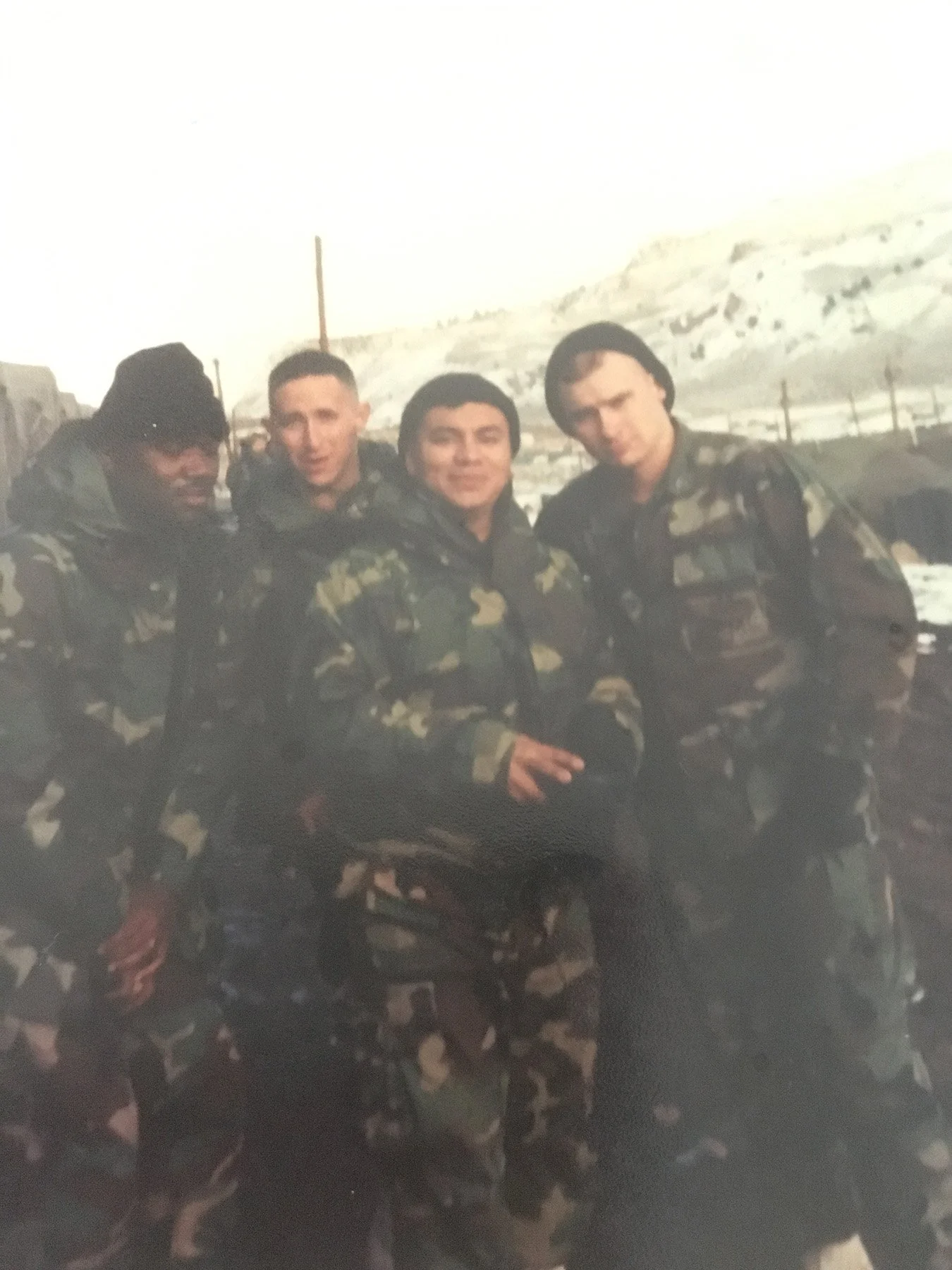
And one thing that we've learned is the fact that if you have multiple irons on the stove, for example, you need to keep an eye on every single one. And for those that have experience traveling abroad, you start to quickly realize that's your game when you can actually keep four or five things going.
And I was in charge of 27 guys. That's 27 lives. You keep all of them differently because, you know what? They're not all the same. They're all different characteristics. Some of them like to be babied. Some of them are narcissists. Some of them are what have you. And you have to be able to approach every different person a certain way to get the best out of them.
And my job as their leader was obviously to ensure that, one, they have the ability, the abilities and skill sets necessary for the role. Two, they have all the equipment and anything they need to fulfill that role. And I need them. I demand their success.
Poverty, Success, and the Immigrant Experience in America
It's the same with my kids. You prepare them, you show them what the boundaries are, and you let them know that you expect much more than the average person. I don't expect you to be average. Anyone can be average. That takes no effort at all.
But the intensity comes in when you realize that you can drive someone to exceed their own expectations. I've had three of my five kids already come to me and say, "Dad, my hustle is hard because of you. I have a desire."
I said, "We have to find different drivers." You know, I brought my kids up in a very nice environment with a wonderful lady who's kept them at home and taught them the soft skills necessary. They didn't have the luxury of poverty that I had to create their hunger, their appetite, their desire to succeed.
I don't accept mediocrity. I never have. And I'm very demanding in that sense. And they've realized that maybe Dad's super demanding because he really expects an outcome. And it's not because I'm going to expect a big limo or a house or a car for them to give me.
There's a lot of things that people are not prepared for. Yeah, and sometimes internalizing a climate as we have today with such divide, you start to see the weakness. It starts to come a little bit closer to the surface. We need to prepare our kids, our children, to be better equipped and adapt to that.
I was very strict with my daughters, for example, because I know what a male-manipulated society we're in, in corporate America, and I needed them to be prepared for that. There's shortcomings and there's uneven playing fields, but I need their awareness.
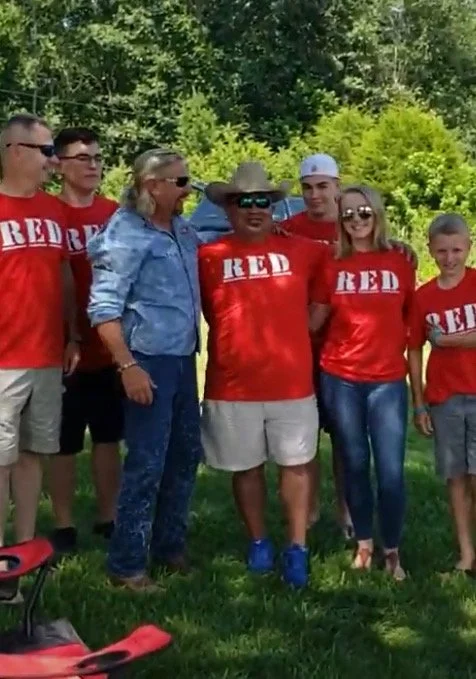
Similar to the RED campaign that we drive sometimes, people talk about being, you know, "Oh, my friend got deployed, my cousin, my nephew." We never mention the wife, the spouse, the mother, the children, the aunt, the grandmother who's now, you know, their little grass cutter just went away.
There's a lot of implications, a lot of impacts from a deployment. And socially, if we can just show our solidarity, get our community to truly understand that we are one America, irrelevant of color, creed, and race, we'll go a lot further.
You know, there's a lot of people who benefit financially from dividing, but that's a whole other topic.
Brandi Fleck: So that intensity, I guess, you use to basically help the people around you exceed their potential. Is that what I'm hearing?
Oscar La Madrid: In a sort of way. Sometimes some character types do not do well with intensity. There are those who, again, have been sheltered a lot and are not really prepared to take on someone that's saying, "Hey, I need you to meet this by this day, by this time."
And then you have to give them the opportunity and the equipment to get to that success because at the end of the day, they're representing you, right? An extension of you.
So the intensity is something to open up people's eyes and get them to understand, you know, "Hey, in my head I have this blockage. I know I'm not going to do better than," to give it a numerical value, "better than a six, right? I'm just a little bit above average."
But when you empower that person, especially a young lady, when you empower her and you get her to understand that attainable seven or eight or nine is reality, and they scratch the surface of that, all of a sudden they have that epiphany. They have that aha moment.
And that right there is called confidence because oftentimes we lack confidence as human beings. This world is so competitive. It's built around being torn down as opposed to being built up.
Brandi Fleck: Yeah.
Oscar La Madrid: That's where that comes from.
Brandi Fleck: Okay. And so you are a Marine. You've been home since 1992, correct?
Oscar La Madrid: That's correct.
Brandi Fleck: Okay. And so when you told me about your intensity and when I met you for the first time and noticed it, it was in that context. So how do you channel that intensity to lead a normal life?
Oscar La Madrid: So the reality is that you just hope that your homework is being done and that your expectations are being met. But you have to be able to strategize and you have to understand the game of chess because there are many pieces that are moving all the time, and there has to be a harmony in those pieces moving so that you can, you know, in one example, deploy over 40,000 routers in over 19 states.
And I was able to control that from Atlanta, from one city. And I would have the employees' bosses call me frantically like, "Oh my God, my guy's doing overtime. What's going on?"
It's, well, I challenged him. No one's ever challenged him. I want him to believe in himself, going back to that confidence level.
And I learned a lot from my father-in-law, where being a humble person with a seventh-grade education, he would challenge you, challenge you not for the output or dividend that he's getting, but he would challenge you to believe in yourself.
Boy, do I wish we had more humans like that person.
Brandi Fleck: Yeah. I want to go back just a little bit before we sort of pivot and ask you about the poverty that you said you had the luxury of experiencing.
Oscar La Madrid: I'm ready. You got me excited.
Brandi Fleck: Okay. Well yeah, let's do it.
Oscar La Madrid: So can I tell you why you got me excited? Why?
At high level, I took my children, I took three of my sons to the projects that I grew up in, and I asked them to get out of the car. One of them asked me if I was crazy right away. They're all prepared mentally and physically.
And I said, "What's the matter?"
They go, "Dad, it's like 11 o'clock at night. This is the hood."
I said, "Okay, well I'll get out first."
So we get out. The irony for me to expose them to something. Can I say that they're little candy asses? Can I say that word?
Brandi Fleck: Yeah, you can say that word.
Oscar La Madrid: So for me to expose them to something like this was tragic. I mean, you know, I can expect my grandkids to come back and go, "Wow, you know, my dad's still scared to death of that one day."
So the irony for me was I grew up in Athens, Georgia. My mother, I can tell you this. My mother and father worked tirelessly. We immigrated in '72, and my sister was born in Anderson, South Carolina because we were fleeing immigration. This is a real story.
So all these little kids, these little anchor babies people talk to, I have no sympathy for that. I have very strong beliefs in the naturalization system. It's antiquated. It should be updated, yes.
But the reality is that if you do the right thing here in the US, you truly can rise, okay?
And I would always, as a kid, 11, 12-year-old kid rather, I would look across Baxter Street, which is now Baxter Hill, and ironically that's the university that I graduated from. I would always ask myself, "What do those kids do that are allowed to go there? What makes them different than me?"
And funny enough, a couple years ago my daughter, her freshman year, they're obligated to sleep in dorms. I never had that luxury. But she had a dorm, and I sat in her room and I looked across and I could see the apartment that we lived in right across the street in public housing.
It's not something I'm embarrassed about. I used to be very much. Me and a good friend of mine, Edgar, one of my best friends, Bernalis, we would always make it appear that we were just average good kids dressed well in high school, you know, near everybody. But we did not ever let anyone know where we were from because that would have changed the entire ecosystem and our popularity in high school.
Imagine in the early to mid '80s, your school rep was big. You know, it's not like now where it's just kind of whatever.
But so yeah, for me it's an exciting part that I can say even though I can remember, you know, watching Dallas on a Friday night, wrapping Avon orders for my mom after she got off from her job or second job or what have you, anything truly is possible.
She has her own home now in Athens, Georgia still, and it's one of those rags-to-riches stories which to me, at the end of the day, if you wake up every day, that's a blessing. And I see it as such.
And oftentimes even at my job, people will walk by and they're like, "Hey, how are you?"
And I go, "Man, it's a holiday." You know, every day is a holiday.
And sometimes people don't understand, and maybe they just look at me and go, "That guy's weird," because one of my favorite sayings from the Corps is every day is a holiday, every meal should be treated as a feast. And when you sit there and put things in perspective, you really can't pick up. Or maybe he's just being an intense, arrogant so-and-so or whatever. So it's perspective. It really is.
Brandi Fleck: Yeah. Let's dive into that a little more. Just for our listeners' sake, where did you guys immigrate from?
Oscar La Madrid: Peru, from Lima, Peru.
Brandi Fleck: Lima, Peru, yeah.
Oscar La Madrid: We almost ended up living in Miami. So my parents, my mother's side of the house, very well-to-do family, affluent. So I can tell you that I grew up in, this is again a little bit of irony, in Lima we had a house attendant, we had a driver, and I had a nanny, a Japanese lady named Mitsch. And so that's maybe why I began to love the culture.
But when we came here, we were immigrants. We had, you know, one vehicle and we had to drive it. Imagine that.
So there were no Latinos in the Southeast at that time. And our first trip to visit, my mother had brothers that worked here already, and so they said, "Oh, we're going to..." you know, everybody's rendezvous is in Athens.
So we landed in Miami and we flew into Athens. And then once they saw the place or whatever, my parents decided okay, because for my dad it was huge. My dad literally left his entire family behind to progress and trailblaze a new family, his family, which is something that I'll never be able to repay.

But it's difficult only because when we decided to move. So the first time we came to visit, the second time we decided to move, something happened in the planning and our flight was only purchased from Lima to Miami. The second leg from Miami to Atlanta was not purchased for some reason, a mistake or whatever.
So my parents, I can remember them till today, they were both sitting in Miami International. And at the time, being a 12-year-old kid, I wanted a pop. And I purposely drink these, and I'll show you this is for Coca-Cola. So this is not the American pop, by the way. It's the glass bottle, the old-fashioned soda.
And I really think because of this company, I wanted a soda at the time. So my mom basically says, "Here's a nickel," which is what they were at the time, and says, "Go away."
Well, instead of me making the right choice and going to get a pop, I saw this machine that had lights all over it. It's blinking. And so I put the nickel into the slot machine, okay?
And the slot machine hits for $280 on a nickel pull.
Immediately, a policeman walks up to me, and I can distinctly look at my mother and father about 20 feet away from me, scared to death, oh no, to come towards me because they know they were not citizens. They know what we're attempting to do. My dad at the time had a work visa.
So after a few minutes of arguing back and forth between them, they walk up to me and the guy says, "Is this your son?" They have no idea what he's saying.
And so he's literally filling up his hat with nickels because it's like $280 in nickels.
Anyway, long story short, my parents get the money, they transfer, they go out and buy the tickets for us to go from Miami to Athens.
Brandi Fleck: Wow.
Oscar La Madrid: So when I hear this story, it almost sounds incredulous honestly. But until today, I still will not walk by a casino. That's a fact. I always walk into a casino.
Brandi Fleck: Wow. It's a lot. It's taking a lot to get here. You didn't know you were getting this, did you?
Oscar La Madrid: Well no, but this is awesome.
Brandi Fleck: But it's almost like you were meant to keep going on to Atlanta. You weren't meant to stop in Miami.
Oscar La Madrid: And that's the thing. When he, at the time obviously I had no idea, but now that I'm much older, half a century, I start to realize that obedience is critical.
Oftentimes I'm one of those that believes certain people, like yourself for example, are put in your path for a reason. Now if you become a Pulitzer Prize winner one day because of this interview, then all for the better. You might even get a Peabody, who knows?
But the reality is I believe that he puts people in your path for a specific reason, and it's not for me to challenge that.
I've said that to my kids, and I can hear them saying, "My little Oscars" nowadays. But the reality is that once you learn to be humble and accept what he's put in your path, good or bad, you start to realize he'll never put more on you than you can physically, mentally take.
Brandi Fleck: I do want to know, it sounds like you guys were so well off in Peru. Why did you guys decide to come here and try to build a life here?
Oscar La Madrid: So that's a great question.
My mom's side of the family, her brothers had already established. Their father was really big in iron. So everyone in Lima, in the entire capital, whether you were a construction worker, a restaurant owner, any sort of machinery, fabrics, they would go to Mr. Medina. Mr. Medina was the steel person, you know?
So he built fences, he built gates, cars, bridges, frames for cars. He produced and fabricated manufactured steel. So they were very well off on my mother's side.
And my father's side were into politics, and my grandfather had a pretty big heavy set in politics. And so for my mother's sake, it was to get away from that umbrella and create their own venture here in the US where it's built on them, not their parents.
Gotcha. And that's driven me to so many levels because oftentimes in every person that I meet, the first thing you hear is, "That's so-and-so's son," you know? Or "That's so-and-so's daughter," or "That's so-and-so's heir," or whatever.
And that's wonderful. It truly is. But I've always, again because of the things my parents instilled in me, specifically my mother. "Your married is your making."
The things that you create, the things you attain, the status you grow to, should be from your effort, not someone else's.
You know, there's a really close friend of mine, and I won't mention his name to protect his integrity and honor because he's an amazing human, but he's one of the few exceptions that I've seen here in the US where a large corporation, the father hands down the heir to the son.
And normally it goes to crap. It always does. That second generation, they weren't prepared, they weren't vested enough, whatever. It often goes to crap.
This one guy has not only made it more successful, but he's also doing the same thing to his son, which to me is truly what heritage is all about. When you build and you place your kids into a position to succeed, that's that farmer mentality where you plant that seed and come and harvest it later.
And ironically, he too is a United States Marine. So there you go. Imagine that.
Brandi Fleck: All right, yeah. All right, so one more question about your family life when you were younger is you said to me that some of your fondest memories were cooking in the kitchen with your grandma while she was gossiping and listening and stuff like that. So did she immigrate with you guys?
Childhood Memories, Family Traditions, and Peruvian Food Culture
Oscar La Madrid: She traveled to New York once to visit. So initially my mom and her brothers were in New York, and then they ended up trailing into Athens, Georgia.
But no, she was kind of like most grandmothers. They're their nanny, their built-in nanny or what have you. And she was an amazing chef. And it's probably one of the reasons that I've learned to taste and in the kitchen savor things so much, which is one of my joys in life, is exposing my kids to different cultures so they can have their own perspective, their own opinions, but yet based on their experience, not just, "Oh, I don't like it just because."
One of the good things that come from that is my twins. Christian has really taken a knack for Indian food, you know? Things that are, and he goes, "There's a lot of similarities to this in Peruvian."
Unlike other ethnic groups, Peruvian is more season-based, not so spicy. Very much like the perception of Indian. Everybody thinks Indian is all curry, hot, spicy. It's really not. It really depends on what region you're from whether it's spicy or not.
But it's a lot of savory flavors. It's many, many flavors in one. It's not just like a regular hot dog, you know what I mean?
Brandi Fleck: Yeah.
Oscar La Madrid: So it's different.
Brandi Fleck: Okay. So then when you were making those memories with your grandma, it was like before you were 12 years old. Can you recall one of your favorite memories of hanging out with your grandma and just sort of describe it to us?
Oscar La Madrid: So yeah, we were getting ready for a trip. I knew that we were leaving. My little packrat of friends did not know.
So she would always make these little smoothies, okay? In Peru, their markets are open like in France. Everything is, you go to the market, everything's fresh. There's no packaged meat. That doesn't exist.
So you'd go to the market, get your groceries for that day, and you go home and cook.
Well in the markets, because of practicality, they would make these smoothies and put them into a plastic bag. That was like a big treat.
So I got the idea one day to take this substance, this smoothie, and pour it into ice cube trays and make little pops, right? So I would sell them for, I don't know, I think it was like a sole, maybe equivalent of a nickel or something like that.
And so I did this a couple times. I'm kind of being cautious what I say because this can be replayed. I did it a couple times and everybody got their product. They spent their nickel, they got their product, they loved it. We'd sit around our patio and eat this little treat.
Well, the weekend that I was leaving, that's Friday night, I told everybody, I said, "All right, if you want it, you got to pay up now, and then tomorrow morning you'll get your thing."
I think I collected, I don't know, maybe like 80 cents or something. Just some small nominal amount.
But I knew that Saturday morning we were leaving Peru. We were leaving Lima. It's like 6:15 in the morning. So there was no pops coming. Grandma didn't know there was pops coming.
So I recall we talked to them a couple days later, and I recall her scorning me on the phone because she said she had to make these pops for these kids. They all ratted me out.
But even till today, I still make the little smoothies and put them in bags, which is kind of funny.
Brandi Fleck: Yeah, that's awesome.
Okay, so now we're going to get into the part that focuses on your service and how you've sort of turned your love of food and cooking with your grandma into, well, it's sort of how you started Angels Alive.
Nonprofit Work Supporting Veterans and Homeless Communities
But can you describe for us how you married the two lifetimes together of pre-war Oscar, who's got a love of cooking and it seems like you were quite the entrepreneur even then, to post-deployment Marine? How did you marry these two lives to create Angels Alive?
Oscar La Madrid: So Angels Alive really came about because we were trying. I had my boys all, well at the time I had three kids, and my youngest son, who's my oldest son now, Antonio, was in Cub Scouts.
And so I asked the kids, there's six of them I believe, they're all still good friends today, which is kind of funny. But I asked them, I said, "Hey, we're getting closer to Thanksgiving. How many of you guys are getting excited about cooking?" Right? Because Thanksgiving is coming up. It's a big thing at our house.
And they were just kind of looking around like, "What do you mean cooking, man? We just show up and Mom has everything."
And I was like, wow. I said, "That's pretty sad."
And then I started understanding the dynamic that is today where our social divide really began that early, where we do not engage our kids in the meal prep and the making or what have you. It's become the quick-trip dinner, right? Let's get a pizza, let's get a burger, we're on our way to the soccer field, we're going to get some fries, throw your kid a chicken nugget and whatever.
So I said, "Hey, I want to challenge you guys." I didn't mean like throw them, like hit them, I'm just saying.
So I want to challenge you guys to make a side dish, and we're going to get with the church at St. Lawrence here in Lawrenceville, Georgia, and I want to find a family that's in need.
And I remember telling my wife at the time, you know, we have 15, 20 people that show up. None of these people need anything. They all have more than plenty. Let's find someone deserving that truly has nothing.
And again, we talked about humility at the very beginning of this conversation, so here we go. I'm guaranteeing not to cry on this one.
The church gives me an address. I pull up to a house that looks just like mine, and I'm like, "There's no way this person's in need." That was the unhumble Oscar. That was the pompous Oscar.
And I knock on the door, and this crippled old lady walks up that's maybe four feet tall, and she's got six or seven grandkids all around her wondering who's at the door.
I take a quick look. Again, this is the Marine that comes out of me. I need to understand the scenario that I'm in really quick, assess where I'm at, figure out what my next step is. This happens in milliseconds.
Thankfully, when I looked around, I did not see a stitch of food in that house. It was carpet, kids, and one boiling pot of water.
It was the day before Thanksgiving. In my house, and I'm sure similarly in yours, the first three or four days before Thanksgiving there is all kinds of stuff going on. There's flour on the floor, there's cans everywhere.
And I was like, wow.
So here's the beauty of this story. We walk in, we delivered mashed potatoes. I remember delivering a salad. We had a baked ham, we had a roasted turkey, then a thing of Hawaiian rolls, right?
And so we have six or seven little Cub Scouts and they've helped them. The deal was they had to help their mom or dad create their side, and we're going to deliver it together. That's what Thanksgiving is truly all about. We're not taking over anybody's property. We're not pretending we discovered anything. We're just giving them food and we're going to walk away. That was the plan, right?
As this is happening, one of my favorite boys, who again is like a son to me, the lady grabs him in a bear hug. He starts freaking out. He starts, I mean he's getting a dry sweat, he's hyperventilating.
And I immediately, again this is kind of the trigger again, I jump in. I tell the lady, "Thank you very much, we got to go."
I grab him with one hand, shift his whole body weight on one side of me, I hug her, we make a quick departure.
I get him to the car and I was like, "What just happened?" And I calm him down. He was having a hard time breathing.
What I did not know at the time was he was suffering a panic attack because this was the first time that a Black person had ever held him, hugged him.
And I said, "Well, Zachary..."
It's dumbfounding to understand these things that are coming up. He's like 11 years old at the time.
So I'm consciously saying, "Well, I hug you all the time."
He goes, "Yeah, but it's different."
And so then I started understanding the dynamics of his perspective.
And I love telling that story because it's something that helped him kind of evolve. And he's still come back, even through college, he's come back to help volunteer, which fills my heart with so much joy because it didn't scare him away.
He could have easily said, "Oh, that's bad," or whatever, but that helped him grow and patch that together and now gives him a different perspective.
Brandi Fleck: Yeah. So man, it's interesting how we can be afraid of things that are different that we just don't know, right? We just don't know.
Oscar La Madrid: Yeah. Oftentimes that becomes a catalyst. It becomes a block.
And funny enough, I always tell my kids when I was in the Corps traveling, we were all called green by design. We were all called green. And what they did help us with, Europeans were called light green and the dark-colored people were called dark green, but they're still green was the point.
And how is it that we as a culture can behave, work, play, vacation like that and have no boundaries, but then when we get into society it becomes an issue? Should never be, right?
Brandi Fleck: Yeah. I'm taking it all in, taking it all in.
That was the beginning of it. How did it evolve into, I know you fed meals to other people after that, and then you mentioned the tiny home village. Can you take us through that evolution?
Oscar La Madrid: Yeah. So in '07 when we first started as a group, the very first meal, it was one family.
In '08 we started thinking, how can we improve it, right? We still work regular jobs. We've still got regular baseball, soccer, gymnastics classes going on with kids.
And so we start saying, well let's talk to the people that we have sports with. Are they interested? Would they like to help?
The second one, we ended up doing like 200 people.
And last December in 2019, we fed over 5,000 hot meals in four different cities.
And again, it kind of goes back to a lot of people thinking, "Oh, this guy's a really good planner." And it has nothing to do with being a good planner, trust me. It's the chaos that I enjoy, okay? It comes back to it. That's my safe spot. That's my warm and fuzzy area. That's my little blankie, if you want to call it that.
But the reality is, so we started doing the meals, and then from the meals we started realizing that there were a lot of other guys that were doing woodworking projects that would find a lot of peace turning wood.
As boring as that sounds, it really is therapeutic as all get out. I mean it really is.
And then from there we started partnering with bigger companies. We have a partnership with Danner, the boot company, a partnership with Men's Wearhouse, where we start creating people that are in the National Guard today or in the service, a transition point for them to go into the real world, take their training hopefully and transition that into civilian life so they can get something a little better than just a subpar job.
So we help them build their resumes. We help position themselves.
And we walk in the network group of friends that we have created with Home Depot, with Walmart, with Coca-Cola, with Cox Communications, and the guy walks in with a drug test in his hand from the day before and says, "Hey, I'm ready to go to work. Here's my resume. Here's my drug test. I am serious about going to work."
And they're in a nice suit that's fitted by Men's Wearhouse. So the impression is always, they call me the empowering manager. "Man, I can't believe this guy," blah blah blah.
And I'm thinking to myself, what? I gave you a guy who wants to work. Isn't that what you're trying to fill?
And then I play about that because oftentimes their biggest complaint is that the people that apply, they go through the roles, but they don't really want to work, you know what I mean? They're just there because it's something they're supposed to do, right?
So we've entered into partnerships, entered into building relationships.
We're going through '09, 2010, and we start a PADI certification course where we get veterans certified in scuba diving.
And we start to amount a lot of these different things into helping rebuild that sense of camaraderie, that sense of giving.
We have a partnership with Comfort Farms in Milledgeville, where Comfort Farms is a therapeutic group that is a living, working farm, and they use heritage animals and heritage vegetables. They grow heirloom vegetables.
PTSD, Community Support, and Veteran Recovery Programs
But the whole point is to re-engage that person that was in crisis before or that needs a break, a mental break. And they go down, get on the farm, learn how to raise turkeys or raise hog pens or raise Mangalitsa hogs. But it gives them that sense of contribution. And when a veteran has lost that sense of contribution, they also seem to lose the sense of community.
When they lose those two, coupled with maybe a job loss or a relationship breakup or what have you, then all of a sudden you start to spiral downward.
And that's where the local law enforcement groups will call us and say, "Hey, we've got one of your guys. Something happened, whether he got off his insurance, there's no more meds. Can you come retrieve him?"
And with the backing of the local law enforcement, like in Milledgeville, we'll show up. They give us 20 minutes ahead time. We walk in, we assess, we figure out what that person needs, what their triggers are really quick, and then find a plan.
If they're part of the VA already, we get them back online. We get them to a safe area so that they're mentally out of this crisis problem. And if there's a chemical dependency, then we get them the help they need.
But the good thing is the realization that the military police department had was that they're not trained or equipped to handle mental health issues.
And oftentimes these are not little guys. They're combat veterans. They're pretty savvy. They don't need weapons. They don't need many other things.
Brandi Fleck: Yeah.
Oscar La Madrid: And so for us to understand the language and prepare the ability to circumvent their problem is a great asset to the police departments, and they've treated us that way.
Yeah, they definitely support us and engage that relationship because it benefits everyone involved.
Brandi Fleck: Yeah. So why is it so prevalent that combat vets go into crisis after trying to reintegrate?
Oscar La Madrid: Well because there's no program today that exists that allows that person the mental ability to prepare a re-entry into society.
For us, for example, if I were to walk into any restaurant and stare at somebody, that's a combative state. You may see, "Oh, that guy's creepy, he's looking at me all weird." We're trying to figure out what your next move is, okay?
So there's a lot of things that post-deployment, we do not like being challenged because we're going to take, we're one of those people that will buy those wolf tickets. You hear guys tell one another, "Oh, I can beat up anybody, I'm blah blah blah, I'm Billy badass."
Well, we're going to make sure. And that's as simple as it is.
Many of my friends, and that's one of the things that I partner with other organizations. One of my good acquaintances created Reverend Warriors. Reverend Warriors is an organization that I truly stand behind and realize the brotherhood that we've created with Angels Alive because their whole purpose is to have that discussion, to have that dialogue.
Even today, people that are working, they could be functionally working just to put the meat on the table. They could care less about what they do. They could care less about anything else. But when they get around other combat veterans, there's that esprit de corps, that brotherhood, or sisterhood, that comes alive and begins to give you that level of belonging, that sense of belonging.
And when any human being, no matter who they are, when they have those attributes, they start to feel complete. They start to feel whole.
If an individual is not contributing in their relationship, in their job, in their city, in their town, they start to isolate. And obviously isolation with the climate that we have today. You add or sprinkle in a little bit of depression. Before you know it, "I don't need these pills." Now I'm really off medically, I'm off chemically. I start to think these things that are in my head start to come to light.
Brandi Fleck: What is needed to prepare someone to reintegrate?
Oscar La Madrid: So oftentimes, you know, in 2018 we rejuvenated the RED program for Angels Alive. And the whole purpose behind that was so that people could get an awareness, a social consciousness about when, let's say, little Johnny gets deployed.
Little Johnny is not the, I mean, he may be the one that's gone and he may be the one that you don't see at bingo night anymore, but the reality is the impact is a lot bigger than little Johnny.
Little Johnny, when he comes home, will have some challenges in front of him. And so in order to prepare him, you have to set the expectations up front with the family, with the individual.
And once you start integrating that person or preparing that person to make that transition, that's not just a two-week course. That's a pretty long evolution because this person, whatever branch they're in, if they are mechanized in any way, if they're deployed in any way, they're going to have very specific things to do every single day.
Imagine a little robot that has one functional job every single day, like the little guy at Amazon who delivers the second-day packages. If all of a sudden you take him to a farm, there's no packages to deliver. There's no one telling you, "Hey, this is the timeline." There's no one telling you, "This is the schedule."
And the little robot just sits there at a cornfield going, "What do I do now? There's no one here like me. I'm the only little robot here."
That's probably a poor example, but the reality is many of us feel that disconnect, right?
When I came home, my parents were not really prepared. My mom would come in the room and check on me, flip the lights, an innocent gander, and I would immediately jump at her. She was not ready for that, okay? That freaked her out a lot.
Certain things we're conditioned to do on immediate response you guys are not aware of, and those are big gaps in society, okay?
So when little Johnny comes home and he has no idea. You know, his hair is very short and his focus, his point, his eyesight is very laser-driven, some people take that a little offensively, you know? Or he responds to something very directly.
Again, "Wow, he only answered exactly what I asked him." You know, there's that perception.
Brandi Fleck: PCs.
Oscar La Madrid: Sure.
So I think if we had a program that would both mentally and physically prepare them to adapt to that new environment, that re-entry specifically around children, that would help level-set a lot of issues and circumvent a lot of problems going forward.
Tiny Home Communities for Homeless Veterans
Brandi Fleck: Okay. At Angels Alive, you're basically stepping in after these problems have already come up.
Oscar La Madrid: Well, we do react a good bit, right? Because they come up like little skirmishes from time to time.
And that's one of the reasons that last year we started talking about housing, tiny houses. I spent some time in Arizona, California, Utah, and Colorado where tiny houses have been socialized really well and they've become the trend thing to have.
And so I thought, wow, why don't we try that in Atlanta and see what happens? I mean, I know there's hundreds of veterans living up under train tracks or cars, trestles.
And when I say veterans, I'm not just talking about old guys like me. I'm talking about there's a lot of young guys that say, "You know what? I don't really want to deal with this anymore. I don't want to meet your expectations. I just want to live right here. We got a fire, we're good."
Because they've all lost that sense of community. They've lost that sense of belonging. They've lost the sense of contribution.
I believe it has multifacets. It's not just, "Hey, give them a home and they're good." You have to prepare them. You have to give them on-site therapy. You have to give them access to medical therapy, to psychological help. Some of them will have chemical imbalances. We need to address that.
So we're trying to be proactive, but we did begin very reactionary initially because access, they limit access to people they don't know.
Now I can go to four or five different areas in Atlanta and Athens, and they all know me, right? Because they see my face or they hear my loud voice and they go, "Oh, that's Oscar, so he's not a threat."
But they're very security-minded. Even police usually don't go and stir up, kick up people anymore like they used to. They're very security-minded.
Brandi Fleck: Okay. You reintegrated 28 years ago. That began your journey. Would you say you're still in transition or have you reached a place where you're not having to deal with. I don't know the right word for it. I don't want to say conditioning, but like the things that you did routinely every day that don't necessarily transfer to civilian life?
Oscar La Madrid: So I'm going to say it's a continued work in progress, right?
Because I can distinctly name one person. His name was Dr. Coté at the University of Georgia. And this guy was a towering person. He was like 6'8", 6'9", somewhere in there. I mean he's so high I couldn't even see that far.
But I remember he was an American history professor, and he took me aside one day and he said, "Listen." He wasn't very kind about it, to be honest, but he said, "If you spent more time on your studies, you might actually make something of yourself one day."
And that was a pretty big slap in the face.
And at the time, mind you, I'd already gone to the Marine Corps, so who in the hell is this guy talking to?
Brandi Fleck: Yeah.
Oscar La Madrid: Was the first instinct. That was the pompous Oscar. That was the one who thought he knew everything, just like my 18-year-old kids who think they know everything, haven't done a thing yet.
But I sat there for about a week or two and really pondered on what he was talking about. And once I internalized it, it was again humbling to understand that here's this complete stranger sizing me up, and he cares enough to take me to the side and get my head straight.
And that left a very big impact on me.
I ended up graduating the University of Georgia, and it's been an experience because I can assure you I've had many professors along the way that were like, "You're not the traditional guy. You're not the little kid whose mom and dad pays his tuition or whatever."
And I go, "Well, it's different."
Career Transition for Veterans and Finding Purpose After Service
And then so I went to school and the first three years, it was really well. And then I got an interest. I got a job offer from BellSouth. I'll never forget it. And at the time they said, "Hey, we're going to offer you $82,000."
And I was like, what? I've never heard of that kind of money. I quit school. I want to go.
Well, as I progressed after 11 years with BellSouth, they became AT&T and everybody else. I quickly realized in order to get to that next level in engineering, I had to have a degree.
And a good friend of mine who worked at Nokia said, "Hey man," he goes, "you have everything going for you."
And we had gone from like 200 candidates down to two people. And he was the hiring manager and he was a close friend of mine. But this is why I love good human beings.
He says to me, he goes, "You run circles around this guy in engineering methodologies, procedures, etc." He says, "But he's got a degree in history. We have to go with him. You have an unfinished degree."
And as humbling as that was, it was again another person taking the time. Previously I said, you know, he puts people in your path for a reason. And this gentleman lightened me up a good ways. And again, it was humbling. It was very humbling to say, okay, well I'm losing to a guy who could probably barely tie his shoes.
But the reality is the way corporate America is set up, you have to have milestones and they have to be met, checked off, whatever.
And so I went back and graduated with the purpose that I've demanded that of my kids. So how could I demand that if I never finished?
So that to me was a point in life where I would look around and every student was half my age, and I had to take the example of I don't care because I'm in this because I need to be here. I want to be here. I need to continue ascending.
So now it's apparently the thing to be like 70 and going back to college, which is cool, but it wasn't that way in early 2013 or 2011, whatever it was.
Brandi Fleck: Yeah. Well and when you were the traditional student age, you were busy doing other things, right? I mean, you were serving the country.
Oscar La Madrid: I was picking up skills that nobody really wants. This is the truth.
Brandi Fleck: Oh, no, it's very valid.
Oscar La Madrid: Because think about it. I mean, you know, there's not a job in the US that wants a scout, a Marine scout that has the ability to shoot 1,200, 1,800 meters. They don't. It's not a trade. They don't have a desire for that. They don't care about deployments or anything. They just want to see what's on paper.
Brandi Fleck: Yeah.
Oscar La Madrid: Right? That speaks, so it's hard to make a transition from a job that is not mirrored in the military into civilian life.
Brandi Fleck: Yeah.
Oscar La Madrid: There's even a website out there now, I forget what the name of it is, but you put in your MOS, your job description title, and it tells you what you're best fitted for and fits your jobs.
"You're going to be a warehouse employee."
I mean, that's just the way it breaks down.
So we try to circumvent that and say, okay, well what kind of skills do you have? If you can multitask, for example, you know, the chaos that I play about, that's a big positive in corporate America.
If you date a lot of people, you know, if you're like a player, you walk well with others, that kind of thing. So yeah, it depends on how you look at things.
Hoka Hey Motorcycle Challenge and Supporting Veterans
Brandi Fleck: Okay. Well, I think you're doing a lot of great things. I mean amazing things in the community.
Is there anything that I didn't ask you about that you would like to say?
Oscar La Madrid: Yeah.
Brandi Fleck: Yes? Okay, tell us.
Oscar La Madrid: First of all, thank you for taking the time to just ask. That's very meaningful.
And your help with our Hoka Hey, just so you know, Mr. Davis placed 26th, I believe, okay, out of like over a thousand riders.
Brandi Fleck: Wow.
Oscar La Madrid: His very first time out, which is unheard of.
He's registered to do it in 2022. It'll be, yeah. So it's pretty cool.
And Hoka Hey really is about taking that 10,000-mile challenge in 11 days, which seems to be almost impossible. There were many, I think there were three or four riders that experienced fatalities during this.
Brandi Fleck: Oh wow.
Oscar La Madrid: And there were many who had mechanical issues that couldn't finish.
So when I say that I'm utterly proud of somebody like Mr. Davis, a lieutenant commander in the Navy, man, he's got a set of stones.
And just so you know, I like to contribute and I like to raise the bar. So next month I hope to be debuting our Red Ops wine.
We've created a Cabernet-flavored fruity wine that is infused with bourbon, so it does have a little flare to it.
Brandi Fleck: Oh.
Oscar La Madrid: And it kind of speaks about my personality because it's not just what you see in the bottle. It does pack a punch at the end of it.
And we hope to use that as a main funding source with any other corporations who would like to partner up with us to help us achieve the financial goals that is the lumber and materials and whatnot.
So if there's anyone out there who's willing to partner with us and certainly make an impact on your society, whatever city you're in, building a tiny homes community, we would love to hear from them.
Brandi Fleck: Yeah. Is there a list or a place that businesses or people could go to see what you guys need or how to partner with you?
Oscar La Madrid: So we have our website. It's angelsalive.org. And we can share that with you.
But we're going to begin, I'm not a big blogger person, but I think that we have a person that's going to be helping us with that.
And it's an evolution, right? So there are some high-level materials that we've already got posted, or I'm sorry, no, that haven't been posted. They will be posted and kind of keep an open, transparent approach at this to let everyone know where we are because we've got a builder that's ensuring us that in seven days he can build one home.
They're 400 square feet, and that too is very promising because normally that takes like months and months and months.
Brandi Fleck: Yeah.
Oscar La Madrid: So once we get the mechanization down, I'm sure that will come in a little bit.
But the point is that we can cookie-cutter that and help as many people as we can.
Brandi Fleck: Okay. Well and just to be clear, you're giving these homes away to homeless vets, correct?
Oscar La Madrid: Just giving them away there. So it's going to be a partnership essentially, right?
And we will be charging rent, right? So I want to be really clear about this.
So there will be, and the purpose for the rent really is for local taxes and property taxes. I think the fee that we ended up with is like $350 a month.
And so that would cover a percentage of the property taxes as well as utilities, okay? Because we're preferring to drill wells everywhere we go to not have that such a high thing.
We're not going to have cable. Now you can stream everything. We will have Wi-Fi.
So this is meant or designed to bring that level of contribution. We don't want to give handouts. No veteran I've ever known worth his salt would accept a handout.
This is a hand up.
We want to ensure that not only do they have sweat in the game, they're going to help us build the homes that they're going to live in.
Brandi Fleck: Okay.
Oscar La Madrid: So it is a contributing community. And it's again bringing that brotherhood back alive again and continually ensuring that they have an avenue to exhaust whatever need they have, medical, mental, physical. Access is the key.
Brandi Fleck: Okay. Is there a goal to eventually have these veterans go beyond the community and move out? How do you envision that?
Oscar La Madrid: So what we've been going through is that everything has an evolution, right? You have a beginning, you have an end.
So for us, this is going beyond the temporary housing because if a person says, "Hey, I just want to live here and work on my art," that's cool.
But we will be asking, again with that sense of contribution that you share, if you're a good math guy, if you're a good English guy, if you're a good handyman, if you're a good small motors guy, tutor someone. We need you to be engaged.
I cannot say that enough.
My uncle, my godfather, taught me to turn wrenches, to be a little monkey guy. And the reality is not only is that humbling, but you have skin in the game when you figure out how to change your oil or replace a clutch or replace brakes.
That's something you've done. That's not something someone can take away.
When you graduate from a college and you have a diploma, no one can take that away from you. That's something you delivered.
So we want to build that sense of community, that sense of intensity if you will, because we want these people to stay engaged.
Engagement is the key to a lot of problems.
If you're not engaged and you're chemically imbalanced, you're going to have issues. If you're engaged and you become off-kilter a little bit, we notice it. Then we can resolve it. If we're aware of it, we can fix it.
So going long term will be if they move in, get them stable, they begin to work. There'll be some that want to become affluent, buy their own home, buy their own apartment, whatever.
That's certainly in our scope. We definitely want people to have that positive attrition.
Brandi Fleck: Okay, awesome. Well Oscar, thank you so much for coming on the show today. It's been an absolute pleasure talking to you.
Oscar La Madrid: Well thank you so very much. It's quite a privilege.
Join the conversation!
Feel free to share your own experience and let me know if you have any questions in the comments.
Related Posts










Hi, I’m the founder of Human Amplified. I’m Brandi Fleck, a recognized communications and interviewing expert, a writer, an artist, and a private practice, certified trauma-informed life coach and Reiki healer. No matter how you interact with me, I help you tell and change your story so you can feel more like yourself. So welcome!
Find More on the Blog
Topic
- ADHD
- AI
- Atlanta
- Black and BIPOC
- DIY
- FAQ
- LGBTQIA plus
- Los Angeles
- Nashville
- Seattle
- St Louis
- St. Louis
- UFOS/UAPs/ETs
- abuse
- accountability
- addiction and recovery
- adoption
- affirmations
- afterlife
- altered state
- angels
- animals
- anxiety management
- art
- astrology
- atlanta
- attachment
- awakening
- beauty
- behind the scenes
- being human
- body image
- body work
- boundaries
- brandi fleck
- breathwork
- bullying
- burn out
- burnout
- cancer
- career
- caretaking
- chakras
- channeled
- clarity-dive
- clarity-practice
- clarity-primer
- clean products
- coach
- codependency
Recent Blog Posts
Visit the Full Podcast Audio Archive

Affiliate