Saving a Child's Life Doesn't End When They're Safe
Interview By Brandi Fleck
After performing CPR on a drowning toddler during her honeymoon, Valerie Moss reflects on the lasting emotional impact, heightened awareness, and deeper empathy that followed.
One ordinary afternoon by a resort pool changed Valerie Moss's life forever.
While on her honeymoon in Mexico, she was suddenly called to help a toddler who had been pulled from the water unconscious. With no medical background beyond CPR training, she stepped in.
The child survived, but the story didn't end there.
Years later, Valerie shares how that experience reshaped the way she thinks about parenting, risk, trauma, and what it means to carry a life-changing moment long after everyone else has moved on.
Listen to Valerie Moss’ Interview
Watch Valerie Moss’ Interview
The Power of Empathy and Human Connection
Valerie Moss: Being human, to me, means having empathy. It means reading a room for emotion, feeling emotion, being connected to people on a level that doesn't really need words. Just having that spiritual feeling, even though I'm not super religious, and just kind of knowing that you matter. You matter to the people you're with. You matter to the people that are in your circle.
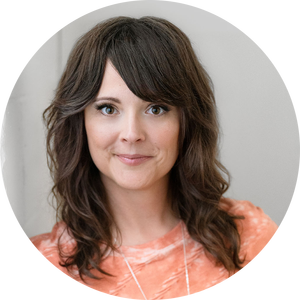
Brandi Fleck: Valerie Moss of Calgary, Alberta, Canada, is a podcaster hosting Valerie's Variety Podcast. She's an audiobook narrator for books you can find on Audible, and she's a wife and mom.
Valerie is many amazing things, but what Valerie is not is a paramedic or healthcare worker. However, she saved a life anyway while on her honeymoon, while wearing a string bikini.
What happened so that the stars aligned, that the circumstances were what they were?
In this episode, you're getting a truly heartfelt retelling of the time Valerie saved a life and all the emotion that goes with it. By talking to Valerie, I learned that a person's experience of certain events may be completely different than what you'd imagine, having never been in the other person's shoes.
What you will get from listening to Valerie's story is a little glimpse into the heart of a fellow human. Every bit closer you get to each heart on Earth, the closer you get to understanding why we are the way we are and how we're all connected.
Now let's hear from Valerie.
Brandi Fleck: Today, everybody, we are welcoming Valerie Moss to the show. Valerie, I'm so excited to have you here. Thanks for coming on. How are you doing today?
Valerie Moss: Oh, doing pretty good. Kind of hunkering down during this crazy time, but definitely having a good day today.
Brandi Fleck: Good, good. So we are here to talk about a time that you did this little thing. You saved a life.
Before we dive into that, which is actually huge, can you please introduce yourself to our listeners? Who are you, and what do you do?
Valerie Moss: Thanks, Brandi. Thanks for having me.
I live in Calgary, Alberta, on the western side of Canada beside the Rocky Mountains.
I am a very busy person. I like to have huge passions. My kind of theme on my podcast and in life is "eat, read, create." So I'm always figuring out a new recipe or trying a new restaurant, reading something or listening to an audiobook, and creating a DIY project.
I have lots of hobbies and passions, everything from quilting to gardening, scrapbooking, and cooking. So that's kind of who I am in a nutshell.
Brandi Fleck: Awesome. I see a quilt behind you now because we can see each other on video. Did you make that?
Valerie Moss: Yes. Yes, I did.
I'm actually sitting in my studio, and when I planned my studio, instead of putting up foam paneling and all the things that podcasters are supposed to do, because I'm a quilter, I decided to use quilts from my stash to decorate the walls of my studio.
So, yeah, all around me is just inspiration, and I have parts of my daughter's crib as hangers in here. It provides the sound I need and gives me a nice, comfortable space.
Brandi Fleck: Yeah. Well, it's beautiful. That's really cool.
Valerie Moss: Oh, thanks. Thank you. Yeah, it's a giant window behind me, so I have a huge quilt on that wall.
Brandi Fleck: Awesome. Plus it's cozy.
Valerie Moss: Yeah.
Brandi Fleck: Okay, so this is a big question, but what is your life story? What has life been like that makes you who you are today?
Valerie Moss: Wow.
When I read this, I just loved this question. It gave me a lot to kind of reflect on and ponder. I'm sure you get a lot of answers on this one, but my life is about being organic and just embracing situations and change and kind of just being open to what comes your way, whether it's good or bad or easy or hard.
I grew up with a single dad, and so my whole life was about kind of trying to fit in and be accepted growing up. He was a chef, so we were always inspired by a great meal or the love of food. He didn't really garden. I don't know exactly where I got that from, but he was a chef and taught us all the skills in the kitchen, so that's a huge part of my life.
He kind of had a neat personality that affected my sister and me, where he was just up for whatever, up for trying something new, going somewhere, checking out a new hobby, or taking on a new DIY project. So that really influenced us growing up.
I moved around a lot, so I think my sister and I counted that we went to 10 schools in 12 years. So there were a lot of new friends and new teachers, fitting in, figuring out yourself, different cultures and dynamics and everything.
I'm also an extremely driven person, maybe almost to a fault because it's a blessing and a curse. I have lots of passions that just drive me to learn more and do better and share knowledge with anybody and empower people.
I think the last probably 20 years have been kind of settling into who I am and embracing who I am and being okay with how things are and the decisions I've made. Just kind of coming to terms with your previous years.
So I think honing my skills as a mom and a wife and an employee has all kind of started from where I grew up and that point.
Brandi Fleck: Gotcha. Well, that sounds like a beautiful life. It really does.
Valerie Moss: Oh, thank you.
Yeah, it was full of craziness, lots of schools and lots of moving, from towns to cities. I was in high school in Edmonton, Alberta, which is about three hours north of here, and then my dad got transferred to a teeny tiny little town.
The town we moved to had fewer people in it than the high school I was in.
Brandi Fleck: Oh, wow.
Valerie Moss: I was in Grade 10, and I moved to this tiny little town. There were like a hundred kids in the high school. It was just crazy.
But it gave you roots and grounding, and things were kind of simplified, more back to basics.
Brandi Fleck: Yeah.
Valerie Moss: It was a good experience. Not one I'd want to repeat, I don't think, now, but enriching nonetheless, I guess.
Brandi Fleck: Yeah. Enriching. In high school, you have kind of a different perspective than at my age now.
Valerie Moss: Yeah.
Brandi Fleck: Yeah, I know. It's cool. It's neat. Life.
So, what is the most important thing in life to you?
Valerie Moss: I wasn't really sure how to reflect on this question.
My thing would probably be my favorite people, the close people that I have in my little, knit group.
My thing would probably be staying content and grounded. That's probably the most important. I don't need to be overexcited or fantastical on everything, but just being grounded and content is the most important.
Brandi Fleck: Gotcha. Being okay with things and just being settled.
What Being Grounded Means and Why It Matters
Could you, really quickly, you've mentioned grounding and being grounded a couple of times already. Could you describe your definition of that? What does that mean to you?
Valerie Moss: Being grounded is like being okay with who you are and knowing that you're doing the best for yourself and your family.
I think it's reflecting on where you've come from and embracing what you've learned from that, whether it be a skill or a person.
I think being grounded makes you okay with who you are, and I think it makes you more free because you're not meeting the expectations of other people, just yourself.
Brandi Fleck: Gotcha. So sort of like that inner strength, tapping into that inner strength?
Valerie Moss: Yeah.
Brandi Fleck: Yeah. Inner strength. Is that how you would answer that?
Maybe. I've actually been thinking about this a lot lately, so it's interesting that you've brought it up today. I was curious where you'd go with it.
Valerie Moss: I think when you look at somebody, you see such a small part of who they are. If it's a friend or a family member, you don't know that whole person. You just know this little nutshell of somebody that you get for this short period of time.
So I think being grounded means you're okay with knowing only that small part of that person and hoping that that's the genuine portion that you see. That's how I would describe that.
Brandi Fleck: Well, that's interesting. Thank you for sharing that.
Valerie Moss: Oh, you're welcome. I loved that question. I was reflecting on it a lot.
Saving a Drowning Child While on Vacation
Brandi Fleck: Okay. Well, so now the big question is, how long ago did you save a life?
Valerie Moss: It was in 2002.
I was newly married. We actually got married in 2001 on September 8th.
Brandi Fleck: Okay, so three days before 9/11.
Valerie Moss: Yeah, we got married, so we couldn't actually go on our honeymoon that year. We went the following year because of all the chaos with traveling after 9/11. Everything was canceled, and the airline we actually booked our tickets through went under because of the global challenges with the terrorist attacks.
So, yeah, it was in 2002, like 18 years ago now. I remember it like it was yesterday.
Brandi Fleck: All right. Well, let's get into some details. I'm so interested to hear this story.
Can you just tell us the events from the beginning to the end? What happened that resulted in you saving the life, from how you noticed what was going on, to why you decided to help, to how you helped, and how it all ended?
Valerie Moss: We were in Mexico, so Puerto Vallarta. I had never been there before.
We arrived kind of early in the morning, like 2:00 or 3:00 in the morning. The following day, we decided to kind of climatize and stay by the pool. We were just hanging out and relaxing and enjoying ourselves.
I was actually facing away from the pool, lying on my stomach, and my husband was facing the pool, lying on his back, so he kind of got the firsthand experience prior to me.
This man came over and said to my husband, "Señor, Señor, are you a doctor? We need some help."
My husband's like, "No, no. What's going on?"
"Oh, baby drown. Baby drown."
My husband turned, looked at me, and said, "Your CPR is newer than mine. You need to go and help."
I was like, "Oh my God."
I'm wearing a bikini. I'm this young person. So I followed the man over there. He was freaking out and scared.
We surmised that this little boy had been pulled from the pool, and he was not moving. His lips were blue. Like I said, I remember this like it was yesterday.
There were all these people around. The man that worked at the restaurant, the waiter, and I talked, and we proceeded to do CPR.
It took several minutes. You could hear a pin drop, and we were outside at this pool.
After what seemed like forever, he came to, and he was just crying. Everybody was hugging me and crying and hugging this little baby. He was maybe two or three years old.
He was so little. I just wanted to hug him, but I couldn't because he was somebody else's baby.
All these moms and aunties and cousins and everybody were hugging me and the man from the restaurant. Then they just kind of whisked him off, and he was fine. He was fine.
But I never met him. I never met the family or anything.
Brandi Fleck: Mm-hmm. But he was okay. He totally lived.
That is amazing. I mean, it's sort of miraculous that you were there in that place and time and were just able to do that.
Valerie Moss: Yeah. And I've never had to do it since, thank God.
That was the first and only time. That little munchkin, he would be like 22 years old maybe today.
You reflect on that and think, wow, it can happen so fast.
As a mom, you turn your back for a minute and you don't know. You think you're doing the very best, and these little things can happen.
The whole family was there. They thought somebody was watching. Somebody else was looking.
Such an innocent thing, but with huge consequences, potentially.
Brandi Fleck: Right. Especially a swimming pool.
Valerie Moss: Yeah.
When you talk about emotions, I heard nothing. I could hear nothing.
I remember tilting his head and doing CPR. He had no color, and I had never seen anything like that before.
He was so small. Just tiny.
So, yeah, that was pretty crazy.
Brandi Fleck: Yeah. It's obviously, after all these years, stuck with you. Did you see the color come back into his face? Was he walking and everything?
Valerie Moss: Oh, yeah. Once he had thrown up and coughed up the water, he immediately started to cry, and all his color came back in like a second.
Brandi Fleck: Oh, good. Okay.
Valerie Moss: He was totally, totally fine. You could tell there was nothing wrong after.
I don't know. I never saw them again. I don't know if they were going home that day or the next day and they were having their final soiree in the pool or whatever, but I never, ever saw them again.
Brandi Fleck: What did you do after that? Were you shaken up?
Valerie Moss: I think I was in shock afterward because I was shaking and crying, and I was freezing.
I didn't really know what to think. A few people came up and chatted with me and stuff like that. They weren't kind of in that group.
I just said to the waiter, "Wow. How often do you do this?"
He said, "A couple times a week."
Brandi Fleck: Wow.
Valerie Moss: Oh, yeah. I was like, "What? There are no lifeguards?" But yeah, a couple times a week, he said to me.
Life After a Traumatic Rescue Experience
Brandi Fleck: It's totally understandable that there would be strong emotions tied to this, but what did you feel in the beginning, middle, and end of it?
Did you just go into autopilot and everything didn't hit you until the end, or how did it work?
Valerie Moss: Yeah, exactly.
My fight-or-flight response... I fight. I'm in there.
I'm not a person that flees the situation.
So as soon as my husband said, "You have your CPR. You got to go help..."
Valerie Moss: Yeah, so I just went over and helped.
We were around a pool, so when I was leaning down, bending down to help this little guy, my knees were all skinned from the tile around the pool, which I didn't really realize until after it was all over.
Then I was super cold, and it was so hot.
Then just a flood of emotions. Thank God that little boy lived.
It affected me so much, and he's still alive. If it would have gone the other way, I don't know how our honeymoon would have ended. We probably would have gone home.
Brandi Fleck: Yeah. Were you able to enjoy the rest of your honeymoon after that day?
Valerie Moss: Yes, because the family was so grateful, and everybody was safe and happy, and the little guy lived.
I just accepted what had happened.
I don't think about it often, but it definitely has impacted me, and I'm a huge fan of swimming lessons. Let me tell you. For sure. Huge fan.
So I kind of felt everything after, not during. I just knew there was a job to do and focused on that. The waiter and I just kind of took cues from each other.
Brandi Fleck: Do you think any spiritual phenomena happened during this event?
Valerie Moss: Not spiritual, but definitely a chapter turned in me.
I can definitely look back and say, okay, now I'm aware of what could happen at a swimming pool.

I'm aware of how quickly a silly thing or life situation can change, especially now, years later, being a parent and just seeing these little people and how much they need you every second in any kind of risky situation, like a swimming pool or playing at the park or whatever.
You have to not be apprehensive about everything, but just really be more aware.
It just made me more aware of that.
How Trauma Changes the Way You See Risk
Brandi Fleck: Gotcha. So every now and then, I guess you think about this. How often would you say it comes up? If it does, what makes it come up for you in your memories?
Valerie Moss: I don't know. I probably didn't go into a swimming pool for maybe eight years after that.
I didn't want to be at the beach. I didn't want to swim. I didn't really do it with a thought. I was just like, "Nah, I'm not going to the pool. I don't want to go to the pool."
Now I know that I just didn't go to the pool because I didn't want to be in this situation ever again.
Even somebody choking in a restaurant, I'm very aware of that. Or when your kids choke on food or stupid things, you're very aware of what could happen and how quickly. At least I am now.
But one weird thing did happen. It was a few days later. We were still in Mexico, and we were kind of sitting watching the sunset. We were sitting on the beach, and it was pretty dark, but not quite dark yet.
These two men go running by, and they're kind of in these green army-colored uniforms, and they have five-gallon pails in their hands.
They go running up the beach. I'm like, "What the heck is that about?"
It looked very official. About 15 minutes later, it was almost dark. The sun had just kind of disappeared into the night.
They came running back by us, so I said to one of them, "Señor, what's in the pail? What are you doing?"
"Oh, turtles. We're rescuing the turtles."
I'm like, "You're rescuing the turtles, but kids are drowning in your pools?"
To me, it was just so bizarre. I don't know if you've been to Puerto Vallarta, but they have turtle sanctuaries everywhere.
They're rescuing the turtle eggs. They get money for it, and they have these sanctuaries so they can protect the big tortoises and turtles.
I don't know if it's an industry, but it's some sort of wildlife foundation or whatever for them. I'm like, that is just so bizarre to me. Here you guys don't have lifeguards at the pools, but let's rescue the turtles.
I don't know. It was just so backwards from the way I was thinking, in my frame of mind. It just didn't make sense to me.
Brandi Fleck: Yeah. I wonder if they have lifeguards now, if that ever changed.
Valerie Moss: We've been back a few times since then, and they do. They did on the weekends because the weekends are much busier than during the week.
We definitely noticed a significant difference. It was almost 20 years ago, right? Lots has changed. Safety is definitely higher up on the priority list than it was then, for sure.
Brandi Fleck: So you say it took you about eight years to get back to a pool or a beach.
Was that a conscious decision to go back, or how do you think you sort of overcame that block that you had there?
Valerie Moss: We don't live in a beach community. I live in the Rocky Mountains, so it's not like we have lakes all around us, and people don't really go to the beach that often.
Brandi Fleck: Okay.
Valerie Moss: Not like in Florida. We just don't have that kind of climate here.
But there are beaches and lakes. We have a giant water park at West Edmonton Mall, and it has a huge water theme park. I think it's one of the only ones in Western Canada.
My nephews were going, and my sister and I went. It was the first time I had been there, and I remember walking in there going, "Wow. I remember why I never came into this place for so long."
So it wasn't really conscious. It wasn't something I thought about. But I remember walking in there and going, "Oh yeah. I remember why I don't want to be here."
So I kind of just distracted myself with my nephews. We did the slides and had a really fun day.
But a child drowned at the pool that day. I wasn't around. I was on the slide or in the washroom or something when they brought in the ambulance and had to take this child. He didn't die, but he drowned, and they had to resuscitate him or something.
I wasn't around when that happened.
Brandi Fleck: Wow. That's crazy.
Valerie Moss: Yeah. So I was not around, and then when I came back, my sister said, "Yeah, good thing you weren't here. This is what happened."
I'm like, this is why I don't like pools. Water, to me, is just so risky. I don't know why.
Brandi Fleck: Well, that's interesting.
Something interesting that has happened here is when you first told me about this story, I was like, "Oh wow. This is so interesting."
I was thinking of it as a happy event, but it didn't dawn on me that it would have been so traumatic.
I don't know why it didn't dawn on me, but it's so obvious now that it would have had such a huge impact and that it would have made things scary.
I've definitely learned something from you.
Valerie Moss: Yeah. Kind of how we talked about earlier, you only know this little portion of somebody.
Once you have an intimate conversation like this, then you can be like, "Holy man. You have no idea."
I told this story not very long ago at work, and my colleague said to me, "Wow. Has that boy ever found you?"
I'm like, he would never find me. The chances of him and me ever crossing paths would be like getting struck by lightning. They were a Spanish-speaking family. Whether they were from South America or whether they were from Mexico City, I don't know.
They definitely didn't speak English, and there were a ton of them there. They had this giant family around.
We went in the summer when it's the cheapest time to go because it's super hot, and that's when a lot of Mexican families go because it's their family time.
How I would ever cross paths with this little boy, I have no idea. It would be crazy if we ever did.
Brandi Fleck: And they didn't get your name or anything in the midst of it?
Valerie Moss: No. Nothing. It was just so... I mean, he lived, right? So that was it. It was over after that. It was so crazy.
They were very grateful, crying and hugging and just so grateful. But they had to repair their little family, right? Their moment. Probably reflecting within their family too because of their situation.
So, yeah. I don't know. It's always been with me. I don't think of it often at all. Definitely when I go to a pool, though.
My daughter's in swimming, and it's one thing that she doesn't get a choice about. She has to go to swimming, and she has to continue swimming. No negotiating on that one.
Brandi Fleck: Yeah.
Valerie Moss: I don't know if your kids are in swimming, but if I can give you any piece of advice.
Brandi Fleck: They're not right now. There's only one at this point who still doesn't know how to swim, so he needs to definitely go.
Valerie Moss: For sure. Yeah.
Brandi Fleck: If you got the chance to meet this boy, what would you say to him?
Valerie Moss: I don't know.
I'd probably just be like, "Look at how you turned out, kid. You just did a great job."
I have no idea what he would be like. He'd be a young man now, almost the same age as I was when I was there.
I don't know what I would say. I'd give him a big hug. I'd be happy to see him.
Wouldn't that be crazy, though, if we ever crossed paths? It would be like to line up those dates and figure out who he was and who the waiter was that worked there.
I don't know. You know what I mean?
Brandi Fleck: Yeah. I mean, you hear crazy reunion stories all the time, but in the age of social media, there's got to be a way. There's got to be a way.
Valerie Moss: Six degrees of separation. There'd have to be a way. But I don't know. I've never really thought of meeting him. No. I never, ever thought of it before.
Brandi Fleck: Well, you mentioned that this event has made you acutely aware of the risks of water and being vigilant and things like that with your children and other people.
Long-Term Effects of Saving Someone's Life
Has this changed your life in any other way?
Valerie Moss: Because it's been so many years, it probably did back then, but that just became who I am today.
So probably, but to pinpoint an exact thing, I'm pretty aware in a crowd. I'm pretty aware in a restaurant of a little baby choking or something like that. I'm acutely aware of it, that I would be ready to step in or help out or something.
But I think it's just me now.
Plus, being a mom too, you're just like... you would just do anything for these small beings that are around you and that you're responsible for.
So I think that part in itself is more probably what made me like that today, just seeing how quick it can happen.
Obviously, I'm an emotional person. That's obvious. But I'm very empathetic, and I can sense that a lot. So to be aware of not just a child fussing and being crabby, but really knowing that that's a true feeling.
I have a girl, so they can be a bit more emotional. I just tell her, "Own how you feel. If you feel sad, feel sad. If you're happy, be happy. Just really own it. Don't worry about what other people think, not me or Dad or your friends. Feel how you feel and embrace that."
So I think that's helped change me that way.
Brandi Fleck: Okay. Well, Valerie, this was an amazing story. You did mention that you have a podcast. You have a variety show.
If our guests want to hear a little more from you about food and DIY and things like that, where would they go to find you?
Valerie Moss: I run a podcast called Valerie's Variety Podcast, and it's basically just kind of where we hang out.
We eat, read, and create. So any food, favorite recipes, maybe something that's been passed down in your family, or a great restaurant you've tried, those are the ones that we like to talk about.
What you're reading, whether it's an audiobook, a podcast, or you're actually reading a paper copy of a novel, we like to talk about those.
I also do voiceover work. I narrate for Audible, and I do voiceover for books. I've done over 25 books now for Audible. I started as a podcaster, and then I went into that kind of field. So my podcasting isn't as consistent as it used to be, but it's still super fun.
I also have a segment on there, a Valerie segment, quote unquote. I don't know a lot of Valeries, or any of them, so I started a segment all about our name.
I've interviewed people all over the world that have the name Valerie. So, awesome. If there's any Valeries listening, reach out to me because that's kind of a fun show I do.
You can find me on Facebook and Instagram. It's a variety show, so if you want to learn something or be inspired, I'm all about sharing and paying it forward.
Brandi Fleck: Awesome. Well, listeners, all of those links that Valerie mentioned will be in the show notes for you to go check out so you can find her.
Valerie, do you have any closing wisdom you can leave for our listeners today?
Valerie Moss: I do. I think the best way to answer this is, if I was going to tell my younger self anything, as my wiser self at this age, I would say that you matter, that your voice has meaning, that you can feel your emotions. They are true to you.
Embrace them. That's what I would say.
Brandi Fleck: Awesome. Well, Valerie, thank you so much for coming.
Valerie Moss: Thank you, Brandi. You caught me on a very open day to feel the show.
Brandi Fleck: Awesome. Thanks, everybody.
Valerie Moss: Thanks, Brandi. Thank you.
Join the conversation!
Feel free to share your own experience and let me know if you have any questions in the comments.
Related Posts

Hi, I’m the founder of Human Amplified. I’m Brandi Fleck, a recognized communications and interviewing expert, a writer, an artist, and a private practice, certified trauma-informed life coach and Reiki healer. No matter how you interact with me, I help you tell and change your story so you can feel more like yourself. So welcome!
Find More on the Blog
Topic
- ADHD
- AI
- Atlanta
- Black and BIPOC
- DIY
- FAQ
- LGBTQIA plus
- Los Angeles
- Nashville
- Seattle
- St Louis
- St. Louis
- UFOS/UAPs/ETs
- abuse
- accountability
- addiction and recovery
- adoption
- affirmations
- afterlife
- altered state
- angels
- animals
- anxiety management
- art
- astrology
- atlanta
- attachment
- awakening
- beauty
- behind the scenes
- being human
- body image
- body work
- boundaries
- brandi fleck
- breathwork
- bullying
- burn out
- burnout
- cancer
- career
- caretaking
- chakras
- channeled
- clarity-dive
- clarity-practice
- clarity-primer
- clean products
- coach
- codependency
Recent Blog Posts
Visit the Full Podcast Audio Archive

Affiliate