
How Veterans Faced the COVID-19 Pandemic
Interview By Brandi Fleck
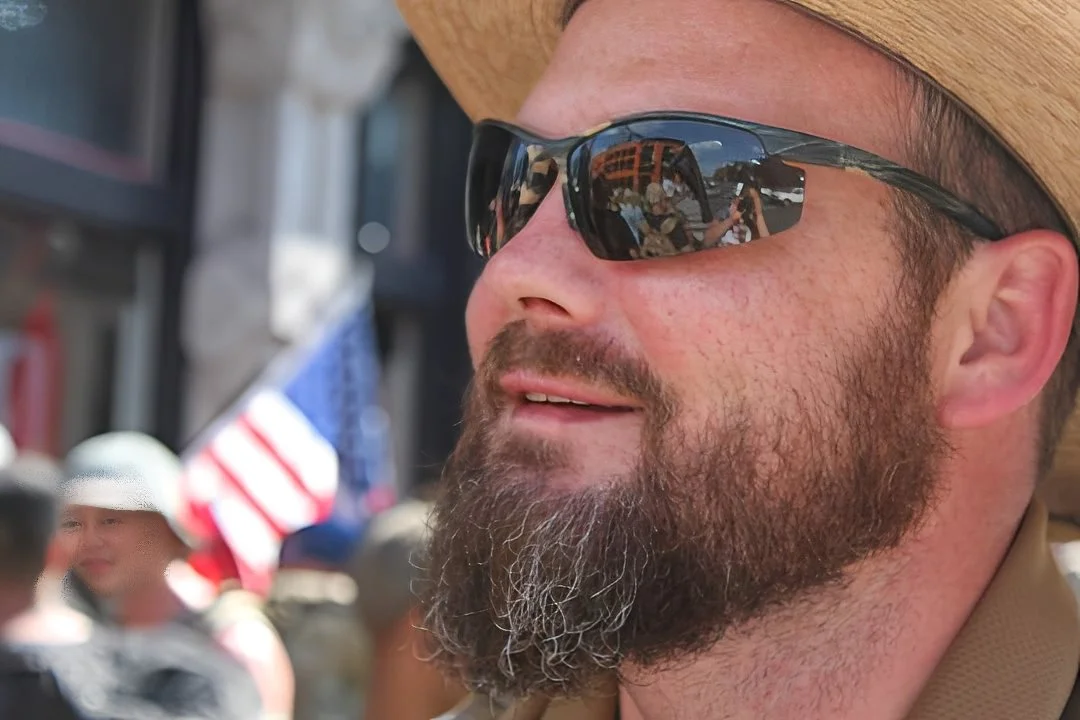
Marine veteran Andy Littlefield reflects on serving as an essential worker during the COVID-19 pandemic, supporting fellow veterans through isolation, and why empathy and community matter most in times of crisis.
Editor's Note: This conversation was recorded during the early months of the COVID-19 pandemic. Some references to public health guidance, events, and resources reflect that specific moment in time and are no longer current. We've preserved this episode as a snapshot of how people experienced and responded to an unprecedented period.
In the early months of the COVID-19 pandemic, uncertainty touched nearly every part of daily life. For Marine veteran Andy Littlefield, that meant balancing work as an essential employee in the surgical supply industry while checking on fellow veterans facing isolation, PTSD, and the emotional weight of an unprecedented moment.
Recorded during the height of the pandemic, this conversation captures how veterans, healthcare workers, and communities navigated a rapidly changing world.
While some references reflect the guidance and circumstances of that specific time, the discussion around resilience, service, empathy, and supporting one another remains just as meaningful today.
Listen to Andy Littlefield’s Interview
Watch Andy Littlefield’s Interview

Veterans and Mental Health During the Pandemic
Brandi Fleck: So I imagine those suffering from PTSD or other trauma-related symptoms could be triggered by the global stress of this pandemic we're in. What impact has the COVID-19 crisis had on the veterans that you support, physically, mentally, all of it? And what about yourself too?
Andy Littlefield: Ironically, I think veterans have a unique skill set in this.
First off, we're more comfortable being isolated from society. A lot of us don't feel that the general public can really understand what we're going through just as being a veteran and dealing with our PTSD issues.
So the self-isolation and the social distancing I think is, ironically, maybe a good thing for the veteran community.
But it's also kind of a double-edged sword in the sense that once things start to get back to normal, the veterans are going to still be isolating themselves. It's going to be important for us to get out there and talk to our brothers and sisters and say, "Hey, let's go down to the VFW. Go have a beer."
We've got to get these veterans that are choosing to stay at home, even after it's safe to come out, to poke their heads out and dip their toes in the water again and become more social because the more they isolate themselves, the more their feelings will creep up, and the symptoms of PTSD, like depression and anxiety, will be more common in them.
Right now, at the start of this, they're being comfortable. But as it progresses, they will start to have issues. Even before things get back to normal, we're going to have to take it upon ourselves as veterans to reach out to our brothers and sisters. Maybe on Facebook, text messages, phone calls, whatever, but reach out to them and make sure that everybody's okay.
I've got a few elderly veterans in my organizations. One in particular is being forced to self-isolate 100% because of his health. His doctor doesn't want him to go out in public at all, just in case he gets exposed to COVID. He's definitely in that group where it's going to be more severe for him.
Later on today, I'm actually going to go over and drop off some supplies for him just to make sure he's got enough to carry on so that he doesn't have to go out and face this.
Brandi Fleck: Yeah. Well, that's really great that you're helping him.
At the end of this interview, if you want to list ways for other people to help, if you know of where people can bring supplies or anything like that to help support your organizations, we'll list those also in the show notes. So that would be good.
Military Support During National Emergencies
Okay, so right now we're talking about COVID-19. It's also known as the coronavirus disease, which is caused by the SARS-CoV-2 virus, also known as the severe acute respiratory syndrome coronavirus 2.
So this is a pandemic, a health situation that has side effects on our local and global economies and our society. It's a threat, but not one caused by enemies we would normally think of during a war or why we would normally need national security.
So can you tell us why call the military in to help in a situation like this?
Andy Littlefield: It just makes good sense.
Right now, the New York Police Department is being decimated by COVID-19. I heard on the news a couple hundred police officers in New York City are out sick for the next two weeks because they either have it or they were exposed to it. So they're having to self-quarantine for 14 days.
With that, obviously, we still have to have some law and order. Calling in the National Guard, like many of these governors are doing, is a great way to supplement your infrastructure.
Not only that, but aside from police activities, you also have doctors and nurses and corpsmen in the National Guard that can help out with the hospitals and all that.
Even if it's just a regular PFC infantryman, at least he can be there, obviously in appropriate PPE, to help with the intake of patients at the hospitals.
There's a lot of talk on Facebook about this being close to a martial law kind of thing, and I don't think it really is.
Just like if there was a massive flood, like what happened in Tennessee in 2010, you're going to call in the National Guard whenever there's a disaster, and this is a disaster.
Government Response to COVID-19 in Tennessee
Brandi Fleck: So Andy, we're in Tennessee. You and I are in towns about 45 minutes apart from one another, but both have declared states of emergency, as well as the state and our entire country.
From a veteran's perspective, do you think the different levels of government are handling this crisis as they should? Let's break it down to local, state, and national levels.
Andy Littlefield: Well, I think the first thing you have to understand is nobody was prepared for this.
We've dealt with epidemics and pandemics before, but even Dr. Fauci, who we've all seen on TV as the leading expert in infectious diseases, stated that before this happened, when people would ask him what his biggest nightmare was, he literally described what's happening now.
This is a situation so grand and so dire, nobody was prepared for it. With that in mind, I think everybody needs to be looking at the government's actions through that kind of looking glass.
Are there places where President Trump could be doing a little bit better? Sure.
Are there places where Governor Bill Lee, the governor of Tennessee, could be doing better? Yes, definitely.
Even local governments, for sure. I think the Safer at Home initiative that Bill Lee has put into place is a good start. I think we need to probably continue that going forward.
If there's one defense against COVID-19, it's limiting social interactions, maintaining that 6- to 10-foot distance, washing your hands as often as possible, using antibacterial hand lotion, Purell, whatever, if you can find it. People are hoarding that stuff.
To be honest, it's not the government that I'm disappointed in because I can look at things from that perspective that nobody was prepared for it. It's the general public I'm disappointed in.
There's no reason why anybody should be hoarding toilet paper or paper towels or hand sanitizer because all that does is take that resource away from other people, particularly if there are elderly people out there that can't get to the store every day.
The only reason why we have toilet paper in my house right now is because I wake up the boys at 6:00 in the morning every morning, give them 40 bucks, and tell them to go to Walmart and see if they can buy toilet paper.
They've done it every day this week, and finally, just yesterday, they were able to come back with two things of toilet paper. Now, they could have gotten more, but I told them not to.
I told them, "Just get two packages of toilet paper and come back because we're not going to hoard it. We're not going to take it away from somebody else."
Two 12-packs are going to last us probably a month, so that's all we need. Once we get low, we'll start looking for more.
The public in general, they'll take the crisis and panic and go out and panic-buy. It ends up just decimating everybody else's ability to get what they need.
In my opinion, it's unneeded and selfish.
Again, it's one of those places where people could exercise some more empathy and realize that they don't need 12 packs of toilet paper to last them until May.
Brandi Fleck: Yeah, definitely. Empathy right now in all areas seems really huge. I like what you had to say. We're human. This is sort of unprecedented in most of our lifetimes.
I think it's also equally important to point out that you do see a lot of empathy.
I think on the news this morning there was a video of some guy just filming New York City from his balcony, and you could hear cheers and applause coming from everywhere in the city, applauding the first responders and the nurses and doctors who are doing everything they do and putting themselves in harm's way.
I also saw a video of a neighborhood singing the "Won't You Be My Neighbor?" song from Mister Rogers.
So there are a lot of examples of empathy out there and people trying to cheer each other up.
I like the hashtag "isolated but not alone." This is something that's happening more recently when the whole coronavirus news started coming out.
When everybody was doing the hoarding and all that, I think in a large part maybe we're developing a better sense of empathy as we go through this crisis, which is great. Maybe we should have been practicing a little bit more sooner.
There are definitely positive things that will come out of this, I believe. Like you said, with the empathy that's spreading, and hopefully we'll be able to look at the systems that aren't working, that are sort of collapsing, and rebuild in a different, better way.
We sort of came full circle with the empathy discussion, but something else that we can connect here is that veterans, I think, are sort of trained to not panic in these situations.
What advice do you have for people to not panic?
Andy Littlefield: Well, educate yourself, I think, is the most important thing.
The studies show that 80% of diagnosed cases have mild symptoms and are mostly survivable.
But studies also show that, at least in Tennessee, the biggest demographic that's contracting the virus is from 21 to 35, which means to me that the younger people, my age, well, I'm 36, but close enough, we're not taking this as seriously as we should be. We're not taking the precautions that we maybe should be doing.
Like I said before, I'm kind of in a high-risk profession in the sense that I'm touching things that were touched by doctors, nurses, and sometimes actually used inside a person during a procedure.
So yeah, I'm washing my hands more than I ever have in my life. I'm using hand sanitizer more than I ever have in my life. I'm wearing gloves more than I ever have in my life.
I've been in some dangerous situations in Iraq, and even still, I'm taking a lot more precautions now, mainly because if I get anything, I'm still living at home, so I don't want to bring it home to my wife and kids.
Protecting Family While Working on the Front Lines
Brandi Fleck: What precautions are you guys taking at home to protect your family?
Andy Littlefield: My kids are kind of social butterflies. Well, they're not exactly social butterflies to begin with. They spend a lot of their time on the Xbox anyway, so they've been practicing social distancing for three years now.
Even when they're in the house with me, I usually only see them when they come out when I make them dinner.
Like I said, I've got a lot of risk at work to pick up stuff like this, so I take my own precautions.
My wife also works at the airport here in Nashville, so she's having to take some precautions, like wash her hands more often, use hand sanitizer as often as possible, and stay away from people, which actually, come the first, it's going to be easier for her to do that because she's being furloughed for two months.
Which makes sense. It's not something anybody wanted necessarily, but if there's no business at the airport, there's no need to have 20 people on staff at the restaurant.
We only go out for essential things. We do tend to try to order out food as often as we can because we want to help out the local businesses as much as we can.
Unfortunately, we're probably going to have to dial that back because of her work situation, but we're still going to try to get business out there as much as we can, keeping in mind our present condition.
Brandi Fleck: Gotcha.
So when we started talking about doing this episode for Season 2, you were really excited to talk about the Irreverent Warriors Silkies Hike that goes on every year. You and your colleagues were getting geared up to spread the word and make the fun happen.
So what are the plans now for this type of massive crowd event?
Andy Littlefield: Well, a little bit of background.
These Silkies Hikes are veteran-only hikes that happen all across the country. The first one happened back at the end of January, but unfortunately, with the coronavirus pandemic, they've had to at least postpone every hike, I think they made this decision in the middle of February, from that point on through the middle of May.
So those hikes are being postponed for later on in the year for obvious reasons. These hikes get up to... the one in Nashville last year was 225 veterans. The one in Oceanside, California, was over 1,000 veterans. So obviously a gathering like that just doesn't need to take place. It's going to do more harm than good.
But ultimately, the goal of these hikes is to get these veterans out of their shells, and I think it's going to be even more important once things die down with the coronavirus to get them out of their homes, out of their shells, and get out in public, have a good time, dress in funny attire, and meet veterans in the area that are dealing with the same kind of struggles that they're dealing with.
So that at least when they're down and they're depressed and they're feeling, well, suicidal, and that's the biggest thing, we're staving off suicide, when they get to that point where they're ready to put the gun in their mouth, they know that there are six people they can call on that understand where they're coming from, have been in situations that they've been in before, and can minimally just have somebody to talk to, have somebody to go have a beer with.
That social interaction is important for anybody, but for veterans it's a little more difficult because veterans have seen and done things that most civilians would never even dream of.
I'm sure there are only a few civilians who can say they've jumped out of helicopters or they've seen some of the gory stuff that I've seen personally. It's hard to feel comfortable being ourselves around people that haven't had those experiences or something similar to them.
So these hikes get to be cathartic. They're relaxing. They give these veterans a chance to let their hair down a little bit and have a good time and realize that there are people they can call on.
The one I'm the coordinator for is the one in Nashville. We're planning it for September 12th, which is also George Jones's birthday.
Brandi Fleck: Awesome.
Andy Littlefield: We're talking with the George Jones Bar to get them involved in it because, if you've heard the stories about George Jones and his alcohol addiction, he's definitely an irreverent warrior.
Anybody that'd jump on his riding lawnmower to go to the liquor store to buy some more booze. I think, in large part, some of the stuff he went through may have been from PTSD-like symptoms.
So I think it's a great opportunity for his legacy to be a part of the Irreverent Warriors story.
Along with that, we're going to have some local talent, some local artists and musicians, to play some acoustic sets along the hike.
It's a 10.5-mile hike all through Nashville. We're going to be starting at Nissan Stadium, make our way gradually to Centennial Park, have lunch there, and then make our way back to Nissan Stadium with bar stops and water stops and fun activities all along the way.
Brandi Fleck: Sounds amazing.
Andy Littlefield: Oh yeah. Last year's hike was fun. I went to the Memphis hike last year as well.
That's something else that's great. Tennessee is going to have at least four hikes this year: Nashville, Memphis, Chattanooga, and Knoxville.
We're also working on maybe doing a Clarksville hike, and I think there's another city we're considering. Even Bowling Green, Kentucky, we're going to see about having a hike up that way too.
It's really starting to be this huge yearly event where, on any given weekend, there's a hike going on. It's just a matter of getting to it.
For me, it's amazing some of the stuff that you see these guys doing, dancing to Britney Spears' "Oops!... I Did It Again," that kind of stuff. It's funny to watch.
But the thing is, I saw a couple Navy corpsmen dancing to "Oops!... I Did It Again" in Memphis, and it actually brought a tear to my eye because I realized that this is the kind of people they used to be when they were in the service. This is the kind of people they want to be, these goofballs making fun of everything they can.
So often we feel like we can't do that in regular society because it's not necessarily the PC thing to do.
But at least for one day out of the year, or maybe multiple days out of the year if they can get out to more hikes, they get to be that person again.
It's comforting for them to be able to, like I said, let their hair down and just be these irreverent sons of bitches again.
How Veterans Can Stay Connected and Support One Another
Brandi Fleck: Okay. If someone wants to follow the changes for Irreverent Warriors' plans as they occur, where should they go online?
Andy Littlefield: All right, so there's many places they can go.
First off, the Irreverent Warriors website is irreverentwarriors.com. There they have the full hike schedule, and you can also purchase hats and T-shirts and mugs and all that kind of stuff. They keep that updated pretty well, so if any of the hikes are being canceled or postponed, those are up there as well.
Also, nearly every single hike has its own Facebook page. So you can go to Facebook and just start typing in "Irreverent Warriors" and then any major city near you, and you should be able to find a Facebook page pertaining to just that hike.
In Tennessee, like I said, we've got Irreverent Warriors Memphis, Nashville, Chattanooga, Knoxville, and we even have an Irreverent Warriors Tennessee page for everybody to go to.
All these pages are updated as much as possible. You can even find other events that the organization is putting on in between hikes. In Nashville, we try to do an event once a month to get everybody together so we can keep interest growing as we get closer to the hike.
Of course, now a lot of stuff is being put on hold or postponed. At least like the pages anyway, because the posts that hit the page will still keep you connected.
Sometimes it's just funny stuff that veterans understand. Sometimes it's probably stuff that most people wouldn't want to see, but it's stuff that we can relate to and we either find funny or maybe important in some way.
Along with that, the other organizations, most of them have websites. American Legion National has a website. All the posts in Nashville have websites as well. VFWs. If any of these organizations don't have websites, they at least have Facebook pages now.
I encourage anybody, especially veterans, to find these groups on Facebook, like them, follow them, and then not only that, but once everything dies down, go to your local VFW, have a beer, meet somebody new there. Go to the American Legion post, have a beer, meet somebody new. Talk to these people. Some of them are from Korea. Some of them are from Vietnam. Some of them are our age from the Iraq and Afghanistan era.
Ultimately, if you can make another connection, that's one more Marine, soldier, or sailor you have in the fight to help you move forward with your PTSD or any other condition you may have carried over from the service.
Brandi Fleck: Gotcha.
So a couple more things. Are there other ways you're supporting veterans virtually during this time so they can connect? What are some resources that impacted veterans, or those supporting them, can use in terms of mental health? Then, if people want to help or donate supplies, where can they do that? What can they do to help?
Andy Littlefield: All right.
So as far as what I'm doing virtually to help other veterans, I've talked about it a lot, but Facebook is a central point for us to be able to connect, not just locally but globally, really.
I've got a Marine buddy of mine that lives in the Philippines. I've got another one that just moved from Alaska down to Kansas. Through Facebook, I'll send out buddy checks every once in a while to see how everybody's doing mentally, if there's any concerns.
I scan Facebook all the time to see that dreaded post saying, "I've had enough. I'm giving up. Bye."
Instantly, not only am I getting on there to make a comment to try to reach out to them, but I look at their profile and see what state they're in, and I try to find other veterans in that state to see if I can get somebody to go do a drive-by welfare check.
I talk about alcohol a lot, but alcohol helps and it hurts. If we do it in moderation, maybe I can get somebody to come by with a six-pack and sit down with the veteran and just talk it out.
The biggest thing that I hated about the whole social distancing is my detachment can't do a bingo night at the VA hospital anymore.
As of the beginning of March, the VA hospital in Murfreesboro has shut the doors, so no outside entities are allowed in.
Usually, on the third Friday of every month, we host a bingo night for the veterans. We give them cash prizes and we feed them a good dinner. It's the highlight of my month. I love doing it.
The patients at the VA hospital are so grateful that we're there to show them a good time, and it kills me that we can't do it anymore.
The hospital was right to make that call. Don't misunderstand me. But it was such a great thing to do for these patients. Some of them will never get out of that hospital alive, and for us to give them just one night where they can maybe forget about everything that's going on with their health or mental state, I think is a great thing for them.
Like I said, I just freaking love doing it.
Other things have been impacted. Any kind of gathering that we had on the books, maybe just a picnic or standing in front of Home Depot or Lowe's to collect donations and stuff like that, obviously we can't do any of that stuff now.
So it's putting a halt on most of the good we try to do out in public to either make sure people are aware of the struggles that veterans go through or raise money so that we can help ourselves.
The second question was, what can other people do to help these organizations?
The two most important things when it comes to any kind of charity, the two most important things you can donate are either time or money.
Now, I'm not here trying to pander for people to donate money to my group or any other group I'm associated with. But if you want to be charitable, those are the two most important resources you can give.
Like I said before, all of these organizations either have a website or a Facebook page. Through that, you can find some way to either give your time or your money.
It may be just if you know a veteran that's going through something, take the time and say, "Hey Bill, Joe, whoever, look these guys up. Maybe there's somebody here you can talk to that knows what you're going through."
It's amazing. I've got Vietnam-era veterans in my group and Iraq veterans. Even though the Vietnam-era veterans are old enough to be my dad or even my grandpa, we can still relate to the same kind of... We talk just like we've been old friends for years, even though I may have just met them that night.
Like I said, being able to connect with somebody that knows where you're coming from, that's so important.
Brandi Fleck: Gotcha.
All right, Andy, do you have any closing wisdom to leave for our listeners?
Andy Littlefield: Well, I'm going to talk to listeners in two different groups.
First, the veterans. Guys, if you're going through hard times, all you've got to do is ask. Reach out to somebody. We're here for you, just like we were when we were in the service. When we wore that uniform, we're going to be here for you now as well.
Then for everybody else, including the veterans and civilians, wash your damn hands.
Stay home as much as you can.
There are many people out there that have to be out and about, and they're doing that for your good.
I've talked about what I do, but my dad's also a truck driver. He's on the road right now, and because of people going out when they don't need to be, there are fewer and fewer places that my dad can stop to get food or even go to the bathroom.
The entire state of Pennsylvania for a week shut down all truck stops.
Brandi Fleck: Oh wow.
Andy Littlefield: Yeah. That's amazing to me because, if you have no idea, my dad's truck gets about six miles to the gallon. Now, he holds something like 250 gallons of diesel, but he still has to fill up at least daily.
So if he goes through Pennsylvania, he better hope he can get through all the way without having to stop, not just for gas, but just to take a piss.
Not only that, but my dad's on the road for a week at a time, so these truck stops often have shower facilities.
I don't know about you, but I'd be smelling pretty bad if I was cooped up in the truck for a week without a shower.
People are panicking because they don't have supplies, but these truck drivers are the ones getting the supplies to people.
So we have to make good decisions to keep it going.
Brandi Fleck: We really do. Definitely.
Andy, thank you so much for coming on the show again. It's always a pleasure to have you here, and I really enjoyed our conversation.
Andy Littlefield: I do too.
Join the conversation!
Feel free to share your own experience and let me know if you have any questions in the comments.
Related Posts





Hi, I’m the founder of Human Amplified. I’m Brandi Fleck, a recognized communications and interviewing expert, a writer, an artist, and a private practice, certified trauma-informed life coach and Reiki healer. No matter how you interact with me, I help you tell and change your story so you can feel more like yourself. So welcome!
Find More on the Blog
Topic
- ADHD
- AI
- Atlanta
- Black and BIPOC
- DIY
- FAQ
- LGBTQIA plus
- Los Angeles
- Nashville
- Seattle
- St Louis
- St. Louis
- UFOS/UAPs/ETs
- abuse
- accountability
- addiction and recovery
- adoption
- affirmations
- afterlife
- altered state
- angels
- animals
- anxiety management
- art
- astrology
- atlanta
- attachment
- awakening
- beauty
- behind the scenes
- being human
- body image
- body work
- boundaries
- brandi fleck
- breathwork
- bullying
- burn out
- burnout
- cancer
- career
- caretaking
- chakras
- channeled
- clarity-dive
- clarity-practice
- clarity-primer
- clean products
- coach
- codependency
Recent Blog Posts
Visit the Full Podcast Audio Archive

Affiliate


Spiritual practice can bring calm, clarity, and self-awareness, but it can also become a polished way to avoid what still hurts. In this guest article, Pat Crilley explores spiritual bypassing, emotional suppression, and how to tell the difference between true healing and performing peace.